35.9 C
Bangkok
Tuesday, June 9, 2026
Home Blog Page 1009

Brit Awards Scrap Separate Male, Female Prize Categories

Mabel accepts the award for British Female Solo Artist on stage at the Brit Awards 2020 in London, Feb. 18, 2020. (Photo by Joel C Ryan/Invision/AP, File)

LONDON (AP) — The organizers of the Brit Awards announced Monday they are scrapping separate male and female artist categories in a shakeup designed to make the music prizes more inclusive.

Next year’s awards will feature trophies for U.K. and international artist of the year, replacing male and female awards in each category. Organizers said the change will celebrate artists “solely for their music and work, rather than how they choose to identify or as others may see them.”

The 2022 ceremony will also include four new awards for different genres, decided by public vote: alternative/rock act; hip hop/grime/rap act; dance act and pop/R’n’B act.

The moves are the latest changes made in response to criticism that the awards long failed to reflect the diversity of British music. In 2017, the academy of more than 1,000 music industry professionals that chooses Brits winners was expanded in an attempt to make it more gender-balanced and diverse.

The 2022 Brit Awards ceremony will be held Feb. 8 at London’s O2 Arena, hosted by comedian Mo Gilligan.

Advertisement

Two-Ballot Election System Formally Approved

File photo from the 2019 general elections.

BANGKOK — A constitutional amendment on elections system to reduce the number of party list MPs and increase that of constituency-based MPs with two ballot papers was announced in the Royal Gazette on Sunday night.

Under the new system, the number of party list MPs will be reduced to 100 from 150 while constituency-based MPs increased to 400 from 350. The announcement stated that the changes better reflects needs of people in each constitution.

Ruling Phalang Pracharath Party secretary general Thamanat Prompao said on Monday that the party will fill in candidates in all 400 constituencies in the next elections and is confident to win more seats.

Election commissioner and elections expert Somchai Srisutthiyakorn said the amendment plays into the hands of the main opposition Pheu Thai Party which has strong constituency-based MPs.

“If I am [from] Pheu Thai I would say thank you,” he said. “All the 12 micro parties with a single party list MP each will go into extinction.”

Advertisement

After Slow Starts, Some Asian Vaccination Rates Now Soaring

A young boy, held by his father, reacts as he receive a second dose of the Sinovac's COVID-19 vaccine at a Krang Thnung health center outside Phnom Penh, Cambodia on Nov. 15, 2021. Photo: Heng Sinith, / AP

PHNOM PENH, Cambodia (AP) — When Cambodia rolled out COVID-19 vaccines, lines stretched down entire streets and people left their shoes out to save their places as they sheltered from the sun. But three months into its campaign, just 11% of the population had received at least one dose. In far wealthier Japan, it took two weeks longer to reach that level.

Now both countries boast vaccination rates that rank among the world’s best. They are two of several nations in the Asia-Pacific region that got slow starts to their immunization campaigns but have since zoomed past the United States and many nations in Europe.

The countries with high rates include both richer and poorer ones, some with larger populations and some with smaller. But all have experience with infectious diseases, like SARS, and strong vaccine-procurement programs, many of which knew to spread their risk by ordering from multiple manufacturers.

Most started vaccinating relatively late due to complacency amid low infection rates, initial supply issues and other factors. But by the time they did, soaring death tolls in the United States, Britain and India helped persuade even the skeptical to embrace the efforts.

“I did worry, but at the moment we are living under the threat of COVID-19. There is no option but to be vaccinated,” said Rath Sreymom, who rushed to get her daughter, 5-year-old Nuth Nyra, a shot once Cambodia opened its program to her age group this month.

Cambodia was one of the earlier countries in the region to start its vaccination program with a Feb. 10 launch — still two months after the United States and Britain began theirs. As elsewhere in the region, the rollout was slow, and by early May, as the delta variant started to spread rapidly, only 11% of its 16 million people had gotten at least their first shot, according to Our World in Data. That’s about half the rate reached in the United States during the same timeframe and a third of the U.K.’s.

Today Cambodia is 78% fully vaccinated — compared to 58% in the U.S. It is now offering booster shots and looking at extending its program to 3- and 4-year-olds.

From the beginning, it has seen strong demand for the vaccine, with the rollout to the general public in April coinciding with a massive surge of cases in India, from which grim images emerged of pyres of bodies outside overwhelmed crematoria.

Prime Minister Hun Sen leveraged his close ties with Beijing to procure nearly 37 million doses from China, some of which were donated. He declared last week that Cambodia’s “victory of vaccination” could not have happened without them. The country also received large donations from the U.S., Japan, Britain and from the international COVAX program.

Still, it took time to get sufficient supplies, and many countries in the region that started their programs later struggled even more, especially when the region’s major producer, India, suspended vaccine exports during its spring surge.

“Certainly getting the supply in place was really important for the countries that have done particularly well,” said John Fleming, the Asia-Pacific head of health for the Red Cross. “Then there’s the demand creation side — clearly this is about getting a buy-in from the population and also reaching out to marginalized groups.”

Early in the pandemic, many Asian countries imposed strict lockdown and travel rules that kept the virus largely at bay. As vaccines rolled out in force elsewhere, those low rates sometimes worked against them, giving some people the impression that getting the shot wasn’t urgent.

But when the virulent delta variant began ripping through the region, cases rose, encouraging people to sign up.

Some countries, like Malaysia, made extra efforts to ensure that even the hardest-to-reach groups were offered the vaccine. It enlisted the Red Cross’s help to give shots to people living in the country illegally and other groups that may have feared showing up for a government-sponsored vaccination.

“We made the vaccine accessible to all, with no questions asked,” said Professor Sazaly Abu Bakar, director of the Tropical Infectious Diseases and Research Education Center.

As with Cambodia and Japan, Malaysia plodded along in its first three months, giving less than 5% of its 33 million people their first dose in that time, according to Our World in Data.

When cases surged, however, Malaysia bought more doses and established hundreds of vaccination centers, including mega hubs capable of providing up to 10,000 shots a day. The country now has 76% of its population fully vaccinated.

To date, about a dozen countries in the Asia-Pacific region have vaccinated more than 70% of their populations or are on the cusp of doing so, including Australia, China, Japan and Bhutan. In Singapore, 92% are fully vaccinated.

Some countries in Asia, however, have continued to struggle. India celebrated giving its billionth COVID-19 vaccine dose in October, but with a population of nearly 1.4 billion, that translates to a fully vaccinated rate of 29%. Indonesia started earlier than most but has also stumbled, largely due to the challenge of expanding its campaign across the thousands of islands that make up its archipelago.

Japan’s vaccine program was notoriously slow — inching along while the world wondered if it would be able to hold the Summer Olympics. It didn’t start until mid-February because it required additional clinical testing on Japanese people before using the vaccines — a move that was widely criticized as unnecessary. It was also initially hit with supply issues.

But then it turned a corner. Then-Prime Minister Yoshihide Suga brought in military medial staff to operate mass inoculation centers in Tokyo and Osaka and bent laws to allow dentists, paramedics and lab technicians to give shots alongside doctors and nurses.

The number of daily doses given rose to about 1.5 million in July, and the country is now at about 76% fully inoculated. A large part of Japan’s success is due to the public’s response, said Makoto Shimoaraiso, a senior official in charge of the country’s COVID-19 response.

Many in Japan are skeptical in general about vaccines, but after seeing deaths soar around the world, it has not been an issue.

In fact, retiree Kiyoshi Goto is already clamoring for his next shot, as he looks warily at rising case in Europe.

“I want to get a booster shot as our antibody levels are going down,” the 75-year-old said.

In Phnom Penh, Nuth Nyra was just happy to get her first, saying she was afraid of COVID-19 before — but no more.

“I felt a little bit of pain when I got the shot,” the young girl said in a soft voice at a vaccination center on the outskirts of Cambodia’s capital. “But I didn’t cry.”

___

Story: David Rising and Sopheng Cheang. Rising reported from Bangkok. Associated Press writers Kim Tong-hyung in Seoul, South Korea; Eileen Ng in Kuala Lumpur, Malaysia; and Mari Yamaguchi in Tokyo contributed to this report.

Advertisement

Olympic Officials: Chinese Tennis Star Peng Says She Is Safe

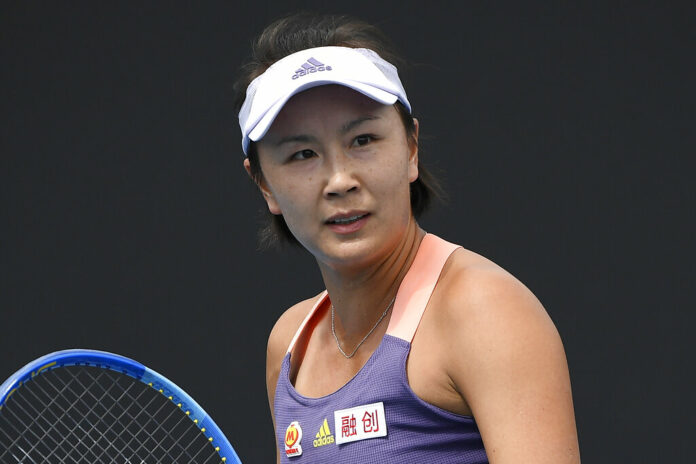
China's Peng Shuai reacts during her first round singles match against Japan's Nao Hibino at the Australian Open tennis championship in Melbourne, Australia on Jan. 21, 2020. Photo: Andy Brownbill / AP

BEIJING (AP) — Missing Chinese tennis star Peng Shuai told Olympic officials in a video call from Beijing that she was safe and well, the International Olympic Committee said Sunday after Peng reappeared in public at a youth tournament in Beijing, according to photos released by the organizer.

The 30-minute call came amid growing global alarm over Peng after she accused a former leading Communist Party official of sexual assault. China’s ruling Communist Party has tried to quell fears abroad while suppressing information in China about Peng.

Sunday’s call — with IOC president Thomas Bach, athletes commission chair Emma Terho and IOC member Li Lingwei, a former vice president of the Chinese Tennis Association — appears to be Peng’s first direct contact with sports officials outside China since she disappeared from public view on Nov. 2.

Peng “thanked the IOC for its concern about her well-being,” the Switzerland-based Olympic body said in a statement.

“She explained that she is safe and well, living at her home in Beijing, but would like to have her privacy respected at this time. That is why she prefers to spend her time with friends and family right now,” the statement said.

Peng, who played for China at three Olympics from 2008 to 2016, made the sexual assault allegation on Chinese social media three weeks ago against a former member of the Communist Party’s ruling Standing Committee, Zhang Gaoli.

That post was removed within minutes and the former top-ranked doubles player went missing from public view. She did not respond publicly to calls for information to show she was safe.

Peng adds to a growing number of Chinese businesspeople, activists and ordinary people who have disappeared in recent years after criticizing party figures or in crackdowns on corruption or pro-democracy and labor rights campaigns.

Some reemerge weeks or months later without explanation, suggesting they are warned not to disclose they were detained or the reason.

Bach, the IOC president, has invited Peng to join him at a dinner when he arrives in Beijing in January “which she gladly accepted,” the IOC said Sunday. Terho and Li were also invited.

“I was relieved to see that Peng Shuai was doing fine, which was our main concern,” Terho said in the IOC statement. The hockey player from Finland represents athletes on the IOC executive board.

“She appeared to be relaxed,” Terho said. “I offered her our support and to stay in touch at any time of her convenience, which she obviously appreciated.”

The photos of Peng posted Sunday by the China Open on the Weibo social media service made no mention of her disappearance or her accusation. The former Wimbledon champion was shown standing beside a court, waving and signing oversize commemorative tennis balls for children.

Peng’s disappearance and official silence in response to appeals for information prompted calls for a boycott of the Winter Olympics in Beijing in February, a prestige event for the Communist Party. The women’s professional tour threatened to pull events out of China unless the safety of the former No. 1 doubles player was assured.

The IOC had previously remained quiet about the status of Peng, helping to contribute to the IOC’s multimillion-dollar revenue from broadcasting and sponsorships.

The Olympic body’s stated policy is “quiet diplomacy.” The IOC had said Saturday it would “continue our open dialogue on all levels with the Olympic movement in China.”

Discussion of Peng’s accusation has been deleted from websites in China. A government spokesman on Friday denied knowing about the outcry. The ruling party’s internet filters also block most people in China from seeing other social media abroad and most global news outlets.

Comments on Chinese social media on Sunday criticized the Women’s Tennis Association and others who spoke up about Peng. Comments in Chinese on Twitter poked fun at the awkward release of photos and video of Peng by employees of state media this weekend while the government stayed silent.

“When will the WTA get out of China?” said a comment on the Sina Weibo social media service, signed “Sleep Time.”

Peng’s appearance Sunday was mentioned in the final sentence of a report about the tournament on the website of the English-language Global Times, a newspaper published by the ruling party and aimed at foreign readers, but not immediately reported by other media within China.

The Global Times editor, Hu Xijin, said Saturday on Twitter, which can’t be seen by most internet users in China, that Peng “stayed in her own home freely” and would “show up in public” soon.

The Global Times is known for its nationalistic tone. Hu uses his Twitter account to criticize foreign governments and point out social and economic problems abroad.

A comment on Twitter signed bobzhang999 said, “Hu Dog, with so many photos, why don’t you let Peng Shuai talk?”

Another, signed Magician, said, “Let Peng Shuai’s parents hold a news conference.”

Tennis stars and the WTA have been unusually vocal in demanding information about Peng. Other companies and sports groups are reluctant to confront Beijing for fear of losing access to the Chinese market or other retaliation.

The ruling party has given no indication whether it is investigating Peng’s accusation against Gao, 75, who left the Communist Party’s ruling Standing Committee in 2018 and has largely disappeared from public life.

Even if Peng’s accusation is deemed valid, people in China often are jailed or face other penalties for embarrassing the party by publicizing complaints about abuses instead of going through the secretive, often unresponsive official system.

The status of star athletes such as Peng is especially sensitive. State media celebrate their victories as proof the party is making China strong. But the party is vigilant about making sure they cannot use their prominence and public appeal to erode its image.

Steve Simon, the WTA’s chairman and CEO, expressed concern for Peng’s safety after Hu, the newspaper editor, posted two videos Saturday that appeared to show her in a restaurant.

“While it is positive to see her, it remains unclear if she is free and able to make decisions and take actions on her own, without coercion or external interference. This video alone is insufficient,” Simon said. ”Our relationship with China is at a crossroads.”

The IOC said Saturday it would “continue our open dialogue on all levels with the Olympic movement in China.”

Asked two weeks ago about human rights in China, senior IOC member Juan Antonio Samaranch said “we are not discussing with the Chinese government anything” about that subject.

The IOC has previously said its partner in organizing the Winter Games is the local organizing committee, not the Chinese state. That committee is controlled by the Communist Party.

Emma Terho, the newly elected head of the IOC’s Athletes’ Commission that is charged with representing the interests of Olympic athletes, said in a statement Saturday “we support the quiet diplomacy” approach favored by the IOC.

Last week, the foreign arm of state TV issued a statement in English attributed to Peng that retracted her accusation against Zhang. The WTA’s Simon questioned its legitimacy while others said it only increased their concern about her safety.

___

Story: Joe McDonald. AP Sports Writer Graham Dunbar in Geneva contributed to this report.

Advertisement

Gov’t: 50,000 Travelers Entered Thailand Since Reopening

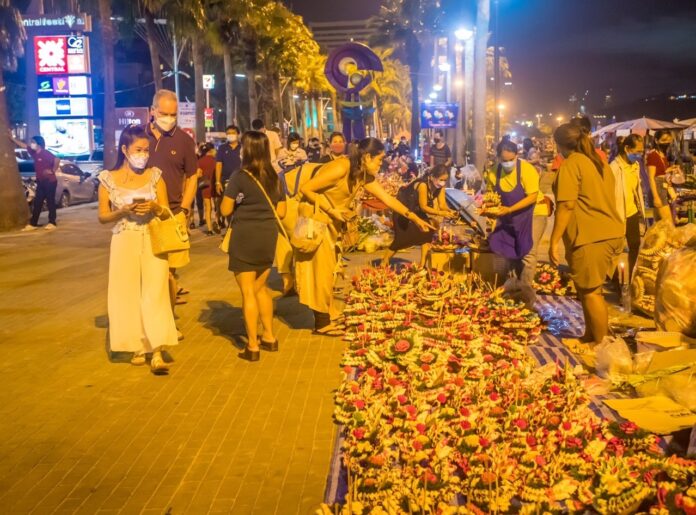
Thai and foreign revelers during Loy Krathong festival on Pattaya Beach, Nov. 19, 2021.

BANGKOK — More than 50,000 international arrivals have been logged since the country formally reopened to tourists on Nov. 1 — making up half of all reported arrivals throughout the year 2021.

According to figures published by the government, the country has welcomed 50,000 international travelers for the past 3 weeks, taking the total number of foreign arrivals this year to 100,000. Most of those were from the U.S., followed by the United Arab Emirates and Germany.

The numbers, though nowhere close to the pre-pandemic statistics, apparently encouraged government officials to revise their tourist arrival forecast for this year, from 180,000 to 200,000. The forecast was published by the Fiscal Policy Office, which operates under the Ministry of Finance.

Fiscal Policy Office director Pornchai Thiraveja told the media that next year will likely bring in up to 6 million foreign tourists, and the number will rise to 7 million if Chinese nationals are permitted to travel overseas again.

Pornchai also said that the introduction of any new economic stimulus measures will depend on the severity of the pandemic situation. He believes government spending of around 3.1 billion baht during the fiscal year of 2022 will greatly boost the economy.

On Nov. 1, Thailand launched its “Test and Go” program for travelers from an approved list of 64 countries and territories. Fully vaccinated tourists who arrived under the program must wait inside their hotel rooms up to one night to wait for their PCR test result. If the result comes back negative, they can freely travel around the country.

The government has hoped that the minimal quarantine would draw visitors back to Thailand, whose economy relied on the tourism sector. Prior to the pandemic, at least 38 million international tourists arrived in Thailand in 2019, compared to just over 100,000 this year.

Advertisement

Loy Krathong Honors, Pollutes Rivers

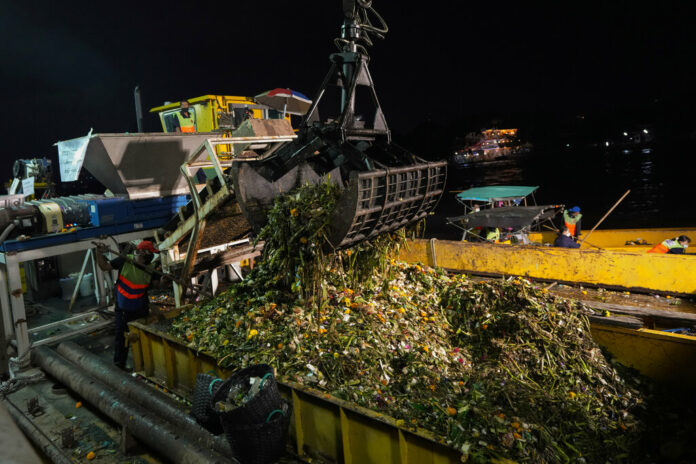
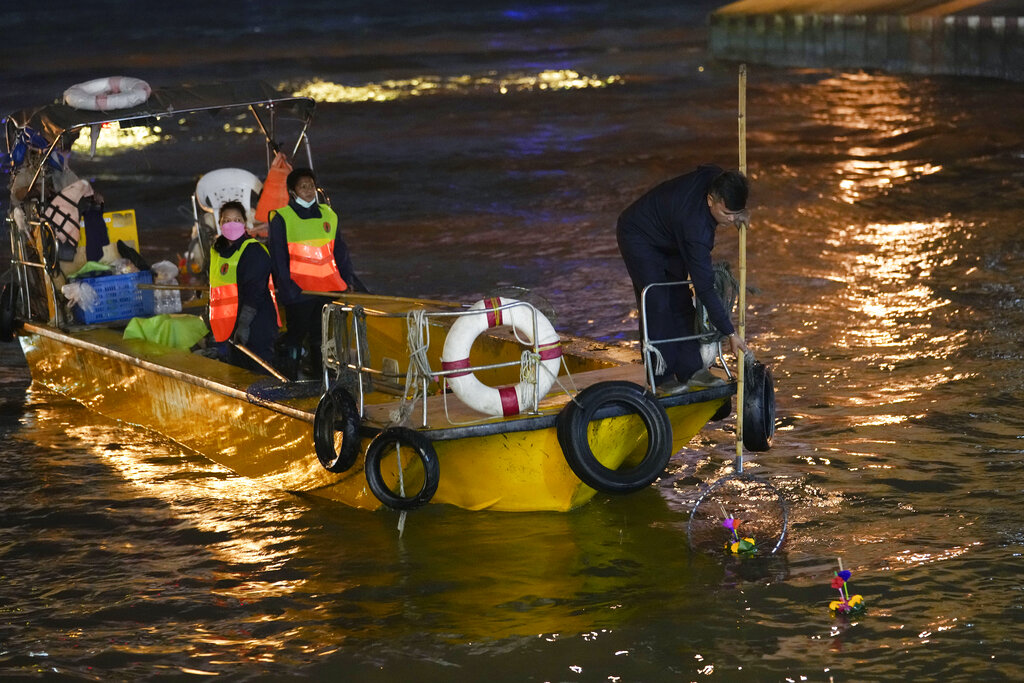
Workers collect small floating krathong from Chao Phraya River during Loy Krathong festival in Bangkok, Thailand, Friday, Nov. 19, 2021. Photo: Sakchai Lalit / AP

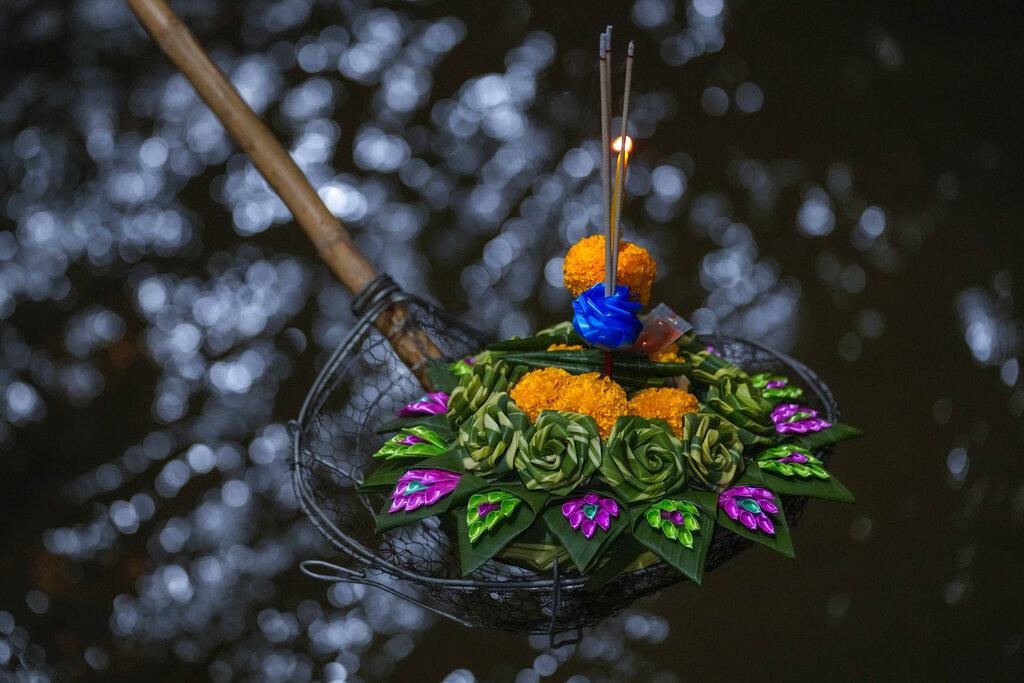
BANGKOK (AP) — Thais flocked to rivers and lakes on Friday evening to release small floats adorned with flowers and candles in an annual festival honoring the goddess of water, with thousands of the tiny boats ending up clogging and polluting the country’s waterways.

Within hours, workers began trawling the rivers to fish out the offerings, as paying tribute to the divinity is increasingly proving to be ecologically hazardous.

The Loy Krathong festival allows believers to symbolically float their misfortunes away on “krathongs” and start another year of life with a clean slate. The festival is celebrated on the night of the full moon of the 12th lunar month, which traditionally marks the end of the rainy season.

Thon Thamrongnawasawat, a leading Thai marine biologist, said getting people to stop using harmful materials such as polystyrene foam — Styrofoam — for their floats remains the priority because they cause the most damage to the water and aquatic life. The number of endangered sea creatures found dead ashore, which he believes stems from the problem of ocean trash in Thailand, doubled from 2017 to 2020.

Activists have noted a change in people’s behavior over decades, pointing to rising awareness of the damage krathongs cause. The total number of krathongs collected in Bangkok has fallen from over 900,000 in 2012 to just over 490,000 last year, and there has been an even sharper reduction in the number of floats made of Styrofoam, from 131,000 to under 18,000 over the same period.

Even so, some conservationists advocate a more radical solution.

AP21323485003722
A Thai family places krathongs, small boats made of corn and decorated with banana leaves and flowers, into a Ong Ang canal during Loy Krathong festival in Bangkok, Thailand, Friday, Nov. 19, 2021. Photo: Sakchai Lalit / AP

“We need to revolutionize the practice, allowing the ecosystem of the waterways to be restored,” said Tara Buakamsri, Thailand country director for the environmental group Greenpeace. “We should not release any floats, because even if they are made from natural materials, the amount of them exceeds what rivers can naturally deal with.”

“We depend on clean water for our livelihood and the aim of Loy Krathong should be to protect and rejuvenate our rivers without putting anything in them.”

Sales of materials for krathongs have been slow this year due to the pandemic, said Nopparat Tangtonwong, a vendor at Pak Klong market, famous for selling flowers.

“COVID-19 causes the economy to be sluggish, so people prefer saving their money and floating online instead,” she said.

At the same time, children are uninterested in banana-leaf floats, the main natural alternative to Styrofoam, she said. “They prefer fancy floats made of ice-cream cones and bread because they can feed the fish at the same time.”

Such an approach is not helpful, said Wijarn Simachaya, president of Thailand Environment Institute. “If you float somewhere with no fish, those floats will cause pollution in the water. It is difficult to collect them, too, as the bread absorbs the water and sinks into the river. ”

AP21323588748618
A Thai woman places a krathong, a small boat made of banana tree and decorated with banana leaves and flowers, into Chao Phraya River during Loy Krathong festival in Bangkok, Thailand, Friday, Nov. 19, 2021. Photo: Sakchai Lalit / AP

“In addition, the sellers usually put chemical colors in those floats, which is harmful to the water,” he said.

Banana leaves are the best krathong material because they do not decompose too quickly, and once collected, can be used for making fertilizer, Wijarn said.

“Doing a virtual Loy Krathong celebration is another good solution to avoid environmental damage, especially during the COVID-19 outbreak, but I don’t think it can satisfy people’s lifestyle, as they still want to enjoy the festival,” he said.

Late Friday night after people floated their cares away, municipal workers come out to scoop up a sea of floats that drifted along canals and down the Chao Phraya River before they decomposed and contaminated the water.

Dozens of small boats traveled along the river, each carrying about half a dozen people with hand-held nets. The boats then took their catch to a moored mothership, where it was dumped into a large shredding machine, compacted and hauled away by garbage trucks for landfill in a waste dump.

“We hope that this year the numbers of krathongs made with Styrofoam will continue to decrease and will be less than last year. And we will finish our cleanup operation before 5 o’clock in the morning,” said Chatree Wattanakhajorn, a top Bangkok official.

Story: Tassanee Vejpongsa

AP21323588215312
Worker collect small floating krathong from Chao Phraya River during Loy Krathong festival in Bangkok, Thailand, Friday, Nov. 19, 2021. Photo: Sakchai Lalit / AP
Advertisement

Can We Learn to Agree to Disagree?

Another young Thai made a stride at making the world known about the anachronistic and controversial lese majeste law this week.

It came in the form of music, rock music and metal in particular. The metal band, Defying Decay, was little known outside its circle of fans but that changed earlier this week when one of its songs, “The Law 112: Secrecy and Renegades” was listed second among rock songs most added by US radio stations on Tuesday. The song went viral in Thailand despite the fact that it’s in English and deafeningly loud.

“I’m really surprised. I didn’t know people could relate to it. The music itself is heavy but it’s a feeling people are feeling too,” Jay Poom Euarchukiati, lead singer and the songwriter told me in Bangkok on Thursday.

Jay is 24 and not alone as many opponents of the law are from a new generation.
He said the law is wrong. “I think it’s wrong. It’s been abused. It’s used wrongly. People have been dying [in prison] and I’m not okay with it.”

Like many families divided on the issue, Jay is no exception. He hopes people can respect each other’s differing views on the matter. “We’re all different people with different ideas.”

Jay is luckier than some. I have heard family members being disowned because of their differing views and ideologies. Some young monarchy-reform protesters paid the price of this narrowmindedness.

In the on-going battle over whether to reform the monarchy or not, my hope is that even if we disagree, we can learn to agree to disagree and respect one another.

It’s heartening to hear that some royalists are espousing the need to respect the rights of people who do not stand in respect of the royal anthem. In Thailand, the royal anthem is played prior to the screening of films and most moviegoers used to stand as the song is played.

Things have changed over the past few years as the number of those standing have significantly decreased to a point where even Prime Minister Gen Prayut Chan-ocha admitted and told students at the National Defense College to be courageous enough to stand.

Thai Raksa, a royalist group, posted on Facebook Friday telling royalists not to be disheartened by the fact that fewer people are now standing before the royal anthem but urged royalists to respect the rights of those who do not stand although it’s done due to their realisation that it won’t do the monarchy any good.

Their calls are a reference to past cases many years ago when those who did not stand were attacked and even witch hunted. The most infamous case was that of political activist Chotisak Onsoong and his girlfriend a decade ago who eventually fled Thailand in Dec 2010 to seek refuge in Indonesia for over a year. They spent two and a half year in Indonesia.

Thai Raksa clearly doesn’t want to see a repeat of the ugly confrontation.

“What we can rectify immediately is we must not threaten those who do not want to stand. They just expressed their right [not to stand]. To threaten or get into a brawl as seen reported in the past on various media will not do any good to the monarchy institution but will lead to negative perception. So if we love [the monarchy] we must think about [the king] first and before our feelings.”

To stand or not to stand, theatres have become a new contested stage for or against royalism. I note that the group supports the draconian lese majeste law that doesn’t respect the rights to freedom of expression but it is at least a good start. People need to civilly start to agree to disagree as more people like Jay will make their stance public and intentionally or not infuriate royalists.

I truly hope we can steer the society through deliberation, respect for differences and not through force.

Advertisement

Jury Finds Rittenhouse Not Guilty in Kenosha Shootings

Kyle Rittenhouse looks back to the gallery during his trial at the Kenosha County Courthouse in Kenosha, Wis., on Monday, Nov. 8, 2021. (Sean Krajacic/The Kenosha News via AP, Pool)

KENOSHA, Wis. (AP) — Kyle Rittenhouse was acquitted of all charges Friday after testifying he acted in self-defense in the deadly Kenosha shootings that became a flashpoint in the debate over guns, vigilantism and racial injustice in the U.S.

Rittenhouse, 18, began to choke up, fell forward toward the defense table and then hugged one of his attorneys as he heard a court clerk recite “not guilty” five times. A sheriff’s deputy whisked him out a back door.

“He wants to get on with his life,” defense attorney Mark Richards said. “He has a huge sense of relief for what the jury did to him today. He wishes none of this ever happened. But as he said when he testified, he did not start this.”

The verdict in the politically combustible case was met with anger and disappointment from those who saw Rittenhouse as a vigilante and a wannabe cop, and relief and a sense of vindication from those who regarded him as a patriot who took a stand against lawlessness and exercised his Second Amendment right to carry a gun and to defend himself. Supporters donated more than $2 million toward his legal defense.

The Rev. Jesse Jackson, the longtime civil rights leader, said the verdict throws into doubt the safety of people who protest in support of Black Americans.

“It seems to me that it’s open season on human rights demonstrators,” he said.

Rittenhouse was charged with homicide, attempted homicide and reckless endangering for killing two men and wounding a third with an AR-style semi-automatic rifle in the summer of 2020 during a tumultuous night of protests over the shooting of a Black man, Jacob Blake, by a white Kenosha police officer.

Rittenhouse, a then-17-year-old former police youth cadet, said that he went to Kenosha to protect property from rioters but that he came under attack and feared for his life. He is white, as were those he shot.

The anonymous jury, whose racial makeup was not disclosed by the court but appeared to be overwhelmingly white, deliberated for close to 3 1/2 days.

President Joe Biden called for calm, saying that while the outcome of the case “will leave many Americans feeling angry and concerned, myself included, we must acknowledge that the jury has spoken.”

Former President Donald Trump, who at the time of the shootings said it appeared Rittenhouse had been “very violently attacked, ” issued a statement Friday congratulating Rittenhouse on the verdict, adding “if that’s not self defense, nothing is!”

Rittenhouse could have gotten life in prison if found guilty on the most serious charge, first-degree intentional homicide, or what some other states call first-degree murder. Two other charges each carried over 60 years behind bars.

Kenosha County District Attorney Michael Graveley said his office respects the jury’s decision, and he asked the public to “accept the verdicts peacefully and not resort to violence.”

Ahead of the verdict, Democratic Gov. Tony Evers announced that 500 National Guard members stood ready in case of trouble. But hours after the jury came back, there were no signs of any major protests or unrest in Kenosha.

As he released the jurors, Circuit Judge Bruce Schroeder assured them the court would take “every measure” to keep them safe.

Wisconsin Lt. Gov. Mandela Barnes, who is Black and a Democratic candidate for U.S. Senate, denounced the outcome. He, like many civil rights activists, saw a racial double standard at work in the case.

“Over the last few weeks, many dreaded the outcome we just witnessed,” Barnes said. “The presumption of innocence until proven guilty is what we should expect from our judicial system, but that standard is not always applied equally. We have seen so many black and brown youth killed, only to be put on trial posthumously, while the innocence of Kyle Rittenhouse was virtually demanded by the judge.”

Other political figures on the right welcomed the verdict and condemned the case brought against Rittenhouse.

Mark McCloskey, who got in trouble with the law when he and his wife waved a rifle and a handgun at Black Lives Matter protesters marching past his St. Louis home in 2020, said the verdict shows that people have a right to defend themselves from a “mob.” He is now a Republican candidate for U.S. Senate in Missouri.

Fifteen minutes after the verdicts, the National Rifle Association tweeted the text of the Second Amendment.

The Kenosha case was part of an extraordinary confluence of trials that reflected the deep divide over race in the United States: In Georgia, three white men are on trial in the killing of Ahmaud Arbery, while in Virginia, a trial is underway in a lawsuit over the deadly white-supremacist rally held in Charlottesville in 2017.

The bloodshed in Kenosha took place during a summer of sometimes-violent protests set off across the U.S. by the killing of George Floyd in Minneapolis and other cases involving the police use of force against Black people.

Rittenhouse went to Kenosha from his home in nearby Antioch, Illinois, after businesses were ransacked and burned in the nights that followed Blake’s shooting. He joined other armed civilians on the streets, carrying a weapon authorities said was illegally purchased for him because he was underage.

Bystander and drone video captured most of the frenzied chain of events that followed: Rittenhouse killed Joseph Rosenbaum, 36, then shot to death protester Anthony Huber, 26, and wounded demonstrator Gaige Grosskreutz, now 28.

Prosecutors portrayed Rittenhouse as a “wannabe soldier” who had gone looking for trouble that night and was responsible for creating a dangerous situation in the first place by pointing his rifle at demonstrators.

But Rittenhouse testified: “I didn’t do anything wrong. I defended myself.”

Breaking into sobs at one point, he told the jury he opened fire after Rosenbaum chased him and made a grab for his gun. He said he was afraid his rifle was going to be wrested away and used to kill him.

Huber was then killed after hitting Rittenhouse in the head or neck with a skateboard, and Grosskreutz was shot after approaching with his own pistol in hand.

Under questioning from the prosecution, Grosskreutz said he had his hands raised as he closed in on Rittenhouse and didn’t intend to shoot the young man. Prosecutor Thomas Binger asked Grosskreutz why he didn’t shoot first.

“That’s not the kind of person that I am. That’s not why I was out there,” he said. “It’s not who I am. And definitely not somebody I would want to become.”

But during cross-examination, Rittenhouse defense attorney Corey Chirafisi asked: “It wasn’t until you pointed your gun at him, advanced on him … that he fired, right?”

“Correct,” Grosskreutz replied. The defense also presented a photo showing Grosskreutz pointing the gun at Rittenhouse, who was on the ground with his rifle pointed up at Grosskreutz.

Grosskreutz, under follow-up questioning from the prosecutor, said he did not intend to point his weapon at Rittenhouse.

After the verdict, Huber’s parents, Karen Bloom and John Huber, said the outcome “sends the unacceptable message that armed civilians can show up in any town, incite violence, and then use the danger they have created to justify shooting people in the street.”

Rittenhouse’s mother, Wendy Rittenhouse, seated near her son on a courtroom bench, gasped in delight, cried and hugged others around her.

Richards, the defense attorney, said that Rittenhouse wants to be a nurse and that he is in counseling for post traumatic stress disorder and will probably move away because “it’s too dangerous” for him to continue to live in the area.

Going in, many legal experts said they believed the defense had the advantage because of provisions favorable to Rittenhouse in Wisconsin self-defense law and video showing him being chased at key moments. Testimony from some of the prosecution’s own witnesses also seemed to buttress his claim of self-defense.

Some witnesses described Rosenbaum as “hyperaggressive” and said that he dared others to shoot him and threatened to kill Rittenhouse earlier that night; others said he acted “belligerently” but did not appear to pose a serious threat. A videographer testified Rosenbaum lunged for the rifle just before he was shot, and a pathologist said his injuries appeared to indicate his hand was over the barrel.

Also, Rosenbaum’s fiancee disclosed that he was on medication for bipolar disorder and depression. Rittenhouse’s lawyers branded Rosenbaum a “crazy person.”

Rittenhouse had also been charged with possession of a dangerous weapon by a person under 18, a misdemeanor that carries nine months behind bars and appeared likely to lead to a conviction.

But the judge threw out that charge before deliberations after the defense argued that the Wisconsin law did not apply to the long-barreled rifle used by Rittenhouse.

The verdicts end the criminal case against Rittenhouse. He does not face any federal charges and he is unlikely to because federal law only applies in very limited cases for homicides. No civil lawsuits have been brought against Rittenhouse yet, either, but there are lawsuits targeting others. Huber’s father is suing police and government officials in Kenosha alleging that they allowed for a dangerous situation that resulted in his son’s death, and Grosskreutz has a similar lawsuit. A group of protesters has sued the city and county of Kenosha alleging that curfew laws were enforced against them but not against armed people like Rittenhouse.

___

Associated Press writer Tammy Webber contributed from Fenton, Michigan; Aaron Morrison from New York. Bauer reported from Madison, Wis., and Forliti from Minneapolis.


Advertisement

CP Foods launches “MEAT ZERO” overseas for the first time, starting in Singapore and Hong Kong 

Charoen Pokphand Foods PCL. (CP Foods) launched “MEAT ZERO”, Thailand’s bestselling plant-based brand, in Singapore and Hong Kong. This is the first time it is officially available in international markets.  

CP Foods’ CEO Prasit Boondoungprasert says the company sees opportunity in meatless meals, with the number of vegans, vegetarians and flexitarians altogether constituting about 29% of the global population. Meanwhile, Vegans and flexitarians are accounted for around 40% of Hong Kong population.  However, while there are already meatless options in the market, most of them are pricey and lack of variety. 

image3 16

The brand* aims to become no.1 plant-based brand in Asia within 3 years. CP Foods also plans to export the plant-based products to North America, Europe and other markets later on. 

 ““MEAT ZERO’s affordable price point will make this lifestyle more accessible to those who are looking to adopt a sustainable diet. The incredible taste will also convert sceptics.” says Mr Prasit. 

image2 18

It took more than three years to produce the plant-based meat products and 2,000 experiments helmed by hundreds of researchers and teams from CP Foods Food Research and Development Centre. MEAT ZERO partnered with Fuji Oil from Japan, a world-class plant-based products company, as well as experts from the U.S and Taiwan to develop PLANT-TEC innovation.  

image5 7

The innovation makes the nutritious brand is as tasty as real meat and consumers are barely able to tell if they are eating plants or real meats, and it contains health nutrition from high fiber plant-based protein, which is good for intestine and bowel, and low cholesterol. 

The brand enjoys success at its home country.  Over 4 million packs were sold in Thailand since launched in May this year. It also won BEST PLANT-BASED BRANDING from Root The Future Plant-Based Food Awards 2021. 

In Singapore, CP Foods’ MEAT ZERO is available at Cold Storage, NTUC FairPrice, FairPrice Online, RedMart, Amazon, Caltex, SPC and Sinopac Petrol Kiosks. In Hong Kong, it is available at WELLCOME Stores, AEON Stores (Hong Kong), YATA Department Store, ABOUTHAI Stores, FRESH Stores, PANDAMART, and HKTVMALL now. 

image4 10

“CP Foods will pursue the path to become a full-fledged food tech company that responds to the food needs of all consumer groups,” said Mr. Prasit. 

Advertisement

BGRIM acquires majority stake in Vietnamese wind farm, consistent with renewable energy and net-zero carbon emission milestones

BANGKOK, 19 November 2021: B.Grimm Power PCL (BGRIM), Thailand’s leading industrial power producer with growing regional presence, has stepped up its renewal energy portfolio by acquiring a majority ownership in a key wind power scheme in Vietnam.

BGRIM, through its wholly-owned subsidiary B.Grimm Renewable Power 1 Co Ltd, has purchased an 80% stake in Huong Hoa Holding Joint Stock Company, the sponsor of the 48-megawatt Huong Hoa Onshore Wind Farm Project in Huong Hoa district, Quang Tri province.

BGRIM has paid US$7 million (231 million baht) for the stake to Nguyen Van Quan, the Huong Hoa Holding shareholder. The deal was sealed on 16 November 2021 after being endorsed by the relevant regulatory authorities of the Socialist Republic of Vietnam. The transaction is in line with the directive given by BGRIM’s Board of Directors on 11 August and 11 November.

Huong Hoa Holding has already secured a contract to supply the electrical output from the wind farm in Vietnam’s north central coast region to the Electricity of Vietnam (EVN). 

Truong Thanh Energy and Real Estate Joint Stock Company (TEG), a listed company on the Vietnam Stock Exchange, holds another 20% stake in Huong Hoa Holding, to whom BGRIM has been in a successful collaboration with in the development of the remarkable track record of the first national largest installed capacity under the single PPA of 257-MW Phu Yen TTP JSC Solar PV Project in Phu Yen province. The project also gained the renowned international award, namely the Best Vietnam Solar Power Plant Developer 2019, as well as securing Asian Development Bank (ADB)’s $186 million loan, through the country’s first certified green loan of its kind.

Huong Hoa Onshore Wind Power Project is the third major renewal energy venture in Vietnam which BGRIM has engaged as part of the company’s fledging green energy portfolio at home and abroad.

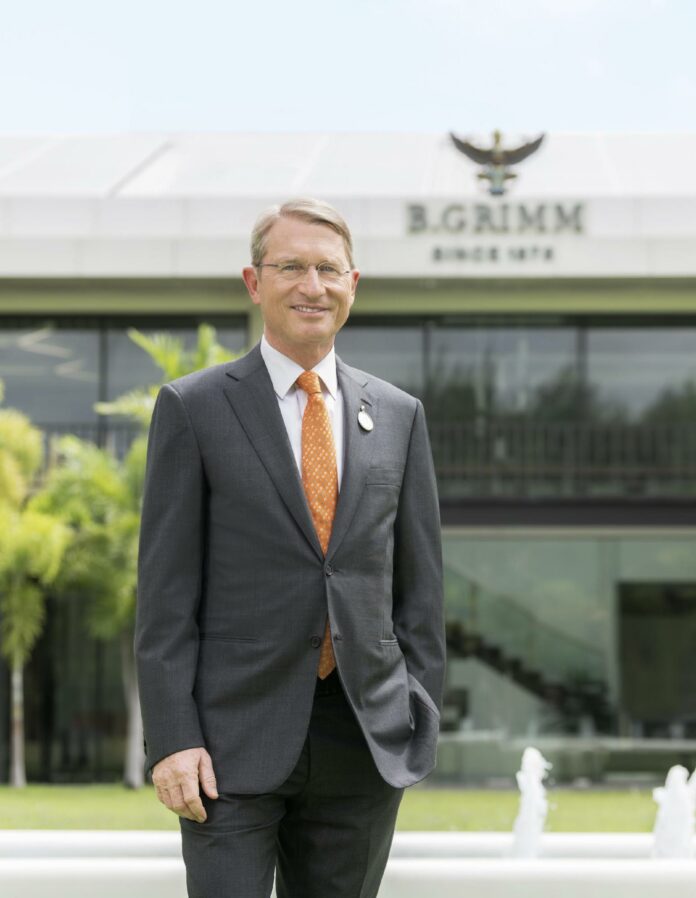
The Huong Hoa Onshore Wind Farm acquisition shows BGRIM’s strong readiness to become one of the major developers of renewable energy under Vietnam’s Power Development Plan (PDP) that has been secured for significant increase of generating capacity in renewable energy platform, said Dr Harald Link, Chairman and President of BGRIM.

BGRIM has already been involved in two large-scale solar energy projects in Vietnam. They are, first, the 257-MW Phu Yen TTP Solar PV Project in Phu Yen, and another the 240-MW Dau Tieng Project in Tay Ninh, south-west of Vietnam.

Dr Link said that the Huong Hoa Onshore Wind Farm acquisition underlines BGRIM’s commitment to pro-actively expand its renewable energy, in line with the company’s vision of “Empowering the World Compassionately” based on the principles of generosity in business to create value for society and growing alongside Thailand and the region. The expanding renewal energy portfolio also forms an integral part of the company’s long-term goal to become a net-zero carbon emissions organisation by 2050.

Advertisement

Hot News

LATEST NEWS

Bangkok
overcast clouds
35.9 ° C
36.6 °
33.3 °
56 %
4.4kmh
94 %
Tue
35 °
Wed
34 °
Thu
35 °
Fri
31 °
Sat
31 °