BANGKOK — Thailand’s only film to win Best Film at the Venice Film Festival will have a rare screening in the country this Friday.
“Manta Ray” (2018) will screen 8:30pm Friday as part of the Global Migration Film Festival running Friday through Saturday at the Bangkok Screening Room.
Critically-acclaimed, award-winning arthouse films by Thai directors are rarely, if never, screened in the country. “Manta Ray,” or “Kraben Rahu,” tells the story of a Thai fisherman who rescues and nurses a mute Rohingya man.
In an interview with Khaosod English after his big win, director Phuttiphong Aroonpheng said his fellow Thais’ hatred of Rohingya spurred him to create the film.
“What really struck me was how many people, including my friends, aggressively hate the Rohingya. I know that Thai people normally look down on people from our neighboring countries, but those kind of insults never caused a crisis this bad,” Phuttiphong said.
The four other films in the festival also expand on the theme of compassion for migrants and refugees. “Angkar” (2018), screening 7pm Friday, is a documentary about Cambodian who fled the Khmer Rouge returning from France to the places they used to live.
“The Tower” (2018) is a Norwegian animated film about a Palestinian girl who lives in a refugee camp in Lebanon, generations after they left Israel after its founding, and will be screened 2pm on Saturday.
Multiplied in transition is the documentary “Shelter: Farewell to Eden” (2019), about a Filipino transgender person who leaves the Moro Islamic Liberation Front, goes to Libya, and then Europe. “Shelter” will be screened at 4:15pm Saturday.
The last film of the fest, Mexican documentario “Purgatorio: A Journey into the Heart of the Border” (2013) will be screened 6:45pm Saturday and takes a look at migrants trying to cross the Mexico-US border.
This year’s film fest is the third to be held. Last year’s featured the debut of a documentary about hundreds of women marrying Danish men.
Films are subtitled in English, and admission is free. Tickets can be reserved 30 minutes before each screening, on a first-come, first-served basis. The Bangkok Screening Room is reachable from MRT Lumphini.
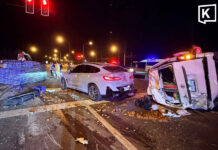
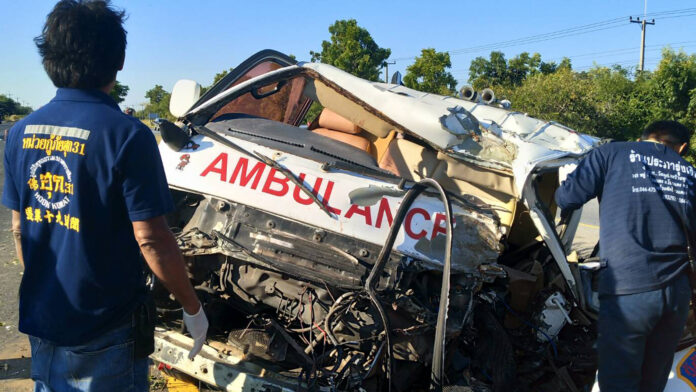
Wrecked ambulance after the accident on Nov. 25, 2019.
NAKHON RATCHASIMA — An ambulance en route to deliver a patient home struck into a tree on Monday morning, killing the patient and wounding her relatives, police said.
Ambulance driver Kittipoom Imsuk, 42, apparently dozed off behind the wheel before crashing the vehicle on the side of Mittraphap Road in Korat, local police chief Col. Thanatsan Muangi said by phone.
Though the investigation is ongoing, Thanatsan of Non Daeng Police Station said Kittipoom might have dozed off after a long journey throughout the night.
The patient, Somporn Nawongsa, 41, died at the scene, where three of her relatives and the driver sustained serious injuries, according to the police.
The ambulance was hired to transport Somporn from a hospital in Chonburi back to her home in Nong Khai province, police said.
Accidents involving ambulances were frequent enough for the Ministry of Public Health to impose a speed limit of 80 kmph on medical vehicles operating in non-emergency assignments back in April.
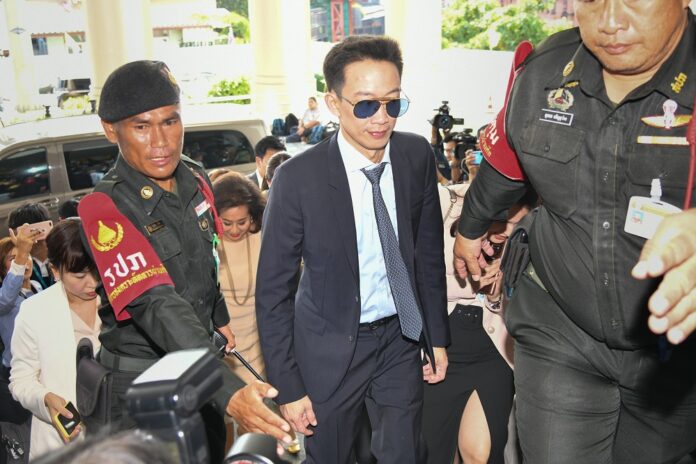
Panthongtae “Oak” Shinawatra at the court on Nov. 25, 2019.
BANGKOK — A court on Monday found the son of former PM Thaksin Shinawatra not guilty of money laundering charges, sparing him from jail term.
Panthongtae “Oak” Shinawatra was acquitted by the Central Criminal Court for Corruption and Misconduct Cases, where the majority judges said there was no sufficient evidence to implicate him in the charges.
Prosecutors accused Panthongtae of involvement in a loan scandal by Krung Thai Bank and receiving 10 million baht in cheque. He was charged with conspiring to launder money.
Panthongtae embraced his lawyers upon hearing the verdict and left the court without speaking to reporters.
The 41-year-old is widely considered to be a possible successor to Thaksin’s political dynasty.
SEOUL, South Korea (AP) — K-pop star and TV celebrity Goo Hara was found dead at her home in Seoul on Sunday, police said.
Police said an acquaintance found the 28-year-old dead at her home in southern Seoul and reported it to authorities.
The cause of death wasn’t immediately known. Police refused to provide further details.
Goo made her debut in 2008 as a member of the girl group Kara, which had big followings in South Korea, Japan and other Asian countries. She later worked as a solo artist and appeared on many TV shows.
In May, Goo was reportedly found unconscious at her home and was hospitalized.
She was embroiled last year in public disputes with an ex-boyfriend who claimed to be assaulted by her. Goo accused the man of having threatened to circulate a sex video of her. The case made her the subject of tabloid fodder and malicious online messages.
In October, another K-pop star and actress, Sulli, was found dead at her home near Seoul. The 25-year-old was known for her feminist voice and outspokenness that was rare among female entertainers in deeply conservative South Korea. Before her death, she appeared in a TV show and spoke out against online backlash she received over her lifestyle.
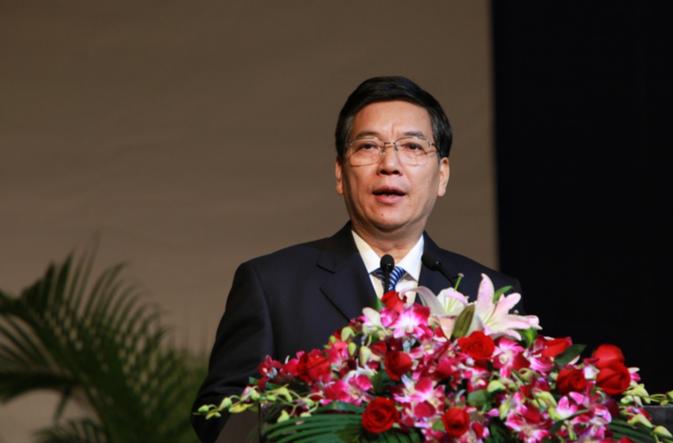
BEIJING (Xinhua) — Qin Guangrong, former Party chief of southwest China’s Yunnan Province and a former senior national legislator, has been indicted on charge of bribe-taking, the Supreme People’s Procuratorate (SPP) said Monday.
Qin was accused of taking advantage of his former positions in Yunnan to seek profits for others and accepting vast sums of money and gifts in return, according to the SPP statement.
Qin’s case was handed over to the procuratorate of Chengdu, capital of Sichuan Province in southwest China, for review and prosecution upon the designation of the SPP after the National Supervisory Commission concluded the investigation, it said.
Qin will stand trial in the Chengdu Municipal Intermediate People’s Court, it added.
The SPP said the prosecutors had informed the defendant of his litigation rights, interrogated him and listened to the defense counsel’s opinions.
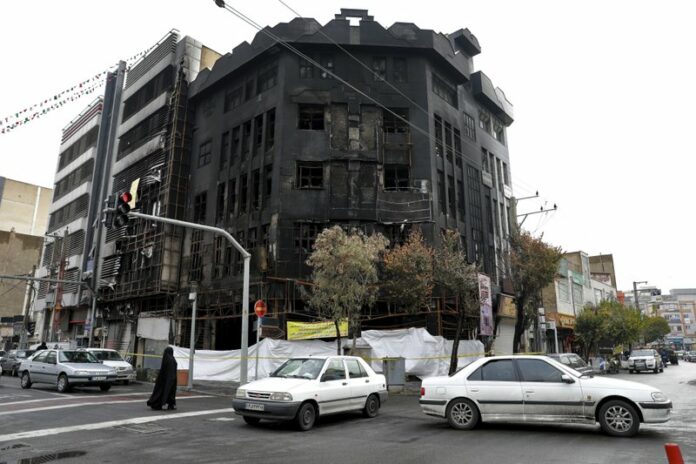
In this Wednesday, Nov. 20, 2019 file photo, traffic passes a building that was set ablaze during recent protests over government-set gasoline prices rises, in Tehran, Iran. (AP Photo/Ebrahim Noroozi, File)
DUBAI, United Arab Emirates (AP) — Machine gun fire answers rock-throwing protesters. Motorcycle-riding Revolutionary Guard volunteers chase after demonstrators. Plainclothes security forces grab, beat and drag a man off the street to an uncertain fate.
As Iran restores the internet after a weeklong government-imposed shutdown, new videos purport to show the demonstrations over gasoline prices rising and the security-force crackdown that followed.
The videos offer only fragments of encounters, but to some extent they fill in the larger void left by Iran’s state-controlled television and radio channels. On their airwaves, hard-line officials allege that foreign conspiracies and exile groups instigated the unrest. In print, newspapers offered only PR for the government or had merely stenographic reporting at best, the moderate daily Hamshahri said in an analysis Sunday.
They don’t acknowledge that the gasoline price hike Nov. 15, supported by its civilian government, came as Iran’s 80 million people already have seen their savings dwindle and jobs scarce under crushing U.S. sanctions. President Donald Trump imposed them in the aftermath of unilaterally withdrawing America from Tehran’s nuclear deal with world powers.
Authorities also have yet to give any overall figures for how many people were injured, arrested or killed during the several days of protests that swept across some 100 cities and towns.
Amnesty International said it believes the unrest and the crackdown killed at least 106 people. Iran disputes that figure without offering its own. A U.N. office earlier said it feared the unrest may have killed “a significant number of people.”
Starting Nov. 16, Iran shut down the internet across the country, limiting communications with the outside world. That made determining the scale and longevity of the protests incredibly difficult. Some recycled days-old videos and photographs as new, making it even more difficult.
Since Saturday, internet connectivity spiked in the country, allowing people to access foreign websites for the first time. On Sunday, connectivity stood nearly at 100% for landline services, while mobile phone internet service remained scarce, the advocacy group NetBlocks said.
The restoration brought messaging apps back to life for Iranians cut off from loved ones abroad. It also meant that videos again began being shared widely.
Recently released videos span the country. One video from Shiraz, some 680 kilometers (420 miles) south of Tehran, purports to show a crowd of over 100 people scatter as gunfire erupts from a police station in the city. One man bends down to pick up debris as a person off-camera describes demonstrators throwing stones. Another gunshot rings out, followed by a burst of machine gun fire.
In Kerman, some 800 kilometers (500 miles) southeast of Tehran, the sound of breaking glass echoes over a street where debris burns in the center of a street. Motorcycle-riding members of the Basij, the all-volunteer force of Iran’s paramilitary Guard, then chase the protesters away.
Another video in Kermanshah, some 420 kilometers (260 miles) southwest of Tehran, purports shows the dangers that lurked on the streets of Iran in recent days. Plainclothes security forces, some wielding nightsticks, drag one man off by the hair of his head. The detained man falls at one point.
“Look, (the agents) wear styles like the youth,” one man off-camera says, swearing at them.
On Sunday, it remained unclear if and how widespread any remaining demonstrations were. The acting commander of the Revolutionary Guard, Gen. Ali Fadavi, repeated the allegation that America was behind the protests, without offering any evidence to support his claim.
“Why did (the Americans) get angry after we cut off the internet? Because the internet is the channel through which Americans wanted to perform their evil and vicious acts,” Fadavi said. “We will deal with this, Islamic Republic supporters, and our proud men and women will sign up to make a domestic system similar to the internet with operating systems that (the Americans) can’t (control) even if they want.”
That likely refers to what has been known as the “halal net,” Iran’s own locally controlled version of the internet aimed at restricting what the public can see. The system known as the National Information Network has some 500 government-approved national websites that stream content far faster than those based abroad, which are intentionally slowed, activists say. Iranian officials say it allows the Islamic Republic to be independent if the world cuts it off instead.
But while Fadavi earlier said the protests were put down in 48 hours, he also acknowledged the scope of the unrest by comparing it to Operation Karbala-4, one of the worst military disasters suffered by Iran during its bloody 1980s war with Iraq.
That scope could be seen in one video. In the capital, Tehran, footage earlier aired by the BBC’s Persian service shot from a car purports to show a tableau of violence on Sattarkhan Street, as anti-riot police officers clashed with protesters.
In the video, a woman’s scream rises over the shouts of the crowd as plainclothes security forces wearing white surgical masks accost one man, who puts his hands up to his face and hunches over to shield his body. Men walk backward to watch the chaos amid police with batons and riot shields, then run.
A woman in a green headscarf argues with one anti-riot police officer in front of a car.
“What do you say?” the police officer asks.
“He kicked my car,” she responds.
“Move,” the police officer orders. “Whom do you want to blame in this situation?”
Someone chases a man in front of a bank as people curse. The car makes a right-hand turn onto another street. A police officer off-camera shouts: “Come here!”
“Go, go, go!” a woman in the car cries out.
The car speeds away, passing burning debris. The clip ends. It lasts only 35 seconds.
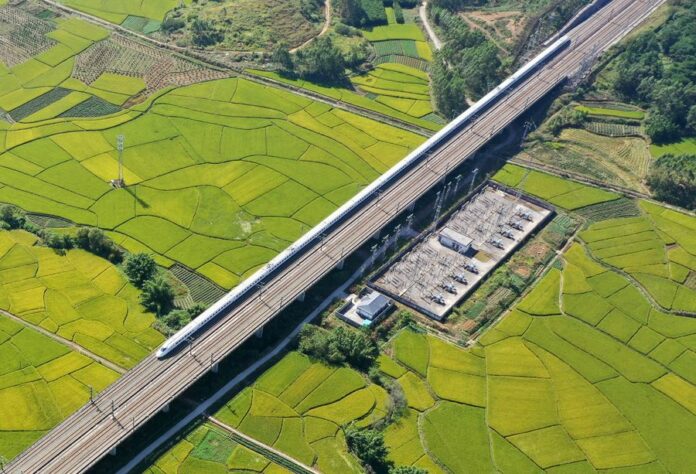
Photo taken on Oct. 29, 2019 shows a bullet train running through the fields of Gula Township of Binyang County, south China's Guangxi Zhuang Autonomous Region. (Xinhua/Lu Boan)
BEIJING (Xinhua) — China’s high-speed railway network will continue to top the world with an estimated length of 35,000 km by the end of this year, said China Railway.
The total length of China’s railways will exceed 139,000 km by the end of 2019, according to the company.
In 2019, China’s railways are estimated to record 3.6 billion passenger trips, up 92 percent from 2012.
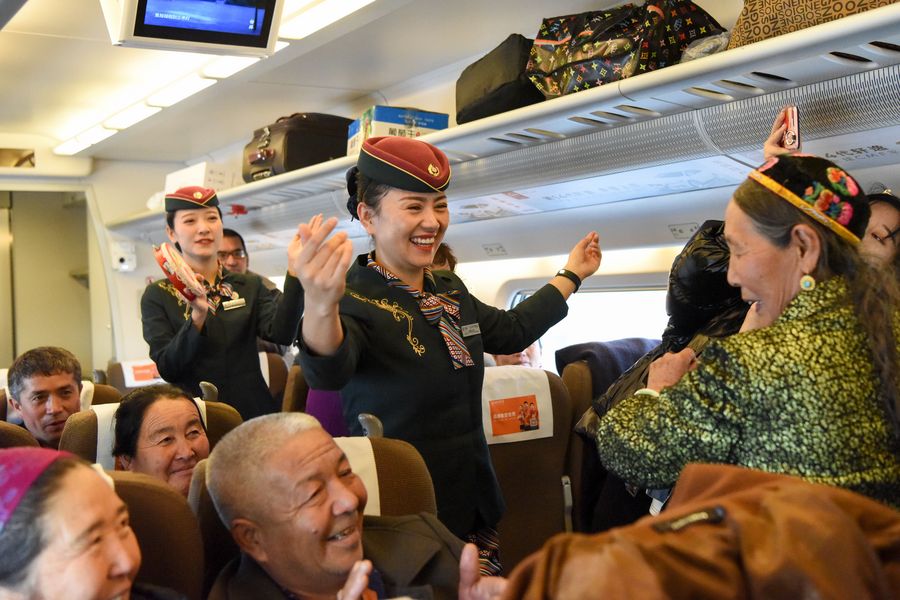
Stewardesses and passengers celebrate the fifth anniversary of the operation of the Xinjiang section of the Lanxin high-speed railway on the train D8804 from Urumqi to Hami in northwest China’s Xinjiang Uygur Autonomous Region, Nov. 16, 2019. (Xinhua/Ding Lei)
Bullet trains are expected to handle 2.31 billion passenger trips, a 3.4-fold increase from 2012.
Overseas projects like the China-Laos railway, Jakarta-Bandung High-Speed Railway and Hungary-Serbia railway made solid headway this year, garnering global prestige for China’s railways.
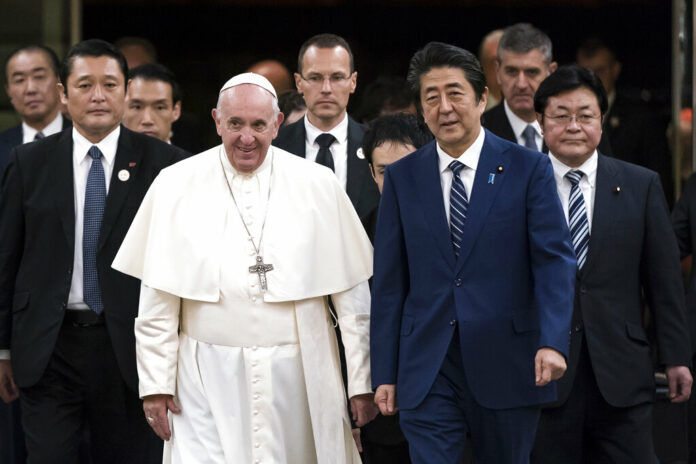
Pope Francis walks with Japan's Prime Minister Shinzo Abe as he arrives at the prime minister's official residence Monday, Nov. 25, 2019 in Tokyo. (Tomohiro Ohsumi/Pool Photo via AP)
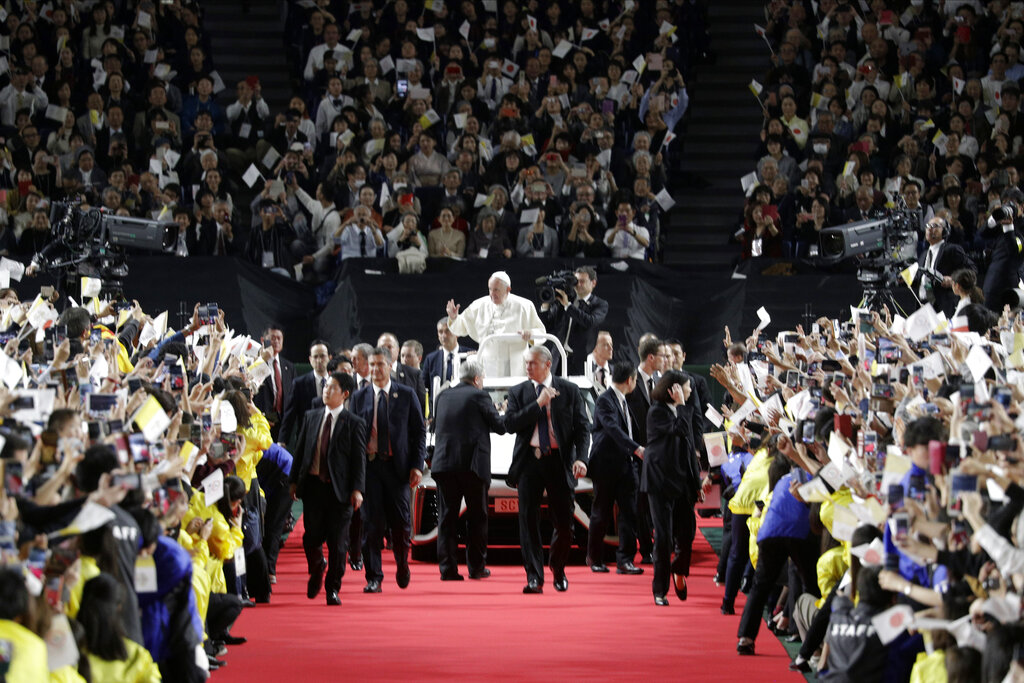
TOKYO (AP) — Pope Francis voiced concern about nuclear power Monday after meeting with victims of Japan’s 2011 nuclear disaster, saying the development of future energy sources must take environmental considerations into account.
Francis didn’t explicitly urge a ban on nuclear energy during his emotional encounter with victims. But he recalled that Japan’s Catholic bishops called for the abolition of nuclear power plants in the aftermath of the “triple disaster,” in which three reactors at a nuclear plant in Fukushima melted down after an earthquake triggered a tsunami.
The meltdown coated the area in radioactive fallout and at one point forced the displacement of 160,000 people. Nine years later, more than 40,000 people still can’t return home.
After comforting some of the evacuees who gathered in Tokyo, Francis said the Fukushima accident will not be fully resolved until the scientific, medical and societal concerns it raised are addressed.
“In turn, this involves, as my brother bishops in Japan have emphasized, concern about the continuing use of nuclear power; for this reason, they have called for the abolition of nuclear power plants,” he said.
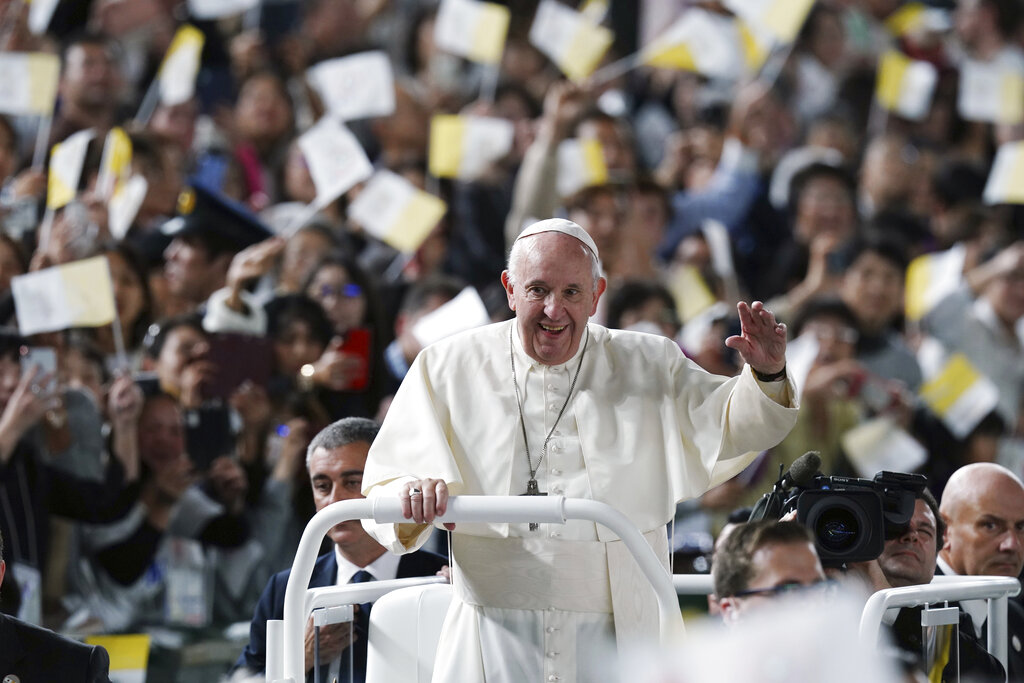
Pope Francis waves from Popemobile as he arrives for Holy Mass at Tokyo Dome Monday, Nov. 25, 2019, in Tokyo. Photo: Gregorio Borgia / AP
Going forward, he said, “important decisions will have to be made about the use of natural resources, and future energy sources in particular.”
During his first full day in Japan on Sunday, Francis visited Nagasaki and Hiroshima — where two U.S. atomic bombs were dropped in World War II — and said both the use and possession of nuclear weapons was “immoral.”
He has not articulated a formal position on nuclear power, but the Vatican has previously called for the “safe, secure, and peaceful, development and operation of nuclear technologies.” Francis, however, has made environmental concerns a pillar of his papacy and has now heard first-hand from Hiroshima and Fukushima survivors of the health and environmental effects of radiation exposure.
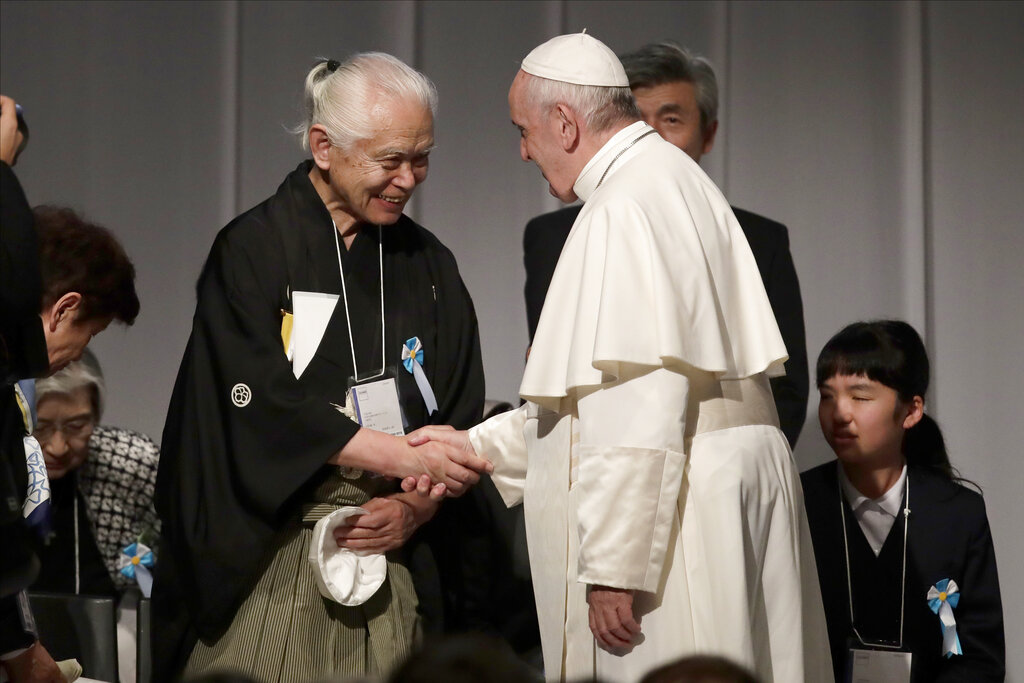
Francis spoke after listening to searing testimony from Fukushima victims, including Matsuki Kamoshita, a 17-year-old high school student from Iwaki on the eastern coast of Fukushima.
Kamoshita wrote to the pope last year begging that he visit Fukushima to see for himself the impact. He was rewarded with a papal audience at the Vatican, and on Monday a chance to address the pope in public to tell his story.
Pope Francis, right, meets with Haratsugu Yamaura, one of the victims of the March 11, 2011 Fukushima nuclear plant disaster in northern Japan Monday, Nov. 25, 2019, in Tokyo, Japan. Photo: Jae Hong / AP
The day after the tsunami, Kamoshita’s parents and his younger brother evacuated and eventually ended up in Tokyo to escape the radiation. Instead of sympathy, he said he faced bullying at school, where he was treated as if he were “infectious.”
In his speech to the pope Monday, Kamoshita lamented that the government had “given up” on housing evacuees while continuing to pursue nuclear power as a state policy.
“It will take many times longer than my lifetime to restore the contaminated land and forests,” he told the pope. “So, for us who live there, adults have a responsibility to explain without concealing anything about radioactive contamination, exposure and possible damage in the future. I don’t want them to die before us, having lied or not admitting the truth.”
Kamoshita asked for the pope to pray that political leaders find another path.
“And please pray with us that people from all over the world will work to eliminate the threat of radiation exposure from our future,” he said.
After he finished, he approached the pope, who took him in his arms for a long embrace.
The pro-nuclear government of Prime Minister Shinzo Abe has sought to restart as many reactors as possible to keep the nuclear industry and technology alive, especially as it seeks to showcase its recovery ahead of the Tokyo Olympics next year.
Pope Francis waves in Popemobile as he arrives for Holy Mass at Tokyo Dome Monday, Nov. 25, 2019, in Tokyo. Photo: Eugene Hoshiko / AP
Areas that used to be under the no-go zone in Fukushima have opened following decontamination efforts, prompting people to return home and resulting in cuts to government financial support for evacuees.
“Regardless of the position on what to do with nuclear energy, its victims here are suffering under the government policy that has marginalized them,” said Kazuko Ito, secretary general of Human Rights Now.
Ito welcomed Francis’ visit as a chance to “shed light on the issue and let their voices be heard.”
Francis’ meeting with the victims kicked off a busy day of activities in Tokyo, including a private audience with Emperor Naruhito, a rally with young people and Mass at the Tokyo Dome.
Present in the crowd of 50,000 for the Mass was Iwao Hakamada, a former professional boxer who has become a leading symbol for the anti-death penalty movement in Japan. Hakamada, 83, converted to Catholicism during his decades on death row for murders he says he did not commit.
Francis has said the death penalty is “inadmissible” in all cases, and one of his main messages while in Japan was to “respect all life.” Local organizers confirmed Hakamada was at the Mass, but the Vatican declined to say if the pope met with him as his supporters had hoped.
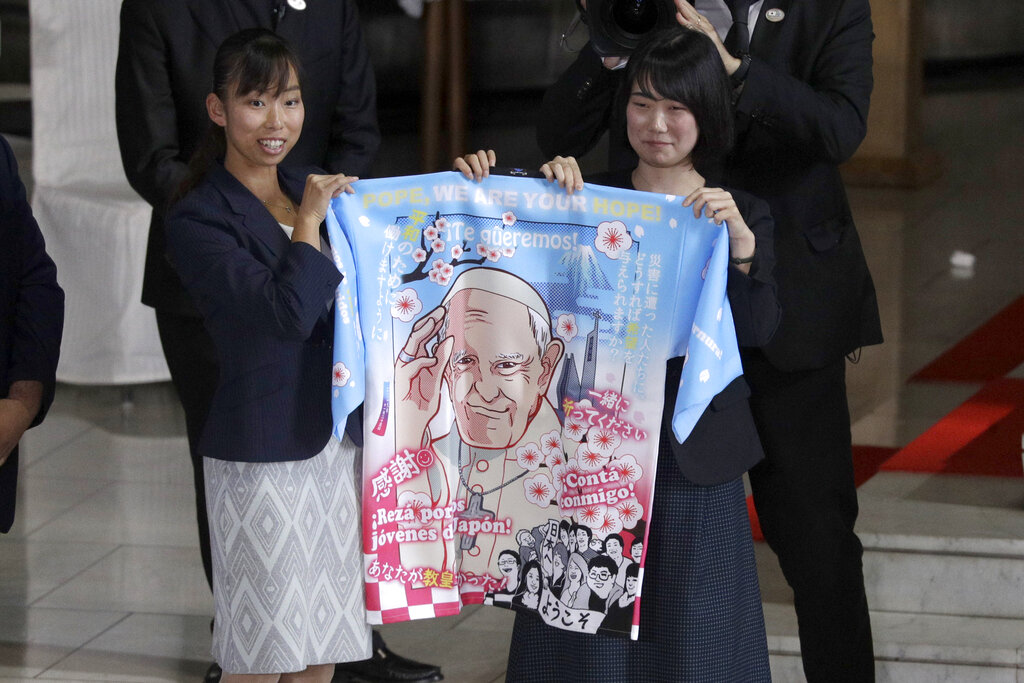
Young participants present Pope Francis with a traditional Japanese coats known as “happi” while he visit at the Cathedral of Holy Mary Monday, Nov. 25, 2019, in Tokyo, Japan. Photo: Gregorio Borgia / AP
During his meeting with young people, Francis denounced what he called an “epidemic” of bullying that is afflicting youth in Japan and elsewhere.
“We must all unite against this culture of bullying and learn to say “Enough!” Francis told the students, three of whom recounted the pressures they face in a hyper-competitive society, their feelings of inadequacy and cruelty they sometimes face from their classmates that drives some to suicide.
At the end of the day, the pope delivers his main political speech to Abe and government authorities.
Francis wraps up his weeklong trip to Asia with a speech Tuesday at Sophia University, Japan’s main Catholic university founded by his Jesuit order a century ago.
A giant panda opens a gift box prepared from the Adelaide Zoo, Adelaide, Australia, Nov. 24, 2019. (Photo by Lyu Wei/Xinhua)
ADELAIDE, Australia (Xinhua) — Good news for the Australians – the two giant pandas from China will stay in South Australia for another five years.
According to the Adelaide Zoo, it has signed the agreement with the China Wildlife Conservation Association to extend the loan of the two giant pandas, Wang Wang and Fu Ni, for five more years.
“We are absolutely thrilled to announce that Wang Wang and Fu Ni will stay at Adelaide Zoo until late 2024,” Zoos SA (South Australia) Chief Executive Elaine Bensted said on Sunday.
“From young to old, everyone who visits our Bamboo Forest falls in love with Wang Wang and Fu Ni. They are always a delight to watch, whether they’re exploring their habitat, laying in the sun, climbing trees, or eating bamboo,” she said.
A giant panda opens a gift box prepared from the Adelaide Zoo, Adelaide, Australia, Nov. 24, 2019. (Photo by Lyu Wei/Xinhua)
Phil Ainsley, director of life sciences at Adelaide Zoo, said the agreement offered an opportunity to contribute to global panda research.
“We look forward to continuing to help Giant Panda conservation and gain a better understanding of pandas living in the southern hemisphere,” he said.
Adelaide Zoo is the second oldest zoo in Australia, with a history of more than 130 years and more than 2,500 animals. Pandas Wang Wang (meaning Net Net) and Fu Ni (meaning Lucky Girl) arrived in November 2009 as the first pair of pandas in the southern part of the globe.
According to Bensted, ever since they settled down in Adelaide, the pair have attracted 4 million visitors.
Chinese Vice Consul General in Adelaide Pi Lijun said the pair, now already animal stars in the zoo, have played a positive role in improving people-to-people relationship between China and Australia. “Signing the agreement is undoubtedly good news to people who love those pandas,” he said.
“The pandas provide the opportunity for us to continue to enhance understanding at a people-to-people level,” said Simon Birmingham, minister for Trade, Tourism and Investment.
He noted that behind the agreement were the research links between the two countries regardless of the challenges. “We are also committed to continuing to pursue the partnership between Australia and China through positive ventures such as this one.”
To celebrate the five-year extension and encourage visitors, the zoo has slashed ticket prices to 5 Australian dollars (about 3.4 U.S. dollars) for children up to 15 years old during Nov. 25-30 2019.
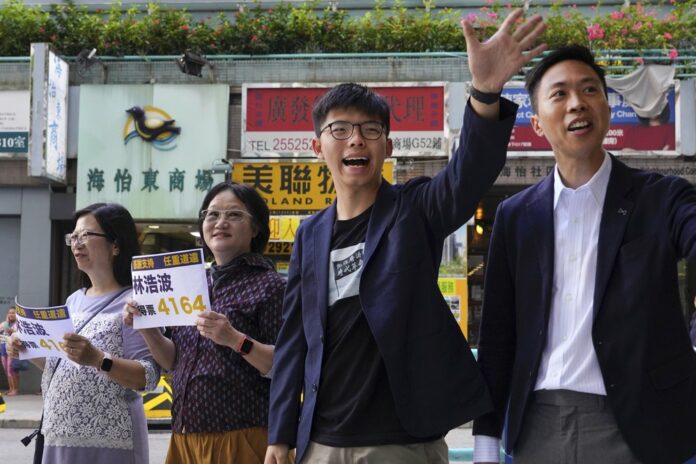
Election winner candidate Kelvin Lam, right, and pro-democracy activist Joshua Wong, second right, wave to people and thank for their support, outside South Horizons Station in Hong Kong, Monday, Nov. 25, 2019. (AP Photo/Vincent Yu)
HONG KONG (AP) — The pro-democracy opposition appears to have swept to an resounding victory in Hong Kong elections, as a record turnout dealt a clear rebuke to city leader Carrie Lam and her handling of violent protests that have divided the Chinese territory.
Some votes were still being counted Monday morning, but Hong Kong media tallied that the pro-democracy camp had easily won a majority in the vote for 452 district council seats.
The result could force the central government in Beijing to rethink how to handle the unrest, which is now in its sixth month. The district councils have little power, but the vote became a referendum on public support for the protests.
The pro-democracy camp hailed its strong gains in the normally low-key race as a “victory” for the Hong Kong people. Candidates said Lam must heed protesters’ demands including free elections for the city’s leader and legislature, and an independent probe into alleged police brutality.
“We won a small battle today but it shows that Hong Kong people have a chance to win the war. We will fight on,” said Henry Sin Ho-fai, a pro-democracy candidate who won.
A record 71% of the city’s 4.1 million registered voters cast ballots Sunday, well exceeding the 47% turnout in the district council elections four years ago. The large number of votes was slowing down the counting.
Supporters of pro-democracy candidate Angus Wong celebrate after he won in district council elections in Hong Kong, early Monday, Nov. 25, 2019. (AP Photo/Vincent Yu)
Hong Kong’s largest pro-Beijing political party suffered the biggest setback, with at least 155 of its 182 candidates defeated, according to media tallies.
Among the losing incumbents was controversial lawmaker Junius Ho, who was stabbed with a knife while campaigning this month.
The winners included former student leaders and a candidate who replaced prominent activist Joshua Wong, the only person barred from running in the election. Pro-democracy rally organizer Jimmy Sham, who was beaten by hammer-wielding assailants last month, also triumphed, as did a pro-democracy lawmaker who had part of his ear bitten off by an assailant.
The demonstrations have turned increasingly violent. Protesters have smashed storefronts of businesses seen as sympathetic to China, torched toll booths, shut down a major tunnel and engaged in pitched battles with police, countering tear gas volleys and water cannons with torrents of gasoline bombs.
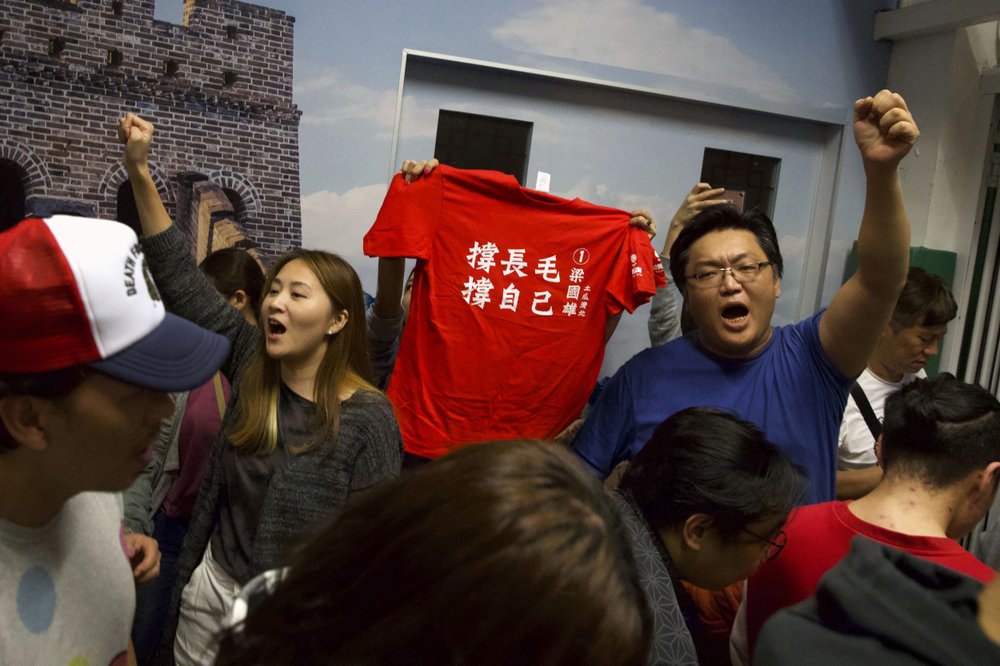
Supporters of pro-democracy candidate Leung Kwok Hung, also known as Long Hair, react after his election loss at a polling station in Hong Kong, early Monday, Nov. 25, 2019. Vote counting was underway in Hong Kong early Monday after a massive turnout in district council elections seen as a barometer of public support for pro-democracy protests that have rocked the semi-autonomous Chinese territory for more than five months.(AP Photo/Ng Han Guan)
More than 5,000 people have been arrested in the unrest that contributed to Hong Kong’s first recession in a decade.
The vote is the only fully democratic one in Hong Kong. Members of the legislature are chosen partly by popular vote and partly by interest groups representing different sectors of society, and the city’s leader is picked by a 1,200-member body that is dominated by supporters of the central government in Beijing.
Dixon Sing, a political science lecturer with the Hong Kong University of Science and Technology, said the democrats’ victory was “tantamount to a rejection of the hard-line policy of Beijing and the Hong Kong government.”
A win would bolster the democrats’ influence and give them 117 seats in the panel that elects the city’s leader, but Beijing isn’t likely to soften its stance or make any concessions to the protesters, he said.
___
Associated Press writer Ken Moritsugu contributed to this story.