33.3 C
Bangkok
Tuesday, June 9, 2026
Home Blog Page 2312

Philippines Pounds Militants; Civilians Found Shot Dead

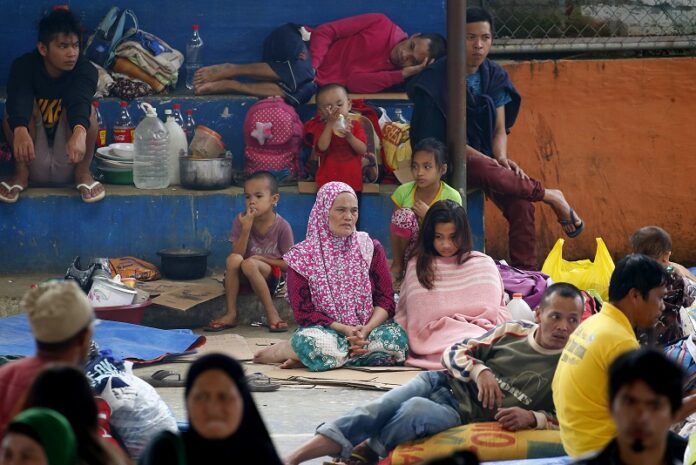
Displaced Marawi city residents rest on tarps and corrugated boxes at an evacuation center near the besieged city of Marawi, Lanao del Sur province on Sunday. Photo: Bullit Marquez / Associated Press

MARAWI, Philippines — Philippine forces launched fresh airstrikes Sunday to drive out militants linked to the Islamic State group after days of fighting left corpses in the streets and hundreds of civilians begging for rescue from a besieged southern city.

The crisis inside Marawi, home to some 200,000 people, has grown increasingly dire as the militants showed unexpected strength, fending off the army and soldiers who went house-to-house in search of gunmen.

The violence prompted President Rodrigo Duterte on Tuesday to declare 60 days of martial law in the southern Philippines, where a Muslim separatist rebellion has raged for decades. But the recent violence has raised fears that extremism is growing as smaller militant groups unify and align themselves with IS.

Thousands of civilians have streamed out of Marawi and more than 2,000 were still trapped inside the city. Many sent desperate text messages begging to be rescued and reporting that their homes had been destroyed, said Zia Alonto Adiong, an official in Lanao del Sur province, one of the country’s poorest.

Speaking at an evacuation center outside Marawi, Saddat Liong said his house was hit by mortar fire and burned to the ground. Liong, his wife and eight children lost everything, he said — even their cooking pots.

“I feel that we’ve lost our city,” he said.

Military spokesman Brig. Gen. Restituto Padilla said combat operations were still going on but the militants were weakening.

“We believe they’re now low on ammunition and food. Compared to the initial days, there has been increasingly less resistance from the militants within Marawi,” he said, speaking by phone from the capital, Manila.

As the government retakes much of the city, the scope of the battle is becoming clearer. Padilla said Sunday the bodies of four men, three women and a child were found near a road close to the Mindanao State University in Marawi.

Eight other men were found gunned down and thrown in a shallow ravine early Sunday in Marawi’s Emi village, said police officer Jamail Mangadang. A paper sign attached to one of the men indicated the victims “betrayed their faith,” he said.

He identified the men as civilians.

Marawi is a mostly Muslim city.

In addition to the civilian deaths, Padilla said 61 militants, 11 soldiers and four police were among the dead.

The violence erupted Tuesday night when the government launched a raid to capture Ipsilon Hapilon, who is on Washington’s list of most-wanted terrorists. But the operation went awry and militants rampaged through the city, torching buildings and battling government forces in the streets.

A priest and several worshipers were taken hostage. There was no word on their condition.

Story: Jim Gomez

Advertisement

Portland Mayor: ‘Heroes’ Died Protecting Women From Anti-Muslim Rant

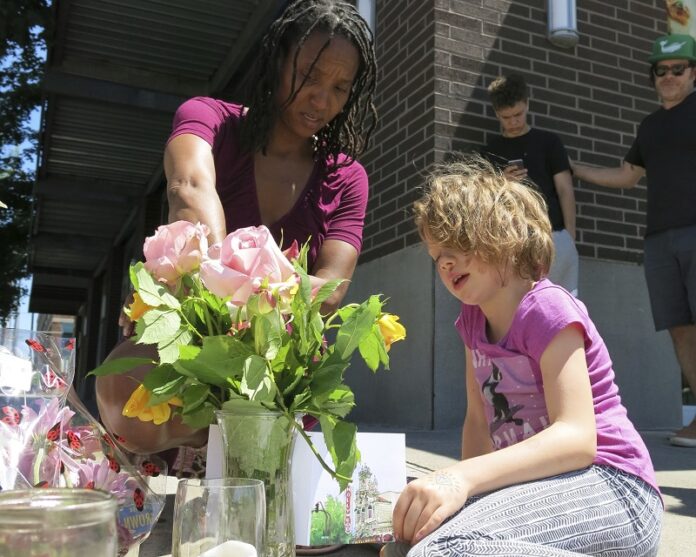
Angel Sauls, at left, helps her stepdaughter, Coco Douglas arrange a sign and some painted rocks she made for a memorial in Portland, Oregon, on Saturday for two bystanders stabbed to death Friday while trying to stop a man who was yelling anti-Muslim slurs and acting aggressively toward two young women. Photo: Gillian Flaccus / Associated Press

PORTLAND, Oregon — Police said Saturday they’ll examine what appears to be the extremist ideology of an Oregon man accused of fatally stabbing two men who tried to intervene when the suspect yelled racial slurs at two young women who appeared to be Muslim on a Portland light-rail train.

The attack Friday happened on the first day of Ramadan, the holiest time of the year for Muslims, and it sent shockwaves through a city that prides itself on its tolerance and liberal views. A memorial where the stabbing occurred grew steadily Saturday, and a vigil was planned.

“That people feel emboldened to come out and show their racism and bigotry in that way is horrifying to me. It’s a gut check for everywhere — and absolutely for Portland,” said Christopher Douglas, who stopped at the memorial. “Portland … floats in a little bit of a bubble of its own liberal comfort and I think the reality is sinking in.”

Jeremy Joseph Christian, 35, was being held in the Multnomah County Jail on suspicion of aggravated murder, attempted murder, intimidation and being a felon in possession of a weapon. He was arrested a short time after the attack on Friday.

On his Facebook account, Christian expressed neo-Nazi sentiments and declared, “I will defend the Nazis.”

He will make a first court appearance Tuesday, and it wasn’t clear if he had an attorney. A phone at his home in Portland rang unanswered Saturday, and no one came to the door at his parents’ home.

Police identified the victims as Ricky John Best, 53, of Happy Valley, Oregon, and Taliesin Myrddin Namkai Meche, 23, of Portland. Police say Best died at the scene and that Meche died at a hospital.

Meche’s mother, Asha Deliverance of Ashland, Oregon, confirmed on Facebook that her son had been killed. She did not immediately return a call to her business phone listing or a message sent through social media.

“He was a hero and will remain a hero on the other side of the veil. Shining bright star I love you forever,” she wrote.

Meche graduated last year from Reed College in Portland with a bachelor’s degree in economics, the college said on its website. Mayor Ted Wheeler said at a news conference that Best was an Army veteran and a city employee.

“These two men died heroes as a result of a horrific act of racist violence.”

Police say Micah David-Cole Fletcher, 21, of Portland was also stabbed in the attack and is in serious condition at a Portland hospital. Police say his injuries are not believed to be life-threatening.

“Their actions were brave and selfless and should serve as an example, an inspiration to us all. They are heroes,” Wheeler said.

Police said one of the two young women on the train was wearing a hijab. The assailant was ranting on many topics, using “hate speech or biased language,” police Sgt. Pete Simpson said.

Dyjuana Hudson, a mother of one of the girls, told The Oregonian/OregonLive that the man began a racial tirade as soon as he spotted the girls. Her daughter is African-American and was with a friend who was wearing a hijab, she said.

“He was saying that Muslims should die,” Hudson said. “That they’ve been killing Christians for years.”

The FBI and U.S. Attorney for Oregon are working with Portland police. The FBI says it’s too early to say whether the slayings qualify as a federal hate crime however Christian faces intimidation charges, the state equivalent of a hate crime.

Wheeler decried the charged national political environment surrounding immigration.

“Violent words can lead to violent acts,” Wheeler said. “All elected leaders in America…must work deliberately to change our political dialogue.”

Court records show Christian served prison time for first-degree robbery and second-degree kidnapping after a crime committed 15 years ago and theft and weapons charges were dismissed in 2010.

The Portland Mercury, one of the city’s alternative weeklies, posted an article on its website saying Christian showed up at a free speech march in late April with a baseball bat to confront protesters and the bat was confiscated by police.

The article included video clips of a man wearing a metal chain around his neck and draped in an American flag shouting “I’m a nihilist! This is my safe place!” as protesters crowd around him. The Oregonian/OregonLive also had video from the April 29 march showing Christian.

Simpson confirmed the man in the videos was Christian and said investigators were aware of them. He declined to comment further.

Neighbors who live next to Christian’s parents’ house — which was also his last listed address in court records — said the family was quiet and they often saw Christian’s two adult brothers but never him.

One neighbor, Kenny Jenkins, said he occasionally saw Christian riding his bike around the neighborhood.

The neighborhood is on the northern outskirts of Portland, an area that has been rapidly gentrifying in recent years because it remains one of the last affordable sections of the city. The homes immediately surrounding the Christian residence now hold biracial families and same-sex couples, Jenkins said.

“The parents are very quiet. The dad was always helpful,” he said. “Good people.”

Christian has had several encounters with the law, and spent time in prison for robbery and kidnapping charges years ago, according to court records and a defense attorney.

In 2002, he was arrested and charged with first-degree robbery and second-degree kidnapping after he rode to a convenience store on his bike and held up employees there with a gun, according to court records and his court-appointed defense attorney at the time, Matthew Kaplan.

When police caught up with him, Christian aimed the gun at himself before he was shot and injured by police, Kaplan said.

He was sentenced to more than seven years in prison.

Kaplan said he remembers the case vividly because Christian was so young, so earnest and had never been in trouble before. At the time, the attorney suspected the onset of mental health problems.

“I’ll remember this case forever because it made no sense,” he told The AP in a phone interview.

At the memorial to the stabbing victims 8-yearold Coco Douglas left a sign and some rocks she had painted with rainbow colors

Her stepmother, Angel Sauls, said the attack had been particularly hard on their family because Sauls is black and Coco and her father are white.

“I had hoped that it was Portland, Maine, and not Portland, Oregon,” Sauls said, after choking back tears. “I’m scared that this is going to make people afraid to stand up for other people. … I’m just really sorry that their acts of kindness were repaid in such a horrible way.”

Story: Gillian Flaccus

Advertisement

Govt Defends PM’s Leading Election Questions

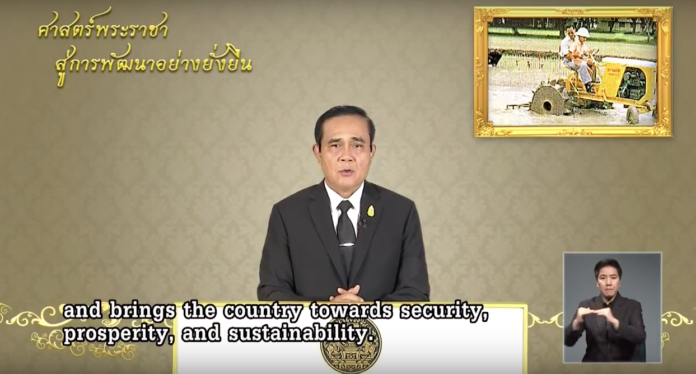
Prime Minister Prayuth Chan-ocha speaks during his weekly Friday address broadcast nationwide in May.

BANGKOK — A government spokesman Sunday sought to defend four leading questions posed on national television by the prime minister that cast doubt on his commitment to restoring civilian rule.

Sansern Kaewkamnerd said Prayuth Chan-ocha was trying to gain direct insight from the public when he asked for their opinions on four questions critics said seemed written to offer a pretext for him to remain in power.

Gen. Prayuth’s questions conveyed the same message he aired one day after a Bangkok hospital was bombed: Elections cannot take place if the country is still unstable.

Speaking nationwide on his weekly Friday address broadcast nationwide, the junta chief first asked, “Do you think the next election will lead to a government that practices good governance?”

He followed it with a second question, “If not, what should we do?”

His third question asked, “Elections are important for a democracy. But they are not the sole determinant of the country’s future and other matters, such as whether a country has a strategy or undergoes reforms, is this true or false?”

The last question asked, “Do you think that politicians who’ve shown inappropriate behavior should have the opportunity to seek office again? If they gain office again and new problems arise, who should fix them and with what means?”

Prayuth told people to submit their answer through the government’s Dhamrongdhama Center national complaint system.

A former minister in the previous Pheu Thai government, Chaturon Chaisang, said the questions show Prayuth does not know where he is taking the country and he does not believe in the referendum-approved constitution or its drafters’ claims it will weed out unqualified politicians.

Watthana Phetthong, a former Democrat Party MP, said the leading questions were an attempt to create conditions under which he could cancel elections and remain in power.

“Why does the prime minister need to ask people when the new constitution already put in place so many detailed regulations,” he said. “Instead, the prime minister should answer people directly whether there will be an election under the new constitution.”

Last August, the public backed a junta-sponsored constitution which hamstrung democratic institutions and enshrined military power over civilian rule.

Speaking today, government spokesman Sansern said the prime minister only aimed to hear directly from the people to improve measures the government is undertaking.

He said Prayuth’s approach is a better way to learn what people really want as it has only heard opinions from politicians and academics. Sansern also said Prayuth’s method was better than conducting a poll.

He said the prime minister wants people to have their own dignity to express their opinion without political groups distorting it.

Governors and district chiefs nationwide were ordered to gather comments and submit them to the prime minister in three months.

Despite the government’s record of suppressing dissent, Sansern assured those who disagree with it could express their opinions safely.

Advertisement

Trump Says He’ll Decide on Paris Climate Deal Next Week

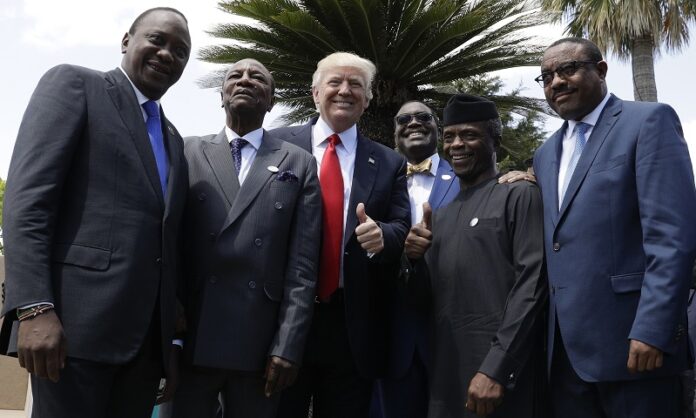
U.S. President Donald Trump gives a thumbs up as he poses with African leaders, from left, Kenya's President Uhuru Kenyatta, President of the African Union Alpha Conde', President of the African Development Bank Akinwumi Adesina, Nigeria's Vice President Yemi Osinbajo and Ethiopia's Prime Minister Haile Mariam Desalegn, Saturday in the Sicilian town of Taormina, Italy. Photo: Andrew Medichini / Associated Press

TAORMINA, Sicily — President Donald Trump says he’ll make a final decision on whether the U.S. will stay in the Paris climate agreement next week.

Trump’s surprise announcement, in the form of a tweet on the final day of his lengthy international trip, comes after Trump declined to commit to staying in a sweeping climate deal, refusing to give into intense international pressure.

Earlier Saturday, the other six members of the G-7, a group of some of the world’s wealthiest nations, voted to abide by the Paris climate agreement, according to a person familiar with the talks. The person spoke on condition of anonymity to discuss the matter before the formal announcement.

Trump was cajoled for three days — first in Brussels at meetings of NATO and the European Union, then in Sicily for G-7 — but will leave Italy without making clear where he stands. Under the G-7 agreement, the Trump administration will be given more time to consider whether it will remain committed to the 2015 Paris deal to rein in greenhouse gas emissions.

Backing out of the climate accord had been a central plank of Trump’s campaign and aides have been exploring whether they can adjust the framework of the deal even if they don’t opt out entirely. Other G-7 nations leaned heavily on Trump to stay in the climate deal, with German Chancellor Angela Merkel saying “we put forward very many arguments.”

“His views are evolving, he came here to learn and get smarter,” Gary Cohn, national economic council director, said Friday of the president’s thinking.

Trump, who will return to the White House under a cloud of scandal, started Saturday at the second day of the G-7 summit in Sicily, bringing to an end a nine-day trip that started in Saudi Arabia and Israel before moving on to three European stops.

The trip has largely gone off without a major misstep, with the administration touting the president’s efforts to birth a new coalition to fight terrorism, while admonishing partners in an old alliance to pay their fair share.

“Big G7 meetings today. Lots of very important matters under discussion,” Trump tweeted between events. “First on the list, of course, is terrorism. #G7Taormina.”

Trump also touted a renewed commitment by NATO’s member to spend more on defense.

“Many NATO countries have agreed to step up payments considerably, as they should. Money is beginning to pour in- NATO will be much stronger,” he said. Trump was referring to a vow by NATO countries to move toward spending 2 percent of their gross domestic product on defense by 2024. Only five of NATO’s 28 members meet the target: Britain, Estonia, debt-laden Greece, Poland and the United States, which spends more on defense than all the other allies combined.

There is no evidence that money has begun to “pour in” — and countries do not pay the U.S. or NATO directly. But Germany, for instance, has been increasing its defense spending with the goal of reaching the 2 percent target by 2024.

But after the pomp of presidential travel overseas, Trump will return to Washington to find the same problems that have dogged him.

As a newly-appointed special counsel is beginning his investigation into links between the Trump campaign and Russian officials, Jared Kushner, the president’s son-in-law and close adviser, has become a focus of the probe, according to The Washington Post. His lawyer said Kushner will cooperate with investigators.
James Comey, the former FBI director leading the Russian probe until Trump abruptly fired him, is still expected to testify before Congress about the memos he kept on conversations with the president that involved the investigation.

The search for a new FBI director continues.

And Trump’s policy agenda has run into problems. The GOP health care bill that passed the House faces uncertain prospects in the Senate, after a Congressional Budget Office analysis that it would leave 23 million more Americans uninsured by 2026. The president’s budget was widely criticized for deep cuts to safety net programs. And some are starting to question the chances for tax reform.

But first Trump has to finish the day in Sicily, which includes a meeting with small African nations and a G-7 leader lunch. After the summit, the president will address American troops on an Italian base before departing for home.

Not yet on the agenda: a news conference.

If that holds, Trump will break with presidential precedent by not holding at least one lengthy question-and-answer session with the press while abroad. Anxious about Trump’s tendency to make things worse for himself with unscripted remarks, the White House staff has kept the president a safe distance from journalists for most of the trip.
Trump was warmly welcomed in the Middle East, but in Europe he’s faced a far cooler reception. He’s been willing to risk disapproval, engaging in an extraordinary scolding of close allies over their responsibility to pay for mutual defense.

Trump took part in the ceremonial spectacle of the summit over the two days, this time at a picturesque Sicilian town above the Mediterranean Sea. But he also held one-on-one meetings with the leaders of Japan, the United Kingdom, Canada and Germany. The meeting with Merkel came just a day after Trump reportedly called Germans “bad.” Cohn stressed Friday that the president was simply being critical of the U.S. trade imbalance with Germany.

Trump also understands that Germany is bound by the rules of the European Union and could not unilaterally change its trade policies, Cohn said. Trade was a big topic, with Cohn saying the United States’ guiding principle will be “we will treat you the way you treat us,” suggesting that retaliatory tariffs could be imposed.

Story: Jonathan Lemire, Julie Pace

Advertisement

Hospital Explosion Exposes Depth of Distrust

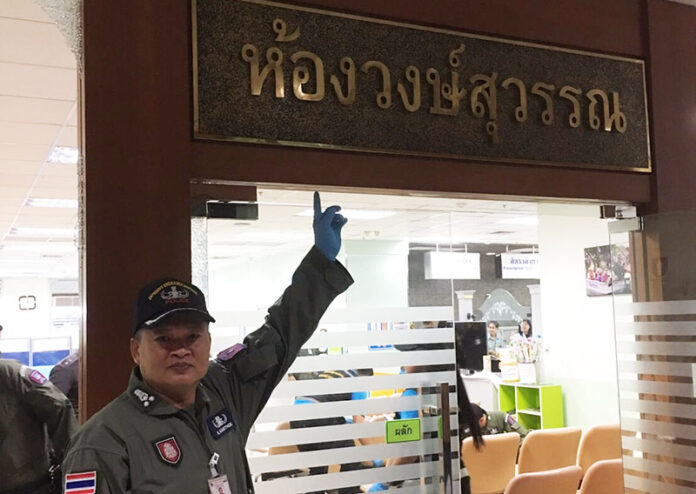
An EOD officer points to sign identifying the reception room attacked by bomb attack Monday at Phramongkutklao Hospital as Wongsuwan Room, named after the family of deputy junta chairman Prawit Wongsuwan.

Less than 48 hours after Monday’s bomb at a military-owned hospital in Bangkok which left 25 injured, it was far from clear who had carried it out. But two ominous facts have emerged.

First, the crumbling of a basic principle that hospitals are conflict-free zones. No matter who might be behind the attacks, hospitals are no longer safe.

Bombing a hospital shows some people will not observe basic principles. Once societies no longer observe basic principles, they becomes lawless, and the same could be said of calling for regime change through military coups instead of elections.

Second – and equally disturbing – is the fact there is a near-total breakdown of political trust in Thai society. This breakdown of trust didn’t just occur, but has been around for a decade now. It became so apparent to not notice it after the latest bombing, however.

A day after the bombing attack at Phramongkutklao Hospital, junta leader Gen. Prayuth felt compelled to publicly deny his military regime had anything to do with it (he probably knew he and his men might be suspected). At the same time, Prayuth threatened to further defer promised elections, currently believed to be slated for sometime in late 2018, to an unspecified date if the bombings continue.

The regime is also toying with bringing back military trials for civilians charged with breaking security-related laws, thus further re-concentrating power in the hands of the military.

The remarks led to speculation by those opposing the National Council for Peace and Order, as the junta calls itself, of a false-flag operation, wherein the regime might be behind the bombing itself as a pretext to remain in power indefinitely.

Pravit.mug .column.final“What do you want me to think if there’s a bomb and [Prayuth] says elections will be deferred?” activist Baramee Chaiyarat asked on Facebook Tuesday evening.

Yaowalak Anuphan, head of Thai Lawyers for Human Rights, expressed a similar distrust. She wrote online that she no longer believed there would be elections next year – or even in 2019.

Well-known pro-democracy activist Sirawith Seritiwat, or Ja New, reacted swiftly by stating on Facebook that he didn’t want to entertain the idea the explosion was an inside job.

“I personally don’t want to think that the bombing incident was orchestrated by the people under the NCPO, or that the NCPO is creating the situation. I really don’t want to think like that. But when situations like these occur, it seems [the junta] always benefits from the windfall.”

Distrust is mutual, and those who support the regime or just oppose fugitive former premier Thaksin Shinawatra were just as quick to suggest Redshirts and / or pro-Thaksin elements may be behind the inhumane attack.

Dedicated pro-junta user @ThaksinsLife tweeted Tuesday that the most popular policy under the NCPO was restoring peace and order and encouraged people to make the same leap of logic to deduce who was behind the attack.

Junta supporter @Rang70 meanwhile tweeted just hours after Monday’s bomb attack to connect it to Redshirts using customary derisive language:

“Think the of bombing. Think of the Red Water Buffaloes,” he wrote.

That was followed by another tweet calling for Prayuth to remain in power, “otherwise Thailand will be in chaos.”

Another Twitter user, @Nenanee, tweeted Monday evening to say Prayuth should stay on and cancel elections “if they keep causing disturbances.”

Given such near-total distrust, it will take more time for Thai society to heal and learn to trust those who think differently than it will take the 25 victims to heal from their shrapnel wounds.

Advertisement

Myanmar Withdraws From West, Turns Back to China

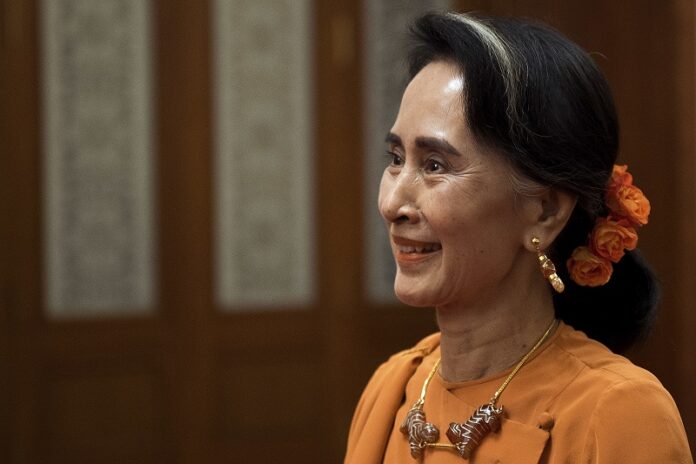
Myanmar State Counsellor Aung San Suu Kyi meets May 16 with Chinese Premier Li Keqiang at the Great Hall of the People in Beijing. Photo: Nicolas Asfouri / Associated Press

WASHINGTON — Myanmar was supposed to turn away from China and toward the West when the U.S. helped it transition from five decades of military rule.

The opposite is happening as the Southeast Asian country’s new civilian government fails to attract Western investment and Beijing goes on a charm offensive. China is offering economic and political support and a relationship free of the human rights concerns straining Myanmar’s ties elsewhere.

Also known as Burma, Myanmar represented a foreign policy success for President Barack Obama. He coaxed its powerful generals into ceding power by normalizing diplomatic relations and rolling back years of economic sanctions, paving the way for Nobel peace laureate Aung San Suu Kyi to take power after winning elections.

Suu Kyi’s historic struggle for democracy still evokes deep respect in Washington and European capitals, but 14 months running a civilian government has exposed her inability to bring peace to a country riven by ethnic conflict. She also has struggled to produce economic growth, hobbled by a lack of control over the nation’s still powerful military and a rigid management style.

Finding less love among the Western democracies, Suu Kyi is cautiously embracing closer ties to China.

“Amid the unpredictable challenges of this democratic transition, Western influence on Burma is waning, while Beijing is becoming more assertive,” Myanmar’s Irrawaddy news website said in an editorial.

Recent weeks have seen a flurry of China-Myanmar engagement. Suu Kyi met Chinese leader Xi Jinping at a Beijing summit in mid-May, her second visit there in the past year. Earlier, Myanmar’s titular president, Htin Kyaw, received a six-day state visit. Suu Kyi’s trip ended with an agreement with China to create an economic cooperation zone as part of the Asian giant’s “Belt and Road” initiative to connect with Asian and European markets.

Last weekend, Myanmar’s Navy held drills with Chinese warships. China’s state-run Global Times said the military cooperation demonstrated “political trust.”

That trust was expected to develop between Suu Kyi and the U.S.-led West.

Myanmar’s enduring fear of being dominated by its much larger neighbor, China, was one reason it improved ties with the United States in the first place. The Obama administration seized the opportunity while trying to “pivot” American foreign policy focus to Asia, hoping deeper relationships with its booming economies would provide the U.S. long-term strategic and economic advantages.

Derek Mitchell, the former U.S. ambassador who spearheaded Obama’s Myanmar rapprochement, said China was “stunned” when the country reached out to the West between 2011 and 2015. China is now making up for lost time, and capitalizing on President Donald Trump’s reduced attention for Myanmar, he said.

“It gave an opportunity for China to say, ‘See we’re on your border and we’re here to stay. You can’t count on the Americans,'” Mitchell said.

The State Department and White House did not respond to requests for comment.

Trump has started to reach out to Southeast Asian leaders, praising Philippines’ president Rodrigo Duterte for his deadly war on drugs and inviting him and Thailand’s prime minister, who took power in a coup, to the White House. Next week, Trump is hosting communist Vietnam’s prime minister.

Trump has yet to speak with democratic icon Suu Kyi.

For two decades, while Myanmar languished under repressive military rule, U.S. administrations and influential lawmakers adored Suu Kyi. Obama helped her transformation from political prisoner to national leader, fostering democracy on China’s doorstep. Republicans and Democrats touted the change as a victory for U.S. interests and values.

China, which sees Myanmar as a land bridge to the Indian Ocean, saw a strategic setback.

Yun Sun, a China expert at the Stimson Center in Washington, said Chinese policy experts even characterized it with a proverb: “The cooked duck flew out of the window.”

She said the proverb’s meaning is clear: “Myanmar was already in our pockets but somehow the Americans stole it from us.”

But Trump may have little political incentive now to prioritize U.S. ties with Myanmar.

“What are left now are the problems,” Sun added.

Problem one is sluggish economic growth. Washington has increased foreign aid and encouraged American investors by lifting sanctions. But the moves haven’t spurred economic activity in one of Asia’s last untapped markets.

Myanmar ranks 170th out of 190 nations in the World Bank’s ease-of-doing-business rankings, and third-worst globally for contract enforcement. Foreign investment dropped almost a third between April 2016 and April 2017, according to Myanmar government figures, with no new U.S. projects.

Problem two is human rights. Western nations in March backed a U.N. fact-finding mission on reported atrocities against Myanmar’s downtrodden Rohingya Muslims. Suu Kyi opposed the idea, tarnishing her international reputation.

Problem three is ethnic conflict. Suu Kyi has prioritized resolving Myanmar’s decades-long wars between the army and ethnic rebels, with little success. She tried again this week, bringing rebel groups together for talks with the government and military.

China has leverage with rebels near its border and says it supports peace. Resolution, however, hinges on Myanmar’s willingness to cede power to minorities and facilitate greater federalism.

On economic development, China faces wary Burmese citizens. Chinese projects have uprooted villagers and hurt the environment, factors that led Myanmar in 2011 to suspend a $3.6 billion dam primarily funded by Chinese energy interests. The suspension remains a sore point.

Mitchell, the former Obama envoy, warned of a larger strategic setback for the U.S.

Failing to consolidate Myanmar’s transition would tell the region’s autocratic governments they were right, he said, that “democracy doesn’t work in Asia.”

Story: Matthew Pennington

Advertisement

GrabCar Driver Charged With Assaulting Girl

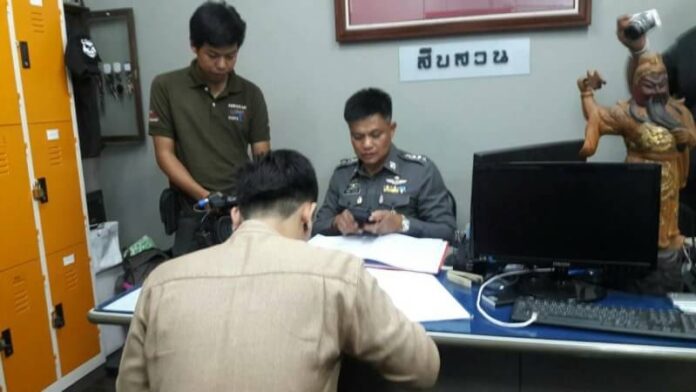
Jaran Naetawan, 26, a GrabCar driver Friday at the Chiang Mai City Police Station.

CHIANG MAI — A GrabCar driver was arrested in Chiang Mai province Friday for harassing a teen female passenger.

Jaran Naetawan, 26, admitted he hugged and kissed the 17-year-old girl after she hailed his cab using the GrabCar application on Sunday. He said he dropped her off at Walking Street after she appeared frightened.

Police tracked Jaran from the license plate of his black Mitsubishi Mirage after the girl filed a complaint Monday.

The unnamed victim told police she called GrabCar to go to the Three Kings Monument at 6pm Sunday. After conversing with the driver, she agreed to go for a ride around the city instead of heading directly to the destination and moved to sit in the front.

She told police Jaran committed an indecent act and she dared not to fight back.

The 17 year old said he dropped her off at the Tha Phae Gate and told her not to tell anyone what happened.

The driver, who began working with GrabCar four months ago, was charged with committing an indecent act on a minor. Because he was using a private vehicle not registered for commercial transportation, he was also charged with misuse of a vehicle.

Advertisement

Get Your Jamba Juices Flowing at Siam Paragon

Patricia Tanchanok Good and Naphat Siangsomboon give a celebrity boost to Jamba Juice’s Thursday opening at Siam Paragon.

BANGKOK — Another American chain that boomed in the ‘90s has found new life in Bangkok with the arrival of Texas-based smoothie chain Jamba Juice.

There’s no need to fly to Los Angeles for a Mango A-Go-Go smoothie anymore, since you can get your fix at the kingdom’s first Jamba Juice, which opened Thursday on the ground floor of the Siam Paragon shopping mall.

The smoothies, however, cost a head-spinning 110 baht to 180 baht – a steep step up from those found in the street for about 40 baht. At Jamba Juice, customers pair their fruit selections with “boosts” such as vitamins to protein.

Jamba Juice is a Texas-based smoothie chain with stores in the United States, Mexico, South Korea, Bahamas, Canada, the Philippines and Taiwan. It was founded in 1990 in San Luis Obispo, California.

Advertisement

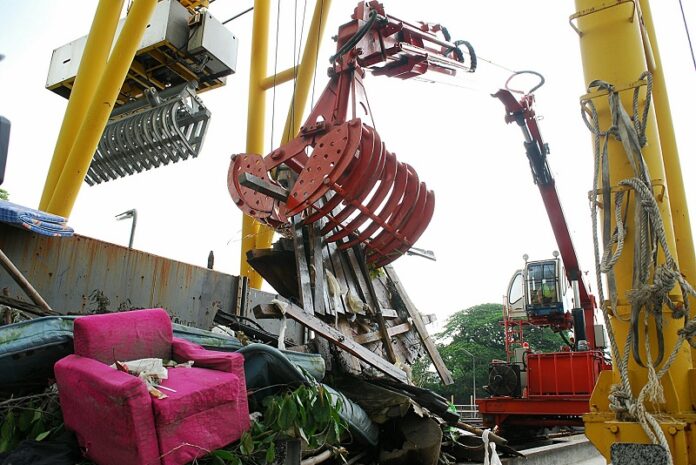
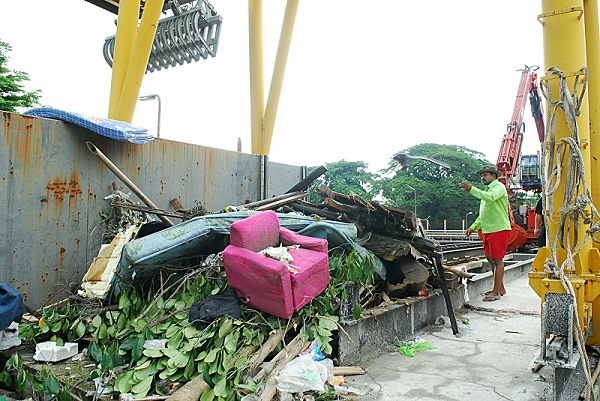
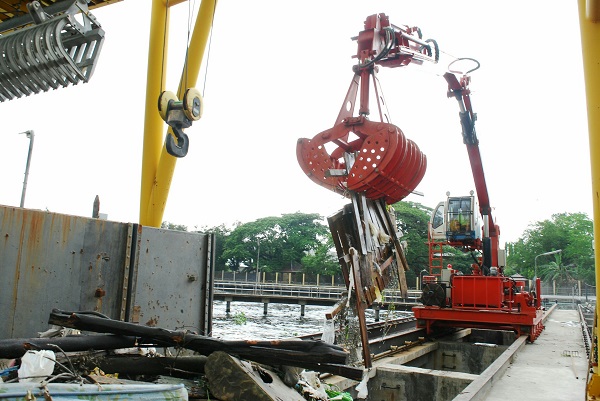
Furniture, Tonnes of Waste Blocking Bangkok Drainage (Photos)

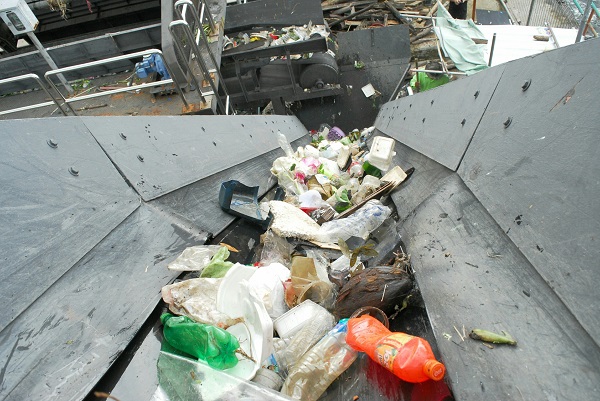
BANGKOK — A backhoe was needed to pull a recliner and mattress from a drainage tunnel Friday along with tonnes of debris and waste blocking the waterway one day after the city suffered yet another round of monsoon flooding.

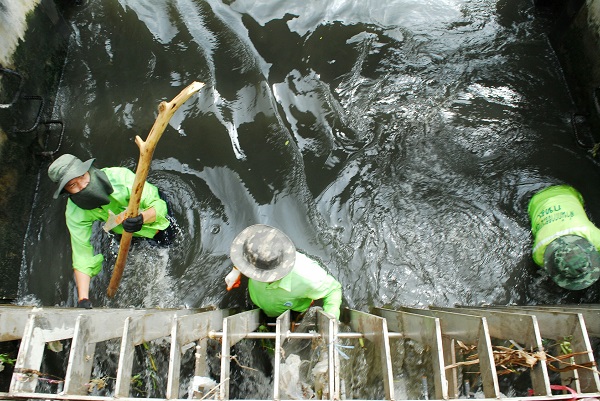
With more rain coming, Bangkok City Hall staff today went to clear a drainage tunnel in the Rama IX area to help move water from the Saen Saep and Ladprao khlongs out to the Chao Phraya River.

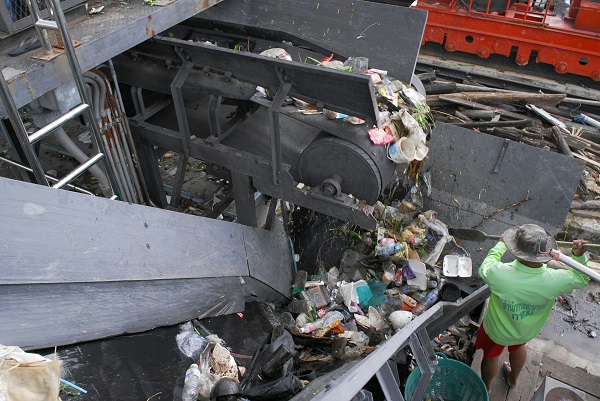
Over 10 tonnes of waste were found, said a Bangkok Metropolitan Administration sewer official.

Effective drainage is central to keeping the capital free of floods, and annual flooding is usually followed by city officials asserting they did everything possible to prepare.

Authorities said 90 percent of the junk was household waste, including a big bed and sofa.

Small waste that could not be removed by machine had to be cleared manually by workers, which slowed drainage of the still-waterlogged cityscape today.

เก็บขยะหน้าอุโมงค์ ๑๗๐๕๒๖ 0010

เก็บขยะหน้าอุโมงค์ ๑๗๐๕๒๖ 0019

เก็บขยะหน้าอุโมงค์ ๑๗๐๕๒๖ 0016

เก็บขยะหน้าอุโมงค์ ๑๗๐๕๒๖ 0017

เก็บขยะหน้าอุโมงค์ ๑๗๐๕๒๖ 0001

Advertisement

Militants Attack Christians in Egypt, Killing at Least 26

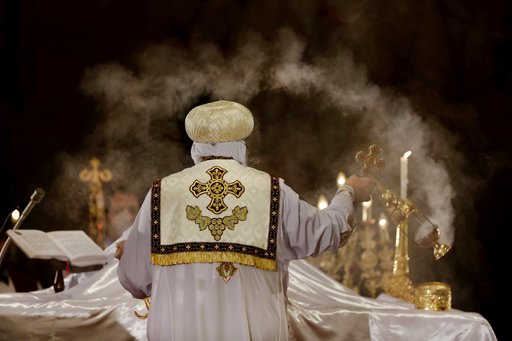
FILE - In this Feb. 17, 2015 file photo, Pope Tawadros II, the 118th pope of the Coptic Church of Egypt, leads a mass for the Egyptian Christians who were killed in Libya, at St. Mark's Cathedral in Cairo, Egypt. Photo: Amr Nabil/ AP.

CAIRO — Masked gunmen opened fire on a bus carrying Coptic Christians south of the Egyptian capital on Friday, killing at least 26 people, including children, and wounding 25, officials said.

No group immediately claimed responsibility for the attack, which came on the eve of the Muslim holy month of Ramadan.

The assault happened while the bus was traveling on the road to Saint Samuel the Confessor Monastery in Maghagha, in the Minya governorate, about 220 kilometers (140 miles) south of Cairo, security officials said.

The officials cited witnesses as saying they saw between eight and 10 attackers, dressed in military uniforms and wearing masks. The victims were traveling from the nearby province of Bani Suief to visit the monastery.

Khaled Mogahed, the Health Ministry spokesman, said that the death toll reached 26 but feared it could rise further. According to Copts United news portal, only three children survived the attack.

Arab TV stations showed images of a damaged bus along a roadside, many of its windows shattered. Ambulances were parked around it as bodies lay on the ground, covered with black plastic sheets.

Though no one immediately claimed responsibility for the attack, it had all the hallmarks of Egypt’s Islamic State affiliate.

Egyptian authorities have been fighting IS-linked militants who have waged an insurgency, mainly focused in the volatile north of the Sinai Peninsula though attacks have taken place also on the mainland. Egypt’s Coptic Christians have emerged as a top target of IS.

Friday’s attack is the third against Christians in Egypt in six months.

In April, twin suicide bombings struck two churches on Palm Sunday, and in December, a suicide bombing targeted a Cairo church. The attacks left over 75 dead and scores wounded. The Islamic State group claimed responsibility and vowed more attacks.

Late last month, Pope Francis visited Egypt, in part to show his support for Christians of this Muslim majority Arab nation who have been increasingly targeted by Islamic militants.

During the trip, Francis paid tribute to the victims of the December bombing at Cairo’s St. Peter’s church, located in close proximity to the St. Mark’s cathedral, the seat of the Coptic Orthodox Church.

Following the pope’s visit, IS vowed to escalate the attacks against Christians, urging Muslims to steer clear of Christian gatherings and Western embassies, saying they are targets for the group’s followers.

Egypt’s Copts, the Middle East’s largest Christian community, have repeatedly complained of suffering discrimination, as well as outright attacks, at hands of the country’s majority Muslim population.

Over the past decades, they have been the immediate targets of Islamic extremists. They rallied behind the country’s general-turned-president, Abdel-Fattah el-Sissi, in 2013 when he ousted Islamist predecessor Mohammed Morsi, who hails from the Muslim Brotherhood group. Attacks on Christian homes, businesses and churches subsequently surged, especially in the country’s south, traditionally Egypt’s Christian heartland.

Story: Maggie Michael and Maamoun Youssef

Advertisement

Hot News

LATEST NEWS

Bangkok
moderate rain
33.3 ° C
34.4 °
30.5 °
70 %
5.4kmh
92 %
Tue
33 °
Wed
34 °
Thu
35 °
Fri
30 °
Sat
34 °