





























37 C
Bangkok
Tuesday, June 9, 2026
Home Blog Page 2313

Ko Tee Denies Bombing Hospital, Would Rather Bomb Govt House

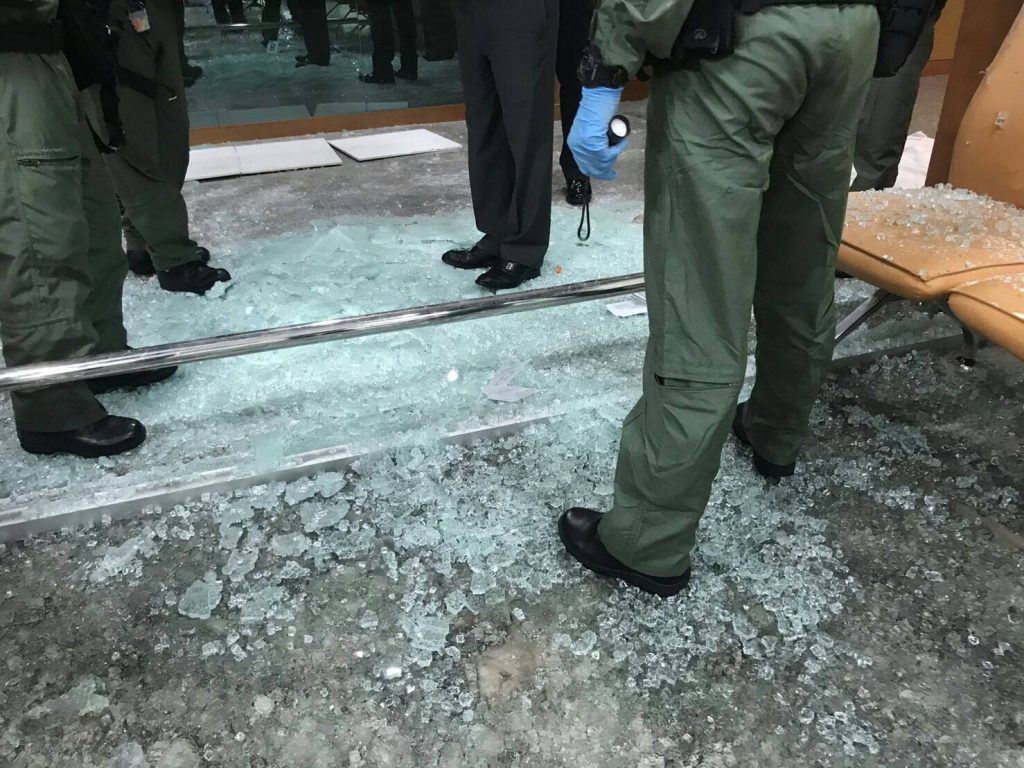
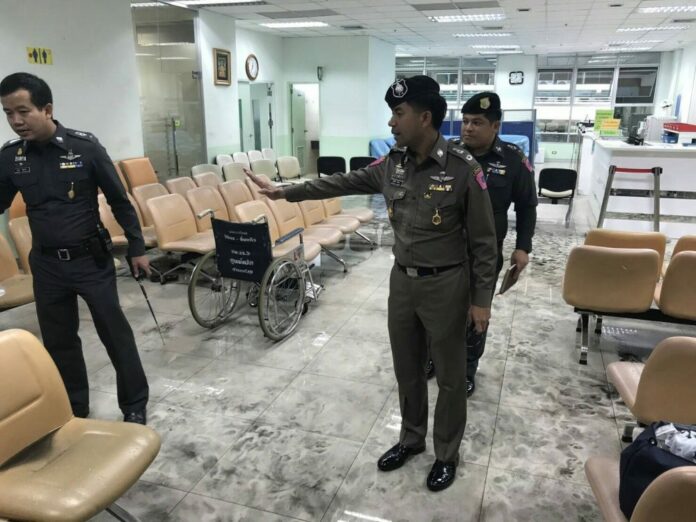
Police and military officers collect evidence Monday at the scene of bombing at Phramongkutklao Hospital.

BANGKOK — A fugitive Redshirt activist said he was not responsible for bombing a public hospital as alleged by the army chief Thursday but boasted about organizing an armed resistance group.

Wutthipong “Ko Tee” Kochathammakun, a former radio talk show host wanted for a number of charges including royal defamation, said in an online interview the accusation was baseless because his group is not yet ready for action.

The activist-agitator countered that it was the army who staged Monday’s attack at Phramongkutklao Hospital as a so-called false-flag operation in his comments to reporter-in-exile Jom Petchpradab.

Read: Experts Dismiss Deep South Link to Hospital Bomb

Twenty-one people were injured when a pipe-bomb exploded in a waiting room at the hospital, which is owned by the military but open to the public.

Going further, Wutthipong said his group has different plans for the junta when the time comes.

“They did it to their own people,” he said in the interview posted to YouTube. “If we could do that, we wouldn’t bomb a hospital. We would bomb their Government House and their homes.”

Wutthipong, a firebrand who styles himself a “hardcore” Redshirt, was accused in March of amassing weapons at his family home in Pathum Thani province for what the authorities described as an plot to sow mayhem and assassinate junta leadership. Wutthipong denied the allegation.

His name was back in the news after army commander-in-chief Chalermchai Sitthisart echoed junta chairman Prayuth Chan-ocha’s remarks that the bombing was linked to political opponents who “incite violence” from overseas.

Asked whether they included Wutthipong, the army chief said yes.

“Yes. He’s been inciting on social media all the time,” Gen. Chalermchai said. Chalermchai also said the government is working with Laos to extradite Wutthipong, though the activist said he left that country some time ago.

When reporter Jom asked Wutthipong whether it was true he was conspiring to build an armed movement as government officials say, Wutthipong objected to the term “conspiring” because he’s doing it for real.

“Conspiring is what criminals do when they train each other. But we are training people’s soldiers,” he said. “We are going to drive the criminals out from Thailand. We are training in every way soldiers do. But we are superior to soldiers, because we have spirit.”

Asked to elaborate, Wutthipong said the group, called “Armed Forces of the Federation,” was only formed three months ago, so it was not yet ready to launch any operations.

Wutthipong is known for routinely making outrageous claims and overbearing threats, but those close to him express doubt about his executive capacity.

Police spokesman Krissana Pattanacharoen said police are investigating every lead Monday’s bomb attack, including Wutthipong’s alleged network, but they are not targeting anyone in particular.

“As the police commissioner said, whoever is related to it, we will take action, no matter who they are,” Col. Krissana said Friday.
Advertisement

Fingerprints for Mobile Users in Places Plagued by Cellphone Bombs

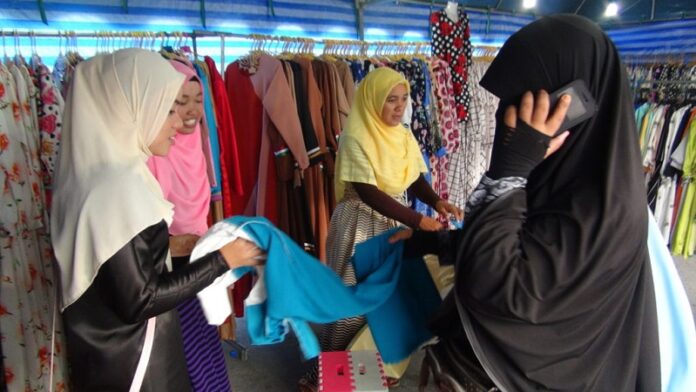
Women shop for clothes at a market in Yala province on June 29, 2016. Photo: Matichon

BANGKOK — Starting next month, Thais who buy prepaid SIM cards in the violence-plagued Deep South will be fingerprinted to confirm their identity, telecom regulators announced Thursday.
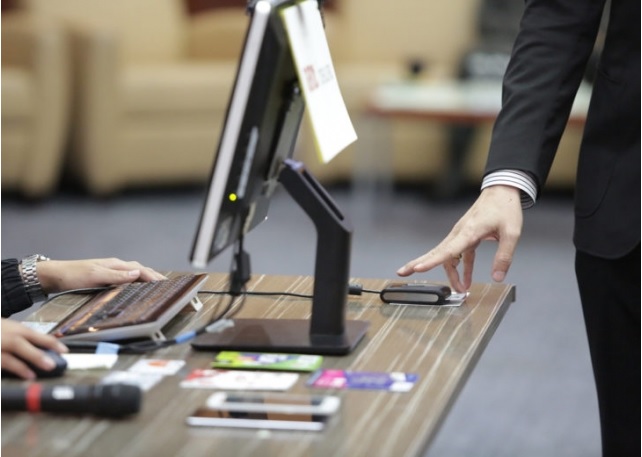
Those who buy new pay-as-you-go cards in the three southern border provinces of Yala, Narathiwat and Pattani – where bombs are often triggered by mobile phones – will have their ID cards and fingerprints scanned to verify if they match. Those who have monthly or other contracts will be exempt.

Thirty machines with the software will be distributed to the five mobile phone operators. They will also be used in two border-adjacent districts of Songkhla province: Chana and Na Thawi.

The southern deployment is the first roll-out of a system that is expected to be in place nationwide some time next year.

simcard
A new fingerprint verification system is presented to the press Thursday at the Office of National Broadcasting and Telecommunications Commission in Bangkok. Photo: Prachachat

Demonstrating the system Thursday in Bangkok was the top executive of the National Broadcasting and Telecommunications Commission. Takorn Tantasith said the system is meant to boost security in the southernmost provinces and was not a trojan horse for any monitoring.

“I assure again that fingerprint scanning doesn’t enable tracking mobile phone usage at all,” Takorn said.

Should anyone’s prints not match their card, he said a facial recognition system would be used to ascertain identity. If someone can’t prove who they are, they won’t be allowed to buy a SIM card.

Many women cover their heads in the Muslim-majority south, and Thursday’s demonstration showed facial recognition did not perform well with woman wearing a hijab.

Each operator will get one demo system in Bangkok. DTAC, AIS and True will install them in their shops at the Siam Paragon shopping mall, while state-operated TOT and CAT Telecom will install them at their headquarters in the Chaeng Wattana area.

Takorn said the system should be expanded nationwide within a year.

The office said they are still figuring out how to verify the identities of foreigners.

Last year, the office announced a plan to require that all foreigners use special SIM cards that would track their location. The plan was shelved after a fierce backlash over privacy and security concerns.

Related stories:

Need a New Number? Prepare to be Fingerprinted Starting in February

Not All Regulators Agree on ‘Big Brother’ SIM Cards

Expats Could be Exempt From SIM Card Tracking

From WTF to LOL, Internet Reacts to Plan to Track Foreigners by Phones

Plan to Track All Foreigners – Not Just Tourists – By SIM Cards Moves Forward

Cabinet Approves Mandatory SIM Card Registration

Advertisement

U.S. Cops Put Parking Lot Crack Cocaine in ‘Lost and Found’

An undated photo of crack cocaine rocks seen here in an unspecified location. Photo: DEA / Wikimedia Commons

WILKES-BARRE, Pennsylvania — Police in northeastern Pennsylvania say they’ve put about USD $1,600 worth of crack cocaine in their “lost and found box” in hopes of reuniting the drug with its rightful owner.

The (Wilkes-Barre) Citizens’ Voice reports the drug was found in the parking lot of a shopping center outside Wilkes-Barre.

Wilkes-Barre Township police posted about the find on the department’s Facebook page. In a post headlined “FOUND ITEM,” police quipped the drug had been placed in the department’s “lost and found box” and invited the owner to come retrieve it.

The post requested a picture of the crack’s owner holding the drug, along with ID and a “written statement containing your claim to the crack.”

Advertisement

Photo Phriday: A Wet and Difficult Week

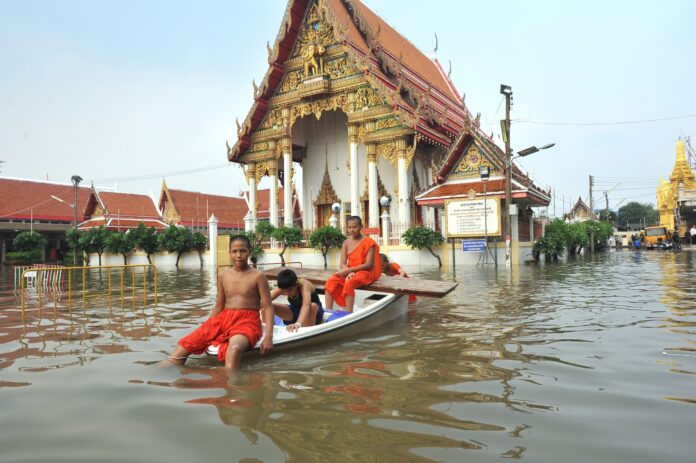
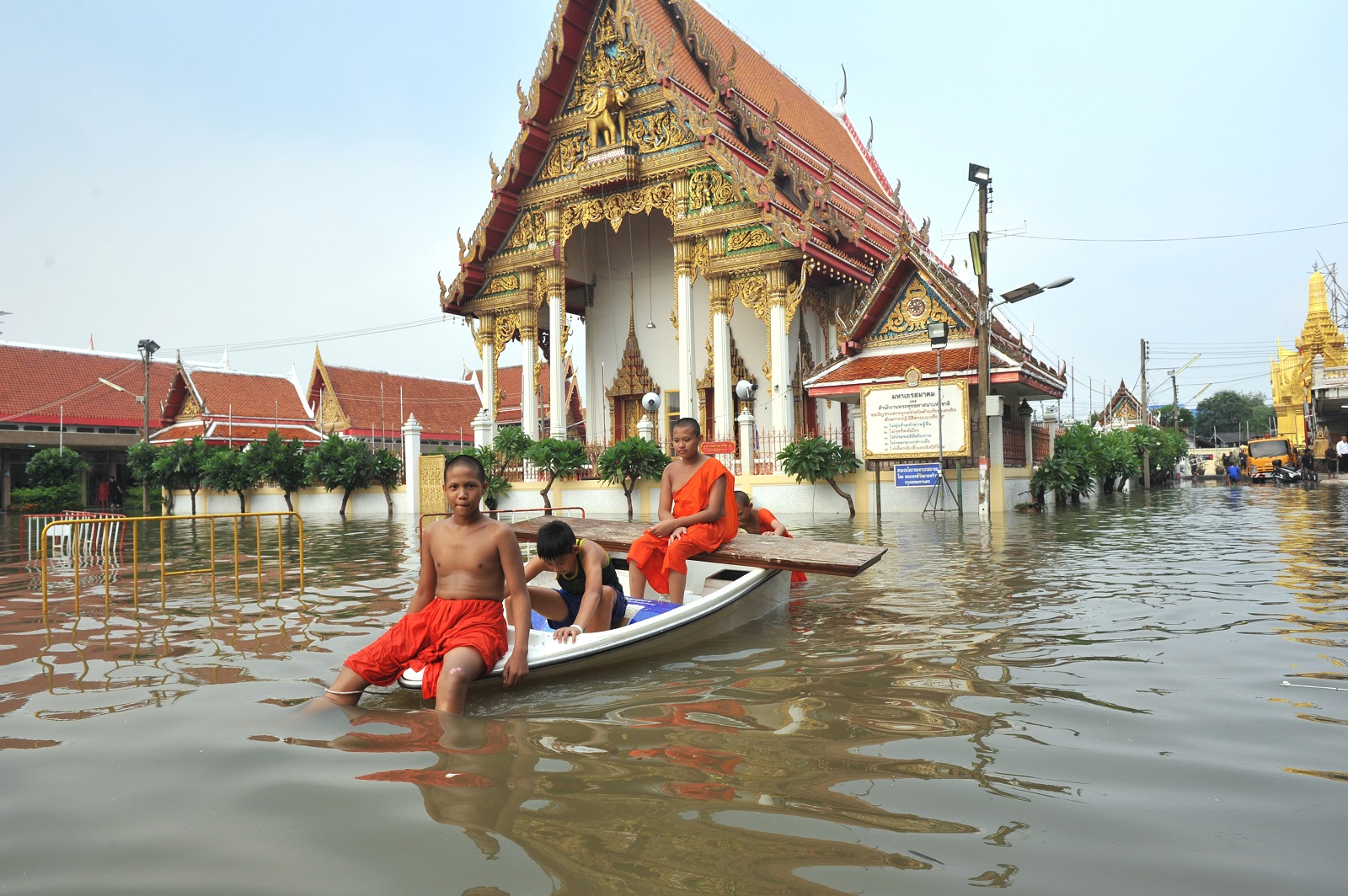
Novice monks paddle Thursday around Bangkok’s Wat Lat Phrao.

Top: Novice monks paddle Thursday around Bangkok’s Wat Lat Phrao.

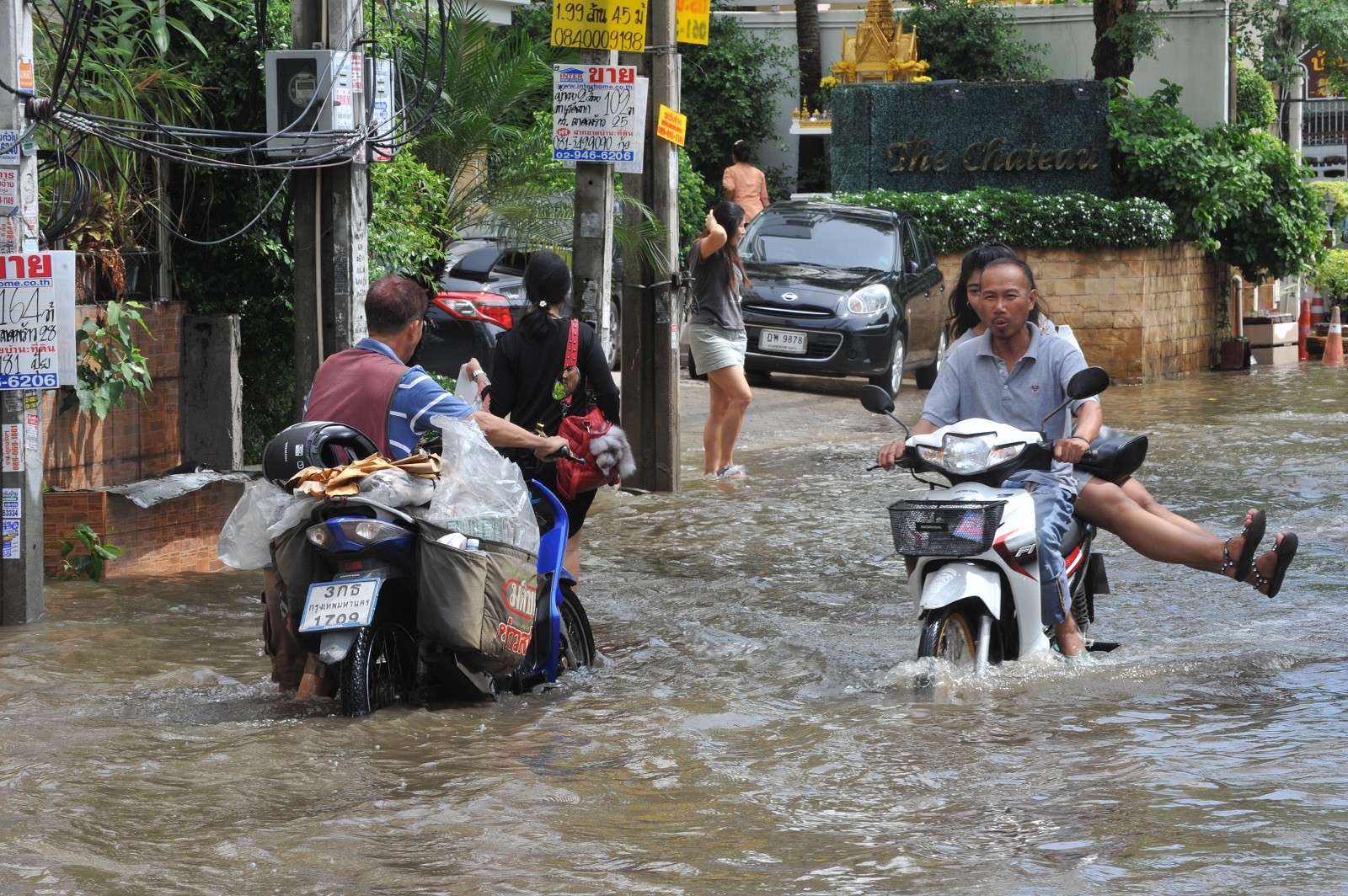
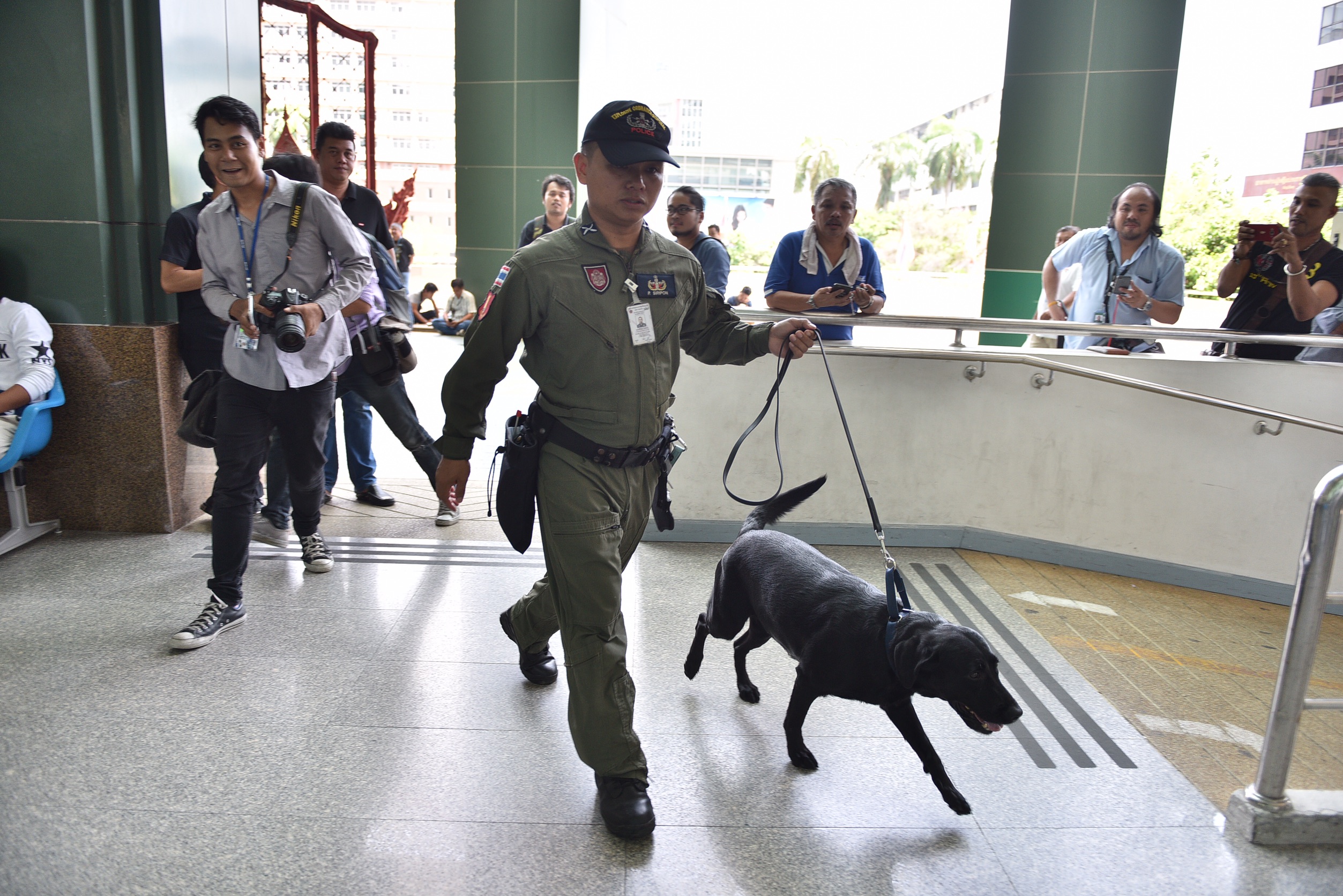
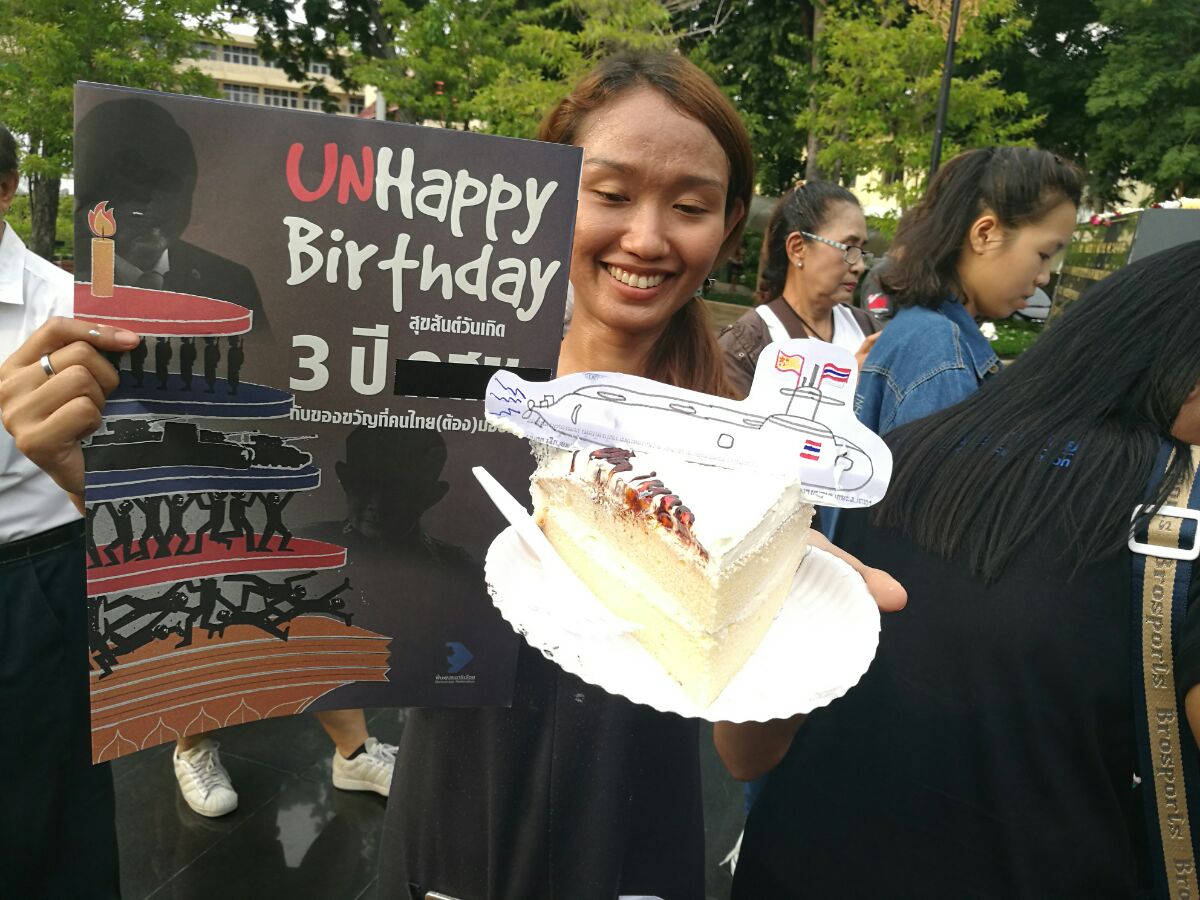
Here’s how Thailand looked this past week, as a world of watery hurt strafed the nation, the junta turned three years old and a bomb ripped through a hospital waiting room. Find more on our Facebook, Twitter, YouTube and Instagram.

DSC 2656
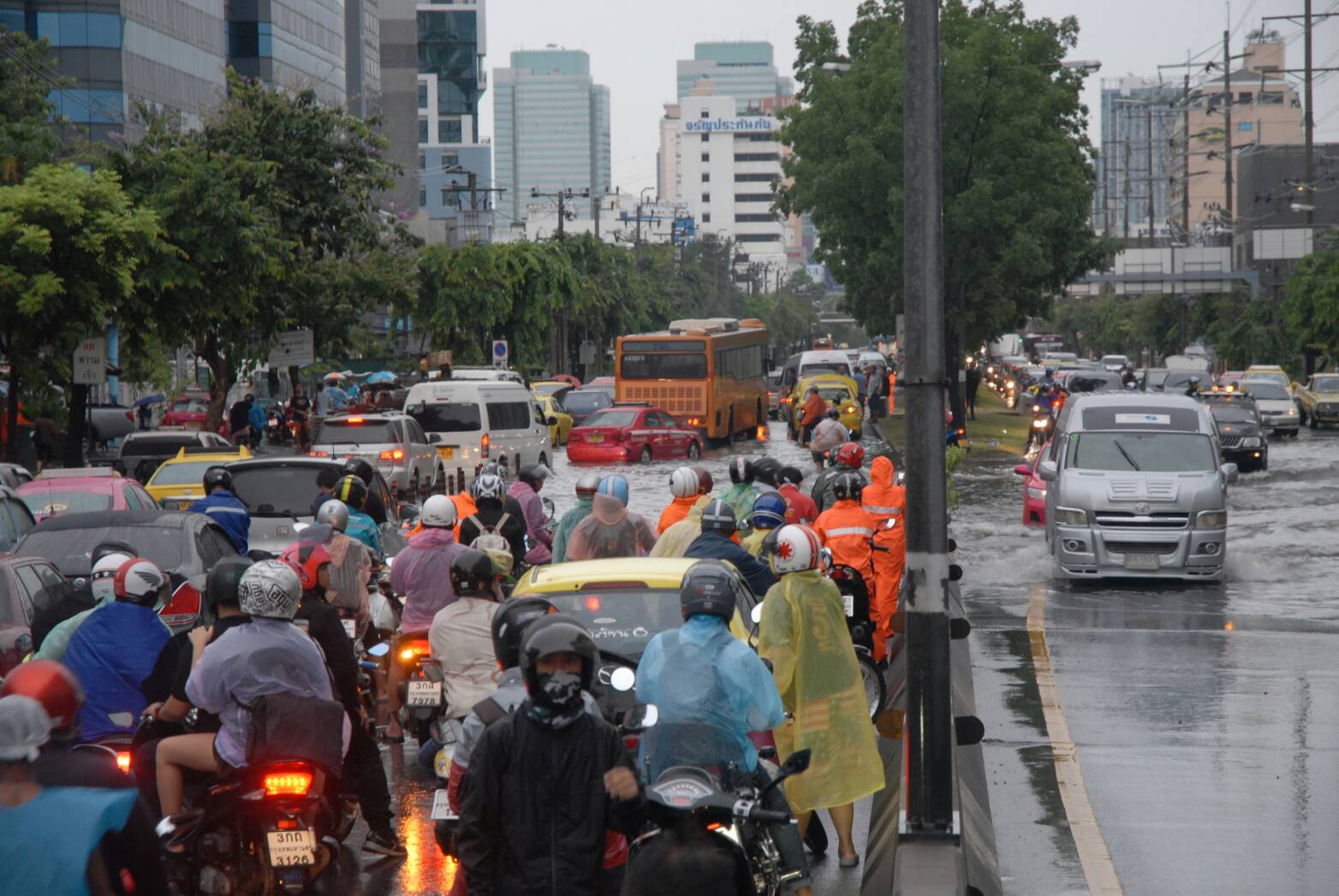
Half-submerged motorcyclists cut through a flooded road Thursday in Bangkok’s Lat Phrao district. Read: Flooded Areas Across Bangkok After Last Night’s Big Storm (Photos)


S 2203959
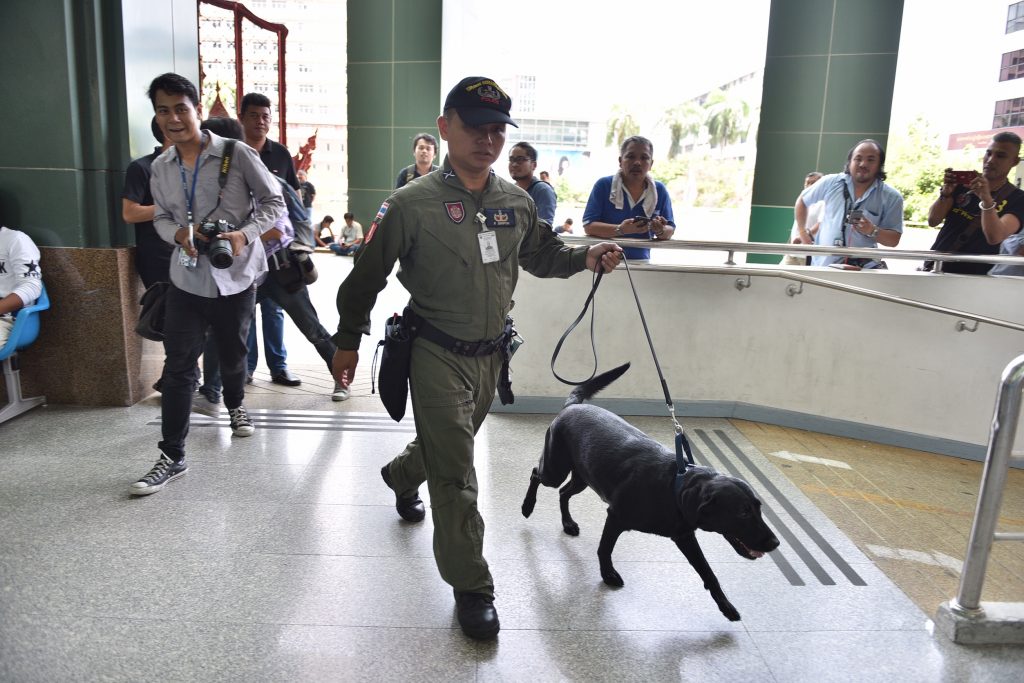
An army bomb squad officer arrives at Phramongkutklao Hospital Monday morning. Read: Experts Dismiss Deep South Link to Hospital Bomb


^E5ECCC30A40B5DCAB58214D8FB1593A7A2C719821F1F09407E^pimgpsh fullsize distr
Chonticha Jangrew of the Democracy Restoration Group holds a cake with other pro-democracy activists to mark the third anniversary of the 2014 coup on Monday at Thammasat University’s Tha Pra Chan campus. Read: Junta Allows Panel on Coup – Bans Words ‘Junta’ or ‘Coup’


1495683772453
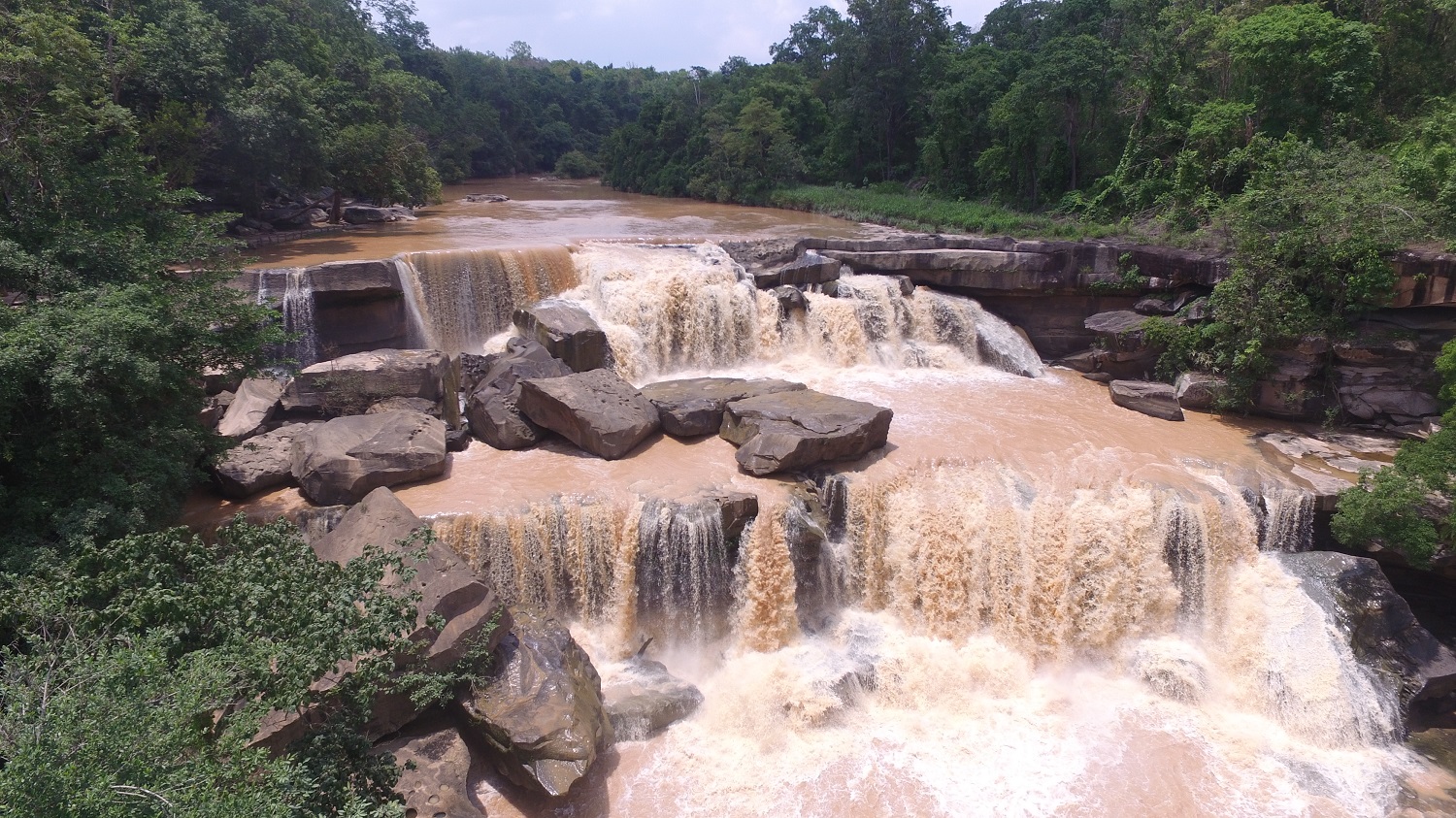
Keang Sopha Waterfall on Thursday reached a thundering cascade in Phitsanulok . The rainy season brings the best season for viewing – but not swimming – such waterfalls. Read: Monsoon Brings Spectacular but Dangerous Falls to National Park


23
A swimming centipede found in Thailand was named among the year’s top discoveries Saturday by a New York university. Photo: Chulalongkorn University


D7 7 e1495606282359
Marine officials on Monday recover the remains of a five-meter disc coral stolen from Koh Wiang in the Gulf of Thailand. Read: Task Force Weighed After 1,000-Year-Old Coral Stolen From Gulf Island


MONDAY
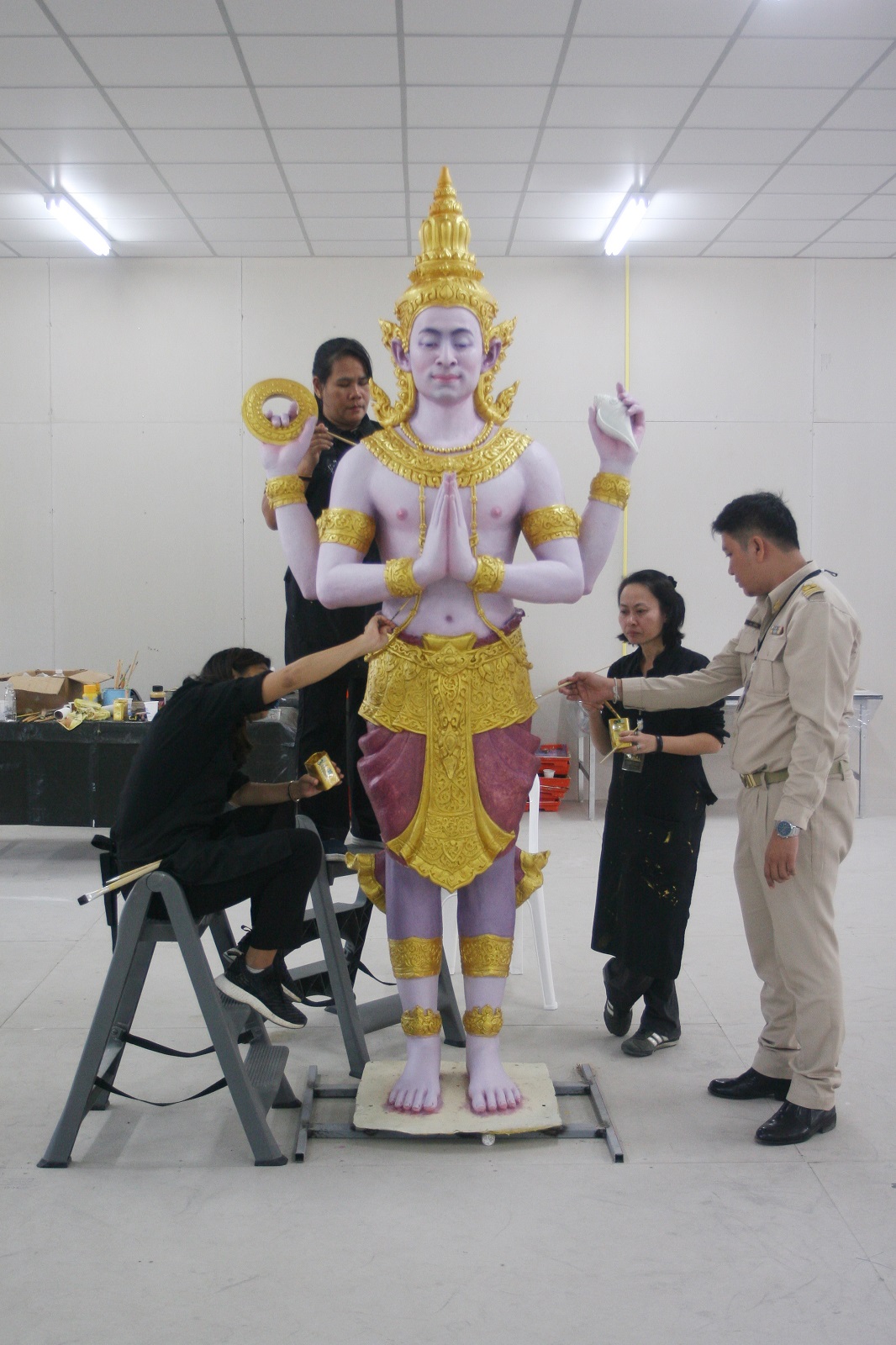
Artists paint a sculpture of Vishnu for the funeral pyre, or meru, of Rama IX on Monday at the government Fine Arts Department in Bangkok.


DSC 2707
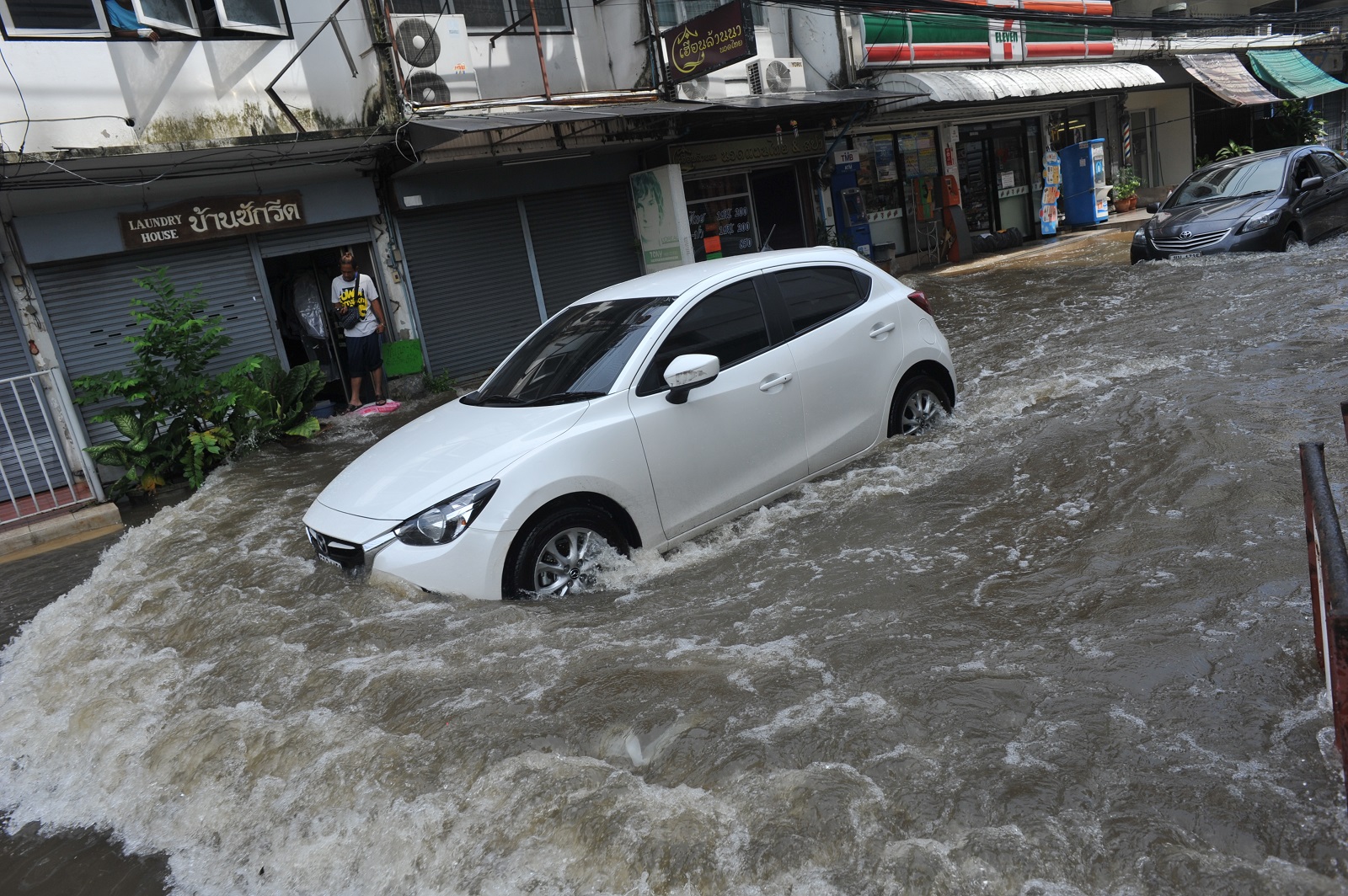
Cars brave a roiling soi Thursday in the Lat Phrao district of Bangkok.


P5242108
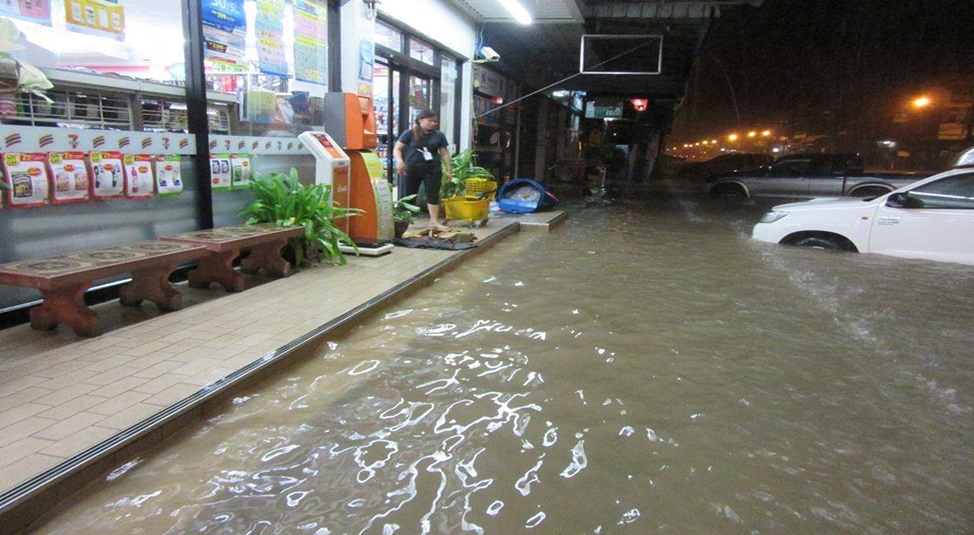
Floods trap a customer at a 7-Eleven on Thursday in Nakhon Phanom province.


IMG 4884
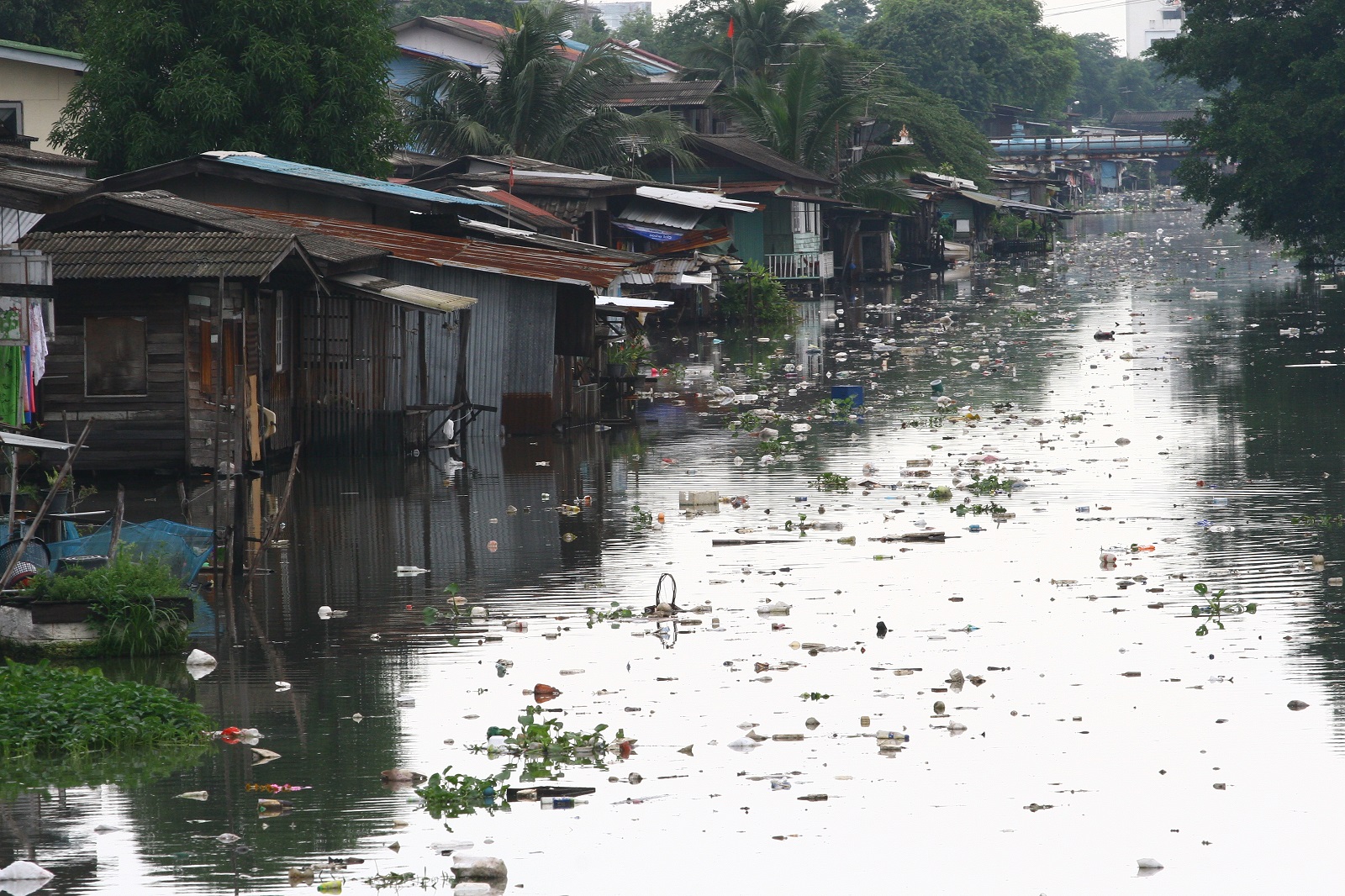
Litters from Khlong Bang Bua overflows Thursday into Bangkok’s Bang Khen district. Read: Monsoon Now: Prepare to Get Wet


Related stories:

Photo Phriday: Floods and Falls

Advertisement

11 More Surprisingly Absurd Thai Laws

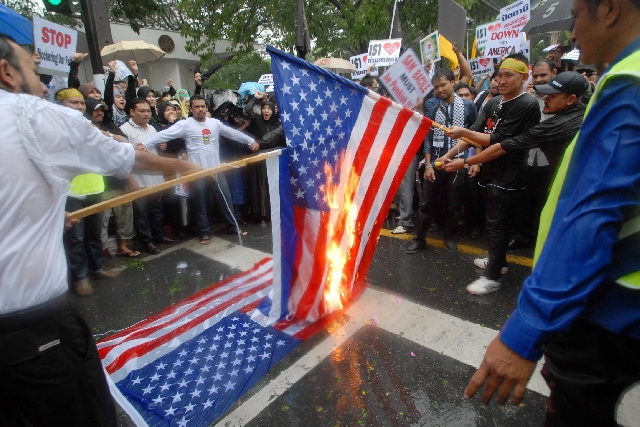
Scofflaws torch an American flag in front of the U.S. Embassy in Bangkok on Sept. 22, 2012. They escaped punishment.

We trust you’ve kept a firm grip on the reins and not bowled after midnight since we last looked at some of the truly bizarre old laws on the books.

Since then we’ve come across even more surreal laws you may not have heard of. So be a good citizens and do not to hoist the wrong flag, say the wrong thing into a microphone or tie your buffalo to the wrong thing, mmkay?

After all, as we learned last time, these laws remain in effect and enforceable at any time, no matter their age or absurdity.

1Can’t Speak Thai? Put the Microphone Down.

2No Late-Night Snacking

The 252nd Revolutionary Decree enacted by the military government in 1972 banned selling food between 1am and 5am without the explicit permission of a police chief or provincial governor. Given the scene of all-night street food scene and ubiquitous 7-Eleven stores, rest assured that this law is totally unenforced.

3No Dissing Foreign Heads of State

We’re all familiar with lese majeste, a draconian law that once banned insults to the top members of the Royal Thai Family and today is applied to pretty much everything said about the monarchy.

Little known is that insulting foreign monarchs or heads of state is a crime under Section 133 of the Penal Code. Please remember to say only kind things about Prince Charles and Donald Trump or risk seven years in prison. Thanks!

4Don’t Show Your Colors

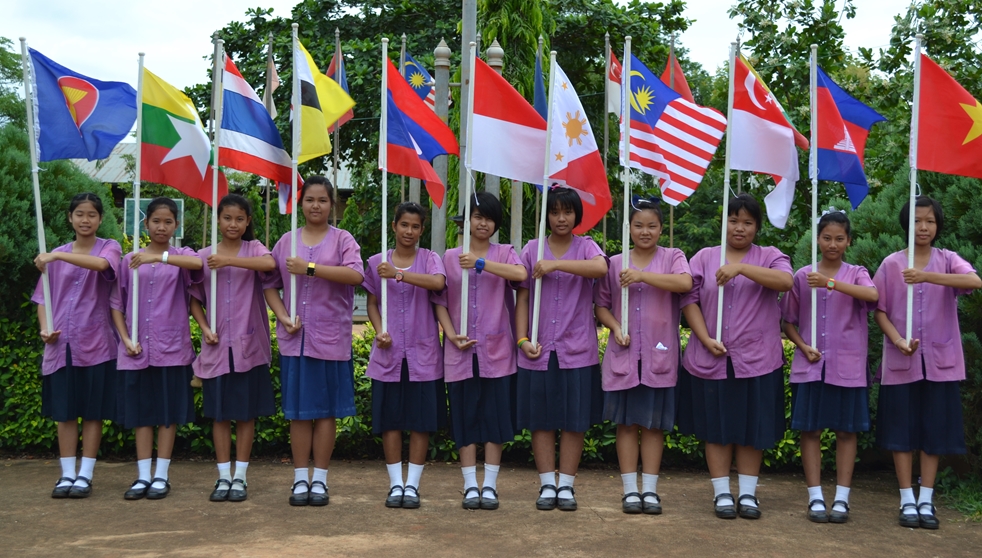
School students hold up the flags of ASEAN. Image: Dan Mae Kham Man School

Want to show some pride in your homeland by raising its flag in public? Don’t! Under the 1979 Flag Act, passed during the Cold War and Red Scare, flying the flags of other countries in public places is illegal but for a few exceptions such as embassies and diplomatic residences. Violators go to prison for a month.

5And Please Don’t Burn Any of Them

Scofflaws torch an American flag in front of the U.S. Embassy in Bangkok on Sept. 22, 2012. They escaped punishment.

While we’re talking about flags, the same 1979 Flag Act outlaws that common protestor pastime of form of protest. In fact, display any disrespect toward a Thai flag and get up to six years in prison.

Doing the same to foreign flags isn’t okay either; such gestures are banned under Section 135 of the Penal Code. Offenders face up to two years in jail.

6No Royally Rude Newspapers or Hotels

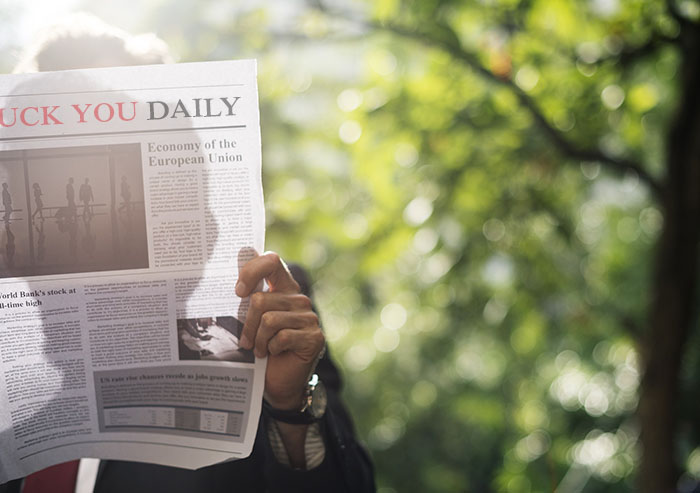
Want to show your contempt or devil-may-care attitude with your business name? Forget launching the Fuck You Daily or Hotel Erdogan Is An Asshole because two separate laws ban naming newspapers and hotels using “curse words.” Names resembling those of Their Majesties the King and Queen are also banned.

7Don’t Insult Royal Guests

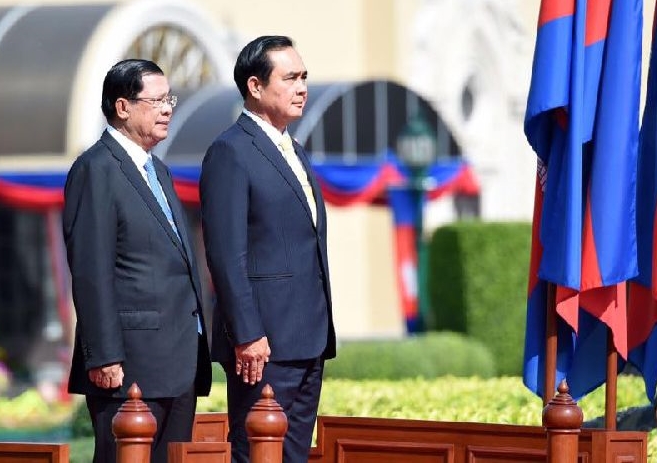
Cambodian Prime Minister Hun Sen and junta chairman Prayuth Chan-ocha at Government House on Dec. 18, 2015.

Defaming representatives of foreign states who have been invited to Thailand as guests of the Royal Thai Family bears a penalty of up to five years in prison. So, if Aung San Suu Kyi or Hun Sen are here in town on the palace’s invitation, it’s best not to insult either of them.

8Holy Blasphemy!

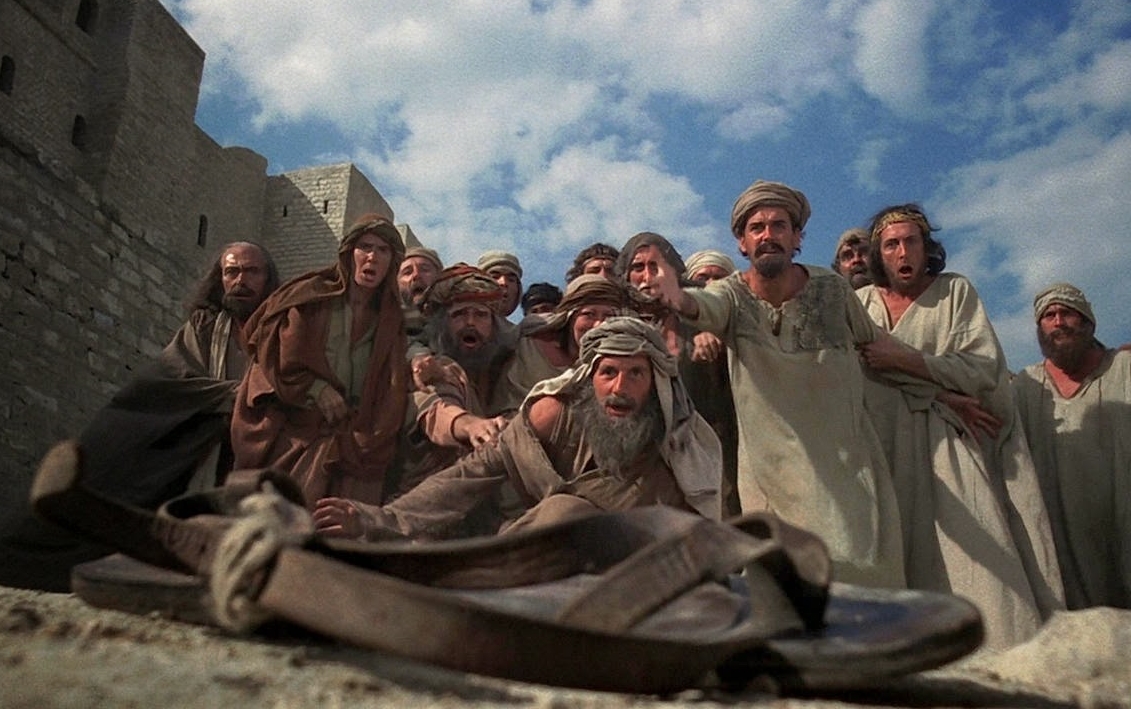
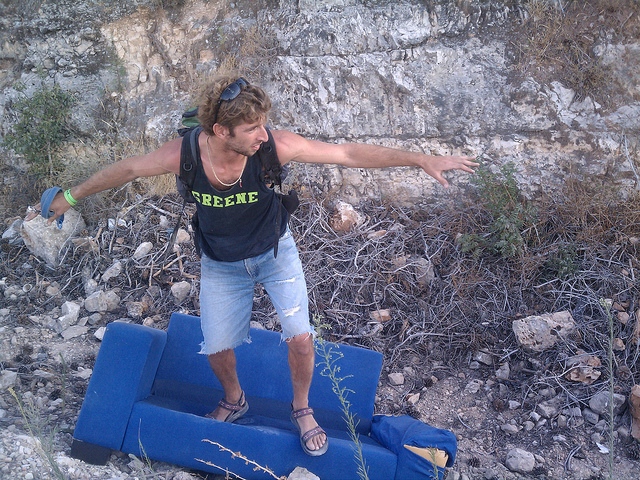
If this sandal is held sacred by a group of people, you must respect it.

The well-known Thai proverb mai chue yah lob luu (If you don’t believe it, don’t disrespect it) should probably be amended to say, “If you disrespect it, go to jail for it.” Section 206 of Penal Code prohibits showing disrespect to any “object or venue” deemed sacred by any religion at the pain of seven years in prison.

9Sing It Like the Thais

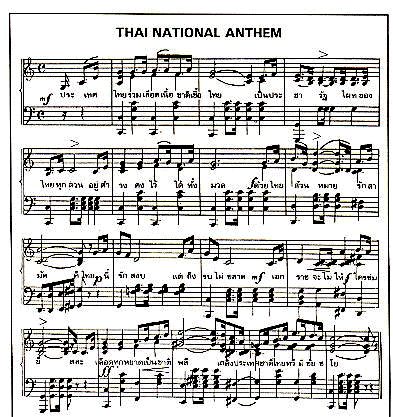
Learn it today!

Apart from piles of documents and a fat monthly salary, one requirement to become a naturalized Thai citizen under immigration regulations is the ability to sing the national and royal anthems. Online anecdotes say applicants must sing them in front of a panel of officials on interview day.
10Guests Must be Reported

Steven DuBois / Flickr

Got a friend visiting from overseas or someone over for more than one night? If they aren’t a Thai national, you must alert local immigration officials within 24 hours of their arrival, even if it’s your private residence. Failing to do so is a 20,000 baht fine under Section 38 of the 1979 Immigration Act.

11No Improperly Fastened Cattle

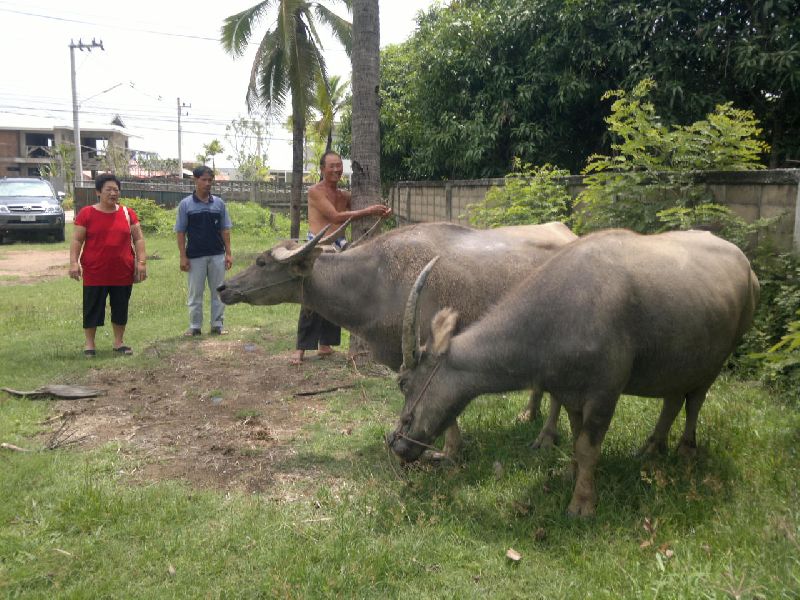
Tie your buffaloes to a tree = ok. Tie your buffaloes to a telegraph pole = not ok

Next time you’re looking for a proper place to hitch your buffalo, horse, cow or other livestock, please be mindful that it is not a telegraph pole. Does Section 34 of the 1934 Telegraph and Telephone Act’s clause forbidding their use for such a purpose apply to today’s telephone poles or cell-phone towers? Find out the hard way – it’s only a 100 baht fine.

Sex Traffickers Took Hundreds From Thailand to US

MINNEAPOLIS — Hundreds of women were brought from Thailand to the U.S. and forced to be “modern day sex slaves,” according to an indictment unsealed Thursday that charges high-level members of what authorities called a sophisticated sex-trafficking ring that concealed millions of dollars in earnings.

The indictment brings the total number of people charged to 38, making it one of the largest sex-trafficking prosecutions in the U.S., said Acting U.S. Attorney Gregory Brooker. Authorities say the operation lured Thai women to the U.S. with promises of a better life, then forced them to work as prostitutes until they could pay off often insurmountable bondage debts.

Women were rotated through several prostitution houses around the U.S., forced to work long hours, and “forced to have sex with strangers, even if the men were abusive,” Brooker said.

The latest indictment goes after the money  estimated in the tens of millions of dollars  as well as high-level members of the organization, such as “house bosses.” It charges 21 people with various counts, including conspiracy to commit sex trafficking, sex trafficking by use of force or threats, conspiracy to engage in money laundering and operating an unlicensed money transmitting business. It builds upon an indictment unsealed in October that charged 17 people, some of whom have pleaded guilty.
Alex Khu, special agent in charge of Homeland Security Investigations in Minneapolis, said going after the enterprise’s finances was important.
“We hit them hard,” Khu said. “It was a gut punch.”

Khu’s agency discovered the international ring after it began looking into a sex-trafficking case in the Twin Cities in 2014. Former Minnesota U.S. Attorney Andy Luger had made sex trafficking a priority and traveled to Thailand as part of the investigation. Luger was among the U.S. attorneys forced to resign in March, but prosecutors in the office have continued working this case, approaching it as they would an organized crime network.

The conspiracy began in 2009, according to the indictment, with organizers bringing poor women who spoke little English from Bangkok to several U.S. cities, including Los Angeles, Chicago, Las Vegas, Phoenix, Minneapolis, Washington, Houston and Dallas. The organization threatened to harm the women’s families in Thailand if they escaped.

“The victims were isolated. They typically did not have the ability to choose who they have sex with, what sex transactions they would engage in, or when they would have sex,” the indictment said.

The women were forced to turn over most of the money they earned, plus pay for rent, food and personal items, making it almost impossible to repay their debts, the indictments say. They also were often encouraged to get breast implants, and the surgery costs were added to their debt.

Panida Rzonca, directing attorney with the Thai Community Development Center in Los Angeles, told the story of one victim who left her family in Thailand to get a massage job in the U.S. Upon arrival, her passport was taken away and she was told she would have to pay USD $35,000. It wasn’t until her trafficker took her to buy lingerie that she discovered she was really brought to the U.S. for commercial sex. The woman eventually escaped, Rzonca said.

Twenty of the people charged in the latest indictment were arrested Wednesday, with one person remaining at-large. Authorities said active prostitution houses were shut down, and some additional victims were found.

Those arrested include house bosses who allegedly ran day-to-day operations, including advertising, scheduling sex buyers, and ensuring that a portion of cash made by victims was routed back to traffickers to pay down bondage debts. The arrested also included alleged money launderers.

As part of the money laundering scheme, the women were forced to open bank accounts in the U.S. that the organization controlled and used to hide proceeds. The organization also recruited people to bring large sums of cash to Thailand or hid cash in items sent to Thailand, such as clothing or dolls. Cash was also sent to Thailand through international wire transfers and hawala-based systems, the indictment said.

One of the bosses of the organization was arrested in the first phase of the investigation and is in custody in Belgium. Authorities are working to extradite her to the U.S., Khu said.

The leaders of the ring based in Bangkok  who are identified in the indictment as Individual A and Individual B  are believed to be in Thailand and are at-large.

Story: Amy Forliti

Advertisement

1 Step Forward, 2 Steps Back for LBGT Rights in Asia

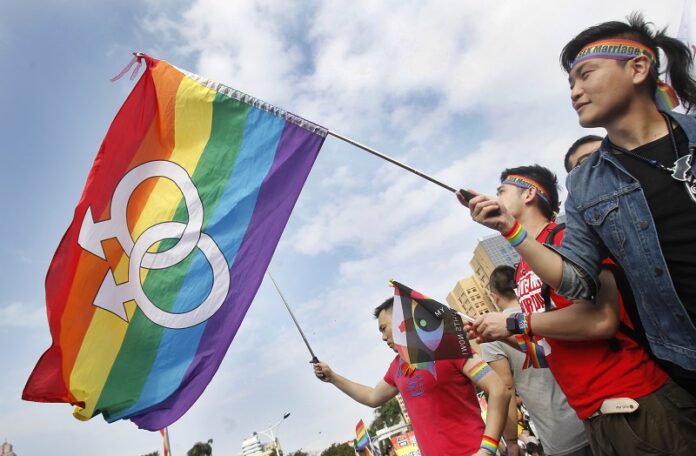
Supporters of LGBT and human rights wave rainbow flags during a rally supporting a proposal to allow same-sex marriage last December in Taipei, Taiwan on the World Human Rights Day. Photo: Chiang Ying-ying / Associated Press

A first-ever ruling in favor of same-sex marriage in Asia. A public caning in Indonesia. A soldier convicted in South Korea.

For LGBT rights, it was one step forward, two steps back this week in Asia, where traditional values often clash with modern views on lesbian, gay, bisexual and transgender issues.

The developments followed the arrest in Bangladesh last week of 27 men on suspicion of being gay, though police said they would be charged with drug possession since they were detained before they engaged in sex.


Indonesia

First came a police raid on a gay sauna and gym in Jakarta, the Indonesian capital. Then the public caning of a gay couple for consensual sex in Aceh, a remote Indonesian province that practices Shariah law.

More than a thousand people packed a mosque courtyard Tuesday to witness the caning. The crowd shouted insults and cheered as the men, aged 20 and 23, winced in pain while they were whipped 83 times across the back.

“What they have done is like a virus that can harm people’s morale,” said Sarojini Mutia Irfan, a female university student who witnessed the caning. “This kind of public punishment is an attempt to stop the spread of the virus to other communities in Aceh.”

Outside of Aceh, homosexuality is not illegal in Indonesia, but the country’s LGBT community has come under siege in the past year.

Strident anti-gay comments from high-profile politicians and Islamic hard-liners have fanned prejudice. A case before the country’s top court seeks to criminalize gay sex, as well as sex outside marriage.

Police detained 141 men Sunday evening at the sauna in Jakarta and charged 10 with violating pornography laws. The raid followed the arrest last month of 14 men in Indonesia’s second-largest city, Surabaya, at what police say was a sex party.

The pressure looks set to increase. Police in West Java, the country’s most populous province, announced Wednesday the creation of a task force to search for and monitor gyms and other locations that hold LGBT parties. The police chief urged communities to report such activity.


Taiwan

A Taiwan court ruling Wednesday affirmed the right of same-sex couples to register their marriages, a first in Asia and one that will likely give encouragement to China’s burgeoning gay rights movement, given the cultural ties between the two.

The Constitutional Court ruling also underscores the stark differences between self-governing Taiwan and China, which considers Taiwan a breakaway territory.

Taiwan has evolved into a freewheeling democracy over the past three decades with a vibrant civil society, a high proportion of women in politics  including the current president  and broad acceptance of international cultural values.

China, in contrast, remains an authoritarian society where the Communist Party brooks no challenge to its strict control over political and social life.

The removal of homosexuality from the official list of mental illnesses in 2001 and an end to routine harassment of gays meeting in public has made life easier for many. However, the ruling party’s inherently conservative nature and strong societal pressure to marry and produce offspring remain impediments to greater freedoms.

Gay activists in China have become increasingly emboldened in recent years, staging small-scale public events and rallying behind unsuccessful legal cases on same-sex marriage and transgender rights, but they remain far from enjoying the high profile and legal protections of their counterparts in Taiwan.

“At least more Mandarin speakers can talk of equality,” said Sean Howell, president of the international gay social network Hornet that has been campaigning for marriage equality in a number of Asian countries. “Achieving marriage equality in one country in Asia will help all around.”


South Korea

A South Korean military court sentenced an army captain Wednesday to a suspended prison term for having sex with a fellow male soldier.

The case was one of several that came to light last month, triggering allegations by a watchdog that South Korea’s military was hunting down and prosecuting gay servicemen. South Korea’s army has denied that, saying it was conducting a criminal investigation of soldiers who posted a video on the internet of two male soldiers having sex earlier this year.

Lesbian, gay, bisexual and transgender people are harshly stigmatized and struggle to be politically visible in South Korea. A powerful Christian lobby immobilizes politicians seeking to pass anti-discrimination laws.

The stigma is amplified in the military, where most able-bodied South Korean men are required to serve about two years as the country maintains a large force in the face of potential conflict with North Korea. Gay men are not exempt from conscription but are banned from engaging in homosexual activity while serving, leading them to keep their identity secret for fear of discrimination and reprisals.

Kim In-sook, a lawyer for the captain, said the military penal code, which makes homosexual activity punishable by up to two years in prison, is unconstitutional because it tramples on basic human rights and dignity.

She said it’s unclear whether her client would appeal because he felt tormented by the legal process. He will be dishonorably discharged if the ruling stands.

Advertisement

Experts Dismiss Deep South Link to Hospital Bomb

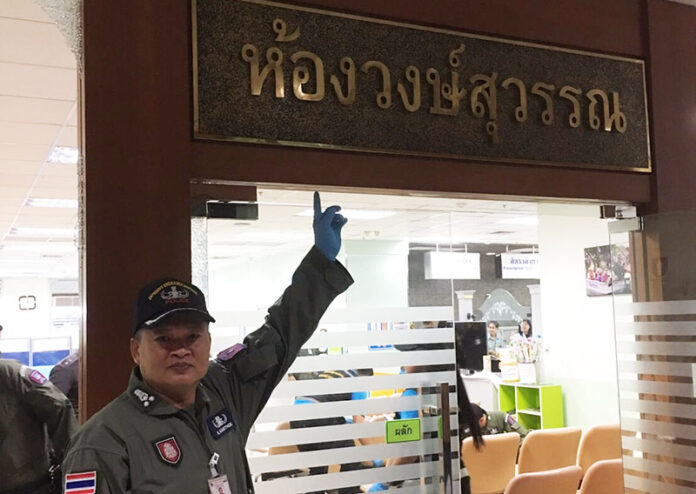
An EOD officer points to sign identifying the reception room attacked by bomb attack Monday at Phramongkutklao Hospital as Wongsuwan Room, named after the family of deputy junta chairman Prawit Wongsuwan.

BANGKOK — While police brass have yet to name who they think was behind Monday’s bomb attack that wounded dozens in a hospital waiting room, several analysts Thursday ruled out a group of possible perpetrators: the southern insurgents.

Citing differences in the bombs and tactics, several analysts said it was unlikely that the separatist groups which have carried out past bombings were involved in the latest attack, which took place at the army-owned Phramongkutklao hospital.

“Looking at the nature of the bomb, the methods and the operation; I don’t think it’s related to the southern movements,” said Srisomphop Jitpiromsri of Deep South Watch, a group that tracks and reports violence in the southernmost provinces.

Read: Civilian Military Trials May Resume After Bombing

One indication of a possible connection was an anonymous letter sent to authorities three days before the blast. It reportedly claimed separatist group BRN would attack a public hospital this year.

The Barisan Revolusi Nasional, or BRN, is a militant group seeking independence for the three Muslim-majority southern provinces. The group, which has been described by officials and observers as highly secretive and military-capable, is believed to have carried out other high-profile and destructive bombings in recent years, such as a wave of bomb and arson attacks last August.

But Chamroon Dane-Udom, a former police commander who oversees a conflict resolution group, said he doesn’t believe BRN was behind Monday’s attack.

“I don’t think it was the BRN,” said Chamroon of the Southern Islamic Cultural Association. “From what I have talked about with them, the BRN has tried not to expand their operation, I mean, they tried to limit their operations to the southern provinces.”

Staging attacks in Bangkok is too much of a risk, said Chamroon, a retired chief of the southern border patrol police.

S 16081000
Police and military officers collect evidence Monday at the scene of bombing at Phramongkutklao Hospital.

“They do have the capability to produce bombs, but sending people up north risks being discovered. The more people involved and the farther the operation, the more risk for them,” he said.

Srisomphop of Deep South Watch also said the BRN has a history of staging attacks only in open areas, such as the car bomb that wounded more than 50 people and decimated the entire facade of a Big C shopping center earlier this month.

Police bomb squad chief Kamthorn Auicharoen said Thursday the pipe bomb used at Phramongkutklao Hospital did not match bomb devices used by insurgents in the Deep South, though he added that police are not discounting the possibility they were involved.

“We are investigating every possible point,” Col. Kamthorn said.

Anthony Davis, a security consultant for IHS-Jane’s who’s said the BRN was responsible for previous bomb attacks said there’s little evidence of its involvement in the latest blast.

Davis, who’s studied the BRN for years, said neither the targets nor devices used bore the hallmarks of the southern insurgents.

He said there seems to be an unusual consensus between both senior officials and security analysts that separatist militants in the Deep South were not involved.

Then Who?

Consistent with previous calamities and tragedies, from bombs to floods, the government leader’s initial reaction to Monday’s attack was to hint that factions allied with the previous administration were to blame.

“Don’t distort it and say the government did it. No government would be crazy enough to do that, except people who want to be the government and think of doing it,” junta chairman Prayuth Chan-ocha told reporters Tuesday.

Regardless of whether Prayuth had any evidence for his rhetoric, Davis suggested Monday’s bombers may have been the so-called Men in Black who battled security forces during Redshirt demonstrations in 2010.

He described the Men in Black, aka the Blackshirts, as “a relatively small but well-organized and well-armed group” who are “recruited from former security force personnel – believed to have included ex-police officers, former army Rangers and some ex-navy special force elements.”

The expert dismissed speculation the bombing resulted from army factionalism turned violent. He said internal conflict within the armed forces has winded down since a new army chief not aligned with Prayuth’s faction was appointed in October.

Like Davis, former police commander Chamroon said he suspects former members of the armed forces turned mercenary may have been recruited by some political groups to stage the attack.

“Is it possible? That is up to police to investigate and conclude,” Chamroon said.

S 2203959
An army bomb squad officer arrives at Phramongkutklao Hospital Monday morning.

Thitinan Pongsutthirak, a political science professor at Chulalongkorn University, declined to speculate on who might have been responsible for the attack, though he said the attackers must have had “intimate knowledge” of the army-operated venue.

“Targeting the army’s hospital is audacious, not a heinous act any perpetrator can commit without intimate knowledge of how army hospitals work,” Thitinan, who also runs the Institute of Security and International Studies, wrote in an email. “And then to have the pipe bomb go off near a medicine room named after the Defence Minister and Deputy Prime Minister may be too much to be coincidental.”

He added that the blast will likely exacerbate the climate of political uncertainty and undermine the junta’s oft-cited claim of bringing peace and order to the country.

“It undermines the military government’s chief reason for being in power,” the professor wrote. “If the military government cannot maintain peace and stability, then what is it good for, since most of its other areas of performance have been subpar.”

Advertisement

Work on 1st Small Stretch of High-Speed Rail May Soon Begin

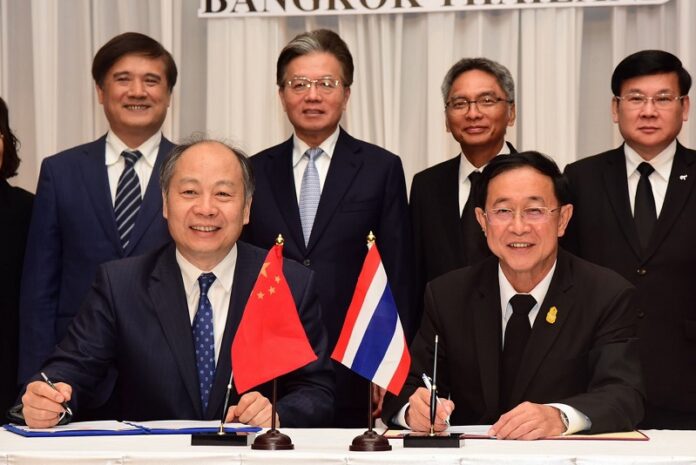
Minister Akhom Termpittayapaisit, at left, sits beside Wang Xiaotao, vice-chairman of the Chinese National Development and Reform Commission. Photo: Logisticnews / Facebook

BANGKOK — Construction of the first 3.5-kilometer stretch of a high-speed rail line connecting Thailand to China may begin as soon as August, transportation officials announced Wednesday.

Once the interim cabinet signs off on the plan next month, a 200 million baht contract to lay the first tracks in Nakhon Ratchasima province should be signed in July, according to Transportation Minister Akhom Termpittayapaisit.

The short stretch will run from Klang Dong and Pang Asok stations west of Pak Chong. It was selected for its suitable conditions and will eventually be part of the 179 billion baht, 252.5 kilometer project connecting Bangkok to Korat, the so-called gateway to northeastern Thailand.

That line will later eventually connect all the way north to the border with Laos.

Hailed as a joint-venture between both nations, the deal was made by the military government after it seized power in 2014. The plan came as they were trying to strengthen the relationship with China.

After putting a stop to a high-speed rail program under development by the previous civilian government, the junta first said it would settle for a less ambitious project. Officials later changed their minds and moved forward a high-speed service.

Thailand chose Chinese vendors over Japanese suppliers but decided to finance the project after a funding spat.

After meeting with a Chinese representative on Wednesday, minister Akhom said he expects to have a firm named by August to start the first phase of construction as soon as possible.

The Finance Ministry will be responsible for securing the initial 200 million baht needed for the project. The government will consider taking a Chinese government loan to pay for the trains and signaling systems it has committed to purchase from the Chinese.

China also wanted its engineers to build the line.

Akhom said they were working to solve outstanding issue to allow Chinese engineers not licensed in Thailand to work on the project – which is illegal.

He said both parties are working closely with the Council of Engineers and Architects Council to assure the project complies with Thai law.

Design work remains unfinished for the remaining three phases of the project, and the minister urged China to complete them soon that the project may continue.

Advertisement

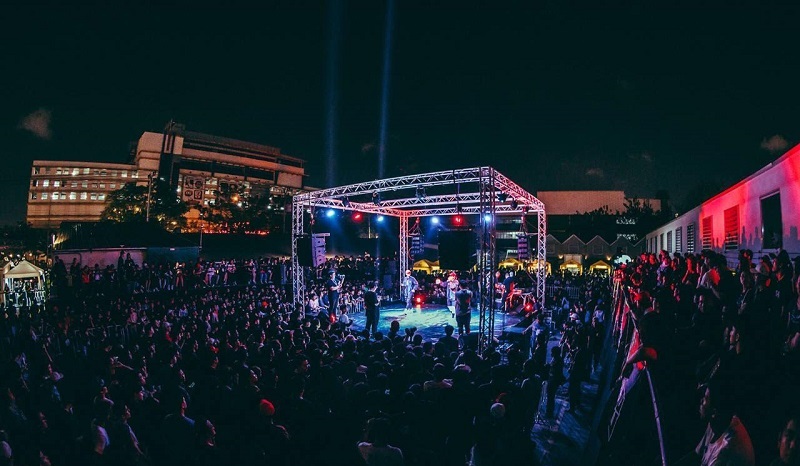
War of Words: Thai MCs Battle for Supremacy, Lulz

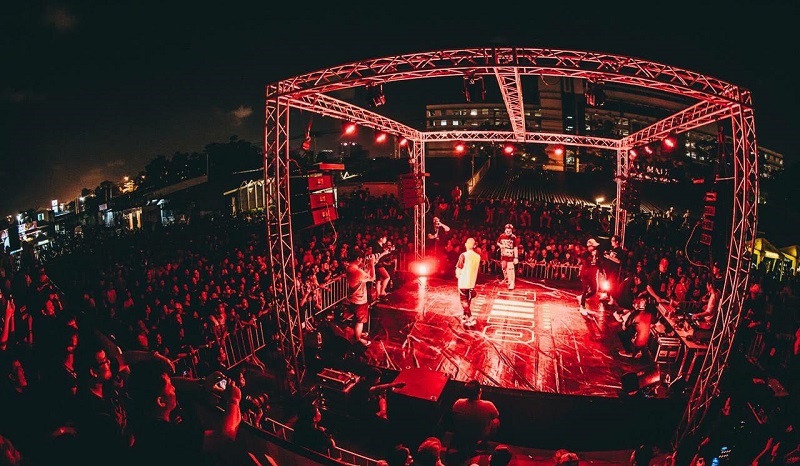
Photo: Rap is Now / Courtesy

Waving to the crowd for support, it was MC Youngohm’s turn to take apart his opponent on the stage. Circling across from him, MC Ken Noi of Chiang Rai listened anxiously and prepared to fire back at the end of the 45-second round. It all made for a very rude six minutes as the two took turns freestyling rap full of braggadocio, disses and punchlines.

MC Youngohm: “First of all take this and think / you’re old like Tony Jaa and more like John Wick / I’ll hurt you until you die / spit only one bar and / I’ll send you back to Chiang Rai.”

Trying to outdo each other with better freestyle verses and clever insults, this is rap battling as popularized in the ‘80s by MCs such as Kool Moe Dee and Krs One.

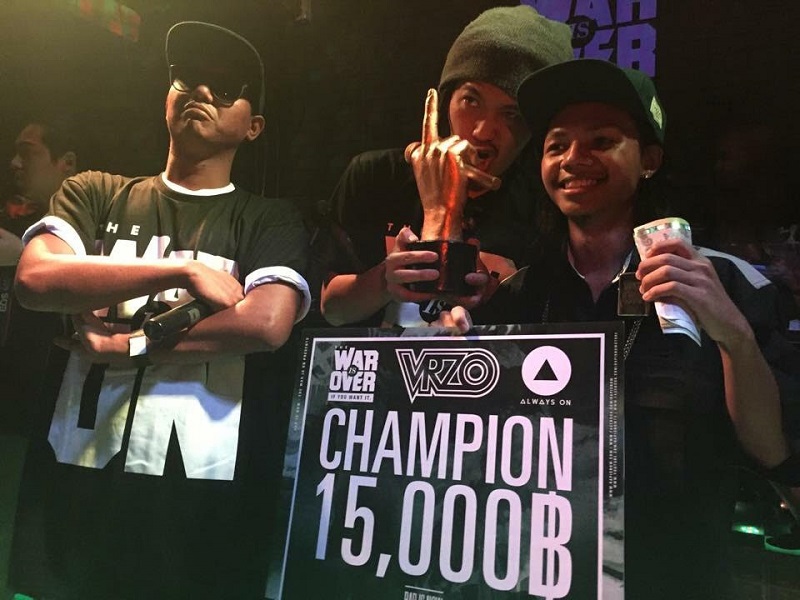
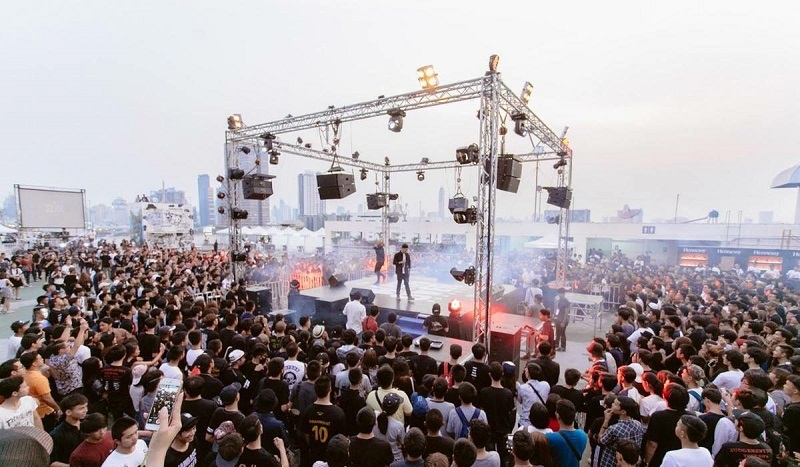
On stage in March 18 at Larndin Chatuchak Park, Youngohm and Ken Noi were among 16 MCs throwing down as semifinalists in a competition organized by Rap is Now, which since 2009 has become Thailand’s biggest rap-battle organizer, with the nation’s best MCs coming from all corners of the kingdom to compete for prize money and bragging rights.

mongkorn.bug .2017

For this year’s series, Rap is Now received more than 1,000 applicants, 160 of which were picked by judges to compete in major cities in the central, northern, northeastern and southern regions of Thailand. In the end, 32 semifinalists made it to the stage in Suan Lum Night Bazaar.

“Rappers compete like boxers,” said Rap Is Now creative director Tar. “They fight but give each other hugs after, our words are our weapons, but we still respect each other in the end.”

Rappers have always expressed themselves through their lyrics, and in order to win battle rappers use often use salty language that may go too far for some, especially in conservative Thailand.

Take for example Oak vs. Tossakan. After getting heavily attacked, Tossakan fired back at Oak to “go back and help your wife sell her pussy.”

So are there any censorship issues?

Because of the strong language used, Rap Is Now art director Sawit “Joe” Sawakun said not everything ends up on YouTube.

“We never tell people what they can or cannot say because it’s part of their performance,” Tar says, though it’s a different story for online media. “But when it comes to our online content, there are some subjects that we won’t allow on our videos.”

As for what gets said on stage, Joe said the performers understand the culture’s same red lines are drawn around certain topics, whether about government, monarchy or something potentially defamatory.

The idea that would become Rap is Now began back in 2009 when Joe and his like-minded friends were disappointed by the lack of hip hop in Bangkok.

unnamed 1 1
Photo: Rap is Now / Courtesy

“Back when we were in university, we got to check out parties like Dudesweet and Super Zaap. They were great, but we felt the scene lacked proper hip-hop events,” he said. “I had a friend that had connections with nightclubs and invited me to organize some parties.”

At first, rap battles were a small part of Joe’s events. But they eventually caught on and soon people were coming just for the battles.

Hip-hop culture has changed a lot since its golden age in the ‘90s. In a scene that’s dominated by trap beats and mumble rappers, I asked what they think about the country’s next-gen MCs.

“New rappers will always learn from their peers, but when it comes to Rap is Now, freestyling is not enough, and MCs need to have a lot of good material prepared,” Tar said.

This Saturday, see semifinalists Youngohm, MC King, Pee Clock, P-Hot, Hassadin, Oak and KQ go toe-to-toe from 5pm to 11:30pm at Asiatique. Get there by taxi or a ferry from BTS Saphan Taksin. Check the event page for the schedule. Tickets range from 440 baht to 2,000 baht, depending on seating and are available online. The finals will be held in August. Learn more at Rap is Now.

Music should brings us all together, whether it’s rappers battling or metal bands head-banging. Everyone deserves to enjoy these things in a peaceful and safe environment, and my heart goes out to those that lost their loved ones at the Ariana Grande concert in Manchester.

Until next time, dub be good to you.

unnamed 4
Photo: Rap is Now / Courtesy


unnamed 3
Photo: Rap is Now / Courtesy


unnamed 2
Photo: Rap is Now / Courtesy


Advertisement

Hot News

LATEST NEWS

Bangkok
broken clouds
37 ° C
37.2 °
34.4 °
54 %
7.4kmh
70 %
Tue
35 °
Wed
34 °
Thu
35 °
Fri
30 °
Sat
34 °