






























30.2 C
Bangkok
Tuesday, June 9, 2026
Home Blog Page 2504

A Look at Some of the Worst Nightclub, Music Venue Fires

The scene of a fire in Oakland, early Saturday, Dec. 3, 2016. Photo: Associated Press

LONDON — A fatal fire Friday night at a party in a converted warehouse in the San Francisco Bay Area has claimed the lives of at least nine people. More than two dozen are still unaccounted for. Fire officials say the roof collapsed during a music event.

A look at some other nightclub and music venue fires that have exacted terrible death tolls in crowded conditions:

— October, 2015: A blaze at the Colectiv nightclub in the Romanian capital of Bucharest killed 64 people and injured nearly 150 others. The fire erupted during a rock concert by the band Goodbye to Gravity. A spark from the band’s pyrotechnic show ignited the foam ceiling, erupting into flames. It’s known as the worst fire in Romania’s modern history.

— January, 2013: A fire killed more than 200 people at the Kiss nightclub in the city of Santa Maria in Brazil. Investigators said soundproofing foam on the ceiling caught fire and released poisonous gasses that quickly killed those attending a university party.

— December, 2009: Some 152 people died when a blaze broke out at the Lame Horse nightclub in Perm, Russia. It started when an indoor fireworks display ignited a plastic ceiling decorated with branches.

— January, 2009: An indoor fireworks display after a New Year’s countdown ignited a blaze in the Santika club in Bangkok, Thailand, killing 67 people and injuring many more. Victims died from burns, smoke inhalation and from being crushed.

— September, 2008: A fire killed 44 people at the jammed King of Dancers nightclub in Shenzhen, China, when a stampede broke out after a fireworks show ignited the ceiling.

— December, 2004: In Buenos Aires, Argentina, a fire killed 194 people at the crowded Cromagnon Republic club after a flare ignited ceiling foam. Club owner Omar Chaban was sentenced to 20 years in prison for causing the deadly fire and for bribery. Others received lighter sentences.

— February, 2003: A fire at the Station nightclub in Warwick, Rhode Island, in the United States, killed 100 people and injured more than 200 others. Fireworks being used by the band Great White set fire to flammable foam inside the club.

— December, 2000: A fire that was blamed on a welding accident killed 309 people at a disco in the central Chinese city of Luoyang.

— October, 1998: An arson attack against an overcrowded youth disco in the Swedish city of Goteborg killed 63 people and left around 200 injured. Four people were later convicted for starting the fire.

— March, 1996: A fire at the Ozone Disco Pub in Quezon City, Philippines, killed 162 people. A large proportion of the victims were students partying to mark the end of the academic year.

— March, 1990: An arson attack at the Happy Land nightclub in the Bronx borough of New York City killed 87 people. It started when a man angry with his girlfriend threw gasoline on the club’s only exit and set it on fire, and then jammed down the metal front gate so people were trapped.

— December, 1983: A fire at the Alcala dance hall in Madrid, Spain, left 78 people dead and more than 20 injured.

— May, 1977: A fire at the Beverly Hills Supper Club in Southgate, Kentucky, in America killed 165 people and injured more than 200.

— November, 1942: The deadliest nightclub fire in U.S. history killed 492 people at Boston’s Cocoanut Grove club. The fire at what had been one of Boston’s foremost nightspots led to new requirements for sprinkler systems and accessible exits.

— April, 1940: A fire ignited the decorative Spanish moss draping the ceiling of the Rhythm Night Club in Natchez, Mississippi, killing 209 people. The windows had been boarded up to prevent people from sneaking in.
 

Advertisement

Malaysian PM Leads Protest Against ‘Genocide’ of Rohingya

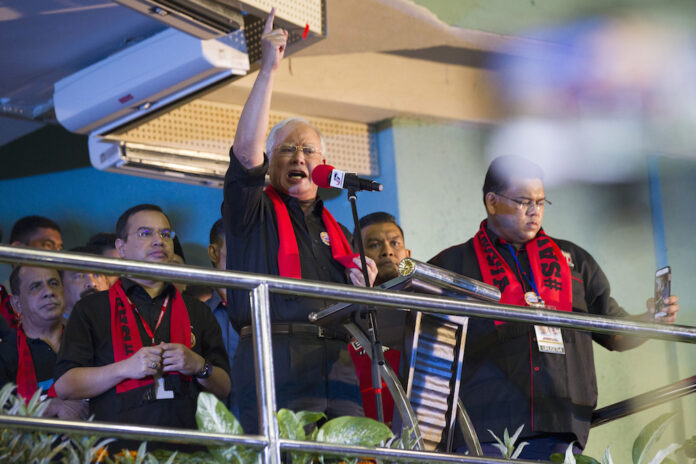
Malaysian Prime Minister Najib Razak, center, speaks to the crowd during a protest against the persecution of Rohingya Muslims in Myanmar at a stadium in Kuala Lumpur, Malaysia on Dec. 4. Photo: Lim Huey Teng (AP)

KUALA LUMPUR — Malaysian Prime Minister Najib Razak has led a protest rally against what he called a “genocide” of Muslim Rohingya minority in Myanmar.

Najib says Sunday’s rally at a stadium Kuala Lumpur in Muslim-majority Malaysia sends a strong message to Myanmar leader Aung San Suu Kyi and her government that “enough is enough” as he vowed to fight for the rights of the Rohingya.

He said: “The world cannot stand by and watch genocide taking place.”

The plight of Rohingya in predominantly-Buddhist Myanmar has galvanized Muslims in Southeast Asia and beyond.

Some critics accuse Najib, who is grappling with a financial scandal, of using the rally to win the support of the country’s Muslim Malays ahead of general elections due in 2018.

Advertisement

Death Toll in China’s 2nd Coal Mine Blast Rises to 32

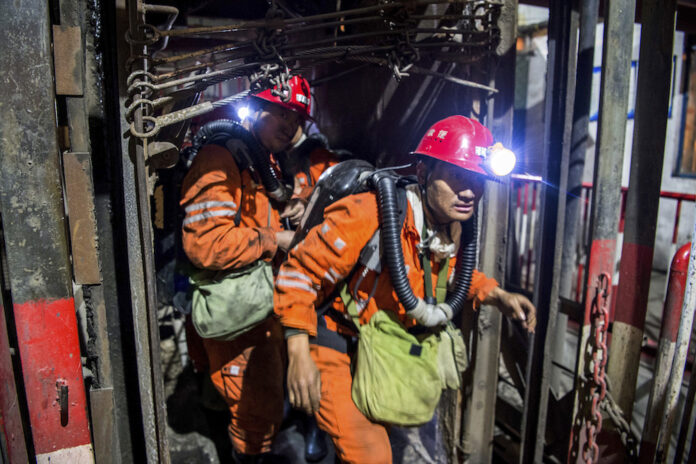
Rescuers entering the accident site to conduct search and rescue operation at the mining company in Chifeng, north China's Inner Mongolia Autonomous Region. Photo: Lian Zhen/Xinhua via AP

BEIJING — Thirty-two miners were confirmed dead Sunday in the second coal mine explosion in a week in China, state-run media reported.

The gas explosion hit the mine in Chifeng city in the Inner Mongolia region midday Saturday. Out of 181 miners working underground, 149 managed to get out and the rest died, official Xinhua News Agency reported.

The mine was operated by the Baoma Mining Co. Ltd., Xinhua said.

News of the blast came just hours after 21 miners who were trapped for four days after an explosion hit their unlicensed coal mine were confirmed dead in northeast China’s Heilongjiang province. Four people were arrested in connection with that disaster.

China’s mining industry has long been among the world’s deadliest, and top work safety regulators have acknowledged that some mines cut corners on safety standards due to financial pressure.

Advertisement

Watching Our Neighbors Suffer – in Silence

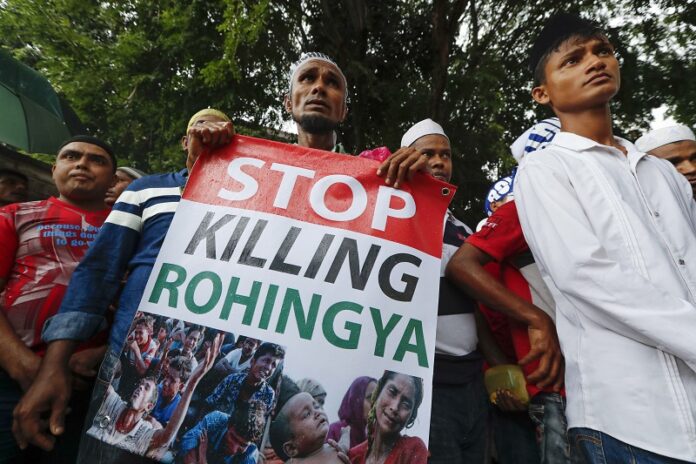
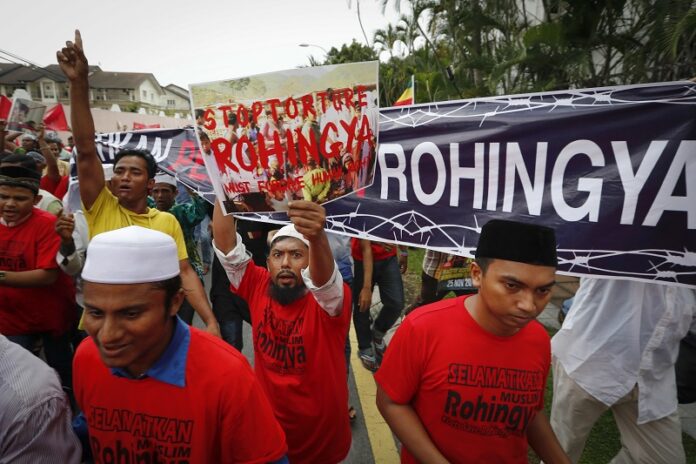
An ethnic Rohingya holds a banner during protest after Friday prayers outside the Myanmar Embassy in 2016 in Kuala Lumpur, Malaysia. Photo: Vincent Thian / Associated Press

Retention

What is happening in Myanmar’s Rakhine state to the Rohingya people is nothing short of abject failure by many Burmese who regarded themselves as Buddhists to be compassionate. Buddhism preaches tolerance, not the opposite. Wrongly clinging to one’s ethnicity, nationality, religion or the past can tragically make us regard others as less than human and undeserving of empathy, not to mention equal rights.

Thais, myself included, have been exposed to the news of Muslim Rohingya fleeing Myanmar for years, with the situation only getting worse. It’s in the news on and off, and no one is sure when there will be a constructive and humane solution to the issue.

There are many excuses made for withholding empathy from the Rohingya – they are not really citizens of Myanmar, they are not Buddhists, they are not good people and so on.

Remove their Rohingya and Muslim identities however and discover they are human. You don’t need to be Rohingya or sympathetic their plight, you only need to be human.  

As I watch the tragedy unfold and hear words like “crimes against humanity” used by the United Nations to refer to the strife in Rakhine state, where Human Rights Watch claims satellite images show about 30,000 Rohingya have recently fled their homes, I can’t but ask what we Thais could do to alleviate the suffering of our neighbors. An estimated 1 million to 2 million Rohingya live in Myanmar and many are fleeing to Thailand, Malaysia, Bangladesh and beyond. In Thailand, an estimated 200 or so are being detained, children and women included, for having fled terror in Myanmar and illegally entering the kingdom. Others live under state surveillance.

There are two dozen prominent Thai activists and scholars who spent two decades supporting the struggle for freedom and democracy in what had been Burma when they started. I rang one up Thursday afternoon to ask if they’re going doing anything about the deteriorating situation.

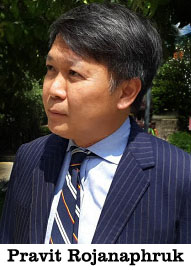
Pravit Rojanaphruk

Naruemon Tabchumpol, a political scientist at Chulalongkorn University and a former member of the Thai Action Committee on Democracy in Burma, which long supported the cause of freedom and democracy in Myanmar, said the situation is complicated.

She said old Burmese contacts have been rekindled and concerns expressed, but many Burmese democracy activists simply regard the Rohingya as others who don’t count among the more than 130 ethnic groups that comprise Myanmar’s people.

“The issue of race and ethnicity is still strong,” Naruemon told me, even among pro-democracy activists there. “The problem is not just with the civilian government of Aung San Suu Kyi because it cannot control its own armed forces.”

Naruemon said the armed forces were either not doing anything to stop the persecution or were the ones perpetrating it.

Naruemon said she has insisted to her old Burmese friends that the Rohingya should at least be treated humanely, setting aside that the dispute over whether they should be an official ethnic group will not be resolved anytime soon. She said her contacts acknowledged that they deserve protection on humanitarian grounds.

But, Naruemon said, more must be done.

“It think it’s time to [collectively] send a message, both formally and informally,” she said, adding that in the next week a statement might be issued.

Elsewhere in Thailand, junta leader Prayuth Chan-ocha was quoted saying the matter was Myanmar’s “internal affair.” Very reassuring, but what do you expect from a coup leader who routinely violates the rights of his own people through his “laws” anyway? As for Daw Aung San Suu Kyi, “big disappointment” is a big understatement to describe my feelings toward her when it comes to handling the issue.

While the dispute on whether the Rohingya are truly indigenous to Rakhine state or brought there by British colonial masters will continue, there’s no denying these people are being persecuted and discriminated against for something they did not do. Even were those who would write them off right about them being moved into Myanmar during colonial rule, that has nothing to do with those born and raised and persecuted there today.

How can anyone blame and discriminate against people because of their ancestors?

Thais, Burmans or Rohingya, Buddhists, Christians or Muslims, we are first and foremost human.

We live in the present and should not be prisoners to the past.

Advertisement

Duterte Says Trump Wished his Drug Crackdown ‘Success’

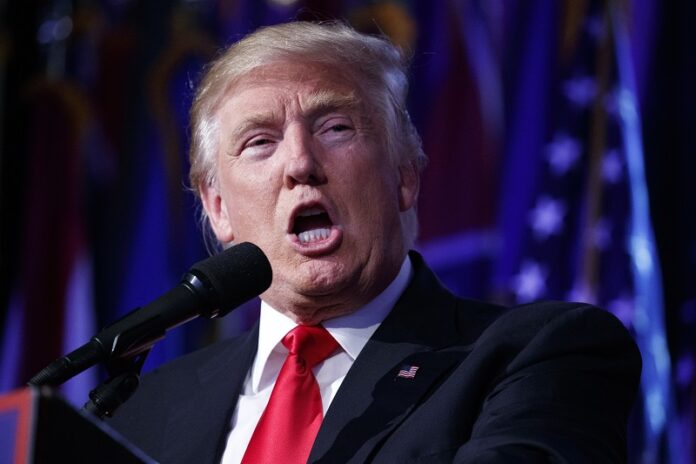
President-elect Donald Trump speaks during an election night rally Nov. 9 in New York. Photo: Evan Vucci / Associated Press

MANILA — President Rodrigo Duterte said Saturday Donald Trump wished his deadly crackdown on illegal drugs would succeed during a telephone call, and he assured the U.S. president-elect the Philippines would maintain its ties with America – a departure from Duterte’s hostility toward the Obama administration.

Duterte called to congratulate Trump late Friday in their first talk that was described by an aide of the Philippine president as “very engaging, animated conversation” in which both leaders invited each other to visit his country.

In a video released by Duterte’s close aide, Bong Go, the Philippine leader is seen smiling while talking to Trump and saying: “We will maintain … and enhance the bilateral ties between our two countries.”

The other parts of the conversation were not aired in the video but in a statement released by his aides, Duterte said “he was wishing me success in my campaign against the drug problem.”

“He understood the way we are handling it and I said that there’s nothing wrong in protecting a country,” Duterte said. “It was a bit very encouraging in the sense that I supposed that what he really wanted to say was that we would be the last to interfere in the affairs of your own country.”

“He said that … well, we are doing it as a sovereign nation, the right way,” Duterte said in his statement. It was unclear whether he or Trump remarked that the widely criticized crackdown was being carried out properly.

Duterte has lashed out at President Barack Obama, the State Department, EU and U.N. officials and human rights groups for raising concerns over the crackdown, which has left more than 4,000 suspected drug dealers and user dead, including many who are feared to have been gunned down in gangland-style killings.

While being antagonistic to the U.S., his country’s treaty ally, Duterte has reached out to China and Russia.

Obama canceled what could have been their first formal meeting in an Asian summit in Laos in September after Duterte unleashed an expletive-laden warning for the U.S. leader not to lecture him on human rights. In one speech, Duterte asked Obama to “go to hell.”

Duterte has repeatedly threatened to scale back the presence of visiting U.S. troops and joint combat exercises with the Americans, but he and his defense officials have walked back on most of those threats. In one speech while visiting Beijing, Duterte announced he would separate from the U.S. but later clarified that he meant he would chart a foreign policy that does not lean toward America.

During their talk, Trump invited Duterte to visit the White House next year and Duterte asked the incoming U.S. leader to attend an East Asian summit to be hosted by the Philippines next year, according to Go.

“He said that he will try his best to be here. He wants to attend the summit and that would be great for our country,” Duterte said.

Story: Jim Gomez

Advertisement

Malaysia Defends Rally Against ‘Ethnic Cleansing’ in Myanmar

Ethnic Rohingya along with a Malaysian Islamic group protest after Friday prayers outside the Myanmar Embassy in Kuala Lumpur, Malaysia. Photo: Vincent Thian / Associated Press

KUALA LUMPUR — Malaysia’s government on Saturday defended plans for a protest rally to condemn what it called “ethnic cleansing” of Myanmar’s Muslim Rohingya minority, saying it has an obligation to ensure that its neighbor takes steps to prevent the crisis from deteriorating.

Prime Minister Najib Razak is expected to attend the rally at a Kuala Lumpur stadium on Sunday. Myanmar has warned Muslim-majority Malaysia not to interfere in its internal affairs.

In a strongly worded statement, Malaysia’s Foreign Ministry said the high number of Rohingya refugees in the country and other neighboring nations has made the crisis “no longer an internal matter but an international matter.”

“The fact that only one particular ethnicity is being driven out is by definition ethnic cleansing. This practice must stop, and must be stopped immediately in order to bring back security and stability to the Southeast Asian region,” it said.

U Zaw Htay, the deputy director general of Myanmar president’s office, was quoted by the Myanmar Times as saying that Malaysia should respect a non-interference policy observed by the 10-member Association of Southeast Asian Nations. He said the protest appeared to be a calculated political decision to win the support of Muslim Malays in Malaysia.

Malaysia’s Foreign Ministry rebutted the claim, saying the crisis was not a religious issue but an immediate humanitarian concern. It said Malaysia has repeatedly offered its assistance to Myanmar to find a just and durable solution to the persecution of Rohingya.

Malaysia has summoned the Myanmar ambassador over the issue, and withdrew from two scheduled friendly football matches against Myanmar this month. Hundreds also protested outside the Myanmar Embassy last week to denounce the Rakhine “genocide.”

Myanmar’s Rakhine state, home to Rohingya Muslims in the predominantly Buddhist nation, was the scene of intense ethnic violence in 2012 that left hundreds dead and drove 140,000 people into camps for the internally displaced, most of them Rohingya. The latest outbreak was triggered by attacks on Myanmar border posts on Oct. 9 that killed nine police officers. The identity and motives of the attackers are unclear, but in response, the government began military sweeps, sparking a major confrontation in mid-November when villagers resisted troops. The government has cut off access to the area to aid agencies, diplomats and journalists.

Many of the estimated 1 million Rohingya, who face widespread discrimination and are excluded from Myanmar citizenship, have lived in Rakhine for generations but are treated as illegal settlers from Bangladesh.

Story: Eileen Ng

Advertisement

Philippines President Duterte Phones Donald Trump

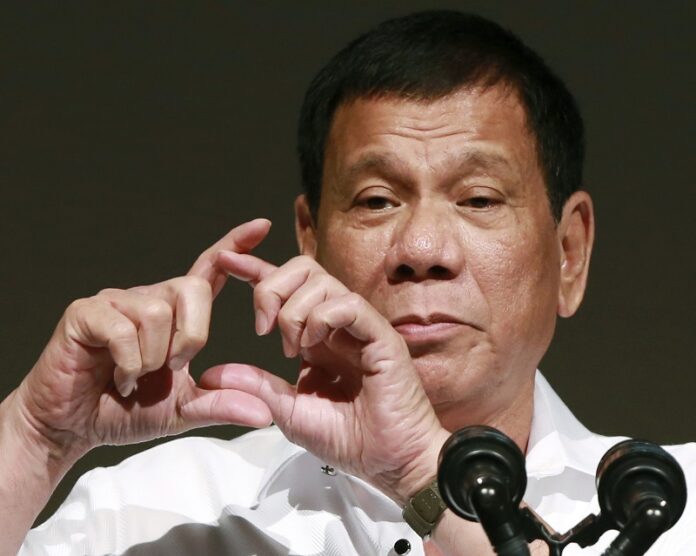
Philippine President Rodrigo Duterte delivers a speech in 2016 at the Philippine Economic Forum in Tokyo, Japan. Photo: Eugene Hoshiko / Associated Press

MANILA — Philippine President Rodrigo Duterte telephoned U.S. President-elect Donald Trump late Friday and had a brief but “very engaging, animated conversation” in which both leaders invited each other to visit his country.

In a video released by Duterte’s close aide, Bong Go, the Philippine leader is seen smiling while talking to Trump and saying: “We will maintain … and enhance the bilateral ties between our two countries.”

Duterte shuffled and looked at some notes during the conversation, which Go said lasted for more than seven minutes. The presidential palace earlier announced that Duterte will make a “congratulatory call” to Trump from his hometown in southern Davao city.

It was not immediately clear if the touchy topic of Duterte’s bloody crackdown against illegal drugs came up during the chat. Duterte has lashed out at outgoing President Barack Obama and the State Department for raising concerns over the crackdown, which has left more than 4,000 suspected drug dealers and users dead.

Duterte, who took office in June, has been antagonistic to the U.S., his country’s treaty ally, while reaching out to China and Russia. He has met Chinese President Xi Jinping twice and Russian leader Vladimir Putin once.

Obama canceled what could have been their first formal meeting in an Asian summit in Laos in September after Duterte unleashed an expletive-laden warning for the U.S. leader not to lecture him on human rights.

During their talk, Trump invited Duterte to visit the White House next year and Duterte asked the U.S. president-elect to attend an East Asian summit to be hosted by the Philippines next year.

The Philippine president has been compared to Trump for his bombastic rhetoric and unorthodox political style but Duterte apparently did not relish the comparison, telling The Associated Press in an interview during the campaign in March: “Donald Trump is a bigot, I am not.”

Story: Jim Gomez

Advertisement

Japan Seeks to Keep Pressure on N. Korea Over Abductions

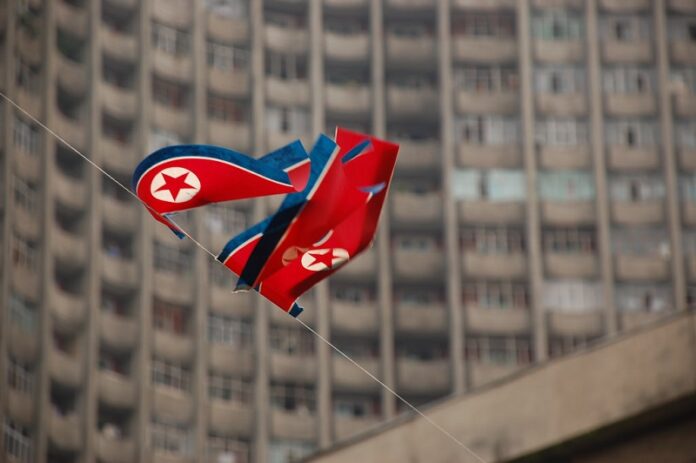
North Korean flags shown on display in 2007 in Pyongyang, North Korea. Photo: (stephan) / Flickr

UNITED NATIONS — The government minister responsible for the issue of Japanese citizens abducted by North Korea during the 1970s and 80s says he believes growing international pressure will eventually lead to a return of the abductees or their remains.

Katunobu Kato told The Associated Press on Friday that he hoped to obtain the understanding of the United Nations and the United States to keep up pressure on North Korea to provide a full accounting of the abductees and allow them to return home.

“We very much appreciate this heightened momentum in the international public opinion … and we believe that North Korea also has become quite sensitive to such public opinion and is responding to it which means this has proven to be effective to a certain extent,” Kato said.

The Japanese government has officially identified 17 of its citizens who have been abducted by North Korea and is investigating another 883 cases of possible abductions, Kato said.

“This is a grave issue in terms of human rights and humanity and it is not limited to Japan,” Kato said, pointing to a 2014 report by the U.N. Human Rights Council that details North Korean abductions of citizens from South Korea, Lebanon, Thailand, Malaysia, China, Singapore and Romania as well.

He said Japan was especially encouraged by a resolution passed in the U.S. House of Representatives earlier this year asking the State Department and intelligence community to look into the possibility that David Sneddon, a Brigham Young University student who went missing while hiking in China in 2004, was abducted by North Korea.

“We hope to obtain the understanding of the government of the United States as well as the people of the United States which in turn will serve as strength as we try to solve this issue, Kato said.

In 2002, North Korea admitted to kidnapping 13 Japanese citizens in the 1970s and ’80s to train spies in Japanese language and culture. Five were allowed to return to Japan the same year, and North Korea says the others died or never entered the North.

Kato says Japan is working under the assumption all of the abductees are still alive and must be returned home.

Investigating the abductions issue is a top political priority for Prime Minister Shinzo Abe, who has long promised families of those who disappeared to seek answers.

“For us the only concrete outcome is the return of the abductees, which of course has not been realized,” Kato said.

Story: Michael Astor

Advertisement

Gambia’s President Loses Election, 22 Years After Seizing Power in a Coup

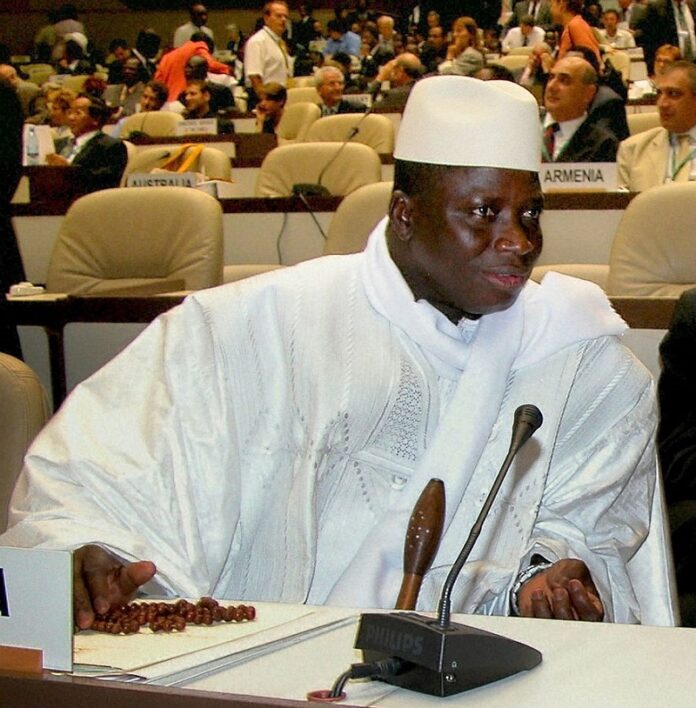
Yahya Jammeh pictured here in 2006 at a UN conference. Photo: IISD / Earth Negotiations Bulletin / Wikimedia Commons

BANJUL, Gambia — Gambia’s president of 22 years acknowledged his election defeat on state television Friday night, vowing to step down hours after news of the results prompted thousands to celebrate in the streets in an unprecedented display of disdain for his rule.

With cameras rolling, Yahya Jammeh called the winner, opposition coalition leader Adama Barrow, on a mobile phone to praise the election and vow not to contest the result.

“Allah is telling me my time is up and I hand over graciously with gratitude toward the Gambian people and gratitude toward you,” Jammeh said.

Jammeh, a man long accused of heading a government that tortures opponents and silences all dissent, was jovial on the call, promising to help Barrow through the transition period before retiring to his home village to begin a new life as a farmer.

It was a stunning turn of events in a country where critics have long alleged votes are rigged. Just five years ago, Jammehsaid he could stay in power for a billion years.

According to the electoral commission’s tally, Barrow received 45 percent of Thursday’s vote compared to Jammeh’s 36 percent.

Many Gambians stayed up all night Thursday listening to the radio and tallying results as they were read out constituency by constituency.

Once the results were announced on Friday, some tore down posters of Jammeh as the military stood by. Men in pickup trucks rode through the streets of Banjul screaming “Freedom! Freedom! Freedom!”

For the tens of thousands watching abroad from political exile, it was a day they thought might never come.

Speaking by phone from Washington, Gambian activist Pasamba Jow said the election was a “great victory” for the country and the entire African continent, though he anticipated a “difficult task of rebuilding our country and healing our nation.”

Ned Price, a spokesman for the White House’s National Security Council, in a statement Friday congratulated Barrow and welcomed Jammeh’s concession, saying the country’s first democratic transfer of power is a “moment of great opportunity.”

“The United States looks forward to being a strong partner in efforts to unify the country,” he said.

Eight opposition parties united behind Barrow, a former businessman, and the campaign period featured large opposition rallies.

Nevertheless, Jammeh had projected confidence, saying his victory was all but assured by God and predicting “the biggest landslide in the history of the country” after he voted.

“We are happy to be free,” said Omar Amadou Jallow, an opposition leader for the People’s Progressive Party, which joined the coalition that backed Barrow. “We are able to free the Gambian people from the clutches of dictatorship, and we are now going to make sure Gambia becomes a bastion of peace and coalition. Our foundation will be based on national reconciliation.”

Jammeh came to power in a coup in 1994 and then swept elections in 1996, 2001, 2006 and 2011 after a 2002 constitutional amendment removed presidential term limits. Critics say those earlier elections were not free and fair.

All internet and international phone service was cut on election day in what Jammeh’s government said was a bid to thwart unrest.

Jammeh’s ouster demonstrates that even Africa’s most entrenched leaders can be brought down if opposition politicians overcome their divisions, said Jeffrey Smith, a human rights activist and founding director of Vanguard Africa, a U.S.-based group that worked with Gambia’s opposition coalition.

“This is going to have resonance way beyond the tiny borders of Gambia,” Smith said, describing the result as “a momentous occasion for the region writ large.”

Story: Carley Petesch

Advertisement

Activist ‘Pai Dao Din’ Arrested For Lese Majeste

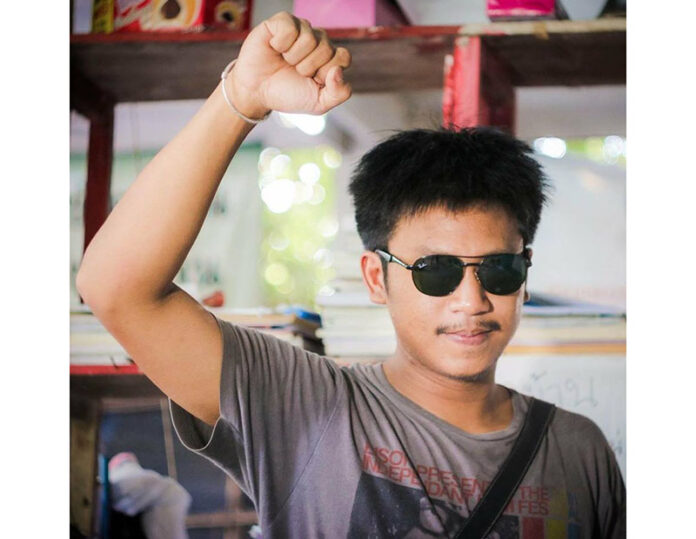
Activist Jatupat ‘Pai’ Boonpattararaksa in a photo posted May 13. Photo: Jatupat Boonpattaraksa / Facebook

CHAIYAPHUM — A northeastern activist and dissident was arrested Saturday morning and accused of defaming the monarchy for sharing a BBC Thai biography of the new King.

Officers arrested Jatupat “Pai” Boonpattararaksa, a member of community rights group Dao Din, while he was at a religious event at Wat Pasukato in Chaiyaphum’s Kaeng Khro district. Jatupat livestreamed part of the incident via Facebook.

The 25-year-old law student was later taken to the district office before being sent to Khon Kaen Provincial Station where he was placed in custody.

The arrest warrant was issued Friday, according to a copy posted online by Wiboon Boonpattararaksa, Jatupat’s father and lawyer. It said Jatupat committed lese majeste under Article 112 of the Penal Code and indicated he could serve three years for the offense.

Ceremonies formally installing King Rama X to the throne were completed Thursday evening.

Jatupat reportedly shared and quoted an article from BBC Thai on the biography of his life early Friday morning at about 5am.

“The decision [to run the biography] was made in London. We have no say about it,” BBC Southeast Asia Bureau Chief Jonathan Head said Saturday afternoon by telephone. He didn’t expect either the BBC or BBC Thai to make any statement about the arrest.

“It’s far too sensitive,” Head said.

BBC Thai has reported the arrest, saying that more than 2,600 people had also shared the story.

Back in August, Jatupat was jailed two weeks in Khon Kaen for handing leaflets out urging people to vote against the junta-sponsored constitution.

Related stories:

Vajiralongkorn Ascends the Throne as King Rama X

Advertisement

Hot News

LATEST NEWS

Bangkok
overcast clouds
30.2 ° C
31.6 °
28.8 °
76 %
4.5kmh
100 %
Tue
34 °
Wed
34 °
Thu
35 °
Fri
31 °
Sat
31 °