


























37 C
Bangkok
Tuesday, June 9, 2026
Home Blog Page 2932

Thai Govt Asks Japan to Reconsider Housing Exiled Academic

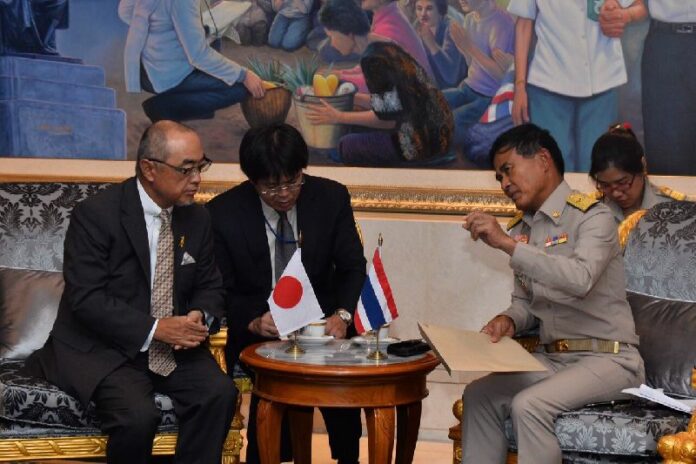
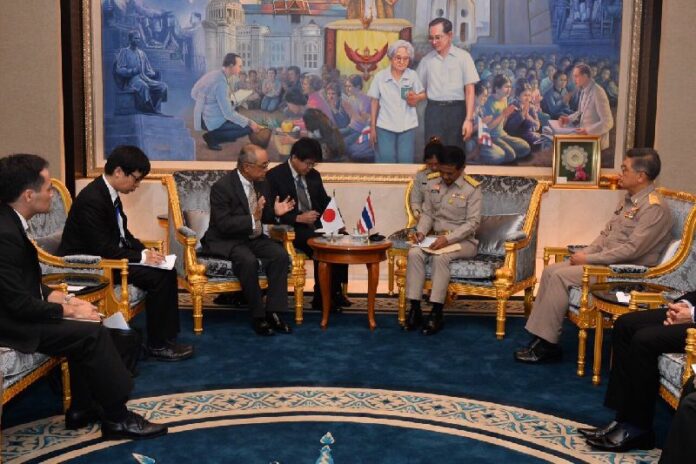
Justice Minister Paiboon Khumchaya (R) meeting with Japanese ambassador Shiro Sadoshima (L) at the Ministry of Justice in Bangkok, 20 July 2015.

BANGKOK — A minister of Thailand's military government said he has asked the Japanese ambassador to "reconsider" whether it is appropriate for Japan to shelter an academic accused of insulting the Thai monarchy, a crime known as lese majeste.

Justice Minister Paiboon Khumchaya told reporters he raised the issue during a meeting with Japanese ambassador Shiro Sadoshima at the Ministry of Justice today. 

According to Gen. Paiboon, Sadoshima visited to the Ministry to introduce himself as Japan’s new ambassador to Thailand. Gen Paiboon said he took the opportunity to discuss Pavin Chachavalpongpun, a Thai academic living in Japan who the Justice Minister accused of insulting the monarchy, a crime punishable by up to 15 years in prison under Section 112 of the Thai Criminal Codes.

Pavin is currently an associate professor at Kyoto University in Japan, where he has lived since 2012. Over the past year, he has regularly criticized the junta and written about the monarchy on social media and in foreign publications, including the New York Times, but never been formally charged with lese majeste.

He is however facing legal action for failing to report for one of the junta's "attitude adjustment" sessions in the wake of the May 2014  coup. His Thai passport was revoked shortly thereafter. 

"I provided the Japanese ambassador with a list of suspects who have fled to Japan," Gen. Paiboon said today. "The list contains one name, which is Mr. Pavin Chachavalpongpun."

"I also explained that Section 112 is not a political case," he continued. "I believe Japan will understand us. However, I am aware that Japan also has laws related to political asylum."

He added that he did not explicitly request the Japanese government to arrest Pavin and extradite him, but merely asked Japanese authorities to review the situation. 

"I did not give away this list so that they will arrest him. I did it so that Japan will understand and think about whether it is appropriate for these individuals to misuse their political asylum. I want them to understand Thai people's feelings." 

Gen. Paiboon did not comment on Sadoshima’s response to the request, but noted that the Japanese ambassador did ask about Hiroyuki Muramoto, a Japanese cameraman who was killed during the military crackdown on Redshirt protesters in Bangkok in April 2010.

"I told him that the case is in the court process now. It's under the procedure of inquest," Paiboon said, even though the court inquest concluded in April of this year. The court ruled that there was insufficient evidence to determine who was responsible for Hiroyuki's death.

Since the 2014 military takeover, the Thai junta has rigorously enforced the Kingdom’s lese majeste law, which is the harshest law of its kind in the world. 

In the past year, at least 49 people have been charged with the offense, according to iLaw, a watchdog group that tracks legal cases in Thailand. The junta has also granted military courts jurisdiction over lese majeste cases, citing the crime’s “threat to national security.”

The regime has unsuccessfully sought the extradition of lese majeste suspects who have fled to countries like Cambodia, the United Kingdom, New Zealand, and France. On 13 July, the eve of Bastille Day, Gen. Paiboon raised the issue with French ambassador Thierry Viteau, who explained that France does not have an equivalent law.

CORRECTION: Pavin Chachavalpongpun did not leave Thailand shortly after the May 2014 coup, as was originally reported. He has been living in Kyoto, Japan since 2012. He also has never been formally charged with lese majeste, only accused of committing the crime. 

For comments, or corrections to this article please contact: [email protected]

You can also find Khaosod English on Twitter and Facebook
http://twitter.com/KhaosodEnglish
http://www.facebook.com/KhaosodEnglish


Advertisement

Thai Govt Asks Japan to Reconsider Housing Exiled Academic

Justice Minister Paiboon Khumchaya (R) meeting with Japanese ambassador Shiro Sadoshima (L) at the Ministry of Justice in Bangkok, 20 July 2015.

BANGKOK — A minister of Thailand's military government said he has asked the Japanese ambassador to "reconsider" whether it is appropriate for Japan to shelter an academic accused of insulting the Thai monarchy, a crime known as lese majeste.

Justice Minister Paiboon Khumchaya told reporters he raised the issue during a meeting with Japanese ambassador Shiro Sadoshima at the Ministry of Justice today. 

According to Gen. Paiboon, Sadoshima visited to the Ministry to introduce himself as Japan’s new ambassador to Thailand. Gen Paiboon said he took the opportunity to discuss Pavin Chachavalpongpun, a Thai academic living in Japan who the Justice Minister accused of insulting the monarchy, a crime punishable by up to 15 years in prison under Section 112 of the Thai Criminal Codes.

Pavin is currently an associate professor at Kyoto University in Japan, where he has lived since 2012. Over the past year, he has regularly criticized the junta and written about the monarchy on social media and in foreign publications, including the New York Times, but never been formally charged with lese majeste.

He is however facing legal action for failing to report for one of the junta's "attitude adjustment" sessions in the wake of the May 2014  coup. His Thai passport was revoked shortly thereafter. 

"I provided the Japanese ambassador with a list of suspects who have fled to Japan," Gen. Paiboon said today. "The list contains one name, which is Mr. Pavin Chachavalpongpun."

"I also explained that Section 112 is not a political case," he continued. "I believe Japan will understand us. However, I am aware that Japan also has laws related to political asylum."

He added that he did not explicitly request the Japanese government to arrest Pavin and extradite him, but merely asked Japanese authorities to review the situation. 

"I did not give away this list so that they will arrest him. I did it so that Japan will understand and think about whether it is appropriate for these individuals to misuse their political asylum. I want them to understand Thai people's feelings." 

Gen. Paiboon did not comment on Sadoshima’s response to the request, but noted that the Japanese ambassador did ask about Hiroyuki Muramoto, a Japanese cameraman who was killed during the military crackdown on Redshirt protesters in Bangkok in April 2010.

"I told him that the case is in the court process now. It's under the procedure of inquest," Paiboon said, even though the court inquest concluded in April of this year. The court ruled that there was insufficient evidence to determine who was responsible for Hiroyuki's death.

Since the 2014 military takeover, the Thai junta has rigorously enforced the Kingdom’s lese majeste law, which is the harshest law of its kind in the world. 

In the past year, at least 49 people have been charged with the offense, according to iLaw, a watchdog group that tracks legal cases in Thailand. The junta has also granted military courts jurisdiction over lese majeste cases, citing the crime’s “threat to national security.”

The regime has unsuccessfully sought the extradition of lese majeste suspects who have fled to countries like Cambodia, the United Kingdom, New Zealand, and France. On 13 July, the eve of Bastille Day, Gen. Paiboon raised the issue with French ambassador Thierry Viteau, who explained that France does not have an equivalent law.

CORRECTION: Pavin Chachavalpongpun did not leave Thailand shortly after the May 2014 coup, as was originally reported. He has been living in Kyoto, Japan since 2012. He also has never been formally charged with lese majeste, only accused of committing the crime. 

For comments, or corrections to this article please contact: [email protected]

You can also find Khaosod English on Twitter and Facebook
http://twitter.com/KhaosodEnglish
http://www.facebook.com/KhaosodEnglish
 

Advertisement

'Drunk' Captain Grounds Tourist Boat on Pattaya Beach

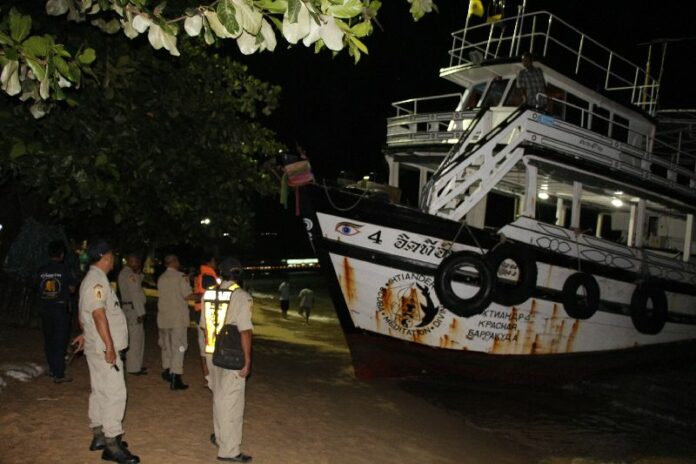
A boat captain surprised beach-goers by driving his ship onto a popular beach in Pattaya on 19 July 2015.

CHONBURI — A captain has been arrested for driving his tourist boat at full-speed onto a popular beach in Pattaya last night.

Police were alerted around midnight after locals reported seeing the boat speed towards the shore, causing foreign tourists who were relaxing on the beach to flee for their lives.

Police officers arrived the scene to find the engine of the grounded boat still running, while its captain, a man in his 40s, walked around the deck and shouted incoherently at the officers. No one else was on the 47-seat boat at the time.

The captain, who police said was intoxicated, was eventually taken into custody. His name has not been released, and it is unclear whether he has been charged with a crime. 

A motorcycle taxi driver in the vicinity told reporters that he saw the boat crashing into the beach at around 8 pm. He said he and several other locals reported the incident to police after no one stepped out of the boat for several hours. 

No injures were reported in the incident. 


For comments, or corrections to this article please contact: [email protected]

You can also find Khaosod English on Twitter and Facebook
http://twitter.com/KhaosodEnglish
http://www.facebook.com/KhaosodEnglish
 

Advertisement

Thai Junta Govt to Stay Until 2017: Official

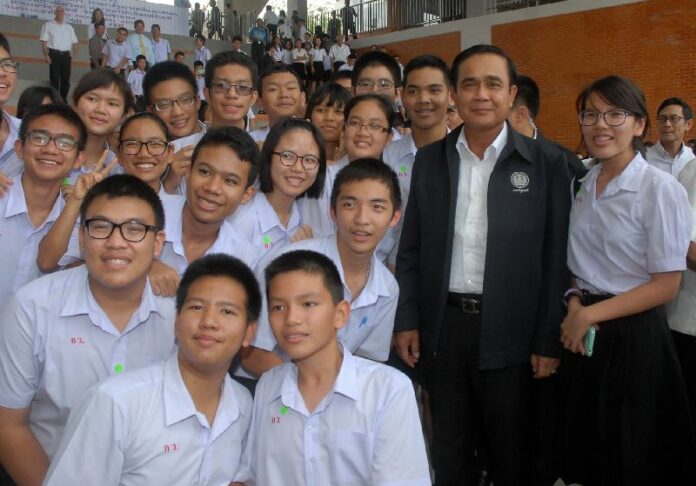
Junta leader Gen. Prayuth Chan-ocha visiting a school in Rayong province on 20 July 2015.

BANGKOK — Thailand will not see an elected government until early 2017, according to the deputy chairman of the junta’s interim parliament, the National Legislative Assembly (NLA).

Peerasak Porchit told reporters in Lopburi province on 18 July that he believes the "road map" promised by the ruling junta, which seized power from an elected government in May 2014, may be extended yet again in order to prepare for the referendum on the new constitution. 

Under the current schedule, which has seen the date for elections postponed several times, the referendum for the junta-drafted charter will take place in January 2016, followed by a national election in September 2016, if the charter passes the vote.

But Peerasak said he believes referendum date may have to be postponed.

"I believe that we won't be able to hold a referendum in early 2016, because, according to the procedures, we have to print and send charter drafts to 80 percent of all households, which are about 28 million households," Peerasak said. "That will take a lot of time."

He said he expects the referendum to take place in February 2016, followed by an election in December 2016, with the new government taking office in early 2017. 

"Therefore, I believe that this government will stay until early 2017," Peerasak said. "And it will be able to deliberate on the budget for 2017 fiscal year, which will be passed by the NLA. This will benefit the people." 

Thailand’s last election took place in February 2013, when then-Prime Minister Yingluck Shinawatra called a snap poll in response to anti-government street protests calling for her resignation. The opposition Democrat Party boycotted the poll, and protesters blockaded voting stations in parts of Bangkok and 14 southern provinces.

The Constitutional Court later invalidated the February 2013 election because of protesters' obstructions to voting.

Several months later, on 22 May 2014, the military seized power from Yingluck’s government, dissolved the constitution, and appointed an interim parliament stacked with military officers and junta allies.

Coup-leader Gen. Prayuth Chan-ocha then ordered a ban on all protests and political activities, which is still in place today. 

Speaking to reporters in Ratchaburi province yesterday, Peerasak said he was not suggesting that Gen. Prayuth's government wants to hold onto power. 

"The reason I said the government will stay until 2017 is this: I was explaining the road map of the government. It's not like the government wants to stay on longer," Peerasak said.

"But I want people to understand about the length and scope of the works of the government and the NLA. We have to set a schedule so that we can work in accordance with the road map. This government is in a special situation. Gen. Prayuth is wearing two hats: Prime Minister and leader of the NCPO [the junta's National Council for Peace and Order]. He is here to solve the country's problems. He doesn't want to stay on, or canvass for any votes."

He added, "I insist that this is not a time extension for the Prime Minister to stay on or perpetuate his power, because we will have a new elected government by 2017. Therefore, if we want to do anything in this time, we have to hurry up and do it. I want every side to join hands, solve problems, and reform our country in the remaining time that the NLA and the government have." 


For comments, or corrections to this article please contact: [email protected]

You can also find Khaosod English on Twitter and Facebook
http://twitter.com/KhaosodEnglish
http://www.facebook.com/KhaosodEnglish
Advertisement

Suspected Separatist Arrested in a Raid on Pattani Home

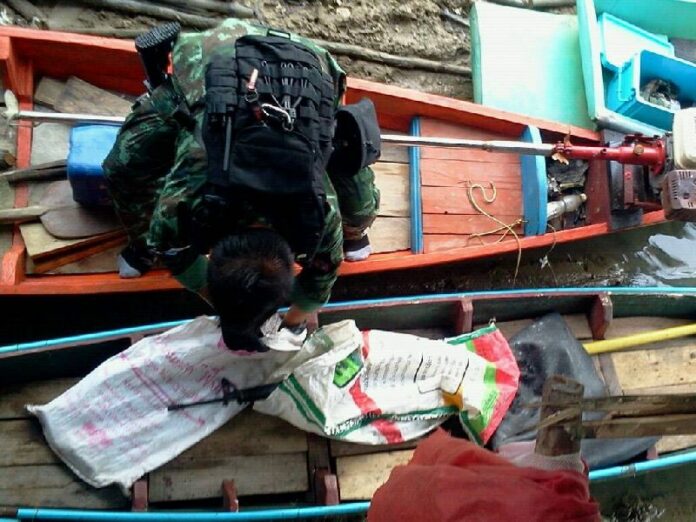
Soldiers inspect boats behind a house in Pattani raided by officers on 20 July 2015.

PATTANI — A suspected militant was arrested by Thai authorities in a raid on a house in the southern border province of Pattani early this morning.

Soldiers and policemen surrounded the riverside house in Nong Chik district at around 3am after learning that a Muslim insurgent named Seri Wamamu was hiding inside, police said.

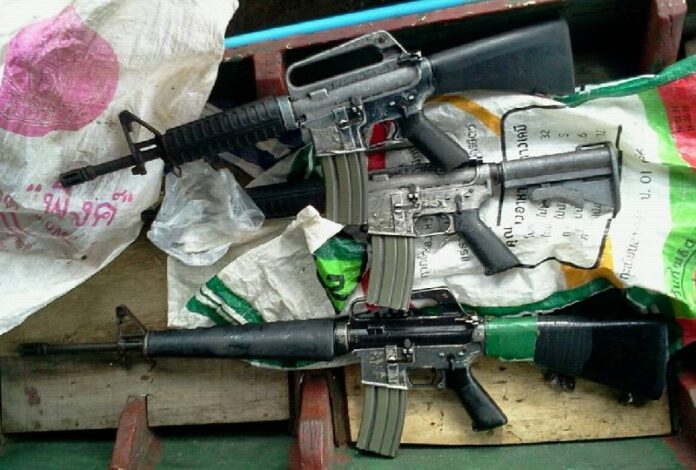
According to police, people inside the house opened fire as the officers approached, prompting the raid team to shoot back. After surrounding the house for several hours, the team entered at 7am to find three assault rifles and a 51-year-old man named Sama-ae Salae. Sama-ae was arrested and sent to an army camp for questioning.

Police said they saw two other gunmen jump into the river behind the house and swim away from the scene. No injuries have been reported.

Military divers from a nearby army base have been dispatched to search for the two suspected militants in the area. 

One of the M-16 rifles found inside the house was reported stolen during a gun battle between soldiers and separatists in Pattani province on 28 April 2004, while the identification numbers of the two other weapons were obscured, police said.

More than 80,000 security officers are stationed in the region, known as the Deep South, to quell the protracted insurgency waged by Islamic separatists seeking to secede the provinces of Pattani, Yala, and Narathiwat, which were annexed by Thailand in the early 20th century.

At least 6,000 people – mostly civilians – have been killed since the latest wave of secessionist violence broke out in January 2004, according to data compiled by human rights groups. 

Although a majority of the victims have been killed in bombings and shootings staged by suspected insurgents, Thai authorities have also been criticized for committing excessive violence and human rights abuses in the region, which has been governed under martial law for more than nine years.

In April, security officers in Pattani shot and killed four men who an independent committee later determined were unrelated to the insurgency. Thai police initially told the media the men were active, armed insurgents.

Yesterday, a 27-year-old ranger stationed in Narathiwat was assassinated while he was riding a motorcycle, police said. Police said the believe local insurgents were behind the shooting. 


For comments, or corrections to this article please contact: [email protected]

You can also find Khaosod English on Twitter and Facebook
http://twitter.com/KhaosodEnglish
http://www.facebook.com/KhaosodEnglish
Advertisement

Suspected Separatist Arrested in a Raid on Pattani Home

The three M-16 assault rifles police and soldiers allegedly found during a raid in Pattani on 20 July 2015.

PATTANI — A suspected militant was arrested by Thai authorities in a raid on a house in the southern border province of Pattani early this morning.

Soldiers and policemen surrounded the riverside house in Nong Chik district at around 3am after learning that a Muslim insurgent named Seri Wamamu was hiding inside, police said.

According to police, people inside the house opened fire as the officers approached, prompting the raid team to shoot back. After surrounding the house for several hours, the team entered at 7am to find three assault rifles and a 51-year-old man named Sama-ae Salae. Sama-ae was arrested and sent to an army camp for questioning.

Police said they saw two other gunmen jump into the river behind the house and swim away from the scene. No injuries have been reported.

Military divers from a nearby army base have been dispatched to search for the two suspected militants in the area. 

One of the M-16 rifles found inside the house was reported stolen during a gun battle between soldiers and separatists in Pattani province on 28 April 2004, while the identification numbers of the two other weapons were obscured, police said.

More than 80,000 security officers are stationed in the region, known as the Deep South, to quell the protracted insurgency waged by Islamic separatists seeking to secede the provinces of Pattani, Yala, and Narathiwat, which were annexed by Thailand in the early 20th century.

At least 6,000 people – mostly civilians – have been killed since the latest wave of secessionist violence broke out in January 2004, according to data compiled by human rights groups. 

Although a majority of the victims have been killed in bombings and shootings staged by suspected insurgents, Thai authorities have also been criticized for committing excessive violence and human rights abuses in the region, which has been governed under martial law for more than nine years.

In April, security officers in Pattani shot and killed four men who an independent committee later determined were unrelated to the insurgency. Thai police initially told the media the men were active, armed insurgents.

Yesterday, a 27-year-old ranger stationed in Narathiwat was assassinated while he was riding a motorcycle, police said. Police said the believe local insurgents were behind the shooting. 


For comments, or corrections to this article please contact: [email protected]

You can also find Khaosod English on Twitter and Facebook
http://twitter.com/KhaosodEnglish
http://www.facebook.com/KhaosodEnglish
 

Advertisement

Thai Junta Govt to Stay Until 2017: Official

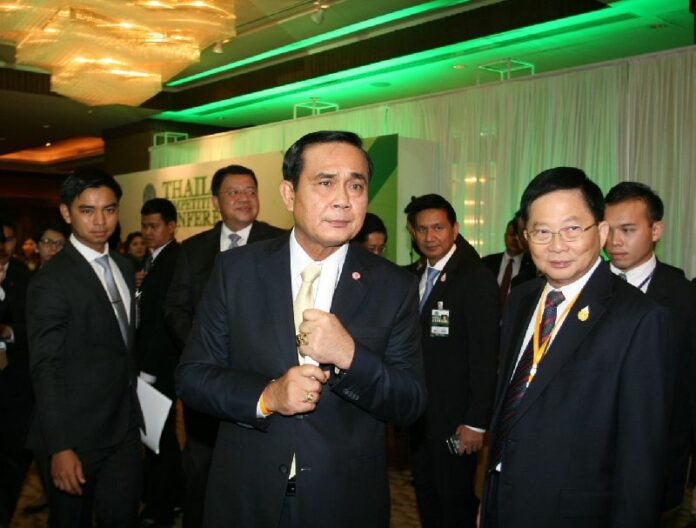
Junta chairman Gen. Prayuth attending a business conference at Plaza Athenee Hotel in Bangkok, 16 July 2015

BANGKOK — Thailand will not see an elected government until early 2017, according to the deputy chairman of the junta’s interim parliament, the National Legislative Assembly (NLA).

Peerasak Porchit told reporters in Lopburi province on 18 July that he believes the "road map" promised by the ruling junta, which seized power from an elected government in May 2014, may be extended yet again in order to prepare for the referendum on the new constitution. 

Under the current schedule, which has seen the date for elections postponed several times, the referendum for the junta-drafted charter will take place in January 2016, followed by a national election in September 2016, if the charter passes the vote.

But Peerasak said he believes referendum date may have to be postponed.

"I believe that we won't be able to hold a referendum in early 2016, because, according to the procedures, we have to print and send charter drafts to 80 percent of all households, which are about 28 million households," Peerasak said. "That will take a lot of time."

He said he expects the referendum to take place in February 2016, followed by an election in December 2016, with the new government taking office in early 2017. 

"Therefore, I believe that this government will stay until early 2017," Peerasak said. "And it will be able to deliberate on the budget for 2017 fiscal year, which will be passed by the NLA. This will benefit the people." 

Thailand’s last election took place in February 2014, when then-Prime Minister Yingluck Shinawatra called a snap poll in response to anti-government street protests calling for her resignation. The opposition Democrat Party boycotted the poll, and protesters blockaded voting stations in parts of Bangkok and 14 southern provinces.

The Constitutional Court later invalidated the February 2014 election because of protesters' obstructions to voting.

Several months later, on 22 May 2014, the military seized power from Yingluck’s government, dissolved the constitution, and appointed an interim parliament stacked with military officers and junta allies.

Coup-leader Gen. Prayuth Chan-ocha then ordered a ban on all protests and political activities, which is still in place today. 

Speaking to reporters in Ratchaburi province yesterday, Peerasak said he was not suggesting that Gen. Prayuth's government wants to hold onto power. 

"The reason I said the government will stay until 2017 is this: I was explaining the road map of the government. It's not like the government wants to stay on longer," Peerasak said.

"But I want people to understand about the length and scope of the works of the government and the NLA. We have to set a schedule so that we can work in accordance with the road map. This government is in a special situation. Gen. Prayuth is wearing two hats: Prime Minister and leader of the NCPO [the junta's National Council for Peace and Order]. He is here to solve the country's problems. He doesn't want to stay on, or canvass for any votes."

He added, "I insist that this is not a time extension for the Prime Minister to stay on or perpetuate his power, because we will have a new elected government by 2017. Therefore, if we want to do anything in this time, we have to hurry up and do it. I want every side to join hands, solve problems, and reform our country in the remaining time that the NLA and the government have." 

Correction: The original version of this article inaccurately stated that the last election in Thailand took place in February 2013. In fact, the poll took place in 2014.

 
For comments, or corrections to this article please contact: [email protected]

You can also find Khaosod English on Twitter and Facebook
http://twitter.com/KhaosodEnglish
http://www.facebook.com/KhaosodEnglish
Advertisement

Chiang Mai Police Hunting 'Serial Rapist'

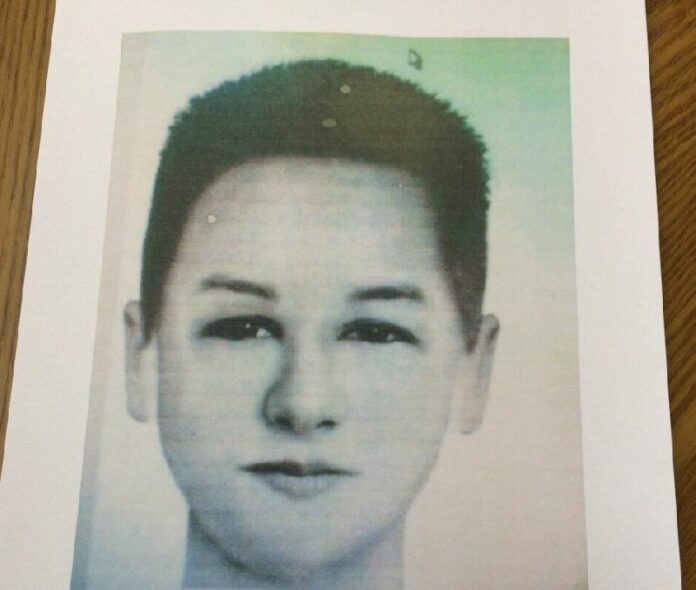
A composite sketch of a suspected serial rapist in Chiang Mai provided by police, 17 July 2015.

CHIANG MAI – Police in northern Thailand are searching for a Thai man accused of committing two rapes and one attempted rape in the past month.

Pol.Maj.Gen. Montree Samboonnanond, commander of Chiang Mai police force, said the three incidents took place over the past several weeks near a highway in Doi Saket district.

According to police, the victims said they were driving motorcycles on the highway when a man pulled up alongside them, knocked them off their vehicles, and dragged them into wooded area on the side of the road. All three victims described the perpetrator as a Thai man in his early twenties, police said.

Pol.Maj.Gen. Montree said two victims were raped and the third victim managed to flee.

"This perpetrator is a danger to women and society," Pol.Maj.Gen. Montree said. "We will do our best to hunt down this man and prosecute him. Right now we have some clues about him. He's Thai. He lives in the districts close to the crime scene. We have dispatched police officers to monitor individuals we suspect to be this man."

He added, "I would like to ask the people: if any of you have any clues or information about the perpetrator, or if you are a victim but have been too afraid to file charges, please contact the police at Doi Saket Police Station, or headquarters of Chiang Mai provincial police force, so that we can collect evidence and information to track down and arrest the perpetrator." 

Police have also released a composite sketch of the perpetrator to the press. 

According to Pol.Maj.Gen. Montree, two suspects were interrogated by police, but released after they were determined to be unrelated to the crime. 


For comments, or corrections to this article please contact: [email protected]

You can also find Khaosod English on Twitter and Facebook
http://twitter.com/KhaosodEnglish
http://www.facebook.com/KhaosodEnglish
Advertisement

Ex-Separatist Leader Pledges to Help Thai Govt Fight Southern Rebellion

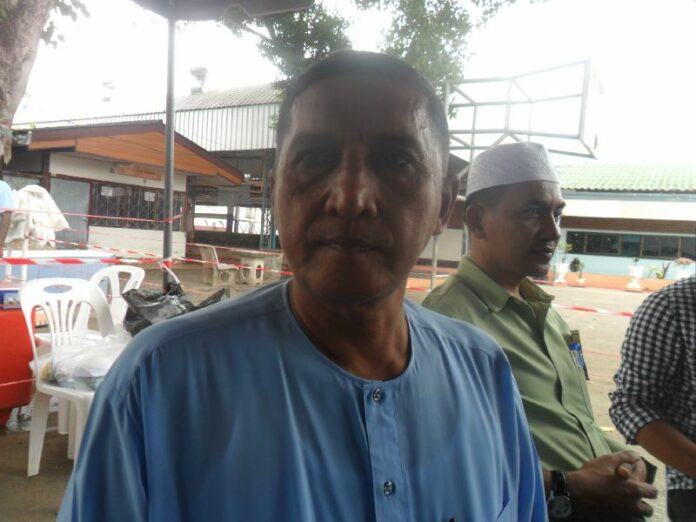
Recently-released ex-separatist leader Haji Sama-ae Thanam, 63, speaking to reporters on 18 July 2015 in Pattani.

PATTANI — A former separatist leader recently freed from prison has vowed to assist the Thai government's effort to quell the secessionist movement in Thailand's southern border provinces.

Haji Sama-ae Thanam, 63, was released from prison on 17 July after spending 18 years behind bars on terrorism charges.  His life sentence was reduced as part of a government policy to pardon former insurgents who have displayed good behavior and renounced the armed struggle. 

Speaking to reporters at his home in Pattani province's Panare district on Saturday, Sama-ae thanked the government, the military, and the Southern Border Provinces Administration Center.

"From now on, I will be dedicated to solving problems and developing the border provinces," Sama-ae said, referring to the provinces of Pattani, Yala, and Narathiwat, which local Muslim insurgents are aiming to secede from Thai authorities.

"What I will do is coordinate, talk, and negotiate with different groups, especially groups of people who think differently from the state, and who are knowledgable about many things, so that they can join the effort to build peace in the region."

He continued, "This includes working to develop the quality of life and livelihood of the people. We will uphold the principle of Sufficiency Economy." 

Sama-ae also told reporters he is particularly interested in improving Pattani’s halal food industry.

"I will invite businessmen from Malaysia to join the investment to increase income and jobs for people in the area, so that the local economy will be better. So it will be necessary for me to travel between Thailand and Malaysia to coordinate and contact with businessmen who will invest in our halal industry estate, and I will talk to my friends to build peace."

Prior to his arrest in 1997, Sama-ae, who was known by his nom de guerre Ismael Gaddafi, was leader of the armed wing of the Patani United Liberation Organization (PULO), one of separatist groups seeking to secede the three southern border provinces –  a region known as the Deep South. The Muslim-majority region was an independent Islamic kingdom called Patani until it was annexed by Thailand in the early 20th century. 

Although PULO faded from the scene shortly after Sama-ae's arrest, new groups of militants revived the insurgency in January 2004 and have been fighting Thai authorities in the region ever since. The latest wave of secessionist violence has claimed the lives of more than 6,000 people, according to data compiled by human rights groups. 

For comments, or corrections to this article please contact: [email protected]

You can also find Khaosod English on Twitter and Facebook
http://twitter.com/KhaosodEnglish
http://www.facebook.com/KhaosodEnglish
Advertisement

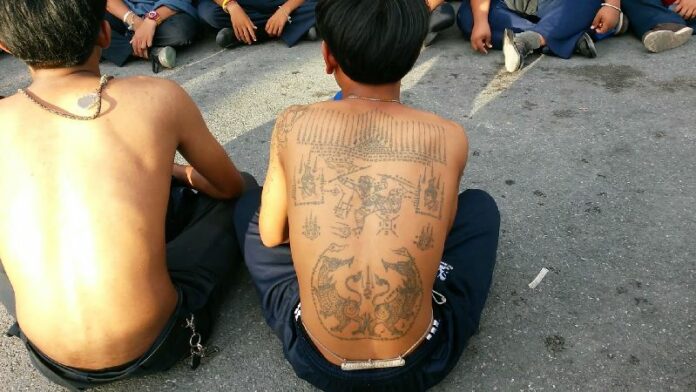
Over 20 Students Mob Bus, Beat Rivals in Nakhon Pathom

One of 22 high school students arrested in Nakhon Pathom for attacking a bus, 17 July 2015.

NAKHON PATHOM – Twenty-two teenagers were arrested for attacking a public bus and beating three students from a rival school in a Bangkok suburb on Friday night.

The incident took place at a bus stop near Silpakorn University's Sanam Chan campus in Nakhon Pathom province at around 6 pm, police said.

According to the bus driver, Suriyan Thonglek, a group of students rushed onto his Bangkok-bound bus and beat around 10 other students from a different polytechnic school with bricks and metal pipes. Other students stood outside and threw bricks at the windows of the bus, which was carrying around 30 passengers at the time, Suriyan said.

According to Suriyan, the assailants then jumped onto the back of a pick-up truck and sped away from the scene.

Police officers later intercepted the pick-up truck, which was carrying twenty-two students from Nakhon Pathom Municipality Vocational College. The students, ages 15-18, were charged with physical assault and damaging property. Police said three people were injured in the incident. 

The driver of the pick-up truck was identified as a 38-year-old man named Pichet Srirachan, who told police he was the father of one of the students. 

Gang violence between rival vocational colleges in Thailand is common, and occasionally leads to injuries and deaths of students and bystanders.

For comments, or corrections to this article please contact: [email protected]

You can also find Khaosod English on Twitter and Facebook
http://twitter.com/KhaosodEnglish
http://www.facebook.com/KhaosodEnglish
 

Advertisement

Hot News

LATEST NEWS

Bangkok
broken clouds
37 ° C
37.2 °
34.4 °
54 %
7.4kmh
70 %
Tue
35 °
Wed
34 °
Thu
35 °
Fri
30 °
Sat
34 °