


























37 C
Bangkok
Tuesday, June 9, 2026
Home Blog Page 2933

Former Separatist Leader Freed From Prison on Eid

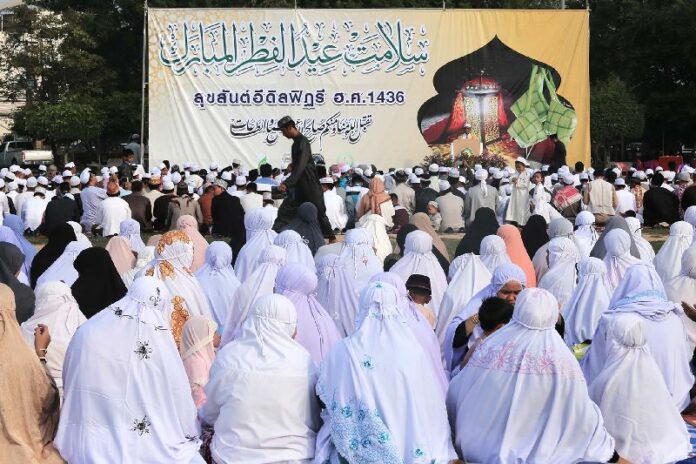
Muslims celebrate Eid al Fitr, a celebration of the end of Ramadan, in Yala province, 17 July 2015.

YALA — A former Muslim insurgent leader was released from prison today on the final day of Ramadan after receiving a pardon from Thai authorities.

Haji Sama-ae Thanam, 63, led the armed wing of the Patani United Liberation Organization (PULO), one of the separatist groups seeking to secede three southern provinces in Thailand, until he was arrested and charged with terrorism in 1997. He was found guilty in court in 2011 and sentenced to life in prison. 

According to the authorities, Sama-ae, who is known among other militants as Ismael Gaddafi, planned numerous attacks against security officers in the Muslim-majority region known as the Deep South. Although PULO faded from the scene in late 1990s, new militant groups revived the insurgency in January 2004, and have been fighting Thai authorities in the region ever since, claiming the lives of more than 6,000 people.

After spending 18 years behind bars, Sama-ae was released from Yala Provincial Prison today. Officials said Sama-ae's sentence was commuted as part of a government effort to encourage reform among former insurgents who show good behavior in prison. 

Sama-ae was welcomed by his relatives, including his son and wife, and community leaders at the prison today. 

Panu Uthairat, sec-gen of the Southern Border Provinces Administrative Center, told reporters that Sama-ae thanked junta chairman and Prime Minister Prayuth Chan-ocha for the pardon, which allowed him to observe Eid al Fitr, a celebration of the end of Ramadan, with his family. 

"It is the most precious gift for his family," Panu said.

He explained that Sama-ae was rated as an "Exceptional Prisoner" by the prison, which allowed him to qualify for a government policy to pardon former insurgents' that display a willingness to reform.

"Haji Sama-ae's [pardon] today is in accordance with policy of the Prime Minister, and has been given approval by commander of the Fourth Region Army, because he has been behaving well throughout all this time," Panu told reporters. "So he received a reduction of sentence to 27 years 9 months, and Sama-ae has already served one third of that new sentence, so he qualified for a pardon." 

He added, "Sama-ae has been cooperating with authorities and providing assistance in solving problems of the three southern border provinces, and he has expressed his sincerity in building peace in the region." 

Founded in 1968, PULO fought a violent campaign to secede the three border provinces of Yala, Pattani, and Narathiwat, which were annexed by Thailand in early 20th century. The organization's influence later waned in late 1990s due to internal disputes and arrests of its high-ranking members, such as Sama-ae. 

Although successors of PULO continue to occasionally issue statements in support of independent Patani, Thai authorities believe that a majority of the ongoing violence in the region is waged by other local militant networks who have no direct links to PULO. 

For comments, or corrections to this article please contact: [email protected]

You can also find Khaosod English on Twitter and Facebook
http://twitter.com/KhaosodEnglish
http://www.facebook.com/KhaosodEnglish
Advertisement

No Change to Charter Referendum Date, Official Confirms

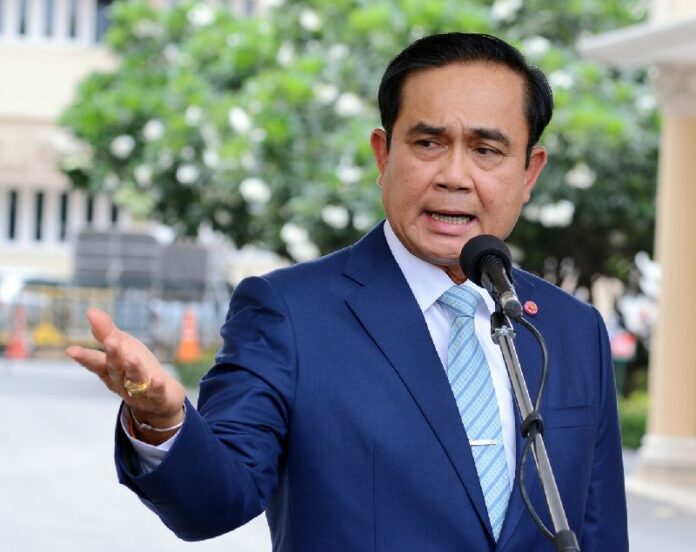
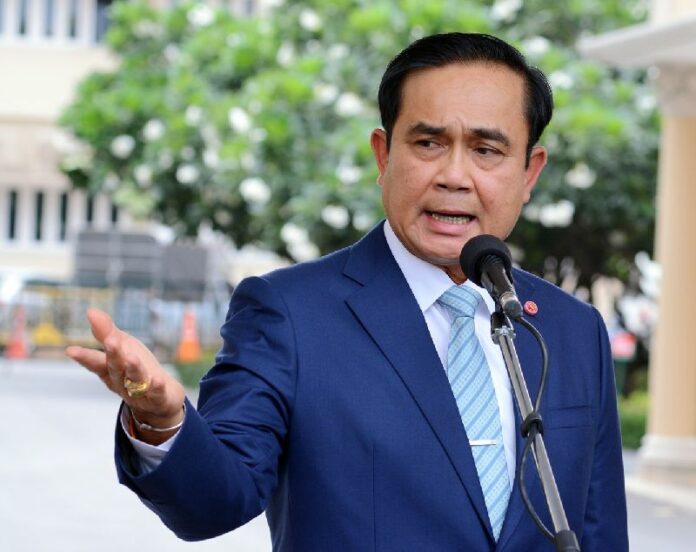
Thailand's junta is chaired by Gen. Prayuth Chan-ocha, pictured here speaking to reporters at Government House in Bangkok on 9 July 2015

BANGKOK — Thailand's Election Commission has assured the public that the referendum for the new constitution will still be held on 10 January 2016, despite a recent extension of the charter drafting period.

On Wednesday, the Thai King gave his formal signature to the military government's amendment to the current interim charter, extending the drafting process of the new constitution by 30 days. 

However, Puchong Nutrawong, secretary-general of the Election Commission, confirmed today that the referendum is still set for 10 January 2016. "We have not seen any reason to change the date for the referendum," he said. 

According to Puchong, the Election Commission will launch a referendum coordinating center on 1 September and start printing drafts of the new constitution for distribution to 23 million households across the country. The commission is also organizing a bidding war for printing houses interested in printing the ballots. 

"As for the budget for the voting, we cannot estimate it yet, because it depends on number of questions and the contents of the constitution draft that will be printed," Puchong said. "We have to wait for clarity first. But at this moment, we have calculated that there will be 98,000 polling stations and seven to eight staff per station. We expect that the budget for that part alone will cost more than 2 billion baht."

The first draft of the new constitution – Thailand's 20th since democracy was established in 1932 – was written by a committee appointed by the military junta that seized power and dissolved the previous charter on 22 May 2014.  The draft is now pending approval from the National Reform Council, another body appointed by the junta.

The junta has promised to organize a new election by September 2016 – given that the charter passes the referendum. Officials have not said what will happen if voters reject the charter draft. In the referendum for the post-coup 2007 constitution, which was also drafted by a junta-appointed council, voters were also only permitted to accept or decline the document. Critics say that many voters reluctantly approved the charter out of fear of prolonged military rule.

The current junta has also dismissed calls to lift its ban on political activities and campaigning to allow for free debate about the charter before the vote. 

Speaking to reporters, Puchong said he is concerned that the schedule for printing and distributing the charter drafts to voters will be tight. "We have to finish distributing the documents by November. When you consider that the NRC has to approve the charter draft by 6 September at the latest, the time will be rather tight." 

He also told reporters that the Election Commission is seeking help from the National Anti-Corruption Commission to ensure that the ballot and charter draft printing process will be transparent and free of any corruption. 


For comments, or corrections to this article please contact: [email protected]

You can also find Khaosod English on Twitter and Facebook
http://twitter.com/KhaosodEnglish
http://www.facebook.com/KhaosodEnglish
Advertisement

Thai Army Bases Selling Cheap Food to Public

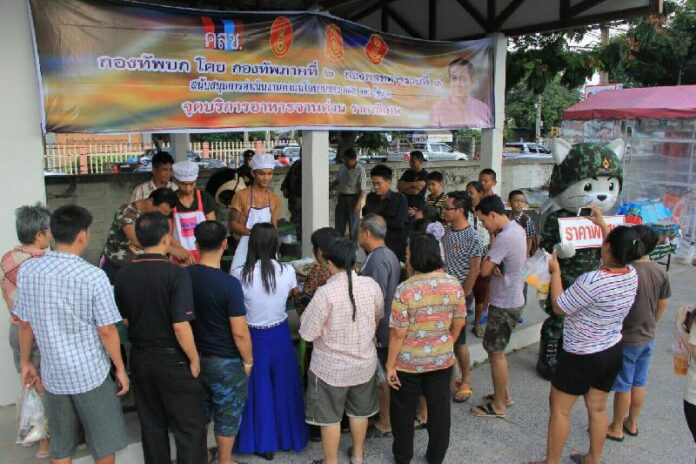
Army officers selling cheap food to the public [Royal Thai Army]

BANGKOK — The Royal Thai Army has announced that some military bases are now offering low-cost food to the public.

Col. Sirichan Ngathong, an army spokesperson, said today that army bases in Nakhon Ratchasima, Lopburi, Prachinburi, Sa Kaeo, and Chonburi have already begun selling freshly-cooked meals to local communities, while other military camps around the country are expected to join the program soon. 

"It is an option for people to buy food at a special price, which is cheaper than the market price," Col. Sirichan said, adding that each dish costs around 10 – 20 baht. Staple food dishes in Thailand normally cost 30 – 40 baht per serving.

According to Col. Sirichan, the army bases are offering noodle dishes, basil fried rice, curry rice, fried rice with pork, and omelettes with rice.

"At this moment, regional armies are urgently expanding this project widely, in order to adequately service the people," she told reporters, adding that the army is not seeking any profit from the program. The army is also considering buying local produce to help farmers, Col. Sirichan said. 

Since then-army chief Gen. Prayuth Chan-ocha seized power from an elected government in May 2014,  soldiers have been deployed to take up additional roles as law enforcement officials and civil servants. For example, soldiers are routinely seen assisting police with arrests and directing traffic. 

Shortly after the the military takeover, the junta staged several "Happiness Fairs" to boost public support for the coup d'etat. The festivals featured free haircuts, medical checkups, food, concerts, petting zoos, and other activities. 

In tandem with its happiness campaign, the military regime has also undertaken a widespread effort to muzzle any opposition to its rule. It has banned political activities and protests, censored the media, and sent dissidents to stand trial in military courts.


For comments, or corrections to this article please contact: [email protected]

You can also find Khaosod English on Twitter and Facebook
http://twitter.com/KhaosodEnglish
http://www.facebook.com/KhaosodEnglish

Advertisement

Court Deems Former Govt's Censorship of Yellowshirt TV Legal

Then-Prime Minister Yingluck Shinawatra speaking at a radio show organized by the Department of Public Relations, 1 October 2011.

BANGKOK — A court in Bangkok has ruled that the previous government was authorized to censor a Yellowshirt-affiliated television show that accused Redshirts of plotting to overthrow the Thai monarchy.

The case dates back to September 2011 when the state-run Channel 11 refused to air a segment produced by Green Intelligence company, which had a contract with the channel to air news every Friday from 9-10pm.

The company also produced programs for T-News, a private TV station allied to the conservative Yellowshirt movement that campaigned against the pre-coup government led by Prime Minister Yingluck Shinawatra, who was elected with the overwhelming support of the rival Redshirts in July 2011.

At the time, the Department of Public Relations, which operates Channel 11, said the show falsely asserted that Redshirts were plotting to overthrow the monarchy, and argued that the segment could affect Thailand’s national security.

In Thailand, attempting to overthrow the monarchy is punishable by death, and criticizing the royal family is punishable by up to 15 years in prison. 

Green Intelligence later sued the Department of Public Relations for financial compensation, and argued that they were "stripped of their rights to freedom of expression."

Today, Bangkok's Administrative Court ruled that Channel 11's refusal to air the show was within the scope of national broadcasting laws, which permit authorities to stop the dissemination of "content that leads to the overthrow of the constitutional monarchy system of government, or affects national security, public order and morality, or content containing nudity, causing decadence or seriously harming public health."

The court dismissed the case after ruling that the Department of Public Relations’ decision did “not constitute a violation of the contract.”

Both of Thailand’s Redshirt and Yellowshirt movements have operated their own TV and radio channels featuring news programs and live broadcasts of political rallies. 

After Gen. Prayuth Chan-ocha staged a coup d'etat against the Redshirt-backed government in May 2014, he ordered the partisan TV channels off the air, with the stated aim of promoting reconciliation between the two camps. The channels were later allowed to resume operations as long as they agreed not to instigate violence, divisions, or cause "confusion."

Several months ago, a Redshirt-run TV station was shut down by the state's media regulating body after allegedly airing "divisive content" that violated the junta's new restrictions on media. The station sued the state agency that issued the order, and has been allowed to resume operations while the trial is ongoing.

For comments, or corrections to this article please contact: [email protected]

You can also find Khaosod English on Twitter and Facebook
http://twitter.com/KhaosodEnglish
http://www.facebook.com/KhaosodEnglish
Advertisement

Pakistan's Ramadan Laws Hit Christians, Other Non-Fasters

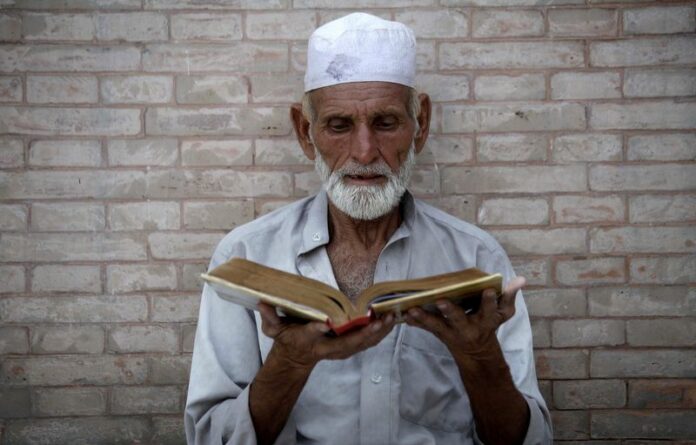
A Pakistani man reads the Koran at a mosque during Ramadan, in Peshawar, Pakistan, 10 July 2015. EPA/BILAWAL ARBAB

ISLAMABAD (DPA) — On a hot Ramadan day, Sarfaraz Michael slowly pushes his vegetable cart through a Muslim neighbourhood of Pakistan's garrison city Rawalpindi.

Michael, a Christian, is perspiring and feels thirsty, but drinking or eating anything in public during the Muslim holy month is punishable by jail or a fine, or both.

"I will wait until I go home or find a fellow non-Muslim household," he says, wiping sweat from his forehead.

The problem also affects Muslims who are exempt from the obligation to fast, such as the pregnant, elderly or infirm, who often fear the police and social pressure from conservatives.

Last week, one man and his girlfriend bought snacks from a bakery in Islamabad, drove out to a deserted road in the suburbs and quickly ate the food hoping they would not be seen.

"We were afraid that somebody would find us eating and hand us over to police for violating the Ehtiraam-e-Ramadan ordinance," the man said.

The law introduced by former military dictator Ziaul Haq in 1981 prescribes up to three months in jail and a fine of about five dollars for eating or drinking in public.

"No person who, according to the tenets of Islam, is under an obligation to fast shall eat, drink or smoke in a public place during fasting hours in the month of Ramadan," the law says.

High court lawyer Shahbaz Rajput said that in practice, the authorities do not take into consideration the exceptions provided in the scriptures to non-Muslims, the elderly and sick Muslims.

"Under these laws, all restaurants are closed in the country, creating severe problems for those who want to have regular breakfast or lunch," he said.

Analysts say the blanket implementation not only violates basic rights but also creates health complications. The start of Ramadan last month coincided with a brutal heat wave that killed more than 1,250 people in Pakistan.

Most of the people died due to "aggravated [dehydration] due to fasting in extreme weather," according to an official statement.

Islamabad-based human rights activist Tahira Abdullah said religious practice should be an individual matter, not dictated by government.

"There should be no such laws for anyone and no strict enforcement of laws regarding fasting by the government, as fasting in Ramadan is a private and personal matter between a human being and God," she said.

"It is not just an issue of human rights, it is a greater issue for health reasons."

Despite the deaths linked to fasting, officials have not relaxed the laws even to allow people to drink water in public, citing the disapproval of Muslim clerics.

Religious scholar Maulana Abdul Qadoos Muhammadi argues that respecting Ramadan in public is a "moral obligation" for everyone, including non-Muslims.

"These who do not fast should behave as if they were fasting," he said. "Non-Muslims and elderly or sick Muslims can eat but they should show respect for fasting Muslims and avoid eating or drinking openly."

Hardly anyone has challenged religion-related laws since the 2011 killing of the governor of Punjab province, Salman Taseer, and Christian minister Shahbaz Bhatti by extremists after they demanded changes in controversial laws that would have made blasphemy punishable by death.

Amid the Ramadan crackdown by police and intimidation by hardline Muslims, "sometimes I think that I should also start fasting in Ramadan like Muslims," Michael says.

(Reporting by Sajjad Malik)


For comments, or corrections to this article please contact: [email protected]

You can also find Khaosod English on Twitter and Facebook
http://twitter.com/KhaosodEnglish
http://www.facebook.com/KhaosodEnglish
Advertisement

Chinese Businessman Says He Was Extorted by Thai Police

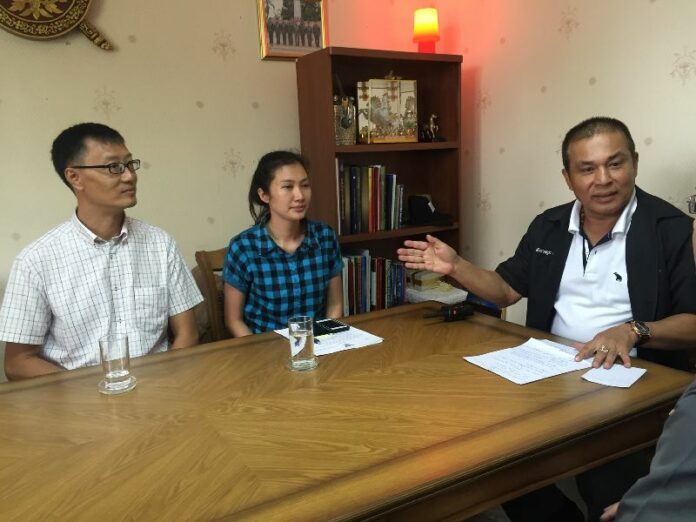
Yian Tong and his wife Mananthacha Kasema file a complain with Chiang Mai police on 17 July 2015.

CHIANG MAI — A Chinese businessman told police in northern Thailand today that a man who claimed to be a police officer threatened to kill him if he did not fork over 4.3 million baht.

The businessman, Yian Tong, and his Thai wife, Mananthacha Kasema, filed the complaint with the Fifth Region Police in Chiang Mai. 

According to Mananthacha, Yian started a tour company and resort in Chiang Mai several years ago, and later leased the business to another Chinese busineman named Tong Wan under a one year-contract. However, six months after the contract started police raided the company for hiring staff without proper work permits and organizing group tours without registering with the Immigration police.

Tong Wan then asked to terminate the contract, and demanded that Yian pay him 4.3 million baht in damages, even though he still owed Yian more than 500,000 baht in rent, Mananthacha said.

"My husband and I didn't break the contract, and we are the victims in this because we don't get rent money from him," Mananthacha said.

After she and her husband refused to pay, they were reportedly contacted by a man who called himself Captain Nui and claimed to be the head of an investigation team with the Fifth Region Police.

Captain Nui reportedly said he was asked by Tong Wan to "collect" the 4.3 million baht from the pair, and threatened to kill the couple if they didn’t pay.

"We had to move, and we have been living in difficulty, because we fear for our lives," Mananthacha said, "So we decided to complain to the Chinese consulate in Chiang Mai and the Fifth Region Police." 

Pol.Maj.Gen. Pacha Rattanapan, the commander of the Fifth Region Police, said he believes Captain Nui is a fake cop, but said the investigation is still ongoing.

"Recently, there have been conflicts among Chinese businessmen who open their business in Chiang Mai province. People who claim to be police and military officers often get involved and threatened them, which affect investment in Chiang Mai province," Pol.Maj.Gen. Pacha told reporters. "I'd like to tell the public: if you have any problem, you must file complaint to police so we can proceed with legal action." 

Chiang Mai is a popular destination for Chinese tourists, some of whom arrive in the city from China by car. Official records say 4.5 million Chinese tourists visited Thailand in 2014 – more than any other nation – bringing in more than 190 billion baht in revenue for the Kingdom. 

CORRECTION: The lede mistakenly said Yian Tong was asked for 4.3 billion baht. The correct amount is 4.3 million baht.

For comments, or corrections to this article please contact: [email protected]

You can also find Khaosod English on Twitter and Facebook
http://twitter.com/KhaosodEnglish
http://www.facebook.com/KhaosodEnglish
Advertisement

Thailand to Boost Average Height With Better School Meals

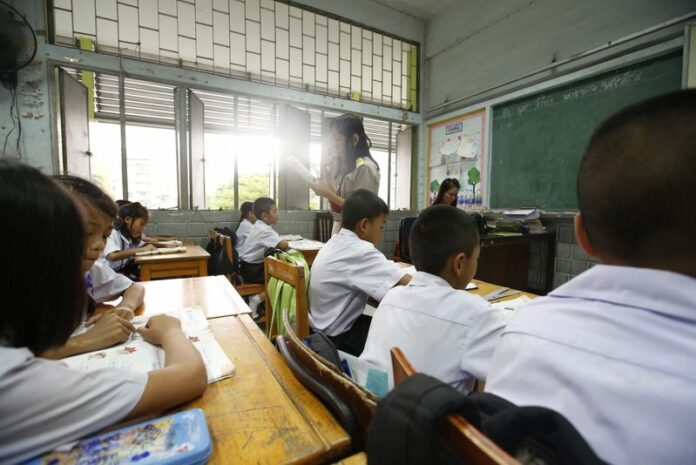
A file photo shows a Thai teacher teaching Thai school children in grade three, English words during an English language lesson at Watthatthong Primary School in Bangkok, Thailand, 02 March 2015. EPA/BARBARA WALTON

BANGKOK (DPA) — Thailand is to launch a campaign to increase the average height of its citizens through better nutrition at school and health awareness for children, officials said Friday.

It aims to increase the average height of Thai men to 175 centimetres and women to 165 centimetres from 167 centimetres and 157 centimetres respectively within 10 years, according to the Department of Health.

The department will also try to increase the average IQ from 94 to 100 over the same time, said Narong Saiwong, deputy director of the department.

Children at schools across the country would receive healthier meals and more instruction on healthy living and exercise, said an official in the Department of Health who asked not to be named.

Childhood obesity contributes to a lower IQ, as the associated symptoms of sleep apnea and drowsiness prevent students from competing to their full potential at school, she said.

The maintenance of physical and mental health is one of the core values for Thais proclaimed by the military government.

The junta has stipulated that all primary school children to recite the core values daily.


For comments, or corrections to this article please contact: [email protected]

You can also find Khaosod English on Twitter and Facebook
http://twitter.com/KhaosodEnglish
http://www.facebook.com/KhaosodEnglish
Advertisement

No Change to Charter Referendum Date, Official Confirms

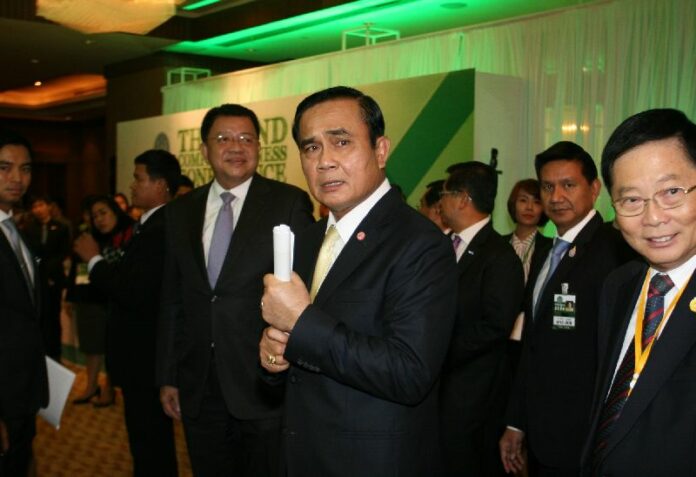
Thailand's new constitution is being drafted and deliberated by committees set up by junta chairman Gen. Prayuth Chan-ocha, pictured here at a conference in Bangkok, 16 July 2015

BANGKOK – Thailand's Election Commission has assured the public that the referendum for the new constitution will still be held on 10 January 2016, despite a recent extension of the charter drafting period.

On Wednesday, the Thai King gave his formal signature to the military government's amendment to the current interim charter, extending the drafting process of the new constitution by 30 days. 

However, Puchong Nutrawong, secretary-general of the Election Commission, confirmed today that the referendum is still set for 10 January 2016. "We have not seen any reason to change the date for the referendum," he said. 

According to Puchong, the Election Commission will launch a referendum coordinating center on 1 September and start printing drafts of the new constitution for distribution to 23 million households across the country. The commission is also organizing a bidding war for printing houses interested in printing the ballots. 

"As for the budget for the voting, we cannot estimate it yet, because it depends on number of questions and the contents of the constitution draft that will be printed," Puchong said. "We have to wait for clarity first. But at this moment, we have calculated that there will be 98,000 polling stations and seven to eight staff per station. We expect that the budget for that part alone will cost more than 2 billion baht."

The first draft of the new constitution – Thailand's 20th since democracy was established in 1932 – was written by a committee appointed by the military junta that seized power and dissolved the previous charter on 22 May 2014.  The draft is now pending approval from the National Reform Council, another body appointed by the junta.

The junta has promised to organize a new election by September 2016 – given that the charter passes the referendum. Officials have not said what will happen if voters reject the charter draft. In the referendum for the post-coup 2007 constitution, which was also drafted by a junta-appointed council, voters were also only permitted to accept or decline the document. Critics say that many voters reluctantly approved the charter out of fear of prolonged military rule.

The current junta has also dismissed calls to lift its ban on political activities and campaigning to allow for free debate about the charter before the vote. 

Speaking to reporters, Puchong said he is concerned that the schedule for printing and distributing the charter drafts to voters will be tight. "We have to finish distributing the documents by November. When you consider that the NRC has to approve the charter draft by 6 September at the latest, the time will be rather tight." 

He also told reporters that the Election Commission is seeking help from the National Anti-Corruption Commission to ensure that the ballot and charter draft printing process will be transparent and free of any corruption. 


For comments, or corrections to this article please contact: [email protected]

You can also find Khaosod English on Twitter and Facebook
http://twitter.com/KhaosodEnglish
http://www.facebook.com/KhaosodEnglish
Advertisement

Thai Army Bases Selling Cheap Food to Public

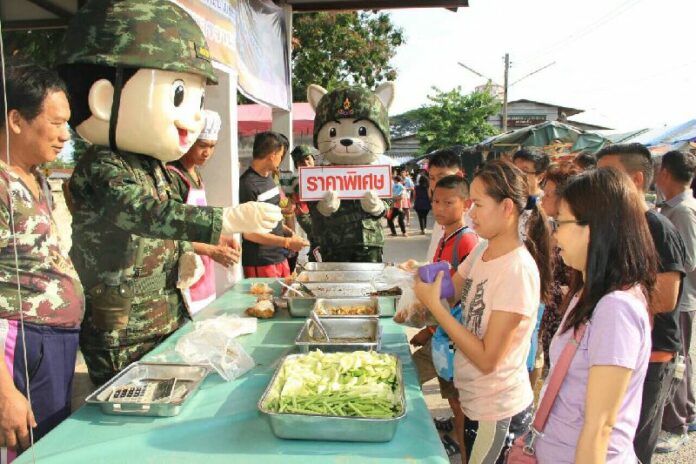
Army officers selling cheap food to the public [photo provided by the Royal Thai Army]

BANGKOK – The Royal Thai Army has announced that some military bases are now offering low-cost food to the public.

Col. Sirichan Ngathong, an army spokesperson, said today that army bases in Nakhon Ratchasima, Lopburi, Prachinburi, Sa Kaeo, and Chonburi have already begun selling freshly-cooked meals to local communities, while other military camps around the country are expected to join the program soon. 

"It is an option for people to buy food at a special price, which is cheaper than the market price," Col. Sirichan said, adding that each dish costs around 10 – 20 baht. Staple food dishes in Thailand normally cost 30 – 40 baht per serving.

According to Col. Sirichan, the army bases are offering noodle dishes, basil fried rice, curry rice, fried rice with pork, and omelettes with rice.

"At this moment, regional armies are urgently expanding this project widely, in order to adequately service the people," she told reporters, adding that the army is not seeking any profit from the program. The army is also considering buying local produce to help farmers, Col. Sirichan said. 

Since then-army chief Gen. Prayuth Chan-ocha seized power from an elected government in May 2014,  soldiers have been deployed to take up additional roles as law enforcement officials and civil servants. For example, soldiers are routinely seen assisting police with arrests and directing traffic. 

Shortly after the the military takeover, the junta staged several "Happiness Fairs" to boost public support for the coup d'etat. The festivals featured free haircuts, medical checkups, food, concerts, petting zoos, and other activities. 

In tandem with its happiness campaign, the military regime has also undertaken a widespread effort to muzzle any opposition to its rule. It has banned political activities and protests, censored the media, and sent dissidents to stand trial in military courts.


For comments, or corrections to this article please contact: [email protected]

You can also find Khaosod English on Twitter and Facebook
http://twitter.com/KhaosodEnglish
http://www.facebook.com/KhaosodEnglish
Advertisement

Junta Bars Pheu Thai Politician From Leaving Country

Thailand's junta is chaired by Gen. Prayuth Chan-ocha, pictured here speaking to reporters at Government House in Bangkok on 9 July 2015

BANGKOK — A top leader of the Pheu Thai Party said the ruling military junta has denied his application for an overseas trip.

According to former Pheu Thai MP Wattana Muangsuk, junta officials said he was barred from leaving the country because he has been criticizing the regime through interviews with the media. The officials reportedly told him he could file another request on 18 September. 

"I listened to them and could not help feeling pathetic about their methods of thinking and working," said Wattana, whose party led the elected government that was toppled by the junta in May 2014.

"I am not surprised that these people, who seized power from the people, have managed to cause so much damage to the country under their administration over the past year."

The junta had not commented on the incident at the time of publication. 

Shortly after staging a coup against the Pheu Thai-led government in May 2014, the junta summoned most of Thailand’s major politicians for "attitude adjustment" sessions in army camps.

Most were released within seven days on the conditions that they not participate in any political activities, and seek permission from the junta before leaving the country.

The junta, known officially as the National Council for Peace and Order (NCPO), has granted some Pheu Thai leaders permission to go abroad, including former Prime Minister Yingluck Shinawatra. 

Speaking to reporters today, Wattana lashed out at the junta for stripping away his rights of travel enshrined under Article 12 of the International Covenant on Civil and Political Rights, to which Thailand is a signatory party. 

"You cite my criticism of you as the reason for the ban on travel, isn't that a bit idiotic?" Wattana fumed. "I am not surprised to see that you don't understand it, because human rights are about humans. You have to be humans in order to understand rights of humans. And even though you ban me from traveling, I will never bow down to the power that does not come from the people. Nowadays, I live as a captive who has no options. It's like being told to give up my money by a thief. It doesn't mean I agree with the theif." 

He added, "I feel about you [junta] in the same way that [former Prime Minister] Kukrit Pramoj wrote in his Soi Suan Phlu column of Siam Rath newspaper on 15 March 1983. If you remember what it means, please go tell those people for me."

Wattana was referring to an angry rant penned by Kukrit in his daily column toward an army commander who he believed was steering Thailand towards Communist dictatorship. The column began and ended with the sentence "I am not afraid of you dammit." 


For comments, or corrections to this article please contact: [email protected]

You can also find Khaosod English on Twitter and Facebook
http://twitter.com/KhaosodEnglish
http://www.facebook.com/KhaosodEnglish

Advertisement

Hot News

LATEST NEWS

Bangkok
broken clouds
37 ° C
37.2 °
34.4 °
54 %
7.4kmh
70 %
Tue
35 °
Wed
34 °
Thu
35 °
Fri
30 °
Sat
34 °