






























37 C
Bangkok
Tuesday, June 9, 2026
Home Blog Page 2934

Thai Army Bases Selling Cheap Food to Public

Army officers selling cheap food to the public [photo provided by the Royal Thai Army]

BANGKOK – The Royal Thai Army has announced that some military bases are now offering low-cost food to the public.

Col. Sirichan Ngathong, an army spokesperson, said today that army bases in Nakhon Ratchasima, Lopburi, Prachinburi, Sa Kaeo, and Chonburi have already begun selling freshly-cooked meals to local communities, while other military camps around the country are expected to join the program soon. 

"It is an option for people to buy food at a special price, which is cheaper than the market price," Col. Sirichan said, adding that each dish costs around 10 – 20 baht. Staple food dishes in Thailand normally cost 30 – 40 baht per serving.

According to Col. Sirichan, the army bases are offering noodle dishes, basil fried rice, curry rice, fried rice with pork, and omelettes with rice.

"At this moment, regional armies are urgently expanding this project widely, in order to adequately service the people," she told reporters, adding that the army is not seeking any profit from the program. The army is also considering buying local produce to help farmers, Col. Sirichan said. 

Since then-army chief Gen. Prayuth Chan-ocha seized power from an elected government in May 2014,  soldiers have been deployed to take up additional roles as law enforcement officials and civil servants. For example, soldiers are routinely seen assisting police with arrests and directing traffic. 

Shortly after the the military takeover, the junta staged several "Happiness Fairs" to boost public support for the coup d'etat. The festivals featured free haircuts, medical checkups, food, concerts, petting zoos, and other activities. 

In tandem with its happiness campaign, the military regime has also undertaken a widespread effort to muzzle any opposition to its rule. It has banned political activities and protests, censored the media, and sent dissidents to stand trial in military courts.


For comments, or corrections to this article please contact: [email protected]

You can also find Khaosod English on Twitter and Facebook
http://twitter.com/KhaosodEnglish
http://www.facebook.com/KhaosodEnglish
Advertisement

Junta Bars Pheu Thai Politician From Leaving Country

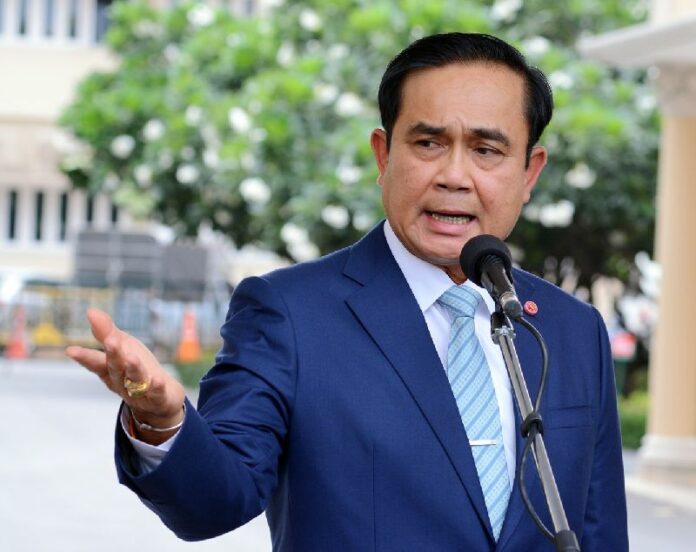
Thailand's junta is chaired by Gen. Prayuth Chan-ocha, pictured here speaking to reporters at Government House in Bangkok on 9 July 2015

BANGKOK — A top leader of the Pheu Thai Party said the ruling military junta has denied his application for an overseas trip.

According to former Pheu Thai MP Wattana Muangsuk, junta officials said he was barred from leaving the country because he has been criticizing the regime through interviews with the media. The officials reportedly told him he could file another request on 18 September. 

"I listened to them and could not help feeling pathetic about their methods of thinking and working," said Wattana, whose party led the elected government that was toppled by the junta in May 2014.

"I am not surprised that these people, who seized power from the people, have managed to cause so much damage to the country under their administration over the past year."

The junta had not commented on the incident at the time of publication. 

Shortly after staging a coup against the Pheu Thai-led government in May 2014, the junta summoned most of Thailand’s major politicians for "attitude adjustment" sessions in army camps.

Most were released within seven days on the conditions that they not participate in any political activities, and seek permission from the junta before leaving the country.

The junta, known officially as the National Council for Peace and Order (NCPO), has granted some Pheu Thai leaders permission to go abroad, including former Prime Minister Yingluck Shinawatra. 

Speaking to reporters today, Wattana lashed out at the junta for stripping away his rights of travel enshrined under Article 12 of the International Covenant on Civil and Political Rights, to which Thailand is a signatory party. 

"You cite my criticism of you as the reason for the ban on travel, isn't that a bit idiotic?" Wattana fumed. "I am not surprised to see that you don't understand it, because human rights are about humans. You have to be humans in order to understand rights of humans. And even though you ban me from traveling, I will never bow down to the power that does not come from the people. Nowadays, I live as a captive who has no options. It's like being told to give up my money by a thief. It doesn't mean I agree with the theif." 

He added, "I feel about you [junta] in the same way that [former Prime Minister] Kukrit Pramoj wrote in his Soi Suan Phlu column of Siam Rath newspaper on 15 March 1983. If you remember what it means, please go tell those people for me."

Wattana was referring to an angry rant penned by Kukrit in his daily column toward an army commander who he believed was steering Thailand towards Communist dictatorship. The column began and ended with the sentence "I am not afraid of you dammit." 


For comments, or corrections to this article please contact: [email protected]

You can also find Khaosod English on Twitter and Facebook
http://twitter.com/KhaosodEnglish
http://www.facebook.com/KhaosodEnglish
Advertisement

Poor Road Intercepts Alleged Robbery Suspect

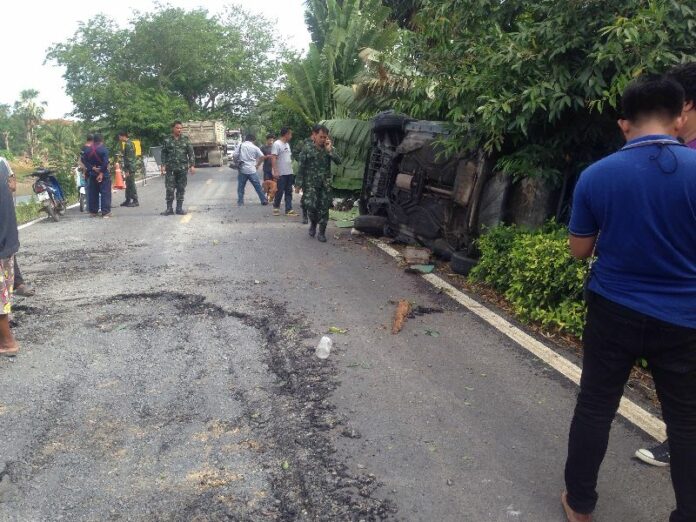
The flipped Volvo that police said was carrying a robbery suspect in Pathum Thani, 16 July 2015.

PATHUM THANI – A poorly-maintained road in Pathum Thani province caused a fugitive robbery suspect to lose control of his car and crash while he was being pursued by police today.

The crash took place on West Klong 10 Road in Nong Suea district, where witnesses said they saw a pick-up truck chasing after a silver Volvo.

A road repair worker who gave his name as Somchai said he was working with his team when he heard a loud noise and turned to see the Volvo spinning off the bumpy road. 

According to Somchai, three men with guns then got out of the pick-up truck, surrounded the wrecked Volvo, and took the driver away from the scene. Police officers from Nong Suea Police Station later arrived and told reporters that the armed men were plain-clothed police officers. 

Police said the driver is one of several suspects behind a robbery that took place in Sa Kaeo province. Police said they are withholding his name because they are afraid that other suspects connected to the robbery will also attempt to flee if they hear of his arrest. 

\
A widely-shared photo of
massive cracks on a road in Nong Suea district in Pathum Thani. 

The incident took place a week after residents in Pathum Thani filed a complaint with authorities about the deteriorating conditions of roads in the province. A photo of local residents "playing" in massive cracks on a road in Nong Suea district also went viral on the internet.  


For comments, or corrections to this article please contact: [email protected]

You can also find Khaosod English on Twitter and Facebook
http://twitter.com/KhaosodEnglish
http://www.facebook.com/KhaosodEnglish

Advertisement

Redshirt TV Channel Secures Reprieve From Blackout Order

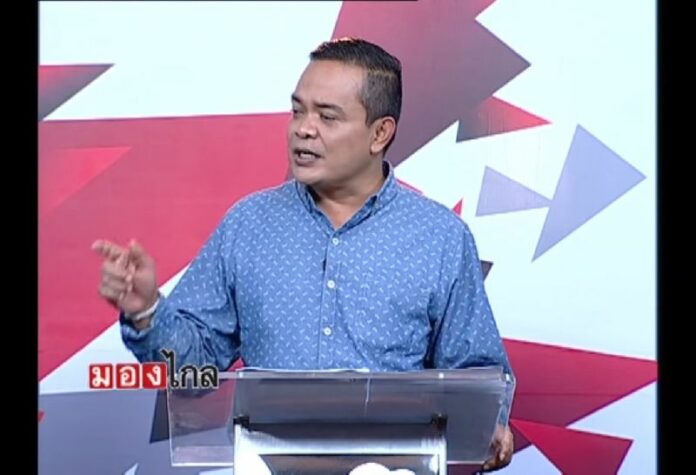
Redshirt leader Jatuporn Prompan hosting his Peace TV talk show, 'Look Far Ahead,' in a segment uploaded to Youtube, 15 July 2015.

BANGKOK – Bangkok's central administrative court has permitted a Redshirt-run television station to return to the air while the court deliberates on whether a stage agency's order to shut down the channel was lawful.

Peace TV’s license was revoked in April by Thailand’s media regulatory board, the National Broadcasting Telecommunication Commission (NBTC). The commission said the some of the channel’s talk shows violated prohibitions on the media passed by the military junta that seized power in May 2014. Under the junta's orders, the media is barred from inciting violence, causing "divisions in the kingdom," or criticizing the junta with "malicious" intention.

In response to the ruling, the operators of Peace TV sued the NBTC in administrative court last month for 15 million baht in damages. The operators – most of whom are Redshirt leaders – also asked the court to issue an injunction for Peace TV to return to the air until a verdict is reached.

The court granted the request today, on the grounds that the NBTC prematurely revoked the license of Peace TV without giving the station 15 days to offer a defense, as is required by NBTC regulations. 

"There is no evidence, either in the plaintiff's brief or in the trial, that the NBTC offered Peace TV the opportunity to argue its case and present evidence," the court wrote in its decision, adding that the NBTC’s regulations do not allow for any exceptions to this requirement. Therefore, the NBTC's shutdown order "constitutes a potentially unlawful governmental order," the court said. 

The ruling added, "If the aforementioned license revocation order continues to be effective, Peace TV will be forced to cease its operation, affecting its revenue from sponsors and company staff, which number more than 100 people, whose employment will be terminated, leading to suffering that is difficult to compensate. Even though the company later broadcast its show on the internet, it cannot compensate the damages caused by this case." 

Since the blackout order, Peace TV has been uploading segments of its shows on Youtube. 

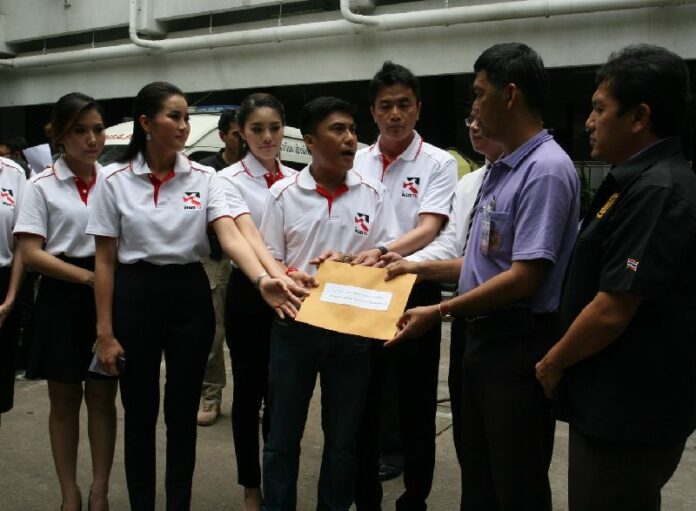
Redshirt activists deliver a letter of complaint at the government house in Bangkok protesting the shutdown of Peace TV, 30 April 2015.

Jatuporn Prompan, a top Redshirt leader and talk show host at Peace TV, said he welcomed the court ruling, and expected the station to be back on air by 20 July. Jatuporn also announced that he will not return his talk show to Peace TV's televised broadcasts.

"To avoid leaving either Peace TV or NBTC with a feeling of victory or defeat, the show ‘Look Far Ahead’ that I host, which caused Peace TV to lose its license, will not return on air on Peace TV station again, until the country returns to a climate that people can discuss things again," Jatuporn told reporters. "But it will still be broadcast on the internet."  

Both of Thailand’s Redshirt and Yellowshirt movements have operated their own TV and radio channels featuring news programs and live broadcasts of their political rallies. The partisan channels were initially shut down by the military in the wake of the coup, but later allowed resume operations as long as they agreed not to instigate violence, divisions, or cause "confusion."

Critics say the junta is particularly bent on curbing the influence of the largely anti-coup Redshirt movement, which supported the government toppled in the coup and has determined the winner of every national election for the past decade. 


For comments, or corrections to this article please contact: [email protected]

You can also find Khaosod English on Twitter and Facebook
http://twitter.com/KhaosodEnglish
http://www.facebook.com/KhaosodEnglish
Advertisement

Redshirt TV Channel Secures Reprieve From Blackout Order

Redshirt activists deliver a letter of complaint at the government house in Bangkok protesting the shutdown of Peace TV, 30 April 2015.

BANGKOK – Bangkok's central administrative court has permitted a Redshirt-run television station to return to the air while the court deliberates on whether a stage agency's order to shut down the channel was lawful.

Peace TV’s license was revoked in April by Thailand’s media regulatory board, the National Broadcasting Telecommunication Commission (NBTC). The commission said the some of the channel’s talk shows violated prohibitions on the media passed by the military junta that seized power in May 2014. Under the junta's orders, the media is barred from inciting violence, causing "divisions in the kingdom," or criticizing the junta with "malicious" intention.

In response to the ruling, the operators of Peace TV sued the NBTC in administrative court last month for 15 million baht in damages. The operators – most of whom are Redshirt leaders – also asked the court to issue an injunction for Peace TV to return to the air until a verdict is reached.

The court granted the request today, on the grounds that the NBTC prematurely revoked the license of Peace TV without giving the station 15 days to offer a defense, as is required by NBTC regulations. 

"There is no evidence, either in the plaintiff's brief or in the trial, that the NBTC offered Peace TV the opportunity to argue its case and present evidence," the court wrote in its decision, adding that the NBTC’s regulations do not allow for any exceptions to this requirement. Therefore, the NBTC's shutdown order "constitutes a potentially unlawful governmental order," the court said. 

The ruling added, "If the aforementioned license revocation order continues to be effective, Peace TV will be forced to cease its operation, affecting its revenue from sponsors and company staff, which number more than 100 people, whose employment will be terminated, leading to suffering that is difficult to compensate. Even though the company later broadcast its show on the internet, it cannot compensate the damages caused by this case." 

Since the blackout order, Peace TV has been uploading segments of its shows on Youtube. 

\
Redshirt leader 
Jatuporn Prompan hosting his Peace TV talk show, 'Look Far Ahead,' in a segment uploaded to Youtube, 15 July 2015. 

Jatuporn Prompan, a top Redshirt leader and talk show host at Peace TV, said he welcomed the court ruling, and expected the station to be back on air by 20 July. Jatuporn also announced that he will not return his talk show to Peace TV's televised broadcasts.

"To avoid leaving either Peace TV or NBTC with a feeling of victory or defeat, the show ‘Look Far Ahead’ that I host, which caused Peace TV to lose its license, will not return on air on Peace TV station again, until the country returns to a climate that people can discuss things again," Jatuporn told reporters. "But it will still be broadcast on the internet."  

Both of Thailand’s Redshirt and Yellowshirt movements have operated their own TV and radio channels featuring news programs and live broadcasts of their political rallies. The partisan channels were initially shut down by the military in the wake of the coup, but later allowed resume operations as long as they agreed not to instigate violence, divisions, or cause "confusion."

Critics say the junta is particularly bent on curbing the influence of the largely anti-coup Redshirt movement, which supported the government toppled in the coup and has determined the winner of every national election for the past decade. 


For comments, or corrections to this article please contact: [email protected]

You can also find Khaosod English on Twitter and Facebook
http://twitter.com/KhaosodEnglish
http://www.facebook.com/KhaosodEnglish

Advertisement

Motorcycle Kills Road Safety Petitioner in Pathum Thani

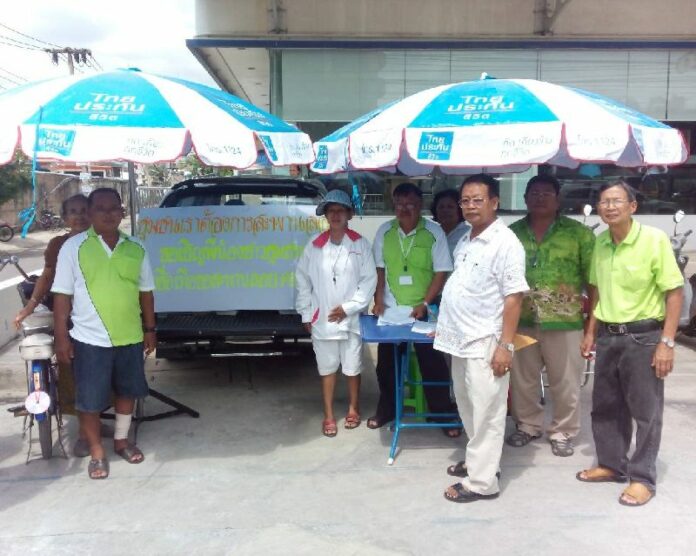
Local residents and officials gather signatures for a pedestrian safety petition across the street from where a woman was killed by an oncoming motorcycle in Pathum Thani, 15 July 2015.

PATHUM THANI – A woman was run over and killed by a motorcycle moments after she signed a petition calling for improved pedestrian safety in Pathum Thani province yesterday.

According to police, the motorcyclist crashed into the 54-year-old woman, Lanchakorn Chanklom, while she was walking across a zebra crossing on Rangsit – Pathum Thani Road at around 11am. The motorcyclist was identified as a university student, who was also injured in the accident and has been sent to a hospital.

The incident took place close to where local community leaders and residents were gathering to sign a petition calling for a pedestrian bridge to be built over the road to prevent injuries and deaths.

According to Somjit Taethaisong, deputy chairman of Bang Poon Subdistrict Municipal Council, Lanchakorn came to the table set up by the residents to sign her name and then crossed the road to head home. Just as she was crossing the road, the motorcycle crashed into her, launching its rider off the bike.

Lanchakorn reportedly died at the scene. Police said they will interrogate the university student at the hospital as soon as she is able to speak with police.

Kampol Poolcharoen, deputy chairman of Soi Sukkhee 2 community administration, told reporters this is not the first accident that has happened on that stretch of road. 

"In this spot, many pedestrians have been crashed and killed by cars," Kampol said. "Just last week, a car crashed into someone and that person died. Today, the community council came out to collect signatures of supporters for a pedestrian bridge. Yet one of our supporters was killed in a crash. I'd like to beg all relevant agencies to give their assistance, because I don't want to see people getting injured or killed in this spot anymore." 

Approximately 14,000 people are killed in road accidents annually in Thailand. 


For comments, or corrections to this article please contact: [email protected]

You can also find Khaosod English on Twitter and Facebook
http://twitter.com/KhaosodEnglish
http://www.facebook.com/KhaosodEnglish
Advertisement

Asian Development Bank Cuts Growth Forecast for Region

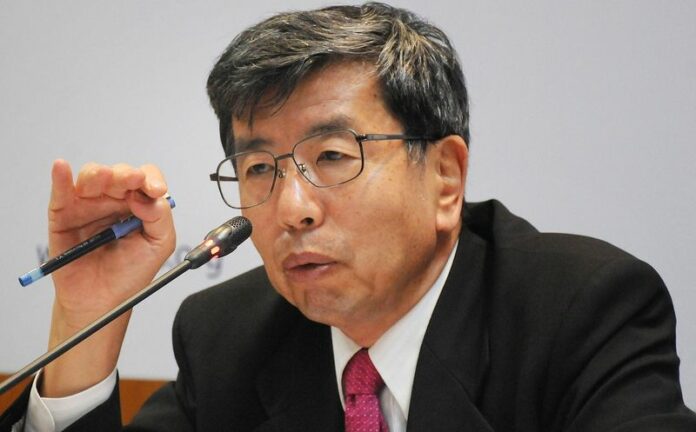
Asian Development Bank (ADB) President Takehiko Nakao addresses a press conference in New Delhi, India, 16 June 2015. EPA/STR

MANILA (DPA) – The Asian Development Bank (ADB) on Thursday cut its economic growth forecast for developing Asia amid slower-than-expected growth in the United States and China.

The Manila-based bank said the region's gross domestic product (GDP) was projected to grow by only 6.1 per cent in 2015, down from the original forecast of 6.3 per cent in its annual Asian Development Outlook published in March.

In 2016, GDP was projected to expand by 6.2 per cent, down from the initial projection of 6.3 per cent, according to a supplement report to the Outlook.

"With the United States contracting in the first quarter and some underperformance within Asia and the Pacific, growth forecasts for developing Asia are adjusted down," the report said.

"Slower growth in China is likely to have a noticeable effect on the rest of Asia given its size and its close links with other countries in the region through regional and global value chains," ADB chief economist Shang Jin-Wei added.

Full-year growth in China is now estimated at 7 per cent in 2015, down from 7.2 per cent previously after a slow first half. Growth would ease further to 6.8 per cent next year, the report said.

"Consumption growth in the country remains robust but investment growth has continued to decelerate," it said. "The financial sector is also expected to contribute less to growth after the recent stock market correction, although the drop in stock prices is unlikely to have much impact on consumption."

The ongoing softness in the US and other major industrialized economies would also drag down growth in East Asia, where GDP is expected to now expand by 6.2 per cent in 2015, down from the initial forecast of 6.5 per cent.

South-East Asia would also see slower-than-previously forecast growth of 4.6 per cent in 2015, weighed down by lower-than-expected first half performances in Indonesia, Singapore, and Thailand, the report said.

In 2016, the sub-region's economy is projected to expand 5.1 per cent, below the earlier estimated growth of 5.3 per cent.

The growth forecast in India is unchanged at 7.8 per cent in the fiscal year 2015 and 8.2 per cent in the fiscal year 2016, boosting South Asia's projected growth to 7.3 per cent this year from 7.2 per cent seen earlier.

In 2016, growth in the sub-region is expected to expand 7.6 per cent, the report added.

The bank revised down its projection for inflation in the region to 2.4 per cent in 2015, from an earlier estimate of 2.6 per cent amid softness in fuel prices and subdued food costs.

"Inflation is seen at 3 per cent in 2016, unchanged from the previous forecast," it added.

(Reporting by Girlie Linao)


For comments, or corrections to this article please contact: [email protected]

You can also find Khaosod English on Twitter and Facebook
http://twitter.com/KhaosodEnglish
http://www.facebook.com/KhaosodEnglish

Advertisement

Asian Development Bank Cuts Growth Forecast for Region

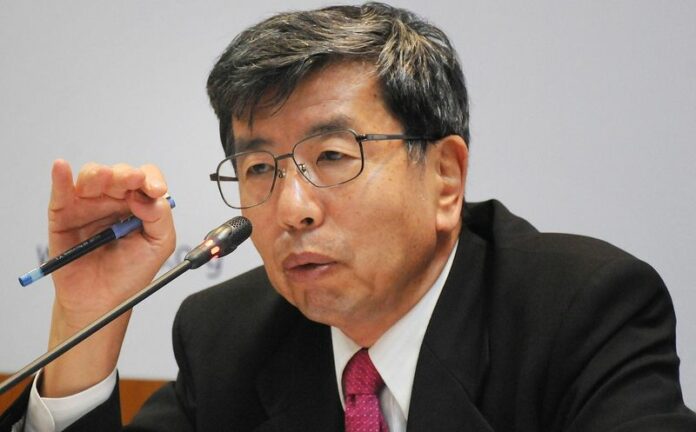
Asian Development Bank (ADB) President Takehiko Nakao addresses a press conference in New Delhi, India, 16 June 2015. EPA/STR

MANILA (DPA) – The Asian Development Bank (ADB) on Thursday cut its economic growth forecast for developing Asia amid slower-than-expected growth in the United States and China.

The Manila-based bank said the region's gross domestic product (GDP) was projected to grow by only 6.1 per cent in 2015, down from the original forecast of 6.3 per cent in its annual Asian Development Outlook published in March.

In 2016, GDP was projected to expand by 6.2 per cent, down from the initial projection of 6.3 per cent, according to a supplement report to the Outlook.

"With the United States contracting in the first quarter and some underperformance within Asia and the Pacific, growth forecasts for developing Asia are adjusted down," the report said.

"Slower growth in China is likely to have a noticeable effect on the rest of Asia given its size and its close links with other countries in the region through regional and global value chains," ADB chief economist Shang Jin-Wei added.

Full-year growth in China is now estimated at 7 per cent in 2015, down from 7.2 per cent previously after a slow first half. Growth would ease further to 6.8 per cent next year, the report said.

"Consumption growth in the country remains robust but investment growth has continued to decelerate," it said. "The financial sector is also expected to contribute less to growth after the recent stock market correction, although the drop in stock prices is unlikely to have much impact on consumption."

The ongoing softness in the US and other major industrialized economies would also drag down growth in East Asia, where GDP is expected to now expand by 6.2 per cent in 2015, down from the initial forecast of 6.5 per cent.

South-East Asia would also see slower-than-previously forecast growth of 4.6 per cent in 2015, weighed down by lower-than-expected first half performances in Indonesia, Singapore, and Thailand, the report said.

In 2016, the sub-region's economy is projected to expand 5.1 per cent, below the earlier estimated growth of 5.3 per cent.

The growth forecast in India is unchanged at 7.8 per cent in the fiscal year 2015 and 8.2 per cent in the fiscal year 2016, boosting South Asia's projected growth to 7.3 per cent this year from 7.2 per cent seen earlier.

In 2016, growth in the sub-region is expected to expand 7.6 per cent, the report added.

The bank revised down its projection for inflation in the region to 2.4 per cent in 2015, from an earlier estimate of 2.6 per cent amid softness in fuel prices and subdued food costs.

"Inflation is seen at 3 per cent in 2016, unchanged from the previous forecast," it added.

(Reporting by Girlie Linao)


For comments, or corrections to this article please contact: [email protected]

You can also find Khaosod English on Twitter and Facebook
http://twitter.com/KhaosodEnglish
http://www.facebook.com/KhaosodEnglish
Advertisement

Deep South Banners Denounce Thailand's 'Lies to International Community'

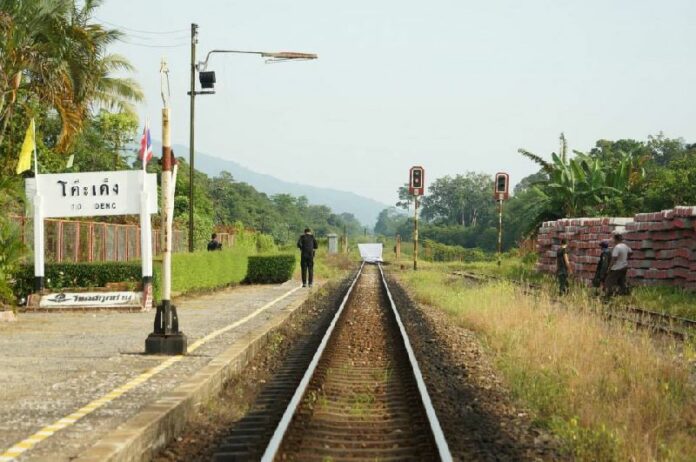
Two banners hung across a rail line in July 2015 near the To Deng train station in Narathiwat province accused the authorities of lying to the international community.

SONGKHLA – More than a dozen banners were discovered across Thailand’s insurgent-torn south this morning, bearing Thai and Malay text that accused Thai authorities of lying to the international community.

The banners were found in seventeen sites across the provinces of Songkhla, Pattani, and Narathiwat. The text read: "The nature of Siamese colony hunters: they lack humanitarian [concern], and always lie to the international [community]." Thailand was known as Siam until 1939. 

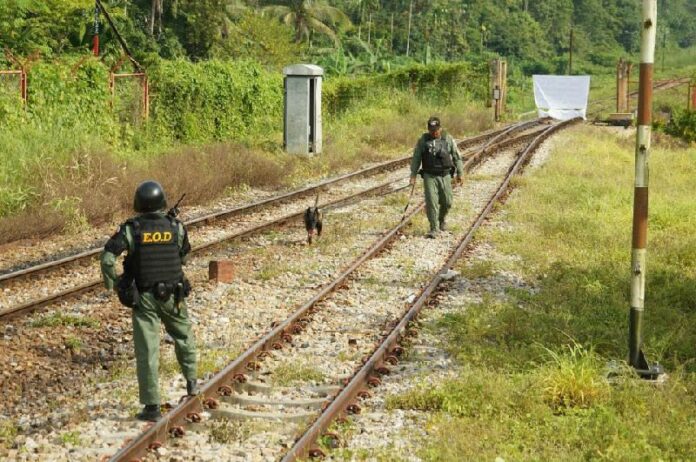
Two of the banners were hung across a railway near To Deng train station in Narathiwat, leading officials to suspend the train service for five hours while security officers searched the area for bombs. The officers reportedly found two fake bombs.

Officers believe the banners were hung by local Muslim insurgents trying to secede the Muslim-majority region, known as the Deep South, which was annexed by Thailand in the early 20th century.

Since the most recent waves of violence broke out in January 2004, the insurgency has claimed the lives of more than 6,200 people, according to data compiled by human rights groups.

The shadowy network of militants do not have an official spokesperson and rarely claim responsibility for their attacks, but often send messages through banners hung around the region. Explosives are sometimes hidden nearby.

\
A banner found in Songkhla province on 16 July 2015 that 
accused Thai authorities of lying to the international community.

In December last year, security officers in the Deep South discovered banners written in Thai, English, and Malay that read: "Is it appropriate to negotiate with the coup government? There is no guarantee for sincerity." The banners were found shortly after junta chairman and Prime Minister Prayuth Chan-ocha, who came to power by staging a coup in May 2014, expressed his willingness to organize peace talks with the insurgents. 

While the vast majority of Thailand is Buddhist, the Deep South is mostly populated by Muslims who speak a Malay dialect.


For comments, or corrections to this article please contact: [email protected]

You can also find Khaosod English on Twitter and Facebook
http://twitter.com/KhaosodEnglish
http://www.facebook.com/KhaosodEnglish
Advertisement

Deep South Banners Denounce Thailand's 'Lies to International Community'

A banner hung across a railway near To Deng train station in Narathiwat, 16 July 2015.

SONGKHLA – More than a dozen banners were discovered across Thailand’s insurgent-torn south this morning, bearing Thai and Malay text that accused Thai authorities of lying to the international community.

The banners were found in seventeen sites across the provinces of Songkhla, Pattani, and Narathiwat. The text read: "The nature of Siamese colony hunters: they lack humanitarian [concern], and always lie to the international [community]." Thailand was known as Siam until 1939. 

Two of the banners were hung across a railway near To Deng train station in Narathiwat, leading officials to suspend the train service for five hours while security officers searched the area for bombs. The officers reportedly found two fake bombs.

Officers believe the banners were hung by local Muslim insurgents trying to secede the Muslim-majority region, known as the Deep South, which was annexed by Thailand in the early 20th century.

Since the most recent waves of violence broke out in January 2004, the insurgency has claimed the lives of more than 6,200 people, according to data compiled by human rights groups.

The shadowy network of militants do not have an official spokesperson and rarely claim responsibility for their attacks, but often send messages through banners hung around the region. Explosives are sometimes hidden nearby.

\
A banner found in Songkhla province on 16 July 2015 that 
accused Thai authorities of lying to the international community.

In December last year, security officers in the Deep South discovered banners written in Thai, English, and Malay that read: "Is it appropriate to negotiate with the coup government? There is no guarantee for sincerity." The banners were found shortly after junta chairman and Prime Minister Prayuth Chan-ocha, who came to power by staging a coup in May 2014, expressed his willingness to organize peace talks with the insurgents. 

While the vast majority of Thailand is Buddhist, the Deep South is mostly populated by Muslims who speak a Malay dialect.


For comments, or corrections to this article please contact: [email protected]

You can also find Khaosod English on Twitter and Facebook
http://twitter.com/KhaosodEnglish
http://www.facebook.com/KhaosodEnglish
Advertisement

Hot News

LATEST NEWS

Bangkok
broken clouds
37 ° C
37.2 °
34.4 °
54 %
7.4kmh
70 %
Tue
35 °
Wed
34 °
Thu
35 °
Fri
30 °
Sat
34 °