33.3 C
Bangkok
Tuesday, June 9, 2026
Home Blog Page 2935

Deep South Banners Denounce Thailand's 'Lies to International Community'

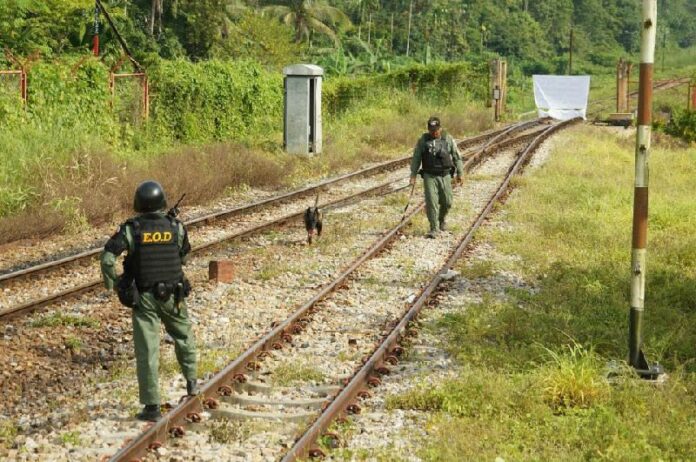
A banner hung across a railway near To Deng train station in Narathiwat, 16 July 2015.

SONGKHLA – More than a dozen banners were discovered across Thailand’s insurgent-torn south this morning, bearing Thai and Malay text that accused Thai authorities of lying to the international community.

The banners were found in seventeen sites across the provinces of Songkhla, Pattani, and Narathiwat. The text read: "The nature of Siamese colony hunters: they lack humanitarian [concern], and always lie to the international [community]." Thailand was known as Siam until 1939. 

Two of the banners were hung across a railway near To Deng train station in Narathiwat, leading officials to suspend the train service for five hours while security officers searched the area for bombs. The officers reportedly found two fake bombs.

Officers believe the banners were hung by local Muslim insurgents trying to secede the Muslim-majority region, known as the Deep South, which was annexed by Thailand in the early 20th century.

Since the most recent waves of violence broke out in January 2004, the insurgency has claimed the lives of more than 6,200 people, according to data compiled by human rights groups.

The shadowy network of militants do not have an official spokesperson and rarely claim responsibility for their attacks, but often send messages through banners hung around the region. Explosives are sometimes hidden nearby.

\
A banner found in Songkhla province on 16 July 2015 that 
accused Thai authorities of lying to the international community.

In December last year, security officers in the Deep South discovered banners written in Thai, English, and Malay that read: "Is it appropriate to negotiate with the coup government? There is no guarantee for sincerity." The banners were found shortly after junta chairman and Prime Minister Prayuth Chan-ocha, who came to power by staging a coup in May 2014, expressed his willingness to organize peace talks with the insurgents. 

While the vast majority of Thailand is Buddhist, the Deep South is mostly populated by Muslims who speak a Malay dialect.


For comments, or corrections to this article please contact: [email protected]

You can also find Khaosod English on Twitter and Facebook
http://twitter.com/KhaosodEnglish
http://www.facebook.com/KhaosodEnglish

Advertisement

BKK Traffic Cops Told to Respect Bosses' Privilege

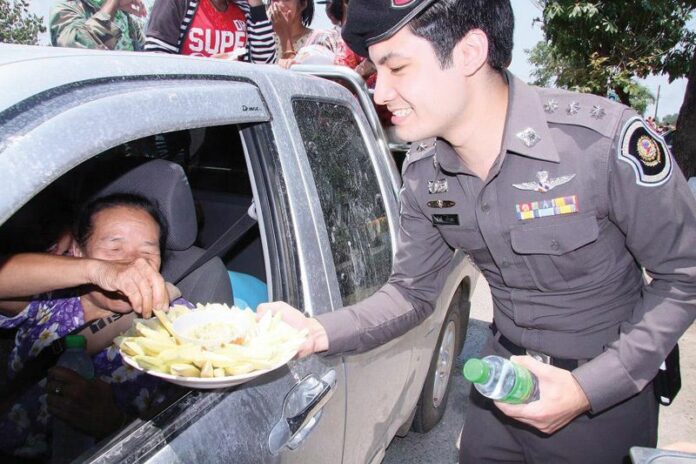
A police officer giving away free mango at a traffic checkpoint in Nakhon Sawan province, 15 April 2012.

BANGKOK — Traffic police have been ordered to memorize the license plates and faces of their superiors after Bangkok's police chief complained yesterday that he was asked to take a breathalyzer test despite his insistence that he was not intoxicated.

Pol.Lt.Gen. Sriwarah Rangsipramkul, the commander of the city’s police force, told reporters yesterday that volunteer traffic cops failed to recognize him when he was flagged down at a road checkpoint – he was off-duty and not wearing a uniform – and insisted that he take a breathalyzer test even though he told them he was sober "five times."

“Eventually, I had to tell them who I was and get out of my car and criticize them,” he told reporters yesterday.

Today, Pol.Maj.Gen. Thanapon Techatanon, a senior officer at Traffic Police Division, said he has asked all traffic officers to familiarize themselves with their superiors to avoid similar incidents in the future.

"I have instructed all volunteers and police officers to memorize faces, names, and license plates of their commanders well, so that this mistake will not happen again," Pol.Maj.Gen. Thanapon said. 

He added that volunteer traffic officers will need to go through "a short orientation to see if they are qualified."

"They must speak politely,” he said. "They have to be gentle with people. As for selecting which car for alcohol test, we will judge by the clothes, manner, and the way they talk. For example, some people use too much perfume to hide an alcohol smell – that's a factor that will merit an alcohol test."

Pol.Maj.Gen. Thanapon said people who do not test positive for alcohol will be thanked for their cooperation. 

The maximum penalty for driving under influence in Thailand is one year in prison, a 20,000 baht fine, and the revocation of the driver's license. Refusing to take a breathalyzer test also carries a maximum penalty of one year in prison. Police have not said whether Pol.Lt.Gen. Sriwarah will face any legal action.

Speaking to reporters yesterday, Pol.Lt.Gen. Sriwarah said the traffic officers should have been able to tell that he was not intoxicated.

"After talking to someone who is sober for one to two minutes, you should be able to tell that they don’t smell of alcohol,he said. "Those people shouldn't be called to take the test. You have to look. Don't just randomly inspect people."

"After I identified myself to [the volunteer cops], they turned pale," Pol.Lt.Gen. Sriwarah said, according to Matichon. "I only lectured them because they lacked judgment in their inspection." 

When a Matichon reporter asked how police should respond to celebrities or other VIPs who object to taking breathalyzer tests, Sriwarah replied, "If that's the case, police officers should file me a report about the incident."

He stressed, "It wasn’t right that they wanted to test me even though I did not drink any alcohol. If ordinary people have this experience, what would they think? I have ordered them not to allow this kind of incident to happen ever again." 

Last month, police allowed a Thai-British actress, Anna Hambawaris, to leave without taking a breathalyzer test after she crashed her car into a police vehicle and killed the officer who was sleeping inside. The incident has drawn criticism from those who believe police gave the actress privileged treatment. 

For comments, or corrections to this article please contact: [email protected]

You can also find Khaosod English on Twitter and Facebook
http://twitter.com/KhaosodEnglish
http://www.facebook.com/KhaosodEnglish

Advertisement

Cop Hunts Webmaster for 'Mimicking' His Lottery Prophecies

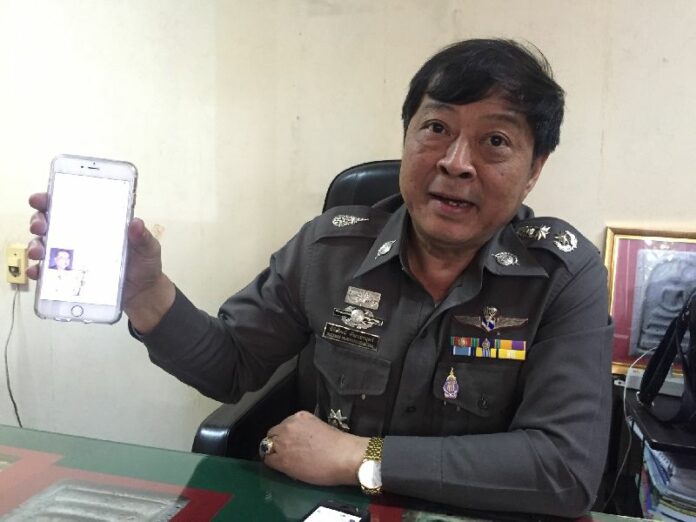
Pol.Maj.Gen. Nitipat Pattanatabutr, commander of the Fifth Region Police, speaking to reporters on 14 July 2015.

CHIANG MAI — A police commander and part-time lottery prophet in Chiang Mai province said he has ordered an investigation into the owner of a website who has impersonated him and offered lottery number predictions in his name.

Pol.Maj.Gen. Nitipat Pattanatabutr, commander of the Fifth Region Police, said the website falsely claims to be run by him and his father, and has been providing hints to "lucky" lottery numbers. According to Pol.Maj.Gen. Nithipat, many people have been duped by the website and bought tickets based on its predictions.

"I don't know the owner of this poser website," Pol.Maj.Gen. Nitipat said. "I don't know how this website got the numbers. I have already ordered the investigative team of the Fifth Region Police to look for clues about the website's owner. Once we find the owners, they will be prosecuted for fraud and posing as other individuals."

Pol.Maj.Gen. Nitipat is well known among devoted lottery buyers for his predictions. The police commander said he and his father, former minister and MP Preeda Pattanatabutr, "calculate" the numbers together using various divine signs and clues.

For instance, in March he predicted that the number six would feature prominently in the 1 April draw because former Singaporean Prime Minister Lee Kuan Yuan, who was born in 2466 B.E., had recently passed away. The first prize draw on 1 April led with the number six, which the police commander's devotees viewed as an affirmation of his prophetic skill.

Pol.Maj.Gen. Nitipat told reporters today that he will not offer predications for the next lottery round until police arrest the webmaster.

"Falsely using the name of my father has caused me great damages," Pol.Maj.Gen. Nitipat said. "I suspect that some of my subordinates are behind this. I have already reprimanded them. Anyway, on the morning of 16 July [the next round of the government lottery], I will let everyone know the lottery number that my father has calculated for me." 


For comments, or corrections to this article please contact: [email protected]

You can also find Khaosod English on Twitter and Facebook
http://twitter.com/KhaosodEnglish
http://www.facebook.com/KhaosodEnglish

Advertisement

New Public Gathering Law Won't Affect 'Innocent' Protests, Prayuth Says

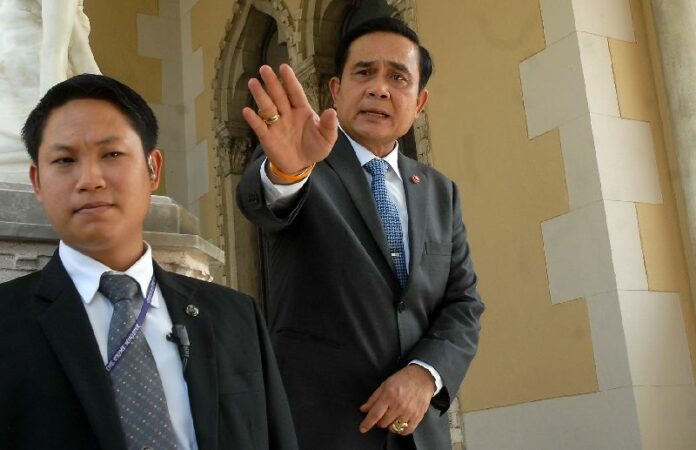
Gen. Prayuth Chan-ocha at the Government House, 15 July 2015.

BANGKOK — Thailand's military leader Gen. Prayuth Chan-ocha has assured the public that a new law restricting political gatherings won't affect any "innocent" or peaceful protests.

"Many countries around the world have this law," Gen. Prayuth said at Government House today, referring to the Public Gathering Act of 2015, which was approved by his Cabinet last night. 

"Don't look at it and think that officials want to restrict any rights," he continued. "If the rallies are innocent rallies, peaceful, unarmed, and in accordance with democracy, they can go forward. Who would forbid that? The only exceptions are rallies that don't have innocent intentions or are ready to escalate violence. We have learned lessons about that in the past, haven't we?" 

The new law passed by the junta-appointed interim government prohibits public gatherings from blocking the entrances or disrupting the operations of state agencies, airports, ports, train stations, public transportation terminals, hospitals, educational institutes, religious buildings, embassies, headquarters of international organizations, and other venues that the authorities may declare as off-limit.

In addition, protests are not permitted within a 150-meter radius of any royal palace, or the residences of guests who have been formally invited by the Thai Royal Family.

The law also requires organizers to seek permission from authorities no less than 24 hours before the gathering is scheduled to start, and provide clear details of the rally’s purpose, date, time, and venue. 

Under the law, protesters can face legal action if they:

  • inconvenience other people who are using the public space where the gathering is being held
  • conceal their identities with the intention to avoid being identified, though wearing traditional attire is always permitted
  • carry weapons, fireworks, firearms, or any objects that can be used as weapons in the rally site
  • cause other people to fear for their safety, property, or freedom
  • use violence or threaten to use violence against fellow protesters or other people
  • obstruct operations of officials in charge of overseeing the protests 
  • demonstrate or move their rally site between 6.00 pm and 6.00 am, unless they have permission from officials in charge of the gathering
  • give speeches or organize any other activities that use loudspeakers between 12.00 am and 6.00 am
  • fail to follow any condition or order laid down by officials in charge of the gatherings 

According to the legislation, the following gatherings are exempted from the regulations: state and royal ceremonies; religious, traditional, or cultural ceremonies; gatherings for entertainment, sports, tourism, and other commercial purposes; academic meetings; and gatherings that take place within educational institutions. 

Violating the law carries penalties that range from six months to three years in prison. The punishment can be raised to ten years in jail if protesters are found guilty of disrupting public transportation, waterworks, telecommunication, or electricity systems. 

Thailand has been rocked by a series of mass street protests for the past decade, staged alternatingly by the country's rival political factions, known as the Yellowshirts and the Redshirts. The protests have paralyzed major parts of Bangkok, including both of its international airports, and occassionally turned violent.

However, all political gatherings and protests have been banned since Gen. Prayuth came to power in a coup d’etat in May 2014. He stepped in as army chief after six months of protests had destabilized the elected government led by former Prime Minister Yingluck Shinawatra.

Speaking to reporters today, Gen. Prayuth touted what he sees as the laws many benefits.

"The burdens of officials will decrease. Rallies will be safe. Rallies won't be prolonged. I've seen in other countries, they don't have this many protests." He described how the last country he visisted, which was Japan, has "clear boundaries" for public gatherings and "orderly" protests.

"But our protests only focused on getting large number of people," Gen. Prayuth said. "It was chaotic."  


For comments, or corrections to this article please contact: [email protected]

You can also find Khaosod English on Twitter and Facebook
http://twitter.com/KhaosodEnglish
http://www.facebook.com/KhaosodEnglish

Advertisement

New Public Gathering Law Won't Affect 'Innocent' Protests, Prayuth Says

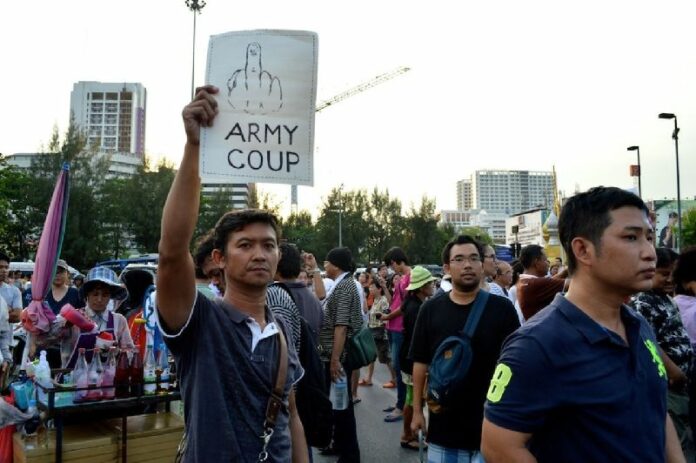
An anti-coup rally around Bangkok's Victory Monument on 24 May 2014, two days after the army staged a coup d'etat.

BANGKOK — Thailand's military leader Gen. Prayuth Chan-ocha has assured the public that a new law restricting political gatherings won't affect any "innocent" or peaceful protests.

"Many countries around the world have this law," Gen. Prayuth said at Government House today, referring to the Public Gathering Act of 2015, which was approved by his Cabinet last night. 

"Don't look at it and think that officials want to restrict any rights," he continued. "If the rallies are innocent rallies, peaceful, unarmed, and in accordance with democracy, they can go forward. Who would forbid that? The only exceptions are rallies that don't have innocent intentions or are ready to escalate violence. We have learned lessons about that in the past, haven't we?" 

The new law passed by the junta-appointed interim government prohibits public gatherings from blocking the entrances or disrupting the operations of state agencies, airports, ports, train stations, public transportation terminals, hospitals, educational institutes, religious buildings, embassies, headquarters of international organizations, and other venues that the authorities may declare as off-limit.

In addition, protests are not permitted within a 150-meter radius of any royal palace, or the residences of guests who have been formally invited by the Thai Royal Family.

The law also requires organizers to seek permission from authorities no less than 24 hours before the gathering is scheduled to start, and provide clear details of the rally’s purpose, date, time, and venue. 

Under the law, protesters can face legal action if they:

  • inconvenience other people who are using the public space where the gathering is being held
  • conceal their identities with the intention to avoid being identified, though wearing traditional attire is always permitted
  • carry weapons, fireworks, firearms, or any objects that can be used as weapons in the rally site
  • cause other people to fear for their safety, property, or freedom
  • use violence or threaten to use violence against fellow protesters or other people
  • obstruct operations of officials in charge of overseeing the protests 
  • demonstrate or move their rally site between 6.00 pm and 6.00 am, unless they have permission from officials in charge of the gathering
  • give speeches or organize any other activities that use loudspeakers between 12.00 am and 6.00 am
  • fail to follow any condition or order laid down by officials in charge of the gatherings 

According to the legislation, the following gatherings are exempted from the regulations: state and royal ceremonies; religious, traditional, or cultural ceremonies; gatherings for entertainment, sports, tourism, and other commercial purposes; academic meetings; and gatherings that take place within educational institutions. 

Violating the law carries penalties that range from six months to three years in prison. The punishment can be raised to ten years in jail if protesters are found guilty of disrupting public transportation, waterworks, telecommunication, or electricity systems. 

Thailand has been rocked by a series of mass street protests for the past decade, staged alternatingly by the country's rival political factions, known as the Yellowshirts and the Redshirts. The protests have paralyzed major parts of Bangkok, including both of its international airports, and occassionally turned violent.

However, all political gatherings and protests have been banned since Gen. Prayuth came to power in a coup d’etat in May 2014. He stepped in as army chief after six months of protests had destabilized the elected government led by former Prime Minister Yingluck Shinawatra.

Speaking to reporters today, Gen. Prayuth touted what he sees as the laws many benefits.

"The burdens of officials will decrease. Rallies will be safe. Rallies won't be prolonged. I've seen in other countries, they don't have this many protests." He described how the last country he visisted, which was Japan, has "clear boundaries" for public gatherings and "orderly" protests.

"But our protests only focused on getting large number of people," Gen. Prayuth said. "It was chaotic."  


For comments, or corrections to this article please contact: [email protected]

You can also find Khaosod English on Twitter and Facebook
http://twitter.com/KhaosodEnglish
http://www.facebook.com/KhaosodEnglish

Advertisement

EU Warning on Illegal Fishing Has Thai Fishing Industry Reeling

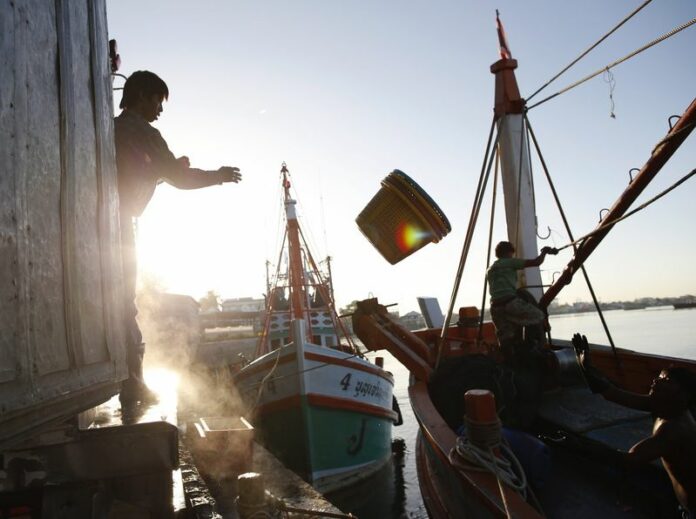
Migrant fishermen from Myanmar unload frozen fish from a Thai fishing boat at a port in Samut Sakhon, Thailand, 01 July 2015. EPA/RUNGROJ YONGRIT

SAMUT SAKHON (DPA) — The fishing port sits idle, bereft of the commotion that normally characterizes Thailand's busiest fishing harbour.

Trawlers large and small rest placidly underneath the noontime sun, the crews on strike against what they say are unfair government measures to stop illegal fishing.

The situation at Samut Sakhon and other ports around Thailand was provoked by an European Union ultimatum against illegal fishing, which has thrown the world's third-largest supplier of seafood into disarray and shut down parts of a 6-billion-dollar industry.

In April, the EU yellow-carded the Thai fishing industry giving the country six months to fix its illegal, unreported and unregulated fishing (IUU) or face an expensive ban on seafood exports into the EU.

The ultimatum came even though most of the fish caught by Thai fishermen is not destined for the EU, which issued the threat as part of its larger attempt to crack down on all IUU incidents worldwide.

But the ban would unfairly affect an industry that profits little or not at all from illegal fishing.

Most Thai exports to the EU are farmed prawns or processed fish, which have little to do with the fishing boat industry, according to Waraporn Prompoj, deputy director of the Agriculture Ministry's department of fisheries.

Thon Thamrongnawasawat, deputy dean of the fisheries department at Kasetsart University and a member of the government's National Reform Council, agrees.

"The main seafood exports from Thailand are frozen shrimps, canned tuna and crab stick, which are farmed or imported for processing," he said.

"Fresh fish caught in Thai waters are mostly consumed in the country, so the impact will be more on domestic consumption rather than export."

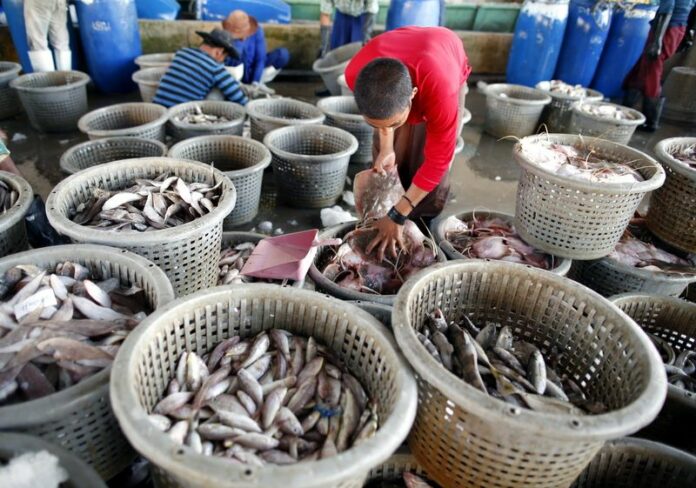
Migrant fishermen from Myanmar unload fish from Thai boats at a port in Samut Sakhon, Thailand, 01 July 2015. EPA/RUNGROJ YONGRIT

For Thailand's military government, it was the latest in a series of headaches concerning the country's troubled fishing industry, already accused of using of migrants as slave labour.

The country faces the loss of 1 billion dollars in seafood exports to the EU, industry officials said. The government is also under increasing pressure from groups like the Frozen Foods Association and the Shrimp Association, to crack down on the illegal fishing because their industries would suffer from a ban.

"The government has given a deadline of July 18 to the fishing industry to register their ships and comply by regulations or face substantial fines should they be caught fishing," Navy spokesman Captain Benjamaporn Wongnakornsawang said.

Benjamaporn is part of a special government task force set up in response to the ultimatum.

It is charged with performing inspections and ordering arrests and fines for violators of the IUU fishing regulations.

Those in the fishing industry argue that the government has not given them enough time to comply. They need to register boats with local authorities, install vessel monitoring systems on ships larger than 30 tons, and completely end the practice of bottom trawling and push nets.

"Most of the 30,000 fishing trawlers around the country are capable of making these changes," said Supaporn Anuchiracheeva, of the non-governmental Earth Net Foundation.

"Many of them haven't because they did not believe the government would go through with enforcing the new rules, like all previous governments."

But according to Supaporn, the current government is unwilling to risk the EU ban and its actions so far have shown unprecedented willingness to tackle the IUU issue.

In response to the potential crackdown by the government, 4,000 ships outfitted with trawling and illegal push net equipment have organized wider strikes that have crippled ports like Samut Sakhon.

If the strike were to continue for a year, about 300,000 tons of catch would disappear or about 10 per cent of the total market, according to a report in the Bangkok Post.

Already, local markets have seen price hikes on certain fish products as a result of the strikes.

"I think the government would be wise to wait out the strikes," said Supaporn. "The fishermen can't strike forever and the solidarity between the larger fleet and the 4,000 illegal ships will fray over time." 

But the ongoing saga bodes poorly for people like Wuthichai Boonmee, a wholesaler who buys fish from Mahachai fish market in Samut Sakhon and sells to restaurants in Bangkok.

"Prices are up and there are less fish. I don't care about the EU or the fishermen, I care that my livelihood is affected." 

(Reporting by Cod Satrusayang and Siraphob Thanthong-Knight)


For comments, or corrections to this article please contact: [email protected]

You can also find Khaosod English on Twitter and Facebook
http://twitter.com/KhaosodEnglish
http://www.facebook.com/KhaosodEnglish

Advertisement

EU Warning on Illegal Fishing Has Thai Fishing Industry Reeling

Migrant fishermen from Myanmar unload fish from Thai boats at a port in Samut Sakhon, Thailand, 01 July 2015. EPA/RUNGROJ YONGRIT

SAMUT SAKHON (DPA) — The fishing port sits idle, bereft of the commotion that normally characterizes Thailand's busiest fishing harbour.

Trawlers large and small rest placidly underneath the noontime sun, the crews on strike against what they say are unfair government measures to stop illegal fishing.

The situation at Samut Sakhon and other ports around Thailand was provoked by an European Union ultimatum against illegal fishing, which has thrown the world's third-largest supplier of seafood into disarray and shut down parts of a 6-billion-dollar industry.

In April, the EU yellow-carded the Thai fishing industry giving the country six months to fix its illegal, unreported and unregulated fishing (IUU) or face an expensive ban on seafood exports into the EU.

The ultimatum came even though most of the fish caught by Thai fishermen is not destined for the EU, which issued the threat as part of its larger attempt to crack down on all IUU incidents worldwide.

But the ban would unfairly affect an industry that profits little or not at all from illegal fishing.

Most Thai exports to the EU are farmed prawns or processed fish, which have little to do with the fishing boat industry, according to Waraporn Prompoj, deputy director of the Agriculture Ministry's department of fisheries.

Thon Thamrongnawasawat, deputy dean of the fisheries department at Kasetsart University and a member of the government's National Reform Council, agrees.

"The main seafood exports from Thailand are frozen shrimps, canned tuna and crab stick, which are farmed or imported for processing," he said.

"Fresh fish caught in Thai waters are mostly consumed in the country, so the impact will be more on domestic consumption rather than export."

\
Migrant fishermen from Myanmar unload frozen fish from a Thai fishing boat at a port in Samut Sakhon, Thailand, 01 July 2015. EPA/RUNGROJ YONGRIT

For Thailand's military government, it was the latest in a series of headaches concerning the country's troubled fishing industry, already accused of using of migrants as slave labour.

The country faces the loss of 1 billion dollars in seafood exports to the EU, industry officials said. The government is also under increasing pressure from groups like the Frozen Foods Association and the Shrimp Association, to crack down on the illegal fishing because their industries would suffer from a ban.

"The government has given a deadline of July 18 to the fishing industry to register their ships and comply by regulations or face substantial fines should they be caught fishing," Navy spokesman Captain Benjamaporn Wongnakornsawang said.

Benjamaporn is part of a special government task force set up in response to the ultimatum.

It is charged with performing inspections and ordering arrests and fines for violators of the IUU fishing regulations.

Those in the fishing industry argue that the government has not given them enough time to comply. They need to register boats with local authorities, install vessel monitoring systems on ships larger than 30 tons, and completely end the practice of bottom trawling and push nets.

"Most of the 30,000 fishing trawlers around the country are capable of making these changes," said Supaporn Anuchiracheeva, of the non-governmental Earth Net Foundation.

"Many of them haven't because they did not believe the government would go through with enforcing the new rules, like all previous governments."

But according to Supaporn, the current government is unwilling to risk the EU ban and its actions so far have shown unprecedented willingness to tackle the IUU issue.

In response to the potential crackdown by the government, 4,000 ships outfitted with trawling and illegal push net equipment have organized wider strikes that have crippled ports like Samut Sakhon.

If the strike were to continue for a year, about 300,000 tons of catch would disappear or about 10 per cent of the total market, according to a report in the Bangkok Post.

Already, local markets have seen price hikes on certain fish products as a result of the strikes.

"I think the government would be wise to wait out the strikes," said Supaporn. "The fishermen can't strike forever and the solidarity between the larger fleet and the 4,000 illegal ships will fray over time." 

But the ongoing saga bodes poorly for people like Wuthichai Boonmee, a wholesaler who buys fish from Mahachai fish market in Samut Sakhon and sells to restaurants in Bangkok.

"Prices are up and there are less fish. I don't care about the EU or the fishermen, I care that my livelihood is affected." 

(Reporting by Cod Satrusayang and Siraphob Thanthong-Knight)

 

For comments, or corrections to this article please contact: [email protected]

You can also find Khaosod English on Twitter and Facebook
http://twitter.com/KhaosodEnglish
http://www.facebook.com/KhaosodEnglish

Advertisement

112 Emergency Number Dropped to Avoid Confusion with Lese Majeste

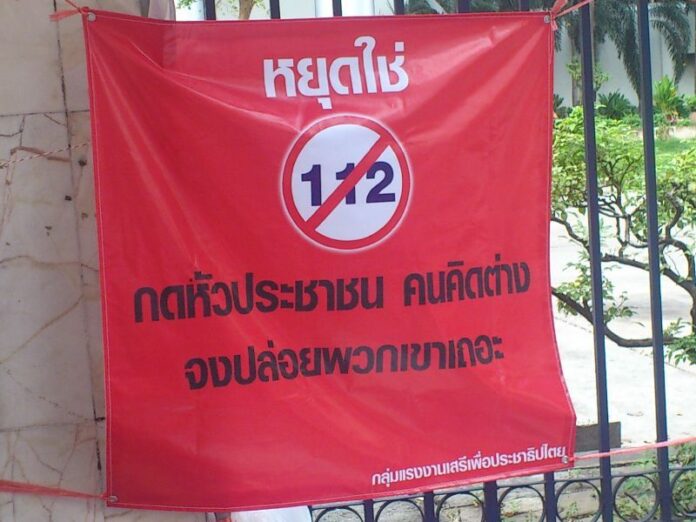
A sign hung by activists calling for abolition of Section 112 at the Criminal Court in Bangkok, 12 February 2012 [Matichon]

BANGKOK — Thailand's military government has chosen 911 as the country's new emergency service number, instead of the alternative 112, which was dropped because of its connection to the draconian law that outlaws criticism of the Thai monarchy.

Maj.Gen. Sansern Kaewkamnerd, a government spokesperson, said the new number will cover all emergency services, whereas Thailand currently has separate hotlines for different authorities – for instance, 191 for police, 199 for firefighters, and 1155 for tourist police. 

"I don't think Thai people can remember all the numbers," Maj.Gen. Sansern Kaewkamnerd said.

According to Maj.Gen. Sansern, the government was considering either 911 or 112 for the new telephone number, but ultimately rejected the latter because of its association with the Kindgom’s lese majeste law, which falls under Section 112 of the Thai Criminal Codes.

The law, which is often referred to simply as '112,' punishes criticism of the royal family with up to 15 years in prison, making it the harshest lese majeste legislation in the world.

"The reason we did not use 112 was to avoid any misunderstanding that may connect it to the laws, or cause confusion about Section 112," Maj.Gen. Sansern said. 

Furthermore, 911 is already used as an emergency number in several other of countries, including the United States and Canada, the spokesperson said. He added that the government also would like to remind the public not to misuse the emergency number, which is against the law. 


For comments, or corrections to this article please contact: [email protected]

You can also find Khaosod English on Twitter and Facebook
http://twitter.com/KhaosodEnglish
http://www.facebook.com/KhaosodEnglish

Advertisement

China's Growth Rate Holds at 7 Percent

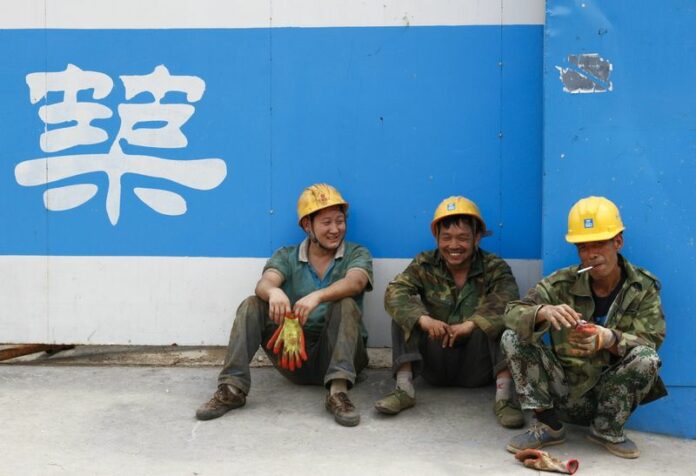
Workers take a break outside the entrance of a building construction site in Beijing, China, 01 July 2015. EPA/ROLEX DELA PENA

BEIJING (DPA) — China's economy grew in the second quarter of this year by 7 per cent year-on-year, the National Bureau of Statistics announced in Beijing on Wednesday, slightly outpacing predictions.
Growth was also 7 per cent in the previous quarter, according to the authority.

Analysts had expected a slightly weaker growth of 6.9 per cent for the second quarter.

"The national economy has been running within a proper range and the major indicators picking up steadily, showing moderate but stable and sound momentum of development," the bureau said. 

It said agricultural and industrial production, commodity consumption, residents' income and foreign trade all grew steadily while consumer prices remained stable. 

Meanwhile, growth of investment in fixed assets had slowed down 2.1 percentage points from the first quarter.

China's economy expanded 7.4 per cent in 2014, its slowest pace in nearly a quarter century, after growth of 7.7 per cent in both 2012 and 2013.

To combat the slowdown, China has cut benchmark interest rates four times in seven months and dropped the reserve requirement ratio for banks.  

The second quarter growth shows the "situation is getting better … and there should be no problem reaching the goal of 7 per cent for the whole year," Beijing's Central University of Finance and Economics professor He Xiaoyu said. 

China has declared its new 7-per-cent growth target as part of the "new normal" as it attempts to move away from traditional drivers like construction, real estate and state-owned heavy industry toward internal consumption, modern finance and services.


For comments, or corrections to this article please contact: [email protected]

You can also find Khaosod English on Twitter and Facebook
http://twitter.com/KhaosodEnglish
http://www.facebook.com/KhaosodEnglish

Advertisement

Deep South Gunmen Raid Three Officials' Homes for Firearms

Security officers inspect vehicles at a checkpoint in Betong district of Yala, 13 July 2015

NARATHIWAT — Police say masked gunmen forcefully stole four state-issued firearms from the homes of three local officials in the restive province of Narathiwat last night.

According to police, the three incidents were carried out in succession by around five or six armed men who were wearing balaclavas in Bacho district. The group reportedly raided three homes and held the occupants at gunpoint while they stole a total of four firearms that had been issued by the state. The homes belonged to Arwae Ali, a deputy village chief in Bacho district, Abdultole Italae, another deputy village chief, and Rayali Masalae, a member of community defense corps.

Police are questioning the witnesses and combing the three homes for forensic evidence that could lead to the suspects, said Pol.Lt. Wiroj Boonkhae, an officer at Bacho Police Station. Police say no one was injured in the raids.

It is not confirmed whether the three incidents were carried out by the same group of people. 

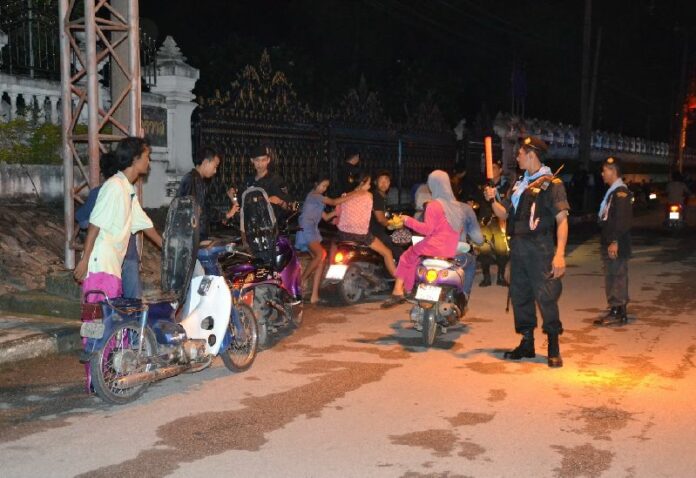
Narathiwat and the neighboring provinces of Pattani and Yala are the site of near-daily violent attacks committed by Islamic insurgents who are seeking to secede the Muslim-majority region, which was annexed by Thailand in the early 20th century. 

More than 6,000 people have been killed since January 2004, when the latest wave of secessionist violence broke out in the region, known as the Deep South. 

The raids on the officials' homes last night followed a string of bomb attacks starting on Saturday that have killed seven people. 

Thai authorities say they are increasing security measures in anticipation of attacks during the upcoming Eid festival, which marks the end of the Islamic holy month, Ramadan. Eid is expected to take place either on 17 July or 18 July, depending on the sighting of the new moon. 

Muslims make up approximately six percent of the Thai population. The rest is overwhelmingly Buddhist. 


For comments, or corrections to this article please contact: [email protected]

You can also find Khaosod English on Twitter and Facebook
http://twitter.com/KhaosodEnglish
http://www.facebook.com/KhaosodEnglish

Advertisement

Hot News

LATEST NEWS

Bangkok
moderate rain
33.3 ° C
34.4 °
30.5 °
70 %
5.4kmh
92 %
Tue
33 °
Wed
34 °
Thu
35 °
Fri
30 °
Sat
34 °