BANGKOK — KANORI Hand Roll Bar, Thailand’s first dedicated hand roll restaurant, has announced revenue exceeding 300 million baht ($9 million) and ambitious plans to grow 20% in 2025, capitalizing on the country’s expanding Japanese culinary scene.
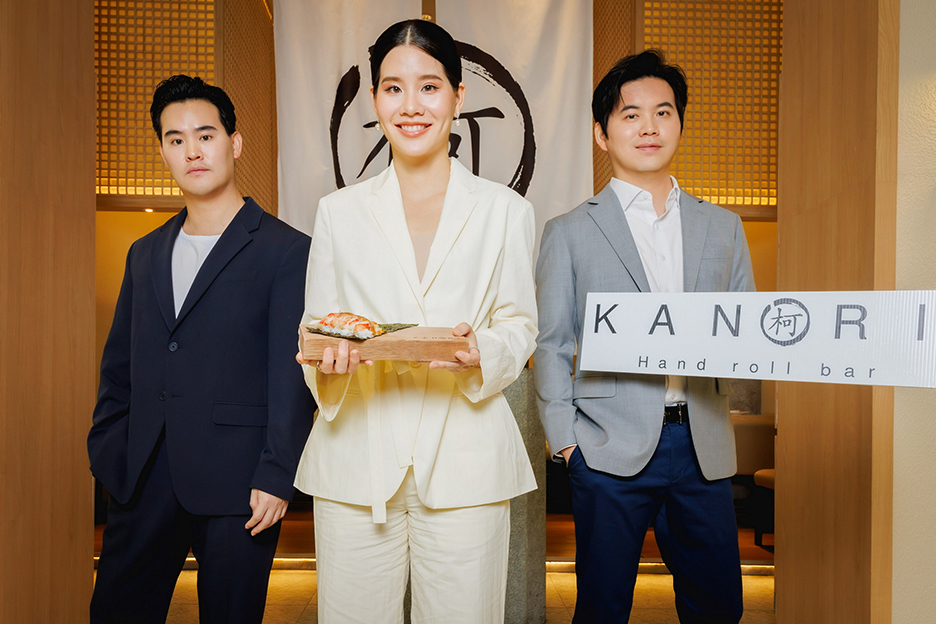
Founded by siblings Panitan, Paniti, and Pavitra Kobkulsuwan, KANORI has established itself as a pioneer in Thailand’s Japanese restaurant market, which grew to 5,916 establishments in 2024—a 2.9% increase from the previous year, according to data from the Japan External Trade Organization (JETRO Bangkok).
“We aim to bring something entirely new to the table, something never attempted before,” said Paniti Kobkulsuwan, co-founder of KANORI. “Our methods and ideas go beyond traditional textbooks, incorporating the dynamics of the modern world to offer a fresh perspective. It’s fair to say that the ‘KANORI Hand roll bar’ was the First Mover in establishing the hand roll industry in Thailand.”
Panitan, Paniti, and Pavitra Kobkulsuwan
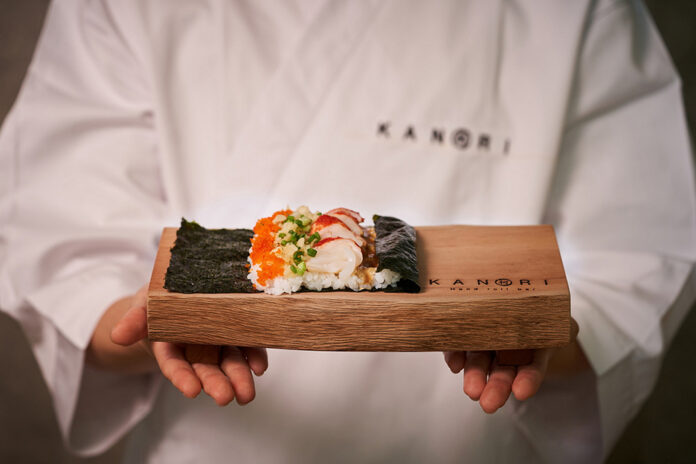
Since opening its first location in Soi Sukhumvit 49 just 18 months ago, KANORI has rapidly expanded to four locations, adding branches in EmQuartier, Central Embassy, and most recently, IconSiam. The concept features high-quality imported ingredients crafted into fresh hand rolls prepared directly at the counter, catering to consumers seeking both quality and convenience.
According to co-founder Pavitra Kobkulsuwan, the business has thrived despite intense pricing competition in Thailand’s Japanese food sector by focusing on value rather than profit margins.
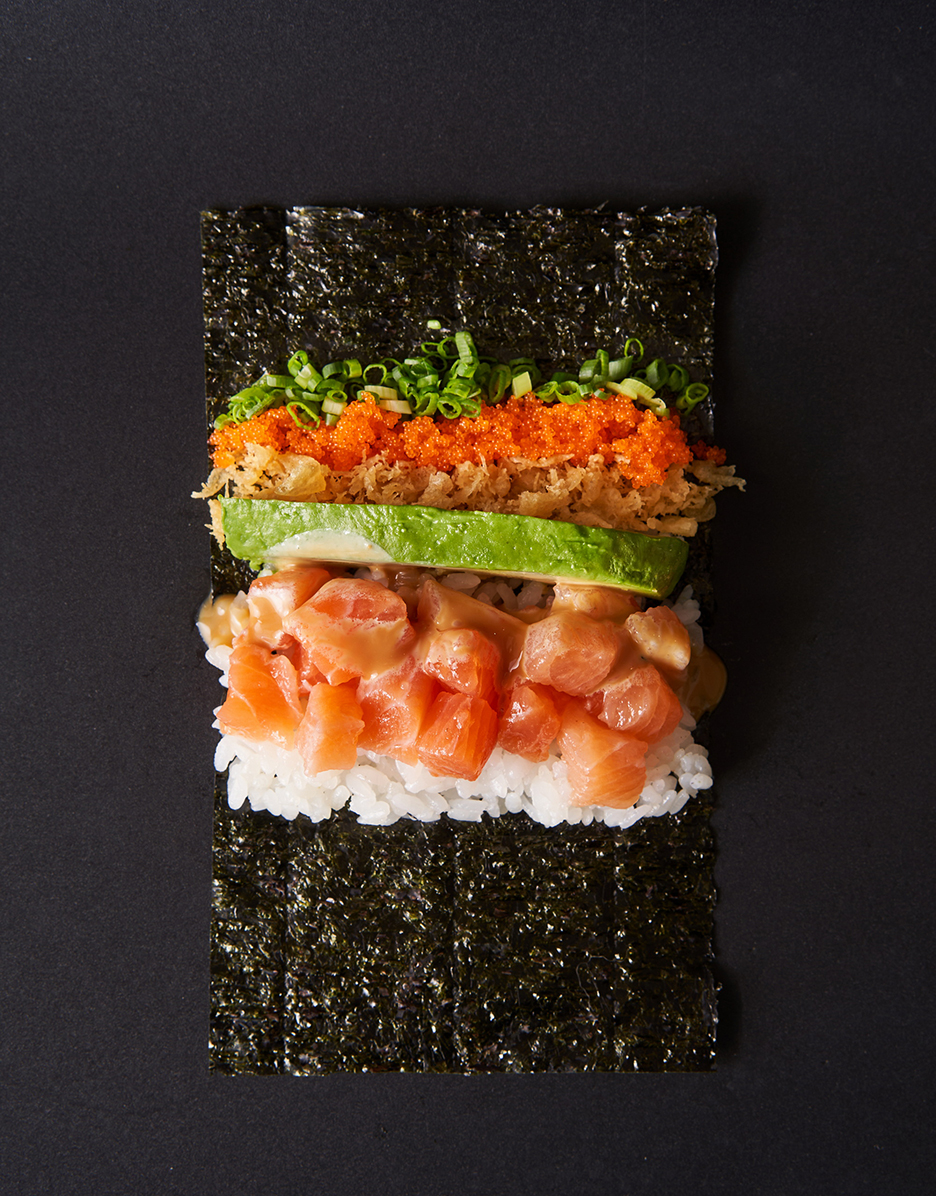
The concept of KANORI Hand Roll Bar features high-quality imported ingredients crafted into fresh hand rolls prepared directly at the counter.
“The key to our success as Thailand’s first hand roll restaurant, and our ability to expand to four locations, lies in researching consumer insights, understanding customer needs, and focusing on delivering value,” Pavitra explained. “At an affordable price, we provide a semi-omakase ambiance, making it an inviting experience for families with both adults and children.”
KANORI’s delivery service has also contributed significantly to its growth, maintaining the quality of premium ingredients like fresh seaweed even during transport.
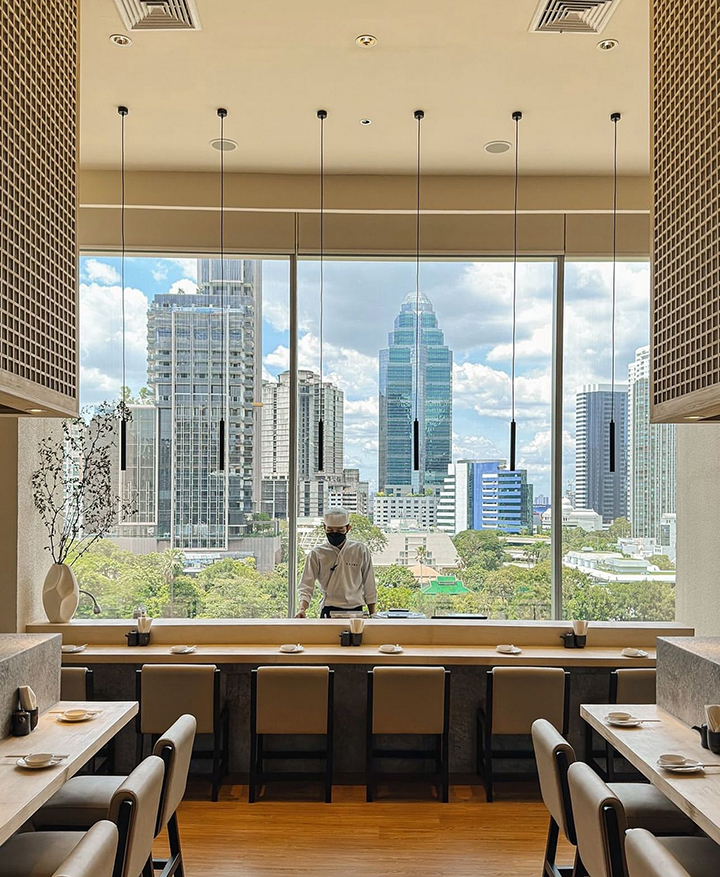
KANORI Hand Roll Bar at Central Embassy
Looking ahead, co-founder Panitan Kobkulsuwan revealed plans for further expansion: “The ‘KANORI Hand roll bar’ is set to expand further in the third quarter. Our focus will be on opening new branches in high-end department stores in Bangkok as our primary locations, while also exploring opportunities in major cities.”
The company aims to achieve a 20% revenue increase in 2025 compared to the previous year, furthering its position in Thailand’s competitive Japanese restaurant market.
KANORI Hand Roll Bar is operated by THAISAKOL ESTATE Co., Ltd., which manages a diverse portfolio including Kay’s (brunch-style restaurant), Day by Kay’s (beverages and pastries), and K Maison hotel.
The restaurant’s success story highlights the growing sophistication of Thailand’s food scene and consumer interest in innovative international cuisine concepts that blend quality, convenience, and value.
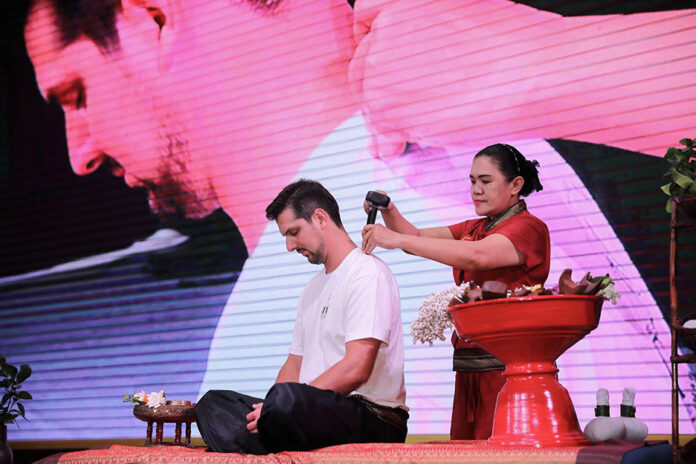
Thailand's health tourism sector has experienced remarkable growth of 120%, generating a total revenue of $12.34 billion.
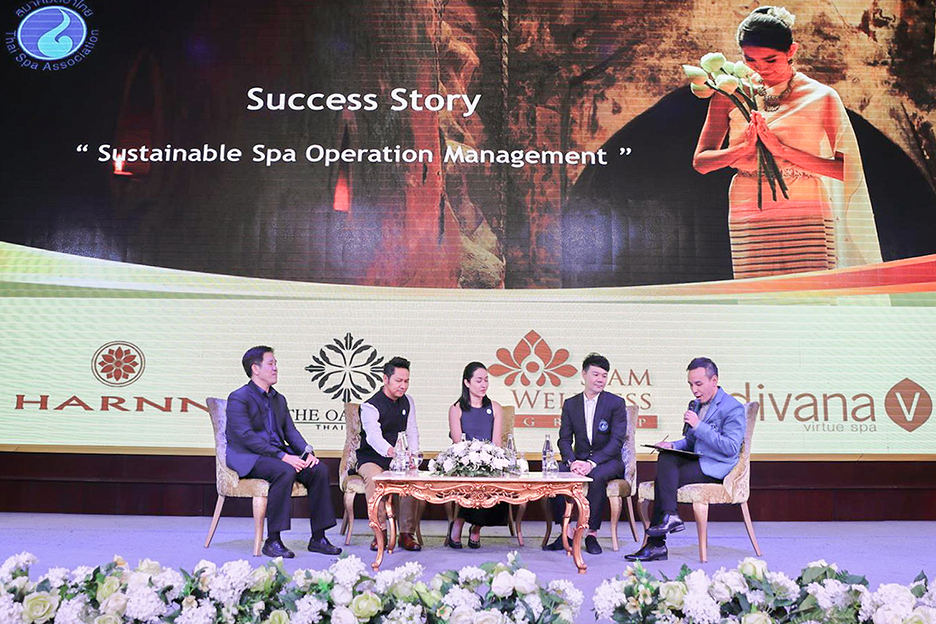
BANGKOK — Thailand’s health tourism sector has experienced remarkable growth of 120%, generating a total revenue of $12.34 billion (431 billion baht), according to a recent announcement by the Thai Spa Association.
This significant growth was revealed during the launch of the first Food & Hospitality Thailand 2025 event, which coincided with the opening of the ASEAN Wellness Tourism Congress 2025 and the 8th Thailand Spa & Well-being Awards 2025.
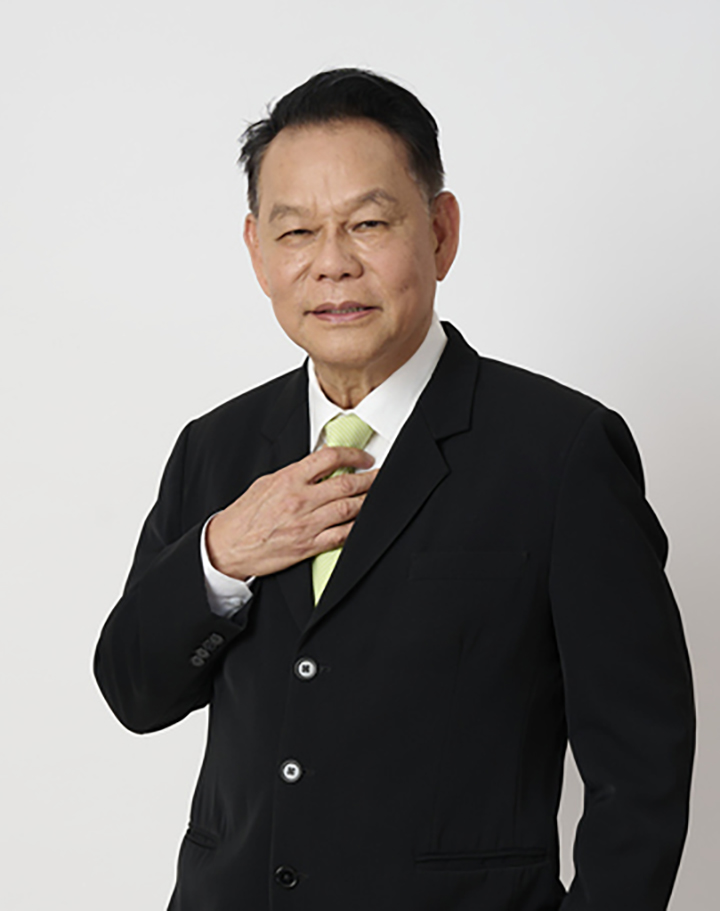
Sunai Wachiravarakarn
Sunai Wachiravarakarn, President of the Thai Spa Association, emphasized that wellness tourism is gaining interest worldwide, creating positive momentum for Thailand’s spa and health service businesses. “Health tourism encompasses a broad spectrum of services from prevention and promotion to care and treatment, including relaxation experiences for tourists and service users,” he explained.
According to the latest report from the Global Wellness Institute (GWI), Thailand ranks 24th globally out of 218 countries and 9th in the Asia-Pacific region for health promotion goods and services, with a total value of 40.5 billion US dollars (approximately 1.42 trillion baht).
Medical tourism leads the sector, valued at 12.34 billion US dollars (approximately 431.41 billion baht), positioning Thailand as one of the world’s top 15 destinations for international tourists seeking health activities and services. The average spending per trip in Thailand is approximately 1,735 US dollars (about 60,650 baht).
The spa business specifically has grown by 9.4%, reaching a total value of 1.598 billion US dollars (approximately 55.93 billion baht), with medical spas showing exceptional growth of 22%.
“Operators must upgrade their services and develop new, more comprehensive offerings to capitalize on this growth opportunity,” Wachiravarakarn advised. “Health services with promising prospects include medical spas that combine medical treatments with health care provided by medical personnel, mental wellness services, sleep therapy, nutritional health care, health real estate, and hot spring services.”
Thailand ranks 24th globally out of 218 countries and 9th in the Asia-Pacific region for health promotion goods and services.
The report indicates that tourists aged 25-34 spend the most on health tourism. This demographic not only prioritizes health but also values environmental sustainability, suggesting that businesses should adapt their operations to meet these concerns.
In a strategic move to support industry development, the Thai Spa Association has partnered with Informa Markets to organize the Food & Hospitality Thailand (FHT) 2025 event, scheduled for August 20-23, 2025.
The collaboration aims to provide maximum benefits to entrepreneurs and visitors through exhibition spaces featuring the Association’s operations and displays from leading entrepreneurs in the health and spa service business.
Food & Hospitality Thailand (FHT) 2025 event will be held on August 20-23, 2025.
The ASEAN Wellness Tourism Congress 2025 will serve as a forum for knowledge exchange, featuring experts from various ASEAN countries who will discuss trends in service and health tourism, technology integration for competitive advantage, and sustainable business development.
The event will culminate with the presentation of the 8th Thailand Spa & Well-being Awards 2025, which will recognize excellence across 16 categories. These awards, judged by industry experts and international wellness industry media representatives, aim to encourage successful entrepreneurs and elevate industry standards, ultimately enhancing the capabilities of Thai businesses to become global leaders in health tourism.
Domestic tourism has also contributed significantly to the sector’s growth, with average spending increasing by 23%, further underlining the expanding opportunities in Thailand’s wellness tourism market.
The cruise glided in night breeze with glittering lights on the distant shore of Hong Kong Harbourfront. Dancing was in full swing on the deck as champagne flowed to celebrate the opening of Art Basel Hong Kong (ABHK). Regarded as the largest and most attractive art fair in Asia, the week was packed with openings, parties, performances, conversations and sales.
The Special Administrative Region’s art trade emphasized on free trade that has made Hong Kong the haven for transaction in art sales and art business. Nevertheless, times are changing as representative of Hong Art Gallery Association (HKAGA) commented on shipping which has become extremely expensive. Trump’s trade war will inevitably have impact on tariffs, materials, shipment and art investment.
Despite escalating tariff threats from trade war, Hong Kong Convention and Exhibition Centre buzzed with activities as packed aisles were full of VIPs, celebrities, collectors, dealers, artists, critics, philanthropists and spectators.
This year’s edition featured 240 galleries from 42 countries with about half of the galleries from the Asia Pacific. Established galleries from Europe and US included Pace, Thaddeus Ropac, Mennour, Gagosian, Lisson, Hauser & Wirth, White Cube, Continua, Massimodecarlo and Krinzinger.
Art Basel Hong Kong (ABHK)
From Asia, Richard Koh, Ames Yavuz, Bangkok City City, Flowers, Silverlens, ShangART, Tang and TKG. At the entrance of ABHK, Takashi Murakami featured prominently in collaboration with Louis Vuitton. Inside, Encounters Artists sections included Pacita Abad, Lu Yang, Liam Gillick and Nadia Hernandez.
Coincided with ABHK, M+ Museum staged The Hong Kong Jockey Club Series, Picasso for Asia: A Conversation with displays of 60 paintings and sculptures by Picasso and 80 works by Asian artists inspired by the Spanish master. An excellent exhibition by Cindy Sherman and Yasumasa Morimura traces their brilliant career through self-portraits in masquerades.
Hong Kong Museum of Art (HKMoA) displays paintings by Cezanne and Renoir. At Art Central, the largest edition exhibited 100 galleries and 500 artists. Auction houses Christie’s, Sotheby’s and Bonthams held sales of paintings by Marc Chagal and Jean-Michel Basquiat while Phillips staged the Sovereign Art Prize.
Apart from H Queen’s galleries at Central, invigorating exhibitions included Tenzing Rigdol at Rossi & Rossi, Chulayanon Siripol’s The Golden Snail Series at Tomorrow Maybe and Beauty Will Save the World with works by Southeast Asian artists including Vu Dan Tan, FX Harsono, Moe Satt, Din Q Le at10 Chancery Lane Gallery.
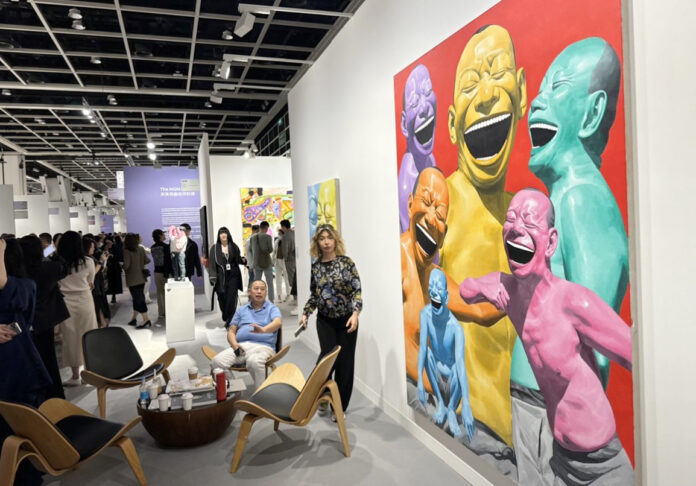
At ABHK, some outstanding art transactions included David Zwirner’s sale of Infinity Net painting by Yayoi Kusama for US$3.5 million, Felix Gonzales-Torres work for US$900,000; Thaddeus Ropac reported US$6 million in sales including Georg Baselitz, and Roy Lichtenstein. Hauser & Wirth sold a sculpture by Louise Bourgeois for US$2 million to a Chinese collector. Perrotin sold a Takashi Murakami for US$1.3 million. Tang Contemporary reported painting by Yue Minjun fetched US$1 million.
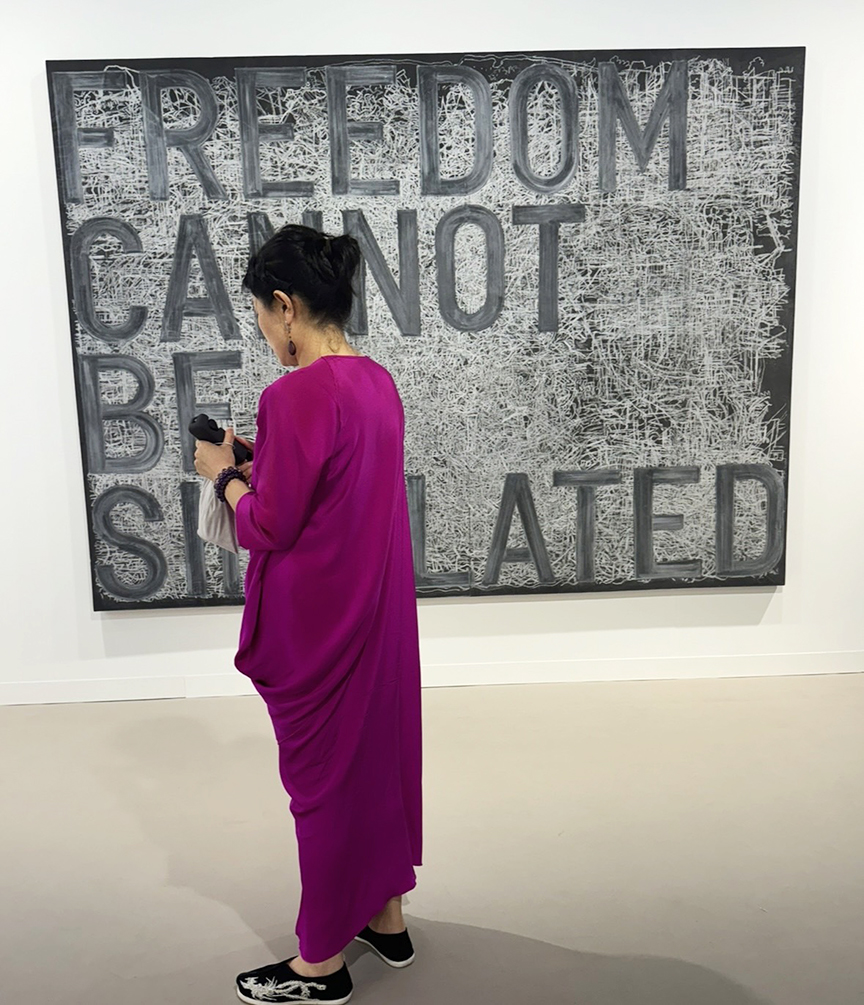
2. Painting by Rirkrit Tiravanila at Kurimanzuto, ABHK, Hong Kong
The MGM Discoveries Art Prize to celebrate originality and innovative artworks went to South Korean Shin Min and Gallery 21 (Seoul). Cash prize of US$50,000 awarded to Min for her works that explore hard realities of service labor, gender and class. MGM, led by Pansy Ho, focuses on cultural tourism, creativity, innovation, casinos and entertainment in Macao.
Notably, Thai participations were well received. Pinaree Sanpitak’s two paintings Silver Offering (2003) represented by Ames Yavuz were each sold for US$175,000; Rirkrit Tiravanija displayed familiar sign paintings Freedom Cannot be Simulated at Kurimanzuto and Asians Must Eat Rice at Pilar Corrias.
Young talented painter Channatip Chanvipava held his debut at Ames Yavuz. Bangkok City City featured Tanat Teeradakorn with a stall full of T-shirts, souvenirs, video related to protest songs. At Tang Contemporary, a solo exhibition of new paintings by Gongkan attracted many Chinese collectors.
All 18 works were sold before the show opened. Gongkan revealed that he was delighted as his focus has shifted toward struggle on issues related to old Chinese values and his transgender.
The announcement of the long-awaited Dib International Contemporary Art Museum initiated by the late Petch Osathanugrah was launched by his son Purat (Chang) at Rosewood Hotel. VIP guests included Bernard Chan, Hoor Al Qasimi, Uli Sigg, Akiko Mikki and Gregor Muir. Conversation at ABHK between Purat and Alan Ho on patronage and philanthropy with full-house audience was indeed a promising beginning for Dib which will open on 20 December in Bangkok.
Thailand as Art Hub and Entertainment Complex
When former Prime Minister Srettha Thavisin announced that Bangkok will be the art hub of Asia with Art Basel International Art Fair among the attractions, many eye brows were raised. With Paetongtarn’s government, Thailand Creative Culture Agency (THACCA) has poured millions of baht through soft power campaigns in film, food, festivals, fashion, design, literature, art, music and performance to upgrade Thai creative industry.
THACCA has facilitated the art industry by working with the Revenue Department to reduce tariff tax to 0% from previous 10% in order to compete with Singapore, Vietnam, Malaysia, Indonesia, Japan, South Kora and Hong Kong. Incentives and benefits to support local collectors and artists on tax reduction have been positively received.
Last month, THACCA organized with Lawrence Ho, CEO of Melco Resorts & Entertainment, Macao, Global Soft Power Talks: The New Rules of Soft Power. Paetongtarn attended the talks by leading speakers including Alain Ducasse, Viviana Muscettola, Giuliano Peparini, Mathieu Lehanneur.
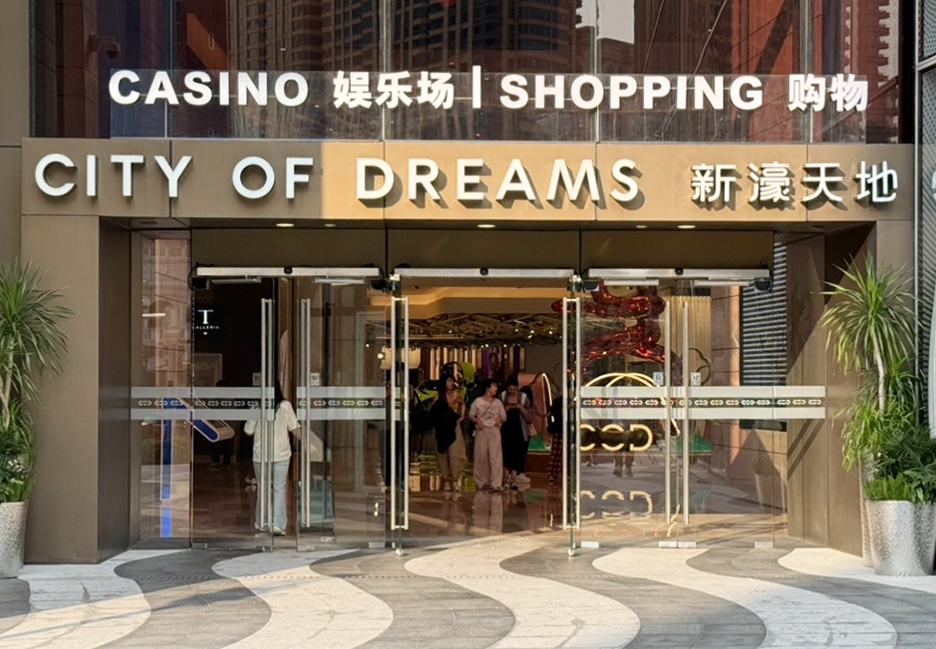
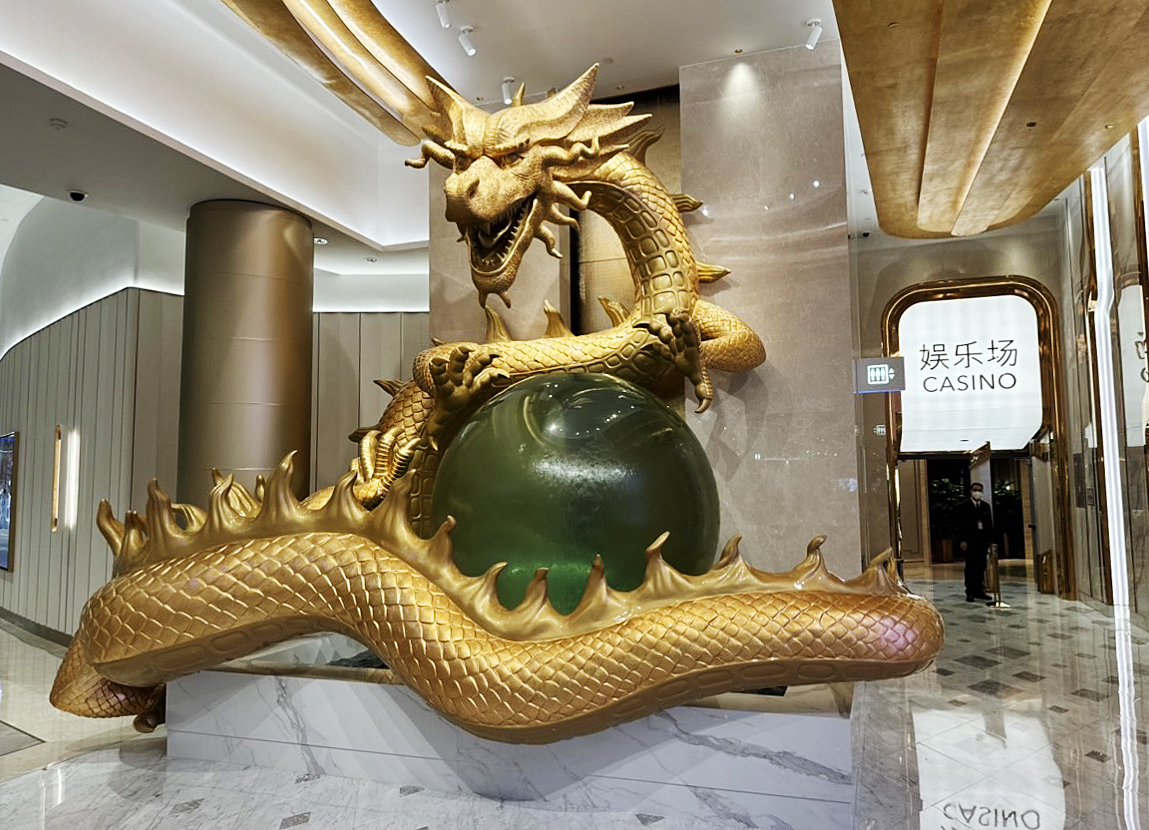
Casino at City of Dreams, Macao
Plans are announced to take young creative Thai talents to visit resorts and entertainment complexes in Macao. Why is the government paying special interest in the new rules of soft power in Macao?
Stanley Ho, Hong Kong-Macao billionaire, who owned 19 casinos in Macao was named Godfather and King of Gambling. MGM and Melco Resorts are among the entertainment complexes under the Ho family known for integrated resorts with entertainment and gaming facilities.
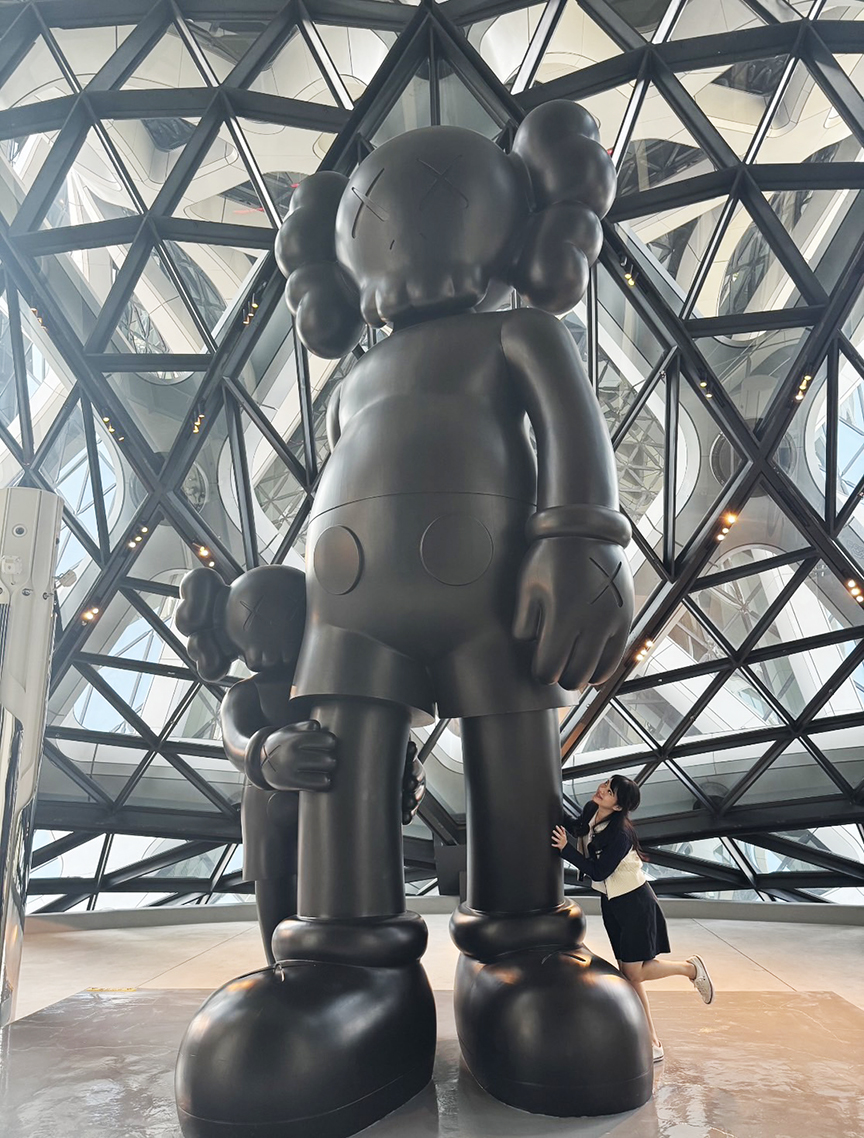
City of Dreams designed by the late architect Zaha Hadid combines entertainment, indoor sports, designer-brand shopping, immersive art displays and restaurants. Works by Murakami, Kaws, Mr. Doodle, Daniel Buren, Zhao Zhao are installed as part of art attractions for visitors.
Sculpture by Kaws at City of Dreams, Macao
Whether soft power is seen as intertwined with casino, gaming and entertainment complex, Thai government needs to explain clearly its intention to the public. With recent demonstrations against the bill proposed for entertainment complex and casinos, issues regarding the role of soft power as part the bill must be raised. With recent catastrophic earthquake followed by Trump’s trade war, Thai soft power has been hard hit.
In a short period, the new rules of soft power have changed again. Let us tread carefully in this political and economic whirlwind that will come thick and fast. There is no longer time to play softly or gamble with the game of hit and miss. Because losers will be stuck deeply in murky waters full of deep shit.
……………………
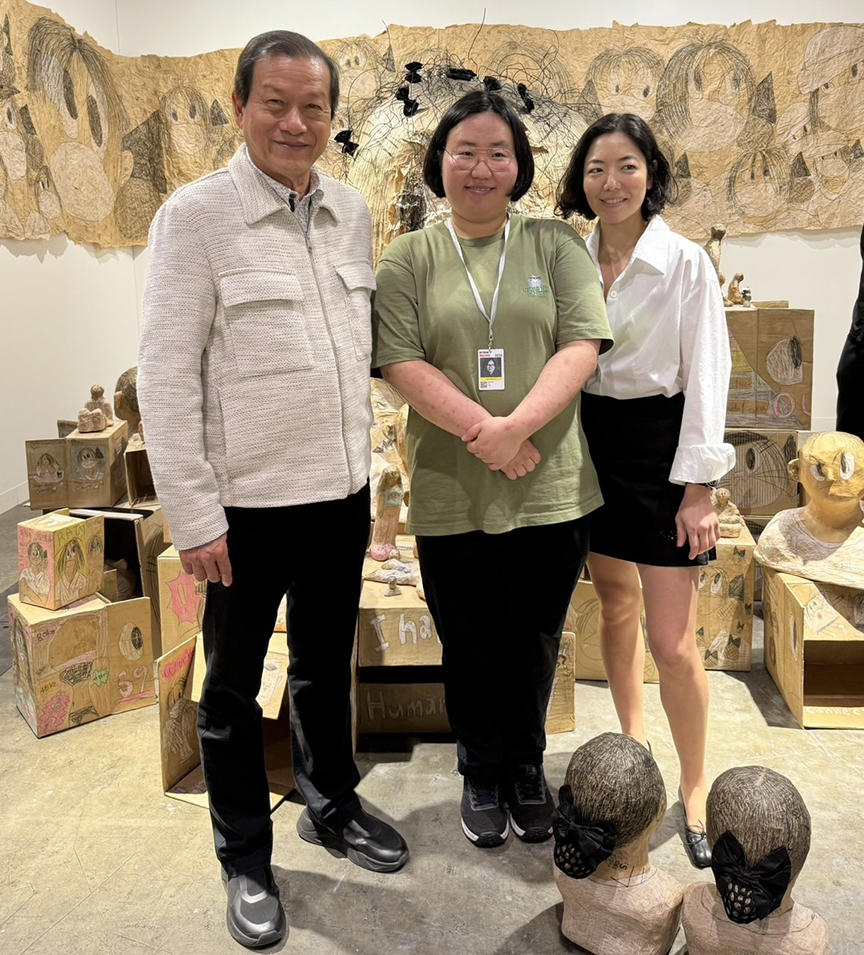
Apinan Poshyananda (left) and Shin Min, winner of MGM Discoveries Art Prize (center)
Prof. Dr. Apinan Poshyananda holds a BA and MA in Fine Arts from Edinburgh University and a Ph.D. in Art History from Cornell University. His distinguished career includes serving as Director-General of Thailand’s Office of Contemporary Art and Culture, Director-General of the Cultural Promotion Department, and as Permanent Secretary and Acting Minister at Thailand’s Ministry of Culture, where he curated the first Thai Pavilion at the 50th Venice Biennale.
A renowned curator, he has directed major international exhibitions including “Contemporary Art from Asia: Traditions/Tensions” (New York, 1996), “Traces of Siamese Smile” (Bangkok, 2008), and “Thailand Eye” (London and Bangkok, 2015).
He serves on boards and committees for prestigious institutions including the Asian Cultural Council, Solomon Guggenheim Museum, National Gallery Singapore, Bangkok Art and Culture Centre, and as an advisor to Thai Beverage Plc.
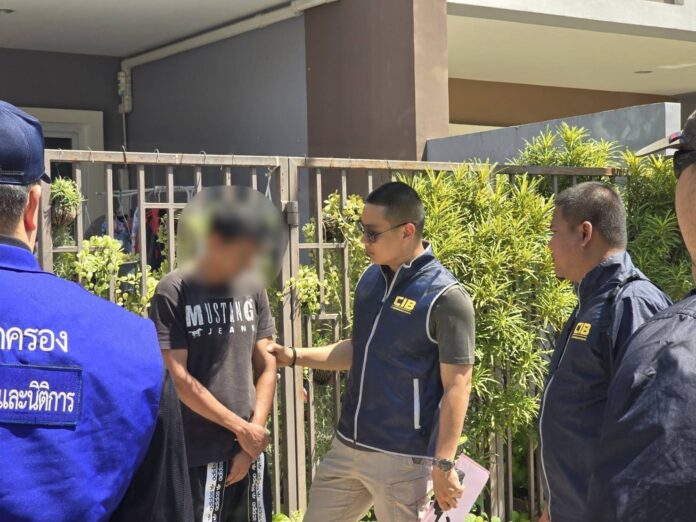
Thai police arrest a 41-year-old Pakistani man who had been living in Thailand for over a decade using the ID card of a deceased Thai citizen, at his residence in Bangkok, on April 24, 2025.
BANGKOK — Thai police have arrested a 41-year-old Pakistani national who had been living in Thailand for over a decade using the identification card of a deceased Thai citizen.
Police received a tip that Mr. Zeshan, a Pakistani national, had entered Thailand to conduct a business selling gemstones and decorative stones, with the intention of permanently settling in the country.
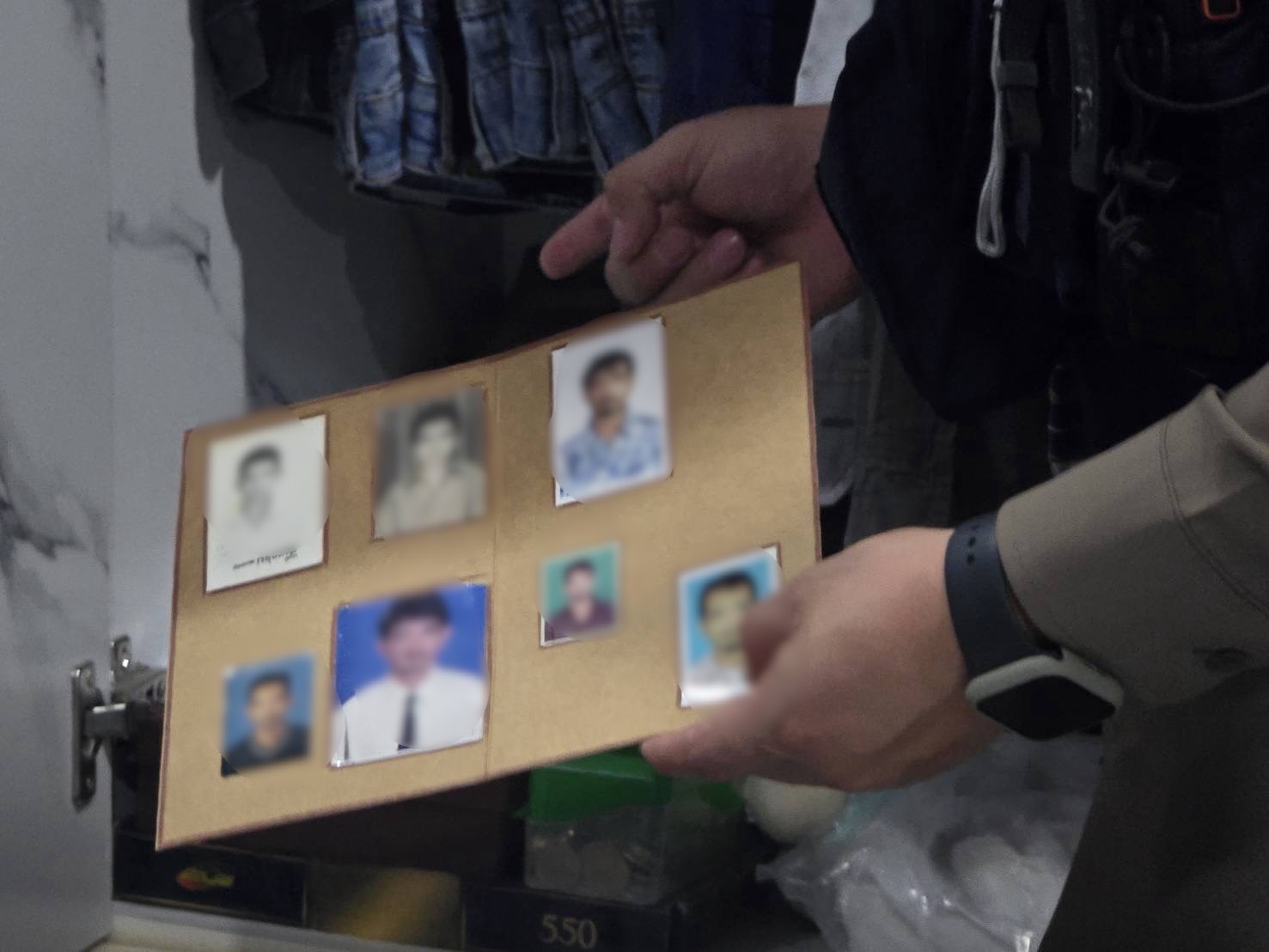
The investigation revealed that Mr. Zeshan had been living in Thailand for more than ten years using the identification card of a deceased Thai person whose death had not been properly reported to authorities. This allowed him to live as a Thai citizen and access various rights and benefits reserved for Thai nationals.
Thai police discover a 41-year-old Pakistani man using the ID card of a deceased Thai citizen for living in Thailand for over a decade. The arrest took place on April 24, 2025, in Bangkok.
Police Major General Wittaya Sriprasoetpap, Commander of the Crime Suppression Division, revealed that Mr. Zeshan had used the fraudulent ID card to obtain a passport, which he then used to enter and exit Thailand more than 100 times. After confirming these facts, investigators gathered evidence and sought a court-issued arrest warrant.
With sufficient evidence in hand, Crime Suppression Division officers executed the arrest warrant at a residence in the Thung Khru area of Bangkok on April 24.
The Pakistani national faces multiple charges including using or presenting an ID card obtained through false evidence without having Thai nationality, falsely claiming Thai nationality to be registered in the civil registration system, providing false information to be recorded in official documents, forging and using forged documents, and forging and using a counterfeit passport. The suspect has denied all charges.
Arresting officers handed Mr. Zeshan over to investigators at the Crime Suppression Division for legal proceedings, while continuing to expand their investigation to prosecute others involved in the document forgery network.
Nawat Isarakraisin, Chairman of Miss Universe Thailand 2025, and Anne-Jakkapong Jakrajutatip, CEO of Miss Universe Organization, preside over a press conference announcing that Thailand, represented by Miss Grand International Co., Ltd. (Public), has been granted the hosting rights for the 74th MISS UNIVERSE pageant at Bravo BKK Shopping Center, Bangkok on March 13, 2025.
BANGKOK — Just hours after Nawat Itsaragrisil joined the Miss Universe Organization (MUO) as an executive, his company secured the rights to organize the Miss Universe Thailand pageant for another 20 years, bringing the total contract period to 25 years.
Nawat, in his capacity as CEO of Miss Grand International Public Company Limited (MGI), has informed the Stock Exchange of Thailand that MGI has successfully extended the license for Miss Universe Thailand for another 20 years beyond the original five-year contract.
A statement from the company said: “The company will be allotted 100,000,000 newly issued ordinary shares of JKN Global Group Public Company Limited with a par value of 0.50 baht per share at a subscription price of 0.50 baht, representing a total value of 50,000,000 baht.”
Earlier, JKN, founded by Jakapong “Anne” Jakrajutatip and co-owner of Miss Universe Organization, had sent invitations to influential and experienced personalities to strengthen the business alliance of JKN and MUO. On April 22, Nawat, who is known for his extensive experience in the pageant industry, was officially appointed Executive Director of MUO.
Nawat’s appointment came shortly after the Securities and Exchange Commission (SEC) of Thailand initiated civil proceedings against JKN and Jakapong for allegedly disseminating false or misleading information about JKN’s financial figures. The penalty included a payment of 4,124,078 baht and a temporary ban on an individual from working as a director or officer.
Miss Universe Thailand page posts a photo of Nawat Itsaragrisil, CEO of MGI, and Anne Jakrajutatip, the owner of Miss Universe Organization, after MGI secured a 5-year license to organize the pageant starting from 2025, on Feb 17, 2025.
JKN and Jakapong issued a statement respecting but disagreeing with the SEC’s decision and asserting that the decision was factually incorrect in several important respects. They promised to prove their innocence through the legal process.
To ensure continued smooth business operations amid the controversy, JKN announced the hiring of the following key figures to strengthen JKN and MUO:
Songpol Chanmatkit, an experienced businessman, has been appointed to the board.
Nawat Itsaragrisil, an experienced beauty pageant organizer, has been appointed Executive Director of MUO.
Indra Suharjono, an international business expert, has been appointed Executive Advisor for the MUO.
Miss Thailand Suchata Chuangsri and Miss Denmark Victoria Kjær Theilvig compete during the final round of the 73rd Miss Universe Beauty Pageant in Mexico City, Saturday, Nov. 16, 2024. (AP Photo/Fernando Llano)
Miss Universe Thailand 2025 will begin on July 5 with an orientation event. On August 3, the selected contestants will participate in activities. 10 finalists will travel to South Korea for a welcome ceremony. Events will take place in Bangkok from August 6–8, followed by training and activities in Phuket from August 9–16.
The national costume competition is scheduled for August 18, with the preliminary round taking place on August 20. The finals will take place on August 23.
The reigning Miss Universe Thailand 2024, Suchata “Opal” Chuangsri, is not expected to crown her successor. She was recently stripped of the title of 3rd runner-up Miss Universe after appearing on stage at Miss World Thailand, where she was named Thailand’s representative for the upcoming Miss World pageant in India on May 31, without participating in a national selection process.
SIG DomeMini packaging for its new premium V-FIT rice-based nutritional drink range
BANGKOK — SIG, a global leader in packaging solutions, has officially introduced its innovative SIG DomeMini carton bottle to the Thai market through a strategic partnership with Ampol Food, marking a significant advancement in sustainable packaging options for on-the-go beverages in the region.
The launch comes as Thai consumers increasingly prioritize sustainable packaging in their purchasing decisions. Ampol Food, a prominent innovator in Thailand’s food and beverage manufacturing sector, has selected the SIG DomeMini packaging for its new premium V-FIT rice-based nutritional drink range.
Dr. Kriangsak Theppadungporn, Managing Director at Ampol Food
“We are leading the way, not only when it comes to innovation in our products, but also in setting the trend for packaging solutions as part of the product concept,” said Dr. Kriangsak Theppadungporn, Managing Director at Ampol Food. “Opting for the SIG DomeMini is a step towards sustainable on-the-go packaging in Thailand. We are empowering our consumers to make more eco-conscious choices without compromising on convenience.”
The SIG DomeMini combines the on-the-go convenience of a plastic bottle with the sustainability benefits of a carton pack. Its main material is FSC™-certified paperboard, manufactured using 100% renewable electricity. The packaging features a lightweight, space-saving design with a large, centrally positioned cap that is easy to open and reclose – designed specifically for busy, health-conscious consumers.
Vatcharapong Ungsrisawasdi, Head of Market for Thailand, Cambodia, Laos, and Myanmar at SIG
Mr. Vatcharapong Ungsrisawasdi, Head of Market for Thailand, Cambodia, Laos, and Myanmar at SIG, emphasized the significance of this launch: “The market for on-the-go beverages in Thailand is growing, and the market entry of SIG DomeMini with its sustainability benefits offers a perfect alternative to tackle the challenges of plastic bottles.”
He added that the carton bottle aligns with the trend toward “paperization” in product packaging, offering manufacturers and consumers an alternative with a significantly lower “plastic-to-product” ratio compared to conventional plastic bottles.
The SIG DomeMini products are now available on Thai retail shelves in 250ml packages, with initial availability in both 200ml and 250ml volumes. The packaging is filled on SIG’s aseptic filling machine, which can process 12,000 packages per hour in seven different volume sizes ranging from 180ml to 350ml, requiring just 15 minutes for volume changes.
This partnership represents a significant step toward fostering responsible consumption in Thailand’s beverage market, with both companies committed to bringing more sustainable packaging solutions to consumers.
The SIG DomeMini products are now available on Thai retail shelves in 250ml packages, with initial availability in both 200ml and 250ml volumes
SIG, founded in 1853 and headquartered in Switzerland, provides packaging solutions globally with approximately 9,600 employees serving customers in over 100 countries. The company produced 57 billion packs and generated €3.3 billion in revenue in 2024, maintaining high sustainability ratings including an AAA ESG rating from MSCI and a Platinum CSR rating from EcoVadis.
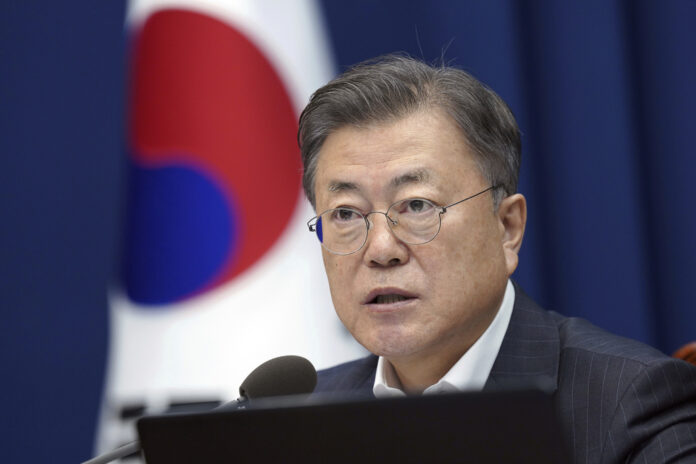
FILE - Then-South Korean President Moon Jae-in speaks during a meeting of the National Security Council at the presidential Blue House in Seoul, South Korea, on Feb. 22, 2022. (Ahn Jung-hwan/Yonhap via AP, File)
SEOUL, South Korea (AP) — South Korean prosecutors indicted former liberal President Moon Jae-in on bribery charges Thursday, saying that a budget airline gave his son-in-law a lucrative no-show job during Moon’s term in office.
Moon’s indictment adds him to a long list of South Korean leaders who have faced trials or scandals at the close of their terms or after leaving office.
Prosecutors allege that Moon, who served as president from 2017-2022, received bribes totaling 217 million won ($151,705) from Lee Sang-jik, founder of the budget carrier Thai Eastar Jet, in the form of wages, housing expenses and other financial assistance provided to Moon’s then-son-in-law from 2018-2020.
South Korean media reported that Moon’s daughter and her husband were divorced in 2021.
The Jeonju District Prosecutors’ Office said in a statement that Lee was also indicted on charges of paying bribes to Moon and committing breaches of trust.
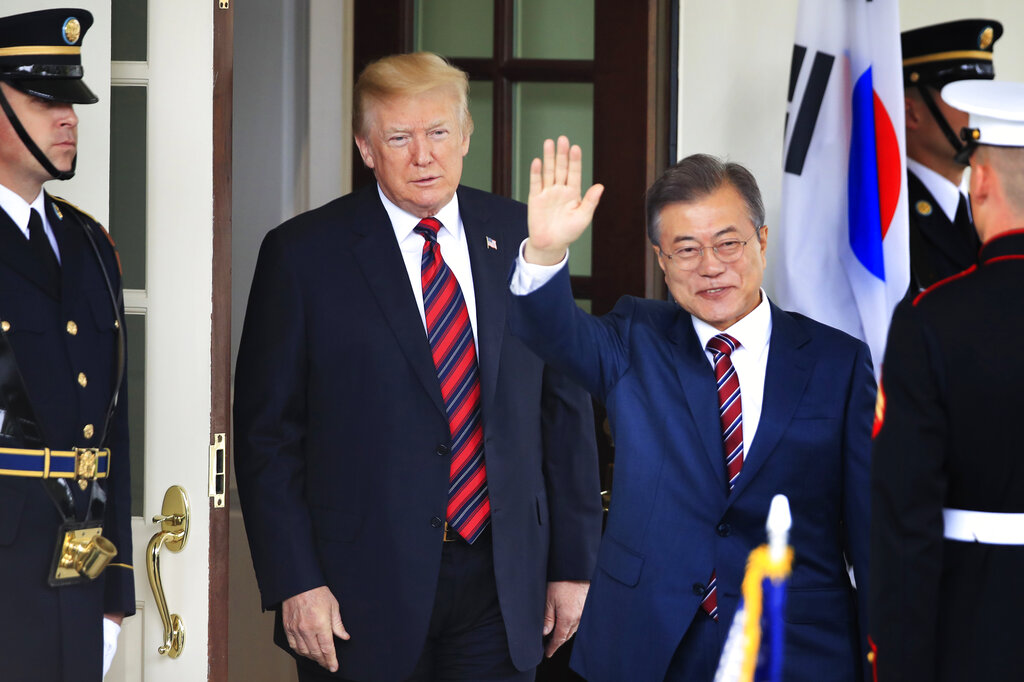
FILE – In this May 22, 2018, file photo, South Korean President Moon Jae-in waves as he is welcomed by U.S. President Donald Trump to the White House in Washington. Photo: Manuel Balce Ceneta / Associated Press
The prosecutors’ office said Moon’s former son-in-law was hired as a director-level employee at Lee’s company in Thailand even though he had no work experience in the airline industry. The office said he spent only brief periods at the company’s office in Thailand and carried out only minor duties while claiming to be working remotely from South Korea.
The prosecutors’ office said it had not found evidence that Moon directly performed political favors for Lee, but that Lee, who worked on Moon’s campaign, likely expected his assistance to be repaid.
Lee was later named the head of the state-funded Korea SME and Startups Agency and was nominated by Moon’s party to run for parliament while Moon was in office. A former Moon aide on personnel affairs was earlier indicted over Lee’s agency job appointment, but prosecutors said she refused to testify during questioning so they were unable to find any direct evidence that Moon helped Lee win that position.
Moon’s indictment comes before South Korea elects a new president on June 3 to succeed conservative President Yoon Suk Yeol, who was ousted over an ill-fated imposition of martial law in December. Yoon, a former top prosecutor, now stands a criminal trial on rebellion charges connection with his martial law decree.
It’s unclear if Moon’s indictment will influence prospects for liberals to win back the presidency. But observers say liberal presidential aspirant Lee Jae-myung is heavily favored to win the vote as conservatives remain in disarray over Yoon’s ouster, although Lee also faces criminal trials on allegations of corruption and other charges.
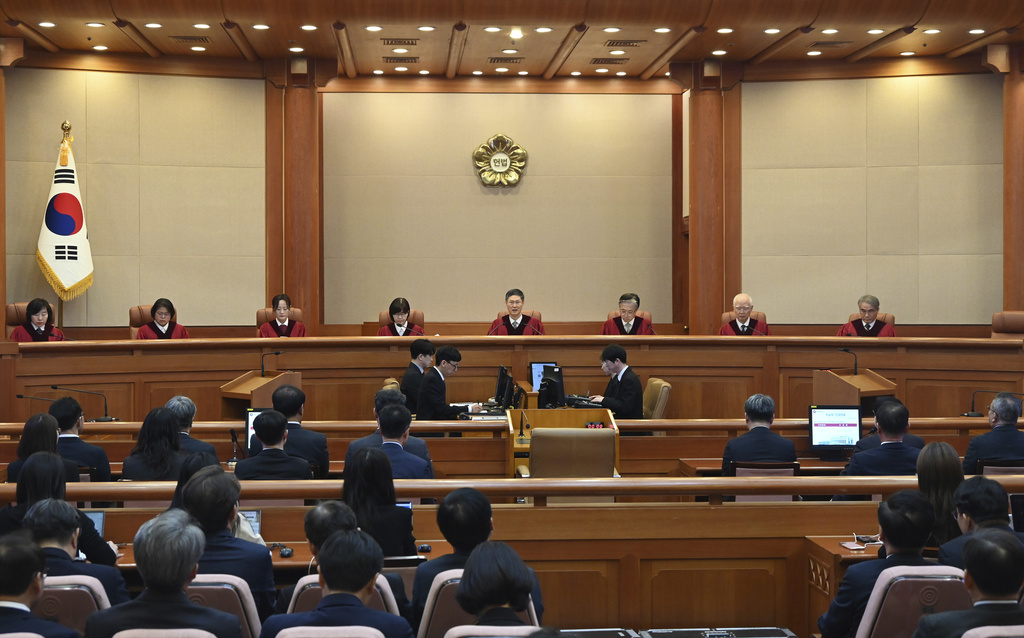
Moon Hyung-bae, center, acting chief justice of South Korea’s Constitutional Court, speaks during the final ruling of South Korean President Yoon Suk Yeol’s impeachment at the Constitutional Court on Friday, April 4, 2025 in Seoul, South Korea. (Kim Min-Hee, Japan Pool/Kyodo News via AP)
There was no immediate response from Moon. But his political allies at the main liberal opposition Democratic Party criticized the indictment, calling it a politically motivated attempt by Yoon supporters at the prosecution service to humiliate the former liberal leader ahead of the election.
Youn Kun-young, a Democratic Party lawmaker who worked at Moon’s presidential office, accused prosecutors of trying to divert attention from Yoon’s “tragic end” by putting Moon on trial to influence the election outcome. A Democratic Party committee separately warned it would hold the prosecution service to account for its indictment.
Most past South Korean presidents have been embroiled in scandal in the final months of their terms or after leaving office. In 2017, Park Geun-hye, South Korea’s first female president, was removed from office and arrested over an explosive corruption scandal.
Park’s conservative predecessor Lee Myung-bak was also arrested on a range of crimes, years after leaving office. Moon’s friend and former liberal President Roh Moo-hyun jumped to his death in 2009 amid corruption investigations into his family.
Moon is best known for his push to reconcile with rival North Korea as he met North Korean leader Kim Jong Un three times and facilitated the start of the high-stakes nuclear diplomacy between Kim and President Donald Trump.
Moons’ supporters credit him with achieving now-stalled cooperation with North Korea and avoiding major armed clashes, but opponents say he was a naive North Korea sympathizer who ended up helping the North buy time to advance its nuclear program in the face of international sanctions and pressure.
By Joseph Henry, Co-founder of Vivaldi Public Relations
Crisis can strike out of nowhere – unexpected, unsettling, and often when you least anticipate it. In those crucial moments, how you respond could make all the difference. It could be the reason your brand bounces back swiftly or ends up fighting a long, exhausting battle to rebuild its reputation. For PR professionals, staying ahead of the curve isn’t just about having a plan in place. It’s about being ready to take control before a situation snowballs into something bigger.
Think about it – if a crisis hit tomorrow, how confident are you in your team’s ability to react? Are you truly ready for the unexpected, or is there room for improvement?
Take the recent earthquake in Bangkok, for example. The city’s hotels were thrown into crisis mode, and their reactions spoke volumes. Some were quick to reassure guests, offering timely updates and clear safety instructions.
Hotels that reached out to guests with bookings after the earthquake, reassuring them that the buildings were safe and providing proof of the inspections, gained trust. Others, though, delayed their responses or failed to provide the information people needed, creating confusion and anxiety. When communication is swift, it builds trust. When it’s delayed or unclear, it can cause long-lasting damage.
Joseph Henry, Co-founder of Vivaldi Public Relations
The Power of Timely Communication
In a crisis, it’s not just about reacting – it’s about being ready to speak up, to provide clarity when people are searching for answers. When something like a natural disaster or a public controversy happens, the public instinctively turns to trusted brands for direction. If a company waits too long to say anything, it risks losing the chance to shape the narrative and offer reassurance.
Imagine your company in the midst of a crisis. Would you jump in to lead the conversation, or would you be left scrambling to find the right words? How you respond shapes how people will view you – whether it rebuilds trust or fuels uncertainty.
Effective crisis messaging is about more than just facts. It’s about showing care, understanding, and clarity. In times of crisis, people need to feel reassured. They want empathy. Your message should strike the right tone, offering both emotional intelligence and practical guidance. When brands respond with clear instructions and show genuine concern for those affected, they’re more likely to earn respect and trust from the public and their employees.
During the Bangkok earthquake, those hotels that reacted promptly and communicated with empathy didn’t just reassure guests – they became pillars of trust. On the other hand, brands that hesitated or provided vague statements missed the chance to take charge of the narrative.
How Do We Do It? Crafting a Crisis Management Plan
The foundation of effective crisis management lies in preparation. To ensure your team is ready when a crisis strikes, conduct a thorough risk analysis, identify potential challenges and vulnerabilities. Next, establish a clear activation protocol for response triggers, so everyone knows exactly when and how to act. Defining a chain of command clarifies roles and responsibilities, ensuring that no one is left wondering who to report to or what actions to take.
A command centre should be set up to coordinate efforts, while response action plans guide specific steps for addressing the crisis. Internal communication is crucial to keeping your team aligned, while external communication manages the public messaging. Having the right resources in place, such as pre-drafted responses for common scenarios, ensures swift action. Above all, prioritize training so your team can spring into action confidently when needed. Constantly review the plan in place.
But even the best plans don’t fully prepare you for the human impact of a crisis.
The Recent Earthquake: A Personal Reflection
When the earthquake hit Bangkok, the uncertainty left me personally questioning how best to protect my family. This feeling of vulnerability wasn’t just limited to me – it affected my colleagues too. Many scrambled to return home, but for those who couldn’t, we quickly organized roll calls to ensure their safety and provided shelter for those unable to reach their homes. The crisis hit close to home, and it reminded me that, beyond the logistics and messaging, crises affect people at a deeply personal level.
Employee Well-being: Addressing Concerns
At Vivaldi, the tremors caused considerable anxiety for those of us in the office. Once the building was inspected and confirmed safe, we reassured everyone with updates. But until official certification was received, we allowed employees to work from home, ensuring they felt safe and supported.
We also checked in individually with each employee, offering emotional support and reminding them of our commitment to their well-being – both personally and professionally. When crises occur, it’s easy to focus solely on external messaging, but the internal impact is just as important. Ensuring your employees feel valued and cared for not only helps them navigate the crisis with greater confidence but also reinforces the trust they have in the brand they represent.
Preparing Your Team for the Unexpected
Internal crisis management is just as crucial as external communication. Employees are often the first line of defence, and how well they are informed can significantly impact the public’s perception of your brand. During the Bangkok earthquake, brands with well-prepared teams handled inquiries and provided assistance calmly and efficiently, without creating additional confusion.
But crisis management isn’t just about giving your employees the right information – it’s about supporting them emotionally and psychologically. Employees are facing the same uncertainty as the public, and if you don’t acknowledge their needs, it can lead to disengagement, mistakes, or worse. When employees feel supported, they become your best advocates, reinforcing your brand’s commitment to customers and stakeholders.
In today’s world, social media plays a pivotal role in crisis communication. News spreads fast, and misinformation can escalate quickly. PR teams must be vigilant, using social media to monitor sentiment, correct inaccuracies, and provide real-time updates. Proactive engagement with customers on digital platforms not only corrects misinformation but also builds trust by showing transparency and care.
Stay Proactive, Not Reactive
The recent earthquake in Bangkok is a stark reminder of the importance of crisis management and risk mitigation. It’s not just about having a plan – it’s about being prepared to take action, lead the conversation, and provide clear communication when the world feels uncertain.
Ask yourself: Is your crisis communication strategy ready for the next challenge? Now’s the time to review, refine, and ensure you’re fully prepared.
In the world of PR, timing is everything. When it comes to crisis management, waiting for the dust to settle isn’t an option. Your ability to act decisively, both internally and externally, will determine your brand’s reputation and future success.
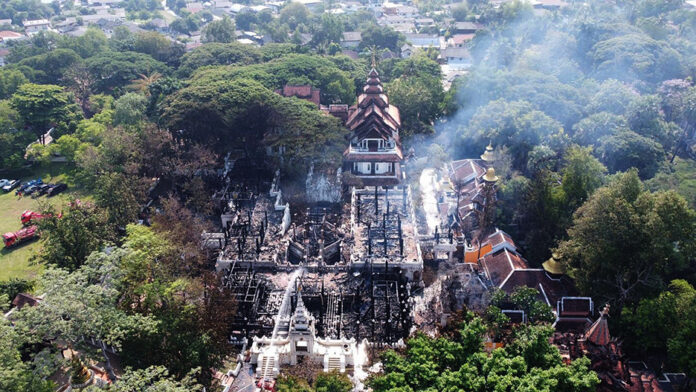
Aerial view showing the damage to the group of buildings destroyed by fire on the grounds of Dhara Dhevi Hotel on April 23, 2025.
CHIANG MAI — The cause of a massive fire which broke out around 2 a.m. on April 23 at Chiang Mai’s Dhara Dhevi Hotel, a five-star property valued at nearly 4 billion baht ($119 million), is under investigation.
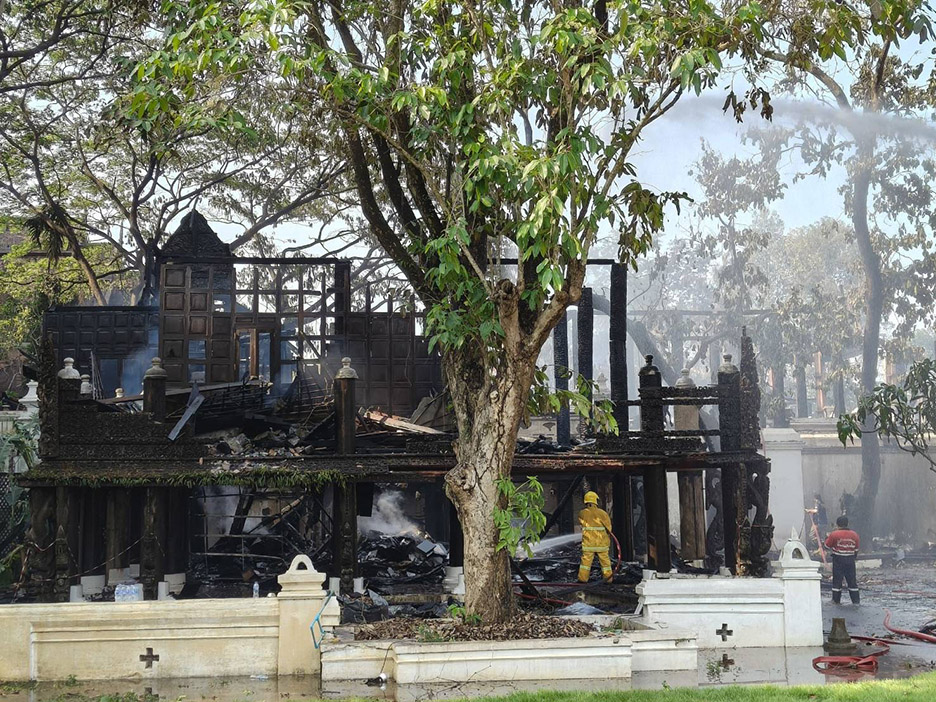
The blaze, which is believed to have started in a former spa building that had been closed since the COVID-19 pandemic five years ago, completely destroyed several connected structures covering approximately 500 square wah (2,000 square meters).
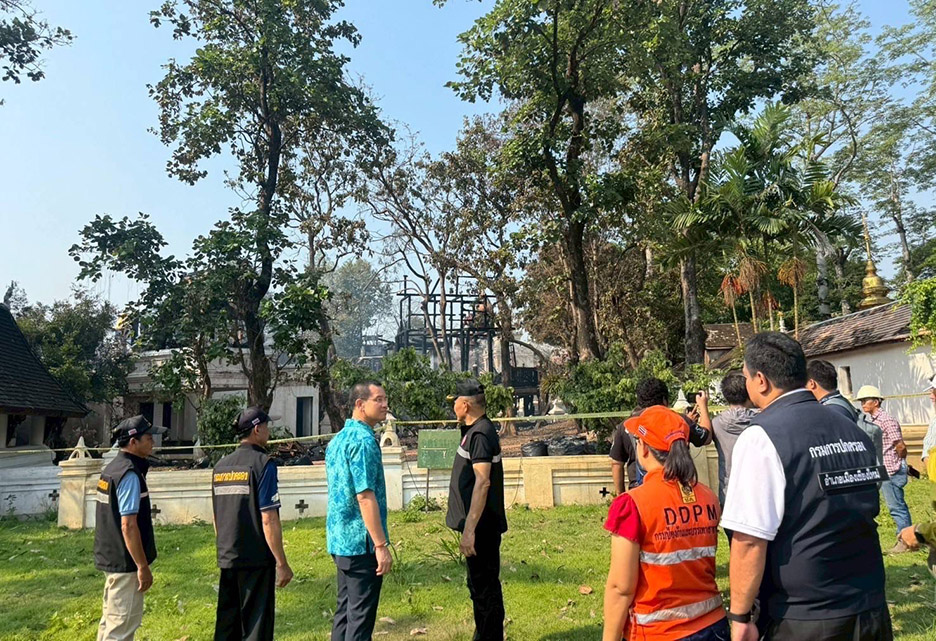
The Governor of Chiang Mai has ordered relevant agencies to investigate the cause of the fire, delegating Deputy Governor Siwakorn Buapong along with local administrative officials, disaster prevention authorities, public works representatives, forensic investigators, and Mae Ping Police Station officers to inspect the site.
Evidence collection was delayed during the morning hours as firefighters continued to spray water on the buildings to prevent reignition, as some hot spots were still flaring up despite the situation being under control. The challenge was intensified by the hotel’s antique teak wood structures, which continued to smolder in some areas.
Meanwhile, police have cordoned off the site, awaiting a thorough examination by officials from the insurance office, the Office of Disaster Prevention and Mitigation, and forensic police investigators.
The Story of Magnificence
Construction of Dhara Dhevi Hotel began in 2002 before opening its doors in 2004. That same year, Dhara Dhevi signed a memorandum of understanding with the Mandarin Group to manage the property for 15 years (renewable for another 15 years). This partnership gave Dhara Dhevi access to hospitality management expertise, staff training, and marketing networks, leveraging Mandarin Group’s extensive customer database from its worldwide hotel chain.
Facebook page: Dhara Dhevi Chiang Mai
The hotel, which required an investment of 3 billion baht, faced controversy during construction when Lanna academics protested against its replication of historical sites and important landmarks within the hotel grounds. While aesthetically impressive, some artists criticized the inappropriate use of ancient art forms in a commercial context.
Subsequently, Chinese investors who owned two private airlines and several hotels in China purchased a 49% stake for over 2 billion baht and became involved in management and additional investment planning.
Deputy Governor Siwakorn Buapong along with involved officials inspect the site of Dhara Dhevi where a fire broke out on April 23, 2025.
In 2015, Suchet Suwanmongkol, the major shareholder, sold the hotel to Dr. Wichai Thavornwattanayong, Chairman of Inter Far East Energy Corporation Public Company Limited (IFEC). IFEC acquired 100% of Dhara Dhevi Chiang Mai’s shares along with its debt, in a deal believed to be worth 2.52 billion baht.
In 2020, during the global COVID-19 pandemic, the hotel management informed IFEC that they needed to temporarily close Dhara Dhevi, affecting more than 300 employees. The hotel couldn’t even pay salaries and had accumulated trade debts and utility bills exceeding 30 million baht.
Firefighters continue to spray water on the buildings of Dhara Dhevi, as some hot spots are still flaring up on April 23, 2025.
Although the new board of directors attempted to resolve financial issues by arranging several loans totaling nearly 20 million baht, a hidden problem dating back to the 2015 acquisition emerged: Dhara Dhevi only had hotel operating licenses for 64 rooms, while the remaining 59 rooms were still awaiting approval pending an environmental impact study. This resulted in massive annual losses, leading to bankruptcy proceedings by the end of 2020.
However, Siam Estate Dhara Dhevi Company Limited, registered on December 6, 2023, with a registered capital of 2 billion baht and headquartered in Bangkok, later acquired Dhara Dhevi at auction for approximately 3.9 billion baht.
Kad Dhara Dhevi opened on February 21, 2025.
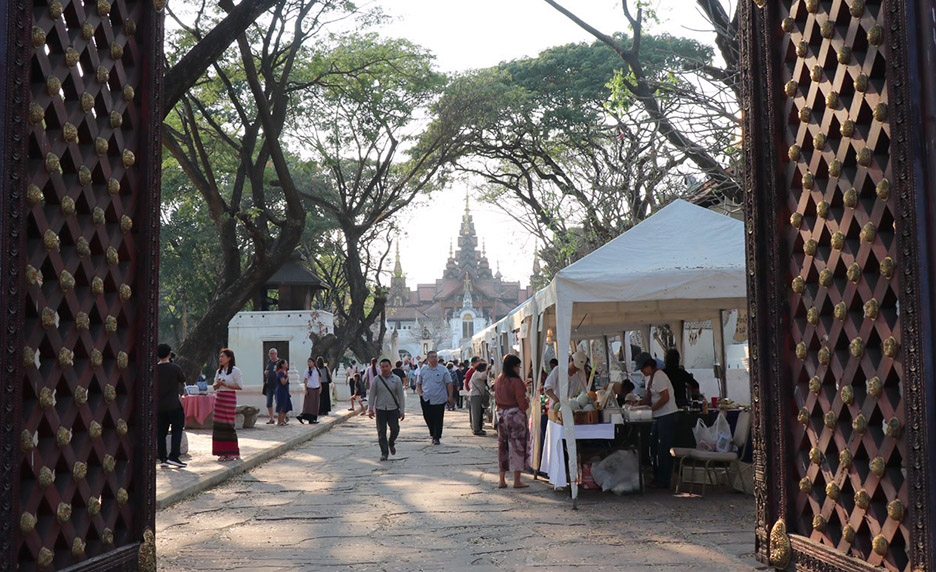
After taking ownership, Siam Estate Dhara Dhevi began renovating and developing the hotel grounds. They recently organized the “Kad Dhara Dhevi” event in February to develop an economic zone selling handicrafts, community products, and local food, along with cultural performances at the hotel entrance. However, they had not yet reopened the guest rooms.
This fire represents another significant blow to Dhara Dhevi’s business, and the investigation results will be crucial in determining the fate of one of Chiang Mai’s largest and most famous hotels.
The charred remains of the Ferrari, completely burned down to its frame, parked within the grounds of Thammasala Police Station next to the Mercedes-Benz that was also involved in the collision and fire on Borommaratchachonnani Road on April 23. (KHAOSOD Photo/Peerayuth Nimnon)
BANGKOK — A high-speed collision involving three vehicles, including two luxury cars—a Ferrari and a Mercedes-Benz—ended in flames early this morning on Borommaratchachonnani Road in Bangkok’s Thawi Watthana District. The Ferrari, valued at approximately one million dollars, was completely destroyed in the ensuing fire.
Security camera footage captured the moment of impact at 2:06 a.m. on April 23, showing a white Ferrari F8 TRIBUTO traveling at high speed before violently rear-ending a bronze-silver Mercedes-Benz C220 in the rightmost lane. The impact caused both vehicles to spin, with the Ferrari striking a Toyota pickup truck in the middle lane, causing it to flip over. The luxury vehicles continued to collide before both burst into flames.
Firefighters spray water to extinguish the blaze engulfing a Ferrari and a Mercedes-Benz — both gasoline-powered vehicles — on Borommaratchachonnani Road in Thawi Watthana District, Bangkok, shortly after 2 a.m. on April 23, 2025. (KHAOSOD Photo/Phutthisan Kaewbuadee)
In the aftermath of the collision, the drivers of both the Mercedes and Ferrari reportedly abandoned their vehicles to help the pickup truck driver before leaving the scene.
Firefighters and rescue personnel arrived shortly after the incident, taking approximately 20 minutes to control the blaze. The 29-year-old Mercedes driver, identified as Thanawut, a department store branch manager, was transported to Ratchapipat Hospital for treatment. The Ferrari driver, 21-year-old Treeran, sustained minor injuries but declined hospitalization.
Police Lieutenant Colonel Apiwat Sinpru, investigating officer at Thammasala Police Station, stated that all three drivers tested negative for alcohol in preliminary tests, though blood test results from the hospital are still pending. “The CCTV footage clearly shows who is at fault,” he added, indicating charges will be filed accordingly.
Wealthy Family Connection
The Ferrari driver was revealed to be the son of a wealthy businessman, 55-year-old Kamol, who made headlines in 2024 after filing a complaint with the Prime Minister’s Office, claiming that the Department of Special Investigation (DSI) had improperly seized his luxury sports car, despite it having had proper registration for a decade.
In this latest incident, Kamol later accompanied his son to provide statements to investigators at Thammasala Police Station. He disclosed that the family had purchased the Ferrari for 34 million baht ($1 million) and had registered it in 2022 under his wife’s name. The vehicle was covered by comprehensive insurance, with coverage of up to 24 million baht ($720,000).
“I always warned my son to drive carefully and not recklessly,” Kamol stated. “Fortunately, no one was seriously injured or killed. This is an accident case, and if my son is at fault, we are willing to take responsibility.”