BURIRAM — 6 April 2026, a 90-year-old woman has died at her home in northeastern Thailand after complaining of extreme heat, as temperatures reportedly reached 44°C, local media said.
The incident occurred at a house in Charoen Suk subdistrict, Chalerm Phra Kiat district.
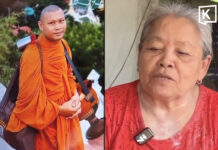
The woman, identified as Boonchuay, had told her daughter she felt unbearably hot before lying down to rest. When her daughter later went to check on her, she was found dead.
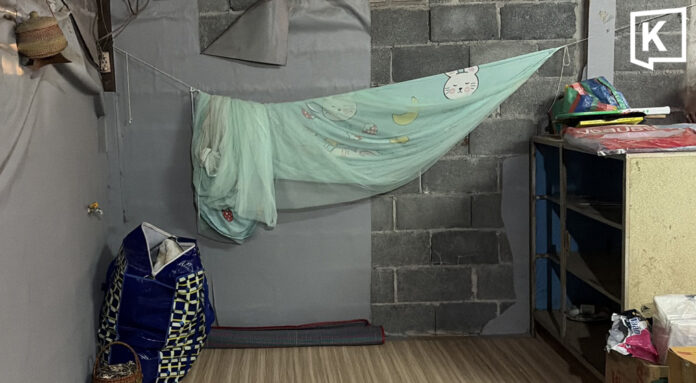
According to the family, the woman was visually impaired and lived in modest conditions without air conditioning. Relatives said they had used only a fan to help her cope with the heat. The family does not suspect foul play and plans to hold her cremation on 8 April.
Her daughter said she had been closely caring for her mother, ensuring she stayed hydrated and bathed regularly during the hot weather. Shortly before her death, the woman reportedly said, “It’s extremely hot, I can’t take it anymore,” before going to lie down as usual.
Residents in the area said the heat was unusually intense, particularly in the afternoon, adding that even electric fans provided little relief. They reported checking weather readings showing temperatures as high as 44°C, compared with typical afternoon highs of 40–41°C in recent days.
Villagers said many households lack air conditioning due to financial constraints, which may put elderly residents at greater risk during periods of extreme heat.
The Thai Meteorological Department has warned of severe heat, along with possible thunderstorms and strong winds in some areas, urging the public, especially children, the elderly and those with underlying health conditions, to take precautions, including staying hydrated and remaining in well-ventilated environments.
HANOI — Thousands of visitors flocked to Thang Long Palace in Hanoi from March 27–29 to celebrate Thai culture at a festival organized by the Thai Embassy, marking the 50th anniversary of diplomatic relations between Thailand and Vietnam. Under the theme “Creative Life, Creative Heartbeat,” the three-day event drew more than 20,000 people, who enjoyed a lively mix of traditional and contemporary Thai experiences.
Photo: Royal Thai Embassy, Hanoi
Festival-goers explored Thai royal-inspired national dress, learned about Songkran, Thailand’s traditional New Year, and watched cultural performances and Muay Thai demonstrations. Visitors also tried their hand at Thai handicrafts in D.I.Y. workshops, sampled Thai cuisine, and explored lifestyle products reflecting modern Thai creativity. The event featured a Thai and Vietnamese national costume fashion show, opportunities to try on traditional Thai outfits, prize draws, and screenings of Thai films.
Photo: Royal Thai Embassy, Hanoi
The festival offered more than cultural entertainment — it strengthened people-to-people ties between Thailand and Vietnam while giving participants a chance to experience the richness and creativity of Thai heritage. The Thai Embassy expressed gratitude to all agencies, artists, performers, entrepreneurs, volunteers, and visitors whose support made the event a success.
SONGKHLA — Authorities in southern Thailand are investigating a Malaysian-owned logistics company after around 100,000 litres of diesel were found stored on its premises in Sadao district, following complaints from local residents.
The case emerged after reports on social media alleged that a transport operator running trailer trucks between Thailand and Malaysia had been stockpiling large amounts of fuel at a yard on Kanchanavanich Road.
Songkhla Governor Rattasat Chidchu ordered a joint inspection involving provincial energy officials, district authorities, police, customs and excise officers.
During the inspection, officials found about 100,000 litres of diesel stored in tanks, including around 50,000 litres underground and 35,000 litres in above-ground containers at the company’s truck yard.
When questioned, the site operator failed to produce documents proving legal authorisation to store the fuel or records showing its origin. Police have filed charges against the caretaker and the company owner under the Fuel Control Act of 1999.
Investigators believe the diesel was brought in from Malaysia by the company’s trucks before a recent fuel price increase, then transferred into storage tanks for use in its transport operations.
Authorities said similar practices may be taking place among other Malaysian-owned logistics firms in Sadao and nearby Hat Yai district. Officials warned the case could involve not only illegal fuel storage but also possession of untaxed imported fuel, and inspections will be expanded to other operators in the province.
A dozen casinos in Cambodia are linked to scamming compounds where forced labour, torture, child labour and human trafficking have taken place, Amnesty International says, even as government regulators approved the businesses this year.
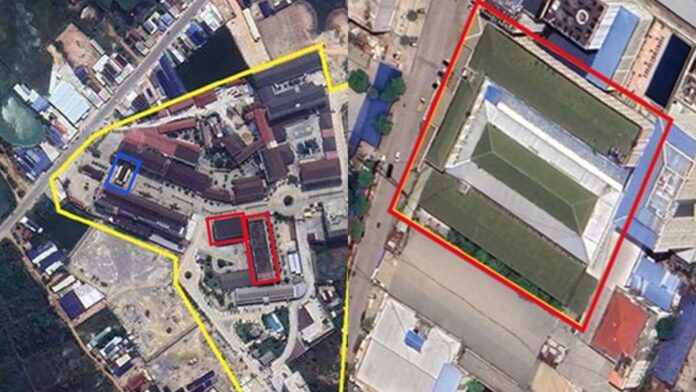
An investigation by Amnesty International found that casino owners directly control buildings and sites where human rights abuses have been documented. Analysis of licensing documents issued by the Commercial Gambling Management Commission (CGMC) showed that the casinos’ plans were officially recognized in December 2025 and January 2026 — at the same time the government claimed to be cracking down on scamming compounds.
Among the approved casinos are Crown Resorts in Poipet, Bavet and Chrey Thum, as well as Majestic Two and Majestic Hotel & Casino in Sihanoukville. Survivors of scamming compounds confirmed they were held, tortured and forced to scam inside these properties. Some victims were children.
One survivor, trafficked as a child, said he was held in “building E” at the New Venetian Casino in Bavet, where he was tortured, threatened with death, and forced to eat what he described as his “last meal” in 2024. Another survivor recounted being confined at the Crown Resorts complex in Poipet, where guards used electric shock batons, causing children in the same room to cry.
Amnesty’s research also linked other casinos to documented abuses, including Peak Casino, Long Feng Xuan Casino, Huang Chao International, Golden Sea Casino, Marinan International, and Majestic properties in Sihanoukville. In all cases, the same companies have operated the casinos since at least 2022.
“This research establishes a clear link between Cambodia’s licensed casinos and its scamming compounds,” said Montse Ferrer, Amnesty International’s co-regional director. “At a time when the government says it is dismantling the scamming industry, the evidence shows it is simultaneously approving casino properties where abusive scamming compounds are run. Every day these casinos remain licensed is another day people on casino property are at risk of human rights abuse.”
Amnesty International called on Cambodian authorities to suspend the gambling licenses of these casinos and conduct a full, independent investigation into the documented violations. The organisation also urged the government to hold the owners, operators and financiers accountable under national and international law.
The investigation builds on a June 2025 Amnesty report documenting more than 50 scamming compounds across Cambodia, nearly half of which were linked to casinos. Despite a government crackdown announced in July 2025, the new approvals show state oversight has failed to prevent human rights abuses.
Amnesty International said it gave the CGMC and all casino operators the opportunity to respond to the allegations. At the time of publication, none had responded.
KOH PHANGAN — Local authorities have shut down two illegal daycares run by foreign nationals on Koh Phangan, police said on April 4.
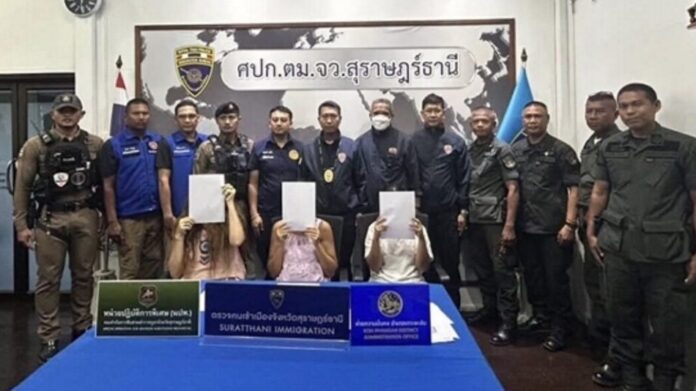
The first location, a house in Moo 7, Koh Phangan, was found caring for 13 young children from foreign families. Israeli nationals Tahel Cherone Edri, 34, the owner, and Rotem Mitrany, 45, a teacher, along with Myanmar staff member Hsu Sanda Pyae Sone, 28, were arrested. They face charges including running a childcare business without a license and failing to report foreign employees to authorities.
The second raid, also in Moo 7, uncovered a daycare with 10 children aged 2–5. Owner Anat Vekstein Kimiagar, 40, and local teacher Kulthida, 28, were charged with operating an unlicensed childcare facility. All suspects have been handed over to Koh Phangan police for further legal action.
Authorities said the raids follow previous crackdowns on illegal foreign-run daycares on the island, including cases in March 2024 involving an American woman and another Israeli man operating unlicensed childcare services.
Officials stressed that unlicensed daycares pose risks to children’s safety and that strict measures will continue to enforce the law.
BANGKOK — Singapore has officially approved the export of heat-treated pork blood products from Thailand, marking the first time in the world that the country can access the Singapore market. The move is expected to generate over 150 million baht in revenue for Thailand this year.
On 1 April 2026, the Singapore Food Agency (SFA) issued a certification allowing Thai producers to export cooked pork blood products immediately. The approval follows a rigorous inspection of a slaughterhouse in Chachoengsao province by SFA officials on 24 June 2025, which confirmed that Thailand’s production, storage, and processing systems meet Singapore’s strict food safety standards.
Thailand is the first country to regain access to Singapore’s market for cooked pork blood products since imports were suspended in 1998 due to the Nipah virus outbreak. The Department of Livestock Development said the approval reflects Thailand’s proactive measures to maintain high hygiene standards and strong disease control systems recognized internationally.
“Singapore’s certification signals global confidence in Thai livestock products,” said Dr Somchuan Ratanamangkalanont, director-general of the Department of Livestock Development. “We are committed to working with private-sector partners to maintain these standards, expand export markets, and strengthen the country’s economic competitiveness.”
The Department expects the reopened market to boost Thai pork product exports by more than 150 million baht in 2026.
FILE - Activists hold placards during a picket, authorised by the authorities, against homophobia in front of the Department of Justice in Minsk, Belarus, Monday, Feb. 14, 2010. The sign on placard reads "Love who you want". (AP Photo, File)
TALLINN, Estonia (AP) — The Belarus parliament passed a bill Thursday to introduce punishments for people who promote LGBTQ+ causes, in an echo of restrictions set up in neighboring ally Russia.
The upper house gave final approval for the legislation following its passage last month by the lower house, and it goes next to authoritarian President Alexander Lukashenko for his expected signature before becoming law.
The bill makes the “propaganda of homosexual relations, gender charge, refusal to have children and pedophilia” punishable by fines, community labor and 15-day arrest.
Belarus decriminalized homosexuality in 1994 after the collapse of the Soviet Union, but it doesn’t recognize same-sex marriages and lacks protection for LGBTQ+ rights. Lukashenko, who has ruled the nation of 9.5 million with an iron fist for more than three decades, has publicly mocked homosexuality.
Belarus has been sanctioned repeatedly by Western countries — both for its crackdown on human rights and for allowing Moscow to use its territory in the full-scale invasion of Ukraine in 2022.
LGBTQ+ groups in Belarus have been shut and security forces have regularly raided nightclubs to target private gay parties. Rights defenders have said that the country’s top security agency, which still goes under its Soviet-era name KGB, has blackmailed members of LGBTQ+ community to force them to cooperate.
“LGBTQ+ people had faced beatings, arrests, persecution and mockery even before the bill’s approval, but now law enforcement agencies have received legal grounds for repressions,” said Alisa Sarmant, the head of TG House, a Belarusian group championing transgender rights.
The group has documented what it says are at least 12 cases of persecution of LGBTQ+ people in Belarus over the past three months, including a police raid on a nightclub in Minsk last month during a private gay party.
Sarmant said the legislation has raised fears among transgender people that they could be denied permission to legally purchase necessary medicines. TG House says it already has received hundreds of requests from LGBTQ+ people for psychological assistance and for help moving abroad.
“The Belarusian authorities have lumped together gays, lesbians, transgender people, and pedophiles, creating additional grounds for social rejection and stigmatization,” Sarmant said. “Belarus is copying Russia’s sad experience, creating unbearable conditions for LGBT+ people.”
Russia also has adopted repressive laws curtailing LGBTQ+ rights. Changing one’s gender on official documents, gender-affirming care and any public representation of gay or transgender people are banned in Russia. The LGBTQ+ movement also has been branded as extremist and its members can face up to six years in prison.
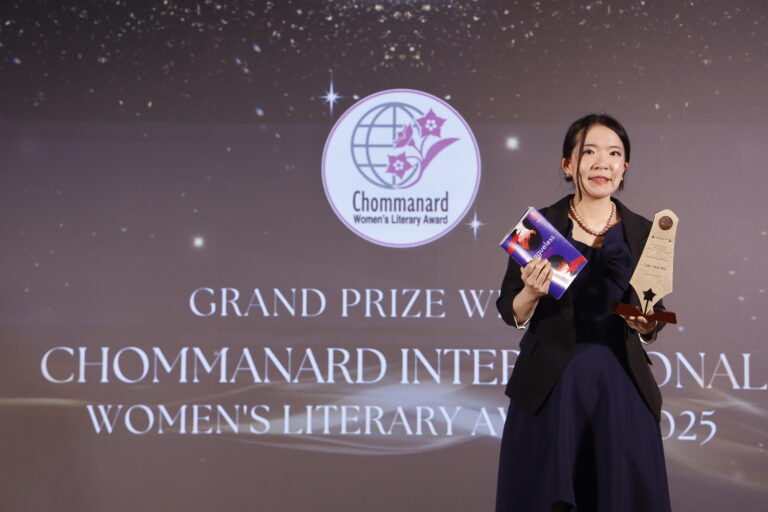
BANGKOK – Hong Kong writer Lau Yee-Wa has been named the winner of the inaugural Chommanard International Women’s Literary Award for 2025. The announcement was made during a gala dinner in Bangkok on 3 April 2026.
“Let me begin with a personal confession. I never set out to write a political novel,” Lau told the audience during her acceptance speech. “I simply wanted to tell a story about two ordinary Chinese-language teachers who tried to keep their jobs when their boss ordered a change in the medium of instruction from Cantonese to Mandarin. But as the pages grew, I realised I was not writing fiction. I was documenting a quiet, invisible form of violence that happens every day in classrooms, workplaces, and daily life across the world. That violence is called deschooling.”
Lau’s novel, Tongueless, follows two teachers in Hong Kong as they navigate the tragic consequences of new linguistic requirements, including a mandatory Mandarin proficiency examination in order to continue and progress in their language-teaching careers.
“One of the protagonists, Wai, is the most hardworking. She tries to replace her mother tongue, Cantonese, with Mandarin by speaking it whenever and wherever she is,” Lau explained. “She comes to believe that being a Cantonese-speaking Hong Konger is a physical disability compared to people from the Mainland or those in the US and Britain who speak English. Unluckily, Wai cannot change her mother tongue; her tongue rebels. She fails the exam and eventually commits suicide.”
The second protagonist, Ling, takes a more pragmatic—and surreal—approach. “She knows how to please her boss and those in power. She tries to escape the qualification exam through flattery and by purchasing expensive clothes to signal class and taste. When that fails, she turns to plastic surgery. She wants to change her face completely to resemble her boss.”
Addressing an audience that included foreign diplomats and business executives, Lau noted that while her inspiration was rooted in Hong Kong, the story resonates globally in any society where progress is defined by “endless competition.”
She emphasised that the core of the novel is the fundamental importance of choice. This is personified by a student character, Tsui Siu Hei, who Lau described as the only character to maintain his own voice throughout the book.
“At the climax of the story, he looks straight at his teacher and asks, ‘Have you ever reflected on yourself? Why do you need to follow the rules?’ He says, ‘It doesn’t matter what language I speak; I just want to make a choice.’ That single line is the core of my novel.”
Lau concluded her speech with a sobering warning: “When a school, a society, or a nation removes choice, it does not merely change the medium of instruction. It changes the right to exist as an authentic human being. It teaches an entire generation that some voices are legitimate and others must disappear. When enough people lose their tongues, the only language left is the language of power, resentment, and eventually violence.”
The event, held at the Chatrium Hotel, featured a welcoming remark from Dr. Kobsak Pootrakool, Director and Senior Executive Vice President of Bangkok Bank, which initiated and sponsored the awards.
“Right now, while the world is in great turmoil, we at Bangkok Bank realise that we must all try to unite to achieve a strong, sustainable economy and a safe environment so all our countries can advance,” Dr. Kobsak said.
Dr. Pisuth Lertvilai also delivered an opening speech, marking the 12th anniversary of Elite+ magazine, a key partner of the awards.
“The Chommanard International Women’s Literary Award has been created to recognise the best female writers in ASEAN and the China region,” Dr. Pisuth said. “Their works were submitted as original English texts or translated versions, and our panel of distinguished international judges had the difficult task of selecting the best.”
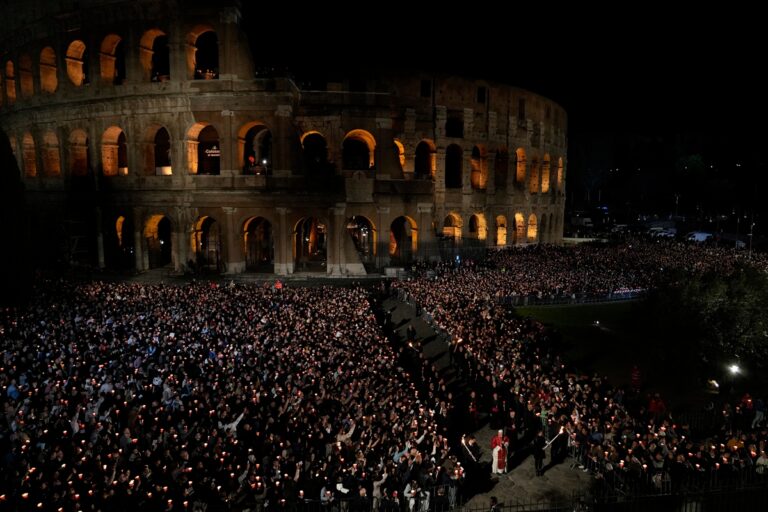
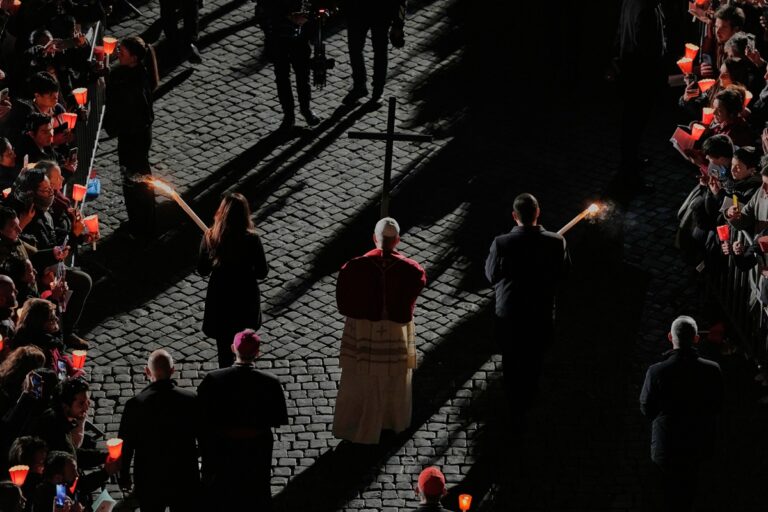
Pope Leo XIV carries a lightweight, 1.5-meter (5-foot) wooden cross during the Via Crucis, the torchlit Good Friday Stations of the Cross procession at the Colosseum in Rome, Friday, April 3, 2026, which symbolically retraces Jesus Christ's steps to his crucifixion on Calvary in Jerusalem. (AP Photo/Gregorio Borgia)
ROME (AP) — Pope Leo XIV carried a wooden cross for all of the 14 stations of the Way of the Cross at the Colosseum on his first Good Friday as pontiff, marking the first time in decades that a pope carried the cross to every station.
“I think it will be an important sign because of what the pope represents, a spiritual leader in the world today, and for this voice, that everyone wants to hear, that says Christ still suffers,” Leo told reporters this week outside of the papal retreat at Castel Gandolfo. “I carry all of this suffering in my prayer.”
Inside the Colosseum, Leo lifted the cross and began the rite flanked by two torchbearers, who accompanied him throughout the hour-long procession from inside the Colosseum, through the crowd outside and up steep stairs to the Palatine Hill where he gave the final blessing.
At the first station, marking the moment Jesus was condemned to death, the meditation prepared especially for Leo’s first Good Friday underlined that those with authority will have to answer to God for how they exercise their power.
“The power to judge; the power to start or end a war; the power to instill violence or peace; the power to fuel the desire for revenge, or for reconciliation,” read the meditation written by Rev. Francesco Patton, who was custodian of the Holy Land 2016-25, charged, among other things, with looking after sacred sites.
Pope Leo XIV carries a lightweight, 1.5-meter (5-foot) wooden cross during the Via Crucis, the torchlit Good Friday Stations of the Cross procession at the Colosseum in Rome, Friday, April 3, 2026, which symbolically retraces Jesus Christ’s steps to his crucifixion on Calvary in Jerusalem. (AP Photo/Gregorio Borgia)
Some 30,000 faithful gathered outside the pagan monument, following the stations as they were recited over loud speakers.
They included Sister Pelenatita Kieoma Finau from Samoa and a member of the Missionary Sisters of the Society of Mary.
“We have been part of our parish stations of the cross, but this is so exciting. It is very meaningful to have the experience of being with the people of Rome on this special occasion,” she said.
Past processions
John Paul II carried the cross for the entire procession from his first Good Friday as pontiff in 1979 until his hip surgery in 1995, when he carried it just part of the way, according to AP reports at the time.
For the first two years of his papacy, Benedict XVI carried the cross for the first station inside the Colosseum, then followed other bearers in the procession that ends on a platform on the Palatine Hill.
Pope Francis never carried the cross, but participated in the procession until his health worsened. He died after a long illness last year on Easter Monday, which fell on April 21.
Pope John Paul II was just 58 when he became pope, and was known as a hiker and outdoorsman. His two successors were in their late 70s when they began their papacies, and Francis was missing part of a lung due to a pulmonary infection as a young man.
The Way of the Cross commemorates the final hours of Jesus’ life, from his death sentence to taking up the cross to his crucifixion, death and burial. The procession ends outside the Colosseum atop the Palatine Hill.
Pope Leo XIV carries a lightweight, 1.5-meter (5-foot) wooden cross during the Via Crucis, the torchlit Good Friday Stations of the Cross procession at the Colosseum in Rome, Friday, April 3, 2026, which symbolically retraces Jesus Christ’s steps to his crucifixion on Calvary in Jerusalem. (AP Photo/Alessandra Tarantino)
“The Way of the Cross is not intended for those who lead a pristinely pious or abstractly recollected life,” Patton wrote in his introduction. “Instead, it is the exercise of one who knows that faith, hope and charity must be incarnated in the real world.”
At 70, Leo is physically fit and an avid tennis player and swimmer. Before becoming pope, Leo would work out regularly at a gym near the Vatican, with a plan befitting a man in his early 50s, according to his former trainer.
The pope’s Holy Week activities
On Holy Saturday, the pontiff will preside over a late night Easter vigil, during which he will baptize new Catholics, and lead Roman Catholics into Christianity’s most joyous celebration marking Christ’s resurrection.
On Easter Sunday, the pope will celebrate an open-air Mass in St. Peter’s Square before delivering his Easter message and offer the traditional “Urbi et Orbi” blessing to the city of Rome and the world.
HATYAI — Emergency responders in southern Thailand faced online criticism after a woman posted that they had entered her home wearing shoes while attending to a patient.
The post sparked widespread confusion among netizens, many of whom criticized the woman for targeting the rescuers. In her post, she wrote:“No matter the situation, etiquette requires removing your shoes. Where is the courtesy? This is unacceptable to me.”
The Taphong Therdtham Rescue Foundation later issued a statement apologising for the incident but explained the urgent circumstances. The patient was in critical condition and required immediate treatment for a stroke, including blood clot-dissolving medication or an intervention within 4.5 hours to reduce the risk of death or long-term disability. A CT scan of the brain was performed within 30–60 minutes to allow rapid treatment.
Speaking to Khaosod, a rescue officer involved said the team received an emergency call at 10:50 on 3 April about a patient with sudden weakness. Upon arrival, the patient was unable to move, slurred speech, and appeared drowsy. The responders had to quickly bring medical equipment inside and did not remove their shoes to avoid delaying lifesaving care.
The officer noted that the patient’s relatives did not object to the footwear at the time, and most homeowners normally allow shoes to remain on during urgent interventions to prevent delays and facilitate equipment handling.
The team said they were both angry and saddened by the social media backlash, as they had prioritised the patient’s life above all else. They added that the only apology received came from the woman’s younger brother, not the poster herself.
The foundation emphasised that every emergency is treated as a race against time, particularly high-risk cases like strokes, where rapid treatment is crucial for survival and reducing long-term disability.