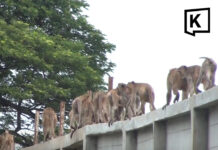
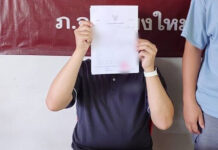
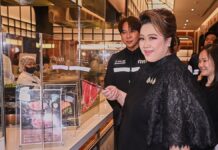
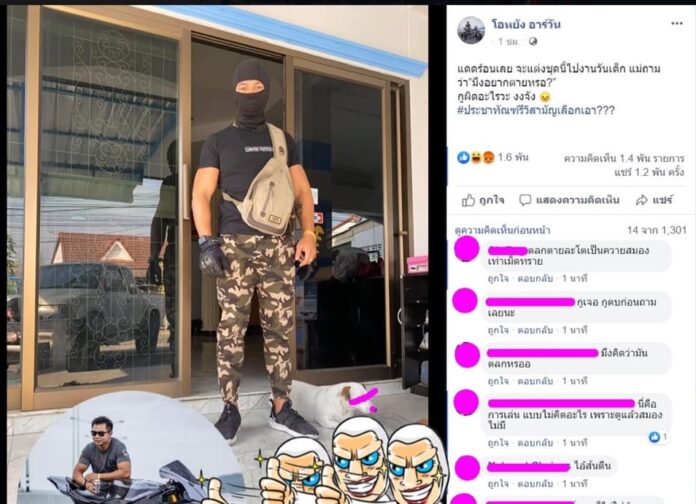
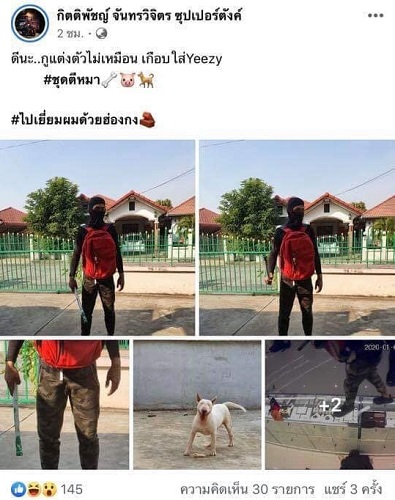
A screenshot of a Facebook post showing a man "cosplaying" as the unidentified gunman who killed 3 people in a Jan. 9, 2020, heist in Lopburi province.
BANGKOK — Police on Monday refuted online rumors that the gunman who shot dead three people in a gold store robbery had been arrested, saying the manhunt is still ongoing.
A screenshot of a Facebook post showing a man “cosplaying” as the unidentified gunman who killed 3 people in a Jan. 9, 2020, heist in Lopburi province.
Police also lashed out at several online personalities who donned the outfit of the robber in apparent social media pranks. National police spokesman Krissana Pattanacharoen on Sunday said the joke was not only in bad taste, but also risked violating the law.
“This kind of action caused fright and paranoia to the general public,” Col. Krissana said. “It is an inappropriate action.”
Any act that caused fear to the public is punishable by up to a month in prison under Section 392 of the Criminal Code, the police spokesman said.
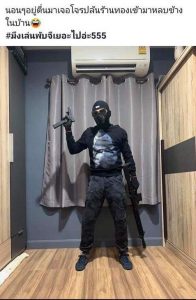
His warning came after some Facebookers posted photos of themselves “cosplaying” the gunman, who killed three people during a gold store heist in Lopburi city on Thursday night, including a two-year-old boy.
One of the cosplayers also reportedly visited a shopping mall in Lamphun province while wearing the grim outfit of balaclava, black shirt, and camouflage pants.
The prank drew harsh backlash from many on social media.
“Right now it’s become a dumb and crazy trend,” Facebook page Red Skull Addict wrote. “If some people got triggered and beat you up, don’t whine about it, dickhead.”
Nearly a week after the deadly heist, which shocked the nation for its particularly brutal nature, police have yet to identify the perpetrator. A rumor also spread online on Sunday that a suspect was under custody, but police soon dismissed the claim as untrue.
At a Sunday news conference, deputy police commissioner Suchart Teerasawat defended the pace of the investigation, saying police need more time to work.
A screenshot of a Facebook post showing a man “cosplaying” as the unidentified gunman who killed 3 people in a Jan. 9, 2020, heist in Lopburi province.
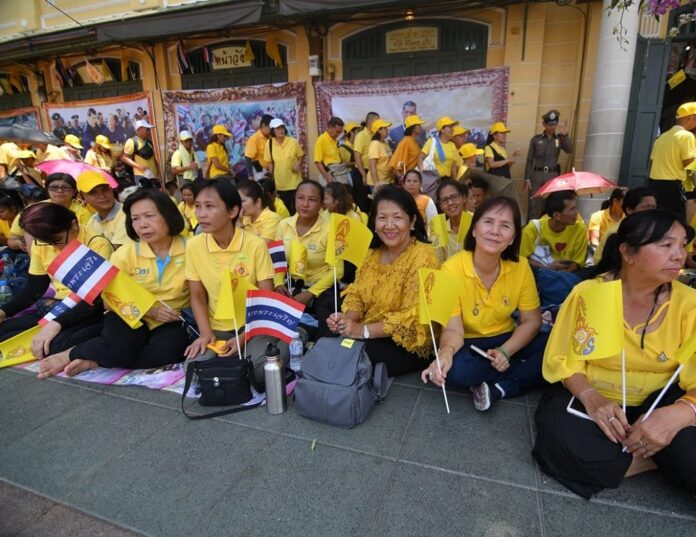
A crowd waits on a pavement to receive His Majesty the King in front of the Grand Palace in Bangkok on May 5, 2019.
BANGKOK — The government on Sunday unveiled a new guideline designed to lessen traffic congestion when members of the Royal Family travel in the cities.
The new set of rules, 10 points in total, was compiled by the police after His Majesty the King called for a revamp in security measures that would cause minimal impact to motorists, government spokeswoman Narumon Pinyosinwat says in an online video.
New practices unveiled by the government, which it said would only be applied to the King’s “private trips,” include:
1. Traffic lanes will be left open for the public during royal motorcades, instead of being shut entirely.
2. The motorcades will occupy only certain lanes while the rest will remain open to motorists.
3. The lanes on the opposite side of the motorcade route will remain open as usual. If the road lacks a road median, items such as traffic cones will be deployed to ensure public safety.
4. Traffic lanes merging into the motorcade route at intersections will be open as usual, using traffic cones to guide traffic flow.
5 U-turn bridges and crossing bridges over the motorcade route will be open as usual.
6 At toll booths, only two rightmost lanes will be reserved for the motorcade, while the rest will be open to other vehicles.
7. Police will not force motorists to change direction at intersections along the motorcade route.
8. Traffic cones and lighting signs must be deployed in a suitable place that pose the least inconvenience to the public.
9. Police must consider employing appropriate public relations measures to notify motorists of optimal routes with the highest degree of convenience and safety.
10. Police commanders must supervise traffic management during the motorcades in person. They must also use appropriate manners and speech when addressing the public, and refrain from causing a sense of coercion.
Police often shut down major roads and intersections when royal motorcades pass by, prompting complaints of traffic congestion in the past, especially during city rush hours.
The palace has made several efforts to curb the impact of royal motorcades. King Bhumibol raised those concerns to his aides as early as 2001, according to media reports.
Guidelines aimed at improving motorists’ convenience during royal motorcades were also published on King Bhumibol’s instruction back in 2010 and 2012, but they were rarely followed.
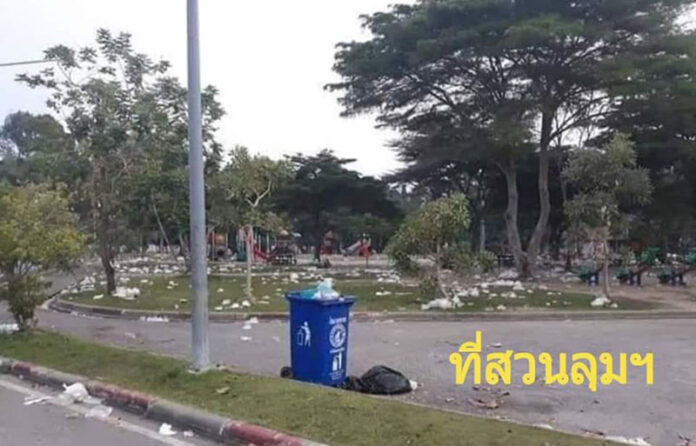
BANGKOK — A photo that falsely accused a pro-government rally of littering Lumpini Park in Bangkok has been shared by more than 34,000 people as of Monday afternoon.
The photo was first posted by Facebook user Vanisa Tirak, who contrasted the alleged image of Lumpini Park after the “Walk to Support Uncle” was held there on Sunday with the aftermath of “Run Against Dictatorship” at Suan Rot Fai. The former looked to be full of garbage, the second impeccably clean.
“The top photo is from Suan Lum on Jan. 12, 2020 during the #WalktoSupportUncle rally. The bottom photo is from Suan Rot Fai on Jan. 12, 2020 during the #RunAgainstDictatorship rally,” Vanisa wrote.
Many opponents of the government soon shared the photo on social media while demonizing the “Walk to Support Uncle” rally.
“Wherever filthy people are, filth is there,” wrote user Khemmika Semsawek in a comment with more than 400 likes.
“They have such black hearts, that’s why they do such disgusting things, these Walk to Support Prayuth people,” wrote user Tho Kamsawang. More than 34,000 netizens have shared the photos, and counting.
But it turned out the photo of dirty “Lumpini Park” was actually taken from Pattani News Facebook page, which shows Suan Khwan Muang Park in Yala province after a Childrens’ Day event was held there on Saturday. The page chided festival-goers for not picking trash after themselves.
By contrast, littering didn’t appear to be a problem at the anti- and pro-Prayuth rallies in Bangkok.
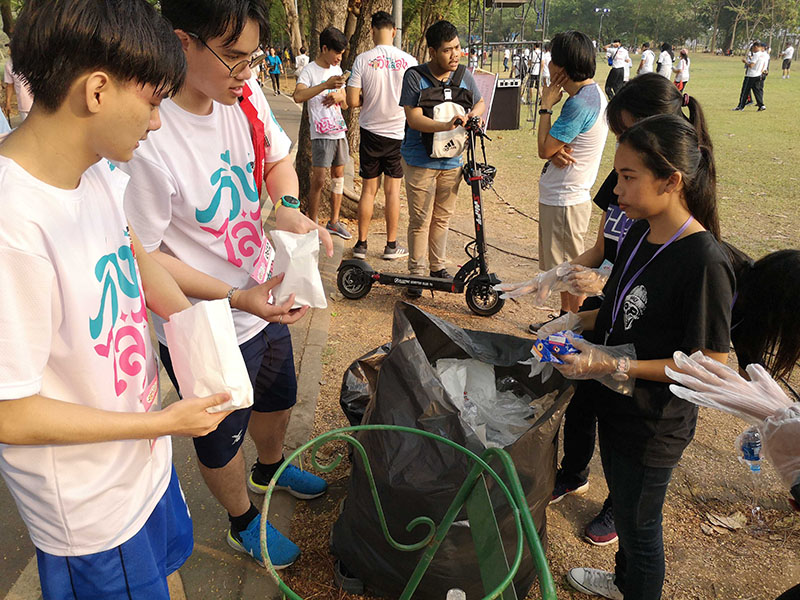
A reporter covering the anti-government run at Suan Rot Fai said organizers had a 60-strong team who collected and sorted trash. Juice boxes were even folded and packed for recycling. Post-rally cleanup took two hours, and the park was left relatively neat.
At “Walk to Support Uncle,” trash was also collected and disposed into park trash cans, not left on the park ground as alleged by many netizens, a reporter said.
“Run Against Dictatorship” organizers sort trash at their rally Jan. 12, 2020.Flattened juice boxes ready to be recycled at the “Run Against Dictatorship” rally on Jan. 12, 2020.
KANCHANABURI — A construction tycoon found guilty of conspiring to poach wildlife animals lost his bid on Monday to remove an electronic monitor attached to his ankle as a condition for his bail release.
Premchai Karnasuta of Italian-Thai Ltd., whose conviction was upheld in a December verdict, had a wound on his left ankle caused by the tracker, his lawyer told reporters today. The court ruled a removal is unnecessary because the device is attached to his uninjured ankle, but attorney Witoon Yamprai said his client suffered nonetheless.
“When he sleeps, the [tracker] rubbed against his left ankle, causing the wound,” Witoon told reporters,
Premchai himself declined to speak to the media about the case and left the court after hearing the judges’ decision.
The CEO of Italian-Thai Ltd was instructed to wear the tracking device as part of his bail conditions after he was released on a bond of 1 million baht.
In December, he was sentenced to a prison term of 2 years and 17 months. Under Thai laws, a month of jail sentence consists of 30 days, while a year of prison term counts as 365 days.
Premchai’s legal team has pledged to contest his conviction in the Supreme Court.
BANGKOK — One of J-Rock’s most popular bands is coming to shake up the Thai capital at the end of April, organizers announced Sunday.
One Ok Rock will be performing at 6:30pm on 25 April at Impact Muang Thong Thani as part of their Eye of the Storm Asia 2020 Tour, Thai Ticket Major announced Sunday.
Tickets, which range from 2,500 baht to 4,800 baht, go on sale 1 Feb.
One Ok Rock is a J-rock band founded in 2005 with members Takahiro Moriuchi, Toru Yamashita, Ryota Kohama, and Tomoya Kanki. They’re known for singing in both Japanese and English throughout their nine albums, with songs ranging from various rock genres, such as emo, pop punk, and pop rock. In 2016, they won the Classic Rock Roll of Honour Awards’s Eastern Breakthrough Male Band award.
Singles include “The Beginning,” “Clock Strikes,” “Heartache,” and “Mighty Long Fall.”
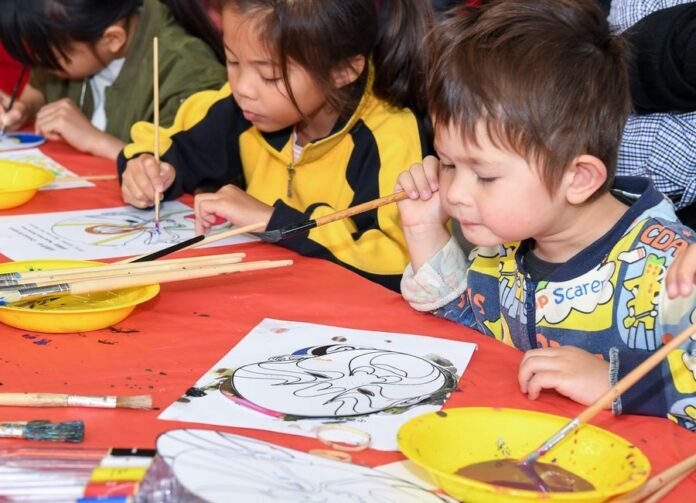
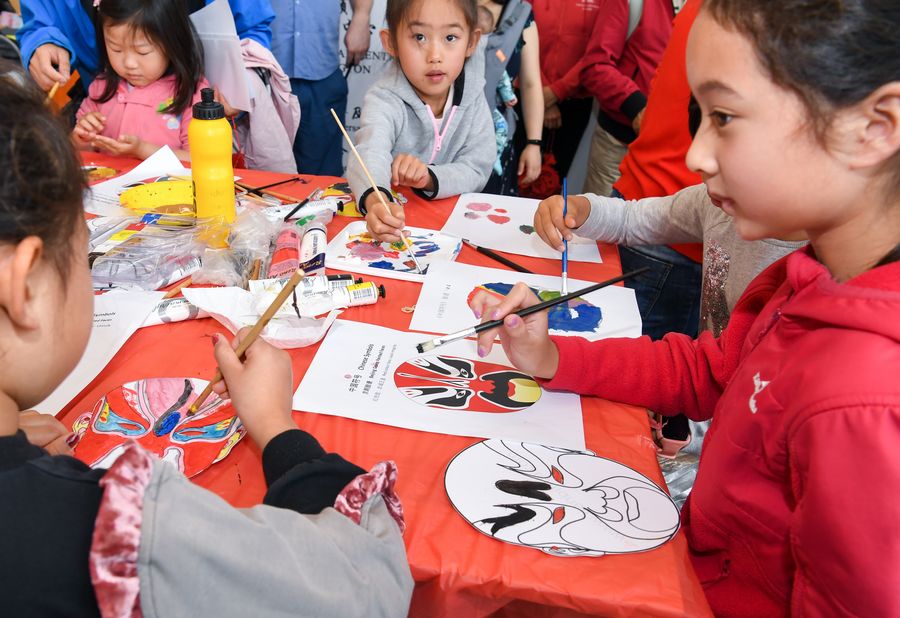
Children fill Peking Opera mask paintings with colors at an activity of "Chinese New Year Cultural Workshop: Symbols of China" to welcome the upcoming Chinese Lunar New Year held in Johnsonville Library, Wellington, capital of New Zealand, Jan. 12. 2020. (Xinhua/Guo Lei)
WELLINGTON (Xinhua) — Chinese New Year Cultural Workshop: Symbols of China was held in Johnsonville Library, Wellington, capital of New Zealand on Sunday.
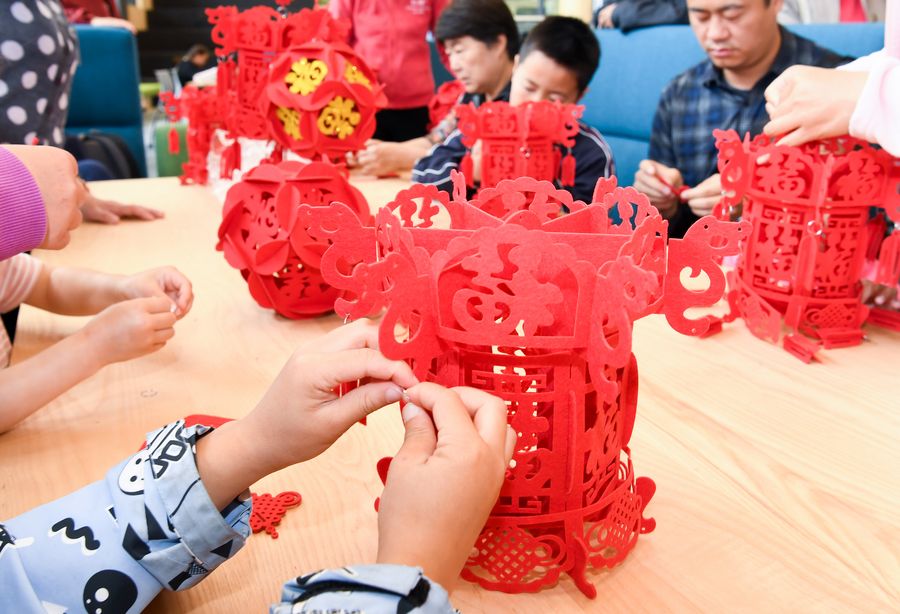
Wellington citizens, including the local Chinese community were presented with the opportunity to try a variety of traditional cultural practices, such as engraving and paper cutting, Beijing Opera face painting, Gongfu tea ceremony, Spring Festival couplets calligraphy, Chinese lanterns and fortune ball making.
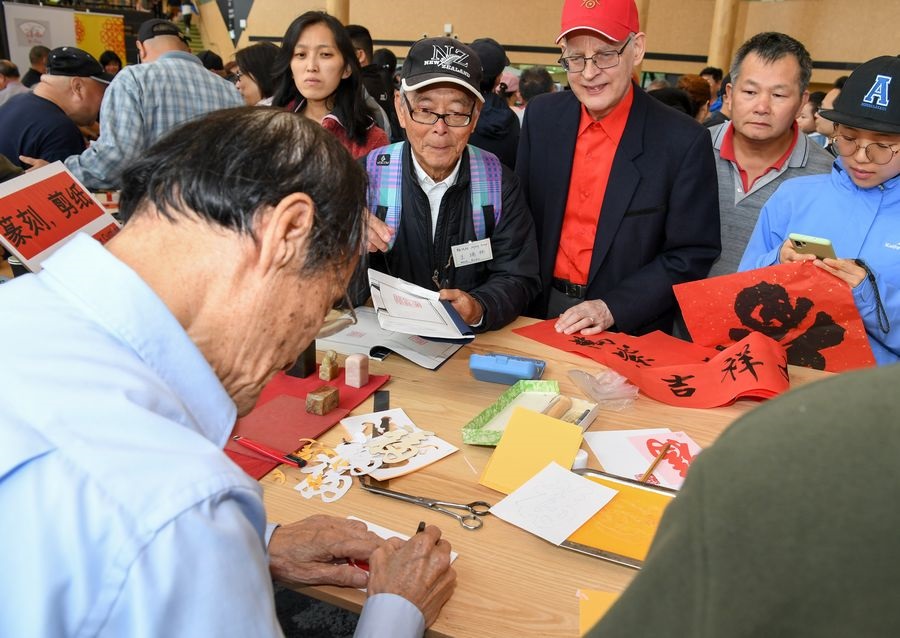
People queue for “mouse” and “Character Fu” paper cutting at an activity of “Chinese New Year Cultural Workshop: Symbols of China” to welcome the upcoming Chinese Lunar New Year held in Johnsonville Library, Wellington, capital of New Zealand, Jan. 12. 2020. (Xinhua/Guo Lei)
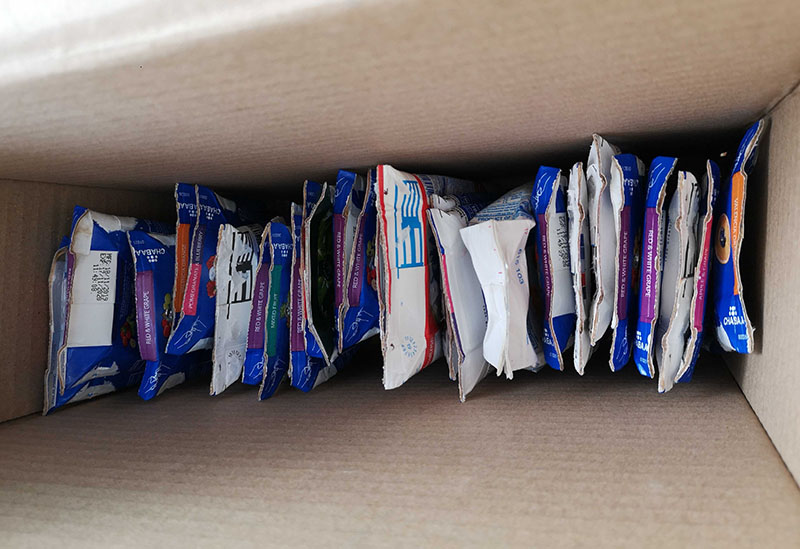
There was also a traditional Chinese medicine stall in the event, which offered free consultation and herbal tea bags as gifts.
Traditional Chinese therapist Natalie Floyd of New Zealand descent received attention as she appeared by the stall.
“I have been practicing acupuncture and Chinese massage for more than two years,” Natalie said.
People make traditional red lanterns at an activity of “Chinese New Year Cultural Workshop: Symbols of China” to celebrate the upcoming Chinese Lunar New Year held in Johnsonville Library, Wellington, capital of New Zealand, Jan. 12. 2020. (Xinhua/Guo Lei)
Aside from demonstrating the system of meridians and collaterals of human beings, she also brought some herbal tea bags which aid in digestion.
Engraving and paper cutting artist, 80-year-old Liu Changwu was the highlight of the event. Over 100 people queued for his “mouse” and “Character Fu” paper cutting during the course of two hours.
Children were happily involved in the Beijing Opera Face Painting and Chinese Lantern Making workshop.
Children fill Peking Opera mask paintings with colors at an activity of “Chinese New Year Cultural Workshop: Symbols of China” to welcome the upcoming Chinese Lunar New Year held in Johnsonville Library, Wellington, capital of New Zealand, Jan. 12. 2020. (Xinhua/Guo Lei)
“The upcoming Chinese New Year is our first one spent overseas. I am so appreciated that my four-year-old daughter received the chance to practice our cultural customs here,” a new immigrant from China said.
The workshop was jointly organized by the Wellington Chinese Cultural Center and the Yafeng Group, a local Chinese cultural community.
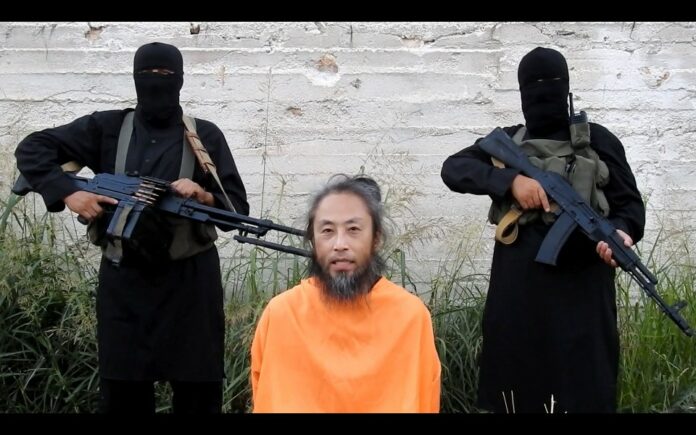
A still image captured from a video uploaded online shows Japanese journalist Jumpei Yasuda, who went missing in Syria in 2015, asking for help
TOKYO (Kyodo) — Japanese journalist Jumpei Yasuda, who returned home in 2018 after more than three years of captivity in Syria, has sued the government over its denial of his request for a new passport, his lawyer said Sunday.
Yasuda filed the suit with the Tokyo District Court last Thursday, seeking cancellation of the Foreign Ministry’ decision in July 2019 not to issue him a new passport, according to the lawyer.
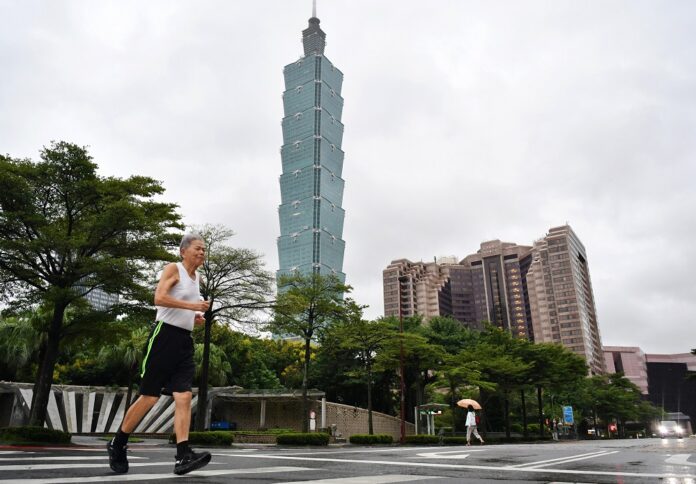
A citizen runs in front of the Taipei 101 skyscraper in Taipei, southeast China's Taiwan, on Oct. 1, 2019. (Xinhua/Chen Bin)
BEIJING (Xinhua) — China opposes any forms of official ties between Taiwan and countries that have diplomatic relations with China, a Foreign Ministry spokesperson said Sunday, urging countries to abide by the one-China principle.
Spokesperson Geng Shuang’s remarks came after senior officials of some countries that have diplomatic ties with China, including the United States, Britain and Japan, congratulated Tsai Ing-wen on the Taiwan leadership election result.
The election in Taiwan is a local affair of China, Geng said, stressing that China deplores and firmly opposes those countries’ violation of the one-China principle by taking such a move, and has lodged solemn representations.
The Taiwan question concerns China’s core interests, said Geng.
“We oppose any forms of official ties between Taiwan and countries that have diplomatic relations with China,” he said, noting that the one-China principle is a basic norm governing international relations and a universal consensus of the international community.
China urged those countries to earnestly abide by the one-China principle, refrain from having any official ties or exchanges with Taiwan, deal with Taiwan-related issues properly and with caution, and avoid sending any wrong signals to the “Taiwan independence” forces, said the spokesperson.
He added that those countries should take concrete actions for the peaceful development of relations across the Taiwan Strait, and strive to uphold their relations with China.
TOKYO (Kyodo) — The re-election of Taiwan President Tsai Ing-wen, whose party favors independence from China, comes at a time when Japan has recently pledged to open a “new era” of ties with the Communist-ruled mainland.
Following the outcome of Saturday’s presidential election, Tsai of the Democratic Progressive Party is expected to push policies countering the “one country, two systems” framework that Beijing is threatening to impose on the self-governing island.
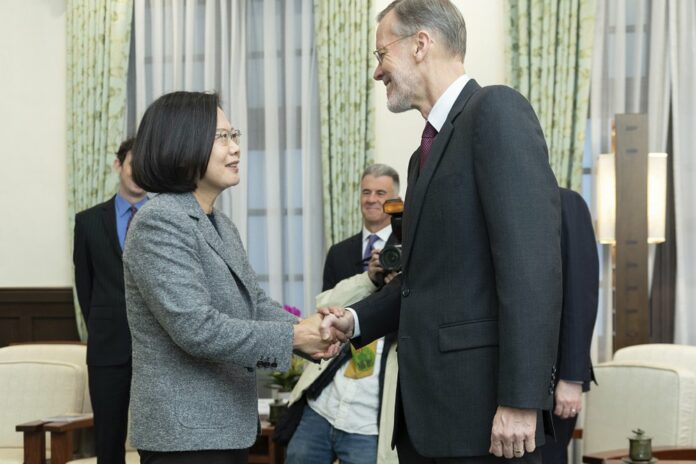
In this photo released by the Taiwan Presidential Office, William Brent Christensen, director of the American Institute in Taiwan at right meets with Taiwan President Tsai Ing-wen, at left in the Presidential Office in Taipei, Taiwan. (Taiwan Presidential Office via AP)
TAIPEI, Taiwan (AP) — The landslide reelection of Taiwan’s leader underscores the population’s embrace of an identity distinct from China — a shift that the communist leaders of China refuse to accept.
It’s a contradiction that will keep the island of 23 million people at odds with its much larger neighbor for the foreseeable future and put increasing strains on the one-China principle, which holds that Taiwan and China are part of one country.
President Tsai Ing-wen swept to a second four-year term Saturday with 57% of the vote. Her opponent, Han Kuo-yu, tallied 39%. The results soundly rejected the China-friendly views of his Nationalist Party, which has struggled to adapt to the emergence and evolution of a Taiwanese identity.
The question for the next four years is whether the governments on both sides of the 160-kilometer- (100-mile-) wide Taiwan Strait will stay the course or escalate their battle of wills.
China may step up its campaign to try to isolate Taiwan both diplomatically and economically, though it may also be rethinking that approach after efforts to do so during Tsai’s first term only seemed to build support for her at home.
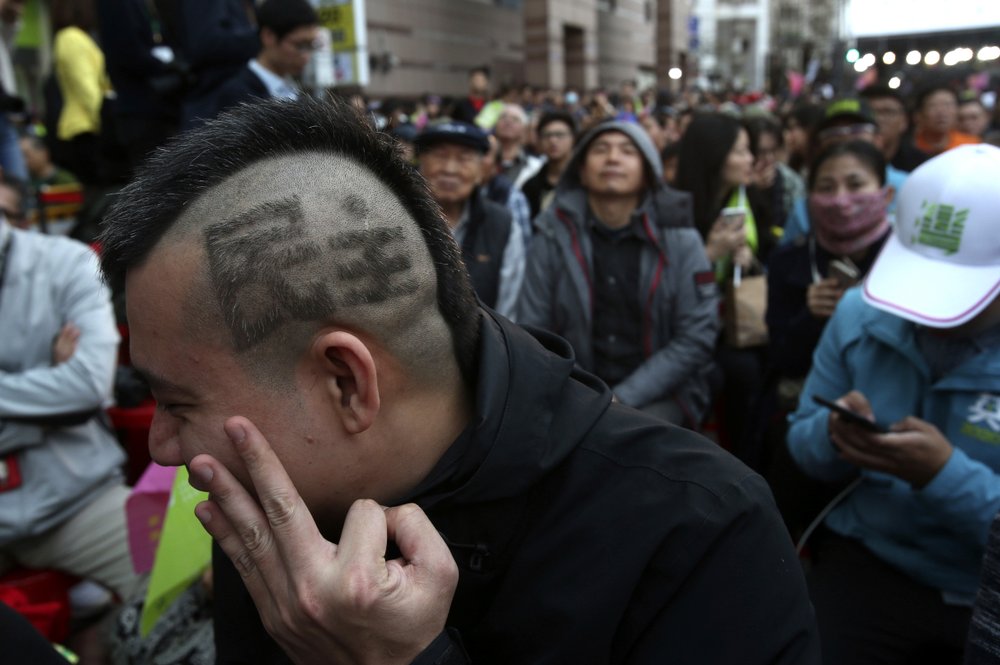
A supporter of Taiwan’s 2020 presidential election candidate, Taiwan president Tsai Ing-wen shows Chinese character “Democracy” on his haircut as supporters gather to watch early election return in Taipei, Taiwan, Saturday, Jan. 11, 2020. (AP Photo/Chiang Ying-ying)
Her big win could embolden some in her Democratic Progressive Party to look for ways to nudge Taiwan toward formal independence from China, the party’s official goal. But even symbolic steps would anger China and could invite retaliation, and Tsai herself has shown no signs of going down that path.
Modern Taiwan is an outgrowth of a civil war between the Nationalists under Chiang Kai-shek and Mao Zedong’s Communists for control of China after World War II. The communists triumphed in 1949, and Chiang’ retreated to Taiwan, where he set up a rival government that he ran with an iron fist while harboring hopes of taking back the entire country from the communists.
That is no longer a realistic goal, and with each passing decade, Chiang’s dream has been replaced by a growing sense that Taiwan is not a part of China, particularly among the younger generations. They see their home as a separate entity with its own democratic ideals and don’t want to be subsumed by China and its ruling Communist Party.
The long-running and at times violent pro-democracy protests in Hong Kong that started last June reinforced that sentiment.
Early in 2019, Chinese leader Xi Jinping proposed talks with Taiwan on joining China under a “one-country, two-systems” framework similar to the one that governs Hong Kong, the former British colony returned to China in 1997.
Most Taiwanese oppose the idea, and Tsai capitalized politically on the Hong Kong protests, saying they illustrate why one-country, two-systems doesn’t work.
Taiwan largely functions as an independent nation, with its own laws, military and foreign minister, though technically it and mainland China belong to one country with rival governments, the People’s Republic of China in Beijing and the Republic of China in Taipei, the Taiwanese capital.
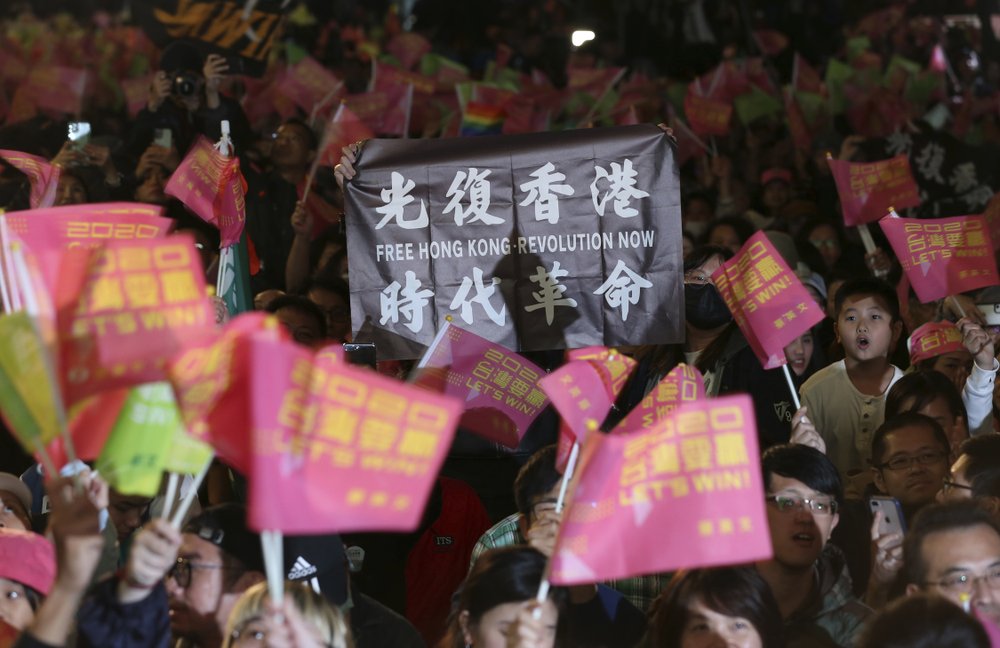
Hong Kong supporters of Taiwan’s 2020 presidential election candidate, Taiwan president Tsai Ing-wen hold slogan as supporters gather to watch the early election returns in Taipei, Taiwan, Saturday, Jan. 11, 2020. (AP Photo/Chiang Ying-ying)
Tsai, though, has refused to endorse that one-China policy and sought to build unofficial ties with the United States, which does not recognize Taiwan but is its main supplier of military equipment to defend itself against China. Signals of support from the Trump administration have given voters confidence in Tsai’s approach of pushing back against China’s threats.
U.S. Secretary of State Mike Pompeo congraulated Tsai in a statement released soon after the election results came out and applauded “her commitment to maintaining cross-Strait stability in the face of unrelenting pressure.”
Lin Fei-fan, the Democratic Progressive Party’s deputy secretary general, said last month that discussion on constitutional change could start in a second Tsai term, such as changing the flag or the definition of the Republic of China’s territory to include just Taiwan, rather than both the island and the mainland.
China, though, has threatened to use military force if needed against what it calls any “secessionist” moves toward independence.
The official Xinhua News Agency said in a commentary on the election that China has a full policy toolbox to curb Taiwan independence activities and benefit Taiwanese compatriots.
Tsai, in line with public opinion, focused in her campaign on preserving Taiwan’s democracy rather than any fundamental change to the island’s political status. That approach pleases Dong Yu-hsin, a 23-year-old nonprofit worker.
“Although we can say in hard terms Taiwan is Taiwan and China is China … of course we don’t want a war or anything worse than now,” he said. “I hope Tsai Ing-wen can keep her perspective on autonomy and uphold today’s status quo.”
Like many Taiwanese, he likes things the way they are and doesn’t want to rock the boat with China.
___
Associated Press writer Ralph Jennings contributed to this report.