27.7 C
Bangkok
Thursday, July 2, 2026
Home Blog Page 1635

Police Say Mall Snakes Man Sent to Psych Ward

Image: Channel 3

Update: Officials said on Thursday afternoon the man tested positive for marijuana use and claimed to be acting on orders from the Sun God.

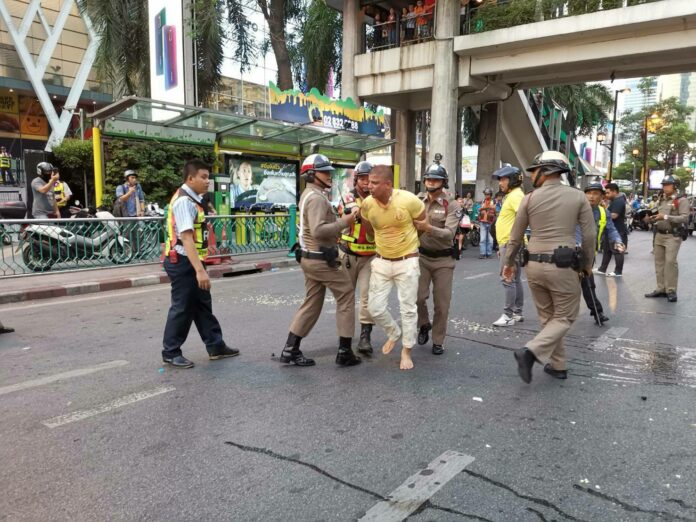
BANGKOK — Police said Thursday a man who blocked traffic to release two cobras in front of a shopping mall yesterday was admitted to a psychiatric hospital for treatment.

Real estate businessman Ganeshpisnuthep Jakphopmahadecha, 42, will be charged with at least three offenses for his antics, which brought rush hour traffic to a standstill in the heart of Bangkok, according to the officer in charge of the local police station.

“Based on questioning of the perpetrator’s family, he was stressed,” Col. Kampol Rattanapratheep said. “But we still don’t know his motives.”

The policeman said Ganeshpisnuthep is currently held at Somdet Chaopraya Hospital in western Bangkok, and police will file charges of littering, blocking traffic and carrying weapon “after he recovers.”

Ganeshpisnuthep was also treated for over 20 blade wounds that he inflicted upon himself during the standoff, police said. Media reports describe him as a Thai-Indian businessman who has invested in multiple hotels and resorts.

The chaos started about 6.30pm yesterday when Kanespisanuthep parked his car in the middle of a busy road right in front of CentralWorld, before scattering flowers about the area. He also placed portraits of King Vajiralongkorn on his vehicle.

Onlookers were then horrified to see Ganeshpisnuthep release two snakes – later identified as cobras – before cutting himself with a knife. Police later arrived at the scene and tackled him, but not before images of the incident went viral on social media.

An online search suggests it was far from the first time Ganeshpisnuthep behaved erratically in public. He has previously been spotted praying and shouting about his loyalty to the monarchy in shopping malls around Bangkok.

Police Col. Kampol added that the two vipers cut loose by Ganeshpisnuthep were eventually rescued and delivered safely to a Red Cross snake farm nearby.

Advertisement

‘Avengers: Endgame’ Poised to Topple Box-Office Records

Marvel Studios President Kevin Feige, from left, poses with members of the cast of
Marvel Studios President Kevin Feige, from left, poses with members of the cast of "Avengers: End Game," Chris Hemsworth, Chris Evans, Robert Downey Jr., Scarlett Johansson, Jeremy Renner and Mark Ruffalo at a hand and footprint ceremony at the TCL Chinese Theatre on Tuesday, April 23, 2019, in Los Angeles. Photo: Willy Sanjuan / Invision / AP

NEW YORK — By any measure, the release of “Avengers: Endgame” is a movie-theater event unlike any other.

When the 22nd film in Marvel Studios’ saga opens in North American theaters on Thursday night, it will land on more screens than any movie ever has in U.S. and Canadian theaters. And even still, the 4,600 theaters the Walt Disney Co. has lined up may still not be able to keep up with demand.

Beginning Thursday night, many theaters will stay open round-the-clock. Seventeen AMC Theatres won’t close for 72 hours straight. Some $120 million in presales have already set records on advance ticketing services Fandango and Atom. AMC’s website was crashed by early “Endgame” ticket buyers.

“It looks like we’ve gotten Thanos’ snap,” AMC said at the time.

Just how massive the ticket sales will be by the end of Sunday has been one of the one of the industry’s favorite guessing games. Can it clear $300 million domestically? Is a $1 billion worldwide weekend possible? Will “Avengers: Endgame” eventually rival the $2.8 billion total gross of “Avatar” in 2009?

Regardless, records will fall — and they have already started to. Disney said Wednesday that “Avengers: Endgame” grossed about $107.2 million in China on Wednesday, where it first opened. That’s already the most lucrative single day ever in Chinese theaters. Only “Star Wars: The Force Awakens” had a larger single day gross, and its one-day $119.1 million haul came from both U.S. and Canada theaters.

“This is a seismic box-office event,” said Paul Dergarabedian, senior media analyst for Comscore. “This is like the 100-year-flood of movies.”

The current opening weekend record is held by the last “Avengers” movie — the 2018 preamble to “Endgame,” ”Infinity War.” It debuted with $257.7 million domestically and $640.5 million worldwide.

Both of those records are likely toast. The worldwide haul is certain to be obliterated that because “Infinity War” didn’t debut in China until two weeks later. “Endgame” is opening worldwide more or less simultaneously everywhere except Russia.

Estimates range from $260 million to $300 million domestically, and between $800 million and $1 billion globally.

Helping the cause is that reviews, at 97 percent fresh on Rotten Tomatoes, have been among the best for any Marvel movie. “Endgame” concludes not just the arc of the “Avengers” movies but signals the completion of the 22-movie Marvel Cinematic Universe, as mapped out by Marvel Studios President Kevin Feige.

Feige has been tight-lipped about what the next phase will be, though he has new reinforcements. Disney’s acquisition of 20th Century Fox brings Marvel’s X-Men and Deadpool under the same roof.

“Endgame” will give a much-needed jolt to the box office, which is running about 16 percent behind the pace of 2018. Ironically, though, the weekend won’t be much an improvement over the same time frame last year since that’s when “Infinity War” opened. And no other wide release is daring to open against “Endgame.”

Ultimately, the only thing standing in the way of “Endgame” is “Endgame,” itself. With a running time of three hours and one minute, theaters won’t be able to fit as many screenings in per day as they’d like to.

“It looks like the demand is going to outstrip the supply but theaters are doing their best to keep up with that,” said Dergarabedian. “Look, there’s only 24 hours in a day and it’s a 3 hour and one minute movie.”

Story: Jake Coyle

Advertisement

Unspeakable Grief: 5 Members of 1 Family Killed in Sri Lanka

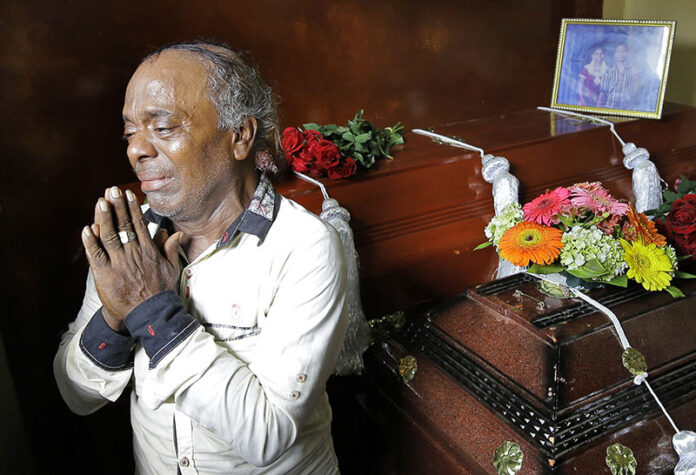
Baby Joseph Gomes prays standing next to coffins of his family members killed in the Easter Sunday bombings in Colombo, Sri Lanka, Tuesday, April 23, 2019. Gomes lost five members of his family. Photo: Eranga Jayawardena / AP

COLOMBO — The dark wooden coffins, sitting side by side, attested to one family’s unspeakable grief.

The Gomez family gathered Tuesday to say a final farewell to five loved ones — a son, a daughter-in-law and three young grandsons — brutally killed as they attended Easter Sunday Mass at Colombo’s St. Joseph’s Shrine.

“All family, all generation, is lost,” said Joseph Gomez, the family patriarch, as tears welled in his eyes. Dozens of family members and neighbors were gathered in his simple home, where the sound of hymns sung by mourners gently wafted in the background and candles flickered beside three coffins. The bodies of two grandsons have yet to be recovered.

Across Sri Lanka, Tuesday was a national day of mourning as families began to lay to rest the more than 320 victims of the bomb blasts that struck a half-dozen churches and hotels in the island nation.

For the Gomez family, the loss was unfathomable: A 33-year-old son, Berlington Joseph, the young man’s 31-year-old wife Chandrika Arumugam, and their three boys, 9-year-old Bevon, 6-year-old Clavon and baby Avon, who would have turned 1 next week. A funeral card with a photo of the family clutched in his hands, the elder Gomez wailed: “I can’t bear this on me, I can’t bear this.”

“My eldest son, my eldest son,” he sobbed as he laid bouquets of red roses and brightly colored daisies on the largest coffin. Next to it was a tiny coffin, a photo of little Avon tucked into a wooden frame nearby.

The coffins, draped with long white tassels, were then carried to a Colombo cemetery and lowered into side-by-side graves.

AP19113377993892
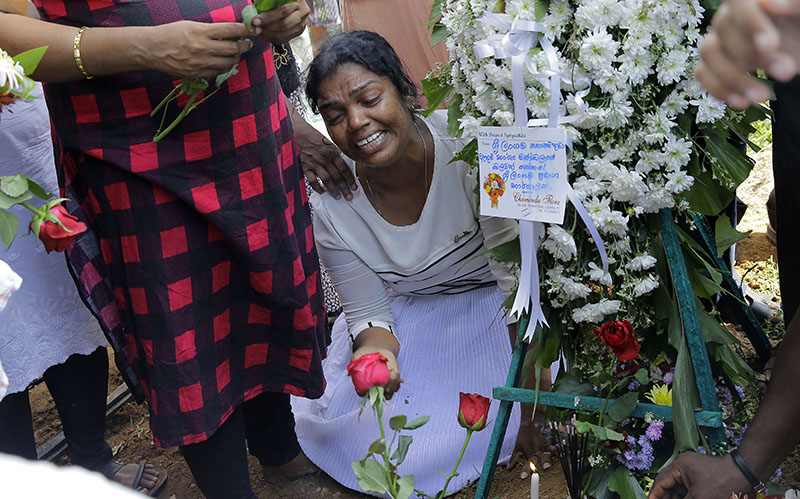
Wasanthi, a member of Berlington family weeps over the grave of Bevon, who was killed in the Easter Sunday bombings in Colombo, Sri Lanka, Tuesday, April 23, 2019. Photo: Eranga Jayawardena / AP

At St. Joseph’s Shrine, dozens of mourners gathered outside, lighting candles and praying in unison for the victims of Sunday’s blasts as heavily armed soldiers stood guard.

At St. Sebastian Church in Negombo, a funeral service was held Tuesday for victims killed there as they worshipped, led by Cardinal Malcom Ranjith. The church was heavily guarded by hundreds of army, air force and police troops, and soldiers were deployed every 15 feet along the streets of the city some 20 miles north of Colombo.

Throughout the country, people observed a three-minute silence for the victims of the near-simultaneous attacks at three churches and three luxury hotels, and three other related blasts, the deadliest violence to strike Sri Lanka in a decade.

The Sri Lankan government has blamed the attack on National Towheed Jamaar, a little-known local Islamic extremist group, and on Tuesday, the Islamic State group also claimed responsibility, though it provided no proof it was involved and has made unsubstantiated claims in the past.

Story: Shonal Ganguly

Advertisement

Japan’s New Emperor Naruhito: A Cosmopolitan Team Player

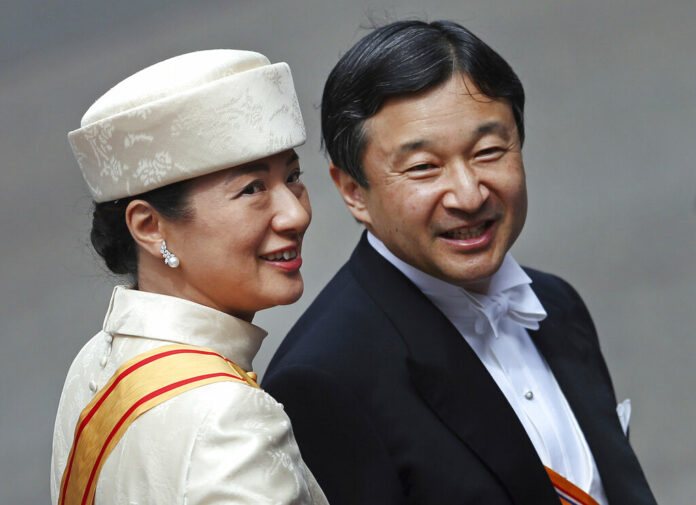
In this April 30, 2013, file photo, Japan's Crown Prince Naruhito and Crown Princess Masako arrive at the Nieuwe Kerk or New Church in Amsterdam, The Netherlands, for the inauguration of King Willem-Alexander. Photo: Dusan Vranic / Associated Press

TOKYO — Japan’s soon-to-be-anointed new emperor is a musician and historian, both mild-mannered and quietly tenacious, a team player and a loyal husband and friend who will bring an unusually global perspective to an ancient institution when he ascends the Chrysanthemum Throne on May 1.

Because Naruhito, 59, will be more distanced from the World War II shadows that his 85-year-old father, Akihito, labored under, he may also enjoy greater liberty in shaping the contours of his reign.

Japan’s constitution gives the emperor only symbolic status, and Naruhito is likely to emulate his father, who has embraced his role as national symbol. Akihito will end his three-decade reign by abdicating on April 30.

Naruhito, the first Japanese emperor to have studied abroad, is considered a new breed of royal, his outlook forged by the tradition-defying choices of his mother, Empress Michiko, and Akihito, who broke with ancient imperial traditions by opening up the cloistered palace to the people.

Akihito and Michiko, who was born a commoner, chose to largely raise their own children instead of relying on palace staff for parenting.

And they supported Naruhito when he chose to attend Oxford, where he researched the history of the Thames River transportation systems during his time there from 1983 to 1985.

“He will be a fantastic emperor,” said Keith George, 57, a friend of Naruhito’s since their days at Oxford. “He is a caring person. He is a humble person. But he has never forgotten his duties as the crown prince, and he will never forget them as the emperor.”

The two young men hit it off from the start, and George remembers Naruhito both for his sense of humor and their shared love of music: George played bluegrass and country music on the banjo, and Naruhito played the viola.

The crown prince’s attentiveness and ability to play down his royal status made a strong impression. “He doesn’t look at everything in terms of what it means for him. He looks at it in terms of what it means for the people around him,” George, now a lawyer, said in a recent interview with The Associated Press at his office in Charleston, West Virginia.

Naruhito’s memoir about his experience in Britain includes humorous accounts of his life away from home, including a mishap with an overflowing laundry machine.

Naruhito will be the 126th emperor, but his role will be strikingly different from that of his grandfather Hirohito. Only with Japan’s 1945 surrender in World War II did the Showa Emperor, which is what Hirohito is now called, cease being treated as a living god. Under Japan’s U.S.-inspired pacifist constitution, the emperor has no political power.

In an annual news conference marking his Feb. 23 birthday, Naruhito said he was open to taking up a new role that “suits the times.” But he said his father’s work will be his guidepost.

“I hope to see him develop his own way of doing things in coming years,” Toshio Shiraishi, a longtime friend of Naruhito, told the AP. “The crown prince has closely watched the work of the Showa Emperor and the current emperor and learned from them, while trying to figure out what his role could be.”

Shiraishi, a gray-haired banker who plays the cello, says the crown prince’s choice of instrument — viola — shows a lot about the kind of man he is.

In an essay he contributed for a concert brochure, Naruhito once wrote: “I’m starting to understand the role of viola, which doesn’t stand out, but (is needed because the) harmony becomes lonesome without it. … It’s a joy to have chosen the viola as a friend through which I could meet people and play music together.”

Naruhito is likewise both a good listener and conversationalist, Shiraishi said.

“He encourages people to talk and helps enrich a conversation,” he said. “He doesn’t want to be a star; instead he wants to be with people and work together.”

Palace watchers say that as emperor, Naruhito might focus on global issues, including disaster prevention and water conservation. He has researched such topics since his 1987 visit to Nepal, where he saw women and young children traveling long distances to fetch water.

Naruhito’s wife, the future Empress Masako, is a Harvard-educated former diplomat who may prove an adept partner in his overseas travels and activities. But much will depend on her health, since she has been recovering from what the palace describes as stress-induced depression for about 15 years.

Naruhito has shown himself to be determined. It took him eight years and two rejections before he managed to persuade Masako, who he met at a party in 1986, to marry him.

Masako has largely limited her public appearances since late 2003, after giving birth to their only daughter, Princess Aiko, and facing pressure to produce a son. Naruhito has defended her and said he hopes Masako might slowly expand her role.

The imperial household faces other uncertainties. Only Naruhito’s younger brother, Prince Akishino, 53, and Akishino’s 12-year-old son, Prince Hisahito, can currently succeed him as emperor since the Imperial House Law confines that role to male heirs. Naruhito’s daughter, Aiko, now 17, is not in the running.

Whatever happens, Naruhito will need “a strong will” similar to his father’s if he’s to pursue his own path as emperor, said Takeshi Hara, a Meiji Gakuin University professor and expert on Japan’s monarchy.

George, the friend from Oxford, says he is confident Naruhito can handle his future duties. While at Oxford, where they often went out for drinks and dinners, the crown prince admitted how much he enjoyed the freedom of being a student. Still, he never lamented his destiny, George said.

“Never once did I ever see or feel that he had felt that as a burden,” he said.

Story: Mari Yamaguchi and Kaori Hitomi

Advertisement

By-Election Ordered in Chiang Mai as Pheu Thai Winner Disqualified

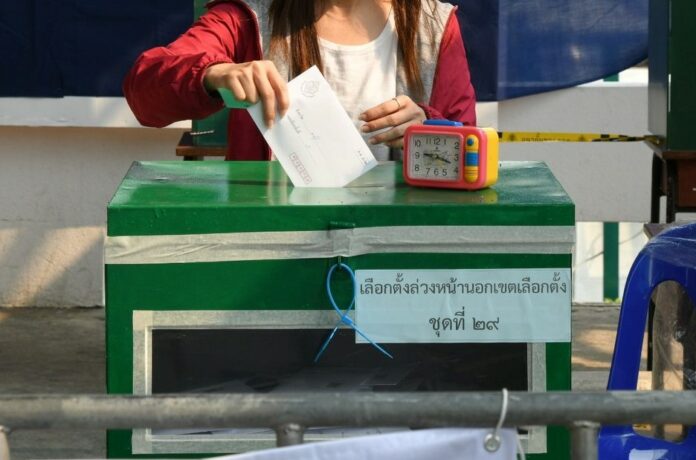
A woman cast a ballot March 17 at the Lat Phrao District Office in early voting before the March 24 poll.

BANGKOK — A Pheu Thai candidate on Wednesday became the first election winner to be disqualified, after the Election Commission accused him of vote-buying.

Commissioner Sawaeng Boonmee announced a by-election to be held in Chiang Mai’s eighth constituency after nullifying the victory of Surapol Kiatchaiyakorn, who will be banned from running for office for a year. The commission ruled Surapol breached the election law by offering money to “a community” in exchange for votes.

Sawaeng added that the by-election will be held in May with the same set of candidates, bar Surapol, but declined to say whether it will fall before or after May 9 – the deadline for commissioners to certify the results of the March 24 elections.

Surapol said he was accused of vote-buying for hosting a merit-making ceremony at a local temple. He said he wasn’t involved in organizing the event, but that he privately gave 2,000 baht cash to a monk, adding that he had already explained himself to the commissioners and had the monk testify as his witness. Surapol said he was surprised by the news.

“I did not expect such a ruling as I had already explained everything. I also wonder why the commission appears to selectively respond to complaints against certain parties,” he said. “I however accept the decision.”

According to the election law, monks are not eligible voters. Surapol said he did not understand why giving money to a monk is considered vote-buying.

Surapol said he would propose a new candidate to run in his place. Commissioner Sawaeng however clarified later that no new candidates will be accepted in the by-election, meaning Pheu Thai Party will lose all votes from this constituency.

Results from the constituency on Election Day showed that Surapol won with 52,165 votes, followed by a Phalang Pracharath candidate who received 39,221 votes and a Future Forward candidate with 29,556 votes.

Advertisement

Gov’t Delays 1,500 Baht Tourism Subsidy

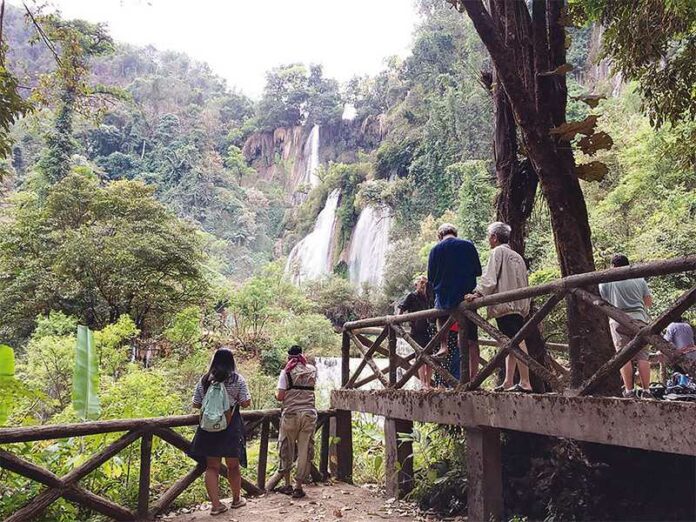
A file photo of Thi Lo Su waterfall in Tak province.

Update: The Ministry of Finance said on April 26, 2019, that it has withdrawn the idea.

BANGKOK — The Ministry of Tourism clarified Tuesday that a proposal to provide cash handouts to tourists visiting lesser-known provinces has yet to be approved by the cabinet.

The idea, which calls for an award of 1,500 baht to Thais traveling “off the beaten track”, was not among the topics discussed in today’s weekly cabinet meeting, Tourism Minister Weerasak Kowsurat told reporters.

Weerasak said he has not even seen the proposal in person.

“I only saw what the media reported,” the minister said. “I don’t know about the details.”

Nonetheless the minister confirmed his support for the idea, saying any policy which injects revenue into tourist destinations is a sound one.

Quoting sources in the finance ministry, media agencies reported earlier this week that officials were considering the subsidy as a measure to promote traffic to what the authorities call muang rong or “Secondary Cities” – 44 provinces which receive fewer tourists than big names like Bangkok and Chiang Mai.

Under the proposal, up to 10 million Thais would be eligible for the payout, which must be used by June. Cash would be distributed to electronic wallets, and accepted by shops and hotels that join the program.

Cities designated as muang rong include Mae Hong Son, Si Saket and Prachinburi.

Some netizens responded to the idea by suggesting the government save the money for more pressing matters like public healthcare, while a regional tourism guild said the authorities should also engage in more sustainable approaches to promoting sightseeing.

Northern Tourism Federation chairman Kitti Tissakul said he welcomed the idea but urged the government to also invest in infrastructure and encourage more tourists to buy local products.

“Giving people money to travel to secondary cities should not be the only measure,” Kitti said.

Advertisement

Dhanin Resigns as Chairman of CP’s Food Subsidiary

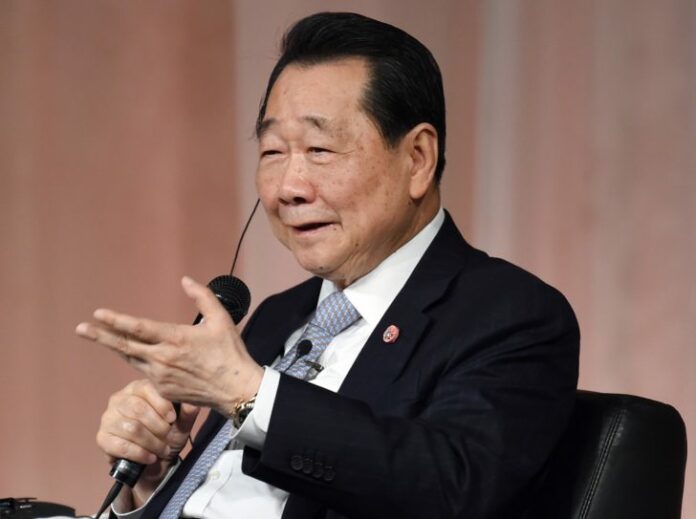
Dhanin Chearavanont
Dhanin Chearavanont

BANGKOK — Thailand’s richest man has stepped down as chairman of Charoen Pokphand Foods, the company announced Wednesday.

In a written statement, the company said Dhanin’s resignation from the board is effective today, citing “increasing responsibilities” that prevented him from being fully committed to the subsidiary. It did not elaborate further.

The statement said it’s in the middle of the selection process for his replacement. Dhanin remains the senior chairman of CP Group, one of the world’s largest agriculture and food conglomerates.

The 80-year-old Dhanin was named by Forbes as the world’s 75th richest man earlier this year, with an estimated wealth of US$15.2 billion or about 480 billion baht. The Chearavanont family was named the richest of Thailand last year with collective assets worth more than 900 billion baht.

In 2017, Dhanin stepped down from both the positions of chairman and CEO of CP Group, replaced by his sons Soopakij Chearavanont and Suphachai Chearavanont, respectively.

Advertisement

Leaders of Hong Kong Pro-Democracy Protests Get Jail Terms

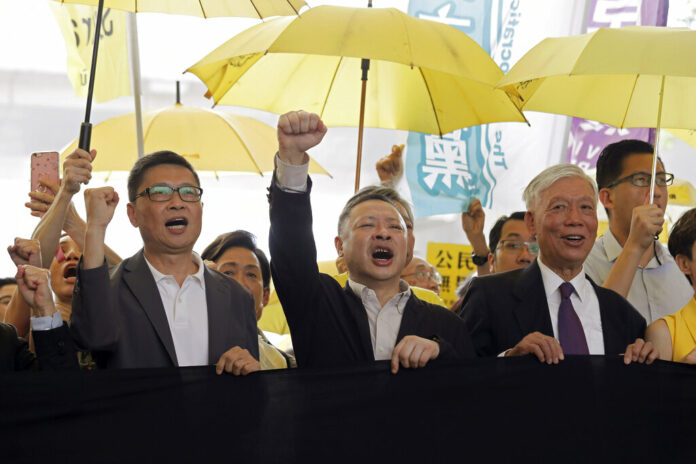
Occupy Central leaders, from left, Chan Kin-man, Benny Tai and Chu Yiu-ming chant slogans before entering a court in Hong Kong, Wednesday, April 24, 2019. Photo: Kin Cheung / Associated Press

HONG KONG — A court in Hong Kong handed down prison sentences of up to 16 months Wednesday to eight leaders of massive 2014 pro-democracy protests on charges of public nuisance offenses.

The sentences are seen as an effort by the government of the semi-autonomous Chinese territory to draw a line under the protests amid pressure from Beijing.

Ranging in age from their 30s to 70s, the nine defendants span generations of Hong Kong citizens who have been agitating for full democracy. The defendants had all pleaded not guilty, calling the prosecutions politically motivated.

Three protest leaders were given 16 months, one of them suspended for two years, two received eights months in prison and two were given suspended eight-month sentences. Another was ordered to perform 200 hours of community service. One other defendant, Tanya Chan, had her sentencing postponed because of the need to undergo surgery.

It was not immediately clear if they planned to appeal.

“Thank you for the sentencing,” Raphael Wong, given eight months, told Judge Johnny Chan. “Our determination on fighting for genuine universal suffrage will not change.”

While the charges carried potential sentences of up to seven years, they were still seen as unusually harsh by activists in what they called an attempt to intimidate them into silence.

“The long sentences send a chilling warning to all that there will be serious consequences for advocating for democracy,” said Maya Wang, Hong Kong-based chief researcher for China at Human Rights Watch.

“The Beijing and Hong Kong authorities appear intent on eliminating the only pocket of freedoms on Chinese soil,” Wang said. She cited a law against booing the Chinese national anthem and moves to amend the extradition law that could see suspects sent to China where they’d be unlikely to receive a fair trial.

Supporters and family members applauded the defendants as they entered the courtroom, then stood outside sobbing after the hearing before breaking into chants.

Those convicted included law professor Benny Tai, retired sociology professor Chan Kin-man and pastor Chu Yiu-ming, who all received 16 months though Chu’s was suspended for two years. The others include two current and one former lawmaker, two student leaders and a political activist.

Chan, who will be sentenced June 10, said prior to the hearing that she hadn’t lost faith in what the movement stood for. “Although it’s an uphill battle, it’s not easy, it’s time for us to make sure that we are strong enough to face different kind of challenges,” Chan said.

The nine were leaders of the “Occupy Central” campaign, which was organized as a nonviolent sit-in that became known as the “Umbrella Movement” after a symbol of defiance against police adopted by the street protests.

Protesters demanded the right to freely nominate candidates for Hong Kong’s leader who would then be elected by all of the territory’s roughly 5 million voters. However, they failed to win any concessions from the government, and Hong Kong Chief Executive Carrie Lam was chosen in 2017 from among a slate of candidates approved by Beijing and elected by a 1,200- member pro-China electoral body.

Hong Kong, a former British colony, was handed over to Chinese rule in 1997 under an agreement in which China promised the city could retain its own laws, economic system and civil rights for 50 years.

However, Chinese President and Communist Party leader Xi Jinping has been seen as extending his crackdown on civil liberties to Hong Kong, drawing criticism from commercial and legal associations as well as political, human rights and media groups.

“In the verdict, the judge commented we are naive, believing that by having a occupy movement we can attain democracy. But what is more naive than believing in one country two systems?” Chan Kin-man said before the sentences were issued.

In Taiwan’s capital Taipei, youthful supporters rallied to denounce the convictions and growing pressure from Beijing on both their self-ruled island and Hong Kong.

China has demanded Taiwan agree to its claim to the island as Chinese territory, to be annexed by force if necessary, and accept a “one country, two systems,” framework for governing along the lines of that in place in Hong Kong.

“Occupy Central is not a crime,” they chanted, as well as the “The Hong Kong government is unjustified.”

“The fact that you care about Hong Kong means you care about your own fate. I think this is very important,” Tien-chi Martin-Liao, a member of Independent Chinese PEN Center, said in an address following the sentencing hearing.

“Your support will be felt in the hearts of those persecuted in Hong Kong, and those who live there,” he said.

Story: Katie Tam and Veta Chan

Advertisement

Mars Lander Picks up What’s Likely 1st Detected Marsquake

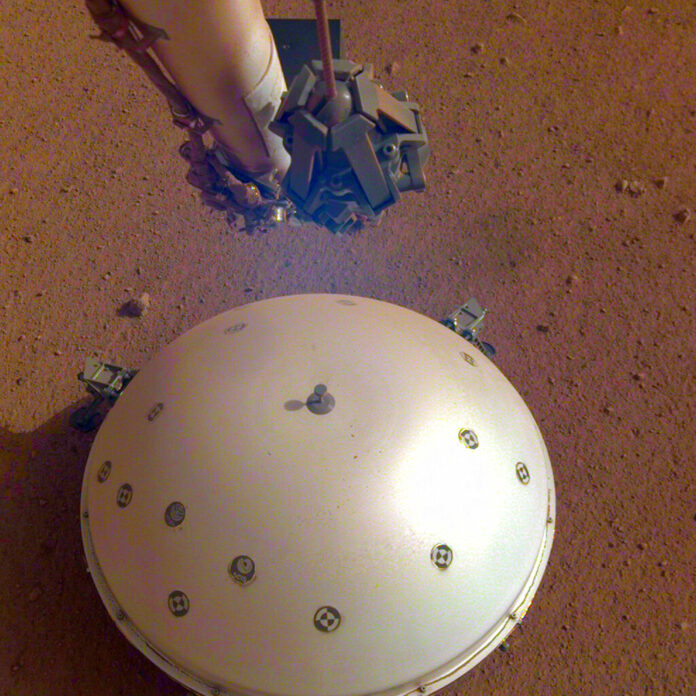
This photo made available by NASA on Tuesday, April 23, 2019 shows the InSight lander's domed wind and thermal shield which covers a seismometer on the 110th Martian day, or sol, of the mission. Photo: NASA / JPL-Caltech via AP

CAPE CANAVERAL, Fla. — NASA’s InSight lander has picked up a gentle rumble at Mars, believed to be the first marsquake ever detected.

InSight’s quake monitor recorded and measured the faint signal April 6, and scientists announced the finding Tuesday.

While the rumble sounds like soft wind, scientists believe it came from within the red planet. The Paris Institute of Earth Physics’ Philippe Lognonne, who’s in charge of the experiment, said it’s exciting to finally have proof that Mars is still seismically active. Mars is not nearly as geologically active as Earth and, like our moon, lacks tectonic plates.

“We’ve been waiting months for a signal like this,” Lognonne said in a statement.

InSight’s lead scientist, Bruce Banerdt of NASA’s Jet Propulsion Laboratory in Pasadena, California, said this carries out the scientific work begun by the Apollo moonwalkers nearly a half-century ago. The astronauts left behind seismometers that measured thousands of moonquakes.

As for Mars, “we’ve been collecting background noise up until now, but this first event officially kicks off a new field: Martian seismology!” ”Banerdt said in a statement.

Researchers are still analyzing the data, as well as three other even fainter seismic signals detected since mid-March. By analyzing marsquakes, scientists hope to learn more about how rocky planets formed.

The French seismometer was placed directly on the Martian surface in December, a few weeks after the spacecraft landed.

InSight’s other main experiment isn’t going as well.

The German-built drilling instrument — dubbed the mole — has managed to penetrate only a foot or two (50 centimeters) into Mars, far short of its goal to measure the planet’s internal temperature. Engineers are still trying to figure out why and how the device got stuck.

Story: Marcia Dunn

Advertisement

The Running of the Kwais: Trang’s Annual Buffalo Bacchanal

TRANGNobody ever lives their life all the way up, except kwai-runners.

Farmers have released about 300 buffalos to run freely on the island fields of Koh Sukorn off the coast of Trang – a kwai bacchanal that began April 14 and which will last two months.

“Kwai-running allows them to socialize and copulate without the need to import breeders [from farm to farm]. It also benefits farmers because the kwais eat weeds and naturally fertilize crops with their waste,” explained Ratree Jitlung, the Palian sub-district’s office director.

Unlike the thrashing, people-tossing bulls that run in Pamplona, Spain, their Thai water-buffalo cousins take a different approach to life. The kwais have free reign to munch on crops – especially watermelons, the island’s specialty – before making sweet, sweet love with the kwai of their eye.

Ratree claims that the tradition has been active on the island for around 90 years, though last week was the world’s first “official” kwai-running event.

Given free reign, some kwais decide to use take their time off to splash around in the surf. The Sea Kwais of Koh Sukorn, as locals call them, are a sight to behold for tourists.

The kwaication will last until mid-June, or the planting season, when the kwai owners – from about 100 households – will round the buffalos up to live on farms again.

“It’s kind of strange, but all the owners can remember which kwai is their’s. There’s never any problem figuring out whose kwai is whose during collection time,” Ratree said.

เกาะสกรจดประเพณปลอยควายครงแรกของโลก 5 เกาะสกรจดประเพณปลอยควายครงแรกของโลก 2 เกาะสกรจดประเพณปลอยควายครงแรกของโลก 1

Related stories:

Melons and Mellow Take Root on Thailand’s ‘Watermelon Island’

Advertisement

Hot News

LATEST NEWS

Bangkok
overcast clouds
27.7 ° C
27.7 °
27.7 °
83 %
2.3kmh
100 %
Thu
36 °
Fri
34 °
Sat
28 °
Sun
28 °
Mon
31 °