30 C
Bangkok
Friday, July 3, 2026
Home Blog Page 1659

Lawsuit Filed Against Boeing Over Crash in Ethiopia

An Ethiopian Boeing 737 Max 8 takes off in February from Ben Gurion Airport in Tel Aviv, Israel. Photo: LLBG Spotter / Wikimedia Commons

A representative of a passenger killed in this month’s Ethiopian Airlines crash is suing Boeing, claiming that a flight-control system on the plane was defective and Boeing failed to warn the airline about it.

The lawsuit was filed Thursday in federal court in Illinois by the administrator of the estate of Jackson Musoni, a Rwandan citizen who was on the March 10 flight.

Lawyers for the family say Boeing was negligent in designing the now-grounded 737 Max 8, which has features not on previous 737s.

Boeing declined to comment on the lawsuit.

Software designed to counter a potential nose-up pitch is under scrutiny in an October crash in Indonesia and the Ethiopian crash.

Lawyers say Boeing also failed to adequately train pilots how to use automation on the Max.

Advertisement

In Thailand, Govt Leads the Monetization of Cannabis

Bhumjaithai Party leader Anutin Charnvirakul has gone all in on legalization of cannabis. He leads the largest party to call for full legalization.

wirot.3

Selling dried cannabis to pharmaceutical companies as well as Cannabidiol (CBD) and Tetrahydrocannabinol (THC) extracts as soon as it is licensed, is the intention of Thailand’s tobacco authority among new measures to turn a profit on its dwindling cigarette business.

The Tobacco Authority of Thailand, or TOAT, is one of two governmental entities that has looked to capitalize on the sale of cannabinoids as soon as it received approval from the Food and Drug Administration, or FDA.

The other, the Government Pharmaceutical Organization, or GPO, broke ground in February to grow Thailand’s first legal cannabis plants indoors at its ultra-modern pharmaceutical factory in Bangkok’s northern suburbs. It aims to turn the plants’ chemical compounds into 2,500 5-milliliter bottles – the size of a teaspoon – of cannabis oil and sublingual drops for clinical trials among volunteer patients as early as July.

The TOAT and the GPO will spearhead government efforts to bring cannabis to the masses. The TOAT will focus on working with farmers and generating income for them and the state by selling medical cannabis through its retail networks. The GPO will focus on manufacturing quality medicine for the public at affordable prices and distribute it over its country-wide systems of its own and allied drug stores. The existing commercial infrastructure of both organizations is large.


TOAT, the First Thai Cannabis Money Maker

Cannabis law legislators must have had the TOAT in mind when they listed government organizations with agricultural research and development capabilities and close relationships with farmer groups as those eligible to apply for the five types of licenses: production, sale, import, export and possession.

There are more than 20,000 farmers in various northern provinces who have been working with the TOAT for years providing it tobacco and cooperate with it for various research projects. Now that cigarettes are less popular and some farmers have been given a chance to experiment with cannabis, more and more of them are looking forward to changing their tobacco farms into cannabis plantation.

It remains to be seen whether the Drug Enforcement Authority, or DEA, will designate cannabis zones for these farmers. But with cannabis licenses, the TOAT will be entitled to cooperate with farmers to grow hemp and marijuana in its present tobacco farm locations.

Owning a hospital and research and development facilities of its own, supported by many cooperative farmers and hungered by their earnest desire for survival and profitability, the TOAT has a unique capability to bring pharmaceutical cannabis to the public with added monetary value. It can do this using its existing retail distribution infrastructure quicker than other government entities.


49 Percent Foreign Shareholding Allowed

The TOAT Act was revamped in 2018 to give it a leeway to conduct businesses other than tobacco for survival in a changing world where fewer people smoke cigarettes.

The law also allows the TOAT to set up a joint venture company with a foreign corporation, provided the shares held by foreigners are limited at 49 percent.

The new law also permits the TOAT to do business regarding “products from other plants,” which means plants other than tobacco plants used to manufacture cigarettes. Those must be specified in ministerial regulations issued by the Finance Ministry, which administers the TOAT. There are no regulations permitting the TOAT to deal with cannabis yet. The TOAT, however, believes it is already fully authorized to conduct cannabis business.

Further still, cannabis part of cigarettes might be covered and permitted by this new law. But cannabis for medicine in other forms – liquids or tablets – that are not cigarettes would be put into the question of whether they can also be monetized by the TOAT. The law is unclear.

However, via a stretched interpretation, “products from other plants” that the TOAT can now make can include cannabis. But this has to be a very favorable interpretation of the term.


GPO, the Ultra-Modern Drug Maker

The Government Pharmaceutical Organization, or GPO, is the pride of the Thai government for having made several effective internationally-recognized anti-HIV drugs at its super-modern pharmaceutical factory in Rangsit, Pathum Thani, north of Bangkok.

The organization is at the forefront of medicinal research and development of the country, at the same time generating tens of billions of baht of revenue by selling needed pharmaceuticals to the Thai public at low prices, saving the government billions of baht a year from expensive imports.

Smart scientists at the GPO look up to major global drug makers as their idols to elevate the organization’s research and development, manufacturing standards and quality of their products. In mapping out its medical cannabis development plans, the organization is adopting good industry practices upheld by the world’s leading pharmaceutical cannabis manufacturers.

Although the organization makes good money from its pharmaceutical business, its objectives are social and scientific. It is a firm believer in cultivating medical grade cannabis, employing aeroponics technique in laboratory glasshouses, and will not move to open fields until it is certain of the raw materials’ quality.

The government agency is in no hurry to turn a profit, and has embarked on a three-phase cannabis plan since February. This will bring cannabis oil to clinical trials with patients in July at the end of Stage One, launch a pilot plant for semi-industrial production in a couple of years for Stage Two, and the full scale industrial production of cannabis-based medicines in Stage Three. This last stage will take place on its large swathes of land in Chonburi within the high-technology Eastern Economic Corridor.

The GPO is generously funded by the government in undertaking the ambitious modernization of cannabis and is always looking for cooperation with multinational overseas cannabis leaders.


When Can the Private Sector Monetize?

Clinics and doctors can start doing their business right away after physicians running the clinics receive cannabis licenses. Regulations concerning license applications should be out in a few months requiring doctor and pharmacist applicants to take training courses designed by the Public Health Ministry.

Foreign and Thai suppliers for the TOAT and the GPO can also embark on their businesses, provided that they have checked with the two organizations whether the relevant cannabis licenses have been granted to government enterprises. Yes, even government organizations need FDA cannabis licenses.

The suppliers who do business with the two government organizations might include companies that sell them technology, service and equipment or even look to enter a joint venture with them.

There should be – but have not yet been – regulations restricting cannabis-related suppliers of equipment, machinery, appliances and tools used in connection with cannabis businesses, but there is a broad provision in the Narcotics Act prohibiting the promotion of narcotic drugs. Cannabis is still a narcotic drug, except it’s licensed by the FDA.


Watch Out for May-June Regulations

Arguably, selling equipment to a licensed government organization should be permitted without separate licensing, bur clearance from various authorities – including the DEA – should be sought before concluding a deal.

Suppliers of farming equipment to cannabis farmers, as well as suppliers of services and products to doctors, pharmacists, pharmacies and dispensaries related to software, dispensing machines, monitoring equipment and information technology can similarly make their move.

May and June will be a major milestone for a set of regulations clarifying many of the commercial uncertainties. It will certainly include licensing criteria for medical practitioners, but it has yet to be seen whether it will include farmers.

Commercialization of cannabis is moving very fast in Thailand. A lot of activities are playing out. News flashes here and there. Everyone has to stay alert to be up to date on the developments.

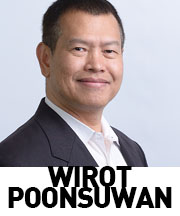
Wirot Poonsuwan is a Senior Counsel and Head of Special Projects at Blumenthal Richter & Sumet in Bangkok and can be reached at [email protected].

Advertisement

Grand Palace, Wat Arun to Go Dark 1H Saturday Night

An image of Wat Arun, dubbed “the Temple of Dawn.” Photo: Werapat Apirojananan / Flickr

BANGKOK — From the Grand Palace to the Giant Swing and the Golden Mountain Temple, a few landmarks in the capital city will go dark for one hour tomorrow.
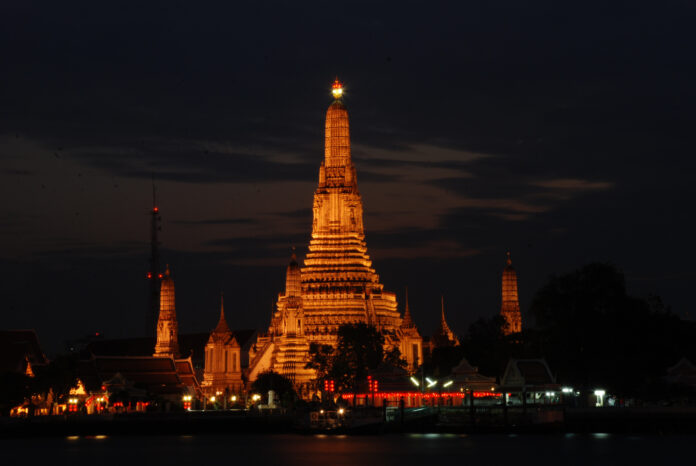
From 8:30pm to 9:30pm on Saturday, at least five major tourist attractions in Bangkok will switch off their lights to mark Earth Hour. They are the Grand Palace, Wat Arun, Giant Swing, Rama VIII Bridge and Wat Saket, or “the Golden Mountain Temple.”

People are also encouraged to switch off unnecessary lights and appliances for 60 minutes on Saturday.

The Bangkok Metropolitan Administration said last year’s reduced up to 2,000 megawatt in power usage during the lights-off hour, saving 7.89 million baht and decreasing 1,026 tons of carbon dioxide.

Earth Hour is a global movement organized by the World Wide Fund for Nature. It has been held annually since 2007 to encourage individuals and communities to turn off non-essential electric lights for one hour to combat climate change.

Advertisement

Authoritarian Specter Awaits Post-Election Thailand: Historian

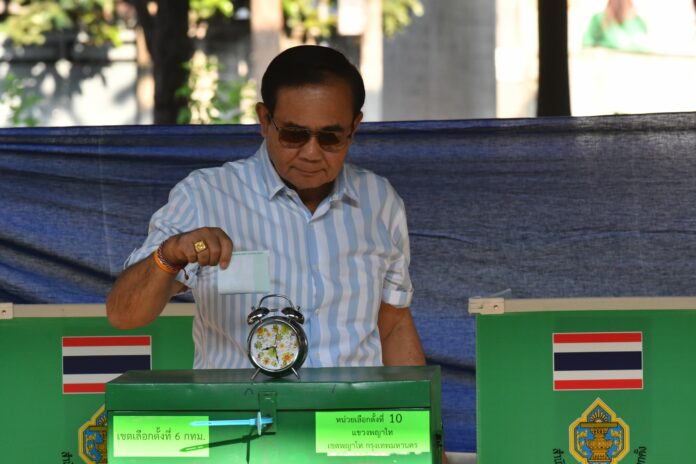
Prayuth Chan-ocha votes Sunday in Bangkok.

BANGKOK — A historian on Friday gave a pessimistic prediction of Thailand’s future after elections, envisioning a scenario of political stalemate.

Charnvit Kasetsiri said at a symposium at Thammasat University that junta leader Gen Prayuth Chan-ocha would likely remain in power one way or the other and evoke a high risk of political violence. He added that it’s unclear how long the strongman would last, however.

“Those in power become addicted to power,” said Charnvit, who believes the anti-junta camp will not be able to form a government despite possessing more MPs due to the votes of the 250 senators Prayuth himself will appoint.

“History tends to repeat itself. Those who do not learn from history tend to repeat history,” Charnvit said, referring to previous junta leaders such as Field Marshal Thanom Kittikachorn, who continued to rule after elections.

Charnvit said that in 1992, junta Gen Suchinda Kraprayoon made himself prime minister but lasted only 47 days before he was ousted after a bloody political clash which led to 44 deaths.

The historian said Thailand would continue to face authoritarianism.

Chulalongkorn University political scientist Viengrat Nethipo said the military junta has succeeded in dragging Thailand back by three decades. However, she said she doesn’t know whether that would lead to deadly clashes between pro and anti-junta camps similar to the May 1992 Massacre.

She added that the Election Commission has lost its credibility and no political institution is impartial.

“What else do we have left? That’s why we are susceptible to military interference,” Viengrat said.

Viengrat said there’s some hope with the rise of social media and new online news agencies that could set the political agenda.

Nanthana Nanthawaropas, dean of the Political Communications College at Krerk University, said there is no hope for Thailand after elections because the electoral rules have been designed to favor the military junta.

“Personally I do not think there is a future [for Thailand],” said Nanthana, another speaker at the symposium.

However, not all have given up hope.

“Thailand is becoming a semi-democratic semi-dictatorial state. Thai dictatorship adjusts itself and could remain in power even after the elections, even if they don’t have the same [dictatorial] power any longer,” said Dulyapak Preecharush, an expert on Southeast Asia focusing on Myanmar at Thammasat University.

“They need to dress themselves up in order to have legitimacy through elections,” he added.

Advertisement

Party With Most MP Seats Should Form Next Govt: Academic

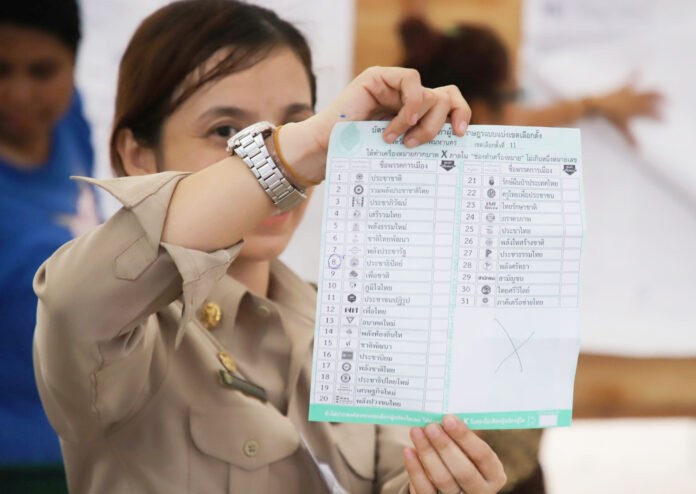
An official announces a ballot void March 24 at a polling station in Bangkok’s Sai Mai district.

BANGKOK — Political parties should respect their pledge to allow the party with the most MP seats to attempt the formation of a coalition government, the director of Mahidol University’s human rights institute said Friday.

Eakpant Pindavanija, from the university’s Institute of Human Rights and Peace Studies, said he hoped all parties that signed the pledge “will respect it, as it will set a good political foundation.” Eakpant, led the effort to have 25 political parties sign the pledge in December 2018.

Signatories include the Pheu Thai, Democrat, Future Forward, BhumjaiThai, Democrat and Commoner parties.

“Political parties that form the next coalition government shall seek and receive the support of more than half the members of the House of Representatives,” part of the pledge stated.

Both sides of the political divide are now claiming the right to lead the next administration – pro-junta Phalang Pracharath, which won the popular vote and the Pheu Thai party, which has more parliamentary seats.

It’s likely that Phalang Pracharath – which supports strongman Gen. Prayuth Chan-ocha as prime minister – will have to depend on the votes of the 250 junta-appointed senators.

Eakpant said it’s understood from the pledge that Thai representative democracy adheres to the number of MPs and not popular votes.

“I have said a hundred times that popular votes have already been computed into MP seats,” Eakpant said, adding that it’s the number of MPs that count.

He said Phalang Pracharath Party and Action Coalition for Thailand did not participate in the pledge.

“We contacted them many times but they declined,” Eakpant said Friday.

Advertisement

Boyzone Singer Hospitalized Before Bangkok Concert

Photo: officialkeithduffy / Instagram

BANGKOK — Minutes before stepping up on a Bangkok stage last night, a member of an Irish boy band was sent to be treated at a hospital.

Boyzone’s farewell tour took place Thursday in a Bangkok hall with only three members instead of four, as Keith Duffy was admitted to hospital shortly before the concert.

Boyzone wrote on its official Twitter account that Duffy “was taken ill” and “has been admitted to hospital on the advice of the local medical team.”

“Our brother will be back on his feet as soon as possible and we thank you for all your wonderful support in the meantime,” Boyzone wrote.

It was not immediately known what caused the 44-year-old singer’s illness.

Boyzone’s gig took place Thursday night at ThunderDome, Muang Thong Thani, with the band’s other three members – Ronan Keating, Mikey Graham and Shane Lynch. After Thailand, the band will be touring in Australia and New Zealand before heading to the United Arab Emirates, Belgium and the United Kingdom.

The band from Dublin shot to fame in the ‘90s and is best known for “No Matter What,” “Love Me For a Reason” and “Picture of You.”

Advertisement

Poll Results Leave Nation Puzzled with Many Math Mysteries

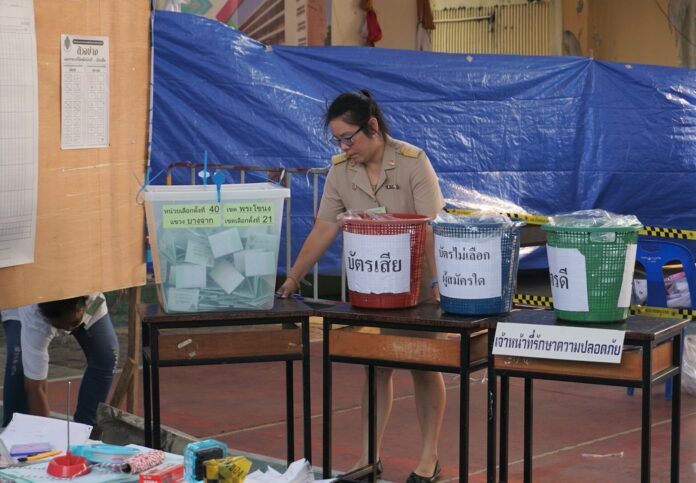
An official prepares to count ballots Sunday at a polling station in Bangkok’s Phra Khanong district.

BANGKOK — The preliminary election results released Thursday by officials left the nation lost in mathematical wonders as little explanation was given to the many inconsistencies.

The Election Commission blamed human errors in each polling station as it scrambled to explain discrepancies discovered in numbers from the unofficial report of Sunday’s voting results and those in prior reports. The body has fallen in hot water as public dissatisfaction is running high by case after case of alleged election irregularities.

“Everything was going smoothly. The election procedure was monitored by observers … from the beginning to the end,” head commissioner Jarungvith Phumma said.

After the report was released, many appeared to be baffled about the drastic increase of voter turnout from about 66 percent – when about 93 percent of ballots had been counted – to nearly 75 percent according to yesterday’s report, including differences in reported numbers of eligible voters before and after the election, and voter turnout not matching the number of used ballots.

Read: Election Results Removed After Media Spot Discrepancies

During another press conference this afternoon, commissioner Krit Urwongse said commission released the numbers as they were reported from each polling station, suggesting the confusing numbers were caused by mistakes of local election officials.

He said the number of eligible voters reported Sunday night (51,205,624) was less than the number in yesterday’s report (51,239,638) because some polling stations could not submit a total number of voters in that constituencies in time, insisting that the latter number is the correct one.

In yesterday’s report, the voter turnout was 38,268,375. The total number of ballots used were however a little fewer at 38,268,366. The commission has said the difference could have been caused by voters leaving polling stations after registering but not casting their ballots.

But many were skeptical because of the voting procedures. Voters had to queue outside their designated polling station. Once inside, they had to show their ID card to officials for registration. They then had to immediately sign a ballot that would be folded and put in an envelop in front of them, which they could take into a booth and mark right away.

Krit said today that inaccuracies could have also been caused by the work of local officials, adding that this proved the commission’s transparency.

“Looking at this from another perspective, it showed that the commission did not adjust anything. We reported the numbers as we received them,” he said.

He added that the body has started an investigation to identify polling stations that reported inaccurate numbers.

The commission offered limited explanations to reporters’ questions yesterday after the discrepancies were discovered. Repeated inconsistencies in numbers triggered outrage from the public, already troubled by how the poll was handled.

On Twitter last night, #NewBallotsBornInBoxes hit the No. 1 trending hashtag in Thailand after Pheu Thai prime minister candidate Sudarat Keyuraphan used it in her online post to complain about the inconsistent numbers.

“After polls closed on March 24, the [commission] said at 9:30pm that the voter turnout was 65.96 percent, or 33,775,230. On March 28 at 2:50pm, the [commission] said the voter turnout had increased to 74.69 percent, or 38,268,375. There have been 4,493,145 #NewBallotsBornInBoxes in four days,” she wrote.

Amused netizens took that up, suggesting ballots may be able to procreate by themselves.

“After finishing the election of Thailand for 4 days, the ballots can fuck each other and give birth [to] many baby ballots, more than 4,000,000 in 4 days. Amazing!!!!” @Pharaoh_888 tweeted.

However, the turnout announced on election night was not based on a complete ballot count, and the unlikely increase shouldn’t be calculated with a simple subtraction as Sudarat suggested.

The commission yesterday insisted there was no error, telling media that the 66-percent voter turnout announced Sunday night was based on a tally that did not include about 2.7 million of advanced ballots.

However, the nearly 10 percent increase is still unlikely when calculated from that number.

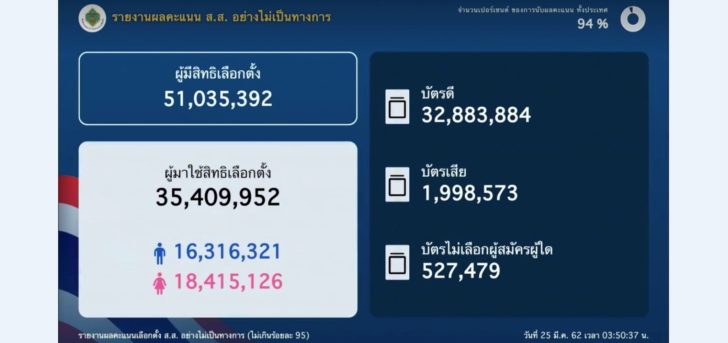
A livestream feed on the commission’s Facebook page with a Monday morning timestamp, also showed another set of numbers as 94 percent of the ballots had been counted. In the video, the number of eligible voters was 51,035,392 and the voter turnout was 35,409,952. The combined number of ballots used – 35,409,936 – also differed from the turnout.

%E0%B8%A3%E0%B8%B2%E0%B8%A2%E0%B8%87%E0%B8%B2%E0%B8%99 %E0%B8%81%E0%B8%81%E0%B8%95. 94

While a report handed directly to the media was suddenly removed yesterday afternoon, another report with a different web address remains accessible on the commission’s website. An official in charge today said the first report was removed due to “technical errors,” adding that there were no differences between the two.

Following numerous alleged irregularities and errors in the results and the handling of ballots, the student councils of Thammasat, Chulalongkorn, Chiang Mai and Khon Kaen universities issued separate statements calling the commission to take responsibility.

The commission’s efficiency has been in doubt since before Election Day, and public confidence seemed to continue dropping in recent days. An activist launched a petition to relieve the commission. An online petition on Change.org to oust the body started the day after the election had more than 800,000 people signed up as of Friday afternoon.

Update: This article has been updated with the Election Commission’s statement explaining the inconsistent numbers.

Advertisement

AP Photos: Editor Selections From the Past Week in Asia

In this Sunday, March 24, 2019, file photo, a supporter of Pheu Thai party cheers while watching TV news at the party headquarters in Bangkok, Thailand. Voting stations are closed and meaningful results are expected within hours, although many commentators suggest the formation of a new government could take weeks of haggling. Photo: Sakchai Lalit / Associated Press

Thailand’s recent general elections, its first since a 2014 military coup, set off jubilation among party loyalists and efforts by various party leaders to build a governing coalition even though the official results aren’t required until May.

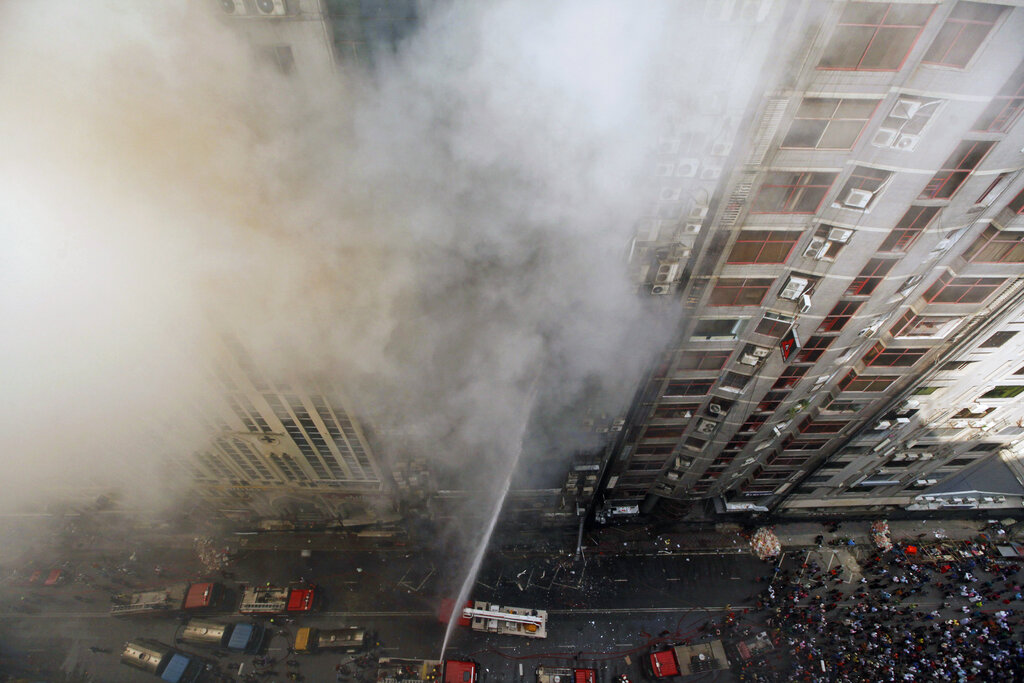
In other images from the Asia-Pacific region this week, a fire in an office high-rise in Dhaka, Bangladesh, trapped people on upper floors and caused deaths and injuries.

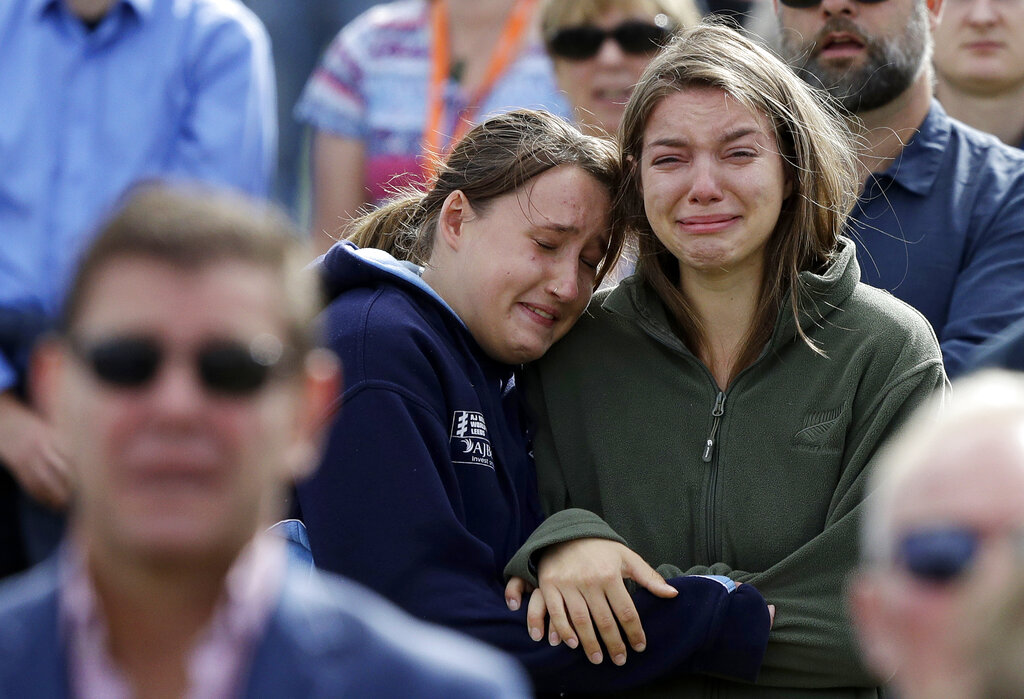
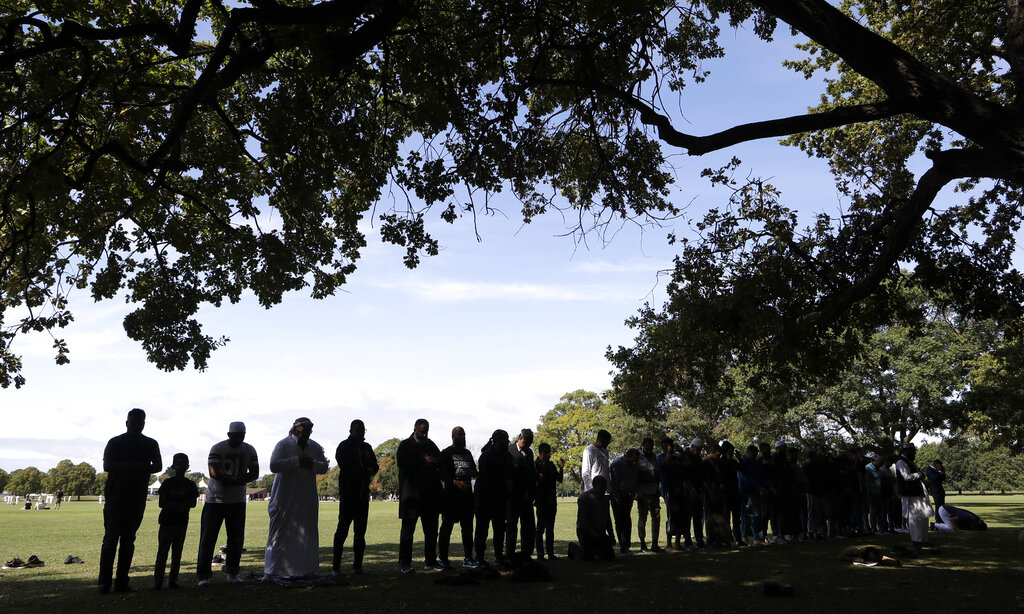
The community in Christchurch, New Zealand, continued to mourn the worshippers killed in attacks at two mosques.

Election campaigning was underway in India, where voting takes place in seven phases in April and May.

AP19086215084638
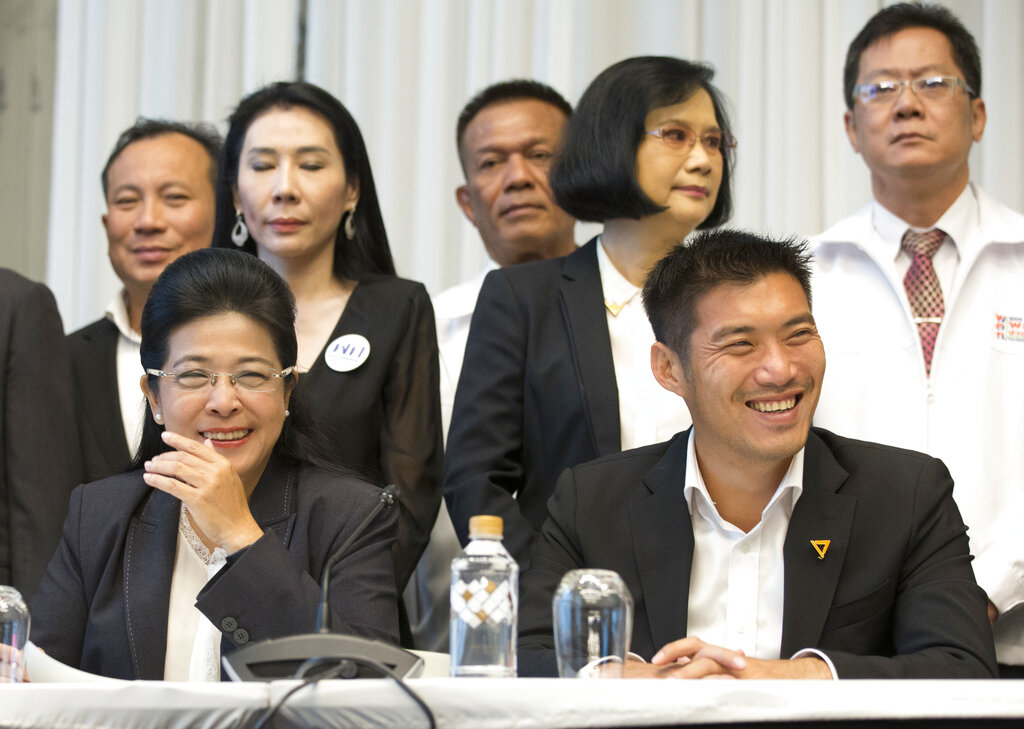
In this Wednesday, March 27, 2019, file photo, Pheu Thai party’s candidate for prime minister Sudarat Keyuraphan left, and Future Forward Party leader Thanathorn Juangroongruangkit, right, smile during a press conference in Bangkok, Thailand. Seven political parties led by the flagship party loyal to former Prime Minister Thaksin Shinawatra have come together in a coalition to try to form Thailand’s next government, even though the results of Sunday’s general election will be formally announced only on May 9. Photo: Sakchai Lalit / Associated Press
AP19087480829787
In this Thursday, March 28, 2019, file photo, firefighters work to douse a fire in a multi-storied office building in Dhaka, Bangladesh. The fire in the high-rise office building in Bangladesh’s capital was brought under full control. Photo: Mahmud Hossain Opu / Associated Press
AP19087818259910
In this Friday, March 29, 2019, file photo, women react as the New Zealand national anthem is sung during a national remembrance service in Hagley Park for the victims of the March 15 mosque terrorist attack in Christchurch, New Zealand. Photo: Mark Baker / Associated Press
AP19083600836734
In this Sunday, March 24, 2019, file photo, free skate pairs gold medalist Sui Wenjing and Han Cong of China perform during the gala exhibition for the ISU World Figure Skating Championships at Saitama Super Arena in Saitama, north of Tokyo. Photo: Annice Lyn / Associated Press
AP19084529253036
In this Monday, March 25, 2019, file photo, a child of an Indian worker plays amidst election campaign material of India’s main opposition Congress party for upcoming elections in Ahmadabad, India. India’s national election will be held in seven phases between April 11 and May 19, 2019. Photo: Ajit Solanki / Associated Press
AP19086484493499
In this Wednesday, March 27, 2019, file photo, a visitor looks at an artwork “In Stock (Walmart Worker’s Head)” created by American artist Josh Kline at Art Basel in Hong Kong. Art Basel, one of the world’s most prestigious modern and contemporary art exhibitions, returned to Hong Kong in its seventh edition. The prestige art fair is hosting 242 galleries from 35 countries and territories. Photo: Kin Cheung / Associated Press
AP19082095051564
In this Saturday, March 23, 2019, file photo, Muslim men pray at Hagley Park across a road from the Al Noor mosque following the March 15 mass shooting in Christchurch, New Zealand. Photo: Mark Baker / Associated Press
AP19087419169002
In this Thursday, March 28, 2019, file photo, a woman in wedding attire poses for a photo portrait along a busy street in Xi’an in northwestern China’s Shaanxi Province. One of the ancient capitals of China, Xi’an is home to the world-renowned Terracotta Warriors. Photo: Mark Schiefelbein / Associated Press
AP19086523685780
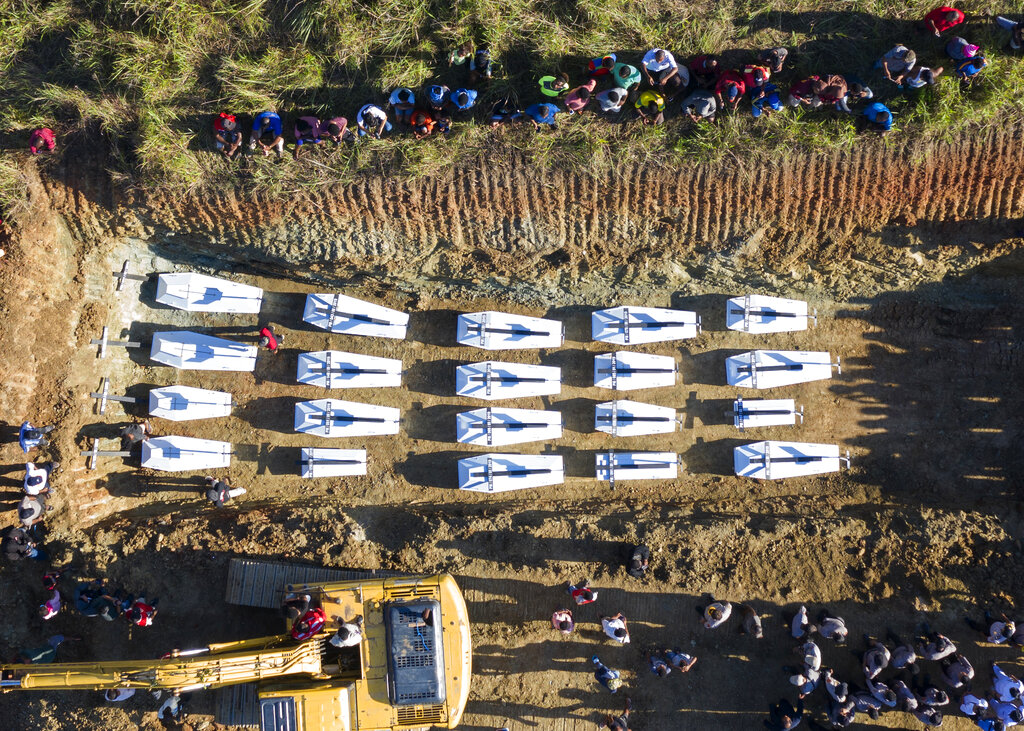
In this Wednesday, March 27, 2019, aerial file photo taken using a drone, coffins containing the bodies of flash floods victims are arranged in a grave during a mass burial in Sentani, Papua province, Indonesia. Flash floods and mudslides triggered by downpours tore through mountainside villages in Indonesia’s easternmost province last week killing dozens of people. Photo: Barce Rumkabu / Associated Press
AP19086230538938
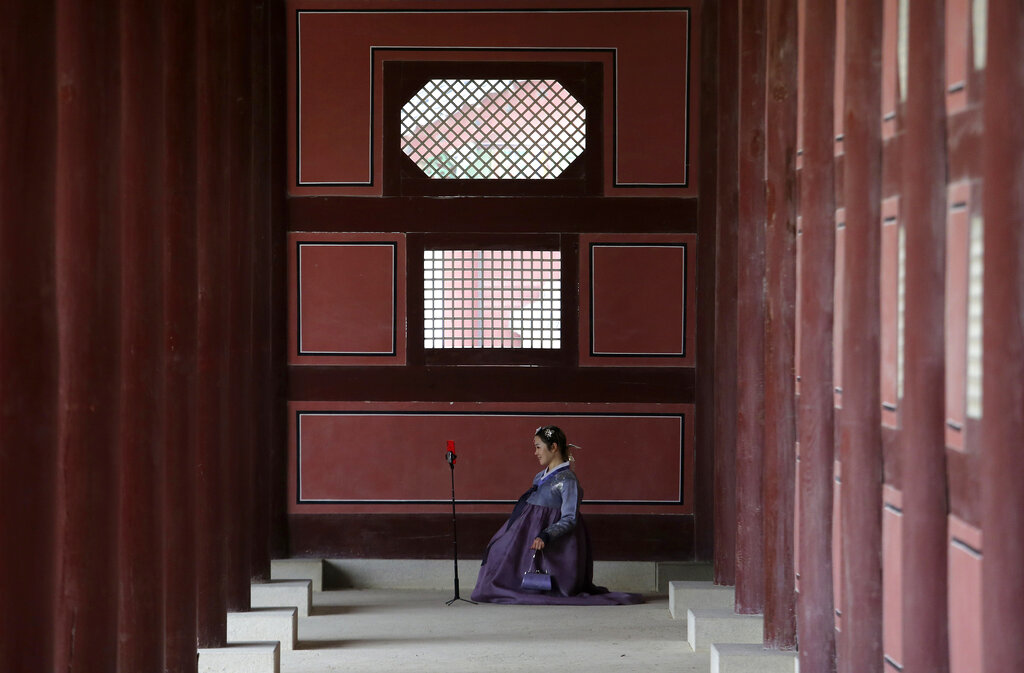
In this Wednesday, March 27, 2019, file photo, a woman dressed in South Korean traditional “Hanbok” attire poses to take pictures at the Gyeongbok Palace, the main royal palace in the Joseon Dynasty, in Seoul, South Korea. Wearing a “Hanbok,” mostly rented, has become a fashionable trend among the youth commonly seen at palaces and other traditional places. Photo: Ahn Young-joon / Associated Press
Advertisement

S. Korean Leader to Meet With Trump in US on Nuke Diplomacy

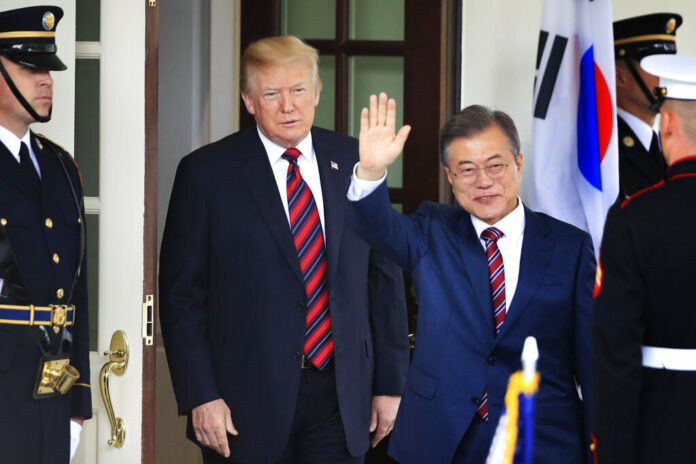
FILE - In this May 22, 2018, file photo, South Korean President Moon Jae-in waves as he is welcomed by U.S. President Donald Trump to the White House in Washington. Photo: Manuel Balce Ceneta / Associated Press

SEOUL — South Korean President Moon Jae-in will travel to the United States in two weeks for a summit with President Donald Trump on stalemated North Korean nuclear diplomacy.

It would be their first meeting since Trump’s second summit with North Korean leader Kim Jong Un in Hanoi last month collapsed due to disputes on U.S.-led sanctions. The breakdown of that summit put Moon, a liberal who has shuttled between Washington and Pyongyang, in a difficult position on how to further engage North Korea and facilitate the nuclear diplomacy.

Moon’s office said Moon will visit the United States on April 10-11 discuss how to strengthen their countries’ alliance and achieve North Korea’s complete denuclearization and peace on the Korean Peninsula.

The White House said Trump and first lady Melania Trump will welcome Moon and his wife Kim Jung-sook to the White House on April 11. It said in a statement the alliance between the U.S. and South Korea “remains the linchpin of peace and security on the Korean Peninsula and in the region.”

Earlier this month, North Korean Vice Foreign Minister Choe Son Hui threatened to pull out of the nuclear negotiations with the United States citing a lack of its corresponding steps to match some disarmament measures North Korea took last year. She said Kim would soon decide whether to continue the talks and his moratorium on nuclear and missile tests.

North Korea later withdrew its entire staff at a liaison office with South Korea before sending some of them back to the office at the North Korean border town of Kaesong. North Korea hasn’t provided any reason for its action.

Some experts say North Korea still hopes to keep diplomacy with the United States alive because it is desperate to win sanctions relief to revive its trouble economy.

Moon’s push to expand ties with North Korea and resume dormant inter-Korean economic projects is in doubt as U.S. officials maintain that sanctions on North Korea would stay in place unless the country takes significant denuclearization steps.

In a possible reflection of its resolve to press ahead with its engagement policy on North Korea, South Korea’s Unification Ministry on Friday reiterated its position that it will push to hold a regular summit with North Korea and realize Kim’s promise to travel to Seoul.

Story: Hyung-jin Kim

Advertisement

Journalist at Site Critical of Duterte Arrested in 2nd Case

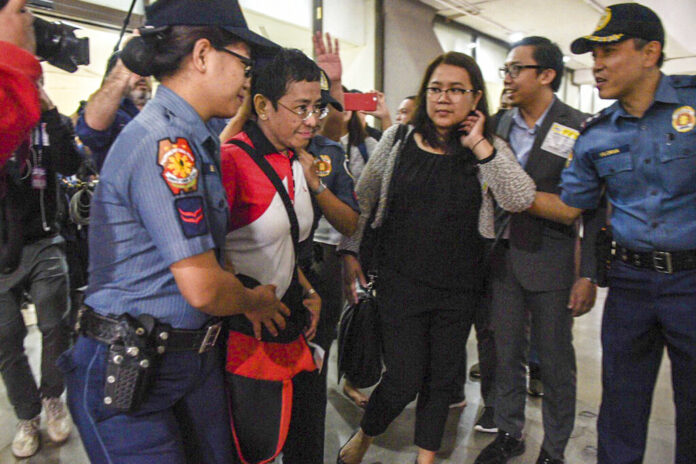
In this photo released by Rappler, Rappler CEO and Executive Editor Maria Ressa, second left, is escorted by police after being arrested upon her arrival at Manila’s International Airport, Philippines Friday March 29, 2019. Photo: Leanne Jazul / Rappler via Associated Press

MANILA — The head of a Philippine online news site, among media agencies deemed critical of President Rodrigo Duterte, was arrested again Friday, this time over an alleged investment violation.

Rappler Inc. reported that its CEO and executive editor, Maria Ressa, was served a warrant by the police after arriving at Manila’s international airport and was taken to a regional trial court to post bail. Ressa’s co-defendants posted bail for the new charge earlier in the week.

“This is a travesty of justice. I have done nothing wrong. I am not a criminal. I am treated like a criminal,” Ressa, an award-winning journalist, told ABS-CBN News Channel, adding that the latest government move was a breach of press freedom.

The Duterte administration has denied her cases were a press freedom issue, saying she and her outfit have breached Philippine laws and have been charged by authorities and should answer before the judicial system like other violators.

The charges stemmed from a complaint by the National Bureau of Investigation that accused Rappler of violating the law by allowing a foreign investor, U.S.-based Omidyar Network, to inject funds in the online news outfit.

The Philippine constitution bans foreign ownership of news media but Rappler has argued that it did not grant Omidyar the power to control or influence its news operations.

The country’s corporate watchdog, the Securities and Exchange Commission, has revoked the site’s license over what it ruled was a breach of the constitutional ban on foreign ownership and control of Philippine media outlets. Ressa is facing separate complaints for allegedly violating tax laws in connection with the foreign funds that Rappler received.

Ressa was arrested last month and freed on bail in a libel complaint filed by a businessman.

Advertisement

Hot News

LATEST NEWS

Bangkok
overcast clouds
30 ° C
30 °
26.6 °
79 %
4.9kmh
100 %
Fri
30 °
Sat
30 °
Sun
31 °
Mon
30 °
Tue
31 °