



























30 C
Bangkok
Monday, July 6, 2026
Home Blog Page 1726

The Lexicon of Leaving: Demystifying UK’s Brexit Jargon

Britain's Prime Minister Theresa May speaks in 2017 during a campaign visit to Norwich, England. Photo: Stefan Rousseau / Associated Press

LONDON — From backstop to Brexiteer, Britain’s decision to leave the European Union, now scheduled for March 29, has spawned a baffling array of new terms.

The AP deciphers some key words and phrases:


Article 50

Article 50 of the European Union’s key Lisbon Treaty sets out the procedure for a country wishing to leave the bloc and imposes a two-year countdown to that country’s departure. Britain triggered the process on March 29, 2017, meaning the U.K. will cease to be an EU member on March 29, 2019.


Backstop

The Brexit backstop is part of the withdrawal agreement between the EU and Britain. It’s an insurance policy designed to ensure there are no customs checks or other border infrastructure between the U.K.’s Northern Ireland and EU member Ireland after Brexit. The backstop says if no other solution is found, Britain will remain in a customs union with the EU in order to keep the Irish border open. Opposition to the backstop from pro-Brexit British lawmakers is a major hurdle to securing a divorce deal.


Brexit

A contraction of “British exit,” Brexit is Britain’s departure from the European Union. The U.K. joined the bloc in 1973, and held a 2016 referendum on its membership that was won by the “leave” side.


Brexiter / Brexiteer

A supporter of Britain’s exit from the European Union.


Brextremist

Pejorative term for a Brexit supporter.


Brextension

Brexit extension, a delay to Britain’s exit from the EU. Some U.K. lawmakers advocate postponing Brexit so that Britain’s feuding politicians can agree on a way forward. A delay would require EU approval.


Brino

Brexit in name only: a pejorative term for a “soft Brexit” departure in which Britain retains close economic and regulatory ties with the European Union.


Citizens’ Assembly

A gathering of people, chosen to represent the population as a whole, tasked with studying an important national issue and offering conclusions. Some politicians think it could be a way out of Britain’s Brexit impasse.


Customs Union

The European Union customs union makes the 28-nation bloc a single customs territory, with no tariffs or border checks on goods moving between member states. It also has common tariffs on goods entering the bloc from the outside.


European Union

Formed in 1957 as the European Economic Community by France, West Germany, Italy, Belgium and The Netherlands, the group is now a 28-nation bloc of more than 500 million people with substantial powers over member nations’ laws, economies and social policies.


Hard Brexit

A Brexit that sees the U.K. cut many of its ties with the EU, including leaving the EU’s vast single market and customs union. Some supporters of the idea prefer the term “clean Brexit,” and say it will enable Britain to forge its own new trade deals around the world.


Leaver

A Briton who voted to leave the European Union. See also Brexiteer.


No-Deal Brexit

If Britain and the EU do not finalize a divorce deal, Britain will cease to be an EU member on March 29 without an agreement setting out what happens next. A no-deal Brexit would see the rules that govern ties between the U.K. and the EU end on a certain day. Many businesses say that would cause economic chaos.


Remainer

A Briton who voted to stay in the European Union.


Remoaner / Remaniac

Pejorative terms for people who want the U.K. to remain in the EU.


Single Market

The EU’s single market makes the bloc a common economic zone in which goods and services can move freely with no internal borders or barriers.


Soft Market

A Brexit that sees the U.K. retain its close economic ties with the EU, including membership in the bloc’s single market and customs union.


Withdrawal Agreement / Political Declaration

In November 2018, Britain and the EU struck a two-part divorce agreement. It consists of a legally binding, 585-page withdrawal agreement setting out the terms of the U.K.’s departure, and a shorter, non-binding political declaration committing the two parties to close future ties. The agreement must be approved by the British and European parliaments to take effect.
Advertisement

British Jews Apply for German Nationality as Brexit Looms

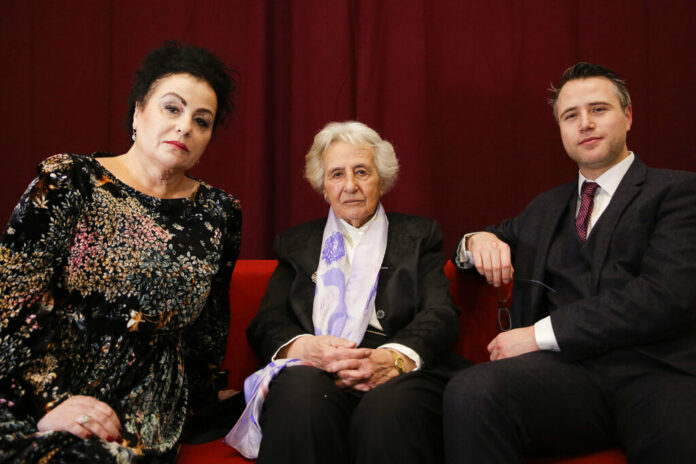
Holocaust survivor Anita Lasker-Wallfisch, center, her daughter Maya Jacobs Lasker-Wallfisch, left, and her grandson Simon Wallfisch, right, the son of Maya Jacobs Lasker-Wallfisch, pose Sunday for a photo after an interview with the Associated Press in Berlin, Germany. Photo: Markus Schreiber / Associated Press

BERLIN — Simon Wallfisch grew up in London as the grandson of an Auschwitz survivor who had sworn to never return to the country that murdered her parents and 6 million other Jews.

But more than 70 years after the Holocaust, Brexit has prompted Wallfisch and thousands of other Jews in Britain to apply for German citizenship, which was stripped from their ancestors by the Nazis during the Third Reich.

“This disaster that we call Brexit has led to me just finding a way to secure my future and my children’s future,” said Wallfisch, 36, a well-known classical singer and cellist who received his German passport in October. “In order to remain European I’ve taken the European citizenship.”

Britons holding dual citizenship from an EU country like Germany will retain the privilege of free movement and work across the soon-to-be 27-nation bloc.

Many Britons whose ancestors came from other parts of Europe have been claiming citizenship in other EU member states so they can keep ties to the continent. But for Jews whose families fled Germany to escape the Nazis, the decision has meant re-examining long-held beliefs about the country.

The German Embassy in London says it has received more than 3,380 citizenship applications since the Brexit referendum in June 2016 under article 116 of the German Constitution, which allows the descendants of people persecuted by the Nazis to regain the citizenship that was removed between 1933 and 1945.

In comparison, only around 20 such requests were made annually in the years before Brexit.

Wallfisch’s grandmother, Anita Lasker-Wallfisch, was 18 in December 1943 when she was deported to Auschwitz, the Nazi death camp in occupied Poland where more than 1 million Jews were murdered.

She survived because she was a member of the camp’s girls’ orchestra. As a cellist, she had to play classical music while other Jews were taken to the gas chambers.

In November 1944, she was taken to Bergen-Belsen – the concentration camp where diarist Anne Frank died after also being transferred from Auschwitz at about the same time – where she was eventually liberated by the British army in April 1945.

Lasker-Wallfisch immigrated to Britain in 1946, got married and had two children. Her career as a famous cello player took her around the world, but it took decades until she overcame her hatred enough to set foot on German soil again in the 1990s.

In recent years, Lasker-Wallfisch, 93, has become a regular visitor, educating children in Germany about the Holocaust and speaking last year during the German parliament’s annual Holocaust memorial event.

On Sunday’s International Holocaust Remembrance Day, Lasker-Wallfisch, her grandson Simon and her daughter Maya Jacobs Lasker-Wallfisch performed for the first time together on stage at the Jewish Museum Berlin in commemoration of their family. They played music with other members of their extended family and read letters from the past as a tribute to those who survived and those who perished in the Shoah.

Before the show, the three generations sat together on the red couch in the museum’s dressing room and told The Associated Press about the emotional thoughts that went into the younger two’s decision to take German citizenship.

“We cannot be victims of our past. We have to have some hope for change,” said Maya Jacobs Lasker-Wallfisch, a 60-year-old London psychotherapist who is Simon’s aunt and is still waiting on her German citizenship to be approved. “I feel somehow in a strange way triumphant. Something is coming full circle.”

More than just retaining the ability to travel easily or maintain business ties, Jacobs Lasker-Wallfisch said there are other, more emotional reasons to acquiring German citizenship, with Britain due to leave the European Union on March 29.

“I feel an aliveness here (in Berlin) that I have not experienced before, but it totally makes sense because after all I am German,” Jacobs Lasker-Wallfisch said. She added that if the country behind the Holocaust is now one that welcomes the descendants of the victims, “that’s a good thing.”

But Anita Lasker-Wallfisch, who lived through the horrors of the Holocaust, remained skeptical and pessimistic.

“Jewish people never feel secure,” she said to her daughter and grandson, reminding them of her own past. “I had German nationality – it did not buy me security.”

Story: Kirsten Grieshaber

Advertisement

Asian Shares Mixed Ahead of Fed Meeting, US-China Talks

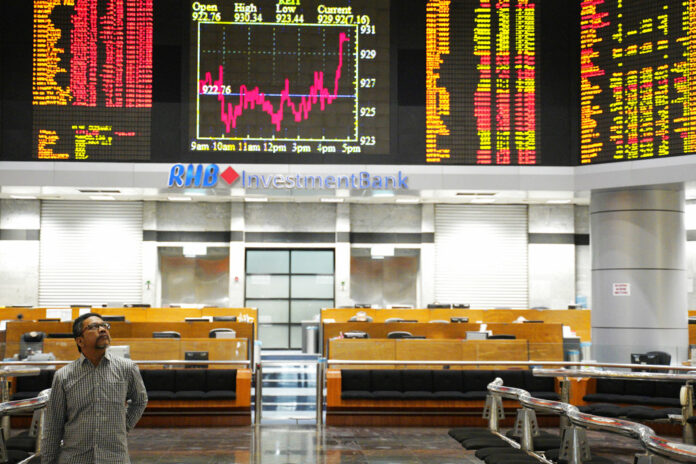
An investor walks in front of private stock trading boards in November at a private stock market gallery in Kuala Lumpur, Malaysia. Photo: Yam G-Jun / Associated Press

SINGAPORE — Asian markets were mixed on Wednesday as traders await the conclusion of a Federal Reserve policy meeting and U.S.-China talks.


Keeping Score

Thailand’s SET was up 0.1 percent trading at 1,625.60 Wednesday afternoon. Japan’s Nikkei 225 index retreated 0.5 percent to 20,556.54 while South Korea’s Kospi climbed 0.9 percent to 2,203.17. Hong Kong’s Hang Seng index gained 0.1 percent to 27,564.19. The Shanghai Composite index dropped 0.2 percent to 2,589.70. Australia’s S&P ASX 200 added 0.2 percent to 5,886.70. Stocks were flat in Taiwan but rose in Thailand and Indonesia.

Wall Street

U.S. indexes reflected a mixed draw of corporate earnings on Tuesday. 3M, the maker of Post-it notes, industrial coatings and ceramics, posted upbeat fourth quarter results. Harley-Davidson reported a drop in sales. Apple announced better-than-expected earnings, and its shares surged 5.7 percent to USD$163.50 in after-hours trading. The S&P 500 index retreated 0.1 percent to 2,640.00 while the Dow Jones Industrial Average was up 0.2 percent at 24,579.96. The Nasdaq composite, which has many technology stocks, shed 0.8 percent to 7,028.29. The Russell 2000 index lost 0.1 percent to 1,471.45.


Fed Meeting

All eyes are on a Federal Open Market Committee meeting ending Wednesday. Although the Fed is expected to leave its short-term interest rate unchanged, the nuances of a press conference by Chairman Jerome Powell will be closely watched.


China-US Trade

American and Chinese officials will begin two days of trade talks in Washington. President Donald Trump will reportedly meet Chinese Vice Premier Liu He in an attempt to move negotiations forward. But the Justice Department’s charges against Chinese tech giant Huawei, its subsidiaries and a top company executive may be a hurdle. China has urged U.S. authorities to end what it called an “unreasonable crackdown” against Huawei, which has been accused of stealing technology and violating sanctions on Iran.


Analyst’s Take

“Asia’s markets are trading quietly sideways this morning, and we would expect that to be the theme of the day as the event-risk needle swings much higher from tonight in North America,” Jeffrey Halley of OANDA said in a market commentary.


Energy

Benchmark U.S. crude rose 5 cents to $53.36 per barrel in electronic trading on the New York Mercantile Exchange. It gained $1.32 to settle at $53.31 per barrel on Tuesday. Brent crude, used to price international oils, picked up 13 cents to $61.33 per barrel. The contract added $1.39 to $61.20 per barrel in London.


Currencies

The dollar eased to 109.26 yen from 109.35 yen late Tuesday. The euro strengthened to $1.1442 from $1.1432.

Story: Annabelle Liang

Advertisement

Indonesia’s Merapi Volcano Unleashes River of Lava (Video)

Mount Merapi spews volcanic material as it erupts as seen Tuesday from Cangkringan, Yogyakarta, Indonesia. Photo: Slamet Riyadi / Associated Press

YOGYAKARTA, Indonesia — Indonesia’s volatile Mount Merapi volcano has unleashed a river of lava that flowed 1,400 meters (4,590 feet) down its slopes.

Merapi, on the island of Java, has entered an “effusive eruption phase,” Kasbani, head of the Volcanology and Geological Hazard Mitigation Center, said Wednesday.

Kasbani, who goes by a single name, said the volcanic material that spewed out late Tuesday was the volcano’s longest lava flow since it began erupting again in August.

He said the alert level of the volcano has not been raised but people should stay out of a 3-kilometer (1.8-mile) danger zone around the crater.

The 2,968-meter (9,737-foot) mountain, located near the ancient Indonesian city of Yogyakarta, is the most active of dozens of Indonesian volcanoes.

Its last major eruption in 2010 killed 347 people.

Indonesia, an archipelago of more than 260 million people, is prone to earthquakes, tsunamis and volcanic eruptions because it straddles the Pacific “Ring of Fire.”

Advertisement

South Koreans Mourn Death of Former WWII Sex Slave

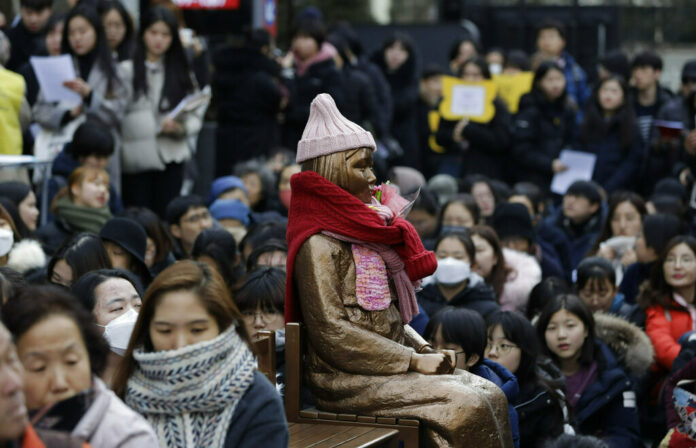
A statue of a girl representing thousands of Korean women enslaved for sex by Japan's imperial forces before and during World War II, is seen on Wednesday during a weekly rally near the Japanese Embassy in Seoul, South Korea. Photo: Lee Jin-man / Associated Press

SEOUL — Hundreds of South Koreans mourned the death of a former sex slave for the Japanese military during World War II during in a rally in Seoul Wednesday that demanded reparations from Tokyo over wartime atrocities.

Kim Bok-dong had been a vocal protest leader at the weekly rallies held every Wednesday in Seoul for nearly 30 years. She died on Monday following a battle with cancer. She was 92.

At a narrow street near where the Japanese Embassy used to be, protesters gathered around a bronze statue of a girl representing Korean sexual slavery victims and held a moment of silence for Kim. Many of them held signboards with Kim’s photos and words including, “We will never forget the life of Kim Bok-dong” and “Japanese government, apologize!”

Kim was one of the first victims to speak out and break decades of silence over Japan’s wartime sexual slavery that experts say forced thousands of Asian women into front-line brothels. She traveled around the world testifying about her experience, including at the United Nations World Conference on Human Rights in 1993 and at a U.N. Human Rights Council panel in 2016. Of the 239 Korean women who have come forward as victims, only 23 are still alive.

South Korean President Moon Jae-in, who visited Kim’s altar at a Seoul hospital in Tuesday, said in a statement that Kim devoted her life to “restoring human dignity” and that her campaigning gave South Koreans a “braveness to face the truth.”

According to Yoon Meehyang, who heads an activist group representing South Korean sexual slavery victims, Kim was dragged away from home at the age of 14 and forced to have sex with Japanese soldiers at military brothels in China, Hong Kong, Malaysia, Indonesia and Singapore from 1940 to 1945. She came forward as a sexual slavery victim in 1992, a year after Kim Hak-sun became the first South Korean woman to identify herself as a former sex slave.

Kim’s death came at time when relations between South Korea and Japan have sunk to their lowest in years over Japan’s refusal to fully acknowledge the sufferings of the so-called “comfort women” during WWII and forced laborers during its colonial rule of the Korean Peninsula from 1910 through 1945.

Moon’s government in November announced plans to dissolve a foundation founded by Japan to compensate South Korean sexual slavery victims, which if carried out would effectively kill a controversial 2015 agreement between the countries to settle a decades-long impasse over the issue.

Many in South Korea believed that Seoul’s previous conservative government settled for far too less in the deal, where Tokyo agreed to fund the foundation with 1 billion yen ($9 million), and that Japan still hasn’t acknowledged legal responsibility for atrocities during its colonial occupation of Korea.

Japan had said it didn’t consider the money it provided to the fund as compensation, insisting that all wartime compensation issues were settled in a 1965 treaty that restored diplomatic ties between the countries and was accompanied by more than $800 million in economic aid and loans from Tokyo to Seoul.

Japan blasted Seoul’s decision to walk back on the deal, with Foreign Minister Taro Kono saying Seoul was violating the “most basic rule to live in the international society.”

Story: Kim Tong-hyung

Advertisement

Former Factory Worker Named Future Forward Candidate

Wanwipa Maison. Photo: Future Forward Party

BANGKOK — A former garment factory worker and labor organizer with a middle-school education became a progressive political party’s third party list candidate Wednesday.

Doubling maternity leave and welfare for new mothers are among social programs Wanwipa “Mod” Maison said she will push for if seated in the new House of Representatives as a member of the Future Forward Party.

“I’ve gone through a lot,” she said in an interview. “In textile factories, it’s mostly women working, and we always get exploited. There are workers who’ve stayed at the same pay for 20, 30 years and are still getting paid as day laborers who have to reach set production goals while working unpaid OT.”

The Uttaradit native said winning a seat would make her the first low-skilled laborer to serve in Parliament.

Women are front and center in the party’s policy prescriptions she is promoting.

She said the party would double maternity leave from 90 to 180 days, as well as the “baby bonus” from 600 baht per month to 1,200 baht, and keep it in place until children reach 6 instead of 3.

So is some economic populism as the party seeks to expand beyond progressive politics to win wider support.

“Why is it that the harder we work, the poorer we are?” she says. “I earned less than 15,000 baht a month. My life was stalled in the same place, even after working for 20 years.”

“I’ve fought for welfare rights for 20 years when I worked in textile factories. Every Labor Day I would present complaints to ask for change. But since then, nothing has happened,” she said in a phone interview Wednesday. “But those complaints were just papers. As an MP, I could make them law instead of having them go to waste.”

Wanwipa was secretary-general of the Triumph Labor Union and executive director of The Textile, Garment and Leather Workers Federation, but left those positions this month to work for the party full time.

“Workers will be an important voice base for the party,” she said.

Other policies include more money for senior citizens, increased funding of the universal healthcare program and support for youth entering the labor market.

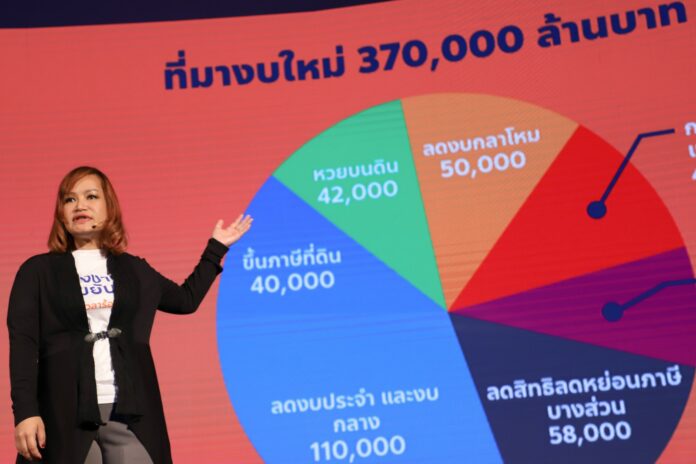
Future Forward estimates the bill for its programs to come in at 650 billion baht, about 370 billion baht more than is currently allocated in the budget. The party says it can be paid for by reprioritizing state funding, downsizing the armed forces and increasing property taxes.

Wanwipa, 36, became the face for the party’s welfare policies at an event laying them out last month.

“The state must take care of us, not bail us out with aid. We need welfare rights, not aid that we have to endlessly fight for,” she said. “We need all-around care, not just a bit of cash during the New Year.”

All political parties planning to contest the March 24 election have until Feb. 8 to nominate their candidates. Future Forward’s first two list seats were reserved for party leader Thanathorn Juangroongruangkit (who once sat on the board of The Matichon Group, the parent company of Khaosod English) and Thammasat University law professor Piyabutr Saengkanokkul.

Related stories:

New Party Aims to Cut No. of Soldiers, Prosecute Coup Leaders

Advertisement

Thailand Slips Further in Latest Corruption Index

Image: Transparency International

BANGKOK — Thailand dropped three positions in the latest corruption index released Tuesday by a Berlin-based transparency watchdog.

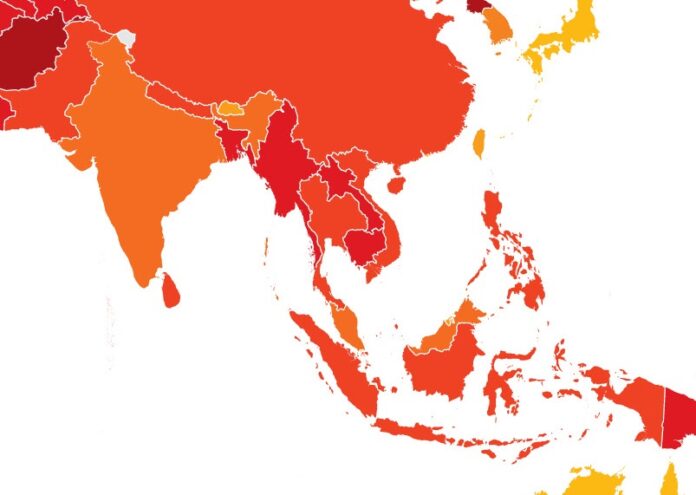
Transparency International ranked Thailand 99th out of 180 countries in its annual index, which saw the kingdom fall two points to score 35. Zero represents complete corruption and 100 is complete transparency. The watchdog did not cite specific factors in Thailand’s decline.

However, Thailand’s ranking has wavered since the 2014 military coup that brought junta leader Gen. Prayuth Chan-ocha to power, improving to 76 in 2015 and dropping as far as 102 the year after.

Ranked jointly with Thailand were Albania, Bahrain, Colombia, Tanzania and the Philippines.

Elsewhere in the region, the general trend showed mixed results, with Myanmar, Cambodia and Vietnam ranking lower and other ASEAN countries improving their standings. Among them was Singapore, which jumped three places to rank third alongside Finland, Switzerland and Sweden, just behind New Zealand and first-place Denmark.

Globally, it was a poor year overall for transparency, with more than two-thirds of nations ranking below 50, something the watchdog said is linked to rising authoritarianism worldwide.

“With many democratic institutions under threat across the globe – often by leaders with authoritarian or populist tendencies – we need to do more to strengthen checks and balances and protect citizens’ rights,” said Patricia Moreira, Transparency International’s managing director.

In the rest of the world, the most notable improvements were by Turkey and India, while emerging economies such as Mexico and Brazil both dropped. World powers such as Russia, the United Kingdom and the United States regressed, with the states falling out of the top 20 for the first time since 2011.

Transparency International classifies countries based on assessments of corruption in the public sector. The results are calculated using data from 13 external sources that are standardized to calculate the final index’s score.

Advertisement

Bangkok Schools Ordered Closed Due to Smog

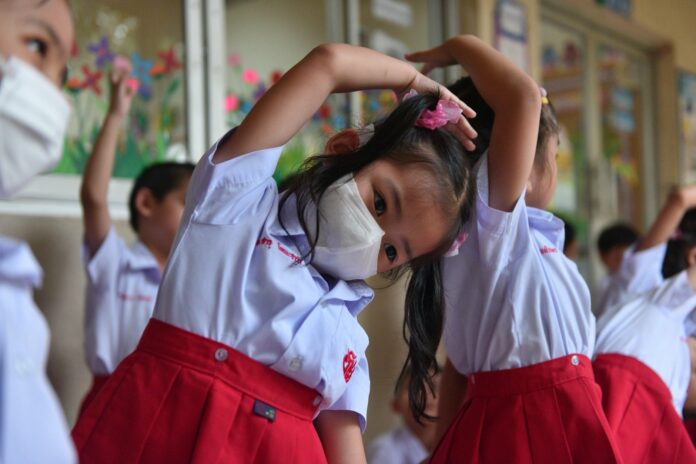
Students wear masks at at Patai Udom Suksa School on Jan. 15 in Bangkok.

Update: The Education Ministry ordered all “affected” education institutions, private and public, closed through Friday in Bangkok, Nonthaburi, Pathum Thani, Nakhon Pathom, Samut Prakan and Samut Sakhon provinces. Students in some grades with exams this weekend may still have class.

BANGKOK — Students will be dismissed from all public schools at noon and classes canceled through Friday as air pollution continues unabated, the governor said Wednesday.

Classes at 437 public schools were canceled out of concern the heavy smog could impact student health, according to Gov. Aswin Kwanmuang. Officials said the pollution in the capital this morning exceeded acceptable levels in 39 areas, with the highest density near Rama II Road in Samut Sakhon at up to 145 micrograms per cubic meter.

State weather forecasters said the lack of wind and higher air pressure has aggravated the situation, which is likely to persist at current unhealthy levels until next Monday at the earliest.

Update: ‘I Don’t Know What to Do’ About Smog: Bangkok Governor

Aswin said the forecast led to the decision to close schools temporarily because “children might be harmed” by the pollution.

Officials said canceling classes at universities will be voluntary. Thammasat University and Suan Dusit Rajabhat University canceled classes tomorrow and Friday.

Public frustration continues to grow as officials have scrambled to address the surging pollution since last month without any concrete results. Among those efforts are spraying water into the air, washing streets and halting rail construction.

On Twitter, #UltrafineParticles was the No. 2 top-trending hashtag as of noon.

The government has come in for harsh criticism for ineffectively handling the problem.

Aswin today outlined additional measures unlikely to impress the public, including deploying 50 drones to spray water and installing more pollution detectors in public areas.

He said factory operating hours would be limited, but fell short of promising stricter law enforcement in favor of voluntary measures.

“We’ll ask for cooperation,” he said. “Everyone has to help each other.”

He also said City Hall is considering ways to designate certain areas subject to controls on traffic, construction and open-air burning.

Related stories:

Some Bangkok Schools Cancel Classes Due to Pollution

Rail Construction Halted, Drivers Fined as Smog Persists

Bangkok Pollution Has Always Been Bad – So Have the Solutions: Experts

Advertisement

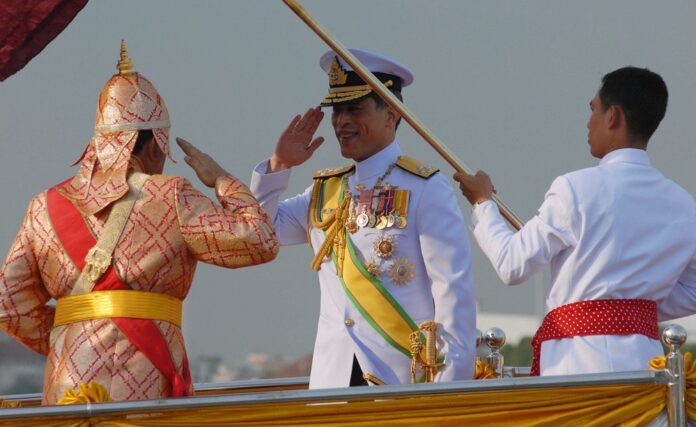
Final Day of King’s Coronation Declared National Holiday

A file photo of King Vajiralongkorn.

BANGKOK — The final day of His Majesty the King’s three-day coronation ceremony will be observed as a national holiday.

The interim cabinet Monday declared that May 6 will be a national holiday, effectively resuming a holiday that had been celebrated on May 5 since King Bhumibol, the monarch’s father, ascended to the throne that day in 1950.

It had not been celebrated since his death in 2016.

Prime Minister Gen. Prayuth Chan-ocha said the new date, which falls on a Monday, was declared so the ceremony could proceed uninterrupted past the weekend.

The coronation ceremony is scheduled for May 4 to May 6. The king will officially be crowned May 4. A royal procession and inauguration of the king’s official name and signature will be held May 5, including the re-establishment of royal family members’ ranks.

On May 6, the king will hold an audience for the public and foreign diplomats at the Grand Palace.

Related stories:

Coronation Dates Set for May: Palace

Thailand Adds Two New Holidays to the Year

Advertisement

Apple to Fix FaceTime Bug That Allows Eavesdropping

In this Oct. 30, 2018, file photo Apple's new MacBook Air computers are displayed during the company's showcase of new products in the Brooklyn borough of New York. Photo: Bebeto Matthews / AP

Apple has disabled a group-chat function in FaceTime after users said a software bug could let callers activate another person’s microphone remotely.

With the bug, a FaceTime user calling another iPhone, iPad or Mac computer could hear audio — even if the receiver did not accept the call. The bug is triggered when callers add themselves to the same call to launch a group chat. That makes FaceTime think the receiver had accepted the chat.

The bug, demonstrated through videos online, comes as an embarrassment for a company that is trying to distinguish itself by stressing its commitment to users’ privacy.

“This is a big hit to their brand,” said Dave Kennedy, CEO of Ohio-based security firm TrustedSec. “There’s been a long period of time people could have used that to eavesdrop. These things definitely should be caught prior to ever being released.”

There is no longer a danger from this particular bug as Apple disabled group chats, while regular, one-on-one FaceTime remains available.

NBC News and The Wall Street Journal reported Tuesday that the family of a 14-year-old high school student in Tucson, Arizona, tried to inform Apple about the bug more than a week before it became widely known to the public. The boy, Grant Thompson, said he discovered it by accident while calling friends to play the game “Fortnite.”

It’s hard to know if anyone exploited the bug maliciously, said Erka Koivunen, chief information security officer for Finnish company F-Secure. He said it would have been hard to use the bug to spy on someone, as the phone would ring first — and it’s easy to identify who called.

Apple said Tuesday that a fix will come in a software update later this week. Apple declined to say when it learned about the problem. The company also wouldn’t say if it has logs that could show if anyone took advantage of the bug before it became publicly known this week.

Kennedy commended Apple’s quick response this week following reports of the bug by tech blogs. He predicted the reputational dent could soon be forgotten if it doesn’t become part of a pattern.

“All bugs are obvious in retrospect,” said Eva Galperin, director of cybersecurity at the Electronic Frontier Foundation. “The truth is bugs are subtle, code is complicated and sometimes things get through.”

Galperin said Apple should develop a better process for fielding reports about potential security flaws. She said the 14-year-old’s discovery of the problem “just tells us a lot about reporting security bugs depends on knowing the right person.”

Apple had introduced the 32-person video conferencing feature in October for iPhones, iPads and Macs. Regular FaceTime calls aren’t affected unless the caller turns it into a group chat.

Word of the bug came as Apple reported that profit for the last three months of 2018 dipped slightly to $20 billion while revenue fell 5 percent from the prior year to $84 billion. Earlier this month, Apple said that demand for iPhones was waning and that its earnings for the final quarter of 2018 would be below its own forecasts — a rare downgrade from the company.

Story: Matt O’Brien and Carlo Piovano

Advertisement

Hot News

LATEST NEWS

Bangkok
overcast clouds
30 ° C
30 °
27.2 °
81 %
4.6kmh
97 %
Mon
30 °
Tue
35 °
Wed
34 °
Thu
32 °
Fri
33 °