














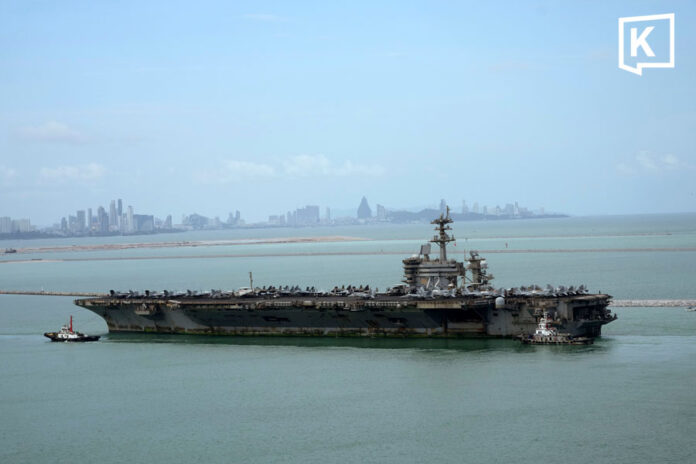
The USS Abraham Lincoln’s latest stop in Thailand is a brief break after 286 days at sea, but the carrier has a much longer connection with the country. It first moored at Laem Chabang in 2006 and returned in 2012, making this week’s visit another chapter in a relationship that spans two decades.

For residents and businesses in Pattaya and nearby Chonburi, the carrier’s arrival brings thousands of potential visitors and a welcome boost for the local tourism economy. Its imposing size has also made it a major attraction at Laem Chabang.
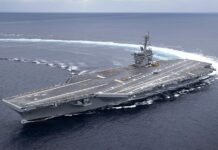
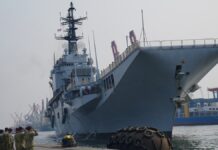
USS Abraham Lincoln, or CVN 72, is the fifth Nimitz-class, nuclear-powered aircraft carrier in the US Navy. Named after the 16th US president, the ship was built at Newport News, Virginia, and entered service on 11 November 1989, making it 37 years old.
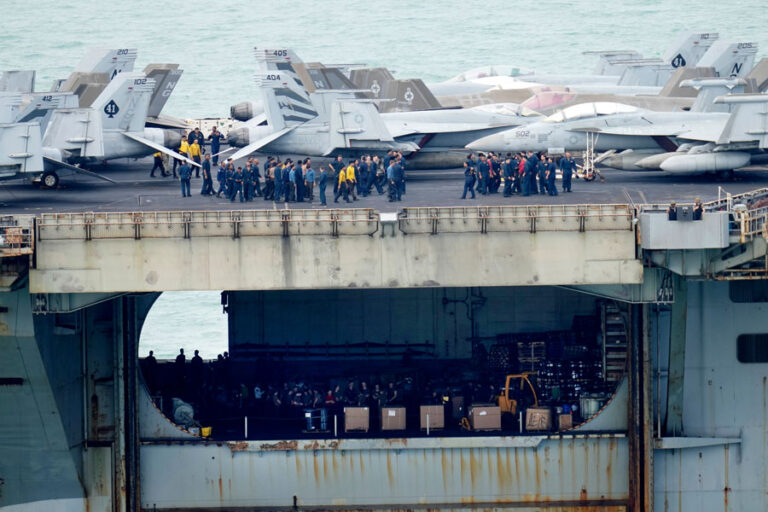
The carrier is about 333 metres (1,092 feet) long. Its flight deck is 78 metres (256 feet) wide, placing it among the largest warships ever built.
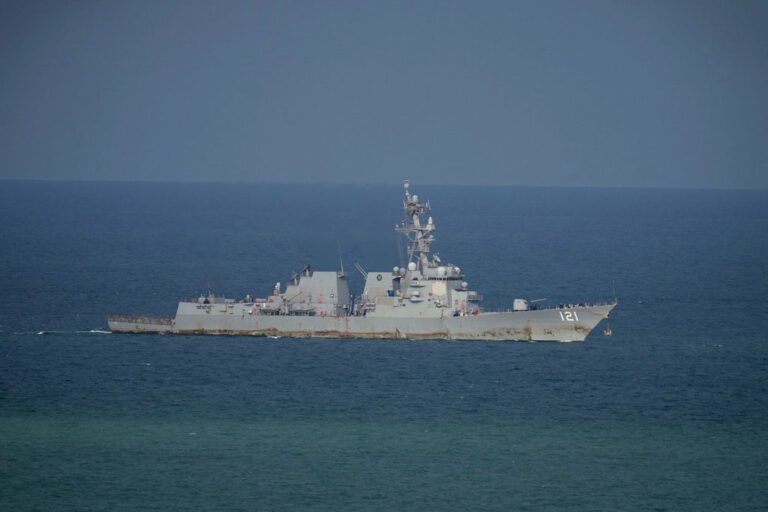
A carrier does not operate alone. Abraham Lincoln is the centrepiece of a strike group, carrying an air wing while travelling with other warships that provide protection and support. Carrier Air Wing 9 currently includes nine squadrons and more than 70 aircraft, including Super Hornet fighter jets, Growler electronic-warfare aircraft, F-35C Lightning IIs, Hawkeye early-warning aircraft, Seahawk helicopters and Greyhound transport aircraft.
Its first major mission was not a war. In 1991, the carrier was initially deployed in response to Iraq’s invasion of Kuwait but was redirected after the eruption of Mount Pinatubo in the Philippines.
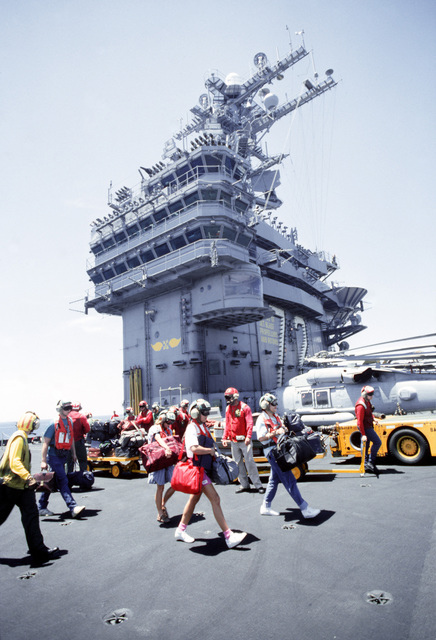
During Operation Fiery Vigil, USS Abraham Lincoln led a 23-ship force that evacuated nearly 45,000 US military personnel and family members from Subic Bay to Cebu. The Navy describes it as the largest peacetime evacuation of active-duty personnel and families on record.
After that mission, the ship continued to the Arabian Gulf, where its aircraft flew combat air patrols, reconnaissance missions and support flights over Kuwait and Iraq during the final months of Operation Desert Storm.
The following decade took the carrier repeatedly to the Middle East. It supported the no-fly zone over southern Iraq in the 1990s, and in 1993 was sent off Somalia, where its air wing flew patrols over Mogadishu in support of the UN humanitarian mission.
In 2002, the ship deployed again to the Arabian Gulf in support of the US-led wars in Afghanistan and Iraq. Its deployment was extended as US forces invaded Iraq in 2003.
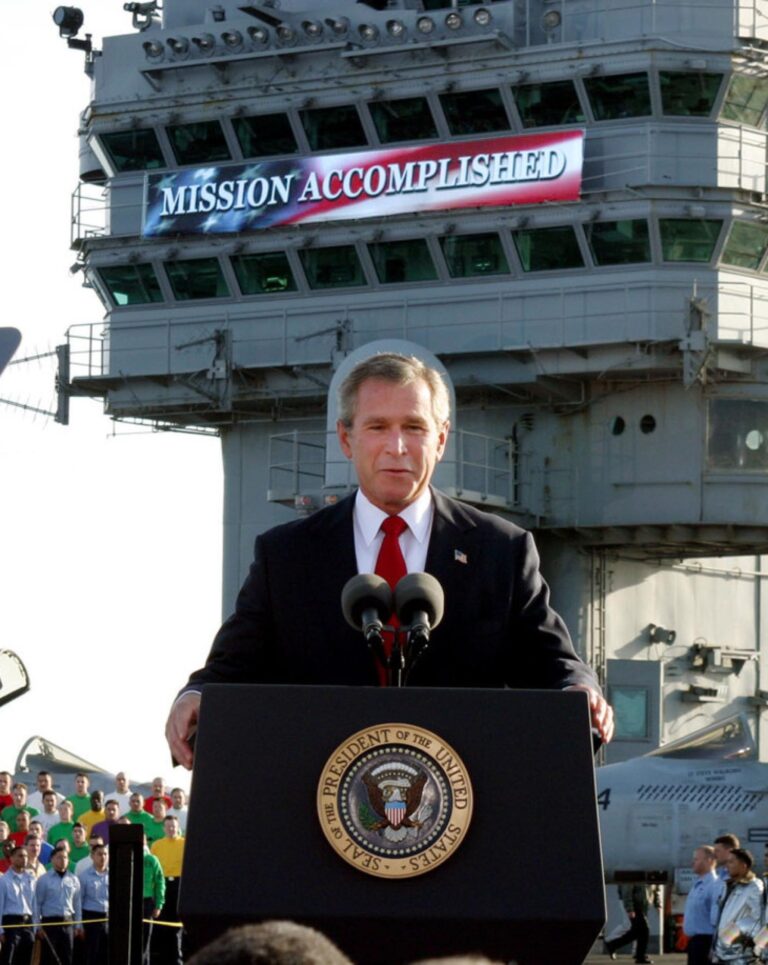
USS Abraham Lincoln is perhaps best known internationally for what happened at the end of that deployment. On 1 May 2003, President George W. Bush landed on the carrier and delivered his “Mission Accomplished” speech beneath a banner with those words, an image that became one of the defining and most controversial symbols of the Iraq War.
The carrier’s story is not only about military operations. In December 2004, USS Abraham Lincoln was diverted to help after the Indian Ocean tsunami devastated parts of Southeast Asia. During Operation Unified Assistance, it delivered supplies and aid in the region before returning to the United States in 2005.
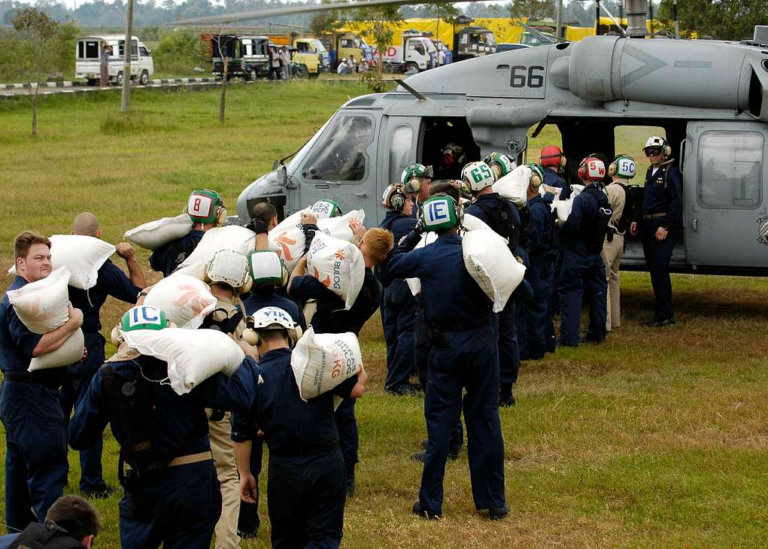
Thailand became part of the ship’s own history the following year. During a western Pacific deployment in 2006, Abraham Lincoln became the first US aircraft carrier to moor pier-side at Laem Chabang.
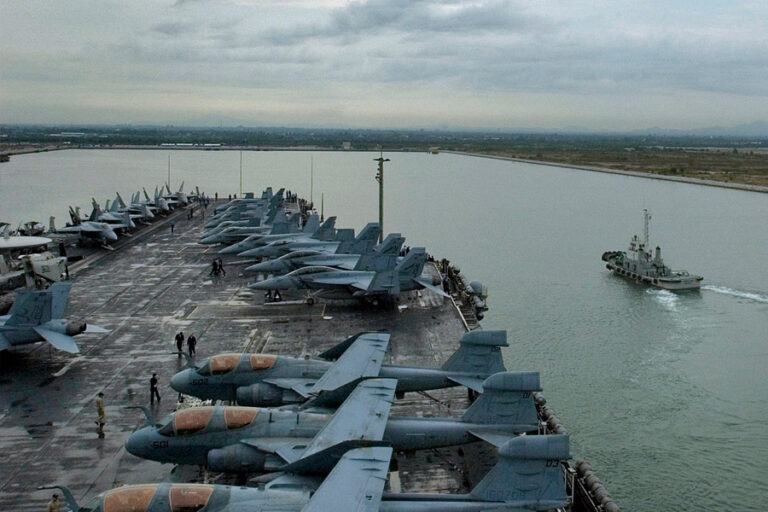
It returned in January 2012, accompanied by the guided-missile cruiser USS Cape St. George. During that four-day port visit, sailors carried out community projects including painting schools, cleaning temples and visiting local children and medical facilities.
The ship then underwent one of the biggest transformations in its life. From 2013 to 2017, it was refuelled and extensively modernised at Newport News Shipbuilding, a process known as a refuelling and complex overhaul.
During its most recent deployment, the Abraham Lincoln Carrier Strike Group spent nearly seven months operating in the US Central Command region. The US Navy says the group conducted combat operations in support of Operation Epic Fury.
Its latest Thai port call may be short, but it follows a history that has repeatedly brought the carrier to Asia, whether for military operations, disaster relief, exercises or rest after long months at sea.