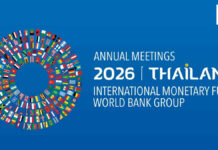

























What will ordinary Thai people actually gain from hosting the 2026 Annual Meetings of the International Monetary Fund (IMF) and the World Bank Group? That is the question many Thais want answered as Thailand prepares to host the global economic and financial gathering from 12-18 October 2026 at the Queen Sirikit National Convention Center in Bangkok.
To understand what the meetings could mean for the public, it is worth looking at the key issues that global economic and financial leaders are expected to discuss.
1. Global economic outlook and the impact of war
The IMF is due to release its World Economic Outlook, assessing prospects for global economic growth amid geopolitical conflicts and economic uncertainty. These factors could affect trade, exports, investment and consumer purchasing power worldwide, including in Thailand.
2. Public debt and financial stability
Discussions will cover risks related to government debt, borrowing costs and volatility in bond markets, as well as ways to maintain financial stability. These issues are important for Thailand’s fiscal policy, including debt management, fiscal discipline and the design of economic stimulus measures and public assistance programmes.
3. AI, employment and the economy
The growing use of artificial intelligence is transforming workplaces and businesses worldwide. Discussions will address its potential to boost productivity, its impact on labour markets and inequality, and the financial risks it may create. Leaders are also expected to consider how to develop workers’ skills so that people and businesses can adapt to and benefit from AI.
4. Mobilising private investment to create jobs and drive growth
Encouraging private-sector investment is seen as a way to strengthen competitiveness, stimulate economic growth and create jobs. For Thailand, the challenge is not simply attracting foreign capital, but ensuring that investment translates into real economic activity, quality employment and broader opportunities for Thai businesses, particularly small and medium-sized enterprises (SMEs).
5. War, energy and food security
Conflicts in the Middle East and Ukraine remain risks to energy prices, production and transport costs, and food security. The meetings will assess these impacts and possible responses.
For Thai households, the issue is directly linked to fuel prices, electricity bills, food and other consumer goods, as well as costs faced by farmers and businesses. These pressures could ultimately add to the cost-of-living burden.
6. Inclusive growth and poverty reduction
Ensuring that economic growth benefits a wider cross-section of society, particularly in developing countries, is another key issue. Discussions will address inequality, economic opportunities and improvements in living standards.
For Thailand, the central challenge is ensuring that the gains from growth reach people across society, especially farmers, low-income workers and small business owners. The goal is to help people secure more stable incomes and gain greater access to opportunities to improve their quality of life.
These issues show that the meetings will go beyond assessing the global economic outlook. They also cover matters closely connected to Thailand’s economy, from public debt and employment to investment, energy costs, agriculture, food security, inequality and poverty reduction. All of these can affect people’s incomes, living costs and livelihood opportunities.
The key question is how much the Thai government can translate the information and recommendations emerging from this global gathering into tangible benefits for people across the country.
For ordinary Thais, the real measure of success will not simply be that Thailand has hosted a major international meeting. It will be whether the country can turn the opportunity into more jobs, higher incomes and a better quality of life — and whether improvements in the Thai economy can be felt in people’s everyday lives.