
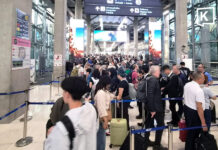
































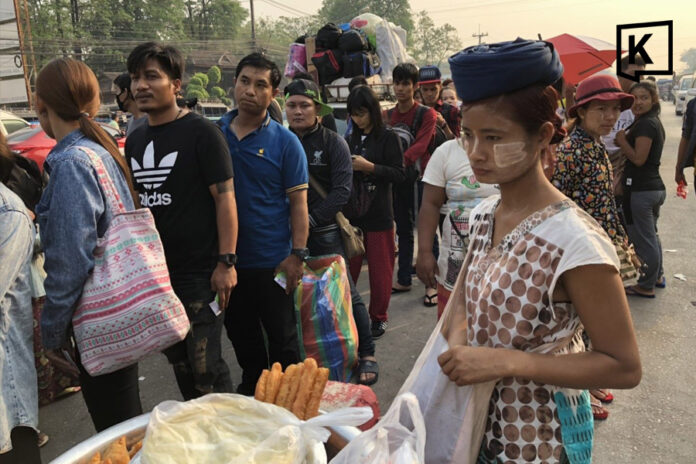
The 1 November physical assault on a prominent Myanmar activist in Bangkok by right-wing ultranationalist Thais is exposing very fragile tensions beneath the surface – a belief among some conservative Thais that the estimated 3.33 million Myanmar workers in Thailand constitute a threat to national security or, even worse, that these workers are taking over Thailand.
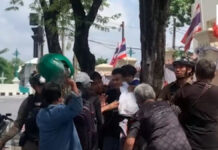
Myanmar labour activist Veera Saengthong was assaulted outside the United Nations building in Bangkok. He later filed complaints with the police and the human rights commission.
Now, some ultranationalists want him declared persona non grata and deported for speaking out and calling for basic rights.
Veera, a leader of the Bright Future group, was taking part in a demonstration against Certificate of Identity (CI) centres, which are operated by Myanmar officials in coordination with Thai authorities. Migrant workers say these centres impose unfair financial burdens, including forcing workers to send as much as 25 per cent of their income back to Myanmar by depositing it in a government-affiliated bank. Veera warned that these funds risk being misused by an illegitimate, repressive regime, according to an interview he gave to Prachachat, a sister daily of Khaosod English, earlier this week.
A Pandora’s box of anti-Myanmar migrant worker sentiment may have been opened, perhaps inadvertently. What followed the widely reported incident was a flood of anti-Myanmar-worker hostility and baseless allegations about their intentions.
This hostility is rooted partly in historical memories of Ayutthaya being sacked by Burmese forces twice.
The second time, in 1767, led to the total destruction of the Siamese capital and, eventually, the relocation of the capital to Bangkok in 1782.
What began as a call by some Myanmar workers to do away with Myanmar CI centres in Thailand snowballed into accusations by ultranationalist Thais that low-paid migrant workers were trying to take over the kingdom.
In one such case, Achchara Wongsakon, a prominent meditation teacher with over 295k followers on Facebook, wrote on 3 November:
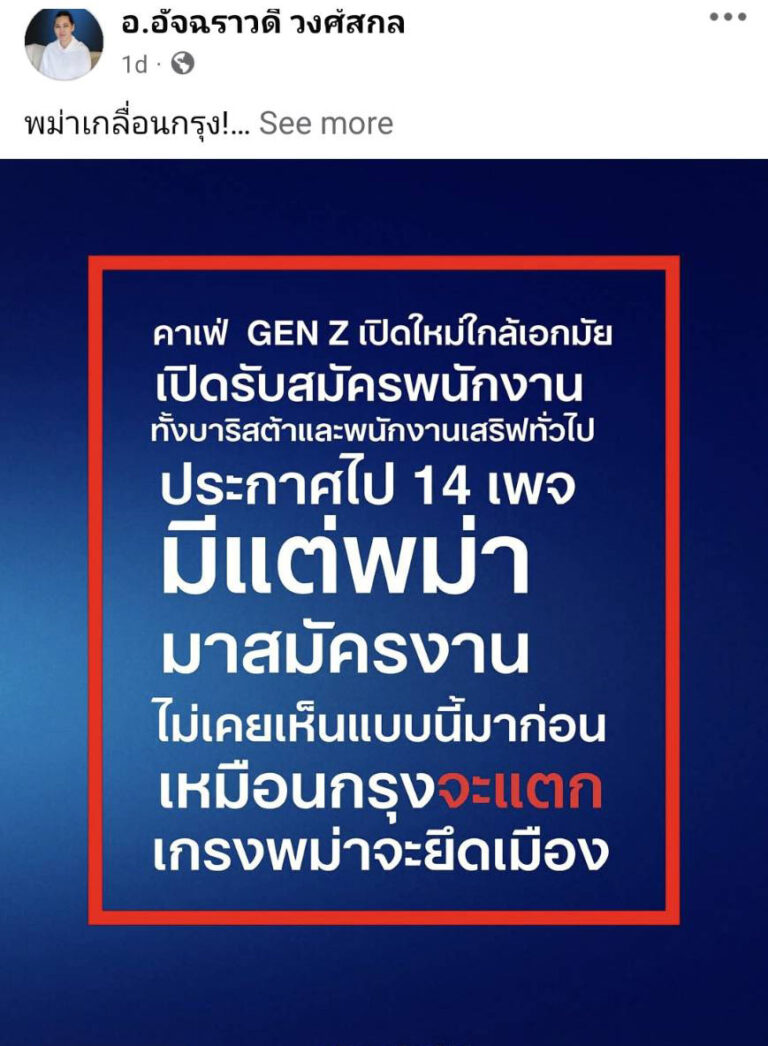
“Burmese people are flooding Bangkok!
“It feels as though someone has opened the gates for Burmese people to come and take over the city. They are streaming into Bangkok to work, and not just in manual labour jobs. Skilled positions are also increasingly being filled by Burmese workers.
“According to information I have received, after job advertisements were posted on 14 Facebook pages, hundreds of Burmese applicants came forward, while fewer than 10 Thai people applied, despite the salaries and benefits being at a decent entry-level standard.
“Burmese people are infiltrating Thai society at an alarming rate. If this is not controlled, it could become very dangerous.
“This will create social problems and result in taxpayers’ money being spent on state welfare for them, along with all sorts of other problems that the government will have to address.
“Those responsible for overseeing this issue must wake up and act urgently.”
One wonders whether she somehow doesn’t know about the Buddhist notion of loving-kindness (metta), or finds it too inconvenient.
If all these millions of migrant workers from Myanmar were to be driven back, middle-class Thai ultranationalists who love posting paranoid rants on social media about Myanmar workers taking over Thailand could happily fill the vacant jobs as construction workers, shopping mall toilet cleaners, food court cooks, and other manual labourers, where they will be paid minimum wage or in some cases, less.
But will they?
Veera himself warned in an interview with Prachachat that Thailand’s economy could come to a standstill if Myanmar workers were forced to leave. These workers are helping to keep entire industries running, from manufacturing and fisheries to seafood processing and retail. Yet some Thai ultranationalists seem determined to drive away the very people whose labour keeps the country moving.
As it stands, following the drastic decrease in migrant workers from Cambodia due to Thai-Cambodian conflicts, the Thai Labour Ministry has had to negotiate with the government of Sri Lanka to bring in Sri Lankan workers to replace them. It seems these ultranationalist Thais operate in a realm detached from daily reality.
Yes, the CI Centre is a conundrum. In the end, it seems difficult for Thailand to prevent these workers from being exploited and repressed by a brutal dictatorship, one way or the other.
Nevertheless, Thailand allows Myanmar’s military government to operate five CI centres on Thai soil to collect fees from—or potentially extort—Myanmar migrant workers. While the regime announced on 19 October that it was negotiating to establish dedicated CI centres in Malaysia and Laos. Singapore has no such centres.
There are also concerns that the Myanmar military junta may benefit from the arrangement, while some Thai officials or other individuals could profit from kickbacks and under-the-table payments.
The question is: Why is the Thai government allowing this?
Life is already difficult for Myanmar workers seeking better livelihoods and safety in Thailand. They cannot establish trade unions or serve in union leadership positions although they can join existing unions. They frequently face police inspections.
Recently, a female Myanmar journalist was among those subjected to an inspection by Thai authorities in Mae Sot, Tak province.
“Thai authorities ordered hundreds of people to sit by the roadside while conducting inspections of apartment buildings in Mae Sot for a prolonged period on 16 October, according to my Burmese source,” wrote Amy Sam Aung.
“Thai authorities ordered hundreds of people to sit by the roadside while conducting inspections of apartment buildings in Mae Sot for a prolonged period on 16 October,” according to my Myanmar source, journalist Amy Sam Aung.
“Additionally, at around 06:00 on 19 October, Thai authorities conducted an inspection of the Mae Pa community in Mae Sot District. Reports indicated that police checked and arrested some individuals during the operation.”
Amy, who lives in Mae Sot on the Thai-Myanmar border, works as a journalist for Than Lwin Times, an ethnic media outlet.
“We had to remain by the roadside for more than three hours”
“I understand that the operation was aimed at searching for illegal drugs and identifying undocumented migrants. According to an announcement by the Mae Sot District Office, no drugs were found at the housing complex known as Mar Lwe. The area was declared free of illegal drugs. However, the authorities did find undocumented migrants who had not obtained pink cards.”
Instead of seeing migrant workers from Myanmar as a threat, we should embrace them and be thankful that so many difficult, low-paid jobs—which Thais are often reluctant to take—are being filled by them, helping to keep the economy running..
Most Myanmar migrant workers are well-behaved and go about their daily lives quietly, often remaining almost invisible to the wider Thai public.
Many Thais and the Thai government have mishandled Thai-Cambodian relations over the past year. I truly hope the same won’t occur with Thai-Myanmar relations, particularly relations between ordinary people.
If we allow these aggressive ultranationalists to do whatever they please and break the law without consequence,they will likely turn another immediate neighbour into an enemy. Cambodia? Check. Myanmar next? Being trapped in a vicious cycle of mutual hatred between Thailand and Cambodia is difficult enough to escape—Thais do not need another ‘enemy’.
Peaceful protest is a fundamental constitutional right. Yet some Thais, lacking tolerance and restraint, have resorted to violence, claiming in their rhetoric that these Myanmar protesters are arrogant, ungrateful, and should remember that “this is Thailand”.
It seems that some people are deliberately stirring up hostility and creating enemies where none are necessary. I stress: unnecessarily.
Some may have profited from the Thai-Cambodian tensions and learned how to exploit them: collecting public donations, attracting attention and gaining notoriety by fuelling hatred and turning neighbouring countries into enemies. Now that tensions with Cambodia are beginning to subside, they seem to need a new enemy.
We must distinguish Myanmar’s military dictatorship from its migrant workers and ordinary people. They must not be lumped together.
This comes amid renewed tensions along the Thai-Myanmar border. Thai Foreign Minister Sihasak Phuangketkeow confirmed on Tuesday that he plans to visit Myanmar on 12 November to discuss ways to prevent escalating violence from affecting Thailand.
Sihasak, who also serves as deputy prime minister, said he had raised Thailand’s concerns during a 10-minute phone call with Myanmar Foreign Minister Tin Maung Swe.
He stressed that a reduction in violence by all sides would help create a more favourable atmosphere for dialogue and reconciliation, paving the way for peace in Myanmar.
Returning to relations between ordinary people, turning Myanmar workers into our enemies could have significant repercussions for Thailand’s economy. Millions of Myanmar migrant workers live and work in Thailand. Such hostility would also hurt Myanmar’s economy and, most importantly, the millions of Myanmar workers who live modestly and contribute to Thai society.
Those who stand to benefit are the far right, hardline conservatives and reactionary elements within the military. They couldn’t care less about the consequences for ordinary people, and they exploit the situation to push Thailand towards an increasingly far-right society—one driven by paranoia, fear of foreigners and exaggerated security concerns