


































Thailand’s economy could face severe disruption if Myanmar migrant workers were forced to return home, a labour rights leader has warned, urging the Thai government to overhaul a registration system that he says exposes workers to financial exploitation and potential threats from Myanmar’s military government.
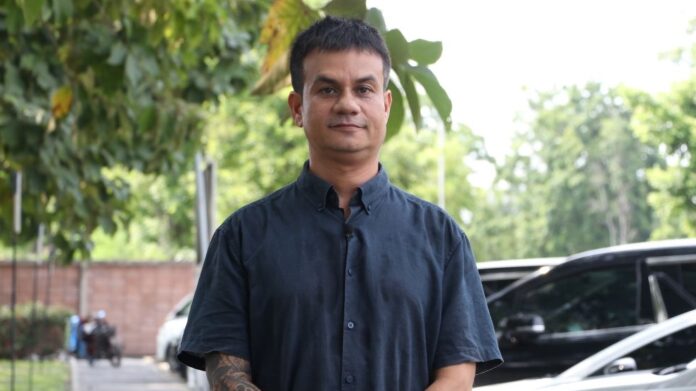
Weera Saengthong, a leader of the migrant labour group Bright Future, told Prachachat Business in an interview that Myanmar nationals form a crucial part of Thailand’s workforce, particularly in manufacturing, fisheries, seafood processing and retail.
“If all the workers returned home, it would be like a racehorse suddenly collapsing in the middle of a race,” he said.
“Businesses and the economy would be devastated and unable to move forward. Myanmar workers are Thailand’s main foreign workforce. Without them, Thailand would come to a standstill for a period.”
His warning comes amid growing controversy over Myanmar’s Certificate of Identity (CI) centres in Thailand, which migrant workers must use as part of procedures to verify their nationality and maintain legal employment status.
Weera argued that the system places an excessive financial burden on workers and Thai employers while allowing money to flow to Myanmar’s military authorities.
Workers face costs of up to 30,000 baht
According to Weera, Myanmar workers face multiple charges associated with the CI process, including a 2 per cent tax imposed by Myanmar’s military government and a requirement to remit 25 per cent of their income to Myanmar.
He said the 2 per cent tax, calculated on a monthly salary of 7,500 baht, amounts to 150 baht a month, or 3,600 baht over two years.
However, fees charged through service providers and intermediaries can push the cost to 6,500 baht, while additional payments to brokers may add another 2,000 to 3,000 baht.
Workers can also face expenses for smart cards, visas and employment arrangements, including brokerage fees of 5,500 to 10,000 baht in some areas of Chonburi province.
Weera estimated that the combined financial burden could reach approximately 30,000 baht per worker.
He also criticised Myanmar’s Family Remittance Management System (FRMS), under which workers are required to transfer 25 per cent of their income back to Myanmar.
He alleged that the system offers unfavourable exchange rates and insufficient assurances that the money will reach workers’ families.

“Not every worker can afford these expenses,” Weera said.
He warned that some workers could turn to informal brokerage activities or abandon the registration process altogether, leaving them without legal employment status.
Such an outcome, he argued, would also hurt Thai businesses already dependent on migrant labour.
Fear of military conscription
Beyond the financial costs, Weera raised concerns about the personal information collected through the CI system.
He alleged that workers’ identities and residential addresses could become accessible to Myanmar’s military authorities, potentially exposing relatives remaining in Myanmar to intimidation, financial demands or pressure related to military conscription.
Many young Myanmar nationals have fled their country to avoid military service amid the continuing conflict following the 2021 military coup.
Weera accused Myanmar’s military government of using revenue collected through the CI system to support its military operations, although the allegation was not independently verified in the interview.
He said workers were reluctant to provide money or personal information to authorities they did not recognise as their legitimate government.
He also claimed that the five CI centres had attracted very few applicants since opening.
Calls for Thailand to restore pink-card system
Weera urged the Thai government to suspend its reliance on Myanmar’s CI centres and introduce a registration system managed entirely by Thai authorities.
He proposed restoring the pink-card identification system previously used for migrant workers, combining identification and work permit functions in a single document.
Thailand has experience operating such a system, he said, pointing to registration arrangements introduced more than two decades ago under former Prime Minister Thaksin Shinawatra.
“We want the Thai government to reconsider and reopen worker registration as quickly as possible,” he said.
“The longer the delay, the more workers will fall out of the system and become undocumented.”
His three main proposals are to eliminate the requirement to process documents through Myanmar’s CI centres, introduce a combined identification and work permit card, and bring migrant workers into Thailand’s social security system instead of requiring them to purchase separate health insurance.
He argued that workers were willing to pay registration fees and taxes directly to the Thai government.
Myanmar workers support Thailand’s economy
Weera said Myanmar workers contribute not only to industrial production but also to local economies through everyday spending.
He cited rental accommodation as one example, noting that many migrant workers pay between 2,500 and 3,000 baht a month for housing.
Their spending supports landlords, shops and other businesses in communities across Thailand, he said.
He also warned that even a one-day work stoppage by migrant workers could have serious consequences for Thai businesses.
At the same time, he highlighted the potential contribution of younger Myanmar migrants, including those with skills in information technology, marketing, graphic design and foreign languages.
He described the arrival of skilled young workers fleeing political instability and conscription as an economic opportunity for Thailand.
However, he also encouraged Myanmar migrants to learn Thai and understand local customs to improve workplace communication and integration.
Labour leader assaulted outside UN building
The interview followed an incident on 1 November, when Weera and other migrant labour representatives submitted a petition outside a United Nations building in Bangkok calling for the abolition of the CI process and the restoration of the pink-card system.
During the gathering, a confrontation occurred involving members of a Thai nationalist group known as the Centre for the Protection of the Institution (ศปปส.), with Weera reporting that he had been physically assaulted.
He subsequently filed a police complaint at Nang Loeng Police Station.
On 3 November, Weera also submitted a complaint to Thailand’s National Human Rights Commission.
The commission said the violence had created an atmosphere of fear and hostility towards migrant workers and could constitute a violation of their rights to peaceful assembly and freedom of expression under international human rights principles.
Appeal for fair treatment
Weera also called for improvements in migrant workers’ access to healthcare, social security and education.
He said some workers encounter difficulties using their social security benefits because of confusion over identification records and administrative procedures.

He encouraged employers to help workers understand and access their entitlements.
Weera also expressed appreciation for Thailand’s educational opportunities for migrant communities, citing his own experience studying through the country’s non-formal education system.
He said access to Thai-language education would help migrant children integrate into society and eventually contribute to the country’s economy.
He concluded by urging Thai employers and the public to recognise migrant workers as fellow human beings rather than simply a source of labour.
“I want employers to view workers through the principles of human rights, as fellow human beings,” he said.
He added that most Thai employers treated migrant workers well, although some cases of exploitation remained.
The labour leader’s proposals highlight a growing debate over how Thailand should balance its demand for migrant labour with immigration controls, workers’ rights and the political situation in neighbouring Myanmar.