


































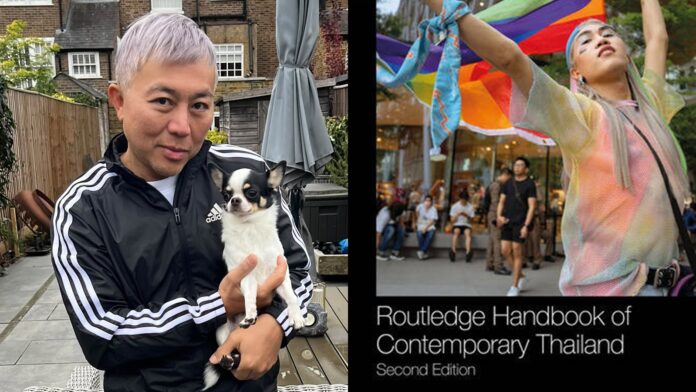
BANGKOK – Thai police have banned the importation of an academic book examining contemporary Thailand, edited by prominent political scientist Pavin Chachavalpongpun, citing concerns that its contents could threaten national security and public order.
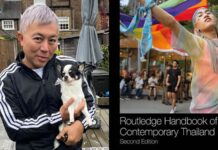
The ban, published in the Royal Gazette on 4 November, targets Routledge Handbook of Contemporary Thailand, Second Edition, an international academic publication edited by Pavin, a Thai scholar and former diplomat based in Japan.
According to Royal Thai Police Order No. 555/2569, the book contains articles deemed potentially harmful to national security, capable of causing public distress or encouraging unrest, and contrary to public order or good morals.
The order was signed by national police chief Pol Gen Samran Nuanma on 30 October and took immediate effect.
Under Section 10 of Thailand’s Printing Registration Act 2007, importing or ordering the publication into the country for distribution is prohibited.
Anyone violating the order faces up to three years in prison, a fine of up to 60,000 baht, or both. The national police chief also has the authority to confiscate and destroy copies of the publication.
The order does not specify which chapters or passages authorities consider objectionable.
Academic work involving 45 scholars
The banned publication is the second edition of Routledge Handbook of Contemporary Thailand, published seven years after the first edition.
Pavin previously described the updated volume as a collaborative academic project involving 45 scholars who contributed 37 chapters across 474 pages.
The handbook examines contemporary Thailand through academic perspectives, bringing together research by scholars specialising in the country.
Pavin is a professor at the Centre for Southeast Asian Studies at Kyoto University in Japan. A former Thai diplomat, he is known for his research and commentary on Thai politics.
Pavin mocks ban as free publicity
Responding to the police order, Pavin sharply criticised the Thai authorities in a social media post, questioning the effectiveness of banning books in the internet age.
He argued that readers could simply purchase an electronic edition instead of a physical copy, making restrictions on printed imports ineffective.
He also suggested that the decision would ultimately benefit both the publisher and himself by attracting greater public attention to the book.
“The more they ban it, the more people will know about this book,” he wrote.
Pavin added sarcastically that the controversy could increase sales and public awareness, describing the outcome as a “win-win” situation.
His remarks came after the police order was made public, drawing attention to the continued use of restrictions on printed publications in Thailand.
The order specifically prohibits importing or ordering the publication for distribution in Thailand. It does not explicitly address electronic editions.
The ban has raised questions about restrictions on academic publications and freedom of expression, particularly as the book remains accessible through international publishing channels.