




















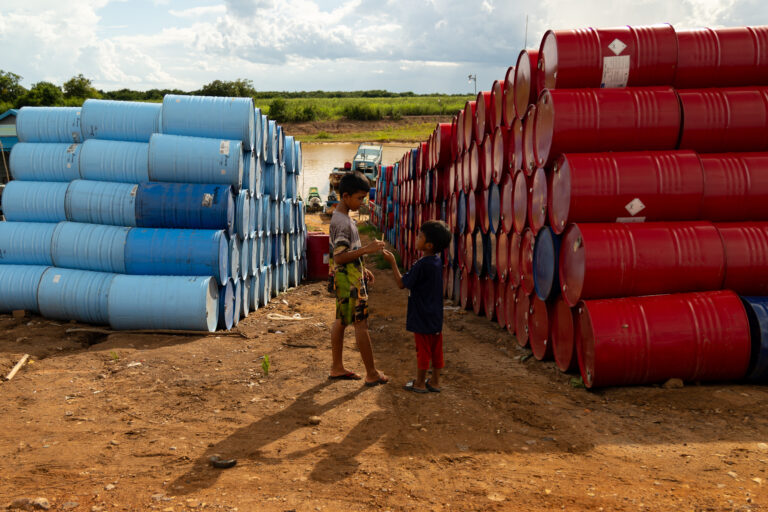
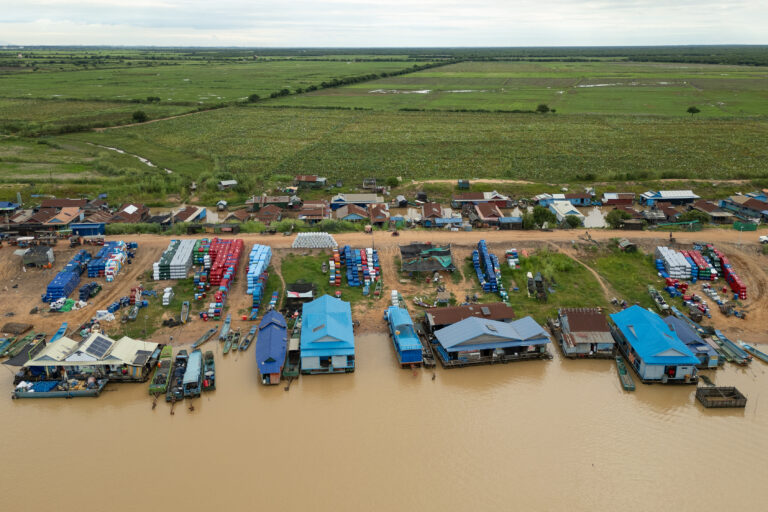
CHONG KNEAS, Cambodia (AP) — At the edge of Cambodia’s great Tonle Sap lake, a wall of red, blue and yellow metal drums rises bright against the muddy water.
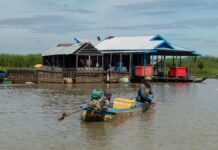
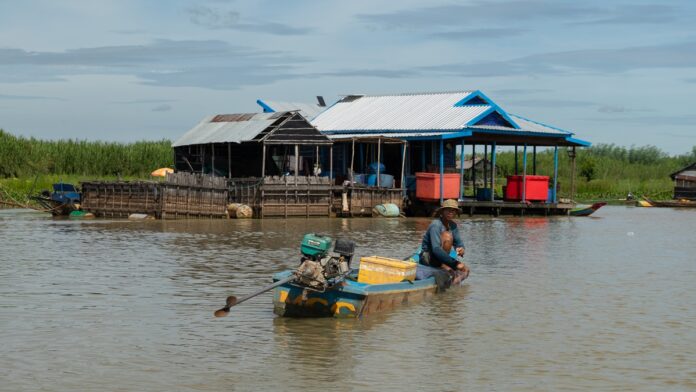
Meas Chou stockpiles these drums wherever he can and sells them to families who use them to keep their houses afloat on Southeast Asia’s largest lake. About 1.5 million people live on Tonle Sap, their homes rising and falling with the ebb and flow of the lake’s water levels.
This year’s record-breaking El Niño is predicted to bring hotter, drier weather across Southeast Asia, threatening both fisheries and farms. For Cambodia, which is already in a time of extreme drought, this could stunt Tonle Sap’s annual water flows from the Mekong River, which usually refill the lake each monsoon season.
In early October, the water level in the town of Prek Kdam — about halfway between the capital city of Phnom Penh and Tonle Sap — stood at nearly 7 meters (nearly 23 feet). That’s more than a meter below average and 1.5 meters (about 5 feet) lower than last year.
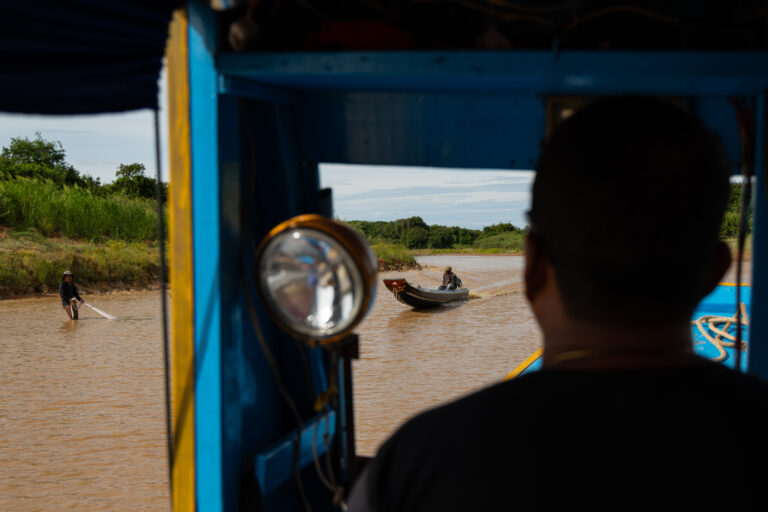
Lower water levels mean meager fish catches and less business for Chou. Higher fuel prices due to the Iran war also are hurting his sales and other aspects of life on the lake. There’s little he can do but hope the rain comes and the fish return.
“If fishermen can earn a lot, I can sell my goods a lot. But if they earn less, I sell a little less too,” he said.
Pressures mount on Cambodia’s great lake
Tonle Sap rises and falls with an extraordinary natural rhythm that scientists call a “flood pulse.”
Each year, monsoon rains swell the Mekong River so much that its water flow reverses direction, sending water back upstream into the lake, which then quintuples in size. Sediment-laden flood waters carry nutrients from forests and grasslands into the lake, and the fish follow.
This makes Tonle Sap one of the world’s most productive freshwater fisheries.
It is a nursery for some of the world’s largest and rarest freshwater fish. That includes the critically endangered Mekong giant catfish, which can grow up to 3 meters (10 feet) long, the Mekong giant barb, which is the world’s biggest carp species and can weigh up to 300 kilograms (660 pounds), and the Mekong giant stingray, the world’s largest recorded freshwater fish.
The annual floods turn dusty roads into busy waterways. Some floating houses become bustling markets. Fishermen pass the hottest hours of the day by playing billiards on the riverside. Crocodile hatchlings chirp from net-covered plastic buckets, to be sold for meat or leather.
But this way of life is imperiled as upstream dams and sand mining alter the flow of the Mekong. With climate change, rainfall has become erratic and droughts are disrupting the seasonal flooding that the lake depends on.
Conversations among fisherfolk on the lake often mention two wars: the Iran war, which has driven up fuel prices, and a simmering border conflict with neighboring Thailand, which has disrupted trade, travel and tourism.
Chinese envoys visiting Cambodia in the 13th century described Tonle Sap as a vast inland sea teeming with fish. But that “unbroken thread” is about to snap, according to Abby Seif, author of ‘Troubling the Water: A dying lake and a vanishing world in Cambodia.’
“You have a disappearing way of life … a disappearing culture and you have a disappearing history,” she said.
El Niño to bring worse drought
El Niño is a natural climate cycle marked by unusually warm ocean temperatures. This year, it is expected to bring extreme drought, heat waves, flooding and other climate-related disruptions to South America, Africa and Asia.
In June, the United Nations Food and Agriculture Organization found that Cambodia was at high risk of severe drought during this El Niño cycle, which could affect about 314,000 acres (about 491 square miles) of farmland. This works out to about 3% of Cambodia’s arable land, according to data from the World Bank Group.
It adds to the hardships for Tonle Sap’s fisherfolk, since most farm to supplement their meager incomes from fishing, said Brian Eyler, director of The Stimson Center’s Southeast Asia Program in Washington, D.C.
Drought also could make the sometimes flooded forests around Tonle Sap more vulnerable to fires. Between 1993 and 2017, about a third of those forests stayed dry and were lost to fires and agricultural clearing, a 2020 study found.
“When you get a very dry year, you have less fish, less food and more fire. And all of those add up to a bad situation for people living around the lake,” said Zeb Hogan, with the University of Nevada, Reno, who runs the research and conservation project Wonders of the Mekong.
Vulnerable communities face climate extremes
Like many poorer countries, Cambodia is facing severe consequences of climate change that far exceed its own contribution to the problem. The nation of 18 million contributes less than 0.2% of the world’s annual greenhouse gas emissions.
Many of the people living on Tonle Sap have little to no land or other assets and few have anywhere else to go.
Yim Nary watches her husband head out to fish before dawn, each day hoping for a good catch. What he brings home usually barely covers their main expenses of fuel, rice, vegetables, drinking water and electricity.
When fuel is too expensive, her husband rows instead of running his boat’s engine. When he falls sick, Nary cuts and cleans other people’s catches to make up for his lost income. With three children, there is little leeway for anything to go wrong.
“I don’t know what the future holds for my children,” she said. “All I have is fish and family.”