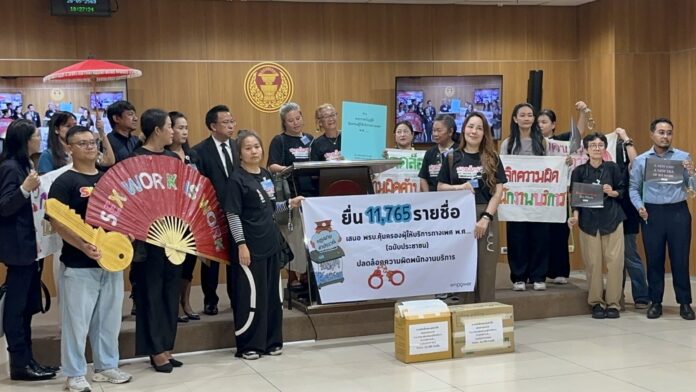
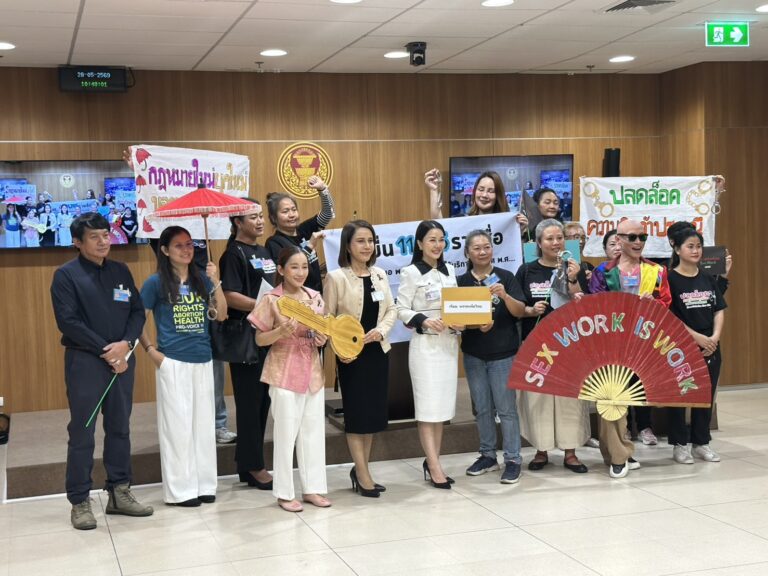
A foundation advocating for sex workers submitted a draft bill to parliament on Thursday that would decriminalise sex work and extend labour protections to those in the industry.
The Empower Foundation presented the proposed Sex Service Provider Protection Act to the House of Representatives at 10:30, where it was received by an adviser to House Speaker Sophon Zarum on his behalf.
Representatives from the House Committee on Law, Justice and Human Rights, as well as MPs from the People’s Party and Pheu Thai Party, were also present.
A foundation representative said the existing Prevention and Suppression of Prostitution Act of 1996 is outdated, as it criminalises voluntary sex workers, leaving them vulnerable to exploitation, abuse and discrimination.
The proposed law would repeal the 1996 act and recognise sex work as legitimate labour, entitling workers to the same basic protections as those in other professions.
“This bill is not an endorsement of sex work,” the representative said. “It is about respecting the decisions of those who do this work and ensuring they receive the same basic rights as anyone else — nothing more, nothing less.”
The foundation said the legislation would also address safety concerns for clients and business operators, arguing that a legal framework is needed to protect all parties involved.
BANGKOK — 28 May 2026, Chile opened the Chile-ASEAN Business Summit 2026 in Bangkok this week, bringing together Chilean exporters, importers, retailers, distributors and food industry executives in one of its largest trade engagement initiatives in Thailand and Southeast Asia to date.
Chile Expands ASEAN Trade Push
Organised by ProChile, the trade promotion agency under Chile’s Ministry of Foreign Affairs, the five-day programme includes business meetings, trade networking events, retail market visits and participation in THAIFEX-Anuga Asia, one of Asia’s largest food and beverage exhibitions.
The summit, which runs from 26 to 30 May, is part of Chile’s broader strategy to strengthen commercial partnerships with Thailand and Southeast Asia, where demand for imported premium food products continues to grow.
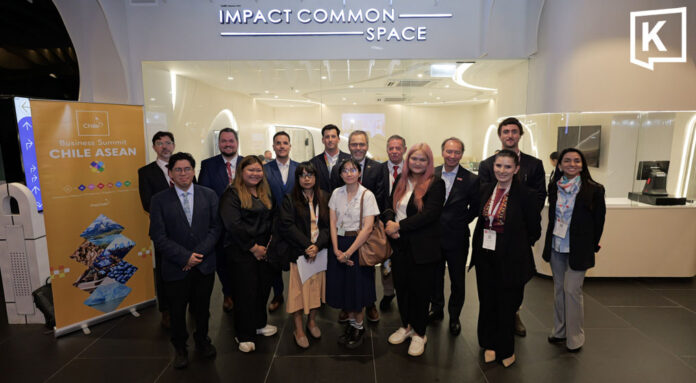
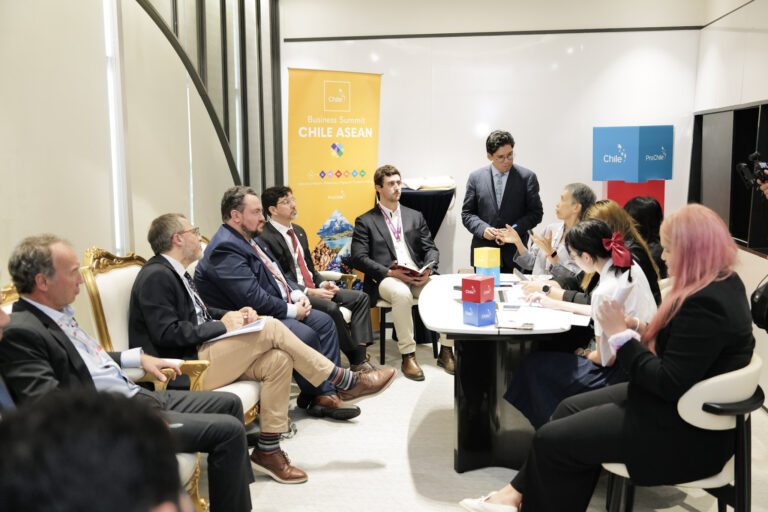
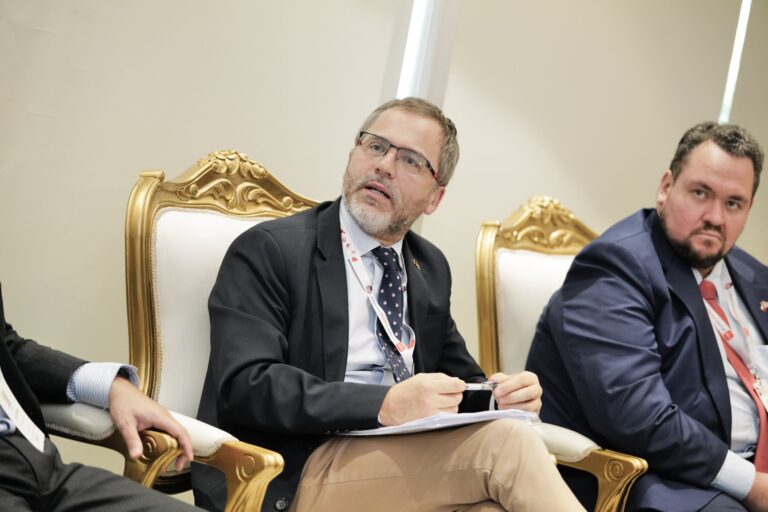
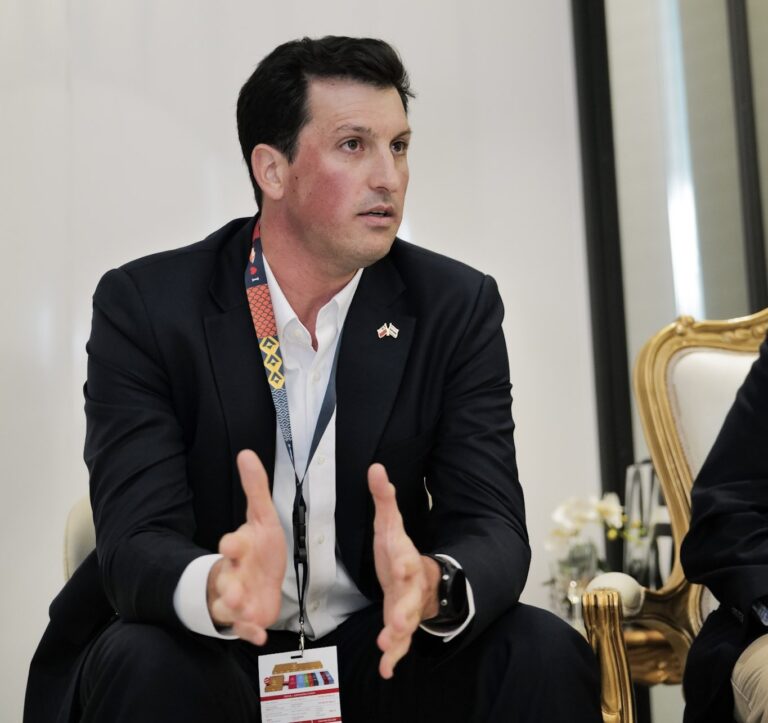
Speaking at a press briefing at IMPACT Challenger, Ignacio Fernández, director general of ProChile, said Chile viewed ASEAN as a region of growing opportunity.
Fernández said business and trust were built face to face, which was why Chile had returned to ASEAN for a second consecutive year. He described the region as a major opportunity for Chilean products and services and said Chile wanted to build long-term relationships based on trust. He also described Thailand as Chile’s principal trading partner within ASEAN and said the wider region offered long-term opportunities for growth and collaboration.
The briefing was attended by David Hansen Salas, chargé d’affaires a.i. of Chile to Thailand, and Oscar Arriagada, trade commissioner of ProChile in Thailand.
Chilean delegates speak with Thai media, including a Khaosod English reporter, during a press briefing at the Chile-ASEAN Business Summit 2026 in Bangkok
Hundreds of Business Meetings Planned
This year’s summit drew buyers and business representatives from Thailand, Vietnam, Indonesia, Malaysia, Singapore and the Philippines. More than 300 business-to-business meetings are expected between Chilean exporters and ASEAN importers.
The Chilean delegation includes 28 companies from sectors including salmon and seafood, fresh fruit, meat, nuts, wine and beverages, forestry products, agribusiness, aquaculture services and food innovation.
Three major Chilean industry associations — Fruits from Chile, Faenacar and ChileNuts — are also participating, alongside representatives from Chile’s salmon and mussel export sectors.
Key delegates attending the briefing included Iván Marambio, president of Fruits of Chile; Rafael Lecaros, general manager of Faenacar; Eduardo Piccolo, representative of AmiChile, which represents Chilean mussel producers; Martín Correa, representative of ChileNuts; and Rodrigo Bustos, representative of SalmonChile.
Thailand’s Role in Chile’s ASEAN Strategy
The summit builds on the inaugural Chile-ASEAN Business Meeting in 2025, which brought together 76 importers from six countries and generated immediate business projections worth US$6.4 million.
Thailand was selected as host due to its position as Chile’s largest trading partner in ASEAN and its role as a regional distribution, logistics and food trade hub. In 2025, Thailand ranked as the 20th-largest destination for Chilean exports globally, with exports valued at approximately US$596 million.
Trade between Chile and ASEAN reached approximately US$5.17 billion in 2025, while Chilean non-mining exports to the bloc rose to nearly US$986 million. Food exports alone totalled US$571 million, more than double the level recorded a decade earlier.
ProChile officials said the summit reflected Chile’s growing focus on Thailand and ASEAN not only as export markets but also as strategic partners for food security, supply chain reliability and sustainable trade cooperation.
Food Exports as Chile’s ‘Soft Power’
Fernández said Chile increasingly viewed food and consumer exports as part of a broader “soft power” strategy aimed at strengthening international recognition of Chilean products and brands. He said Chilean food and consumer products helped bring the country into households around the world, with wine already serving as one of Chile’s most recognisable global brands.
Ignacio Fernández (centre), director general of ProChile, and David Hansen Salas (right), chargé d’affaires a.i. of Chile to Thailand
Marambio said Chile’s strongest competitive advantage in global food exports remained its emphasis on quality and food safety. For Chile, he said, delivering high-quality food with strong safety standards was fundamental because producers wanted consumers to trust what they eat.
He also explained that Chile’s fresh fruit exports to Southeast Asia had doubled over the past two years, rising from around 7,000 tonnes to more than 15,000 tonnes annually, led by cherries and grapes. However, market access restrictions and shipping logistics remained major challenges for Chilean exporters, with shipments to Southeast Asia taking more than 50 days, compared with around 25 days to China.
Seafood, Sustainability and Regional Growth
Bustos said Chile accounts for around 30% of global salmon production, making salmon the country’s second-largest export industry after mining. Thailand has become an increasingly important market, driven by tourism demand and the seafood processing industry.
Rodrigo Bustos, representative of SalmonChile
Piccolo, representing Chile’s mussel industry, also highlighted Thailand as a growing market, saying Chilean mussels had been adapted into Thai cuisine and street food dishes, helping expand year-round consumption. He described Thailand as an important regional trendsetter in retail, hospitality and food consumption, with neighbouring ASEAN countries often looking to Thailand as a model market for consumer trends and food innovation.
Another major theme of this year’s summit is food innovation and sustainability, with Chilean companies showcasing seafood, healthy snacks, natural ingredients, traceable agricultural products and sustainable food production capabilities.
Fernández said Chile came to the event this year to present itself through three key pillars: a reliable partner, a growing economy offering world-class products and services, and a country of talent and knowledge. He added that Chile aimed to position itself as a gateway for Thai and ASEAN businesses seeking access to Latin American markets through its regional free trade network.
With this year’s programme expanded and timed alongside THAIFEX-Anuga Asia, Chile is seeking to strengthen its commercial footprint across Thailand and Southeast Asia and pursue new opportunities in the region’s food and agribusiness sectors.
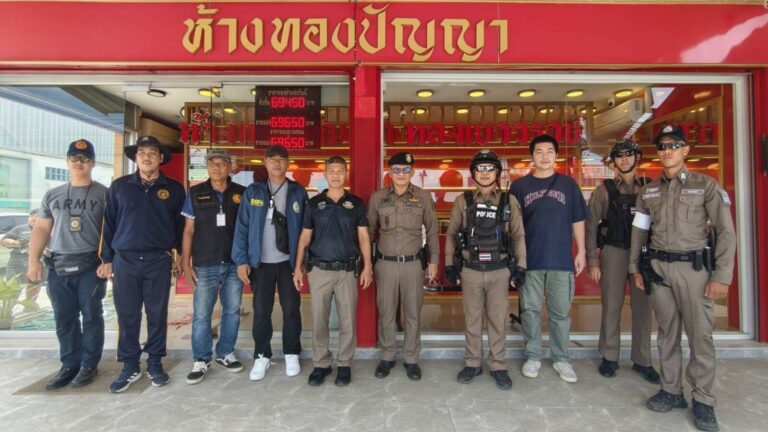
CHONBURI — 27 May 2026, Nearly an entire police station was deployed to what was initially reported as a gold shop robbery, only to find an injured local man inside the store after he gave staff a playful military salute and walked face-first into a glass panel he mistook for an exit door.
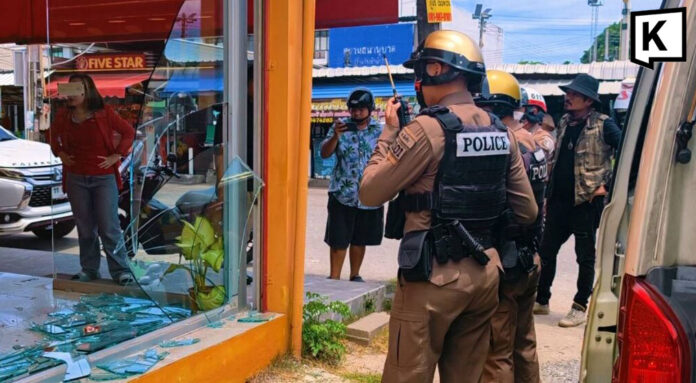
The incident occurred at about 11:55 on Wednesday at a gold shop in Moo 6, Sattahip Sub-district, Sattahip District. Sattahip Police Station’s radio centre received a report that a suspect had smashed the shop’s glass during an attempted robbery.
Pol. Lt. Col. Kriangkrai Meesaeng, deputy superintendent, Pol. Lt. Col. Aphichat Namchanto, investigation inspector, and Pol. Maj. Kosol Sila led a rapid-response team of police and local administrative officials to the scene for an immediate investigation.
At the scene, officers found a 49-year-old local man known as “Ped” injured inside the shop after suffering a deep cut to his right wrist from shattered glass. Rescue workers rushed him to Sattahip Hospital for treatment, while shop employees remained shaken by the incident.
Pol. Maj. Kosol said a combined force of investigators, patrol officers, traffic police, and local administrative officials reached the scene in less than three minutes because they believed an armed robbery was underway.
However, upon arrival, officers instead found Ped on the floor and calling for help. CCTV footage later showed him entering the shop and giving staff a playful salute before walking directly into a side glass panel, apparently mistaking it for an open exit door. The impact shattered the glass and caused his injuries.
Police recorded the incident and said the shop owner would be asked to discuss compensation for the damage. Authorities also said the man may undergo further checks, with legal action possible only if any offences are found.
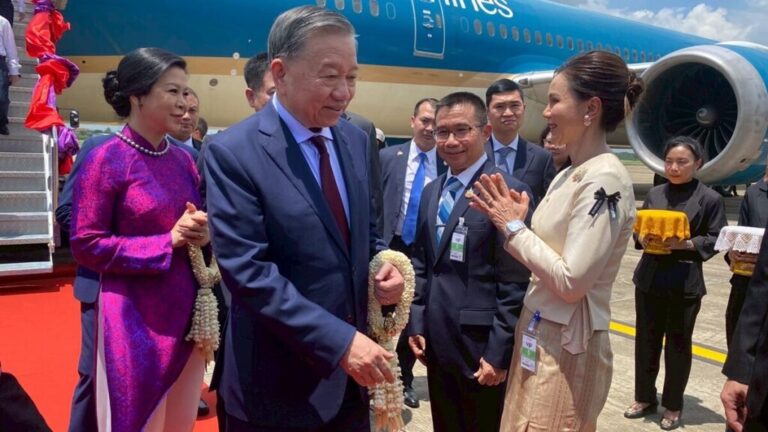
Vietnamese President and Communist Party General Secretary To Lam arrived at Udon Thani International Airport at 12:50 on Wednesday, accompanied by his wife Ngo Phuong Ly and a delegation, on a Vietnam Airlines flight for an official three-day visit to Thailand.
The visit marks the 50th anniversary of Thai-Vietnamese diplomatic relations and runs from 27 to 29 May. Deputy Agriculture Minister Watcharaphon Khaokhum received the delegation on behalf of Prime Minister Anutin Charnvirakul.
This is To Lam’s first official visit to Thailand since taking office as president in April 2026.
The delegation first visited the Ho Chi Minh Historical Study and Tourism Site, known as Ban Lung Ho, in Udon Thani’s Mueang district — a symbol of long-standing friendship between the two countries. To Lam and his wife planted a mango tree at the memorial to mark the visit.
The president then met with Thai-Vietnamese business leaders at VT Naem Nueng, a well-known Vietnamese restaurant in Udon Thani. Key discussions included establishing direct flight routes connecting Hanoi, Ho Chi Minh City, and Da Nang to Udon Thani, as well as expanding trade links between the two countries. Udon Thani was chosen as the first stop due to its large Thai-Vietnamese community — the largest in the country — and its potential as a regional travel and trade hub.
On Thursday, To Lam is scheduled to have an audience with Thailand’s king and hold bilateral talks with Prime Minister Anutin at Government House. The two leaders are expected to advance a comprehensive strategic partnership covering security, economic, and trade cooperation through a three-pillar connectivity strategy, as well as collaboration on science, technology, and innovation, and people-to-people ties.
To Lam will also meet with the presidents of the National Assembly and the House of Representatives, and will preside over the opening of a Thai-Vietnamese business seminar aimed at driving sustainable economic growth in both countries.
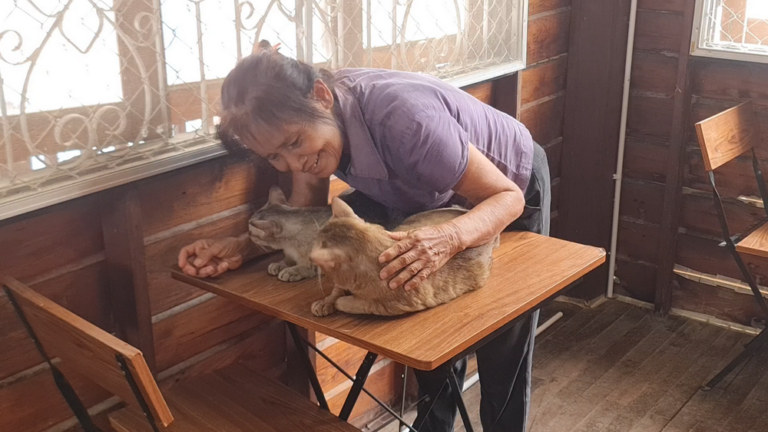
SUKHOTHAI — 26 May 2026, An 81-year-old retired court official in Sukhothai has spent 1 million baht buying a house — not for herself, but for four stray cats who had made it their home.
Kanokvann Panwichian, a former director of the Phitsanulok Provincial Court office, said the cats had originally wandered into her home years ago. The stray mother cat eventually gave birth, growing the group to 12. She took them all in, feeding, vaccinating, and spaying each one.
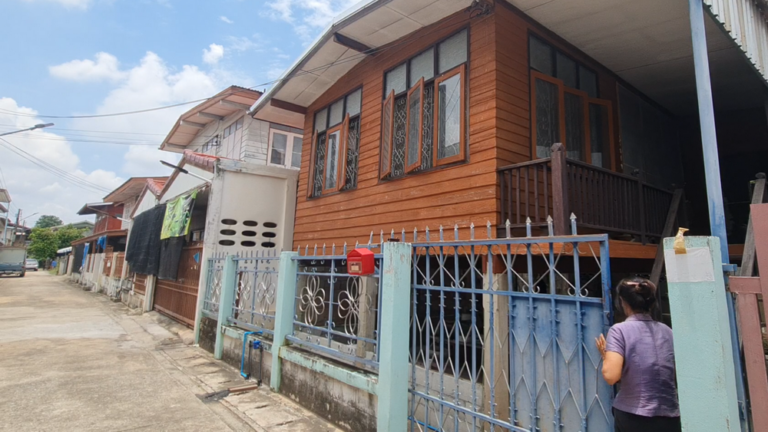
Four of the cats — Namtan and her three kittens, Nong Klang, Nong Lek, and Nong Namtansai — had a habit of sneaking into an old vacant wooden house at the end of her alley. Kanokvann found herself visiting daily to feed them, and eventually felt guilty about her cats using someone else’s property.
So she bought it.
The house cost 1 million baht. She put down 500,000 baht and paid the rest in monthly instalments of 25,000 baht over 20 months — nearly her entire pension, leaving her just 4,000 baht a month to live on.
“It was a difficult 20 months,” she said. “But once it was paid off, I felt at peace.”
The house now belongs to the cats. Kanokvann visits regularly to sleep and spend time with them. Her other home remains with her children.
XAISOMBOUN, Laos — 27 May 2026, Five of seven people trapped inside a cave in Xaisomboun province, Laos, have been found, Thai rescue teams reported. All five are in good condition. The search for the remaining two continues.
The group entered the cave on 20 May and became trapped after heavy rain triggered a flash flood, sending rocks and debris to block the entrance.
Lao authorities requested assistance from Thai rescue teams, who deployed to the site and reported contact with the survivors at 16:30.
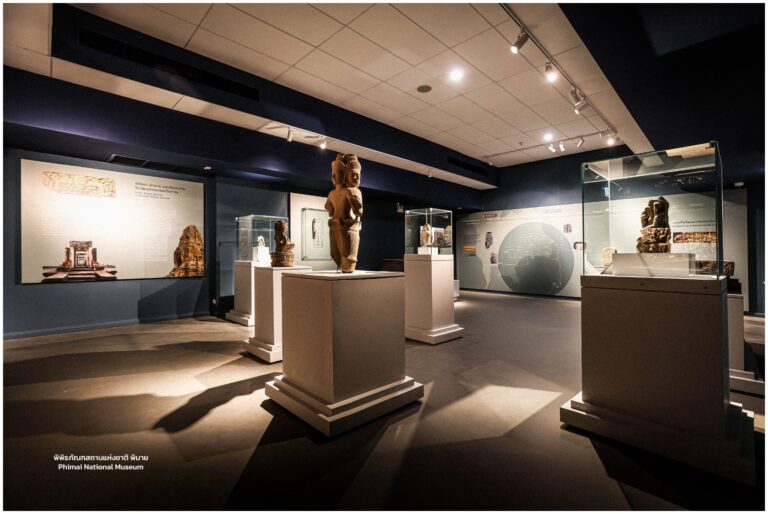
NAKHON RATCHASIMA — 27 May 2026, The Phimai National Museum has reopened today following its largest renovation since the museum first opened in 1993, with upgraded galleries, new technology, and expanded public spaces.
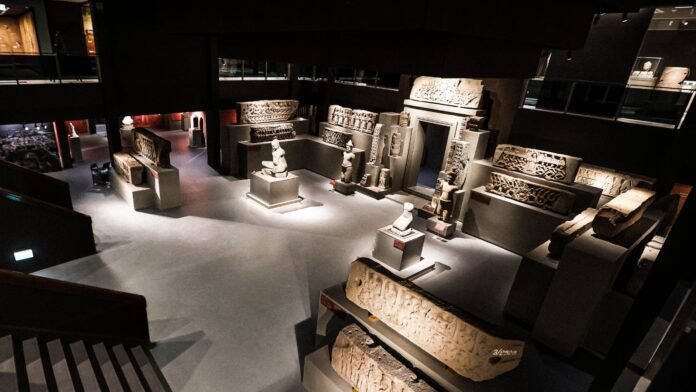
The overhaul covers both floors of the main exhibition building, which now features nine galleries tracing the history of Phimai from prehistoric times through the height of ancient Khmer civilisation. The upper floor focuses on human development in the Khorat Basin from prehistory to the Khmer era, while the lower floor reflects the rise and glory of Phimai through the ages.
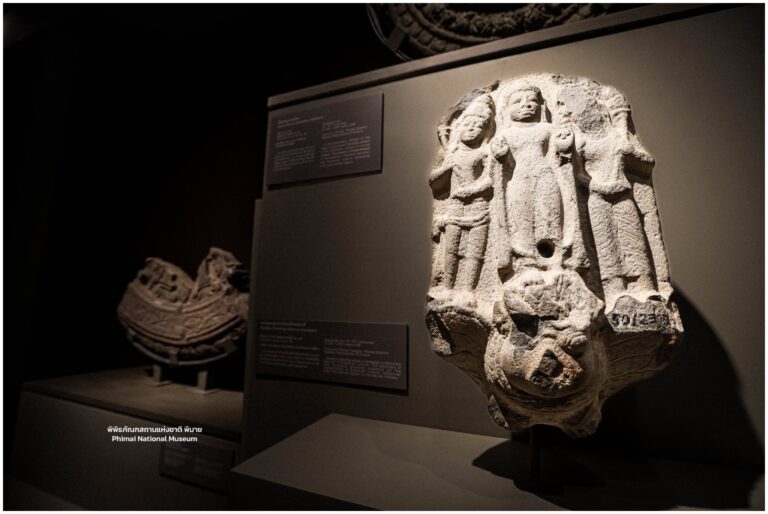
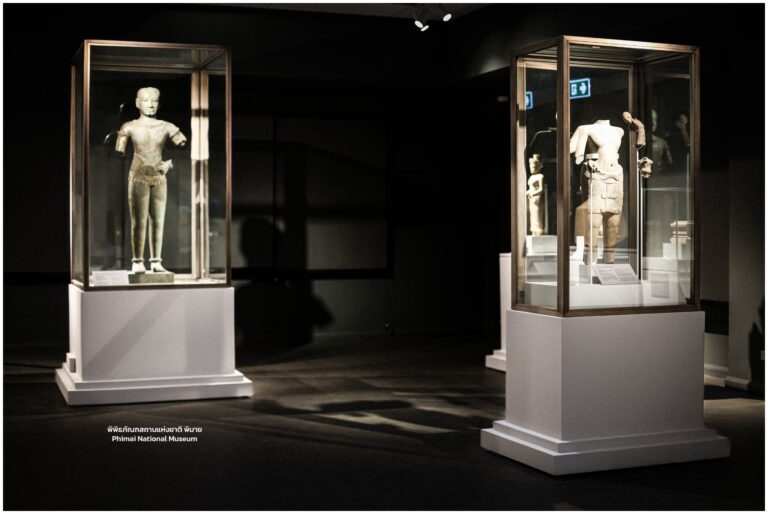
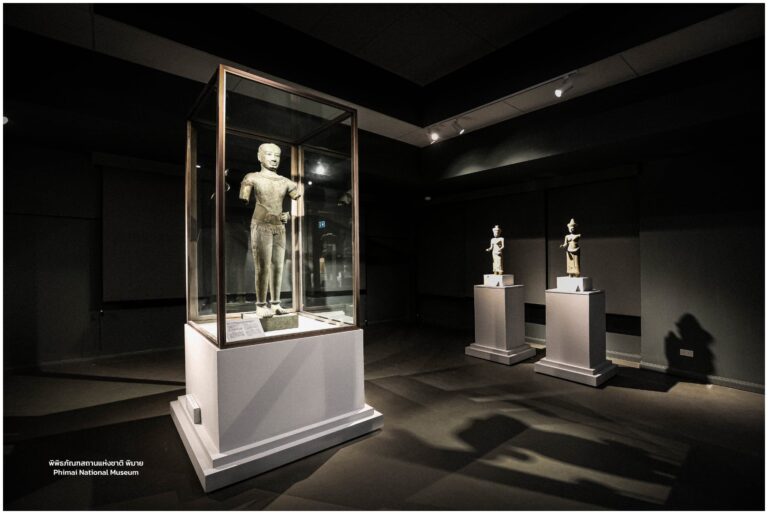
The renovation brings the museum up to international standards, incorporating interactive technology and learning activities designed for visitors of all ages. Several artefacts on display have never been exhibited publicly before, selected by the museum’s academic team for their significance to the Khorat Basin and Phimai.
The museum’s two buildings — the main exhibition hall and the stone carving repository, which houses architectural fragments excavated from across lower Northeastern Thailand — have both been updated.
New public spaces have also been added, including a co-working space and a rotating exhibition area open to the public and outside organisations, positioning the museum as a lifelong learning centre beyond its traditional role of preservation and display.
The Phimai National Museum, located on Tha Songkhran Road in Phimai district, is the principal museum of lower Northeastern Thailand. It was officially opened by Princess Maha Chakri Sirindhorn in August 1993.
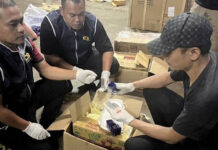
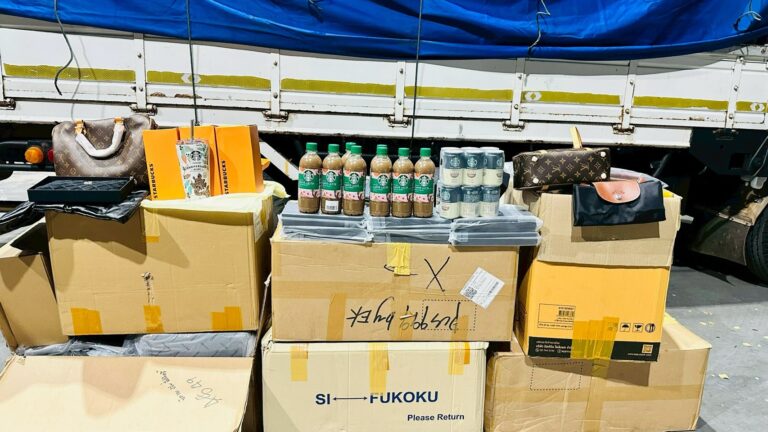
ROI ET — Police have raided a warehouse in Roi Et province, seizing 104 counterfeit ready-to-drink Starbucks coffee products and 20 fake Starbucks cold cups — part of a haul of over 400 counterfeit goods worth more than 1 million baht.
Officers from the Economic Crime Suppression Division, together with officials from the Department of Intellectual Property, searched the warehouse in Mueang Roi Et district following a tip-off about suspected intellectual property violations.
A 25-year-old woman identified herself as the owner of all the goods. She later confessed during questioning and was charged with possessing counterfeit trademarked goods for sale.
The remaining seized items included 75 fake Chanel bags, 125 Longchamp bags, 80 Louis Vuitton bags, and four RIMOWA bags, bringing the total to 408 items.
The suspect and all seized goods were handed over to Mueang Roi Et police for further legal proceedings.
Authorities warned the public to be cautious when buying goods at unusually low prices. Fake food-contact items such as cups and ready-to-drink products pose particular health risks, as most counterfeits are made from low-quality materials, officials said.
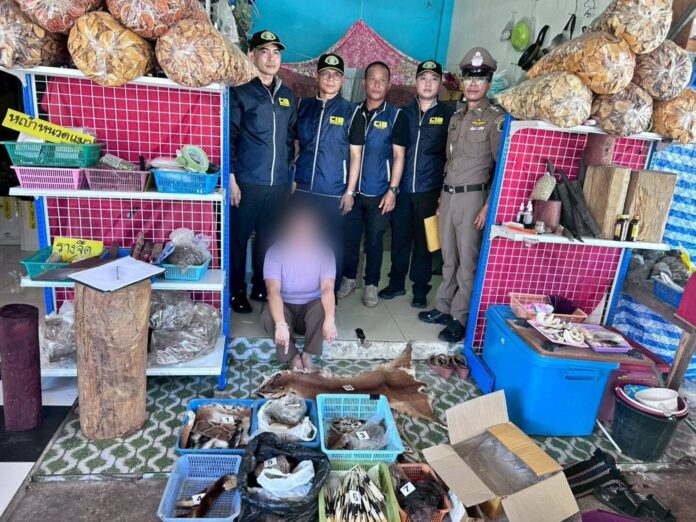
NAKHON PHANOM — 27 May 2026, Thai police arrested a 37-year-old woman in northeastern Thailand after raiding a traditional medicine and souvenir shop allegedly used to trade protected wildlife furs and animal parts smuggled from Laos.
Pol. Lt. Gen. Anek Taosuphap, commander of the Natural Resources and Environmental Crime Suppression Division, ordered officers led by Pol. Maj. Peumwatthi Prathumrach and Pol. Capt. Thanupan Surasaa to carry out the raid at a shop in That Phanom district of Nakhon Phanom province following an investigation into online wildlife trafficking.
Police said the suspect, identified only as Kulkanlaya, was arrested under a Criminal Court warrant issued on 22 May on charges of illegally possessing and trading protected wildlife carcasses.
Authorities seized more than 100 items during the operation, including:
Investigators said the suspect allegedly used the shop, which sold souvenirs and traditional medicines, as a front for the illegal wildlife trade.
Police said the investigation began after officers discovered protected wildlife products being sold online, including tiger skins, pangolin scales and other animal remains.
Authorities later linked the operation to the shop in That Phanom, an area popular with Thai tourists visiting the revered Phra That Phanom temple.
Investigators alleged the wildlife products had been smuggled across the border from Laos before being sold online and directly to tourists in Thailand.
During questioning, the suspect reportedly confessed to purchasing the wildlife remains from suppliers in Laos for resale in Thailand, police said.
The suspect and all seized items were transferred to investigators from the Natural Resources and Environmental Crime Suppression Division for further legal action.
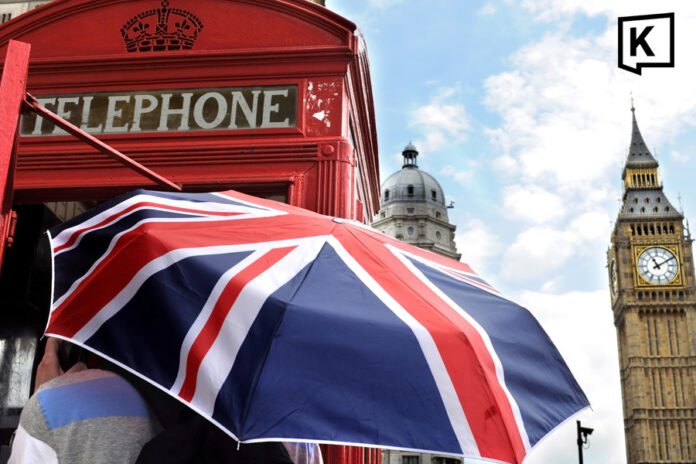
LONDON — Britain was thrown into meteorological confusion Tuesday after temperatures reached 35 degrees Celsius, a temperature Thai people traditionally describe as “the walk from 7-Eleven to the motorbike.”
The reading, recorded at London’s Kew Gardens and Heathrow Airport, broke a century-old spring temperature record for the second time in 24 hours, according to Britain’s Met Office. The previous record had stood since 1922 and 1944, when people were presumably too polite to complain directly to the sun.
Across the U.K., residents responded to the heat wave with the calm, measured dignity for which Britain is internationally famous: removing shirts in public parks, panic-buying ice creams, and describing the weather as “absolutely unbearable” while standing in direct sunlight wearing black jeans.
For residents of Thailand, however, the news prompted confusion.
“Thirty-five degrees? That’s not a heat wave,” said one Bangkok resident. “That’s the temperature between the BTS platform and the mall.”
In much of Thailand, 35 C is not considered a heat wave so much as the default loading screen between Songkran and rainy season. At that temperature, street vendors continue frying pork, motorcycle taxi drivers continue wearing jackets, and people still somehow order hot noodle soup under a zinc roof beside traffic.
British authorities warned people to stay hydrated, avoid prolonged exposure to the sun, and check on vulnerable neighbours. Thai residents, meanwhile, offered practical advice: drink water, walk slowly, stop pretending a small desk fan is a critical climate policy, and do not underestimate the spiritual power of iced cha yen in a plastic cup.
The heat also placed Britain’s national infrastructure under strain, including trains, roads, and the emotional stability of people living in homes designed to trap warmth like a Victorian punishment device.
Many British homes, built to survive damp winters and centuries of grey sky, are famously unprepared for sunshine arriving with ambition. In Thailand, by contrast, buildings are prepared for heat by installing air conditioners powerful enough to create a private Scandinavian microclimate inside every shopping mall.
Tourists were advised that if they find 35 C difficult in London, they should approach Bangkok in April with humility, sunscreen, and the understanding that shade in Thailand is not a location but a blessing.
Meteorologists said the record-breaking heat was part of a wider spring heat wave across Western Europe. Climate experts have warned that extreme heat is becoming more frequent, intense, and dangerous — though ordinary British citizens appeared mainly focused on whether it was now legally acceptable to eat dinner consisting entirely of watermelon and crisps.
By late afternoon, some residents had begun comparing London to the tropics, a statement Thailand has declined to recognise at this time.
“We appreciate the concern,” said one imaginary Thai weather official. “But legally, we cannot classify 35 C as ‘weather news.’”