





























31.1 C
Bangkok
Sunday, June 7, 2026
Home Blog Page 1030

Emmys: ‘Crown,’ ‘Lasso,’ ‘Queen’s Gambit,’ Streaming Triumph

This combination of photos shows, from left, Pedro Pascal in "The Mandalorian," Olivia Colman in "The Crown," Jason Sudeikis in "Ted Lasso" and Jean Smart in "Hacks." Photo: Disney+/Netflix/Apple TV+/HBO Max via AP

LOS ANGELES (AP) — Netflix’s “The Crown” and “The Queen’s Gambit” combined with Apple TV+’s “Ted Lasso” to win top series honors at the Sunday’s Emmy Awards, a first for streaming services that cemented their rise to prominence in the television industry.

“I’m at a loss for words,” said Peter Morgan, the creator and writer of the British royal saga “The Crown,” which collected acting, writing and directing awards in addition to four acting honors.

His comment may also apply to the premium cable channels that once dominated the Emmy Awards and to the broadcast networks — including Sunday’s ceremony host, CBS — that have long grown accustomed to being largely also-rans.

Netflix won a leading total of 44 awards, equaling the broadcast network record set back in 1974, by CBS. The streaming service, which fielded the first drama series nominee, “House of Cards” in 2007, finally won the category.

Newcomer Apple TV+’s first top series came less than two years after it launched.

“The Crown” and “The Queen’s Gambit” tied as leaders with 11 awards each, with “Ted Lasso” topping the comedy side with seven trophies.

There was a bright spot for HBO with its limited series “Mare of Easttown,” the crime drama that earned four Emmys, including a lead acting award for star Kate Winslet. For broadcaster NBC, “Saturday Night Live” again came through with variety honors.

The ceremony proved disappointing as well to those scrutinizing diversity in Hollywood. The record number of nominees of color yielded only two Black winners, including RuPaul for “RuPaul’s Drag Race” and star-creator Michaela Coel’s writing award for “I May Destroy You.”

Cedric the Entertainer proved a game host, moving from a hip-hop opening number to gags and sketches, but the relatively small crowd — a result of pandemic precautions — was fairly muted in their response to him and others’ one-liners.

There was a feeling of personal sadness that pervaded the night, with a number of winners recounting the loss of loved ones.

“The Crown” stars Olivia Colman and Josh O’Connor won the top drama acting honors Sunday, with Jason Sudeikis, star of the warm-hearted “Ted Lasso,” and Jean Smart of the generation-gap story “Hacks,” winners on the comedy side.

Colman and O’Connor were a winning fictional mother-son duo: She plays Queen Elizabeth II, with O’Connor as Prince Charles in the British royal family saga that combines gravitas and soap opera.

“I’d have put money on that not happening,” Colman said of the award, calling it “a lovely end to the most extraordinary journey” with the show’s cast and creators. She cut her remarks short, explaining why she was growing tearful.

“I lost my daddy during COVID, and he would have loved all of this.” she said.

O’Connor gave a shoutout to Emma Corwin, who played opposite him as Princess Diana and was also a nominee Sunday, as a “force of nature.”

He also offered thanks to his grandparents, including his grandmother who died a few months ago, and his grandfather, Peter O’Connor, for the “greatest gifts” of kindness and loyalty.

Sudeikis, who co-created the series that many viewers found a balm for tough pandemic times, gave a speech that evoked the chipper, upbeat character he plays in the series about a U.K. soccer team and its unlikely American coach.

“This show’s about families and mentors and teammates, and I wouldn’t be here without those things in my life,” said Sudeikis. He also thanked his fellow castmates, saying, “I’m only as good as you guys make me look.”

Smart, who received a standing ovation, began her acceptance speech on a somber note: Her husband actor, Richard Gilliland, died six months ago.

“I would not be here without him” and his willingness to put her career first, said Smart. She also praised their two children as “courageous individuals in their own right.”

Earlier in the evening, ebullient “Ted Lasso” castmate Hannah Waddingham, winner of the best supporting actress award for a comedy, said Sudeikis “changed my life with this, and more importantly my baby girl’s.”

Brett Goldstein, who won the counterpart award for supporting actor for playing a retired soccer star, said he had promised not to swear and either mimed or was muted for a few seconds, then called the show the “privilege and pleasure” of his life.

Gillian Anderson and Tobias Menzies were honored for their supporting performances on “The Crown.”

Anderson, who played British political leader Margaret Thatcher, was one of numerous cast members to accept from a “Crown” gathering in London. Menzies who plays Prince Philip, didn’t attend either ceremony.

Before announcing the winner in his category, presenter Kerry Washington saluted another nominee, Michael K. Williams of “Lovecraft County.” Williams died Sept. 6 at age 54.

“Michael was a brilliantly talented actor and a generous human being who has left us far too soon,” Washington said.

Another lost star was remembered by John Oliver of “Last Week Tonight with John Oliver.”

“No one was funnier in the last 20 years than Norm Macdonald on late-night comedy,” Oliver said in accepting the Emmy for best variety talk show, suggesting people spend time checking out clips of Macdonald, as he did after Macdonald died Sept. 14 at age 61.

Kate Winslet, who played the title character in “Mare of Easttown,” and Ewan McGregor, who starred in the fashion biopic “Halston,” were honored as top actors for a limited series.

Winslet saluted her sister nominees in “this decade that has to be about women having each other’s back.”

Julianne Nicholson and Evan Peters claimed best supporting acting honors for “Mare of Easttown,” about crime and family dysfunction.

“The script was “true to the horror and beauty of ordinary people’s lives,” particularly the lives of women, said Nicholson. Both she and Peters saluted star Winslet.

“Man, you’re good at acting. But turns out you’re good at caring for a whole production,” Nicholson said.

Debbie Allen received the Governors Award for a long and acclaimed career as an actor, dancer, choreographer and activist.

“I am trembling with gratitude and grace and trying not to cry … it’s been many years in the making, taken a lot of courage to be the only woman in the room most of the time. Courage and creative and fight and faith to believe I could keep going, and I have,” she said.

The show opened with a musical number that featured Cedric the Entertainer rapping a modified version of the Biz Markie hip-hop hit “Just a Friend” with lyrics like “TV, you got what I need.” LL Cool J bounded from the audience as stars including Rita Wilson, Mandy Moore and more dropped verses celebrating the breadth of television.

Seth Rogen presented the first award, throwing some cold water on the celebratory vibe by noting that the Emmys were being held in a giant tent. “There’s way too many of us in this little room,” he exclaimed in what seemed to be an attempt to be funny that fell flat.

In the cumulative awards handed out Sunday and at the previously-held creative arts events, the outlets that followed Netflix included HBO and HBO Max with 19 combined awards; Disney+ with 14; Apple TV+, 10; NBC, 8.

Story: Lynn Elber
Advertisement

Gov’t Aims to Vaccinate 1 Million People, Starting on Mahidol Day

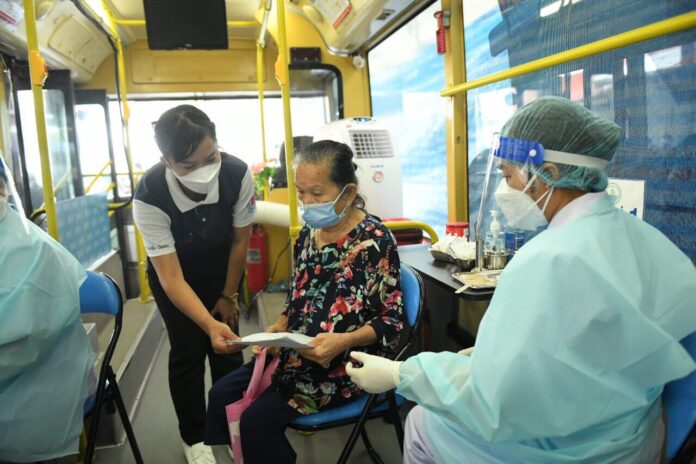
Bangkok residents are vaccinated against COVID-19 at a mobile vaccine station in Bangkok on Sept. 20, 2021.

BANGKOK — The government said it will administer up to 1 million doses of COVID-19 vaccines per day from Friday onward, in honor of King Rama X’s grandfather.

Friday, or Sept. 24, marks this year’s Mahidol Day. The occasion celebrates the life of Prince Mahidol, who worked as a doctor prior to his death in 1929. The government also declared it a special public holiday for 2021.

Department of Disease Control director Opas Karnkawinpong said the initiative is intended to speed up the reopening efforts and revive the economy, just in time before the high tourism season of November and December.

The number of doses administered daily has fallen short of the government’s goal due to production delays and shortage of supplies. On some days, as many as 900,000 doses were given out, while on days they were as low as 180,000 shots.

Less than half of the population received at least one dose of COVID-19 vaccine, or 43.7 percent, according to data published on Sunday. Opas said the health authorities are planning to fix that. He said they want to have at least 50 percent of the national population vaccinated with one dose by the end of September.

According to the government, only 37 percent of Bangkok residents have been fully vaccinated against COVID-19, as of Thursday. As many as 90 percent of the capital city’s population has received at least one dose so far.

The main vaccine to be used in the drive is the shots produced by Sinovac and AstraZeneca, Opas said.

Phuket Sees Virus Surge

Some communities are said to be struggling with the high infection rates in recent days, a development that could threaten the “Phuket Sandbox” program.

Local government is organizing mass testing in the southern island. Provincial chief health officer Kusak Kukiattikun said the COVID response teams will use antigen test kits in an active case-finding operation over 3 days.

Kusak also said officials on the island are concerned about the surge in cases, with daily new infections over 200 and fears that the tourism reopening drive could be affected. Yesterday, Phuket logged at least 242 new cases.

The proactive mass testing will target around 25,000 people on the island, officials said.

According to the government’s published data, Phuket has seen over 30,000 tourists and visitors since it launched the sandbox re-opening programme on July 1. Only 96 of those arrivals tested positive for the coronavirus during their stay on the island, the health ministry said.

Advertisement

CPF invites Global Start-Ups to Create Healthy Plant-Based Meat Alternatives

Charoen Pokphand Foods Public Company Limited (CPF) and the Asia-Pacific Agri-Food Innovation Summit 2021 have announced “The CPF Innovation Challenge”, inviting startups from all over the world to create delicious, juicy and sustainable plant-based meat for tomorrow. The entries will be closed on September 22, 2021. 

CPF Head of Innovation, Dr. Lalana Thiranusornkij, said the company, as the world’s leading food producer, recognizes that plant-based protein trends are growing rapidly. Moreover, the demands of today’s consumers are becoming more complex. They require products that resemble meat in all aspects such as texture, taste and nutritional value.

As a result, the company has joined hands with the Asia-Pacific Agri-Food Innovation Summit to find enterpreneurs/start-ups with solutions and technologies that meet such demands to work together with them to push innovation to commercial plant-based meat products. The cooperation will also help start-ups to expand capacity into the global market arena.

Participating in this challenge is an opportunity for young entrepreneurs to work with a world-class food producer like CPF. They will have the chance to be coached by our executives and co-create the menu with our experienced chefs as well as having the opportunity to do Proof of Concept with CPF to upscale the production for commercial purpose,” said Dr. Lalana.

The committee will select three teams to present their innovation via online to attendees of the Asia-Pacific Agri-Food Innovation Summit from around the world, during November 16-18. More information on how to participate and submit entries can be found at https://agrifoodinnovation.com/innovation-challenges-2021/ from today onwards.

Advertisement

Taliban Officials in Kabul Order Female Workers to Stay Home

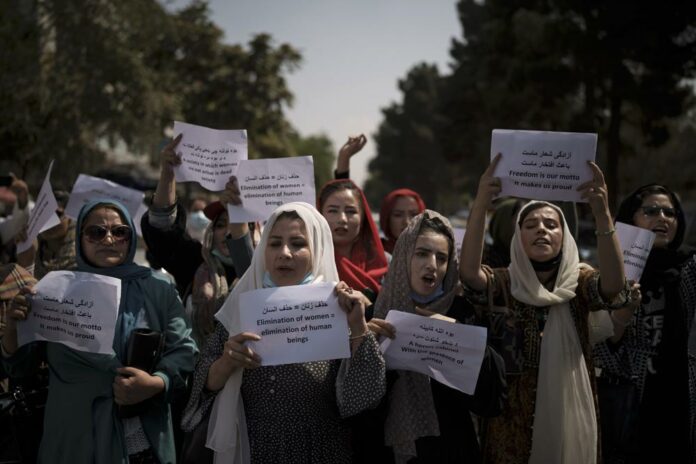
Afghan women march to demand their rights under the Taliban rule during a demonstration near the former Women's Affairs Ministry building in Kabul, Afghanistan, Sunday, Sept. 19, 2021. (AP Photo)

KABUL, Afghanistan (AP) — Female employees in the Kabul city government have been told to stay home, with work only allowed for those who cannot be replaced by men, the interim mayor of Afghanistan’s capital said Sunday, detailing the latest restrictions on women by the new Taliban rulers.

Witnesses, meanwhile, said an explosion targeted a Taliban vehicle in the eastern provincial city of Jalalabad, and hospital officials said five people were killed in the second such deadly blast in as many days in the Islamic State stronghold.

The decision to prevent most female city workers from returning to their jobs is another sign that the Taliban, who overran Kabul last month, are enforcing their harsh interpretation of Islam despite initial promises by some that they would be tolerant and inclusive. In their previous rule in the 1990s, the Taliban had barred girls and women from schools, jobs and public life.

In recent days, the new Taliban government issued several decrees rolling back the rights of girls and women. It told female middle- and high school students that they could not return to school for the time being, while boys in those grades resumed studies this weekend. Female university students were informed that studies would take place in gender-segregated settings from now on, and that they must abide by a strict Islamic dress code. Under the U.S.-backed government deposed by the Taliban, university studies had been co-ed, for the most part.

On Friday, the Taliban shut down the Women’s Affairs Ministry, replacing it with a ministry for the “propagation of virtue and the prevention of vice” and tasked with enforcing Islamic law.

On Sunday, just over a dozen women staged a protest outside the ministry, holding up signs calling for the participation of women in public life. “A society in which women are not active is (sic) dead society,” one sign read.

The protest lasted for about 10 minutes. After a short verbal confrontation with a man, the women got into cars and left, as Taliban in two cars observed from nearby. Over the past months, Taliban fighters had broken up several women’s protests by force.

Elsewhere, about 30 women, many of them young, held a news conference in a basement of a home tucked away in a Kabul neighborhood. Marzia Ahmadi, a rights activist and government employee now forced to sit at home, said they would demand the Taliban re-open public spaces to women.

“It’s our right,” she said. “We want to talk to them. We want to tell them that we have the same rights as they have.”

Most of the participants said they would try to leave the country if they had an opportunity.

The explosion Sunday in Jalalabad was the second attack in two days to target the Taliban in the Islamic State group stronghold. The Taliban and IS extremists are enemies and fought each other even before the Taliban seized control of Afghanistan last month.

Hospital officials in Jalalabad said they received the bodies of five people killed in the explosion. Among the dead were two civilians, including a child, and three others who according to witnesses were in a targeted border police vehicle and were believed to be Taliban.

The Taliban were not immediately available for comment about possible casualties among their ranks.

On Saturday, three explosions targeted Taliban vehicles in Jalalabad, killing three people and wounding 20, witnesses said. There was no immediate claim of responsibility.

With the Taliban facing major economic and security problems as they attempt to govern, a growing challenge by IS militants would further stretch their resources.

Also on Sunday, interim Kabul Mayor Hamdullah Namony gave his first news conference since being appointed by the Taliban.

He said that before the Taliban takeover last month, just under one-third of close to 3,000 city employees were women, and that they had worked in all departments.

Namony said the female employees have been ordered to stay home, pending a further decision. He said exceptions were made for women who could not be replaced by men, including some in the design and engineering departments and the attendants of public toilets for women. Namony did not say how many female employees were forced to stay home.

“There are some areas that men can’t do it, we have to ask our female staff to fulfill their duties, there is no alternative for it,” he said.

Across Afghanistan, women in many areas have been told to stay home from jobs, both in the public and private sectors. However, the Taliban have not yet announced a uniform policy. The comments by the Kabul mayor were unusually specific and affected a large female work force that had been involved in running a sprawling city of more than 5 million people.

Namony also said the new government has begun removing security barriers in Kabul, a city that has endured frequent bombing and shooting attacks over the years. Such barriers — erected near ministries, embassies and private homes of politicians and warlords — had been commonplace in Kabul for years.

The mayor said private citizens would be charged for the work of taking down the barriers. While he said most barriers had been removed, reporters touring the city noted that barriers outside most government installations and embassies had been left in place.

The Taliban have tried to present themselves as guarantors of security, in hopes that this will win them support from a public still widely suspicious of their intentions. Under the previous government, a rise in crime had been a major concern for ordinary Afghans.

Perhaps the toughest challenge faced by the new Taliban rulers is the accelerated economic downturn. Even before the Taliban takeover, Afghanistan was plagued by major problems, including large-scale poverty, drought and heavy reliance on foreign aid for the state budget.

In a sign of growing desperation, street markets have sprung up in Kabul where residents are selling their belongings. Some of the sellers are Afghans hoping to leave the country, while others are forced to offer their meager belongings in hopes of getting money for the next meal.

“Our people need help, they need jobs, they need immediate help, they are not selling their household belongings for choice here,” said Kabul resident Zahid Ismail Khan, who was watching the activity in one of the impromptu markets.

“For a short-term people might try to find a way to live, but they would have no other choice to turn to begging in a longer term,” he said.

___

Associated Press writer Rahim Faiez in Istanbul contributed.

Advertisement

Indonesia’s Most Wanted Militant Killed in Jungle Shootout

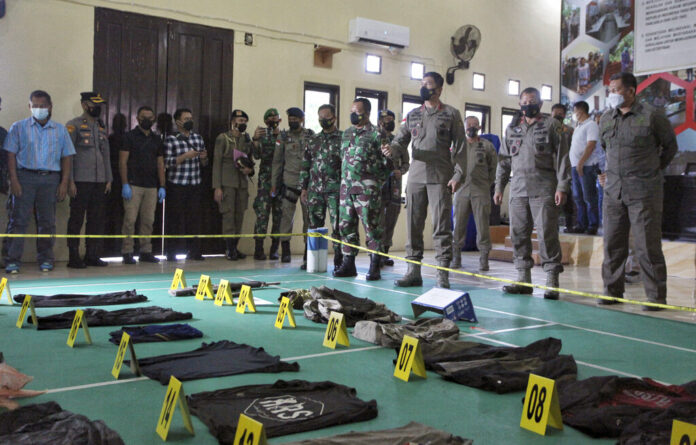
Evidence items confiscated from Ali Kalora and Jaka Ramadan, two militants who were killed during shootout with security forces, are displayed for the media during a press conference at the Parigi Moutong Police Station in Parigi Moutong district, Central Sulawesi, Indonesia, Sunday, Sept. 19, 2021. Photo: Mohammad Taufan / AP

PALU, Indonesia (AP) — Indonesia’s most wanted militant with ties to the Islamic State group was killed Saturday in a shootout with security forces, the Indonesian military said, in a sweeping counterterrorism campaign against extremists in the remote mountain jungles.

Ali Kalora was one of two militants killed in the raid, said Central Sulawesi’s regional military chief Brig. Gen. Farid Makruf. He identified the other suspected extremist as Jaka Ramadan.

The two men were fatally shot late Saturday by a joint team of military and police officers in Central Sulawesi province’s mountainous Parigi Moutong district, Makruf said. It borders Poso district, considered an extremist hotbed in the province.

“Ali Kalora was the most wanted terrorist and leader of MIT,” Makruf said, referring to the Indonesian acronym of the East Indonesia Mujahideen network, a militant group that pledged allegiance to the Islamic State in 2014.

He said that security forces were searching for four remaining suspected members of the group.

Saturday’s shootout occurred two months after security forces killed two suspected members of the group during a pre-dawn raid in the same mountainous district.

The East Indonesia Mujahideen has claimed responsibility for several killings of police officers and minority Christians.

Security operations in the area have intensified in recent months to try to capture members of the network, targeting Ali Kalora, the group’s leader.

Kalora had eluded capture for more than a decade. He took over from Abu Wardah Santoso, who was killed by security forces in July 2016. Dozens of other leaders and members of the group have been killed or captured since then.

AP21262125546566
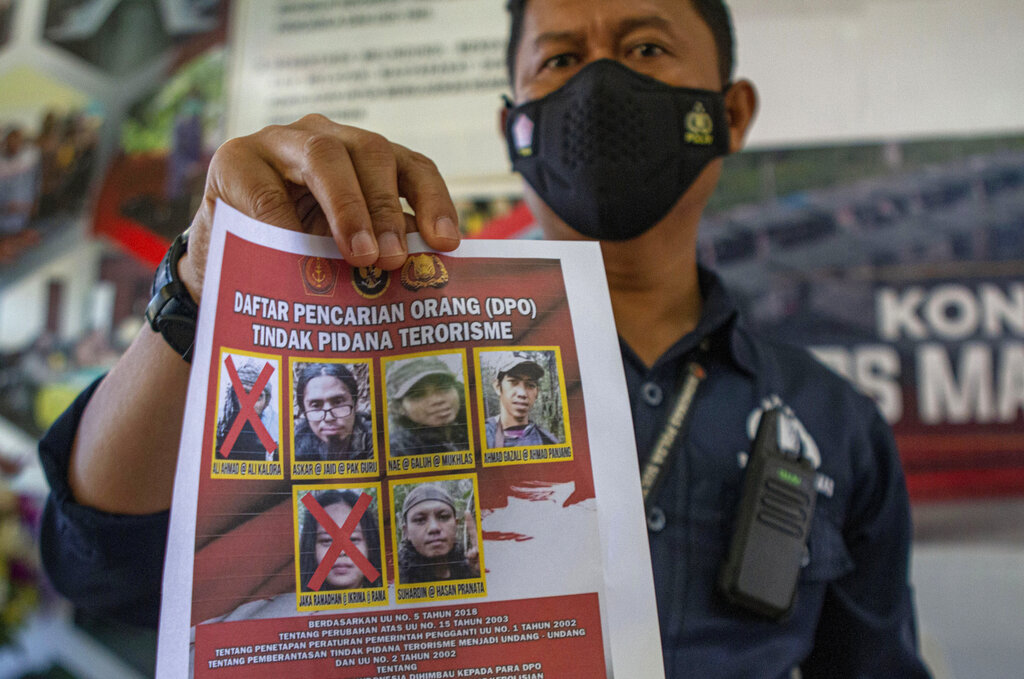
A police officer shows a wanted poster displaying the photos of two militants Ali Kalora, top left, and Jaka Ramadan, bottom left, who were killed during shootout with security forces, during a press conference at the Parigi Moutong Police Station in Parigi Moutong district, Central Sulawesi, Indonesia, Sunday, Sept. 19, 2021. Photo: Mohammad Taufan / AP

In May, the militants killed four Christians in a village in Poso district, including one who was beheaded. Authorities said the attack was in revenge for the killing in March of two militants, including Santoso’s son.

Makruf said that rugged terrain and darkness have hampered efforts to evacuate the two bodies from the scene of the shootout in the forested village of Astina. He said the bodies of Kalora and his follower will be taken by helicopter on Sunday morning for further investigation and identification.

Indonesia, the world’s most populous Muslim-majority nation, has kept up a crackdown on militants since bombings on the tourist island of Bali in 2002 killed 202 people, mostly foreigners.

Militant attacks on foreigners in Indonesia have been largely replaced in recent years by smaller, less deadly strikes targeting the government, mainly police and anti-terrorism forces, and people militants consider to be infidels, inspired by Islamic State group tactics abroad.

Story: Mohammad Taufan

Advertisement

Myanmar Court Sets Oct. 1 for Suu Kyi Corruption Trial

In this Dec. 11, 2019, file photo, Myanmar's leader Aung San Suu Kyi waits to address judges of the International Court of Justice in The Hague, Netherlands. Photo: Peter Dejong, File / AP

BANGKOK (AP) — A trial of Myanmar’s ousted leader Aung San Suu Kyi on corruption charges is set to begin on Oct. 1, a member of her legal team said Friday.

Lawyer Khin Maung Zaw said a judge declared the trial would be held at the Special Court in the capital Naypyitaw on every other Friday. He announced the decision after presentations in the court by Suu Kyi’s lawyers and prosecutors from the central city of Mandalay, where the charges were originally lodged.

Suu Kyi, whose elected government was overthrown by an army takeover in February, is currently being tried on other charges by the Special Court. In the ongoing trial, she faces charges of sedition, two counts of flouting COVID-19 pandemic restrictions, illegally importing walkie-talkies that were for her bodyguards’ use and the unlicensed use of the radios.

She also is due to be tried for breaching the official secrets law in a case that was transferred earlier this week to Naypyitaw from Yangon, Myanmar’s biggest city.

Suu Kyi’s supporters as well as independent analysts say all the charges against her are politically motivated and an attempt to discredit her and legitimize the military’s seizure of power while keeping her from returning to politics. Her lawyers deny any wrongdoing.

The army takeover was met with massive popular resistance, which is continuing despite harsh measures by security forces to quash it.

Suu Kyi, 76, has been charged in five cases under the anti-corruption law, four by the Mandalay Region High Court that will now be tried in Naypyitaw, and one by the Yangon Region High Court.

The Mandalay cases include two under Section 55 of the law, which states that a political post holder convicted of corruption is liable to up to 15 years’ imprisonment and a fine.

In the other two Mandalay cases, Suu Kyi was named a co-defendant with political colleagues, including former Naypyitaw Mayor Myo Aung, under Section 63 for allegedly conspiring to carry out corruption. It carries the same penalty.

Details have not been officially released about the Yangon case, for which a trial date has not yet been set.

On June 10, official media reported that the state Anti-Corruption Commission had found that Suu Kyi accepted bribes and misused her authority to gain advantageous terms in real estate deals. Suu Kyi’s lawyers already denied the allegations when they were first made in March.

Reports in state media including the Global New Light of Myanmar newspaper said the anti-corruption body had also found that Suu Kyi illegally accepted $600,000 and seven gold bars from the former chief minister of Yangon Region, a political ally.

The reports said the commission had found that Suu Kyi has misused her position to obtain rental properties at lower-than-market prices for a charitable foundation named after her mother that she chaired.

The reports said the action deprived the state of revenue it would otherwise have earned.

State television has presented videos of testimony by alleged witnesses to the payoffs in cash and gold, but there was no explanation of the circumstances in which the videos were made or evidence to back up what was said.

Advertisement

Pentagon Reverses Itself, Calls Deadly Kabul Strike an Error

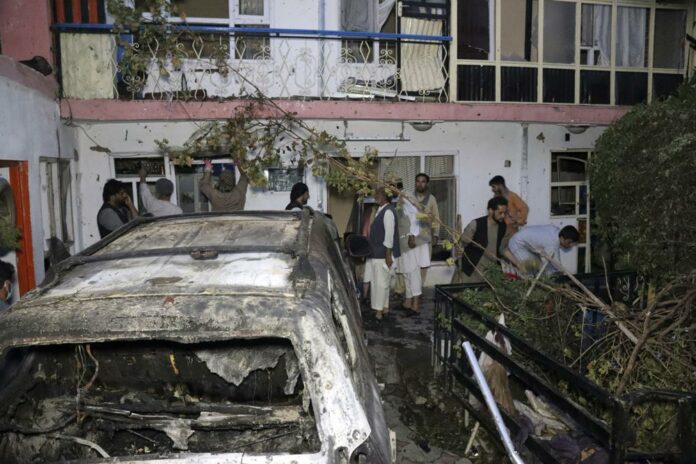
In this Sunday, Aug. 29, 2021 file photo, Afghans inspect damage of Ahmadi family house after U.S. drone strike in Kabul, Afghanistan. (AP Photo/Khwaja Tawfiq Sediqi, File)

WASHINGTON (AP) — The Pentagon retreated from its defense of a drone strike that killed multiple civilians in Afghanistan last month, announcing Friday that a review revealed that only civilians were killed in the attack, not an Islamic State extremist as first believed.

“The strike was a tragic mistake,” Marine Gen. Frank McKenzie, head of U.S. Central Command, told a Pentagon news conference.

McKenzie apologized for the error and said the United States is considering making reparation payments to the family of the victims. He said the decision to strike a white Toyota Corolla sedan, after having tracked it for about eight hours, was made in an “earnest belief” — based on a standard of “reasonable certainty” — that it posed an imminent threat to American forces at Kabul airport. The car was believed to have been carrying explosives in its trunk, he said.

For days after the Aug. 29 strike, Pentagon officials asserted that it had been conducted correctly, despite 10 civilians being killed, including seven children. News organizations later raised doubts about that version of events, reporting that the driver of the targeted vehicle was a longtime employee at an American humanitarian organization and citing an absence of evidence to support the Pentagon’s assertion that the vehicle contained explosives.

The airstrike was the last of a U.S. war that ended as it had begun in 2001 — with the Taliban in power in Kabul. The speed with which the Taliban overran the country took the U.S. government by surprise and forced it to send several thousand troops to the Kabul airport for a hurried evacuation of Americans, Afghans and others. The evacuation, which began Aug. 14, unfolded under a near-constant threat of attack by the Islamic State group’s Afghanistan affiliate.

McKenzie, who oversaw U.S. military operations in Afghanistan, including a final evacuation of U.S. forces and more than 120,000 civilians from Kabul airport, expressed his condolences to the family and friends of those killed.

“I am now convinced that as many as 10 civilians, including up to seven children, were tragically killed in that strike,” McKenzie said. “Moreover, we now assess that it is unlikely that the vehicle and those who died were associated with ISIS-K or were a direct threat to U.S. forces,” he added, referring to the Islamic State group’s Afghanistan affiliate.

Prior to the strike, U.S. intelligence had indicated a likelihood that a white Toyota Corolla would be used in an attack against U.S. forces, McKenzie said. On the morning of Aug. 29, such a vehicle was detected at a compound in Kabul that U.S. intelligence in the preceding 48 hours had determined was used by the Islamic State group to plan and facilitate attacks. The vehicle was tracked by U.S. drone aircraft from that compound to numerous other locations in the city before the decision was made to attack it at a point just a couple of miles from Kabul airport, McKenzie said.

“Clearly our intelligence was wrong on this particular white Toyota Corolla,” he said.

Defense Secretary Lloyd Austin, in a written statement, apologized for what he called “a horrible mistake.”

“We now know that there was no connection” between the driver of the vehicle and the Islamic State group, and that the driver’s activities that day were “completely harmless and not at all related to the imminent threat we believed we faced,” Austin said.

Gen. Mark Milley, chairman of the Joint Chiefs of Staff, told reporters two days after the attack that it appeared to have been a “righteous” strike and that at least one of the people killed was a “facilitator” for the Islamic State group’s Afghanistan affiliate, which had killed 169 Afghan civilians and 13 American service members in a suicide bombing on Aug. 26 at the Kabul airport.

After McKenzie’s remarks on Friday, Milley expressed regret.

“This is a horrible tragedy of war and it’s heart wrenching,” Milley told reporters traveling with him in Europe. “We are committed to being fully transparent about this incident.”

“In a dynamic high-threat environment, the commanders on the ground had appropriate authority and had reasonable certainty that the target was valid, but after deeper post-strike analysis our conclusion is that innocent civilians were killed,” Milley added.

Accounts from the family of the victims, documents from colleagues seen by The Associated Press, and the scene at the family home — where Zemerai Ahmadi’s car was struck by a Hellfire missile just as he pulled into the driveway — all painted a picture of a family that had worked for Americans and were trying to gain visas to the United States, fearing for their lives under the Taliban.

The family said that when the 37-year-old Zemerai, alone in his car, pulled up to the house, he honked his horn. His 11-year-old son ran out and Zemerai let the boy get in and drive the car into the driveway. The other kids ran out to watch, and the Hellfire missile incinerated the car, killing seven children and an adult son and nephew of Zemerai.

Amnesty International, the humanitarian aid group, called the U.S. military’s admission of a mistake a good first step.

“The U.S. must now commit to a full, transparent, and impartial investigation into this incident,” said Brian Castner, a senior crisis adviser with Amnesty International. “Anyone suspected of criminal responsibility should be prosecuted in a fair trial. Survivors and families of the victims should be kept informed of the progress of the investigation and be given full reparation.”

Rep. Adam Schiff, the California Democrat who is chairman of the House Intelligence Committee, said a fuller explanation must be provided.

“We need to know what went wrong in the hours and minutes leading up to the strike to prevent similar tragedies in the future,” he said. “I am also concerned about the accuracy and completeness of public statements made in the immediate aftermath of the strike, and whether those accounted for all of the information possessed by the government at the time.”

Advertisement

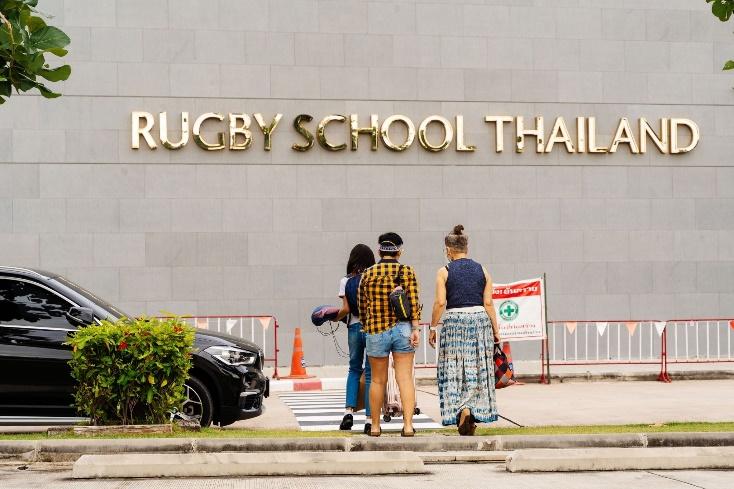
Rugby School Thailand amongst first international schools to pass stringent opening assessment

Rugby School Thailand, part of Britain’s renowned Rugby School group, is reopening after earning the government’s approval of its counter-COVID-19 measures.

Rugby School Thailand is one of the first five international (and one of 48 schools in Thailand) that has passed the assessment criteria laid out by the Ministry of Public Health and the Ministry of Education for reopening under the ‘Sandbox Safety Zone in School (SSS)’ framework. The scheme sets out stringent measures to be implemented to ensure that schools operate in the most COVID-19-secure manner.

“Whilst we offer an excellent online learning programme, too much screen time is not healthy for developing minds. We are therefore working tirelessly to bring children back to live lessons. We are fully compliant with the government’s COVID-19 preventative directives and have implemented stringent medical protocols and a COVID-19 rescue plan to ensure that we don’t inadvertently create a COVID-19 cluster” said Taya Teepsuwan, founder of Rugby School Thailand.

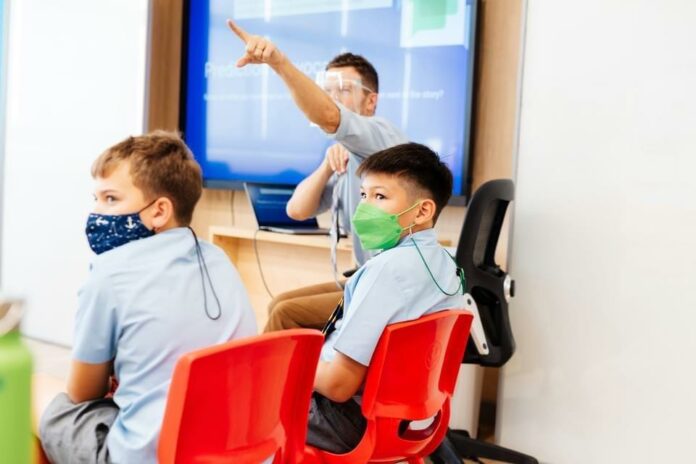
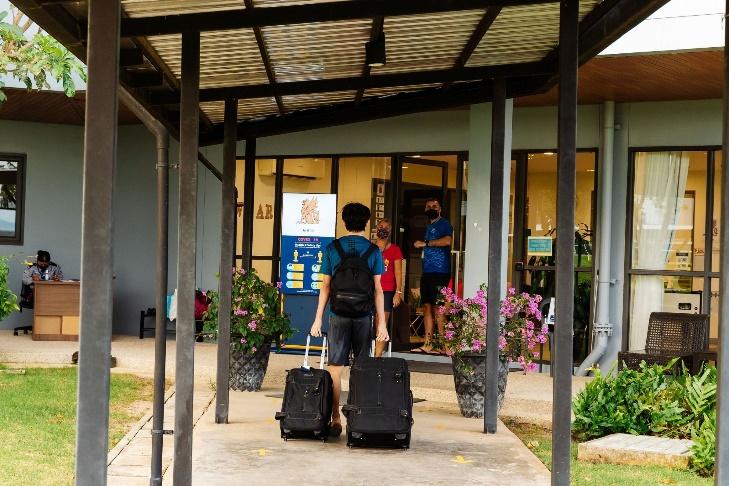
Ms Taya said Rugby School Thailand has adopted additional measures applied effectively by Rugby School in the UK during their lockdowns. These include conducting PCR tests 48 hours prior to entering the ‘Safety Zone School’ areas, dividing classes into small groups and employing a fixed seating plan for lessons and meal times so that close contacts are easily identified should there be a positive case identified. Special and extracurricular activities outside school hours are done in small groups to prevent risk and minimise exposure. image4 5

She pointed out that at Rugby School Thailand we are well beyond the suggested minimum staff vaccination rate of 85% and many safety measures have been implemented:

  • Under the ’18+3 Model’, students from year 7 to year 13 participating in the programme will stay at their boarding houses for 18 consecutive days, and will go home for three days;
  • Students are subject to PCR testing before moving into the ‘sandbox bubbles’ and will undergo weekly antigen testing whilst in the bubbles, and again before going home;
  • All teachers and school personnel will remain in the ‘Safety School Zone’ and will undergo weekly antigen testing; periodic random checks will also be done;
  • All meals are prepared and consumed following COVID-19 secure protocols;
  • Cleaning and disinfecting is performed regularly;
  • In order to prevent cluster formations, COVID-19 rescue plans are in place should a positive case be identified;
  • For pupils who opt out of joining the ‘sandbox bubble’ scheme, online teaching is provided through a live broadcast process using ‘Hybrid Learning’ technology; 
  • Pupils attending the ‘sandbox bubble’ will need to adhere to regular hand sanitising, mask-wearing and will be required to socially distance. Classes will be no bigger than 18 students;
  • Sports coaching and activities outside the classroom is conducted with covid-secure measures in mind.

image3 6

Ms Taya added that supporting personnel at Rugby School Thailand such as housekeepers, gardeners, technicians and drivers have also been part of the staff vaccination programme. COVID-19 preventative measures are implemented at their accommodation, private apartments and bubble locations. They commute between their accommodation and the school in RST shuttle busses which are subject to our stringent cleaning regimes. They have their three daily meals at school and are tested for COVID-19 by nurses every week, with random COVID-19 testing regularly carried out.

Additionally, strict cleaning regimes have been implemented to ensure that the delivery of fresh food and raw materials are delivered in a Covid-secure manner. Disinfection is carried out before ingredients enter the food production areas.

“This model is very challenging and of course there’s a risk, but it’s worth doing because it’s the only way to bring our children back to school. The success of the ‘sandbox bubble’ is down to the incredible work and commitment from our amazing teaching and support staff; I couldn’t be more thankful for their support and dedication. I hope the success of the ‘sandbox bubble’ will allow us to open a ‘day bubble’ for all year groups soon” said Taya.

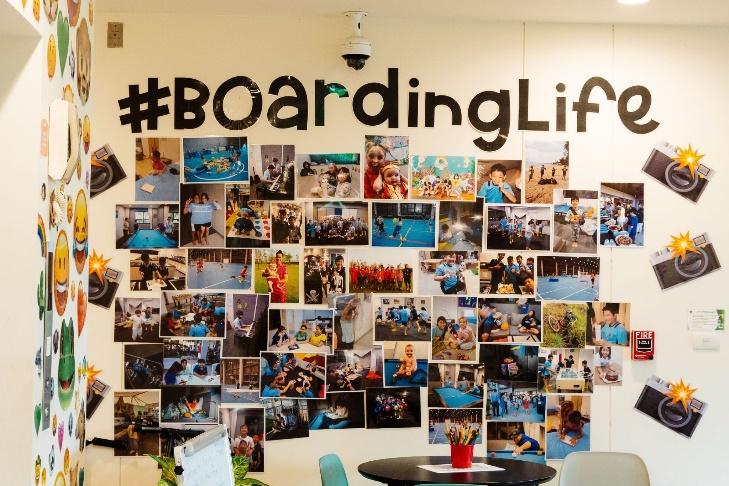
image6 3Rugby School Thailand is a co-educational, day and boarding, British International School for two to 18-year-olds. It follows the British curriculum with students taking IGCSE, AS and A level examinations.

The school has an 80-acre campus with state-of-the-art facilities and space for children to enjoy active lifestyles. Unlike most international schools, RST follows the British private school model, with smaller classes and longer days that integrate sport and a variety of co-curricular activities, such as sailing, archery and bushcraft. While academic excellence lies at the heart, education at RST underpins its ethos, ‘the whole person, the whole point’. 

Find out more at www.rugbyschoolthailand.ac.th

image5 4 image1 13

Advertisement

INDUSTRY LEADERS UNPACK THE FUTURE OF TRAVEL, MEETINGS AND EVENTS AT MARRIOTT INTERNATIONAL’S FIRST MAJOR HYBRID EVENT ACROSS ASIA PACIFIC

Hong Kong, September 16, 2021 – With grounds for optimism over travel rebound, Marriott International together with industry leaders discussed future trends at its first hybrid event in Asia Pacific – “Be There with Marriott International – The Path Forward for Travel and Events”. The event, attended in early September by more than 1,100 in-person and virtual travel industry professionals across Asia Pacific, featured a lively panel discussion on the emerging trends and demands in meetings and events, changing business travel policies, luxury travel, and consumer behavior in a post-pandemic era. These key trends emerged:

Customer experience is still key 

Cleanliness remains the top priority for many consumers, and expectations around safety and hygiene have increased dramatically as part of the customer experience. Social distancing, facemasks and hand sanitizers are expected essentials. Marriott International offers event organizers tips on setting up events in the new normal through the company’s ‘Connect with Confidence’ commitment. 

Bart Buiring, Chief Sales & Marketing Officer, Marriott International Asia Pacific, says, “As we continuously elevate our guest experiences, we understand how cleanliness is still top of mind for many.  We are committed to keeping our guests safe through enhanced cleaning regimen changes that leverages technology. I am optimistic about the bright spots of travel recovery we are seeing, and I look forward to international borders reopening.” 

In-person human interaction more powerful than ever

There has been a rapid adoption of technology and digitalization across the MICE industry. Although virtual events were the norm at the peak of the pandemic, 47% of respondents surveyed post-event said that more than half of their events next year will be offline. Hybrid events, which combine live interactions and the convenience of going digital, are expected to become the de facto meeting format.

Planning events in the ‘new normal’ has taught Industry leaders to keep testing, thinking, assessing and learning, so they can be nimble and change what is not working. MICE industry leaders must recognize the importance and power of face-to-face meetings complemented by hybrid technology in bringing out the human experience and connection. 

Ramesh Daryanani, Vice President, Global Sales, Marriott International Asia Pacific says, “We need to strike a balance between technology, reach and engagement. When hosting hybrid events, the platform is not the most important—instead, the desired outcome and the value that human connection brings is. Marriott’s hybrid solutions will continue to evolve, but there is no doubt that nothing replaces the power of face-to-face meetings.” 

As borders reopen, customers will seek events that are more intimate; and the networking that comes with these events will also be prioritized given many lost connections over the pandemic. 

Wellness is the new luxury 

The pandemic gave travelers an opportunity to think about rebooting travel for the better. Wellness travel, associated with the pursuit of enhancing personal well-being, is driving demand for weekend anti-stress getaways, hidden all-inclusive resort stays, spiritual retreats and off-the-beaten-track emerging destinations. 

According to a survey conducted by Marriott International, 3 in 4 travelers surveyed indicated the desire to travel to relieve stress. There is a higher demand for slow travel, where people are slowing down and visiting just one place, taking their time to get familiar with the destination and its surroundings and culture, rather than a fleeting visit. Industry leaders should adapt to these rising trends and curate experiences that cater to changing market demands. Marriott Bonvoy’s Westin and JW Marriott are two brands that feature programs that allow guests to maintain their wellness practices while on the road. The recently launched pilot of Good Travel with Marriott Bonvoy is another example of a program where guests have the opportunity to connect with local communities to create a lasting positive impact.

In partnership with technology partner, NowEvents, the hybrid event took place in Renaissance Hong Kong Harbour View Hotel, The Ritz-Carlton, Millenia Singapore and JW Marriott Gold Coast Resort & Spa. The in-person events saw the use of technology where panelists appeared to be in the same room even though in different locations. Moderated by Karen Bolinger, Strategic Business Consultant, PCMA Asia Pacific, the panelists included:

  • Andy Winchester (HK) – APAC Travel Manager, Bloomberg; 
  • Anna Patterson (SG) – Vice President & Managing Director, George P Johnson Singapore;
  • Bart Buiring (HK) – Chief Sales & Marketing Officer, Marriott International; 
  • Charlotte Harris (HK) – Managing Director, Charlotte Travel Hong Kong; 
  • Kenji Soh (SG) – Executive Director, Head of Asia Pacific Travel, Goldman Sachs; 
  • Oscar Cerezales (SG), Chief Strategy Officer, MCI Group

For more information and resources related to Marriott International’s enhanced meeting and event offerings, and view the live stream of the event, visit www.marriottbonvoyevents.com .

Advertisement

Idled Taxis Go Green With Mini-Gardens on Car Roofs

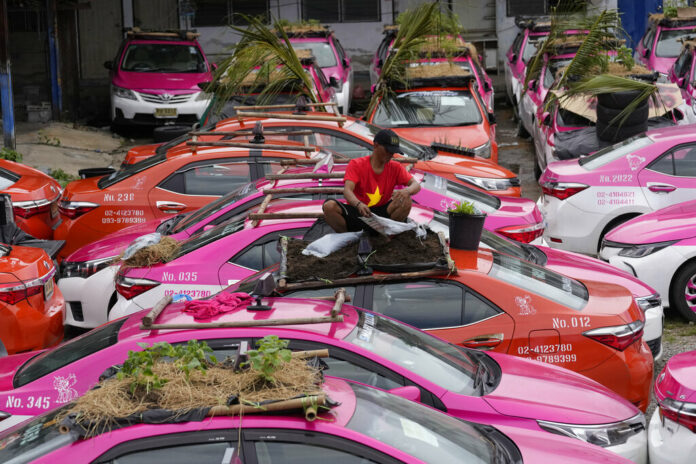
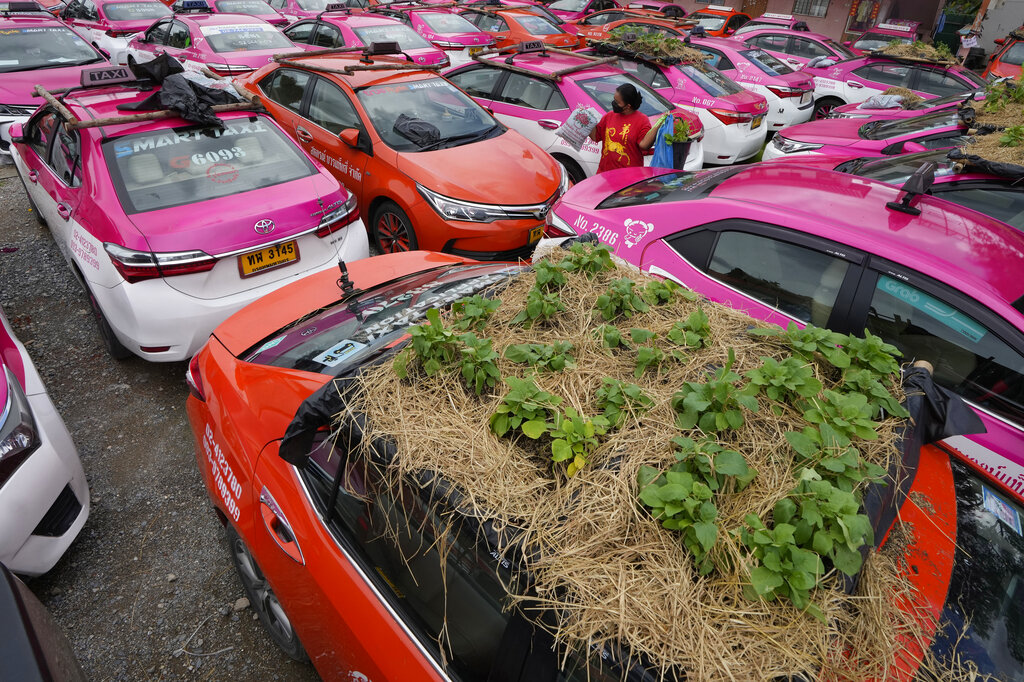
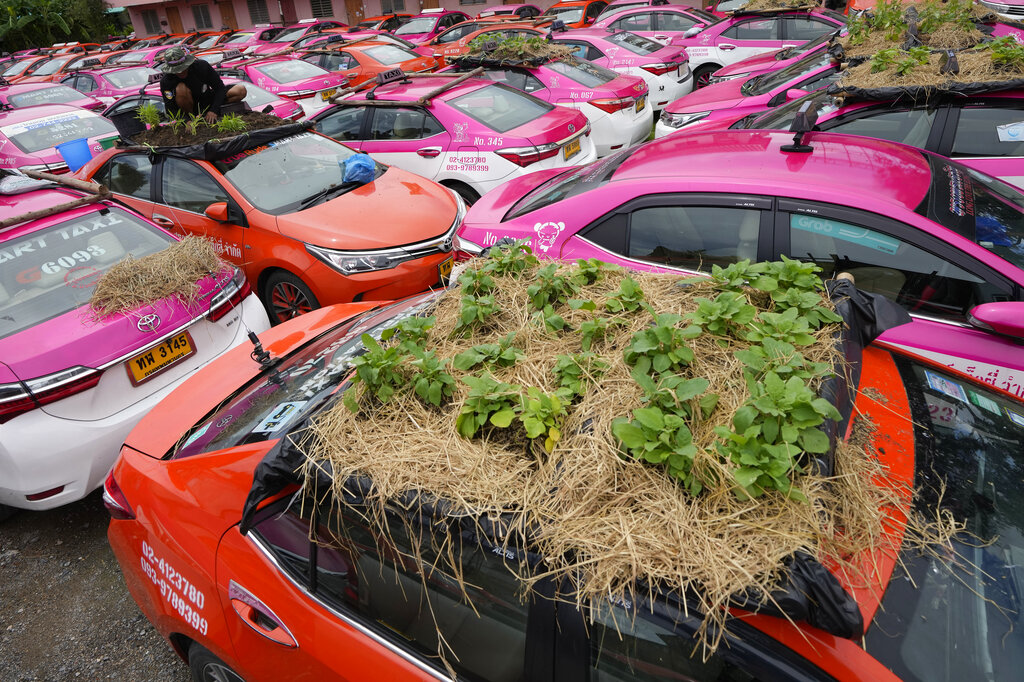
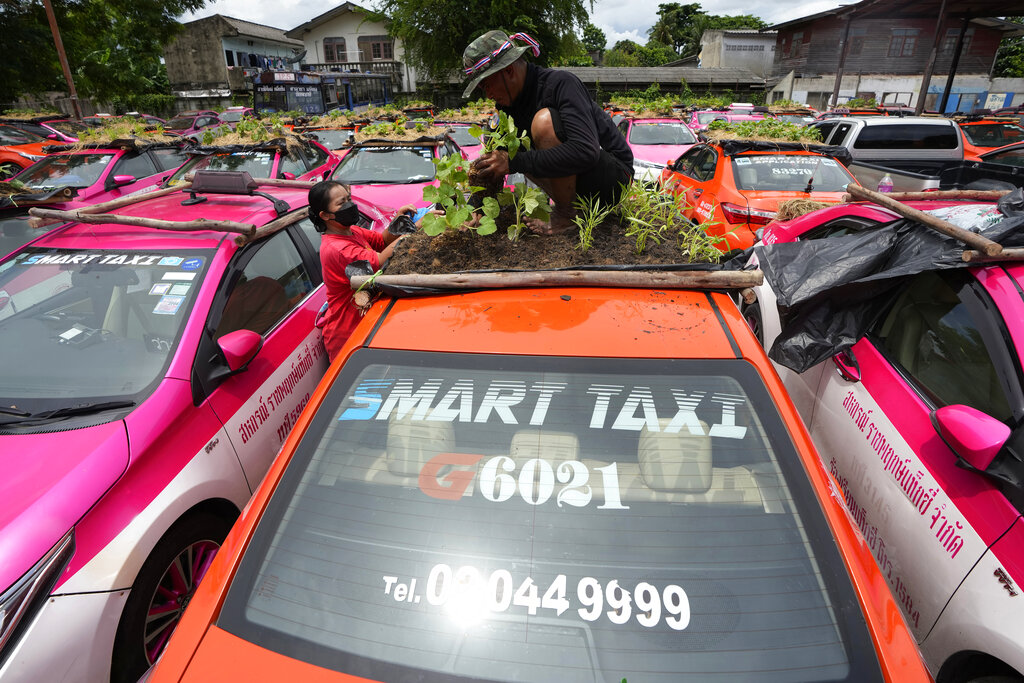
Workers from local taxi cooperatives assemble miniature gardens on the rooftops of unused taxis parked in Bangkok, Thailand, Thursday, Sept. 16, 2021. Photo: Sakchai Lalit / AP

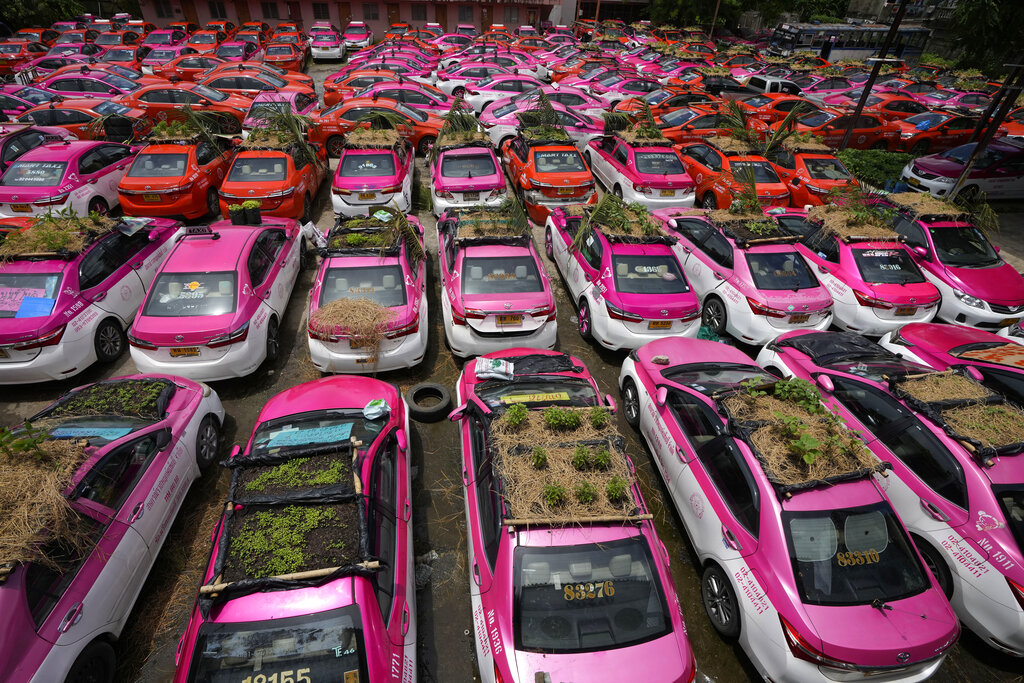
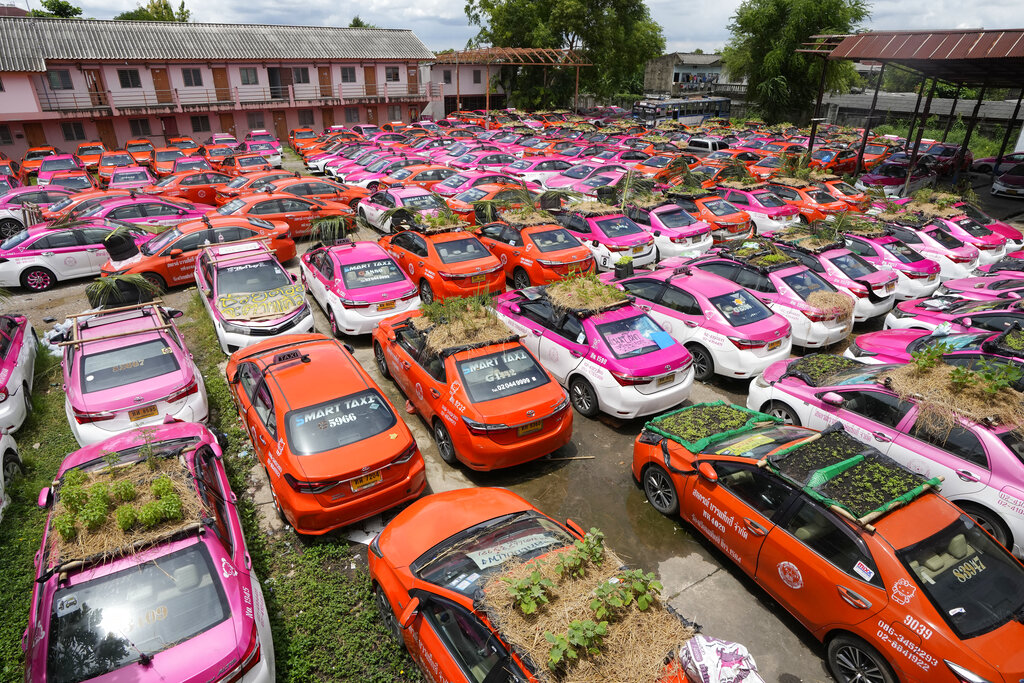
BANGKOK (AP) — Taxi fleets in Thailand are giving new meaning to the term “rooftop garden,” as they utilize the roofs of cabs idled by the coronavirus crisis to serve as small vegetable plots.

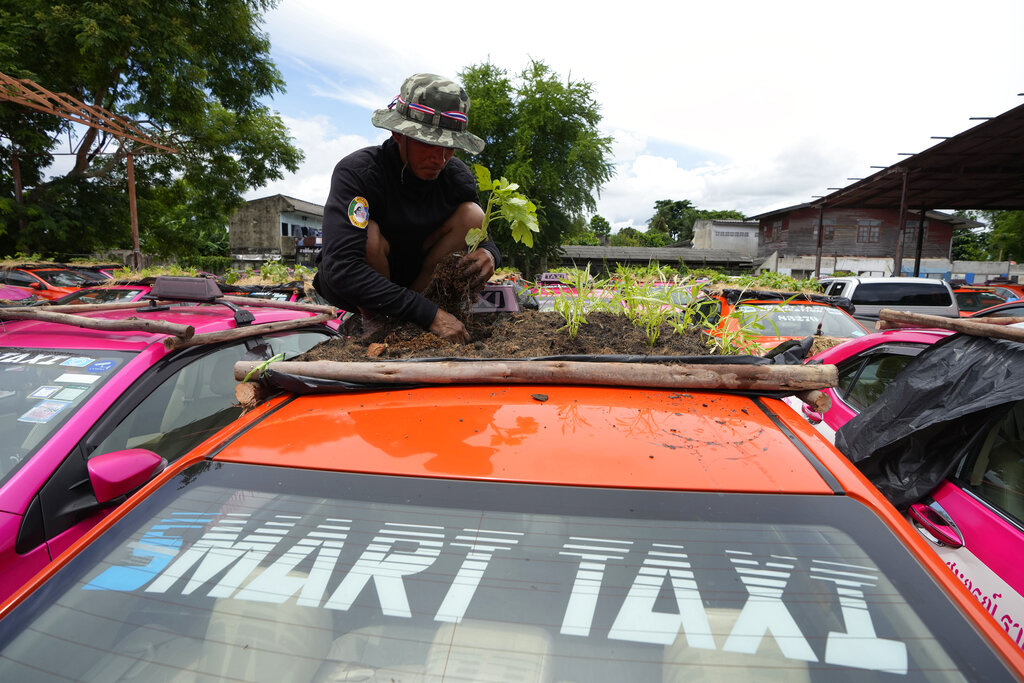
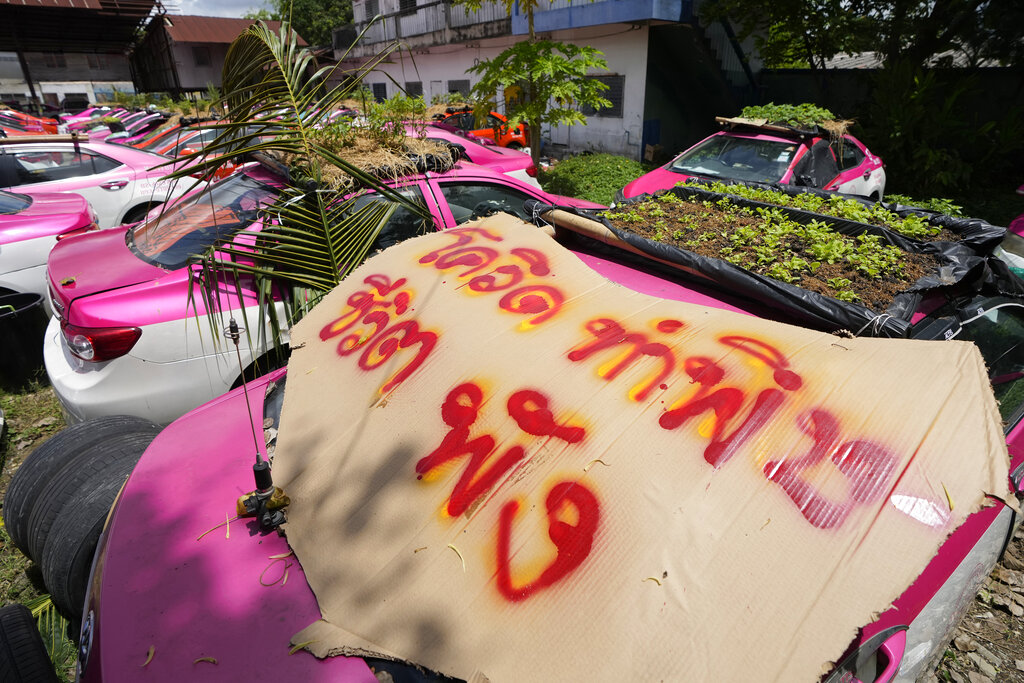
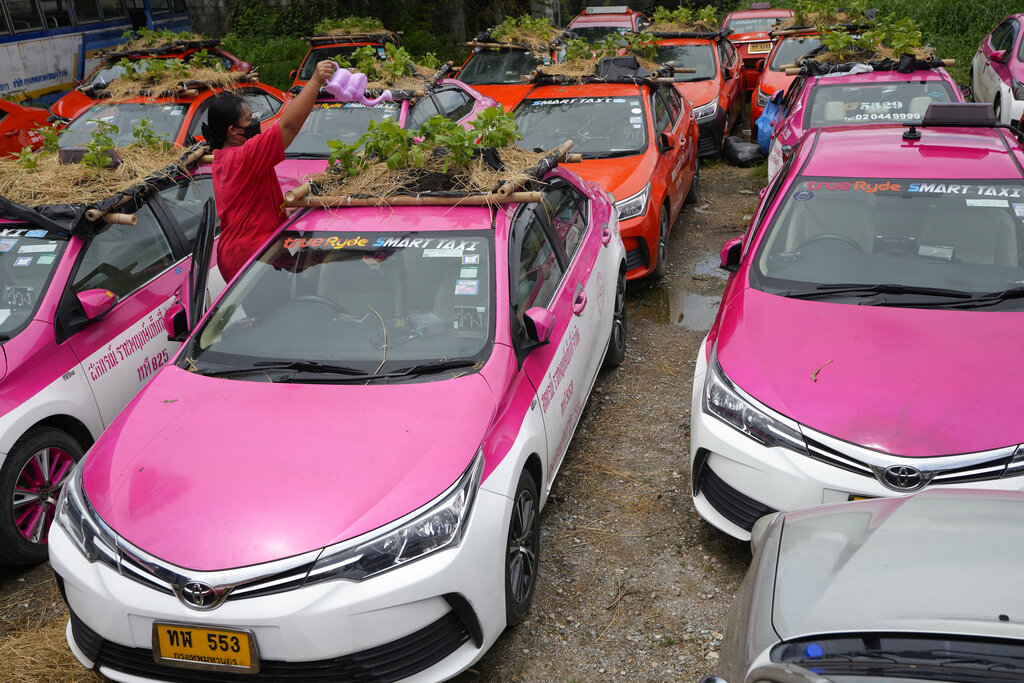
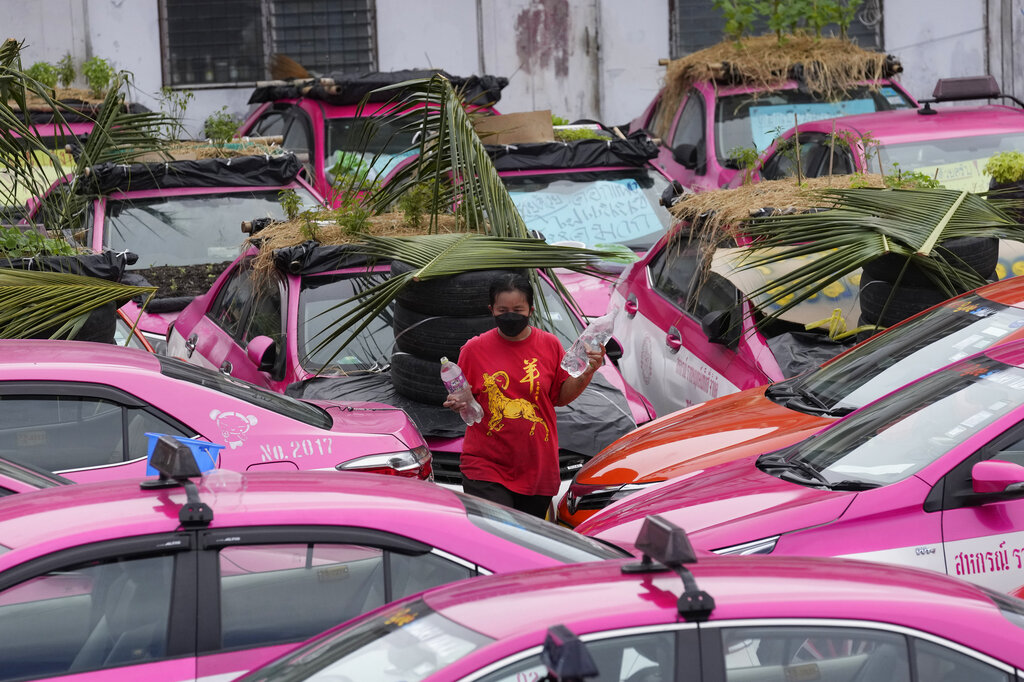
Workers from two taxi cooperatives assembled the miniature gardens this week using black plastic garbage bags stretched across bamboo frames. On top, they added soil in which a variety of crops, including tomatoes, cucumbers and string beans, were planted.

The result looks more like an eye-grabbing art installation than a car park, and that’s partly the point: to draw attention to the plight of taxi drivers and operators who have been badly hit by coronavirus lockdown measures.

The Ratchapruk and Bovorn Taxi cooperatives now have just 500 cars left plying Bangkok’s streets, with 2,500 sitting idle at a number of city sites, according to 54-year-old executive Thapakorn Assawalertkul.

AP21259322746832
Miniature gardens are planted on the rooftops of unused taxis parked in Bangkok, Thailand, Thursday, Sept. 16, 2021. Photo: Sakchai Lalit / AP

With the capital’s streets deathly quiet until recently, there’s been too much competition for too few fares, resulting in a fall in drivers’ incomes. Many now can’t afford the daily payments on the vehicles, even after the charge was halved to 300 baht ($9.09), Thapakorn said. So they have walked away, leaving the cars in long, silent rows.

Some drivers surrendered their cars and returned to their homes in rural areas when the pandemic first hit last year because they were so scared, he said. More gave up and returned their cars during the second wave.

“Some left their cars at places like gas stations and called us to pick the cars up,” he recalled.

With new surges of the virus this year, the cooperatives were “completely knocked out,” as thousands of cars were given up by their drivers, he said.

AP21259322214654
Workers from two taxi cooperatives assemble miniature gardens on the rooftops of unused taxis parked in Bangkok, Thailand, Thursday, Sept. 16, 2021. Photo: Sakchai Lalit / AP

Thailand’s new infections have ranged just under 15,000 in recent days after peaking above 23,400 in mid-August. The government hopes the country is easing out of this wave, which has been the deadliest so far, accounting for 97% of Thailand’s total cases and more than 99% of its deaths. In total, Thailand has confirmed 1.4 million cases and over 14,000 deaths.

The situation has left the taxi companies in financial peril, struggling to repay loans on the purchase of their fleets. Ratchapruk and Bovorn cooperatives owe around 2 billion baht ($60.8 million), Thapakorn said. The government has so far not offered any direct financial support.

“If we don’t have help soon, we will be in real trouble,” he told The Associated Press on Thursday.

The taxi-top gardens don’t offer an alternative revenue stream. The cooperatives staff, who were asked to take salary cuts, are now taking turns tending the newly-made gardens.

“The vegetable garden is both an act of protest and a way to feed my staff during this tough time,” said Thapakorn. “Thailand went through political turmoil for many years, and a great flood in 2011, but business was never this terrible.”

AP21259323068930
Workers from two taxi cooperatives assemble miniature gardens on the rooftops of unused taxis parked in Bangkok, Thailand, Thursday, Sept. 16, 2021. Photo: Sakchai Lalit / AP
AP21259322858503
Workers from two taxi cooperatives assemble miniature gardens on the rooftops of unused taxis parked in Bangkok, Thailand, Thursday, Sept. 16, 2021. Photo: Sakchai Lalit / AP
AP21259322327493
Miniature gardens sit on the rooftops of unused taxis parked in Bangkok, Thailand, Thursday, Sept. 16, 2021. Photo: Sakchai Lalit / AP
AP21259321984659
Workers from two taxi cooperatives assemble miniature gardens on the rooftops of unused taxis parked in Bangkok, Thailand, Thursday, Sept. 16, 2021. Photo: Sakchai Lalit / AP
AP21259321787025
Workers from two taxi cooperatives assemble miniature gardens on the rooftops of unused taxis parked in Bangkok, Thailand, Thursday, Sept. 16, 2021. Photo: Sakchai Lalit / AP
AP21259321160112
Miniature gardens are planted on the rooftops of unused taxis parked in Bangkok, Thailand, Thursday, Sept. 16, 2021. Photo: Sakchai Lalit / AP
AP21259320673254
Workers from two taxi cooperatives assemble miniature gardens on the rooftops of unused taxis parked in Bangkok, Thailand, Thursday, Sept. 16, 2021. Photo: Sakchai Lalit / AP

——-

Story: Jerry Harmer. Associated Press video journalist Tassanee Vejpongsa contributed to this report.

Advertisement

Hot News

LATEST NEWS

Bangkok
light rain
31.1 ° C
32.2 °
31.1 °
80 %
4kmh
100 %
Sun
35 °
Mon
36 °
Tue
35 °
Wed
35 °
Thu
33 °