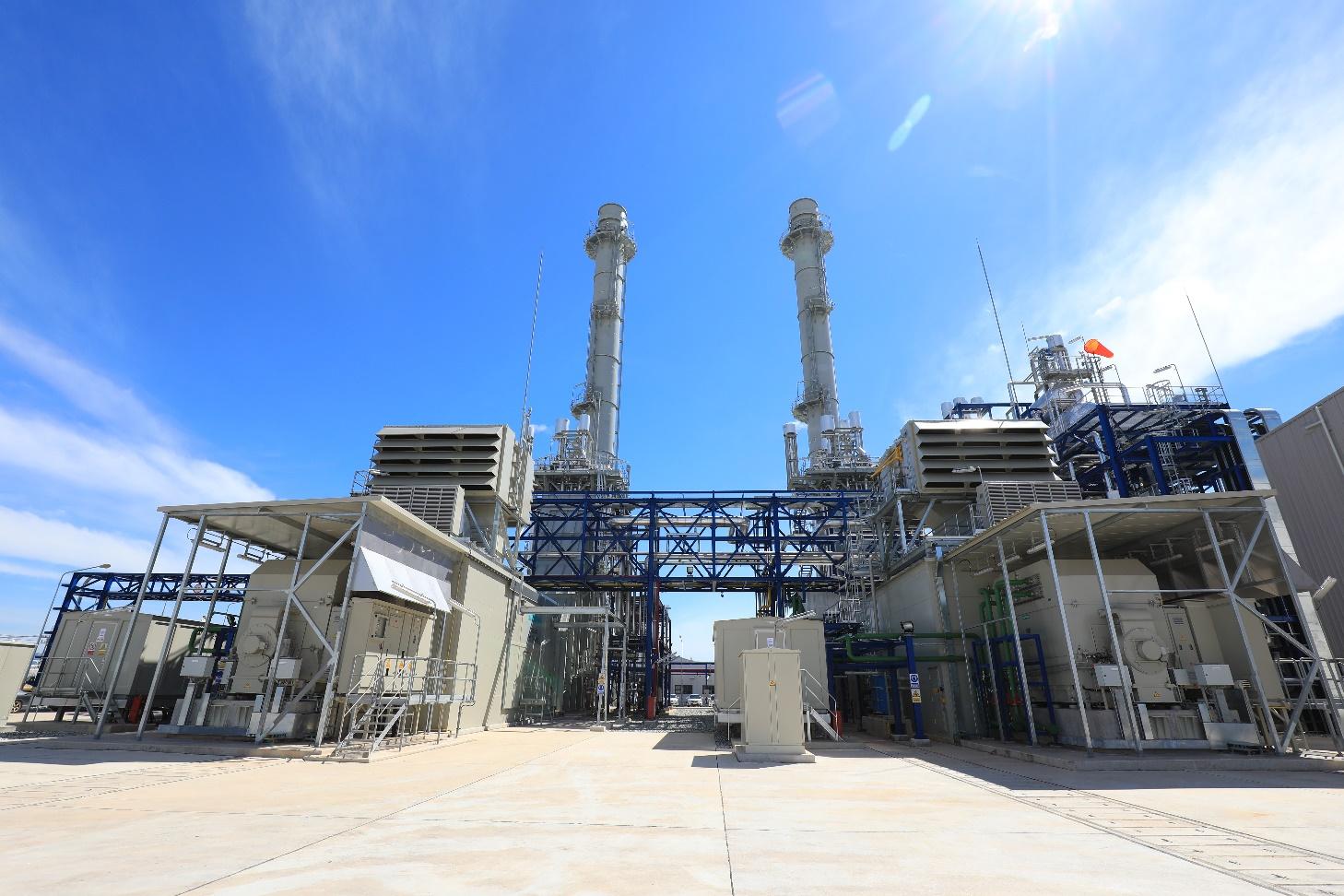
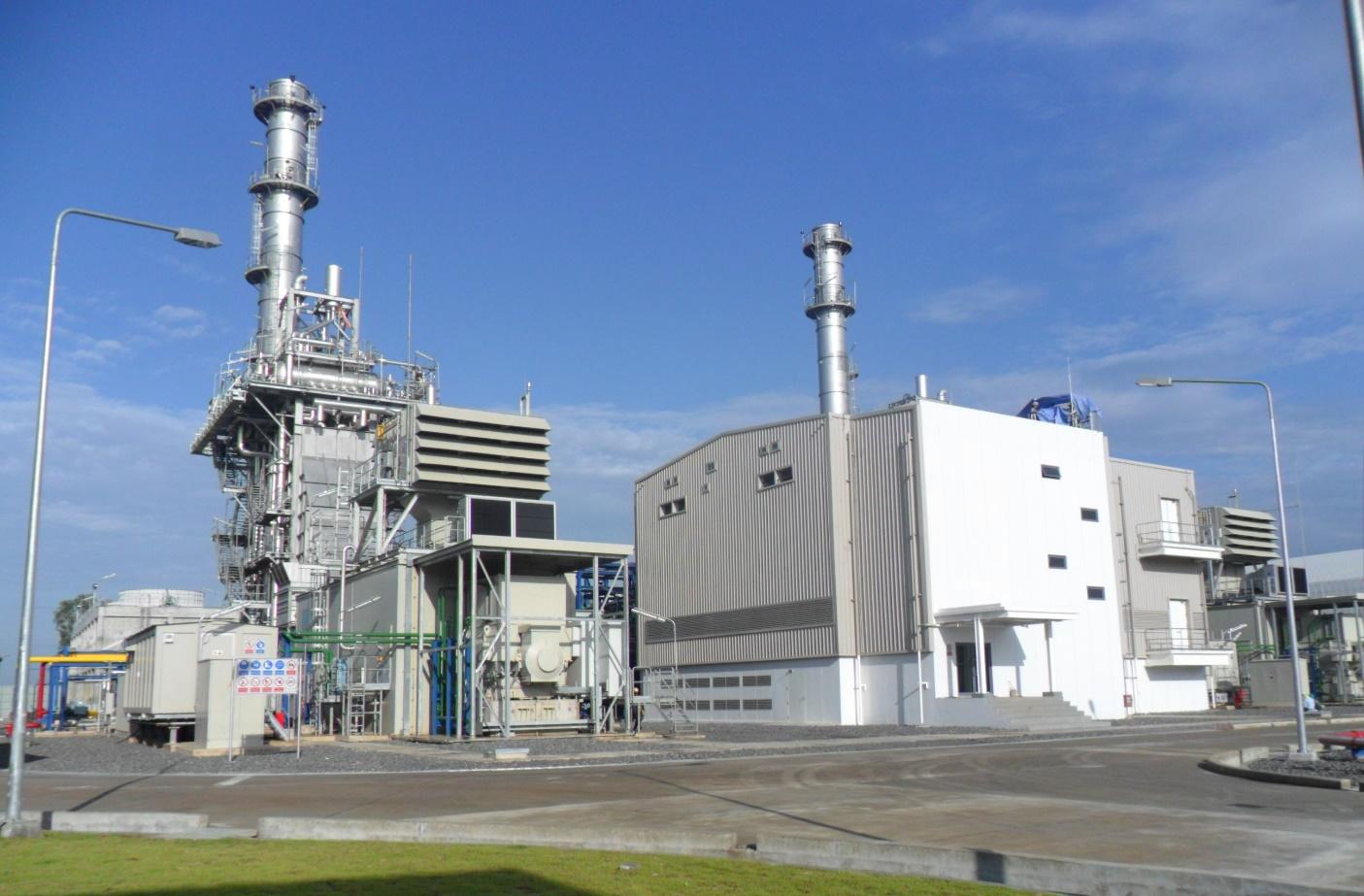
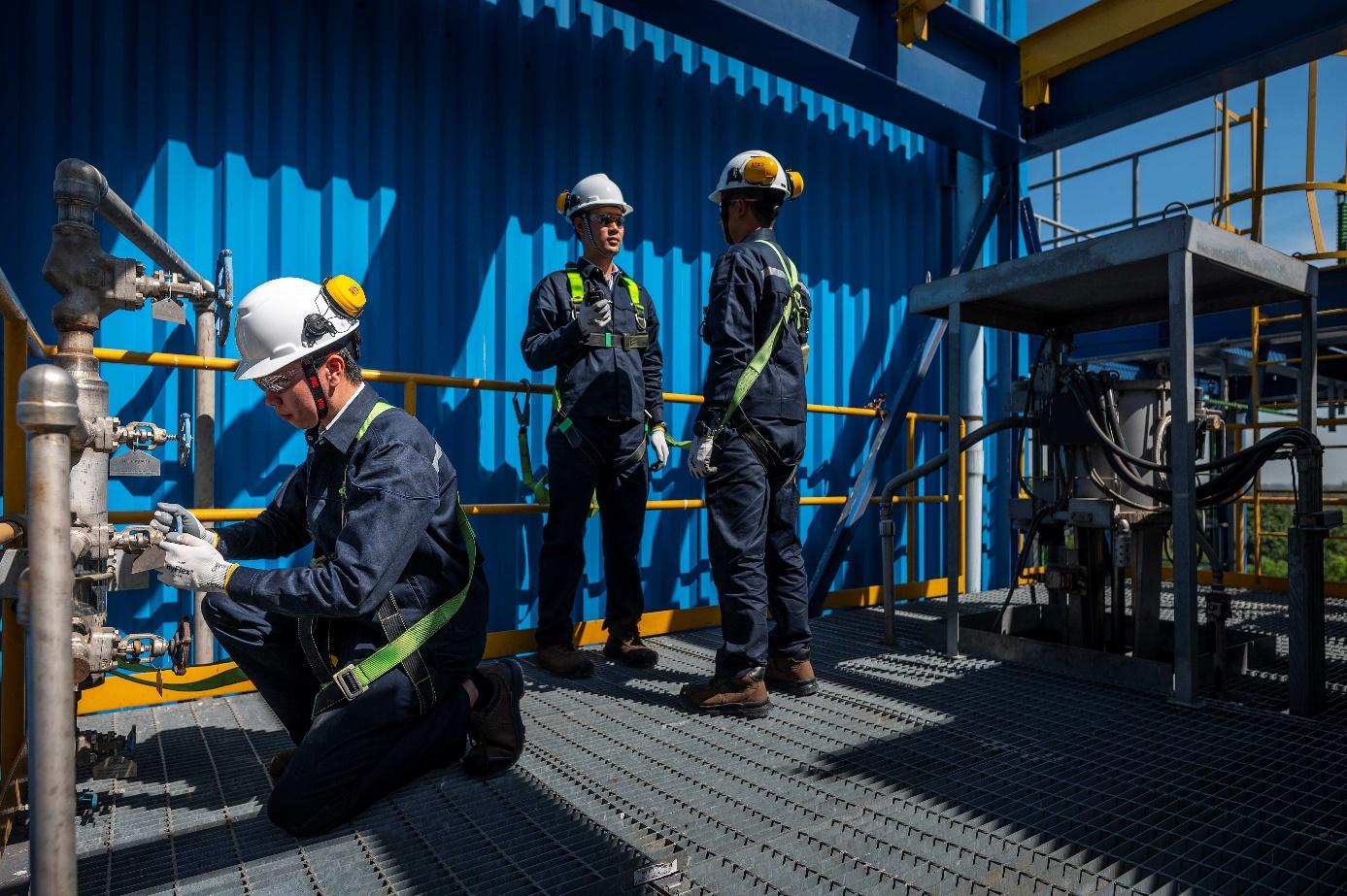
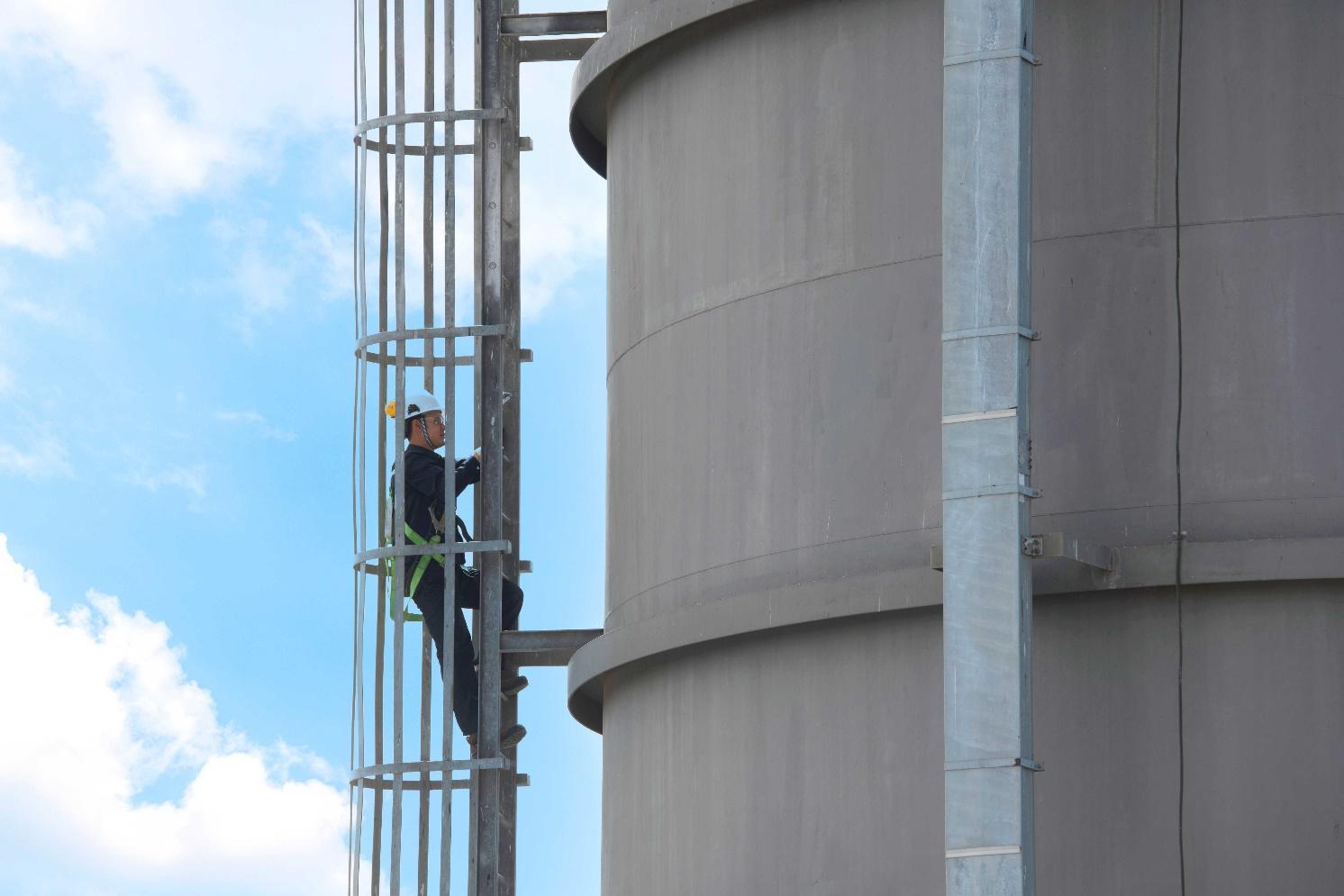
Gulf Group, led by Mrs. Porntipa Chinvetkitvanit, Deputy CEO, Gulf Energy Plc., and theProvincial Electricity Authority (PEA), represented by Mr. Sompong Preeprem, Governor,virtuallysigned a contract via Zoom for the service and maintenance of the 115/22 kV switchyard, substation and distribution system. Under this agreement, PEA will perform maintenance work for 19 SPP power plants operated by Gulf Group. The collaboration will enhance electricity distribution through power stations and the transmission line system, ensuring the highest level of stability, efficiency, reliability and safety.
Mrs. Porntipa Chinvetkitvanit, Deputy CEO, Gulf Energy Development Plc., stated: “Gulf Group selected PEA to do the maintenance work for the 19 SPP power plants because PEA is recognized asthe nation’s leading maintenance service provider in the power industry. Gulf Group and PEA relationship goes back more than 20 years, so we have confidence in their highly skilled professionals and the quality of equipment and spare parts they select. Because of this, the electrical system is always in good condition which allows the power plants to generate electricity as planned throughout the contract period.
Mr. Sompong Preeprem, Governor, the Provincial Electricity Authority, said: “PEA is delighted that Gulf Group entrusted PEA to provide service and maintenance for the 19 power plants. PEA is ready to provide our expertise and experience to deliver fast and efficient service in order to support greater reliability in electricity distribution, which will contribute to energy and economic development for the country.”
This 3-year contract covers work valued at over 223 million baht, including the maintenance of electrical equipment in the power stations and 115/22 kV transmission lines, as well as hotline cleaning insulator work and 24-hour emergency repair services for 19 SPP power plants under the Gulf Group.
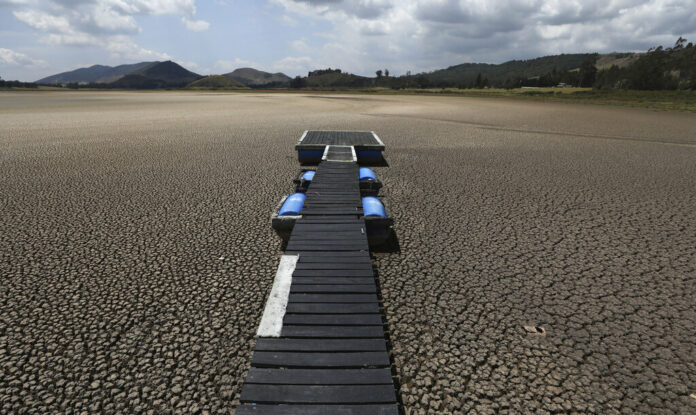
In this Wednesday, Feb. 17, 2021 file photo, a floating dock sits on the lakebed of the Suesca lagoon, in Suesca, Colombia. Photo: Fernando Vergara / AP
GENEVA (AP) — The U.N.-appointed Intergovernmental Panel on Climate Change published a new report Monday summarizing the latest authoritative scientific information about global warming. Here are five important takeaways.
BLAMING HUMANS
The report says almost all of the warming that has occurred since pre-industrial times was caused by the release of heat-trapping gases such as carbon dioxide and methane. Much of that is the result of humans burning fossil fuels — coal, oil, wood and natural gas.
The authors say global temperatures have already risen by 1.1 degrees Celsius (2 degrees Fahrenheit) since the 19th century, reaching their highest in over 100,000 years, and only a fraction of that increase can have come from natural forces.
___
PARIS GOALS
Almost all countries have signed up to the 2015 Paris climate accord, which aims to limit global warming to an increase of 2 degrees Celsius (3.6 Fahrenheit) above the pre-industrial average by the year 2100. The agreements says that ideally the increase would be no more than 1.5 degrees Celsius (2.7 degrees Fahrenheit).
But the report’s 200-plus authors looked at five scenarios and concluded that all will see the world cross the 1.5-degree threshold in the 2030s — sooner than in previous predictions. Three of those scenarios will also see temperatures rise 2 degrees Celsius.
___
DIRE CONSEQUENCES
The 3,000-plus-page report concludes that ice melt and sea level rise are already accelerating. Wild weather events — from storms to heat waves — are also expected to worsen and become more frequent.
Further warming is “locked in” due to the greenhouse gases humans have already released into the atmosphere. That means even if emissions are drastically cut, some changes will be “irreversible” for centuries, the report said.
___
SOME HOPE
While many of the report’s predictions paint a grim picture of humans’ impact on the planet and the consequences that will have going forward, the IPCC also found that so-called tipping points, like catastrophic ice sheet collapses and the abrupt slowdown of ocean currents, are “low likelihood,” though they cannot be ruled out.
___
BIG CATCH
Although temperatures are expected to overshoot the 1.5-degree-Celsius target in the next decade, the report suggests that warming could be brought back down to this level through what are known as “negative emissions.” That means sucking more carbon dioxide out of the atmosphere than is added, effectively cooling the planet again. The panel said that could be done starting about halfway through this century but doesn’t explain how, and many scientists are skeptical it’s possible.
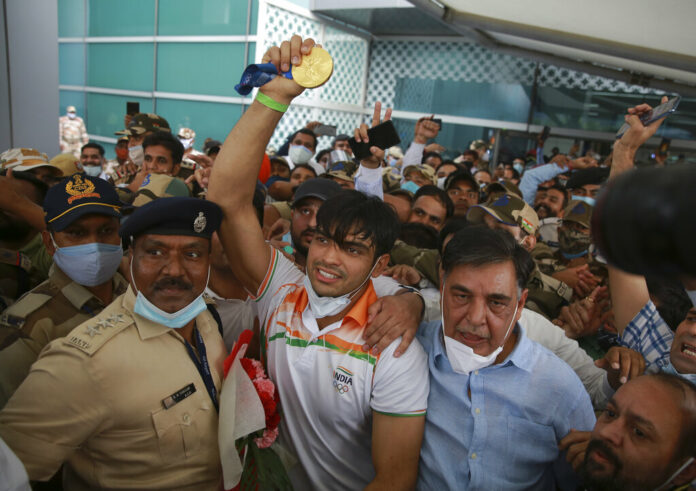
Olympic medallist Neeraj Chopra displays the gold medal he won in the men’s javelin at the Tokyo Games as he arrives for a rousing reception at the Indira Gandhi International Airport in New Delhi, India, Monday, Aug.9, 2021. Photo: AP
NEW DELHI (AP) — Olympic gold medalist Neeraj Chopra was given a rousing welcome as he arrived home in India on Monday after winning the men’s javelin event in Tokyo and securing the country’s first-ever athletics gold.
In a cricket-mad country, Chopra’s Olympic win was seen as a triumph for the nation of nearly 1.4 billion people, catapulting the 23-year-old to stardom.
Hundreds of people gathered at New Delhi’s Indira Gandhi International Airport to greet Chopra, who gave the V-for-victory sign as he looked over the crowd.
Chopra and other members of the Indian Olympic team received flower garlands as they left the airport. People held Indian flags and chanted “Bharat mata ki jai” (Long live mother India).
“I feel very happy that I am getting so much respect from the people,” Chopra said.
A nationwide celebration erupted the moment he won the gold medal on Saturday. Rewards started flowing for Chopra, with several state governments and private organizations honoring him for his achievement.
Chopra, the son of a farmer, won the javelin title with a personal-best throw of 87.58 meters. His gold was India’s seventh medal in Tokyo, its best-ever Olympic showing and surpassing the six it won in London in 2012.
Apart from Chopra’s gold, India won two silver medals and four bronze medals at the Tokyo Olympics. The silver medals came from weightlifter Mirabai Chanu and wrestler Ravi Kumar Dahiya. The bronze medals were won by shuttler P.V. Sindhu, the men’s hockey team, boxer Lovlina Borgohain and wrestler Bajrang Punia.
Chopra is the second Indian to win an individual gold medal at the Olympics after sport shooter Abhinav Bindra won gold at the 2008 Olympics in Beijing.
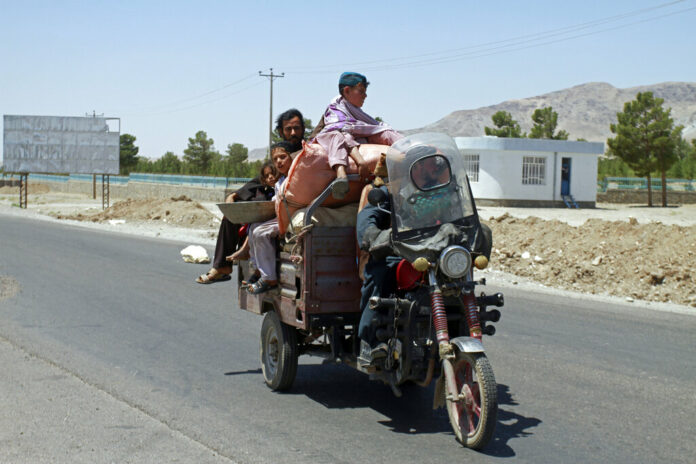
An Afghan family flees fighting as Afghan security personnel took back control of parts of the city of Herat following fighting between Taliban and Afghan security forces, on the outskirts of Herat, 640 kilometers (397 miles) west of Kabul, Afghanistan, Sunday, Aug. 8, 2021. Photo: Hamed Sarfarazi / AP
KABUL, Afghanistan (AP) — The Taliban took control of two more provincial capitals in Afghanistan on Monday, officials said. Their fall marked the latest development in a weekslong, relentless Taliban offensive as American and NATO forces finalize their pullout from the war-torn country.
The militants have ramped up their push across much of Afghanistan, turning their guns on provincial capitals after taking large swaths of land in the mostly rural countryside. On Monday they controlled five of the country’s 34 provincial capitals. At the same time, they have been waging an assassination campaign targeting senior government officials in the capital, Kabul.
The sweep comes despite condemnations by the international community and warnings from the United Nations that a military victory and takeover by the Taliban would not be recognized. The Taliban have also not heeded appeals to return to the negotiating table and continue long-stalled peace talks with the Afghan government.
Two lawmakers from northern Samangan province — Hayatullah Samangani and Mahboba Rahmat — said the provincial capital of Aybak fell to the Taliban on Monday afternoon without resistance. They said government officials fled to another district.
Provincial council member Mohammad Hashim Sarwari said Taliban fighters earlier had captured three districts of the province before overrunning the capital.
Another provincial lawmaker from Samangan, Ziauddin Zia, said some government installations were still under government control as security forces resisted Taliban fighters.
According to Mohammad Noor Rahmani, the council chief of northern Sar-e Pul province, the Taliban overran the provincial capital after over a week of resistance by the Afghan security forces, after which the city of Sar-e Pul collapsed. The government forces have now completely withdrawn from the province, he said.
Several pro-government local militia commanders also surrendered to the Taliban without a fight, allowing the insurgents to gain control of the entire province, Rahmani added.
The cities of Aybak and Sar-e Pul join three other provincial capitals now fully under Taliban control: Zaranj, the capital of western Nimroz province, the city of Sheberghan, the capital of northern Zawzjan province, and Taleqan, the capital of another northern province with the same name.
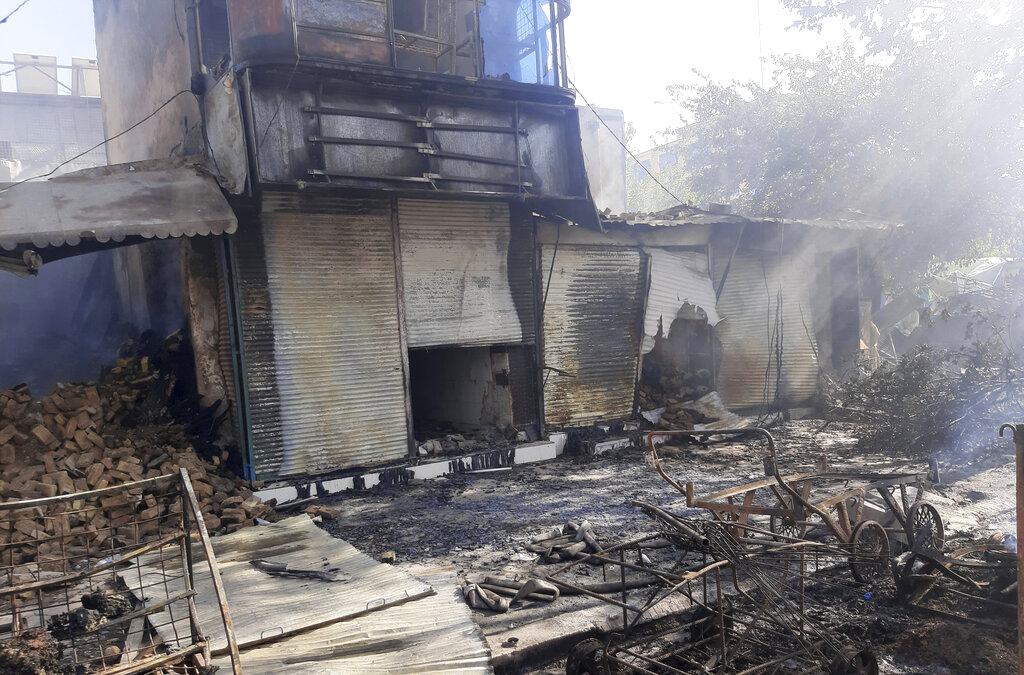
Smoke rises from damaged shops after fighting between Taliban and Afghan security forces in Kunduz city, northern Afghanistan, Sunday, Aug. 8, 2021. Photo: Abdullah Sahil / AP
The Taliban are also fighting on for control of the city of Kunduz, the capital of northern Kunduz province. On Sunday, they planted their flag in the city’s main square, where it was seen flying atop a traffic police booth, a video obtained by The Associated Press showed.
Kunduz’s capture would be a significant gain for the Taliban and a test of their ability to take and retain territory in their campaign against the Western-backed government. It is one of the country’s larger cities with a population of more than 340,000, and was a key area defended against Taliban takeovers by Western troops over the years.
After billions of dollars spent in aiding, training and shoring up Afghan forces, many are at odds how to explain the surprising Taliban blitz that has threatened — and by now taken — several of the country’s 34 provincial capitals.
Rahmani, the council chief in Sar-e Pul, said the provincial capital had been under siege by the militants for weeks, with no reinforcements being sent to the overstretched Afghan forces. A video circulating on social media Monday shows a number of Taliban fighters, standing in front of the Sar-e Pul governor’s office and congratulating each other for the victory.
The country-wide Taliban offensive intensified as U.S. and NATO troops began to wrap up their withdrawal from Afghanistan this summer. With Taliban attacks increasing, Afghan security forces and government troops have retaliated with airstrikes aided by the United States. The fighting has also raised growing concerns about civilian casualties.
On Monday, UNICEF said it was shocked by the increasing number of casualties among children amid the escalating violence in Afghanistan. Over the past three days, at least 27 children have been killed in various provinces, including 20 in Kandahar, it said.
“These atrocities are also evidence of the brutal nature and scale of violence in Afghanistan which preys on already vulnerable children,” the agency said. It did not identify the side responsible for the killings. UNICEF also raised the alarm over what it said was increased recruitment of children by armed groups.
The Taliban have also taken most of Lashkar Gah, the capital of southern Helmand province, where they took nine of the 10 police districts in the city last week. Heavy fighting there continues, as do U.S. and Afghan government airstrikes, one of which damaged a health clinic and a high school.
Helmand health department chief Sher Ali Shakir said Monday that in the previous 24 hours, seven people were killed and 95 were wounded in the fighting and were transferred to hospitals in the province.
As they rolled through provincial capitals, the Taliban issued an English language statement on Sunday saying that residents, government employees, and security officials had nothing to fear from them.
However, revenge attacks and repressive treatment of women have been reported in areas now under Taliban control.
Meanwhile, hundreds of people displaced by fighting in northern provinces have reached Kabul, where they are living in parks without adequate access to drinking water amid scorching summer temperatures.
“We walked with slippers, didn’t have the chance to wear our shoes,” said Bibi Ruqia, who left northern Takhar province after a bomb hit her house. “We had to escape, now we are here in a park.”
In Kabul on Sunday, unknown gunmen shot dead a journalist and a colleague, said police spokesman Ferdaws Faramarz. He said Toofan Omar was also a prosecutor in Paktia province. Omar was traveling from Bagram to Kabul when his car was ambushed.
“Its not clear whether it was the result of a personal dispute or he was killed for being a prosecutor or journalist,” Faramarz said.
The Taliban in response to a query from The Associated Press said they were investigating the incident.
The Taliban often target government officials and those they perceive as working for the government or foreign forces, though several attacks have been claimed by the Islamic State group.
___
Story: Rahim Faiez. Associated Press writer Tameem Akhgar in Kabul, Afghanistan, contributed to this report.
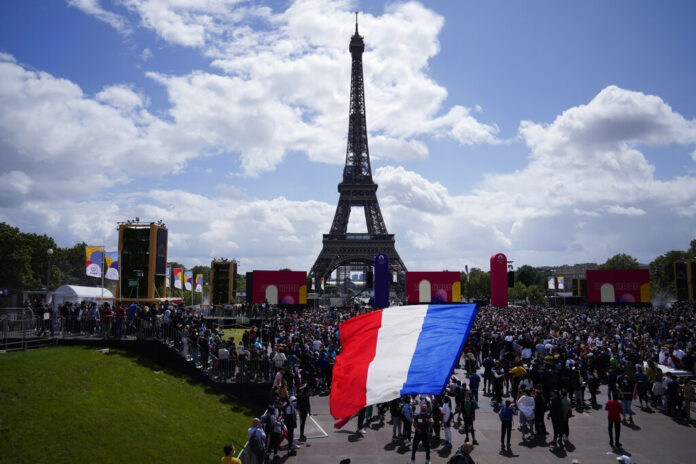
A man unfurls a French flag at the Olympics fan zone at Trocadero Gardens in front of the Eiffel Tower in Paris, Sunday, Aug. 8, 2021. Photo: Francois Mori / AP
TOKYO (AP) — They’ll always have Paris.
That thought, full of promise, has been a lifebuoy for athletes to cling to as they coped, as best they could, with thickets of restrictions at the pandemic-hit Tokyo Games that severely crimped their Olympic experience — and left some hungry for more.
Barred from bringing family and friends with them to Japan, playing in empty arenas and not allowed to sightsee in Tokyo, some athletes found themselves day-dreaming about the French capital’s Olympic rendezvous in 2024. If the coronavirus is tamed by then, the Paris Games could quickly become the party games. Already, there is palpable pent-up eagerness among athletes to make up for Tokyo and its disappointments.
“When Paris happens, I’ll be like, ’OK, wow, like this is a whole new energy. This is it,'” said U.S. skateboarder Mariah Duran. “Maybe I had to have the appetizer before the whole meal.”
For now, Paris officials say they’re betting that the pandemic will be over when their turn comes. “Normally, we’ll be able to party,” the city’s mayor, Anne Hidalgo, said Sunday on French TV when Tokyo passed the baton.
But if the coronavirus is still ruining the best-laid plans, then Tokyo has served up a model of how to hold an Olympics even as infections are surging. It pared the games down to their most essential ingredient: competition. No spectators. No city-wide partying. Very little mingling between Olympians and their hosts. Paris officials were watching closely and say that while they hope for the best, they’ll also plan for the worst.
Toughest for many Tokyo Olympians was not being accompanied to Japan by loved ones who had no choice but to watch them compete on TV. American surfer Carissa Moore said it was “a huge challenge” being separated from her husband and his “strong constant voice.”
Traveling without her parents for the first time at age 17, U.S. skateboarder Brighton Zeuner compensated by staying closely connected even during her competition, video-calling her father from the Olympic skate bowl “between every single run I did.”
To limit infection risks, organizers also asked athletes to arrive in Tokyo no earlier than five days before competing and leave within 48 hours of being done — a rapid turnaround that further truncated the Olympic experience.
Belgian skateboarder Axel Cruysberghs, who competed in week one, and his skateboarding wife Lizzie Armanto, who competed in week two, passed each other like ships in the night. As she took off for Tokyo, his flight back to their home was 20 minutes from landing.
“It worked out for our puppy,” she joked. But it wasn’t the fairy-tale Olympics they’d planned before the pandemic.
“We’d hoped to like be here for a month together and, you know, I could see his event and he could stay for mine,” Armanto said. “But because of COVID and everything … ”
Armanto came away from Tokyo having not made up her mind about whether she wants to go again in Paris. In an Instagram livestream from the Olympic residential compound where athletes were largely confined when not training or competing, she was wrestling with cabin fever, complaining of rooms that “feel a little prison-like” and wishing that organizers hadn’t barred athletes from going to watch sports other than their own in their downtime.
“I’ve circled the perimeter quite a few times because what else do you do here?” Armanto asked.
Not being able to pass the time at sports venues was a common complaint.
“That’s something I would have liked to have experienced as an Olympian, to go watch my other teammates, other than wrestlers, compete,” said Elias Kuosmanen of Finland, who wrestled in the Greco-Roman heavyweight class.
At the 2016 Olympics in Rio de Janeiro, Canadian volleyball player Nicholas Hoag took in gymnastics and track and field on off days, went out for drinks with teammates and otherwise absorbed the Olympic experience. But on days with no matches in Tokyo, “I was watching TV pretty much all day, watching all the sports.”
Another Canadian volleyballer, Ryan Sclater, said the pandemic games were “a real mix of amazing things and weird things” and somewhat blunted by social distancing and mask wearing. Athletes were asked not to mingle outside their teams and avoid “unnecessary” hugs, high-fives and handshakes — guidance they frequently ignored in the heat and joy of competition.
“We are not quite connecting in the same way that we normally could,” Sclater said. “It’s funny being so close to all these amazing people who are here to compete but then not quite getting to know them in the same way as you might at a different Olympics.”
But because the pandemic delayed Tokyo by a year, Paris is now only a three-year waitinstead of the usual four.
“That is exciting, yes, to think about being able to do this again,” Sclater said. “To see even more of the beauty and coolness of people coming together and being able to really connect to the Olympics.”
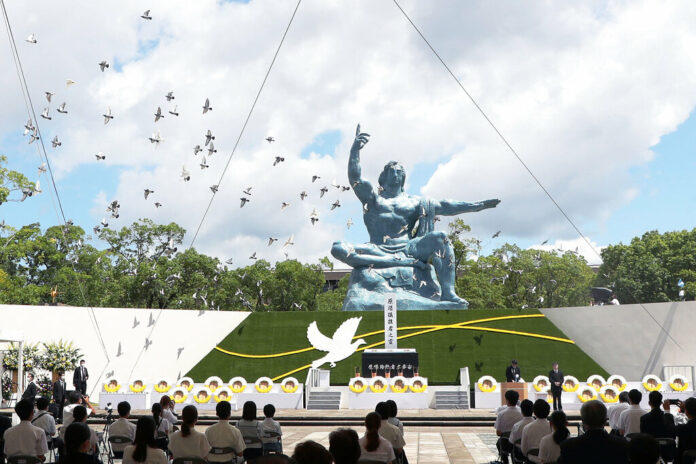
Doves fly over the Statue of Peace during a ceremony at Nagasaki Peace Park in Nagasaki, southern Japan Monday, Aug. 9, 2021. Photo: Kyodo News via AP
TOKYO (AP) — Nagasaki on Monday marked the 76th anniversary of the U.S. atomic bombing of the Japanese city with its mayor urging Japan, the United States and Russia to do more to eliminate nuclear weapons.
In his speech at the Nagasaki Peace Park, Mayor Tomihisa Taue urged Japan’s government to take the lead in creating a nuclear-free zone in Northeast Asia rather than staying under the U.S. nuclear umbrella — a reference to the U.S. promise to use its own nuclear weapons to defend allies without them.
Taue also singled out the United States and Russia — which have the biggest arsenals by far — to do more for nuclear disarmament, as he raised concern that nuclear states have backtracked from disarmament efforts and are upgrading and miniaturizing nuclear weapons.
“Please look into building a nuclear-weapons-free zone in the Northeast Asia that would create a ‘non-nuclear umbrella’ instead of a ‘nuclear umbrella’ and be a step in the direction of a world free of nuclear weapons,” Taue said as he urged Japan’s government to do more to take action for nuclear disarmament.
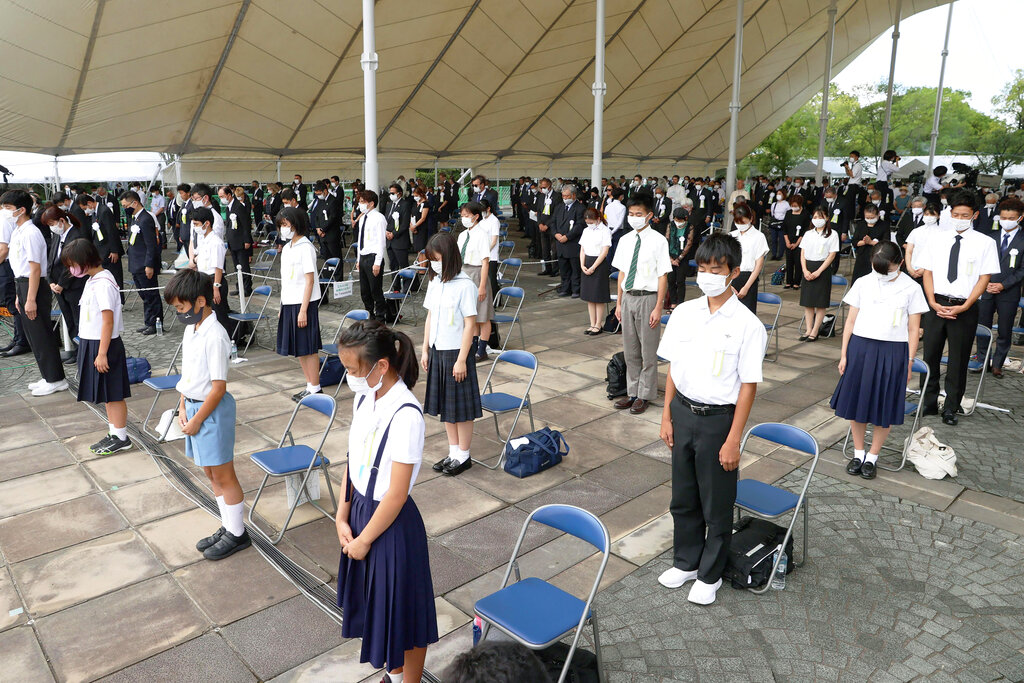
At 11:02 a.m., the moment the B-29 bomber dropped a plutonium bomb, Nagasaki survivors and other participants in the ceremony stood in a minute of silence to honor more than 70,000 lives lost.
The Aug. 9, 1945, bombing came three days after the United States made the world’s first atomic attack on Hiroshima, killing 140,000. Japan surrendered on Aug. 15, ending World War II.
The mayor also called Japan’s government and lawmakers to quickly sign the 2017 Treaty on the Prohibition of Nuclear Weapons that took effect in January.
Attendees offer a silent prayer during a ceremony at Nagasaki Peace Park in Nagasaki, southern Japan Monday, Aug. 9, 2021. Photo: Kyodo News via AP
Tokyo renounces its own possession, production or hosting of nuclear weapons, but as a U.S. ally Japan hosts 50,000 American troops and is protected by the U.S. nuclear umbrella. The post-WWII security arrangement complicates the push to get Japan to sign the treaty as it beefs up its own military while stepping up defense cooperation with other nuclear-weapons states such as Britain and France, to deal with threats from North Korea and China, among others.
Prime Minister Yoshihide Suga said the security environment is severe and that global views are deeply divided over nuclear disarmament, and that it is necessary to remove distrust by promoting dialogue and form a mutual ground for discussion.
Taue also called for a substantial progress toward nuclear disarmament made at next year’s Nuclear Non-Proliferation Treaty conference, “starting with greater steps by the U.S. and Russia to reduce nuclear weapons.”
He asked Suga’s government to step up and speed up medical and welfare support for the aging atomic bombing survivors, or hibakusha, whose average age is now over 83 years.
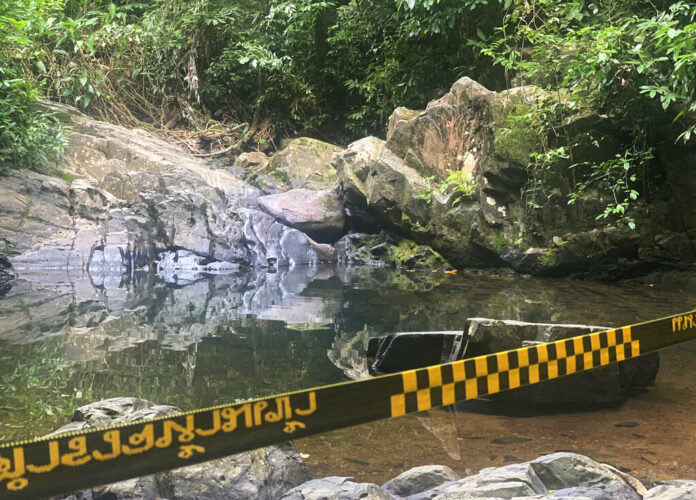
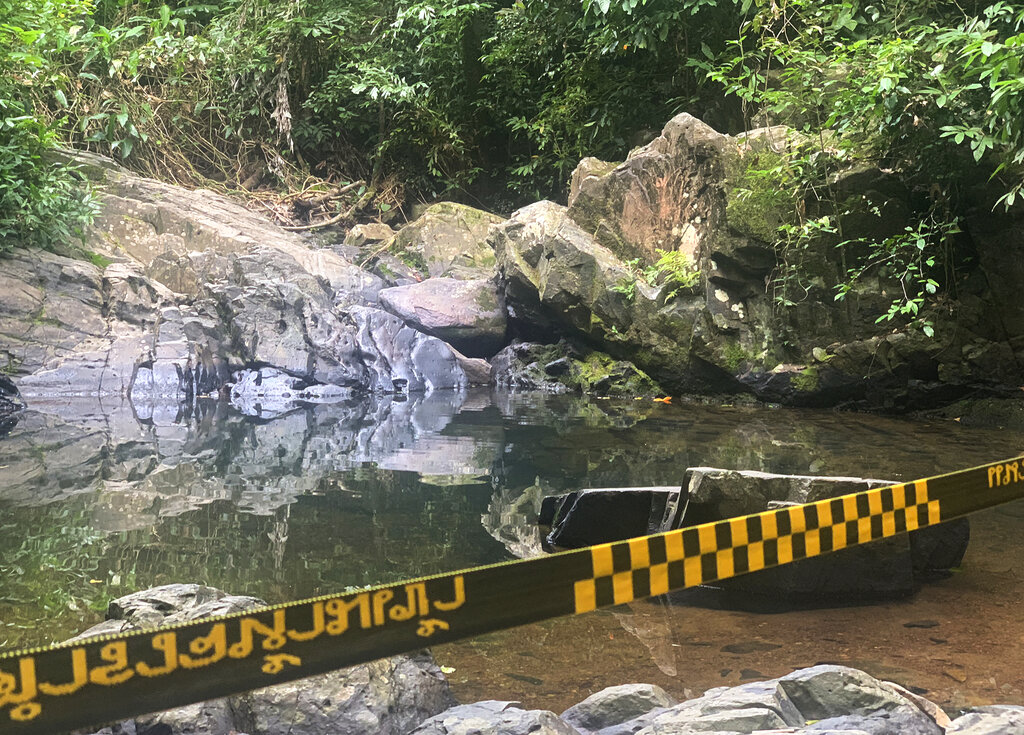
Police tape cordons off the area where a woman was found dead a day earlier at a secluded spot on the southern island of Phuket, Thailand, on Friday, Aug. 6, 2021. Photo: AP
BANGKOK (AP) — A suspect in the death of a 57-year-old Swiss woman on Thailand’s tourist island of Phuket was charged with murder and robbery, police said Sunday.
The suspect, Teerawat Thothip, a 27-year-old Thai man living in Phuket, confessed to the killing and even spoke by telephone at a police press conference to admit his guilt and describe the crime.
Investigators were able to trace the suspect using security camera footage, and during the interrogation he was found to have scratches and bruises on his body, said Police Maj. Gen. Nuntadech Yoi-nuan, deputy commissioner of Provincial Police Region 8.
The body of the Swiss woman, Nicole Sauvain-Weisskopf, was discovered Thursday at a secluded spot on the island. Swiss media reported she was a member of the country’s diplomatic service.
The suspect told reporters he went into a forest on Tuesday to try to find rare plants to sell, but was unsuccessful.
On his way back, he said he passed a waterfall and saw Sauvain-Weisskopf. He said he strangled her from behind, and that she resisted for a while before losing consciousness.
He then covered her with a black sheet, which was found nearby, took 300 baht ($9) from her backpack and threw her sneakers away. He said his motivation was because he had no money and no work due to the COVID-19 pandemic.
The cause of death has not been confirmed, and an autopsy report has yet to be released by the authorities, said Kissana Phathanacharoen, a national police deputy spokesperson.
The incident has cast a pall over Thailand’s so-called Phuket Sandbox program to try and bring fully vaccinated foreign tourists to the popular destination, which has been struggling massively during the coronavirus pandemic.
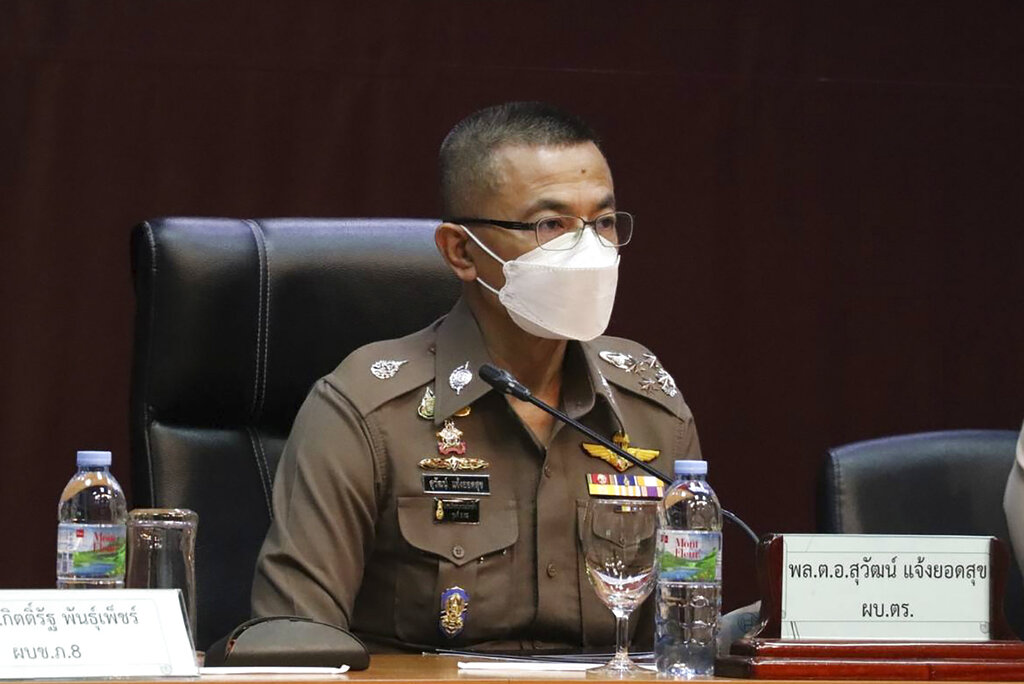
In this photo released by Provincial Police Region 8, Thailand National Police Chief Suwat Jangyodsuk talks to media during a press conference at Provincial Police Region 8 in the southern island of Phuket, Thailand, Sunday, Aug. 8, 2021. Photo: Provincial Police Region 8 via AP
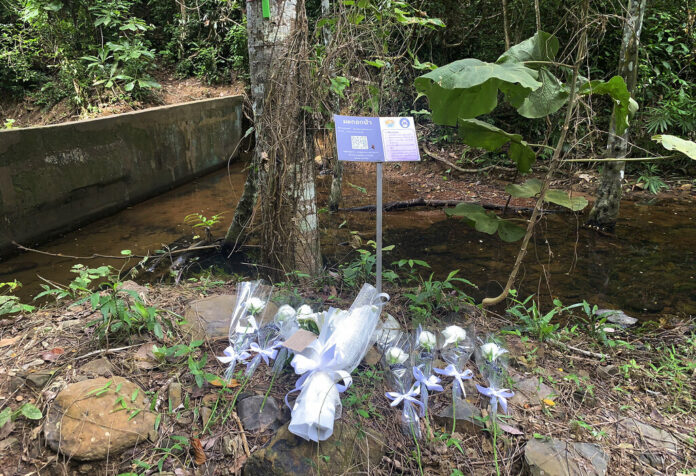
Below a sign marking indigenous species of trees, flowers are placed at the scene where a woman was found dead a day earlier at a secluded spot on the southern island of Phuket, Thailand, on Friday, Aug. 6, 2021. Photo: AP
BANGKOK (AP) — Thai police said Saturday they arrested a suspect in the death of a Swiss woman on the tourist island of Phuket.
Thailand’s national police chief, Pol. Gen. Suwat Jangyodsuk, confirmed to reporters that a suspect was arrested but offered no other details.
According to an ID published by Thai media, the man is 27, and a Thai resident of Phuket.
The body of the 57-year-old Swiss woman, Nicole Sauvain-Weisskopf, was found Thursday at a secluded spot on the island. Thai media reported that the her partially clothed body was lying face down in a rock crevice near a waterfall and appeared to have been concealed by a sheet.
Prime Minister Prayuth Chan-ocha has ordered a quick investigation. Swiss media reported that Sauvain-Weisskopf was a member of the country’s diplomatic service.
The incident casts a pall over Thailand’s so-called Phuket Sandbox program to try and bring fully vaccinated foreign tourists to the popular destination, which has been struggling massively during the coronavirus pandemic.
Police tape cordons off the area where a woman was found dead a day earlier at a secluded spot on the southern island of Phuket, Thailand, on Friday, Aug. 6, 2021. Photo: AP
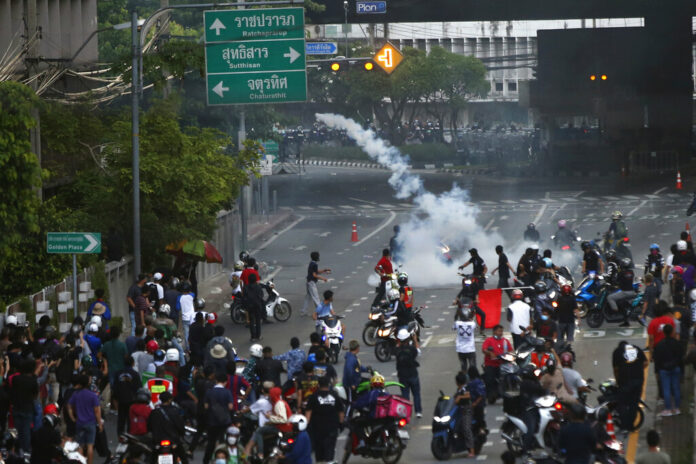
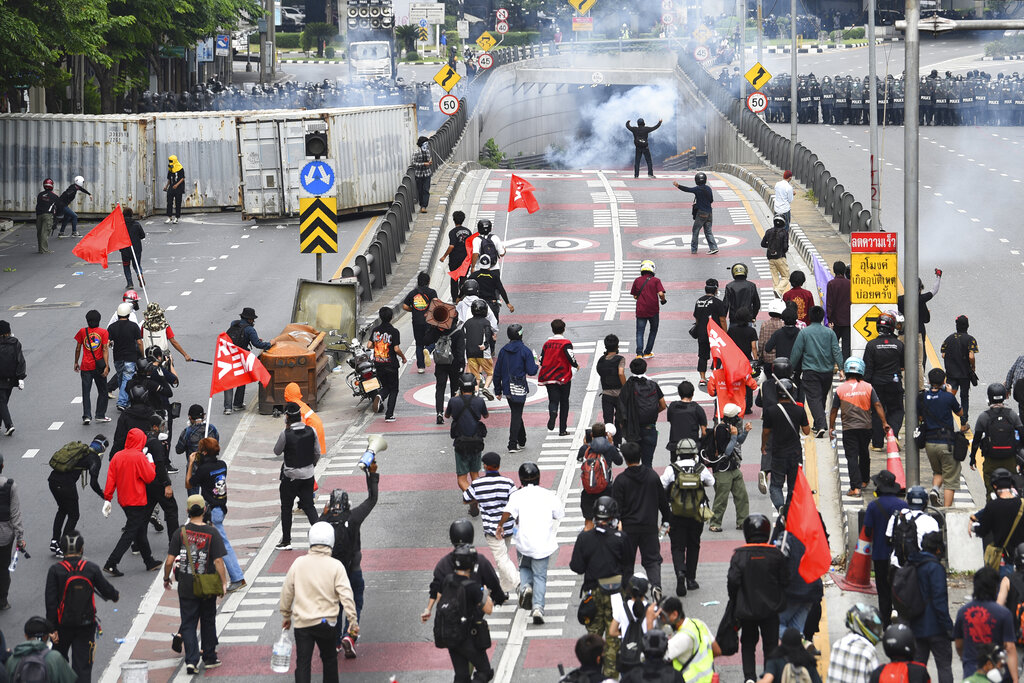
Riot police launch tear gas to anti-government protesters during a protest in Bangkok, Thailand, Saturday, Aug. 7, 2021. Photo: Anuthep Cheysakron / AP
BANGKOK (AP) — Thai riot police on Saturday fired water cannons, tear gas and rubber bullets to repel a crowd of several hundred young anti-government protesters who marched on an army base where Prime Minister Prayuth Chan-ocha has his residence to demand his resignation.
The demonstrators threw rocks, bottles, fireworks and fired slingshots during the hourslong confrontation in the Din Daeng area of Bangkok, which was obscured by swirling smoke.
The rally was led by the Free Youth, a student protest group that drew tens of thousands to its protests last year. It’s demanding Prayuth’s resignation over his handling of the coronavirus crisis, which has seen the number of cases spiraling and the health care system stretched to the limit. Prayuth has been criticized for a slow vaccination program.
Thailand reported a new high of 21,838 confirmed cases on Saturday, with 212 more deaths. Bangkok and surrounding provinces have been under lockdown, including overnight curfew, for weeks.
According to the city’s Erawan Medical Center emergency services, five people were hospitalized, including three police officers. The march was called off in the early evening but disturbances continued, with protesters battling the police and hurling objects.
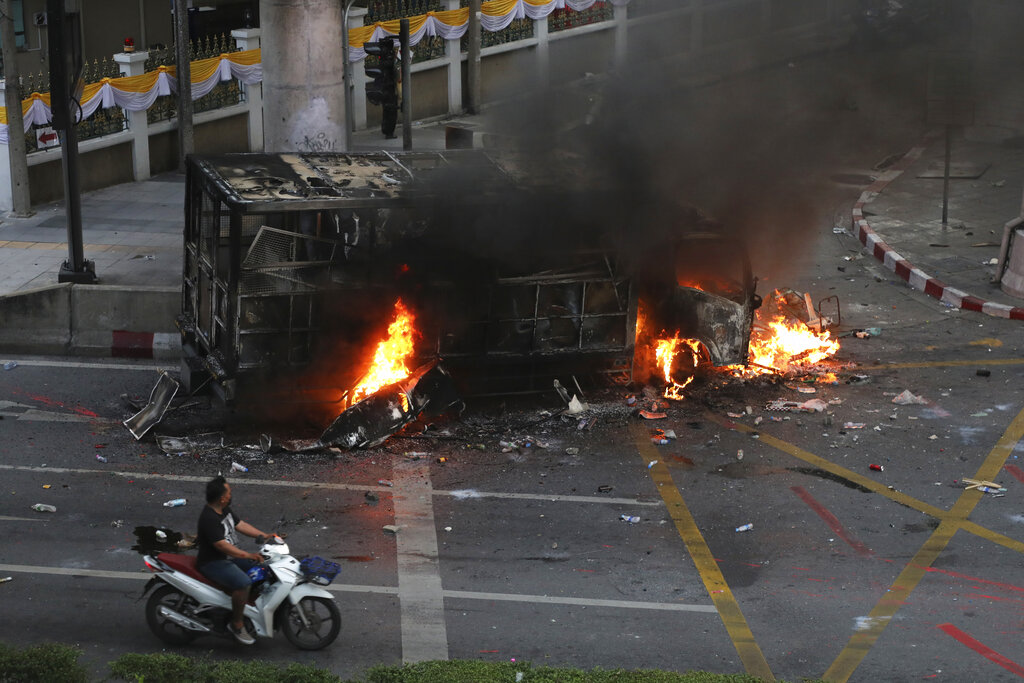
A motorcycle ride pass the police detention truck was put on fire during a protest in Bangkok, Thailand, Saturday, Aug. 7, 2021. Photo: Anuthep Cheysakron / AP
The protesters are also calling for part of the budget for the monarchy and the military to be redirected into the COVID-19 fight.
Saturday’s protest was originally planned in an area near the Grand Palace in the old part of the capital but switched to the compound of the 1st Infantry Regiment, where Prayuth – a former general who originally took power in a 2014 coup – continues to live.
The protest movement began last year with demands for sweeping political change, including unprecedented public calls for the reform of the powerful monarchy to make it more accountable.
After going dormant due to prosecutions, internal disagreements and the pandemic, protests have returned in recent weeks, fueled by the growing discontent over the government’s response to the health crisis and its massive impact on the economy, which is reliant on tourism.
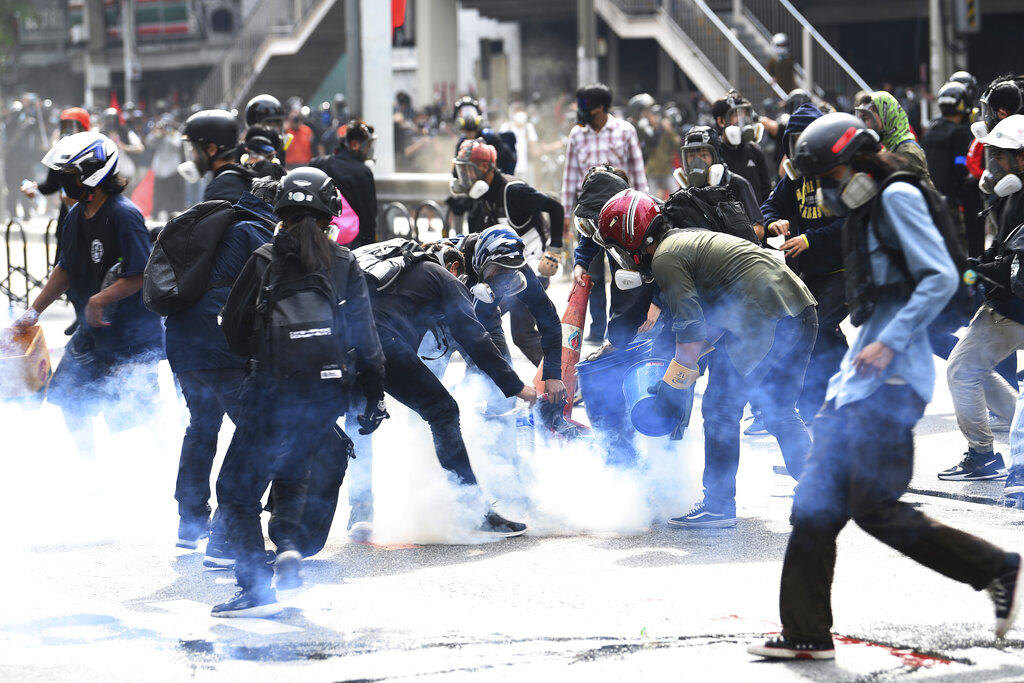
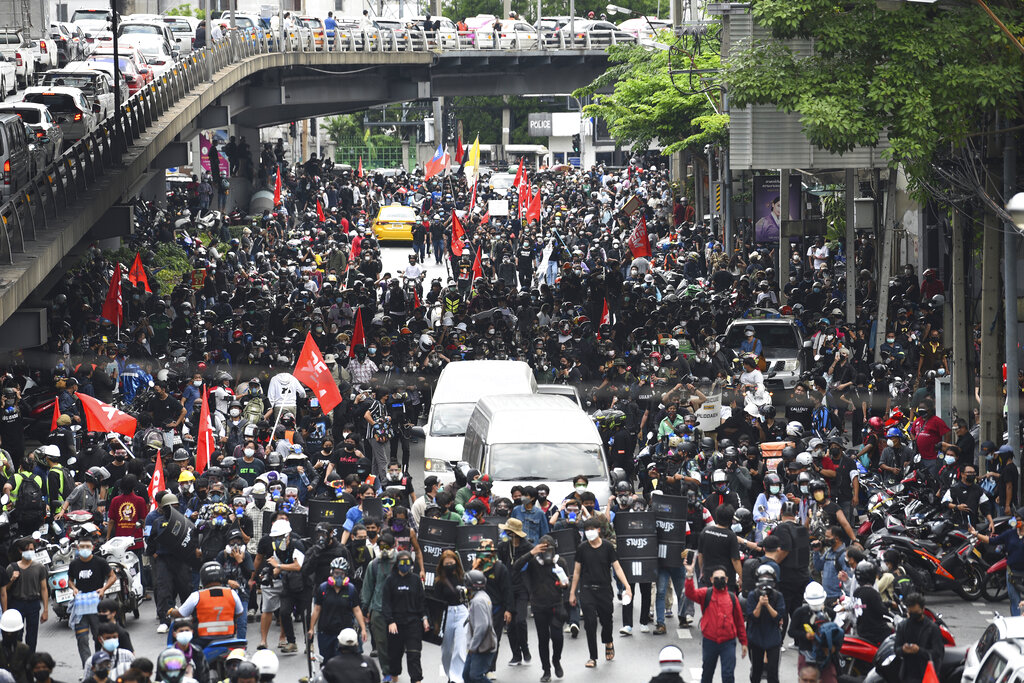
Anti-government protesters try to control smoke from tear gas fired by riot police during a protest in Bangkok, Thailand, Saturday, Aug. 7, 2021. Photo: Thanachote Thanawikran / APRiot police launch tear gas to anti-government protesters during a protest in Bangkok, Thailand, Saturday, Aug. 7, 2021. Photo: Thanachote Thanawikran / APAnti-government protesters march on a road during a protest in Bangkok, Thailand, Saturday, Aug. 7, 2021. Photo: Thanachote Thanawikran / AP
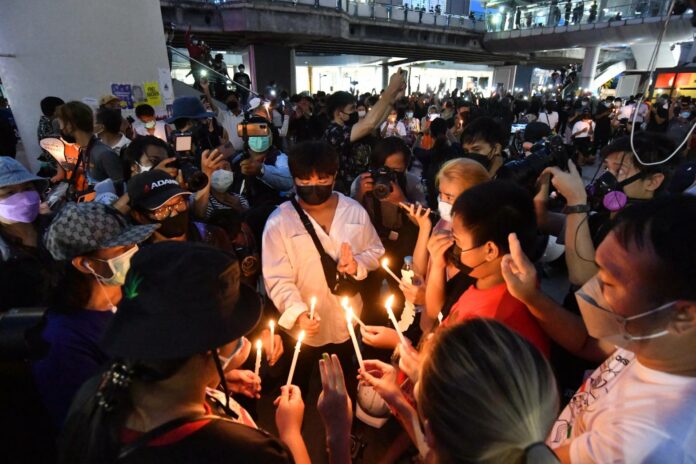
Pro-democracy supporters light candles or shine their mobile phone lights during a protest in Bangkok, Thailand, Tuesday, Aug. 3, 2021.
Political protests have resumed over the past few weeks despite unprecedented upsurge in the number of COVID-19 daily deaths and infections. Friday saw over 21,000 new daily infections and 191 deaths.
All protesters want Prime Minister Gen. Prayut Chan-o-cha to resign for the COVID-19 management meltdown. But some also want to pursue their year-long goal of monarchy reform if not more.
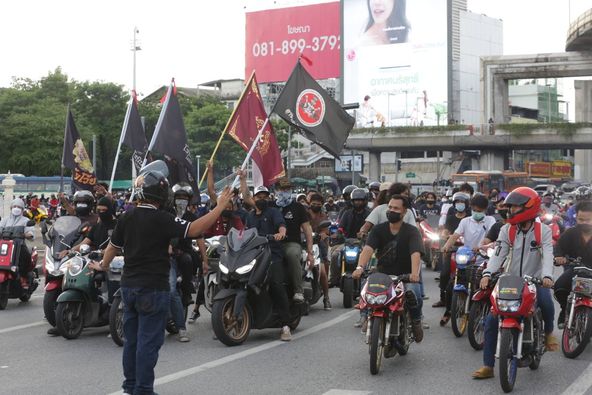
Leading the first group is veteran political activist Sombat Boonngam-anong who devised the “car mob” protests last month in order to minimize possible COVID-19 infections while making their anti-Prayut presence known on the streets. Sombat told me last week that it’s imperative that Prayut leave now to prevent further COVID-19 public health disaster and economic ruins despite the fact that there’s no viable or even visible replacement that could assure the public that whoever replaces Prayut will be more competent. Sombat’s rationale, shared by quite a few, is that you cannot possibly get a dumber leader than Prayut even if you try.
Then there’s the second group of political protesters which is more diverse. On one hand you have monarchy-reform activist Arnon Nampa, who gave a rousing speech on Tuesday marking the first year since the issue of monarchy reform was raised in public by no less than himself a year ago on Aug 3, 2020. Arnon himself is more willing to take risks and unlike Sombat who told me he’s “afraid of COVID-19,” Arnon wrote on his Facebook over a month ago that if you end up getting infected by COVID-19 for joining political protests, so be it.
Motorists assembling Aug. 1, 2021 at Victory Monument to call for Gen. Prayut Chan-o-cha to resign over COVID-19 mismanagement.
Two tangible outcomes over the past 12 months of calls for monarchy reforms are: over a hundred people, including Arnon, have been charged with lese-majeste and social media have become bold in discussing negative aspects of the monarchy, real or imagined, particularly on Twitter.
By comparison, Arnon, who warns about growing republicanism sentiment if the monarchy institution fails to reform, is not militant compared to another group, Free Youth.
Free Youth is back and called for a march from Democracy Monument to the Grand Palace this afternoon (Saturday) at 2pm. Marching, or trying to march, to the Grand Palace is highly controversial – at least to die hard royalists and ultra-royalists.
Police are more willing to use force and they’ve warned on Friday that they will take all necessary measures to prevent the protesters from getting close to the Grand Palace.
When protesters tried to march there back in February, they were blocked at Sanam Luang and police violently dispersed the demonstrators. My most watched video clip, 3.7 million views, was captured on that night after riot police managed to cordon off most reporters and cameraman. I was “fortunate” to see what the police didn’t want others to see. What I saw of an ugly beating of a lone protester by around ten police officers by baton. It was savage and that’s why it was retweeted on Twitter by others over 910,000 times.
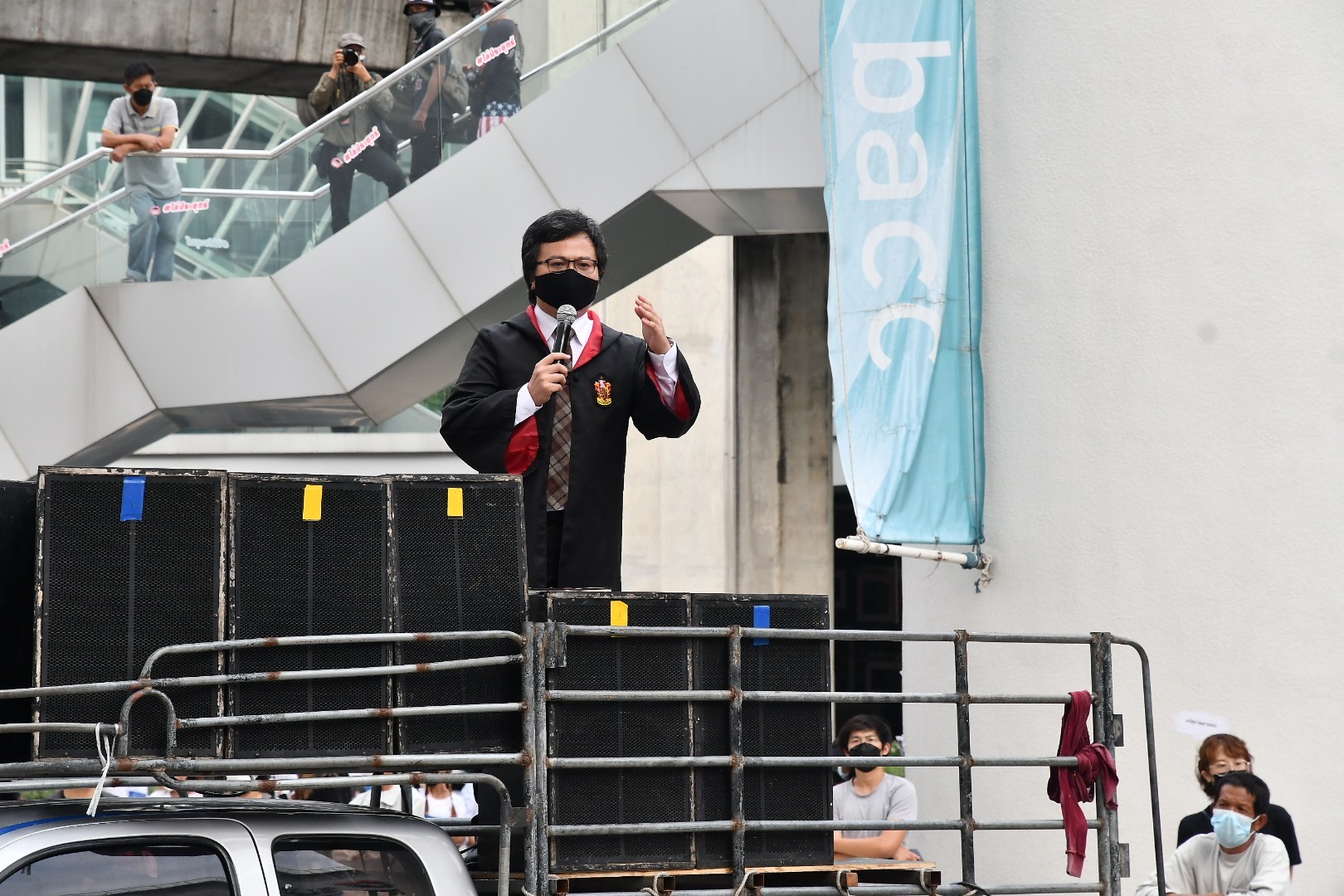
Wearing Gryffindor robes, human rights lawyer and activist Arnon Nampha speaks to monarchy reform demonstrators Aug. 3, 2021 at Pathum Wan Intersection at a Harry Potter-themed protest.
A key member of the group, “Uaw Free Youth” wrote a defense on why protesters have to march to the palace. Uaw said it’s because Thailand’s only COVID-19 vaccine factory, Siam Bioscience, is owned by the crown and the factory has failed to produced the amount of vaccine originally anticipated, leading to a delay of inoculation programme. “We cannot wait,” Uaw wrote on Friday.
Now, not only ultra-royalists and police have become incinerated by today’s planned protest, a leading ultra-royalist has even accused Free Youth of willifully wanting to spread coronavirus by calling for the demonstration.
Warong Dechgitvigrom, leader of Thai Phakdee Party, wrote on Thursday that today’s demonstrators are using “biological weapons – which is spreading COVID-19 because their assessment was that at their age, if they become infected they won’t develop severe symptoms [because they are young] but they seek to spread [the virus farther] and use it as a pretext to undermine the government and the monarchy.”
Make it what you will but Free Youth on the same day instructed the demonstrators through its social media to also carry with them rotten eggs and fermented fish gravy (pla rah) in a sign that things will at least turn smelly if not ugly and violent.
More mainstream activists like former redshirt leader Nattawut Saigua said he will not join Free Youth’s protest march this afternoon but will join the “car mob” on Sunday instead. This is a sign that even some protest leaders are still uncomfortable touching the monarchy issue and just want to kick Prayut out.
Free Youth seems to want to let off some adrenalin but beyond that, their biggest challenge is not battling with anti-riot police but to win more hearts and minds to support their political agenda.
With COVID-19 ravaging Thailand and potential spread of virus at the protest site, their timing is far from ideal.