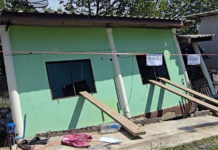
CHIANG RAI — 19 March 2026, A magnitude 3.0 earthquake struck Mae Suai district in northern Thailand early on Thursday, with tremors felt across several areas in Chiang Rai and parts of neighbouring Chiang Mai, officials said.
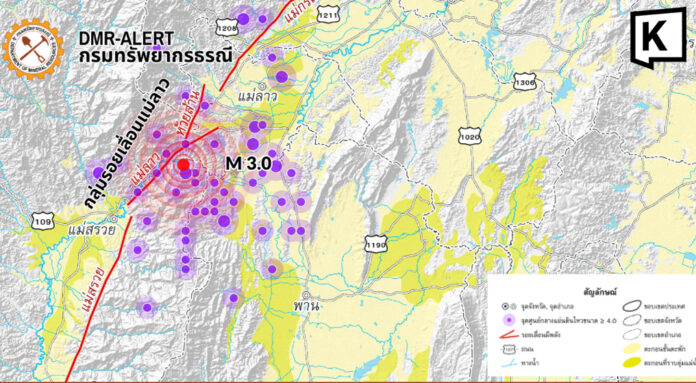
The Department of Mineral Resources’ Earthquake Operations Centre reported that the quake occurred at 05:31 at a depth of 2 kilometres in tambon Mae Suai, Mae Suai district.
The tremor was attributed to movement along the Mae Lao fault group, which runs in a northeast-southwest direction and is characterised as a left-lateral strike-slip fault.
Residents in Mae Suai, Phan and Mueang districts of Chiang Rai, as well as San Sai district in Chiang Mai, reported feeling the shaking.
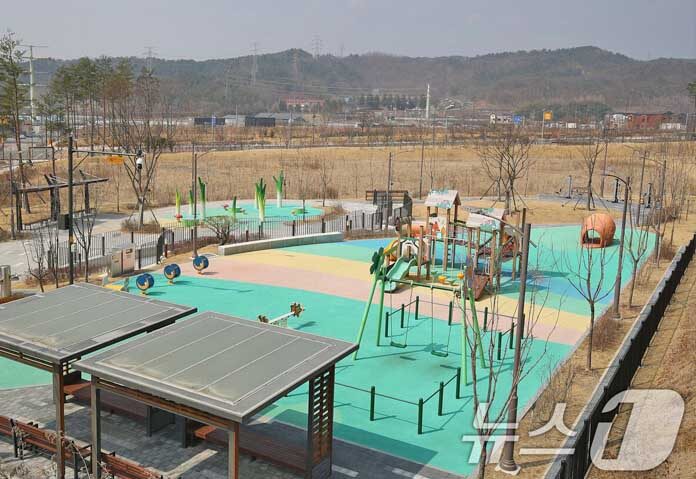
The playground was located about 1.5km away from a military shooting range, and a shooting drill had taken place at the time of the incident, authorities said. Officials say they are investigating if her injury was due to the live-fire exercise. The range, built in 1995, is equipped with protective barriers to catch bullets, according to news site the Korea Herald. /뉴스1/
SOUTH KOREA — 19 March 2026, South Korea’s military has suspended all live-fire drills involving small arms, including rifles and handguns, after a young girl was struck by a suspected stray bullet at a playground near a school in Daegu.
According to BBC News, the victim, a first-grade elementary school student, was taken to hospital after being hit near the neck on the afternoon of 16 March. She has since been discharged and allowed to return home.
Authorities said the playground is located about 1.5 km from a military firing range, where a live-fire exercise was taking place at the time. An investigation is underway to determine whether the girl’s injury was caused by the drill.
Local outlet The Korea Herald reported that the shooting range, built in 1995, is equipped with protective barriers designed to stop bullets. While live-fire military exercises across the country are generally conducted without incident, rare cases involving civilians have occurred.
In 2020, a female golf caddie in South Jeolla province required emergency surgery after being struck in the head by a stray bullet from a nearby military range.
More recently, the military also suspended live-fire drills and training flights last year after a fighter jet accidentally dropped bombs on a village in Pocheon, injuring nearly 30 civilians.
A viral video showing a group of monks riding a high-speed water attraction at Kham Somboon Beach has sparked widespread debate online, drawing nearly 8 million views.
The clip shows several monks seated on a banana boat-style ride shaped like a colourful car, being pulled at speed across Bueng Khong Long by a jet ski. The unusual scene quickly gained traction on social media, prompting mixed reactions, with some users amused and others criticising the behaviour as inappropriate.
On 18 March, a 65-year-old operator of the water attraction at Kham Somboon Beach said the incident took place shortly after noon the previous day. He said a group of five monks approached his shop and asked to try the ride, saying they wanted the experience “once in a lifetime.”
The operator said the monks, believed to be from Sakon Nakhon, were accompanied by one layperson. They paid 600 baht for a single round lasting about 10 minutes, which included a scenic ride and photo-taking before being towed at higher speed across the lake.
After the ride, the group returned to shore and left without further activities, he added.
The incident has led to calls from local residents for authorities to investigate the monks’ identities and temple affiliations, with some arguing the behaviour could affect the image of Buddhism.
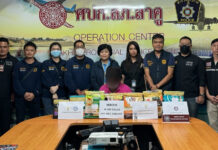
KHON KAEN — 18 March 2026, Thai immigration police have arrested a Chinese national wanted for fraud involving about 500 million baht, after tracking him to a remote tattoo ritual site in northeastern Thailand, officials said.
The suspect, identified only as Zhang, was apprehended while hiding at a sak yant (sacred tattoo) compound in a forested area along the border of Khon Kaen and Maha Sarakham provinces.
Immigration Bureau Region 4, working with provincial investigation police and international authorities, carried out the arrest following a request from Chinese officials seeking his extradition to face fraud charges.
Police said the man was accused of operating a company used to defraud numerous investors of large sums of money before fleeing to Thailand.
Investigators located him in a secluded riverside area along the Chi River, far from nearby communities. He was found waiting to undergo a tattoo ritual, believing it would bring him luck and help him evade arrest.
During questioning, the suspect admitted he had overstayed his visa and was aware of the charges against him in China. Immigration records showed he had remained in Thailand illegally for 331 days.
He has been charged with overstaying his permitted stay and was handed over to investigators at Muang Khon Kaen police station for legal proceedings, while further action related to the fraud case is expected.
Differences in fuel composition help explain why petrol prices in Thailand can appear lower than in Cambodia, according to a Cambodian energy executive responding to online debate.
Tea Siam, chairman and founder of Peace Petroleum, said the gap is largely due to the types of fuel sold in each country rather than simple pricing differences.
In a Facebook post on 16 March, he explained that Thailand widely uses blended fuels such as gasohol and biodiesel, including Gasohol 91, Gasohol 95, E20, E85 and diesel B7/B20. These fuels are mixed with ethanol or biodiesel, which can be produced from crops like sugarcane or cassava, helping reduce costs.
By contrast, Cambodia mainly uses conventional fuels such as 92 and 95 gasoline and standard diesel, which do not include such blends and therefore tend to be priced higher.
“The base fuel is similar, but blending with ethanol or biodiesel lowers the cost,” he said, noting that such fuels may lead to slightly higher consumption and may not suit older vehicles without modification. However, most modern cars can use blended fuels.
He added that adopting such fuel systems requires significant infrastructure, including refineries, domestic ethanol production and large-scale blending facilities — factors that Cambodia currently lacks.
Tea Siam said the comparison has led to misconceptions, stressing that Cambodia’s fuel prices are not unusually high, but that some countries are able to lower retail prices through alternative fuel blending.
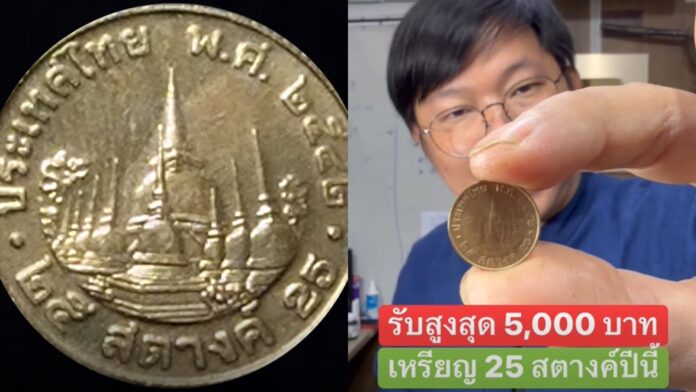
A small coin with big value is making waves online after a local shop offered up to 5,000 baht for a rare 25-satang coin — about 2 million per cent above its face value.
Panan Jewellery posted a video announcing it is buying 25-satang coins, but with one key condition: the coin must be minted in 1999 (B.E. 2542).
“Just a 25-satang coin from 1999 can be worth up to 5,000 baht. If you have one, send us a photo for appraisal,” the page admin said.
The specific coin features a portrait of Bhumibol Adulyadej on the front and the Phra Borommathat Chedi at Wat Phra Mahathat Woramahawihan on the reverse. Made from aluminium bronze, the coin has a distinctive golden-yellow colour.
Collectors prize the 1999 edition due to its limited production. The Treasury Department minted only around 10,000 coins that year, compared with more than 100 million coins in typical years.
The post has sparked interest among netizens, with many checking their old coin jars in hopes of striking small, but valuable change.
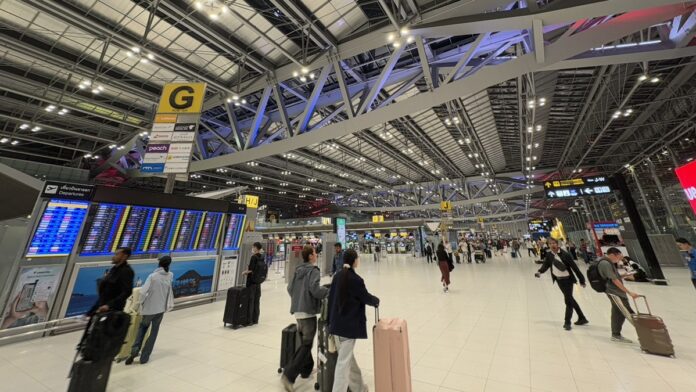
BANGKOK — More than 1,000 flights from Middle Eastern airlines to Thailand have been cancelled since late February, as regional conflict and rising oil prices disrupt aviation operations, according to Aeronautical Radio of Thailand.
Surachai Nooprom, acting president of the state enterprise, said the cancellations have had a significant impact on flight volumes in Thai airspace. The disruptions began on 28 February and account for around 3% of total flights.
The impact has been most pronounced at Suvarnabhumi Airport, where more than 600 flights were cancelled, followed by Phuket International Airport with over 400 cancellations. Other affected airports include Krabi, Chiang Mai and Don Mueang.
The cancellations are linked to ongoing tensions in the Middle East, which have affected flight routes between Europe, the Middle East and Asia. Airlines have also been adjusting fares upward in response to rising fuel costs.
Despite the disruptions, the overall aviation outlook remains positive, though growth is expected to slow. Flight volumes in 2026 are projected to increase by no more than 3% compared to 2025, depending on how the situation evolves.
Surachai said authorities are closely monitoring developments, including possible airspace closures, route adjustments and global economic factors that may affect the aviation sector.
Volatility in global oil prices could further increase airline operating costs and weigh on long-term travel demand, he added.
The agency affirmed its readiness to manage air traffic efficiently and accommodate changes in flight patterns as the situation develops.
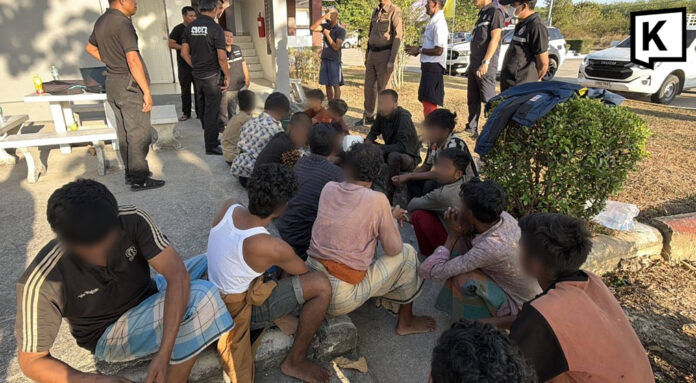
SONGKHLA — 18 March 2026, Sixteen Bangladeshi migrants were rescued from a rented room in southern Thailand after being left without food or water for three days while awaiting onward transport to Malaysia, officials said.
The operation took place in Hat Yai district, where Border Patrol Police Unit 43, together with local security agencies and immigration officers, raided a rental property following reports from residents who had heard cries for help.
Officers found the front door locked with multiple padlocks and had to enter through the back. Inside, they discovered 16 men in a weakened and malnourished condition. The migrants pleaded for food, telling authorities they had not eaten or drunk anything for three days.
All were taken to Thung Lung police station, where they were given food and water.
Through an interpreter, the men said they had travelled from Bangladesh by boat, landing in Phuket after paying brokers about 96,000 baht each. They were then transported by pickup truck and were being held in Songkhla before being smuggled onward to Malaysia for work.
Authorities said the case highlights a suspected human trafficking network. Investigations are under way to identify those responsible and proceed with legal action.
An officer involved in the rescue said the scene was distressing, noting that the migrants had been left in inhumane conditions without basic necessities for several days.
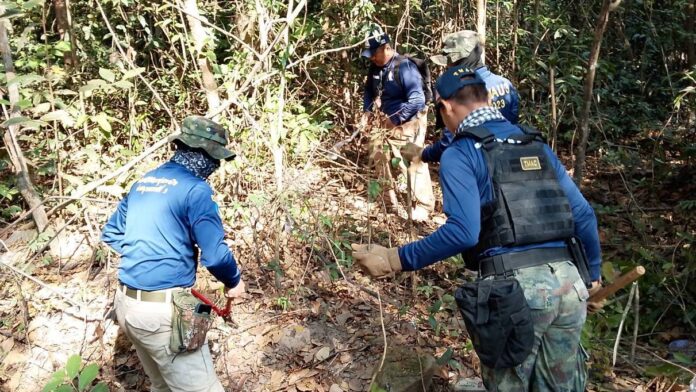
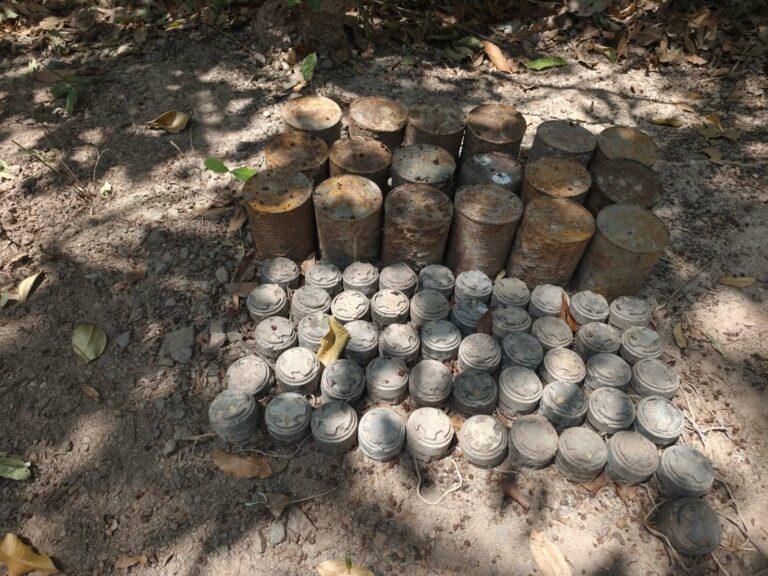
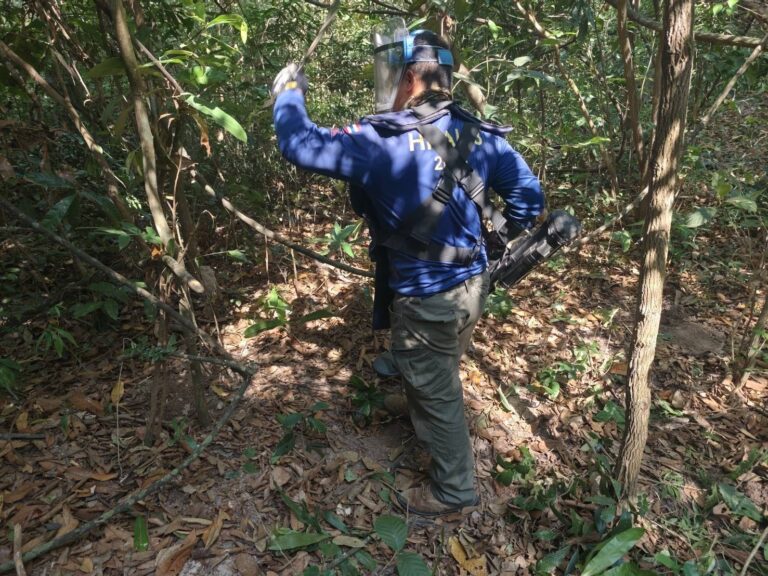
SURIN — The Royal Thai Armed Forces Headquarters has uncovered more than 300 landmines during ongoing clearance operations along the Thai–Cambodian border in Kap Choeng district, as efforts continue to secure the area for local residents.
On 17 March, the Thai Mine Action Center under the Royal Thai Armed Forces Headquarters reported progress in demining operations at Ban Dan in tambon Dan, covering two main zones, Sector 1 and Sector 2.
In Sector 1, spanning 172,420 square metres, authorities recently cleared an additional 686 square metres without finding new explosives. Since operations began on 10 February, a total of 58,901 square metres — or 34.16% of the area — has been declared safe. However, 65.84% remains at risk. Officials have discovered 269 landmines in this sector, mostly anti-personnel mines.
In Sector 2, covering 171,820 square metres, an additional 494 square metres has been cleared, accounting for 0.29% of the area. Four landmines were recently found, including M16A2 bounding mines, M14 anti-personnel mines and a Type 59 anti-vehicle mine.
Since 3 March, clearance operations in Sector 2 have secured 32,279 square metres, or 18.79% of the area. Authorities estimate that 81.21% — or 139,541 square metres — remains contaminated or suspected to contain landmines. A total of 68 explosive devices have been found in this sector, including M16A1 and M16A2 bounding mines, M14 anti-personnel mines and a Type 59 anti-vehicle mine.
Officials said the operations aim to reduce risks and restore safety for communities living along the border.
Ancient stone faces of Bayon temple, Angkor, Cambodia
Angkor, home to the famed Angkor Wat, was one of the most populous urban centres in the world during the 13th century, with an estimated 700,000 to 900,000 residents, according to research cited by Silpawattanatham.
The findings, based on a study published in Science Advances in May 2021, suggest that the medieval city in northwestern Cambodia rivalled or exceeded the population of many modern cities. The estimate surpasses, for comparison, the population of Boston, which had around 693,000 residents in 2019.
The study, titled “Diachronic modeling of the population within the medieval Greater Angkor Region settlement complex,” combined three decades of archaeological data with advanced technologies, including LiDAR (Light Detection and Ranging), radiocarbon dating and machine learning algorithms.
Angkor Wat, Cambodia
Researchers used LiDAR scanning to map the broader Angkor landscape beyond its central monuments, revealing previously hidden infrastructure such as roads, canals and wooden structures. The technology also enabled analysis of terrain variations, helping identify features such as reservoirs and settlement patterns.
Alison K. Carter, a co-lead researcher from the University of Oregon, said the technology allowed the team to better understand the city’s topography and reconstruct its development over time.
The results indicate that Angkor’s population peaked in the 13th century, making it one of the largest cities globally in that era. Researchers also noted that the methodology could be applied to other archaeological sites.
Historical studies suggest Angkor developed as an agricultural and trade-based city. Early inhabitants cultivated rice and other crops, while population density later increased in the urban core.
The city centre was home to elites, artisans, performers, priests and teachers who played key roles in governance and cultural life. Meanwhile, communities along roads and waterways were believed to engage in trade.
Bayon Temple with giant stone faces, Angkor Wat, Cambodia
Population estimates for Angkor have long been debated. In the 19th century, French explorer Henri Mouhot cited large figures for the Khmer Empire, though without systematic calculation. Later, archaeologist Bernard-Philippe Groslier estimated around 1.9 million people in the wider Angkor region during the 12th century, while a 2001 estimate by E. Lustig suggested about 750,000 residents.
Miriam T. Stark, a co-author of the latest study, said understanding Angkor’s population and urban system could provide insights for modern city planning, particularly in the context of climate change.
As a tropical city that endured for centuries despite political and environmental shifts, Angkor offers lessons on the limits and resilience of urban development, the study noted.