


























35 C
Bangkok
Friday, June 19, 2026
Home Blog Page 1070

As Tokyo Olympics Approach, Virus Worries Rise in Japan

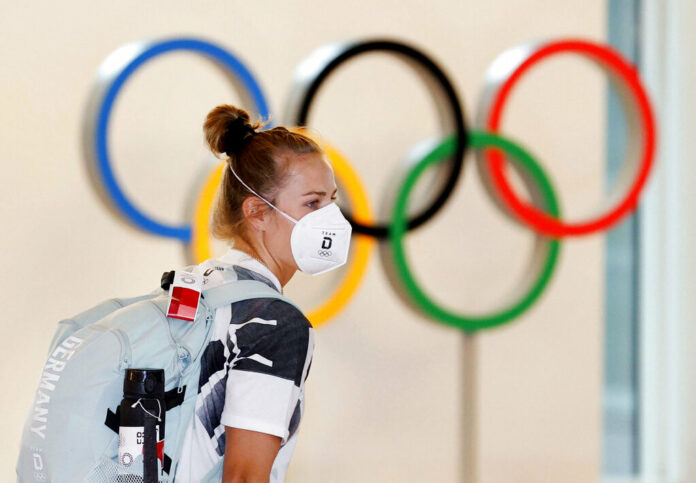
A German athlete, wearing face mask, walks past the Olympic rings display on their arrival at Haneda airport in Tokyo, Thursday, July 1, 2021. Photo: Kyodo News via AP

TOKYO (AP) — The pressure of hosting an Olympics during a still-active pandemic is beginning to show in Japan.

The games begin July 23, with organizers determined they will go on, even with a reduced number of spectators or possibly none at all. While Japan has made remarkable progress to vaccinate its population against COVID-19, the drive is losing steam because of supply shortages.

With tens of thousands of visitors coming to a country that is only 13.8% fully vaccinated, gaps in border controls have emerged, highlighted by the discovery of infections among the newly arrived team from Uganda, with positive tests for the highly contagious delta variant.

As cases grow in Tokyo, so have fears that the games will spread the virus.

“We must stay on high alert,” Prime Minister Yoshihide Suga told reporters on July 1. Noting the rising caseloads, he said “having no spectators is a possibility.”

Seiko Hashimoto, president of the Tokyo organizing committee, agreed.

“It’s not that we are determined to have spectators regardless of the situation,” Hashimoto said Friday.

Organizers, the International Olympic Committee and others are expected to meet this week to announce new restrictions because of the fast-changing coronavirus situation.

Amid the criticism, Suga went to Tokyo’s Haneda international airport June 28 to inspect virus testing for arrivals. He vowed to ensure appropriate border controls as a growing number of Olympic and Paralympic athletes, officials and media begin entering Japan for the games.

On Monday, Tokyo confirmed 342 new cases, the 16th straight day of an increase. On Saturday, the capital reported 716 cases, highest in five weeks.

At a meeting of government advisers, experts warned of the possibility of infections exploding during the games, projecting daily caseloads exceeding 1,000. They said that would severely strain health care systems. In a worst-case scenario, there could be thousands of infections a day, causing hospitals to overflow, they said.

Ryuji Wakita, director-general of the National Institute of Infectious Diseases and the head of a government COVID-19 advisory board, urged tighter border controls to detect and isolate infected arrivals at airports to prevent infections from spreading from Tokyo to the suburbs.

In a case that has shocked many in Japan, a member of the Ugandan team tested positive upon arrival June 19 at Narita International Airport and was quarantined there. The rest of the nine-member team was allowed to travel more than 500 kilometers (300 miles) on a chartered bus to their pre-Olympics camp in the western prefecture of Osaka.

Days later, a second member of the team from East Africa tested positive for the virus, forcing seven town officials and drivers who had close contact with them to self-isolate. The team itself is isolating at a hotel. Health officials said both infected Ugandans had the delta variant.

On Saturday, an athlete from Serbia also tested positive, causing the cancelation of his team’s training in the central city of Nanto. The government also has acknowledged that four other people arriving for the Olympics tested positive after entering the country earlier this year.

Experts say the cases show that Japan’s border health controls can be easily breached.

“There will be more people coming in. … We should use this as a lesson so that similar problems won’t be repeated elsewhere in Japan,” Osaka Gov. Hirofumi Yoshimura told a recent regional governors’ meeting where leaders adopted an urgent request for tighter border controls.

Under revised guidelines on health measures sent to 530 municipalities hosting Olympic training, airport officials will isolate an entire group if any member tests positive, and they will stay at designated facilities until the athletes’ village opens July 12. Hosting towns can request guests to stop training and isolate themselves until they clear contact tracing and virus tests.

Dozens of municipalities in Japan have canceled their hosting arrangements because of virus worries, and many of them decided to use those facilities as vaccination sites.

In Tokyo, infections are spreading among the young and middle-aged who are largely unvaccinated. The more serious cases requiring hospitalization are gradually replacing the elderly, 26% of whom are now fully vaccinated, according to experts.

Japan’s fully vaccinated rate of 13.8% is slightly above the world average of 11.3% but low compared with 47.4% in the United States and 49.5% in the U.K., according to the U.S. Centers for Disease Control and Prevention and Our World in Data.

Adding to the worries is uncertainty about Japan’s vaccination campaign.
AP21182220635003
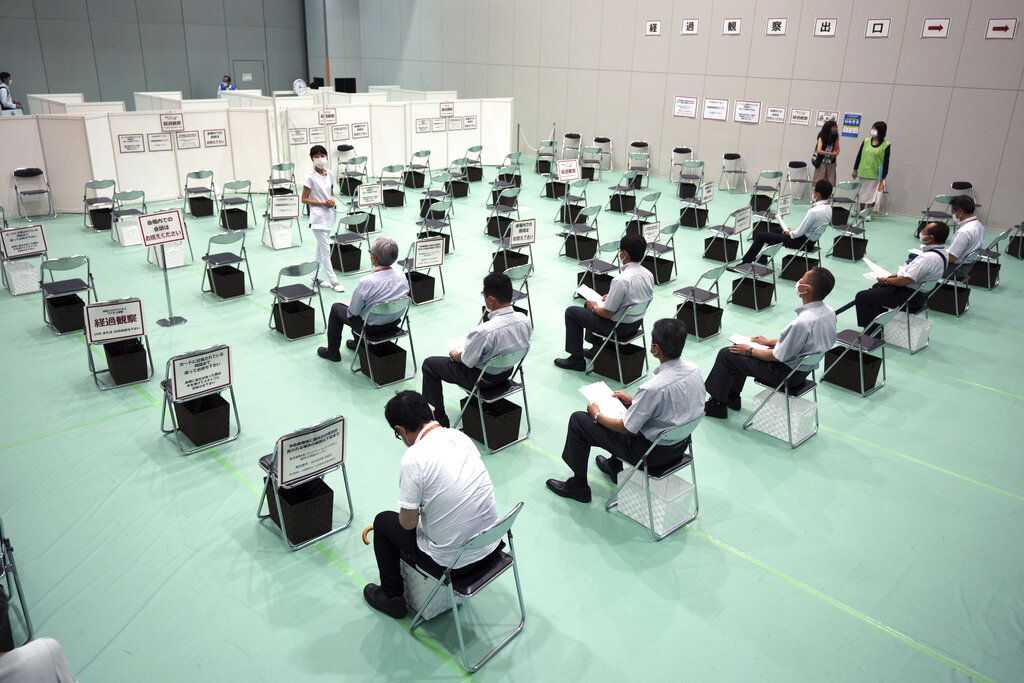
Tokyo Metropolitan Government employees rest after receiving the Moderna’s COVID-19 vaccine shot at a newly opened vaccination center at their government building Thursday, July 1, 2021, in Tokyo. Photo: Eugene Hoshiko / AP

\Workplace inoculations began in mid-June, with thousands of companies applying to vaccinate employees. But the government then indefinitely halted taking new applications for workplace and large-scale vaccination sites due to tight vaccine supplies.

“The progress exceeded our expectations,” said vaccinations minister Taro Kono, noting that daily shots have likely reached 1.2 million or more. He said Japan will receive only one-third of the Pfizer-BioNTechPfizer vaccine supply it had hoped to receive by late July.

“Confusion is spreading across Japan,” because of this slowdown, said Kamon Iizumi, the Tokushima governor who also heads the National Governors’ Association.

A vaccination center in Kagawa had to suspend shots for 30,000 people, and plans were put on hold for 6,500 companies in Gifu, in central Japan. Other areas including Osaka, Kobe and parts of Tokyo also were forced to suspend planned vaccinations from this week.

“What a disappintment,” said Yukio Takano, head of Tokyo’s Toshima district. “We have worked so hard to accelerate the rollouts and now we have to put on the brakes. … What was the rush for?”

Japan began vaccinating medical workers in mid-February and the elderly in mid-April. Despite initial delays due to bungled reservations and shortages, the pace picked up in mid-May when vaccine imports stabilized and staff was secured to meet a primary target of fully vaccinating all 36 million elderly by the end of July.

Suga set up military-run mass vaccination centers in late May and added workplace and college campus venues to accelerate the progress.

On June 21, Japan eased its third state of emergency to less-stringent measures that focused on shorter operating hours at bars and restaurants in Tokyo and other metro areas until July 11.

Experts suggest, however, that a resurgence might require another emergency declaration during the Olympics. If so, organizers may have to reconsider their current limit of 10,000 people or 50% capacity at venues to perhaps barring all spectators.

Kengo Sakurada, president of Sompo Holdings and the head of an influential business lobby, said on June 30 that the current vaccination rate is not enough to hold a safe Olympics.

He said he supports having no spectators for events because the damage from a worse outbreak would be far greater.

“I would take the safer option,” he said.

Story: Mari Yamaguchi

Advertisement

CP Foods committed to fight deforestation across supply chain 

Charoen Pokphand Foods PCL (CP Foods) vows to protect, restore and preserve biodiversity as well as combat deforestation across its supply chain through collaboration with suppliers in sourcing materials from sustainable sources and its mission towards the “low-carbon organization” and decarbonization for food security and good health of global consumers. 

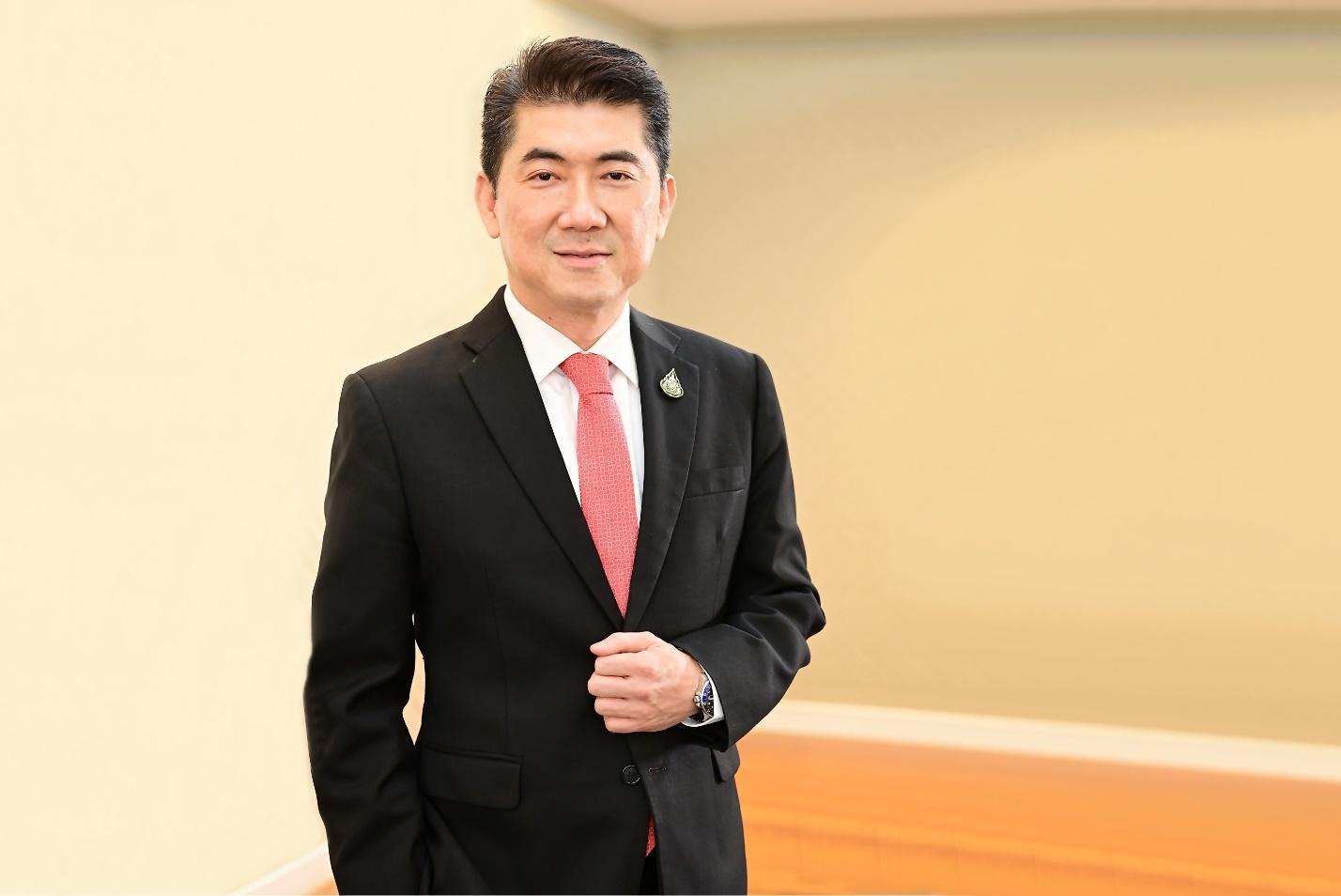
Mr. Prasit Boondoungprasert, Chief Executive Officer of CP Foods

Mr. Prasit Boondoungprasert, Chief Executive Officer of CP Foods, said that CP Foods has announced the Biodiversity and Zero Deforestation Commitment. To be achieved by 2030, the Commitment affirms the Company’s social responsibility which has been exercised through the “Balance of Nature” strategy, one of 3 pillars towards sustainability strategies the “Food Security, Self-Sufficient Society and Balance of Nature”. The commitment concerns all parties throughout the supply chain, binding all to produce food without harming the environment and support the United Nations Sustainable Development Goals (SDGs). 

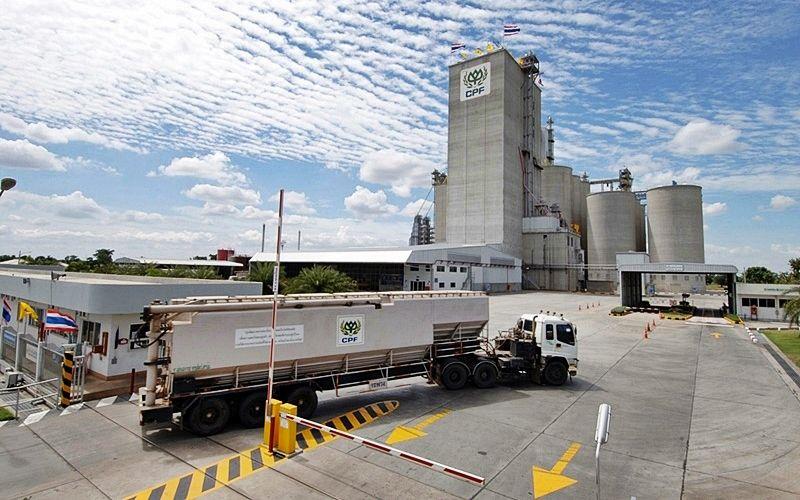
The Commitment entails CP Foods and its subsidiaries that operate feed mill, animal business (livestock and aquaculture) and food business (food production and distribution) as well as suppliers and farmers that supply agricultural raw materials such as maize, fish meal, palm oil, soybeans and tapioca. CP Foods, its suppliers and farmers have joined hands in tackling forest encroachment through a responsible procurement system and a transparent traceability system. 

CP Foods today accomplishes its goal in achieving the 100% traceability of maize, back to the plantation fields that have legal land deeds and are not in forest areas. The system has been supported by a satellite image technology, to raise confidence in its procurement. Meanwhile, CP Foods has also implemented the “Self-Sufficient Farmers, Sustainable Corn Project” to support and share knowledge with maize growers in Thailand, to equip them with academic knowledge that supports less use of chemicals and helps combat impacts on the climate. 

Charoen Pokphand Foods PCL 1

Meanwhile, CP Foods has developed and exercised the Biodiversity Management Plans in monitoring suppliers’ traceability efficiency, to assure that its products do not contain materials from encroached forest areas. CP Foods has also assessed suppliers’ operations and traceability practices.

CP Foods realizes the importance of natural resources and preservation of biodiversity, as they are the foundation of the food supply chain and food security. The Biodiversity and Zero Deforestation Commitment was announced because of this realization,” Mr. Prasit said.  

Charoen Pokphand Foods PCL 3He added that CP Foods is committed to combat deforestation as the process harms its goal in lowering carbon emissions. Trees store carbon, protect soil, and prevent the ecosystem from destruction or degradation. The Commitment emphasizes the fight against deforestation from the beginning of its supply chain. Meanwhile, CP Foods has taken part in conserving, protecting and rehabilitating terrestrial and mangrove forests to increase biodiversity through several projects including the CPF Rak Ni-Ves Project at the Pasak watershed, Khao Phraya Doen Tong, in Lop Buri province; and the CPF Grow-Share-Protect Mangrove Forestation Project that covers mangrove forestation efforts in Rayong,  Samut Sakhon, Chumphon, Songkhla and Phang Nga provinces./

Advertisement

Evacuations Ordered After Samut Prakan Chemical Factory Explodes

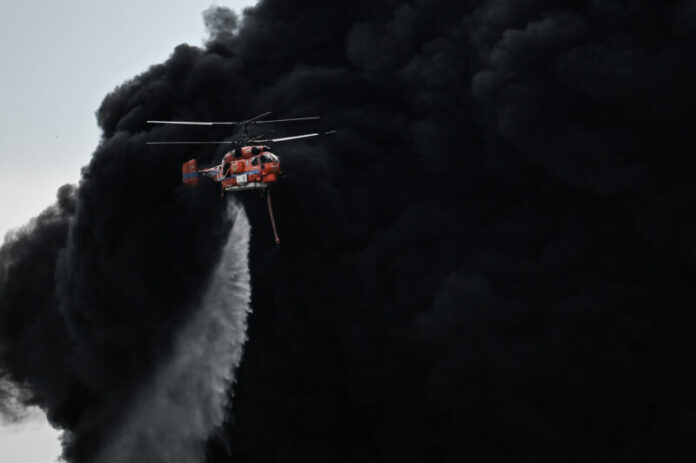
A helicopter drops a fire-retardant in a massive factory fire in Samut Prakan province, Thailand, Monday, July 5, 2021.

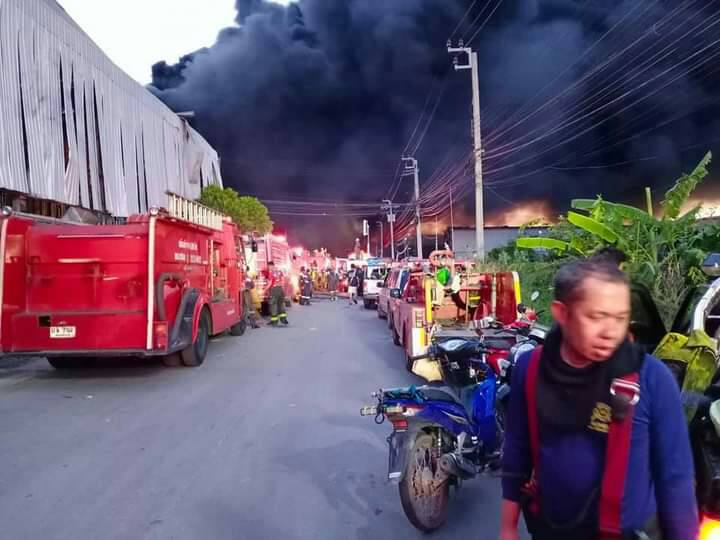
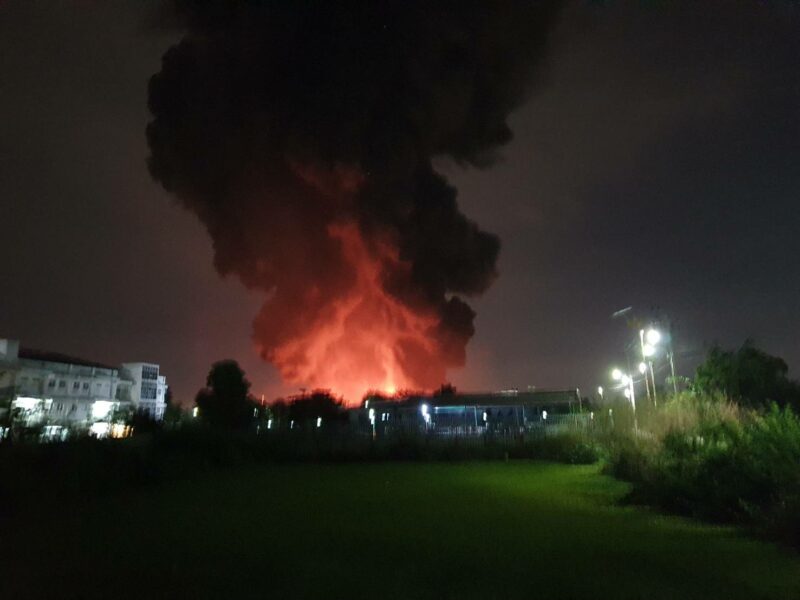
BANGKOK (AP) — A massive explosion at a chemical factory on the outskirts of Bangkok early Monday killed at least one person, injured dozens more and damaged scores of homes, while prompting the evacuation of a wide area over fears of poisonous fumes and the possibility of additional denotations.

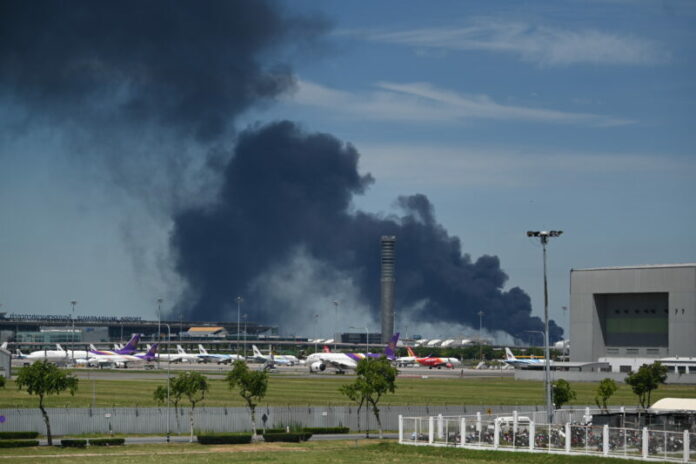
The fire broke out at around 3 a.m. at a foam and plastic pellet manufacturing factory just outside Bangkok near Suvarnabhumi Airport, with the explosion blowing out windows of surrounding homes and sending debris raining from the air.

The blast could be heard for kilometers (miles) and surveillance footage from a nearby house captured the bright flash and boom, followed by the damage to the home and the one next door from the shockwaves.

The main blaze at the Ming Dih Chemical factory had been brought under control by mid-morning, but an enormous tank containing the chemical styrene monomer continued to burn, said local disaster prevention official Chailit Suwannakitpong.

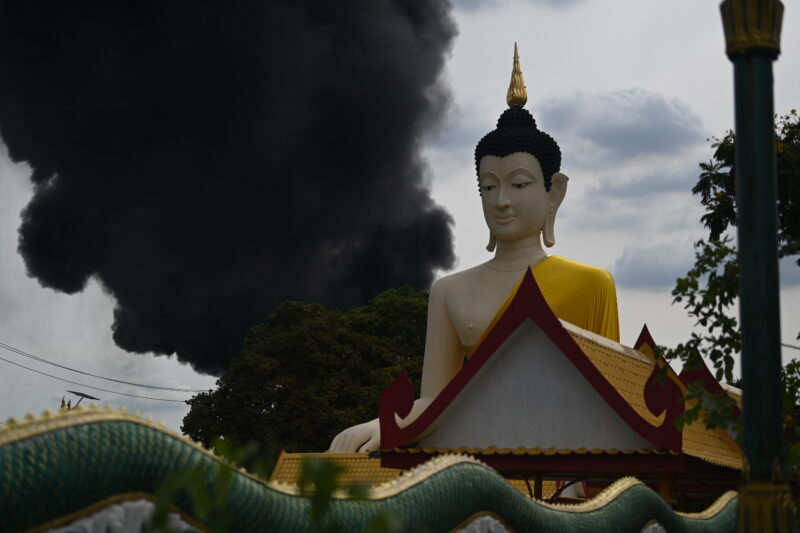
Late in the afternoon, dense clouds of black smoke continued to billow from the site and helicopters tried to navigate close enough to dump fire retardant onto it, initially with little apparent success.

S 12755165 0 e1625481145110Authorities said 62 people had been injured, including 12 involved in the firefighting and rescue efforts, and one person had been confirmed killed.
Styrene monomer, a hazardous liquid chemical used in the production of disposable foam plates, cups and other products, can produce poisonous fumes when ignited. Chailit said officials were trying to move all people out of the area, including doctors and patients from the neighborhood’s main hospital where many of the casualties were initially treated, over fear of the fumes and the possibility of more explosions.

The chemical itself also emits styrene gas, a neurotoxin, which can immobilize people within minutes of inhalation and can be fatal at high concentrations. Last year in the Indian city of Visakhapatnam, a leak of styrene gas from a chemical factory killed 12 people and sickened more than 1,000.

Authorities were carefully monitoring the air in the area around the fire and Pollution Control Department official Thalerngsak Petchsuwan urged anyone remaining in the vicinity to close their doors and windows to avoid inhaling any fumes.

“Those who breathe it in can get dizzy and vomit and it might cause cancer in the long term,” he said.

Firefighters could be seen in photos from Thai media climbing through twisted steel wreckage of the complex’s warehouses to get their hoses close enough to the flames as they fought to control the blaze. The charred body of the only fatality identified so far — a male volunteer rescue worker — lay face down among the wreckage.

The area around the blast is a mixture of older industrial complexes and newer housing developments that were built after the opening of the airport in 2006.

Jaruwan Chamsopa, who lives about 3 kilometers (1.8 miles) from the factory, said the loud explosion in the middle of the night broke her house’s windows, damaged the roof and caused parts of the ceiling to tumble down. She said the windows of every house on her road were broken as well.

“I was shocked when the explosion took place,” she told The Associated Press. “I came out and saw a big fire in the sky.”

She said she and her husband and mother didn’t evacuate until 8 a.m.

“I didn’t realize that it would be such a dangerous chemical that I have to evacuate,” she said. “I am worried because the black smoke reached my house.”

Authorities ordered the evacuation of an area 5 kilometers (3 miles) around the scene and evacuation centers were set up in a school and a government office for those forced from their homes.

Volunteer rescue worker Anyawut Phoampai told Thailand public tv station TPBS that early efforts to find people possibly still in the factory were hampered by the time it took to bring the fire under control.

“The flames are quite high so it takes quite an effort,” he said as the rescue effort was underway.

He said rescuers also fanned out around the area to help people who reported being injured by falling debris.

There was no immediate word on what might have caused the fire in Bang Phli district, and the company was not reachable by phone.

The initial explosion shook the terminal building at Suvarnabhumi, setting off alarms at Bangkok’s main international airport.

Airport officials said in a statement that no flights had been canceled but that it was continuing to monitor the situation and was prepared to “put in place contingency plans in case of emergency.” It said it would not compromise on safety.

_____

Story: David Rising. Associated Press writers Chris Blake, Tassanee Vejpongsa and Chalida Ekvittayavechnukul contributed to this report.

Advertisement

Philippine Military’s Worst Air Disaster Kills 50, Wounds 49

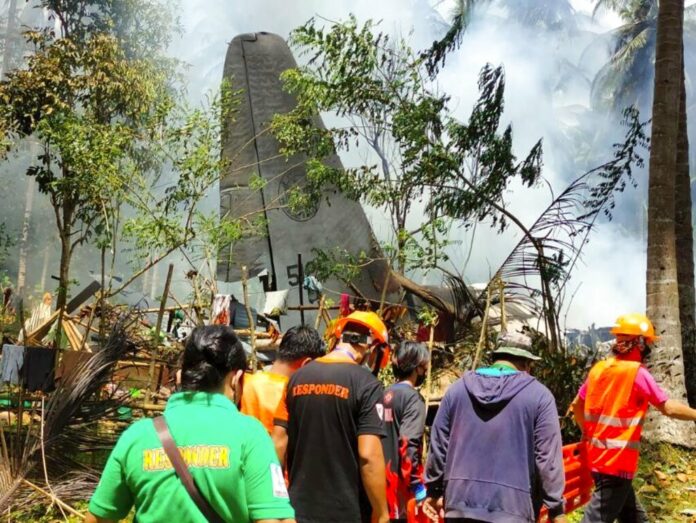
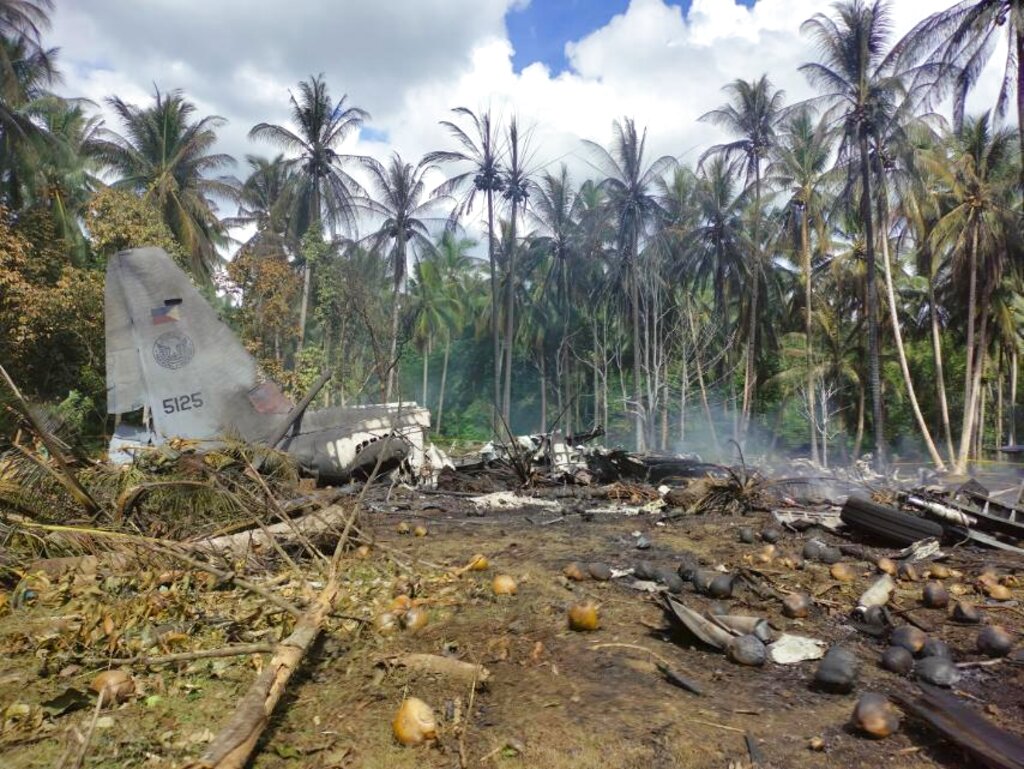
In this photo released by the Joint Task Force - Sulu, rescuers search for bodies from the site where a Philippine military C-130 plane crashed in Patikul town, Sulu province, southern Philippines on Sunday, July 4, 2021. Photo: Joint Task Force-Sulu via AP

MANILA, Philippines (AP) — Philippine troops found the last five dead from the crash of a transport aircraft in the south, raising the death toll to 50 in the military’s worst air disaster, officials said Monday.

The Lockheed C-130 Hercules was carrying 96 mostly combat troops when it overshot the runway while landing Sunday at the Jolo airport in Sulu province, military officials said. It slammed into a coconut grove beyond the airport and burst into flames in a noontime disaster witnessed by horrified soldiers and villagers.

Troops, police and firefighters rescued 49 military personnel, including a few who jumped off the aircraft before it exploded and was gutted by fire. Seven people on the ground were hit by aircraft parts and debris, and three of them died, the military said.

The Lockheed C-130 Hercules was one of two refurbished U.S. Air Force aircraft handed over to the Philippines, Washington’s oldest treaty ally in Asia, as part of military assistance this year.

The aircraft earlier had carried two-star Gen. Romeo Brawner Jr., his wife and three children from Manila to southern Cagayan de Oro city, where he’s set to become the new military regional commander on Monday.

Those who boarded the C-130 in Cagayan de Oro for the flight to Sulu were army troops, many of them newly trained recruits, to be deployed in the battle against Abu Sayyaf militants in the south.

Brawner was stunned to learn the plane he’d just flown on had crashed. “We’re very thankful that we were spared, but extremely sad that so many lost their lives,” Brawner told The Associated Press.

A video taken by troops showed the aircraft landing in clear weather then vanishing beyond the airport. “It vanished, it vanished,” one soldier exclaims. Dark gray smoke later billowed from the crash site in a wooded area as the troops, yell, “It fell, it fell” and let off curses in horror.

“They were supposed to join us in our fight against terrorism,” Sulu military commander Maj. Gen. William Gonzales said. Government forces have been battling Abu Sayyaf militants in the predominantly Muslim province of Sulu for decades.

It was not immediately clear what caused the crash and investigators were looking for the C-130’s black boxes containing the cockpit voice and flight data recorders.

AP21185302500650
In this photo released by the Joint Task Force – Sulu, rescuers search for bodies from the site where a Philippine military C-130 plane crashed in Patikul town, Sulu province, southern Philippines on Sunday, July 4, 2021. Photo: Joint Task Force-Sulu via AP

Regional military commander Lt. Gen. Corleto Vinluan said it was unlikely that the aircraft took hostile fire. Military chief of staff Gen. Cirilito Sobejana told reporters Sunday that “the plane missed the runway and it was trying to regain power but failed and crashed.”

An air force official told The AP that the Jolo runway is shorter than most others in the country, making it more difficult for pilots to adjust if an aircraft misses the landing spot. The official, who has flown military aircraft to and from Jolo several times, spoke on condition of anonymity because of a lack of authority to speak publicly.

President Rodrigo Duterte expanded the military presence in Sulu to a full division in late 2018, deploying hundreds of additional troops, air force aircraft and other combat equipment after vowing to wipe out Abu Sayyaf. The small but brutal group has been blacklisted by the U.S. and the Philippines as a terrorist organization for ransom kidnappings, bombings and beheadings.

Before Sunday, the Philippine air force’s deadliest disaster was a crash in a rice field north of Manila in 1971 that killed 40 military personnel, military historian Jose Custodio said.

A recently delivered S-701 Blackhawk helicopter crashed more than a week ago near Clark freeport, a former U.S. air base, killing all six air force personnel on board.

The Philippine government has struggled for years to modernize its military, one of Asia’s least equipped, as it dealt with decades-long Muslim and communist insurgencies and territorial rifts with China and other claimant countries in the South China Sea.

Advertisement

Blast at Factory Shakes Suvarnabhumi, Area Evacuated

Smoke rises into the air from a factory in Samut Prakan province, Thailand, Monday, July 5, 2021.

BANGKOK (AP) — A massive explosion at a factory on the outskirts of Bangkok early Monday shook an airport terminal serving Thailand’s capital, injured at least 11 people and prompted the evacuation of residents from the area, authorities said.

The fire broke out at around 3 a.m. at a foam and plastic pallet manufacturing factory in a southeastern area just outside Bangkok near Suvarnabhumi Airport.

Firefighters could be seen in photos from Thai media climbing through twisted steel wreckage to get their hoses close enough to the flames as they fought to control the blaze.

Other photos showed nearby homes with their windows blown out and wreckage in the streets, with black smoke billowing over the area even hours later.

535555

Authorities ordered the evacuation of an area 5 kilometers (3 miles) around the scene amid fears that thousands of liters of leaking chemicals may cause more explosions.

Evacuation centers were set up in a school and a government office for those forced from their homes.

Volunteer rescue worker Anyawut Phoampai told Thailand public tv station TPBS that going was slow trying to find people possibly still in the factory.

“We are trying to look for the injured,” he said. “But the flames are quite high so it takes quite an effort.”

He said rescuers were also fanning out around the area to help people who reported being injured by falling debris.

So far, 11 injuries have been reported, including one serious, and people were being taken to a nearby hospital for treatment.

135583 e1625461084336

Hours after the explosion, the the fire department said it was considered under control but that the blaze had not yet been completely extinguished, with one warehouse still in flames.

There was no immediate word on what might have caused the fire in Bang Phli district, and the company was not reachable by phone.

Local media reported that the initial explosion shook the terminal building at Suvarnabhumi, setting off alarms at Bangkok’s main international airport.

Airport officials said no flights had been canceled but offered no other immediate details.

_____

Story: David Rising. Associated Press writers Chris Blake, Tassanee Vejpongsa and Chalida Ekvittayavechnukul contributed to this report.

Advertisement

Opinion: The Uncounted COVID-19 Related Suicides in Thailand

Photo: Prakaifa / Facebook

Daily updates of COVID-19-related statistics saw three consecutive new highs for COVID-19 deaths from Wednesday to Friday. Yet there’s no compilation or report on the number of those who committed suicide due to COVID-19 related situations.

Friday saw a new high of 61 deaths reported. That’s on top of the previous new high of 57 on Thursday and yet another previous new high of 53 deaths on Wednesday.

As for the newly infected: 6,087 new infections were reported on Friday and 5,533 on Thursday. With only 3,638 recovered reported on Friday, it means 2,449 additional beds were needed on Friday alone.

No one is compiling COVID-19-related suicide figures over the past year and a half, however. You won’t be seeing any stats on those who committed suicide due to COVID-19-related stress and destitution.

Nevertheless, the past two weeks saw at least two such cases reported by the media.

Unemployment, underemployment, debt, destitution, stress, depression, and suicide are the invisible realities beneath the COVID-19 iceberg of figures reported daily. Not all suicides are reported as being COVID-19 related unless it’s dramatic.

The past week saw two cases. Last Saturday saw a 30-year-old unemployed singer jump to her death from a third-floor parking garage in the northern part of Bangkok. Yesterday saw a 84-year-old man who took his life in a similar fashion in Bangkok after her daughter, bed-ridden at home, was unable to find a hospital bed after becoming infected and died waiting.

In the first case, Prakaifa Pooldoung was 30, less than a week short of her 31st birthday when she decided to end her life.

Prakaifa has been largely unemployed as a singer and guitarist since March last year.

Her boyfriend, Suwatchai Pornkulwat, said the singer had attempted to commit suicide once before a few months ago, but was saved. He said he thought her girlfriend was doing better after receiving mental health treatment.

Prakaifah’s suicide attracted many to check out her songs on her Youtube channel. A 6-minute video clip she posted on her Facebook page offering moral support to those sharing similar fate went viral posthumously.

“I am a professional singer who has become unemployed for two months now. All my gigs have been cancelled and my income = 0,” she wrote back on May, 20, 2020, or 13 months ago, adding that “it’s terrible because I have to sing everyday” to earn a living.

Prior to the first outbreak, Prakaifa said she has been doing the job for nine years and she “was comfortable” and “there was nothing to worry” until the onset of COVID-19.

Despite her initial positive thinking and watching soap series at home, the period of 13 months that followed eventually took a fatal toll on Prakaifa.

“I stayed at home for so long to the point where I could almost chat with my cat and understand. Damn, I feel so disheartened,” she said, adding that she tried becoming an online VJ.

Her boyfriend said she tried selling noodles, composing songs, but to no avail as she struggled to earn income not just for herself but to support her elderly parents. The suffering of those who committed suicide may be quickly over, but for the loved ones left behind, it’s a new tragic beginning.

The irony is that it took a dramatic suicide to make it into the kind of news that would attract a wider public attention. It’s too late now. Prakaifa is gone for good and this is probably the tip of iceberg of COVID-19-related suicide. It also shows that the middle class are definitely not immune to the economic crisis induced by the coronavirus and the government’s inept management, particularly the ongoing outbreak which is pushing many into bankruptcy or heavy debt.

The only vague reference made by the government’s Center for COVID-19 Situation Administration on growing stress and hopelessness occurred when spokesman Taweesin Wisanuyothin said on television Tuesday that people are “drained emotionally and mentally” and urged for moral support to be given to one another.

Taweesin’s boss, Gen. Prayut Chan-o-cha, seems unable to express empathy and is often all smiles and joking when talking about COVID-19 as the situation deteriorates.

I end this column by translating into English the last passage of the video clip Prakaifa made in Thai.

Posthumously, by Friday, it was viewed over 672,000 times and attracted 1,100 comments, and shared 7,900 times. Many expressed condolences below the clip.

Prakaifa said once she knew she became unemployed, it was no longer funny. It’s tragic to see someone taking his or her own life because the person could no longer bear the pain of the struggle to make both ends meet. Thai health professionals need to work more and be proactive to prevent suicides, particularly at this very difficult economic time.

Here is Prakaifah, in her own words, when she was still optimistic a year ago at the end of her now-viral clip: “I know that at this time, many people are sad and really disheartened. But I believe we shall persevere together. I believe that one day we shall march ahead stronger. So, I want to be one voice of support. Everyone, please take good care and will see you all again when the situation permits. Keep fighting. Su su na!”

Advertisement

Virus Surge Prompts Concern Over ICUs, Vaccine Supply

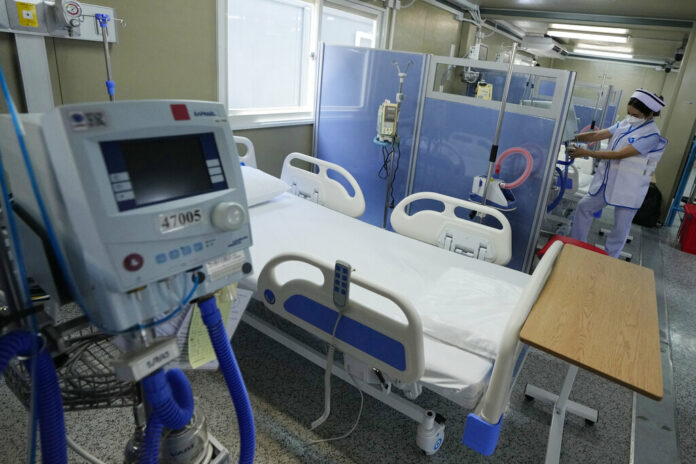
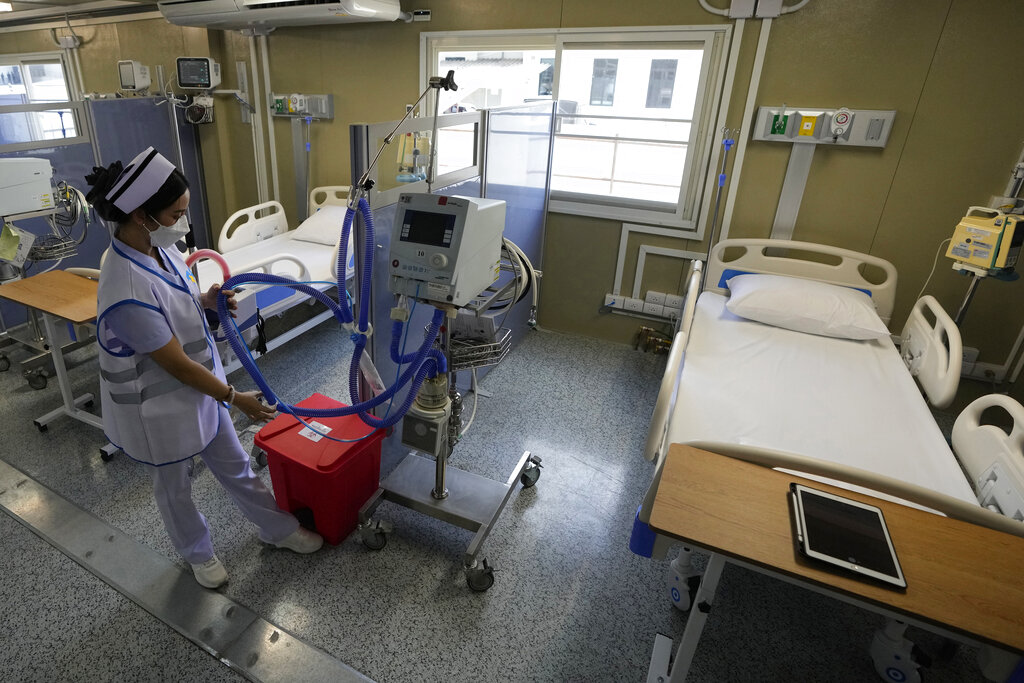
A health worker prepares equipment in a field hospital for COVID-19 patients at the 11th Army Region base in Bangkok, Thailand, Friday, July 2, 2021. Photo: Sakchai Lalit / AP

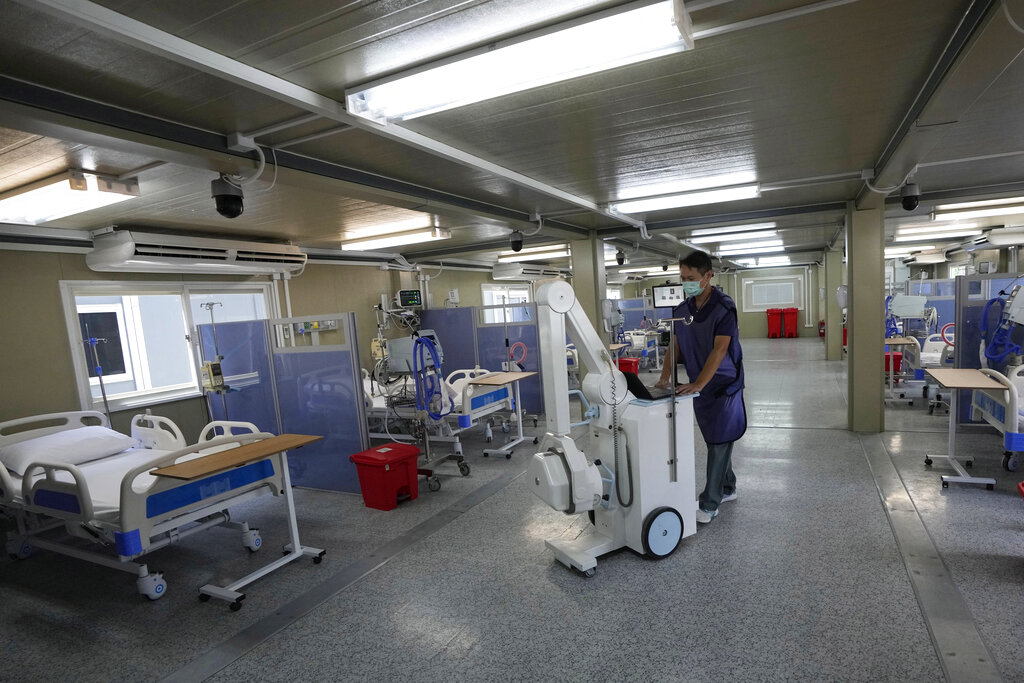
BANGKOK (AP) — Health authorities in Thailand reported over 6,200 new COVID-19 cases on Saturday, setting a record for a third straight day, as concerns mounted over shortages of treatment facilities and vaccine supplies.

Officials also reported 41 deaths, bringing the total to 2,181.

Around 90% of Thailand’s over 271,000 reported coronavirus cases and 95% of the deaths have been recorded during a surge that began in early April. There were 992 deaths in June, more than 15 times Thailand’s total for all of 2020.

The number of patients in ICUs and on ventilators has risen nationwide over the past two weeks.

The government’s Center for COVID-19 Situation Administration said 39% of the new cases reported were in Bangkok, 25% in neighboring provinces and 36% in the other 71 provinces. Center deputy spokesperson Apisamai Srirangsan said Bangkok authorities must urgently set up isolation stations to separate infected people in their local communities and add beds for treatment of serious cases.

AP21183336089809
Health workers add a mobile x-ray machine at field hospital for COVID-19 patients at the 11th Army Region base in Bangkok, Thailand, Friday, July 2, 2021. Photo: Sakchai Lalit / AP

Critics since the beginning of the year have charged that the government of Prime Minister Prayuth Chan-ocha has failed to secure timely and adequate vaccine supplies, and efforts to obtain more have proceeded slowly.

Experts at a Health Ministry briefing on Friday painted a grim picture of how to prioritize who gets vaccinated.

Epidemiologist Kamnuan Ungchoosak said the arrival of the delta variant of the virus, believed to be more contagious, could push the number of deaths up to 1,400 in July and more in coming months.

He said 80% of the deaths are among the elderly and people with chronic diseases, and if they are vaccinated it could significantly reduce the death rate while also lowering the demand for ICU beds. Around 10% of elderly and infirm patients die, while the rate for those age 20-40 is less than 0.1%, he said.

AP21183336398672
A health worker prepares equipment in a field hospital for COVID-19 patients at the 11th Army Region base in Bangkok, Thailand, Friday, July 2, 2021. Photo: Sakchai Lalit / AP

But at the same time, significant outbreaks are occurring among other groups, including people in construction worker camps and restaurant workers, who also need to be vaccinated, he said.

“We currently have closed the camps and businesses, but the number of cases is not declining and the economy is bad. But if we focus on old people and those who have chronic diseases, we might not have to shut down the businesses and the bed demands from these two groups will also decline,” Kamnuan said.

Prayuth has targeted mid-October for opening up the country to vaccinated visitors from abroad without quarantines.

Sopon Mekthon, chairman of the government’s subcommittee on COVID-19 vaccine management, said only 2 million of about 16 million old and infirm people have received vaccines.

AP21183336521325
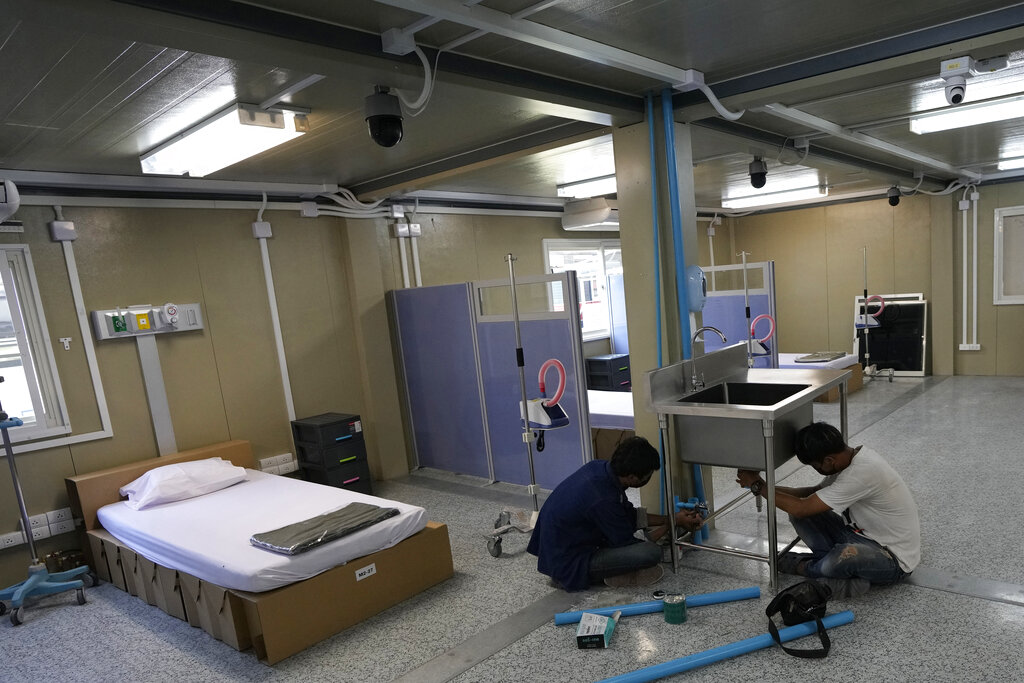
Workers install a sink at field hospital for COVID-19 patients at the 11th Army Region base in Bangkok, Thailand, Friday, July 2, 2021. Photo: Sakchai Lalit / AP

Nakorn Premsri, director of the National Vaccine Institute, said a Thai company, Siam BioScience, was supposed to provide the country with 10 million doses a month of the locally produced AstraZeneca vaccine, but that has been cut to 5-6 million doses. The company, owned by Thailand’s king, reportedly has had production problems. It also has contracts to provide vaccines to other countries.

He said Thailand is trying to negotiate with other producers to fill the gap. So far, Thailand has only used vaccines from AstraZeneca and China’s Sinovac and Sinopharm, although the government says it has agreements to also buy from Pfizer and Johnson & Johnson.

Story: Chalida Ekvittayavechnukul

Advertisement

The Return of Relaxation as Marriott Bonvoy’s Portfolio of Resorts Across Thailand Welcome International Visitors Once Again

Whether for Relaxation or Recharging, Cultural Immersion or Culinary Journeying,
The Pearl of Andaman Is Ready to Welcome Back Visitors With “Summer Dreaming”

Marriott Bonvoy’s portfolio of resorts in famed tropical Thai paradise, Phuket are putting the final touches before welcoming back guests as restrictions ease. Whether travellers have missed the idyllic emerald green waters or the famously thrilling nightlife, Marriott Bonvoy’s suite of distinct properties have them covered. 

Under the Thai government’s ‘Phuket Sandbox’ initiative, travellers with two COVID-19 vaccinations can fly direct to Phuket with no need to quarantine on arrival. To celebrate this exciting milestone, Marriott Bonvoy resorts in Thailand has launched a “Summer Dreaming” offer with preferential rates, complimentary breakfast, THB 1,000 of hotel credit per room per night and even 5,000 bonus points for Marriott Bonvoy members.

THE RETURN OF RELAXATION 2

For guests seeking privacy and seclusion, few spots can match stunning Naka Island, a Luxury Collection Resort & Spa. This exclusive all-villa island hideaway sits off the coast of Phuket, with idyllic beaches, lush coconut groves and never-ending views of Phang Nga Bay as standard. But there’s much more on offer in this uniquely private and intimate retreat that is accessible only by private speedboat. Culture walks and mixology classes, Thai boxing training or even a kayak around James Bond island are just some of the options for guests who can be tempted away from relaxing in their magnificently appointed villas and suites.

For a guaranteed unforgettable escape in Phuket, the family-friendly JW Marriott Phuket Resort & Spa with 17km of Mai Khao Beach on the doorstep and easy access to Phang Nga Bay, Old Town Phuket and more – guests couldn’t be better located. Although the chances are that they may not want to leave the resort once checked in. That’s thanks in part to perfect programs for families such as turtle conservation at the resort’s on-site turtle shelter or a visit to the children’s pavilion and kids’ movie theatre – not to mention an award-winning spa, three outdoor pools, and 11 separate dining options, with everything from Italian to local Thai favourites.

Another resort that is perfect for quiet wellness getaways and romantic holidays, The Westin Siray Bay Resort & Spa, Phuket enjoys panoramic ocean views and pristine, white sand beaches, the ultimate backdrop for well-being programmes to leave guests restored and rejuvenated after more than a year of lockdown and no travel. Heavenly Spa by Westin™ offers an array of healing treatments including massages, Ayurvedic treatments, therapy baths and body wraps. More energetic and adrenaline-inducing options include the chance to water ski, kayak or surf, or for something on land, then mountain biking, volleyball and trail walking are all within easy reach. Within the resort, there are three outdoor pools, a Westin® Kids Club, and six restaurants and bars for guests to explore.

Whether it’s a vacation or maybe a dream wedding on the cards – restrictions permitting – Renaissance Phuket Resort & Spa is the luxury haven that guests have been waiting for. Located on beautiful Mai Khao Beach, next to Sirinath National Park, guests can truly enjoy in stylish rooms and beachfront villas before soaking up the sun. When not exploring the endless beach and expansive grounds, they can enjoy a rejuvenating massage, beauty or wellness therapy at Quan Spa or a workout session in the fitness center. After the effort, the reward, with delicious and authentic Thai cuisine to wrap another day in paradise in style.

THE RETURN OF RELAXATION 1

Marrott Bonvoy portfolio resorts taking part in the “Summer Dreaming” promotion include Four Points by Sheraton Phuket Patong Beach Resort; Renaissance Phuket Resort & Spa; The Westin Siray Bay Resort & Spa, Phuket; Le Méridien Phuket Beach Resort; Phuket Marriott Resort & Spa, Merlin Beach; Phuket Marriott Resort and Spa, Nai Yang Beach; JW Marriott Phuket Resort & Spa; The Naka Island, a Luxury Collection Resort & Spa, Phuket; and Courtyard by Marriott Phuket Town (opening in August 2021). The Summer Dreaming promotion is valid for bookings made between 1 June and 31 August 2021, for stays taken between 1 July 2021 and 31 March 2022. Reservations must be made direct via https://hotel-deals.marriott.com/summer-dreaming-thailand-en/phuket/ using the promotional code A1764.

Marriott Bonvoy properties across the world upholds the highest standards of health and safety under the company’s “Commitment to Clean”. The Marriott Cleanliness Council is redefining cleaning and safety standards, including enhanced cleaning technologies, adhering to social distancing protocols, food safety and more. To learn about how Marriott is keeping its guests safe, please visit clean.marriott.com

The Thai government’s Phuket Sandbox program, which comes into effect on 1 July 2021, allows international travelers who have received two COVID-19 vaccinations to fly directly to Phuket without the need to quarantine upon arrival, as long as they show proof of booking at an SHA Plus-certified hotel and when applying for their Certificate of Entry (CoE). For more information, please click here.

Advertisement

Myanmar Court Extends Pretrial Detention of Us Journalist

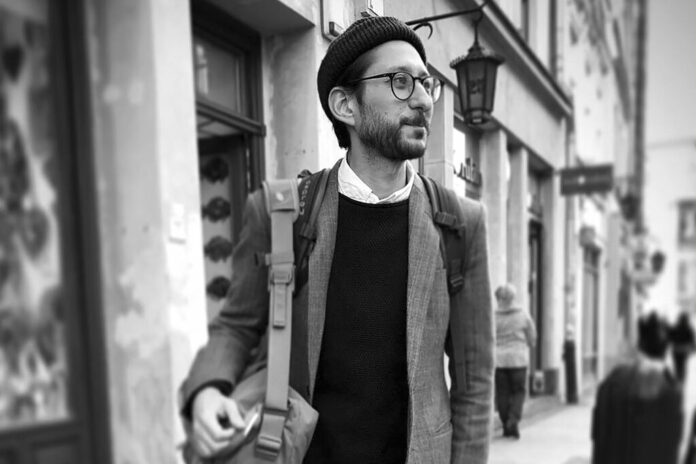
In this file photo provided by Bryan Fenster shows his brother Danny Fenster in September of 2019 in Krakow, Poland. Photo courtesy Byron Fenster via AP, File

BANGKOK (AP) — A court in Myanmar on Thursday extended the pretrial detention of Danny Fenster, a U.S. journalist employed by an online news magazine in the military-led Southeast Asian nation who was arrested in May on an incitement charge that carries a penalty of up to three years’ imprisonment.

Fenster, who is the managing editor of Frontier Myanmar, was detained at Yangon International Airport on May 24, as he was trying to board a flight to go to the Detroit area in the United States to see his family.

Fenster’s lawyer, Than Zaw Aung, told The Associated Press that the 37-year-old journalist was in good health but appeared to have lost some weight at Thursday’s hearing at the special court at Yangon’s Insein Prison, where he is being held. He asked that his wife send him medicine and food. Two consular officials from the U.S. Embassy also attended the hearing, the lawyer said.

The next hearing is scheduled for July 15, but the case will not come to trial then because the court has too many cases backed up, he said.

Fenster’s court appearance came a day after authorities began a release of about 2,300 prisoners who were charged in connection with protests that erupted after the military overthrew the elected government of Aung San Suu Kyi in February. The new government has tried to silence independent news media by withdrawing their licenses and by arresting journalists.

Those released included protesters as well as journalists. Most were being held on the same charge as Fenster. Because there is no official list of freed detainees and the releases are taking place over several days, the exact number of journalists freed is not known.

An unofficial tally kept by Myanmar journalists says of 88 journalists who were arrested after February’s military takeover, 49 have been released, including 14 on Wednesday.

In June, a court released U.S. journalist Nathan Maung, who was arrested in March while working for Kamayut Media, a local online news platform. The charges against him were dropped, his case dismissed and he was deported to the United States.

“The Myanmar junta’s continued detention of journalist Danny Fenster is outrageous and unacceptable. Independent reporting of what’s happening on the ground in Myanmar should not be considered a crime,” Phil Robertson, deputy Asia director of Human Rights Watch, said in an emailed statement.

“The authorities should immediately drop all charges against Fenster, and permit him to leave the country if that is what he wants to do. The junta should also unconditionally free the more than 50 Burmese journalists who are still in detention and lift the license revocation orders imposed against numerous local media outlets,” Robertson said. Myanmar is also known by its old name, Burma.

Than Zaw Aung said Fenster is charged in connection with his work at a previous job, as a reporter and copy editor for the online news site Myanmar Now.

Myanmar Now, along with several other media outlets, had its license revoked in early March, banning it from publishing on any platform. However, it has continued to operate online.

Fenster resigned from Myanmar Now in July last year and joined Frontier Myanmar a month later, so it is unclear why he was arrested, his lawyer said.

“I don’t know in detail. What I can say is that he was accused as a staff member of Myanmar Now. I’m not clear if it concerns a story posted on Myanmar Now or not.”

Fenster’s family in the United States, led by his parents and brother Bryan, have rallied support for his release with a website, an online petition and contacts with their representatives in Congress to keep pressure on the State Department to push Myanmar on the case. The U.S. government has made repeated pleas for media freedom in Myanmar and for Fenster’s release.

The Irish rock band U2, which has long taken an interest in the fight for democracy in Myanmar, on Wednesday tweeted its support for Fenster’s release.

“Journalism is not a crime. We join @RepAndyLevin and @bryanfenster in urging the immediate release of journalist Danny Fenster from detainment in Myanmar and thank heroic organizations like @pressfreedom for fighting to protect journalists everywhere — #BringDannyHome,” it said.

“This is what we want. We want champions of human rights and social justice in a connected world to take on our cause,” Bryan Fenster said Thursday. “And what better example of that than all the guys in U2?”

Bryan Fenster said he was able to speak to his brother on the phone this week — their first conversation since Danny Fenster was detained.

The U.S. Embassy arranged to have the detained journalist speak by phone with his wife, Julianna, in Yangon. “Then, they were able to get in touch with me on another phone and kind of held them up to each other so we could hear each other and talk to each other,” Bryan Fenster said.

“To finally hear his voice, you know, we could finally exhale, sink into the back of the couch for a little bit,” he said. “He sounded good. We were able to crack a few jokes that made me feel really good, in particular, because he’s got a great sense of humor. And happy he has his wits about him given the circumstances.”

___

Story: Grant Peck. Associated Press writer Mike Householder in Detroit contributed to this report.

Advertisement

NSTDA partners with Railway Technical Research Institute (RTRI) Japan to enhance “Research and development in the Thai railway system”.

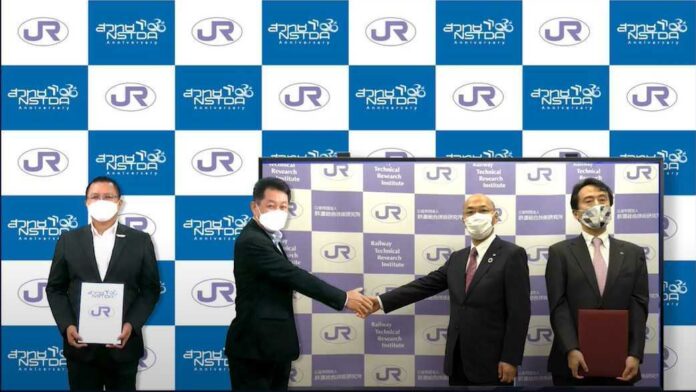
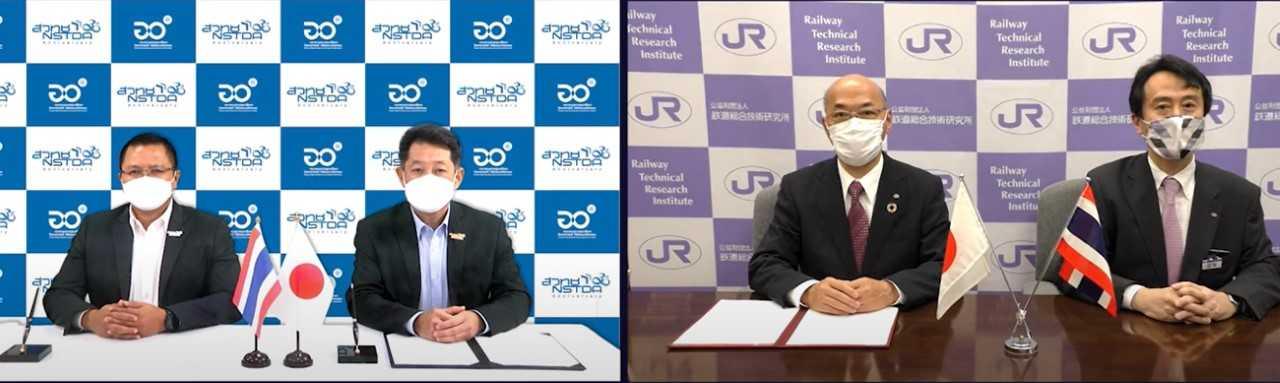
NSTDA and RTRI, Japanese’s technical research company under the Japan Railways (JR) group of companies, have entered into a 3-Year Memorandum of Understanding (MOU) from 1 July 2021 to 30 June 2023 to establish a formal technical cooperation to exchange and co-create the information, know-how, human development, and joint research in the area of railway technology. This formal collaboration aims for the enhancement and advancement of the Thai railway system.

PR02 02July202103

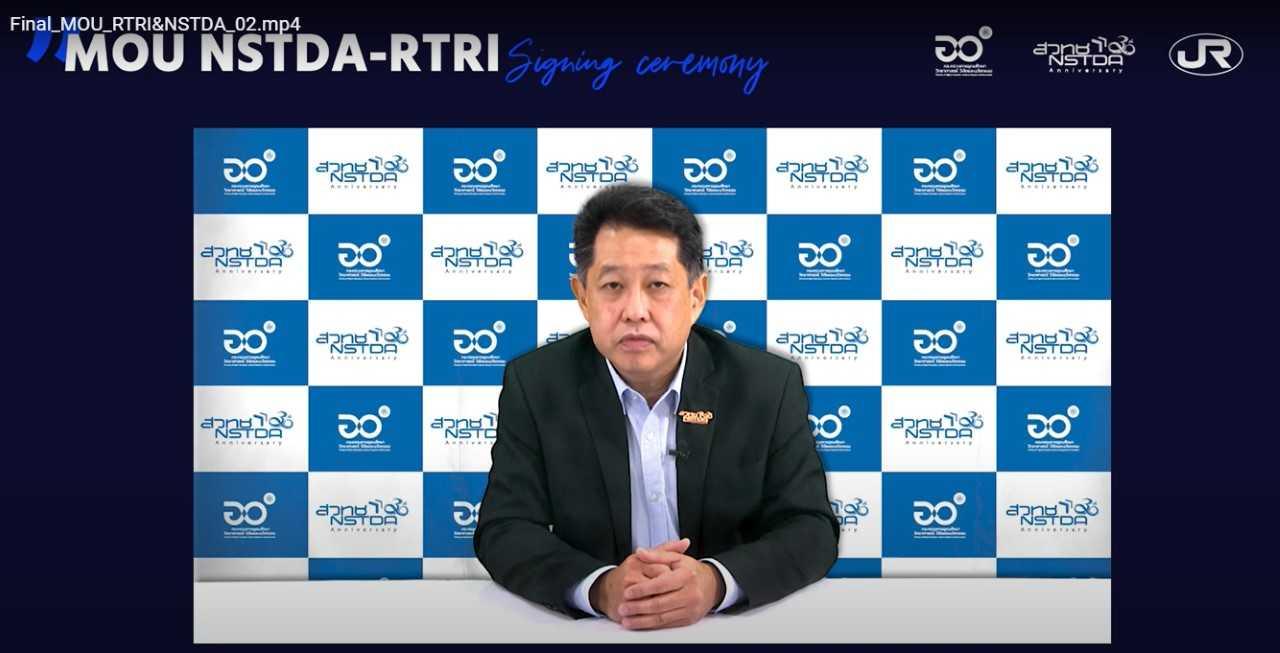
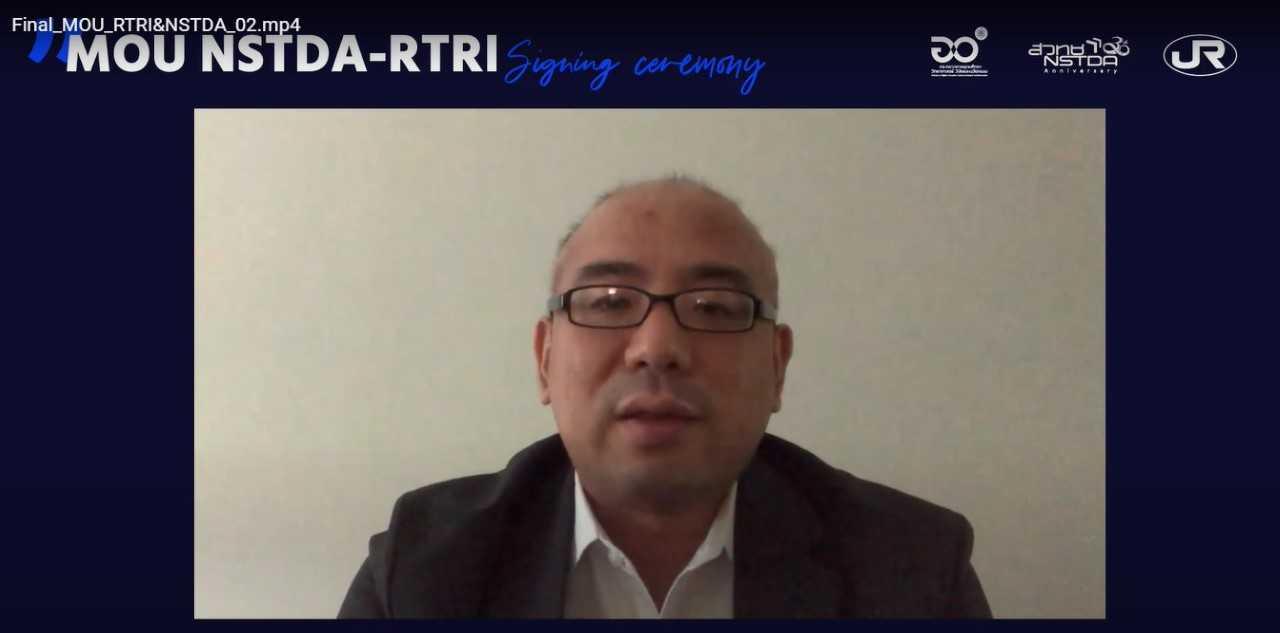
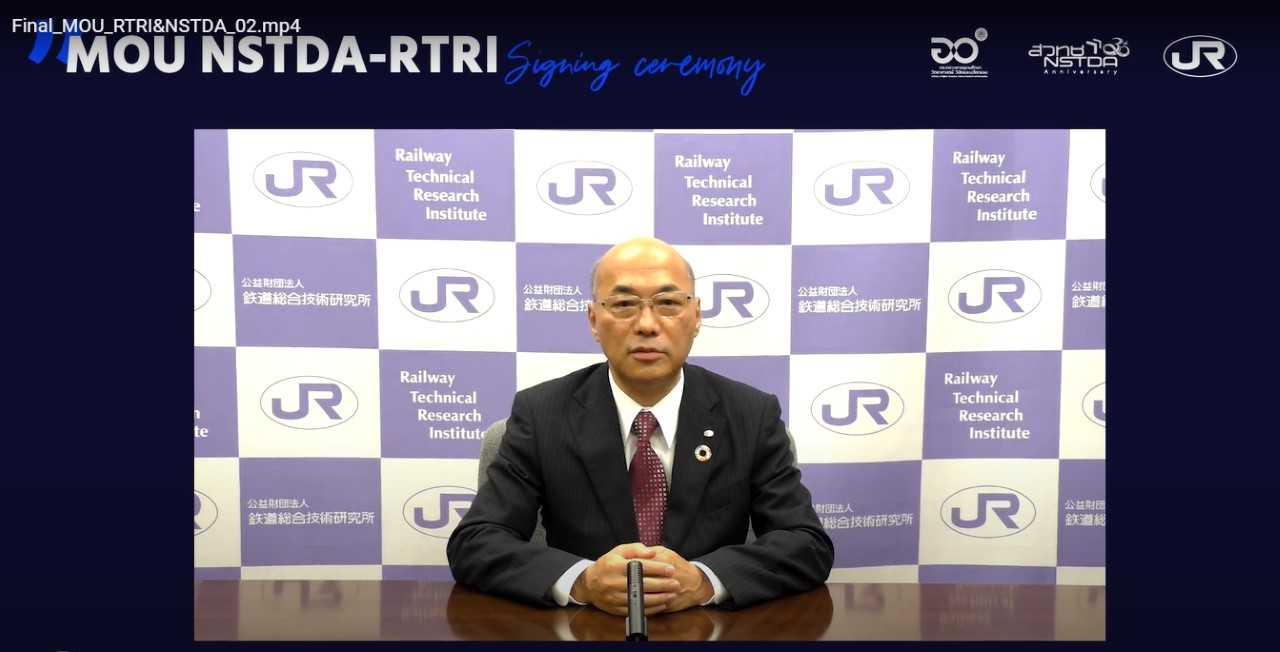
The MoU signing ceremony has been conducted through a virtual platform. The MOU has been signed by Dr. Narong Sirilertworakul, President of NSTDA, and Dr. Ikuo Watanabe, President of RTRI, and witnessed by Dr. Ekkarut Viyanit, Director of Rail and Modern Transports Research Center of NSTDA and Dr. Tetsuo Uzuka, General Director of International Division of RTRI. In this event, Mr. Hosono Keisuke, First Secretary for Digital, Information & Communications Technology, Science, Technology & Innovation, Embassy of Japan in Thailand has attended and gave a greeting speech to celebrate the partnership.

A formation of the collaboration between NSTDA and RTRI has actually been initiated since 2011. Through this relationship, RTRI has actively participated and offered different kinds of support e.g., hosting a technical visit on rail systems in Japan, co-hosting the important event for Thai railway system in Bangkok with NSTDA, the Thai Rail Industry Symposium and Exhibition (RISE), from 2016 till present.

“I am very much hopping that the establishment of a formal partnership between NSTDA and RTRI today would be a steppingstone to expand the exchange and co-creation of the information, know-how, and joint research in the area of railway technologies between our 2 institutes even wider and contribute majorly to the advancement of the Thai railway system as well as strengthen a bilateral relationship between Thailand and Japan even closer.” said Dr. Narong Sirilertworakul.

PR02 02July202102

“With the fact that Thailand is one of the most strategic partners in South East Asia and NSTDA is among the leading research institute in the country. RTRI realizes that NSTDA has mandated and committed to the research and development for the advancement of the railway systems for Thailand. It is very much significant for both RTRI and NSTDA to conclude this Memorandum of Understanding on technical cooperation to support the R&D activities between our organizations to realize the aims of this MoU and later on beneficial to the rail system standard to our other friends in Asia” said Dr. Ikuo Watanabe

PR02 02July202105

Mr. Hosono Keisuke added his note that it is well aware that the railway system is an essential infrastructure. The railway system could help improving a quality of life in logistics and daily transportation for the Thai people. From my observation, I see that, with a spawning of many rail routes in recent years, the railway system in Thailand has been progress rapidly with an opening of the new routes of the Thai sky train every year. In those new routes, we are very happy that a Japanese technology has been adopted and used in the red and purple lines. The event today between NSTDA and RTRI with the aim to jointly develop the innovations and technologies for the advancement of the Thai railway system is another important milestone the Embassy of Japan in Thailand would like to congratulate.

PR02 02July202104

For the work in rail system and rail technologies of NSTDA, in February 2020 the institute has founded “Rail and Modern Transports Research Center (RMT)” as one of the R&D focus centers. RMT has mandated to develop ready-to-use technology for rail and modern transport industries by conducting R&D projects responsible for safety and reliability enhancement in the railway system with the focus on the development of predictive maintenance technology, development of automated inspection techniques, development of technology for railway parts & components manufacturing, and maintenance data analytics. Furthermore, the research work and technical capacity building on connected and automated mobility to enhance a convenience of railway passengers in last-mile connectivity are among the key areas of RMT responsibilities. 

Advertisement

Hot News

LATEST NEWS

Bangkok
overcast clouds
35 ° C
35 °
34.4 °
55 %
3.1kmh
99 %
Fri
35 °
Sat
31 °
Sun
35 °
Mon
36 °
Tue
37 °