


























29 C
Bangkok
Wednesday, June 17, 2026
Home Blog Page 125

Partnering for cleaner air: CPF and communities unite to tackle PM2.5

Air pollution has become a major challenge in many parts of the world, and Thailand is no exception. Each year—particularly during the dry season from around January to April—the country experiences recurring spikes in fine particulate matter (PM2.5). A key contributing factor is open burning, as many farmers still use traditional methods to clear crop residues before the next planting cycle. According to Thailand’s Pollution Control Department (PCD), most PM2.5 hotspots nationwide are linked to biomass burning, with a significant share occurring in forest areas and agricultural zones. Scientific analyses by NASA and Thailand’s GISTDA further confirm that forest fires and agricultural burning are among the primary drivers of severe haze in northern Thailand. These patterns highlight how actions in relatively small areas can generate wide-ranging air quality impacts, making PM2.5 pollution a complex challenge that requires coordinated, multi-sector solutions.
Picture2 10

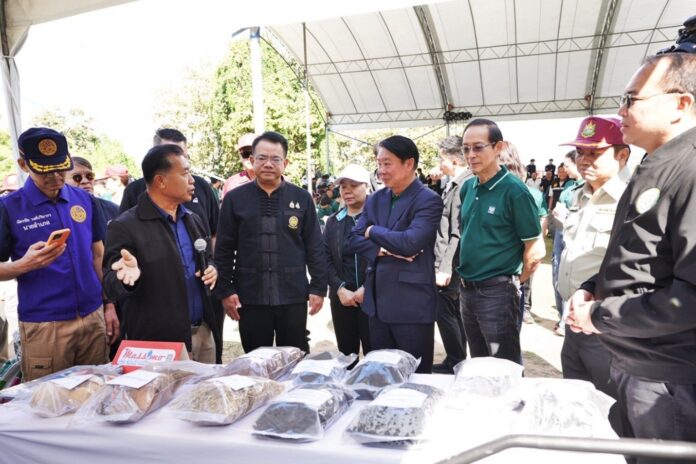
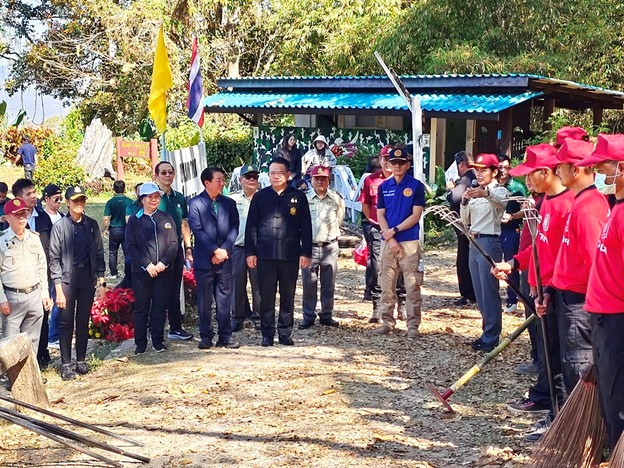
In response, the Office of the Public Sector Development Commission (OPDC), the Board of Investment (BOI), the Royal Forest Department, the Head of Mae Tha District, and Charoen Pokphand Foods Public (CPF) have joined forces to establish a multi-sector collaboration in Lamphun Province, south of Chiang Mai. Set against a mountainous backdrop, this northern province has faced increasingly severe forest fires in recent years.

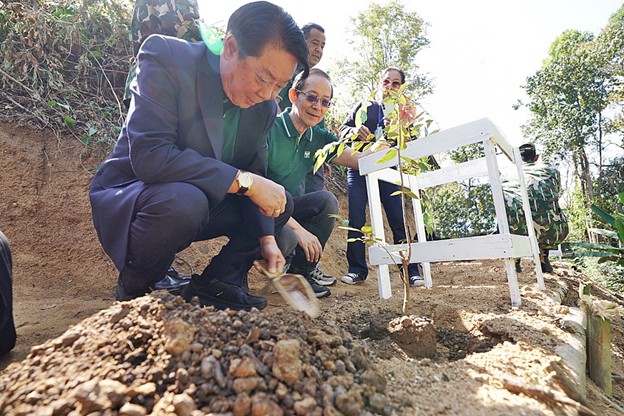
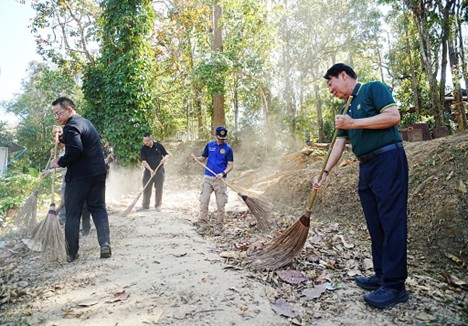
The pilot phase focuses on community forest areas in Tha Pla Duk and Tha Sop Sao subdistricts, covering 12 villages across more than 20,000 rai. Running from 2026 to 2028, the project emphasizes practical, long-term impact through local participation. Key activities include community training in fire prevention and control, provision of firefighting equipment, establishment of fire surveillance points, and the introduction of technologies that convert natural and agricultural residues—such as branches and dry leaves—into household biofuel, creating additional income streams for local families.

Yothin Prasongkwamdee, Deputy Governor of Lamphun, emphasized that community participation sits at the heart of the initiative’s strategy, noting that the project delivers benefits across environmental protection, public health, quality of life, and local economic development.
Picture3 7

From the private sector perspective, Rewat Hataisatyapong, Head of Livestock Feed Business at CPF, reaffirmed the company’s commitment to responsible business practices that support both communities and the environment. He noted that CPF’s participation helps strengthen cross-sector collaboration and shared learning to develop solutions that can be expanded nationwide. Community engagement, he added, is essential to building a replicable model that contributes to cleaner air and improved quality of life across Thailand.

“Environmental responsibility is embedded at the core of CPF’s operations. We integrate sustainability into every stage of our value chain to ensure long-term resilience for both the community and the economy. We also deeply value the support and partnership of local communities, whose collaboration is essential in driving meaningful and lasting environmental progress.” Mr. Rewat said.

Beyond field activities, CPF is also addressing PM2.5 at the upstream level through its responsible feed ingredient sourcing policy. The company does not purchase or import corn from deforested areas or plots associated with crop burning. Since 2016, CPF has worked closely with farmers and local crop collectors to implement a traceability system linking GPS farm coordinates with satellite imagery, enabling accurate monitoring of land-use risks. Today, 100% of corn procured by CPF in Thailand is fully traceable to farm plots.
Picture4 3

By combining on-the-ground wildfire prevention with supply chain accountability, the collaboration in Lamphun reflects a broader shift toward integrated solutions—where government, business, and communities work side by side to tackle the root causes of air pollution and create a path toward sustainably fresher air in northern Thailand.

Advertisement

Is Thailand becoming rude and expensive for foreign visitors?

Is Thailand becoming rude and expensive for foreign visitors?

​Over the past few weeks, local news headlines have been dominated by complaints from some foreign tourists claiming that Thailand is becoming too expensive, while some Thais are being perceived as unfriendly—or even rude—to visitors.

​Dear readers, do you think Thailand is becoming a rude society and too expensive for foreign visitors? I do not expect a consensus here, but I would like to point out that these topics are subjective and relative.

​If you come from a wealthy country like those in northern Europe, the US, Japan, Singapore, or even South Korea, where the average wage is several times higher than wages here, I do not think you should be complaining. Yes, things are probably somewhat cheaper in Ho Chi Minh City or Kathmandu than in Bangkok, but each destination has its own unique charm and appeal.

Furthermore, if the main goal is to minimise every last dollar, euro, or Korean won spent, it may be worth asking why you want travel. This is not to say that Thailand is immune to price comparisons with our regional competitors. My point, however, is that life for the average working-class Thai is hard enough. We cannot expect wages to be driven any lower; many are already underemployed or failing to earn a genuine living wage that ensures a basic, decent livelihood.

​Certainly, the Tourism Authority of Thailand (TAT) could make the country more attractive and competitive by cracking down on taxi scams and other fraudulent practices, such as drivers who refuse to use the meter. This should occupy more of the TAT executives’ time and attention than plotting the next expensive advertising campaign.

Also, while Thailand remains affordable for many, the “Land of Smiles” brand is definitely facing pressure. The rise of digital nomadism and “premium” tourism targets has pushed prices up in major hubs like Bangkok and Phuket.

​The TAT should also be more receptive to complaints from foreign visitors and address long-standing issues, such as the dual-entry fee system at public tourist sites. Resolving this would go a long way in ensuring foreign tourists do not feel discriminated against or “exploited.”

​For visitors who still believe Thailand is becoming too expensive, allow me to point out that you still have the option of eating like a local—spending no more than four dollars per meal—and there are plenty of economical accommodation options if you are not too picky. On the other hand, the TAT and the government cannot rest on their laurels or be complacent about having over 30 million visitors per year; they must continually seek ways to make Thailand more attractive and unique—offering good value for money, so to speak.

​Regarding the issue of whether Thais are becoming less hospitable, or even rude hosts, my feeling is that the younger generation tends to be busier minding their own daily affairs. Take BTS Skytrain and MRT commuters, for example. It is increasingly common to see young Thai adults fail to offer their seats to elderly, frail, or young children. This is not directed at foreigners specifically.

​This appears to be a broader trend, and I wonder if a public campaign encouraging people to be more hospitable to those in need—both foreigners and Thais—would help reverse it.

​As someone who has had the privilege of travelling quite widely, it is worth reminding ourselves that we should treat foreign visitors the way we hope to be treated when we are lost or in need of basic assistance or courtesy abroad.

​Ultimately, this is not about placating foreign tourists; it is about making Thailand a more hospitable and caring society—not just for visitors, but for Thais who are struggling, such as the homeless in Bangkok and beyond.

​Let us not go about our daily lives oblivious to the needs of the strangers we encounter, whether they are foreign or Thai. Being a better host is intrinsically intertwined with nurturing a kinder and more caring society. ​I am sure there is room for improvement.

As for those who had terrible experiences in Thailand, I’m sorry to hear about them. Judging from my own experience abroad, please remember, however, that many years from now, when much of your trip has become blurry or forgotten, you will still have a story or two to recall and share with others to entertain them.

Advertisement

Russian Arrested Over Deadly ‘Labubu’ Drug Mix

Russian Arrested Over Deadly ‘Labubu’ Drug Mix

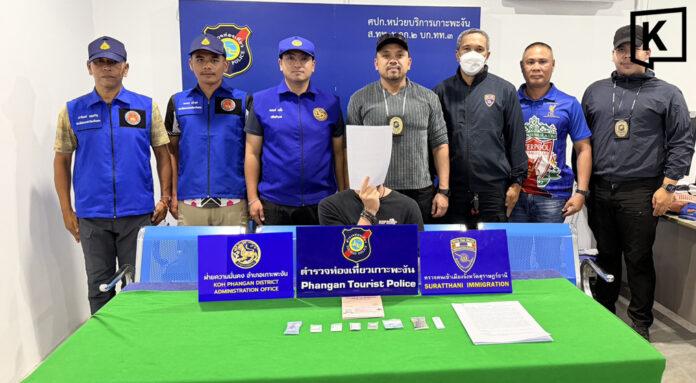
KOH PHANGAN — 26 February 2026, Thai tourist police have arrested a Russian man accused of possessing a new “cocktail” form of ecstasy designed to mimic a popular art toy, warning that the potent mix could prove fatal.

Pol. Lt. Col. Winit Boonchit of Tourist Police Division 5 said officers raided a rented house on Koh Phangan at about 21:00 on 25 February after the suspect was seen driving at high speed in a residential area of Surat Thani province.

The man was identified by his passport as Evgenii, 33, a Russian national. Officers initially issued a warning, but said he appeared visibly agitated, speaking incoherently and showing physical symptoms including sweating and trembling. He later admitted there were illegal substances inside the house.

A search uncovered several narcotics laid out on a table in front of a bathroom, including 1.63 grammes of white powdered ketamine, 1.18 grammes of blue powdered ecstasy mixed with ketamine, one bag of brown MDMA crystals, and three ecstasy tablets pressed into triangular skull shapes and a design known as “Labubu”, referred to in slang by users as “candy”.

Police warned that the “candy”-style pills contain a mixture of MDMA, ketamine, cocaine, and caffeine. The high concentration and combined effects make the drug far more potent than usual, posing a risk of shock and sudden death.

During questioning, the suspect confessed to all charges and admitted taking ecstasy two days earlier, police said. He was charged with illegal possession of a Category 1 narcotic (ecstasy and MDMA) and illegal possession of a Category 2 psychotropic substance (ketamine).

He was handed over to investigators at Koh Phangan Police Station for legal proceedings.

Tourist Police Bureau commissioner Lt. Gen. Saksira Phueak-am has orderered tourist police stations in designated pilot areas to intensify a crackdown on crimes involving foreign nationals to ensure safety and maintain a positive image during the peak tourist season.

Advertisement

Thai Airways denies F-35 parts transport claim

Thai Airways denies F-35 parts transport claim

BANGKOK — 26 February 2026, Thai Airways International addressed social media reports about activists in Australia protesting against the airline over allegations it transported F-35 aircraft parts to Israel.

Chai Eamsiri, chief executive of Thai Airways International, said that, as a commercial operator, the airline’s strategic role is to transport passengers and cargo in line with international standards. In some markets, he said, the company does not sell all cargo capacity directly and has interline or partner agreements with other airlines, which is standard practice in the aviation industry.

The company has protocols and standards for accepting cargo, including checking cargo declarations to verify the nature of the goods, he said. However, the authority to physically inspect shipments and determine whether items are legal rests with customs authorities in each country, not with the airline.

“In terms of safety, if the cargo is classified as dangerous goods, we do not transport it,” Chai said. “If it consists of general parts, such as steel automotive components, X-ray screening will show the nature of the objects and we transport them in accordance with normal business practice. It is for customs authorities in each country to determine whether the items comply with the law.”

He said there has so far been no impact on seat bookings or cargo volumes in the affected market. The airline’s management team is continuing to monitor the situation. He added that individuals familiar with cargo procedures have also responded to the allegations on social media.

Advertisement

Myanmar junta airstrike on Rakhine market kills at least 17 civillians

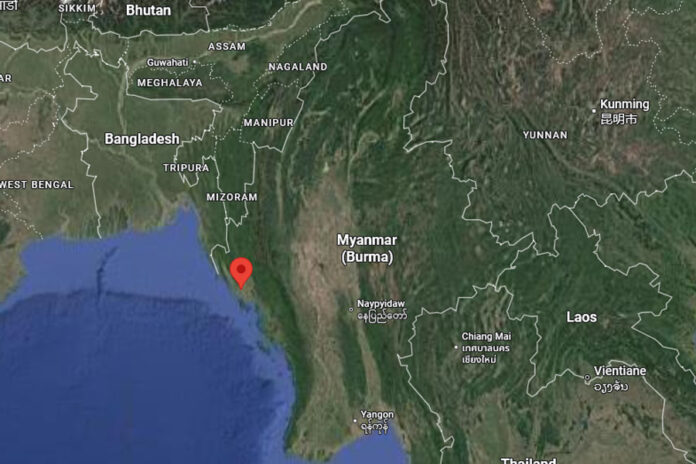
The approximate location of the aerial strike, located in the west of Myanmar within the Rakhine State. Photo: Google Maps

RAKHINE, MYANMAR 24 February 2026, At least 17 civillians, including women and children, were killed when a Myanmar military jet bombed a crowded market in Rakhine State on Tuesday afternoon, according to local groups and international media reports.

Airstrike hits crowded village market

The strike hit Yoe Ngu village in Ponnagyun Township, an area largely controlled by the ethnic armed group known as the Arakan Army (AA). The township lies northeast of Sittwe, the state capital, in western Myanmar.

The independent outlet The Irrawaddy reported that two 300-pound bombs were dropped at around 14:00 local time onto the village marketplace. Citing the Ponnagyun Youths Association, a local volunteer group assisting victims, the outlet said at least 18 people were killed and about 15 others wounded. Most of the dead were reportedly women and children, with some victims aged between six and 15.

In separate coverage, Al Jazeera, citing local sources and Agence France-Presse (AFP), reported that at least 17 civilians were killed and 14 injured in the same attack. Casualty figures in conflict zones are often difficult to independently verify, and the toll may rise as rescue efforts continue.

According to reports, the bombs struck during peak daytime activity at the market. Witnesses described stalls destroyed and nearby homes damaged by the blasts. Local responders said bodies were recovered from the debris as villagers fled the area in panic.

Military silent as rights groups condemn strikes

The Myanmar military had not issued an official statement on the strike as of press time. The junta has previously said its air operations target armed groups it labels as “terrorists,” but human rights organisations including Human Rights Watch and Amnesty International have accused the military of carrying out indiscriminate air and artillery attacks in civilian-populated areas, in some cases warning that such actions may amount to war crimes under international law.

Rakhine State has seen intensified fighting since late 2023 between the junta and the Arakan Army, one of Myanmar’s most powerful ethnic armed organisations. The AA, which seeks greater autonomy for the ethnic Rakhine population, has seized control of large swathes of territory across the state amid the broader civil war that erupted after the military overthrew the elected government in February 2021.

Humanitarian crisis deepens

As ground battles have shifted in favour of resistance forces in several regions of the country, the military has increasingly relied on air power and artillery strikes to hit opposition-held areas, according to conflict monitors and humanitarian groups. Rakhine, along with Sagaing and parts of northern Shan State, has experienced repeated aerial bombardments targeting towns, villages and infrastructure.

The renewed conflict has compounded an already fragile humanitarian situation in Rakhine State, which was previously the epicentre of violence in 2017 that drove more than 700,000 Rohingya Muslims into neighbouring Bangladesh. Aid agencies say fresh fighting since late 2023 has displaced hundreds of thousands more people of various ethnic communities, while restrictions on transport and communications have complicated relief efforts.

The reported strike is one of several air attacks documented in recent years since military takeover, as the armed forces increasingly rely on air power in contested areas. In Rakhine State, fighting between the military and the Arakan Army has intensified in recent months, with civilians frequently caught between shifting front lines.

Advertisement

Jimmy Lai Scores Rare Legal Win as Court Overturns Fraud Conviction

HONG KONG — 26 February 2026, Hong Kong pro-democracy media tycoon Jimmy Lai has won a significant legal victory after the city’s Court of Appeal quashed his 2022 fraud conviction, in a surprise ruling that comes amid his ongoing legal battles and long prison sentence.

Lower court “erred”

Today the Hong Kong Court of Appeal overturned the fraud conviction and prison sentence previously imposed on Jimmy Lai, the 78-year-old founder of the now-defunct Apple Daily newspaper and a longtime critic of Beijing’s influence in Hong Kong. The judges ruled that the lower court had erred in convicting Lai and a co-defendant over allegations they improperly used office space at a government-leased facility.

Chief Judge Jeremy Poon, joined by Judges Anthea Pang and Derek Pang, said the appeal was allowed after finding that prosecutors failed to prove Lai’s fraudulent intent beyond reasonable doubt, a foundational requirement in criminal cases. As a result, the convictions were quashed and the sentences set aside.

The original fraud case stemmed from a 2022 conviction in which Lai was sentenced to five years and nine months’ imprisonment for allegedly breaching lease terms by concealing the operation of a private consultancy, Dico Consultants Ltd., within premises rented by Apple Daily. Another former executive, Wong Wai-keung, had also been convicted and his sentence overturned alongside Lai’s.

Still behind bars: 20 year conviction on separate offence

Despite the appellate court’s decision, Lai remains in custody, serving a 20-year prison term handed down earlier this year in a separate case under Hong Kong’s national security law. That conviction, on charges including conspiring to collude with foreign forces and publishing seditious materials, has drawn intense international criticism and concern about press freedom and the erosion of civil liberties in the city.

Lai’s family and supporters have welcomed the fraud conviction’s reversal as a rare win in his long legal saga, though many point out that his overall incarceration is largely unaffected for now. His children have publicly expressed hope that diplomatic engagement, including discussions involving leaders such as U.S. President Donald Trump, might increase pressure for his release on humanitarian grounds, given his advanced age and reportedly deteriorating health.

The decision to overturn the fraud conviction highlights the independent appellate mechanism within Hong Kong’s legal system, even as critics argue that other parts of that system — particularly national security prosecutions — have been used to curtail dissent and press freedom.

Advertisement

Bangkok braces for extreme heat, heatstroke risk

Bangkok braces for extreme heat, heatstroke risk

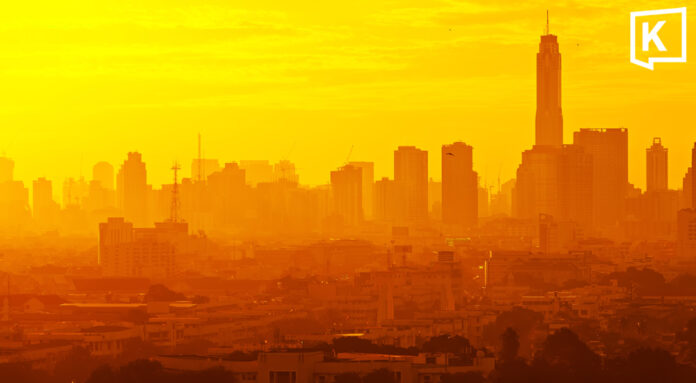
BANGKOK — 26 February 2026, The Bangkok Metropolitan Administration (BMA) is stepping up measures to protect residents from extreme heat amid fears of rising heatstroke cases, officials said on Thursday.

Speaking at the Medical Service Department, Kriengkrai Tangjitrmanisakda, director of the department, outlined proactive steps to raise public awareness and provide guidance on health and hygiene during the hot season.

He said the department is monitoring weather conditions and temperature changes that could affect public health, while issuing warnings, particularly to at-risk and vulnerable groups such as children, pregnant women, the elderly and people with underlying conditions.

Authorities have also set medical and public health guidelines to reduce the impact of extreme heat, prepared emergency medical operation centres and launched public campaigns on how to stay healthy during the summer.

Official warns of rising heatstroke risk due to the heat

Extreme heat can lead to dangerous health conditions, especially heatstroke. Authorities recommend limiting intense outdoor activity during the hottest parts of the day and, if possible, scheduling time outside for early morning or near sunset. People should stay well hydrated by drinking plenty of water. Anyone who needs to be outdoors is advised to wear lightweight, breathable clothing and protect themselves from the sun with hats or umbrellas.

Symptoms of heatstroke may include a body temperature exceeding 40–41°C, a severe headache, nausea, vomiting, intense thirst, unsteadiness, muscle cramps, fatigue, rapid breathing, palpitations, a fast pulse, low blood pressure and fainting.

What to do if you find someone suffering heatstroke

If someone shows signs of heatstroke, act immediately — it can become life-threatening within minutes. Move the person out of direct sunlight and into a shaded or air-conditioned area. Lay them flat, raise their legs slightly and loosen or remove excess clothing to help release body heat.

Begin cooling the body right away. Apply cold compresses or ice packs to areas where large blood vessels run close to the skin — the neck, armpits and groin are especially effective. If ice is not available, use a damp cloth, spray water on the skin and create airflow with a fan to speed up evaporation.

Do not wait to seek medical help. Call the emergency medical service hotline 1669 immediately, or contact tourist Police hotline at 1155, where operators are trained to speak English and other languages and can assist with coordinating medical help.

If the person becomes unconscious and is not breathing, start CPR at once and continue until help arrives. If they are breathing but unresponsive, keep them in a shaded position, continue cooling efforts and monitor their breathing closely while waiting for emergency responders.

The department has also prepared its Public Health Emergency Operation Centre (PHEOC) to respond to heat-related incidents and is promoting information on heatstroke through its Facebook and TikTok pages. Health advice is available around-the-clock via its hotline 1646.

Other diseases to look out for in the summer

Duangporn Pinjasekikul, director of the Health Department, said her agency is campaigning to educate the public on preventing communicable and non-communicable diseases linked to extreme heat and high temperatures.

Particular concern is focused on young children, the elderly and those with underlying illnesses, including diarrhoea, cholera, food poisoning, skin allergies in children and heatstroke.

Health service centres throughout the capital have been directed to stock adequate drinking water, clean water, essential medicines, medical supplies and emergency response systems to provide full support for vulnerable groups. These steps are part of the Bangkok Metropolitan Administration’s 2026 emergency medical and public health action plan to mitigate the effects of extreme heat.

Advertisement

Tourists alarmed by roadside car photography

Tourists alarmed by roadside car photography

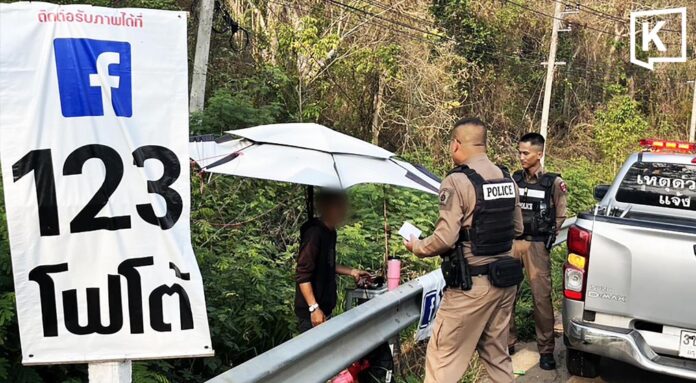
NAKHON RATCHASIMA — 26 February 2026, Tourists visiting the Khao Yai National Park have raised concerns over possible privacy violations after a photographer was seen taking pictures of passing vehicles along nearby roads, officials said.

Worawut On-aree, chairman of the Police Monitoring and Inspection Committee at Mu Si Police Station in Pak Chong district, said on 26 February that tourists had reported a man secretly photographing cars travelling along a curve near Ban Tha Maprang on Rural Highway 3052.

The location is about 1.5 kilometres from the entrance gate to Khao Yai National Park towards Wang Nam Khiao district. Similar activity was also reported on Thanarat Road, about one kilometre before the Chao Pho Khao Yai shrine checkpoint. Tourists said the photography had been taking place at the two spots for over a year, and the intent behind the images was unclear.

Police were alerted amid concerns the activity could potentially infringe on personal privacy. Pol. Col. Chukiat Kaew-art, superintendent of Mu Si Police Station, ordered patrol officers to investigate.

Officers found chairs set up by the roadside at both locations, complete with umbrellas for sun and rain protection, and a vinyl sign reading “123 Photo”. The photographer was operating on behalf of a Facebook page called 123 Photo, taking pictures daily from 08:30 to 16:30.

Police said the images captured tourists’ vehicles and were later offered for sale via the page at prices ranging from 200 to 250 baht. Interested customers were instructed to contact the page by private message, and the images were not posted publicly. Tourists who did not wish to be photographed could request deletion of their images at the site.

Authorities said the photographer was a local resident hired by the Facebook page for 500 baht per day. Officers issued a warning, advising the individual not to violate the rights of others to avoid breaking the law. The photographer acknowledged the warning and agreed to comply with police guidance.

Advertisement

Suspect found asleep in car with ketamine in Chiang Mai

Suspect found asleep in car with ketamine in Chiang Mai

CHIANG MAI — 26 February 2026, A suspected drug user was found asleep in a car parked in a no-parking zone during rush hour near Nimmanhaemin intersection in Chiang Mai early on Thursday, police said.

At 08:10, amid heavy morning traffic, Pol. Col. Manatchai Inthathuean, superintendent of the Traffic Police Division of Chiang Mai Provincial Police, was inspecting traffic conditions in the city with his driver.

As the patrol passed a grilled chicken restaurant near the Nimmanhaemin intersection on Somphot Chiang Mai 720 Pi Road, the officer noticed a suspicious saloon car parked in a prohibited area during peak hours and decided to investigate.

Officers found a man asleep inside the vehicle and coordinated with investigators from Phu Ping Chiang Mai Police Station to continue the operation.

Suspect found asleep in car with ketamine in Chiang Mai 2
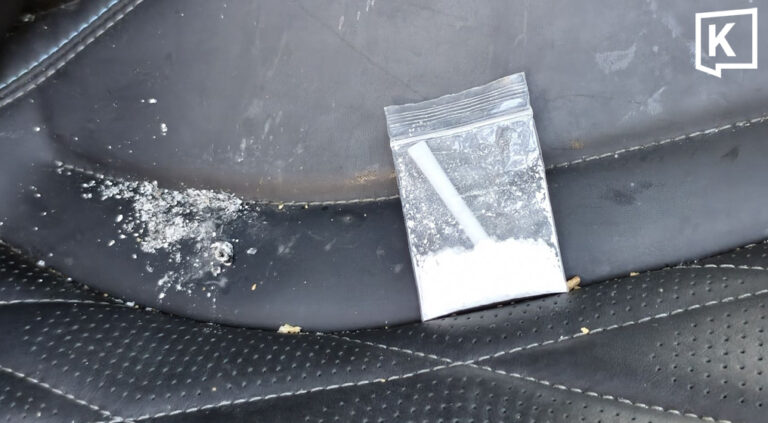
Ketamine that was found in the car with the sleeping suspect.

Using standard police tactics, officers ordered the driver to step out of the vehicle for questioning. Noticing further suspicious behaviour, they conducted a thorough search of the car and discovered a substance resembling ketamine concealed inside.

During initial questioning at the scene, the driver admitted the substance was an illegal drug.

Pol. Col. Sinothai said additional patrol officers from Phu Ping Ratchaniwet Police Station were deployed to detain the suspect and seize the evidence before handing the case to investigators for further legal proceedings.

The arrest drew praise from bystanders, who commended senior officers for their proactive approach in enforcing traffic regulations and preventing crime to ensure public safety in Chiang Mai.

Advertisement

British man accused of snatching ex-partner’s phone

British man accused of snatching ex-partner’s phone

PATTAYA — 26 February 2026, a British man was arrested after allegedly snatching a mobile phone from a woman outside a shopping centre in the seaside city of Pattaya, police said.

Tourist police, local officers and administrative officials in Bang Lamung district responded to reports of a foreign man causing a disturbance at about 01:00 along Pattaya Beach Road in Nong Prue subdistrict, Chonburi province.

Officers found a 36-year-old British national, described as shirtless and wearing black shorts, shouting incoherently and appearing intoxicated. He was not carrying identification documents. Police said he attempted to flee but was quickly apprehended, alarming residents and tourists in the area.

The alleged victim, 27-year-old Wanida Chaiwan, told authorities she sells cannabis and had briefly dated the suspect before ending the relationship.

She said that about two months earlier, the man forced his way into her accommodation, damaging a door and smashing a window before fleeing.

On the night of the incident, she said, he returned to her shop and seized her mobile phone. She alleged that he warned her not to shout and threatened to run away if she did. She called for help, prompting nearby patrol officers to intervene and detain him.

Police have initially charged the suspect with disorderly conduct in a public place and handed him over to investigators for legal proceedings under Thai law. The complainant is filing additional theft charges and is considering further action over the earlier property damage.

Authorities did not immediately release the man’s name.

Advertisement

Hot News

LATEST NEWS

Bangkok
overcast clouds
29 ° C
30.5 °
27.7 °
91 %
2.8kmh
100 %
Wed
34 °
Thu
34 °
Fri
35 °
Sat
35 °
Sun
36 °