31.1 C
Bangkok
Wednesday, June 17, 2026
Home Blog Page 126

Suspect found asleep in car with ketamine in Chiang Mai

Suspect found asleep in car with ketamine in Chiang Mai

CHIANG MAI — 26 February 2026, A suspected drug user was found asleep in a car parked in a no-parking zone during rush hour near Nimmanhaemin intersection in Chiang Mai early on Thursday, police said.

At 08:10, amid heavy morning traffic, Pol. Col. Manatchai Inthathuean, superintendent of the Traffic Police Division of Chiang Mai Provincial Police, was inspecting traffic conditions in the city with his driver.

As the patrol passed a grilled chicken restaurant near the Nimmanhaemin intersection on Somphot Chiang Mai 720 Pi Road, the officer noticed a suspicious saloon car parked in a prohibited area during peak hours and decided to investigate.

Officers found a man asleep inside the vehicle and coordinated with investigators from Phu Ping Chiang Mai Police Station to continue the operation.

Suspect found asleep in car with ketamine in Chiang Mai 2
Ketamine that was found in the car with the sleeping suspect.

Using standard police tactics, officers ordered the driver to step out of the vehicle for questioning. Noticing further suspicious behaviour, they conducted a thorough search of the car and discovered a substance resembling ketamine concealed inside.

During initial questioning at the scene, the driver admitted the substance was an illegal drug.

Pol. Col. Sinothai said additional patrol officers from Phu Ping Ratchaniwet Police Station were deployed to detain the suspect and seize the evidence before handing the case to investigators for further legal proceedings.

The arrest drew praise from bystanders, who commended senior officers for their proactive approach in enforcing traffic regulations and preventing crime to ensure public safety in Chiang Mai.

Advertisement

British man accused of snatching ex-partner’s phone

British man accused of snatching ex-partner’s phone

PATTAYA — 26 February 2026, a British man was arrested after allegedly snatching a mobile phone from a woman outside a shopping centre in the seaside city of Pattaya, police said.

Tourist police, local officers and administrative officials in Bang Lamung district responded to reports of a foreign man causing a disturbance at about 01:00 along Pattaya Beach Road in Nong Prue subdistrict, Chonburi province.

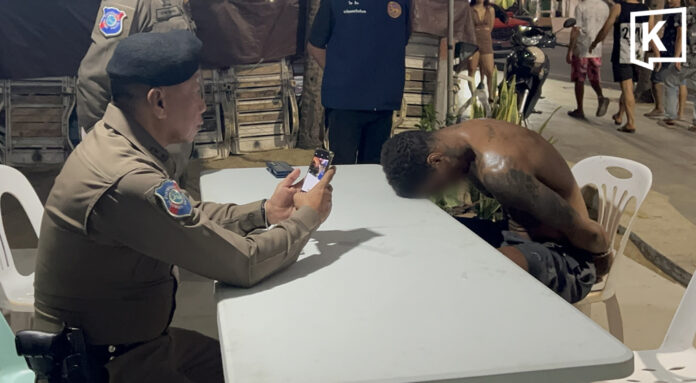
Officers found a 36-year-old British national, described as shirtless and wearing black shorts, shouting incoherently and appearing intoxicated. He was not carrying identification documents. Police said he attempted to flee but was quickly apprehended, alarming residents and tourists in the area.

The alleged victim, 27-year-old Wanida Chaiwan, told authorities she sells cannabis and had briefly dated the suspect before ending the relationship.

She said that about two months earlier, the man forced his way into her accommodation, damaging a door and smashing a window before fleeing.

On the night of the incident, she said, he returned to her shop and seized her mobile phone. She alleged that he warned her not to shout and threatened to run away if she did. She called for help, prompting nearby patrol officers to intervene and detain him.

Police have initially charged the suspect with disorderly conduct in a public place and handed him over to investigators for legal proceedings under Thai law. The complainant is filing additional theft charges and is considering further action over the earlier property damage.

Authorities did not immediately release the man’s name.

Advertisement

Thai rice exports fall 17.5% in January, 2026 outlook seen at five-year low

Thailand’s rice exports fell sharply in January, raising concerns that 2026 shipments could hit a five-year low amid a strong baht and intensifying global competition.

Chookiat Ophaswongse, honorary president of the Thai Rice Exporters Association, said exports in January totalled 530,000 tonnes, down 17.5% year-on-year, with export value plunging 30.7% to 9.7 billion baht. Shipments are expected to average around 500,000 tonnes per month through mid-year as the sector faces mounting headwinds.

The association forecasts total rice exports in 2026 at 7.03 million tonnes, down 11% from 7.9 million tonnes in 2025, marking the lowest level in five years. Export value is projected at 130–140 billion baht, a drop of 12.3%.

Exporters cited five major risk factors. Chief among them is the strengthening baht, hovering around 31 to the US dollar, making Thai rice more expensive than competitors. Thai jasmine rice is now priced at about $1,200 per tonne, the highest in the world, compared with around $970 for Indian basmati and $800–830 for similar grades from Vietnam and Cambodia. Thai 5% white rice is also priced above key rivals.

Other pressures include temporary US import tariffs under Section 122, which impose a blanket 15% duty for 150 days, potentially reducing Thai jasmine rice exports to the US by 15–20%. The US is Thailand’s largest jasmine rice market, accounting for roughly half of total jasmine exports.

Global oversupply, including record production in India, import restrictions by major buyers such as Indonesia, and food security policies encouraging self-sufficiency are also weighing on demand.

Exporters urged swift formation of a new government and called for urgent measures to address currency strength, saying a weaker baht at 33–34 per dollar would improve competitiveness. In the medium term, they stressed the need to develop new rice varieties that match global demand and reduce production costs to prevent Thailand from losing further market share to regional rivals.

Advertisement

Birthday drug party bust nets 128,000 pills

Birthday drug party bust nets 128,000 pills

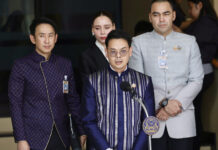
UDON THANI — 25 February 2026, Police have arrested nine people at a birthday party drug gathering and seized 128,000 methamphetamine pills along with assets worth about 2.2 million baht, officials said on Wednesday.

At a 11:30 news conference outside the Udon Thani Provincial Police headquarters, Deputy Governor Phisit Chai Apaiyagul and senior police officers announced the arrests.

Those detained were identified by police only by their nicknames and ages: Frame, 28; Phu, 22; Jay, 20; Pongphisit, 20; Pongphon, 28; Patcharita, 29; Nattreeya, 30; Ek, 30; and Art, 35.

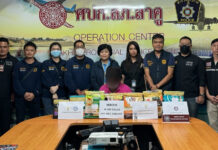
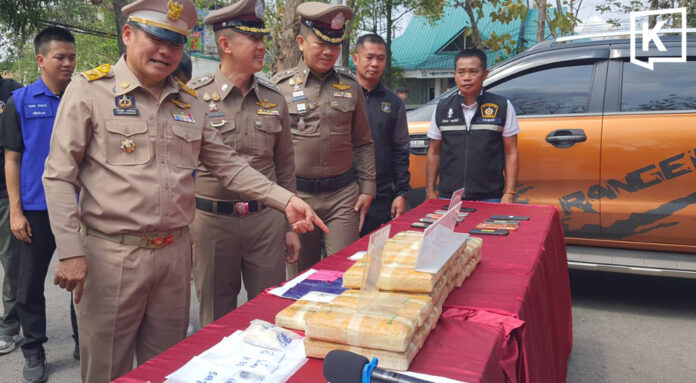
Seized items included 128,000 methamphetamine tablets, 11 packets of ketamine weighing 57.77 grammes, 16 packets of collagen mixed with methamphetamine, four ketamine vape pods and 10 mobile phones.

Authorities also confiscated assets including a white Honda City registered in Bangkok, an orange four-door Ford Ranger pickup registered in Bangkok, a black Honda Lead motorcycle, a one-baht-weight gold necklace, a gold ring weighing one salung, 40,000 baht in cash and 345,460 baht held in bank accounts. The total value was estimated at 2.2 million baht.

Police said the operation began on the night of 24 February, when investigators received information that Frame was selling methamphetamine within Udon Thani municipality.

Frame was then used in a sting operation to arrange a drug purchase from a major local dealer known as Yai. Instead, Yai allegedly sent Phu to deliver the drugs. Phu was arrested with five packets of ketamine weighing 33.77 grammes, 12 packets of collagen, 70 grammes of a brown powder resembling cocaine and one ketamine vape pod.

While Phu was in custody, Yai allegedly telephoned instructing him to deliver three more packets of collagen mixed with methamphetamine to a rented house in Udon Thani municipality. Police posed as Phu and carried out the delivery, while officers lay in wait near a convenience store close to the property.

A woman came out to receive the drugs and pay for them, prompting officers to move in and search the house. Inside, they found 16 men and women gathered. Officers seized four packets of ketamine weighing 5.73 grammes, three packets of collagen mixed with methamphetamine and three ketamine vape pods.

All were taken to a police station for questioning and urine testing. Five tested positive for drug use. Jay admitted the drugs were his and said he had ordered them from Yai for a birthday celebration at the rented house, but claimed they had not yet been consumed before police arrived. Those who tested positive had used drugs earlier, police said.

Assets belonging to Jay, including a pickup truck and a mobile phone worth about 947,000 baht, were seized. Those who tested negative were recorded and released.

Further investigation led police to Ek, who was alleged to have contacted foreign nationals and, together with Art, used a car to distribute methamphetamine. A search of Ek’s condominium uncovered Art and 128,000 methamphetamine pills.

Both were charged with joint possession of a Category 1 narcotic with intent to sell. Police seized four mobile phones, a car, gold jewellery, 40,000 baht in cash and bank deposits worth about 1 million baht for further legal proceedings.


Advertisement

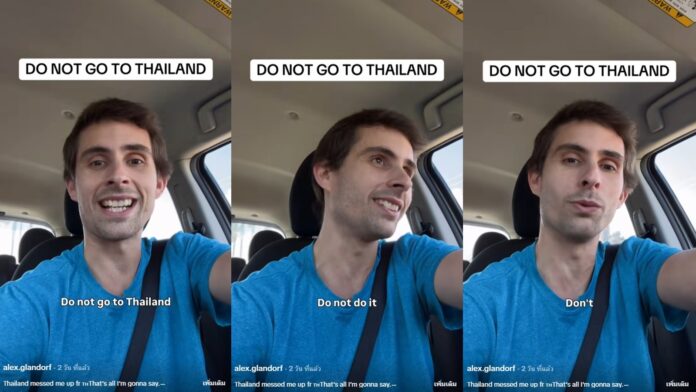
“Don’t Go to Thailand,” Foreigner says here’s why

@alex.glandorf

A foreign TikTok user has gone viral after posting a tongue-in-cheek video warning people not to visit Thailand — only to explain that the country made him fall in love with it.

In the clip, Alex Glabdorf (@alex.glandorf) speaks directly to the camera while driving, repeatedly saying: “Do not go to Thailand. Do not do it.” He jokes that travellers who book a one- or two-week trip will eventually have to return home — and once back, they will “hate” their jobs and normal lives because they cannot stop thinking about Thailand. He humorously claims visitors will want to sell everything and move back permanently, saying he himself spent a year in the country before returning home after running out of money. “Thailand took all my money,” he says, before ending the video by asking who is heading to Songkran in April.


@alex.glandorf Thailand messed me up fr 🇹🇭 That’s all I’m gonna say. Songkran in April? Who’s all going? #thailand #songkran #thailandtravel #traveltok ♬ original sound – Alex Glandorf


The video quickly gained traction online, drawing warm reactions from Thai users who said they felt both amused and proud. Many foreign viewers also joined the discussion, sharing their own experiences and travel plans. Some said they were flying to Thailand within days, while others wrote that they had already visited multiple times and were eagerly waiting for their next trip, describing Thailand as the “best country” with the “best people.”

Advertisement

Cambodia suspends Panda Commercial Bank’s operations for worsening financial situation

PHNOM PENH, Feb. 23 (Xinhua) — The National Bank of Cambodia (NBC), also known as the central bank, on Monday halted the operations of the Panda Commercial Bank for its worsening financial situation.
The NBC said in a public notice that prudential supervision found that the bank’s financial condition has deteriorated, which will lead to the inability to provide banking services.

“In this regard, the NBC has decided to appoint Morisonkak MKA Audit-Accounting Co., Ltd. as the provisional administrator and liquidator of the Panda Commercial Bank,” the notice said.

“During this period, Panda Commercial Bank is suspended from providing any new banking services, including accepting deposits and granting loans,” it added.

The notice said the Morisonkak MKA Audit-Accounting Co., Ltd. has the right to manage and control all operations and assets of the Panda Commercial Bank from the date of this announcement onwards.

According to the notice, customers who have deposited at the bank must prepare documents to withdraw their deposits, while those who have borrowed money from the bank must continue to fulfill their obligations as usual.

The Panda Commercial Bank received a commercial bank license in 2019, the notice said, adding that it has the current assets of approximately 776 million U.S. dollars, loans of about 536 million dollars, and deposits of roughly 502 million dollars.

The bank accounted for 0.77 percent of Cambodia’s banking system by the end of 2025.

According to the NBC, by the end of 2025, the Southeast Asian country has 59 commercial banks, 89 microfinance institutions, seven specialized banks, and 89 rural credit institutions, with 30.6 million deposit accounts and 4.5 million credit accounts.

Advertisement

Baby’s body found in tour bus toilet bin

Baby’s body found in tour bus toilet bin

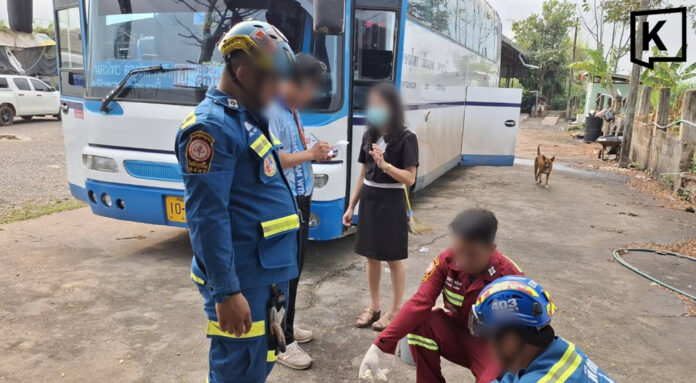
PHITSANULOK — 25 February 2026, The body of a newborn boy was found in a rubbish bin inside the toilet of an interprovincial bus parked at a depot in Wang Thong district, police said on Wednesday.

Investigators said the infant still had an umbilical cord and placenta attached and was believed to have died recently. The body was sent for autopsy at Wang Thong Hospital as police stepped up efforts to locate a woman suspected of being the child’s mother for questioning and possible legal action.

Police were alerted to the discovery on 25 February 2026. Lt. Col. Sommai Rakpom, an investigator at Wang Thong Police Station, coordinated with detectives, rescue workers from the Burapha Rescue Unit and a duty doctor from Wang Thong Hospital to examine the scene.

The bus, operating on the Udon Thani–Phitsanulok route and bearing Phitsanulok registration number 10-1638, was parked at a tour bus garage in Moo 3, Ban Dong Khoi, Wang Phikul subdistrict, Wang Thong district. The infant’s body was found at the bottom of a bin in the vehicle’s toilet.

The 53-year-old driver, Santi Lertwongsakulchai, said the bus had travelled from Udon Thani via Loei to its final destination in Phitsanulok, picking up passengers at designated stops including Nong Bua Lamphu and Wang Saphung districts. After dropping off passengers at Phitsanulok Bus Terminal 2 and the final stop at Bus Terminal 1, the bus was parked at the depot at 18:00 on 24 February 2026.

A 52-year-old bus attendant, who discovered the body, told police she boarded the parked bus on Wednesday morning to prepare it for cleaning ahead of its scheduled 11:00 departure to Udon Thani. As she removed the toilet bin to empty it, she noticed it was unusually heavy. Upon opening the lid, she found the infant’s body inside.

She said she recalled a young, tall, thin woman wearing jeans who boarded the bus in Loei province and appeared unwell. The woman lay on a seat at the rear near the toilet before getting off at Phitsanulok Bus Terminal 1.

Preliminary findings by police and the attending doctor suggested the boy was about seven to eight months’ gestation and physically developed. Authorities said he may have been born prematurely and died shortly after birth, or may have been stillborn, though the possibility of foul play has not been ruled out. An autopsy will determine the cause of death as police work to identify and question the child’s mother in accordance with the law.

Advertisement

PNP 15 joins DPT to boost Thailand’s coastal management with area-based, nature-based and hybrid solutions

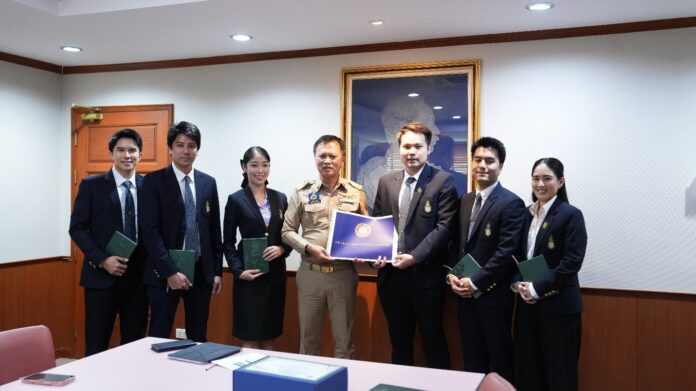
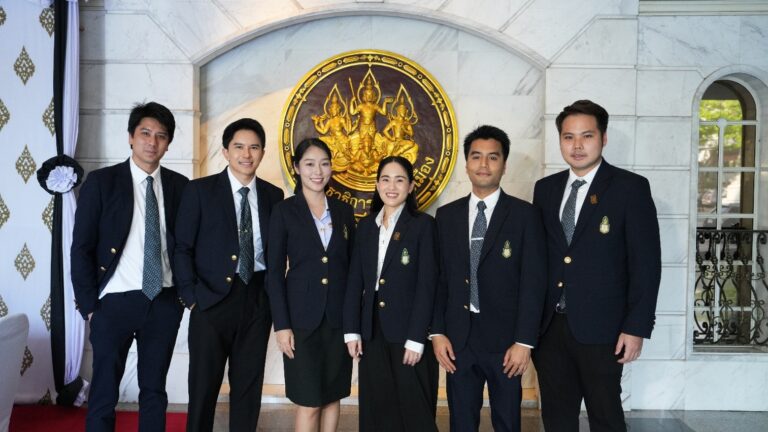
On 24 February 2026, at the Department of Public Works and Town & Country Planning(DPT), representatives of The Intermediate Certificate course of Young Leadership in Democratic Governance (Class 15) or PNP 15 , King Prajadhipok’s Institute, led by the Owl Group, met with Mr. Phongnara Yenying, Director-General of the Department of Public Works and Town & Country Planning, to deliver the study findings and policy recommendations entitled “Sustainable Engagement for Adaptive Governance and Unified Action in Resilient Development (SEA GUARD Project).” The Owl Group, PNP 15, is composed of representatives from multiple sectors, including Gun Jompalang Chuay Su Foundation, Prince of Songkla University, Taweesap (Jew Jae Heng) co.,Ltd., Vincent International Co.,Ltd., Airports of Thailand Public Company Limited, and the Royal Thai Army Band Department. The meeting aimed to support future efforts to drive solutions to coastal erosion challenges in Thailand.

Picture2 9

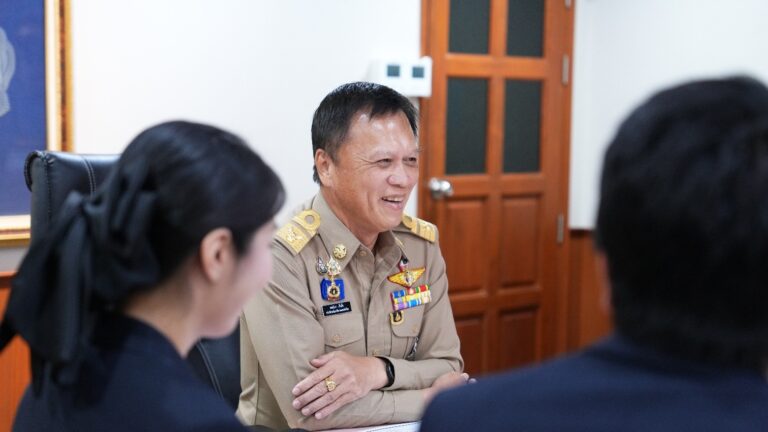
Following the discussion, Mr. Phongnara Yenying said the Department welcomed insights and research presented by the younger generation and diverse stakeholders from PNP 15, based on both fieldwork and conclusions drawn from a policy debate. He noted that the information aligns with the Department’s direction to strengthen a sustainable balance between engineering and environmental considerations. He emphasised that the Ministry of Interior’s core mission is to relieve public hardship and promote public well-being, and that in many coastal areas the Department becomes involved after requests are submitted through local administrative organisations.

Looking ahead, he underscored the importance of advancing Hybrid Solutions, integrating engineering structures with nature-based innovations that are appropriate for each locality, and stated that the Department is willing to have further study and incorporate the concept of “Area-based Nature-based and Hybrid Solutions” into future workplans. This would enable flexible coastal protection designs tailored to local contexts, respond to community needs, and minimise impacts on ecosystems as much as possible. He added that the Department will continue working with all sectors to deliver tangible outcomes.

Picture3 6

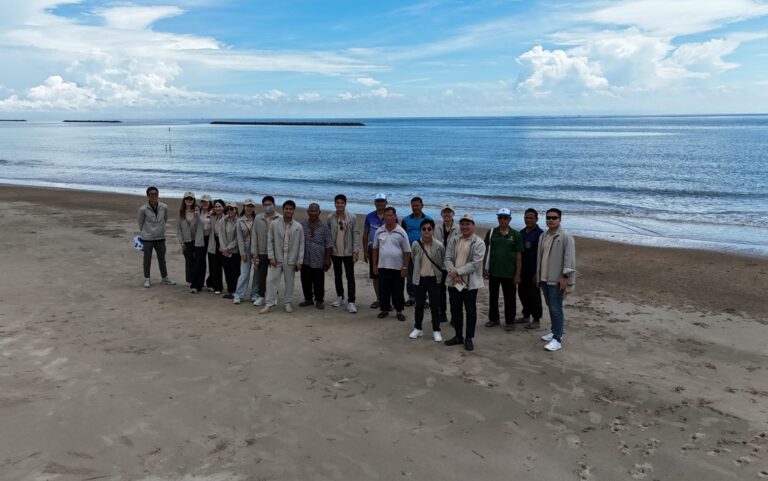
Dr. Sorawit Lim-o-pas Pulsawasd, representative of the Owl Group, PNP 15, stated that the recommendations were developed under close guidance from Assoc. Prof. Dr. Prinya Thaewanarumitkul, the project advisor, and were the outcome of comprehensive data collection across four distinct contexts: Phetchaburi (Chao Samran Beach), Trang (Koh Libong), Surat Thani (Koh Samui), and Bangkok (Bang Khun Thian).

He also highlighted the success of a national environmental policy debate titled “Political Party Policies and Thailand’s Environmental Crisis: Grey Infrastructure or Green Solutions?” held at King Prajadhipok’s Institute on 30 January, which brought together a wide range of stakeholders, including the Beach for Life network, academics from Kasetsart University, and community representatives directly affected by coastal erosion from Prachuap Khiri Khan, Phetchaburi, Samut Prakan, and Bangkok.

Dr. Sorawit noted that in-depth dialogue with all sectors including representatives from five political parties responsible for environmental policy suggested that relying solely on concrete seawalls may no longer be a final answer. Stakeholders broadly supported the push for Area-based Policy Solutions, and the Department’s openness to considering Nature-based Solutions and Hybrid Solutions was described as a meaningful starting point and a new dimension of work that places environmental concerns and people’s voices at the centre.

Picture4 2

The debate attracted strong attention from major political parties. Party representatives, including Mr. Plodprasop Suraswadi (Pheu Thai Party), Mr. Varawut Silpa-archa (Bhumjaithai Party), Mr. Satit Wongnongtaey (Democrat Party), Dr.Decharat Sukkamnerd (People’s Party), and Mr. Priyet Angkurakitti (Thai Sang Thai Party), presented approaches that emphasised sustainability. The Owl Group, PNP 15, compiled these perspectives into a white paper and submitted it as a policy proposal to the Department of Public Works and Town & Country Planning to support future coastal erosion management. The initiative aims to help advance public policy that maximises benefits for people, the economy, and Thailand’s coastal resources in a sustainable manner.

Advertisement

Corrections Department says Thaksin eligible for parole on 9 May

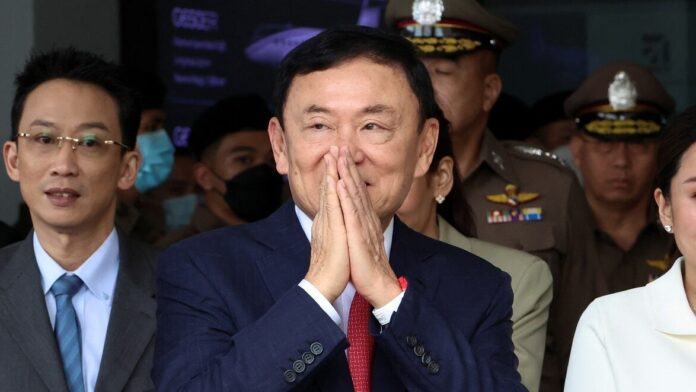
BANGKOK – 25 February 2026, The Department of Corrections says former prime minister Thaksin Shinawatra is eligible for parole on 9 May after serving two-thirds of his one-year sentence.

Yutthana Nakruangsee, deputy director-general and spokesman of the Department of Corrections, said the Central Klong Prem Prison committee has yet to finalise the list of inmates eligible for general parole for submission to the department-level committee.

He said Thaksin is serving a one-year (12-month) sentence. Under the two-thirds rule for general parole, an inmate must have served eight months. Thaksin entered the justice process on 9 Sept 2025. Based on that calculation, he would be eligible for release on parole on 9 May 2026.

Under procedures, parole consideration begins at the prison committee level. Once eligible names are compiled, they are forwarded to the department committee for screening before being submitted to the final stage, the Justice Ministry committee.

Yutthana said that although 9 May falls on a Saturday, authorities are obliged to uphold inmates’ rights. If parole is approved, the prison must release the inmate in accordance with procedures. From about 07:00–08:00, officials will verify documents before relatives collect the parolee and take him to the residence registered with probation authorities.

If parole conditions are violated, the individual will be returned immediately to prison to serve the remainder of the sentence.

In Thaksin’s case, as the sentence is relatively short at one year, electronic monitoring will not be required, Yutthana said. He must report to probation officers as scheduled. After completing the remaining four months on parole, he will have served the full one-year term, ending on 9 Sept 2026, and will then receive a certificate of release from prison.

Advertisement

Bangkok opens 190 cooling centres as Thailand enters peak summer

BANGKOK — Thailand has officially entered the summer season in late February, with the hot period expected to last until around mid-May. Authorities warn that temperatures could peak at 42–43°C in some areas, particularly in the North, while upper Thailand may see average highs of 36–37°C, raising health concerns including heatstroke.

The intense heat, sometimes alternating with thunderstorms, poses challenges for outdoor workers and commuters using public transport. Officials cautioned that prolonged exposure to extreme temperatures increases the risk of heatstroke, especially among vulnerable groups.

To ease the impact, the Bangkok Metropolitan Administration has opened 190 “Cooling Centres” across the capital, offering safe spaces for residents to escape the heat. The centres are located at all 50 district offices, public health service centres, sports complexes and selected pilot schools. Residents can check locations, services and opening hours via the BMA’s online platform.

Beyond cooling centres, City Hall has introduced four key measures to address urban heat more systematically: developing a heat index monitoring and early warning system; strengthening protection for at-risk and vulnerable groups; improving urban infrastructure to reduce heat accumulation; and enhancing public communication and community engagement on heat-related risks.

Advertisement

Hot News

LATEST NEWS

Bangkok
overcast clouds
31.1 ° C
31.1 °
31.1 °
57 %
2.7kmh
100 %
Wed
33 °
Thu
34 °
Fri
37 °
Sat
37 °
Sun
37 °