A file photo of a news conference by New Economy Party
BANGKOK — The New Economics Party on Friday said it left the opposition to act as an independent faction, just days before a crucial parliamentary debate is set to take place.
A brief letter issued by the party said the party’s executive committee has decided that it wants to “work freely” under its own direction. The departure left the opposition bloc with six fewer MPs when the lower house convenes for a no-confidence motion against the Prime Minister, which is estimated to take place in early February.
The letter was signed by party leader Suppadit Arkatruerk, who was not available to comment as of publication time.
During the party’s electoral campaign last year, then-party leader Mingkwan Sangsuwan repeatedly told the public that the party will not join hands with the coalition supporting PM Prayut Chan-o-cha.
A senior opposition lawmaker said the New Economics’ shift of allegiance is not unexpected. Future Forward Party deputy leader Chamnan Chanruang said New Economy MPs have been voting independently of the opposition for some time now.
“They have been doing that for a while now. We knew about it for a while. We didn’t even invite them to opposition meetings this month,” Chamnan said.
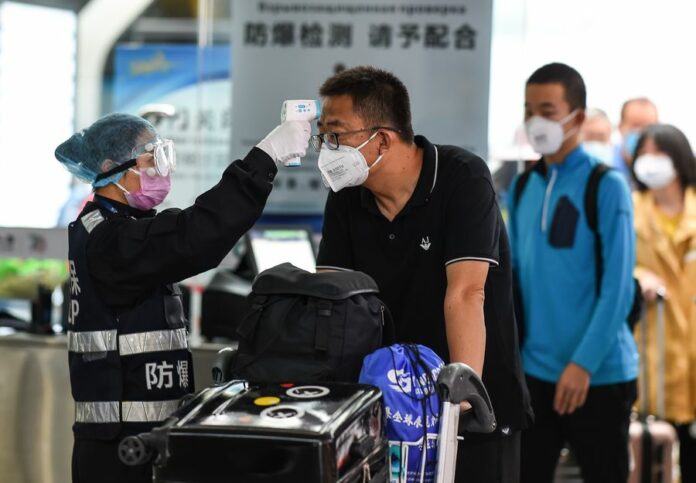
A security staff member checks a passenger's temperature at Sanya Phoenix International Airport in Sanya, south China's Hainan Province, Jan. 27, 2020. (Xinhua/Pu Xiaoxu)
BEIJING (Xinhua) — China will arrange or charter flights to bring back passengers stranded overseas due to the novel coronavirus (2019-nCoV) outbreak, according to the country’s civil aviation regulator.
Some foreign airlines have reduced or canceled flights because of the outbreak, leaving some passengers stranded overseas, said Zhu Tao, an official with the Civil Aviation Administration of China (ACCA).
The ACCA will keep close contact with the National Health Commission, some relevant departments and airlines to arrange or charter flights to transport passengers in need back to China, Zhu said.
Recently, some domestic and foreign airlines have sent flights from Japan, Thailand, Singapore and other countries to Wuhan to transport passengers back home.
China announced 9,692 confirmed cases
Chinese health authorities announced Friday that 9,692 confirmed cases of pneumonia caused by the novel coronavirus had been reported in 31 provincial-level regions and the Xinjiang Production and Construction Corps by the end of Thursday. A total of 213 people have died of the disease.
The National Health Commission said in its daily report that 1,527 patients remained in critical conditions, and 15,238 people were suspected of being infected with the virus as of the end of Thursday.
A total of 171 people had been discharged from hospital after recovery.
Thursday saw 1,982 new confirmed cases, 4,812 new suspected cases, and 43 deaths — 42 in Hubei Province and one in Heilongjiang Province.
Also on Thursday, 157 patients became seriously ill, and 47 people were discharged from hospital after recovery.
A total of 113,579 close contacts had been traced, the commission said, adding that among them, 4,201 were discharged from medical observation on Thursday, with 102,427 others still under medical observation.
By the end of Thursday, 12 confirmed cases had been reported in Hong Kong Special Administrative Region, seven in Macao Special Administrative Region and nine in Taiwan.
NFL Super Bowl 54 football game halftime performer Jennifer Lopez and Shakira pose for a picture after a news conference Thursday, Jan. 30, 2020, in Miami. (AP Photo/David J. Phillip)
MIAMI (AP) — Jennifer Lopez and Shakira said their Super Bowl halftime show will pay homage to Latino culture, promising a joint performance that has an empowering message and also one that will remember NBA icon Kobe Bryant.
Lopez and Shakira on Thursday held a press conference before Sunday’s big game in Miami, telling media they worked hard to put together an eye-popping, high-energy 12-minute performance before the San Francisco 49ers take on the Kansas City Chiefs at Hard Rock Stadium.
“When I was living in Barranquilla, my hometown, as a little girl no one would have thought that I would be performing at the Super Bowl,” Colombian singer Shakira said. “It would be so hard to believe. And it’s a reality today, now. I think that this is a palpable example of how anything is possible really and I think what matters is the size of dreams.”
Shakira and Lopez have separately released a number of chart-topping hits that dominated both the pop and Latin charts in the last two decades. While rehearsing days ago, Lopez said her beau Alex Rodriguez came to her in tears to let her know Bryant, a friend of his, had passed away. Lopez said Thursday she wanted to send love and support to Bryant’s wife and family.
“We have to love people when they’re here and not wait,” said Lopez. “I think about Vanessa as a mom and losing her best friend and partner and losing her child, you know, how awful that must be for her right now, and I just wanted to send the message and praying God guides her through every moment because she has three more babies to take care of.”
Bryant had attended concerts by Lopez and Shakira, the singers said Thursday. Shakira added that they want to honor his legacy Sunday.
“Life is so fragile. And that’s why we have to live every moment as intensely as we can,” Shakira said. “And I think we’ll all be remembering Kobe on Sunday. And we’ll be celebrating life and celebrating diversity in this country. I’m sure he’ll be very proud to see the message that we’re going to try to convey onstage.”
The singers also want to celebrate women and the Latino community with their performance. Lopez noted that for the first time two Latinas are headlining the halftime show.
“That statement alone to me is empowering. When I think of my daughter, when I think of all the little girls in the world, to be able to have that (and) to see that two Latinas (are) doing this in this country at this time, it’s just very empowering for us,” said Lopez, who was born in New York to Puerto Rican parents.
Sunday will mark the first halftime show to be orchestrated under the leadership of Jay-Z and Roc Nation thanks to their new entertainment partnership with the NFL. The singers said they are extremely excited but also a little nervous about the performance.
“I was up till 4 in the morning last night trying a pair of shorts and kind of tearing because they didn’t fit right. So, it is nerve-racking but also exhilarating,” Shakira said.
“It’s definitely a ride,” Lopez added.
“The relieving factor is they’re going to be people out there and it’s our people cheering for us, fans, and it’s in Miami,” Shakira said as the audience cheered on loudly.
“And that’s so, so special because Miami is a city full of energy, it’s an important nest for the Latino community and it’s been a viable city for me because a huge part of my career was forged here. And it’s also it’ll be on my birthday, too, so happy birthday to me.”
Alexander Zubkov of Russia carries the national flag as he leads the team during the opening ceremony of the 2014 Winter Olympics in Sochi, Russia. (Associated Press)
TOKYO (Kyodo) — Russian track and field athletes may be banned from a second-straight summer Olympics after the Athletics Integrity Unit recommended severe sanctions be imposed on the Russian Athletics Federation on Wednesday.
The AIU ordered the national federation to admit their complicity in doping offenses and to show contrition while referring the anti-doping matter to the World Athletics Council with a recommendation that a suspension of the “authorized neutral athlete” process remains in place.
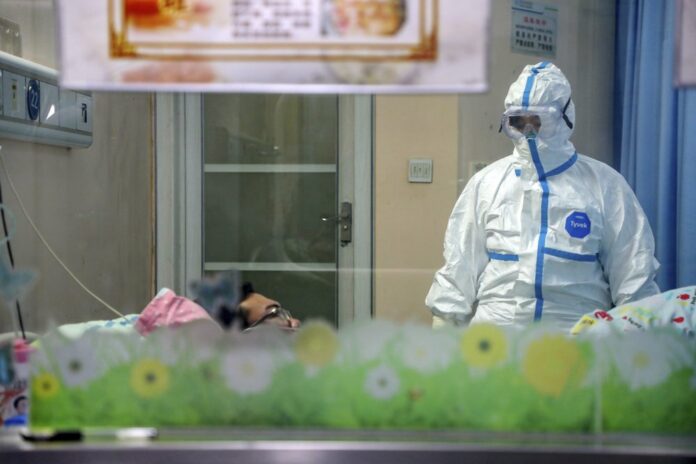
A doctor attends to a patient in an isolation ward at a hospital in Wuhan in central China's Hubei Province, Thursday, Jan. 30, 2020. (Chinatopix via AP)
GENEVA (AP) — The World Health Organization declared the outbreak sparked by a new virus in China that has spread to more than a dozen countries as a global emergency Thursday after the number of cases spiked more than tenfold in a week.
The U.N. health agency defines an international emergency as an “extraordinary event” that constitutes a risk to other countries and requires a coordinated international response.
China first informed WHO about cases of the new virus in late December. To date, China has reported more than 7,800 cases including 170 deaths. Eighteen other countries have since reported cases, as scientists race to understand how exactly the virus is spreading and how severe it is.
Experts say there is significant evidence the virus is spreading among people in China and have noted with concern instances in other countries — including the United States, France, Japan, Germany, Canada, South Korea and Vietnam — where there have also been isolated cases of human-to-human transmission.
Speaking to reporters in Geneva, WHO director-general Tedros Adhanom Ghebreyesus noted the worrisome spread of the virus between people outside China.
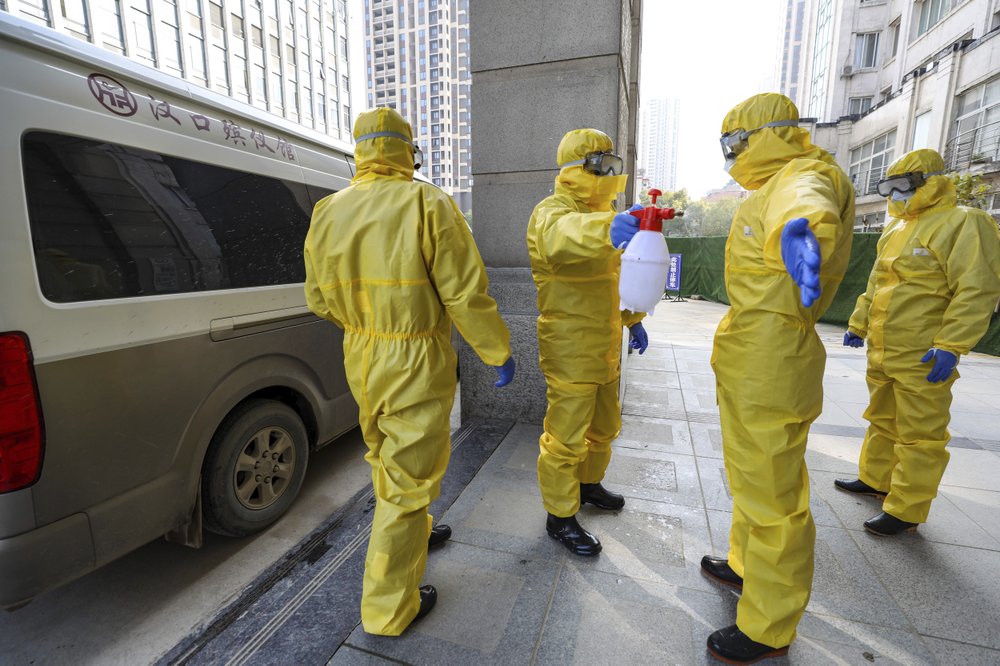
Funeral workers disinfect themselves after handling a virus victim in Wuhan in central China’s Hubei Province, Thursday, Jan. 30, 2020. (Chinatopix via AP)
“The main reason for this declaration is not because of what is happening in China but because of what is happening in other countries,” he said. “Our greatest concern is the potential for this virus to spread to countries with weaker health systems which are ill-prepared to deal with it.”
“This declaration is not a vote of non-confidence in China,” he said. “On the contrary, WHO continues to have the confidence in China’s capacity to control the outbreak.”
A declaration of a global emergency typically brings greater money and resources, but may also prompt nervous governments to restrict travel and trade to affected countries. The announcement also imposes more disease reporting requirements on countries.
In the wake of numerous airlines cancelling flights to China and businesses including Starbucks and McDonald’s temporarily closing hundreds of shops, Tedros said WHO was not recommending limiting travel or trade to China.
“There is no reason for measures that unnecessarily interfere with international travel and trade,” he said. He added that Chinese President Xi Jinping had committed to help stop the spread of the virus beyond its borders.
“During my discussion with the president and other officials, they’re willing to support countries with weaker health systems with whatever is possible,” Tedros said.
On Thursday, France confirmed that a doctor who was in contact with a patient with the new virus later became infected himself. The doctor is now being treated in an isolated room at a Paris hospital. Outbreak specialists worry that the spread of new viruses from patients to health workers can signal the virus is becoming adapted to human transmission.
China raised the death toll to 170 on Thursday and more countries reported infections, including some spread locally, as foreign evacuees from China’s worst-hit region returned home to medical tests and even isolation.
Russia announced it was closing its 2,600-mile border with China, joining Mongolia and North Korea in barring crossings to guard against a new viral outbreak. It had been de facto closed because of the Lunar New Year holiday, but Russian authorities said the closure would be extended until March 1.
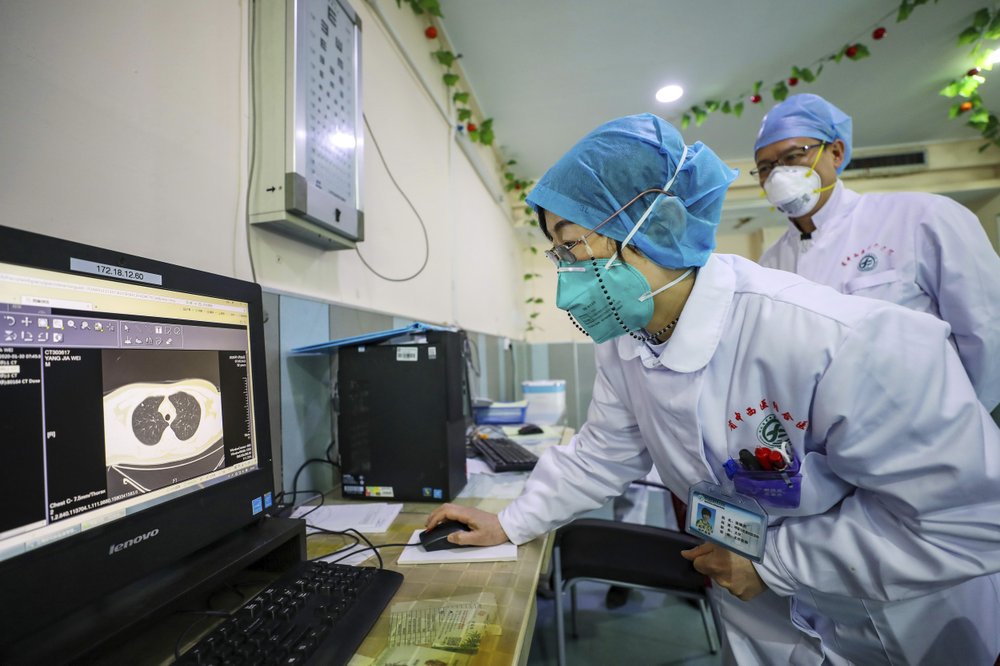
Doctors look at a CT scan of a patient at a hospital in Wuhan in central China’s Hubei Province, Thursday, Jan. 30, 2020. (Chinatopix via AP)
Meanwhile, the United States and South Korea confirmed their first cases of person-to-person spread of the virus. The man in the U.S. is married to a 60-year-old Chicago woman who got sick from the virus after she returned from a trip to Wuhan, the Chinese city that is the epicenter of the outbreak.
The case in South Korea was a 56-year-old man who had contact with a patient who was diagnosed with the new virus earlier.
Although scientists expect to see limited transmission of the virus between people with close contact, like within families, the instances of spread to people who may have had less exposure to the virus in Japan and Germany is worrying.
In Japan, a man in his 60s caught the virus after working as a bus driver for two tour groups from Wuhan. In Germany, a man in his 30s was sickened after a Chinese colleague from Shanghai, whose parents had recently visited from Wuhan, came to his office for a business meeting. Four other workers later became infected. The woman had shown no symptoms of the virus until her flight back to China.
“That’s the kind of transmission chain that we don’t want to see,” said Marion Koopmans, an infectious diseases specialist at Erasmus University Medical Center in the Netherlands and a member of WHO’s emergency committee.
Koopmans said more information was needed about how the virus was spread in these instances and whether it meant the virus was more infectious than previously thought or if there was something unusual in those circumstances.
Mark Harris, a professor of virology at Leeds University, said it appears that the spread of the virus among people is probably easier than initially presumed.
“If transmission between humans was difficult, then the numbers would have plateaued,” he said. Harris said the limited amount of virus spread beyond China suggested the outbreak could still be contained, but that if people are spreading the disease before they show symptoms — as some Chinese politicians and researchers have suggested — that could compromise control efforts.
The new virus has now infected more people in China than were sickened there during the 2002-2003 outbreak of SARS, or severe acute respiratory syndrome, a cousin of the new virus. Both are from the coronavirus family, which also includes those that can cause the common cold.
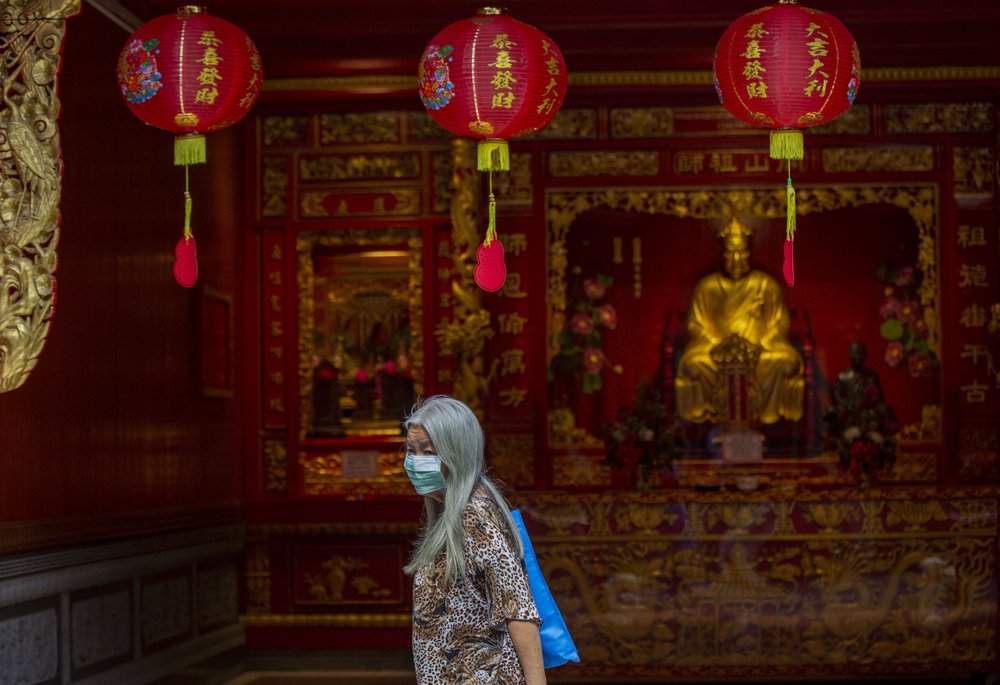
A Chinese devotee wearing a face mask walks in a Chinese temple in Bangkok, Thailand, Thursday, Jan. 30, 2020. (AP Photo/Gemunu Amarasinghe)
The latest figures for mainland China show an increase of 38 deaths and 1,737 cases for a total of 7,736 confirmed cases. Of the new deaths, 37 were in Hubei province, of which Wuhan is the capital, and one was in the southwestern province of Sichuan. Outside China, there are 82 infections in 18 countries, according to WHO.
China extended its Lunar New Year holiday to Sunday to try to keep people home, but the wave of returning travelers could potentially cause the virus to spread further.
China has been largely praised for a swift and effective response to the outbreak, although questions have been raised about the police suppression of what were early on considered mere rumors — a reflection of the one-party Communist state’s determination to maintain a monopoly on information in spite of smart phones and social media.
That stands in stark contrast to the initial response to SARS, when medical reports were hidden as state secrets. The delayed response was blamed for allowing the disease to spread worldwide, killing around 800 people.
Dr. Jeremy Farrar, director of Britain’s Wellcome Trust, welcomed WHO’s emergency declaration.
“This virus has spread at unprecedented scale and speed, with cases passing between people in multiple countries across the world,” he said in a statement. “It is also a stark reminder of how vulnerable we are to epidemics of infectious diseases known and unknown.”
Cheng reported from London. Associated Press writers Ken Moritsugu in Beijing, Elaine Ganley in Paris, Frank Jordans in Berlin, Mari Yamaguchi in Tokyo and Kim Tong-hyung in Seoul, South Korea, contributed to this report.
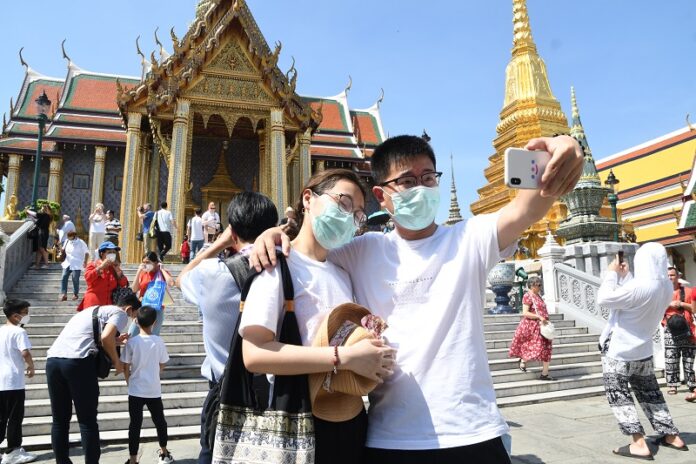
Tourists wear masks as they tour the Grand Palace complex on Jan. 26, 2020.
Any decision on Chinese visas should be driven by expert consultation – not internet paranoia.
As the cases of coronavirus infections are surging in China, surpassing those of the SARS outbreak nearly two decades ago, the demand for Thailand to shut its doors on visitors from mainland China is growing by the day.
Although the Chinese authorities have since halted outgoing flights from Wuhan, the virus’ epicenter, many on the Thai internet fear the new strain of coronavirus can still be brought by tens of thousands of other Chinese who landed in Thai airports.
Data released by Thai authorities say about 930,000 Chinese nationals visited Thailand from Jan. 1 to Jan. 28. Approximately 227,000 of them are still here in the kingdom.
A quick glance through the internet quickly reveals anxiety on a national scale. For example, we asked our readers earlier this week whether Chinese citizens should be barred from entering the country. Of 1,200 votes, 80 percent said yes.
As the Cabinet is set to debate the border issue tomorrow, several points should be heeded.
First, no country in Southeast Asia has yet set a precedence by imposing a total ban on Chinese nationals, contrary to an erroneous claim that has been widely shared online which states that Singapore and South Korea have already enacted such a ban.
Even the Philippines, which welcomes at least 7.5 million tourists from China, are opting for a limited restriction: a suspension of visas upon arrivals for Chinese visitors, though travelers from the mainland with other types of valid visas can still enter the country.
On the other hand, Hong Kong, due to its close proximity with China, tooka more drastic approach by suspending permits for mainlanders to visit the semi-autonomous territory. The move has been hailed by several experts as a step that can help limit the spread of the new coronavirus.
Thailand would do well to learn from its neighbors and formulate its own responses in this subject matter.
Our nation’s reliance on tourism should also be given serious consideration. Putting a complete ban on Chinese visitors would be effectively putting a tenth of our national income in a chokehold – with the livelihoods and careers of millions of Thais in the tourism industry feeling the brunt most keenly.
A rational discussion that considers any possible consequence pertaining to 10.99 million Chinese visitors to Thailand is not greed, nor is it “placing money over well-being” of Thai citizens. A paranoia-driven ban risks repeating the the Thai idiom of riding an elephant, and trampling large swathes of forest, to catch a grasshopper.
Therefore, decisions on any change to Thailand’s current visas policy concerning the Chinese should be made only after extensive consultation and conversations with experts in relevant fields, such as public health, epidemiology, and tourism.
A science-based policy, not one borne of panic, is desperately needed – especially in these times of crisis.
BANGKOK — The government on Thursday said two people were arrested for posting false information about the outbreak of novel coronavirus.
Minister of Digital Economy and Society Buddhipongse Punnakanta said the ministry’s “Anti-Fake News Center” collaborated with the police to arrest Thitima Kongthon at her house in Bangkok’s Minburi district after she posted on her Facebook that a patient infected with the virus had died in Pattaya.
“The Anti-Fake News Center is compiling evidence to root out the source of fake news,” Buddhipongse said. “We’re working with the cybercrime police, but I have to admit that it’s difficult to identify suspects since they’re anonymous.”
Another suspect, Ritthisak Wongthonglueang, was apprehended at his house in Taweewattana district. Buddhipongse said the man confessed that he posted a video of a person collapsing in an unrelated incident but posted it to mislead the public that it was connected to the coronavirus.
The minister said operations are underway for other targets who are spreading false information, adding that the government is not idle in combating fake news.
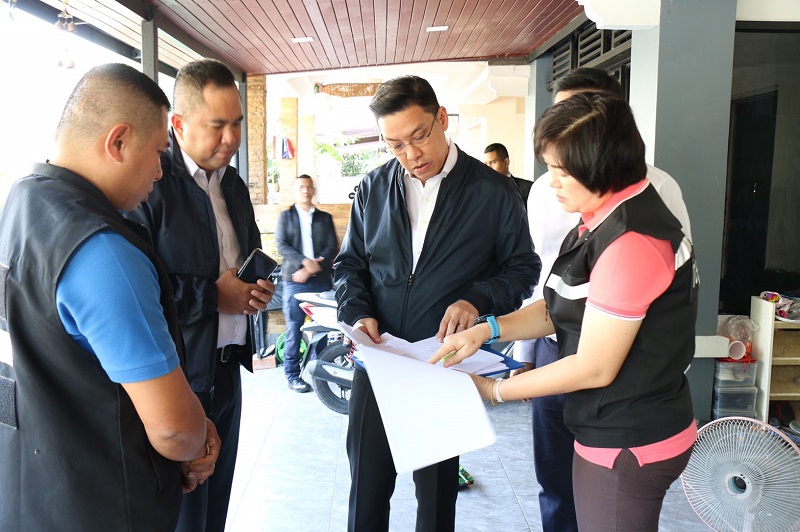
Minister of Digital Economy and Society Buddhipongse Punnakanta shows arrest warrant to the suspect on Jan. 30, 2020.
“We’re not moving slowly. In fact, we’ve already arrested two suspects, while China could only arrest one,” Buddhipongse said. “The Prime Minister has insisted that combating fake news is a priority since people’s illness is a sensitive issue.”
The two suspects would be charged with disseminating false information, which carries up to five years in prison if found guilty.
The Anti-Fake News Center said it has received 7,587 complaints about the coronavirus since Saturday. The center is verifying 160 cases with relevant authorities. It has declared 22 of them to be fake news so far, such as claims that a Thai Airways flight attendant had contracted the virus.
The media also came under criticism for reporting hyperbolic news about the virus and relying on dubious sources.
In a case that drew particularly widespread attention, Channel 3 erroneously quoted the mayor of Wuhan as saying that “most of the 5 million people” who left Wuhan before the lockdown came to Bangkok. Chinese state media said the number was closer to 10,000.
Alarmed by the flood of fake news reported by the media, the National Press Council on Thursday released a statement urging all news agencies to report about the coronavirus epidemic based on facts and strict adherence to media ethics.
Update 6:10pm: A viral video making the rounds shows a giraffe being chased and hit by a motorcycle on Tuesday, though it is unclear which one of the two fugitive animals is seen in the video.
CHACHOENGSAO — A 7 meter giraffe that escaped from a private zoo’s transport in Bangkok two days ago was found dead in a ditch on Thursday.
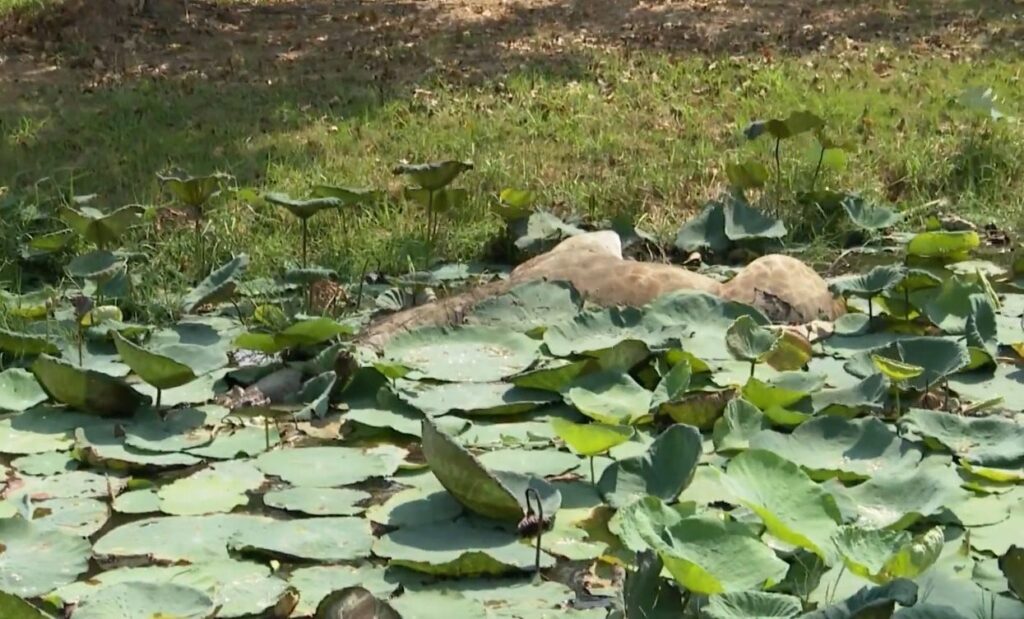
Animal control officials discovered the giraffe drowned in a lotus pond by Highway 304 in Bang Khla district Thursday afternoon, ending the two-day search for the animal.
The animal, along with another, smaller giraffe, escaped from a truck transporting them to a breeding center run by Safari World in Prachinburi on Tuesday. The smaller one was recaptured within the same day.
Pin Kiwkacha, CEO of Safari World, said today that the two were part of a convoy of 28 cars of 68 giraffes that had been flown in from Africa.
Under the law, only zoos with appropriate permits may import or breed protected wild animals. Wildlife official Somkiat Soontarapitakul said Wednesday that Safari World had the permits for its giraffes.
There are currently fewer than 100,000 giraffes in the wild, according to CITES’s UN convention in August.
The runaway giraffe found dead in a pond on Jan. 30, 2020 in Chachoengsao.
Officials prepare to examine the body of Balog Laszlo at Suvarnabhumi Airport Police Station on Jan. 26, 2020.
SAMUT PRAKAN — Police on Thursday said the investigation is still underway into the cause of death of a Hungarian man who died in Suvarnabhumi Airport’s holding cell earlier this week.
The chief of the airport police station where Balog Laszlo, 60, spent a night in detention on visa overstay offenses said he’s still waiting for a full autopsy report, though he said the suspect had diabetes.
“We found him lying on the bed, so we thought he might have fallen asleep,” Pol. Col. Natthaphon Komintharachart said. “Before that, he seemed to be ill, so we offered him to go to a hospital, but he refused.”
Laszlo informed police about his diabetes condition prior being detained, and he was allowed to bring his personal medications with him. Police also said that all detainees are monitored periodically.
A preliminary investigation found no signs of injuries on his body, leading police to suspect he might have died from illness, the police station chief added.
Natthaphon said his relatives have been informed of his death and they didn’t suspect any foul play. He said the full report should be submitted within the next seven days.
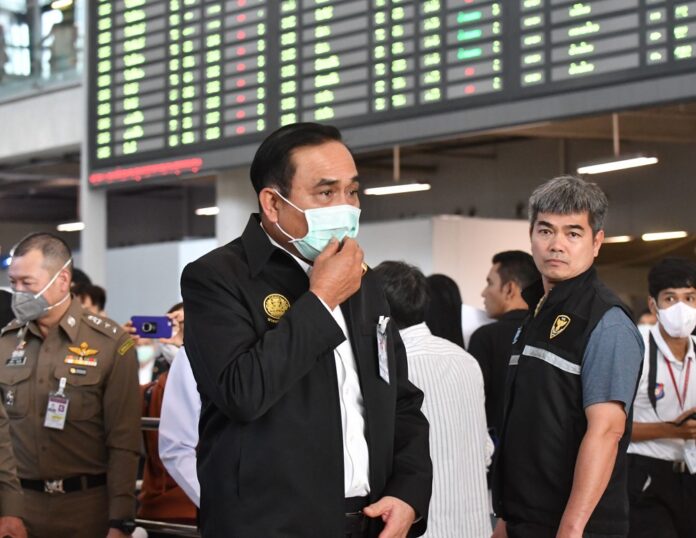
PM Prayut Chan-o-cha at Suvarnabhumi Airport on Jan. 30, 2020.
BANGKOK — Fever forced PM Prayut Chan-o-cha to cancel all his government appointments for Thursday and recover at home, his aides said.
Prayut, 65, developed cold and fever due to his lack of rest, according to the sources, though they added that the Prime Minister can still coordinate government affairs from his residence. Deputy prime ministers will attend events and meetings on his behalf today.
The sources also said Prayut’s illness is unrelated to his tour of Suvarnabhumi Airport’s health checkpoints on Wednesday. During the visit, the Prime Minister inspected several measures deployed to prevent the coronavirus epidemic at the airport.
After reviewing the thermoscan installed at the airport’s arrival zone and talking to health officials there, Prayut declared the measures to be up to international standards.
“Today I am concerned for both Thai people and people from other countries that come to ours,” Prayut said. “We have to take care of their [people] as best as we can.”