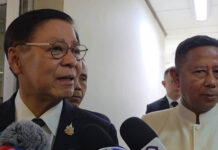
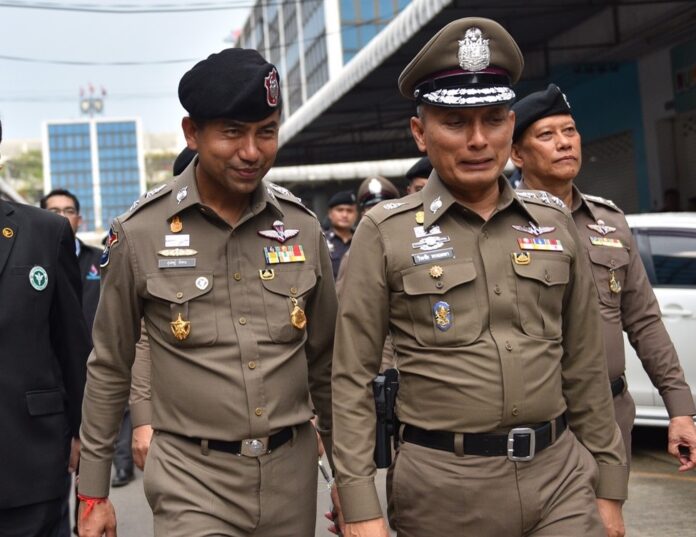
A file photo of deputy police commissioner Wirachai Songmetta, right, and immigration chief Surachate “Big Joke” Hakparn, left.
BANGKOK — Deputy police commissioner Wirachai Songmetta was moved to a civilian post and placed under an investigation on Friday under suspicions that he leaked a conversation with his supervisor to the media earlier this month.
Gen. Wirachai was transferred to the Prime Minister’s Office while an inquiry is ongoing, according to an order signed by police commissioner Chakthip Chaijinda. The order came weeks after a phone call between Wirachai and Chakthip discussing a shooting that targeted a controversial former immigration police was released to the media.
When asked by reporters at a news conference whether the phone call was the reason for the order, Gen. Chakthip gave a brief but emphatic reply, “Yes.”
The order cited unspecified “behaviors and actions that negatively affected the public’s confidence in the performance of duty and upholding of justice, and the Royal Thai Police’s image” behind the punishment.
Wirachai has yet to speak to the media about the case.
In the phone conversation obtained by the media in early January, Chakthip can be heard chiding Wirachai for speaking to reporters about a Jan. 7 drive-by shooting that targeted former immigration chief Surachate “Big Joke” Hakparn’s car.
He also told Wirachai to avoid directing media attention to the case.
“Just do anything to gain trust from your commanders, don’t make them feel suspicious,” Chakthip says in the clip. “Do you understand? Do whatever you want. That’s all. I want to warn you because many deputies are concerned.”
Police have not identified any perpetrators behind the shooting, which did not injure anyone. Surachate told the media he suspected the incident was related to his disagreement with the police’s purchase of biometric devices at the airports allegedly rife with financial irregularities.
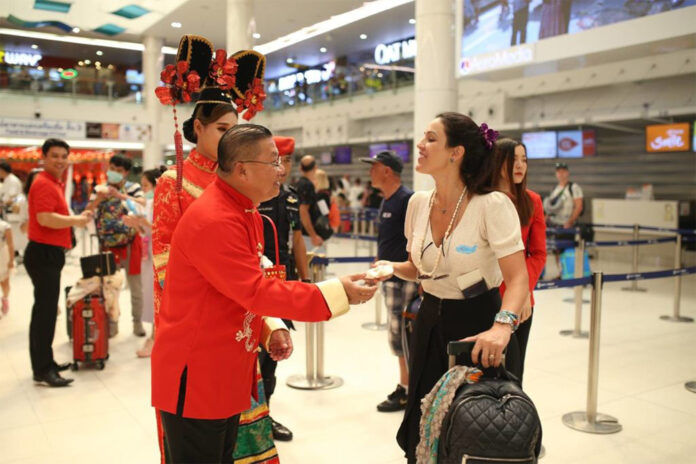
An official welcomes a tourist at Phuket Airport on Jan. 23, 2020.
BANGKOK — A senior tourism official on Friday denied news reports that the government is preparing to extend its cash giveaway program to include foreign visitors.
Speaking in an interview just a day after tourism minister Pipat Ratchakitprakan mulled handing out the cash to tourists arriving at Thailand’s airports to stimulate spending, Tourism Authority of Thailand governor Yuthasak Supasorn said it was just a “misunderstanding.”
“We’re not giving out cash coupons to foreign tourists,” Yuthasak said. “The ministry was only trying to paint a picture of his plans to reporters at a reception. It’s a misunderstanding and he didn’t mean that.”
According to multiple news reports, Pipat the tourism minister told reporters he will propose more than 10 measures to boost tourism, which is crippling from the surge of baht value in the past months, when the Cabinet’s economy team meets on Jan. 31.
One of the proposals, he said, would be similar to the government-sponsored “Chim, Shop, Chai” program, in which Thai citizens who sign up for the scheme receive 1,000 baht spending credit and a 20 percent cash rebate for their purchases. He said the program would be extended to cover foreign tourists visiting Thailand.
While Yuthasak, the Tourism Authority governor, said the government is not seriously planning on rolling out that proposal, he said other measures to boost tourists’ spendings are in the works.
Yuthasak also cited the baht currency appreciation as a major hurdle to the tourism industry; he estimated that the industry would only grew 4 to 5 percent last year, halved from the target of 10 percent.
“The baht surge means higher cost and shorter length of stay for tourists,” Yuthasak said.
But a prominent tourism business guild said a cash handout might work. Vichit Prakobgosol, president of Association of Thai Travel Agents, said the government should enact the proposal.
“Many countries have done something like this in the past, like South Korea for example,” Vichit said. “Cash coupons would encourage tourists to spend. When people spend, they wouldn’t spend just that amount, they would spend more, and more.”
He also urged the government to come up with more measures than just giving away cash.
“The government should also consider visa waiver programs to tourists from certain countries,” Vichit said. “Many countries are gaining advantage over us, and we have to compete to maintain our position.”
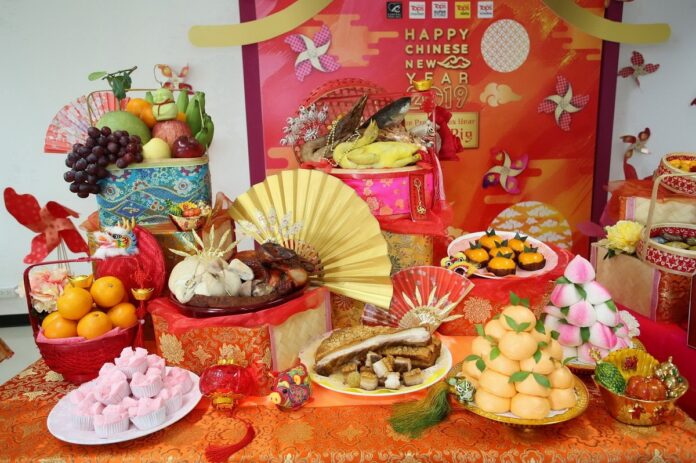
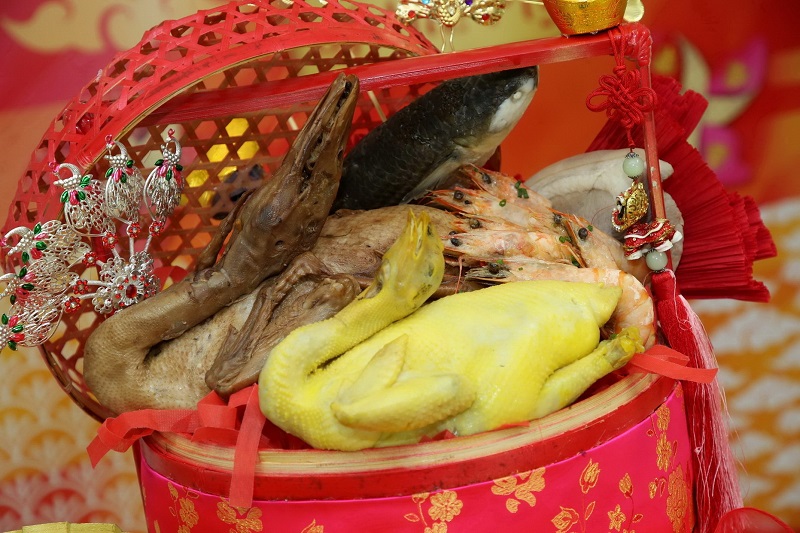
A typical set of "lucky" food and snack for Chinese New Year.
BANGKOK — You’ve seen them everywhere comes Chinese New Year – those pink fluffy flour, gluey rice wrapped in banana leafs, boiled poultry, and other foodstuff associated with the occasion, but you might not know what they are, or their meaning.
Here’s a quick guide to the festive food that’s become a common sight across Thailand as the Thai-Chinese communities welcome the Year of the Rat.
Kanom Pia (ขนมเปี๊ยะ) or Bing
Photo: http://www.mkunigroup.com/
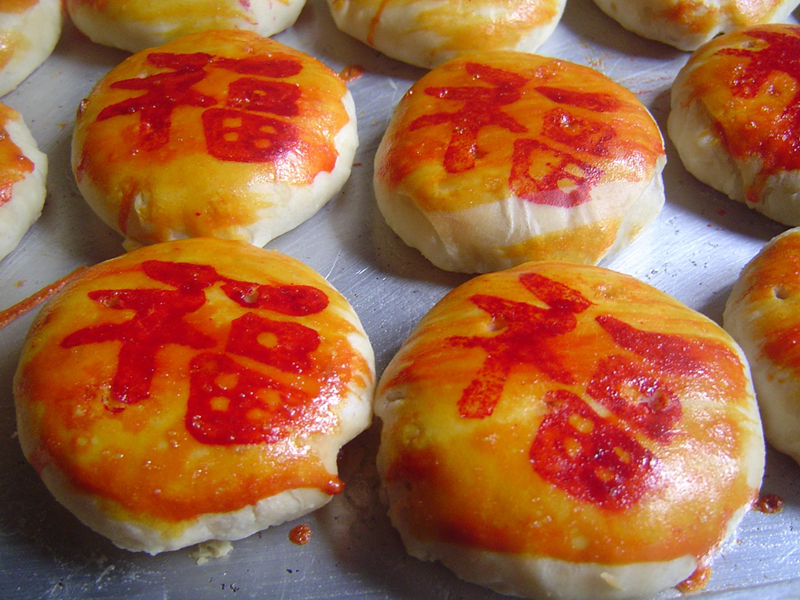
This flattened flour disk snack is often filled with salted egg yolk or yellow beans, and stamped with a lucky Chinese character in red color.
The Thai versions also come in the shape of buns. They have a variety of fillings, such as taro, Thai tea, foi tong golden thread desserts, and so on. Some are even smoked with candle smoke to give the snack a fragrant, smoky aroma.
Salapao (ซาลาเปา) or Baozi
Photo: Mam Bao Cafe / Facebook
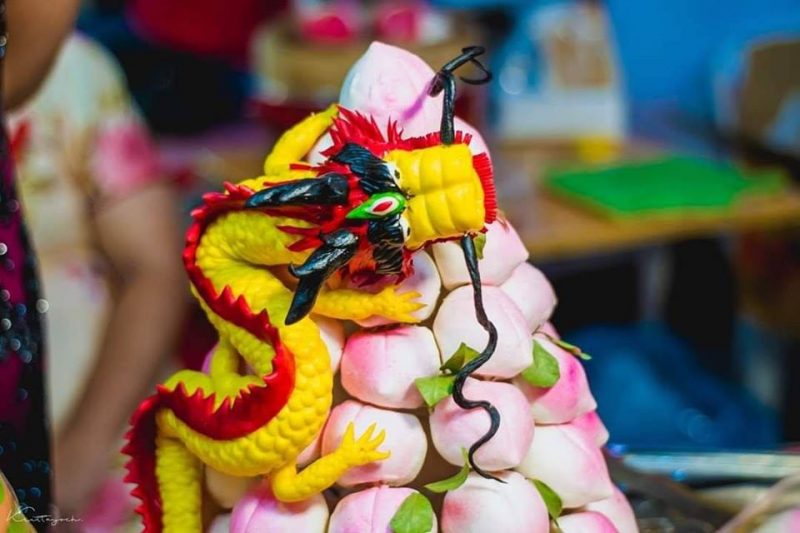
These steamed buns, while eaten year-round at Chinese restaurants, are favorite offerings during Chinese New Year since they symbolize luck and “wrapping up wealth” for one’s descendants.
Some salapao are shaped like peaches and filled with sweet green bean paste to signify longevity. One shop in Nakhon Sawan made the news for making dragon-shaped salapao.
Kanom Keng (ขนมเข่ง) or Nian Gao
Photo: Sanook
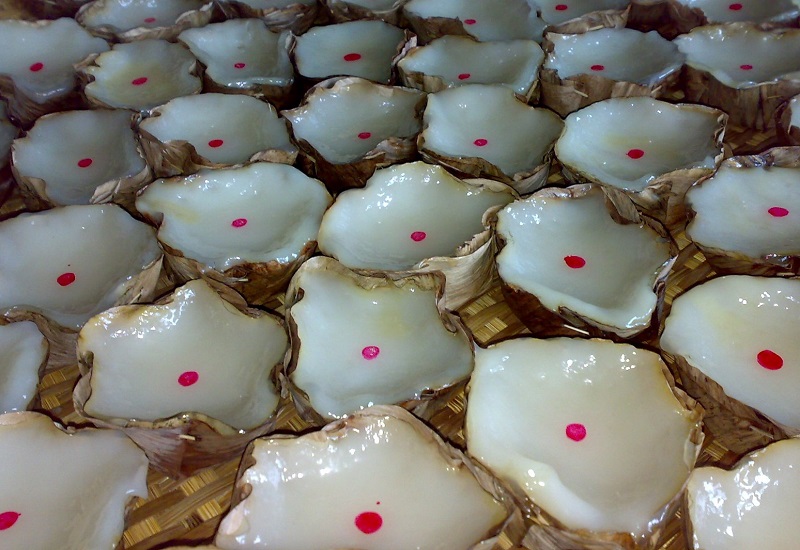
This glutinous rice cake, which symbolizes sweetness and wholeness, is eaten in Chinese and Southeast Asian celebrations of Chinese New Year. In Thailand, they’re called kanom kheng and served in little banana leaf boats.
The dot of food coloring on top is to add an auspicious red to offset the white – pure white foods are reserved for somber occasions like funerals.
Another similar snack, kanom tian, is pyramid-shaped rice cake wrapped in banana leaves and filled with sweet or savory fillings. Kanom tian is usually served together with kanom keng.
Image: khanom-menu.blogspot.com
Kanom Pui Fai (ขนมปุยฝ้าย) or Fagao
Photo: kawmunkai.wordpress.com
May your life prosper and rise up in life as much as this steamed cake! Kanom Pui Fai is made of steamed rice flour and represents prosperity.
In Thailand, they’re often seasoned with jasmine flower or pandan scents and baked in various shades of pastel. Some are even baked with flower or fruit patterns, such as these watermelon and dragonfruit-themed ones.
“Chan Up” is a bastardization of the Teochew dialect word for the name of a box of dried assorted candies offered to spirits during seasonal festivities. They were introduced to Thailand by Chinese workers as early as the Ayutthaya era.
A set of kanom chan up is filled with sweet snacks such as tua tud peanut bars that symbolize wealth as they resemble gold ingots, sesame bars, sugared nuts, candied pumpkin, and rice puffs.
The sweet snacks hope to bring a similar sweetness to the worshipers’ lives, which is why kanom chan up in popular both at Chinese New Year and weddings.
Kanom Ko (ขนมโก๋)
Photo: Thai Open Educational Resources
Another Teochew Chinese snack, kanom ko comes in two forms: flattened discs and mooncake-like shapes with bean or sesame fillings. Kanom ko with durian fillings are common in Thailand.
The surface is often printed with Chinese characters, patterns or flowers. Due to their white, flat shape, they’re also eaten during the Mid-Autumn Festival.
Lucky Fruits
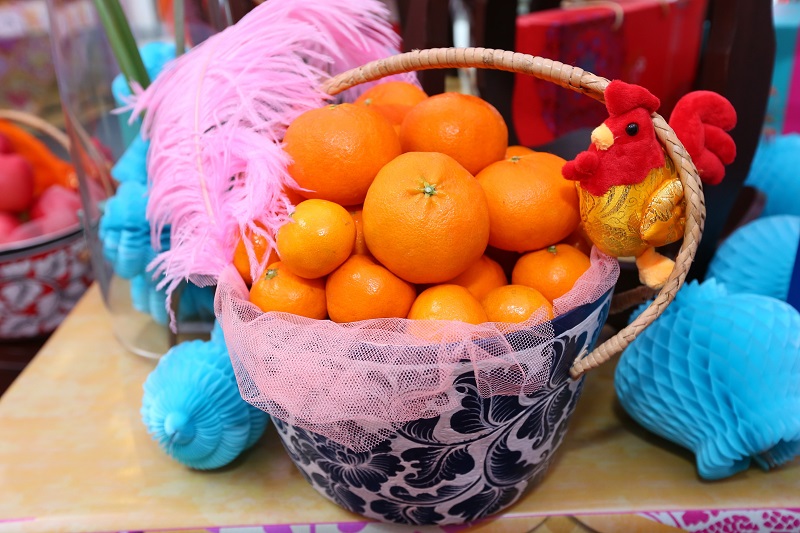
Like other Chinese New Year celebrations worldwide, oranges symbolize luck and wealth. Other fruits also considered suitable for the occasion in Thailand include apples, pears, and grapes.
Savory Food for Prayer
A whole poached chicken is served, as it is in Chinese communities elsewhere, to represent completeness, togetherness, and career advancements.
Fish, duck, and octopus are also used for the same reasons. Long noodles represent longevity, black seaweed wealth, and lotus seeds the traditional Chinese wish for many sons.
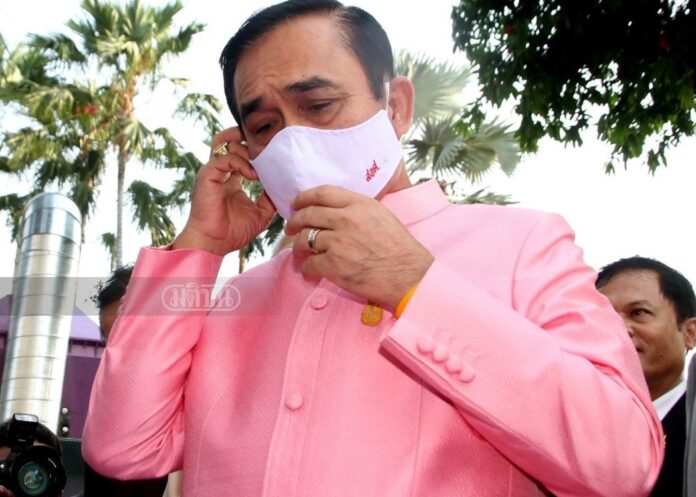
PM Prayut Chan-o-cha tries an anti-dust facemask on Feb. 5, 2019.
BANGKOK (Xinhua) — Thailand’s Ministry of Natural Resources and Environment on Wednesday announced that anti-smog measures will be announced on Thursday in an attempt to reduce the density of fine-dusts plaguing Bangkok and other major cities across the country.
The ministry’s National Environment Board will issue anti-smog measures on Thursday and will address and limit the use of vehicles in the city, said Natural Resources and Environment Minister Warawut Silpa-archa.
“The National Environment Board will be chaired by Deputy Prime Minister Prawit Wongsuwon. There will be measures to reduce the use of trucks and general vehicles on streets, which may cause some inconveniences to some people,” said Warawut.
The minister said that installing air purifiers will not solve the root cause of the problems.
He added that the government is considering to build more green areas including parks.
Meanwhile, the Bangkok Metropolitan Administration on Wednesday again reported smog levels unsafe in 14 out of 50 districts in the capital.
Warawut said that if the government does not quickly roll out new measures to curb the aggravating air quality, then repercussions will be felt in the public health conditions and in the number of tourists visiting Thailand, which could impact the Thai economy.
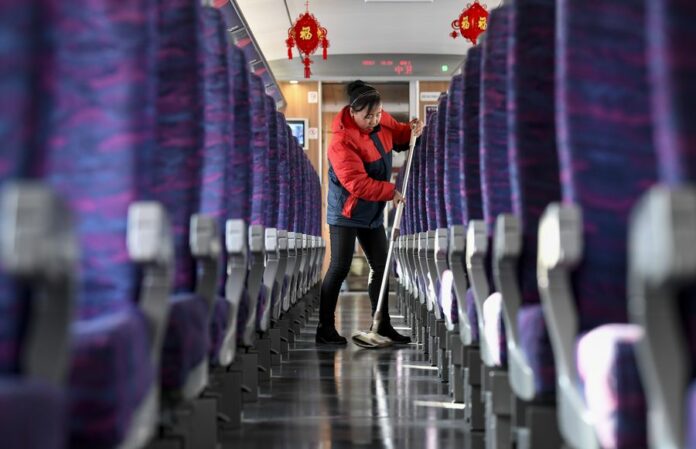
A sanitation worker sweeps the floor on a high-speed train at Zhongwei South Station of Zhongwei City, in northwest China's Ningxia Hui Autonomous Region, Jan. 22, 2020. (Xinhua/Feng Kaihua)
BEIJING (Xinhua)— China’s railway operator will allow passengers to cancel their tickets nationwide without charging fees.
The measure will be taken starting from Friday, as part of the efforts to control the novel coronavirus (2019-nCoV) outbreak, said China State Railway Group Co., Ltd.
Under the policy, passengers who have previously purchased train tickets at railway stations, online railway ticket-booking platform 12306 or other channels may cancel their tickets and get refunds for free.
The purchases of railway accident insurance shall be handled together, the company said.
The outbreak began in the central Chinese city of Wuhan and has killed 17 and infected over 500 people so far. The Chinese New Year holiday takes place from Jan. 24 to 30.
Cities Under Lockdown
China also locked down Wuhan, a megacity with a population of over 10 million, Thursday in an unprecedented effort to curb the spread of a deadly novel coronavirus.
From 10 a.m. Thursday, all public transportation, including city buses, subways, ferries and long-distance coaches in Wuhan in central China have been suspended, and outbound channels at airports and railway stations have also been closed until further notice.
Citizens should not leave the megacity without specific reasons, according to a notice issued in the wee hours of Thursday by Wuhan’s headquarters for the control and treatment of pneumonia caused by the novel coronavirus.
At about 10:15 a.m. Thursday, all metro stations in the city have been closed. A Xinhua reporter went to a public transport hub and was told all buses “returned to the parking lot by 11:00 a.m.”
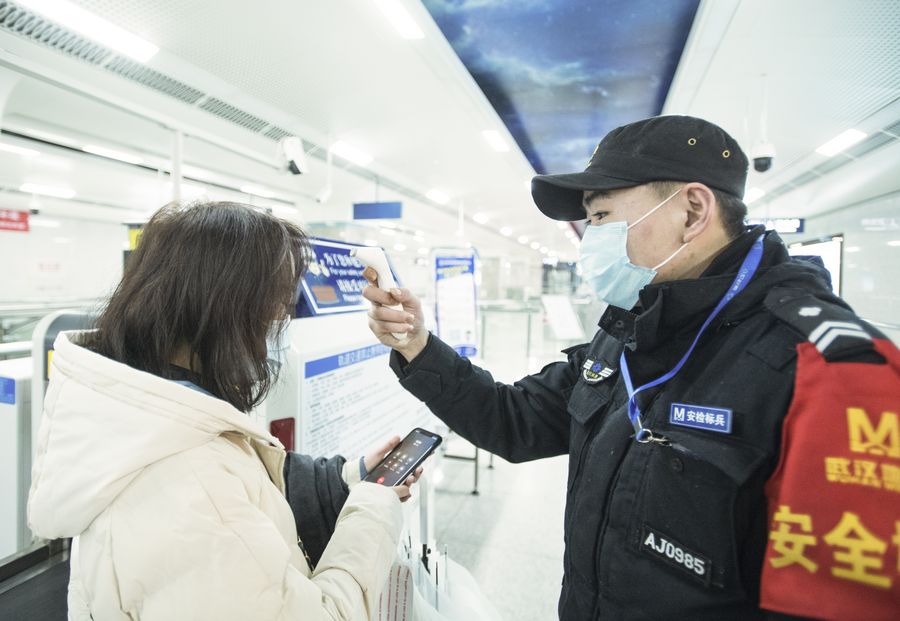
A staff member checks a passenger’s body temperature at Wangjiadun metro station in Wuhan, 9 a.m. Jan. 23, 2020. (Xinhua/Xiao Yijiu)
All the entrances at the Wuhan Railway Station and many expressway entrances in Hubei Province, where Wuhan is located, have been closed. Some passengers are stranded at the stations or airports.
As medical consumables such as surgical masks, protective clothing and disinfectant are running short, the Red Cross Society of China’s Wuhan branch opened 24-hour hotlines to receive donated emergency stocks.
Yan Fei, 40, is a local salesman in Wuhan. He took the No. 208 bus this morning to go to work. “I left home at around 8:30 a.m. and all passengers on board the bus wore masks,” he said.
Since there will be no buses operating when he gets off work, Yan said he will “just walk back home as exercise.”
Wearing a proper mask is an effective way to avoid infection, according to medical experts. The authorities in Wuhan, therefore, have demanded that all residents in Wuhan wear masks in public places.
“Staff of state organs, enterprises and institutions shall wear masks at work, and operators of public venues should set up eye-catching signs to request residents to put on masks before entering,” said a notice issued by the Wuhan municipal government. “Those who disregard the warning will be punished according to relevant laws and regulations,” it added.
Many local residents are busy purchasing food and daily necessities for the upcoming Spring Festival. According to the provincial commerce department, the province will strengthen the monitoring of grain, oil, meat, eggs and vegetables, increase stocks during the Spring Festival holiday to ensure stable supply, and intensify environmental sanitation control.
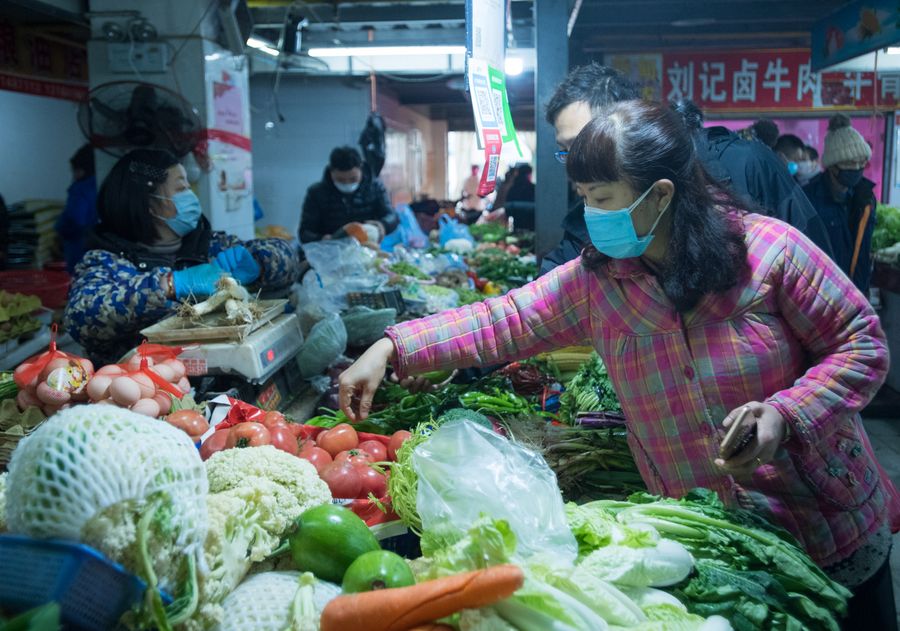
“About 70 percent of the vegetables in Wuhan come from other provinces and regions. The price has gone up slightly, but there has been no panic-buying,” said a local vendor in Wuchang District of the city.
Citizens purchase vegetables at a market in Wuhan, Jan. 23, 2020. (Xinhua/Xiao Yijiu)
The Wuhan municipal department of culture and tourism Wednesday suspended group tours through all local agencies from Jan. 22 to Feb. 8 and ordered agencies to cancel all group tours planned after Jan. 30. For trips before the date, travel agencies are required to grant refunds to all customers.
The measures will be taken in a bid to “effectively cut off the virus spread, resolutely curb the outbreak and guarantee people’s health and safety,” said the headquarters’ notice.
Affected by the outbreak, all seven Chinese movies set to be aired during the Spring Festival holiday have been canceled or postponed. The total Chinese box office during the holiday exceeded 5 billion yuan (724.6 million U.S. dollars) during last year’s Lunar New Year holiday.
As of 8 p.m. Wednesday, a total of 444 cases of novel coronavirus-related pneumonia and 17 deaths had been reported in Hubei Province, according to local authorities.
Among the confirmed cases, 399 patients are receiving treatment in hospitals, with 71 in severe condition and 24 in critical condition, said Yang Yunyan, vice governor of the province, at a local press conference.
Nationwide, a total of 17 people had died and 571 cases were confirmed in 25 provincial-level regions in the country by the end of Wednesday. The deaths, all in Hubei, were aged between 48 and 89, according to the commission.
Confirmed cases have also been reported in the regions of Hong Kong, Macao and Taiwan, as well as in the United States, Japan, the Republic of Korea and Thailand.
The World Health Organization (WHO) on Wednesday night local time extended to Thursday its emergency talks on whether the novel coronavirus outbreak in China constitutes a Public Health Emergency of International Concern.
Lauding China’s immediate detecting and sharing of the sequencing of the virus, WHO Director-General Tedros Adhanom Ghebreyesus believed that those actions will “minimize the chances of this outbreak spreading internationally.”
(Reporting by Ma Yujie, Yu Pei, Yue Wenwan, Liao Jun, Feng Guodong; Video reporters: Yu Guoqing, Rao Rao, Wang Siban, Pan Zhiwei; Video editor: Zheng Xin)
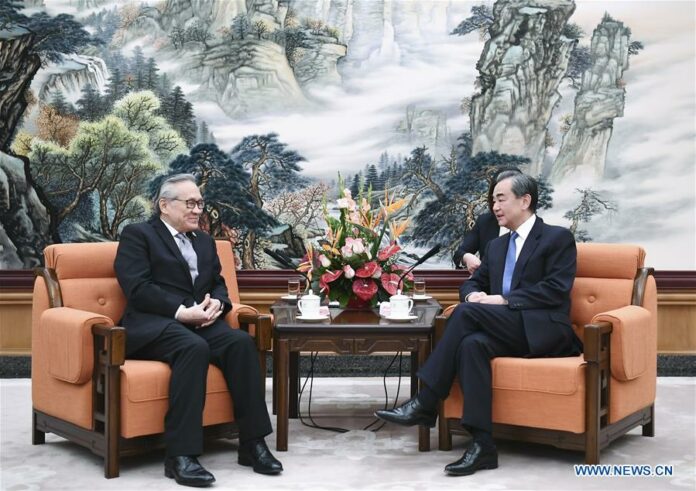
Chinese State Councilor and Foreign Minister Wang Yi (R) meets with Thai Foreign Minister Don Pramudwinai in Beijing, capital of China, Jan. 23, 2020. (Xinhua/Xie Huanchi)
BEIJING (Xinhua) — Chinese State Councilor and Foreign Minister Wang Yi met with Thai Foreign Minister Don Pramudwinai here on Thursday.
China is willing to work with Thailand to implement the consensus reached by leaders of the two countries and push their comprehensive strategic cooperative partnership to reach a new stage, Wang said.
The South China Sea issue concerns China’s sovereign rights and interests, said Wang, adding that China stands ready to manage and control differences with countries concerned through bilateral dialogue to enhance mutual trust and promote cooperation.
Don expressed the hope that the consultation on the Code of Conduct in the South China Sea will be accelerated and believed that regional countries are capable of controlling the situation in the South China Sea.
The two sides also exchanged views on the drought in the Mekong River basin.
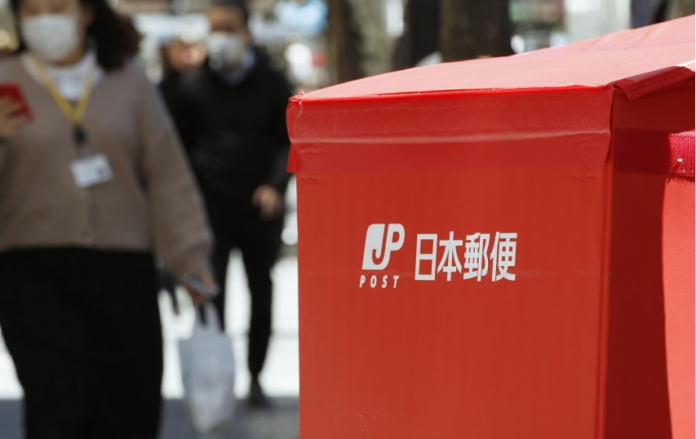
YOKOHAMA (Kyodo) — A 61-year-old postman failed to deliver thousands of postal items that he kept at his home instead, police said Thursday.
A total of about 24,000 undelivered items were found in the man’s home in Sagamihara, Kanagawa Prefecture, said the police, who sent his case to prosecutors.
Environmental activist Greta Thunberg, of Sweden, addresses the Climate Action Summit in the United Nations General Assembly, at U.N. headquarters, Monday, Sept. 23, 2019. (AP Photo/Jason DeCrow)
DAVOS, Switzerland (AP) — As an executive producer of the last Mad Max movie, U.S. Treasury Secretary Steven Mnuchin might have been interested in the apocalyptic climate warnings of Greta Thunberg.
Instead, he took a personal swipe at the 17-year-old, saying she was in no position to give advice on climate change because she hasn’t been to college yet.
At a press briefing at the World Economic Forum in the Swiss town of Davos, Mnuchin dismissed Thunberg’s suggestion that governments and companies need to cut back dramatically on their use of fossil fuels.
When asked how that would affect the U.S. economic model, Mnuchin was swift and condescending to Thunberg, who sparked a global environmental movement after she shot to fame a year ago by staging a regular strike at her school.
“Is she the chief economist? Who is she? I’m confused,” he said. Then following a brief pause, he said it was “a joke.”
“After she goes and studies economics in college, she can come back and explain that to us,” he concluded.
Thunberg waited a while before responding to Mnuchin’s comments. In a trio of tweets, Thunberg, who is on a gap year from school until August, said “it doesn’t take a college degree in economics to realise that our remaining 1,5° carbon budget and ongoing fossil fuel subsidies and investments don’t add up.”
Without naming Mnuchin in particular, she added that “either you tell us how to achieve this mitigation or explain to future generations and those already affected by the climate emergency why we should abandon our climate commitments.”
Thunberg will likely face further questions on Mnuchin’s remarks when she holds a press briefing Friday at a climate strike with other young people in Davos, on what is the final day of this year’s gathering of the elites.
Mnuchin confirmed to The Associated Press that he has earned a degree in economics from Yale University, before moving on to working for Goldman Sachs and then the Trump administration.
In between, he founded the film production company Dune Entertainment, which in addition to helping out in the relaunch of the Mad Max franchise in 2015, has The Lego Movie and Wonder Woman among its credits.
To her supporters around the world, Thunberg has become a role model, not least for her criticism of U.S. policy, particularly President Donald Trump’s decision to pull the country out of the Paris accord to limit global warming.
Mnuchin insisted Thursday that U.S. policy has been misinterpreted, and that President Donald Trump “absolutely believes” in a clean environment.
“What the president objects to is the Paris agreement, because he thought it was an unfair agreement for the United States,” he said.
Last month, Trump told Thunberg in a tweet to “chill” and to “work on her Anger Management problem.” It prompted a dry and humorous response from Thunberg, who changed her Twitter caption to read: “A teenager working on her anger management problem. Currently chilling and watching a good old-fashioned movie with a friend.”
Earth just finished its hottest decade on record, with the five last years being the five warmest, according to U.S. and other science agencies. Scientists repeatedly point to more extreme weather as a problem worsened by human-caused climate change. There have been 44 weather and climate disasters in the United States that caused at least $1 billion in damage since 2017, killing 3,569 people, according to the National Oceanic and Atmospheric Administration.
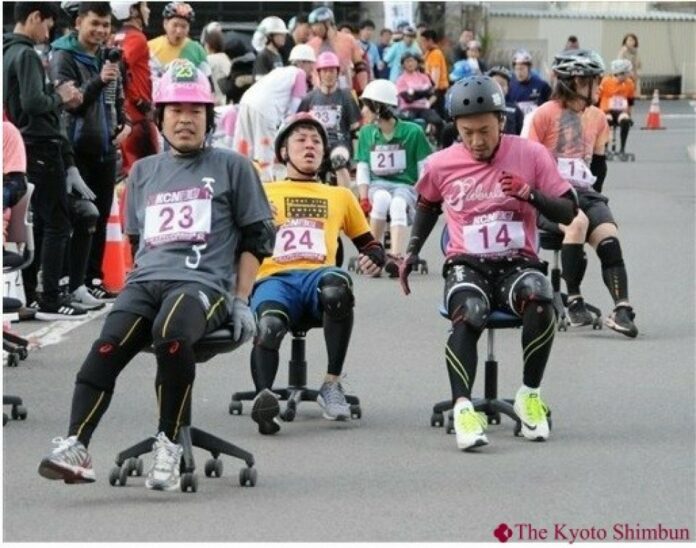
KYOTO (Kyodo) — A unique annual office chair endurance race in Japan, now in its 10th year, is looking to expand its reach overseas this year and aims to ultimately become an Olympic sport one day, organizers said.
In teams of three, competitors battle it out Le Mans-style at the “Isu-1” Grand Prix, taking turns on swiveling office chairs, mostly propelling themselves backwards. The team that completes the most laps of the event’s 150-meter to 200-meter course wins.
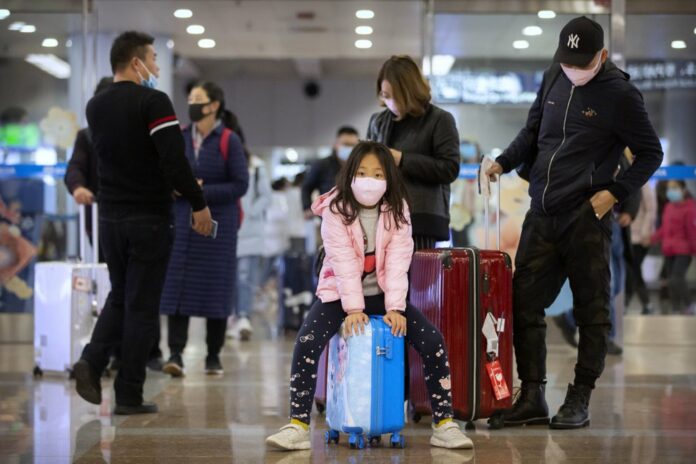
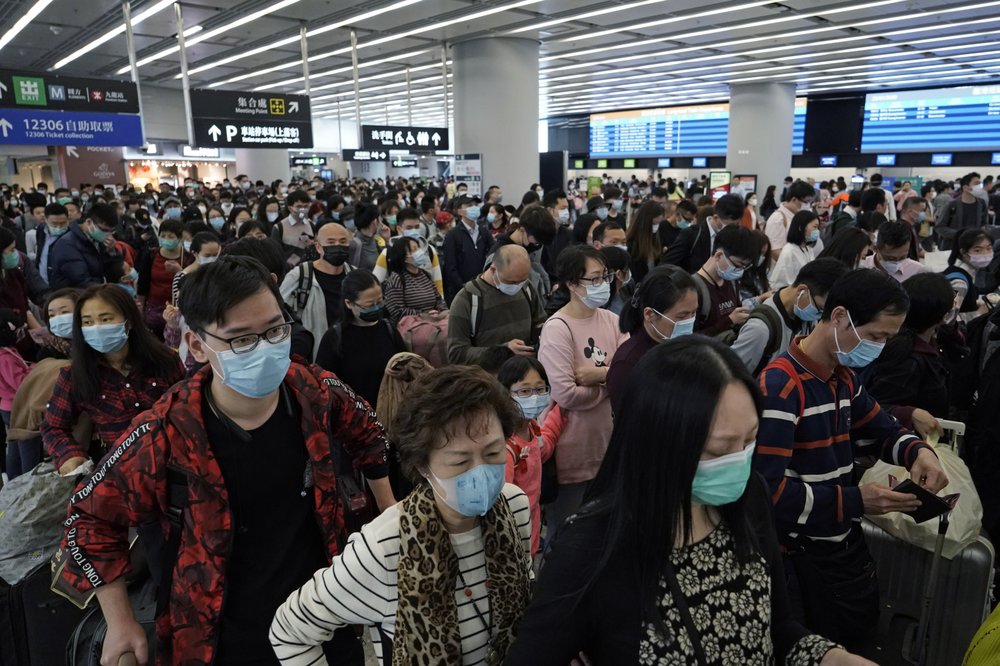
BEIJING (AP) — Chinese authorities Thursday moved to lock down three cities with a combined population of more than 18 million in an unprecedented effort to contain the deadly new virus that has sickened hundreds of people and spread to other parts of the world during the busy Lunar New Year travel period.
The open-ended lockdowns are unmatched in size, embracing more people than New York City, Los Angeles and Chicago put together.
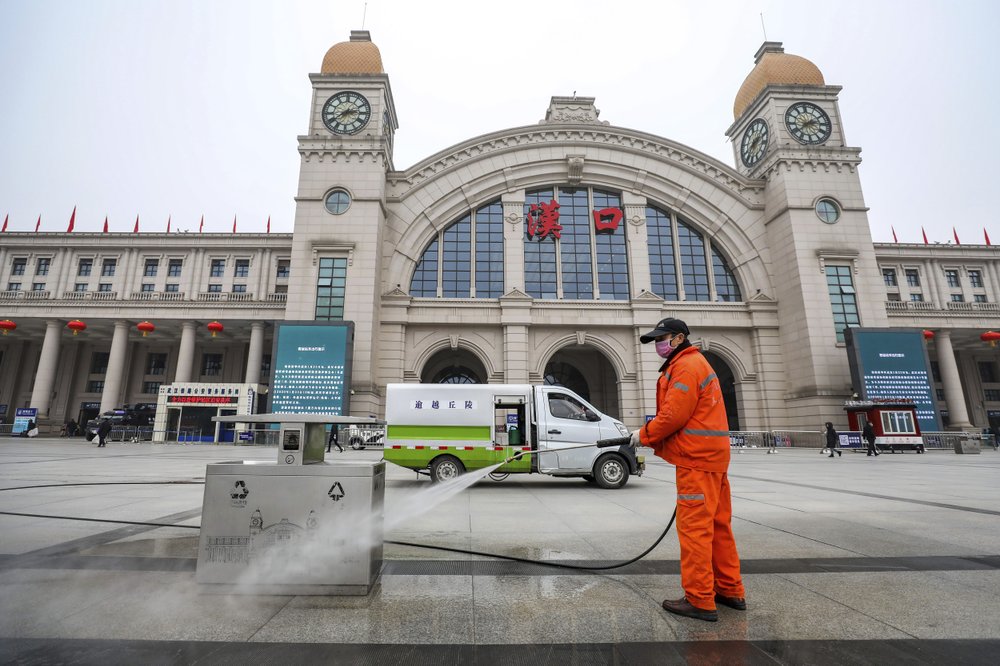
The train station and airport in Wuhan, the epicenter of the outbreak, were shut down, and ferry, subway and bus service was halted. Normally bustling streets, shopping malls, restaurants and other public spaces in the city of 11 million were eerily quiet. Police checked all incoming vehicles but did not close off the roads.
Authorities announced similar measures would take effect Friday in the nearby cities of Huanggang and Ezhou. In Huanggang, theaters, internet cafes and other entertainment centers were also ordered closed.
In the capital, Beijing, officials canceled “major events” indefinitely, including traditional temple fairs that are a staple of holiday celebrations, in order to “execute epidemic prevention and control.” The Forbidden City, the palace complex in Beijing that is now a museum, announced it will close indefinitely on Saturday.
Image: Associated Press
Seventeen people have died in the outbreak, all of them in and around Wuhan. Close to 600 have been infected, the vast majority of them in Wuhan, and many countries have begun screening travelers from China for symptoms of the virus, which can cause fever, coughing, trouble breathing and pneumonia.
Chinese officials have not said how long the shutdowns will last. While sweeping measures are typical of China’s communist government, large-scale quarantines are rare around the world, even in deadly epidemics, because of concerns about infringing on people’s liberties. And the effectiveness of such measures is unclear.
“To my knowledge, trying to contain a city of 11 million people is new to science,” Gauden Galea, the World Health Organization’s representative in China, said in an interview. “It has not been tried before as a public health measure. We cannot at this stage say it will or it will not work.”
Jonathan Ball, a professor of virology at molecular virology at the University of Nottingham in Britain, said the lockdowns appear to be justified scientifically.
“Until there’s a better understanding of what the situation is, I think it’s not an unreasonable thing to do,” he said. “Anything that limits people’s travels during an outbreak would obviously work.”
But Ball cautioned that any such quarantine should be strictly time-limited. He added: “You have to make sure you communicate effectively about why this is being done. Otherwise you will lose the goodwill of the people.”
During the devastating West Africa Ebola outbreak in 2014, Sierra Leone imposed a national three-day quarantine as health teams went door-to-door searching for hidden cases. Frustrated residents complained of food shortages amid deserted streets. Burial teams collecting Ebola corpses and people transporting the sick to Ebola centers were the only ones allowed to move freely.
In China, the illnesses from the newly identified coronavirus first appeared last month in Wuhan, an industrial and transportation hub in central China’s Hubei province. Other cases have been reported in the U.S., Japan, South Korea and Thailand. Singapore, Vietnam and Hong Kong reported their first cases Thursday.
Most of the illnesses outside China involve people who were from Wuhan or had recently traveled there.
Images from Wuhan showed long lines and empty shelves at supermarkets, as residents stocked up for what could be weeks of isolation. That appeared to be an over-reaction, since no restrictions were placed on trucks carrying supplies into the city, although many Chinese have strong memories of shortages in the years before the country’s recent economic boom.
Local authorities in Wuhan demanded all residents wear masks in public places. Police, SWAT teams and paramilitary troops guarded Wuhan’s train station.
Liu Haihan left Wuhan last Friday after visiting her boyfriend there. She said everything was normal then, before human-to-human transmission of the virus was confirmed. But things had changed rapidly.
Her boyfriend “didn’t sleep much yesterday. He disinfected his house and stocked up on instant noodles,” Liu said. “He’s not really going out. If he does, he wears a mask.”
Image: Associated Press
The sharp rise in illnesses comes as millions of Chinese travel for the Lunar New Year, one of the world’s largest annual migrations of people. Chinese are expected to take an estimated 3 billion trips during the 40-day spike in travel.
Analysts predicted cases will continue to multiply, although the jump in numbers is also attributable in part to increased monitoring.
“Even if (cases) are in the thousands, this would not surprise us,” the WHO’s Galea said, adding, however, that the number of those infected is not an indicator of the outbreak’s severity, so long as the mortality rate remains low.
The coronavirus family includes the common cold as well as viruses that cause more serious illnesses, such as the SARS outbreak that spread from China to more than a dozen countries in 2002-03 and killed about 800 people, and Middle Eastern respiratory syndrome, or MERS, which is thought to have originated from camels.
China is keen to avoid repeating mistakes with its handling of SARS. For months, even after the illness had spread around the world, China parked patients in hotels and drove them around in ambulances to conceal the true number of cases and avoid WHO experts.
In the current outbreak, China has been credited with sharing information rapidly, and President Xi Jinping has emphasized that as a priority.
“Party committees, governments and relevant departments at all levels must put people’s lives and health first,” Xi said Monday. “It is necessary to release epidemic information in a timely manner and deepen international cooperation.”
Health authorities were taking extraordinary measures to prevent additional person-to-person transmissions, placing those believed infected in plastic tubes and wheeled boxes, with air passed through filters.
The first cases in the Wuhan outbreak were connected to people who worked at or visited a seafood market, which has since been closed for an investigation. Experts suspect that the virus was first transmitted from wild animals but that it may also be mutating. Mutations can make it deadlier or more contagious.
WHO convened its emergency committee of independent experts on Thursday to consider whether the outbreak should be declared a global health emergency, after the group failed to come to a consensus on Wednesday.
The U.N. health agency defines a global emergency as an “extraordinary event” that constitutes a risk to other countries and requires a coordinated international response.
A declaration of a global emergency typically brings greater money and resources, but may also prompt nervous governments to restrict travel to and trade with affected countries. The announcement also imposes more disease-reporting requirements on countries.
Declaring an international emergency can also be politically fraught. Countries typically resist the notion that they have a crisis within their borders and may argue strenuously for other control measures.
Associated Press journalists Shanshan Wang in Shanghai, Maria Cheng in London and Krista Larson in Dakar contributed to this report.