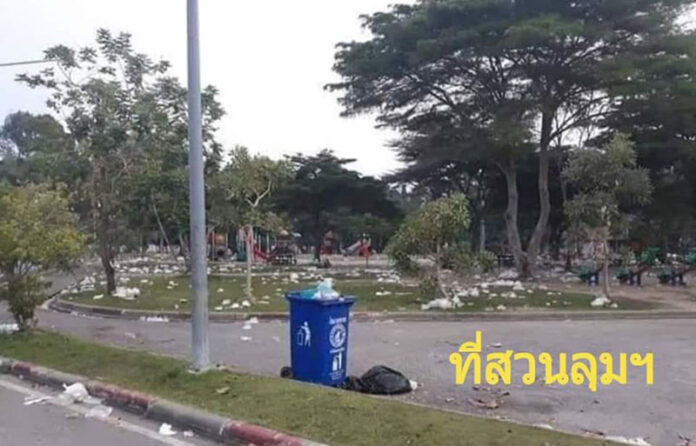
BANGKOK — A photo that falsely accused a pro-government rally of littering Lumpini Park in Bangkok has been shared by more than 34,000 people as of Monday afternoon.
The photo was first posted by Facebook user Vanisa Tirak, who contrasted the alleged image of Lumpini Park after the “Walk to Support Uncle” was held there on Sunday with the aftermath of “Run Against Dictatorship” at Suan Rot Fai. The former looked to be full of garbage, the second impeccably clean.
“The top photo is from Suan Lum on Jan. 12, 2020 during the #WalktoSupportUncle rally. The bottom photo is from Suan Rot Fai on Jan. 12, 2020 during the #RunAgainstDictatorship rally,” Vanisa wrote.
Many opponents of the government soon shared the photo on social media while demonizing the “Walk to Support Uncle” rally.
“Wherever filthy people are, filth is there,” wrote user Khemmika Semsawek in a comment with more than 400 likes.
“They have such black hearts, that’s why they do such disgusting things, these Walk to Support Prayuth people,” wrote user Tho Kamsawang. More than 34,000 netizens have shared the photos, and counting.
But it turned out the photo of dirty “Lumpini Park” was actually taken from Pattani News Facebook page, which shows Suan Khwan Muang Park in Yala province after a Childrens’ Day event was held there on Saturday. The page chided festival-goers for not picking trash after themselves.
By contrast, littering didn’t appear to be a problem at the anti- and pro-Prayuth rallies in Bangkok.
A reporter covering the anti-government run at Suan Rot Fai said organizers had a 60-strong team who collected and sorted trash. Juice boxes were even folded and packed for recycling. Post-rally cleanup took two hours, and the park was left relatively neat.
At “Walk to Support Uncle,” trash was also collected and disposed into park trash cans, not left on the park ground as alleged by many netizens, a reporter said.
“Run Against Dictatorship” organizers sort trash at their rally Jan. 12, 2020.Flattened juice boxes ready to be recycled at the “Run Against Dictatorship” rally on Jan. 12, 2020.
KANCHANABURI — A construction tycoon found guilty of conspiring to poach wildlife animals lost his bid on Monday to remove an electronic monitor attached to his ankle as a condition for his bail release.
Premchai Karnasuta of Italian-Thai Ltd., whose conviction was upheld in a December verdict, had a wound on his left ankle caused by the tracker, his lawyer told reporters today. The court ruled a removal is unnecessary because the device is attached to his uninjured ankle, but attorney Witoon Yamprai said his client suffered nonetheless.
“When he sleeps, the [tracker] rubbed against his left ankle, causing the wound,” Witoon told reporters,
Premchai himself declined to speak to the media about the case and left the court after hearing the judges’ decision.
The CEO of Italian-Thai Ltd was instructed to wear the tracking device as part of his bail conditions after he was released on a bond of 1 million baht.
In December, he was sentenced to a prison term of 2 years and 17 months. Under Thai laws, a month of jail sentence consists of 30 days, while a year of prison term counts as 365 days.
Premchai’s legal team has pledged to contest his conviction in the Supreme Court.
BANGKOK — One of J-Rock’s most popular bands is coming to shake up the Thai capital at the end of April, organizers announced Sunday.
One Ok Rock will be performing at 6:30pm on 25 April at Impact Muang Thong Thani as part of their Eye of the Storm Asia 2020 Tour, Thai Ticket Major announced Sunday.
Tickets, which range from 2,500 baht to 4,800 baht, go on sale 1 Feb.
One Ok Rock is a J-rock band founded in 2005 with members Takahiro Moriuchi, Toru Yamashita, Ryota Kohama, and Tomoya Kanki. They’re known for singing in both Japanese and English throughout their nine albums, with songs ranging from various rock genres, such as emo, pop punk, and pop rock. In 2016, they won the Classic Rock Roll of Honour Awards’s Eastern Breakthrough Male Band award.
Singles include “The Beginning,” “Clock Strikes,” “Heartache,” and “Mighty Long Fall.”
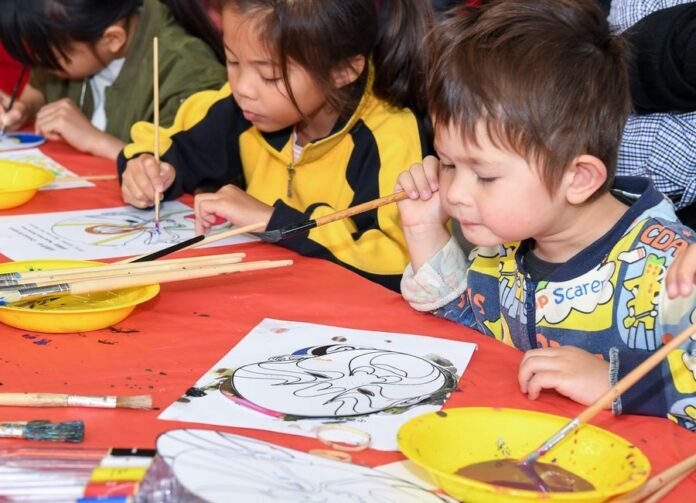
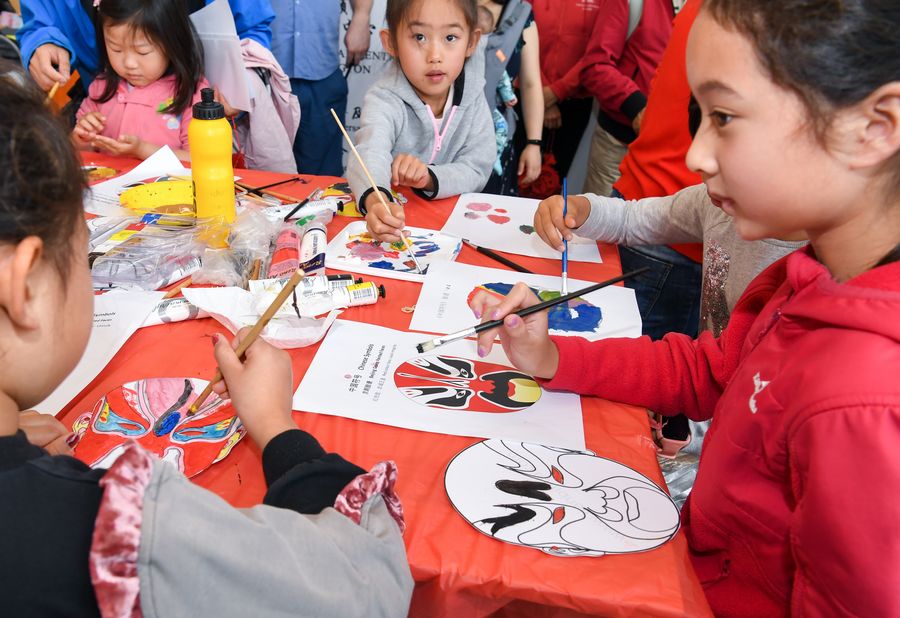
Children fill Peking Opera mask paintings with colors at an activity of "Chinese New Year Cultural Workshop: Symbols of China" to welcome the upcoming Chinese Lunar New Year held in Johnsonville Library, Wellington, capital of New Zealand, Jan. 12. 2020. (Xinhua/Guo Lei)
WELLINGTON (Xinhua) — Chinese New Year Cultural Workshop: Symbols of China was held in Johnsonville Library, Wellington, capital of New Zealand on Sunday.
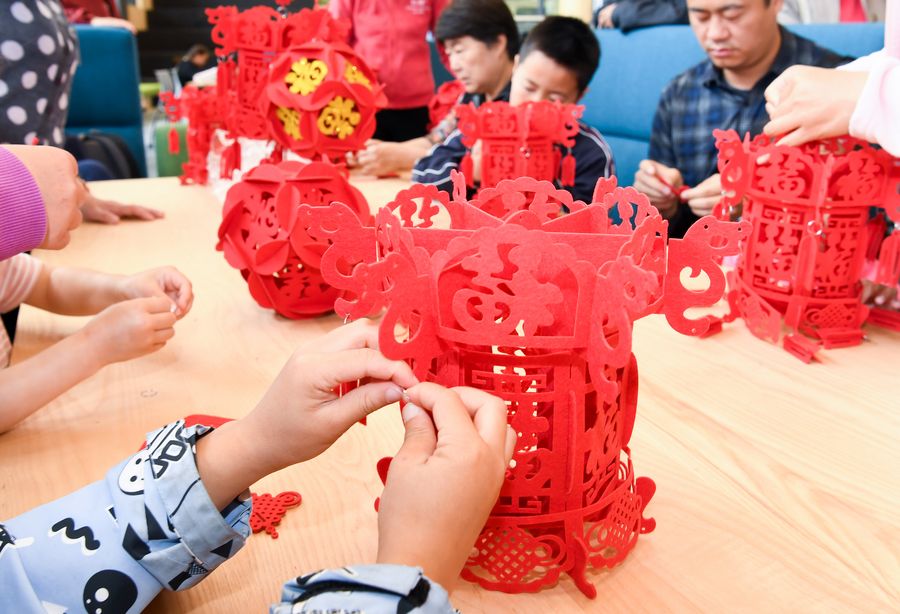
Wellington citizens, including the local Chinese community were presented with the opportunity to try a variety of traditional cultural practices, such as engraving and paper cutting, Beijing Opera face painting, Gongfu tea ceremony, Spring Festival couplets calligraphy, Chinese lanterns and fortune ball making.
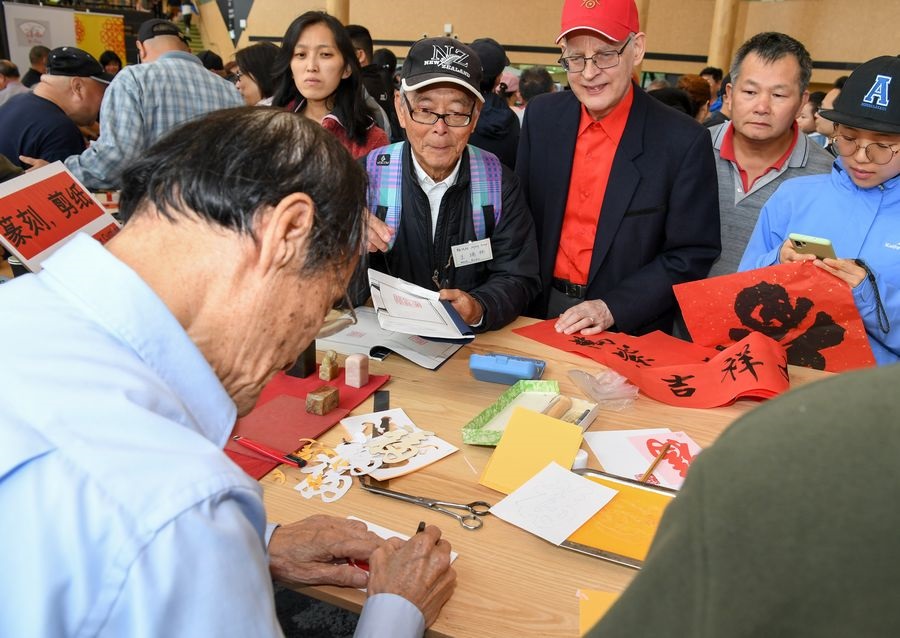
People queue for “mouse” and “Character Fu” paper cutting at an activity of “Chinese New Year Cultural Workshop: Symbols of China” to welcome the upcoming Chinese Lunar New Year held in Johnsonville Library, Wellington, capital of New Zealand, Jan. 12. 2020. (Xinhua/Guo Lei)
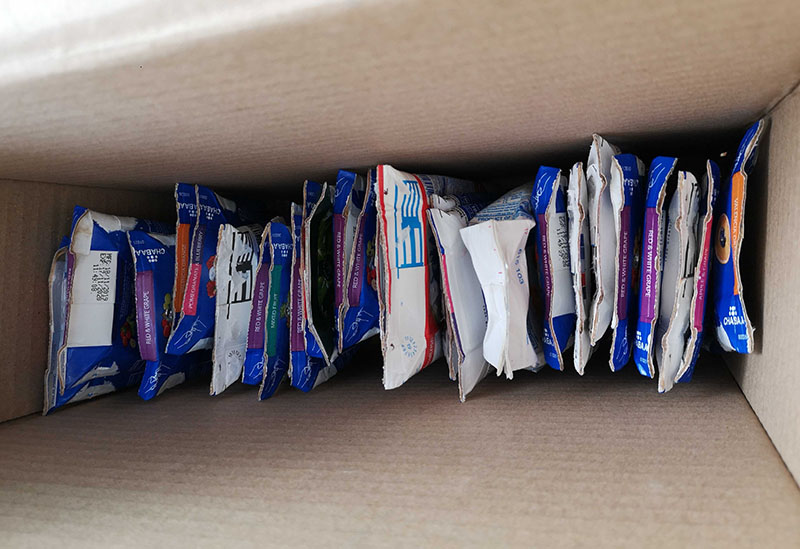
There was also a traditional Chinese medicine stall in the event, which offered free consultation and herbal tea bags as gifts.
Traditional Chinese therapist Natalie Floyd of New Zealand descent received attention as she appeared by the stall.
“I have been practicing acupuncture and Chinese massage for more than two years,” Natalie said.
People make traditional red lanterns at an activity of “Chinese New Year Cultural Workshop: Symbols of China” to celebrate the upcoming Chinese Lunar New Year held in Johnsonville Library, Wellington, capital of New Zealand, Jan. 12. 2020. (Xinhua/Guo Lei)
Aside from demonstrating the system of meridians and collaterals of human beings, she also brought some herbal tea bags which aid in digestion.
Engraving and paper cutting artist, 80-year-old Liu Changwu was the highlight of the event. Over 100 people queued for his “mouse” and “Character Fu” paper cutting during the course of two hours.
Children were happily involved in the Beijing Opera Face Painting and Chinese Lantern Making workshop.
Children fill Peking Opera mask paintings with colors at an activity of “Chinese New Year Cultural Workshop: Symbols of China” to welcome the upcoming Chinese Lunar New Year held in Johnsonville Library, Wellington, capital of New Zealand, Jan. 12. 2020. (Xinhua/Guo Lei)
“The upcoming Chinese New Year is our first one spent overseas. I am so appreciated that my four-year-old daughter received the chance to practice our cultural customs here,” a new immigrant from China said.
The workshop was jointly organized by the Wellington Chinese Cultural Center and the Yafeng Group, a local Chinese cultural community.
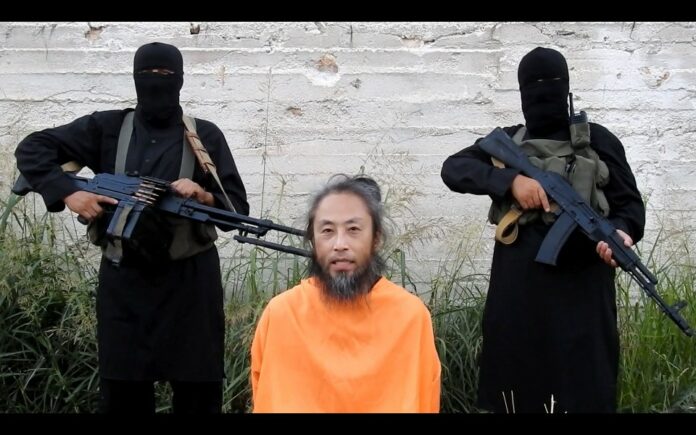
A still image captured from a video uploaded online shows Japanese journalist Jumpei Yasuda, who went missing in Syria in 2015, asking for help
TOKYO (Kyodo) — Japanese journalist Jumpei Yasuda, who returned home in 2018 after more than three years of captivity in Syria, has sued the government over its denial of his request for a new passport, his lawyer said Sunday.
Yasuda filed the suit with the Tokyo District Court last Thursday, seeking cancellation of the Foreign Ministry’ decision in July 2019 not to issue him a new passport, according to the lawyer.
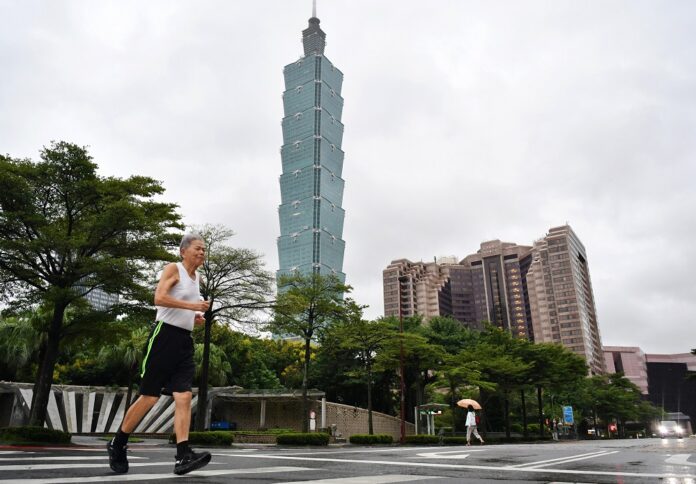
A citizen runs in front of the Taipei 101 skyscraper in Taipei, southeast China's Taiwan, on Oct. 1, 2019. (Xinhua/Chen Bin)
BEIJING (Xinhua) — China opposes any forms of official ties between Taiwan and countries that have diplomatic relations with China, a Foreign Ministry spokesperson said Sunday, urging countries to abide by the one-China principle.
Spokesperson Geng Shuang’s remarks came after senior officials of some countries that have diplomatic ties with China, including the United States, Britain and Japan, congratulated Tsai Ing-wen on the Taiwan leadership election result.
The election in Taiwan is a local affair of China, Geng said, stressing that China deplores and firmly opposes those countries’ violation of the one-China principle by taking such a move, and has lodged solemn representations.
The Taiwan question concerns China’s core interests, said Geng.
“We oppose any forms of official ties between Taiwan and countries that have diplomatic relations with China,” he said, noting that the one-China principle is a basic norm governing international relations and a universal consensus of the international community.
China urged those countries to earnestly abide by the one-China principle, refrain from having any official ties or exchanges with Taiwan, deal with Taiwan-related issues properly and with caution, and avoid sending any wrong signals to the “Taiwan independence” forces, said the spokesperson.
He added that those countries should take concrete actions for the peaceful development of relations across the Taiwan Strait, and strive to uphold their relations with China.
TOKYO (Kyodo) — The re-election of Taiwan President Tsai Ing-wen, whose party favors independence from China, comes at a time when Japan has recently pledged to open a “new era” of ties with the Communist-ruled mainland.
Following the outcome of Saturday’s presidential election, Tsai of the Democratic Progressive Party is expected to push policies countering the “one country, two systems” framework that Beijing is threatening to impose on the self-governing island.
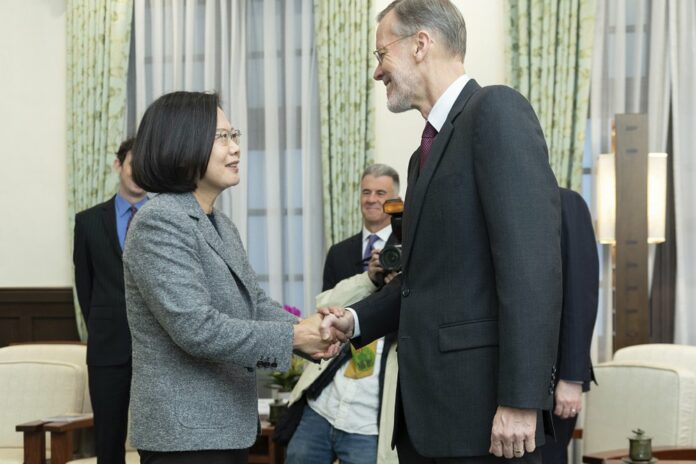
In this photo released by the Taiwan Presidential Office, William Brent Christensen, director of the American Institute in Taiwan at right meets with Taiwan President Tsai Ing-wen, at left in the Presidential Office in Taipei, Taiwan. (Taiwan Presidential Office via AP)
TAIPEI, Taiwan (AP) — The landslide reelection of Taiwan’s leader underscores the population’s embrace of an identity distinct from China — a shift that the communist leaders of China refuse to accept.
It’s a contradiction that will keep the island of 23 million people at odds with its much larger neighbor for the foreseeable future and put increasing strains on the one-China principle, which holds that Taiwan and China are part of one country.
President Tsai Ing-wen swept to a second four-year term Saturday with 57% of the vote. Her opponent, Han Kuo-yu, tallied 39%. The results soundly rejected the China-friendly views of his Nationalist Party, which has struggled to adapt to the emergence and evolution of a Taiwanese identity.
The question for the next four years is whether the governments on both sides of the 160-kilometer- (100-mile-) wide Taiwan Strait will stay the course or escalate their battle of wills.
China may step up its campaign to try to isolate Taiwan both diplomatically and economically, though it may also be rethinking that approach after efforts to do so during Tsai’s first term only seemed to build support for her at home.
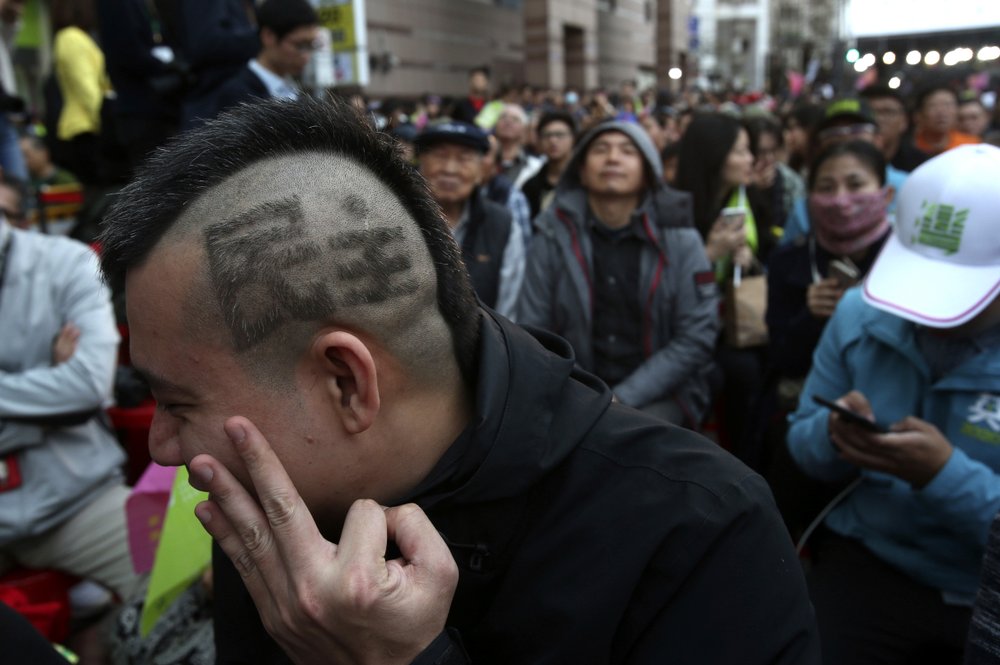
A supporter of Taiwan’s 2020 presidential election candidate, Taiwan president Tsai Ing-wen shows Chinese character “Democracy” on his haircut as supporters gather to watch early election return in Taipei, Taiwan, Saturday, Jan. 11, 2020. (AP Photo/Chiang Ying-ying)
Her big win could embolden some in her Democratic Progressive Party to look for ways to nudge Taiwan toward formal independence from China, the party’s official goal. But even symbolic steps would anger China and could invite retaliation, and Tsai herself has shown no signs of going down that path.
Modern Taiwan is an outgrowth of a civil war between the Nationalists under Chiang Kai-shek and Mao Zedong’s Communists for control of China after World War II. The communists triumphed in 1949, and Chiang’ retreated to Taiwan, where he set up a rival government that he ran with an iron fist while harboring hopes of taking back the entire country from the communists.
That is no longer a realistic goal, and with each passing decade, Chiang’s dream has been replaced by a growing sense that Taiwan is not a part of China, particularly among the younger generations. They see their home as a separate entity with its own democratic ideals and don’t want to be subsumed by China and its ruling Communist Party.
The long-running and at times violent pro-democracy protests in Hong Kong that started last June reinforced that sentiment.
Early in 2019, Chinese leader Xi Jinping proposed talks with Taiwan on joining China under a “one-country, two-systems” framework similar to the one that governs Hong Kong, the former British colony returned to China in 1997.
Most Taiwanese oppose the idea, and Tsai capitalized politically on the Hong Kong protests, saying they illustrate why one-country, two-systems doesn’t work.
Taiwan largely functions as an independent nation, with its own laws, military and foreign minister, though technically it and mainland China belong to one country with rival governments, the People’s Republic of China in Beijing and the Republic of China in Taipei, the Taiwanese capital.
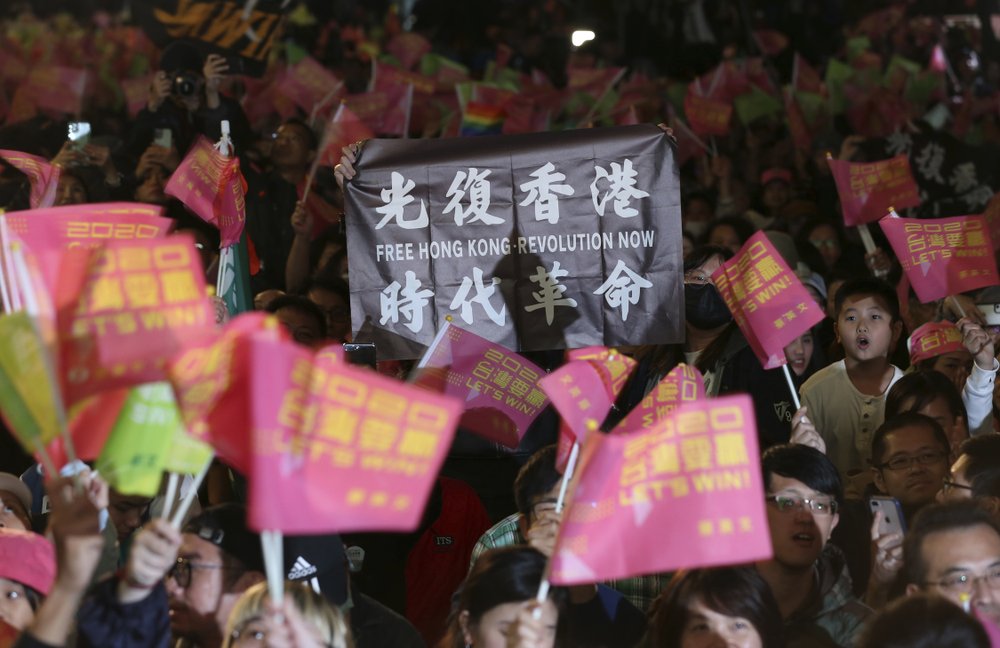
Hong Kong supporters of Taiwan’s 2020 presidential election candidate, Taiwan president Tsai Ing-wen hold slogan as supporters gather to watch the early election returns in Taipei, Taiwan, Saturday, Jan. 11, 2020. (AP Photo/Chiang Ying-ying)
Tsai, though, has refused to endorse that one-China policy and sought to build unofficial ties with the United States, which does not recognize Taiwan but is its main supplier of military equipment to defend itself against China. Signals of support from the Trump administration have given voters confidence in Tsai’s approach of pushing back against China’s threats.
U.S. Secretary of State Mike Pompeo congraulated Tsai in a statement released soon after the election results came out and applauded “her commitment to maintaining cross-Strait stability in the face of unrelenting pressure.”
Lin Fei-fan, the Democratic Progressive Party’s deputy secretary general, said last month that discussion on constitutional change could start in a second Tsai term, such as changing the flag or the definition of the Republic of China’s territory to include just Taiwan, rather than both the island and the mainland.
China, though, has threatened to use military force if needed against what it calls any “secessionist” moves toward independence.
The official Xinhua News Agency said in a commentary on the election that China has a full policy toolbox to curb Taiwan independence activities and benefit Taiwanese compatriots.
Tsai, in line with public opinion, focused in her campaign on preserving Taiwan’s democracy rather than any fundamental change to the island’s political status. That approach pleases Dong Yu-hsin, a 23-year-old nonprofit worker.
“Although we can say in hard terms Taiwan is Taiwan and China is China … of course we don’t want a war or anything worse than now,” he said. “I hope Tsai Ing-wen can keep her perspective on autonomy and uphold today’s status quo.”
Like many Taiwanese, he likes things the way they are and doesn’t want to rock the boat with China.
___
Associated Press writer Ralph Jennings contributed to this report.
BEIJING (AP) — Asian stock markets rose Monday ahead of the signing of a U.S.-Chinese trade pact as investors shrugged off weaker-than-expected American jobs data.
Benchmarks in Shanghai, Hong Kong and South Korea advanced. Japanese markets were closed for a holiday.
Investors showed little concern over Friday’s data showing American employers added fewer jobs than forecast in December. Concern over a potential U.S.-Iranian conflict faded.
Traders looked ahead to this week’s signing of an interim U.S.-Chinese trade deal, which they hope will be a step toward ending a tariff war that threatens to drag down global economic growth.
The “Phase 1” agreement has helped to ease market jitters, though economists warn it leaves major disputes unresolved and the outlook for negotiations is unclear.
Investors also were encouraged by President Donald Trump’s decision to resume a regular trade policy dialogue with Beijing that Washington pulled out of in July 2017.
Markets start the week “on a cautiously optimistic tone” as investors look ahead for the possibility of further U.S.-China trade progress, said Mizuho Bank in a report.
However, “thornier issues such as enforcement may come back to haunt further negotiation progress,” the bank warned.
The Shanghai composite Index gained just 0.2% to 3,099.82 and Hong Kong’s Hang Seng gained 0.9% to 28,889.29.
Seoul’s Kospi advanced 1% to 2,2228.46 while Sydney’s S&P-ASX 200 shed 0.4% to 6,903.70.
India’s Sensex opened up 0.7% at 41,887.16. Taiwan advanced while Singapore and New Zealand retreated.
Under the “Phase 1” trade pact due to be signed Thursday, Washington postponed planned tariff hikes and Beijing agreed to buy more American farm exports.
Details have yet to be released. Economists warn key hurdles including Beijing’s insistence that Washington role back punitive tariffs on Chinese goods have yet to be resolved.
The chief American negotiator, Robert Lighthizer, said Beijing agreed to make changes to address U.S. complaints it steals or pressures companies to hand over technology. Chinese officials have yet to confirm that.
On Friday, U.S. stocks retreated from record highs following a Labor Department report employers added 145,000 jobs in December, short of the 160,000 forecast. That growth was solid enough to bolster Wall Street’s view the job market is holding up and households can spend.
The S&P 500 index fell 0.3% to 3,265.35 from its record set Thursday. The Dow Jones Industrial Average briefly topped the 29,000 level for the first time but ended down 0.5%. The Nasdaq composite dropped 0.3%, to 9,178.86.
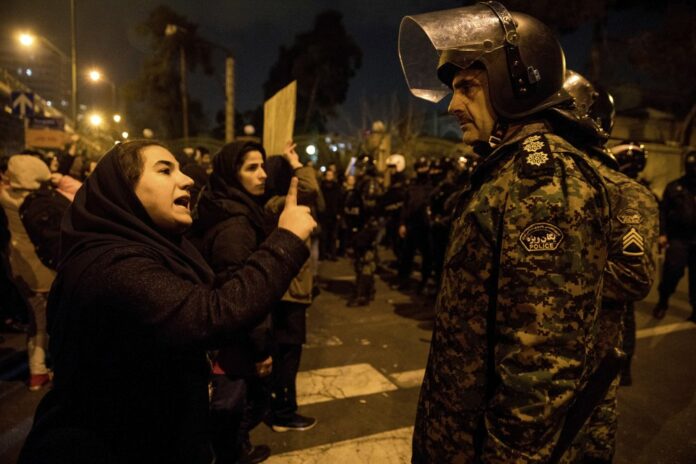
In this Saturday, Jan. 11, 2020 photo, released by Iranian Students' News Agency, ISNA, a woman attending a candlelight vigil to remember the victims of the Ukraine plane crash, talks to a policeman, at the gate of Amri Kabir University in Tehran, Iran. (Mona Hoobehfekr/ISNA via AP)
DUBAI, United Arab Emirates (AP) — Iranian demonstrators defied a heavy police presence Sunday night to protest their country’s days of denials that it shot down a Ukrainian passenger plane carrying 176 people, the latest unrest to roil the capital amid soaring tensions with the United States.
Videos posted online showed protesters shouting anti-government slogans and moving through subway stations and sidewalks, many around Azadi, or Freedom, Square after an earlier call for people to demonstrate there. Other videos suggested similar protests were taking place in other Iranian cities.
Protesters often wore hoods and covered their faces, probably to avoid being recognized by surveillance cameras. Some online videos purported to show police firing tear gas sporadically, though there was no immediate wholesale crackdown on demonstrators.
Meanwhile, in an emotional speech before parliament, the head of the Revolutionary Guard apologized for the shootdown and insisted it was a tragic mistake.
“I swear to almighty God that I wished I was on that plane and had crashed with them and burned but had not witnessed this tragic incident,” said Gen. Hossein Salami. “I have never been this embarrassed in my entire life. Never.”
Iran’s state-run media, as well as semiofficial news agencies and publications, did not immediately report on the demonstrations. However, international rights groups already have called on Iran to allow people to protest peacefully as allowed by the country’s constitution.
“After successive national traumas in a short time period, people should be allowed to safely grieve and demand accountability,” said Hadi Ghaemi, the executive director of the New York-based Center for Human Rights in Iran. “Iranians shouldn’t have to risk their lives to exercise their constitutional right to peaceful assembly.”
Riot police in black uniforms and helmets earlier massed in Vali-e Asr Square, at Tehran University and other landmarks. Revolutionary Guard members patrolled the city on motorbikes, and plainclothes security men were also out in force. People looked down as they walked briskly past police, hoping not to draw attention to themselves.
The plane crash early Wednesday killed everyone on board, mostly Iranians and Iranian-Canadians. After initially pointing to a technical failure and insisting the armed forces were not to blame, authorities on Saturday admitted accidentally shooting it down in the face of mounting evidence and accusations by Western leaders.
Iran downed the flight as it braced for possible American retaliation after firing ballistic missiles at two bases in Iraq housing U.S. forces. The missile attack, which caused no casualties, was a response to the killing of Gen. Qassem Soleimani, Iran’s top general, in a U.S. airstrike in Baghdad. But no retaliation came.
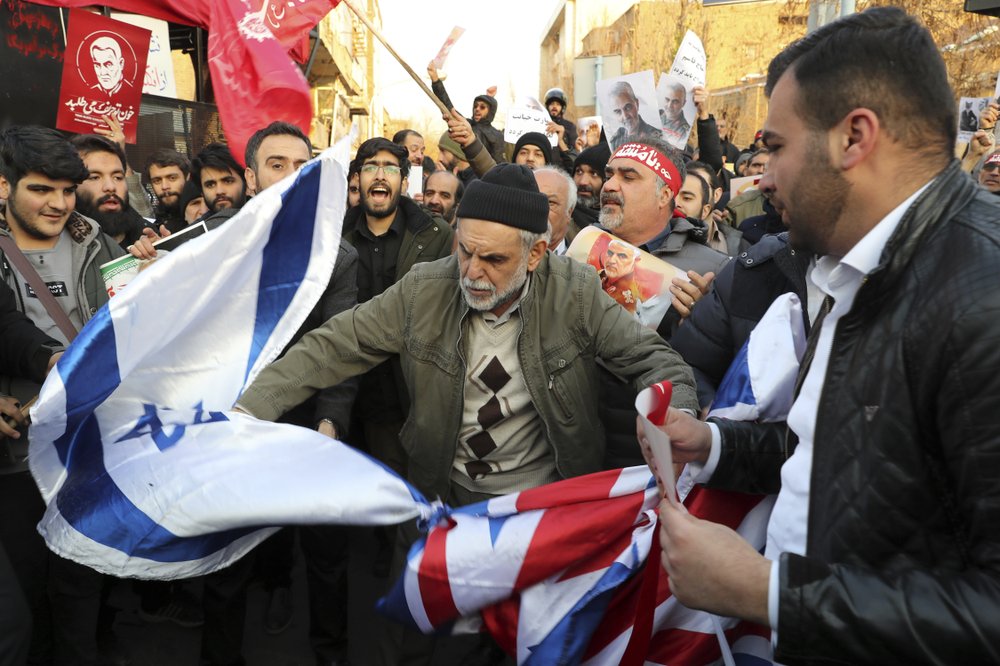
Protesters chant slogans and hold up posters of Gen. Qassem Soleimani while preparing to burn representations of British and Israeli flags, during a demonstration in front of the British Embassy in Tehran, Iran, Sunday, Jan. 12, 2020. (AP Photo/Ebrahim Noroozi)
Iranians have expressed anger over the downing of the plane and the misleading explanations from senior officials in the wake of the tragedy. They are also mourning the dead, which included many young people who were studying abroad.
“Even talking about it makes my heart beat faster and makes me sad,” said Zahra Razeghi, a Tehran resident. “I feel ashamed when I think about their families.”
“The denial and covering up the truth over the past three days greatly added to the suffering and pain of the families, and me,” she added.
Another individual, who identified himself only as Saeed, said Iran’s largely state-run media had concealed the cause of the crash for “political reasons.”
“Later developments changed the game, and they had to tell the truth,” he said.
Earlier Sunday, hundreds of students gathered at Tehran’s Shahid Beheshti University to mourn the victims and protest against authorities for concealing the cause of the crash, the semiofficial ISNA news agency reported.
Bahareh Arvin, a reformist member of the Tehran City Council, took to social media to say she was resigning in protest at the government’s lies and corruption. “With the current mechanism, there is no hope of reform,” she said.
Some Iranian artists, including famed director Masoud Kimiai, withdrew from an upcoming international film festival. Two state TV hosts resigned in protest over the false reporting about the cause of the plane crash.
President Donald Trump, who has expressed support for past waves of anti-government demonstrations in Iran, addressed the country’s leaders in a tweet, saying “DO NOT KILL YOUR PROTESTERS.” He later tweeted the same message again in Farsi.
“The World is watching. More importantly, the USA is watching,” he tweeted.
Iranians demonstrated in November after the government hiked gas prices, holding large protests across the nation. The government shut down internet access for days, making it difficult to gauge the scale of the protests and the subsequent crackdown. Amnesty International later said more than 300 people were killed.
A candlelight ceremony late Saturday in Tehran turned into a protest, with hundreds of people chanting against the country’s leaders — including Supreme Leader Ayatollah Ali Khamenei — and police dispersing them with tear gas. Protests were also held in the city of Isfahan and elsewhere.
Police briefly detained the British ambassador to Iran, Rob Macaire, who said he went to the vigil without knowing it would turn into a protest.
“Can confirm I wasn’t taking part in any demonstrations!” he tweeted. “Went to an event advertised as a vigil for victims of #PS752 tragedy. Normal to want to pay respects — some of victims were British. I left after 5 mins, when some started chanting.”
He said he was arrested 30 minutes after leaving the area.
Britain said its envoy was detained “without grounds or explanation” and in “flagrant violation of international law.”
Iran’s Deputy Foreign Minister Abbas Araghchi later tweeted that Macaire was arrested “as an unknown foreigner in an illegal gathering.”
Araghchi said when police informed him that a man was arrested who claimed to be the British ambassador, he didn’t believe them. But he said that once he spoke to Macaire by phone, he realized it was him, and that the ambassador was freed 15 minutes later.
Iran’s Foreign Ministry later summoned the British ambassador over his ”illegal and inappropriate presence” at the protest, it said on its Telegram channel.
Alaeddin Boroujerdi, a member of Iran’s parliamentary committee on national security and foreign policy, accused the ambassador of organizing protests and called for his expulsion. Dozens of hard-liners later gathered outside the British Embassy, chanting “Death to England.” They also called for the ambassador to be expelled and the embassy to be closed.
Iranian media, meanwhile, focused on the admission of responsibility for the crash, with several newspapers calling for those responsible to apologize and resign.
The hard-line daily Vatan-e Emrouz bore the front-page headline “A sky full of sadness,” while the Hamshahri daily went with “Shame,” and the IRAN daily said “Unforgivable.”
Mehdi Karroubi, an opposition activist under house arrest, lashed out at Khamenei himself, saying that as commander in chief he was “directly responsible.”
“If you were aware and you let military and security authorities deceive people, then there is no doubt you lack the attributes of constitutional leadership,” he said in a statement.
Criticism of the supreme leader is punishable by up to two years in prison.