28.8 C
Bangkok
Sunday, June 21, 2026
Home Blog Page 1473

Police Arrest Mae Manee’s Mom As Scam Balloons to Billions in Damages

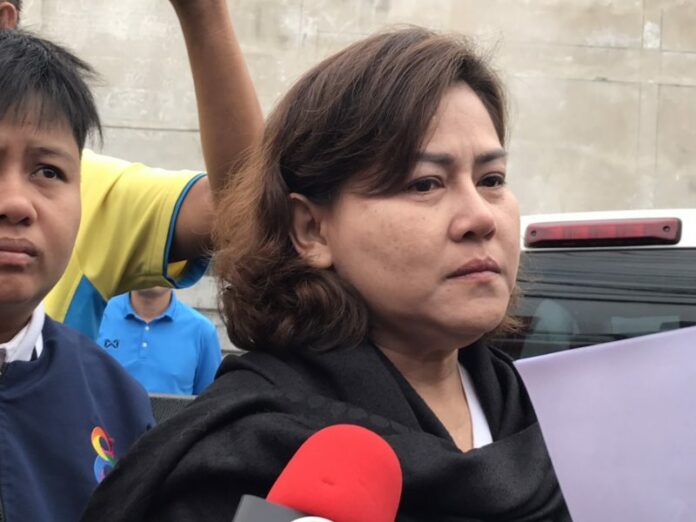
Wantanee “Mae Manee” or “Dear” Tippaveth’s mother, Thawalrat Tippaveth moments before she faints while being arrested on Nov. 7, 2019.

UDON THANI — Police on Thursday arrested the mother of an alleged ponzi scheme ringleader accused of scamming at least 4,000 people out of almost 1.4 billion baht in damages. 

Police arrested Thawalrat Tippaveth, 47, on Thursday morning in Udon Thani. Investigators said she assisted her 28-year-old daughter Wantanee Tippaveth, aka  “Mae Manee” or “Dear,” in the massive scam – an allegation she denied. Wantanee and her husband Metee “Boss” Chinpa, 20, were arrested on Saturday on fraud and cybercrime charges 

“I didn’t have anything to do with it,” Thawalrat said. “I was suspicious as to why she had so much money, but she never told me.”

Thawalrat then fainted While Police Maj. Gen. Nantachart Suppamongkol read the court warrant to her. She was sent to Udon Thani Hospital. 

The Department of Special Investigation said that as of Wednesday evening, a more than 4,000 people lost over 1.3 billion baht in Mae Manee’s scheme.

Wantanee’s assets have been frozen, and police said they have been combing her financial records for people involved in the scam, such as recruiters in her downline. 

Three other people were also arrested on allegations of assisting Mae Manee in the crimes. 


Thawalrat Tippaveth faints during her arrest on Nov. 7, 2019.

Related stories:

Massive Ponzi Scheme Suspect ‘Mae Manee’ Denies Wrongdoing

Scammer ‘Mae Manee’ Built Fake Gold Store to Fool Victims, Police Say

Fake Showbiz Socialite ‘Mae Manee’ Wanted for Massive Scam

Advertisement

Self-Driving Cars With Passengers Make Test Runs in China

Photo taken on Jan. 11, 2018 shows Chery's ARRIZO 5 self-driving vehicle installed with Baidu Apollo Pilot 2.0 at Consumer Electronics Show (CES) in Las Vegas, the United States. (Xinhua/Li Ying)

SHIJIAZHUANG (Xinhua) — A total of 30 self-driving vehicles carrying passengers have made test runs on Wednesday in the city of Cangzhou, north China’s Hebei Province.

The vehicles, equipped with Baidu Apollo autonomous driving systems, ran on the test roads with a total length of up to 114 km in the Cangzhou Economic and Development Zone.

In recent years, Cangzhou has speeded up its efforts to develop emerging industries such as artificial intelligence, intelligent vehicles and transport.

In October, a total of 30 license plates were given to the intelligent connected vehicles (ICV) of Chinese artificial intelligence pioneer Baidu by the government of Cangzhou.

This was the first time that Baidu’s ICVs were issued license plates for road tests with passengers in the Beijing-Tianjin-Hebei region.

China allowed local governments to arrange road tests for ICVs, which cover different degrees of autonomous driving, in April 2018. An increasing number of cities, including Beijing, Shanghai and Chongqing, have issued license plates for road tests of ICVs.

Advertisement

Alaska University Taking PB&J as Payment for Parking Tickets

In this Feb. 14, 2011 file photo, Smucker's Simply Fruit Strawberry is spread atop peanut butter in Pittsburgh. (AP Photo/Gene J. Puskar, File)

ANCHORAGE, Alaska (AP) — What a lip-smacking offer!

Anyone with unpaid parking fines at the University of Alaska Anchorage campus has the option to reduce or cover the cost of their tickets with peanut butter and jelly.

KTUU-TV reported the university would take donations for their annual payment tradition until Nov. 8 to help combat student hunger.

Officials say the food goes to students in need.

University officials say each person could use PB&J payments for two citations issued within the past 45 days.

Officials say two 16-ounce (454-gram) jars offer a $10 credit, three jars offer a $35 credit and five jars offer a $60 credit.

Officials say any unopened commercially produced nut butter-almond, cashew, peanut butter or any flavor jam, jelly, marmalade or preserves would be accepted.

Advertisement

Alipay Now Available for Foreign Tourists Visiting China

File photo by Xinhua.

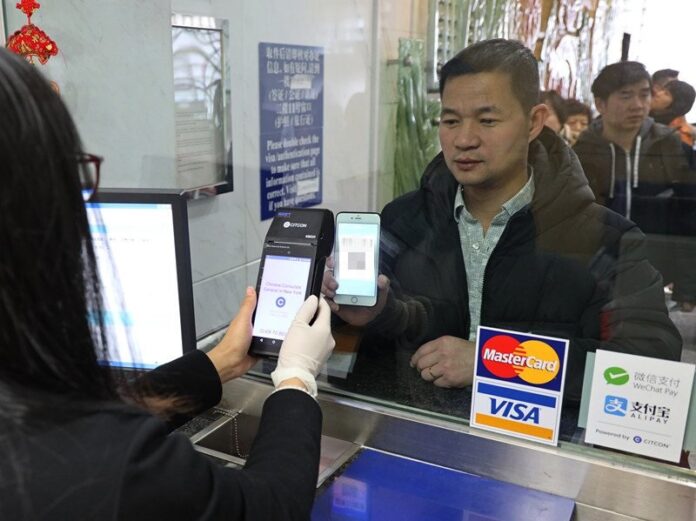
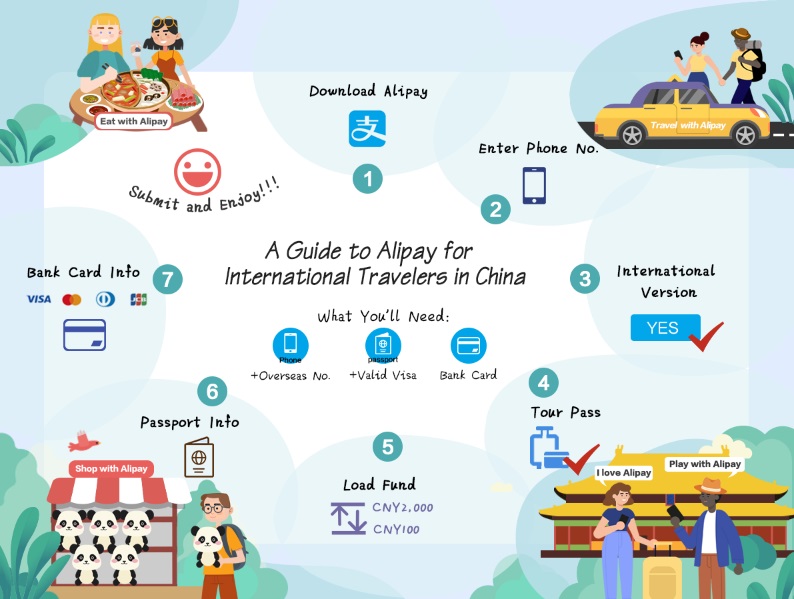
HANGZHOU (Xinhua) — Short-term overseas visitors can now use mobile payments on the Chinese mainland, China’s leading mobile payment company Alipay backed by Alibaba announced on Tuesday.

The digital payment giant just introduced an international version of its popular app, designed for overseas travelers to provide them with convenience when paying with their smartphones for shopping, eating and traveling in the Chinese mainland, according to Alipay.

In China, users can have access to services such as paying for taxis and booking hotel rooms and movie tickets directly within the app. However, if a user needs to open the payment function in the app, a local phone number and a Chinese bank account are required, which is inconvenient for short-term international visitors.

img 20191105 172110 1

Now with the international version of Alipay, there is no more need to open a Chinese bank account. Visitors can use the “Prepaid Card” service provided by the Bank of Shanghai to top up Chinese yuan and enjoy services including scanning a QR code to pay at restaurants and shops, as well as making online purchases.

An increasing number of visitors are choosing China as their travel destination, as the country eases visa requirements to boost tourism. In 2018, China welcomed about 30.54 million international visitors to the mainland, a year-on-year increase of 4.7 percent, according to the Ministry of Culture and Tourism.

Advertisement

Prayuth Says Cambodian Opposition Leader Won’t Be Allowed Into Thailand

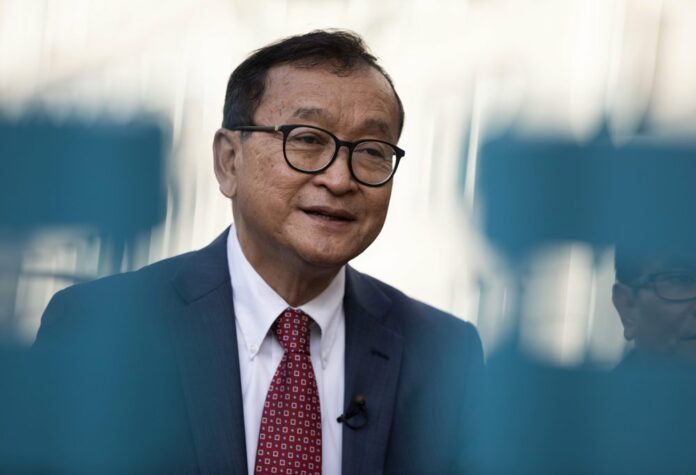
In this Nov. 4, 2019, photo, Cambodian opposition politician Sam Rainsy speaks during an interview in front of the European Parliament in Brussels. (AP Photo/Virginia Mayo)

BANGKOK (AP) — Plans by self-exiled leaders of Cambodia’s banned opposition party to return to their homeland hit a major roadblock Wednesday when Thailand’s prime minister said their top leader would not be allowed in to make his way through the country to the Cambodian border.

Leaders of the Cambodia National Rescue Party have vowed to return home on Saturday despite efforts by their government to thwart them. They are led by party co-founder Sam Rainsy, who has been in exile since 2015 to avoid serving a prison term on charges that he says are politically motivated.

The opposition politicians had said they hoped to return accompanied by a mass of followers, including from the huge community of Cambodian migrant workers in Thailand. They say they seek to spark a popular movement to oust long-serving Prime Minister Hun Sen, an autocratic leader who has clamped down on his opponents and demolished democracy.

Sam Rainsy said that he was shocked and disappointed by Thailand’s position, but that he would still try to carry out the plan to return.

“I don’t give up. I will try to the last minute. I think no one should stand with Hun Sen — he is a dictator,” the 70-year-old politician, who maintains dual Cambodian and French citizenship, told The Associated Press by phone from Paris.

Thai Prime Minister Prayuth Chan-ocha told reporters that in keeping with the agreement of member countries of the Association of Southeast Asian Nations, or ASEAN, not to interfere in each other’s domestic affairs, he has given an order that no resistance organization will be allowed to operate on Thai territory.

“So, he won’t be able to enter Thailand,” Prayuth said, referring to Sam Rainsy.

The Cambodia National Rescue Party was dissolved by court order in late 2017, allowing Hun Sen’s ruling Cambodian People’s Party to sweep a 2018 general election. Cambodian courts are widely considered to be under the influence of the government, which employs the law to harass its opponents.

Hun Sen’s government has barred the opposition politicians’ return, alerting airlines that they would be turned back, and also conveyed its position to neighboring countries. Cambodian security forces have been put on high alert and scores of opposition supporters have been detained.

Officials have repeatedly warned that if the opposition leaders did make it into Cambodia, they would immediately be arrested. Most if not all have convictions or charges pending against them, including inciting armed rebellion despite their avowedly nonviolent intentions.

Cambodia’s ambassador to Indonesia on Wednesday had a face-to-face confrontation with a top opposition politician who was holding a news conference at a hotel in Jakarta, Indonesia’s capital, to explain the returnees’ plans.

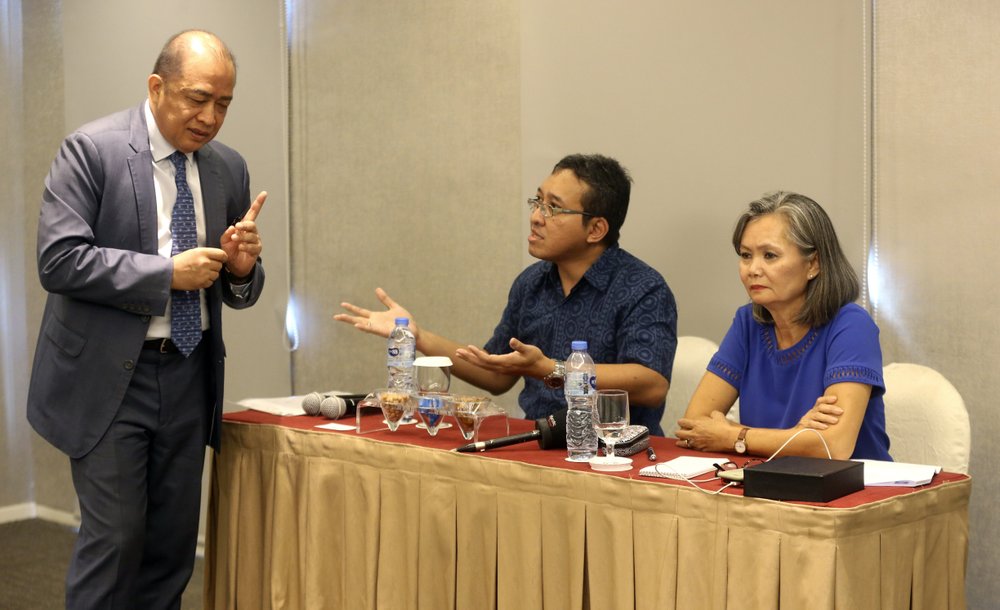
Ambassador Hor Nambora barged into the news conference and spoke in front of the assembled journalists as Cambodia National Rescue Party vice president Mu Sochua sat waiting to speak. The envoy described the opposition politicians as fugitives and criminals, and accused Mu Sochua of trying to mislead Indonesian immigration authorities into thinking she was only a tourist by using her American passport. She holds dual Cambodian and U.S. citizenship.

1000 7 1
Cambodia’s ambassador to Indonesia Hor Nambora, left, interrupts the press conference held by Mu Sochua, right, Vice President of the Cambodia National Rescue Party (CNRP) and Executive Director Kurawal Foundation Darnawan Triwibowo, center, in Jakarta Indonesia, Wednesday, Nov. 6, 2019. (AP Photo/Achmad Ibrahim)

Hor Nambora did not further disturb the proceedings, though he paced at the front of the conference room as Mu Sochua spoke. As he left, he apologized to journalists for any disruption, but reiterated that Cambodian courts had ruled against the opposition politicians.

“We are risking our lives, we will go to Cambodia empty-handed with bare hands,” Mu Sochua told the news conference, which was also attended by Indonesian activists. “Returning home for democracy in Cambodia, it’s not a revolution, it’s not a coup d’etat.”

“We have asked neighboring countries to permit us safe passage to Cambodia and to have free movement when we are in Cambodia,” she said. “We have been asking governments all around the world to witness our return to our nation, our homeland, with good intentions and totally transparent.”

After the news conference, the Cambodian Embassy in Jakarta issued a press release saying that Mu Sochua was a fugitive from the law because a Cambodian court on Oct. 2 had issued an arrest warrant against her for her allegedly seeking to overthrow a legally elected government.

“It is unfortunate that Indonesia, a fellow member state of ASEAN, allows Ms. Mu Sochua to enter in Indonesia despite of her arrest warrant and conduct anti Cambodian activities in Jakarta,” it said.

The statement said the embassy “requests Indonesian authorities to arrest Ms. Mu Sochua and deport her to Cambodia immediately in the true spirit of ASEAN.”

It also mentioned that Malaysia, another ASEAN member, had stopped and detained two youth activists with the Cambodia National Rescue Party as they sought to board a flight to Thailand.

The decision of Thailand to bar entry to Sam Rainsy was foreshadowed late last month when immigration officials turned Mu Sochua back on arrival at Bangkok’s international airport, saying she was on a blacklist.

The embassy statement described that action as being “in true ASEAN spirit.”

___

Associated Press writers Niniek Karmini in Jakarta, Indonesia, and Sopheng Cheang in Phnom Penh, Cambodia, contributed to this report.

Advertisement

US: Saudis Recruited Twitter Workers to Spy on Critics

SAN FRANCISCO (AP) — Saudi Arabia, frustrated by growing criticism of its leaders and policies on social media, recruited two Twitter employees to spy on thousands of accounts that included prominent opponents, prosecutors alleged Wednesday.

The complaint unsealed in U.S. District Court in San Francisco detailed a coordinated effort by Saudi government officials to recruit employees at the social media giant to look up the private data of Twitter accounts, including email addresses linked to the accounts and internet protocol addresses that can give up a user’s location. It appeared to link Crown Prince Mohammed bin Salman, the powerful 34-year-son of King Salman, to the effort.

The accounts included those of a popular critic of the government with more than 1 million followers and a news personality. Neither was named.

The complaint also alleged that the employees — whose jobs did not require access to Twitter users’ private information — were rewarded with a designer watch and tens of thousands of dollars funneled into secret bank accounts. Ahmad Abouammo, a U.S. citizen, and Ali Alzabarah, a Saudi citizen, were charged with acting as agents of Saudi Arabia without registering with the U.S. government.

The Saudi government had no immediate comment through its embassy in Washington. Its state-run media did not immediately acknowledge the charges.

The complaint marks the first time that the kingdom, long linked to the U.S. through its massive oil reserves and regional security arrangements, has been accused of spying in America.

The allegations against two former Twitter employees and a third man who ran a social media marketing company that did work for the Saudi royal family comes a little more than a year after the execution of Jamal Khashoggi. The Washington Post columnist and prominent critic of the Saudi government was slain and dismembered in the Saudi consulate in Istanbul.

Saudi Arabia under King Salman and Prince Mohammed has aggressively silenced and detained government critics even as it allows women to drive and opens movie theaters in the conservative kingdom.

Prince Mohammed also has been implicated by U.S. officials and a United Nations investigative report in the assassination of Khashoggi. The prince has said he bears ultimate responsibility for what happens in the kingdom’s name, though he denies orchestrating the slaying.

The criminal allegations reveal the extent the Saudi government went to control the flow of information on Twitter, said Adam Coogle, a Middle East researcher with Human Rights Watch.

The platform is the main place for Saudis to express their views, and about a third of the nation’s 30 million people are active users. But the free-wheeling nature of Twitter is a major source of concern for its authoritarian government, Coogle said.

The kingdom has used different tactics to control speech and keep reformers and others from organizing, including employing troll armies to harass and intimidate users online. It has even arrested and imprisoned Twitter users.

The crown prince’s former top adviser, Saud al-Qahtani, who also served as director of the cyber security federation, started the “Black List” hashtag to target critics of the government. He ominously tweeted in 2017 that the government had ways of unmasking anonymous Twitter users.

“If you combine that with what we know about at least these two individuals and what went on in 2014 and into 2015, it’s pretty chilling,” Coogle said.

Al-Qahtani has been sanctioned for his suspected role in orchestrating the brutal killing of Khashoggi. His Twitter account was suspended in September for violating the platform’s manipulation policy.

Twitter acknowledged that it cooperated in the criminal investigation and said in a statement that it restricts access to sensitive account information “to a limited group of trained and vetted employees.”

“We understand the incredible risks faced by many who use Twitter to share their perspectives with the world and to hold those in power accountable,” the statement said. “We have tools in place to protect their privacy and their ability to do their vital work.”

A critic said Twitter didn’t live up to its principle of restricting access to information about private individuals to the smallest possible number of employees.

“If Twitter had implemented this principle, this misappropriation of information would not have been possible,” said Mike Chapple, who teaches cybersecurity at the University of Notre Dame’s Mendoza College of Business. “Social media companies must understand the sensitivity of this information and restrict access to the smallest possible number of employees. Failing to do so puts the privacy, and even the physical safety, of social media users at risk.”

Abouammo was also charged with falsifying documents and making false statements to obstruct FBI investigators — offenses that carry a maximum penalty of 30 years in prison if convicted.

At his appearance in Seattle federal court Wednesday, Abouammo was ordered to remain in custody pending a detention hearing set for Friday.

His lawyer, Christopher Black, declined to comment, as did Abouammo’s wife, who did not give her name.

The complaint said Abouammo, a media partnership manager for Twitter’s Middle East region, and Alzabarah, a site reliability engineer at Twitter, worked with an unnamed Saudi official who leads a charitable organization belonging to a person named Royal Family Member 1.

Prosecutors said a third defendant, a Saudi named Ahmed Almutairi who worked as a social media adviser for the Saudi royal family, acted as an intermediary with the Twitter employees.

The complaint said Almutairi recruited Alzabarah and flew him to Washington, D.C., in the spring of 2015, when a Saudi delegation visited the White House. Based on the context and times mentioned in the complaint, including Alzabarah taking a selfie with the royal while in Washington, it appears Prince Mohammed is that royal. The crown prince had traveled there as part of the delegation when he served as deputy crown prince.

“Within one week of returning to San Francisco, Alzabarah began to access without authorization private data of Twitter users en masse,” the complaint said.

The effort included the user data of over 6,000 Twitter users, including at least 33 usernames for which Saudi Arabian law enforcement had submitted emergency disclosure requests to Twitter, investigators said.

After being confronted by his supervisors at Twitter, Alzabarah acknowledged accessing user data and said he did it out of curiosity, authorities said.

Alzabarah was placed on administrative leave, his work-owned laptop was seized, and he was escorted out of the office. The next day, he flew to Saudi Arabia with his wife and daughter and has not returned to the United States, investigators said.

A warrant for his and Almutairi’s arrests were issued as part of the complaint.

____

Melley reported from Los Angeles. Associated Press writers Jon Gambrell in Dubai, United Arab Emirates, Eugene Johnson in Seattle and Jocelyn Gecker in San Francisco contributed to this report.


Advertisement

DNA Study Reveals How Tibetans Adapt to High Altitude

Tibetans during a horse racing festival in Nagqu City, southwest China's Tibet Autonomous Region. (Xinhua/Chogo)

BEIJING (Xinhua) — Chinese researchers have released the first high-quality genome of Tibetan people, revealing the genetic mechanism that may play an important role in human adaption to extreme environments such as high altitude.

Researchers from the Kunming Institute of Zoology, Chinese Academy of Sciences, Tibet University and other Chinese research institutions assembled Tibetan genome ZF1 with new approaches like long-reading sequencing.

Genome sequencing involves cutting DNA into pieces, reading the fragments and then using a computer to patch the sequence together.

Short-read sequencing technologies cut DNA into “words” that are about 100 base-pairs long. Long-read sequencing, by comparison, cuts DNA into words that are thousands of letters long, revealing parts of the genome like never before.

Structure variants (SVs) refer to the variation in the structure of an orgasm’s chromosome. The researchers reported in the journal National Science Review that in the genome, they detected 17,900 SVs in ZF1, among which 6,505 are different from other East Asian SVs. The analysis found these SVs are related to the activation of molecular pathways in low-oxygen environments.

They also found that a gene named MKL1 shows large divergence between highland Tibetans and lowland Han Chinese. The difference is associated with lower systolic pulmonary arterial pressure, one of the key adaptive physiological traits in Tibetans.

Compared to other East Asian genomes, the researchers found that the Tibetan genome has more shared gene sequences with archaic humans like Neanderthal and Denisovan, noting that the unique genomic composition is associated with better lung function in Tibetans.

The researchers said that the ZF1 Tibetan genome and the identified SVs may provide valuable resources for future evolutionary and medical studies.

Advertisement

Europeans Look to China as Global Partner, Shun Trump’s US

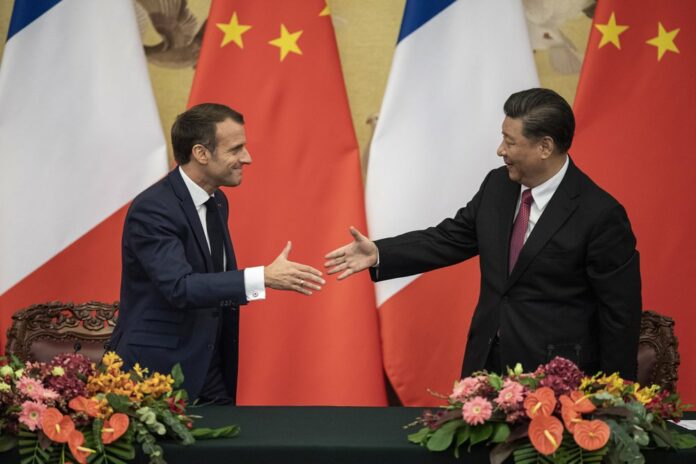
French President Emmanuel Macron, left, shakes hands with Chinese President Xi Jinping following a signing ceremony at the Great Hall of the People in Beijing, Wednesday, Nov. 6, 2019. (Nicolas Asfouri/Pool Photo via AP)

PARIS (AP) — When France’s president wants to carry European concerns to the world stage to find solutions for climate change, trade tensions or Iran’s nuclear ambitions, he no longer calls Washington. He flies to Beijing.

President Emmanuel Macron’s visit to China this week suggests that the United States risks being sidelined on the global stage under President Donald Trump. One moment spoke volumes: Chinese President Xi Jinping sampling French wines, which Trump’s administration recently slapped with heavy new tariffs.

Macron portrayed himself as an envoy for the whole European Union, conveying the message that the bloc has largely given up on Trump, who doesn’t hide his disdain for multilateralism.

Just as the Trump administration formally launched the process of pulling out of the 2015 Paris climate agreement , France and China issued a “Beijing call” on Wednesday for increased global cooperation in fighting climate change and better protecting biodiversity. Both countries have deplored the U.S. withdrawal.

“One country’s isolated choice can’t change the course of the world. It only leads to marginalization,” Macron said.

While China’s president tasted French wines and high-quality beef at an import fair in Shanghai, Macron was pushing for a broader opening of the Chinese market to European products.

“I think he discovered Languedoc wine. He wasn’t familiar with it, he liked it. He tasted a Burgundy and a classic Bordeaux wine,” Macron told reporters.

Xi said the two leaders were sending “a strong signal to the world about steadfastly upholding multilateralism and free trade, as well as working together to build open economies.”

During his first state visit to China in January 2018, Macron vowed to return every year in an effort to establish “mutual trust.”

Since then, Xi has travelled to France, when China signed an agreement in March to buy 300 aircraft from European plane maker Airbus.

This time, Macron travelled east, bringing with him an ambitious agenda that includes establishing a joint stance on reforming the World Trade Organization, fighting climate change and saving the nuclear accord with Iran.

After Trump pulled the U.S. out of the 2015 U.N. nuclear pact, France and China reiterated their support for the hard-fought deal both countries had helped negotiate.

In Beijing, Macron described recent Gulf tensions as “the negative impact of the non-respect of a multilateral agreement. … The American error has been to leave (the pact) unilaterally.”

“Strong multilateralism is more efficient than shrill unilateralism,” Macron said, praising China’s support for de-escalation of the tensions as the Europeans try to save the nuclear deal with Iran.

“China and France are together with the Europeans and Russians,” he said. “We are convinced that we should increase our joint efforts to bring Iran back into compliance.”

On trade, the EU often joins U.S. criticism of China’s protectionist policies, government subsidies and other restrictive practices.

But whereas Trump has responded by aggressively imposing tariffs on hundreds of billions of dollars worth of goods from China, Europe and elsewhere, bypassing rules set by the WTO, the EU considers that a trade war is not the appropriate response.

“We must get stable and cooperative trade rules at the international level,” Macron said, referring to a plan to reform the WTO. Trump complains that the WTO, which is tasked with resolving trade disputes, is weak and ineffective as China flouts its rules and it takes years to address trade complaints.

Macron said it is Europe and China’s shared responsibility to make proposals to reform the WTO, because it would be a “fundamental error” to wait for “those who are calling into question the multilateral system.”

The White House did not immediately comment on Wednesday.

Besides the tariffs on China, the U.S. has hit EU steel, aluminum and agricultural products with tariffs, drawing retaliation from the 28-country bloc. And the Trump administration is due to decide this month whether to impose tariffs on Europe’s massive auto exports, a move that would significantly escalate tensions that are already hurting the global economy.

Eswar Prasad, a Cornell University economist and former head of the International Monetary Fund’s China division, said “the Trump administration’s antipathy to multilateralism, its repudiation of many international agreements, and hostility toward even longstanding allies, have all eroded U.S. economic and geopolitical influence.”

“The U.S. is now seen by other countries as an unreliable and untrustworthy partner, leaving them to maneuver around the U.S. by striking bilateral and multilateral deals that protect and advance their own interests,” Prasad said.

___

Associated Press writers Paul Wiseman in Washington and Christopher Bodeen in Beijing contributed to this report.

Advertisement

Lawmaker Calls for New Thai National Anthem to Include Monarchy

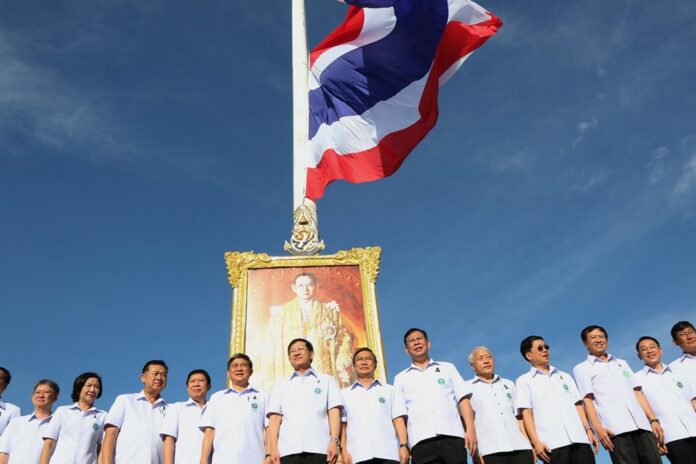
Health ministry officials stand to attention while a National Anthem is played on Sep. 28, 2018, in Nonthaburi province.

BANGKOK — A pro-establishment lawmaker on Wednesday urged the Parliament to abolish the current National Anthem and write a new one that extolls the monarchy.

Thai Civilized Party leader Mongkolkit Suksintaranont said in an address to fellow MPs it is unacceptable that Thailand’s anthem does not include any mention of the monarchy or praises past monarchs for their contributions.

“The kings sacrificed their blood and lives to defend this country throughout so many eras,” Mongkolkit said.

He also recommended using a 1971 inspirational ballad authored by King Bhumibol as a temporary National Anthem while the new one is being written.

His address was cut short when House Speaker Chuan Leekpai chided him for bringing the monarchy into a parliamentary discussion.

Thailand’s National Anthem was adopted in 1939, seven years after a revolution that overthrew the king’s direct rule and installed a parliamentary democracy. In line with the political atmosphere at the time, the anthem lyrics stress on unity and sovereignty of the Thai people, without any reference to the monarchy.

The anthem is also considered to be one of the few legacies of the 1932 revolt that ended the absolute monarchy. Other monuments and buildings associated with the revolution have been dismantled in recent years, including a plaque that marked the democratic coup.

Reaction to Mongkolkit’s call to change the anthem is largely negative on social media.

“Doesn’t he have things to do?” Facebook user Benjamas Amornphan wrote in a comment on a news thread by pro-establishment Nation TV.

“Thailand has come to a point where we have this kind of retarded MP in the Parliament,” user Peera Mhuhaa Missdee added.

The Thai national anthem is played on state media and in public places at 8am and 6pm in public places everyday.

Lyrics of the National Anthem: 

Thailand unites the flesh and blood of Thais.
The land of Thailand belongs to the Thais.
Long has been our independence, wish sovereignty allowed to maintain it,
Because Thais have been united forever.
The Thais are peaceful and loving, but are not cowards in war.
Our sovereignty will never be threatened,
We will sacrifice every drop of our blood for our nation.
We are ready to die for freedom, security, and prosperity!

Advertisement

NGO, Gov’t Scrambling to Rescue Thai Seamen Stranded in Indonesia

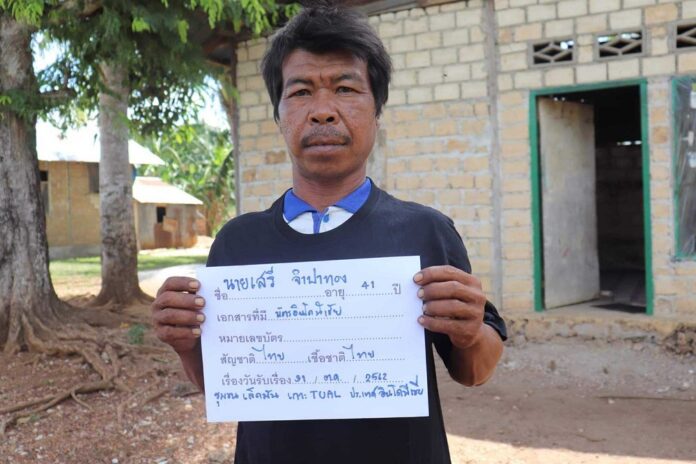
A Thai man identified as Seri Champathong holds up a sign of his information on Tual island, Indonesia. Image: Labor Protection Network

BANGKOK — Thai authorities and labor rights group said an effort under way to bring back seven Thai fishing boat workers who had been trapped on an Indonesian island for over a decade.

The seven were former workers on trawlers who either escaped their horrid conditions or were abandoned without pay on Tual Island, according to Labor Protection Network. An activist said attempts to return them to Thai soils are difficult because five of the seven did not have national ID cards with them, while the Ministry of Foreign Affairs said officials are doing their best to assist them.

“I feel bad that once we met them, we couldn’t save them,” Labor Protection Network leader Patima Tungpuchayakul said.

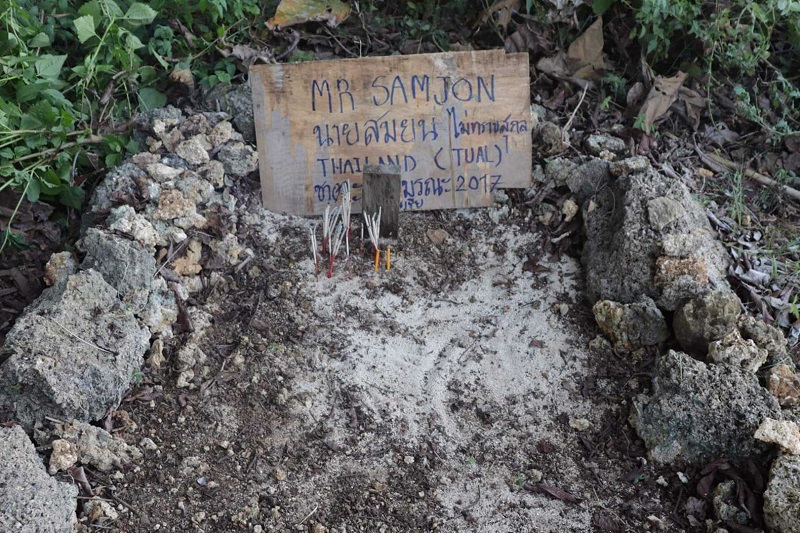
Patima said the network only learned about the seven last month. Another Thai whom the labor network has discovered back in 2016 on the same island died a year later while waiting to be repatriated.

She said there could be over a hundred Thais could trapped on islands in Indonesia – Thais who were either lured by smugglers or coerced into slavery on unregulated fishing boats and then left behind.

4ad44646fd639be815eeb26646180018.0
The grave of a Thai man known only as “Samjan” who died on Tual Island in 2017 while waiting for a rescue. Image: Labor Protection Network

Labor Protection Network co-founder Sompong Srakaew said he will write a letter to the to alert Prime Minister Gen Prayuth Chan-ocha about the urgency and gravity of the issue.

“Some fell from the boat. Others went missing, and there was no accountability,” Sompong said.

Ministry of Foreign Affairs spokeswoman Busadee Santipitaks said up to 2,046 Thais trawler who had been forced to work on trawler boats have been repatriated since 2014.

But in order to be repatriated back to Thailand, those victims of seaborne slavery must go through the long process of bureaucracy. Busadee said they must first prove their nationality. The embassy will then work with Indonesian immigration office and issue a temporary travel document for those wishing to return.

The returnees will also have to sign a letter committing themselves to repay the costs incurred for the trip, Busadee said.

Race Against Time

Alarms were raised about Thai nationals being forced or duped into slavery on Indonesian fishing boats as early as 2014. Media reports at the time said up to hundreds of Thais were likely marooned in Indonesia.

Some Thais also died in their exiles while waiting for repatriation. Activists at the Labor Protection Network are concerned the same fate will befall the seven Thais they’re trying to rescue from Indonesia.

1000 5 1
Locals dig a grave on Sep. 27, 2018, for a Thai national who was forced to work a trawler and later abandoned on Benjina Island, Indonesia. He died while waiting for a repatriation effort back to Thailand.

Campaigners said they are working with the Thai Embassy in Jakarta as well as the Local Administrative Department in Thailand to verify their Thai nationality. They feared the whole process may take too long, as was the case of “Samyan,” the Thai man in the group’s care who died on Tual island in 2017.

Those trapped said they are from different provinces ranging from Samut Prakarn, Samut Sakorn, Si Saket, Petchaboon and more. The youngest is 31 while the oldest 54 and some said they have been stranded on the island since 2002.

Patima said it is very difficult to verify their nationality without ID cards or known families. Some may have been mentally affected due to the treatment on the boats and after as well.

Beside Thais, one Laotian and 44 Burmese were also found trapped on Tual Island, activists said

Advertisement

Hot News

LATEST NEWS

Bangkok
overcast clouds
28.8 ° C
31.1 °
26.6 °
76 %
2kmh
87 %
Sun
37 °
Mon
37 °
Tue
36 °
Wed
37 °
Thu
37 °