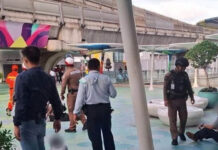
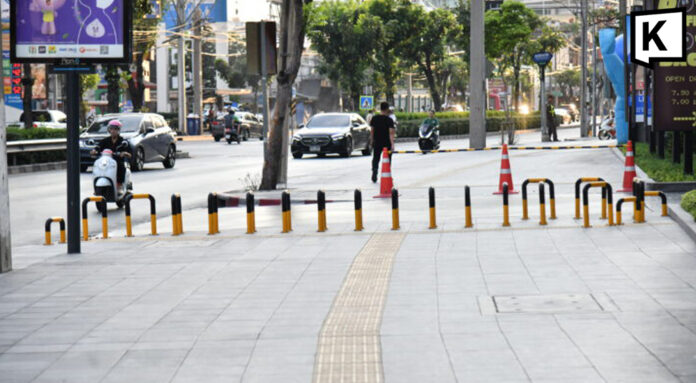
BANGKOK — 24 April 2026, Bangkok authorities have installed metal barriers on pavements in Khlong Toei district to prevent motorcycles from driving on footpaths, following repeated public complaints.
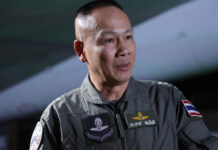
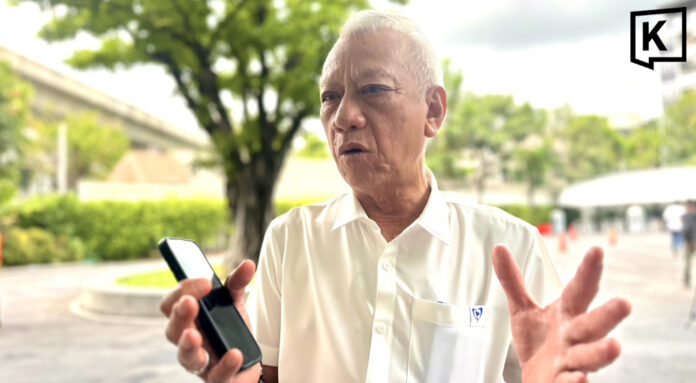
Sittichai Aranyaganon, assistant secretary to the Bangkok governor, inspected the site at the intersection of Rama IV and Sukhumvit roads (Phra Khanong junction), an area known for frequent violations.
He said the problem stems from distant U-turn points, closely spaced side streets and narrow roads, compounded by large vehicles often occupying all lanes, making it difficult for motorcycles to pass and prompting some riders to mount the pavement.
The Khlong Toei district office has installed “S-Guard” steel posts along the pavement, which officials say have proven effective. Authorities consulted road users before installation, as the area is near a BTS Skytrain station and heavily used by both Thai residents and foreign visitors.
“We want all road users, especially motorcyclists, to respect traffic rules,” Sittichai said.
Local residents and shopkeepers reported noticeable improvements, saying the barriers have reduced danger and noise.
One regular pedestrian said she previously felt unsafe walking with headphones, as motorcycles approaching from behind could not be heard. Since the installation, she said, she feels more secure.
Residents added that the design allows access for other users, including wheelchair users, cyclists and travellers with luggage, while effectively blocking motorcycles.
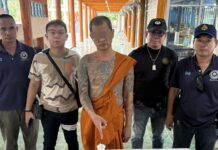
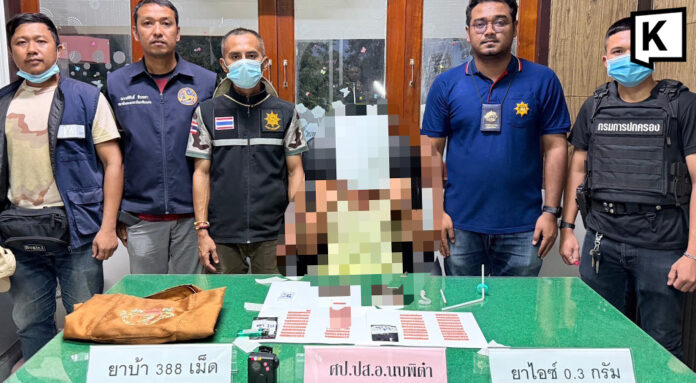
NAKHON SI THAMMARAT — 24 April 2026, A monk at a well-known temple in southern Thailand was arrested after authorities found methamphetamine pills and crystal meth hidden in his shoulder bag, officials said.
Noppitam district chief Apiwat Meethum said local officials received reports on the evening of 24 April that a monk at a temple in Noppitam subdistrict, known as Wat Rong Lek, was involved with illegal drugs.
When officers arrived to investigate, the monk attempted to flee through the rear of his quarters but was chased and detained. He was later identified as Phra Phanuphat, also known as “Ob”.
A search of his quarters uncovered 388 methamphetamine tablets and 0.03 grammes of crystal meth concealed in a monk’s bag, along with drug paraphernalia. The suspect admitted the items belonged to him.
Authorities had the monk defrocked before taking him in for questioning. A urine test returned positive for drug use, and he admitted to taking three meth pills prior to his arrest.
He has been charged with possession of a Category 1 narcotic (methamphetamine) with intent to sell without permission. Police said he confessed to all charges and was handed over to investigators at Noppitam police station for legal proceedings.
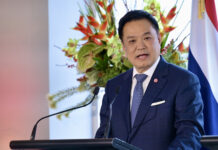
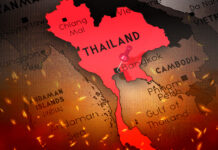
BANGKOK — 25 April 2026, Thailand’s transport minister said he plans to submit a proposed “land bridge” megaproject to the Cabinet in June, aiming to capitalise on potential disruptions in the Strait of Hormuz while insisting the state will not fund the scheme.
Deputy Prime Minister and Transport Minister Phiphat Ratchakitprakarn said the project, estimated at around 1 trillion baht, would link ports on the Andaman Sea and the Gulf of Thailand, creating a transshipment route between the Indian and Pacific oceans.
He said the plan aligns with earlier remarks by Prime Minister Anutin Charnvirakul that the project should proceed, citing possible future instability in the Strait of Hormuz as an opportunity for Thailand.
Responding to criticism that transferring cargo between ports would increase shipping times, Phiphat said more than 90% of global container shipping involves transshipment rather than direct end-to-end delivery.
“If cargo is transferred at Thailand’s ports, it would also have to be transferred elsewhere, such as in Singapore,” he said, adding that Thailand is seeking to attract more transshipment traffic.
Phiphat said feasibility studies by the Office of Transport and Traffic Policy and Planning have been completed, and he will conduct a site visit in May. The project is expected to be opened to bidding for both domestic and foreign investors, with equal opportunities.
Construction could begin later this year, pending Cabinet approval, which he expects to seek between June and July.
He stressed that the government would not directly invest in the project but would grant land concessions to private investors.
Environmental and health impact assessments will be required, he said, acknowledging local concerns. Authorities will engage with communities to address opposition and clarify information, which he suggested may be influenced by activist groups.
Phiphat said the government aims to open the project for investment in the third quarter of 2026.
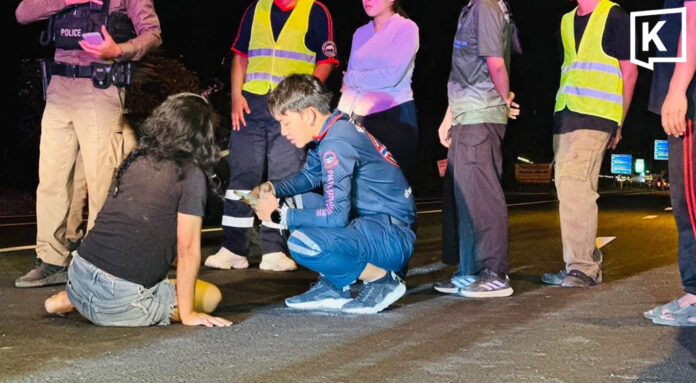
CHIANGMAI — 25 April 2026, A drunken woman sat in the middle of a road in San Kamphaeng district early on Saturday, forcing several vehicles to swerve abruptly and narrowly avoid hitting her, authorities said.
A patrol unit from a local rescue team responded to reports that a woman was attempting to get herself struck by traffic on the San Pa Kha–Bo Sang road.
At the scene, the woman was found intoxicated and sitting in the roadway, creating a dangerous situation for passing motorists. Several vehicles were seen taking sudden evasive action to avoid a collision.
Rescue workers and police officers worked together to calm the woman before safely escorting her off the road to a secure area to prevent potential harm.
BANGKOK — 25 April 2026, Thai police and customs authorities have stepped up a joint crackdown on cross-border smuggling of cash, gold and cannabis buds, blacklisting 86 foreign nationals to prevent repeat offences, a senior police official said.
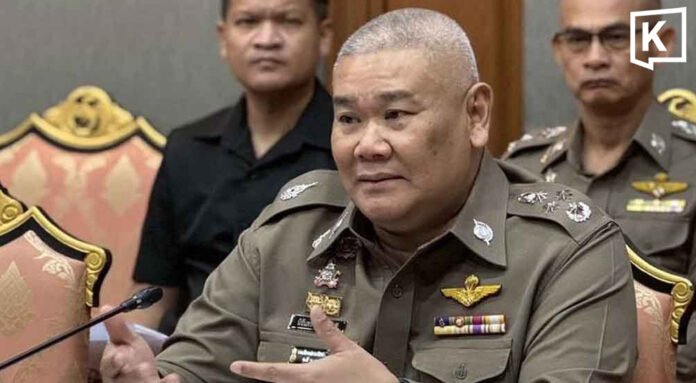
Pol. Gen. Nirandorn Lueamsri, deputy national police chief, said the Royal Thai Police and the Customs Department had integrated their databases and adopted more proactive measures to curb illicit imports and exports that undermine state revenue and national security.
Under Thai customs law, smuggling prohibited goods, including narcotics and items affecting financial stability such as currency and gold, carries criminal penalties, including imprisonment and fines. However, unlike most criminal cases, offenders can settle cases without police investigation if they agree to pay a fine set by the customs chief or a comparison committee. For seized goods valued above 400,000 baht, settlement requires approval by the committee.
Nirandorn said the committee, comprising Customs Director-General Phanthong Loykulnanta, a senior Finance Ministry inspector and himself, meets თითქმის monthly and has handled numerous cases involving Thai and foreign offenders.
Authorities have found frequent attempts to move large sums of Thai currency and gold out of the country without declaration, sometimes worth millions of baht per case, raising concerns about capital flight and possible links to overseas money laundering.
Cash smuggling is often detected at border checkpoints near casino areas, typically involving nationals from neighbouring ASEAN countries, while gold smuggling is more commonly intercepted at airports, often involving South Asian nationals. Many offenders have extensive travel histories, with some entering and leaving Thailand dozens of times, and some are repeat offenders.
In recent cases, foreign nationals have also been caught attempting to export cannabis buds without authorisation, often destined for European countries. The product remains a controlled herb under Thai regulations and is illegal in many destination countries.
Because many offenders opt to settle cases by paying fines, some have been able to re-enter Thailand and reoffend. To address this, police and customs have begun sharing offender data with the Immigration Bureau to enhance monitoring and enforcement.
Foreign offenders identified in the database are being placed on an immigration blacklist, barring re-entry to Thailand, while Thai nationals are placed on a watchlist and subject to stricter screening when travelling.
So far, authorities have compiled records on 114 individuals, 86 foreigners and 28 Thais, with all foreign nationals meeting the criteria for blacklisting, Nirandorn said.
He urged travellers to familiarise themselves with customs regulations on prohibited and declarable items to avoid legal penalties and inclusion on immigration watchlists.
Officials said the data integration marks a significant step in strengthening enforcement and comes amid broader global economic pressures and regional instability.
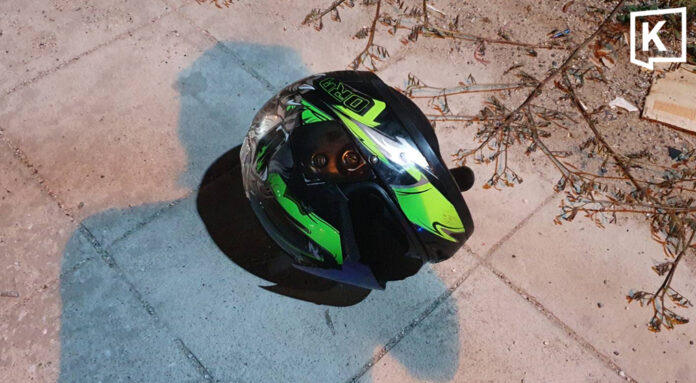
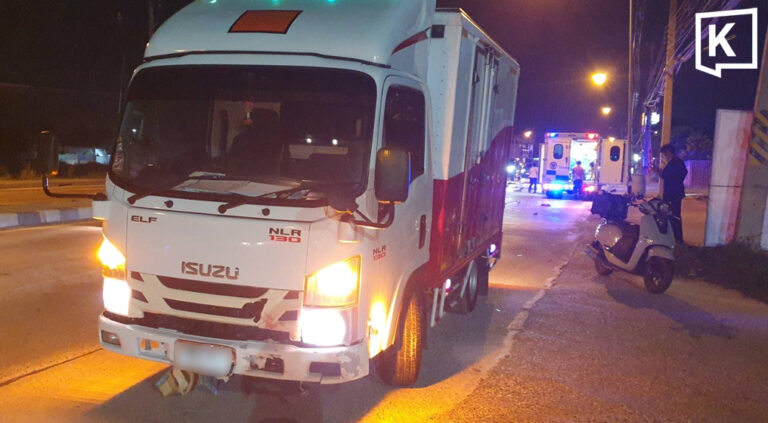
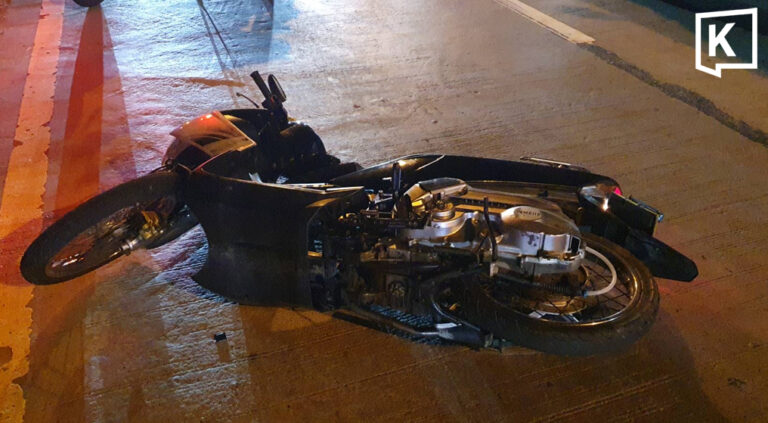
CHONBURI — 24 April 2026, A motorcyclist was killed and a pillion passenger seriously injured after the bike lost control, crossed a central reservation and slammed into a truck on Road 344, police said.
Dashcam footage captured the moment the motorcycle veered from the opposite carriageway, skidded across the median and collided with a light cargo vehicle equipped with a front camera.
Police and rescue workers responding to the scene in Nong Ri subdistrict found the body of Pornsak Liamthaisong, 42, from Surin province, with fatal injuries. A woman riding pillion, whose name was not immediately known, sustained severe fractures and was taken to hospital.
The motorcycle, a white-and-black Yamaha Nouvo registered in Samut Prakan, was found badly damaged. Nearby was a white Isuzu light cargo truck with Bangkok plates.
The truck driver, 25-year-old Ekkachai Tiapsi, told police he was driving to Chanthaburi when the motorcycle suddenly crossed the median and struck his vehicle, leaving him no time to brake.
Investigators said they would review dashcam and nearby CCTV footage to determine whether another vehicle may have struck the motorcycle before it lost control and crossed into oncoming traffic. Further legal action will follow based on the findings.
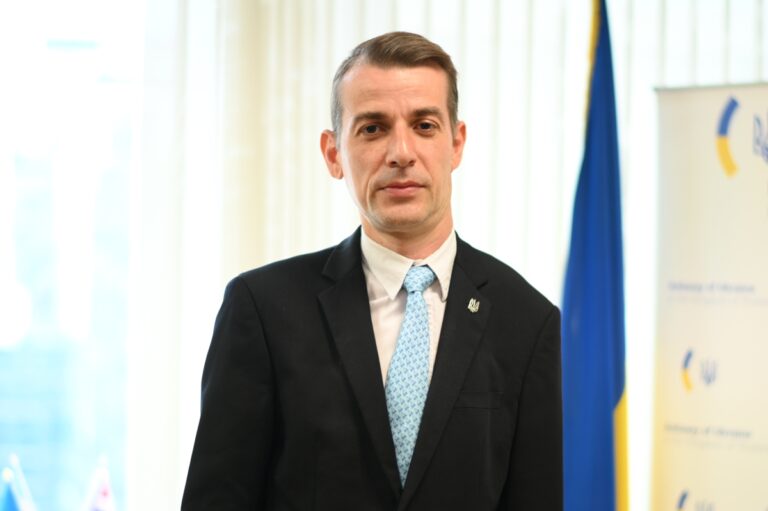
This article was written by Mr. Viktor Semenov, Chargé d’Affaires a.i. of Ukraine to the Kingdom of Thailand, on the occasion of the 40th anniversary of the Chornobyl Nuclear Power Plant disaster.
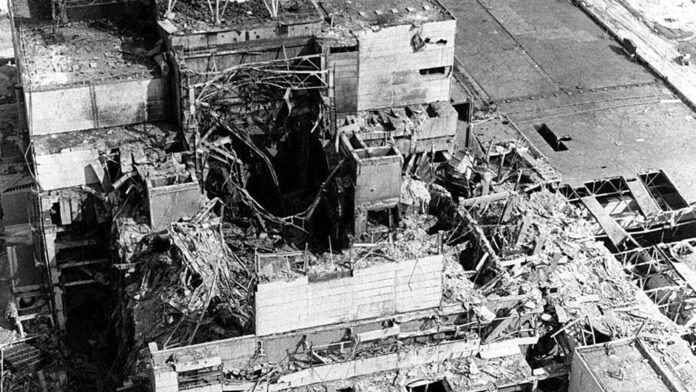
On 26 April 2026, we mark the 40th anniversary of the accident at the Chornobyl
Nuclear Power Plant, one of the largest man-made disasters in human history. The
catastrophe that unfolded in 1986 was the result of a reactor experiment carried out
under Moscow’s orders, in blatant violation of basic safety protocols.
The scale of the tragedy was not caused only by the explosion itself. The criminal
negligence, combined with the Soviet authorities’ attempts to conceal the truth about
the accident and its consequences, meant that the world remained unaware of the
explosion for at least two full days, while Soviet citizens were kept unaware for weeks.
In those critical early days, silence was enforced, and truth was suppressed.
Despite the fact that radiation was already in the air, on 1 May the Soviet authorities forced people to participate in a demonstration in the center of Kyiv. This decision reflected a system where image and control mattered more than human life.
Mr. Viktor Semenov, Chargé d’Affaires a.i. of Ukraine to the Kingdom of Thailand
The consequences quickly spread far beyond Ukraine. Contamination was
recorded in Belarus, Sweden, Norway, Poland, Austria, Switzerland, Germany, Finland,
and the United Kingdom. The scale of the disaster is difficult to comprehend. 20 000
roentgens was the level of radiation in the destroyed reactor. For comparison, only 500
roentgens for five hours is a lethal dose. The total radiation from the released isotopes
was 30 times greater than that from the bomb dropped on Hiroshima. Over 145 000
square kilometers of land were contaminated with radionuclides, and 8,5 million people
were exposed to radiation.
Around 5,000 settlements across present-day Ukraine, Belarus, and Russia were
affected – 2 218 of them in Ukraine, home to approximately 2,4 million people. Over 300
000 people had to leave their homes forever. The exclusion zone remains today.
The Soviet authorities hid the fact of the accident and its effects, falsifying
diagnoses of radiation exposure. Data on contamination were classified until 1989.
It is clear that the Chornobyl tragedy was not just a technological failure, but also
the result of a Soviet system built on secrecy, the absence of freedom of speech, and
disregard for human life. The Soviet authorities concealed the scale of the disaster and
delayed action, turning an accident into a global tragedy.
Ukraine has drawn important lessons, choosing transparency, responsibility, and
international cooperation as the basis of its approach to nuclear safety. After 1991,
during all years of Ukraine’s independence, my state maintained the highest standards
of safety at its nuclear facilities.
Since 2022, however, Ukrainian nuclear industry has been under constant threat from the Russian army’s actions.
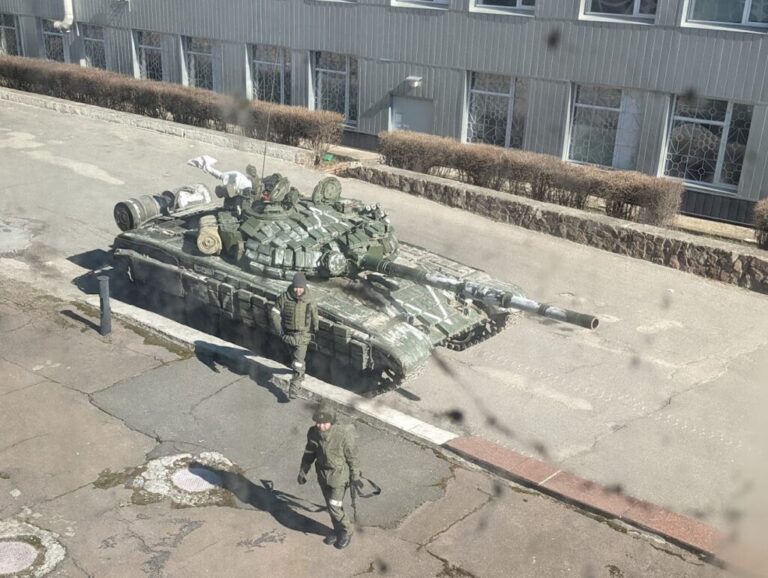
Chornobyl was among the first targets of Russia’s full-scale invasion, as the
Exclusion Zone was rapidly seized by Russian forces. Only the dedication of the
Exclusion Zone staff, who remained at their posts under the extreme conditions of
occupation, ensured the operation of the Chornobyl NPP and other facilities, and risked
their lives, a new nuclear disaster was prevented.
On 31 March 2022, the Armed Forces of Ukraine expelled Russian troops from
the Chornobyl Exclusion Zone. Unfortunately, the occupiers captured and forcibly
transported 169 personnel of the Ukrainian National Guard, who had been guarding the
Chornobyl NPP, to Belarus and then to Russia.
The aggressor state forces did not stop there. One more terrifying act of nuclear
security breach the world witnessed on the night of 13-14 February 2025, when Russia
struck the New Safe Confinement at the Chornobyl NPP, which protects the destroyed
Unit 4 reactor, with the Russian-Iranian attack drone. The strike damaged both the outer
and inner shells of the confinement structure (the NSC arch) and disabled the main
crane system.
To be clear, this arch protects the world from Chornobyl radiation. After this barbaric attack, Ukrainian rescuers contained the immediate threat. Now, we are working with our partners to restore the NSC and raise funding for this purpose. We are grateful to G7, in particular, French presidency and the EBRD for their efforts. A relevant donor conference will be held in Kyiv on 26 April 2026.
The actions of Russian army in Chornobyl zone showed a complete absence of
understanding of the radiation threat both to their own health and lives and those of
others. How come two states – both Russia and Ukraine, which lived through the same
tragedy, and were once part of the same state, drew such a different conclusions from
the same event and have such different levels of awareness on this issue?
Every Ukrainian from childhood is taught about Chornobyl with the particular focus on the importance of responsibility in the nuclear sphere. In contrast, to our society, the only thing our enemy’s people are taught from the very childhood is to blindly follow orders. The level of militarization within Russia is so high that it is no surprise that the Russian military carried out the order to seize Chernobyl and attack the protective arch. This is what happens when ideology takes precedence over education.
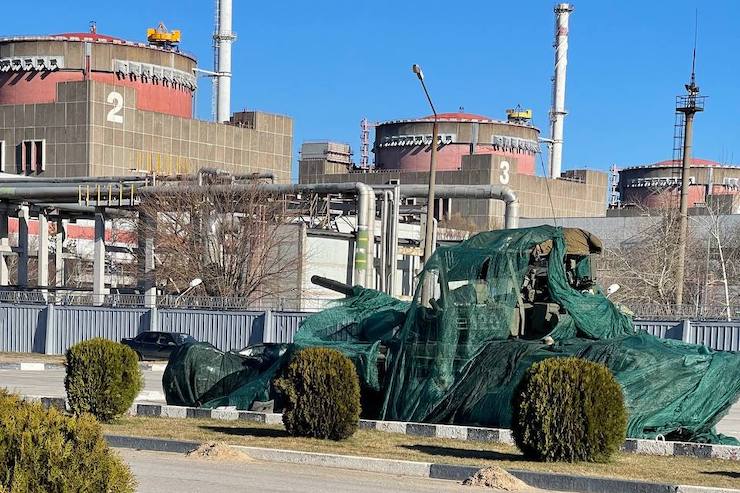
After the Chornobyl NPP, the aggressor state also captured the Zaporizhzhia
NPP – the biggest in Europe (ZNPP). Both plants were militarized by Russia and used
for both military and political purposes. For the first time in human history, a state has
forcibly seized nuclear power plants.
Russia’s occupation of the ZNPP has been marked by serious human rights
violations. At least 35 civilians – plant employees and residents of Enerhodar, satellite
city of ZNPP, – have been unlawfully detained, tortured, and convicted on fabricated
charges. Since 2022, up to 2 000 civilians in Enerhodar have faced unlawful detention,
torture, or enforced disappearance. Holding personnel of a strategic nuclear facility as
hostages is a grave breach of international humanitarian law and poses additional risks
to the plant’s safety.
The plant has experienced degradation of equipment, constant power outages,
increased fire hazard, systematic violations of nuclear and radiation safety
requirements. It lacks reliable water supply, stable external power supply, qualified
personnel and proper technical maintenance for systems critical for safety.
Since the beginning of the occupation, the ZNPP has experienced 14 complete blackouts and has repeatedly operated under critically limited power supply conditions. According to
the IAEA, on April 14 and 16, Ukraine’s ZNPP temporarily lost all internal electricity
twice within one week, marking the 13th and 14th such incidents since the start of
Russia’s full-scale military invasion of Ukraine.
In Ukraine there are three other nuclear power plants. Over the past years there
have been dangerous Russian drone flyovers over them. Moreover, Russia continues to
conduct drone and missile strikes at critical energy substations linked to our NPPs.
Such attacks have already led to emergency reactor shutdowns. Our continent was on
the brink of a disaster.
My point here is that first, by attacking Chornobyl, seizing the Chornobyl and
Zaporizhzhia NPPs and attacking energy substations linked to nuclear facilities, Russia
violated all key principles of nuclear safety and security established by the IAEA.
Once again, I would like to stress that we strongly condemn Russia’s attempts to
legitimise the illegal control over ZNPP. ZNPP belongs to Ukraine – this is not a subject
for discussion.
Second, we all have to thank Ukrainian nuclear energy professionals. They
managed to maintain safe control of nuclear reactors under such extreme conditions.
Third, we have to change Russia’s policy of nuclear blackmail. Ukraine calls on
the international community to take decisive and principled action to ensure political,
economic, and legal consequences for Russia for its crimes that undermine global
nuclear safety. No country has the right to blackmail the world with the threat of a
radiation catastrophe.
We call on all states to impose sanctions against Rosatom and restrictions on the
aggressor’s rights in the IAEA. Ukraine proposed relevant statute amendments, and we
count on partners for support.
We are confident that it is necessary to increase international pressure to ensure
the immediate release of ZNPP employees and National Guard servicemen illegally
detained by Russia and to guarantee compliance with IHL in the temporarily occupied
territories.
Security guarantees for Ukraine should cover the nuclear sector and ZNPP. Russia must withdraw its troops from all ZNPP facilities and to return it to their rightful owner. Restoring global nuclear safety is impossible without returning full control of all civilian nuclear facilities on its sovereign territory to Ukraine. Russia should be barred from participation in the global nuclear-energy market.
I am convinced that Russia has carried out a forcible seizure and occupation of
the ZNPP, which the occupiers have effectively transformed into a military base, packed
with heavy military equipment, weapons and military personnel, in fact, transformed the
plant into a time-bomb that threatens the security of the region, Ukraine and Europe as
a whole, and which can detonate at any time.
This international crime committed by the Russian Federation by attacking and occupying the ZNPP is the first case of the forcible seizure and occupation of an operating nuclear power plant in the world, which requires unconditional condemnation by the international community.
Protecting Ukraine’s civilian nuclear facilities is a global responsibility. This is not a moment for a “Don’t Look Up” response, it is a moment to act. We urge the world not to wait for a new Chornobyl, but to help ensure the nuclear safety in Ukraine and thus in Europe and other regions of the world, as atom knows no borders.
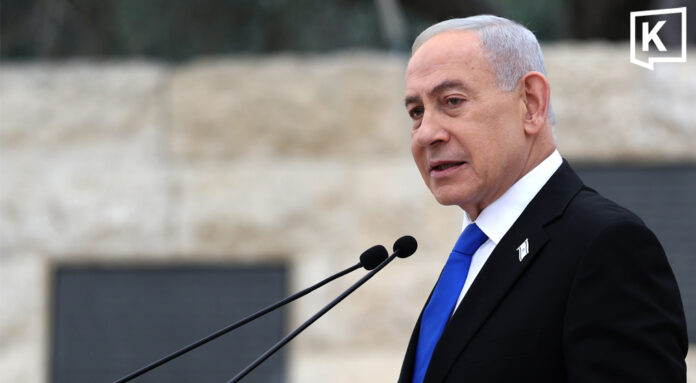
JERUSALEM (AP) — Israeli Prime Minister Benjamin Netanyahu said Friday that he has undergone treatment for prostate cancer in his first public acknowledgment of the diagnosis.
He said that roughly a year and a half ago he had prostate surgery. Then two and a half months ago, his doctors discovered and treated a small tumor at Jerusalem’s Hadassah Hospital with radiation therapy. That was not announced at the time.
“I requested to delay its publication by two months so that it would not be released at the height of the war” against Iran, the 76-year-old Israeli leader said, to prevent “more false propaganda against Israel.”
He said he was healthy and called the tumor a “minor medical issue.”
Netanyahu’s health was the subject of speculation during the early weeks of the war with Iran as fake, AI-generated images circulated suggesting he had died, including on Iranian state media.
Aharon Popovtser, the director of Hadassah Hospital’s oncology unit, said Netanyahu was diagnosed at an early stage, noting that prostate cancer is common among men his age.
“We can say based on the findings of these tests that the disease has disappeared,” he said, referring to imaging and blood work.
Israel’s longest-serving prime minister — who is overseeing not just the war in Iran but also conflicts in Gaza and Lebanon — has faced criticism in the past for not disclosing information about his health, including when he told the public he had a pacemaker implanted to address a long-standing heart condition a week after he fainted at a public appearance.
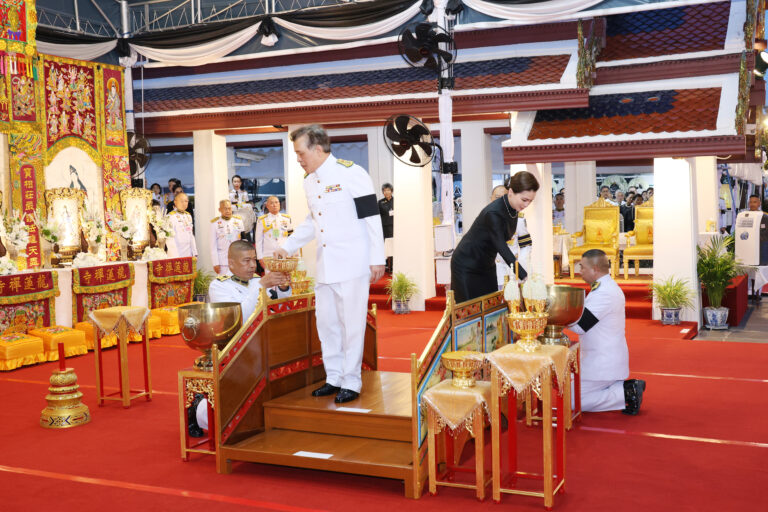
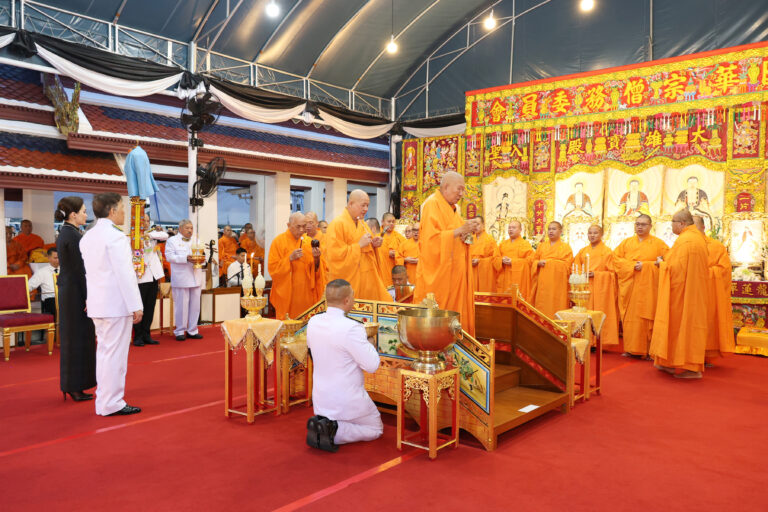
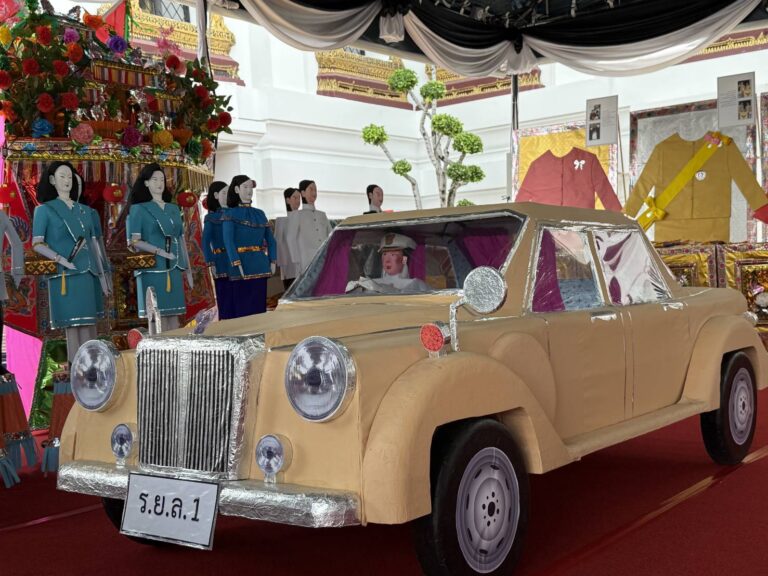
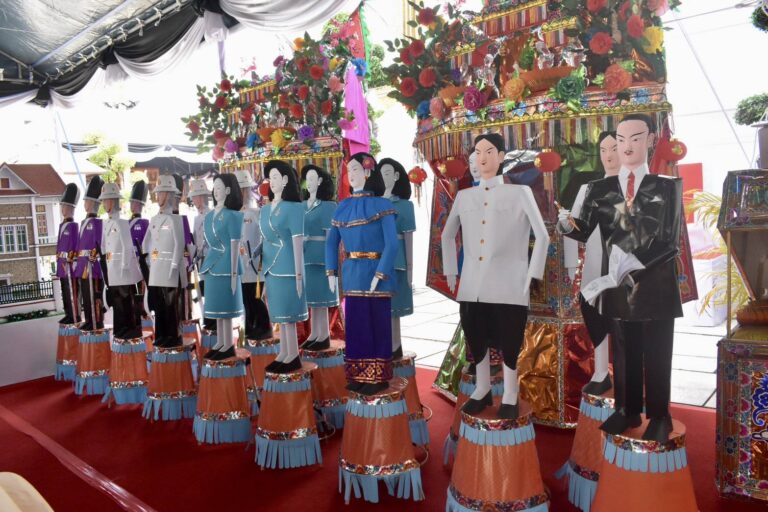
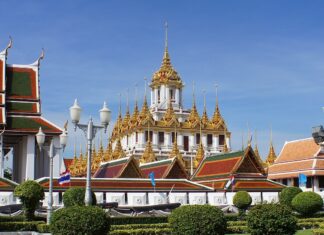
A royal Chinese Buddhist funeral rite combining centuries-old tradition with intricate craftsmanship was held on 23 April at the Dusit Maha Prasat Throne Hall in the Grand Palace, as Their Majesties the King and Queen attended a gongtek ceremony for the royal funeral of Her Majesty Queen Sirikit, the Queen Mother.
Members of the royal family also accompanied the ceremony, which was conducted by Chinese Buddhist monastics as part of the royal funeral rites.
The gongtek ceremony is a Mahayana Buddhist tradition of merit-making for the deceased, in which monks chant prayers while symbolic paper offerings—such as houses, vehicles and possessions—are burned, believed to provide comfort and prosperity in the afterlife.
Although rooted in Chinese tradition, the rite has long been incorporated into Thai royal funeral ceremonies, dating back to at least the reign of King Rama IV, and has since become part of royal cremation customs.
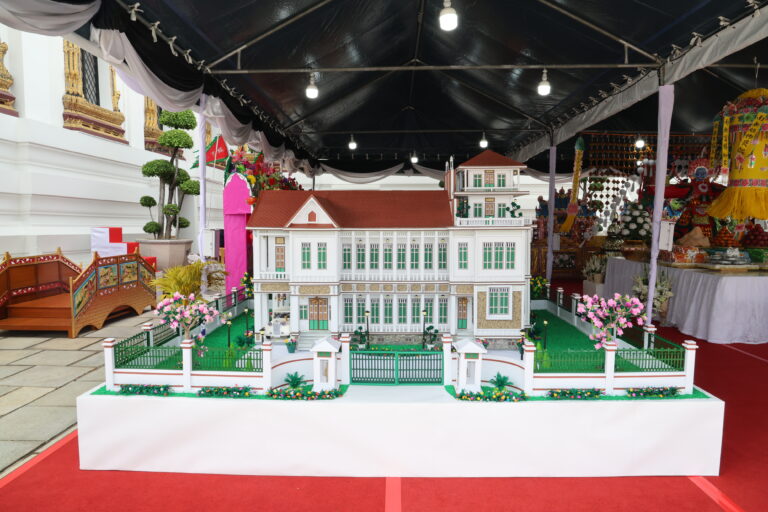
For this royal funeral, the Chinese monastic community prepared elaborate and highly detailed paper offerings reflecting the life and legacy of the Queen Mother.
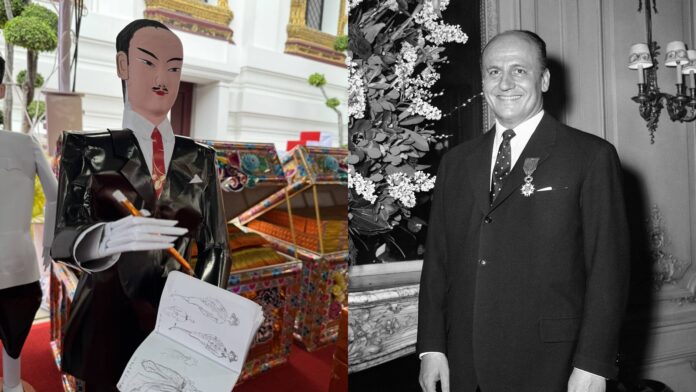
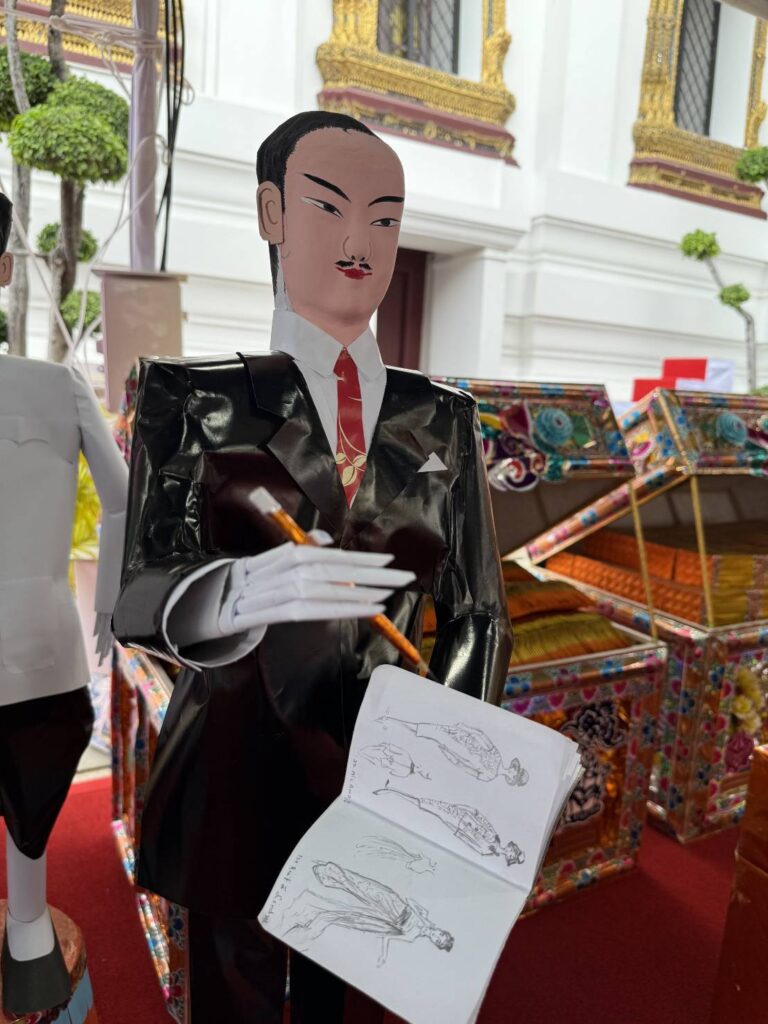
Among the most notable creations was a miniature representation of Chitralada Royal Villa, complete with palace attendants, police guards and court officials. The paper figures included 17 attendants dressed in working uniforms, carefully arranged to reflect real palace life.
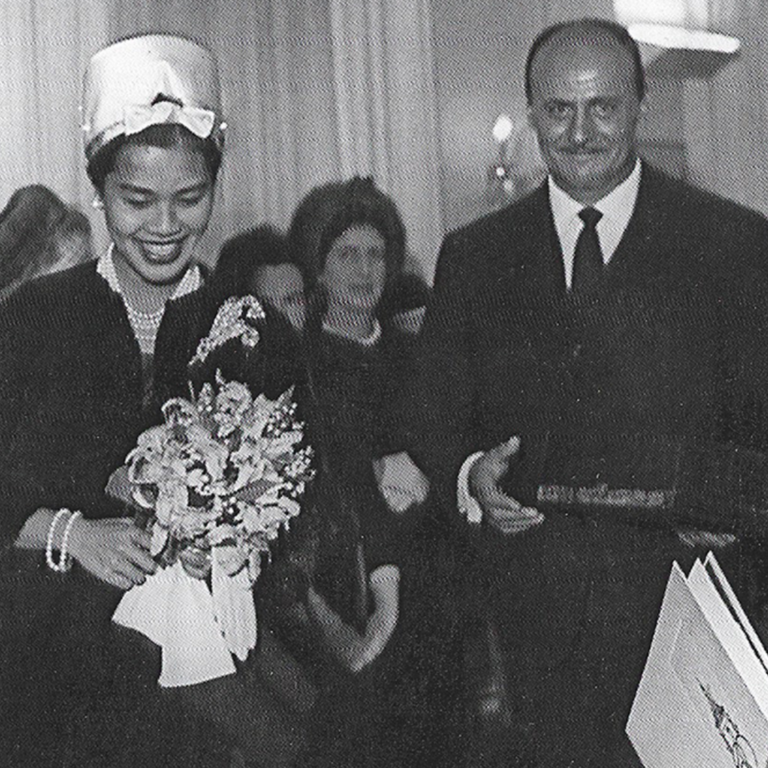
A striking detail was the inclusion of a paper figure representing Pierre Balmain, the renowned French fashion designer and founder of the Balmain fashion house, who had once designed many of the Queen Mother’s iconic royal garments.
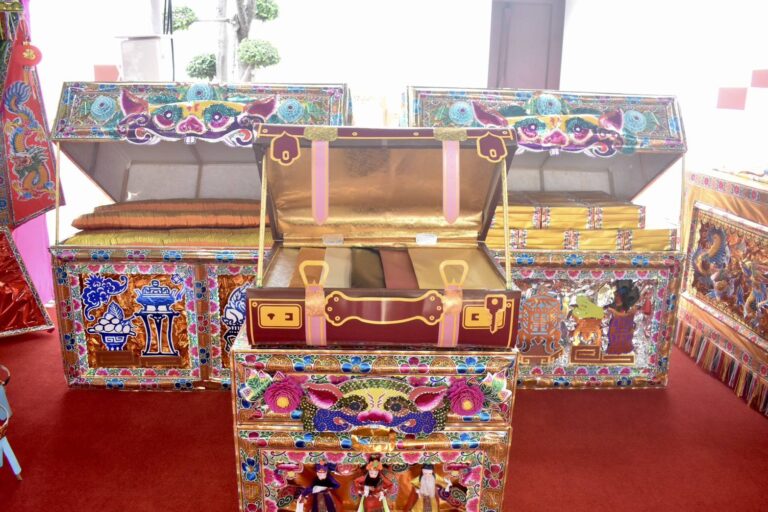
The offerings also included a royal vehicle with a driver, as well as symbolic items such as gold and silver treasuries, mountain-shaped offerings, and ceremonial wealth chests.
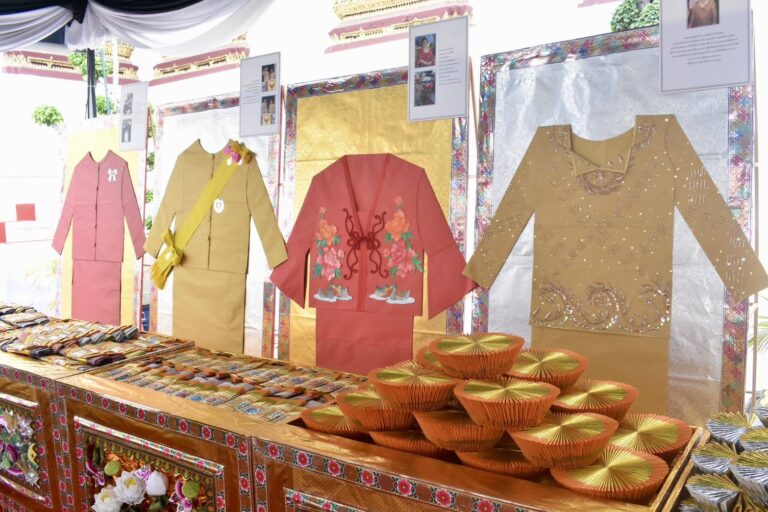
Additional paper garments were crafted to replicate well-remembered Thai silk outfits associated with the Queen Mother, reflecting her long-standing role as a cultural icon and patron of Thai textiles.
Organisers said the ceremonial works were created using traditional paper craftsmanship techniques, with contributions from Chinese Buddhist disciples nationwide, as an expression of gratitude and devotion to the late Queen Mother.
The ceremony reflected both spiritual belief and cultural continuity, symbolising respect for the deceased while highlighting more than 150 years of Chinese Buddhist monastic presence under the Thai monarchy.
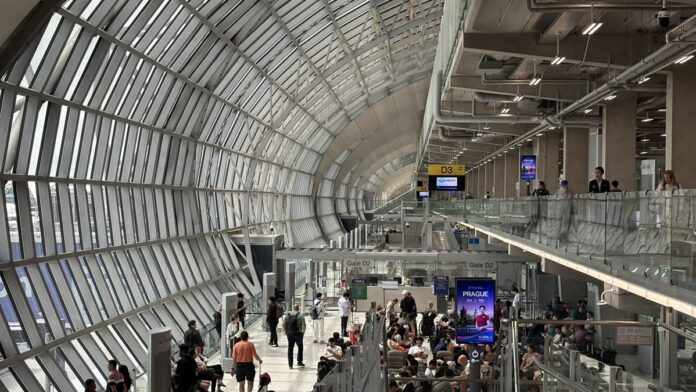
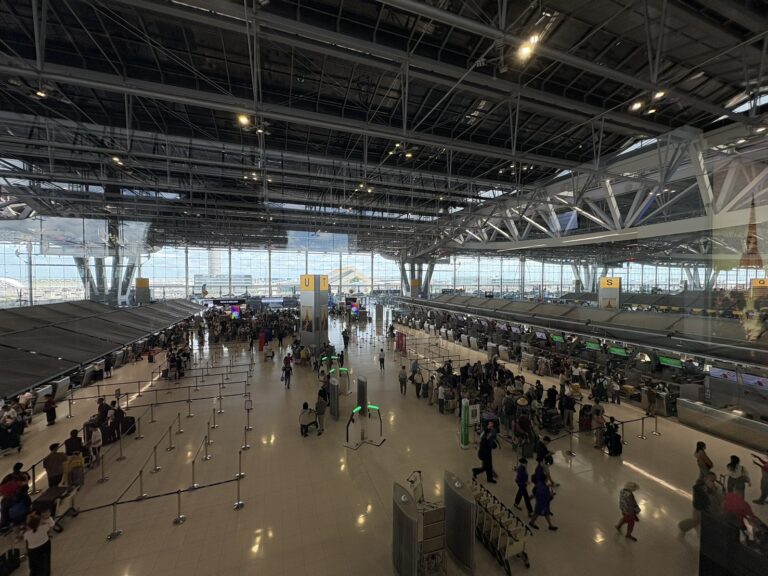
A foreign traveler’s post criticizing Bangkok’s Suvarnabhumi Airport has sparked lively debate online, with Thai users divided over whether the country’s main international gateway lacks visual appeal or remains one of the region’s more attractive airports.
Posting on Threads, the traveler wrote that after frequently using Suvarnabhumi over the past seven years, the airport still felt like a “giant concrete blimp” and described it as “super dull and boring” compared with other international hubs.
“They need to add some color and unique spaces/features in it,” the post added.
Suvarnabhumi Airport
The comment quickly went viral, drawing hundreds of responses from Thai users who largely agreed with parts of the criticism, saying the airport could feel “crowded” and “lacking in color” compared with hubs such as Singapore, South Korea, and Hong Kong.
One user wrote that while Suvarnabhumi is functional, “it can feel congested and less vibrant,” adding that many international airports appear more spacious and modern.
Another commenter said the feedback should be taken constructively, noting that “global competition is about improving services for passengers.”
However, many others defended the airport, praising its design elements and atmosphere.
Suvarnabhumi Airport
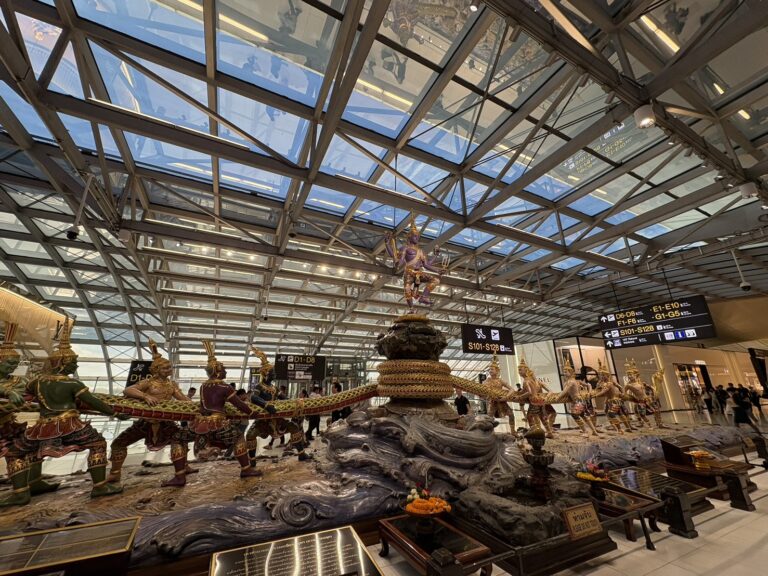
Some users highlighted features such as the airport’s duty-free zone, Thai cultural sculptures, and illuminated roof design at night, describing them as distinctive and welcoming. Others said Suvarnabhumi compares favorably with several major airports in the region in terms of space, seating availability, and overall passenger experience.
“Personally, I think Thailand’s airport is more beautiful than many I’ve been to,” one comment read, while another user added that the newer SAT-1 satellite terminal offers a more modern, premium experience with upgraded facilities.
The discussion reflects a broader divide in public perception between aesthetic expectations of international airports and practical considerations such as capacity, comfort, and functionality.