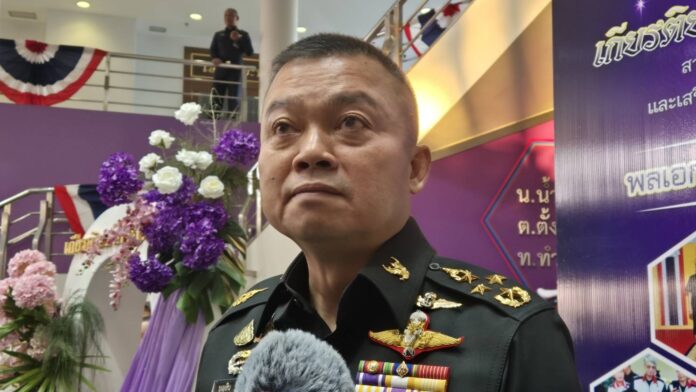
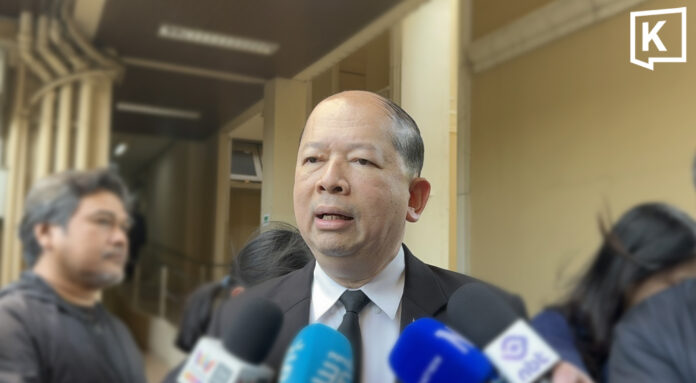
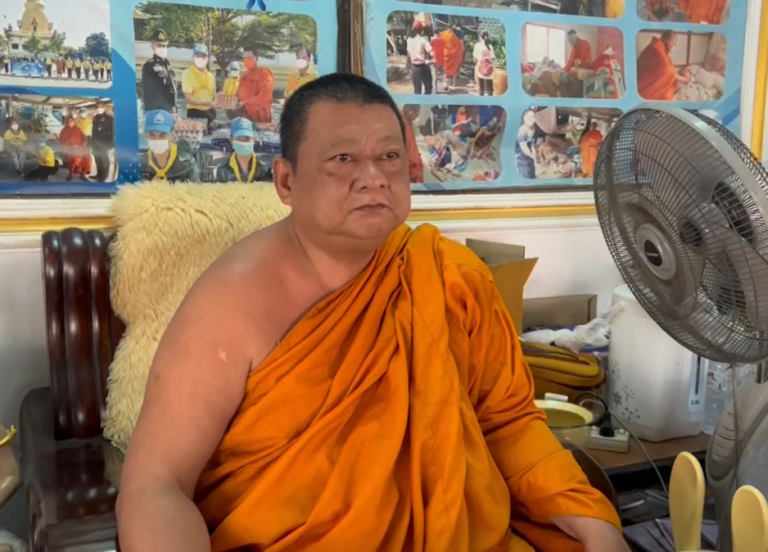
Gen. Boonsin Phadklang, former commander of the Second Army Region
NAKHON NAYOK — A former Thai army commander has said the situation along the Thai–Cambodian border remains at a ceasefire stage, with both sides holding positions while awaiting talks between the two governments.
Gen. Boonsin Phadklang, former commander of the Second Army Region, said on Monday that the current focus was on maintaining calm and allowing negotiations to move forward.
Speaking at the Armed Forces Academies Preparatory School in Ban Na district, Nakhon Nayok, Boonsin said forces on both sides were under orders to observe a ceasefire and avoid escalation.
“At the moment, it is a ceasefire and troop containment. We are waiting for those in authority from both governments to discuss how to move peace forward,” he said.
Asked about video clips circulating online that appear to show Cambodian soldiers engaging in provocative behaviour, Boonsin said isolated incidents were possible given the length of the border, which stretches more than 1,000 kilometres.
He said in some areas troops from both sides maintain good relations, while in others there may be personnel who lack discipline. Thai soldiers, he added, have been instructed to adhere strictly to agreed rules.
“From the clips that have emerged, most of the incidents appear to have been initiated by Cambodian soldiers,” Boonsin said, adding that such actions should be seen as warnings and that neither side wants the situation to spiral into a wider confrontation.
He stressed the importance of restraint on the ground while diplomatic channels remain the key mechanism for resolving tensions along the border.
BANGKOK — 27 January 2026, Thailand’s national security chief said that the current situation along the country’s borders remains calm enough to allow elections to be held, though authorities must assess developments on a day-by-day basis.
Chatcai Bangchuad, secretary-general of the National Security Council, told reporters at Government House at 09:40 that there had been no reports of unrest in the southern border provinces, adding that security agencies were closely monitoring the situation.
He said intelligence coordination was being strengthened at all levels following earlier criticism by the prime minister, with police and military units working together to ensure a unified response.
Asked whether the Southern Border Provinces Peace Dialogue Panel was involved in addressing the situation, Chatcai said details should be provided by Gen. Somsak Rungsita, the panel’s head.
On the Thai-Cambodian border, Chatcai said assessments showed elections could be organised without major problems. He said authorities were continuing to monitor the situation but, for now, conditions remained stable.
Responding to reports on social media warning of a possible third round of clashes that could force border residents to evacuate, he said the situation was fragile and required daily evaluation, as multiple risk factors remained.
Chatcai said no special security measures were needed beyond existing arrangements during the election period, noting that internal areas along both the Thai-Cambodian border and in the southern provinces were primarily under police responsibility.
When asked about Cambodia digging trenches near the border and whether this had security implications, he said the military would be better placed to comment in line with its prepared plans.
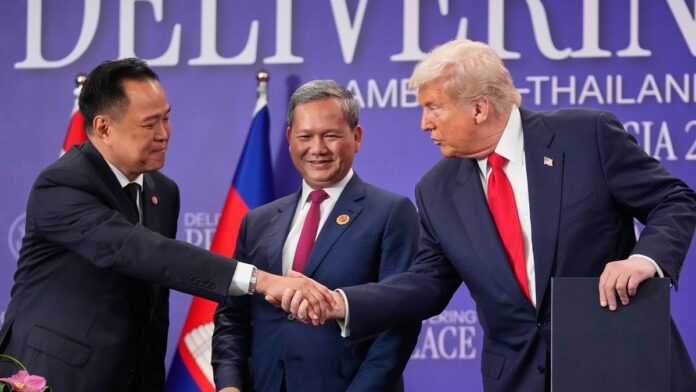
President Donald Trump shakes hands with Thailand's Prime Minister Anutin Charnvirakul, left, as Cambodian Prime Minister Hun Manet watches during a signing ceremony on the sidelines of the ASEAN Summit in Kuala Lumpur, Malaysia, Sunday, Oct. 26, 2025. (AP Photo/Mark Schiefelbein)
PHNOM PENH — Cambodian Prime Minister Hun Manet on Tuesday defended his decision to join the Trump-initiated Board of Peace, saying Cambodia will not be required to pay the proposed US$1 billion fee unless it seeks permanent membership.
The move has drawn mixed reactions after Hun Manet confirmed Cambodia would take part in the initiative launched by US President Donald Trump, which aims to address conflicts in Gaza and other global hotspots.
Some observers have welcomed Cambodia’s participation, saying it could raise the country’s profile on the global stage, even as many European nations and major powers have declined to join or have taken a cautious stance. Others, however, have raised concerns over the potential financial burden, citing reports that permanent membership could cost up to US$1 billion.
In a public clarification, Hun Manet said Cambodia agreed to join as a founding member of the Board of Peace following an invitation from Trump on 16 January 2026.
He said the decision reflects Cambodia’s long-standing commitment to peace, including its contributions to United Nations peacekeeping missions in conflict-affected countries.
Addressing public concerns, Hun Manet said founding membership for an initial three-year period does not require any budget.
“The US$1 billion budget applies only in the case of long-term or permanent membership,” he said.
Trump has sent invitations to multiple countries, with several reported to have accepted, including the United Arab Emirates, Bahrain, Albania, Armenia, Azerbaijan and Belarus. Others, such as France, Germany, the UK and Spain, have declined the invitation.
France said the board’s charter does not align with United Nations resolutions on resolving the war in Gaza and includes elements that run counter to the UN Charter, according to its Foreign Ministry.
Slovenian Prime Minister Robert Golob also rejected the invitation, warning that the initiative “dangerously interferes with the broader international order”.
Thailand has also received an invitation. However, Prime Minister Anutin Charnvirakul said the decision should be left to the next government, noting that the current administration is serving in a caretaker capacity.
CHONBURI — 25 January 2026, A 35-year-old father of two was killed after a pickup truck allegedly chased and rammed his motorcycle in Phan Thong district, an incident captured on a dashboard camera, police said. The victim’s mother and wife said they will not accept an apology and want authorities to pursue the case to the fullest extent of the law.
Dashcam footage shows a speeding pickup truck slamming into a motorcycle, leaving the truck badly damaged. Witnesses said the pickup driver appeared intoxicated.
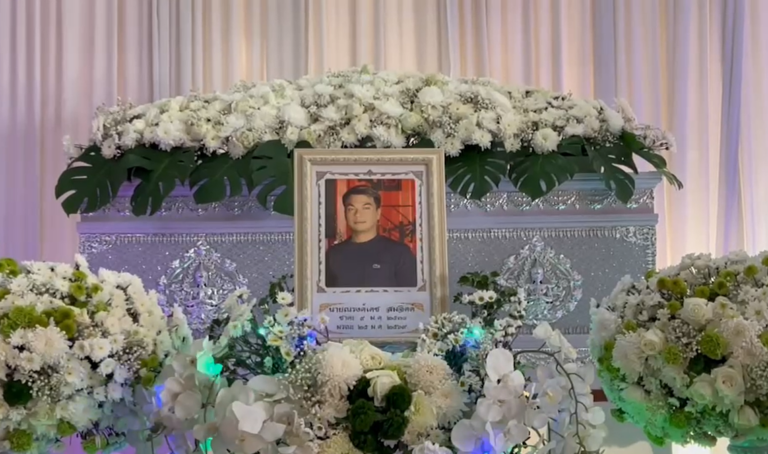
The victim, identified as Narongdet Somjit, 35, died at the scene on Soi 12, Ban Kao subdistrict, Phan Thong district, Chon Buri province, at about 00:20 on 25 January.
Narongdet’s body is being laid out for funeral rites at Wat Woraprot Sangkhawas in Bang Nang subdistrict, Phan Thong district.
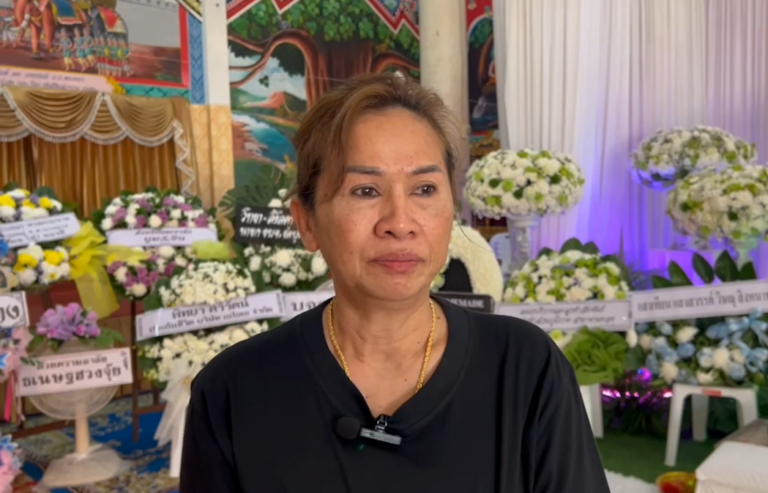
Speaking to reporters on Tuesday at 08:30, Narongdet’s mother, Sri-amphon Somjit, 53, said she was devastated by her son’s death and unable to accept what had happened.
“My son was a good person and the head of the family. He took care of everyone and had two children to support,” she said. “I cannot forgive this. I cannot even bring myself to watch the clip.”
“I cannot forgive this. I cannot even bring myself to watch the clip,” Narongdet’s mother said.
She said she would not reconcile with the suspect and wants police to pursue the case fully under the law. She added that if her son’s spirit could hear her, she wanted him to know she would take care of his children.
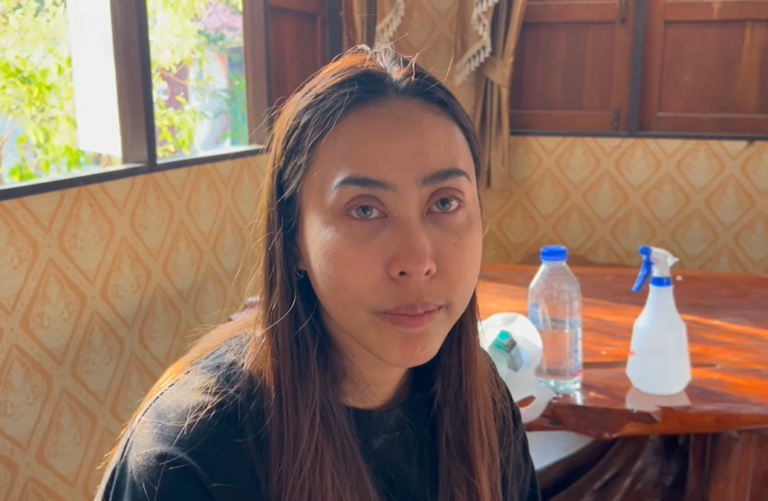
Narongdet’s wife, Nattha Khajornmaneechot, 34, said she had watched the video and was deeply shaken.
“It went too far,” she said. “Even if there was a traffic dispute, it should never have ended like this.”
“It went too far.. it should never have ended like this.” said the wife of Narongdet
She said she was not at the scene and was unaware of any serious argument beforehand, only that the pickup truck had followed them. She added that the other party had not contacted her and said she did not want to see them.
“I won’t compromise,” she said. “Those who commit wrongdoing should face the consequences so it serves as a lesson.”
Phra Khru Thawon Sathakun, abbot of Wat Woraprot Sangkhawas, said the victim was known as a good person who regularly made merit at the temple and worked to support his family.
“It was shocking to hear the news,” he said. “You don’t expect something like this to happen to someone like him.”
Phra Khru Thawon Sathakun, abbot of Wat Woraprot Sangkhawas, says that Narongdet attended the temple regularly
Phan Thong police chief Pol. Col. Chairatchakit Chaipatiwat said officers had questioned the pickup driver, identified only as Ek, a pseudonym, who suffered serious injuries including brain bleeding and facial fractures and is being treated at Vibharam Amata City Hospital.
“The suspect is not yet able to give a statement,” he said. “Witnesses told police there was aggressive driving and horn-honking.”
He said the pickup truck chased a group of about four to five motorcycles. Other riders managed to swerve away, but the victim did not and was struck.
No charges have yet been filed pending further questioning of witnesses and the suspect, police said. Authorities are also awaiting blood test results to determine whether alcohol was involved before proceeding with legal action.
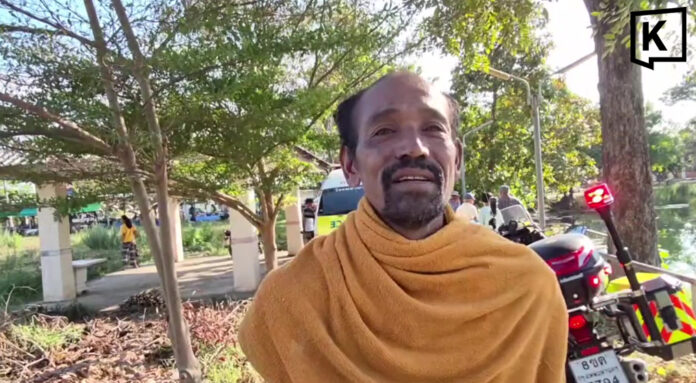
UDON THANI — Residents have praised a brave civic worker who leapt into a five-metre-deep pond to rescue a drowning man, whose life was later saved after emergency crews successfully revived his pulse.
The incident happened on 26 January 2026 at 15.30, when the 1669 emergency call centre in Udon Thani province received a report of a man drowning in a pond at a school in Ban Kao Noi, within Nong Bua municipality in Muang district.
Rescue workers from Udon Thani Hospital and volunteers from the Songsermtham Foundation rushed to the scene. By the time they arrived, villagers had pulled the man, believed to be aged between 40 and 50, from the water. He was unconscious, not breathing and had no pulse.
Paramedics immediately began cardiopulmonary resuscitation. After continuous efforts, the man’s pulse returned. He was then rushed to Udon Thani Hospital, where doctors said he remained in a coma but still had vital signs and was under close medical supervision.
The rescuer, identified as Santi Rungreang, 48, also known locally as “Pi Teng”, is an employee of Nong Bua subdistrict municipality. He said he had been at his wife’s home in Ban Kao Noi and was about to take a shower when he heard villagers shouting that someone was drowning.
“I ran to look and saw a man struggling in the water,” Santi said. “I didn’t hesitate. I jumped straight in.”
He said a younger man had tried to help by extending a long bamboo pole, but the victim failed to grasp it and sank. Santi dived down about four to five metres, following the pole, until he found the man’s body and pulled him up. Villagers then helped haul them both to the edge of the pond.
“I didn’t think about the danger. I just wanted him to survive,” he said, adding that he prayed to sacred spirits in the area while rescue workers continued CPR. “I’m glad I could help save a life.”
Villagers said they had earlier seen the man walking near the pond but had not been concerned. Later, they heard a sound like someone entering the water and shouted a warning that the pond was deep and not meant for swimming. The man appeared to try to swim back but suddenly sank, prompting calls for help before Santi made the rescue.
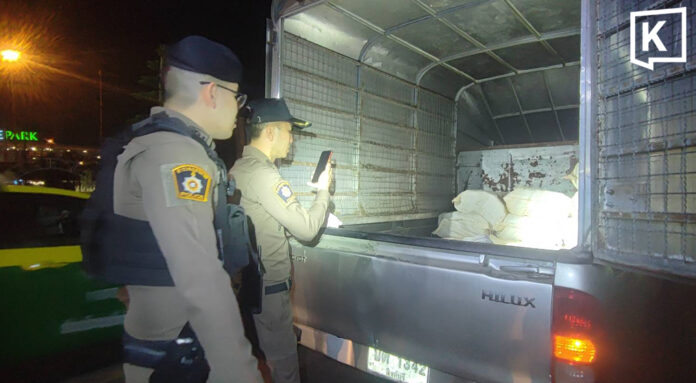
PATHUM THANI — 27 January 2026, A pickup truck rammed through a police checkpoint in Pathum Thani province and abandoned 15 sacks of crystal methamphetamine before the driver fled into nearby woodland, police said.
Pol. Col. Adirek Potipan, superintendent of Pratunam Chulalongkorn police station, said officers attempted to stop a sealed-box pickup for inspection near Kaew Bridge in the Mueang Mai area of Prachathipat subdistrict, Thanyaburi district. The vehicle sped away, prompting a pursuit by patrol officers on motorcycles.
The driver later abandoned the truck along Rangsit Prayurasak canal road near Red Bridge and escaped on foot into forested land beside the canal, police said.
Officers found a bronze Toyota Vigo extended-cab pickup with Sing Buri licence plates. A search of the cargo area uncovered 15 fertiliser sacks containing crystal methamphetamine.
Police have cordoned off the area and are continuing searches to locate the suspect, authorities said.
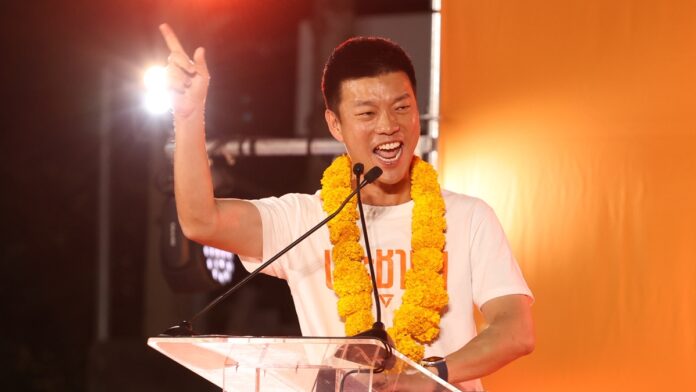
Natthapong Ruengpanyawut, the People’s Party’s prime ministerial candidate, speaks with supporters at Samyan Mitrtown in Bangkok on 25 January.
With the 8 February 2026 general election looming, Thailand’s race for prime minister pits known quantities against untested alternatives. Khaosod English examines four leading PM candidates, weighing their records, credibility and the risks that come with each. In this first installment, we look at Natthaphong Ruengpanyawut of the People’s Party.
Natthaphong Ruengpanyawut, People’s Party leader and PM candidate
The People’s Party (PP), commonly known as the “Orange Party”, will seek to overcome the jinx that some say dooms them: that they may win but will be unable to form a government or govern. This stems from the fact that in the 2023 general election, then Move Forward Party leader Pita Limjaroenrat—the precursor to the People’s Party—won 151 seats and announced plans to be elected prime minister.
However, in the first round of parliamentary voting on 13 July 2023, Pita was not elected by the Parliament, as he lacked votes from the junta-appointed Senate. Later, on 19 July, he was suspended as an MP by the Constitutional Court over shares in the defunct broadcaster iTV and banned from holding political office for 10 years. Meanwhile, Pita’s second nomination on the same day was blocked by the National Assembly. Since then, many, including most recently on Friday, prominent Pheu Thai Party member Nattawut Saikua, have argued that even if the PP wins the most seats again this time, the “deep state” will ensure that Natthaphong cannot form a government or become PM.
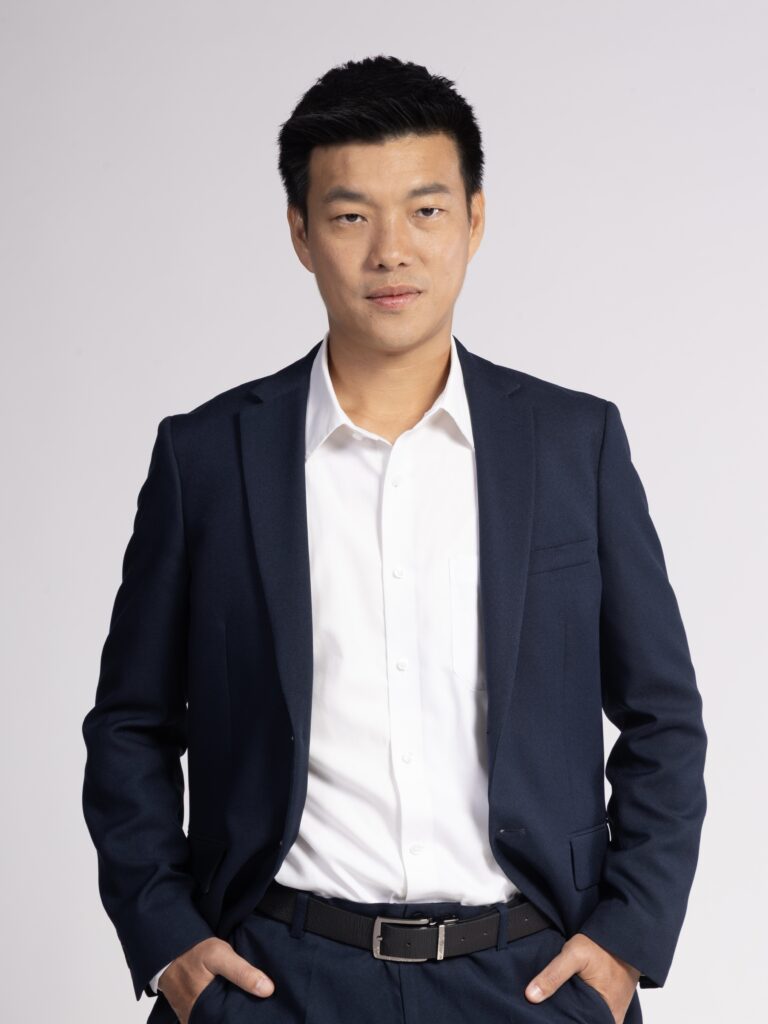
Natthapong Ruengpanyawut’s official photo, 2025.
At present, Natthapong is among the 44 key party members who are facing potential lifetime bans from politics and removal from office due to their involvement in a 2021 petition to amend the controversial lèse-majesté law, which prohibits defaming, insulting, or threatening the King, Queen, Heir-apparent, or Regent in Thailand
The case is currently with the National Anti-Corruption Commission (NACC), which is reviewing allegations that these MPs committed “serious ethical violations” by attempting to amend the draconian and anachronistic law law, which the Charter Court ruled was an attempt to undermine the constitutional monarchy.
The NACC has completed its investigation and is preparing to vote on whether to indict the 44 former MPs, with rulings expected in early 2026.
When Natthaphong spoke to a thousand supporters on Sunday evening, he didn’t address the matter but urged voters to hand his party a clear mandate through a landslide victory in order to “leave old politics behind.”
Though less charismatic than the Harvard-educated Pita, the 38-year-old Natthaphong has demonstrated growing confidence and leadership over the past few years. Voting for Natthaphong, a Thammasat University–trained computer engineer from a relatively wealthy middle-class Thai-Chinese family, will be less about the man himself and more about ensuring that the Orange Party can finally break the jinx and bring about numerous changes to Thailand.
If there is a single party driven by donations from the general public rather than big donors, and by a more liberal, if not progressive, ideology, it is the People’s Party. Yet the party under Natthapong, the youngest of the four leading PM candidates, is not without scandal.
Natthaphong took an ultra-nationalist stance during two border wars between Thailand and Cambodia last year and stated that he supported the use of Swedish-made Gripen fighter jets to drop bombs on Cambodian targets. Under his leadership, the party also made a controversial decision to sign a Memorandum of Agreement (MOA) with the Bhumjaithai Party (BJT) last September. This led BJT leader Anutin Charnvirakul to form a minority government, with Anutin accepting conditions for a four-month term. However, by December 2025, Bhumjaithai exited the coalition by dissolving the House of Representatives, leading to the upcoming election on 8 February. The PP failed to deliver the amendment of the junta-sponsored constitution as per the MOA, and some PP supporters were alienated, vowing not to support the People’s Party in the coming election as a result.
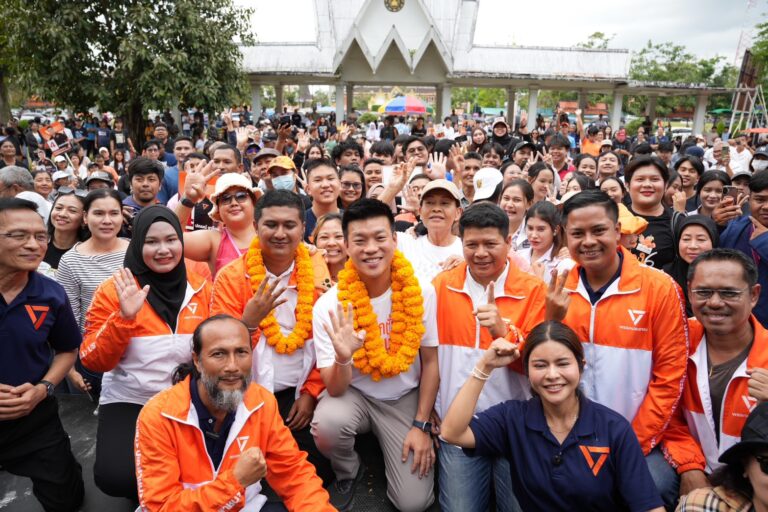
Natthaphong Ruengpanyawut campaigns with the party’s MP candidates in Nakhon Si Thammarat on 26 January.
Pita told this writer in a brief ambush interview on Sunday evening that he thinks “the biggest obstacle is voter turnout” and that his job is to convince more people to vote for the party to hand it a decisive victory. Pita added that last time, turnout was 76 per cent—the largest in Thai history. He noted, however, that he believes many voters remain undecided.
When asked how confident he is that the People’s Party will win big again in less than two weeks, Pita told Khaosod English he is “extremely confident,” but added that this comes with preparation and significant strategic planning.
Some MP candidates told Khaosod English that the “magic number” is 200 seats, although most polls suggest it will be around 140–150 seats.
When I observed the crowd at a major rally in Bangkok on Sunday evening, the turnout was decent but not overwhelming, as it was in 2023.
One supporter, Mr Sayam Dulyapach, 41, a Bangkok-based architect, told me he chose Natthaphong Ruengpanyawut for the following reasons:
“Amid Thailand’s political atmosphere in 2026, the excessive power of judicial activism, the legacy of the [junta-sponsored] 2017 Constitution, entrenched old networks that perpetuate power, and the deep state have led Thailand to be viewed as a ‘flawed but resilient democracy.’
“Thailand has weathered countless political storms, ranging from bread-and-butter economic issues and problems within the justice system to interference with independent organisations and restrictions on freedom of expression. Yet Thailand continues to be governed under a democratic system and is moving toward a ‘rebalancing of power’ through the snap election scheduled for 8 February. The outcome of the election and the referendum will likely answer whether Thai democracy will move closer to international democratic norms or remain trapped within its old structural constraints.
“Personally, I believe that the face of the next prime minister is less important than political will. Whether it is a vision for technology and modern state reform, a new constitution drafted by the people, ending military conscription in favour of a professional military under civilian control, using digital systems to increase government transparency, universal welfare, or the introduction of a technocratic cabinet—none of these truly matter if Thailand’s political structure remains stuck where it is.
“So, back to the question: why do I choose Natthaphong Ruengpanyawut? Because the People’s Party is the only political party which, if it receives sufficient support from the people, can genuinely restore Thai politics to a state of normalcy. The election on 8 February 2026 is widely seen as the ‘first rung of the ladder,’ as it will be the first election in which senators no longer have the power to vote for the prime minister. I am ready to choose Natthaphong Ruengpanyawut as the 33rd Prime Minister of Thailand.”
BANGKOK — Culture Minister Sabida Thaised on 26 January 2026 attended a working lunch hosted by Foreign Minister Sihasak Phuangketkeow at the Ministry of Foreign Affairs to discuss cooperation on Thailand’s bid to nominate Chud Thai for UNESCO recognition.
The meeting focused on preparations for submitting “Chud Thai: The Knowledge, Craftsmanship and Practices of the Thai National Costume” for consideration by UNESCO, as well as plans to promote Chud Thai Phra Ratchaniyom internationally.
In July last year, Culture Ministry permanent secretary Prasop Riangngern said UNESCO had confirmed that the nomination would be examined at the 21st session of the Intergovernmental Committee for the Safeguarding of the Intangible Cultural Heritage in 2026.
The nomination forms part of Thailand’s soft power policy and efforts to preserve cultural heritage, which the Culture Ministry has pursued since 2009. Thailand currently has 396 items registered as national intangible cultural heritage.
Chud Thai Phra Ratchaniyom was listed at the national level in 2023, before the cabinet approved its submission to UNESCO on 26 March 2024.
Prasop said Chud Thai reflects Thailand’s cultural identity and refined craftsmanship, drawing on traditional techniques, patterns and locally woven fabrics from across the country.
He highlighted Chud Thai Phra Ratchaniyom, which was researched and designed by Her Majesty Queen Sirikit the Queen Mother during official overseas visits in 1960 to present a distinctly Thai image to the international community.
Today, Chud Thai Phra Ratchaniyom is widely worn at royal ceremonies, official functions and weddings, symbolising the value of Thai wisdom while continuing to inspire contemporary Thai fashion design.
A TikToker apologises after staging a fake phone theft on a BTS Skytrain.
BANGKOK — A viral video claiming to show a mobile phone theft on a BTS Skytrain has drawn widespread criticism on Thai social media, with viewers accusing the content creator of damaging the image of public transport and the country’s safety.
The clip, which gained more than one million views, showed a man standing near a train door using his phone before another person appeared to snatch it just as the doors closed, startling nearby passengers. The video was later revealed to be staged content, inspired by similar clips circulating overseas.
Online criticism followed, with many users saying the video was not amusing and could mislead foreign viewers into believing Thailand was unsafe, potentially affecting tourism and the reputation of the BTS Skytrain.
On 25 January 2026, the man behind the video issued an apology on his Instagram account, admitting the clip was made as a joke with friends and that he had failed to consider the consequences.
“I was wrong 100%,” he said, apologising for causing damage to Thailand’s image and to the transport operator. He added that he had no intention of harming anyone and promised that similar content would not be made again.
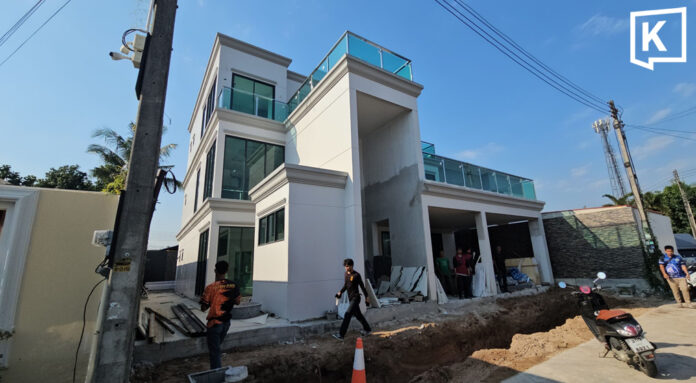
CHONBURI — 26 January 2026, A construction worker sustained severe injuries after the cable of an elevator snapped, causing the lift to fall from the third floor of a building under construction in Nong Prue, Bang Lamung, Chonburi province.
At 08:30 this morning, rescue teams from the Sawang Boriboon Thammasathan Foundation, along with paramedics and volunteers, were dispatched to the scene after reports of an accident at a construction site within the Fa Mi Ach Kan Village, Moo 6, Nong Prue.
Upon arrival, authorities found the victim, identified as 27-year-old Titannont Sriwongchai, lying at the bottom of the elevator shaft. He had sustained serious injuries, including a torn forehead, swelling around his left eye, a dislocated left wrist, a painful right knee, and abrasions to his face and body. Emergency responders administered first aid before transferring him to Pattaya Patthamakhun Hospital.
According to fellow workers, the incident occurred while Sriwongchai was operating the lift on the third floor. Suddenly, the lift’s cable snapped, causing it to plummet to the ground, resulting in the worker’s injuries.
Police investigators have documented the scene, with initial findings suggesting that the cable, which was too small to support the weight, broke under strain, leading to the elevator’s fall. Authorities are continuing to investigate the incident.