When Prime Minister Paetongtarn Shinawatra was removed from power and her father, former PM Thaksin Shinawatra, found himself returning to prison last year, many people asked if this was the end of the Shinawatras’ power in politics.
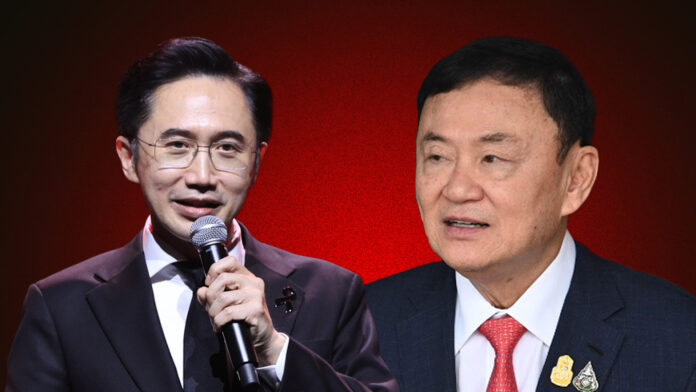
Several months on, and just two weeks before the general election on 8 February, the answer is a decisive no. Instead of another Shinawatra PM candidate, it is now a “half-Shinawatra” candidate under the name of Dr. Yodchanan Wongsawat, a nephew of Thaksin, a lecturer in biomedical engineering at the prestigious Mahidol University.
The party is still among the top three in all polls, so it will definitely at least return as a major political party, if not more.
Their main PM candidate, while not carrying the Shinawatra family name, is half a Shinawatra. Yodchanan’s mother is Thaksin’s younger sister Yaowapha (Shinawatra) Wongsawat and his father is former PM Somchai Wongsawat. The Shinawatra DNA is definitely there.
If you are fed up with family-run politics—where family connections outweigh the competence of outsiders and party professionals, and where those who refuse to kowtow to the supreme leader are sidelined—then the Pheu Thai Party is probably not the answer. That is, unless you want to see the party break a world record by becoming one in which a brother-in-law, a younger sister, a daughter, and now a nephew take turns at the helm of the party and running the government.
For some, the Thaksin Shinawatra DNA is precisely why they will keep on voting for the Pheu Thai Party, however.
“Let me be clear: I choose Pheu Thai because of the Shinawatras, because of Thaksin. I choose it because it is the only party that truly pushes the country to develop. And the more those elite NGOs, the elite class, the media, journalists, news anchors, the courts, and organisations like iLaw… and Thammasat academics attack and gang up on the Shinawatras, the more determined I am to keep voting for them—until the Shinawatras completely leave politics,” wrote X user @joosiripun to me on Wednesday in response to my social media post about the family nature of the Pheu Thai Party.
“When you think about it, ordinary people are attached to individuals they trust and believe will act in their interests. Just look at how, before Yodchanan officially came out [to run for PM], Pheu Thai’s support had dropped significantly—but the moment he was unveiled, the momentum surged immediately. Or is that not true??” another X user @shutup2557, with over 55,000 followers, replied to me.
Arguably the most influential social media promoter of the Pheu Thai Party, Ms. Kam Phaka, did not mince words when she respond to me on Wednesday as well, writing back on X, where she enjoys 387,000 followers:
“I choose based on the policies, I choose based on [Yodchanan]’s profile, and I choose because he is a Shinawatra.”
I am not writing this commentary to deride Yodchanan, who appears to have been an accomplished scholar prior to entering Thai politics on 16 December, or just over a month ago.
Yes, Yodchanan has rejuvenated the flagging Pheu Thai Party at a crucial juncture, as Thaksin is still in prison at the moment and Paetongtarn has left the party’s helm to return to private life. For a period last year, it appeared that the Pheu Thai Party might as well be doomed. Now, no one is predicting that.
I asked Pheu Thai party-list candidate Umesh Pandey on Wednesday what he finds striking about Yodchanan, and he replied:
“What I find most interesting about my PM candidate is his background as an academic/scientist. Maybe I’m a person who likes brains. But it’s not just brains; Yodchanan has been helping people in need even when he was an academic at Mahidol University.
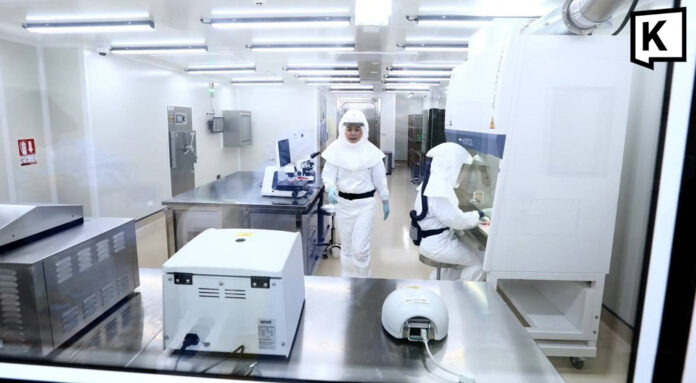
“A person with no political position or, at that point, ambition, was trying to make the lives of handicapped people a little easier with innovations that he was undertaking. And to top it off, which nobody talks about, is the fact that he was also the head of the university’s innovation department, looking at pitching by those who wanted to undertake collaboration for innovation at the university.
“I say so because some of my friends who are in meditech had flown from London to join hands with the university’s innovation department and he was there on behalf of the university. I think our country today needs people who are smart, articulate, and thinking about what and where the country needs to be to be competitive in the future.”
Yodchanan alone cannot ensure that the party will win big and perhaps form the next coalition government. Policy-wise, it seems that the party may not have a silver bullet, however.
On Saturday, I took a taxi and chatted with the driver. The driver was 76 years old. He said he had once suffered a stroke. Luckily, he realised what was happening, pulled over, and got to the hospital in time. He used the “Gold Card” universal healthcare scheme for treatment. This is something Thaksin initiated (building on the 30-baht universal healthcare policy). No political party has dared to abolish this programme, because it has significantly improved the quality of life of ordinary people across the entire country. This is a life-changing policy for the masses credited to Thaksin and a medical doctor who sold him the idea.
And this time, caretaker PM Anutin Charnvirakul, who is also a leading PM candidate, has even said he will make it a “plus” version, improving it further.
This is the greatest contribution of the party now known as Pheu Thai. I told the driver that if he were in the US, ordinary people like him would not survive without private insurance and would have no access to such heavily subsidised treatment.
The driver did not say which party he would vote for, however. But when you think about it, I do not see that today’s Pheu Thai has any policy that can match the 30-baht healthcare scheme, or at least none that really stands out or sticks in the mind — even though election day is less than three weeks away.
This is a missed opportunity for Pheu Thai. What is their signature policy this time around? If anyone can think of one, please let me know.
And to the Pheu Thai Party—you still have 10 days to introduce a new, earth-shattering policy, if you can. Something that might bring lasting change across generations of Thais could be a turning point in the election and beyond.