27.2 C
Bangkok
Monday, June 29, 2026
Home Blog Page 1651

Redacted Mueller Report Expected to be Released by Mid-April

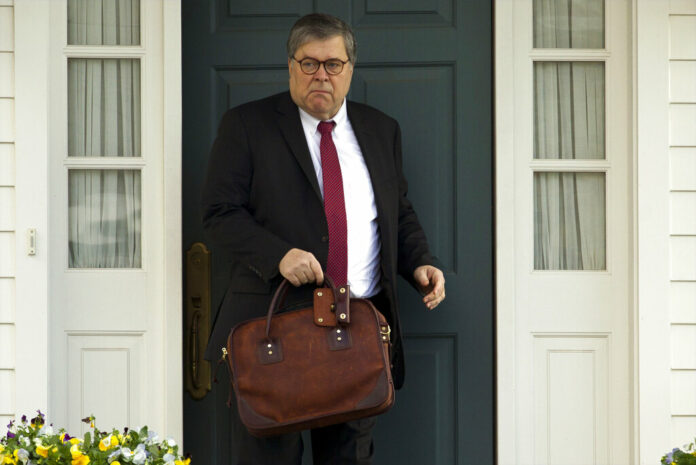
In this March 22, 2019, file photo, Attorney General William Barr leaves his home in McLean, Va. Photo: Jose Luis Magana / Associated Press

WASHINGTON — A redacted version of special counsel Robert Mueller’s report on the Russia investigation will be sent to Congress by mid-April and will not be shared with the White House beforehand, Attorney General William Barr said Friday.

Barr’s timeline, included in a letter to the chairmen of the House and Senate judiciary committees, sets up a possible showdown with House Democrats, who are insisting they see the full report next week.

In his letter, Barr said he shares a desire for Congress and the public to be able to read Mueller’s findings, which are included in the nearly 400-page report the special counsel submitted last week.

Barr said President Donald Trump would have the right to assert executive privilege over parts of the report. But he noted that Trump “has stated publicly that he intends to defer to me and, accordingly, there are no plans to submit the report to the White House for a privilege review.”

Mueller officially concluded his investigation when he submitted the report last Friday. Two days later, Barr sent a four-page letter to Congress that detailed Mueller’s “principal conclusions.”

Mueller did not find that the Trump campaign coordinated or conspired with Russia, Barr wrote, and did not reach a conclusion on whether Trump obstructed justice. Barr said he and Deputy Attorney General Rod Rosenstein decided on their own that Mueller’s evidence was insufficient to establish that the president committed obstruction.

Barr said he is preparing to redact multiple categories of information from the report and Mueller is helping the Justice Department identify sections that will be blacked out in the public version.

Those include grand jury material, information that would compromise sensitive sources and methods; information that could affect ongoing investigations, including those referred by Mueller’s office to other Justice Department offices and information that could infringe on the personal privacy and reputation of “peripheral third parties.”

“Our progress is such that I anticipate we will be in a position to release the report by mid-April, if not sooner,” Barr wrote.

Barr said last week’s letter detailing Mueller’s “principal conclusions” was not intended to be an “exhaustive recounting” of the special counsel’s investigation.

Barr described Mueller’s report as nearly 400 pages long, not including the tables and supporting materials, which he said sets forth Mueller’s analysis, findings and the reasons for his conclusions.

“Everyone will soon be able to read it on their own,” Barr wrote. “I do not believe it would be in the public’s interest for me to attempt to summarize the full report or to release it in serial or piecemeal fashion.”

Asked about Barr’s commitment to release a redacted version of Mueller’s report, Trump said he has “a lot of confidence” in Barr “and if that’s what he’d like to do, I have nothing to hide.” He spoke at Mar-a-Lago, his private estate in Florida.

Barr’s letter drew a quick — and critical — response from Rep. Jerrold Nadler, the chairman of the House Judiciary Committee, who had demanded the full Mueller report by April 2.

Nadler, D-N.Y., said that deadline still stands and called on Barr to join him in working to get a court order allowing the release of grand jury information to the committee, rather than spending “valuable time and resources” keeping portions of the report from Congress.

“There is ample precedent for the Department of Justice sharing all of the information that the Attorney General proposes to redact to the appropriate congressional committees,” Nadler said in a statement. “Again, Congress must see the full report.”

The Republican chairman of the Senate Judiciary Committee, Sen. Lindsey Graham of South Carolina, said he appreciated Barr’s update and looked forward to the attorney general appearing before his panel on May 1.

Members of Congress will be in recess for two weeks beginning April 12, which could mean that lawmakers will be out of town when the report is delivered.

Story: Michael Balsamo and Eric Tucker

Advertisement

Financial Pressure Mounts to Fix Boeing’s Troubled Jetliner

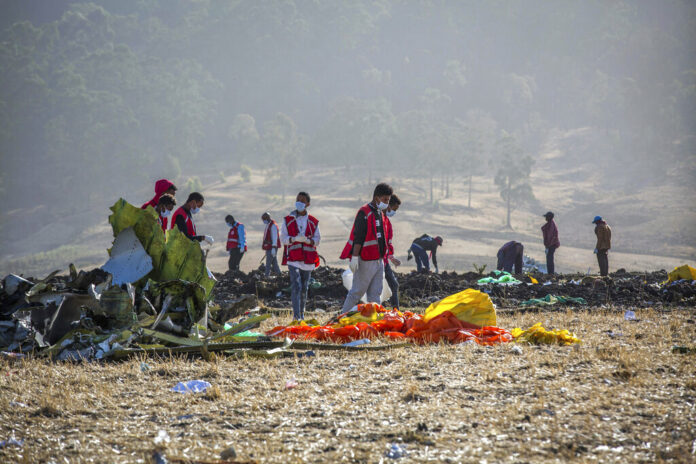
In this March 11, 2019, file photo rescuers work at the scene of an Ethiopian Airlines flight crash near Bishoftu, or Debre Zeit, south of Addis Ababa, Ethiopia. Photo: Mulugeta Ayene / Associated Press

Boeing is facing mounting pressure to roll out a software update on its best-selling plane in time for airlines to use the jets during the peak summer travel season.

Company engineers and test pilots are working to fix anti-stall technology on the Boeing 737 Max that is suspected to have played a role in two deadly crashes in the last six months.

The Wall Street Journal reported Friday that investigators have determined that the flight-control system on an Ethiopian Airlines jet automatically activated before the aircraft plunged into the ground on March 10.

The preliminary conclusion was based on information from the aircraft’s data and voice recorders and indicates a link between that accident and an earlier Lion Air crash in Indonesia, the newspaper said. Boeing and the Federal Aviation Administration declined to comment on the report.

Also on Friday, The New York Times reported that the Ethiopian jet’s data recorder yielded evidence that a sensor incorrectly triggered the anti-stall system, called the Maneuvering Characteristics Augmentation System, or MCAS. Once activated, the MCAS forced the plane into a dive and ultimately a crash that killed everyone on board, the newspaper said.

The Max remains grounded worldwide and airlines are losing money by canceling flights.

Southwest, the largest operator of the Max with 34 of them and another 249 on order, said this week that the grounding caused it to cancel 2,800 flights so far, or 30 percent of all cancellations in the first quarter. It said canceled flights, including those not related to the Max, will cost it $150 million in revenue for the quarter and cut its planned capacity growth for the entire year.

German tour operator TUI Group said 2019 profit will drop about 200 million euros ($225 million) because of the Max grounding. That forecast assumes the planes are flying again no later than mid-July.

United Airlines, which has 14 Max jets, said the grounding isn’t hurting the airline yet, but the financial pain “is expected to increase if the grounding extends into the peak summer travel season.”

Boeing is also seeing its own expenses rise, although it would not disclose how much it is costing the company to make the software fix and also train pilots how to use it.

Cowen Research analysts say a “very rough guess” is that Boeing will pay about $2 billion after insurance to fix the plane, pay crash victims’ families and compensate airlines that had to cancel flights.

Most Wall Street analysts are betting that the planes will be flying again in less than three months, while noting that it could take longer in countries that plan to conduct their own reviews of Boeing’s upgrade instead of taking the word of the U.S. regulator, the Federal Aviation Administration.

Boeing has stopped Max deliveries during the grounding, which cuts into cash flow — Boeing gets most of its money for a plane upon delivery. Outside estimates of the cash-flow drain range from $640 million to $1.8 billion a month, but Boeing will get that money eventually unless airlines cancel orders.

It is difficult and unusual for airlines to switch an order from one aircraft manufacturer to another. Boeing and European rival Airbus form a duopoly that dominates commercial airplane sales. Airlines that considering switching from the Max to the comparable Airbus model, called the neo for new engine option, would fall to the back of a yearslong backlog line.

“We believe a wholesale cancellation is unlikely if for no other reason than the inability of Airbus to deal with the influx,” says Hunter Keay, an aviation analyst with Wolfe Research, but he adds there is “some risk” of additional cancellations, with the big Chinese market being the most serious.

If cancellations are limited to Lion Air and Ethiopian Airlines — the two carriers involved in the crashes — and Garuda Indonesia, which has announced plans to do so, they account for only about 300 orders. Boeing has about 4,600 unfilled Max orders, making up the bulk of a huge backlog that the company values at $490 billion.

Then there is the potential cost of lawsuits stemming from October’s crash of a Lion Air Max 8 in Indonesia and the March 10 crash of an Ethiopian Airlines Max 8 near Addis Ababa. In all, 346 people died.

Already one law firm alone has filed seven lawsuits against Boeing in federal district court in Chicago; six were filed on behalf of families of passengers on the Lion Air jet and one by the family of an Ethiopian Airlines passenger.

The lawsuits claim that the flight-control system on the plane was defective and that Boeing failed to warn airlines about it or train pilots how to respond if it caused the plane’s nose to sink. The automated MCAS system was not on previous 737s.

The tragedy-filled introduction of the Max is reminiscent of troubled early histories of other planes. In 1979, for instance, the FAA grounded the McDonnell Douglas DC-10 following accidents involving a poorly designed cargo door that could spring open during flight and a crash in Chicago — still the deadliest aviation accident in U.S. history with 273 lives lost — that ultimately was blamed on poor maintenance practices by American Airlines.

After changes approved by safety regulators, the three-engine DC-10 returned to the skies and sold several hundred more copies before production was stopped. The plane couldn’t compete with more efficient twin-engine models.

Boeing’s 787 “Dreamliner” was grounded by overheating batteries in 2013, but after Boeing fixed the problem it became a favorite among airlines and passengers. The same course could play out for the Max, which entered service just two years ago — as long as there are no fresh accidents to stir passengers’ fears.

“The public has an amazingly short memory,” said Robert Mann, a former American Airlines and TWA executive. “Most of them don’t even realize the kind of airplane they are flying on.”

Story: David Koenig, Tom Krisher and Bernard Condon

Advertisement

Opinion: Mistrust Prevails Following ‘The General’s’ Election

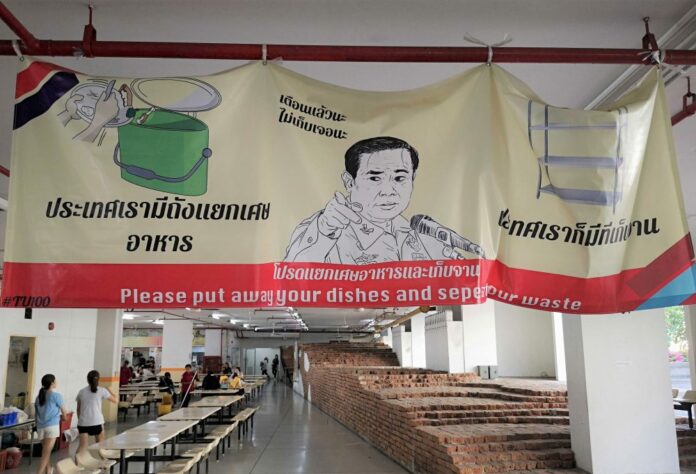
A poster with an image of junta leader Prayuth Chan-ocha telling Thammasat University students to put their dishes at proper places after eating at a canteen.

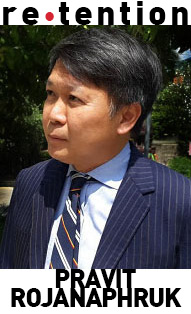
Re•tention: Pravit RojanaphrukTwo issues emerged from Sunday’s tight election result: trust and legitimacy – or the lack thereof.

The Election Commission’s abrupt end of supplying poll results to the public in the middle of Sunday’s election night and other reported irregularities created a loss of trust. Already, on Change.org, nearly 1 million have signed a petition calling for the removal of the commission.

Those on the anti-junta camp are well aware that it was the junta-appointed rubber stamp parliament, known formally as the National Legislative Assembly, which selected the commissioners. And they simply do not trust them.

Distrust exists on both sides, however. A long-time, well-educated acquaintance whom I met Tuesday by chance while he was on his way to give a talk about the future of Thai politics, didn’t wait long before floating the accusation that Future Forward Party is a threat and will seek to turn the kingdom into a republic. Repeated denials by Future Forward Party leaders means nothing to these people.

That’s not all. There is little doubt that the soon-to-be-announced 250 senators selected by junta leader Prayuth Chan-ocha’s will vote to help him retain the premiership.

If Prayuth is shameless enough to have staged a coup and made himself prime minister, it shouldn’t be hard to imagine a Prayuth-appointed senate voting him the head of government.

It means that even though a Pheu Thai-led coalition mustered 255 seats from at least six political partners Wednesday, it is still more likely that the pro-junta camp will rely on the 250 votes from the upper house to form a government.

Almost immediately, leaders from the pro-junta party Phalang Pracharath denounced the bid by the Pheu Thai-led seven-party coalition, citing it has more popular votes than the Pheu Thai – which has more MP seats.

“We have the legitimacy to form a majority government and support Gen. Prayuth Chan-ocha as the [next] prime minister,” said Thanakorn Wangboonkongchana, the party’s spokesman. “What’s more important, we won the most number of votes, about 8 million. This is the vox populi to have Gen. Prayuth as a prime minister.”

It doesn’t matter if Thailand’s political system is supposed to be a representative democracy, the pro-junta party is now claiming to be legitimate for winning the popular vote. Never mind if Pheu Thai has more MPs than Phalang Pracharath – 137 versus 119.

Phalang Pracharath secretary general Sonthirat Sontijirawong said on Wednesday that “true democracy is respecting people’s voices. Phalang Pracharat is a democractic party.”

I couldn’t help but wonder if this is the same Sonthirat who until earlier this year willingly served a junta leader and joined an unelected military government. I can’t help but wonder how Phalang Pracharat could claim to be a democratic party when its leaders have served an unelected military government and are now nominating their boss to become prime minister again. This too, most likely with the votes from the 250 unelected senators – who will be selected by no less than Prayuth himself.

In Thailand, fakeries are not limited to fake Swiss watches and branded handbags, but fake democracy and fake democratic parties too.

Then there are the uncertainties. Under election law, the official results can be announced as late as a month from now, or May 9. Although 100 percent of unofficial votes have been revealed, with Phalang Pracharat winning 8.4 million votes the Pheu Thai’s 7.9 million, it’s hard to tell if there may be disqualifications in the weeks ahead. That means the results may not be finite for the next five weeks. One also wonders why the commission changed the voter turnout on Thursday from 65 percent to 74.6 percent.

Which side has the legitimacy to form a government is a contested issue. The answer depends on who you ask.

What will the anti-junta camp do if the pro-junta camp relies on the 250-appointed senators to install Prayuth as an “elected” prime minister after May 9? Will there be a political boycott? Will that lead to political paralysis and violence followed by another military coup?

No matter which side manages to form a government, the next administration will most likely be a very fragile coalition with a very slim or no majority in the house of representatives.

Thailand after general elections – or rather the general’s elections – is unstable and unpredictable. However, that might at least be better than being “stable” directly under Prayuth’s military dictatorship for more years to come.

Advertisement

George Clooney Calls For Boycott of Hotels Over Brunei’s Anti-Gay Law

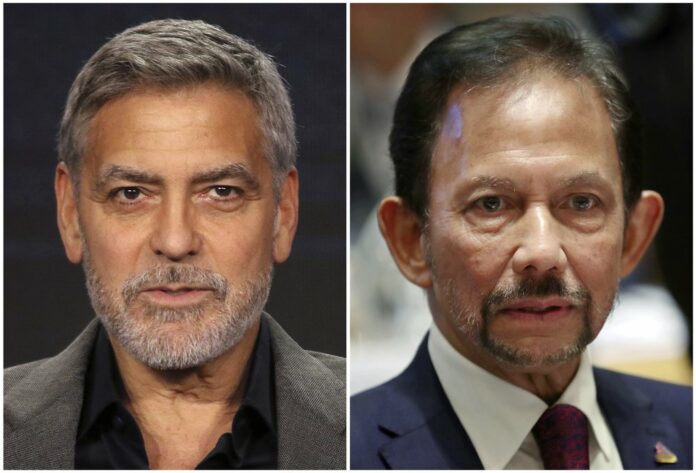
This combination of file photos shows George Clooney in Pasadena, Calif., on Feb. 11, 2019, left, and Brunei's Sultan Hassanal Bolkiah in Brussels on Oct. 18, 2018. Photo: Willy Sanjuan and Francisco Seco / Associated Press

LOS ANGELES — George Clooney is calling for the boycott of nine hotels in the U.S. and Europe with ties to the sultan of Brunei, which next month will implement Islamic criminal laws to punish gay sex by stoning offenders to death.

The Hollywood actor wrote Thursday in Deadline Hollywood: “Are we really going to help fund the murder of innocent citizens?”

He writes that you can’t shame “murderous regimes,” but you can shame “the banks, the financiers and the institutions that do business with them.”

Read: Amnesty Slams Brunei’s New ‘Vicious’ Islamic Criminal Laws

Sultan Hassanal Bolkiah rules the oil-rich monarchy with full executive authority, and the hotels are owned by the Brunei Investment Agency. An email seeking comment was sent to the agency Friday.

The hotels are The Dorchester and Coworth Park in the U.K.; Beverly Hills Hotel and Hotel Bel-Air in Los Angeles; Le Meurice and Hotel Plaza Athenee in Paris; Hotel Eden in Rome; and Hotel Principe di Savoia in Milan.

The new laws take effect April 3.

Advertisement

Lawsuit Filed Against Boeing Over Crash in Ethiopia

An Ethiopian Boeing 737 Max 8 takes off in February from Ben Gurion Airport in Tel Aviv, Israel. Photo: LLBG Spotter / Wikimedia Commons

A representative of a passenger killed in this month’s Ethiopian Airlines crash is suing Boeing, claiming that a flight-control system on the plane was defective and Boeing failed to warn the airline about it.

The lawsuit was filed Thursday in federal court in Illinois by the administrator of the estate of Jackson Musoni, a Rwandan citizen who was on the March 10 flight.

Lawyers for the family say Boeing was negligent in designing the now-grounded 737 Max 8, which has features not on previous 737s.

Boeing declined to comment on the lawsuit.

Software designed to counter a potential nose-up pitch is under scrutiny in an October crash in Indonesia and the Ethiopian crash.

Lawyers say Boeing also failed to adequately train pilots how to use automation on the Max.

Advertisement

In Thailand, Govt Leads the Monetization of Cannabis

Bhumjaithai Party leader Anutin Charnvirakul has gone all in on legalization of cannabis. He leads the largest party to call for full legalization.

wirot.3

Selling dried cannabis to pharmaceutical companies as well as Cannabidiol (CBD) and Tetrahydrocannabinol (THC) extracts as soon as it is licensed, is the intention of Thailand’s tobacco authority among new measures to turn a profit on its dwindling cigarette business.

The Tobacco Authority of Thailand, or TOAT, is one of two governmental entities that has looked to capitalize on the sale of cannabinoids as soon as it received approval from the Food and Drug Administration, or FDA.

The other, the Government Pharmaceutical Organization, or GPO, broke ground in February to grow Thailand’s first legal cannabis plants indoors at its ultra-modern pharmaceutical factory in Bangkok’s northern suburbs. It aims to turn the plants’ chemical compounds into 2,500 5-milliliter bottles – the size of a teaspoon – of cannabis oil and sublingual drops for clinical trials among volunteer patients as early as July.

The TOAT and the GPO will spearhead government efforts to bring cannabis to the masses. The TOAT will focus on working with farmers and generating income for them and the state by selling medical cannabis through its retail networks. The GPO will focus on manufacturing quality medicine for the public at affordable prices and distribute it over its country-wide systems of its own and allied drug stores. The existing commercial infrastructure of both organizations is large.


TOAT, the First Thai Cannabis Money Maker

Cannabis law legislators must have had the TOAT in mind when they listed government organizations with agricultural research and development capabilities and close relationships with farmer groups as those eligible to apply for the five types of licenses: production, sale, import, export and possession.

There are more than 20,000 farmers in various northern provinces who have been working with the TOAT for years providing it tobacco and cooperate with it for various research projects. Now that cigarettes are less popular and some farmers have been given a chance to experiment with cannabis, more and more of them are looking forward to changing their tobacco farms into cannabis plantation.

It remains to be seen whether the Drug Enforcement Authority, or DEA, will designate cannabis zones for these farmers. But with cannabis licenses, the TOAT will be entitled to cooperate with farmers to grow hemp and marijuana in its present tobacco farm locations.

Owning a hospital and research and development facilities of its own, supported by many cooperative farmers and hungered by their earnest desire for survival and profitability, the TOAT has a unique capability to bring pharmaceutical cannabis to the public with added monetary value. It can do this using its existing retail distribution infrastructure quicker than other government entities.


49 Percent Foreign Shareholding Allowed

The TOAT Act was revamped in 2018 to give it a leeway to conduct businesses other than tobacco for survival in a changing world where fewer people smoke cigarettes.

The law also allows the TOAT to set up a joint venture company with a foreign corporation, provided the shares held by foreigners are limited at 49 percent.

The new law also permits the TOAT to do business regarding “products from other plants,” which means plants other than tobacco plants used to manufacture cigarettes. Those must be specified in ministerial regulations issued by the Finance Ministry, which administers the TOAT. There are no regulations permitting the TOAT to deal with cannabis yet. The TOAT, however, believes it is already fully authorized to conduct cannabis business.

Further still, cannabis part of cigarettes might be covered and permitted by this new law. But cannabis for medicine in other forms – liquids or tablets – that are not cigarettes would be put into the question of whether they can also be monetized by the TOAT. The law is unclear.

However, via a stretched interpretation, “products from other plants” that the TOAT can now make can include cannabis. But this has to be a very favorable interpretation of the term.


GPO, the Ultra-Modern Drug Maker

The Government Pharmaceutical Organization, or GPO, is the pride of the Thai government for having made several effective internationally-recognized anti-HIV drugs at its super-modern pharmaceutical factory in Rangsit, Pathum Thani, north of Bangkok.

The organization is at the forefront of medicinal research and development of the country, at the same time generating tens of billions of baht of revenue by selling needed pharmaceuticals to the Thai public at low prices, saving the government billions of baht a year from expensive imports.

Smart scientists at the GPO look up to major global drug makers as their idols to elevate the organization’s research and development, manufacturing standards and quality of their products. In mapping out its medical cannabis development plans, the organization is adopting good industry practices upheld by the world’s leading pharmaceutical cannabis manufacturers.

Although the organization makes good money from its pharmaceutical business, its objectives are social and scientific. It is a firm believer in cultivating medical grade cannabis, employing aeroponics technique in laboratory glasshouses, and will not move to open fields until it is certain of the raw materials’ quality.

The government agency is in no hurry to turn a profit, and has embarked on a three-phase cannabis plan since February. This will bring cannabis oil to clinical trials with patients in July at the end of Stage One, launch a pilot plant for semi-industrial production in a couple of years for Stage Two, and the full scale industrial production of cannabis-based medicines in Stage Three. This last stage will take place on its large swathes of land in Chonburi within the high-technology Eastern Economic Corridor.

The GPO is generously funded by the government in undertaking the ambitious modernization of cannabis and is always looking for cooperation with multinational overseas cannabis leaders.


When Can the Private Sector Monetize?

Clinics and doctors can start doing their business right away after physicians running the clinics receive cannabis licenses. Regulations concerning license applications should be out in a few months requiring doctor and pharmacist applicants to take training courses designed by the Public Health Ministry.

Foreign and Thai suppliers for the TOAT and the GPO can also embark on their businesses, provided that they have checked with the two organizations whether the relevant cannabis licenses have been granted to government enterprises. Yes, even government organizations need FDA cannabis licenses.

The suppliers who do business with the two government organizations might include companies that sell them technology, service and equipment or even look to enter a joint venture with them.

There should be – but have not yet been – regulations restricting cannabis-related suppliers of equipment, machinery, appliances and tools used in connection with cannabis businesses, but there is a broad provision in the Narcotics Act prohibiting the promotion of narcotic drugs. Cannabis is still a narcotic drug, except it’s licensed by the FDA.


Watch Out for May-June Regulations

Arguably, selling equipment to a licensed government organization should be permitted without separate licensing, bur clearance from various authorities – including the DEA – should be sought before concluding a deal.

Suppliers of farming equipment to cannabis farmers, as well as suppliers of services and products to doctors, pharmacists, pharmacies and dispensaries related to software, dispensing machines, monitoring equipment and information technology can similarly make their move.

May and June will be a major milestone for a set of regulations clarifying many of the commercial uncertainties. It will certainly include licensing criteria for medical practitioners, but it has yet to be seen whether it will include farmers.

Commercialization of cannabis is moving very fast in Thailand. A lot of activities are playing out. News flashes here and there. Everyone has to stay alert to be up to date on the developments.

Wirot Poonsuwan is a Senior Counsel and Head of Special Projects at Blumenthal Richter & Sumet in Bangkok and can be reached at [email protected].

Advertisement

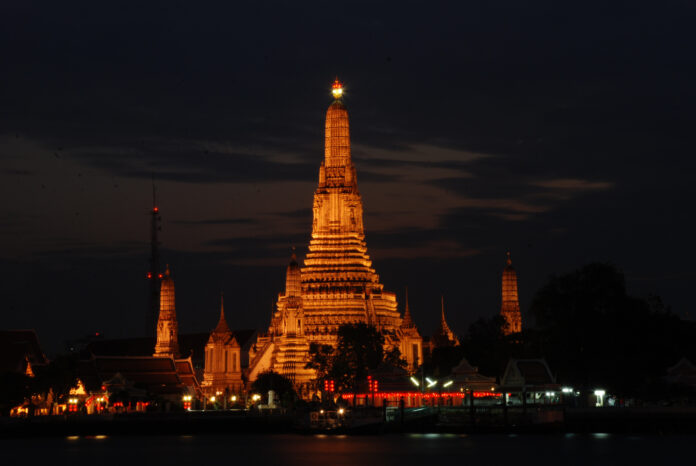
Grand Palace, Wat Arun to Go Dark 1H Saturday Night

An image of Wat Arun, dubbed “the Temple of Dawn.” Photo: Werapat Apirojananan / Flickr

BANGKOK — From the Grand Palace to the Giant Swing and the Golden Mountain Temple, a few landmarks in the capital city will go dark for one hour tomorrow.
From 8:30pm to 9:30pm on Saturday, at least five major tourist attractions in Bangkok will switch off their lights to mark Earth Hour. They are the Grand Palace, Wat Arun, Giant Swing, Rama VIII Bridge and Wat Saket, or “the Golden Mountain Temple.”

People are also encouraged to switch off unnecessary lights and appliances for 60 minutes on Saturday.

The Bangkok Metropolitan Administration said last year’s reduced up to 2,000 megawatt in power usage during the lights-off hour, saving 7.89 million baht and decreasing 1,026 tons of carbon dioxide.

Earth Hour is a global movement organized by the World Wide Fund for Nature. It has been held annually since 2007 to encourage individuals and communities to turn off non-essential electric lights for one hour to combat climate change.

Advertisement

Authoritarian Specter Awaits Post-Election Thailand: Historian

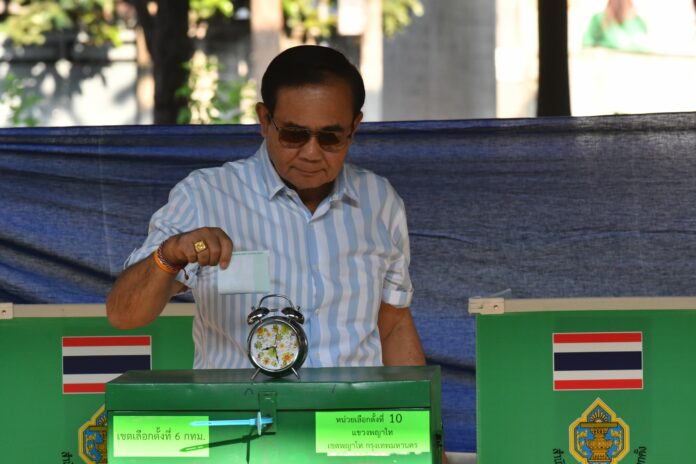
Prayuth Chan-ocha votes Sunday in Bangkok.

BANGKOK — A historian on Friday gave a pessimistic prediction of Thailand’s future after elections, envisioning a scenario of political stalemate.

Charnvit Kasetsiri said at a symposium at Thammasat University that junta leader Gen Prayuth Chan-ocha would likely remain in power one way or the other and evoke a high risk of political violence. He added that it’s unclear how long the strongman would last, however.

“Those in power become addicted to power,” said Charnvit, who believes the anti-junta camp will not be able to form a government despite possessing more MPs due to the votes of the 250 senators Prayuth himself will appoint.

“History tends to repeat itself. Those who do not learn from history tend to repeat history,” Charnvit said, referring to previous junta leaders such as Field Marshal Thanom Kittikachorn, who continued to rule after elections.

Charnvit said that in 1992, junta Gen Suchinda Kraprayoon made himself prime minister but lasted only 47 days before he was ousted after a bloody political clash which led to 44 deaths.

The historian said Thailand would continue to face authoritarianism.

Chulalongkorn University political scientist Viengrat Nethipo said the military junta has succeeded in dragging Thailand back by three decades. However, she said she doesn’t know whether that would lead to deadly clashes between pro and anti-junta camps similar to the May 1992 Massacre.

She added that the Election Commission has lost its credibility and no political institution is impartial.

“What else do we have left? That’s why we are susceptible to military interference,” Viengrat said.

Viengrat said there’s some hope with the rise of social media and new online news agencies that could set the political agenda.

Nanthana Nanthawaropas, dean of the Political Communications College at Krerk University, said there is no hope for Thailand after elections because the electoral rules have been designed to favor the military junta.

“Personally I do not think there is a future [for Thailand],” said Nanthana, another speaker at the symposium.

However, not all have given up hope.

“Thailand is becoming a semi-democratic semi-dictatorial state. Thai dictatorship adjusts itself and could remain in power even after the elections, even if they don’t have the same [dictatorial] power any longer,” said Dulyapak Preecharush, an expert on Southeast Asia focusing on Myanmar at Thammasat University.

“They need to dress themselves up in order to have legitimacy through elections,” he added.

Advertisement

Party With Most MP Seats Should Form Next Govt: Academic

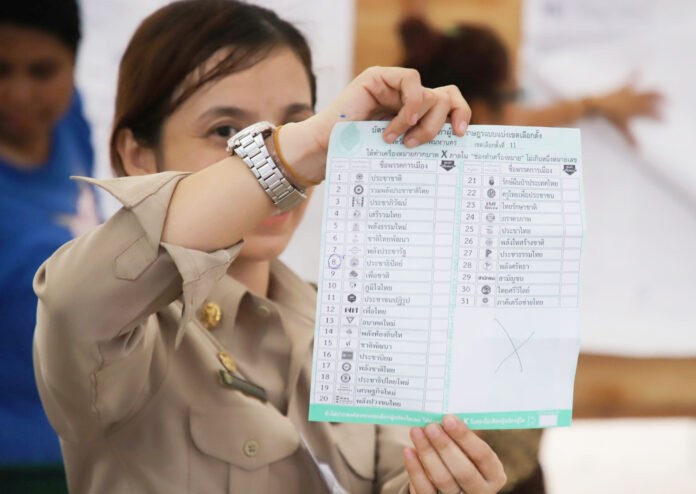
An official announces a ballot void March 24 at a polling station in Bangkok’s Sai Mai district.

BANGKOK — Political parties should respect their pledge to allow the party with the most MP seats to attempt the formation of a coalition government, the director of Mahidol University’s human rights institute said Friday.

Eakpant Pindavanija, from the university’s Institute of Human Rights and Peace Studies, said he hoped all parties that signed the pledge “will respect it, as it will set a good political foundation.” Eakpant, led the effort to have 25 political parties sign the pledge in December 2018.

Signatories include the Pheu Thai, Democrat, Future Forward, BhumjaiThai, Democrat and Commoner parties.

“Political parties that form the next coalition government shall seek and receive the support of more than half the members of the House of Representatives,” part of the pledge stated.

Both sides of the political divide are now claiming the right to lead the next administration – pro-junta Phalang Pracharath, which won the popular vote and the Pheu Thai party, which has more parliamentary seats.

It’s likely that Phalang Pracharath – which supports strongman Gen. Prayuth Chan-ocha as prime minister – will have to depend on the votes of the 250 junta-appointed senators.

Eakpant said it’s understood from the pledge that Thai representative democracy adheres to the number of MPs and not popular votes.

“I have said a hundred times that popular votes have already been computed into MP seats,” Eakpant said, adding that it’s the number of MPs that count.

He said Phalang Pracharath Party and Action Coalition for Thailand did not participate in the pledge.

“We contacted them many times but they declined,” Eakpant said Friday.

Advertisement

Boyzone Singer Hospitalized Before Bangkok Concert

Photo: officialkeithduffy / Instagram

BANGKOK — Minutes before stepping up on a Bangkok stage last night, a member of an Irish boy band was sent to be treated at a hospital.

Boyzone’s farewell tour took place Thursday in a Bangkok hall with only three members instead of four, as Keith Duffy was admitted to hospital shortly before the concert.

Boyzone wrote on its official Twitter account that Duffy “was taken ill” and “has been admitted to hospital on the advice of the local medical team.”

“Our brother will be back on his feet as soon as possible and we thank you for all your wonderful support in the meantime,” Boyzone wrote.

It was not immediately known what caused the 44-year-old singer’s illness.

Boyzone’s gig took place Thursday night at ThunderDome, Muang Thong Thani, with the band’s other three members – Ronan Keating, Mikey Graham and Shane Lynch. After Thailand, the band will be touring in Australia and New Zealand before heading to the United Arab Emirates, Belgium and the United Kingdom.

The band from Dublin shot to fame in the ‘90s and is best known for “No Matter What,” “Love Me For a Reason” and “Picture of You.”

Advertisement

Hot News

LATEST NEWS

Bangkok
overcast clouds
27.2 ° C
27.2 °
27.2 °
82 %
3.9kmh
100 %
Mon
34 °
Tue
34 °
Wed
33 °
Thu
35 °
Fri
27 °