




























29.4 C
Bangkok
Saturday, July 4, 2026
Home Blog Page 1655

Nissan’s Ghosn Arrested Again in Financial Misconduct Case

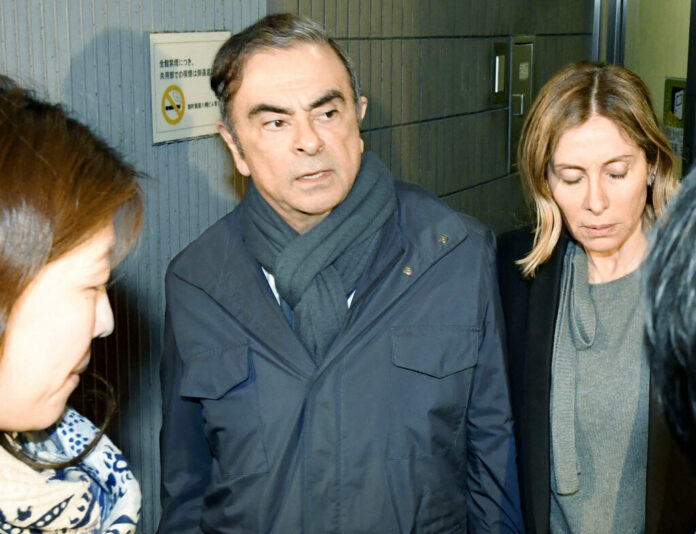
Former Nissan Chairman Carlos Ghosn, center, leaves his lawyer's office in Tokyo, Wednesday, April 3, 2019. Photo: Sadayuki Goto / Kyodo News via AP

TOKYO — Nissan’s former Chairman Carlos Ghosn was arrested Thursday morning for a fourth time by Tokyo prosecutors investigating him for alleged financial misconduct while leading the Japanese automaker.

Tokyo prosecutors said Ghosn’s arrest was on suspicion he diverted $5 million from funds that were being relayed from a Nissan subsidiary to an overseas dealership. Their statement said the money is suspected of going to a company Ghosn virtually ran.

Ghosn’s whereabouts following his detention were unclear. TV footage showed officials entering Ghosn’s apartment in Tokyo, and a car later going to the prosecutors’ office, barely a month after Ghosn was released on bail from the earlier arrests. A car with the same license plate was later seen entering the Tokyo Detention Center, where Ghosn spent more than three months following his arrest on Nov. 19.

A spokesman for Ghosn issued a statement in which he strongly declared his innocence. The spokesman would not be identified due to the sensitivity of the matter.

“My arrest this morning is outrageous and arbitrary,” Ghosn said in the statement. “It is part of another attempt by some individuals at Nissan to silence me by misleading the prosecutors. Why arrest me except to try to break me? I will not be broken. I am innocent of the groundless charges and accusations against me.”

Ghosn, 65, was first arrested on charges of under-reporting his compensation. He was rearrested twice in December, including on breach of trust charges. The multiple arrests prolong detentions without trial and are an oft-criticized prosecution tactic in Japan’s criminal justice system.

The prosecutors’ statement did not mention Oman, but the allegation appears related to the investigation by Nissan Motor Co.’s French alliance partner Renault about payments in Oman to a major dealership, some of which is suspected of having been channeled for Ghosn’s personal use.

Ghosn’s lawyer Junichiro Hironaka denounced the arrest, stressing that a rearrest during release on bail was unusual. His release on bail in March was unusually quick for Japan, where long detentions without convictions are routine

“This is an example of hostage justice,” Hironaka told reporters. “This is meant to hurt Mr. Ghosn and give more advantage to the prosecutors’ side.”

Nissan Chief Executive Hiroto Saikawa expressed surprise about the arrest, although it had been rumored for days.

“So much can happen. I am shocked,” he told reporters as he left his home.

Ghosn’s family expressed worries about another detention, calling it in a statement, “solitary confinement as part of an attempt to force a confession.”

Ghosn has denied the accusations in the earlier charges. On the allegation of under-reported compensation at Nissan, he has said it involved payments that were never decided or that were to be paid in the future. He has also said Nissan never suffered losses for his personal investments and that allegedly dubious payments in Saudi Arabia were for legitimate services.

Ghosn had tweeted he would hold a news conference April 11, where he would tell “the truth” on what was unfolding. A condition for his release on bail included not using the internet, but it is unclear if the authorities are considering the tweet a technical violation.

“I am confident that if tried fairly, I will be vindicated,” he said in the statement Thursday. “I am determined that the truth will come out. I am confident that if tried fairly, I will be vindicated.”

The allegations in the most recent arrest cover three money transfer operations from 2015 through last year, according to the prosecutors.

Ghosn was a star in the auto industry, having steered Nissan for two decades from the brink of bankruptcy to one of the largest groups in the industry, allied with Renault and smaller Japanese partner Mitsubishi Motors Corp.

Nissan declined comment on the criminal proceedings. The company is a co-defendant on the under-reporting of compensation charges.

Hironaka said this week that at least two Nissan employees are cooperating with the prosecutors. Several other Nissan officials have been questioned by the prosecutors as part of the investigation.

The maker of the March subcompact, Leaf electric car and Infiniti luxury models is holding a shareholders’ meeting next week to oust Ghosn from its board.

“Nissan’s internal investigation has uncovered substantial evidence of blatantly unethical conduct,” said company spokesman Nicholas Maxfield.

The maximum penalty upon conviction on charges of under-reporting compensation and breach of trust is 15 years in prison. It is unclear when Ghosn’s trial may begin. Preparations for trials in Japan routinely take months.

Story: Yuri Kageyama
Advertisement

50 Murder Counts Filed on NZ Mosque Attack Suspect

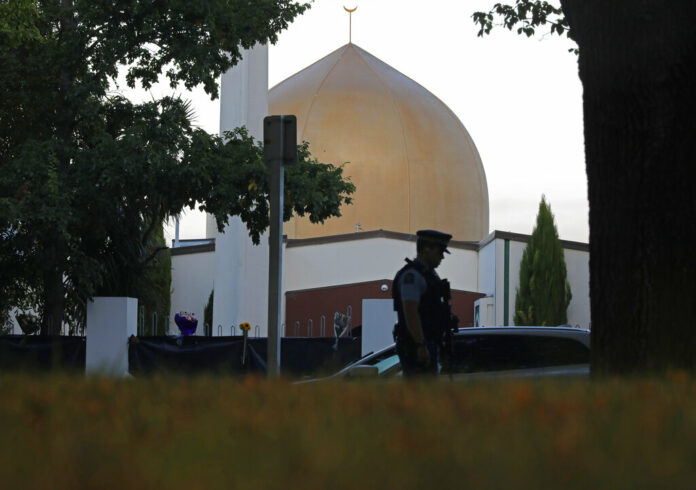
In this March 17, 2019, file photo, a police officer stands guard in front of the Al Noor mosque in Christchurch, New Zealand. Photo: Vincent Yu / Associated Press

WELLINGTON, New Zealand — Police say the man accused of the Christchurch mosque attacks will face 50 murder charges and 39 attempted murder charges at his court appearance on Friday.

Australian Brenton Harrison Tarrant, 28, had been charged with one count of murder after his arrest the day of the March 15 massacre.

Fifty people were killed in the two mosques and dozens of others were shot and wounded.

Tarrant won’t be required to enter a plea on Friday. The judge says the brief hearing will mainly be about Tarrant’s legal representation. He has said he wants to represent himself.

Tarrant earlier dismissed lawyer Richard Peters, who was assigned to represent him at his first court appearance. Many worry that Tarrant will try to use the trial as a soapbox to push his white supremacist views.

New Zealand tightly restricts what can be reported about upcoming court cases to avoid tainting the views of potential jurors.

The judge said he had received applications from 25 media organizations to take film, photographs or audio recordings of the hearing but he denied all of them. He said reporters could remain throughout and take notes.

Advertisement

Flash Floods Hit Pattaya After Hours of Heavy Rain

Cars are jammed on a flooded street Wednesday in Pattaya city.

PATTAYA — Pattaya city was hit by flash floods for the second consecutive day on Wednesday after being pounded by thunderstorms.

Several areas were flooded up to a meter high and roads cut off after the touristic coastal city suddenly experienced torrential rain in the afternoon for over two hours. The city yesterday also saw vast areas submerged by floods following hours of heavy rain, damaging many homes and a popular beach.

Many parts of the major road Pattaya Tai were inundated, causing traffic jams several kilometers long. Officials said they expect the flood to dry out within a few hours.

The Meteorological Department today issued a warning of thunderstorms and gusty winds for several provinces in upper Thailand through Thursday. Up to 40 percent of Bangkok could see heavy rain and storms today and tomorrow.

Advertisement

Review: DC Superhero Pic ‘Shazam!’ is a Joy … Seriously

This image released by Warner Bros. shows Zachary Levi, left, and Jack Dylan Grazer in a scene from
This image released by Warner Bros. shows Zachary Levi, left, and Jack Dylan Grazer in a scene from "Shazam!" Photo: Steve Wilkie / Warner Bros. Entertainment via AP

Holy superhero fatigue, Batman, “Shazam!” is actually good.

OK, so it’s basically “Big” with superheroes and villains instead of businesspeople and girlfriends, but director David F. Sandberg has infused his film with so much heart and charm that it hardly matters. Even the deficiencies, like the sluggish beginning and the random, ridiculous villains, fade away under a haze of goodwill because unlike so many big spectacle action pics with sequels in mind, “Shazam!” actually sticks the landing.

But perhaps I’m getting ahead of myself. Don’t worry if you don’t happen to know anything about “Shazam!” or are convinced that you won’t care. I certainly didn’t. Plus, there are a lot of superheroes to keep track of these days and someone who needs an exclamation point is and should be immediately suspect.

The movie isn’t here to judge any lack of knowledge though. It’s an origin story about a jaded 14-year-old Philadelphia foster kid, Billy Batson (Asher Angel), who’s bestowed with superpowers by Djimon Hounsou (naturally). As Shazam, he’s physically altered into an adult and takes the form of Zachary Levi. But of course, even with his height, his muscles, his voice and even his powers, he’s still very much a kid and has a lot to learn.

Those are the basics, but the spirit really comes from the smart writing, the pitch-perfect casting and the supporting world around Billy and Shazam. Right before he gets his powers, he’s placed in a new group foster home led by Rosa (Marta Milans) and Victor Vasquez (Cooper Andrews) that’s full of quirky characters: Freddy (Jack Dylan Grazer), a disabled superhero obsessive with a biting wit; Eugene (Ian Chen), a violent video game obsessive; Darla (Faithe Herman), the adorable youngest; Mary (Grace Fulton) and Pedro (Jovan Armand). The young actors assembled here are astounding, and immediately captivating, especially Grazer as Freddy and Herman as Darla who nearly steal the show. It’s why when the film asks you to believe that it’s really about family, and not merchandising, you’re on board.

Freddy, with his wealth of superhero knowledge, helps Billy/Shazam figure out what to do with these new, strange talents. The training montages have a terrific comedic sensibility and Grazer and Levi are perfectly matched for the job. Levi in particular pulls off the tricky feat of playing a disaffected, but still fairly innocent young teenager while wearing spandex and a cape, no less. Grazer, meanwhile, who we’ve seen before in “It,” is beyond his years with his ability to draw a laugh.

That’s not to say the movie is perfect. The beginning gives an extended origin story for both Billy and the little boy who will grow up to become the megalomaniac villain, Dr. Thaddeus Sivana (Mark Strong). Dr. Sivana is woefully underwritten, too, although Strong does his best being the straight, serious guy. For the most part it comes across as less of a threat and more of a buzzkill that gets in the way all the fun we were having with Freddy and Shazam.

Also, as if Dr. Sivana wasn’t enough, the script gives him Seven Deadly Sins as henchmen. These sins take the form of unimaginative and indistinguishable CG gargoyles. I’m not exactly sure what lust or greed would look like in gargoyle form, but I’m pretty certain this isn’t it. They’re also given dubbed voices that feel about as authentic as the voices of the monsters The Power Rangers battled on Saturday mornings.

There’s also a running gag about a strip club that seemed a little retrograde for a current film. But, nitpicks aside, “Shazam!” is just a lightning bolt of unexpected joy that is certainly worth your time and money.

“Shazam!,” a Warner Bros. release, is rated by the Motion Picture Association of America for “for intense sequences of action, language, and suggestive material.” Running time: 132 minutes. Three and a half stars out of four.

Story: Lindsey Bahr

Advertisement

Brunei’s Anti-Gay Law Comes Into Effect

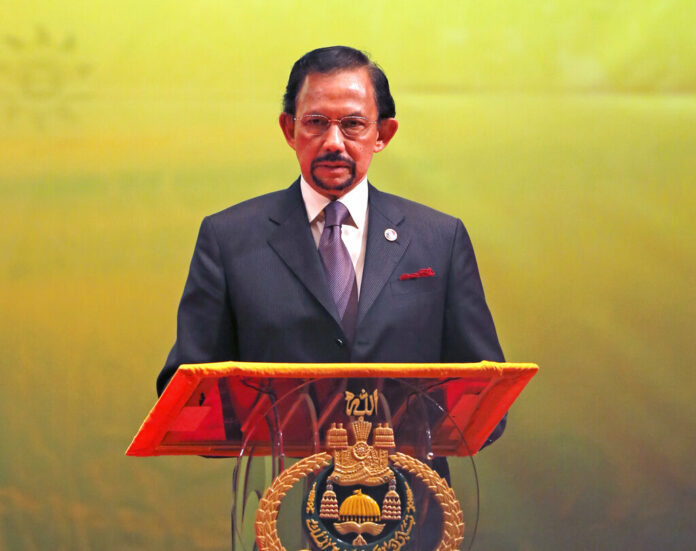
In this Oct, 10, 2013, photo, Brunei's Sultan Hassanal Bolkiah speaks during the closing ceremony and handover of the ASEAN Chairmanship to Myanmar in Bandar Seri Begawan. Photo: Vincent Thian / Associated Press

SINGAPORE — New Islamic criminal laws that took effect in Brunei on Wednesday, punishing gay sex and adultery by stoning offenders to death, have triggered an outcry from countries, rights groups and celebrities far beyond the tiny Southeast Asian nation’s shores.

The penalties were provided for under new sections of Brunei’s Shariah Penal Code. Sultan Hassanal Bolkiah instituted the code in 2014 to bolster the influence of Islam in the oil-rich monarchy of around 430,000 people, two-thirds of whom are Muslim.

Even before 2014, homosexuality was already punishable in Brunei by a jail term of up to 10 years. The first stage of the Shariah Penal Code included fines or jail for offenses such as pregnancy out of wedlock or failing to pray on Fridays.

But under the new laws — which apply to children and foreigners, even if they are not Muslim — those found guilty of gay sex could be stoned to death or whipped. Adulterers risk death by stoning too, while thieves face amputation of a right hand on their first offense and a left foot on their second.

“Living in Brunei, we already knew that our sexual identity is taboo and should not be expressed. We already felt belittled before the law came to place,” said a 23-year-old member of the LGBTQ community who wanted to be identified only as Kun out of fear of reprisal from the authorities.

“Now with it, we feel even smaller and the ones who could potentially oppress us have more opportunity to harass us to say and do what they want,” he said.

Celebrities including George Clooney, Elton John and Ellen DeGeneres have voiced opposition to the new laws, and have rallied a boycott of nine hotels in the U.S. and Europe with ties to Hassanal, who is still sultan.

“Are we really going to help fund the murder of innocent citizens?” Clooney wrote Thursday on Deadline Hollywood.

Clooney said that while you can’t shame “murderous regimes,” you can shame “the banks, the financiers and the institutions that do business with them.”

There has been no vocal opposition to the new penalties in Brunei, where the sultan rules as head of state with full executive authority. Public criticism of his policies is extremely rare in the country.

Hassanal, who has reigned since 1967, has previously said the Penal Code should be regarded as a form of “special guidance” from God and would be “part of the great history” of Brunei.

On Tuesday, the United States joined the United Kingdom, Germany and France in urging Brunei to halt its plans.

“The United States strongly opposes violence, criminalization and discrimination targeting vulnerable groups, including women at risk of violence, religious and ethnic minorities, and lesbian, gay, bisexual, transgender and intersex persons,” State Department deputy spokesman Robert Palladino said in a statement.

Brunei’s Southeast Asian neighbors, some of whom have laws banning sex between men, were silent.

But LGBTQ citizens of other nearby Muslim-majority countries were concerned about the broad penalties.

“I am very worried that Indonesia or Malaysia may follow the lead,” said a 24-year-old man from Kuala Lumpur, Malaysia’s capital, who wanted to be identified only as Ludwig. “I think people nowadays, especially the younger generation, are quite OK with LGBT, but those who are not make the loudest noise and they are the reason why it seems like everyone is against it.”

Nearly two-thirds of Malaysia’s 32 million people are Muslim. They are governed by Islamic courts in family, marriage and personal issues. Last year, two Malaysian Muslim women were convicted under Islamic laws and caned for attempting to have sex with each other.

Michelle Bachelet, the U.N. High Commissioner for Human Rights, urged Brunei’s government to “stop the entry into force of this Draconian new penal code.”

“Any religion-based legislation must not violate human rights, including the rights of those belonging to the majority religion as well as of religious minorities and non-believers,” she said in a statement on Monday.

Phil Robertson, the deputy Asia director for Human Rights Watch, called on the sultan to “immediately suspend amputations, stoning, and all other rights-abusing provisions and punishments.”

“Brunei’s new penal code is barbaric to the core, imposing archaic punishments for acts that shouldn’t even be crimes,” Robertson said in a statement on Wednesday.

Rachel Chhoa-Howard, Brunei researcher at Amnesty International, decried the “vicious” laws and asked the international community to condemn them.

Story: Annabelle Liang

Advertisement

Malaysian Ex-PM Najib Attends 1st Day of Graft Trial

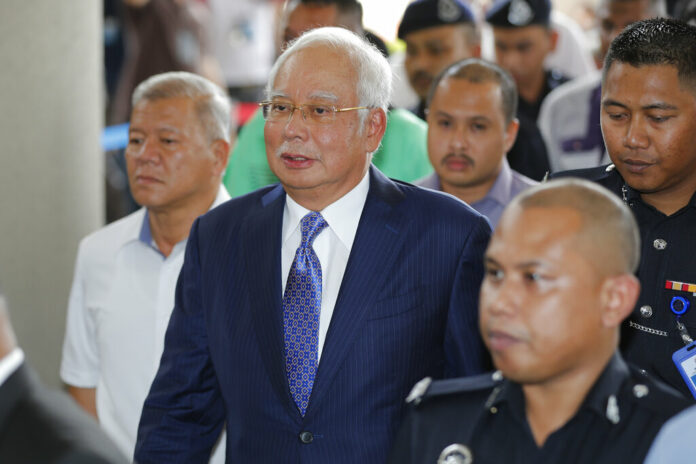
Former Malaysian Prime Minister Najib Razak, center, walks into a courtroom Wednesday at Kuala Lumpur High Court in Kuala Lumpur, Malaysia. Photo: Vincent Thian / Associated Press

KUALA LUMPUR, Malaysia — Former Malaysian Prime Minister Najib Razak appeared in court Wednesday for the start of his corruption trial, exactly 10 years after he was first elected to office only to suffer a spectacular defeat last year on allegations he pilfered millions of dollars from a state investment fund.

The trial was originally due to start in February but was delayed by procedural matters. Najib’s lawyers filed an urgent motion to challenge the charges, which include criminal breach of trust, money laundering and abuse of power. The High Court judge said he will hear the application at a later date and ordered the trial to proceed.

Ten years ago this Wednesday, Najib became Malaysia’s sixth prime minister but anger over the 1MDB investment fund scandal led to his electoral loss last May. U.S. investigators say more than $4.5 billion was stolen from 1MDB by associates of Najib between 2009 and 2014. They say the ill-gotten gains were laundered through layers of bank accounts in the U.S. and other countries to finance Hollywood films and buy hotels, a luxury yacht, art works, jewelry and other extravagances.

Some $700 million from the fund that Najib set up for Malaysia’s economic development allegedly landed in his own bank account.

One of only a few Southeast Asian leaders to be arraigned after losing office, Najib has denied any wrongdoing.

The 65-year-old was greeted by a small group of supporters as he arrived at the courthouse. They all bowed their heads in a short prayer before Najib went up to the courtroom.

Wednesday’s trial is the first of several against Najib, who has been charged with 42 counts of criminal breach of trust, graft, abuse of power and money laundering in one of Malaysia’s biggest criminal proceedings. His wife, Rosmah Mansor, also has been charged with money laundering and tax evasion linked to 1MDB. She has also pleaded not guilty and her trial has not been set.

Najib’s son, Norashman Najib, praised his father for his “tremendous strength and resolve.” He tweeted late Tuesday that the trial will be an “excruciatingly difficult period” for his father but that “with the right attitude, even the most trying of situations can be a blessing from Allah.”

The patrician Najib, whose father and uncle were Malaysia’s second and third prime ministers respectively, has fought back with a political makeover on social media that aims to transform his image from an out-of-touch elitist to a leader for the working class.

A Malay-language catchphrase translating to “What’s to be ashamed about, my boss?” was coined while he was campaigning in a by-election last month and has become his new rallying cry. Expensive tailored suits have been replaced by hoodies and jeans. A picture Najib posted on social media showing himself posing on a Yamaha motorcycle with his new “‘no-shame” meme resonated with many Malay youths disenchanted by Prime Minister Mahathir Mohamad’s new government.

In another offbeat music video that he uploaded on social media, Najib slammed the new government as “liars” and crooned about the “slander and revenge” against him in a Malay-language rendition of the 1970’s R&B soul hit “Kiss and Say Goodbye” by the Manhattans.

He posts a dozen messages daily, mostly mocking the new government and its policies, and touching on the plight of the needy.

Despite his smiles and “cool” public persona, Najib could face years in prison if convicted.

Once a towering figure in politics, Najib has fallen from grace swiftly since his historic electoral loss, which led to the first change of government since Malaysia’s independence from Britain in 1957.

The new government soon after it took office reopened investigations into 1MDB that had been stifled under Najib. He and his wife were barred from leaving the country and grilled by anti-graft officials, and their properties raided. Truckloads of luggage stashed with cash, jewelry and hundreds of expensive designer bags worth a staggering 1.1 billion ringgit ($270 million) were seized from their home and other properties.

Story: Eileen Ng

Advertisement

SKorean Ship Detained for Allegedly Providing Oil to NKorea

South Korean fishing boat P-PIONEER is seen a port in Busan, South Korea, Wednesday, April 3, 2019. Photo: Kim Jae-hong / Yonhap via AP

SEOUL, South Korea — A South Korean ship is being held at a domestic port over suspicions that it illegally provided oil to heavily sanctioned North Korea, Seoul officials said Wednesday.

A South Korean coast guard official said Wednesday the 5,160-ton P-PIONEER has been prevented from leaving Busan port since October over allegations that it was used to supply oil to North Korea through two ship-to-ship transfers in September 2017 in international waters in the East China Sea. He said the ship transferred diesel, but did not confirm how much was supplied.

An official from Seoul’s Foreign Ministry said it was the first time a South Korean ship was detained over allegations of violating United Nations Security Council Sanctions against North Korea over its nuclear weapons program. South Korea is also detaining three foreign vessels for illegally providing oil to North Korea or transporting North Korea-produced coal.

Both officials spoke on condition of anonymity, citing department rules preventing them from speaking to the press.

The U.N. Security Council in a report last month said North Korea was continuing to defy its resolutions through a “massive” increase in ship-to-ship transfers of petroleum products and coal.

Story: Kim Tong-Hyung

Advertisement

Philippine Supreme Court Orders Release of Drug War Evidence

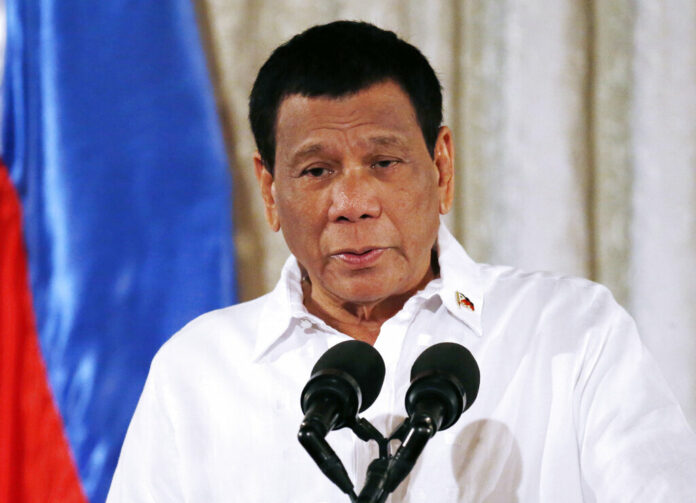
In this Oct. 9, 2018, file photo, Philippine President Rodrigo Duterte addresses congressmen and Government officials during the presentation of Republic Act bills in a ceremony at the Presidential Palace in Manila, Philippines. Photo: Bullit Marquez / Associated Press

MANILA, Philippines — The Philippine Supreme Court on Tuesday ordered the release of police documents on thousands of killings of suspects in the president’s anti-drug crackdown, in a ruling that human rights groups said could shed light on allegations of extrajudicial killings.

Supreme Court spokesman Brian Keith Hosaka said the court ordered the government solicitor-general to provide the police reports to two rights groups which had sought them. The 15-member court, whose justices are meeting in northern Baguio city, has yet to rule on a separate petition to declare President Rodrigo Duterte’s anti-drug campaign unconstitutional.

Solicitor-General Jose Calida had earlier agreed to release the voluminous police documents to the court but rejected the requests of the two groups, the Free Legal Assistance Group and the Center for International Law, arguing that such a move would undermine law enforcement and national security.

The two groups welcomed the court order.

“It’s a big step forward for transparency and accountability,” said Jose Manuel “Chel” Diokno, who heads the Free Legal Assistance Group.

He said the documents will help the group of human rights lawyers scrutinize the police-led crackdown that was launched when Duterte came to office in mid-2016, and the massive number of killings that the president and police say occurred when suspects fought back and endangered law enforcers, Diokno said.

“This is an emphatic statement by the highest court of the land that it will not allow the rule of law to be trampled upon in the war on drugs. It is a very important decision,” said Joel Butuyan, president of the Center for International Law.

“These documents are the first step toward the long road to justice for the petitioners and for thousands of victims of the ‘war on drugs’ and their families,” Butuyan said.

More than 5,000 mostly poor drug suspects have died in purported gunbattles with the police, alarming Western governments, U.N. rights experts and human rights watchdogs. Duterte has denied ordering illegal killings, although he has publicly threatened drug suspects with death.

The thousands of killings have sparked the submission of two complaints of mass murder to the International Criminal Court. Duterte has withdrawn the Philippines from the court.

After holding public deliberations on the two groups’ petitions in 2017, the Supreme Court ordered the solicitor-general to submit documents on the anti-drug campaign, including the list of people killed in police drug raids from July 1, 2016, to Nov. 30, 2017, and documents on many other suspected drug-linked deaths in the same period that were being investigated by police.

Story: Jim Gomez

Advertisement

Future Forward Leader Hit With Sedition Charge

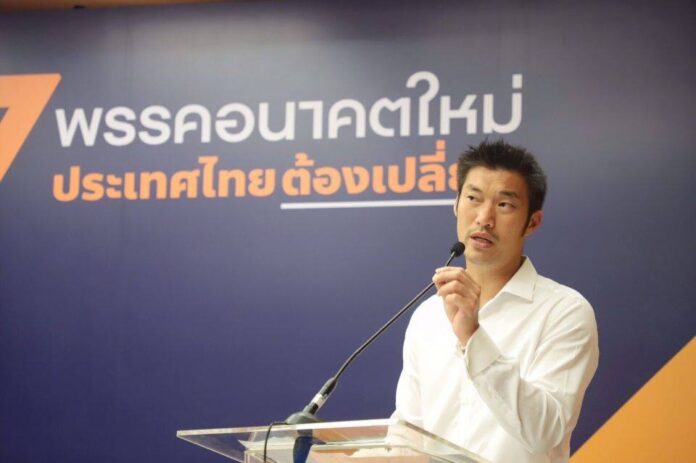
A file photo of Future Forward Party leader Thanathorn Juangroongruangkit speaking at the party’s headquarters in Bangkok.

BANGKOK — Another serious legal threat has hit the leader of Future Forward Party, this time an accusation of sedition.

Thanathorn Juangroongruangkit posted online on Wednesday a photo of a legal document showing that the Pathum Wan police have summoned him to hear charges over “causing disorder and disobedience among the public” that could lead to “the acts of rebellion.”

“When the dark power won’t leave Future Forward alone,” Thanathorn wrote in the accompanying post. “It’s clear now that the old-school political game won’t end after the election, but is only getting more intense, because they’re afraid of Future Forward.”

“They’re afraid of our wins that exceeded the expectations of many, afraid of politics based only on policies and ideologies that can build faith and support from the public without money or authority, afraid of the truth that nearly 6.3 million people sincerely support Future Forward Party,” he continued.

Thanathorn added that he would meet police investigators on Saturday as scheduled. If convicted, he faces a jail term of up to seven years.

The junta’s legal team said the charge was based on Thanathorn’s alleged involvement in a 2015 anti-coup demonstration, in which a group of activists staged a protest at the Pathum Wan police station. One of those activists was Rangsiman Rome, who might become one of Future Forward’s party-list MPs. The protesters were arrested and charged with violating the junta’s ban on political gatherings.

It’s the latest case of criminal prosecution and the most serious charge yet against Future Forward, a party with progressive policies that is popular among young people. The prosecutor’s office is also reviewing a cybercrime case against Thanathorn and two executive party members that involves online criticism of the ruling junta.

Thanathorn once served on the board of Matichon Group, which owns Khaosod English.

Party secretary-general Piyabutr Saengkanokkul said today that the police have also summoned him for reading a statement regarding the dissolution of Thai Raksa Chart Party and publishing it on the party’s website.

On Twitter, #savethanathorn shot to Thailand’s no.1 trending hashtag on Wednesday morning moments after Thanathorn posted about the sedition charge against him. Many users pledged their support and accused the military government of trying to destroy the party now that is has become a force to be reckoned with.

Although Future Forward started off as relatively unknown to the public and without any established politicians in its leadership, its unique stance opposing both the military and old-school Thai politics made it able to finish third at the polls, behind only political giants Pheu Thai and the junta-backed Phalang Pracharath.

The charge was revealed a day after army chief Gen. Apirat Kongsompong sent a warning to those who oppose the kingdom’s system of constitutional monarchy, which appeared aimed at Piyabutr who once advocated for reform to Thailand’s harsh lese-majeste law.

Advertisement

Army Chief Sends Warning to Critics of the Monarchy

In this Friday, Jan. 18, 2019, file photo, Thai army chief Gen. Apirat Kongsompong reviews the guard of honor during the Royal Thai Armed Forces Day ceremony at a military base in Bangkok, Thailand. Photo: Sakchai Lalit / AP

BANGKOK — Thailand’s influential army chief warned Tuesday that the military will fight any moves that threaten the country’s system of constitutional monarchy with the king as head of state, in an apparent threat directed at supporters of a new anti-junta party.

“The army does the army’s duty, which is to protect, maintain, and defend the institutions of nation, religion, and monarchy,” Gen. Apirat Kongsompong said at a news conference.

Apirat appeared to be targeting intellectuals backing the Future Forward Party, which according to preliminary figures ran a strong third in the March 24 general election.

Apirat’s words “come as an intimidating knock-out punch against any Thai political critics of Thailand’s system of government,” said Paul Chambers, a lecturer in political science at Naresuan University in northern Thailand. “But more explicitly, the words seem to attack Future Forward Party, whose leaders have seemed particularly critical of the junta and military, and who in the past discussed the monarchy.”

Future Forward Party co-founder Piyabutr Saenkanokkul used to be part of the Nitirat Group, legal scholars who sought reforms in Thailand’s lese majeste law, which carries stiff prison terms for people found guilty of defaming the monarchy.

Apirat suggested that scholars who have studied abroad may have lost their understanding of the “Thai-style democratic system.”

Pitabutr received his master’s and doctoral degree in France, and other prominent members of the Nitirat Group studied law in Germany.

“Don’t introduce the leftist views you learned that made you all pretentious,” Apirat said.

The military-backed Phalang Pracharath Party won the most popular votes in the March polls, and its candidate, Prayuth Chan-ocha, is likely to become prime minister, but could end up with the opposition holding a majority of seats in the House of Representatives. Prayuth led a 2014 coup that ousted an elected government and since then has served as junta chief and prime minister.

Supporters of the Future Forward Party believe the courts and the Election Commission may try to disqualify some of its winning candidates, or even the entire party, ahead of the release of official election results on May 9.

Thai social media since the election has been buzzing with postings seeking to discredit the Future Forward Party.

One recently circulated video shows excerpts of a lecture Piyabutr gave in 2013, when he taught law at Bangkok’s Thammasat University. He has said it was to explain the relationship of democracy to monarchies in political systems worldwide. But it has been cast by his party’s opponents as criticism of Thailand’s monarchy.

An obscure right-wing group, Political Civic Group, said it has filed a complaint with the Election Commission about Piyabutr’s statements, claiming they violated election law. He has denied the allegations against him and charged the video was taken out of context to undermine him.

Apirat also criticized activists who charge that the Election Commission mismanaged the polls and are seeking to impeach its members.

“Once the referee has made a ruling, you blame the referees. When boxers fight, this guy loses, and you blame the referees. If it’s like this it will never end. It will be a never-ending cycle of revenge and disapproval. How can it end? I’ve said already,” Apirat said, before taking a long pause. “I don’t want to say something too harsh.”

After becoming army commander, Apirat told reporters last October that he refused to rule out more coups if there is political unrest.

“If politics does not create riots, nothing will happen,” he said.

His father, Gen. Sunthorn Kongsompong, helped carry out a 1991 coup and served as junta leader for more than a year.

Story: Grant Peck

Advertisement

Hot News

LATEST NEWS

Bangkok
overcast clouds
29.4 ° C
29.4 °
25.5 °
77 %
4.8kmh
100 %
Fri
29 °
Sat
31 °
Sun
34 °
Mon
29 °
Tue
30 °