30 C
Bangkok
Saturday, July 4, 2026
Home Blog Page 1658

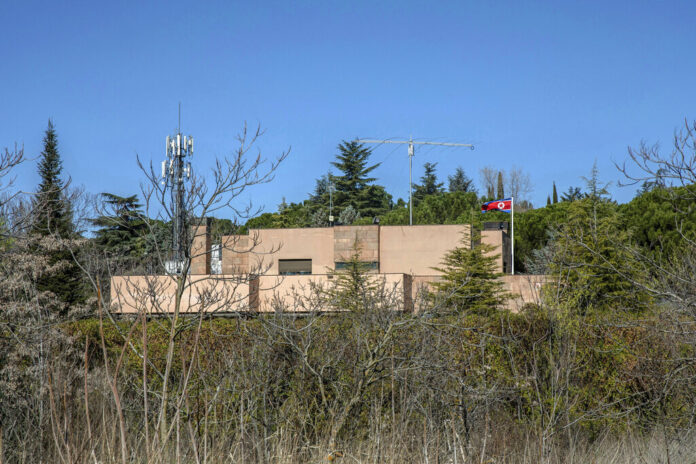
N. Korea Calls for Investigation Into Madrid Embassy Attack

This Wednesday, March 13, 2019 file photo shows a general view of North Korea's embassy in Madrid, Spain. Photo: Bernat Armangue / Associated Press

TOKYO — North Korea said Sunday it wants an investigation into a raid on its embassy in Spain last month, calling it a “grave terrorist attack” and an act of extortion that violates international law.

The incident occurred ahead of President Donald Trump’s second summit with leader Kim Jong Un in Hanoi on Feb. 27-28. A mysterious group calling for the overthrow of the North Korean regime has claimed responsibility.

Read: A Look at Alleged Raiders of North Korean Embassy in Madrid

The North’s official media quoted a Foreign Ministry spokesman as saying that an illegal intrusion into and occupation of a diplomatic mission and an act of extortion are a grave breach of the state sovereignty and a flagrant violation of international law, “and this kind of act should never be tolerated.”

He claimed an armed group tortured the staff and suggested they stole communications gear.

The 10 people who allegedly raided the embassy in Madrid belong to a mysterious dissident organization that styles itself as a government-in-exile dedicated to toppling the ruling Kim family dynasty. The leader of the alleged intruders appears to be a Yale-educated human rights activist who was once jailed in China while trying to rescue North Korean defectors living in hiding, according to activists and defectors.

Details have begun trickling out about the raid after a Spanish judge lifted a secrecy order last week and said an investigation of what happened on Feb. 22 uncovered evidence that “a criminal organization” shackled and gagged embassy staff before escaping with computers, hard drives and documents. A U.S. official said the group is named Cheollima Civil Defense, a little-known organization that recently called for international solidarity in the fight against North Korea’s government.

Spain has issued at least two international arrest warrants for members of the group.

Advertisement

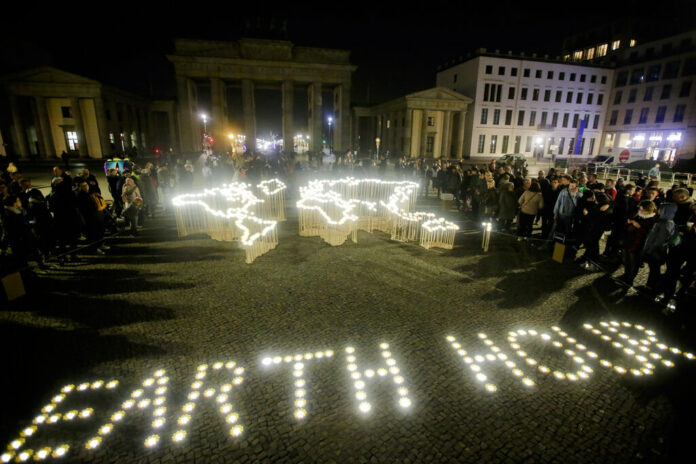
Cities Go Dark for Earth Hour, Bring Light to Climate Change

Activists of the World Wide Fund For Nature (WWF) set up led-lights Saturday in front of the blacked out Brandenburg Gate in Berlin, Germany to mark Earth Hour. Photo: Markus Schreiber / Associated Press

NEW YORK — Cities around the world marked Earth Hour on Saturday by turning off lights at 8:30 p.m. local time in a call for global action on climate change.

Earth Hour, spearheaded by the World Wildlife Fund, calls for greater awareness and more sparing use of resources, especially fossil fuels that produce carbon gases and lead to global warming. Beginning in Sydney in 2007, Earth Hour has spread to more than 180 countries, with tens of millions of people joining in.

Read: Grand Palace, Wat Arun to Go Dark 1H Saturday Night

The Empire State Building participated as clocks hit 8:30 p.m. on the U.S. East Coast with a dimming of the skyscrapers’ lights.

In Hong Kong, major buildings along Victoria Harbour turned off their non-essential lights and the city’s popular tourist attraction known as the Symphony of Lights was canceled.

Over 3,000 corporations in Hong Kong signed up for Earth Hour 2019, according to the WWF Hong Kong website. Iconic skyscrapers including the Bank of China Tower and the HSBC Building in Central, the city’s major business district, switched off their lights in response to the global movement.

The City of Lights also turned off the Eiffel Tower’s nightly twinkle to mark Earth Hour. Paris Mayor Anne Hidalgo dimmed the lights Saturday on the city’s most famous monument for an hour.

In Italy, public buildings and historical monuments in 400 cities participated in Earth Hour. Lights were also switched off at St. Peter’s Basilica at the Vatican.

Some of most emblematic architectural treasures in Spain participated, including the Alhambra palace in Granada and Barcelona’s La Sagrada Familia basilica.

In Taipei, Taiwan’s capital, the island’s tallest building, Taipei 101, joined surrounding buildings in shutting off the lights as part of the Earth Hour event.

In coal-reliant Poland, top tourist sites also turned off their lights when local clocks hit 8:30 p.m. In the country’s capital city, Warsaw, the spired landmark Palace of Culture and Science turned off its night illumination, along with some churches and Old Town walls.

Lights were also switched off in several landmarks in the Greek capital. The Acropolis, Athens City Hall and Lycabettus Hill, towering above the Athens center, went dark and the Parliament building joined in. However, the Athens mayor’s calls for the people to join in by turning off the lights in their houses went mostly unheeded.

Advertisement

Philippine Police Kill 14 Men Rights Groups Say Were Farmers

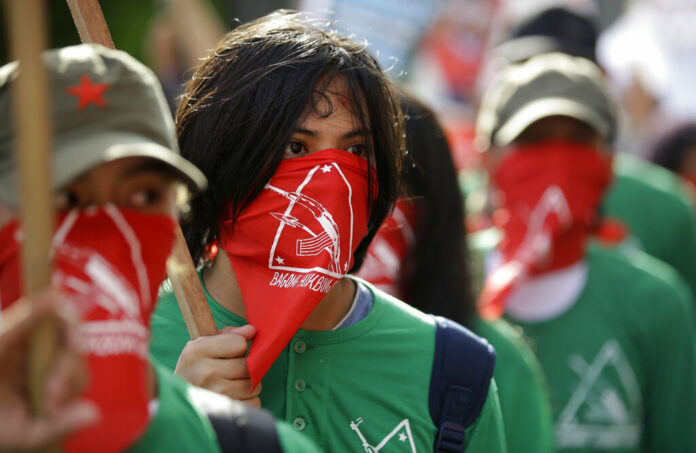
In this March 25, 2019, file photo, masked members of the outlawed National Democratic Front of the Philippines, the umbrella organization of the Philippine communist movement, listen during a demonstration in Manila, Philippines. Photo: Aaron Favila / Associated Press

BACOLOD, Philippines — Philippine police said Sunday 14 suspected communist rebels were killed after they opened fire during raids in a central province, but rights groups countered the men were farmers and the latest victims of extrajudicial killings.

Dozens of police, backed by army troops, were to conduct court-authorized home searches Saturday in a city and two towns in Negros Oriental province when the 14 men violently fought back. A police officer was shot in the leg and wounded in the anti-insurgency and criminality sweep that also led to the arrests of 15 other suspects, police officials said.

Regional police chief Debold Sinas said six suspected insurgents and rebel supporters escaped. Law enforcers seized three shotguns, 25 pistols, a homemade rifle, three grenades, ammunition and rebel documents in the simultaneous raids in Canlaon city, where eight suspects were gunned down, and the towns of Manjuyod and Santa Catalina, where the rest were killed in the reported gunbattles.

“There were 14 suspects that engaged the raiders in a shootout during the implementation of the search warrants resulting to their deaths,” Sinas told the national police chief in a report.

Human rights and farmers’ groups condemned the killings of the men they said were farmers, including two village chiefs, and called for an independent investigation.

“The appalling conduct of these ‘police operations’ obviously aims to make peasants, activists and other ordinary citizens of Negros to cower in fear, surrender their rights, and accept the wave of terror under the de facto martial law,” the Northern Negros Alliance of Human Rights Advocates said.

The group said six farmers were killed and more than 50 others arrested in similar police raids in December in Guihulngan city in Negros Oriental, which lies on a sugar-producing agricultural island long known for its gaping divide between the poor and wealthy landowning families.

President Rodrigo Duterte declared martial law in the country’s south in 2017 to contain a deadly siege by Islamic State group-aligned militants and other insurgents. Although Negros Oriental lies outside the south, it is in a region about 590 kilometers (366 miles) south of Manila where military and police forces have intensified counterinsurgency raids in recent years.

Police denied the 14 men killed in Saturday’s raids were victims of extrajudicial killings. Aside from unlicensed firearms, police were looking for suspected New People’s Army guerrillas involved in a failed attack on a Canlaon city police station this month and other assaults on police officers, Sinas said.

Communist guerrillas have waged a rural rebellion in the country for half a century, one of Asia’s longest. The violence has left about 40,000 combatants and civilians dead. It also has stunted economic development, especially in the countryside, where the military says about 3,500 insurgents are still active.

Advertisement

Northern University Cancels Classes Due to Smog

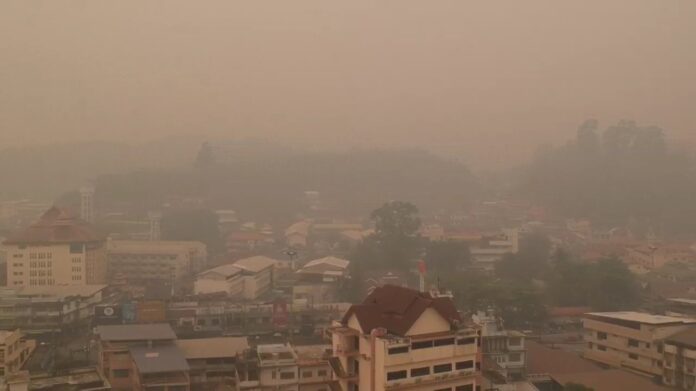
Heavy smog is seen Saturday over Mae Sai District in Chiang Rai province.

CHIANG RAI — A university in Chiang Rai province said its students will be dismissed for two days as air pollution continues to surge in the north.

Mae Fah Luang University said all classes will be canceled and its outdoor venues will be closed Monday and Tuesday due to the “severe smog situation.” The levels of air pollution in the province this morning rose to “hazardous” with the density of ultrafine particles at more than 330 micrograms per cubic meter, according to monitoring organization AirVisual.

Officials have launched measures with little effect to combat heavy smog that has been choking the north for months, including a ban on open burning and spraying water into the sky.

Air quality in the neighboring Chiang Mai province today was at “unhealthy” levels, with the density of PM 2.5 – the smallest and most harmful particles – at more than 170 micrograms per cubic meter.

Related stories:

Chiang Mai’s Foul Air No Priority to Bangkok, North Complains

Chiang Mai Tops World Pollution Charts

Advertisement

Proposed Hong Kong Extradition Law Changes Spark Concerns

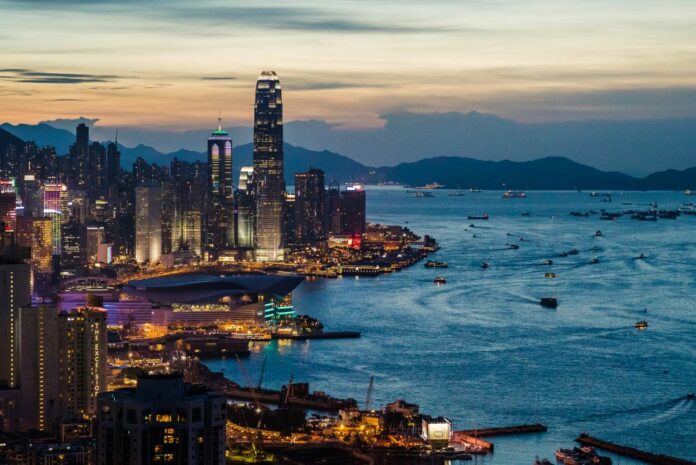
A file photo of Hong Kong's Victoria Harbour. Photo: Studio Incendo / Flickr

HONG KONG — Business and human rights groups are expressing concern over proposed changes to Hong Kong’s extradition law that would allow suspects to be sent to mainland China where they say they could be subject to torture and unfair prosecution.

Hong Kong currently limits such extraditions to jurisdictions with which it has existing extradition agreements or to others on an individual basis under a law passed before the semi-autonomous territory’s handover from British to Chinese rule in 1997.

China was excluded because of concerns over its poor record on legal independence and human rights.

However, changes to the Fugitive Offenders Ordinance and the Mutual Legal Assistance in Criminal Matters Ordinance would expand the scope for the transfer of criminal suspects to China and remove the legislature’s right to scrutinize individual extradition decisions.

Advertisement

Fugitive Ex-PM Thaksin Stripped of Royal Decorations

BANGKOK — The fugitive former Prime Minister Thaksin Shinawatra has been stripped of his royal decorations, the palace announced Saturday.

The Royal Command from King Vajiralongkorn, published in the Royal Gazette, said Thaksin’s 2008 flight to escape serving a two-year prison term on a conflict of interest conviction and other legal cases against him was “extremely inappropriate.”

The move follows a March 24 general election in which the Pheu Thai party – loyal to Thaksin – claimed it won enough seats to form a coalition that would hold a majority in the House of Representatives. Final certified results will not be issued until May 9, and the Election Commission has warned there could be some disqualifications by then.

It also came two days after a top military figure said the army has stripped Thaksin of his special award as a prominent alumnus of the Armed Forces Preparation Academy because he no longer “deserves the honor.” He however denied the decision was politically motivated.

King Vajiralongkorn on election eve had issued a statement urging voters to select “good people” for public office, a message taken as implicit support for Thaksin’s opponents, mainly the military-backed Phalang Pracharath Party, which won the highest number of popular votes.

Thaksin, a billionaire with populist policies, became prime minister in 2001 but was ousted by a 2006 military coup. Abuse of power and disrespect for the monarchy were two of the accusations that were offered as justification for the coup.

The army staged another coup in 2014 against a government that had been formed by Thaksin’s sister Yingluck Shinawatra, who was forced out of office on a controversial charge, later found guilty of negligence in her duties, and also fled into exile.

The 2014 coup was led by then-army commander Prayuth Chan-ocha, who has been junta chief and prime minister since then, and is the PM candidate of Phalang Pracharath Party.

The 2006 coup set off a sometimes violent struggle for power between Thaksin’s supporters and opponents, and pro-Thaksin parties staged several comebacks even though the military and other royalists have tried to dismantle his political machine.

These include changes in the constitution and election laws under the military government that were meant to handicap parties loyal to Thaksin.

The hostility of royalists toward Thaksin has been evident since he was in office, though was never expressed directly by members of the royal family, including Vajiralongkorn’s father, King Bhumibol Adulyadej, who died in 2016. The royal family by tradition is above politics.

Vajiralongkorn’s older sister, Princess Ubolratana, caused an uproar in February when the pro-Thaksin Thai Raksa Chart Party registered her as its nominee for prime minister. The move was initially seen as a clever ploy by Thaksin’s political machine to immunize itself against charges that it opposed the monarchy. It backfired badly when the king declared it inappropriate and unconstitutional, and the party was dissolved by the courts before the election, hurting the pro-Thaksin forces.

Princess Ubolratana, however, made a high-profile appearance at the wedding reception of one of Thaksin’s daughters in Hong Kong just two days before the election. Photos and video of the event showed Thaksin welcoming her warmly.

Thailand’s monarchy is protected by strong lese majeste laws that make whatever is judged defamatory of the royal family punishable by three to 15 years’ imprisonment.

Additional reporting Jintamas Saksornchai for Khaosod English

Advertisement

Redacted Mueller Report Expected to be Released by Mid-April

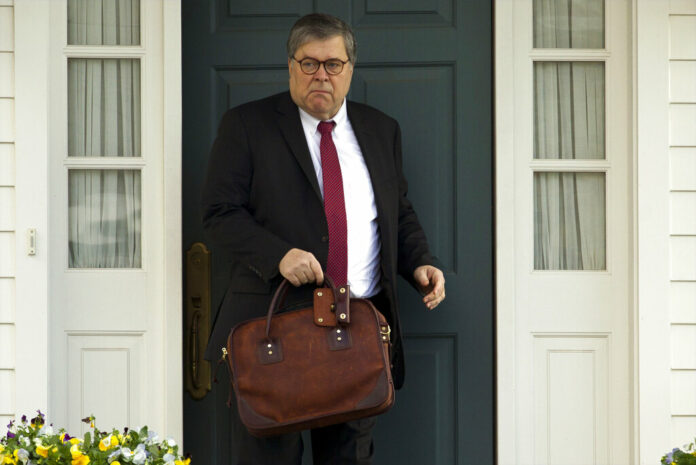
In this March 22, 2019, file photo, Attorney General William Barr leaves his home in McLean, Va. Photo: Jose Luis Magana / Associated Press

WASHINGTON — A redacted version of special counsel Robert Mueller’s report on the Russia investigation will be sent to Congress by mid-April and will not be shared with the White House beforehand, Attorney General William Barr said Friday.

Barr’s timeline, included in a letter to the chairmen of the House and Senate judiciary committees, sets up a possible showdown with House Democrats, who are insisting they see the full report next week.

In his letter, Barr said he shares a desire for Congress and the public to be able to read Mueller’s findings, which are included in the nearly 400-page report the special counsel submitted last week.

Barr said President Donald Trump would have the right to assert executive privilege over parts of the report. But he noted that Trump “has stated publicly that he intends to defer to me and, accordingly, there are no plans to submit the report to the White House for a privilege review.”

Mueller officially concluded his investigation when he submitted the report last Friday. Two days later, Barr sent a four-page letter to Congress that detailed Mueller’s “principal conclusions.”

Mueller did not find that the Trump campaign coordinated or conspired with Russia, Barr wrote, and did not reach a conclusion on whether Trump obstructed justice. Barr said he and Deputy Attorney General Rod Rosenstein decided on their own that Mueller’s evidence was insufficient to establish that the president committed obstruction.

Barr said he is preparing to redact multiple categories of information from the report and Mueller is helping the Justice Department identify sections that will be blacked out in the public version.

Those include grand jury material, information that would compromise sensitive sources and methods; information that could affect ongoing investigations, including those referred by Mueller’s office to other Justice Department offices and information that could infringe on the personal privacy and reputation of “peripheral third parties.”

“Our progress is such that I anticipate we will be in a position to release the report by mid-April, if not sooner,” Barr wrote.

Barr said last week’s letter detailing Mueller’s “principal conclusions” was not intended to be an “exhaustive recounting” of the special counsel’s investigation.

Barr described Mueller’s report as nearly 400 pages long, not including the tables and supporting materials, which he said sets forth Mueller’s analysis, findings and the reasons for his conclusions.

“Everyone will soon be able to read it on their own,” Barr wrote. “I do not believe it would be in the public’s interest for me to attempt to summarize the full report or to release it in serial or piecemeal fashion.”

Asked about Barr’s commitment to release a redacted version of Mueller’s report, Trump said he has “a lot of confidence” in Barr “and if that’s what he’d like to do, I have nothing to hide.” He spoke at Mar-a-Lago, his private estate in Florida.

Barr’s letter drew a quick — and critical — response from Rep. Jerrold Nadler, the chairman of the House Judiciary Committee, who had demanded the full Mueller report by April 2.

Nadler, D-N.Y., said that deadline still stands and called on Barr to join him in working to get a court order allowing the release of grand jury information to the committee, rather than spending “valuable time and resources” keeping portions of the report from Congress.

“There is ample precedent for the Department of Justice sharing all of the information that the Attorney General proposes to redact to the appropriate congressional committees,” Nadler said in a statement. “Again, Congress must see the full report.”

The Republican chairman of the Senate Judiciary Committee, Sen. Lindsey Graham of South Carolina, said he appreciated Barr’s update and looked forward to the attorney general appearing before his panel on May 1.

Members of Congress will be in recess for two weeks beginning April 12, which could mean that lawmakers will be out of town when the report is delivered.

Story: Michael Balsamo and Eric Tucker

Advertisement

Financial Pressure Mounts to Fix Boeing’s Troubled Jetliner

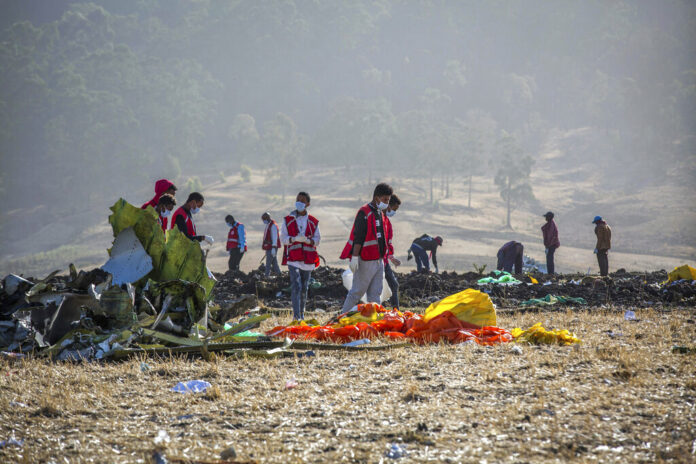
In this March 11, 2019, file photo rescuers work at the scene of an Ethiopian Airlines flight crash near Bishoftu, or Debre Zeit, south of Addis Ababa, Ethiopia. Photo: Mulugeta Ayene / Associated Press

Boeing is facing mounting pressure to roll out a software update on its best-selling plane in time for airlines to use the jets during the peak summer travel season.

Company engineers and test pilots are working to fix anti-stall technology on the Boeing 737 Max that is suspected to have played a role in two deadly crashes in the last six months.

The Wall Street Journal reported Friday that investigators have determined that the flight-control system on an Ethiopian Airlines jet automatically activated before the aircraft plunged into the ground on March 10.

The preliminary conclusion was based on information from the aircraft’s data and voice recorders and indicates a link between that accident and an earlier Lion Air crash in Indonesia, the newspaper said. Boeing and the Federal Aviation Administration declined to comment on the report.

Also on Friday, The New York Times reported that the Ethiopian jet’s data recorder yielded evidence that a sensor incorrectly triggered the anti-stall system, called the Maneuvering Characteristics Augmentation System, or MCAS. Once activated, the MCAS forced the plane into a dive and ultimately a crash that killed everyone on board, the newspaper said.

The Max remains grounded worldwide and airlines are losing money by canceling flights.

Southwest, the largest operator of the Max with 34 of them and another 249 on order, said this week that the grounding caused it to cancel 2,800 flights so far, or 30 percent of all cancellations in the first quarter. It said canceled flights, including those not related to the Max, will cost it $150 million in revenue for the quarter and cut its planned capacity growth for the entire year.

German tour operator TUI Group said 2019 profit will drop about 200 million euros ($225 million) because of the Max grounding. That forecast assumes the planes are flying again no later than mid-July.

United Airlines, which has 14 Max jets, said the grounding isn’t hurting the airline yet, but the financial pain “is expected to increase if the grounding extends into the peak summer travel season.”

Boeing is also seeing its own expenses rise, although it would not disclose how much it is costing the company to make the software fix and also train pilots how to use it.

Cowen Research analysts say a “very rough guess” is that Boeing will pay about $2 billion after insurance to fix the plane, pay crash victims’ families and compensate airlines that had to cancel flights.

Most Wall Street analysts are betting that the planes will be flying again in less than three months, while noting that it could take longer in countries that plan to conduct their own reviews of Boeing’s upgrade instead of taking the word of the U.S. regulator, the Federal Aviation Administration.

Boeing has stopped Max deliveries during the grounding, which cuts into cash flow — Boeing gets most of its money for a plane upon delivery. Outside estimates of the cash-flow drain range from $640 million to $1.8 billion a month, but Boeing will get that money eventually unless airlines cancel orders.

It is difficult and unusual for airlines to switch an order from one aircraft manufacturer to another. Boeing and European rival Airbus form a duopoly that dominates commercial airplane sales. Airlines that considering switching from the Max to the comparable Airbus model, called the neo for new engine option, would fall to the back of a yearslong backlog line.

“We believe a wholesale cancellation is unlikely if for no other reason than the inability of Airbus to deal with the influx,” says Hunter Keay, an aviation analyst with Wolfe Research, but he adds there is “some risk” of additional cancellations, with the big Chinese market being the most serious.

If cancellations are limited to Lion Air and Ethiopian Airlines — the two carriers involved in the crashes — and Garuda Indonesia, which has announced plans to do so, they account for only about 300 orders. Boeing has about 4,600 unfilled Max orders, making up the bulk of a huge backlog that the company values at $490 billion.

Then there is the potential cost of lawsuits stemming from October’s crash of a Lion Air Max 8 in Indonesia and the March 10 crash of an Ethiopian Airlines Max 8 near Addis Ababa. In all, 346 people died.

Already one law firm alone has filed seven lawsuits against Boeing in federal district court in Chicago; six were filed on behalf of families of passengers on the Lion Air jet and one by the family of an Ethiopian Airlines passenger.

The lawsuits claim that the flight-control system on the plane was defective and that Boeing failed to warn airlines about it or train pilots how to respond if it caused the plane’s nose to sink. The automated MCAS system was not on previous 737s.

The tragedy-filled introduction of the Max is reminiscent of troubled early histories of other planes. In 1979, for instance, the FAA grounded the McDonnell Douglas DC-10 following accidents involving a poorly designed cargo door that could spring open during flight and a crash in Chicago — still the deadliest aviation accident in U.S. history with 273 lives lost — that ultimately was blamed on poor maintenance practices by American Airlines.

After changes approved by safety regulators, the three-engine DC-10 returned to the skies and sold several hundred more copies before production was stopped. The plane couldn’t compete with more efficient twin-engine models.

Boeing’s 787 “Dreamliner” was grounded by overheating batteries in 2013, but after Boeing fixed the problem it became a favorite among airlines and passengers. The same course could play out for the Max, which entered service just two years ago — as long as there are no fresh accidents to stir passengers’ fears.

“The public has an amazingly short memory,” said Robert Mann, a former American Airlines and TWA executive. “Most of them don’t even realize the kind of airplane they are flying on.”

Story: David Koenig, Tom Krisher and Bernard Condon

Advertisement

Opinion: Mistrust Prevails Following ‘The General’s’ Election
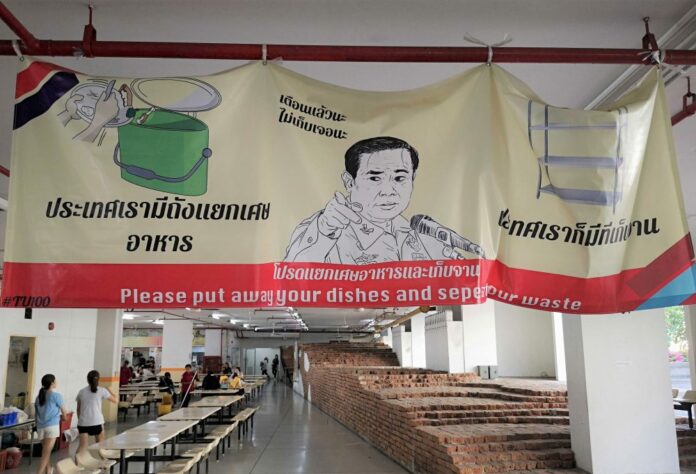
A poster with an image of junta leader Prayuth Chan-ocha telling Thammasat University students to put their dishes at proper places after eating at a canteen.

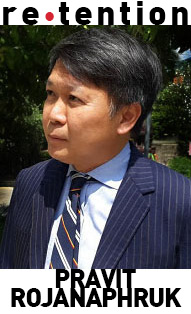
Re•tention: Pravit RojanaphrukTwo issues emerged from Sunday’s tight election result: trust and legitimacy – or the lack thereof.

The Election Commission’s abrupt end of supplying poll results to the public in the middle of Sunday’s election night and other reported irregularities created a loss of trust. Already, on Change.org, nearly 1 million have signed a petition calling for the removal of the commission.

Those on the anti-junta camp are well aware that it was the junta-appointed rubber stamp parliament, known formally as the National Legislative Assembly, which selected the commissioners. And they simply do not trust them.

Distrust exists on both sides, however. A long-time, well-educated acquaintance whom I met Tuesday by chance while he was on his way to give a talk about the future of Thai politics, didn’t wait long before floating the accusation that Future Forward Party is a threat and will seek to turn the kingdom into a republic. Repeated denials by Future Forward Party leaders means nothing to these people.

That’s not all. There is little doubt that the soon-to-be-announced 250 senators selected by junta leader Prayuth Chan-ocha’s will vote to help him retain the premiership.

If Prayuth is shameless enough to have staged a coup and made himself prime minister, it shouldn’t be hard to imagine a Prayuth-appointed senate voting him the head of government.

It means that even though a Pheu Thai-led coalition mustered 255 seats from at least six political partners Wednesday, it is still more likely that the pro-junta camp will rely on the 250 votes from the upper house to form a government.

Almost immediately, leaders from the pro-junta party Phalang Pracharath denounced the bid by the Pheu Thai-led seven-party coalition, citing it has more popular votes than the Pheu Thai – which has more MP seats.

“We have the legitimacy to form a majority government and support Gen. Prayuth Chan-ocha as the [next] prime minister,” said Thanakorn Wangboonkongchana, the party’s spokesman. “What’s more important, we won the most number of votes, about 8 million. This is the vox populi to have Gen. Prayuth as a prime minister.”

It doesn’t matter if Thailand’s political system is supposed to be a representative democracy, the pro-junta party is now claiming to be legitimate for winning the popular vote. Never mind if Pheu Thai has more MPs than Phalang Pracharath – 137 versus 119.

Phalang Pracharath secretary general Sonthirat Sontijirawong said on Wednesday that “true democracy is respecting people’s voices. Phalang Pracharat is a democractic party.”

I couldn’t help but wonder if this is the same Sonthirat who until earlier this year willingly served a junta leader and joined an unelected military government. I can’t help but wonder how Phalang Pracharat could claim to be a democratic party when its leaders have served an unelected military government and are now nominating their boss to become prime minister again. This too, most likely with the votes from the 250 unelected senators – who will be selected by no less than Prayuth himself.

In Thailand, fakeries are not limited to fake Swiss watches and branded handbags, but fake democracy and fake democratic parties too.

Then there are the uncertainties. Under election law, the official results can be announced as late as a month from now, or May 9. Although 100 percent of unofficial votes have been revealed, with Phalang Pracharat winning 8.4 million votes the Pheu Thai’s 7.9 million, it’s hard to tell if there may be disqualifications in the weeks ahead. That means the results may not be finite for the next five weeks. One also wonders why the commission changed the voter turnout on Thursday from 65 percent to 74.6 percent.

Which side has the legitimacy to form a government is a contested issue. The answer depends on who you ask.

What will the anti-junta camp do if the pro-junta camp relies on the 250-appointed senators to install Prayuth as an “elected” prime minister after May 9? Will there be a political boycott? Will that lead to political paralysis and violence followed by another military coup?

No matter which side manages to form a government, the next administration will most likely be a very fragile coalition with a very slim or no majority in the house of representatives.

Thailand after general elections – or rather the general’s elections – is unstable and unpredictable. However, that might at least be better than being “stable” directly under Prayuth’s military dictatorship for more years to come.

Advertisement

George Clooney Calls For Boycott of Hotels Over Brunei’s Anti-Gay Law

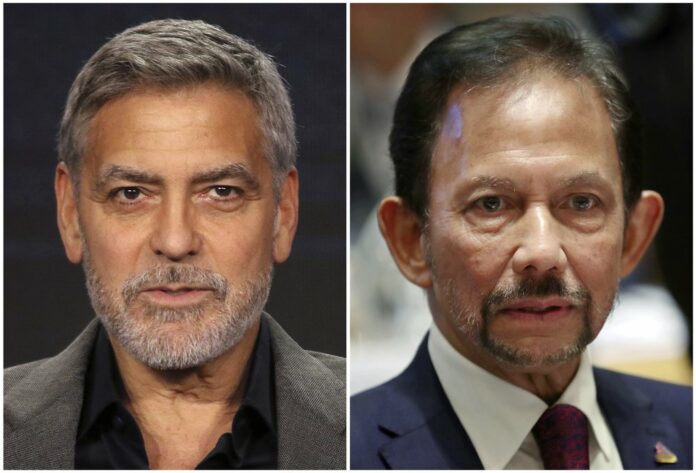
This combination of file photos shows George Clooney in Pasadena, Calif., on Feb. 11, 2019, left, and Brunei's Sultan Hassanal Bolkiah in Brussels on Oct. 18, 2018. Photo: Willy Sanjuan and Francisco Seco / Associated Press

LOS ANGELES — George Clooney is calling for the boycott of nine hotels in the U.S. and Europe with ties to the sultan of Brunei, which next month will implement Islamic criminal laws to punish gay sex by stoning offenders to death.

The Hollywood actor wrote Thursday in Deadline Hollywood: “Are we really going to help fund the murder of innocent citizens?”

He writes that you can’t shame “murderous regimes,” but you can shame “the banks, the financiers and the institutions that do business with them.”

Read: Amnesty Slams Brunei’s New ‘Vicious’ Islamic Criminal Laws

Sultan Hassanal Bolkiah rules the oil-rich monarchy with full executive authority, and the hotels are owned by the Brunei Investment Agency. An email seeking comment was sent to the agency Friday.

The hotels are The Dorchester and Coworth Park in the U.K.; Beverly Hills Hotel and Hotel Bel-Air in Los Angeles; Le Meurice and Hotel Plaza Athenee in Paris; Hotel Eden in Rome; and Hotel Principe di Savoia in Milan.

The new laws take effect April 3.

Advertisement

Hot News

LATEST NEWS

Bangkok
overcast clouds
30 ° C
30 °
30 °
70 %
4.5kmh
100 %
Fri
30 °
Sat
30 °
Sun
31 °
Mon
30 °
Tue
31 °