BANGKOK — 22 May 2026, Thai Senator Noppadon Inna briefed ASEAN+3 diplomats on Thailand’s push to revoke the 2000 and 2001 Memorandums of Understanding (MOUs) with Cambodia, arguing the agreements undermine Thailand’s sovereignty and national interests amid unresolved border and maritime disputes.
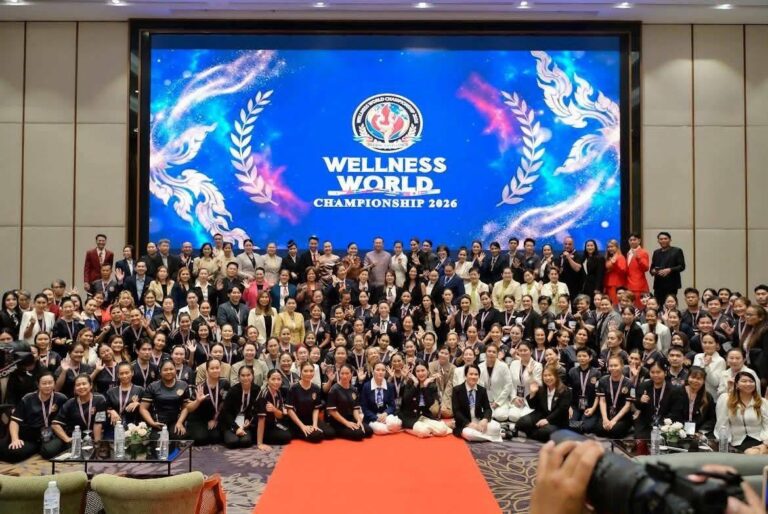
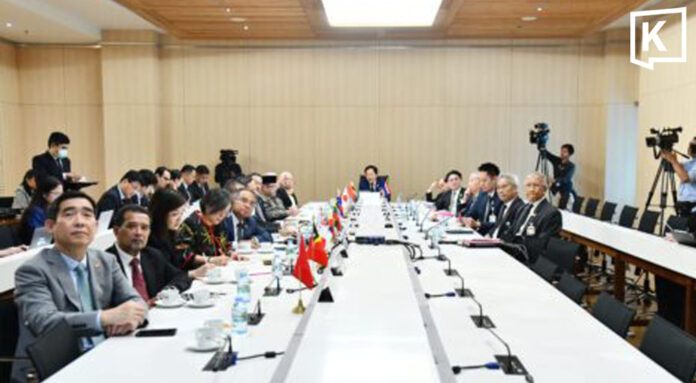
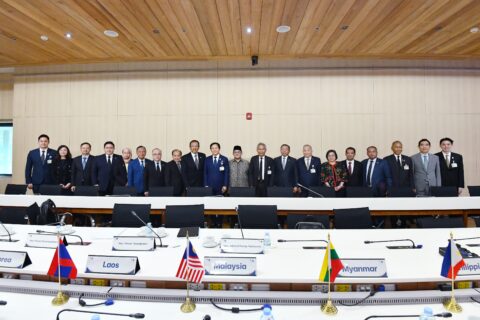
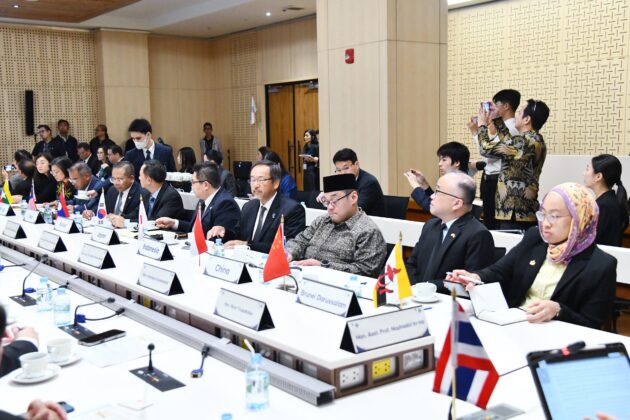
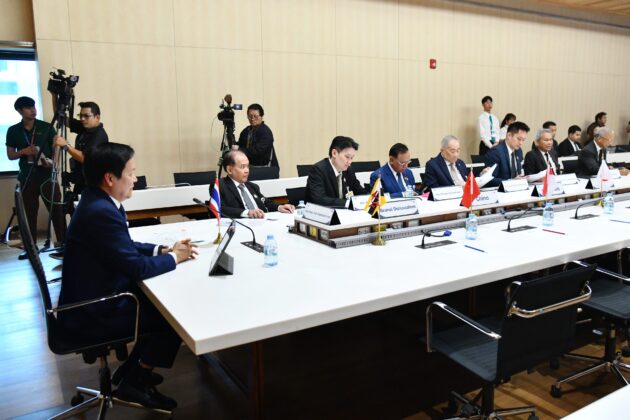
On Friday, the Senate Extraordinary Committee studying the advantages and disadvantages of canceling the two MOUs held a special briefing at Parliament in Bangkok. The session, led by Noppadon, was attended by ambassadors and diplomatic representatives from ASEAN member states, along with China, Japan, and South Korea.
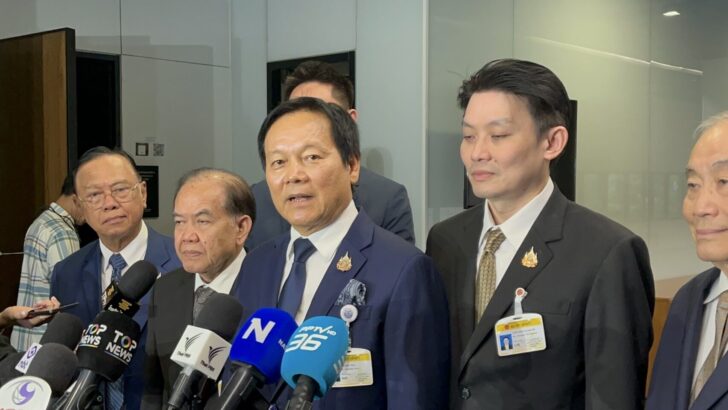
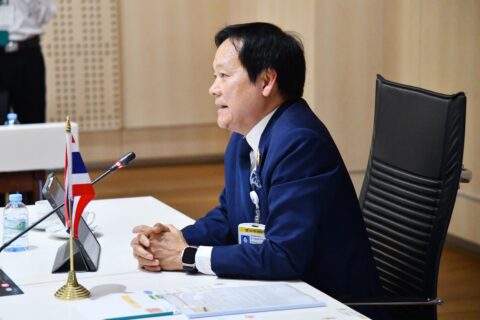
Noppadon said the briefing was organized to explain the committee’s findings directly to regional diplomats following growing international attention surrounding the Thai-Cambodian border situation. He said the committee had unanimously agreed to recommend revoking both agreements after months of field studies, consultations with military officials, and reviews of legal and historical documents.
According to Noppadon, the committee gathered information from the Royal Thai Army, Royal Thai Navy, Ministry of Defense, and the Foreign Ministry’s Department of Treaties and Legal Affairs. The panel also conducted inspections across seven Thai-Cambodian border provinces and received briefings from the First and Second Army Areas regarding previous armed clashes and border tensions.
He said the committee concluded that the MOUs no longer effectively protect Thailand’s territorial sovereignty, maritime interests, or national security, particularly amid unresolved overlapping land and maritime claims.
Addressing the diplomats, Noppadon argued that continued ambiguity surrounding border demarcation had created persistent friction between the two countries, especially due to differing interpretations of historical reference maps, including the controversial 1:200,000-scale map linked to the Franco-Siamese boundary delimitation process.
He accused Cambodia of repeatedly violating agreements, ignoring Thai diplomatic protests, and engaging in what he described as provocative actions along the border.
As examples, Noppadon cited Ban Nong Chan in Sa Kaeo Province and Chong An Ma in Ubon Ratchathani Province.
Regarding Ban Nong Chan, he said hundreds of thousands of Cambodian refugees crossed into Thailand during Cambodia’s civil war in 1979. Thailand, together with organizations including the United Nations High Commissioner for Refugees (UNHCR), the International Committee of the Red Cross (ICRC), and the Thai Red Cross, provided humanitarian assistance, food, shelter, and medical support at refugee camps along the border.
Noppadon claimed that after the conflict ended, some Cambodian nationals refused to return and continued occupying areas on Thai territory, contributing to long-running tensions that later escalated into armed skirmishes.
At Chong An Ma, he said Thailand had temporarily relaxed border controls as a humanitarian and neighborly gesture to facilitate local trade. However, he alleged that Cambodian villagers later established permanent settlements inside disputed areas claimed by Thailand. He added that similar situations had occurred in several other border locations over the years.
Noppadon also addressed concerns regarding recent reports that Cambodian troops had constructed fortified positions along parts of the border. He said the Thai military remained fully capable of defending the country’s sovereignty and had sufficient tactical preparedness to respond to any situation.
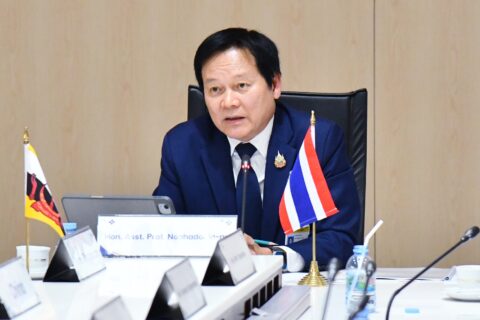
Explaining the committee’s objections to the 2000 MOU, Noppadon argued that the agreement may conflict with Thailand’s constitution because the Cabinet only acknowledged, rather than formally approved, the agreement in 1999. He also argued that the inclusion of the 1:200,000-scale map effectively affected Thailand’s territorial boundaries and therefore should have required parliamentary approval.
He further claimed that border demarcation efforts under the 2000 MOU had made minimal progress over nearly 26 years, with work still remaining in the first phase of the agreed five-phase process.
According to Noppadon, the situation along the Thai-Cambodian border changed significantly following two major military clashes in 2025, making the current bilateral negotiation framework outdated. He said both countries should instead adhere to the Joint Statement issued during the 3rd Special Meeting of the General Border Committee (GBC) on Dec. 27, 2025, as the primary basis for peaceful coexistence moving forward.
Turning to the 2001 maritime MOU, Noppadon argued that Cambodia’s continental shelf claims violated Thailand’s sovereignty and should not serve as a basis for negotiations over overlapping maritime claims in the Gulf of Thailand.
He also cited a reported Cambodian proposal submitted during Joint Technical Committee discussions in December 2022 seeking an equal 50:50 division of petroleum resources within overlapping claim areas, which he said demonstrated Phnom Penh’s lack of sincerity in negotiations.
Noppadon further alleged that Cambodia continued asserting claims over Thailand’s Koh Kood, arguing that the issue had further undermined trust and complicated prospects for a successful settlement under the existing framework.
He concluded by saying the overall political atmosphere and repeated bilateral disputes had severely damaged confidence in the current MOUs. Noppadon expressed hope that the international community would understand any future Thai government decision to revoke both agreements.