






























32.7 C
Bangkok
Wednesday, June 24, 2026
Home Blog Page 1704

South Korean Women Begin to Resist Intense Beauty Pressure

In this Jan. 15, 2019, photo, Cha Ji Won, a 24-year-old YouTuber who runs a channel called "Korean Womyn." speaks during an interview in Seoul, South Korea. Photo: Jung Yoon Kim / Associated Press

SEOUL — As she pursued her dream of becoming a fashion model, veering for years between extreme dieting and overeating, Park I Seul realized she had a problem: She was not tall and skinny, like typical runway models, nor was she big enough to be a plus-size model.

She also realized that the only way to meet South Korea’s lofty beauty standards was for her to continuously deny who she truly is.

So Park, 25, began calling herself a “natural size model” — a nearly unheard of term in South Korea — which she defines as someone with the same kind of body you see in daily life, as opposed to a difficult-to-attain ideal. She began to get work, and she started a popular YouTube channel where she introduces fashions for women who look more like her than like the women in fashion magazines.

Her newfound positive view of her body makes her part of a growing movement by South Korean women to resist what they see as extreme pressure to look a certain way.

Hundreds of young women have taken to social media with the hashtag “talcorset,” or take off the corset, to encourage others to free themselves from social stereotypes about their appearance that they feel have long bound them.

Park recently held what she called a “nondiscriminatory” fashion show in Seoul, where models varied in height and weight confidently strode across the stage. Other women have posted online photos or video clips showing themselves cutting their hair short, destroying their beauty products and going to school or work without makeup.

In South Korea, a woman weighing over 50 kilograms (110 pounds) is considered by many to be chubby, regardless of how tall she is.
AP19031183051662
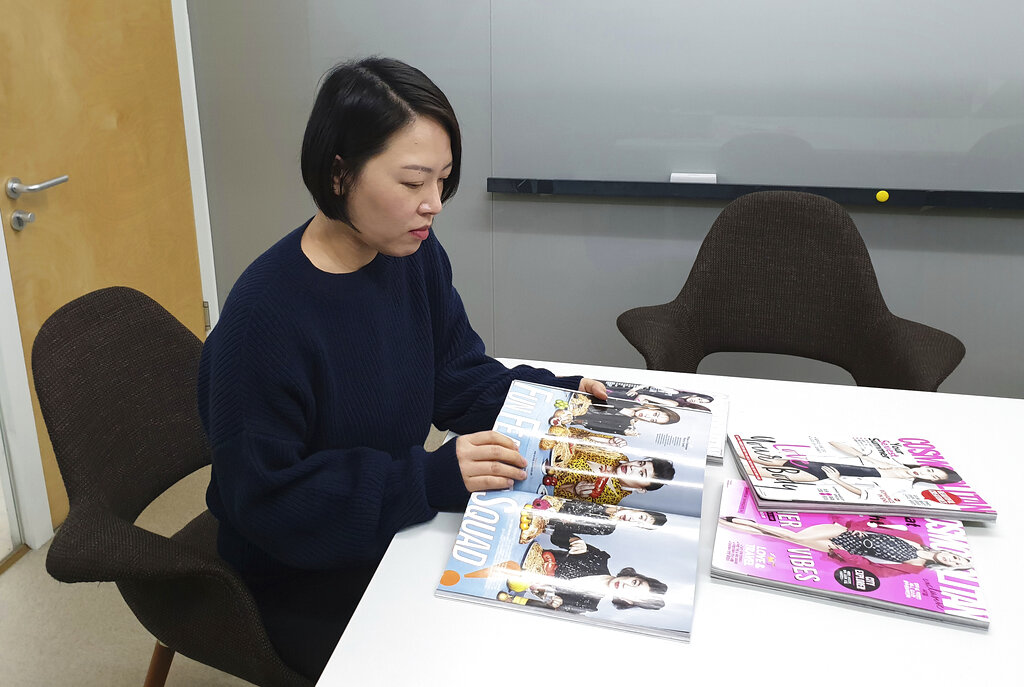
In this Jan. 23, 2019, photo, Park Jiehyun, feature​s director at Cosmopolitan Korea, watches fashion magazine during an interview in Seoul, South Korea. Photo: Jung Yoon Kim / Associated Press

Park herself is 165 centimeters (5 feet 5 inches) tall and weighs 62 kilograms (137 pounds), which she says puts her far from the minimum 170 centimeters (5 feet 7 inches) and 40 to 48 kilograms (88 to 106 pounds) weight that conventional fashion models have; she’s also nowhere near the XL and above sizes demanded for plus-size models.

“I used to think that my fat body wasn’t the real me and that living in such a body wasn’t my real life. I kept denying myself. I believed that my life would only become happy after I lost weight,” Park said. “I’ve come to think that I look good enough just the way I am.”

South Korea is a deeply conservative country, and experts say its patriarchal society encourages rampant sexism. It had the largest gender pay gap among developed countries in 2017, according to the Organization for Economic Co-operation and Development, and ranks 115th out of 149 nations in the World Economic Forum’s global index of overall gender parity in 2018, among the lowest-ranking G-20 countries.
AP19031183903539
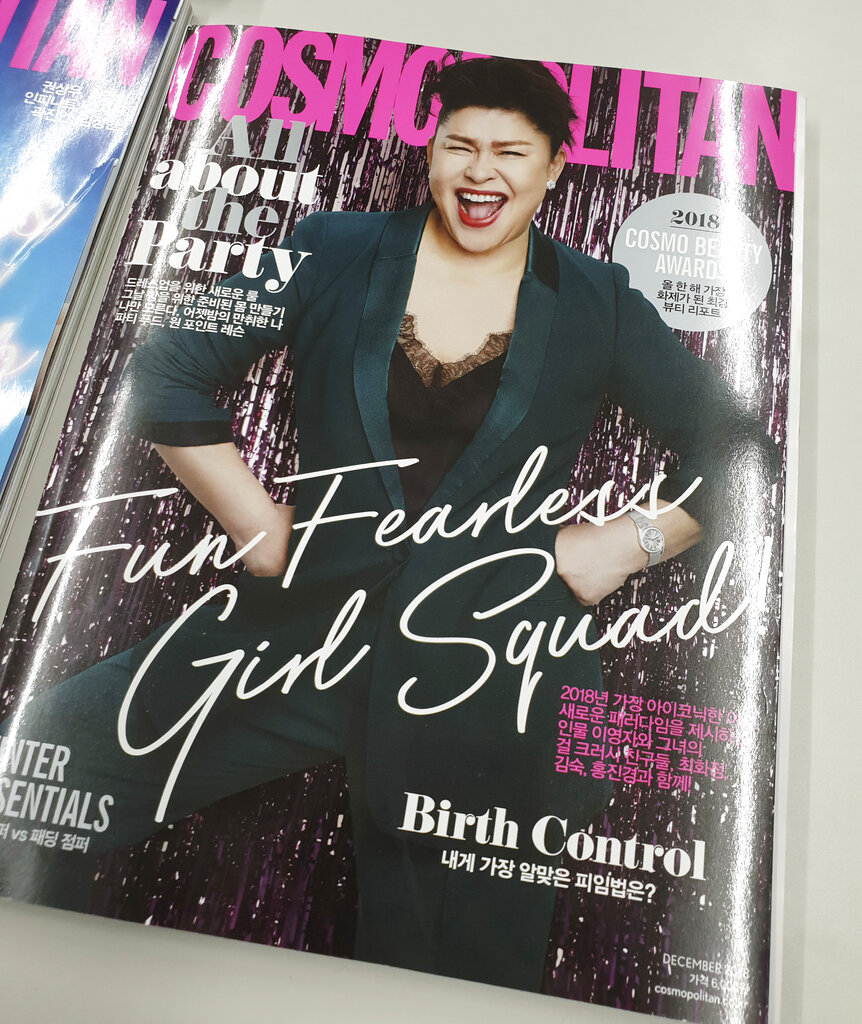
This Jan. 23, 2019, photo, shows the Cosmopolitan Korea Magazine cover with a popular South Korean comedian Lee Young-ja during an interview of Park Jiehyun, feature​s director at Cosmopolitan Korea, in Seoul, South Korea. Photo: Jung Yoon Kim / Associated Press

According to a 2018 survey by Saramin, a leading South Korean recruitment website, 57 percent of human resources managers at South Korean companies agreed that job applicants’ appearances influenced their evaluations. The survey also showed that female applicants are more affected by their looks on their job evaluations than male applicants.

As more women begin to embrace feminism, there’s also a new willingness to challenge strict South Korean societal demands that force women to take extreme care of their looks, according to Sohn Hee-jeong, a researcher at the Institute of Gender Studies at Yonsei University in Seoul.

Consider, for instance, a video by Cha Ji Won, a 24-year-old YouTuber who runs a channel called “Korean Womyn.” The video, which has gotten more than 720,000 views, shows her daily routine after she stopped obsessing over her hair and wearing makeup every day and began choosing and wearing comfortable clothes. It now takes her half the time to prepare to go outside as in the past, and she says she eats whatever she wants and doesn’t think about calories.

“I hoped that by letting other women know that there is someone like me, I could remind them that they don’t have to care too much (about how they look) and spend so much money and time on their appearance,” Cha said in an interview.

The movement can also be found in schools.

An 18-year-old high school senior who wished to be identified only by her last name, Hong, because of worries about her future studies recently exposed a series of lectures at her all girls’ school that promoted a focus on women’s appearance as they entered college. The lecture titles included, “Makeup for college freshmen,” ”Fashion styling for college freshmen” and “How to make a healthy body figure.”

Hong objected to her high school recommending classes that appeared to encourage female students to “take care” of their appearance. Hong and some other students contacted journalists to complain about the lectures, prompting the school to remove the classes.

Hong said she put on makeup for the first time when she was in elementary school and was wearing full makeup by high school. She no longer wears makeup and questions why women must always be judged on how they look. However, many children are ashamed of what in Korean is called ssaeng-eol, or bare face, Hong says, and won’t go outside without makeup.

South Korea has the world’s highest ratio of plastic surgeons per capita, according to a report by the International Society of Plastic Surgery in 2016. According to 2015 statistics by Gallup Korea, about one third of South Korean women between 19 and 29 said they’ve had plastic surgery.

“I think (South Korean women) want to look perfect,” said Park Jiehyun, feature?s director at Cosmopolitan Korea, a popular fashion magazine. “They believe they should have a nice body and skin, beautiful eyes, nose and mouth, and even sleek hair with a perfect hairline. They also want to have good style.”

But Park says rising feminist movements and changing values among South Korean women are redirecting her industry’s depiction of beauty.

In its December issue, Cosmopolitan Korea featured a popular South Korean comedian, Lee Young-ja, as the cover model. Lee is larger than the typical skinny cover models the magazine uses.

Still, there’s often intense beauty pressure at work.

Choi Min Jeong, a former employee at a beverage company, still remembers her boss telling her that she had to work harder because she wasn’t as beautiful as a popular South Korean actress.

“Although he said it as a joke, I thought it was ridiculous that he said it when … my job was unrelated to appearance,” Choi said.

Airline companies often demand a stricter dress code for female flight attendants, according to Kwon Su Jeong, a Seoul councilwoman who has worked for Asiana, a major South Korean airline, for 24 years. Kwon is currently on a leave of absence to work in the city council.

“They control everything, from your hairstyle to the color of your lipstick and nails to the length and shape of your earrings,” Kwon said.

Although Asiana eased a “skirts-only” rule in 2013, many flight attendants still wear them because of worries of negative performance appraisals, Kwon said. Asiana strongly denied that it makes unfair demands or puts pressure on its employees regarding attire or appearance.

Kwon said the company’s upper management wants its flight attendants to uphold an image of a graceful, beautiful Asian woman who provides sincere service to customers. Because the company cares a lot about the appearance of its female employees it puts subtle pressure on them to have cosmetic procedures, she said.

“Although the company is rigid about taking a day off because of injury at work, it is more lenient about taking time off for cosmetic procedures,” Kwon said.

Story: Jung Yoon Kim
Advertisement

Hakeem Case Different from Rahaf, ‘Big Joke’ Says

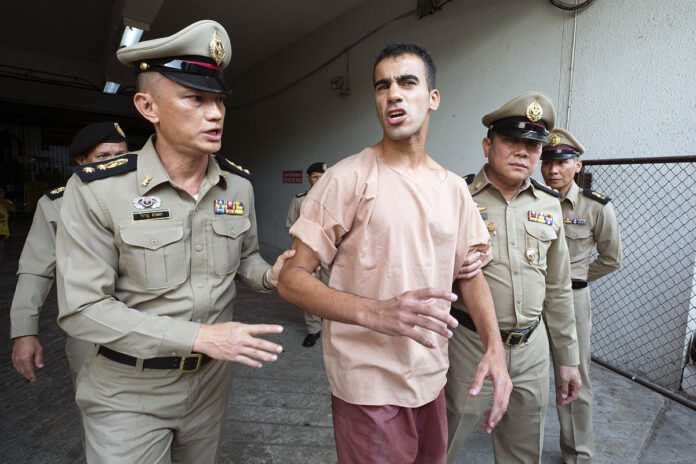
Bahraini Hakeem al-Araibi, center, leaves the criminal court in Bangkok, Thailand, Bangkok, Thailand, Monday, Feb. 4, 2019. The soccer player who has refugee status in Australia told a Thai court Monday that he refuses to be voluntarily extradited to Bahrain, which has asked for his return to serve a prison sentence for a crime he denies committing. Photo: Wason Wanichakorn / AP

BANGKOK — Hakeem AlAraibi and Rahaf Alqunun are two different cases, the head of Thai immigration said Monday as pressure mounts for Thailand to free the former rather than extradite him to Bahrain.

Lt. Gen. Surachate “Big Joke” Hakparn said the recent case of the young Saudi woman briefly held then allowed to depart a refugee cannot be compared to that of refugee athlete AlAraibi because the latter was the subject of an arrest warrant justifying his detention.

“Hakeem’s case is different from Rahaf Mohamed Alqunun from Saudi Arabia’s case because Hakeem had an arrest warrant out for him, but she did not. What’s more, Hakeem was the subject of an extradition request,” Surachate said.

Alqunun was guaranteed safe passage by Hakparn after she barricaded herself in a Suvarnabhumi Airport transit lounge rather than be forcibly deported back to her Saudi family. Thai officials reversed course under tremendous public scrutiny brought by Alqunun pleading her case over social media. She was successfully resettled in Canada within days after Surachate said he would not “send someone to their death.”

On Monday the Thai Criminal Court ruled that Bahraini footballer AlAraibi could appeal his extradition to Bahrain, where his supporters say he risks persecution on trumped-up charges. His next hearing was set for late April.

Australia’s ambassador to Thailand, who appeared at the court Monday with AlAraibi, said in a statement that Bahrain had never requested AlAraibi’s extradition in the four years he has lived in Australia.

“As soon as Hakeem and his wife travelled to Thailand for their honeymoon, the Government of Bahrain expedited its coordination with the Thai Government to have Hakeem arrested and commence extradition proceedings immediately,” the statement reads. “The actions of the Bahraini Government have put Thailand in a very difficult position. In particular, during what is an important year for the people and country of Thailand.”

Australia has urged Thailand to exercise its legal authority to release AlAraibi. Australian Foreign Minister Marise Payne said the Thai attorney-general has confirmed that the Extradition Act allows for such discretion.

She said this was also confirmed by prosecutors at yesterday’s hearing.

Bahrain says AlAraibi vandalized a police station and is a fugitive from justice. AlAraibi, who fled the kingdom in 2014, says he was playing in a televised match the day the government says he committed the crime. Australia granted him asylum in 2017.

AlAraibi was allegedly tortured by Bahraini authorities for his brother’s political actions and sentenced to a decade in jail for the alleged vandalism.

Related stories:

Angry Reaction as Court Punts Hakeem Case to April

‘We Won’t Send Someone to Their Death,’ Thai Immigration Chief Says

Advertisement

Nakhon Phanom Rings in Cross-Border Chinese New Year

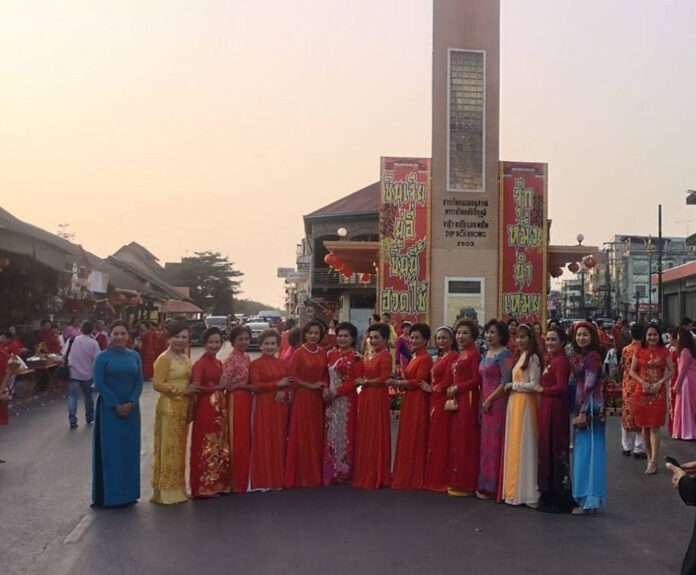
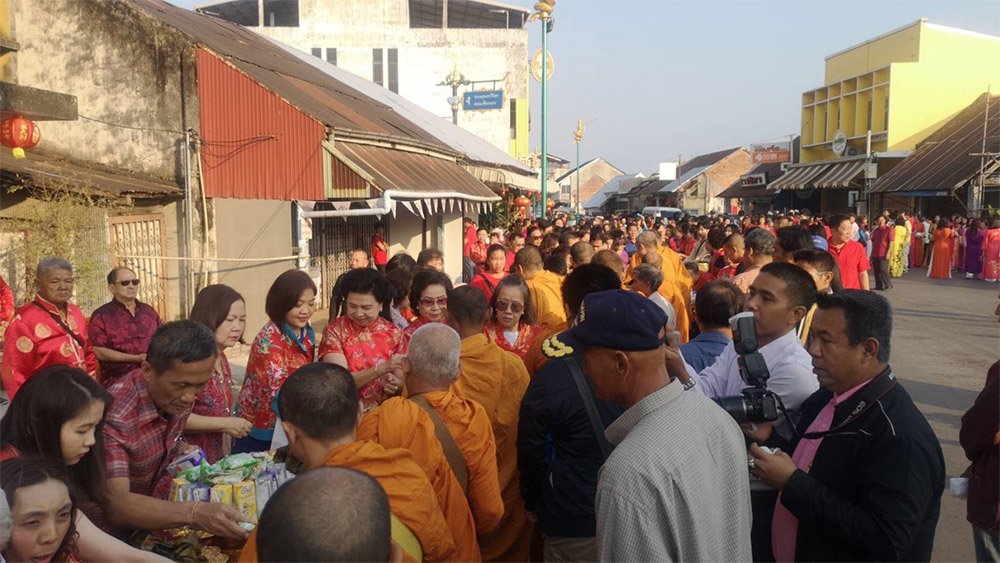
Chinese New Year celebrated Tuesday in Nakhon Phanom city. Photo: Matichon

NAKHON PHANOM — Thais of Chinese and Vietnamese ancestry joined Laotians to offer alms to monks to celebrate Chinese New Year on Tuesday in the border city of Nakhon Phanom. The event took place at the city’s so-called Vietnam Memorial Clock Tower, which marks 60 years of good relations with the Vietnamese. The city has been drawing more tourists and last year saw nearly two million visit the city and province.

nakhonphanom2

Advertisement

Warden Defends Shackling Bahraini Footballer Hakeem

Hakeem AlAraibi, his ankles chained, arrives at Ratchadapisek Criminal Court on Monday.

BANGKOK — It was routine procedure to shackle a prominent refugee by his ankles for a much-criticized court appearance, a prison official said Monday.

After photos of Hakeem AlAraibi arriving for a court hearing in leg cuffs went viral and drew anger online, the head of the Bangkok Remand Prison said the footballer had to be placed in physical restraints due to risk of flight.

“The guards ruled that the inmate was at risk of fleeing,” Krit Krasaetip said an interview to Matichon. “Mr. Hakeem is a former footballer. He is a suspect in a case that involved international affairs.”

Asked whether human rights are considered in such decisions, Krit said prison officials fear legal consequences if suspects manage to flee.

Read: Angry Reaction as Court Punts Hakeem Case to April

“Corrections officials are also at risk of going to jail due to criminal laws violations,” the prison chief said.

Despite repeated calls from various rights groups, Thai prisons routinely place inmates – even those not yet convicted – in shackles when they appear in court. The restraints range from small leg cuffs as placed on Hakeem to large chains. Female inmates or those with disabilities are exempted from wearing physical restraints.

In 2016, the National Human Rights Commission protested corrections officials for putting student activists who had yet to be convicted of anything in leg cuffs for a court appearance.

Though Thai-language media are prohibited from airing uncensored photos of shackled inmates, photos of Hakeem in his ankle restraints went viral anyway thanks to images posted to social media by those at the scene. Many netizens criticized the measure as unnecessarily harsh.

“He didn’t sell drugs. He didn’t kill anyone. He didn’t commit any crimes against Thai people,” Noppadon Varamusik wrote in a news thread. “Why? Why chain his ankles?”

“He didn’t do anything wrong in our country at all, yet they chained him like a death row prisoner. I feel pity for him,” user Di McArthur wrote in another thread.

Some also raised concerns whether shackles could affect AlAraibi’s ability to perform in his football career.

Although the prison chief insisted physical restraints must be applied per regulations, an opposition politician said his personal experience revealed it was up to discretion of the officials.

Chaturon Chaisang, a former minister arrested in the wake of the 2014 coup, wrote online that he was supposed to wear shackles when he appeared at the military court but prison officials opted for handcuffs instead.

“I told them that if the rules say shackles, then don’t exempt me. But when the time came, they put me in handcuffs,” Chaturon wrote. “And they also took me away from the media so there wouldn’t be photos of me.”

Advertisement

Mercenaries ‘Feeding Off’ Terrorism and Crime: UN Chief

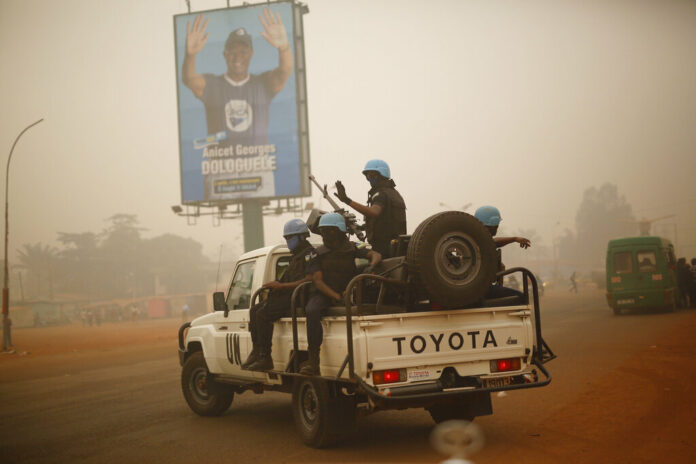
UN forces from Rwanda patrol the streets of Bangui, Central African Republic in February 2016. Photo: Jerome Delay / Associated Press

UNITED NATIONS — Secretary-General Antonio Guterres said Monday that reports suggest there has been “a surge in the use of mercenaries,” who are not only fighting in wars and illegally exploiting natural resources but are now “feeding off” transnational organized crime, terrorism and violent extremism.

The U.N. chief called for much broader support for regional and international conventions against the use of mercenaries and said those compacts need to be updated. He also called for prosecuting mercenaries and for strengthening efforts at preventing people, especially the young, from being recruited as mercenaries.

Guterres told the Security Council that while “the shadowy nature” of mercenaries makes data hard to come by, their impact is clear in the worsening of conflicts, weakened stability of countries, the undermining of the rule of law and the large numbers of people forced to flee their homes.

He said mercenary activities have “evolved over the years,” pointing to “illicit activities and trafficking by terrorist and mercenary groups” operating in Africa’s vast Sahel region and the alleged involvement of mercenaries in post-election violence in Ivory Coast in 2010.

Mercenaries and other foreign fighters have also committed “innumerable violations” of human rights and international humanitarian law against civilians in the Central African Republic, and mercenaries have suppressed herders trying to move along traditional routes on the border with Cameroon, Guterres said.

Rwandan Foreign Minister Richard Sezibera, whose country is the current chairman of the African Union, said mercenaries are not only involved in “active combat” but “we now see an increase in cyberattacks and industrial espionage carried out by mercenary groups in the comfort of their own homes.”

He added that as “part of the worrying increase in trans-boundary criminal networks, some were financed with sophisticated communications and military equipment, and many (are) connected to global terrorist networks.”

“They continue to evolve and innovate,” Sezibera said of mercenaries. “We cannot and should not be static in our response.”

The U.N. General Assembly adopted the International Convention against the Recruitment, Use, Financing and Training of Mercenaries in December 1989 and it entered into force in October 2001. But, Guterres said, only 35 countries are parties to it — and he urged all other U.N. member states to ratify it “without delay.”

Mousa Faki Mahamat, who heads the African Union Commission, said an AU forum in October recommended that the Convention for the Elimination of Mercenaries in Africa, which was adopted in 1977 and came into effect in 1985, be revised and updated, including measures to ensure implementation and follow-up.

He said the AU is committed to fight “the scourge of mercenary activities” but this also requires international cooperation including the exchange of intelligence.

The Security Council meeting was presided over by President Teodoro Obiang Nguema of Equatorial Guinea, which holds the body’s rotating presidency. He took power in a military coup in 1979 and said his nation has been a victim “of five attempts at mercenary incursions” since oil was discovered in the 1990s, the latest in December 2017.

“Equatorial Guinea would like to alert the Security Council that mercenary groups continue to act with total impunity in Africa,” Obiang said.

He urged the U.N., and especially the Security Council, to confront mercenaries just as it does terrorism and piracy “because these three phenomena are equivalent.”

Advertisement

Trump to Call for Unity, Face Skepticism in State of Union

US President Donald Trump speaks in the Cabinet Room of the White House on Friday in Washington. Photo: Evan Vucci / Associated Press
WASHINGTON — The White House says President Donald Trump will call for optimism and unity in Tuesday’s State of the Union address, using the moment to attempt a reset after two years of bitter partisanship and deeply personal attacks.

But will anyone buy it?

Skepticism will emanate from both sides of the aisle when Trump enters the House chamber for the primetime address to lawmakers and the nation. Democrats, emboldened after the midterm elections and the recent shutdown fight, see little evidence of a president willing to compromise. And even the president’s staunchest allies know that bipartisan rhetoric read off a teleprompter is usually undermined by scorching tweets and unpredictable policy maneuvers.

Still, the fact that Trump’s advisers feel a need to try a different approach is a tacit acknowledgement that the president’s standing is weakened as he begins his third year in office.

The shutdown left some Republicans frustrated over his insistence on a border wall, something they warned him the new Democratic House majority would not bend on. Trump’s approval rating during the shutdown dipped to 34 percent, down from 42 percent a month earlier, according to a recent survey conducted by The Associated Press-NORC Center for Public Affairs Research.

White House counselor Kellyanne Conway said the president would use his address “to call for an end to the politics of resistance, retribution.”

“He’s calling for cooperation,” she said, adding that Trump will point to examples of where this has happened on his watch. Officials said the president is also expected to highlight infrastructure, trade and prescription drug pricing as areas in which the parties could work together.

But Washington’s most recent debate offered few signs of cooperation between Trump and Democrats. Under pressure from conservative backers, Trump refused to sign a government funding bill that did not include money for his long-sought border wall. With hundreds of thousands of Americans missing paychecks, Trump ultimately agreed to reopen the government for three weeks to allow negotiations on border security to continue.

With the new Feb. 15 funding deadline looming, Trump is expected to use his address to outline his demands, which still include funding for a wall along the U.S.-Mexico border. He’s teased the possibility of declaring a national emergency to secure wall funding if Congress doesn’t act, though it appeared unlikely he would take that step Tuesday night. Advisers have also been reviewing options to secure some funding without making such a declaration.

“You’ll hear the State of the Union, and then you’ll see what happens right after the State of the Union,” Trump told reporters.

The president’s address marks the first time he is speaking before a Congress that is not fully under Republican control. House Speaker Nancy Pelosi, who won plaudits from Democrats for her hard-line negotiating tactics during the shutdown, will be seated behind the president — a visual reminder of Trump’s political opposition.

In the audience will be several Democrats running to challenge Trump in 2020, including Sens. Kamala Harris of California, Cory Booker of New Jersey, Elizabeth Warren of Massachusetts and Kirsten Gillibrand of New York.

Another Democratic star, Stacey Abrams, will deliver the party’s response to Trump. Abrams narrowly lost her bid in November to become Georgia’s first black governor, and party leaders are aggressively recruiting her to run for Senate.

Senate Minority Leader Chuck Schumer previewed Democrats’ message for countering Trump, declaring Monday, “The number one reason the state of the union has such woes is the president.”

While White House officials cautioned that Trump’s remarks were still being finalized, the president was expected to use some of his televised address to showcase a growing economy. Despite the shutdown, the U.S. economy added a robust 304,000 jobs in January, marking 100 straight months of job growth. That’s the longest such period on record.

Trump and his top aides have also hinted that he is likely to use the address to announce a major milestone in the fight against the Islamic State group in Syria. Despite the objections of some advisers, Trump announced in December that he was withdrawing U.S. forces in Syria.

In a weekend interview with CBS, Trump said efforts to defeat the IS group were “at 99 percent right now. We’ll be at 100.”

U.S. officials say the Islamic State group now controls less than 10 square kilometers (3.9 square miles) of territory in Syria, an area smaller than New York’s Central Park. That’s down from an estimated 400 to 600 square kilometers (155 to 230 square miles) that the group held at the end of November before Trump announced the withdrawal, according to two officials who were not authorized to discuss the matter publicly and spoke on condition of anonymity.

However, a Defense Department inspector general report released Monday said the Islamic State group “remains a potent force of battle-hardened and well-disciplined fighters that could likely resurge in Syria” absent continued counterterrorism pressure. According to the Pentagon, the group is still able to coordinate offensives and counteroffensives.

Administration officials say the White House has also been weighing several “moonshot” goals for the State of the Union address. One that is expected to be announced is a new initiative aimed at ending transmissions of HIV by 2030.

Trump’s guests for the speech include Anna Marie Johnson, a 63-year-old woman whose life sentence for drug offenses was commuted by the president, and Joshua Trump, a sixth-grade student from Wilmington, Delaware, who was allegedly bullied because of his last name. They will sit with first lady Melania Trump during the address.

Story: Julie Pace

Advertisement

Asia Greets Year of the Pig, Farewells the Dog (Photos)

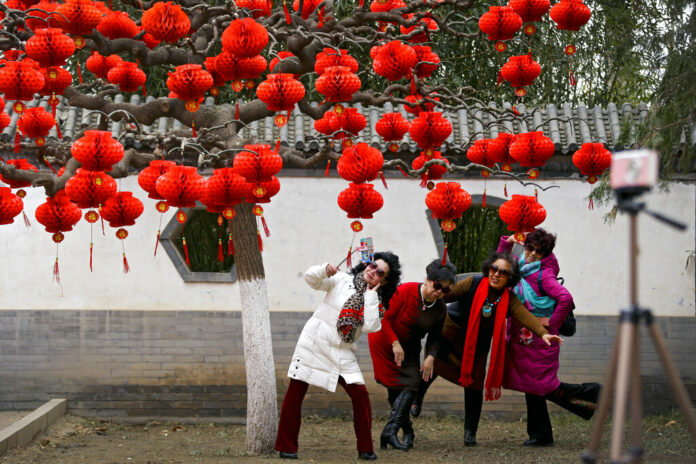
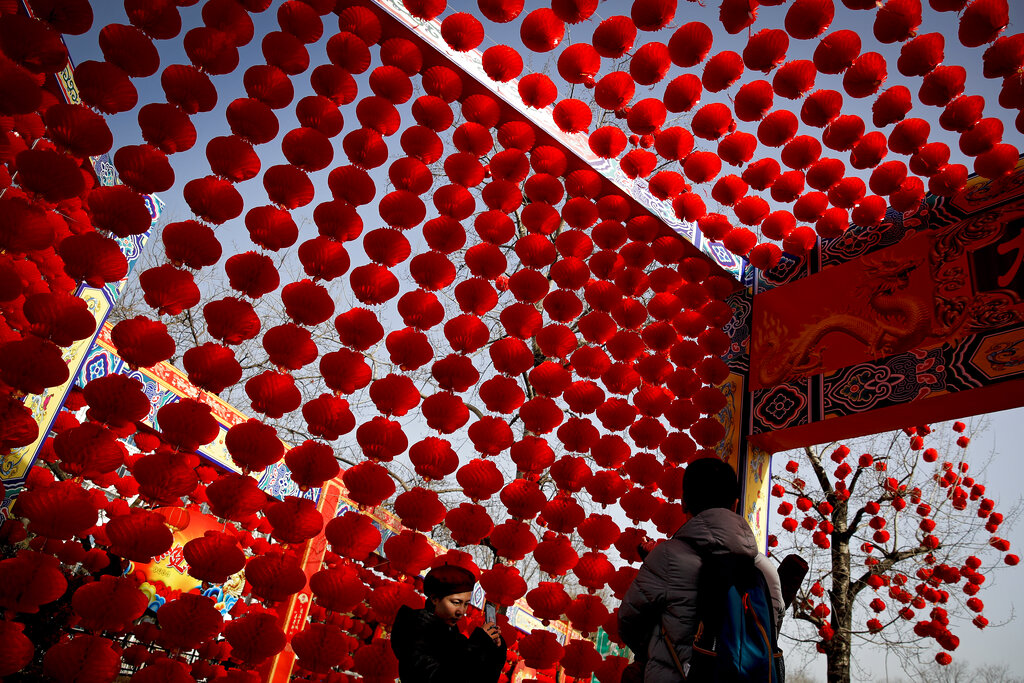
In this Wednesday, Jan. 30, 2019, photo, women take a selfie near a tree decorated with red lanterns ahead of the Lunar New Year at Ditan Park in Beijing. Photo: Andy Wong / Associated Press

The Lunar New Year is being celebrated around Asia with lanterns, performances, decorations and food. People are bidding farewell to the year of the dog in the 12-year Chinese astrological cycle and welcoming the year of the pig with hopes of happiness and fortune.

On the eve of the new year, people gathered for reunion dinners, gave red packets of pocket money to youngsters and lit firecrackers at midnight.

Early Tuesday, the first day of the year of the pig, hundreds lined up outside famous temples to burn the first joss sticks of the year, expecting it to bring them good luck.

Ornaments were readied, kiosks set up, and traditional dragon dancers leapt in the air. Everywhere, the color red dominated — on lanterns, clothes and signs. In homes and in shops, cute pig dolls were displayed for the festival, which is also celebrated in Vietnam and by ethnic Chinese communities across Asia.

AP19028375159173
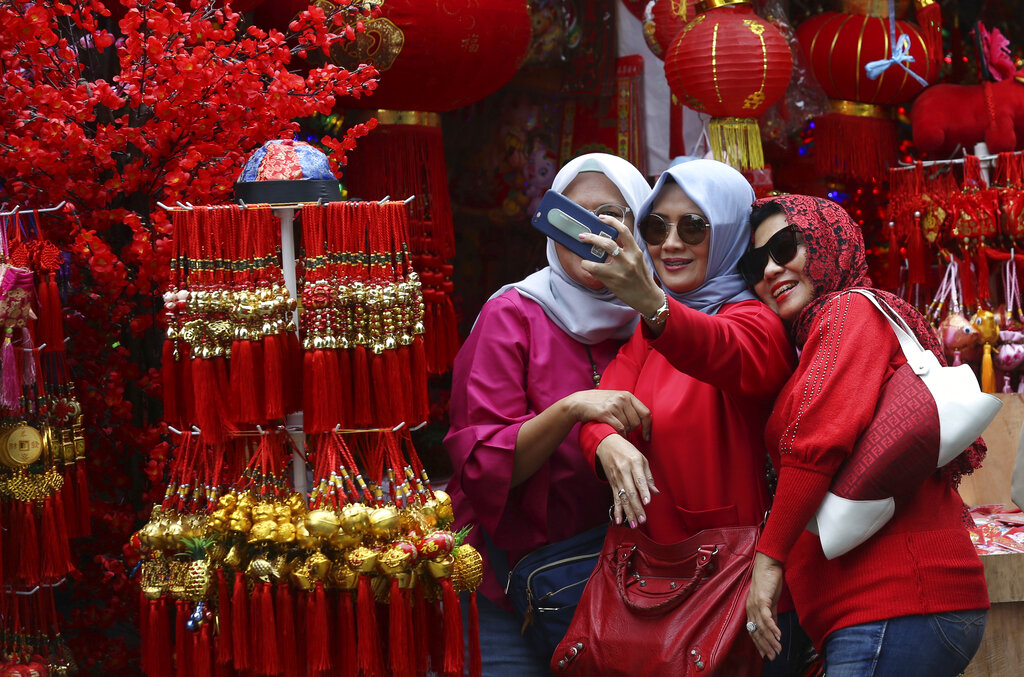
In this Monday, Jan. 28, 2019, photo, Muslim women take a selfie at a shop selling Lunar New Year decorations in the Chinatown area of Jakarta, Indonesia. People of Chinese descent in the world’s most populous Muslim country are preparing to celebrate the Lunar New Year of the Pig on Feb. 5. (AP Photo/Achmad Ibrahim)
AP19032306493711
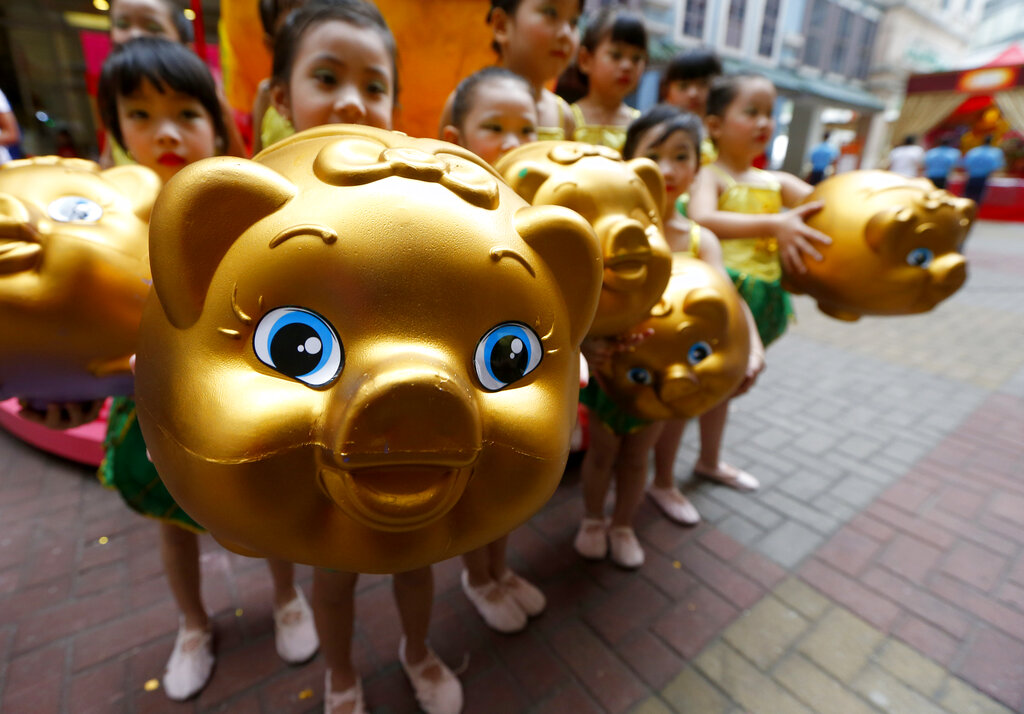
In this Friday, Feb. 1, 2019, photo, Filipino-Chinese display piggy banks at the start of celebrations leading to next week’s Lunar New Year in Chinatown, Manila, Philippines. This year is the Year of the Earth Pig on the Lunar calendar and is supposed to represent abundance, diligence and generosity. (AP Photo/Bullit Marquez)
AP19030321977967
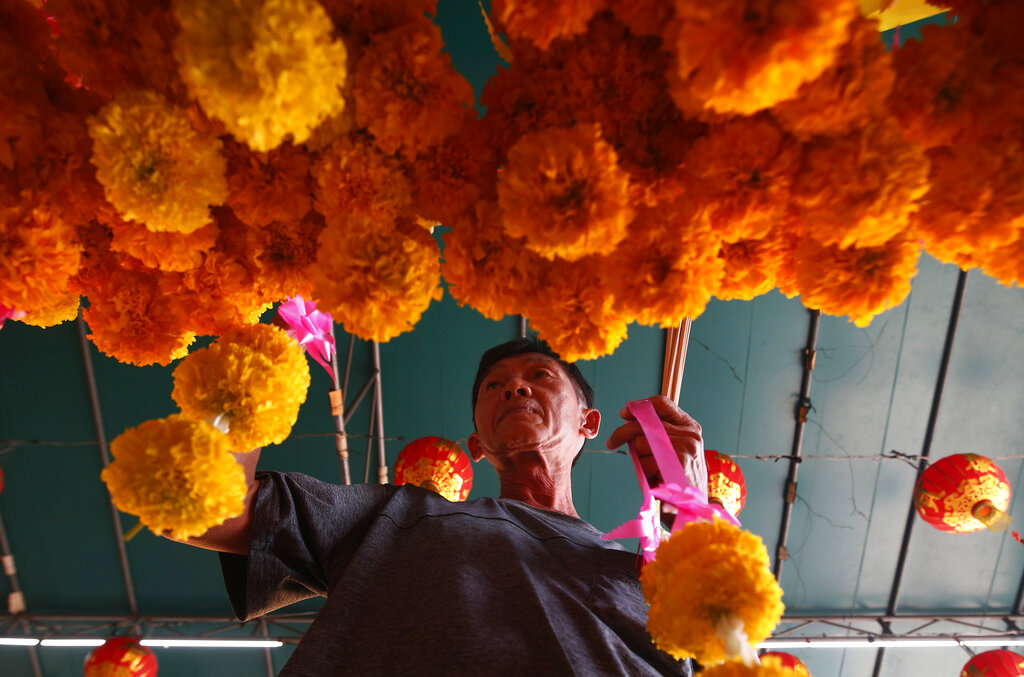
In this Wednesday, Jan. 30, 2019, photo, ethnic Chinese-Thai offers flowers after prayers at the Leng Nuei Yee Chinese temple for the upcoming Lunar New Year in Bangkok, Thailand. (AP Photo/Sakchai Lalit)
AP19030122764345
In this Wednesday, Jan. 30, 2019, photo, two divers perform an underwater Chinese Lion Dance ahead of Chinese New Year celebrations at Aquaria KLCC underwater park in Kuala Lumpur, Malaysia. People around the world will be celebrating the start of the Year of Pig on Feb. 5th this year in the Chinese lunar calendar. (AP Photo/Vincent Thian)
AP19034244813137
In this Sunday, Feb.3, 2019, photo, a woman takes a souvenir photo of her family posing in front of red lanterns on display at the Longtan Park for a temple fair ahead of Chinese Lunar New Year in Beijing. Chinese around the world will celebrate Lunar New Year on Feb. 5 this year which marks the Year of the Pig on the Chinese zodiac. (AP Photo/Andy Wong)
AP19035144580575
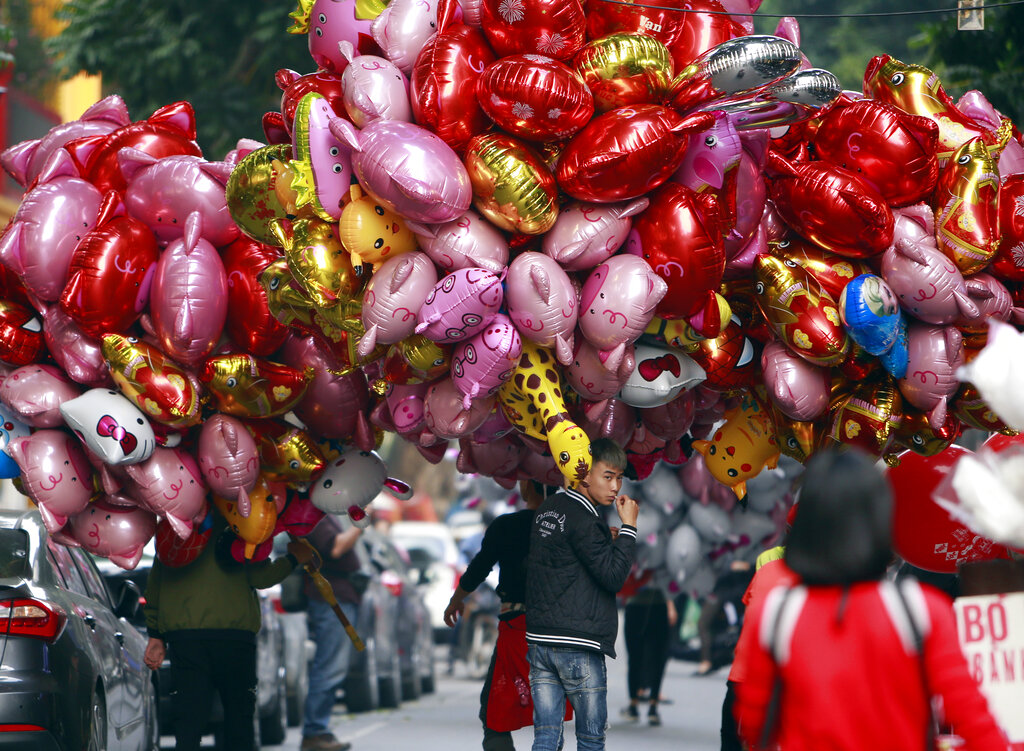
In this Sunday, Feb. 3, 2019, photo, vendors carrying pig-shaped balloons for sale to mark the Lunar New Year in Hanoi, Vietnam. Vietnam is celebrating the Lunar New Year of the Pig, the biggest annual festival of the year. (AP Photo/Hau Dinh)
Advertisement

Bangkok Marriott Marquis Queen’s Park Embarks on Sustainable Practice, Reduces 27 Tons of Food Waste (Sponsored)

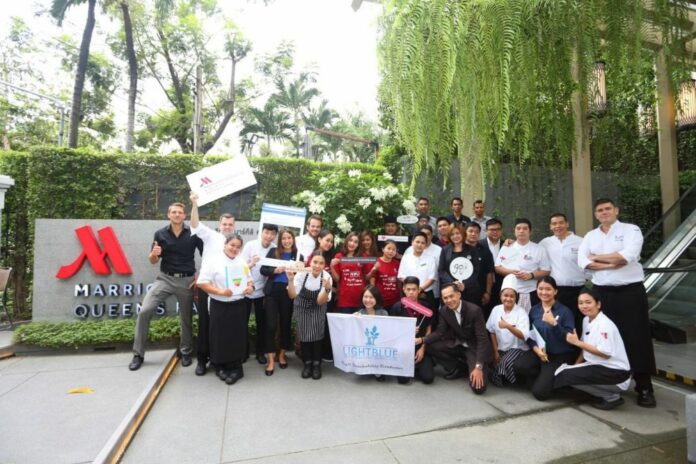
BANGKOK — Having set itself the ambitious target of sending zero food waste to landfill sites, Bangkok Marriott Marquis Queen’s Park has successfully achieved the goal at its main all-day dining restaurant, Goji Kitchen + Bar.

C:\Users\dell\Downloads\khaosodenglishvip325\2.jpg

From September to December 2018, this hugely significant initiative reduced the hotel’s wastage by 27.4 tons of food. Bangkok Marriott Marquis Queen’s Park is now planning to roll out this program to all of its restaurants and food-related departments.

The food waste crisis is one of the world’s most pressing concerns and tackling it is part of the UN’s Sustainable Development Goals (SDGs). As a hotel renowned for its sustainable and environmentally-friendly focus, Bangkok Marriott Marquis Queen’s Park is committed to helping eliminate hunger and malnutrition, promoting sustainable production and consumption of food, and reducing global climate change caused by food waste.

C:\Users\dell\Downloads\khaosodenglishvip325\3.jpg

The hotel’s waste reduction initiative, which was overseen by LightBlue Environmental Consulting Company, helped to shed light on the significance of food waste practices and create awareness among the hotel employees. Implemented by 80 hotel associates from a range of departments, including kitchen, catering, finance and human resources, this program also led to the initiation of the “Clean Our Plate” campaign in the staff canteen.

In the three and a half months since the program was activated, Goji Kitchen + Bar has successfully reduced its food waste by 27.4 tons, or 294 kilograms per day. The practice has also saved 68.4 tons of CO2 emissions during the whole period.

C:\Users\dell\Downloads\khaosodenglishvip325\4.jpg

In addition to its in-house program, Bangkok Marriott Marquis Queen’s Park is also partnering with SOS (Scholar of Sustenance Foundation Thailand) to manage its surplus food. Through this initiative, the hotel now contributes 37.5 kilograms of food per day from Goji Kitchen + Bar to the SOS network, which serves over 3,000 daily meals to underprivileged people in Bangkok.

“Throughout the three months of the program, our entire team was determined to reduce food waste, starting from Goji Kitchen + Bar – our biggest outlet. With this determination we have proved that we can achieve this, and we significantly reduced our food waste from 0.679 kg. to 0.490 kg. per plate, which increases food value by 10 percent. This is a very promising outcome,” said Michael Hogan, Executive Chef of Bangkok Marriott Marquis Queen’s Park.

Bangkok Marriott Marquis Queen’s Park is now moving ahead with plans to reduce food waste in all of its restaurants and food-related outlets, starting with Pagoda Chinese Restaurant, Akira Back and M Club Lounge from January to April 2019, and followed by its catering department from April to August 2019. Through these efforts, Bangkok Marriott Marquis

C:\Users\dell\Downloads\khaosodenglishvip325\5.jpg

Queen’s Park is striving to become the first urban five-star hotel in Asia Pacific to be awarded The PLEDGE* certificate, and first urban five-star hotel in Southeast Asia to achieve zero food waste to landfill.

*The PLEDGE™ is an independently verified nine-point food waste prevention standard that is designed to reduce food waste and costs.

Advertisement

Block PM2.5 Pollutants, Germs with Daikin’s Air Purifiers (Sponsored)

Daikin, the leader in air conditioning technology from Japan, is fully aware of the serious air pollution situation that is currently threatening the wellbeing of people in Bangkok and metropolitan areas. With the density of PM2.5 pollutant that has risen to harmful level from vehicle emissions, industrial activities, burning, closed and stagnant weather. The accumulated pollutant is hazardous to health and causes series of illness if left unattended. Besides N95 masks, another option to intercept micro-dust, fine particle pollutants, germs and bacteria, is using an air purifier, in which Daikin offers several models to choose from:

9I9BbfQL2QJeu erWjJmHrD2CFHvN1HNHolLgSO3iis C44gsjTICDzoAaRcuuclfowWbHVbiVNW3Vpx60AN4iECvdCL6VAl

  • MCK55TVM6: Air purifier with humidifier

Purify the air internally and externally with Active Plasma Ion and Streamer technology. The model also intercepts virus, bacteria, allergens, odors and increases humidity in the air to moisturize the skin and relief irritation from dryness. MCK55TVM6 comes equipped with electrostatic HEPA filer that filters up to 99.97% of fine particles as small as 0.3 micron for 41sqm room.

The model also features 3 censors that evaluate air cleanliness, screen for dust with high accuracy and separate dust and PM2.5 fine particles, as well as detect and eliminate odor when in Auto mode. There are 4 function modes: Auto, Econo, Pollen and Humidifier, that allows air flow in three directions. The Deodorizing Filter can be used throughout its lifetime and the engine runs at 19 decibel. It also comes with child lock, power surge protector between 180-264V and remote controller.

Y1pnDtDea8TXzOOlOpGLpZvPNi9W19iel36mVrKS20PY3WLsMnoKkbaeTd1G5ZuOZGplvXMvb8rNpZdGEyKLjHnJL0pYCayGP0WvXEQIN1mmsw2Y z2Y0NjKdAiQWjkIMO8cwVYhOChtZHqR5Q

  • MC55UVM6: Air purifier with Active Plasma Ion and Streamer

Purify the air internally and externally with Active Plasma Ion that generates 25,000 ion per cubic centimeter, with Streamer feature that blocks virus, H1N1 influenza, H5N1 bird flu, bacteria, fungus, allergens and odor. The model comes with electrostatic HEPA filter that intercepts 99.97% of 0.3 micron fine particles in 41sqm room.

tpC4L8eYPqI MIgJ28b52TNeCgnRllKq2FDVCzf5 wf6YqxvG2sS5ZElxOfpQnB1GFY

  • MC40UVM6: Air purifier with Streamer

Air purifier with Streamer blocks virus, H1N1 influenza, H5N1 bird flu, bacteria, fungus, allergens and odor. The model comes with lifelong deodorizing filter, electrostatic HEPA filter that intercepts 99.97% of 0.3 micron fine particles and detects 6 levels of PM2.5 fine particles in 31sqm room.

  • MC30VVM-A: Compact air purifier with dust filter

Small but efficient, the purifier cleanse the air with electrostatic HEPA filter that quickly and efficiently block dust particles without clogging the filter. It can intercept 99.97% of 0.3 micron fine particles in 21sqm room, and detect 3 levels of PM2.5 fine particles.

To restore wellbeing, safety and good health of Thai consumers, Daikin offers world-standard air purifiers with special promotion: complimentary 20-inch luggage worth of 2,900 baht with purchase of Daikin MCK55TVM6 and MC55UVM6, S&P voucher worth of 300baht with purchase of MC40UVM6 and MC30VVM-A and 1-year warranty for all part with purchase by February 28, 2019 only. Daikin air purifies are available from PowerBuy, Boonthavorn, Modern Air and all Daikin dealers. For more information, visit www.daikin.co.th.tpC4L8eYPqI MIgJ28b52TNeCgnRllKq2FDVCzf5 wf6YqxvG2sS5ZElxOfpQnB1GFY

Sq5r1PAV1yeImWI pm7 E945ScLycC7tko81XlTTBvDcoWPlNVk6a848MMdVrEfNJmHI7bX7l2Y2yWNdo o4HjlawcsnNB5sGEMRuTEskUQDc7c2GZJHEbgSTltX1Y1fTGsxUm r9Q6Fj wMFg

Advertisement

Angry Reaction as Court Punts Hakeem Case to April

Hakeem AlAraibi is led by police Monday at the Criminal Court in Bangkok.

BANGKOK — A refugee footballer who refused voluntary extradition Monday to Bahrain was told to appear in court again in April.

An outpouring of anger met the Criminal Court’s decision to give Hakeem AlAraibi until April 5 to file an appeal against extradition proceedings, with a hearing to follow on April 22. The decision not to immediately release the Bahraini national despite his refugee status in Australia prompted calls for sanctions.

The Australian football players’ union called on the International Olympic Committee and football’s governing body to consider sporting sanctions against Thailand and Bahrain over AlAraibi’s continued detention in Bangkok. He’s been held behind bars since he was taken into custody at Bangkok’s airport.

Read: ‘Don’t Send Me to Bahrain,’ Hakeem Pleads at Extradition Hearing

The top Thai twitter trends were dominated by topics related to the footballer, who pleaded outside the court not to be sent back to Bahrain. He was brought to the hearing with his ankles shackled.

As of Monday afternoon, #SaveHakeem was the No.1 trending topic, followed by #BoycottThailand in No. 2. Rounding out the top five were Australia, Hakeem al-Araibi and Bahrain.

Professional Footballers Australia chief executive John Didulica in a statement called the detention “a flagrant breach of [AlAraibi’s] internationally accepted human rights as an Australian permanent resident and refugee.”

Didulica also said it has only been pressure from the international soccer community that has prevented AlAraibi’s extradition to Bahrain.

Nadthasiri Bergman, the attorney representing AlAraibi, said they’re ready to file an appeal as they have enough evidence to show that his warrant from Bahrain was politically motivated. She said her client has been sick and highly stressed by his detention, adding that they are seeking ways to win his release from prison after the court denied bail.

In court, AlAraibi said Bahrain accused him of a crime – vandalizing a police station – that occurred while he was playing a televised football match, adding that he believes he was prosecuted because he sought asylum in Australia.

Mark Warnock, spokesman of the Australian Embassy in Bangkok, said after the hearing today that Bahrain’s government had never sought AlAraibi’s extradition from Australia although it knew he had been living there as a refugee. He said it immediately filed a request with Thailand once it learned that the footballer was travelling here with his wife for their honeymoon.

He declined to say whether the Australian government has directly contacted Bahrain over the case.

AlAraibi has been held in Thailand because Bahrain has asked for his return to serve a 10-year prison sentence over the alleged vandalism. He fled to Australia in 2014 and won political asylum there in 2017. He plays football for a semi-professional team.

Additional reporting Associated Press

Advertisement

Hot News

LATEST NEWS

Bangkok
few clouds
32.7 ° C
32.7 °
32.7 °
61 %
4.1kmh
13 %
Wed
37 °
Thu
39 °
Fri
37 °
Sat
37 °
Sun
37 °