T he other day, I read an article by Mr. Surawich Verawan on Manager Online, published on December 25, 2025, titled “Hun Sen Builds a Nation with Grey Money.” One passage mentioned me, saying:
“Most Cambodian media do not perform a watchdog role. Instead, they manufacture legitimacy for the regime. Investigative reporting on casinos or call centers is almost nonexistent. Journalists who try to dig deeper are often intimidated or silenced. This crippled media freedom is not a side effect, but a key mechanism that sustains the power structure.
“We will never see Cambodian media like Baitong Haeng, Atthakrit Saengsuk, or Pravit Rojanaphruk, nor will we ever see Cambodian academics like Supalak Kanjanakhundee. I don’t know whether they maintain unity out of fear of state power [allow me to correct Mr. Surawich’s typo from ‘we’ to ‘they’], or out of national consciousness. But they work as a team, unlike us, who seem to have worms living in our own home.
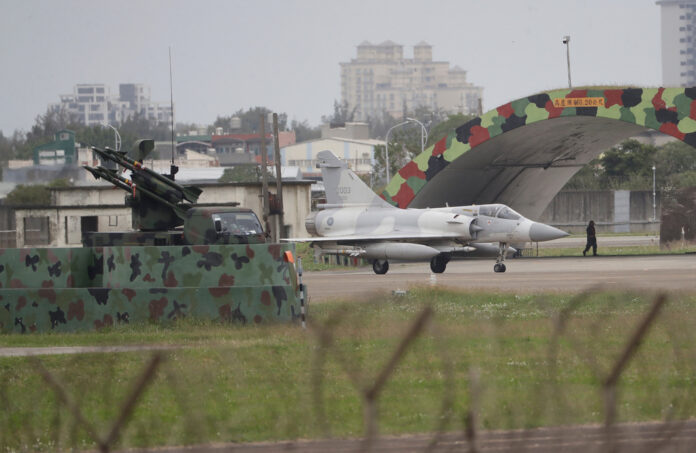
“If anyone follows the news and looks at their social media, you’ll see a high degree of unity. Their voices move in the same direction as their government’s narrative of being victims. Many people post that Cambodia wants peace. There are movements among Cambodians abroad calling for peace, making Thailand appear to be the aggressor—even though Thailand is merely defending its sovereignty. Cambodians dare to call for peace even while their BM-21 rockets continue to bombard Thailand indiscriminately due to poor accuracy…”
Mr. Surawich’s comparison of me and two others in his column or article on Manager Online to “worms inside our own home” is an exercise of freedom of criticism, which is legitimate. I respect Mr. Surawich Verawan’s perspective. However, I would like to clarify here that I—and I believe the other two mentioned may feel the same—do love our country as well. We simply love Thailand in a different way, through different means.
The question I want to ask Mr. Surawich and Thai society has become? What kind of patriotism is when waging war with a neighbouring country is seen as a good thing by ultra-nationalist Thais, mocking the corpses of soldiers from a neighboring country is considered normal, and turning our neighbour into our enemies never questioned widely in Thai society.
It is ultra-nationalism that does not tolerate internal criticism from fellow citizens—when the nation goes astray or makes mistakes—and instead alienate them and turning them into ‘the other’ by labeling them as traitors, “Thai with Cambodian hearts,” spies, or even “worms inside their own home”
These days, many people seem to love their country by placing “unity” above right and wrong, above morality, decency, and above humanity.
Is it ultra-nationalism that blindly indulges the nation, like spoiling a child—so much so that no criticism, no questioning, no scolding of the child is allowed no matter how he behaves?
Let me ask honestly: Mr. Surawich is a senior journalist with many readers and admirers. Does he believe that all Thai journalists, in every media outlet, should think and express themselves in exactly the same way—whether on the issue of Thai–Cambodian war or on any other issue? If so, then one state-controlled media would suffice. Why waste budget and time on diverse media voices? We journalists should just find other professions, and society should simply consume a single narrative, believe it without question, stay ‘united’, and sing the national anthem together at midnight on January 1, 2026, as is being campaigned for now.
A society that has no space for diverse opinions and does not value dissent is no different from a monocrop plantation. When pests or locusts descend, the entire field risks being wiped out. Diversity of thought is like biodiversity—it builds resilience. Intellectual diversity builds immunity for society.
A society where everyone thinks the same way is a fragile society—an unlivable one even—at risk of becoming fascist. Even fascist or totalitarian societies still have dissenters; they simply must either keep silent or flee into exile. Is this the ideal society envisioned by people like Mr. Surawich?
(As for Cambodia, its media freedom is known to be extremely limited. Reporters Without Borders (RSF), which publishes the annual World Press Freedom Index, ranked Cambodia 161st out of 180 countries in 2025. Thailand, in the same year—in which I was one of those invited by RSF to participate in the evaluation of Thai press freedom index for about a decade now—was ranked 85th.
Therefore, it is not surprising that Cambodian media appear “united.” It is a false unity, under severe constraints on press freedom. Even on such critical matters as how many Cambodian soldiers died during the 19-day border war, the Cambodian media dare not press the state for answers. Mr. Surawich, do you really think this is normal, or truly admirable “unity”?
P.S. Thailand still has serious problems with genuine freedom of expression, as seen in the number of lese majeste refugees in Europe and those in prison here in Thailand. As for Cambodia, its real opposition leader cannot even live in the country and must remain in exile in France. So this is not genuine unity in any sense.)
If the fact that just three Thais with some public voice dare to question the true objectives of the Thai–Cambodian war, and to question its legitimacy, causes such disturbance and outrage, I fear that Thai society is losing its way and drifting further toward a semi-fascist path.
I do not love my country any less than you do. I simply love it with a longer-term vision—asking what kind of Thailand we want in the future—rather than obsessing over short-term issues, seeing only the trees and not the forest. To me, the nation’s most important element is its people, not launching wars over a few square kilometers of disputed territory.
I want to see Thailand with friendly neighbours, supporting one another, growing together economically, in tourism, and in other areas—not surrounded by enemies who curse, obstruct, and undermine one another 24 hours a day, forever. That is why I do not agree with resolving border disputes through military force.
Every Thai and Cambodian military and civilian life has value. I am deeply saddened that at least around a hundred lives were lost on both sides of the border during the 19-day war. They will not be coming home for New Year two days from now.
You can love your country without hating others or turning neighbours into enemies—if you choose patience, reason, and wisdom in solving problems.
___