































31.6 C
Bangkok
Tuesday, June 9, 2026
Home Blog Page 1745

Big Rally by Malaysia Muslims Calls for Upholding Privileges

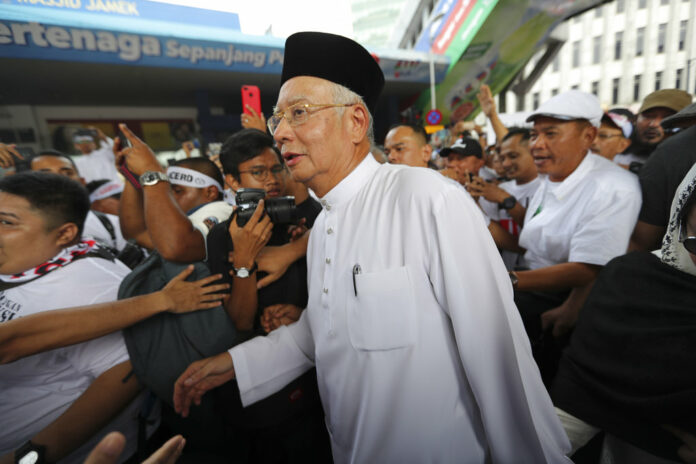
Former Prime Minister Najib Razak arrives for a rally to celebrate the government's move to withdraw plans to ratify a U.N. anti-discrimination convention called ICERD at Independent Square in Kuala Lumpur, Malaysia, Saturday, Dec. 8, 2018. The rally, organized by opposition Malay parties and nongovernment groups, was initially aimed at protesting a government plan to ratify a U.N. treaty against racial discrimination that critics allege will end Malay privileges under a decades-old affirmative action policy. The plan was eventually abandoned, but organizers decided to proceed with what they called a "thanksgiving" rally.(AP Photo/Vincent Thian)

KUALA LUMPUR — Tens of thousands of Malaysian Muslims rallied Saturday in Kuala Lumpur against any attempt to strip the ethnic Malay majority of its privileges, in the first massive street gathering since Prime Minister Mahathir Mohamad’s alliance won a historic vote in May.

The rally, backed by the country’s two largest opposition Malay parties, was initially aimed at protesting a government plan to ratify a U.N. treaty against racial discrimination. Critics allege that ratifying the treaty would end Malay privileges under a decades-old affirmative action policy. The plan to ratify was eventually abandoned, but organizers decided to proceed with what they called a “thanksgiving” rally.

Racial clashes have been rare in multiracial Malaysia since deadly riots in 1969. A year later, Malaysia instituted a preferential program that gives Malays privileges in jobs, education, contracts and housing to help narrow a wealth gap with the minority Chinese. Ethnic Malays account for nearly two-thirds of the country’s 32 million people, with large Chinese and Indian minorities.

Saturday’s rally came less than two weeks after more than 80 people were arrested in a riot at an Indian temple in a suburb outside Kuala Lumpur. The government was quick to stress that the violence was due to a land dispute and was not a racial riot. Still, the government warned Saturday’s rally-goers not to make any provocative statements that could fan racial tensions.

Mahathir said the government allowed the rally as part of democracy, but warned against any chaos. The rally was held under tight police security, but ended peacefully after rain started to fall.

Former Prime Minister Najib Razak, who has been charged with multiple counts of corruption, was among opposition lawmakers at the rally.

Police said there were at least 55,000 people on the streets. Many wore white T-shirts and headbands with the words “Reject ICERD,” referring to the U.N. treaty — the International Convention on the Elimination of All Forms of Racial Discrimination.

The protesters gathered at three locations before marching to a nearby historic square, chanting “Long live the Malays” and “Crush ICERD.”

“Yes, we did not ratify ICERD, but we are still here to say that we are still against it,” said shopkeeper Rosli Ikhsan. “Even if the government has said they won’t endorse it, we are still protesting with all our might from all of Malaysia.”

Mahathir’s new government won a stunning victory in a May 9 general election amid anger over a massive corruption scandal involving Najib and his government, but many Malays still support Najib’s party, the United Malays National Organization, and the Malaysian Islamic Party, which controls two of the country’s 13 states.

Some analysts say Najib and his party were using the rally to shift attention away from corruption charges against Najib, his wife, his party’s president and former government officials.

“For me, ICERD is bad,” university student Nurul Qamariah said at the rally. “It’s bad because it will erode the position of Malays. This is a country for Malays. We want Malays to be superiors, but why do these people want to make Malays the same level as Chinese and Indians?”

Story: Eileen Ng

Advertisement

Thai Named Miss World Runner-Up for First Time

Nicolene Pichapa Limsnukan. Photo: Miss World - Thailand / Facebook

BANGKOK — For the first time in almost 70 years, a Thai was voted runner-up at the Miss World 2018 beauty pageant Saturday night in China.

Nicolene Pichapa Limsnukan, 19, came runner-up in the annual pageant’s 68th edition hosted in Sanya, China. She became the contest’s first runner-up from Thailand.

A total of 118 contestants from around the world competed at the pageant. Vanessa Ponce of Mexico was crowned Miss World 2018. She is the first Mexican to win the contest.

See Khaosod English’s interview with Nicolene here:

Advertisement

Rebels Demand Indonesia Negotiate on Papua Independence

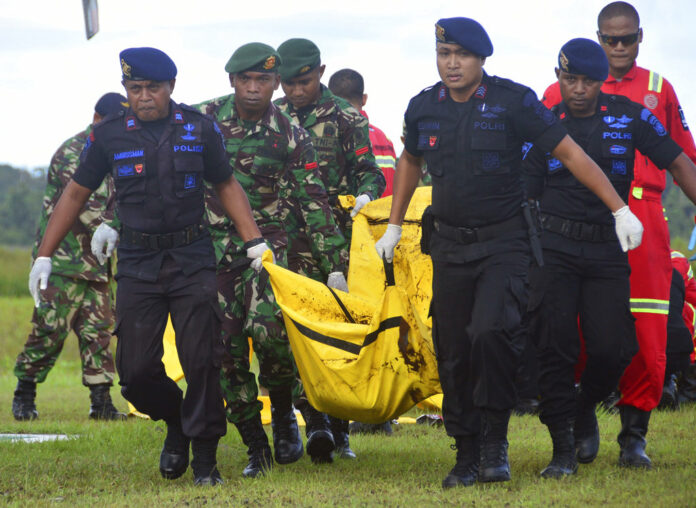
Indonesian soldiers and police officers carry a body bag Friday containing the body of a victim of separatist attack in Nduga district upon its arrival at Moses Kilangin Airport in Timika, Papua province, Indonesia. Photo: Mujiono / Associated Press

JAKARTA — Rebels in Indonesia’s Papua province demanded that the government hold negotiations on their territory’s self-determination and warned of more attacks following a raid on a construction site that left at least 16 dead.

An insurgency has simmered in Papua since the early 1960s, when Indonesia annexed the region that was a former Dutch colony. It was formally incorporated into Indonesia in 1969 after a U.N.-sponsored ballot that was seen as a sham by many.

Sebby Sambom, spokesman for the West Papua National Liberation Army, the military wing of the Free Papua Movement, said in a telephone interview Friday that they attacked a government construction site last weekend because they believe the project is conducted by the military.

Security forces have retrieved the bodies of 16 workers hired to build bridges on a section of the trans-Papua road, Papua police spokesman Suryadi Diaz said.

Authorities believe the armed group killed 19 workers, based on the accounts of survivors. They have rescued 24, including seven workers, and are searching for two missing as well as the bodies of three others. A soldier at a military post near the site was also killed.

Indonesian President Joko “Jokowi” Widodo has ordered the military and police to arrest the perpetrators of the worst separatist attack during his administration and said he will not tolerate “armed criminals” in Papua or the rest of the country.

He said the attack will not dissuade his government from continuing to develop Papua, including the 4,600-kilometer (2,875-mile) trans-Papua road, which his administration has claimed is widely supported by local people.

The road, which will stretch from Sorong in West Papua province to Merauke in Papua province, is expected to be completed next year and help boost economic development in both provinces.

“Trans-Papua road projects are being carried out by Indonesian military and that is a risk they must bear,” Sambom said. “We want them to know that we don’t need development, what we want is independence.”

Indonesia’s government, which for decades had a policy of sending Javanese and other Indonesians to settle in Papua to dilute the number of indigenous people, is now trying to spur economic development to dampen the separatist movement.

“Our leaders have declared a war zone since last year and warned that the trans-Papua road construction should be stopped, but Indonesia has ignored it,” Sambom said.

He called for the government to agree to peace talks similar to ones that led to another province, Aceh, becoming semiautonomous, or a “real referendum” on independence as occurred in the former Indonesian territory of East Timor.

“If Aceh and East Timor can get that opportunity, why don’t we?” said Sambom, who said he was speaking from an area near the border with neighboring Papua New Guinea.

National police chief Tito Karnavian estimated the strength of the armed group at not more than 50 people with about 20 weapons, and said more than 150 police and soldiers had been sent to restore security in Nduga district, a stronghold of the separatists.

Sambom, however, claimed the rebels have 29 operational area commands in Papua, each with 2,500 members.

“We vow to intensify our fight for independence with guerrilla hit-and-run attacks,” he said.

Story: Niniek Karmini

Advertisement

UNAIDS Found in ‘Crisis’ After Sex Harassment Claims

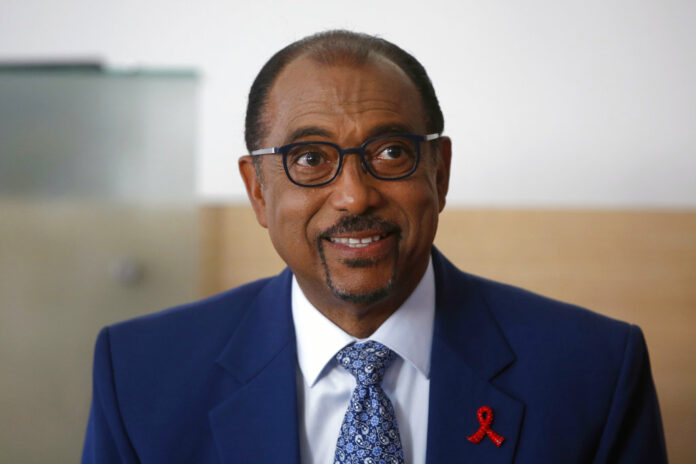
UNAIDS chief Michel Sidibe attends a press conference in July in Paris, France. Photo: Thibault Camus / Associated Press

GENEVA — Independent experts looking into allegations of sexual harassment at the U.N. agency that fights AIDS say it is plagued by “defective leadership,” a culture of impunity, and a toxic working environment that cannot be changed unless its top official is replaced.

In a damning new report released Friday, the four experts cited a “vacuum of accountability” and said UNAIDS leaders had failed to prevent or properly respond to allegations of sexual harassment, bullying and abuse of power.

The panel was created earlier this year following allegations of sexual harassment by staffers and calls from critics for executive director Michel Sidibe of Mali to resign.

Sidibe has denied claims that he tried to force an employee to drop allegations that she was sexually assaulted by his former deputy. And despite the scathing report, Sidibe said in a statement that he is the right man to turn around the organization.

That is not what the investigators believe.

“The panel has no confidence that the current leadership can deliver cultural change when that leadership has been largely responsible for the current malaise,” the report said. Its authors interviewed or received written submissions from more than 100 staffers and conducted a survey of about 60 percent of the agency’s staff.

Just as the report was made public, UNAIDS issued a statement promising an “agenda for change” led by the 66-year-old Sidibe to build upon the recommendations of the panel.

“I have taken on board the criticisms made by the panel,” Sidibe said, “In proposing this agenda, I am confident that we can focus on moving forward.”

He said he would spend a year making UNAIDS a workplace “where everyone feels safe and included.”

Despite its searing critique, the panel noted Sidibe’s “outstanding contribution” to UNAIDS’ work and called him a “passionate and effective advocate” for the world’s most vulnerable people. It said he had “spoken bravely” about the risks of HIV/AIDS among adolescent girls and women.

The UNAIDS chief is appointed by the U.N. secretary-general, who has the power to replace him. The independent panel’s report will be presented to the UNAIDS board next week.

U.N. spokesman Stephane Dujarric said Sidibe would “continue to create a model working environment for all staff,” ensuring safety and inclusivity. He deferred to the UNAIDS board for any action that might be taken.

“We await their deliberations,” he said.

UNAIDS spokeswoman Sophie Barton-Knotts said Sidibe “is fully aware that there is a lot of work to do – across all levels of the organization – and he is determined to lead that transformation.”

The panel, however, disagreed. It found solutions proposed by Sidibe to be “superficial and insufficient.” It also slammed Sidibe for failing to take responsibility for the organization he has led for the past eight years, saying his proposed changes “demonstrate a lack of insight into the magnitude of the problems.”

According to the survey conducted by the panel, nearly 4 percent of staffers reported having experienced some form of sexual harassment in the past year and more than 40 percent reported having suffered some abuse of authority.

Numerous staffers complained the agency was run like a patriarchy, with little oversight and retaliation against staffers who spoke out.

One staffer described a meeting where Sidibe “boasted” he had personally ensured the appointment and promotion of his African “brothers.”

“UNAIDS is like a predators’ prey ground,” wrote another interviewee. “You can use promises of jobs, contracts and all sorts of opportunities and abuse your power to get whatever you want … I have seen senior white male colleagues dating local young interns or using UNAIDS resources to access sex workers.”

Such problems began spilling into the public spotlight after UNAIDS staffer Martina Brostrom went public earlier this year with allegations originally laid out in a sexual harassment and assault complaint in 2016. In it, she alleged that Luiz Loures, once the agency’s deputy director for programs, had forcibly kissed and grabbed her in a Bangkok hotel elevator in May 2015 – claims Loures denied. He left UNAIDS earlier this year.

The World Health Organization office that investigated the case concluded that there was insufficient evidence to support Brostrom’s claims.

Brostrom told The Associated Press she was still going over the experts’ 73-page report, but added she was “pleased that the truth … is finally out.”

The Associated Press does not identify typically victims of sexual assault. However, Brostrom spoke to the news media this year after a WHO panel accepted the investigators’ recommendation to close the case.

Story: Jamey Kaeten, Maria Cheng

Advertisement

Japan to OK Divisive Bill Allowing More Foreign Workers

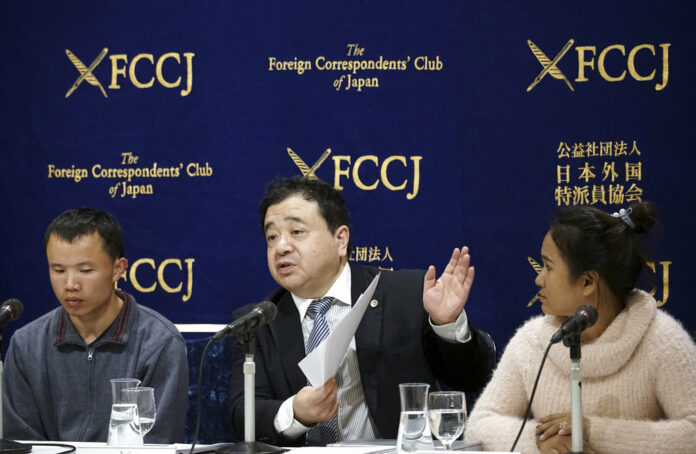
Lawyer Shoichi Ibusuki, center, speaks in November during a press conference in Tokyo, on the problems in Japan's technical intern program, with Eng Pisey, right, Cambodian technical trainee and Huang Shihu, left, Chinese technical trainee in Tokyo. Photo: Eugene Hoshiko / Associated Press

TOKYO — Japan is preparing to officially open the door to foreign workers to do unskilled jobs and possibly eventually become citizens.

Lawmakers were to vote early Saturday on government-proposed legislation allowing hundreds of thousands of foreign laborers to live and work in a country that has long resisted accepting outsiders. The bill is expected to pass because of the ruling party’s majority in parliament.

It’s seen as an unavoidable step as the country’s population of about 126 million rapidly ages and shrinks.

Many short-handed industries, especially in the services sector, already rely heavily on foreign “trainees” and language students. The country also selectively grants visas to white-collar professionals, often from the west.

Bringing in foreign laborers is a last resort after Prime Minister Shinzo Abe’s deeply conservative government tried to meet labor shortages by encouraging more employment of women and older workers and using more robots and other automation.

“Japan has come to a point where we had to face the reality that there is serious depopulation and serious aging,” said Toshihiro Menju, an expert on foreign labor and population issues at the Japan Center for International Exchange.

“Shortages of workers are so serious … that (allowing) immigrants is the only option the government can take,” he said.

Abe’s latest plan calls for relaxing Japan’s visa requirements in sectors facing severe labor shortages such as construction, nursing, farming, transport and tourism – new categories of jobs to be added to the current list of highly skilled professionals.

The number of foreign workers in Japan has more than doubled since 2000 to nearly 1.3 million last year, out of a working-age population of 67 million. Workers from developing Asian countries used to stay mostly behind the scenes, but not anymore. Almost all convenience stores are partly staffed by Asian workers and so are many restaurant chains.

The fastest growing group of foreign workers is Vietnamese, many of whom are employed in construction and nursing. Construction workers are particularly in demand as Japan rushes to finish building venues and other infrastructure for the 2020 Tokyo Olympics.

In many cases the workers are subjected to poor working conditions and other abuses.

“I had no time for a holiday. … Even if I worked so hard I still had no money,” said Eng Pisey, 33, from Cambodia, who came to Japan on a training program in 2016 and worked at a garment factory in Tochigi, north of Tokyo. She said she had to borrow USD$4,000 to pay a broker to arrange her job, and ended up quitting after becoming ill from overwork.

Under the legislation, two categories of workers will be accepted beginning in April: less-skilled workers and former interns with basic Japanese competency are allowed to stay in the country for only up to five years as visitors and cannot bring in family members. That is meant to encourage them to leave when their visas expire, preventing them from settling in Japan.

The second category, those with higher skills, Japanese language and cultural understanding, would be allowed to bring their families and apply for citizenship after living in Japan for 10 years if they commit no crimes.

“Creating new visa statuses to accommodate foreign human resources is our urgent task as we face serious labor shortages, especially at small and medium-size companies,” Chief Cabinet Secretary Yoshihide Suga said Friday.

Many Japanese understand the need to solve labor shortages. Industry groups have urged the government to expand the work visa program so they can legally hire more foreign workers.

But Abe’s traditional political base and opposition groups oppose the change – for different reasons.

Abe has denied that Japan is opening the door to immigrants. His right-wing supporters view Japan as a homogenous society and want to keep out outsiders, especially those from other Asian countries. They cite concerns over risks of more crime.

Human rights activists and lawyers have criticized the legislation, saying it has insufficient protections and support for foreign workers and lacks a vision for how Japan might create a more inclusive society that accepts diversity.

Since 1993, Japan’s Technical Intern Training Program has provided on-the-job training in the name of international cooperation, mostly to workers from other Asian countries. The trainees often have worked under poor conditions. In 2017 some 7,000 of the 270,000 technical interns fled, citing underpay and mistreatment, according to government statistics.

Shoichi Ibusuki, a lawyer specializing in labor cases who aids victimized foreign students and interns, says the program is a guise for using cheap labor. He says it should be scrapped and replaced.

Ibusuki supports giving unskilled workers official status, but says the legislation fails to provide enough protections for workers. In particular, he is unhappy with the lack of restrictions on recruiting brokers who are cited as a cause of abuse. “The program seems to treat foreign workers like goods, not humans,” he said.

Huang Shihu, a Chinese intern, said he came to Japan to study the language while working, but suffered a severe hand injury after being employed for about six months at a tin factory in Kobe. He said his employer claimed it could not pay him compensation because it was bankrupt.

“With this hand injury I can’t work. I don’t know what to do,” Huang told reporters, showing his still bandaged fingers. “I really feel wronged by the company.”

Menju said the lack of oversight in the existing trainee program allowed mistreatment to persist, with foreign workers seen as cheap labor willing to tolerate harsh conditions. He hopes the new program will allow a fresh start.

The legislation is not so great, he says, but may mark a turning point. “This is the first time people started to discuss the issue of foreign workers,” Menju said. “Before that it was a taboo.”

Story: Mari Yamaguchi

Advertisement

Opinion: Honest Learning From Strangers in the Next Table

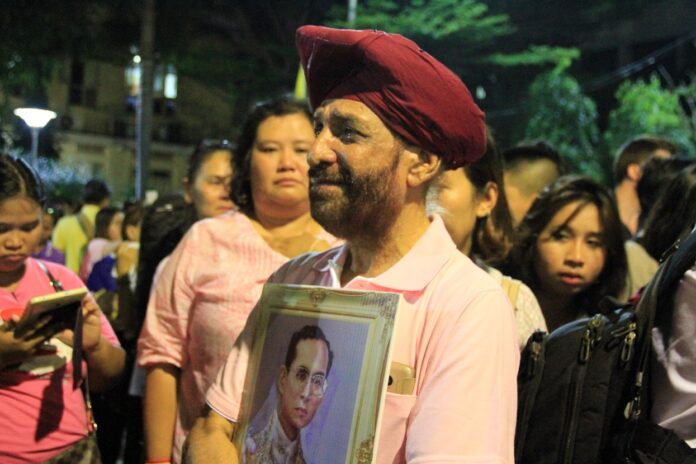
A man weeps outside Siriraj Hospital on the evening of Thursday, Oct. 13, 2016, in Bangkok, where HM King Bhumibol had earlier died.

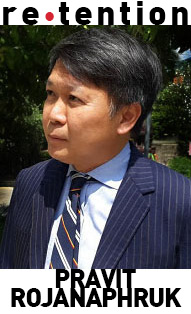
Re•tention: Pravit Rojanaphruk

One of the occasional perks of sitting alone at a cafe or bar next to a table of conversing people is you get to hear things you otherwise wouldn’t.

At a cafe in Bangkok, I recently sat next to a table of four people talking about “Thainess” and the alleged problem of the hotel industry.

On “Thainess,” three of the four opinionated people were trying to describe the essence of Thai identity. The three; a Thai-Indian man, a Thai-Chinese woman in her late twenties who grew up in Hong Kong, and a Frenchman of similar age to the rest, were deep into the debate when the lady concluded that “Thainess” is about three things: lying, smiling and avoiding conflict.

The rest seemed to concur and the debate effectively ended.

I personally do not believe in looking to find the essence of culture or the much-abused notion of “Thainess.” The former basically posits that all diversity in society can be reduced to a few alleged dominant traits – correctly or not.

As for the notion of “Thainess,” not only does it reject diversity in norms and behavior, but it is often used to promote a specific kind of behaviour according to the wishes of those in power.

The most obvious is the dominant hegemony tying “Thainess” to loyalty to the monarchy, which leaves Thais who question it – or even the draconian lese majeste law – as “un-Thai.”

Back to the conversation I overheard, the same lady complained about the seniority system in the Thai luxury hotel industry and how once you speak openly about work-related conflicts with other colleagues, they cannot put the matter behind. She said that as a result, she could no longer expect to advance her career at the organization in the future because she didn’t avoid open conflict.

Being just an eavesdropper, I lacked the context to fully verify such situations, but it left me with food for thought and reminded me how some Thais would avoid confrontation until it ruins an organization or the economy, as problems are swept under the rug until the last minute. Think of the 1997 financial crisis, for example.

Last topic worth mentioning is the Thai-Indian man complaining about how other Thai commuters would avoid him like the plague on the BTS Skytrain, as they assume all Indians have a strong body odour.

“But like other Thais, I shower properly and don’t smell,” he told his friends in English. The man then added that the seats next to him are often the last to be taken. At one time, he said he was standing next to a smelly Caucasian and that the Thais around him assumed the odor came from him and started distancing themselves.

These conversations are at times politically incorrect but frank and fluid. They enables us to rethink some of the assumptions we have and lead us to topics we may not have thought about. It is the reason why I often enjoy sitting alone next to a table full of opinionated people.

I had been eavesdropping for about half an hour and by then, the group seemed aware that I had been sitting alone for far too long.

I smiled, got up and discreetly left my table feeling thankful.

Advertisement

Officials: 6 Dead, Dozens Hurt in Club Stampede in Italy

Image: Rising Bd / YouTube

ROME — Six people have died and dozens have been injured in a stampede at a nightclub at a coastal town in central Italy.

Italian fire officials and the ANSA news agency said concertgoers at a nightclub in the town of Corinaldo, on the Adriatic Sea, panicked and ran for the exits after someone sprayed a noxious substance.

A teenage survivor told ANSA that when he tried to flee, he discovered that at least one of the emergency exits was locked.

Advertisement

Cambodia’s Hun Sen Says No to Foreign Military Bases

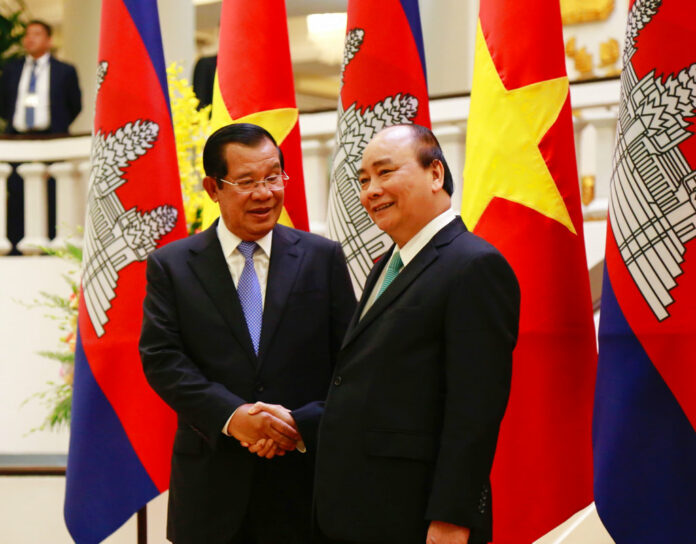
Cambodian Prime Minister Hun Sen, left, shakes hands Friday with his Vietnamese counterpart Nguyen Xuan Phuc before heading for talks behind closed doors in Hanoi, Vietnam. Photo: Tran Van Minh / Associated Press

HANOI — Cambodian Prime Minister Hun Sen said Friday that his government will not allow any foreign military bases in its territory and called media reports that China is seeking a naval base there “fake news.”

Hun Sen, who is on a three-day visit to Vietnam, insisted at a news briefing with his Vietnamese counterpart, Nguyen Xuan Phuc, that the Cambodian Constitution does not permit foreign military bases.

“I want to emphasize to you that the Constitution of the Kingdom of Cambodia does not allow any country to set up military bases in Cambodia,” Hun Sun said through a translator.

Asia Times reported last month that China has lobbied Cambodia since 2017 for a base in the southwestern province of Koh Kong in the Gulf of Thailand.

Hun Sen dismissed the report.

“There has been distorting information over the past month that there are preparations to build military establishments in Cambodia,” he said. “I want to say and I have just told Prime Minister Nguyen Xuan Phuc and the Vietnamese delegation that this is fake news and there’s no such thing happening in Cambodia.”

Asia Times said the alleged naval base is part of a USD$3.8 billion tourism development named Dara Sakor Beachside Resort led by a Chinese company. It said the project reportedly includes a deep-water port, an international airport and manufacturing facilities.

It is located in the Gulf of Thailand but has direct access to the South China Sea, most of which is claimed by China. China in recent years has built seven artificial islands in the disputed Spratly Island chain and placed military equipment on some of them, raising alarm among other countries in the region and in the United States.

Advertisement

Thailand Begins Extradition of Bahraini Football Player

Hakeem Ali Mohamed Ali Al-Araibi in lockup at Suvarnabhumi Airport in November. Photo: Human Rights Watch / Courtesy

Update: Bahraini Football Player Moved to Jail Before Extradition Hearing (Video)

BANGKOK — Thai authorities have approved an arrest warrant for a detained Bahraini footballer with Australian refugee status, kickstarting extradition back to the home country he fled after alleged torture.

According to a human rights watchdog, the Bangkok Criminal Court on Friday approved an arrest warrant for Hakeem Ali Mohamed Ali AlAraibi, a Bahraini footballer who was taken into custody at Suvarnabhumi Airport last week and prevented from flying to Australia, where he has political refugee status.

“There’s imminent concerns that Thai authorities aren’t listening and will send him to be tortured while violating international law,” Sunai Phasuk of Human Rights Watch said. “If we can contact Big Joke, we will know for sure when the extradition process is initiating,” he said, referring to Surachet Hakpan, commander of the Immigration Bureau Police.

Sunai said that Human Rights Watch believes that the court approved the warrant based on Bahrain’s extradition request. Immigration Police could not be immediately reached for comment.

FIFA itself issued a request for AlAraibi to be returned, an unprecedented move by the ruling football body, said Sunai. The request was prompted by Human Rights Watch’s warnings, he said.

Read: FIFA Supports Bahraini Football Player Detained at Suvarnabhumi

“One positive thing about all this is that he now has a lawyer. He was allowed legal counsel for the first time today, but it should have been earlier,” Sunai said. On Thursday, AlAraibi was reportedly prevented from meeting with his attorney at the Suan Phlu Immigration Detention Center.

According to the Bahrain Institute for Rights and Democracy, AlAraibi said Thursday, “This might be my last message. I still don’t know whether I will be deported to Bahrain tomorrow. I appeal to the United Nations, individual states, FIFA, footballers, and all people, as my fate is now in danger and my future will soon be over.”

AlAraibi said that if he is deported to Bahrain, anything said by or about him should no longer be considered credible.

“I know what will happen to me and I know I will be tortured to confess things that I have never done. Please continue your fight to save me,” he said.

Other refugee networks have also called for AlAraibi to be returned to Australia.

“It is outrageous that the Thai government is even considering the extradition request from the Bahrain government,” Evan Jones, spokesman of the Asia Pacific Refugee Rights Network said. “To return Mr Al-Araibi to Bahrain would be disastrous and would most certainly breach their obligations under customary international law.”

According to the London-based institute, AlAraibi was tortured by Bahrain authorities in 2012 allegedly for his brother’s political activities and public criticism of the Bahraini royal family’s alleged involvement in sports scandals.

AlAraibi, who now plays on Melbourne’s Pascoe Vale Football Club, fled Bahrain to Australia in 2014 after he was sentenced to a decade in prison for allegedly vandalizing a police station, which he denies.

He was granted refugee status in November 2017, which allows him to live in Australia. He was first detained at Suvarnabhumi Airport on Nov. 27 and later moved to the downtown detention center this past Saturday. On Tuesday, a Thai court approved holding him for 12 days in Bangkok.

Related stories:

FIFA Supports Bahraini Football Player Detained at Suvarnabhumi

BKK Departure of Bahraini Refugee Footballer Blocked

Advertisement

Thailand World’s Most Unequal Nation? Govt Says Not

Shoppers and tourists at IconSiam shopping mall on Nov. 9.

BANGKOK — A government spokesman on Friday hit back at a Swiss bank report claiming Thailand has the world’s most unequal distribution of wealth.

Puttipong Punnakan said the claim, which was based on a report released by global investment firm Credit Suisse, is misleading because it only examined 40 countries – most of them wealthy members of the OECD – and relied on outdated data.

“In reality, the situation of inequality in Thailand has been gradually improving,” Puttipong said.

The issue was first raised by Banyong Pongpanich, a former advisor to the prime minister from 2014 to 2016, who posted the Credit Suisse report on his Facebook and noted that the wealthiest 1 percent possess more than two-thirds of the nation’s wealth, or 66.9 percent.

“Thailand has become the most unequal country in the world,” Banyong wrote, a remark that was seized by many media agencies in their headlines.

The Credit Suisse report sampled Thailand and 39 other nations like the US, UK, Austria and France. Two years ago, it ranked Thailand the third most unequal nation behind Russia and India.

The government took exception to two dated citations in the report, a socioeconomic survey from 2006 and household debt report from 2008.

Puttipong said that data is outdated and Thailand has come a long way since then.

“The ratio of income difference between the richest and the poorest fell from 29.92 times in 2006 to 19.29 times in 2017,” the spokesman said.

He also said putting Thailand in the sampled group is also [not fair] because all other nations, except for China, India, Colombia, Romania, South Africa and Taiwan, are developed countries in the Organisation for Economic Co-operation and Development.

A separate report by the World Bank, updated in September, said Thailand has been making gains in eradicating poverty, though it added that inequality remains an important issue.

“As of 2014, over 80 percent of the country’s 7.1 million poor live in rural areas. Moreover, an additional 6.7 million were living within 20 percent above the national poverty line and remain vulnerable to falling back into poverty,” the World Bank said.

Advertisement

Hot News

LATEST NEWS

Bangkok
overcast clouds
31.6 ° C
31.6 °
29.4 °
68 %
3.1kmh
100 %
Tue
35 °
Wed
34 °
Thu
34 °
Fri
28 °
Sat
31 °