



































31.6 C
Bangkok
Monday, June 29, 2026
Home Blog Page 1753

Opinion: A Happy Christmas and New Year Every Day? No Thanks

Airport official Kanaruj Artt Pornspolt poses in 2017 with a Christmas present for a child identified as Mashia who had been living with her family for three months inside Suvarnabhumi Airport. Photo: Kanaruj Artt Pornspolt / Facebook

Re•tention: Pravit Rojanaphruk

It’s almost Christmas and New Year’s Eve.

Seeing the lights and decorations for the holiday season and people taking photos with Christmas trees, one wonders: Why not have festivals every day?

Wouldn’t it be good to make every day festive, even with work during the day time? Perhaps we can then be joyous and in a good mood all the time?

Theoretically it sounds wonderful to treat every day like a festival.

Unfortunately, too much of a good thing can be tiresome and diminish the magic of it all. Similar to eating too much rich food to the point where one longs for something more humble and simple. What’s more, people would likely become jaded, and what is often regarded as a special time of the year would lose its meaning.

Without something more ordinary or mundane to compare to, the special or festive cannot exist. A New Year day would be a normal day.

Just how the day is appreciated after the darkness of the night is gone, or how people enjoy nocturnal silence after the buzz of daytime life, the beauty of life is found in its alternating rhythm.

We appreciate joy and happiness because there exists sorrow and unhappiness.

So having Christmas or New Year every day would render them meaningless. The magic would be gone. It is magical because it is limited in time, just like something exclusive can only remain exclusive because it is scarce, and not accessible to everyone or all the time.

Nevertheless, instead of merely seeking joy in the festive season, it’s worthwhile to seek joy in the ordinary and the mundane as well: To be appreciative that we are alive and can try to make ourselves useful – not just to our loved ones, friends and family but – to strangers and those in need.

Our ephemeral lifespan is meaningful and precious precisely because it is finite and temporary. We all will sooner or later be gone. Death makes life meaningful for we are inclined to ask what we would like to do while we are still alive and able, given the limited time we have.

We can learn to let go of anger and pain because we know everyone will die one day.

Life is too short to dwell on negative feelings and thoughts. Life is too short to succumb to base feelings. Life is too short to be selfish and petty. Life is too short to waste it recklessly.

Think about the numerous lavish and not so lavish parties people throw during the festive season. Happiness can be shared.

On Wednesday I had the honor of chairing the 2018 Oxford and Cambridge Alumni Annual Dinner. This is a tradition held since 1940 and the dress code is black tie.

I exercised my prerogative as Chair to “siphon” some money from the dinner fees, paid by more than 200 members and guests. We donated a modest 10,000 baht sum to the UNHCR.

The small sum is but a drop of water in the ocean that hopefully will help refugees in Syria or the Rohingya people. This is a small gesture, a reminder that an evening of joy for those gathered for a special dinner could and should also bring happiness outside an exclusive gathering. Others went further and will spend the New Year at, say, an orphanage or home for the elderly to feed and comfort those in need.

The joyous season can be meaningful, happiness can be spread no matter how thin.

Let us rejoice in life and humanity while we are still in this world.

Merry Christmas! Belated Happy Hanukkah and a Happy New Year to you all!
Advertisement

Indonesia Gains Majority Ownership of Giant Freeport Mine

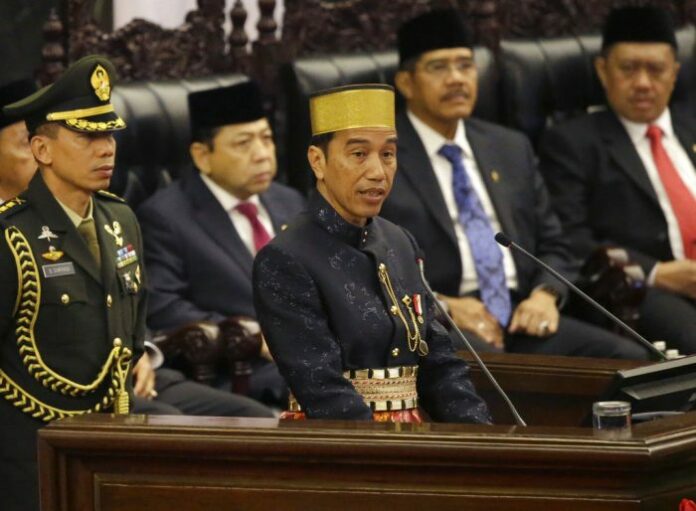
Indonesia's President Joko Widodo, at center, delivers his State of The Nation address in 2017 ahead of the country's Independence Day at the parliament building in Jakarta. Photo: Tatan Syuflana / Associated Press

JAKARTA — Indonesia finalized the transfer of majority control over a giant gold and copper mine from U.S. company Freeport-McMoRan, the government said Friday, in a long-awaited deal that boosts the president’s re-election campaign.

The Phoenix, Arizona-based Freeport McMoRan Copper & Gold Inc. initially owned about 90 percent of the Grasberg mine since it began operating in Indonesia’s easternmost province of Papua in 1973. The rest has been owned by the Indonesian government.

“Today is a historic moment,” President Joko “Jokowi” Widodo told a news conference at the presidential palace in the capital, Jakarta, attended by related ministers of his cabinet and Freeport-McMoRan chief executive Richard Adkerson.

“We will use this majority ownership entirely for people’s prosperity. Our income in tax, revenues and royalties will be bigger and better,” Widodo said.

The landmark deal worth USD$3.85 billion to take over a 51.2 percent stake in PT Freeport Indonesia from the U.S. company was paid by state-owned PT Inalum mining company after environmental and smelting issues were settled, Widodo said.

The two sides had been on a collision course since a presidential regulation in 2012 imposed a limit of 49 percent on foreign ownership of companies issued new mining licenses. Foreign investors with ownership greater than 49 percent were required to sell shares to state-owned enterprises or privately owned Indonesian companies.

The mine in Papua, where a separatist movement simmers, has been the target of protests by Papuans who resent the region’s mineral wealth being exploited by the U.S. and Indonesia.

Widodo said people in Papua will also get 10 percent of ownership and regional taxes as well.

Apart from reduced ownership, Adkerson said the new permit given to Freeport Indonesia, which is valid until 2031, would give the company clarity over its operation in the country up to 2041 as the company could apply for a 10-year extension within five years before it expires.

He also said that Freeport agreed to convert its original agreement signed with the government of former dictator Suharto in 1991 to a new mining license. The original agreement expires in 2021.

Freeport will also increase its investment in smelting in Indonesia within five years, fulfilling a key demand of the government, which wants the country to get greater value from its mineral resources, and will invest an estimated $14 billion in the mine.

Widodo’s announcement has fueled feel-good nationalism that analysts say is likely to give him a lift in the polls heading to an April election.

Syamsuddin Harris, a political analyst from the Indonesian Institute of Sciences said that Widodo’s success in taking majority ownership would widen his already substantial lead over his challenger for a second time, former general and ultranationalist politician Prabowo Subianto.

Inalum increased its share of ownership in PT Freeport Indonesia from 9.36 to 51.23 percent.

“This is what we have been waiting for a long time,” Widodo said. “It means we have settled all issues and work can start.”

Story: Niniek Karmini

Advertisement

Mattis Resignation Letter Lays Out Challenges for Successor

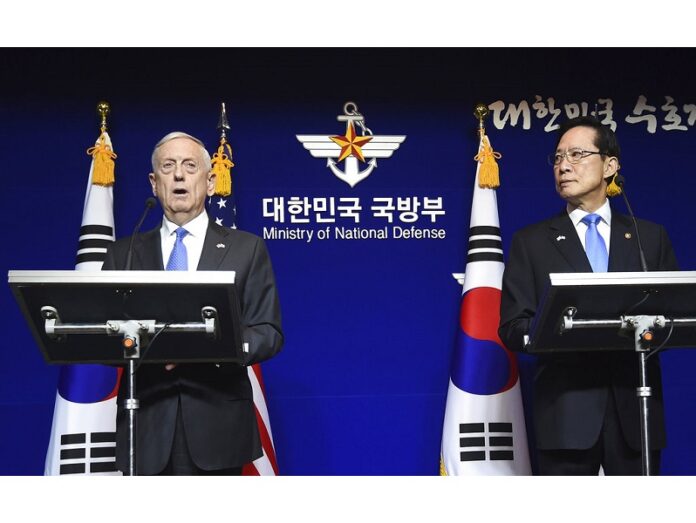
U.S. Secretary of Defense Jim Mattis, left, and South Korea's Defense Minister Song Young-moo hold a joint press conference after the Security Consultative Meeting (SCM) at the Defense Ministry in 2017 in Seoul, South Korea. Photo: Jung Yeon-Je / Associated Press

WASHINGTON — The extraordinary resignation letter that Defense Secretary Jim Mattis handed to a surprised President Donald Trump was not just a product of two years of accumulating frustration with an impulsive boss, but an outline of the strategic hazards facing the next Pentagon chief.

Mattis, who was quietly back at work Friday while stunned Pentagon staff soldiered on around him, implicitly warned in his letter to the president of the threat to the U.S. from allowing alliances to fray and of the risk that disrespecting allies will undermine U.S. credibility.

It was an outline of the challenges facing the nation and whoever takes over as defense secretary when Mattis leaves Feb. 28.

“As this Administration continues to implode, Secretary Mattis’ extraordinary resignation is a significant loss and a real indication that President Trump’s foreign policy agenda has failed and continues to spiral into chaos,” said Sen. Bob Menendez, the ranking Democrat on the Foreign Relations Committee.

Mattis announced on Thursday his plan to resign, a move prompted by the decision by the president to pull all of the approximately 2,000 U.S. troops from the fight against the Islamic State group in northeastern Syria.

Mattis also was dismayed by plans under consideration to cut the number of U.S. troops in Afghanistan and, as his letter made clear, did not see eye to eye with a president who has expressed disdain for NATO and doubts about keeping troops in Asia.

The person nominated to succeed Mattis will face a Senate likely to probe for evidence of new strategic direction in hotspots like Syria, Afghanistan and the Korean peninsula.

In making clear that he could no longer tolerate Trump’s approach to American foreign policy, Mattis appeared to fashion a resignation letter that not only expressed his reasons for leaving but also sounded an alarm. He implicitly criticized the president’s unwillingness to stand up to Russia or take a stronger stance against Chinese assertiveness.

“I believe we must be resolute and unambiguous in our approach to those countries whose strategic interests are increasingly in tension with ours,” Mattis wrote. “It is clear that China and Russia, for example, want to shape a world consistent with their authoritative model … to promote their own interests at the expense of their neighbors, America and our allies.”

Nurturing and extending U.S. alliances was a pillar of Mattis’ approach to his job, which means he was at odds with Trump on that score from the earliest months of his tenure.

“While the U.S. remains the indispensable nation in the free world, we cannot protect our interests or serve that role effectively without maintaining strong alliances and showing respect to those allies,” Mattis wrote.

William Cohen, a former defense secretary and long-time friend of Mattis, put a finer point on this Mattis assertion by saying in response to his resignation, “He cannot be expected to stand behind a president who disrespects our allies and ingratiates himself to our adversaries.”

In addition to the frayed state of U.S. relations with NATO, Mattis’ successor also is likely to face other hazards hinted at in his resignation letter. These include preserving and rationalizing a strategy for ensuring a lasting defeat of the Islamic State group by the dozens of nations that had backed the U.S. after it entered Syria in 2014.

German officials expressed polite irritation that Washington had not consulted them on the Trump decision to pull out of Syria.

“As an ally and member of the anti-IS coalition we would have considered prior consultation by the U.S. government about the withdrawal of U.S. troops helpful,” government spokeswoman Ulrike Demmer said.

The Pentagon was still reeling Friday from the news that Mattis was leaving.

Inside what is normally a very orderly building, military members who are trained to take orders, salute and move ahead were stunned and a bit shaken.

Military missions in Syria and Afghanistan that just a week ago seemed clear and mapped out, were now thrown into chaos. Deep in the bowels of the Pentagon, planners scrambled to pull together a troop withdrawal strategy for Syria that the White House would accept, all while knowing that their boss a few floors above them quit over that order.

Mattis, 68, is the first Pentagon chief to resign in protest over a president’s foreign policy in many decades. In fact, there may be no historical equivalent to the circumstances of Mattis’ departure. The last defense secretary to resign was Chuck Hagel in November 2014, and although he had expressed differences with President Barack Obama over Syria policy, Hagel was essentially pushed out by an administration that viewed him as ineffective.

Robert McNamara, who served as defense secretary for seven years over two Democratic administrations, left the Pentagon in February 1968, three months after President Lyndon Johnson announced McNamara was resigning to become president of the World Bank. McNamara differed with Johnson and the military over Vietnam war policy amid an escalating anti-war movement, but his departure was not an explicit rejection of Johnson’s policies.

Advertisement

EU Slaps Sanctions on 7 Myanmar Army, Border Officials

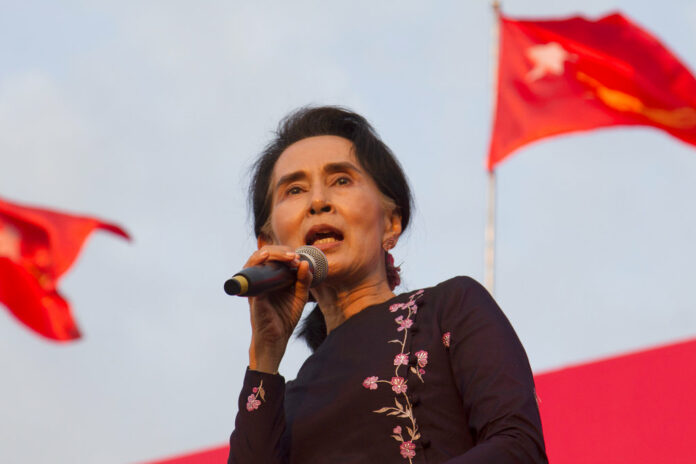
Myanmar opposition leader Aung San Suu Kyi speaks in 2015 during an election campaign rally of her National League for Democracy party for upcoming general election in Yangon, Myanmar. Photo: Khin Maung Win / Associated Press

BRUSSELS — The European Union is slapping asset freezes and travel bans on seven more people accused of human rights violations against the Rohingya minority in Myanmar.

EU headquarters said Friday that the seven army and border police officials are being put on the bloc’s sanctions list “for serious human rights violations committed against the Rohingya population, ethnic minority villagers or civilians.”

It brings to 14 the total number of people in Myanmar under EU sanctions for such abuses.

Around 700,000 Rohingya have fled their homes in western Myanmar since last year because of a brutal counterinsurgency campaign by the military, which has been accused of massive rights violations. Rights activists and U.N. investigators say the military in Buddhist-dominated Myanmar was carrying out a policy of ethnic cleansing, or even genocide.

Advertisement

Thailand to Honor Beautiful, Violent Siamese Fighting Fish

A Siamese fighting fish with colors resembling the Thai national flag swims in a fish tank in 2016 in Nakhon Pathom. Photo: Chuchat Lekdeangyu / Shutter Prince / Associated Press

BANGKOK — The Siamese fighting fish, a popular beauty in home aquariums and a popular bet for gamblers for their violent territoriality, is set to become Thailand’s national aquatic animal.

The often brightly-hued fish is also called a betta, but government minister Suwapan Tanyuvardhana noted the species is clearly identifiable as Thai by its name: Siam is the old name for Thailand.

Scientific and historical accounts also call it the Siamese fighting fish and its native waters are Southeast Asia, including Bangkok’s Chao Phraya River.

The National Identity Committee, which promotes Thai cultural pride, decided Thursday to forward its recommendation to the Cabinet for final approval, said Suwapan, who is attached to the Prime Minister’s Office and vice president of the committee.

Being designated Thailand’s national aquatic animal could boost conservation and breeding efforts for the fish, as well as bring commercial benefits.

Private sector breeding efforts of the fish are flourishing, and promoting the fish could push its popularity higher and bring it higher prices, he said.

The fish is especially popular in small office and home aquariums because of its bright colors and relative ease of care. But they are territorial, especially the males, who will attack other males in the same tank.

Their aggressive behavior makes them appealing to gamblers, even though most gambling is illegal in Thailand.

Advertisement

Protesting Woman Brought Down From Thammasat Water Tank

A rescue worker grapples with a woman who threatened to jump from a water tower Friday on Thammasat University’s Tha Prachan campus.

BANGKOK — Rescuers saved a woman who threatened to jump Friday afternoon from a water tower on Thammasat University’s Tha Prachan campus.

The woman, 50 and possibly emotionally disturbed, had ascended the tower to shout demands that the government resign so elections can be held when she was quickly rescued.

From a height of seven floors, she threw down a photocopy of her national ID with a message written in English addressed to UNHCR Finland which referenced seeming conspiracy theories involving the CP Group conglomerate, the ruling junta and the internet.

She also released three balloons on which “Release political prisoners,” “NCPO get out,” and “Save Khun Tharit,” were written, the last a possible reference to the former DSI chief recently convicted and jailed.

According to rescue workers, the woman had coated the railings with vegetable oil and tied her neck to it.

Advertisement

‘Tis the Season to Be Jolly With Christmas Banquet and Activities  at Bangkok Marriott Hotel the Surawongse (Sponsored)

Bring together your friends and family to join a jolly Christmas celebration at Bangkok Marriott Hotel The Surawongse with an array of delicious treats and fun family activities, exclusively crafted for the special occasion.

Kw1eFSuZErwTakzszYuj0MK4fSqQkut KaqtZcHXRr

Indulge in enjoyable recollection of the treasured childhood memories, the team of experienced chefs at Praya Kitchen is please to present rare-to-find dishes in which the recipes are reinvented from chefs’ childhood memories. A variety of authentic Thai dishes, prepared with quality local ingredients, is sure to delight every palate during the festive season.

For Christmas Eve (24th December), start a Christmas spirit with lunch buffet which is available from 12.00 hrs – 15.00 hrs at THB 1,388++ or join the dinner buffet from 18.00 hrs – 10.30 hrs at THB 2,288++. Apart from a wide range of buffet items, the dinner will be even more special with fun activities including live music, Kids Corner as well as a visit from Santa Claus.

On Christmas Day (25th December), guests are invited to experience an authentic Thai flavors with lunch buffet as well as dinner buffet. The lunch buffet is offered from 12.00 hrs – 15.00 hrs at THB 1,588++ while the dinner buffet is offered from 18.00 hrs – 10.30 hrs at THB 1,888++.

MACxHdBIhcTWy4C7WooOYn3U4jHn8I1UaHesTzOPocrpKTjblunUAUAtSPh VxP0 fItF2sUxBkaWs0LJgIfw8blO4D3puR1uLW2qvbfKX8n zm6z2L whAoVNvUNIwyxjVN

For the festive lunch and dinner at Praya Kitchen, 50% discount is applied for children aged 6-12 years old and the full rate is applied for children aged over 12 years old while children aged under 6 years old are welcome for free of charge.

Another cool place for the festive celebration is The Lobby Lounge where the best festivities like no other are provided, from the relaxing afternoon tea, kid’s cooking workshop to a perfect gifts for holidays season. The Lobby Lounge will also be hosting a cooking workshop for children on 24th and 25th December.

V

For those looking for gifts, a full range of chocolate and candies is available from 6th December 2018 to 1st January 2019. There is also a delightful afternoon tea set, special designed for a good time over Christmas and New Year. A festive platter will be available on 24th, 25th, 31st December 2018 and 1st January 2019.

Come and join us for a memorable Christmas memory at Bangkok Marriott hotel The Surawongse with a delicately crafted selection of dining experience. For more information and reservation, please contact 02 088 5666 or visit http://bit.ly/2qn1LLt

Advertisement

Digital Detox: Resorts Offer Perks for Handing Over Phones

Adam Bryan and his son Wesley work together on puzzles included in complimentary backpacks provided with other incentives by the Wyndham Grand Hotel in Chicago on Dec. 1, 2018. Photo: Teresa Crawford / Associated Press

Can you take a vacation from your cellphone? A growing number of hotels will help you find out.

Some resorts are offering perks, like snorkeling tours and s’mores, to guests who manage to give up their phones for a few hours. Some have phone-free hours at their pools; others are banning distracting devices from public places altogether.

Hotels that limit cellphone use risk losing valuable exposure on Instagram or Facebook. But they say the policies reflect their mission of promoting wellness and relaxation. And, of course, they hope that happily unplugged guests will return for future visits.

“Everyone wants to be able to disconnect. They just need a little courage,” said Lisa Checchio, Wyndham Hotels’ chief marketing officer.

People’s inability to disconnect is an increasingly serious issue. Half of smartphone users spend between three and seven hours per day on their mobile devices, according to a 2017 global survey by Counterpoint Research, a technology consulting firm. In a separate study by the nonprofit Common Sense Media, 69 percent of parents and 78 percent of teens said they check their devices at least hourly.

Wyndham knew it had a problem when hotel managers requested more beach chairs to accommodate all the people who would sit in them and stare at their phones. It discovered that the average resort guest was bringing three devices and checking them once every 12 minutes – or roughly 80 times a day.

On Oct. 1, Wyndham Grand’s five U.S. resorts began offering prime spots by the pool, free snacks and the chance to win return visits when guests put their phone in a soft, locked pouch. The phones stay with the guests, but only hotel staff can unlock the pouches.

Wyndham says 250 people have used the pouches so far at resorts in Florida and Texas. The program will be found at more Wyndham hotels next year.

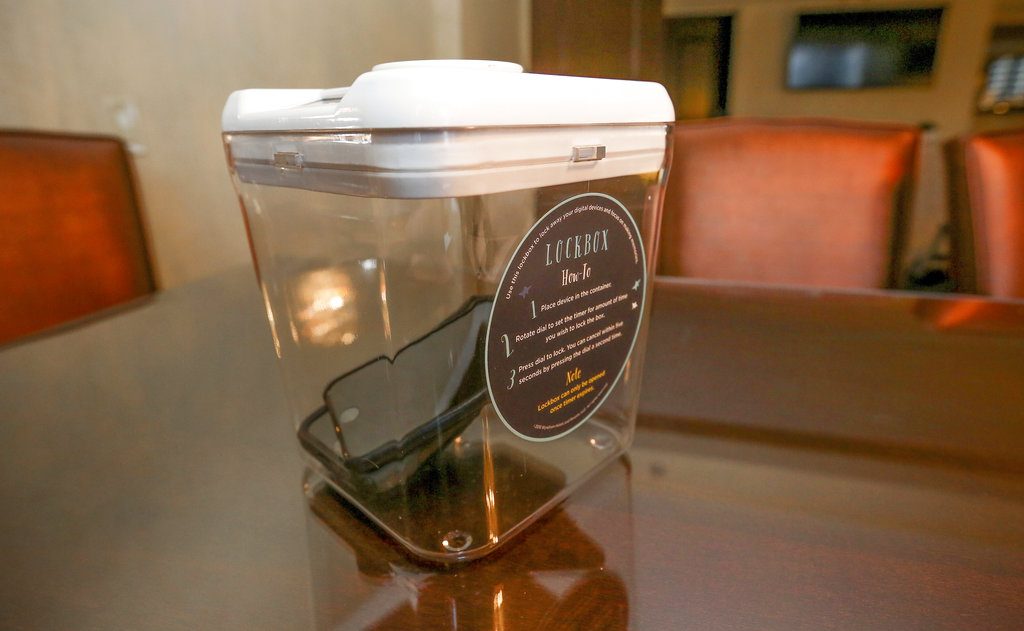
Wyndham Grand resorts also give families a 5 percent discount on their stay if they put their phones in a timed lockbox. The hotel provides supplies for a pillow fort, s’mores, a bedtime book and an instant camera for adults and kids who don’t know what to do with all the newfound time on their hands.

That appeals to Matthew Cannata, who heads public relations for the New Britain, Connecticut, schools. He worries about the impact of technology on his two young children, and he tries to keep devices out of sight during family meals.

A locked box holding cell phones during a Dec. 1 digital detox visit to the Wyndham Grand Hotel in Chicago. Photo: Teresa Crawford / Associated Press

“Any chance I can get to put the phone away is great. Sometimes, people need to be forced to do things to start a thought process and then create a habit,” he said.

At the Grand Velas Riviera Nayarit in Mexico, a so-called Detox Concierge will “cleanse” your suite of all electronic devices and replace them with games like Jenga and chess. Guests at its sister resort, the Grand Velas Riviera Maya, trade in their phones for a bracelet that gives them free access to activities like snorkeling; they must do at least four activities to earn back their phones. A timer placed in the lobby shows how long each family has lasted without their devices.

Emily Evans likes the idea of rewarding people for putting their phones away. A senior at Eastern Kentucky University, she says she barely keeps her phone charged while on vacation, but her girlfriend is constantly checking her phone.

“I feel most millennials would choose discounts and saving money over having their phone out to Instagram and Snapchat pictures of their meals,” Evans said.

At Miraval, a Hyatt-owned resort in Arizona, the emphasis is less on family time than on mindfulness and tranquility. Miraval, which will soon open two more resorts in Texas and Massachusetts, bans phone use in most public areas.

Guests are encouraged to tuck their phones into soft cotton bags and leave them on small wooden beds in their rooms. Staff wears name tags with gentle reminders that guests should unplug and “be present.”

Some resorts encourage a total ban. Wilderness Resorts, an African safari operator, intentionally provides no Wi-Fi at many of its camps. Adrere Amellal, a 40-room hotel at the Siwa Oasis in Egypt, lets guests have phones in their rooms, but there’s no electricity or Wi-Fi.

Not all vacationers want to be weaned from their devices. Phones double as cameras, music players, travel guides and e-readers. They also might be critical in an emergency.

David Bruns, a communications manager for AARP Florida, uses two phones. He tries not to check his work phone after hours, but he carries his personal phone everywhere.

“I don’t think I would like being made to put the thing down,” Bruns said. “It feels like that is more about me being told what to do by people I am paying to do something for me.”

Ayana Resort and Spa in Bali, Indonesia, understands that, so it tries to meet guests halfway. Its winding River Pool bans phones between 9 a.m. and 5 p.m. But it invites guests to take photos and post away to social media before and after those times.

Story: Dee-ann Durbin

Advertisement

‘Wild Boars,’ Rohingya and Earthquakes: Asia Photos of 2018

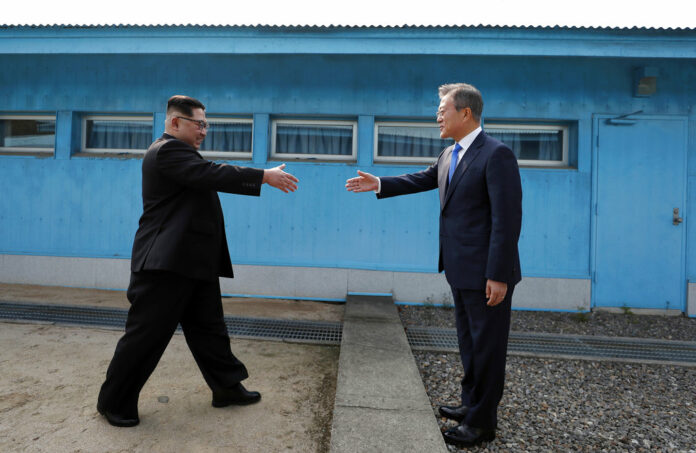
North Korean leader Kim Jong Un, left, prepares to shake hands with South Korean President Moon Jae-in over the military demarcation line at the border village of Panmunjom in Demilitarized Zone on April 27, 2018. (Korea Summit Press Pool via AP)

Top: North Korean leader Kim Jong Un, left, prepares to shake hands with South Korean President Moon Jae-in over the military demarcation line at the border village of Panmunjom in Demilitarized Zone on April 27, 2018. Photo: Associated Press 

The historic summit between President Donald Trump and North Korean leader Kim Jong Un, the riveting drama that unfolded in a cave in northern Thailand and a deadly earthquake and tsunami in Indonesia were just some of the memorable stories from Asia in 2018.

Associated Press photographers across the region captured remarkable images from these stories, as well as others, including the plight of hundreds of thousands of Muslim Rohingya who fled from Myanmar to Bangladesh and the move by China to abolish presidential term limits that could allow Xi Jinping to rule for life.

The Trump-Kim summit was stunning, coming not long after the two leaders exchanged angry barbs that had the world wondering whether war was on the horizon. The meeting in Singapore ended with a general call by the two sides for a denuclearized Korean Peninsula, but without specific details on how that would be accomplished.

The dramatic rescue of 12 Thai boys and their soccer coach who were trapped in a cave for more than two weeks captivated much of the world – from the heart-sinking news that they were missing, to the first flickering video of the huddle of anxious yet smiling boys when they were found by a pair of British divers.

Indonesia suffered a major earthquake that spawned a devastating tsunami, killing more than 2,000 people. The magnitude 7.4 quake and 11-meter (36-foot) -high tsunami waves, which devastated miles of coastline, also left thousands of others unaccounted for.

Hundreds of thousands of Rohingya who had fled from western Myanmar to Bangladesh to escape brutal persecution by Myanmar security forces remained in Bangladeshi refugee camps, as officials continued to assess whether it is safe for them to return home. The military in Buddhist-majority Myanmar is accused of raping, killing and torturing Rohingya and burning their villages.

Xi, already China’s most powerful leader in more than a generation, received a vastly expanded mandate as lawmakers abolished presidential term limits that had been in place for more than 35 years and wrote his political philosophy into the country’s constitution. In one swift vote, the rubber-stamp legislature opened up the possibility of Xi being president for life, returning China to the one-man-rule system that prevailed during the era of Mao Zedong and the emperors who preceded him.

The following is a selection of some of the best AP images from the year in Asia.

AP18352859215628
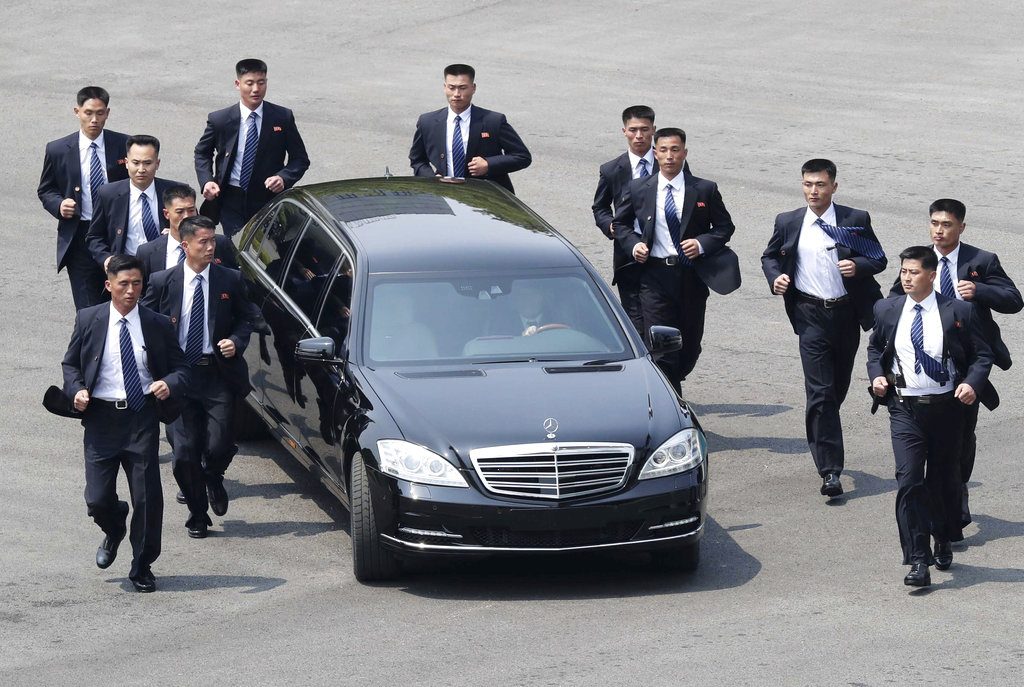
North Korean security personnel run by a car carrying North Korean leader Kim Jong Un returning to the North side for a lunch break after a morning session of the summit with South Korean President Moon Jae-in at the border village of Panmunjom in Demilitarized Zone on April 27, 2018. (Korea Summit Press Pool via AP)
AP18352859315703
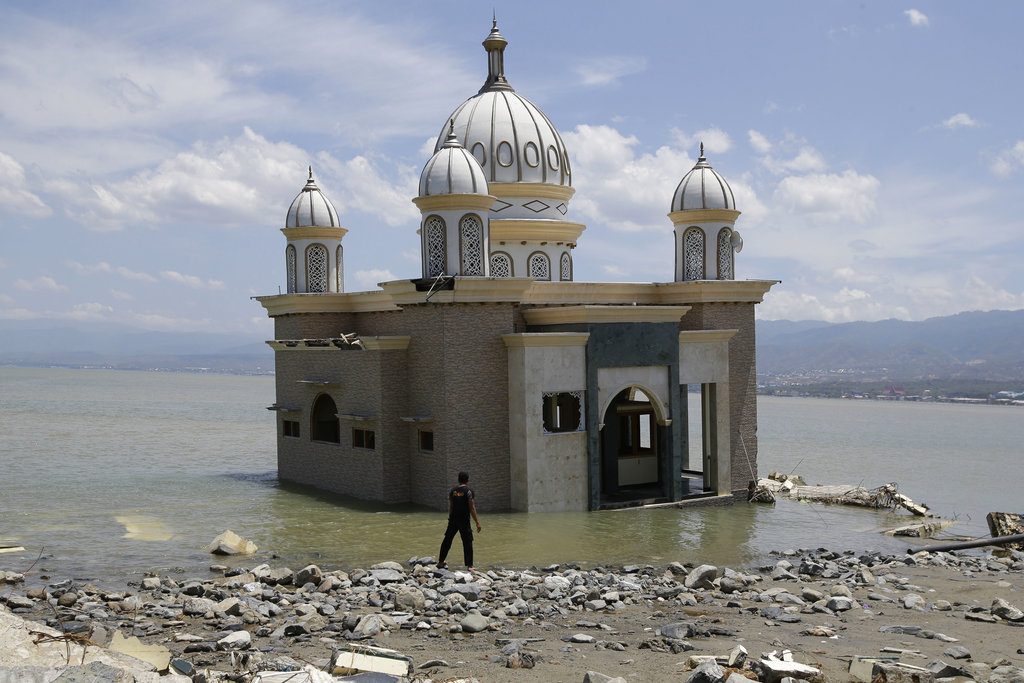
A man looks at a mosque that was isolated by water after its bridge was destroyed due to a massive earthquake and tsunami in Palu, Central Sulawesi, Indonesia, on Oct. 5, 2018. (AP Photo/Aaron Favila)
AP18352859466471
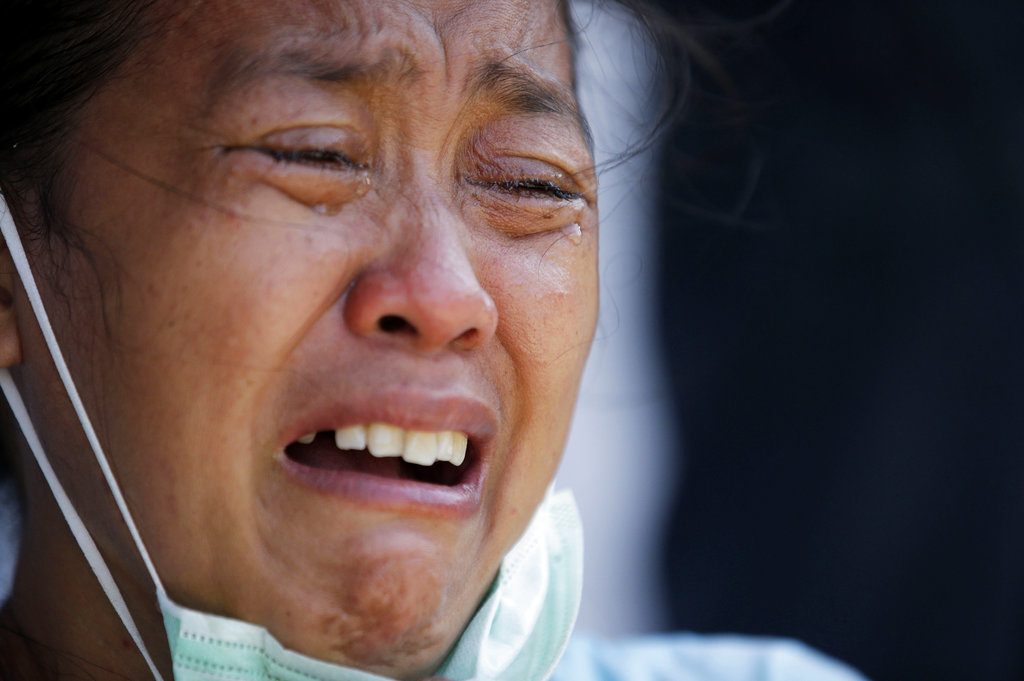
Aminah Gozah grieves after seeing the bodies of two of her three missing sons buried meters deep in the earthquake-damaged Balaroa neighboorhood in Palu, Central Sulawesi, Indonesia, on Oct. 6, 2018. (AP Photo/Aaron Favila)
AP18353004419472
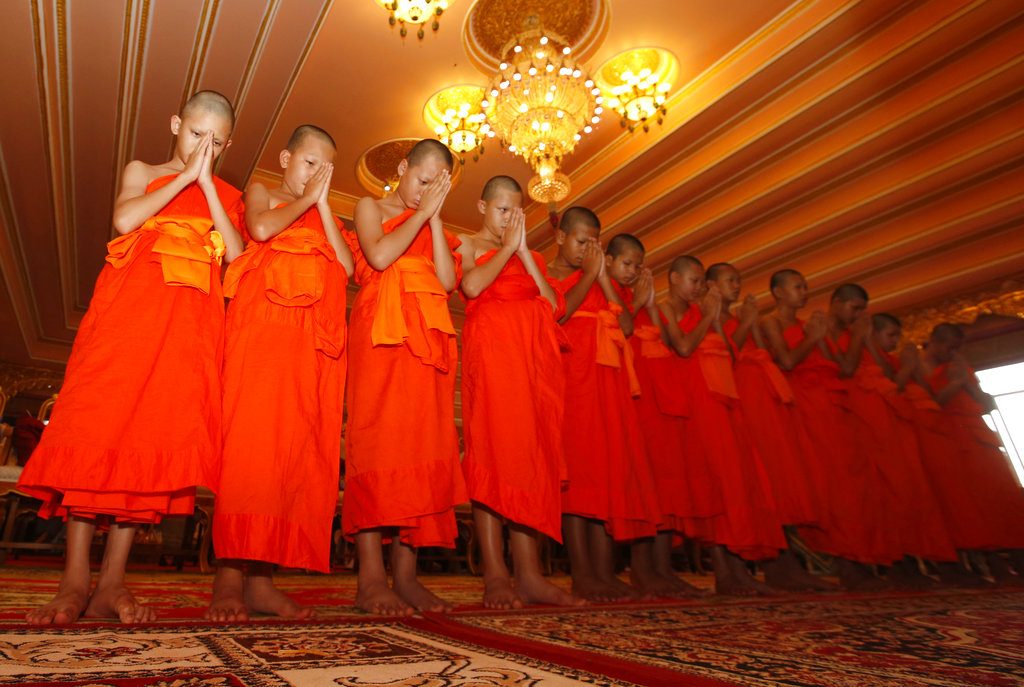
Members of Wild Boars soccer team pray during a ceremony marking the completion of their serving as novice Buddhist monks, following their dramatic rescue from a cave in Mae Sai district, Chiang Rai province, northern Thailand, on Aug. 4, 2018. (AP Photo/Sakchai Lalit)
AP18353004545981
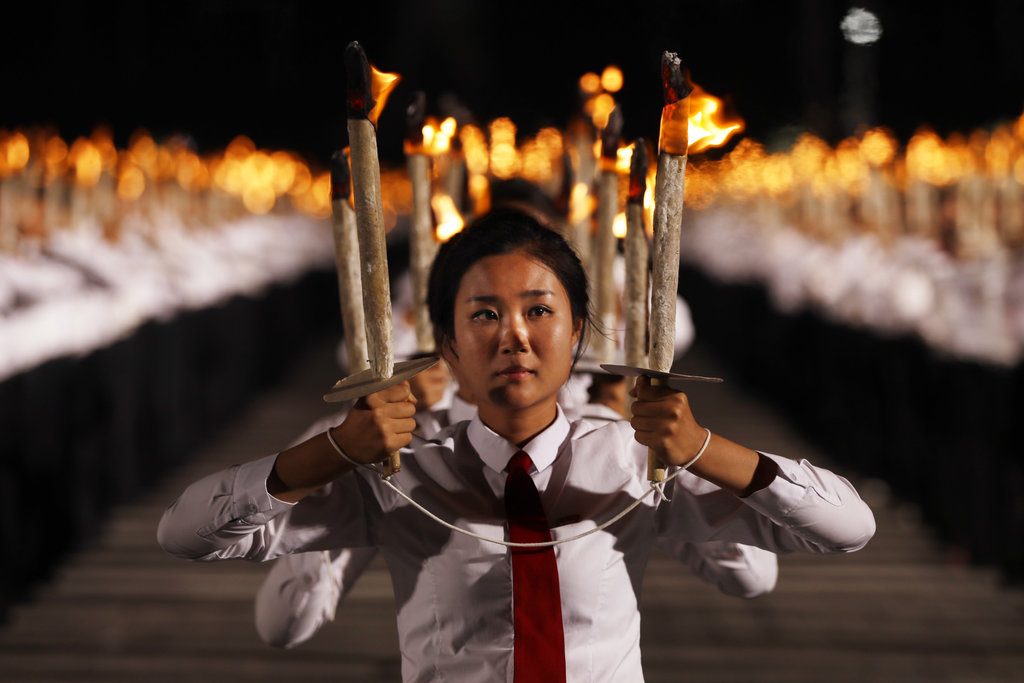
North Korean youths hold torches during a torch light march at the Kim Il Sung Square in conjunction with the 70th anniversary of North Korea’s founding day in Pyongyang, North Korea, on Sept. 10, 2018. (AP Photo/Kin Cheung)
AP18353004613446
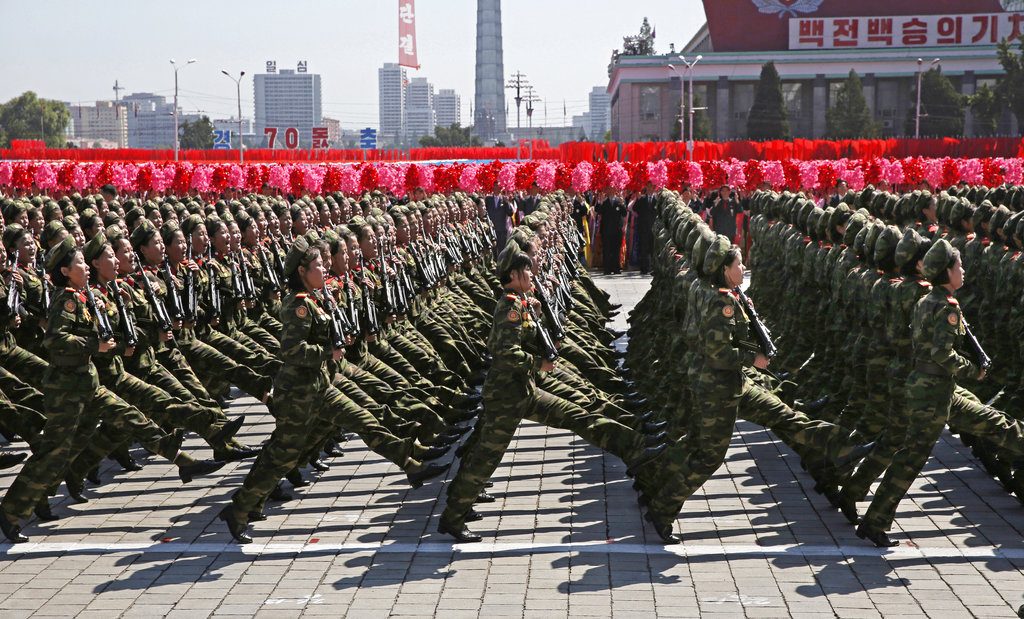
North Korean soldiers march during a parade for the 70th anniversary of North Korea’s founding day in Pyongyang, North Korea, on Sept. 9, 2018. (AP Photo/Kin Cheung)
AP18353007802498
A military band conductor leads the band at the opening session of the Chinese People’s Political Consultative Conference in Beijing’s Great Hall of the People on March 3, 2018. (AP Photo/Ng Han Guan)
AP18353025561410
A boy swims during a flood season in the floating village on the Mekong river bank on the outskirts of Phnom Penh, Cambodia, on Aug. 11, 2018. (AP Photo/Heng Sinith)
AP18353026189874
Indian para-military force soldiers push exiled Tibetan activists into a police bus during a protest outside the Chinese Embassy, in New Delhi, India, on March 9, 2018. (AP Photo/Manish Swarup)
AP18353034573675
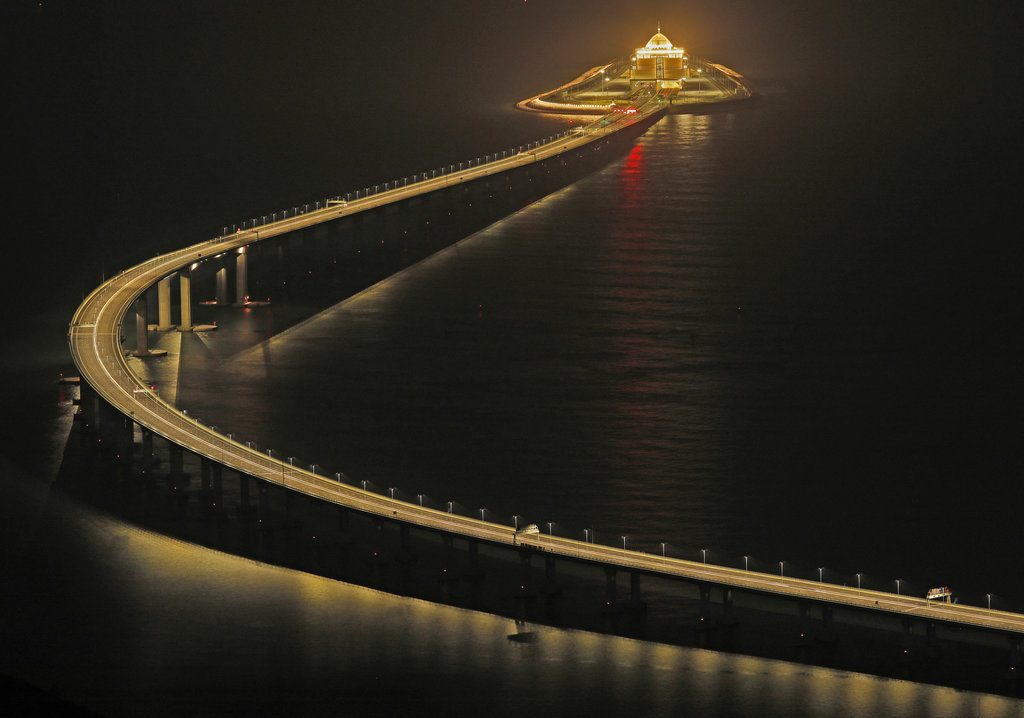
Hong Kong-Zhuhai-Macau Bridge, a total length of 55 kilometers (34 miles), is lit up in Hong Kong on Oct. 21, 2018. (AP Photo/Vincent Yu)
AP18353034639544
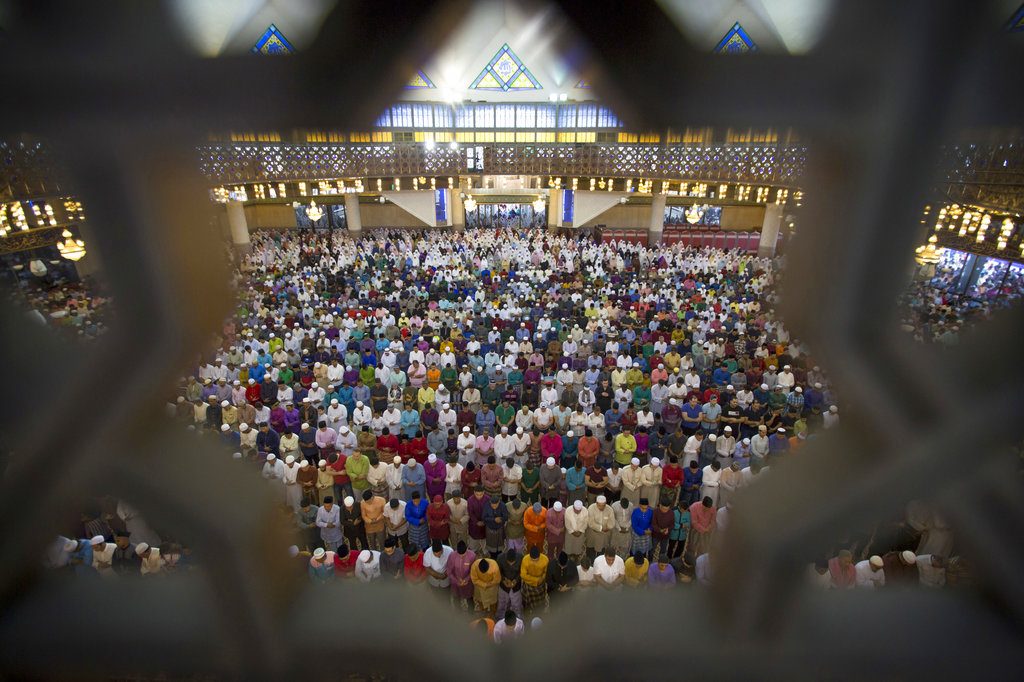
Malaysian Muslims offer prayers during the first day of Eid al-Fitr, which marks the end of the holy fasting month of Ramadan in Kuala Lumpur, Malaysia, on June 15, 2018. (AP Photo/Vincent Thian)
AP18353046120709
Nepalese rescuers stand near a passenger plane from Bangladesh that crashed at the airport in Kathmandu, Nepal, on March 12, 2018. (AP Photo/Niranjan Shreshta)
AP18352853316757
U.S. President Donald Trump, left, and North Korea leader Kim Jong Un walk from their lunch at the Capella resort on Sentosa Island in Singapore on June 12, 2018. (AP Photo/Evan Vucci)
AP18319463510033
A Rohingya refugee cries as he shouts slogan during a protest against the repatriation process at Unchiprang refugee camp near Cox’s Bazar, in Bangladesh, Thursday, Nov. 15, 2018. The head of Bangladesh’s refugee commission said plans to begin a voluntary repatriation of Rohingya Muslim refugees to their native Myanmar on Thursday were scrapped after officials were unable to find anyone who wanted to return. (AP Photo/Dar Yasin)
Advertisement

The Biggest Hits and Misses in Hollywood’s 2018

'Halloween' (2018)

A look at the biggest box-office hits and flops of 2018:

HIT: “Black Panther”: On a budget of $210 million, Ryan Coogler’s superhero film — the first to feature a predominantly black cast — grossed more than $700 million domestically (third highest all-time, not accounting for inflation) and $1.3 billion worldwide. It became the first movie to top the weekend box office five times in a row since “Avatar.”

MISS: “Solo: A Star Wars Story”: Not everything Disney did in 2018 was perfect; “The Nutcracker and the Four Realms” and “A Wrinkle in Time” also fizzled. But few disappointments were more acutely felt than the extensively retooled Han Solo spinoff directed by Ron Howard after original directors Phil Lord and Christopher Miller were jettisoned. On a production budget of at least $250 million, the heavily promoted spinoff grossed $392.9 million worldwide. It did worse than every previous “Star Wars” film, and the negative reaction from fans and critics forced Disney to reconsider its future plans for the franchise.

HIT: “A Quiet Place”: With just a $17 million budget, John Krasinski’s horror thriller grossed $340.7 million worldwide. The Paramount Pictures release was the biggest original hit of a year typically dominated by sequels, superheroes and reboots. Of course, “A Quiet Place” will get its own sequel, slated for release in 2020.

MISS: “Mortal Engines”: One of the year’s worst bombs arrived just as 2018 was coming to a close. The Peter Jackson-produced $100 million fantasy, from Universal, opened with a mere $7.5 million last weekend. Young Adult fantasies aren’t selling like they used to, especially when they come with big budgets and a 27 percent fresh rating on Rotten Tomatoes.

HIT: “Crazy Rich Asians”: Rom-coms have for years been largely absent from theaters, but the Warner Bros. adaption of the best-selling novel grossed $238 million worldwide on a $30 million budget. As the first studio release in 25 years to feature a predominantly Asian-American cast, it was another example of how diversity sells at the box office.

MISS: “The Happytime Murders”: Who could have foreseen that an R-rated puppet comedy would disappoint? The STX Entertainment release starred one of the most bankable stars in comedy, Melissa McCarthy, but it has managed only $27.5 million worldwide on a $40 million budget.

HIT: “Incredibles 2”: Success is usually expected of Pixar; all but one of their 20 releases has opened No. 1 (and the one that didn’t, “Inside Out,” grossed $857.6 million globally). But even by their high standards, Brad Bird’s “Incredibles” sequel was a massive hit. With $1.24 billion in worldwide sales from a $200 million budget, “Incredibles 2” ranks second behind only “Frozen” among animated movies in ticket sales.

MISS: “Robin Hood”: Just as audiences didn’t want another “Girl in With the Dragoon Tattoo,” they had little interest in more Robin Hood. The Taron Egerton-led return to Sherwood Forest, released by Lionsgate, cost $100 million to make but made out with just $72.9 million worldwide.

HIT: “Halloween”: Horror continued to dominate the box office — the “Conjuring” spinoff “The Nun” also ranked as one of the year’s most lucrative hits. But Blumhouse’s “Halloween” sequel, 40 years after the original, grossed $253.5 million worldwide on a budget of just $10 million. Starring Jamie Lee Curtis, 60, it now holds the record for best opening weekend for a film with a female lead over 55.

MISS: “London Fields”: It cost a modest $8 million to make, but the long-delayed Martin Amis adaptation starring Amber Heard was among the most widely ignored films of the year. After being held up for years by lawsuits, it opened with just $160,000 on 613 screens — a per-screen average of $262. It ranks as among the worst performing wide releases ever.

Advertisement

Hot News

LATEST NEWS

Bangkok
overcast clouds
31.6 ° C
33.9 °
30.5 °
69 %
5.8kmh
100 %
Mon
31 °
Tue
34 °
Wed
30 °
Thu
34 °
Fri
33 °