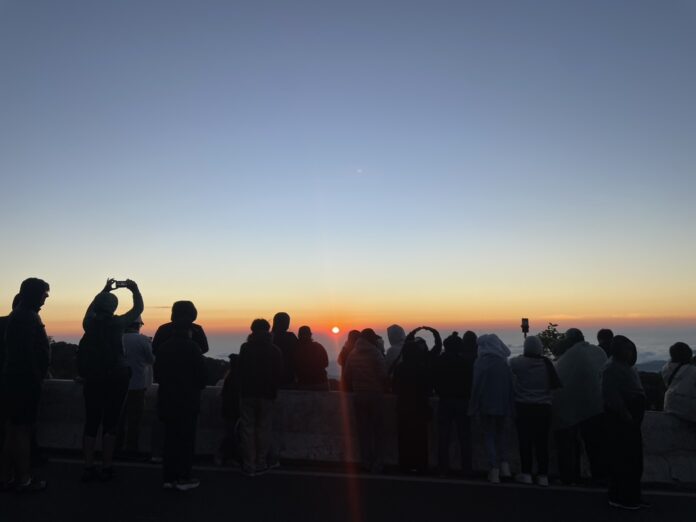
Visitors flock to Doi Inthanon, Thailand's highest peak, to enjoy cold weather on Dec. 19, 2025.
BANGKOK — Thailand’s tourism authority has set a target of attracting 6.7 million Chinese visitors in 2026, up at least 40% from an estimated 4.5–4.6 million arrivals this year, as it steps up joint marketing campaigns with Chinese partners, officials said Thursday.
Tourism Authority of Thailand (TAT) Governor Thapanee Kiatphaiboon said the growth strategy will center on monthly promotional activities under the theme “Zhong Tai Yi Jia Qin” (Thailand–China, One Family), including sales campaigns, cultural festivals and other demand-stimulation events throughout the year.
TAT has also expanded cooperation with Chinese counterparts, including the Haikou Municipal Bureau of Tourism, Culture, Radio, Television and Sports, and signed a letter of intent with Tongcheng Travel, one of China’s largest online travel platforms. The partnership aims to promote two-way tourism through airline ticketing, hotel bookings and joint marketing initiatives.
Tourism Authority of Thailand (TAT) Governor Thapanee Kiatphaiboon
Thapanee said Haikou, in China’s Hainan province, was selected as a partner because of its similar tourism potential and natural resources, allowing the two destinations to create travel linkages and attract international visitors. She described the cooperation as a “win-win” approach for both countries.
Tongcheng Travel’s extensive reach is expected to boost awareness of Thailand among Chinese and international travelers, while Hainan’s experience in meetings, incentives, conventions and exhibitions (MICE) tourism could help attract large-scale concerts and fan meetings to Thailand, she added.
Chinese arrivals rose 22% in January 2025 but weakened toward the end of February following the disappearance of Chinese actor Xing Xing near the Thai border, which triggered negative sentiment on Chinese social media, Thapanee said. The market was also affected by natural disasters, including earthquakes and floods.
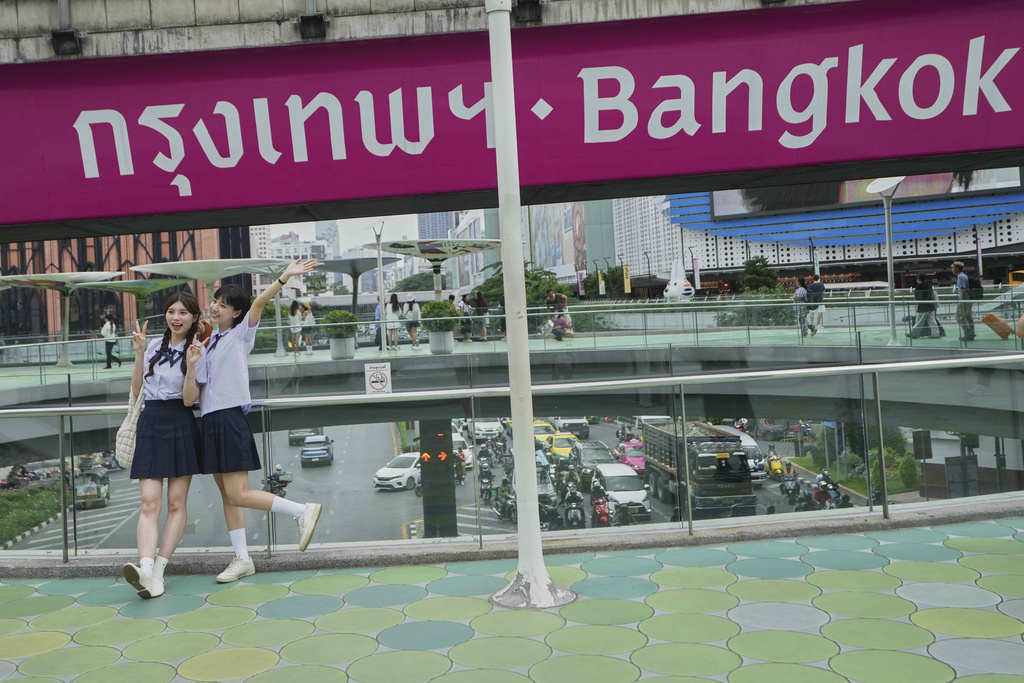
Chinese tourists in student costume pose for photographs in Bangkok, Thailand, Thursday, May 8, 2025. (AP Photo/Sakchai Lalit)
She said earlier stimulus campaigns, such as the Thailand Summer Blast promotion with online travel agencies, helped cushion the downturn, reducing the decline in Chinese arrivals from about 40% to 30%.
Looking ahead to the year-end holiday season, Thapanee said travel demand remains strong among both Thai and international tourists. Long-haul markets have been particularly robust, with cumulative arrivals exceeding 10 million, a record high, and projected to reach 11 million by the end of 2025.
Key long-haul markets include the United Kingdom, Russia and the United States, each surpassing 1 million visitors. In short-haul markets, India is expected to reach 2.5 million arrivals, above the original target of 2.3 million. Emerging markets such as Poland have recorded nearly 40% growth and rank among Thailand’s top 10 long-haul markets, with high spending per visitor, she said.
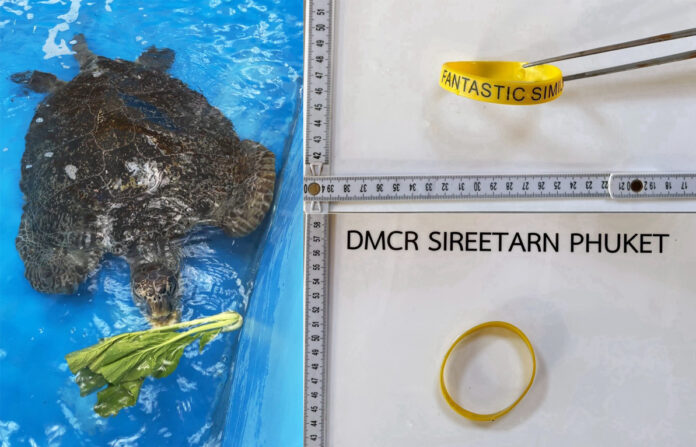
A sea turtle eats normally on Dec.18, 2025 after passing a wristband it swallowed, a process that took 27 days, according to Thai marine officials.
BANGKOK — Thai marine officials said a sea turtle has recovered after successfully excreting a plastic wristband it swallowed while interacting with tourists in the Andaman Sea.
Dr. Pinsak Suraswadi, director-general of the Department of Marine and Coastal Resources, said Thursday that the Upper Andaman Sea Marine and Coastal Resources Research Center confirmed the turtle’s condition had improved following weeks of veterinary care in Phuket.
The incident occurred on November 21, 2025, when a tourist fed a wristband to the turtle while snorkeling near the Similan Islands, officials said. National park officers later found the turtle near the Koh Ha–Koh Hok area and transported it to Thap Lamu Pier before transferring it to the research center for urgent medical evaluation.
A screenshot from a video shows a tourist offering a wristband to a sea turtle, which the animal swallowed while snorkeling in Thailand’s Andaman Sea.Dr. Pinsak Suraswadi, director-general of the Department of Marine and Coastal Resources
Veterinarians at the Siritharn Rare Marine Animal Rescue Center conducted continuous monitoring and diagnostic tests after the turtle’s admission. X-ray imaging with barium contrast on December 1 detected the wristband in the animal’s digestive tract.
Officials said the wristband, measuring about 20 centimeters in circumference, was mixed with fecal matter but did not cause an intestinal blockage. Blood test results remained within normal ranges, and the turtle was able to eat and excrete normally.
However, examinations of the feces revealed plant and fruit matter — including pineapple leaves, papaya seeds and banana leaves — that are not part of a sea turtle’s natural diet and cannot be properly digested.
An X-ray image shows a wristband inside the stomach of a sea turtle (left) on Dec.1, 2025. Officials later said the wristband was successfully excreted and the turtle’s condition has improved.
After daily health assessments, veterinarians confirmed that the turtle successfully passed the yellow wristband on December 18, along with banana leaves. The entire process, from ingestion to excretion, took 27 days.
Officials said the turtle will continue to be monitored, and authorities are coordinating with national park officials to determine an appropriate time for its release back into the wild. The department reiterated calls for stricter management of marine tourism activities, warning tourists not to feed sea turtles foreign objects or unnatural food.
Regarding the tourist involved, a tour company said the individual has already returned to their home country. The company said it issued a warning but did not file a police complaint, despite the director-general of the Department of National Parks previously ordering an investigation to identify the tourist for possible legal action.
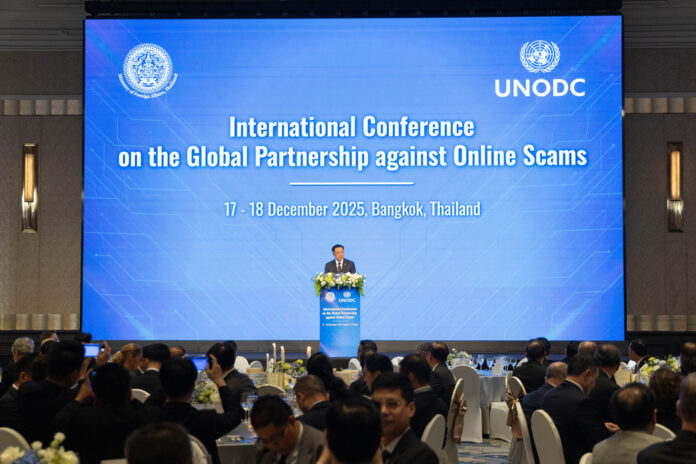
Thai Prime Minister Anutin Charnvirakul delivers his keynote speech during the International Conference on the Global Partnership against Online Scams in Bangkok, Thailand, on Wednesday, Dec. 17, 2025. (AP Photo/Anton L. Delgado)
BANGKOK (AP) — Thailand on Thursday helped launch a global effort to fight the spread of online scams that include criminal enterprises based largely in Southeast Asia estimated to bilk billions of dollars annually from victims around the world.
Thailand’s Ministry of Foreign Affairs and the United Nations Office on Drugs and Crime hosted a conference in Bangkok on Wednesday and Thursday culminating in the announcement of the new initiative called the Global Partnership Against Online Scams.
Thai Prime Minister Anutin Charnvirakul said in his keynote speech Wednesday that online scams “reveal a deeper problem — a collective vulnerability that no country can address alone.”
The partnership agreement signed by conference participants Thailand, Bangladesh, Nepal, Peru and the United Arab Emirates will include political commitment, law enforcement, victim protection and public awareness and cross-border collaboration, a statement said.
The conference received assistance from the private sector including internet giants Meta and TikTok.
Meta, the corporate owner of Facebook, Instagram and WhatsApp, presented a threat report underlining the increased use of artificial intelligence by scam networks and protocols the company is using in its attempts to stop scams on its social media platforms.
Social media application TikTok signed on to the conference’s closing statement, becoming one of the first private sector members of the partnership.
Scam centers, which extort money from victims online through bogus investment schemes and faked loved interests, have proliferated across Southeast Asia. Scam victims lost between $18 billion and $37 billion in 2023, the UNODC estimates.
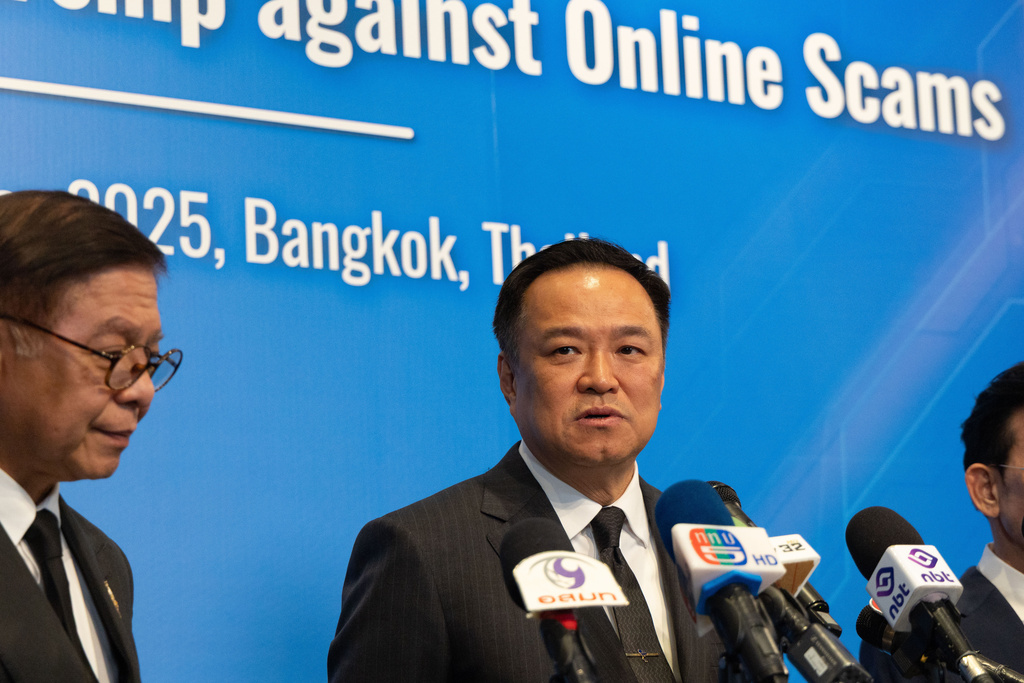
Thai Prime Minister Anutin Charnvirakul answers journalists’ questions during the International Conference on the Global Partnership against Online Scams in Bangkok, Thailand, on Wednesday, Dec. 17, 2025. (AP Photo/Anton L. Delgado)
The importance of private partnerships in anti-scam initiatives was stressed throughout the two-day conference in Thailand’s capital, which was attended by more than 300 participants from nearly 60 countries.
Brian Hanley, Asia-Pacific director of the Global Anti-Scam Alliance, which TikTok joined this month, explained it will be harder to combat criminal networks without “all the major stakeholders at the table.”
“Scams are exploiting, not only transnational boundaries, but also the seams across various platforms from banks, telcos, to social media platforms,” Hanley said.
The alliance describes itself as a collective effort to combat the scam problem by governments, law enforcement, consumer protection organizations and companies involved in social media, cybersecrity and other aspects of the internet.
“TikTok is the one that we’re talking about today, but hopefully tomorrow everyone’s joining,” Hanley said. “We’re starting to get critical mass and momentum as everyone realizes it’s affecting their bottom lines and consumer trust.”
Cambodia is known as a hub for scam compounds and has been criticized by its neighbor Thailand, but the two countries are engaged in an armed conflict and Cambodia was not represented at the conference.
Similar pledges to fight scam networks were made by members of the Association of Southeast Asian Nations in the months leading up to the Bangkok conference.
They include the United Nations Convention against Cybercrime, which more than 70 countries signed in October in Vietnam. U.N. Secretary-General António Guterres called the document “a vow that no country, no matter their level of development, will be left defenseless against cybercrime.”
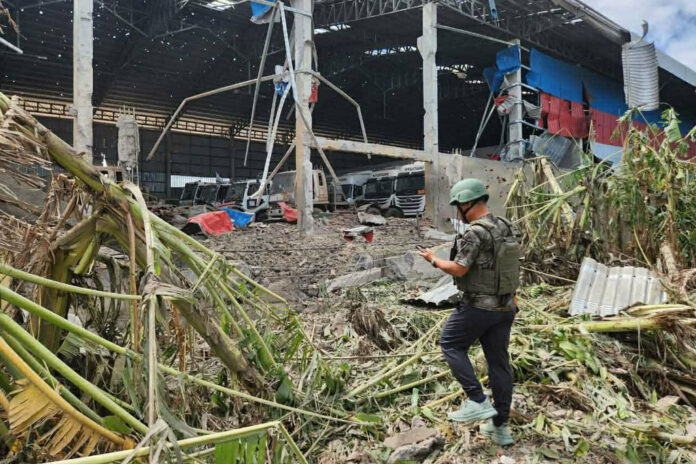
In this photo released by Agence Kampuchea Press (AKP), a distraction building is seen after a Thai bombing in Poipet town, Banteay Meanchey Province, Cambodia, Thursday, Dec. 18, 2025. (AKP via AP)
By SOPHENG CHEANG and JINTAMAS SAKSORNCHAI
PHNOM PENH, Cambodia (AP) — Thailand on Thursday carried out more airstrikes on Cambodia, claiming its jet fighters struck a warehouse where the Cambodian army had stored rockets that have been deployed to deadly effect in combat that began last week.
The two nations have been fighting over patches of territory along the border that both claim. Several disputed areas contain the remains of centuries-old temples that have been damaged by the fighting, with Thailand claiming Cambodian forces had used them as bases.
The latest round of widespread fighting began on Dec. 8, a day after a border skirmish wounded two Thai soldiers. Since then combat has broken out on several fronts, with Thailand carrying out airstrikes in Cambodia with F-16 fighter jets and Cambodia firing thousands of medium-range BM-21 rockets from truck-mounted launchers that can shoot up to 40 at a time.
Cambodia reported Thursday that Thai jets had dropped bombs on Poipet, a city in northwestern Cambodia that in peaceful times is its main hub for land-based trade with Thailand. It said Thai F-16s had dropped three bombs on a civilian residential neighborhood, damaging part of a warehouse and causing slight injuries to two civilians.
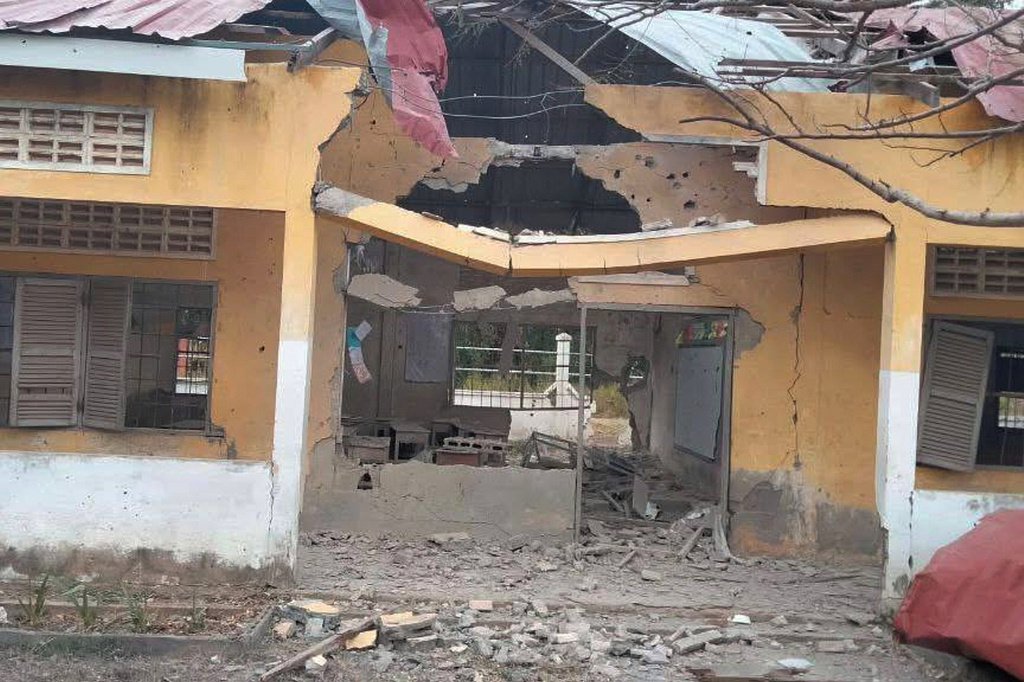
In this photo released by Agence Kampuchea Press (AKP), a damaged school is seen after a Thai bombing in Serei Sophaon, provincial town of Banteay Meanchey Province, Cambodia, Thursday, Dec. 18, 2025. (AKP via AP)
Information Minister Neth Pheaktra later said a second bombing struck Serei Sophaon, 46 kilometers (29 miles) east of Poipet in Banteay Meanchey province.
Thailand’s military acknowledged it had bombed Poipet, but claimed that Cambodia had given the impression it had hit the center of the city, while the target was actually on its outskirts.
Thai Air Force spokesperson Air Marshal Jackkrit Thammavichai said the targeted warehouse was attacked because it was used to store BM-21 rockets, and that every effort was made to avoid injuring civilians. The city has been largely evacuated since the latest fighting began.
The Thai military fires artillery towards Cambodia, Tuesday, Dec. 16, 2025, in Surin province, Thailand. (AP Photo/Wason Wanichakorn)
Media in Thailand reported that 21 soldiers have been killed since Dec. 8.
Thailand said one civilian died directly a result of combat, while 20 others died in circumstances related to the conflict, such as stress during evacuation.
Cambodia’s Interior Ministry said Thursday that 18 civilians were killed and 79 were injured since Dec. 8. It has not announced military deaths, which Thailand has estimated at more than 200.
Each side blames the other for initiating the fighting and claims to be acting in self defense.
In this photo released by Agence Kampuchea Press (AKP), a distraction building is seen after a Thai bombing in Poipet town, Banteay Meanchey Province, Cambodia, Thursday, Dec. 18, 2025. (AKP via AP)
In July, five days of fighting ended with a ceasefire promoted by U.S. President Donald Trump. It had been brokered by Malaysia and pushed through by pressure from Trump, who threatened to withhold trade privileges unless Thailand and Cambodia agreed. It was formalized in more detail in October at a regional meeting in Malaysia that Trump attended.
Trump announced last week that the two countries had agreed at his urging to renew the ceasefire, but Thai Prime Minister Anutin Charnvirakul denied making any commitment and Cambodia announced it was continuing to fight,
Malaysia’s Prime Minister Anwar Ibrahim has continued his efforts to make peace, and China, a close ally of Cambodia that also maintains good relations with Thailand, said it was sending a special envoy to both countries this week to seek an end to the fighting.
——-
Associated Press writer Jintamas reported from Bangkok.
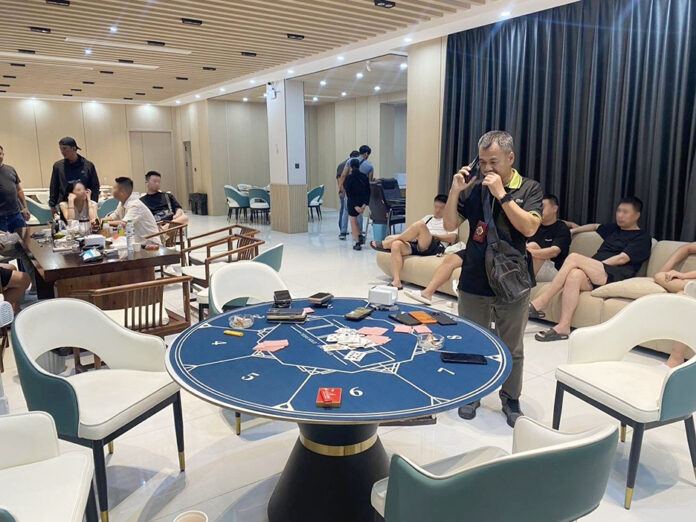
Five Chinese nationals arrested at luxury Pattaya hotel for operating illegal gambling operation on Dec.17, 2025.
CHONBURI — Immigration police arrested 24 foreign nationals in two separate raids—one in Pattaya and another in a nearby area—authorities announced Thursday.
Officers arrested five Chinese nationals for illegal gambling at a luxury hotel in Na Kluea subdistrict after receiving reports of gambling activity, according to immigration police in Chonburi Province.
Four men — Wen Hao, 43, Zhaiqiang, 55, Di, 43, and Fangming, 41 — face charges of illegal gambling involving a three-card game. Long Lin, 49, was charged with organizing gambling for profit. All were transferred to Bang Lamung police station.
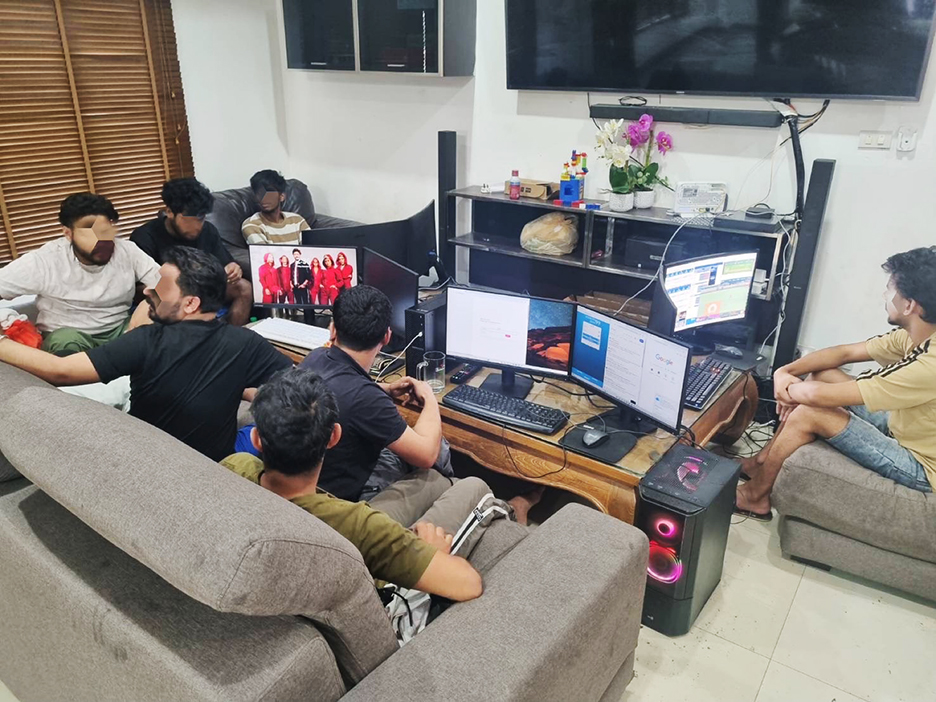
In a separate operation, immigration officers raided a rented house in Nong Prue subdistrict and arrested 19 Indian nationals accused of selling sexual enhancement drugs and sex toys online.
Immigration police arrest 19 Indian nationals accused of running online sex toy and enhancement drug operation from rented house in Nong Prue, Chonburi Province
Police Lt. Gen. Panthana Nuchanart, deputy commander of the Immigration Bureau, said on December 18 that officers seized six computers, 21 mobile phones and large quantities of products during the raid.
The alleged ringleader, Sunil, 40, told investigators he and the others entered Thailand on visa-free entry and had operated the online business for three months, earning about 9,000 baht ($286) monthly each.
The 19 face charges including overstaying their visas and working without permits.
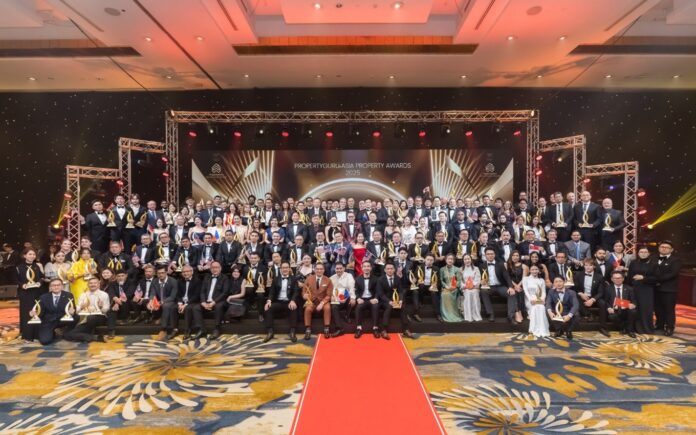
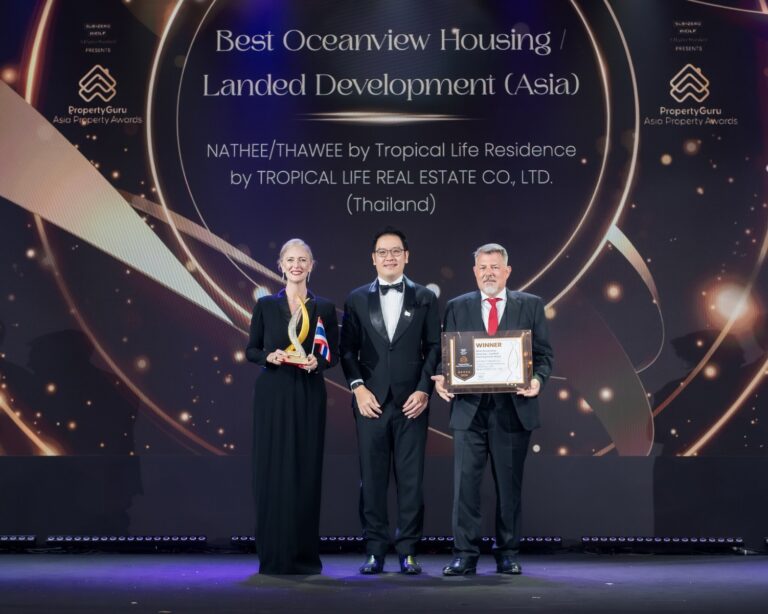
The 20th PropertyGuru Asia Property Awards concluded at its Grand Final, celebrating Asia’s finest real estate achievements across more than 90 “Best in Asia” categories, with a spotlight on innovation, design excellence, and long-term sustainability.
Thailand developers secured seven Best in Asia wins. Leading the success was Reignwood Park, which claimed Best Luxury Mega Township Development (Asia). Additional honours recognised luxury homes, coastal residences, and lifestyle-driven projects by AP (Thailand) Public Company Limited, Pruksa Real Estate Public Company Limited, Triya, and Tropical Life Real Estate Co., Ltd. Thailand’s strength in retail and mixed-use design was also spotlighted with Lead8 awarded for its work on Parade at One Bangkok.
A further highlight for Thailand was the presentation of the PropertyGuru Icon Award to Supaluck Umpujh, chairwoman of The Mall Group, in recognition of her enduring impact on Thailand’s retail and mixed-use landscape, including the award-winning EM District in Bangkok.
Malaysia emerged as the top-performing country with 17 Best in Asia titles, followed by Indonesia with 15 wins and Vietnam with 14. Singapore developers earned 11 awards, including Best Residential Developer (Asia) for UOL Group Limited, while the Philippines secured 10 wins.
Other notable winners included Henderson Land Development Company Limited of Hong Kong as Best Developer (Asia), projects from Australia and Japan, and honours for developments in Sri Lanka and the Middle East.
Jules Kay, general manager of PropertyGuru Asia Property Awards and Events, said: “We conclude the landmark 20th edition of the PropertyGuru Asia Property Awards series on a highly positive note, echoing industry resilience in over 600 awards across 13 distinct real estate markets that continue to overcome headwinds and capitalise on strategic opportunities in the current cycle. This year’s Best in Asia winners showcase record-setting skyscrapers, large-scale townships, transit-oriented developments, premium and affordable homes, flexible spaces, and urban landmarks, designed with ambition for long-term value and guided by environmental and social considerations. We look forward to the new standards of sustainable development that developers in Asia will deliver over the next 20 years.”
For the full list of winners, visit https://www.asiapropertyawards.com
Vachirawit Kaew-udom,Tax Director in Tax Controversy, Forvis Mazars Thailand
Have you ever wondered why your tax refund feels like it is taking the scenic route after you submit a tax return?
Some companies file their returns and receive refunds shortly afterward. No follow-up. No questions. No drama. Others, however, receive a polite message from the Thai Revenue Department (TRD) informing them that their cases have been selected for a tax audit before any refund is released.
Same form. Same deadline. Very different outcomes.
So what makes the difference?
More often than not, the answer lies in the Risk-Based Audit (RBA) system used by the TRD.
What Is Risk-Based Audit (RBA)?
“Every year, the TRD processes a large number of tax returns and refund requests. Auditing every single case in detail would be impractical and time-consuming.” Said Vachirawit Kaew-udom,Tax Director in Tax Controversy, Forvis Mazars Thailand
That is why the TRD applies a Risk-Based Audit system. The system helps assess the relative risk level of each taxpayer and determines which cases may require closer review.
In practice:
Low-risk taxpayers, often referred to as “good taxpayers,” may receive refunds without undergoing a detailed audit.
Higher-risk taxpayers, based on certain indicators, may be subject to a tax audit before their refunds are approved.
Importantly, RBA is not limited to refund cases. It is also a key tool used by the TRD to select taxpayers for random or targeted tax audits, even when no refund is claimed.
How Does the RBA System Work?
The exact criteria used by the RBA system are confidential. However, it is widely understood that the system evaluates a large number of risk indicators using information from tax filings and other available data sources.
These indicators are not fixed. They are reviewed and adjusted periodically and tailored based on economic conditions, policy focus, and audit priorities in a given year.
This approach allows the TRD to allocate audit resources more efficiently and focus attention on filings that may warrant closer review.
Common Factors That May Trigger RBA Attention
Based on practical experience, the following factors may increase the likelihood of a taxpayer being flagged under the RBA system. While they do not automatically result in an audit, they may prompt additional questions.
Significant Retained Earnings
A substantial amount of retained earnings can attract attention, particularly when it is not clearly supported by business activities. The TRD may seek to understand whether this reflects profit shifting or other tax-sensitive transactions.
This has become increasingly common, especially for companies with frequent overseas payments to related parties.
Discrepancies with External Data Sources
The RBA system does not rely solely on information reported in tax returns. It may cross-check data against other government databases, such as Customs Department records.
For example, material differences between export figures reported in VAT returns and customs data can lead to further inquiries. Aligning information across filings helps reduce this risk.
Unusual Expense Presentation in PND 50
How expenses are grouped and reported in a corporate income tax return (PND 50) matters more than many companies expect.
Certain expense categories, such as entertainment expenses, are subject to specific deductibility limits under Thai tax law. Amounts that exceed expected thresholds or lack sufficient explanation may trigger follow-up questions and potentially broaden the scope of an audit.
Final Thoughts
The examples discussed above represent only part of what the RBA system may consider, and the TRD’s internal assessment methods continue to evolve.
The good news is that many potential risks can be identified and addressed early. A structured review can help companies better understand their risk profile under the RBA framework and reduce unexpected scrutiny.
Forvis Mazars in Thailand regularly assists companies in reviewing tax positions through an RBA-focused lens. This includes identifying potential risk areas and supporting proactive remediation before any questions arise from the tax authorities.
In tax matters, preparation and clarity go a long way. It is always better to check your health before seeing the doctor.
Bangkok — Jan29 Co., Ltd. (Public), a comprehensive event management and marketing communications provider for the public sector and state enterprises, has revised its IPO plan in line with current market conditions, targeting a listing on the Market for Alternative Investment (mai) in early 2026.
Mr. Phachara Sunthornwiphat, CEO, said the Company has strengthened its business structure, accounting systems, and internal controls to meet SEC and SET requirements, reinforcing investor confidence and long-term growth.
Jan29 meets mai listing qualifications. Since 2023, it has adopted PAEs standards and is audited by DIA International Co., Ltd., with stable revenue mainly from government projects.
Revenue grew from THB 343.07 million in 2022 to THB 398.78 million in 2023 (+16.24%). In 2024, revenue was THB 360.47 million (-9.61%) due to political factors and delayed government budgets, while net profit rose 8.97% to THB 32.34 million following expansion into private-sector clients.
In 2025, secured government projects exceed THB 400 million. Accumulated net profit for 2022–2024 totaled THB 68.19 million, with shareholders’ equity of THB 81.44 million and a backlog over THB 400 million.
With Thailand’s event industry projected to reach THB 14–15 billion in 2025, Jan29 increased registered capital to THB 100 million and plans an IPO of up to 60 million shares (30%).
IPO proceeds will support working capital and expansion under “Innovation, Entertainment & Experience,” including concerts, festivals, world-class events, and MarTech services.
“Listing on the mai will enhance transparency and corporate standards, supporting our goal of THB 1 billion revenue by 2026–2027,” Mr. Phachara said.
FILE - The flags of Thailand, left, and Cambodia, right, are seen ahead of the ceremonial signing of a ceasefire agreement between Thailand and Cambodia on the sidelines of the 47th Association of Southeast Asian Nations (ASEAN) summit in Kuala Lumpur, Malaysia, Sunday, Oct. 26, 2025. (Mohd Rasfan/Pool Photo via AP, File)
M y eyes are brimming with tears upon reading this beautiful letter written by a young Cambodian student to me, partly wondering what more we can do amidst the continuation of this needless war between our two countries nearing its second week now. All is not lost, perhaps. Let us, Thais and Cambodians who stand for peace, double our efforts.
Here’s the letter, with her name removed for her safety.
—
Hello Mr. Rojanaphruk,
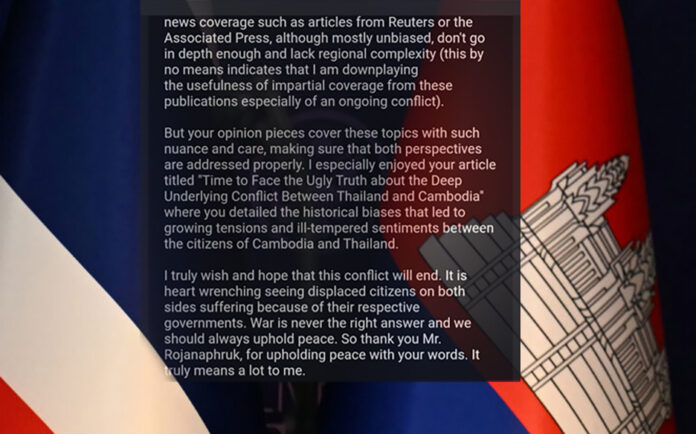
I hope you’re doing well! My name is ….., a Cambodian student who is passionate about Journalism. I just wanted to write to you expressing my deep appreciation for your coverage of the ongoing Thailand-Cambodia border conflict.
I’ve been following the conflict closely ever since the first flare-up in July, constantly reading news that has left me constantly worried for the sake of the citizens on both sides. Reading about bombings, air strikes, and displacement isn’t particularly good for your soul. This conflict has been especially eye-opening to me, especially as a young Cambodian, in the sense that I’ve truly realised that information CAN be subjective at times depending on how you frame it.
Amidst all the nationalistic rhetoric and biased news coverage from both sides, I found your articles extremely informative and deeply introspective. Many news articles from either Cambodia or Thailand usually push their own nationalistic agenda and international news coverage such as articles from Reuters or the Associated Press, although mostly unbiased, don’t go in depth enough and lack regional complexity (this by no means indicates that I am downplaying the usefulness of impartial coverage from these publications especially of an ongoing conflict).
But your opinion pieces cover these topics with such nuance and care, making sure that both perspectives are addressed properly. I especially enjoyed your article titled “Time to Face the Ugly Truth about the Deep Underlying Conflict Between Thailand and Cambodia” where you detailed the historical biases that led to growing tensions and ill-tempered sentiments between the citizens of Cambodia and Thailand.
I truly wish and hope that this conflict will end. It is heart wrenching seeing displaced citizens on both sides suffering because of their respective governments. War is never the right answer and we should always uphold peace. So thank you Mr. Rojanaphruk, for upholding peace with your words. It truly means a lot to me.
Warmest Regards,
….
And here is my reply to her:
Dear Miss …
Thank you so much for your very kind letter which touched me deeply. I will continue to do what I can to play a tiny part in forging a better understanding between our two nations and for peace. It’s best for both Thailand and Cambodia to be neighbours rather than enemies.
Let us do whatever we can to work toward that goal.
FILE - Associated Press correspondent Peter Arnett, left, marches with Vietnamese troops in Vietnam, Nov. 11, 1965. (AP Photo, File)
LOS ANGELES (AP) — Peter Arnett, the Pulitzer Prize-winning reporter who spent decades dodging bullets and bombs to bring the world eyewitness accounts of war from the rice paddies of Vietnam to the deserts of Iraq, has died. He was 91.
Arnett, who won the 1966 Pulitzer Prize for international reporting for his Vietnam War coverage for The Associated Press, died Wednesday in Newport Beach and was surrounded by friends and family, said his son Andrew Arnett. He had been suffering from prostate cancer.
“Peter Arnett was one of the greatest war correspondents of his generation — intrepid, fearless, and a beautiful writer and storyteller. His reporting in print and on camera will remain a legacy for aspiring journalists and historians for generations to come,” said Edith Lederer, who was a fellow AP war correspondent in Vietnam in 1972-73 and is now AP’s chief correspondent at the United Nations.
As a wire-service correspondent, Arnett was known mostly to fellow journalists when he reported in Vietnam from 1962 until the war’s end in 1975. He became something of a household name in 1991, however, after he broadcast live updates for CNN from Iraq during the first Gulf War.
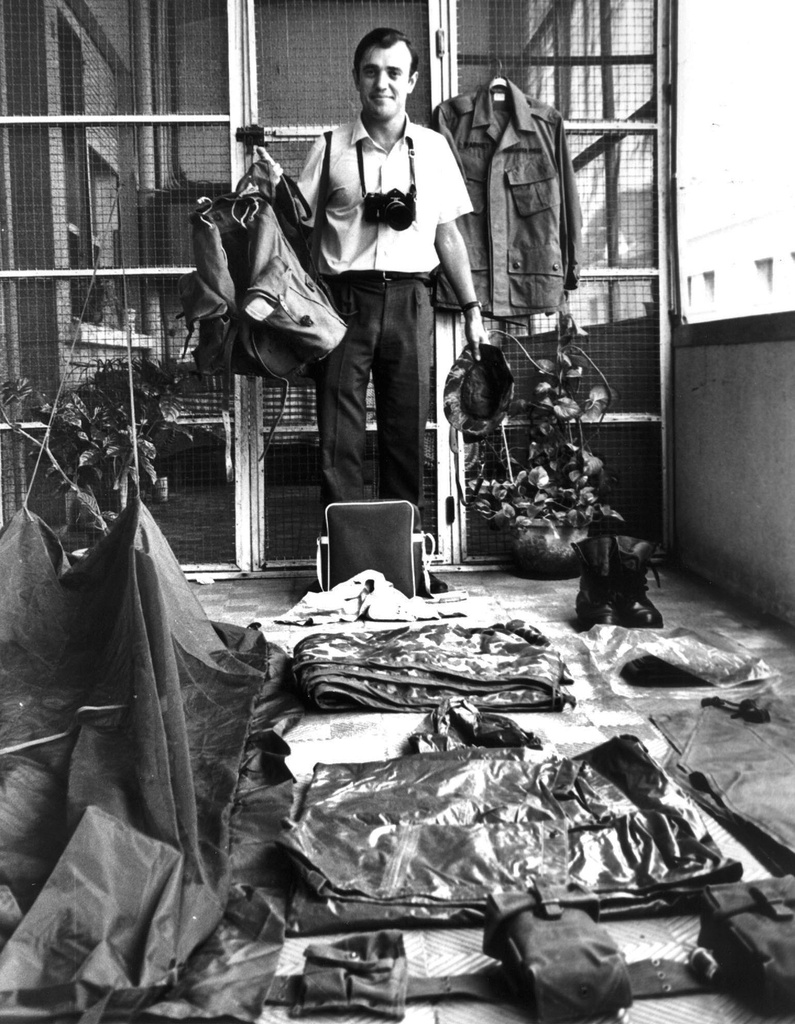
FILE – Associated Press correspondent Peter Arnett stands with gear that he carries out in field while covering the Vietnamese army 1963, in Saigon, Vietnam. (AP Photo, File)
While almost all Western reporters had fled Baghdad in the days before the U.S.-led attack, Arnett stayed. As missiles began raining on the city, he broadcast a live account by cellphone from his hotel room.
“There was an explosion right near me, you may have heard,” he said in a calm, New Zealand-accented voice moments after the loud boom of a missile strike rattled across the airwaves. As he continued to speak air-raid sirens blared in the background.
“I think that took out the telecommunications center,” he said of another explosion. “They are hitting the center of the city.”
Reporting from Vietnam
It was not the first time Arnett had gotten dangerously close to the action.
In January 1966, he joined a battalion of U.S. soldiers seeking to rout North Vietnamese snipers and was standing next to the battalion commander when an officer paused to read a map.
“As the colonel peered at it, I heard four loud shots as bullets tore through the map and into his chest, a few inches from my face,” Arnett recalled during a talk to the American Library Association in 2013. “He sank to the ground at my feet.”
He would begin the fallen soldier’s obituary like this: “He was the son of a general, a West Pointer and a battalion commander. But Lt. Colonel George Eyster was to die like a rifleman. It may have been the colonel’s leaves of rank on his collar, or the map he held in his hand, or just a wayward chance that the Viet Cong sniper chose Eyster from the five of us standing in that dusty jungle path.”
Arnett had arrived in Vietnam just a year after joining AP as its Indonesia correspondent. That job would be short-lived after he reported Indonesia’s economy was in shambles and the country’s enraged leadership threw him out. His expulsion marked only the first of several controversies in which he would find himself embroiled, while also forging an historic career.
At the AP’s Saigon bureau in 1962, Arnett found himself surrounded by a formidable roster of journalists, including bureau chief Malcolm Browne and photo editor Horst Faas, who between them would win three Pulitzer Prizes.
He credited Browne in particular with teaching him many of the survival tricks that would keep him alive in war zones over the next 40 years. Among them: Never stand near a medic or radio operator because they’re among the first the enemy will shoot at. And if you hear a gunshot coming from the other side, don’t look around to see who fired it because the next one will likely hit you.
Arnett would stay in Vietnam until the capital, Saigon, fell to the Communist-backed North Vietnamese rebels in 1975. In the time leading up to those final days, he was ordered by AP’s New York headquarters to begin destroying the bureau’s papers as coverage of the war wound down.
Instead, he shipped them to his apartment in New York, believing they’d have historic value someday. They’re now in the AP’s archives.
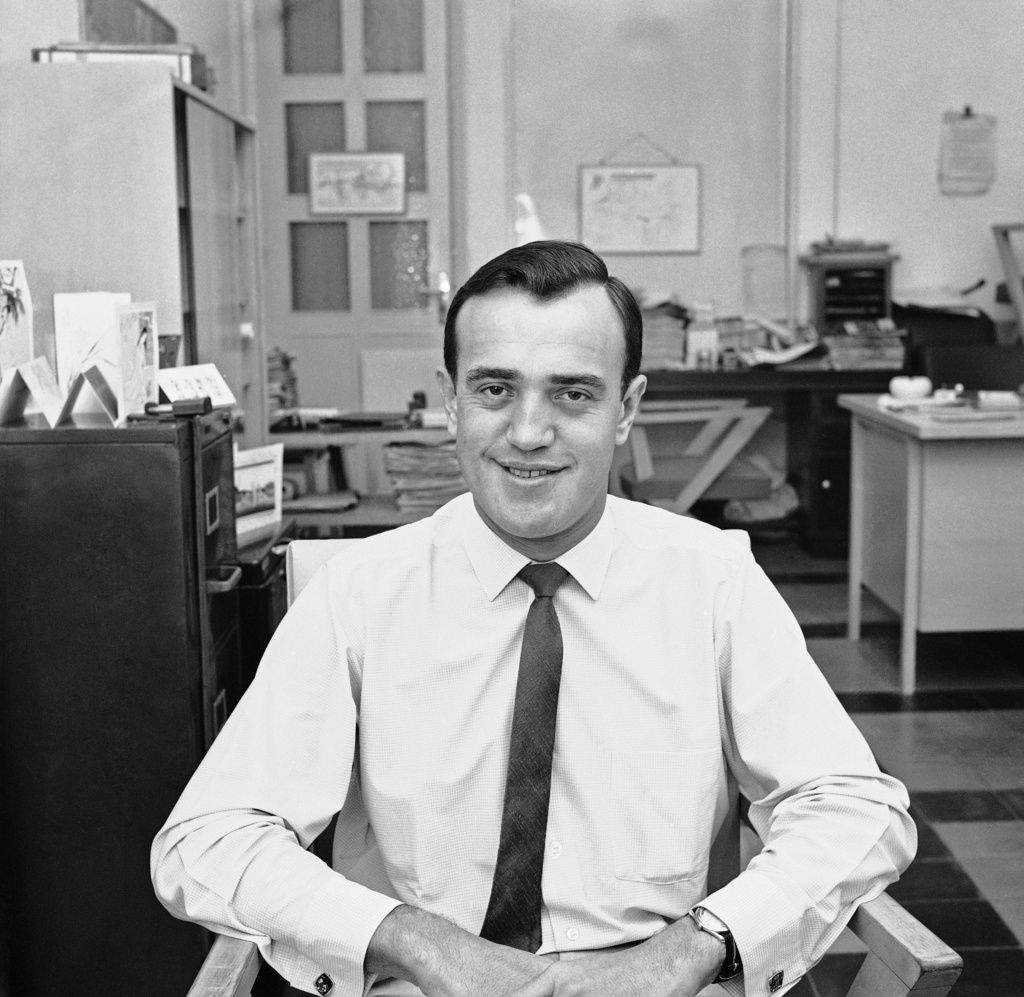
FILE – Associated Press correspondent Peter Arnett sits for a portrait in Kuala Lumpur, Malaysia, March 18, 1963. (AP Photo, File)
A star on cable news
Arnett remained with the AP until 1981, when he joined the newly-formed CNN.
Ten years later he was in Baghdad covering another war. He not only reported on the front-line fighting but won exclusive, and controversial, interviews with then-President Saddam Hussein and future 9/11 mastermind Osama bin Laden.
In 1995 he published the memoir, “Live From the Battlefield: From Vietnam to Baghdad, 35 Years in the World’s War Zones.”
Arnett resigned from CNN in 1999, months after the network retracted an investigative report he did not prepare but narrated alleging that deadly Sarin nerve gas had been used on deserting American soldiers in Laos in 1970.
He was covering the second Gulf War for NBC and National Geographic in 2003 when he was fired for granting an interview to Iraqi state TV during which he criticized the U.S. military’s war strategy. His remarks were denounced back home as anti-American.
After his dismissal, TV critics for the AP and other news organizations speculated that Arnett would never work in television news again. Within a week, however, he had been hired to report on the war for stations in Taiwan, the United Arab Emirates and Belgium.
In 2007, he took a job teaching journalism at China’s Shantou University. Following his retirement in 2014, he and his wife, Nina Nguyen, moved to the Southern California suburb of Fountain Valley.
Born Nov. 13, 1934, in Riverton, New Zealand, Peter Arnett got his first exposure to journalism when he landed a job at his local newspaper, the Southland Times, shortly after high school.
“I didn’t really have a clear idea of where my life would take me, but I do remember that first day when I walked into the newspaper office as an employee and found my little desk, and I did have a — you know — enormously delicious feeling that I’d found my place,” he recalled in a 2006 AP oral history.
After a few years at the Times, he made plans to move to a larger newspaper in London. En route to England by ship, however, he made a stop in Thailand and fell in love with the country.
Soon he was working for the English-language Bangkok World, and later for its sister newspaper in Laos. There he would make the connections that led him to the AP and a lifetime of covering war.
Arnett is survived by his wife and their children, Elsa and Andrew.
“He was like a brother,” said retired AP photographer Nick Ut, who covered combat in Vietnam with Arnett and remained his friend for a half century. “His death will leave a big hole in my life.”
___
AP journalist Audrey McAvoy contributed to this report.