Hino Motors Sales (Thailand) Ltd. successfully hosted the 31st Hino TS Contest 2025, reaffirming its commitment to enhancing the skills and professionalism of dealer personnel nationwide. The competition covered three key areas — Sales, Service, and Spare Parts — under the concept “Finding the Best Hino Professionals,” reflecting Hino’s dedication to delivering Total Support and the corporate slogan “Hino, Always Your Professionals.”
Held on December 4, 2025, at the IMPACT Forum, Muang Thong Thani, the event was honored by executives from government agencies, business partners, and Hino Group companies from Thailand and Japan. The competition was supported by Ms. Yumiko Kawamura, President of Hino Motors Sales (Thailand) Ltd., and the management team.
This year, 409 participants from 74 teams nationwide competed, demonstrating strong commitment to developing their knowledge, skills, and mindset. Competition topics focused on Euro 5 product knowledge, customer service standards, parts systems, maintenance processes, and practical problem-solving.
Winners of the Hino TS Contest 2025
Overall Highest Score (All 3 Categories):
Hino Kanchanaburi Co., Ltd.
Sales Category:
Winner: Ms. Atchara Chutilanjakorn
1st Runner-up: Mr. Namchai Mutusit
2nd Runner-up: Mr. Nattapushit Manop
Honorable Mention: Ms. Niramol Chaowarit
Service Category:
Winner: Suthep Motor Sales 1993 Team
1st Runner-up: Chairatchakarn (Chonburi) Team
2nd Runner-up: Chairatchakarn (Chiangmai) Team
Honorable Mention: Chairatchakarn Chachoengsao Team
Spare Parts Category:
Winner: Mr. Wisut Tadsuan
1st Runner-up: Ms. Busayaporn Khetruksa
2nd Runner-up: Mr. Apiram Sammawon
Honorable Mention: Mr. Somchai Yangsoong
Hino extends its appreciation to all participants, dealer representatives, and partners for their strong support. The company remains committed to using the TS Contest as a key platform for developing highly skilled and professional personnel to deliver the best customer experience nationwide.
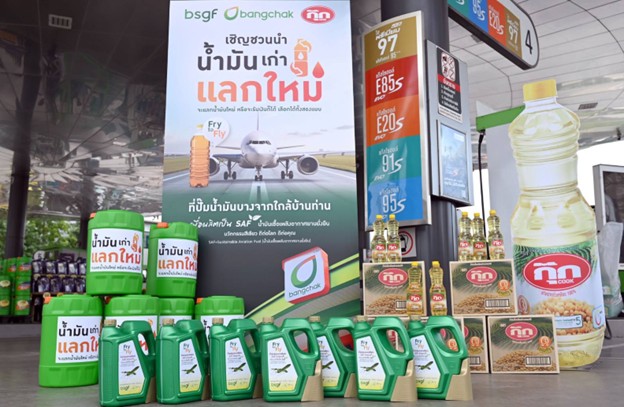
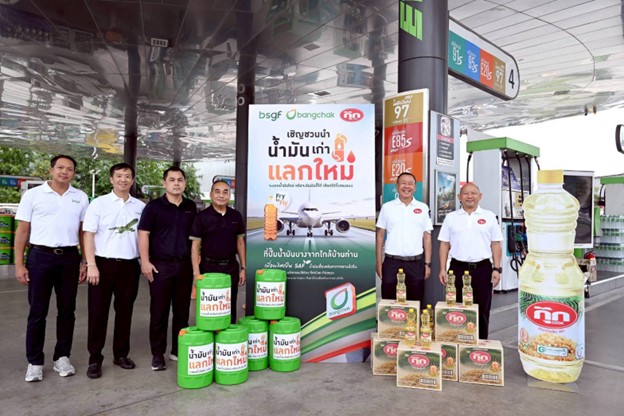
In celebration of Thai Environment Day on 4 December 2025, Thanakorn Vegetable Oil Products Co., Ltd., producer of Cook soybean oil, in collaboration with Bangchak Group, announced the launch of the “Used Oil for New Value” initiative. The program aims to promote responsible waste segregation and encourage the transformation of used resources into environmental and social benefits.
Designated collection points have been set up at Bangchak service stations across Bangkok and the metropolitan area for exchanging used cooking oil.
Executives from Thanakorn Vegetable Oil Products Co., Ltd., led by Mr. Adul Premprasert, Chief Executive Officer, and Mr. Petch Wanglee, Managing Director, joined forces with executives from Bangchak Group, represented by Mr. Wattana Pornpattakul, Senior Vice President, Retail Business, Marketing Business Group, Bangchak Corporation Public Company Limited; Mr. Atit Chinantanasiri, Assistant Managing Director, Oil Depot and Automotive Pipeline System, Bangkok Fuel Pipeline and Logistics Co., Ltd. (BFPL); Mr. Preecha Suthilerarun, Managing Director, Bangchak Green Net Co., Ltd.; and Mr. Suraporn Phetdi, General Manager, BSGF Co., Ltd., to formally inaugurate the initiative.
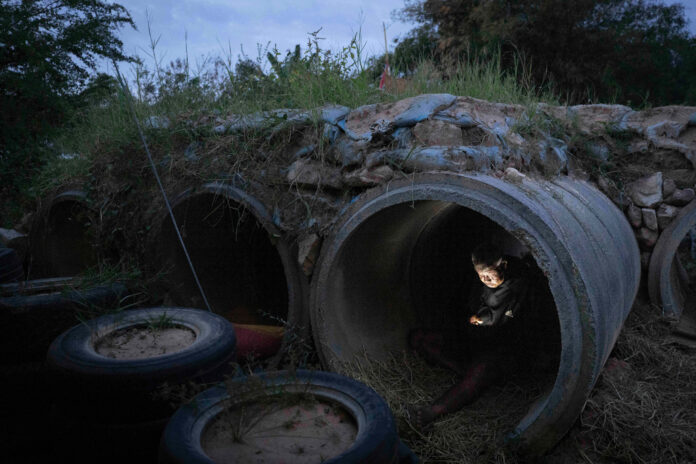
A Thai resident who fled clashes between Thai and Cambodian soldiers, uses mobile phone while taking shelter in Buriram province, Thailand, Tuesday, Dec. 9, 2025. (AP Photo/Wason Wanichakorn)
SURIN, Thailand (AP) — Cambodia’s powerful Senate President Hun Sen on Tuesday vowed that his country would carry out a fierce fight against Thailand as a second day of widespread renewed combat between the Southeast Asian neighbors drove tens of thousands of people to flee border areas.
Fighting broke out following a skirmish in which one Thai soldier was killed Sunday night, despite a ceasefire that ended five days of fighting in July over competing territorial claims along their border, which resulted in dozens of civilian and military dead on both sides, and the evacuation of over 100,000 civilians.
Both sides vow to keep fighting
In a statement posted to Facebook and Telegram, Hun Sen claimed that his country had refrained from firing back on Monday, but overnight began to shoot back at Thai forces. He wrote that a strategy of concentrating on where Thailand was advancing would allow Cambodia to “to weaken and destroy enemy forces through counterattacks.”
Thailand’s army said Cambodian forces had fired artillery at a village in Sa Kaeo province early Tuesday morning, though the strike caused no casualties. Thailand says that Cambodian forces also fired at its troops Sunday and Monday, as each side blames the other for firing the first shots.
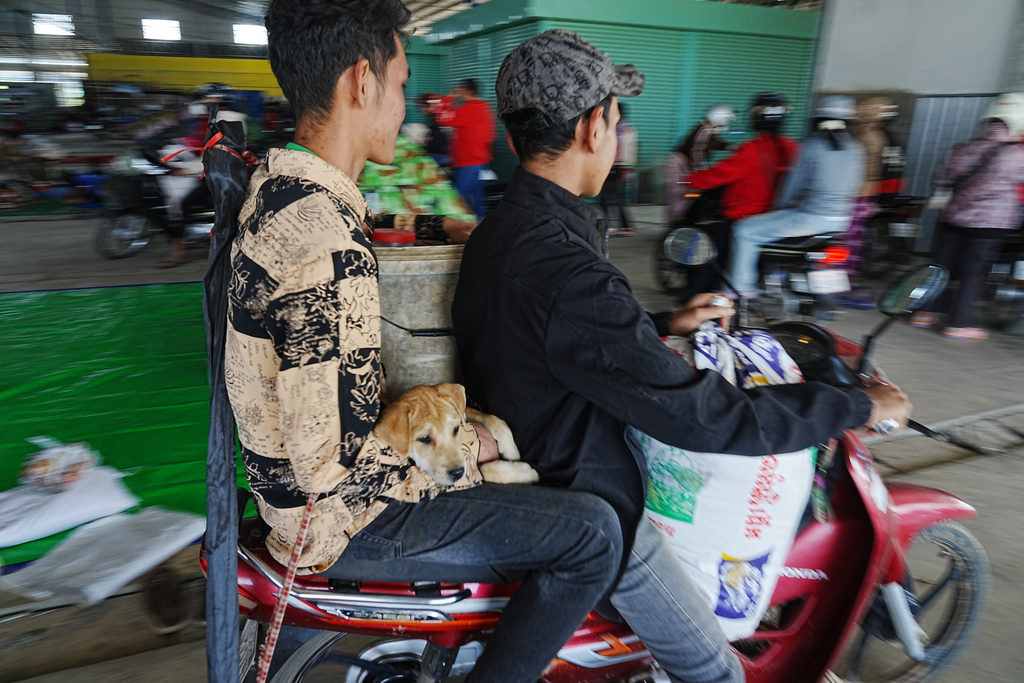
Local people take refuge in Prey Chamkar Ta Doak market in Banteay Meanchey province in Cambodia, near the border with Thailand, Tuesday, Dec. 9, 2025. (AP Photo/Heng Sinith)
“Cambodia wants peace, but Cambodia is forced to fight back to defend its territory,” Hun Sen said. Hun Sen was Cambodia’s long-serving prime minister until 2023, when he was succeeded by his son Hun Manet, but is still widely seen as the country’s de facto leader.
Cambodia’s military announced Tuesday that the new fighting had killed seven civilians and wounded 20. A spokesperson for the Thai military announced Tuesday that one solder had been killed and 29 wounded in the new fighting.
Speaking at a news conference, Thai Rear Adm. Surasant Kongsiri said the navy was strengthening its position in eastern Thailand near the border with Cambodia.
Thailand on Monday carried out airstrikes along the frontier, which it said were a defensive action targeting military installations. Surasant said such operation would continue “until attacks stop.”
Villagers on both sides flee to safety
A separate statement from Thailand’s 2nd Army Region, situated along the border, said almost 500 temporary shelters have been set up in four border provinces, accommodating 125,838 people. Additional refugees from the fighting are expected to stay with relatives in safe areas.
It said Cambodia attacked Thai positions with rocket and drone attacks.
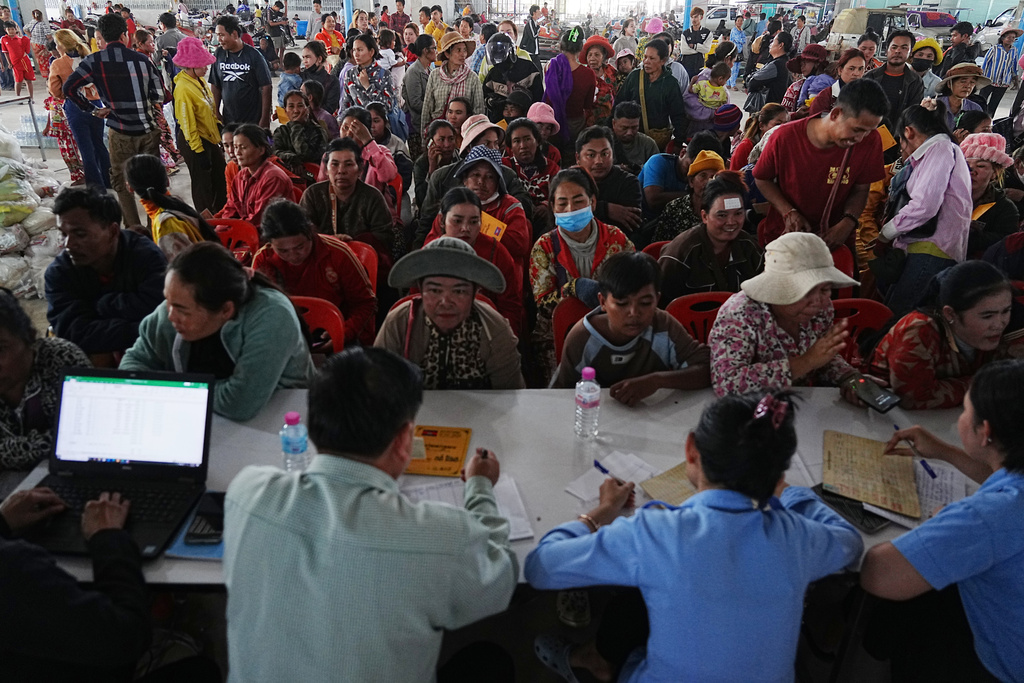
Cambodia said people fled villages near the border.
Thai Prime Minister Anutin Charnvirakul said Monday in a televised speech that military operations would be carried out as necessary to defend the country and protect public safety.
“Thailand has never wished for violence. I’d like to reiterate that Thailand has never initiated a fight or an invasion, but will never tolerate a violation of its sovereignty,” he said.
The two nations have a history of ill will
Thailand and Cambodia have a history of enmity over centuries and experience periodic tensions along their land border of more than 800 kilometers (500 miles).
The ceasefire that was agreed to end July’s fighting was brokered by Malaysia and pushed through by pressure from U.S. President Donald Trump, who threatened to withhold trade privileges from the two nations unless they agreed to it.
A more detailed agreement signed in October called for removing heavy weapons and equipment from the border; desisting from disseminating false information, accusations, and harmful rhetoric; implementing measures to restore mutual trust and full diplomatic relations; and coordinating operations to remove land mines.
None of these actions appear to have been implemented in full or in good faith by either side. After the ceasefire, both nations continued to fight a bitter propaganda war using disinformation, alongside minor outbreaks of cross-border violence.
People stay in a line to register at Prey Chamkar Ta Doak market, as they leave the area near the border with Thailand, in Banteay Meanchey province of Cambodia’s, Tuesday, Dec. 9, 2025. (AP Photo/Heng Sinith)
Prisoners and land mines have been sticky issues
A major Cambodian complaint has been that Thailand continues to hold 18 prisoners taken prisoner when the ceasefire became active. Thailand accuses Cambodia of laying new land mines in the areas under dispute, in several cases maiming Thai soldiers. Cambodia says the mines are left over from decades of civil war that ended in 1999.
The mines issue caused Thailand to declare earlier this month that it was indefinitely pausing implementation of the details of the ceasefire until Cambodia apologized for the
U.N. Secretary-General Antonio Guterres expressed concern over the new fighting, especially the use of air strikes and heavy weapons, and called on the warring parties to recommit to the ceasefire.
___
Sopheng Cheang reported from Phnom Penh, Cambodia.
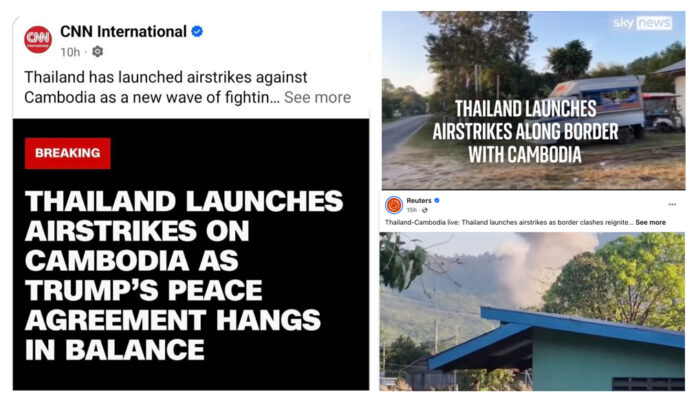
Western media outlets report on Dec.8, 2025 that “Thailand launched air strikes” against Cambodia.
M any Thais were upset that several Western media outlets reported yesterday that “Thailand launched air strikes” against Cambodia on Monday without clearly stating that this happened after Sunday’s clashes—leading foreign readers, most of whom probably would only skim the headlines before scrolling past, to potentially “misunderstand” that Thailand attacked first.
While this writer cannot independently verify who launched the first strike on Sunday, December 7, 2025, Thais should take this as a wake-up call.
Western media are not always high-quality. Sensational headlines or headlines without proper context are common. And it’s a reminder that the way many Thais view the world through foreign media can be distorted—just as their headlines about the Thai-Cambodian conflict have shown to be potentially problematic.
I couldn’t help half-laughing, half-feeling sorry for an acquaintance who was fuming with anger on Facebook yesterday, even though he himself spends his days translating and summarising Western news about world affairs for his Thai readers on Facebook religiously as if it were holy scripture—the absolute truth to understand the world, only to be gravely disappointed by these foreign media’s headlines.
P.S. Thai media aren’t much better. Right now, many outlets are acting like cheerleaders for war. Some are even upset that the Thai government led by PM Anutin Charnvirakul (which Cambodian Senate President Hun Sen has tried on Monday to portray Anutin—using old photos and videos of Anutin in Cambodia—as being close to Cambodia) allegedly refuses to let the Thai military go all-out with heavy attacks.
A former senior colleague and a prominent editor complains on Facebook this morning that he found a newscaster behaving as if he’s a guru teaching battle strategies to the Thai Army in order to “annihilate Cambodia.”
He added: “Warn him to come to his senses that he should be working [as a journalist] and not warmonger.”
My take: The tone of many Thai journalists is like promoting a product. The “product” that boosts live-view sales nonstop is death and destruction—what we call war. The more you push people to kill each other, the higher the social media engagement. Can the ‘Thai army’ of athletes at the SEA Games in Bangkok really compete with a Thai military equipped with F-16s in attracting social media engagement?
P.S. Will Thai media associations come out to warn these journalists? Or are they cheering for more war and killings as well?
I fear that many Thai journalists and media outlets can no longer differentiate their duty as journalists from that of being a warmonger because their subconscious ultra-nationalist hat is more influential than their journalist’s hat.
P.S.2 Paul Handley, the author of banned book “The King Never Smiles: A Biography of Thailand’s Bhumibol Adulyadej” posted about Khaosod English on X this morning regarding our necessity to note that we cannot independently verify some of the facts (as stated by the Thai Army) as of press time.
“Good for Khaosod saying it “cannot independently verify the facts as of press time”. An important point.”
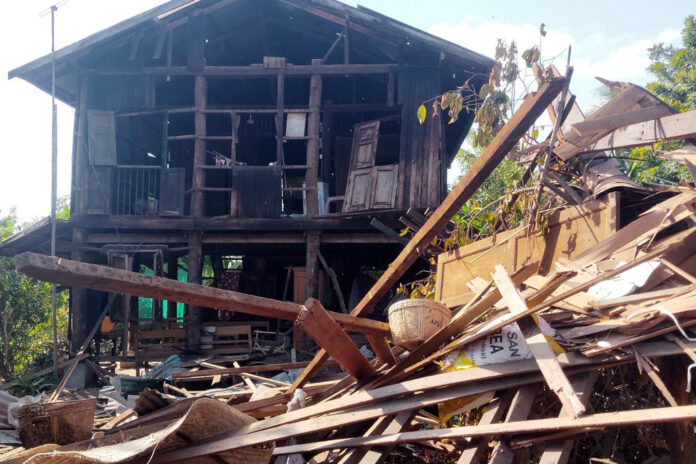
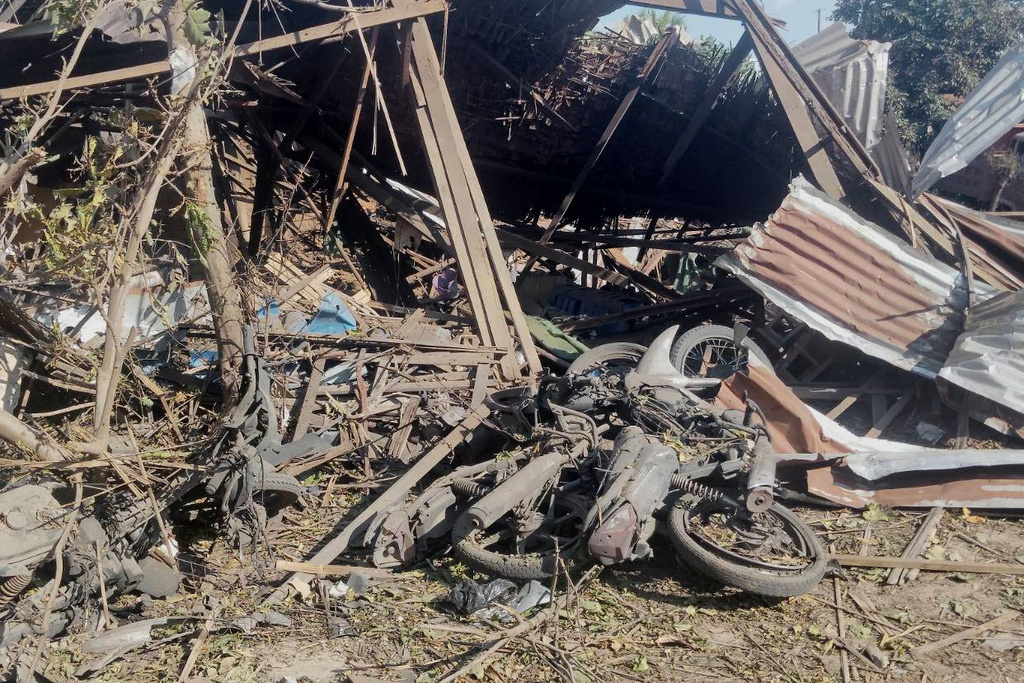
A damaged house is seen among the debris in an area allegedly hit by the military’s airstrike in Mayakan village in Tabayin township, also known as Depayin in Sagaing region, Myanmar, Saturday, Dec.6, 2025. (Ko Nan Gyi via AP)
BANGKOK (AP) — An air strike last week by Myanmar’s military on a tea shop in the country’s upper-central region of Sagaing killed at least 18 civilians and wounded 20 others, a local villager and Myanmar’s independent online media said Monday.
The attack is the latest in a series of frequent and deadly aerial strikes targeting armed pro-democracy forces as the country approaches elections scheduled for later this month. The strikes often cause civilian casualties.
Myanmar has been in turmoil since the army seized power from the elected government of Aung San Suu Kyi on Feb. 1, 2021, triggering widespread popular opposition. After peaceful demonstrations were put down with lethal force, many opponents of military rule took up arms, and large parts of the country are now embroiled in conflict.
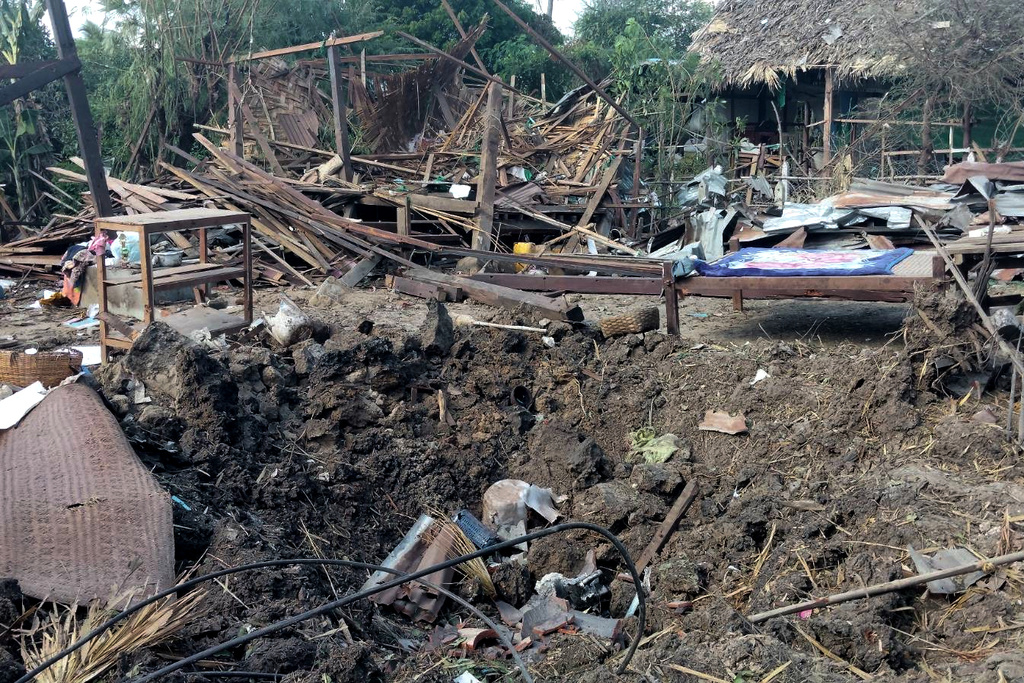
Debris is seen in an area allegedly hit by the military’s airstrike in Mayakan village in Tabayin township, also known as Depayin in Sagaing region, Myanmar, Saturday, Dec.6, 2025. (Ko Nan Gyi via AP)
The new attack occurred on Dec. 5, shortly after 8 p.m. in Mayakan village in Tabayin township, a resident said. The village, about 120 kilometers (75 miles) northwest of Mandalay, the country’s second-largest city, is better known by its old name of Depayin.
The villager, who rushed to the site of the attack to help the victims, told The Associated Press that a five-year-old child and two schoolteachers were among those killed in the attack in the tea shop where dozens of people gathered to watch the Myanmar vs Philippines football tournament on television.
Tea shops in Myanmar are essentially the equivalent of the West’s neighborhood coffee shops, where people linger over cups of sweet tea, gather to talk, eat, and stay connected to community life.
Debris is seen in an area allegedly hit by the military’s airstrike in Mayakan village in Tabayin township, also known as Depayin in Sagaing region, Myanmar, Saturday, Dec.6, 2025. (Ko Nan Gyi via AP)
The villager, who spoke on condition of anonymity because he is afraid of being arrested by the military, said two bombs dropped by a jet fighter exploded shortly after air raid sirens sounded, killing many people in the tea shop who had no time to seek shelter. More than 20 houses near the shop were damaged.
He also said that there had been no recent fighting in the area, though Sagaing is a stronghold of the resistance against military rule. The military government has stepped up air strikes against the armed pro-democracy People’s Defense Force and ethnic militias to reclaim territory ahead of the scheduled Dec. 28 polls. The resistance forces have no defense against air attacks.
The military had not announced any attack in the area.
Some residents fled the village after the funeral for the victims was held on Saturday, while those who remained were digging bomb shelters, the villager said.
Independent online media, including the news service Myanmar Now, released pictures and videos said to show debris from the air strike.
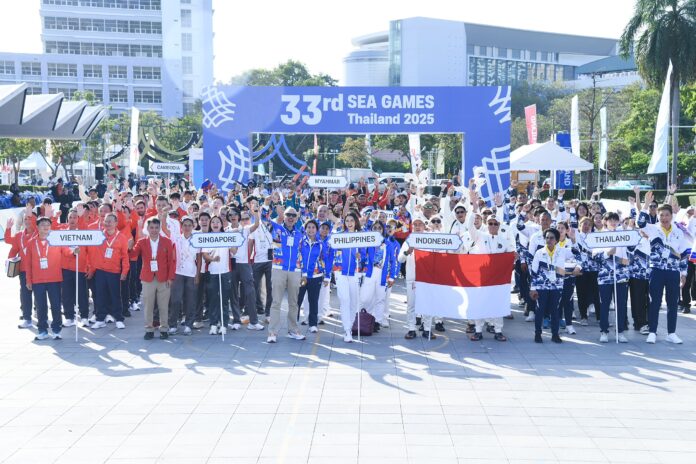
Southeast Asian athletes participate in the flag-raising ceremony at the Indoor Stadium Huamark, Bangkok, on Dec. 8, 2025. (KHAOSOD Photo /Todsaporn Lohkhunceam)
BANGKOK — Fighting between Thai and Cambodian forces along their shared border has cast a shadow over the 33rd Southeast Asian Games, which Thailand will host from December 9 to 20.
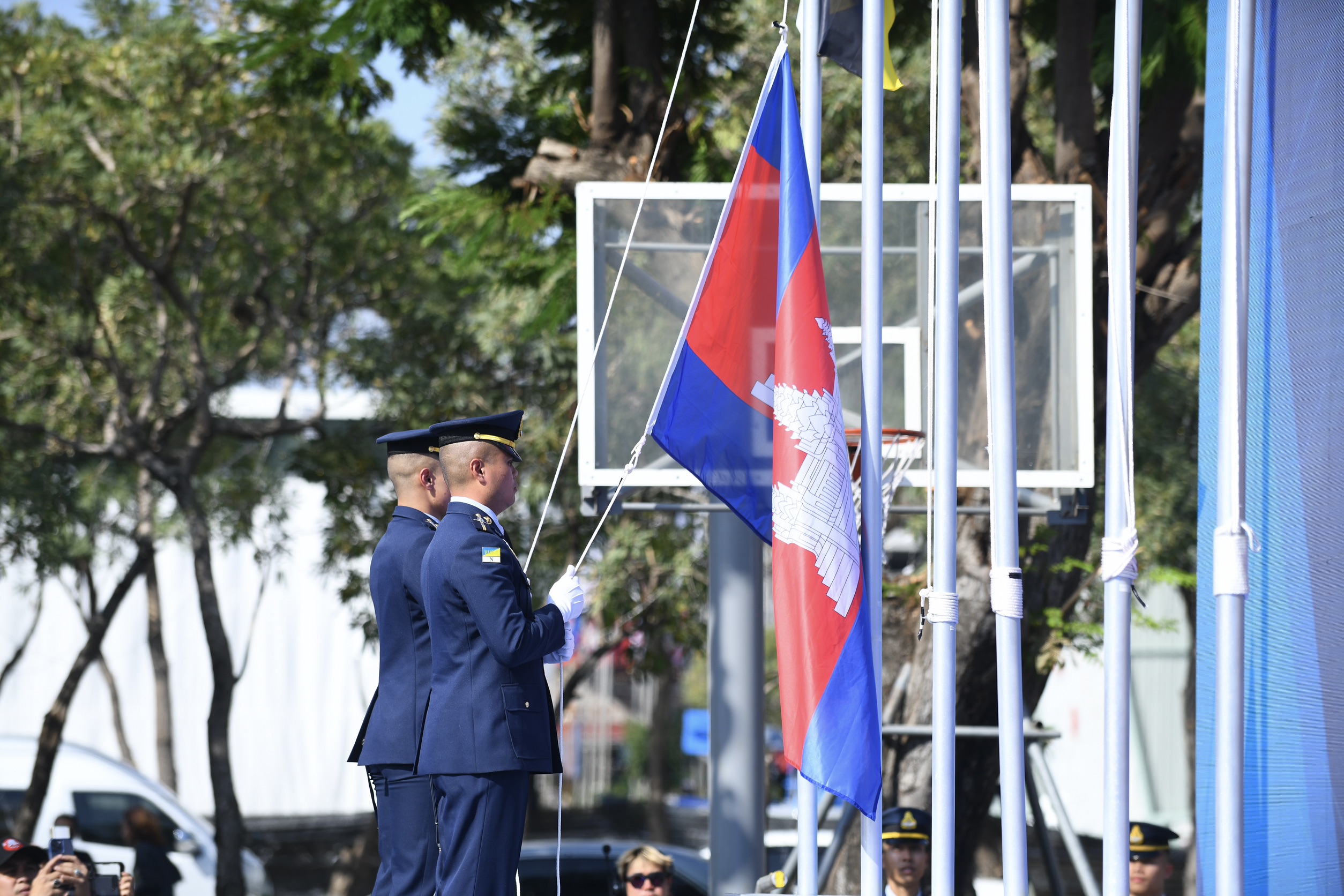
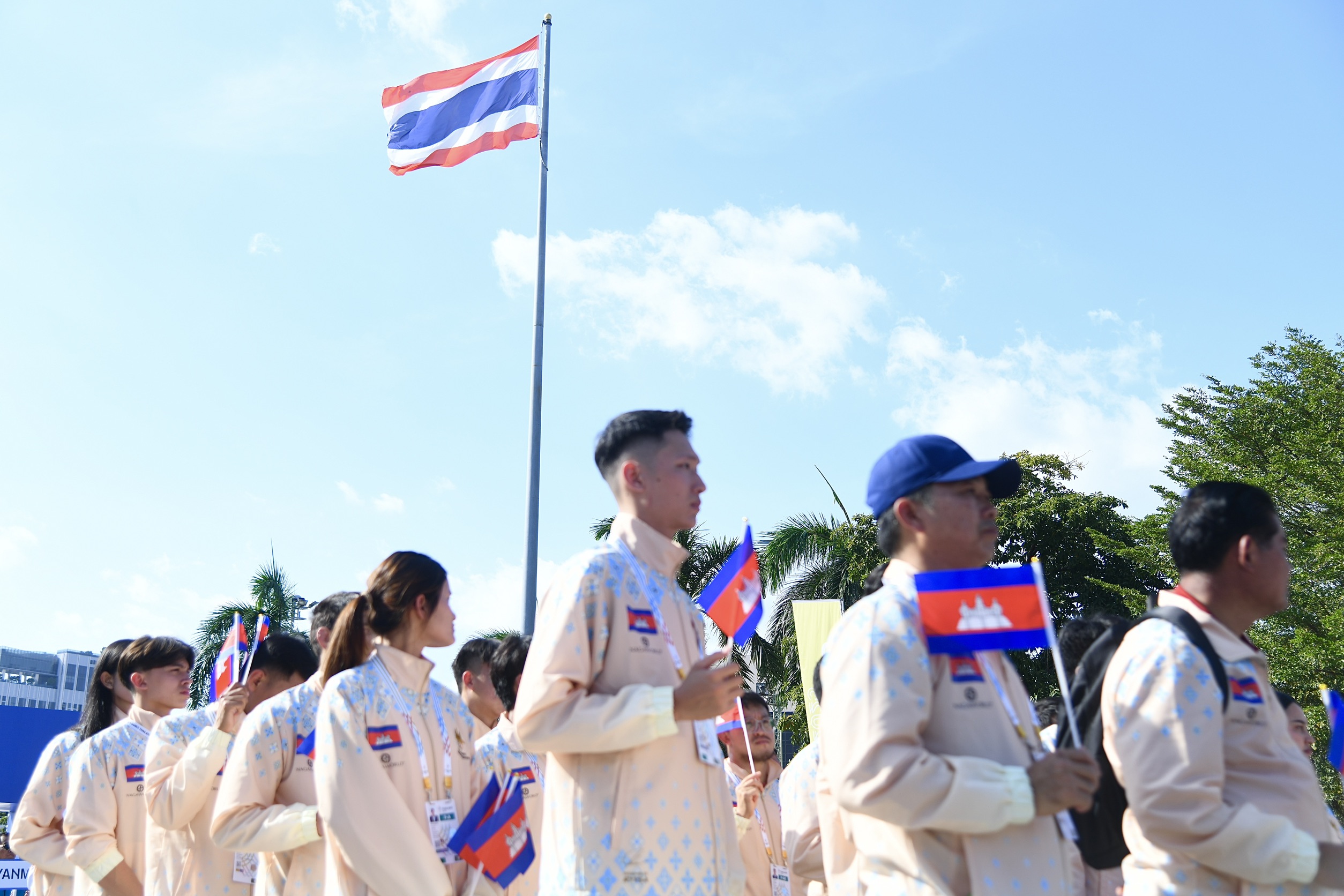
The clashes began over the weekend after each country accused the other of firing first. Despite the tensions, Cambodia proceeded with a flag-raising ceremony Monday at Bangkok’s Indoor Stadium Huamark, signaling its delegation will compete as planned.
Thana Chaiprasit, head of the Thai national delegation, said Cambodia has sent about 170 athletes. He said Thailand has taken extra steps to protect the delegation, including placing athletes and officials in the same hotel and tightening security around them.
Officials raise Cambodia’s national flag alongside those of 10 other participating nations during a flag-raising ceremony for the 33rd SEA Games at Bangkok’s Indoor Stadium Huamark on Dec. 8, 2025. (KHAOSOD Photo /Todsaporn Lohkhunceam)
“I don’t anticipate problems, but I advised them to stay inside their accommodation,” Thana said. “If they go out, they should avoid wearing the Cambodian team jersey.” He urged Thai spectators to show goodwill. “If we act inappropriately, by yelling or jeering, the image will not be positive. Cheer peacefully — if you disapprove, remain silent.”
Sports Authority of Thailand governor Kongsak Yodmanee said security agencies have been ordered to increase their presence “two to three times,” with both uniformed and plainclothes police deployed at venues. X-ray machines will be installed at entry points and at hotels housing the Cambodian team.
The Games, involving 11 Southeast Asian nations, mark Thailand’s first time hosting in 18 years. The event has already faced criticism over planning delays tied to a government transition.
Cambodian athletes participated in the flag-raising ceremony at the Indoor Stadium Huamark, Bangkok, on Dec.8, 2025. (KHAOSOD Photo /Todsaporn Lohkhunceam)
Opening Ceremony Highlights
Tourism and Sports Minister Attakorn Sirilatthayakon said preparations for the opening ceremony have been difficult but insisted the program on December 9 will be “commendable and worthy of the nation.”
The ceremony’s theme, “WE ARE ONE,” aims to highlight unity and mark a return to Thailand, where the first SEAP Games were held 66 years ago. Five performances led by Thai and international talent will anchor the show, which organizers say will be among the lowest-pollution ceremonies ever staged as part of the “Friendly Environmental SEA Games.”
Tourism and Sports Minister Attakorn Sirilatthayakon briefs reporters on preparations for the SEA Games opening ceremony at the NBT headquarters in Bangkok on Dec. 7, 2025.
Thai K-pop star BamBam will deliver a special performance, while a redesigned torch-lighting ceremony is expected to be one of the event’s signature moments. Attakorn said organizers worked to ensure the torch presentation is impressive yet avoids pollution affecting residents around Rajamangala National Stadium.
“We want everyone to be happy,” he said, “and to have the chance to cheer, watch, taste and enjoy all the activities we are bringing to this year’s SEA Games.”
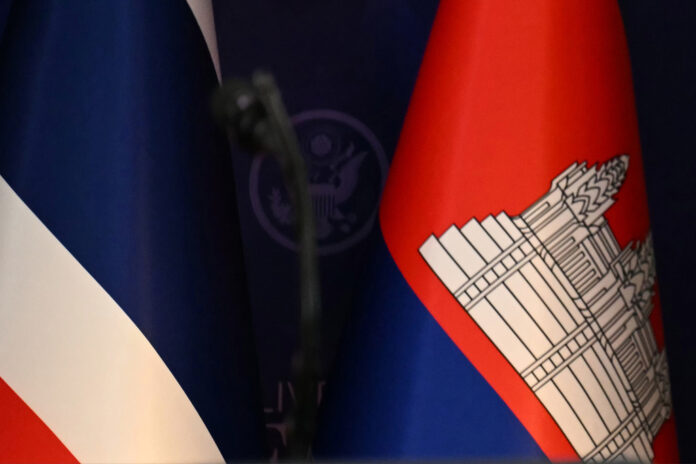
FILE - The flags of Thailand, left, and Cambodia, right, are seen ahead of the ceremonial signing of a ceasefire agreement between Thailand and Cambodia on the sidelines of the 47th Association of Southeast Asian Nations (ASEAN) summit in Kuala Lumpur, Malaysia, Sunday, Oct. 26, 2025. (Mohd Rasfan/Pool Photo via AP, File)
BANGKOK (AP) — A history of enmity between Thailand and Cambodia over competing territorial claims has broken into open combat again, just a few months after the two sides agreed to a ceasefire promoted by U.S. President Donald Trump to end their border fighting.
The two Southeast Asian nations fought in July for five days in and around disputed frontier territory, causing dozens of civilian and military deaths and the evacuation to safety of tens of thousands of villagers on both sides.
On Monday, the heaviest fighting since the ceasefire erupted. While it is unclear who took the first shot, Thailand launched airstrikes along the border as ground combat also broke out.
The dispute goes back to the early 20th century
Thailand and Cambodia have a history of enmity over centuries and experience periodic tensions along their land border of more than 800 kilometers (500 miles).
The competing territorial claims largely stem from a 1907 map created while Cambodia was under French colonial rule, which Thailand contends is inaccurate. Many Thais are still angered by a 1962 ruling by the International Court of Justice, which awarded sovereignty of disputed land to Cambodia — a decision reaffirmed in 2013. The disagreement fueled several armed clashes between 2008 and 2011.
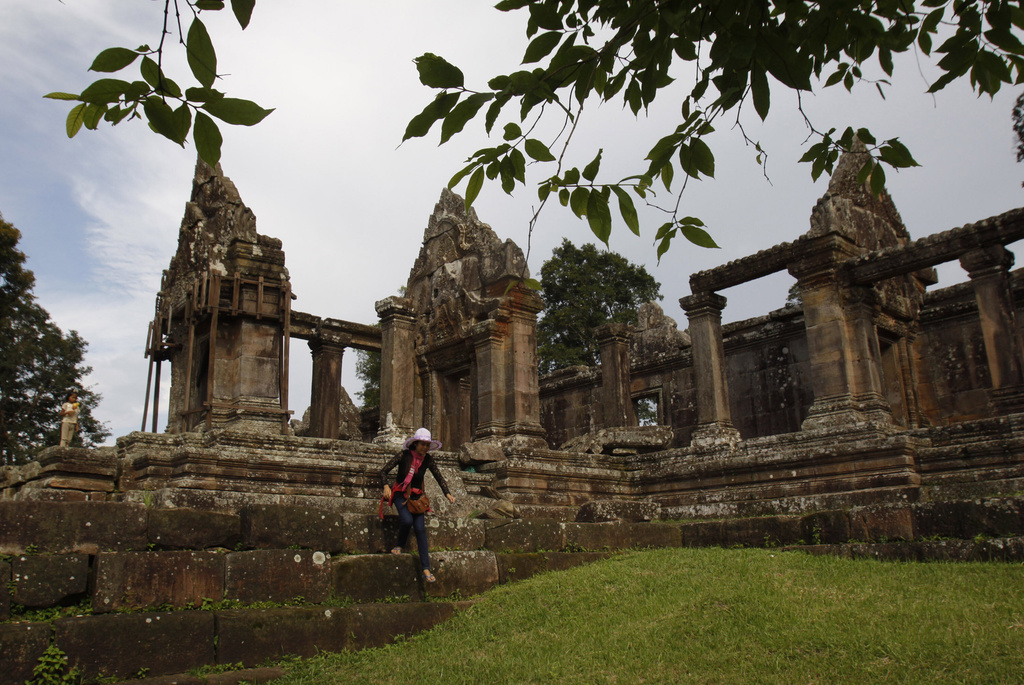
FILE- A Cambodian woman visits Cambodia’s Preah Vihear temple, near the disputed border with Thailand, in Preah Vihear province, about 245 kilometers (152 miles) north of Phnom Penh, Cambodia Wednesday, July 6, 2011. (AP Photo/Heng Sinith, File)
The Trump-backed ceasefire was fragile
An uneasy peace was reached in late July, when Malaysia pushed for peace talks and President Trump brought the contending sides to the negotiating table by leveraging the importance of the U.S. market for both nations’ exports, threatening to withhold crucial trade privileges.
Trump afterward claimed this intervention as one example among several from around the world where his actions led to peace between warring nations.
The preliminary pact was followed by a more detailed October agreement. Its terms called for coordination of de-mining operations, removal of heavy weapons and equipment from the border, implementation of measures to restore mutual trust, and desisting from harmful rhetoric and the dissemination of false information. None of these actions were implemented in full, if at all.
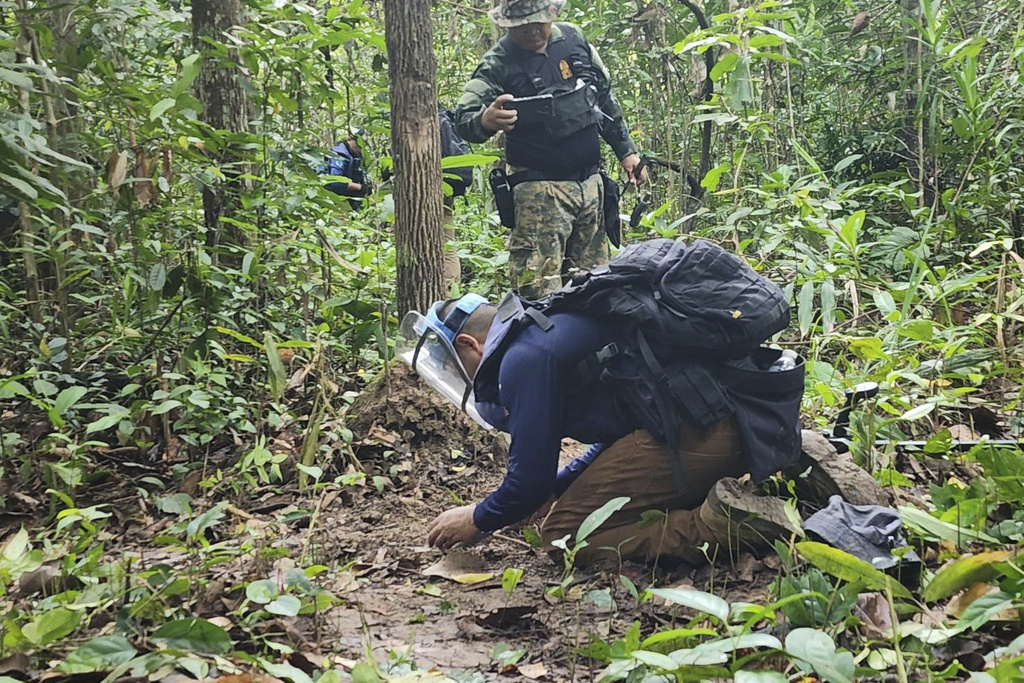
In this Sunday, July, 2025, photo released by the Royal Thai Army, Thai soldiers inspect a border area in Ubon Ratchathani†province where the Royal Thai Army said two anti-personnel landmines were found. (Royal Thai Army via AP)
Both nations continued fighting a bitter propaganda war and there have been occasional minor outbreaks of cross-border violence.
A major Cambodian complaint has been that Thailand continues to hold 18 troops taken prisoner. Thailand accuses Cambodia of laying new land mines in the areas under dispute that maimed Thai soldiers. Cambodia says the mines are left over from decades of civil war that ended in 1999.
The failure to implement the ceasefire terms was used by the Thai side as an excuse not to promptly release the Cambodian prisoners, even though the October agreement urged it to do so “as a demonstration of Thailand’s desire to promote mutual confidence and trust.”
The conflict impacts diplomacy, trade and tourism
Thailand is one of Washington’s closest and most longstanding allies. The country also holds a huge military advantage, best demonstrated by its mostly unchallenged ability to use air power.
But Cambodia has also been trying to strengthen its hand diplomatically. It was among the first countries to strongly support a Nobel Peace Prize nomination for Trump, even bringing out crowds to demonstrate in favor of that.
Cambodia has also employed an intensive propaganda campaign on social media portraying itself as the underdog and issuing frequent unverifiable accusations about Thai actions. Nationalistic saber-rattling has been ubiquitous on both sides.
Washington for its part appears to be trying to actively build better relations with Cambodia to woo it away from its close relationship with China, but that in turn has bred resentment in Thailand.
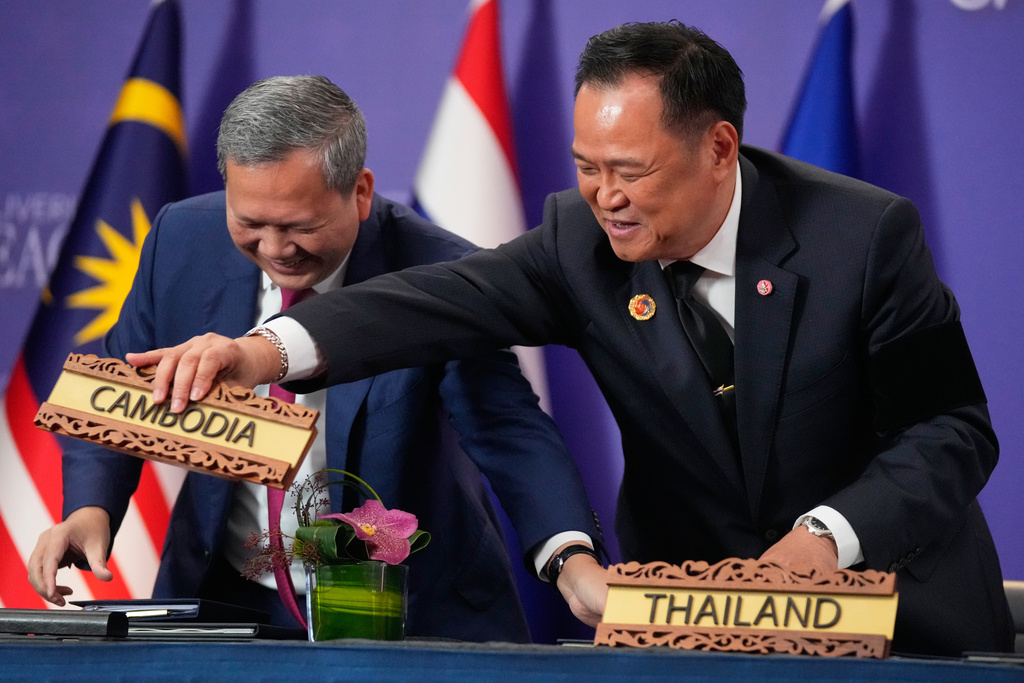
Cambodian Prime Minister Hun Manet, left and Thailand’s Prime Minister Anutin Charnvirakul react as they switch country signs during a signing ceremony on the sidelines of the ASEAN Summit in Kuala Lumpur, Malaysia, Sunday, Oct. 26, 2025. (AP Photo/Mark Schiefelbein)
Cambodia has made further progress toward finalizing a trade deal with Washington than has Thailand, whose economy is much bigger and more complex.
Potential economic consequences go beyond trade.
The renewed fighting comes just as the winter tourism season is hitting its peak, and risks deterring tourists. Tourism is a major earner for both nations, which are still trying to recover from the battering the industry took during the coronavirus pandemic.
Cultural competition is also a factor
The ill feeling between the two neighbors is not just about overlapping border claims, but also deep-seated cultural enmity that has its roots from centuries ago, when they were large and competing empires.
In more modern times, bad feelings have lingered, as Cambodia’s development, hindered by French colonialism and, in the 1970s, the brutal rule of the communist Khmer Rouge, has fallen well behind Thailand.
Both have fought over claims on cultural products ranging from boxing, mask dancing, traditional clothing and food.
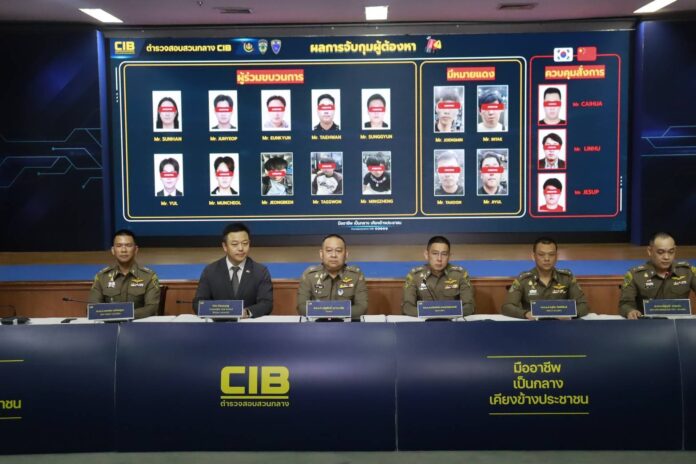
Thai and South Korean officials brief reporters at the Central Investigation Bureau in Bangkok on Dec.8, 2025 after announcing the arrest of 17 suspects linked to an international call-center scam network.
BANGKOK — Thai and South Korean authorities arrested 17 alleged members of an international call-center scam ring who fled Cambodia and set up operations in Bangkok, police announced Monday.
The arrests were disclosed at the Central Investigation Bureau, where Kim Doo-dung, police consular officer at the South Korean Embassy in Thailand, joined senior Thai police officials.
The suspects — 14 South Koreans and three Chinese nationals, all between 28 and 43 years old — were charged with working illegally in Thailand and overstaying their visas, police said.
Lt. Gen. Nattasak Chaovanasai, chief of the Central Investigation Bureau, said investigators traced the group to Pattaya before uncovering a wider criminal network linked to a call-center scam previously based in Cambodia.
Police said the group impersonated Genting Malaysia, a resort and entertainment company, to lure South Korean victims into a fraudulent investment scheme promising high returns. The operation ran from October 2024 to May 2025, causing losses of more than 20.1 billion won (about $15.7 million).
After escaping Cambodian authorities, the group relocated to Bangkok, renting units in the Rama III and Lumpini neighborhoods to rebuild their operation.
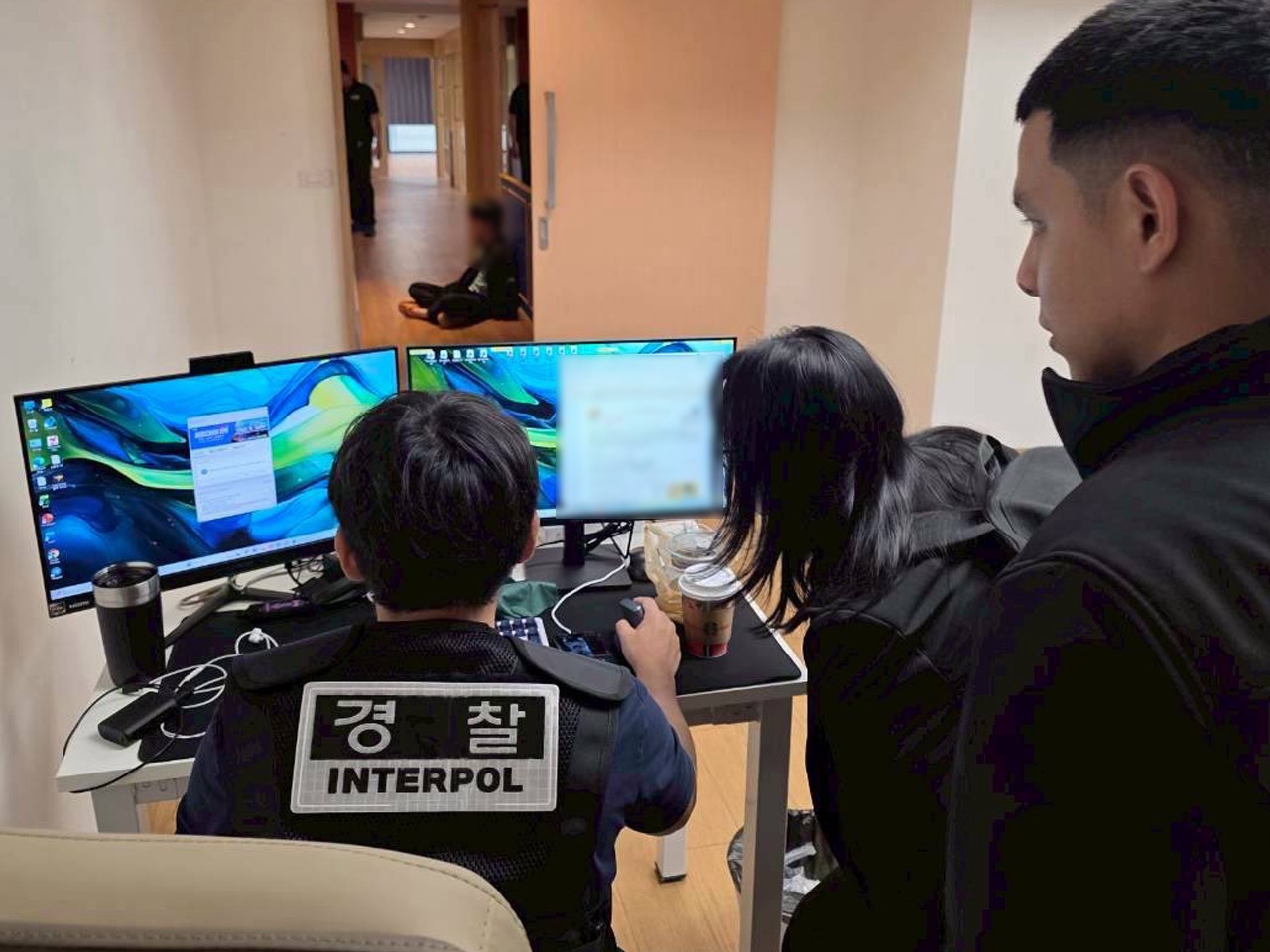
Police raided both condominiums after securing warrants from the Phra Nakhon Tai District Court. Inside, officers found the units partitioned into roughly 20 small rooms outfitted with computers, phones and detailed scripts used in online fraud.
Seized items included more than 50 VoIP phones and computers, 35 mobile phones, forged South Korean prosecutor IDs and official documents, and lists of South Korean victims.
An Interpol officer inspects computer equipment inside a Bangkok residence used by South Korean suspects in an alleged call-center scam.
Col. Phanuphat Kittiphan of the Technology Crime Suppression Division said all 17 suspects were the subjects of Interpol notices. He said the group used two common tactics: posing as South Korean prosecutors or government officials to threaten victims with legal action, and impersonating bank employees to pressure targets into taking out loans and paying supposed processing fees.
Ten suspects — eight South Koreans and two Chinese nationals — were arrested in the Rama III raid. Three more — two South Koreans and one Chinese national — were detained at Lumpini. Police said all admitted to working illegally in Thailand. No Thai nationals were targeted in the scheme.
The suspects were taken to Bang Phongphang and Lumpini police stations for processing. Thai authorities said they will coordinate with the South Korean Embassy and, after legal proceedings conclude, extradite the suspects to South Korea to face additional charges.
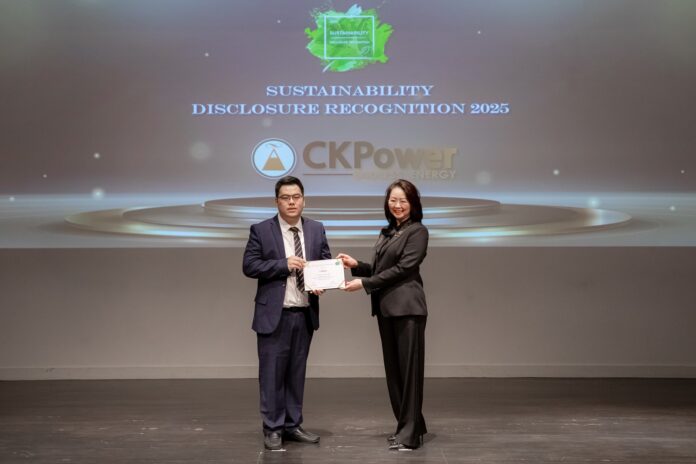
CK Power Public Company Limited (SET: CKP), one of the region’s largest producers of electricity from renewables with one of the lowest carbon footprints, has been honored with the Sustainability Disclosure Recognition 2025 from the Thaipat Institute for the fourth consecutive year. The award reaffirms the Company’s commitment transparent, responsible, and comprehensive disclosure of its economic, social, and environmental performance for the benefit of all stakeholders. This recognition also aligns with the Sustainable Development Goals (SDGs) and reflects the Company’s dedication to promoting verifiable sustainability disclosure within the business sector, thereby strengthening good governance and contributing to sustainable economic growth. The certificate was presented to Ms. Tuangporn Bunyasaranand, Assistant Managing Director Corporate Communication and Sustainability Management (right), by Mr. Woranut Piendham, Director of Thaipat Institute, at the Bangkok Art and Culture Centre (BACC) recently.
This year, the Thaipat Institute organized the Sustainability Disclosure Award 2025 ceremony to honor member organizations of the Sustainability Disclosure Community (SDC). A total of 67 organizations received the Sustainability Disclosure Recognition. The most widely disclosed topics among participating organizations were anti-corruption, diversity and equal opportunity, and economic performance, reflecting a growing emphasis placed among businesses on good corporate governance and sustainable development.
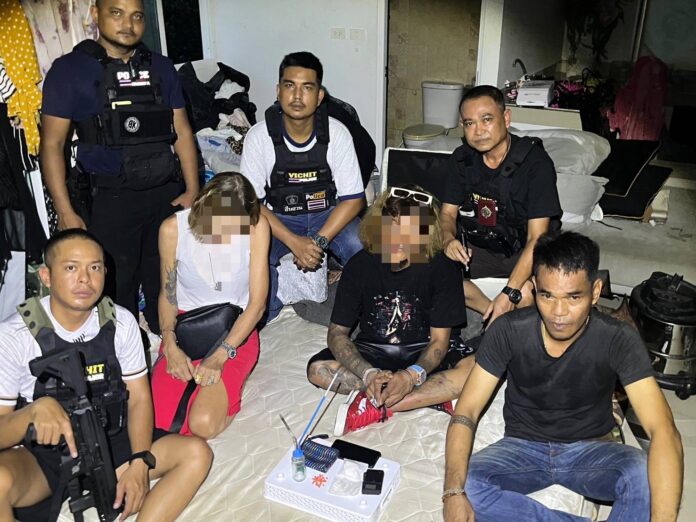
Police officers detain a Norwegian woman and a Thai man during a drug raid inside a villa in Phuket on Dec. 3, 2025.
PHUKET — Police arrested a Thai man and a Norwegian woman on drug charges after raiding a luxury villa in Phuket that investigators say was being used as a drug trafficking base.
Wichit police superintendent Pol. Col. Somsak Thonggliang said officers acted on a tip-off about drug activity in Mueang Phuket District and moved in on the villa on Sakdidet Road, where they detained Kanok, 37, a Thai national, and Mette, 54, from Norway.
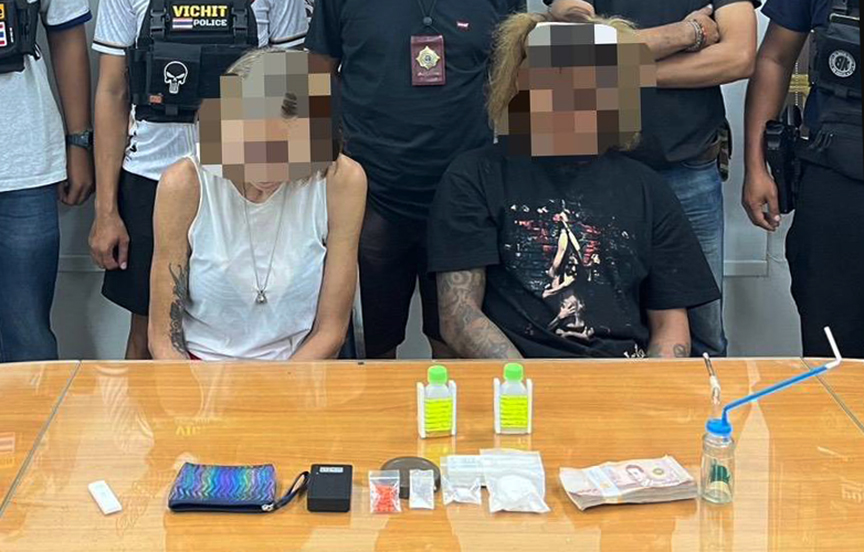
Officers seized heroin, crystal methamphetamine and methamphetamine tablets, along with a digital scale, drug paraphernalia and 100,000 baht ($3,140) in cash. Police said urine tests for both suspects returned positive for heroin and methamphetamine.
A Norwegian woman and a Thai man are photographed with seized evidence following their arrest at Wichit Police Station in Phuket on Dec. 7, 2025.
Pol. Col. Somsak said the arrest followed weeks of operations targeting small-scale users and dealers, which led investigators to the pair allegedly supplying various drugs to clients in an upscale neighborhood. The seized narcotics included 30.52 grams and 2.26 grams of heroin packaged in zip-lock bags; 0.64 grams of crystal meth; and 44 methamphetamine tablets stamped “WY.”
Both suspects were taken to Wichit Police Station and charged with joint possession of Category 1 narcotics with intent to sell, as well as drug use. Mette also faces a charge of overstaying her visa.
Investigators said they are examining the ownership and rental records of the villa as part of the ongoing probe.