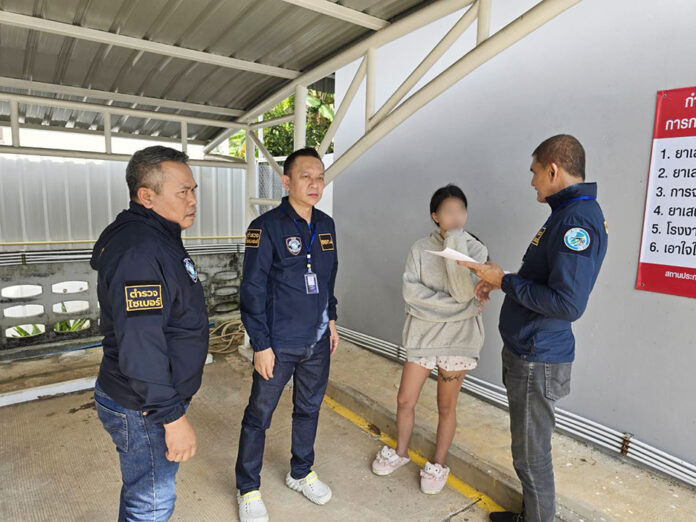
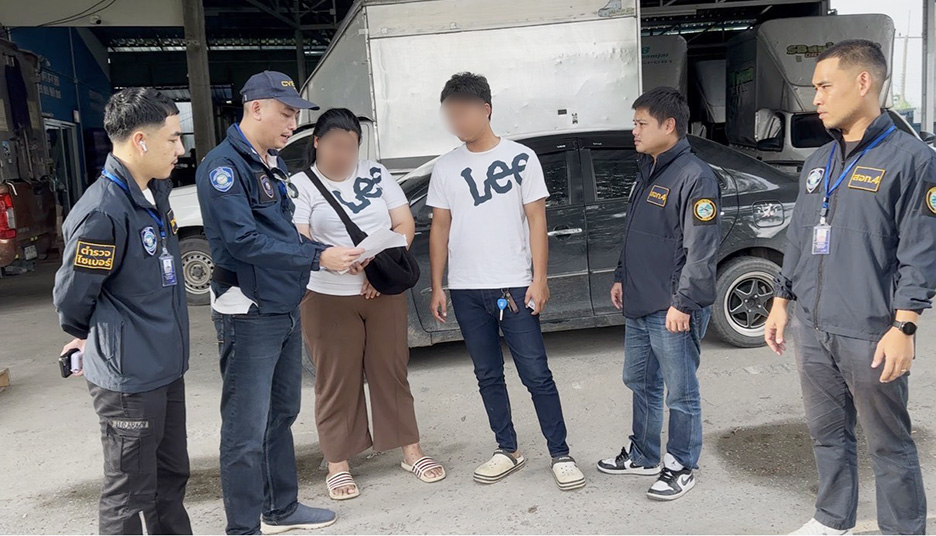
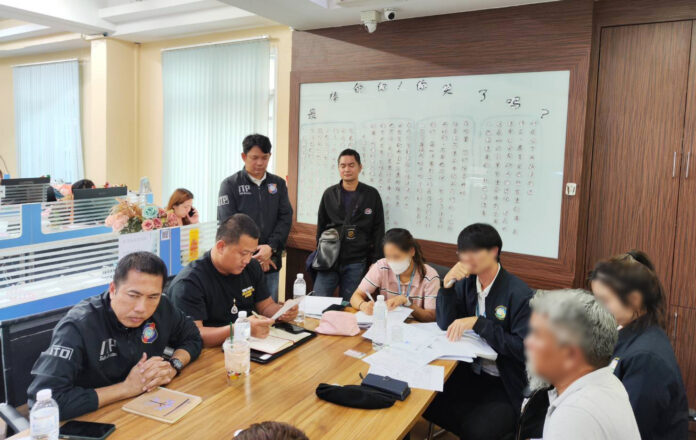
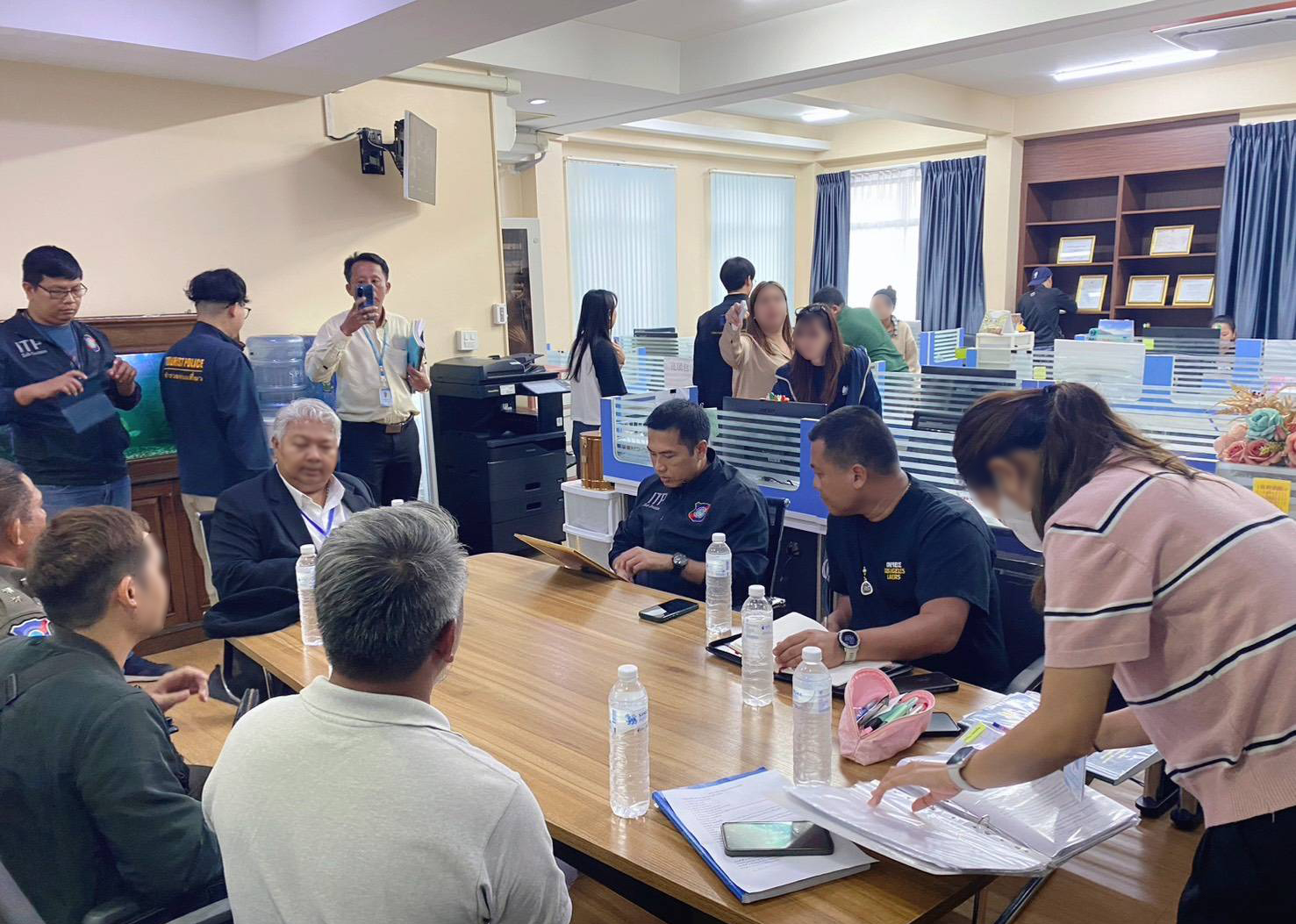
Cyber police arrest a 19-year-old suspect, one of three wanted, in Chiang Rai province for using minors to open "mule accounts" for online gambling and scam rings on October 14, 2025.
CHIANGRAI/TAK — Thai authorities have uncovered two alarming cases showing how children are increasingly being exploited by organized crime — from online scam syndicates to cross-border sex trafficking.
In northern Thailand, cyber police arrested three 19-year-olds — Ms. Waralee, Mr. Khajorn, and Ms. Witchayaporn — in Chiang Saen and Mae Sai districts of Chiang Rai province for using minors to open “mule accounts” for online gambling and scam rings.
Investigations revealed that the group deceived local children and teenagers into opening bank accounts for 3,000 baht ($92) each, which were later resold for up to 30,000 baht ($920) to gambling and call center networks. The accounts were then used to launder millions of baht in illicit funds every month.
Cyber police arrest two of three wanted, in Chiang Rai province for using minors to open “mule accounts” for online gambling and scam rings on October 14, 2025.
Ms. Witchayaporn, who gained notoriety online as part of an aggressive mule-account gang, admitted to recruiting minors to evade tightened banking controls. Many of the underage account holders have since received police summonses after their names were linked to fraud and scam activities. The Cyber Crime Investigation Division 4 is expanding its probe to identify and arrest higher-level financiers.
Meanwhile, in a separate case, two schoolgirls aged 13 and 14 were rescued from a karaoke bar in Myanmar, where they were being trafficked for sexual services to Chinese clients. Forced to work nightly from 8 p.m. to 3 a.m., the girls eventually managed to contact their families, who paid 8,000 baht ($245) to secure their release.
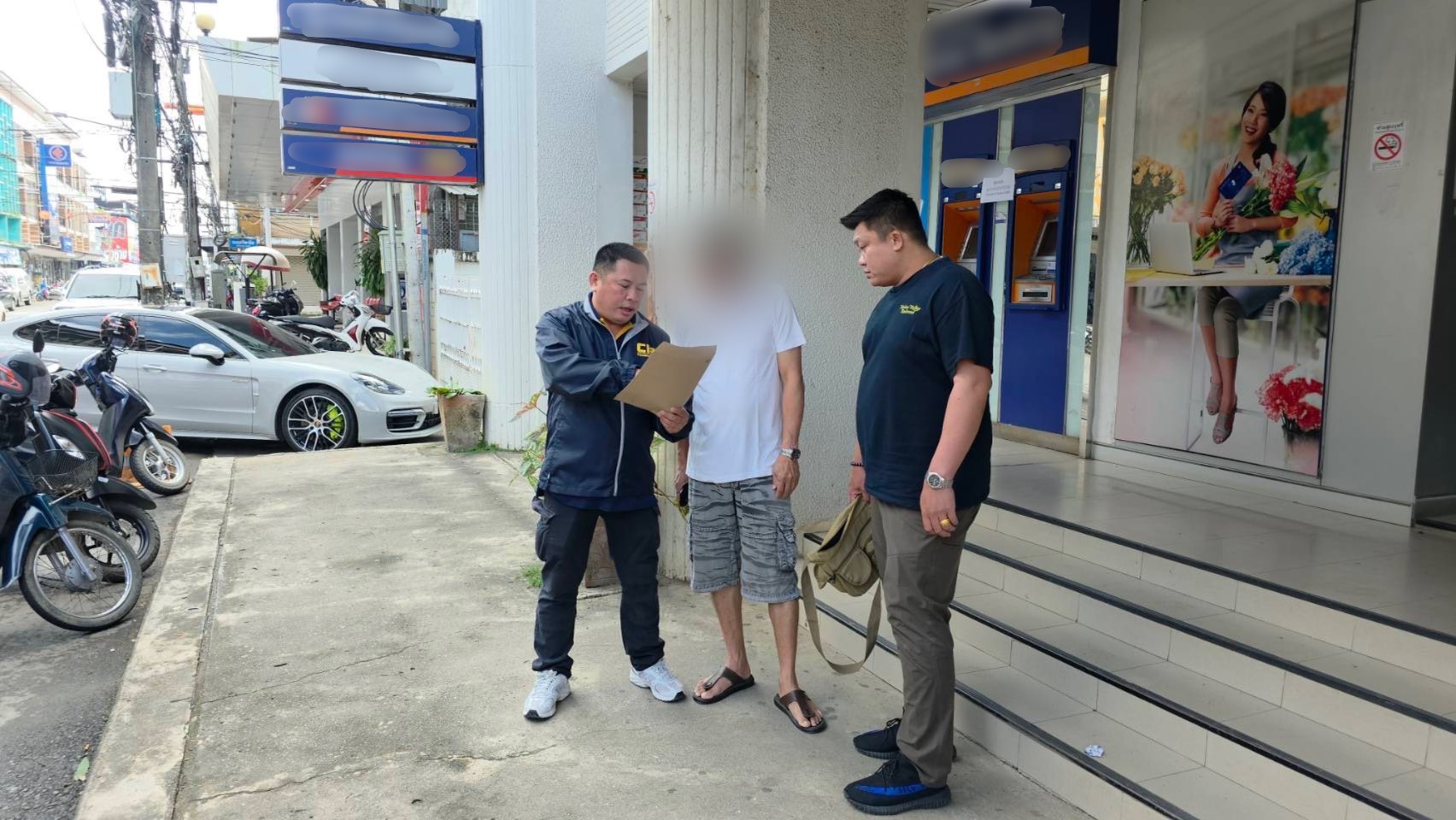
Following their return, the families filed complaints with the Anti-Human Trafficking Division, leading to the arrest of Mr. Aphinop, 59, a suspected member of the trafficking network, in Mae Sot, Tak province. He now faces charges including child prostitution, human trafficking involving minors under 15, and abduction for indecent purposes.
Both cases underscore a disturbing trend — criminal groups are increasingly targeting children as tools or victims in expanding networks of financial fraud and human exploitation, both online and across borders.
Anti-Human Trafficking Police arrest Mr. Aphinop, 59, a suspected member of the trafficking network, in Mae Sot, Tak province on October 14, 2025.
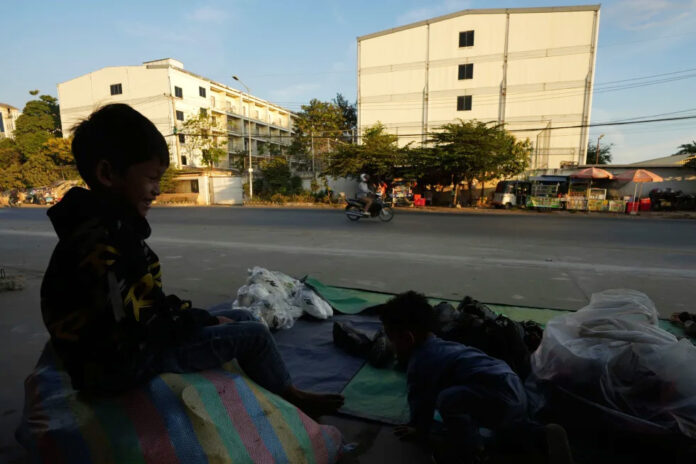
FILE - A boy plays near a building, where some people trafficked under false pretenses are being forced to work in online scams targeting people all over the world, in Phnom Penh, Cambodia, Feb. 9, 2025. (AP Photo/Heng Sinith, File)
PHNOM PENH, Cambodia (AP) — A senior official at Cambodia’s Interior Ministry said Wednesday his ministry will cooperate with South Korea over the death of a South Korean student allegedly kidnapped and tortured by a criminal gang in Cambodia.
The body of 22-year-old Park Min-ho was discovered in August in a pickup truck near Bokor Mountain in southern Kampot province. Authorities said he died of a cardiac arrest after being tortured and beaten.
The student had reportedly told his family he was visiting Cambodia for an exhibition in July. Shortly after arriving he was kidnapped by a criminal gang who demanded a $35,000 ransom, South Korean media reported.
On Wednesday South Korea’s Foreign Ministry issued a travel ban for parts of Cambodia including Bokor Mountain in Kampot province, as well as the towns of Bavet and Poipet, on Cambodia’s border with Vietnam and Thailand.
The move follows a surge in cases involving South Korean nationals that has caused growing concerns over cross-border crime and weak law enforcement cooperation between Cambodia and South Korea. Seoul has pressed for stronger cooperation to tackle cases of online scams, kidnappings, and violence targeting Korean nationals.
Cambodia’s National Police said Monday that three men, identified as Li Xingpeng, 35, Zhu Renzhe, 43, and Liu Haoxing, 29, have been charged with murder and online fraud. Police are searching for two other Chinese men on suspicion of the killing.
Touch Sokhak, a spokesman for Cambodia’s interior ministry, said officials will work with South Korea’s government on the prevention of crimes including scams and online gambling.
He said that at least 80 South Koreans were rescued and placed under police protection after a recent crackdown on cyberscam criminals.
Last week authorities also arrested 80 suspects of seven nationalities — most of them Chinese — during a crackdown on a large-scale online fraud operation at an office complex building in Phnom Penh.
Interior Minister Sar Sokha said earlier this month that at least 15,000 foreigners involved in online crimes have been deported from Cambodia over the past two years.
The United Nations and other agencies have estimated that cyber scams, most of them originating from Southeast Asia, earn international criminal gangs billions of dollars annually. The cybercriminals feign friendship or tout phony investment opportunities to cheat targets around the world.
The U.S. government has seized more than $14 billion in bitcoin and charged the founder of a Cambodian conglomerate in a massive cryptocurrency scam, accusing him and unnamed co-conspirators of exploiting forced labor to dupe would-be investors and using the proceeds to purchase yachts, jets and a Picasso painting.
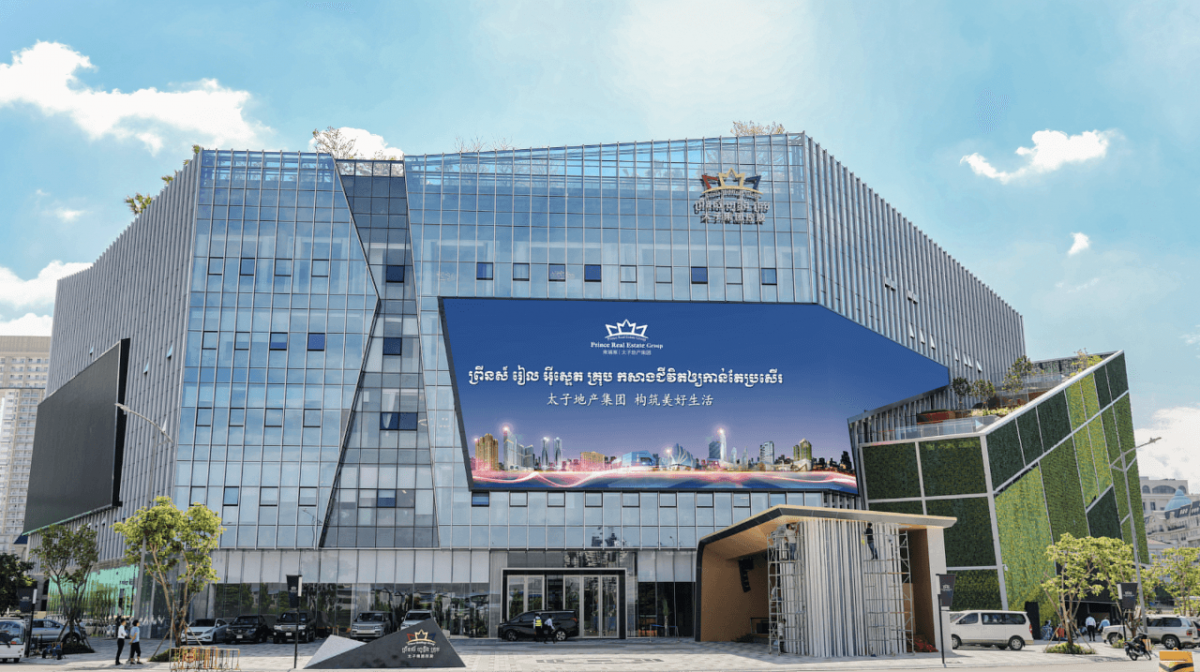
In an indictment unsealed Tuesday, Brooklyn federal prosecutors charged Prince Holding Group chairman Chen Zhi with wire fraud conspiracy and money laundering conspiracy.
Chen was the “mastermind behind a sprawling cyberfraud empire,” Assistant Attorney General John Eisenberg said. U.S. Attorney Joseph Nocella called it “one of the largest investment fraud operations in history.”
Cambodia urges a fair process as US and UK pursue Prince Group’s Chen Zhi in a global scam case
Cambodia’s government said Wednesday it hopes the U.S. and Britain have sufficient evidence in their pursuit of Prince Holding Group and its Chairman Chen Zhi, after both governments imposed coordinated sanctions accusing the Cambodian conglomerate of running massive online scams and using forced labor.
Cambodia’s Interior Ministry spokesman Touch Sokhak said Prince Holding Group has met all legal requirements to operate in Cambodia and has been treated no differently than other major companies investing in the country. He also said the Cambodian citizenship given to China native Chen was in accordance with the law.
Touch Sokhak said Cambodia will cooperate if there is a formal request backed by evidence. “We do not protect individuals who violate the law,” he said, but stressed that Cambodia’s government itself does not accuse Prince Holding Group or Chen Zhi of wrongdoing.
“I don’t have much to say about the American and British authorities’ seeking to arrest him, but first, we just hope that there will be arguments and sufficient proof to put against him,” Touch Sokhak told The Associated Press.
Prince Holding Group
The U.S. Treasury Department and U.K. Foreign Office on Tuesday announced joint sanctions against Chen and his conglomerate, accused of being a transnational criminal network that has defrauded victims worldwide and exploited trafficked workers across Southeast Asia.
It came after U.S. authorities seized more than $14 billion in bitcoin and charged Chen, 38, with wire fraud and money laundering conspiracies. Chen was accused of sanctioning violence against workers, authorizing bribes to foreign officials and using his other businesses, such as online gambling and cryptocurrency mining, to launder illicit profits. U.S. Attorney Joseph Nocella called it “one of the largest investment fraud operations in history.”
In London, British authorities froze Chen’s British businesses and assets, including a 12 million euro ($13.9 million) mansion in North London, a 100 million euro ($116 million) office building in the City of London, and multiple luxury flats across the capital.
John Wojcik, a senior threat researcher for Infoblox, who previously tracked cybercrime in Southeast Asia for the U.N. Office on Drugs and Crime, said the joint U.S.-British action marked a major strike against one of the largest cybercriminal and money laundering enterprises in Southeast Asia, but that more must be done.
“Unless law enforcement and industry partners can trace and dismantle their online infrastructure — the domains, hosting and payment rails that sustain them — these networks will rebrand, retool, and continue to scale,” Wojcik said.
Chen remains at large. If convicted in the U.S., he faces up to 40 years in prison. Prince Holding Group has previously denied involvement in scam operations and has not publicly responded to the latest allegations.
The two governments allege that Chen’s network operated scam compounds in Cambodia that used trafficked foreign nationals to run online “romance” and cryptocurrency investment scams. Victims were tricked into investing life savings in fake trading platforms, while trafficked workers were forced to carry out the frauds under threat of torture.
Mark Taylor, who formerly worked on human trafficking issues in Cambodia for the non-profit Winrock International, said that Chen was embedded in the Cambodian elite and “well protected” by the government, showing “the larger role that Cambodia has played as a safe center for this online scamming to prosper.” Chen was formerly a personal advisor to Cambodian Prime Minister Hun Manet.
“Cambodia is the physical location where a lot of it operates, but it’s also the money laundering center for the entire region,” Taylor said
Independent research group Cyber Scam Monitor has documented more than 200 online scamming centers and casinos in Cambodia alone, based on first-hand accounts from former scam workers, field surveys and media reports.
“For Cambodia, we will cooperate in every way possible with other countries where there is sufficient evidence,” Touch Sokhak said.
Screenshot from video circulating on social media showing the indecent act at a Pattaya Second Road condominium on October 14, 2025.
PATTAYA — A viral video circulating Tuesday shows foreign tourists engaging in sexual activity on a luxury condominium balcony on Pattaya Second Road, disregarding passersby in the busy area.
The incident occurred at a condominium in a crowded community area frequented by both Thai nationals and foreigners. Phonthakon Phongpakdee, 31, a motorcycle taxi driver, said he witnessed the couple around 2 p.m. on October 14 after the rain stopped while waiting for customers across from the condo.
“I glanced up and saw a tourist couple engaging in what appeared to be sexual activity on the balcony, completely ignoring people passing by below,” Phonthakon said. “It shocked everyone around. People turned to look and recorded videos, but the couple seemed completely unbothered by onlookers.”
He called on authorities to investigate and warn against such behavior to prevent recurrence. “Pattaya is an international tourist destination, but we don’t want some tourists to misunderstand that they can do anything they want here.”
The incident follows a previous viral case involving a Russian man and Thai woman engaging in sexual activity in the back of a pickup truck driving through Phuket. Authorities arrested both individuals along with the driver. The Russian man claimed he was creating content for social media, but immigration officials were asked to blacklist him.
Tourism police and Department of Tourism officials inspect documents at Fengrun Travel Trading Co., Ltd. in Rom Klao, Bangkok, on October 14, 2025, following a viral video showing a Chinese guide threatening tourists.
BANGKOK — Tourism police raided a travel agency in the Rom Klao area Tuesday following a viral video showing a Chinese guide threatening tourists to buy products or face being stranded in Thailand.
On October 14, officers from the Tourism Police and Department of Tourism inspected Fengrun Travel Trading Co., Ltd. in Preecha Village, Rom Klao, Bangkok. The company holds a valid license and had operated a Bangkok-Pattaya-Bangkok tour (5 nights, 6 days) for 24 Chinese tourists, accompanied by two tour leaders.
Thai guide Aye Khamue told investigators the incident occurred on October 12 aboard a tour bus in front of RED 88 jewelry shop in Bang Phra while returning to Bangkok. The confrontation involved Mr. Zhang, 38, a tour leader from Huiyou, a Chinese travel company, and the tourists. The group safely departed from Don Mueang Airport on October 13 at 5:41 p.m. for Xi’an, China.
Screenshots from viral video showing a tour guide pressuring Chinese tourists to shop during their Thailand trip, threatening they would not be allowed to return to China if they refused.
Potential Violations
Authorities found that Fengrun Travel Trading may have violated regulations by selling tour packages below cost, which carries penalties under Section 31 with punishment under Section 84: up to two years imprisonment, a fine up to 500,000 baht ($15,410), or both. The Department of Tourism is gathering evidence to file charges.
However, officials said Mr. Zhang’s behavior did not technically constitute illegal tour guide activity. Fengrun Travel Trading will coordinate with Huiyou to reprimand and discipline Zhang.
Questions Raised
Thai tour guide associations questioned whether the company provided false information to authorities, noting that tours typically have only one leader due to costs for meals, accommodation, and airfare. They also questioned whether Zhang traveled with the group, urging authorities to investigate whether he entered and exited Thailand at the same time as the tourists.
Officers from the Tourism Police and Department of Tourism inspect documents at Fengrun Travel Trading Co., Ltd. during a raid investigating alleged below-cost tour packages and connection to an unlicensed Chinese guide who threatened tourists.
Embassy Warning
The same day, the Chinese Embassy in Thailand issued a warning urging Chinese tourists to avoid bargain tour packages after the video surfaced on social media. The embassy said it immediately contacted Thai tourism police and the Tourism Authority of Thailand.
Authorities confirmed the Chinese national guide was unlicensed and attempted to pressure tourists into making purchases for commission.
“Foreign nationals are not permitted to work as tour guides in Thailand,” the embassy stated, advising tourists to choose reputable agencies with proper licenses and to call the Tourism Police hotline (1155) or embassy consular hotline (02-245-7010) if disputes arise.
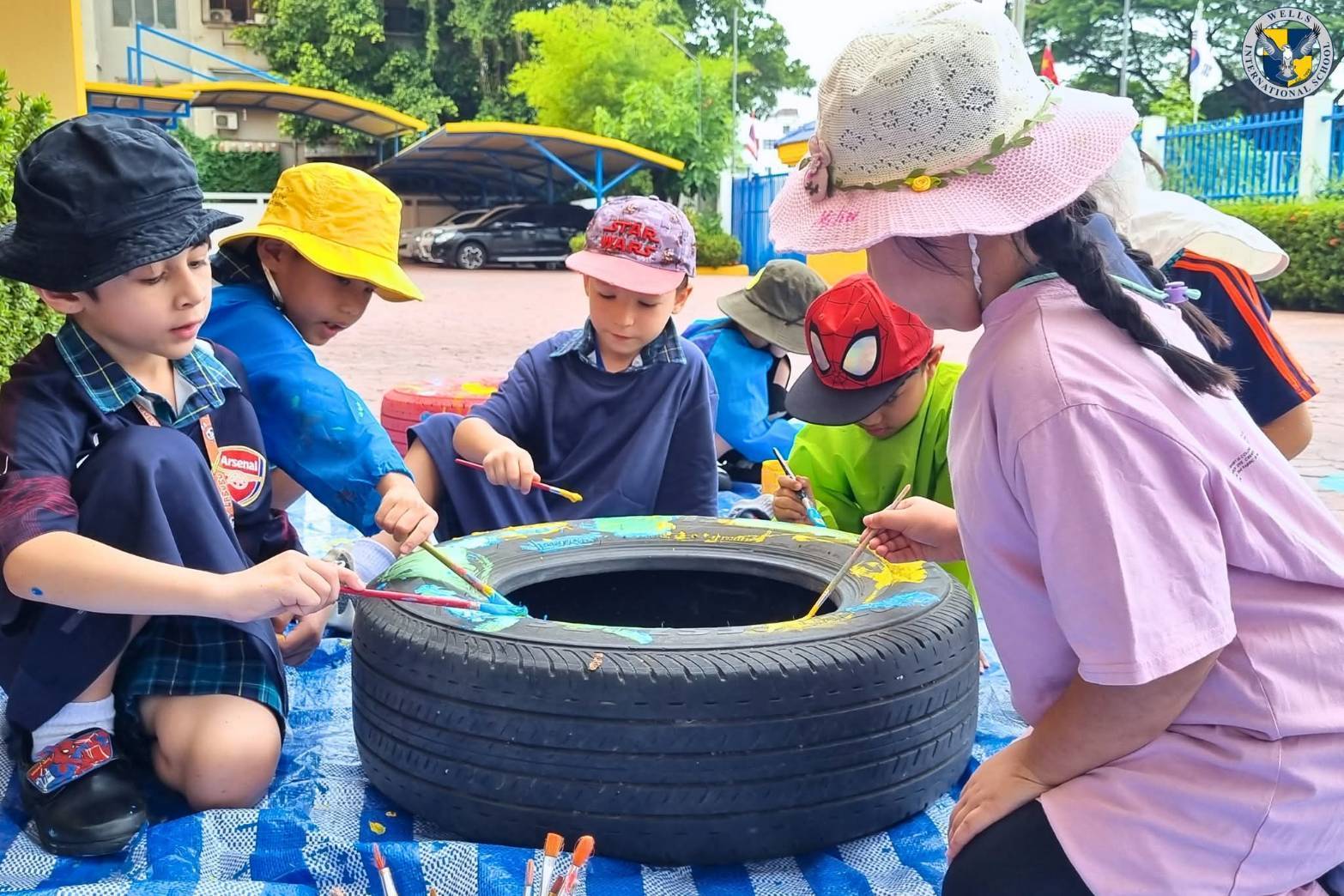
One of the key principles at Wells International School for developing students to become “quality global citizens” is fostering “The Power of Community”. Beyond its world-class American curriculum and hands-on learning experiences, Wells International School consistently promotes this concept as an ongoing activity.
It is believed to build strong relationships within the school among students, teachers, and parents, as a good community is the foundation for student success.
Dr. Chang Yao-Lang, Chairman of the Board at Wells International School, states that Wells places great importance on building “The Power of Community.” He recognizes that a dedicated and supportive community is the foundation for students’ success and well-being. The school believes that learning, especially beyond the classroom, thrives in an environment where students, teachers, parents, and staff work closely together.
Wells International School
This supportive community promotes inclusivity, mutual respect, and shared responsibility, encouraging all members of the school to participate and grow together. These bonds are instilled in a safe, inspiring, and creative atmosphere, fostering leadership and the development of quality global citizens.
“Building the power of community at Wells International School benefits student development in many areas, including academic excellence. Students learn from highly skilled personnel and participate in a rigorous university preparatory curriculum, emphasizing experiential learning and real-world application. Character and leadership within the community are nurtured, developing individuals who are principled, empathetic, open-minded, balanced, and accountable for their actions, contributing positively to society.
As global citizens, Wells emphasizes fostering global awareness through collaboration among students, teachers, and families, encouraging students to think critically and act responsibly in both local and international contexts.
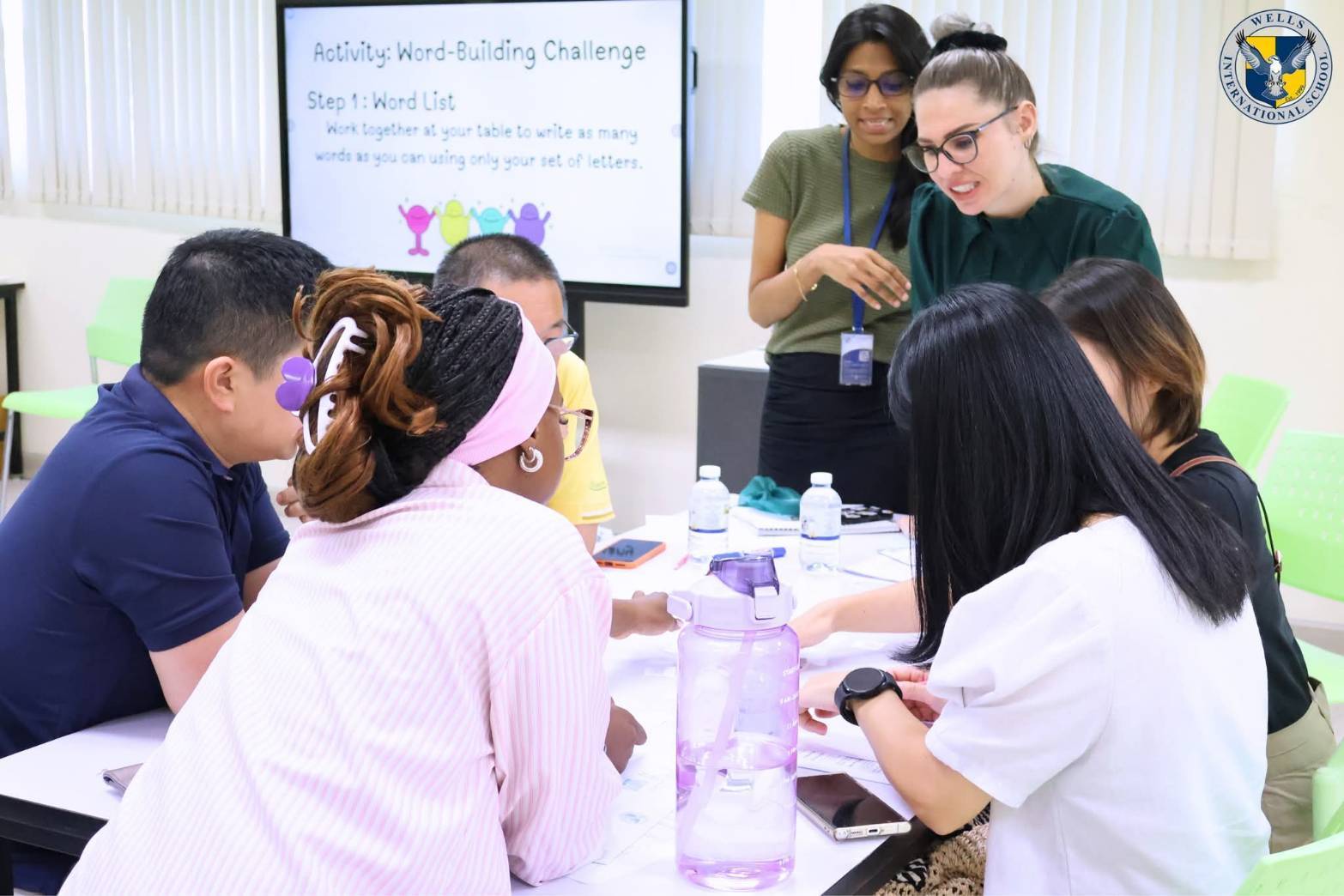
In terms of social and emotional growth, we emphasize a culture of mutual respect, teamwork, and shared responsibility, helping students develop skills for coexisting with others and adapting to the real world. We also prepare students for post-graduation, through internships, career guidance, academic clubs, and service-learning, among other activities.”
Wells International School
Dr. Chang further explains that overall, the school focuses on making the power of community the heart of the school to ensure every student grows academically, personally, and socially within an environment that supports all aspects of student development, including global impact.
This is achieved through continuous activities such as community service and CAS (Creativity, Activity, Service). Students actively participate in various service projects, collaborating with organizations like Operation Smile and the Thai Red Cross. This promotes social responsibility and global citizenship. Activities organized through collaboration, such as International Day and Farmers’ Market, and the strong involvement of the parent community and alumni, build a robust network.
Mr. Bernard Anthony, a parent of a 10th-grade student, says that children’s participation in activities to demonstrate the power of community, from his perspective, provides an opportunity for students to engage with the entire school, whether at the elementary, middle, or high school level, as well as with parents. He finds the club activities excellent because they teach children responsibility.
Wells International School
They learn from student representatives, older students, and alumni. When his son comes home from school, he still talks about them, and looks at examples from older students, saying, “One day, I will be an engineer and come back to share my knowledge.” These experiences are excellent for developing personality and communication skills, as his son used to be quite reserved in grades 6 and 7, but then began to open up.
“I think that’s why. At first, he wasn’t good at sports, but he didn’t give up, he kept trying. Eventually, he loved playing volleyball, with teachers helping to motivate the children as important guides. Overall, developing personality and engaging in various activities together among students, by grade 8, students listen to each other.
The coach, who is an alumnus, motivated my son a lot in volleyball. This is a real community. Alumni come back and share their experiences with younger students; alumni are an integral part of a good school. And the school providing opportunities for children to choose ‘internships’ independently is a good thing in terms of fostering decision-making.”
“I really enjoy International Day activities. Even parents can participate. We get to meet our children’s friends and their friends’ parents, which is great. Teachers also participate in dance activities, setting a good example for the children,” Mr. Bernard adds.
Wells International School
Zac Nugroho, an 11th-grade student, says that having a positive environment and classrooms at Wells is important. The community is visible in every classroom, and he has been a part of it, growing together. When you have a positive community, you have a place to turn. Sometimes Wells feels more like home than his real home, as he spends more time here.
“Personally, I enjoy International Day and Songkran. Both activities are quite fun. They are school-wide events with small booths where you can see the different personalities of the clubs. The best part is that I think these activities are very beneficial. The CAS (Creativity, Activity, and Service) principles taught by the school encourage you to broaden your horizons and develop these skills, improving yourself to give back to the community. There’s more room for creativity, and importantly, teamwork and team building,” Zach says.
Anne Fukuura, a 12th-grade student, says that having a good community between teachers and students is important for fostering a good environment. She is part of and a leader in the PAWS Club (Animal club supporting PAWS Bangkok). They care for stray cats and dogs. She believes that all extracurricular activities are an important part of the Wells community. Everyone participates in the larger community, but there are also smaller communities.
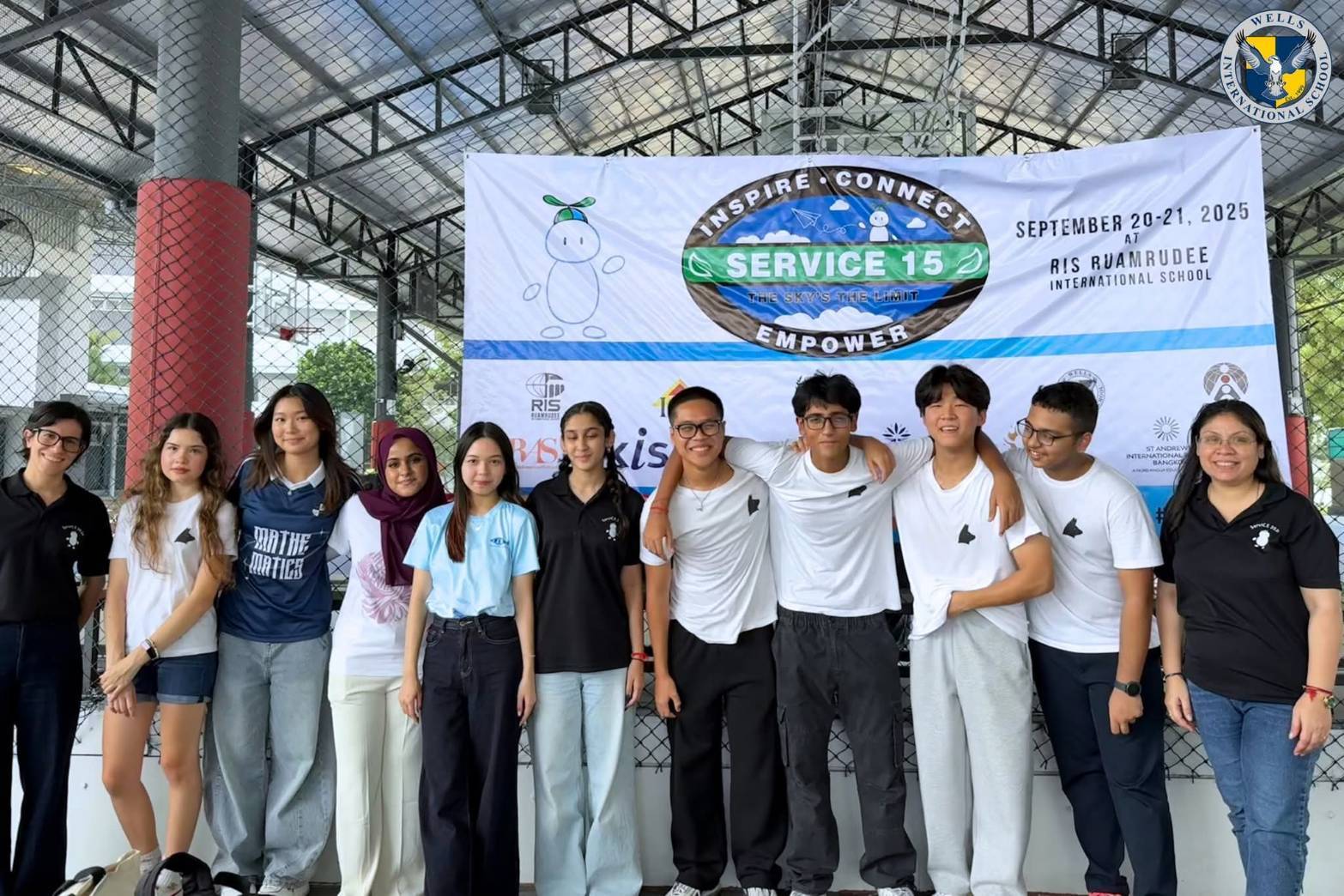
They have internship programs, such as “summer student teaching internships,” which give students experience. It’s a great experience. “ServICE Conference” activities allow them to build new relationships with new people, not just within the school community. They can gain more cultural understanding and have opportunities to ask others about their experiences.
Screenshots from viral video showing a tour guide pressuring Chinese tourists to shop during their Thailand trip, threatening they would not be allowed to return to China if they refused.
BANGKOK — The Chinese Embassy in Thailand issued a warning Tuesday urging Chinese tourists to avoid bargain tour packages after a viral video showed a tour guide threatening visitors with being stranded if they refused to shop.
The embassy said it immediately contacted Thai tourism police and the Tourism Authority of Thailand after the video surfaced on social media. Authorities confirmed the Chinese national guide was unlicensed and attempted to pressure tourists into making purchases for commission.
“Foreign nationals are not permitted to work as tour guides in Thailand,” the embassy stated, advising tourists to choose reputable agencies with proper licenses and not to trust “low-cost tours.”
“When participating in group tours, tourists are advised to choose travel agencies with reliable reputations, outbound travel licenses, and products that match the quality and price. It is also advised to sign formal contracts,” the embassy stated, adding that Chinese citizens should call the Tourism Police hotline (1155) or the embassy’s consular hotline (02-245-7010) if disputes arise.
Government Response
Thailand’s Tourism and Sports Minister Atthakorn Sirilatthayakorn said he has ordered the Department of Tourism and Tourism Police to urgently investigate the incident, including identifying the location, time, tour company involved, and tour program details.
“As we enter high season, we must ensure tourist confidence in safety, convenience, and service standards,” Atthakor said. “If violations are confirmed, penalties will be imposed. Such deceptive or coercive actions are unacceptable.”
Legal Penalties
According to the Department of Tourism, the case may violate Thailand’s Tour Business and Guide Act. Unlicensed foreign guides face up to one year imprisonment, a fine of up to 100,000 baht, or both. Thai guides acting as nominees could receive up to six months imprisonment, a fine of up to 50,000 baht, or both.
Tour companies found guilty of unfairly exploiting tourists face fines ranging from 5,000 to 50,000 baht and possible license suspension for up to six months.
Thai authorities are currently investigating the travel agency involved in the incident.
FILE - This April 3, 2013, file photo shows bitcoin tokens in Sandy, Utah. (AP Photo/Rick Bowmer, File)
NEW YORK (AP) — The U.S. government has seized more than $14 billion in bitcoin and charged the founder of a Cambodian conglomerate in a massive cryptocurrency scam, accusing him and unnamed co-conspirators of exploiting forced labor to dupe would-be investors and using the proceeds to purchase yachts, jets and a Picasso painting.
In an indictment unsealed Tuesday, Brooklyn federal prosecutors charged Prince Holding Group chairman Chen Zhi with wire fraud conspiracy and money laundering conspiracy. At the same time, U.S. and British authorities imposed sanctions on Chen’s company, which is involved in real estate development and financial services, and the Treasury Department declared it a transnational criminal organization.
Chen, 38, is accused of sanctioning violence against workers, authorizing bribes to foreign officials and using his other businesses, such as online gambling and cryptocurrency mining, to launder illicit profits.
Chen was the “mastermind behind a sprawling cyberfraud empire,” Assistant Attorney General John Eisenberg said. U.S. Attorney Joseph Nocella called it “one of the largest investment fraud operations in history.”
A dominant player in a growing scheme, authorities say
Last year, Americans lost at least $10 billion to Southeast Asia-based scams, a 66% increase from 2023, the Treasury Department said, calling Prince Holding Group a “dominant player” in that space. Chinese authorities have been investigating the company for cyber scams and money laundering since as early as 2020, according to court records reviewed by the U.S. Institute of Peace.
Chen, a native of China who is also known as “Vincent,” remained at large as of Tuesday, prosecutors said. If convicted, he faces up to 40 years in prison. If a court allows, the U.S. could use the 127,271 bitcoins it seized to repay victims. The value of the coins — currently around $113,000 each — will continue to fluctuate in the meantime.
Messages seeking comment were left for Prince Holding Group spokesperson Gabriel Tan. The company’s website says it “adheres to global business standards.” A spokesperson for the Cambodian government, Pen Bona, did not immediately respond to a request for comment.
Prince Holding Group
Jacob Daniel Sims, a transnational crime expert and visiting fellow at Harvard University’s Asia Center, said that Prince Holding Group is “an essential part of the scaffolding that makes global cyber-scamming possible,” and Chen is a “central pillar” of the criminal economy intertwined with Cambodia’s ruling regime.
Chen has served as an adviser to Prime Minister Hun Manet and his father, former Prime Minister Hun Sen, and was honored with the title “neak oknha” — equivalent to an English lord.
“While the indictment and sanctions don’t instantly dismantle these networks, they fundamentally change the risk calculus,” Sims said. They make “every global bank, real estate firm and investor think twice before touching Cambodian elite money.”
Forced labor and beatings ‘until they are barely alive’
According to Chen’s indictment, Prince Holding Group built at least 10 compounds in Cambodia where workers — often migrants held against their will — were forced to contact thousands of victims through social media or online messaging platforms, build rapport and entice them to transfer cryptocurrency with hopes of big investment returns.
In reality, prosecutors said, it was a swindle. The money, they said, was funneled into other Prince Holding Group businesses and shell companies and used to pay for things like luxury travel and entertainment, watches, vacation homes, rare artwork and even a Rolex watch for an executive’s spouse.
One victim was scammed out of more than $400,000 in cryptocurrency, prosecutors said.
The compounds functioned as forced labor camps, with dormitories surrounded by high walls and barbed wire fences, and automated call centers with hundreds of mobile phones lined up on racks controlling tens of thousands of fake social media profiles, prosecutors said. One compound was associated with Prince Holding Group’s Jinbei Casino Hotel. Another was known as “Golden Fortune.”
According to the Treasury Department’s sanctions statement, workers at the compounds were held captive, isolated and sometimes beaten after being lured with the promise of high-paying jobs in fields such as customer service or tech support.
Photographs included in Chen’s indictment showed a man with a bloody gash on his face, dozens of men on the ground with their hands bound, and a man with red lash marks on his chest and arms.
Chen personally approved of at least one beating, of a man believed to be causing trouble at a compound, but cautioned that he not be “beaten to death.” People reported seeing workers who escaped Golden Fortune being “beaten until they are barely alive,” the Treasury Department said.
In 2023, the United Nations estimated around 100,000 people were being forced to carry out online scams in Cambodia, as well as at least 120,000 in Myanmar and tens of thousands in Thailand, Laos and the Philippines.
“These actions won’t end the scam economy overnight,” Sims said. “But they shrink its oxygen supply and send a rare message to regimes like Cambodia’s that elite crime as a ruling strategy is a double-edged sword.”
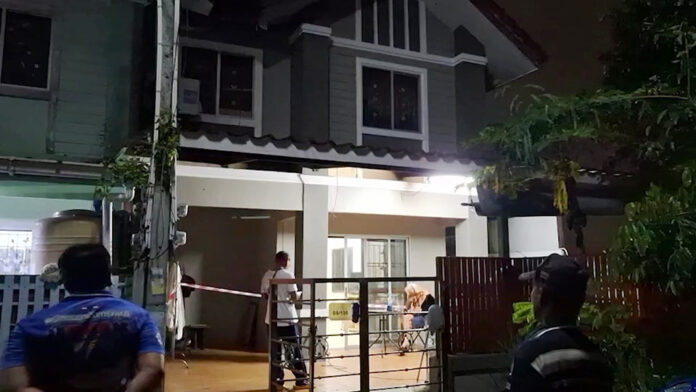
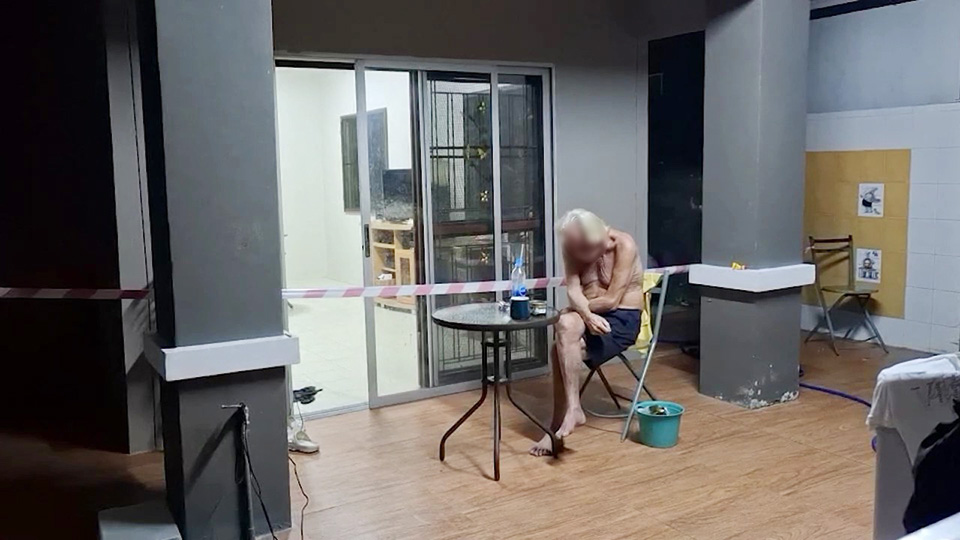
Police and rescue workers investigate the scene at a rented house in Pruksa 36 Village, Chachoengsao, where a 53-year-old Thai woman was found dead on October 14, 2025. Her blind German husband had been waiting outside for hours, unaware of the tragedy inside their home.
CHACHOENGSAO — A 69-year-old blind German man sat waiting outside his home for hours on Tuesday evening, unaware that his Thai wife had taken her own life inside.
Police from Mueang Chachoengsao Station were notified of the death at a rented house in Pruksa 36 Village, Soi 14, Khlong Udom Chonlachon subdistrict at 6.30 p.m. on October 14. Officers coordinated with forensic physicians and rescue volunteers to investigate.
Mr. Dick, the German national, had been sitting at a table outside the house calling for his wife since evening. When she didn’t respond, he asked neighbors for assistance. Upon entering and turning on the lights, neighbors discovered 53-year-old Nisara had died, with a rope around her neck attached to the staircase railing.
Background
A 48-year-old neighbor said the couple had rented the house for over a year. Nisara worked as a taxi driver in Bangkok, returning home every few days. Before leaving for work, she would prepare sandwiches for her husband and store them in the refrigerator.
A blind German man waits outside his house for hours, unaware of the tragedy inside their home where his Thai wife took her own life, on October 14, 2025.
Ms. Nee, 54, a neighbor who speaks German, explained that Mr. Dick came from Germany to retire in Thailand and began a relationship with Nisara. After moving to Chachoengsao together, Mr. Dick suffered an accident that gradually left him completely blind several years ago, making Nisara the sole breadwinner.
The Incident
Earlier on Tuesday, Nisara had returned home by taxi, telling neighbors she had been involved in a traffic accident while driving. The other party was demanding 40,000 baht ($1,200) in compensation, which she did not have. She said she had come home to wait and negotiate a solution.
Neighbors believe the financial pressure from the accident, combined with exhaustion from being the family’s sole provider, led to her tragic decision.
Police have transported the body for autopsy and are continuing their investigation.
Koen C. Kruijtbosch, Managing Director of Organon Thailand
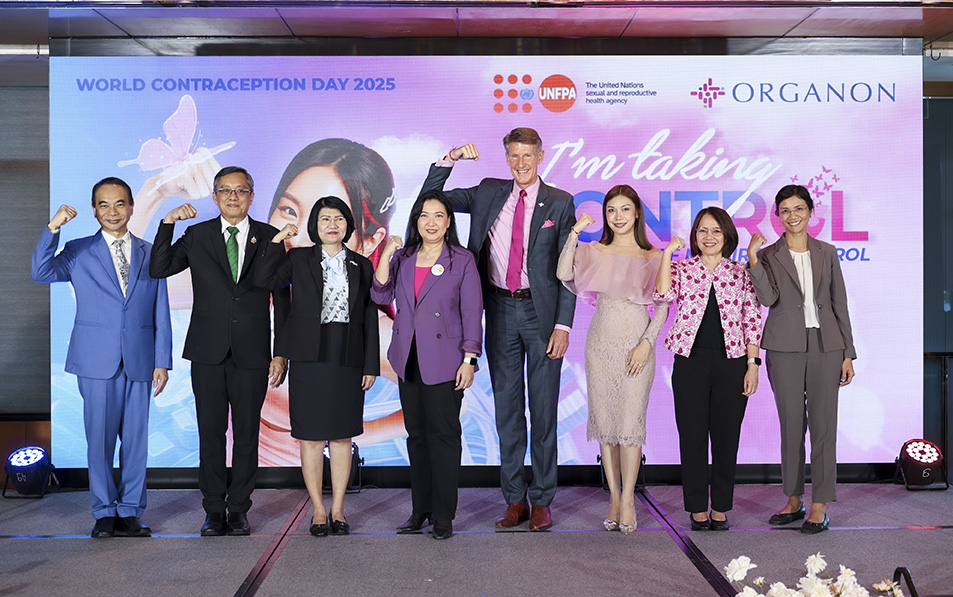
BANGKOK – To mark World Contraception Day, the United Nations Population Fund (UNFPA) Thailand, the UN’s sexual and reproductive health agency, is collaborating with Organon to launch the “I am taking Control of My Birth Control” campaign.
This campaign seeks to inspire women across the region to take a proactive approach in their reproductive health by highlighting the importance of making informed decisions to build a healthier future for women and their communities.
As well as raising awareness about contraception, World Contraception Day also serves as a reminder of the need to address barriers to accessing contraception and promotes education to reduce the incidence of unintended pregnancies. Despite progress, the Asia-Pacific region still faces significant gaps in access to sexual and reproductive health rights.
According to the Guttmacher Institute, 132 million women in Asia who wish to avoid pregnancy are not using modern contraception, and among adolescents aged 15-19, the unmet need is even more alarming at 51%, compared to 21% among all women aged 15-49. Unintended pregnancies can limit educational and career opportunities, increase health risks for women, and create additional burdens for families, communities, and healthcare systems.
The “I am taking Control of My Birth Control” campaign was launched by UNFPA and Orgnaon Thailand on World Contraception Day, and was attended by Bureau of Reproductive Health, The Department of Health, Ministry of Public Health, Department of Women’s Affairs and Family Development, and representatives from all departments under theMinistry of Social Development and Human Security (MSDHS), Ministry of Interior, Ministry of Foreign Affairs, Bangkok Metropolitan Administration, The Planned Parenthood Association of Thailand (PPAT), The Children and Youth Council of Thailand, and The Thai Lifestyle Medicine and Well-being Association (TLWA).
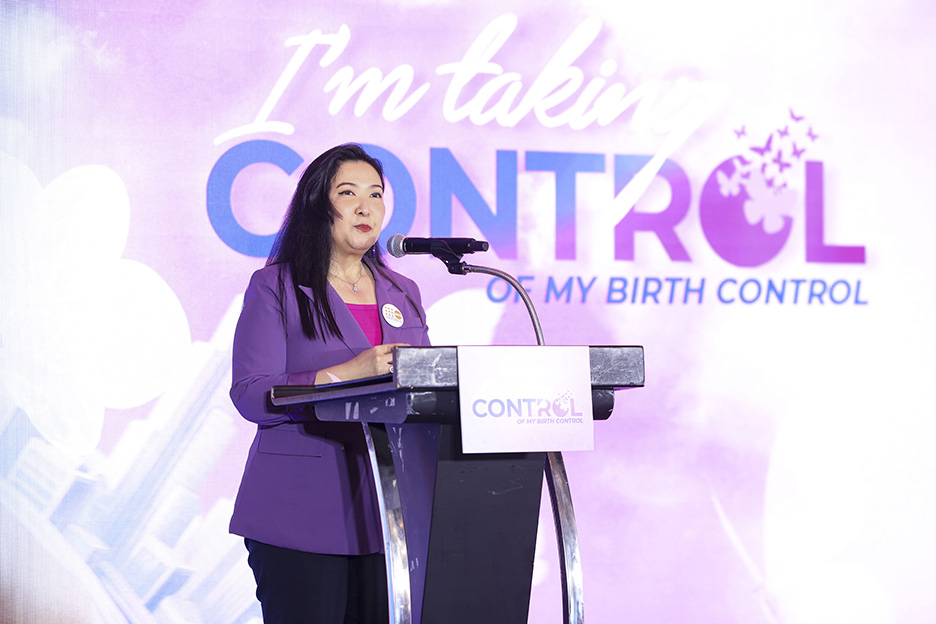
Siriluck Chiengwong, Head of UNFPA Thailand, stated during the opening ceremony that UNFPA is committed to ensuring that everyone, especially women, girls, youth and people of all genders, can access comprehensive, equitable, and safe information and services related to sexual and reproductive health and rights.
“We believe that collaborating with our partners is key to connecting people with accurate information and appropriate family planning and contraception. Every woman should have the right and choice to decide when to start a family. This mission aligns with the Sustainable Development Goals, particularly Goal 3 on good health and well-being and Goal 5 on gender equality”.
Siriluck Chiengwong, Head of UNFPA Thailand
Koen C. Kruijtbosch, Managing Director of Organon Thailand, added “World Contraception Day is not just a moment; it’s a movement that helps empower every woman to have the right to choose whether and when to start a family. Access to family planning and contraception is not merely a matter of personal freedom but a critical public health and economic necessity that helps women and girls complete their education and fully participate in the workforce”.
A Joint Campaing to Empower:
The “I am taking Control of My Birth Control” campaign asks healthcare professionals and consumers: “Do you believe that women should have the freedom to take control of their reproductive health?” This powerful statement symbolizes ownership over one’s body, choices, and future, and invites people to make a personal pledge for women’s health. For every pledge made on on the website https://wcd.womenhealthfact.com, Organon will donate USD $1 to support vulnerable women in Thailand through the UNFPA.
Make a pledge and place a pin on the interactive map.
Organon converts each pledge into a donation.
Donations will be distributed via UNFPA to markets in need in Thailand.
About UNFPA Thailand
UNFPA is the United Nations sexual and reproductive health agency. It works to uphold the rights and choices of population of all age and gender especially vulnerable population including women, girls, persons with disabilities and young people in over 150 countries. UNFPA works to ensure that every pregnancy is wanted, every childbirth is safe, and every young person potential is fullfiled. Through life-cycle approach, gender equality andleave no one behind principles, UNFPA supports Thailand to achieve SDGs focusing in four key priorities as follows.
●End the unmet need for family planning: Ensure that everyone has access to family planning services, preventing issues like unplanned pregnancies or adolescent pregnancies. This is foundational to realizing sexual and reproductive health and rights.
●End preventable maternal deaths: Ensure women and girls survive and thrive before, during, and after pregnancy and childbirth.
●End gender-based violence (GBV): Eliminate GBV through prevention and responses, so that all individuals can live free from violence, coercion, and discrimination. This is achieved by working to transform harmful gender and social norms to promote gender equality in families, communities, and institutions.
●Population and Development, including demographic resilience: Use data and evidence-based and rights-based advocacy to help the country adapt to demographic changes. This approach is about empowering people and building a resilient society for both current and future generations as well as strenghtening intergenerational solidarity.
Organon is an independent global healthcare company with a mission to help improve the health of women throughout their lives. Organon’s diverse portfolio offers over 70 medicines and products in women’s health, biosimilars, and a large franchise of established medicines across a range of therapeutic areas. In addition to Organon’s current products, the company invests in innovative solutions and research to drive future growth opportunities in women’s health and biosimilars.
Organon is also pursuing opportunities to collaborate with biopharmaceutical partners and innovators who look to commercialize their products by leveraging Organon’s scale and agile presence in fast growing international markets.
Organon has geographic scope with significant reach, world-class commercial capabilities, and approximately 10,000 employees with headquarters located in Jersey City, New Jersey.
You can view the Asia Pacific commitment on Heatmap here: ORGANON HEATMAP.
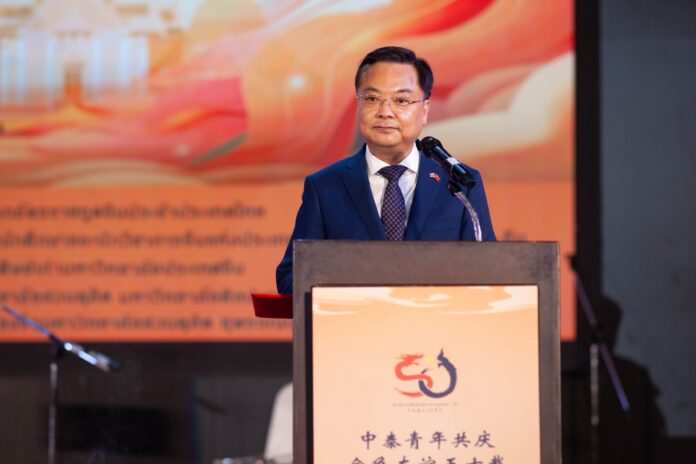
Zhang Jianwei
Ambassador Extraordinary and Plenipotentiary of the People's Republic of China to the Kingdom of Thailand
One-China Principle Unshakable
UNGA Resolution 2758 Unchallengable
Zhang Jianwei
Ambassador Extraordinary and Plenipotentiary of the People’s Republic of China to the Kingdom of Thailand
This year marks the 80th anniversary of the victory in the Chinese People’s War of Resistance Against Japanese Aggression and the victory of the World Anti-Fascist War, as well as the founding of the United Nations (UN). Taiwan’s restoration to China is a victorious outcome of World War II (WWII) and an integral part of the post-WWII international order.
On October 25, 1971, the 26th session of United Nations General Assembly (UNGA) adopted Resolution 2758 with an overwhelming majority, restored all lawful rights of the People’s Republic of China in the UN. The resolution resolved once and for all the question of the representation of the whole of China, including Taiwan, in the U.N., as a political, legal and procedural issue.
Recently, some external forces have colluded with the Taiwan Democratic Progressive Party authorities, deliberately distorted UNGA Resolution 2758, spread the fallacy that Taiwan’s status “undetermined” and openly challenged the authority of the U.N.and the post-WWII international order, posing serious threat to regional peace and stability . I would like to review the history,explain the ins and outs of the Taiwan question and uphold the one-China principle.
I One-China principle and UNGA Resolution 2758
The core meaning of the one-China principle includes three aspects: there is but one China in the world, the Taiwan region is an inalienable part of China’s territory, and the Government of the People’s Republic of China is the sole legal government representing the whole of China.
UNGA Resolution 2758 decides to restore all its rights to the People’s Republic of China and to recognize the representatives of its Government as the only legitimate representatives of China to the United Nations, and to expel forthwith the representatives of Chiang Kai-shek from the place where they unlawfully occupy at the United Nations and in all the organizations related to it.
The one-China principle is the premise and foundation for UNGA Resolution 2758, while the resolution solemnly confirms and fully embodies the one-China principle. The resolution makes it clear that there is but one China in the world and the Government of the People’s Republic of China is the only legitimate representative of the whole of China, including the Taiwan region. There is no such thing as “two Chinas” or “one China, one Taiwan.”
II UNGA Resolution 2758 brooks no challenge to its legitimacy, validity, and authority
UNGA Resolution 2758 carries extensive and authoritative legal force, and serves as the authoritative basis for the U.N. and organizations related to it to properly handle the Taiwan question. After the adoption of UNGA Resolution 2758, all official U.N. documents referred to Taiwan as “Taiwan, Province of China.”
It was clearly stated in the official legal opinions of the Office of Legal Affairs of the U.N. Secretariat that “the United Nations considers ‘Taiwan’ as a province of China with no separate status” and the “‘authorities’ in ‘Taipei’ are not considered to … enjoy any form of government status.” This has been the consistent position of the U.N. and is clearly documented.
The whole process leading to the adoption of Resolution 2758 speaks volume for the irreversible trend of the international community to uphold the one-China principle. This is not only a victory of the Chinese people, but also a victory of people around the world against hegemonism and power politics.The adoption of Resolution 2758 had a wide-reaching and profound political impact on the practice of international relations.
It effectively made the one-China principle a basic norm of international relations and a prevailing consensus in the international community. To date, 183 countries, including Thailand,have established and developed diplomatic relations with China on the basis of the one-China principle.
III One-China principle is the political foundation of China-Thailand relations.
The People’s Republic of China and the Kingdom of Thailand signed the Joint Communique on the Establishment of Diplomatic Relations on July 1st ,1975. The Joint Communique stated that the Government of the Kingdom of Thailand recognizes the Government of the People’s Republic of China as the sole legal government of China, acknowledges the position of the Chinese Government that there is but one China and that Taiwan is an integral part of Chinese territory, and decides to remove all its official representations from Taiwan within one month from the date of signature of this communique.
The Government of the People’s Republic of China recognizes the Government of the Kingdom of Thailand and agrees to respect the independence, sovereignty and territorial integrity of Thailand.
The Government of the Kingdom of Thailand and the Government of the People’s Republic of China also share the conviction that, in spite of the differences in the political, economic and social systems of the Kingdom of Thailand and the People’s Republic of China, there should be no obstacle to the development of peaceful and friendly relations between the two countries and peoples in accordance with the principles of mutual respect for sovereignty and territorial integrity, mutual non-aggression, non-interference in each other’s internal affairs, equality and mutual benefit, and peaceful coexistence.
Since the establishment of diplomatic relations half a century ago, the two countries have adhered to mutual respect, equality, sincerity, mutual trust and mutual assistance, and have always firmly supported each other in safeguarding national sovereignty, security and development interests. Under the strategic guidance of the leaders of both countries, China-Thailand relations maintain healthy and stable development momentum with fruitful cooperation across various fields.The sentiment of “China and Thailand as close as one family” has gained greater popularity.
The Government of the People’s Republic of China and the Government of the Kingdom of Thailand published the Joint Statement on Advancing the Comprehensive Strategic Cooperative Partnership and Building a China-Thailand Community with a Shared Future for Enhanced Stability, Prosperity, and Sustainability through a Forward-looking and People-centered Vision in 2025, in which Thailand reiterated firmly upholding the One-China Policy, recognizing the Government of the People’s Republic of China as the sole legal government representing the whole of China and Taiwan as an inalienable part of China, and will not support any call for the independence of Taiwan. Thailand also supports China’s “One Country, Two Systems” policy.
China highly appreciates Thailand’s consistent and firm adherence to the one-China principle. As being a new historical starting point of the 50th anniversary of the establishment of diplomatic relations between China and Thailand and the “Golden Jubilee 50 Years of China-Thailand Friendship”, China is willing to further consolidate political mutual trust, firmly support issues involving each other’s core interests and major concerns, and jointly safeguard the purposes and principles of the UN Charter, the international system with the U.N. at its core, and the international order underpinned by international law.
China is devoted for promotion of a China-Thailand community with a shared future with more achievements and benefits for the two countries and the world.