




























30.2 C
Bangkok
Tuesday, June 9, 2026
Home Blog Page 25

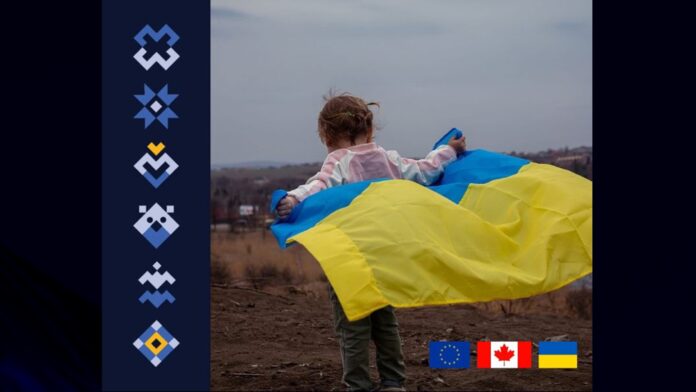
Every child has the right to live safely at home

Op-Ed by Her Excellency Mrs. Luisa Ragher, Ambassador of the European Union to the Kingdom of Thailand, Her Excellency Ms. Ping Kitnikone, Ambassador of Canada to the Kingdom of Thailand, and Mr. Viktor Semenov, Chargé d’Affaires a.i. of Ukraine in the Kingdom of Thailand. 

In times of conflict, and in times of peace, the rights of children must remain among any nation’s foremost responsibilities. Regardless of nationality, politics, or geography, every child has the same fundamental rights: to safety, to family, to education, and to a future free from fear.  When children become victims of war, protecting them is not only a national responsibility, but also a shared duty of the entire international community.

The unlawful deportation and forced transfer of Ukrainian children did not begin with Russia’s full-scale invasion in 2022. This practice began years earlier, following the illegal occupation of Crimea by the Russian Federation in 2014. By 2015, there was evidence of Ukrainian children being taken from the non-government-controlled areas of Ukraine and deported across borders or transferred deeper into Russian-controlled areas.

This unlawful and inhumane practice has grown into a large-scale and systematic violation of the rights of Ukrainian children. Today, the Ministry of Justice of Ukraine has officially confirmed more than 20,000 cases of deportation and forced transfer of Ukrainian children to Russia or temporarily Russian-controlled territory. For these children, the disruption has meant not only displacement, but separation from family, loss of community, and an attack on their identity, language, and connection to home. Their situation reminds us that protecting children in conflict is not an abstract principle, it is a human responsibility that requires sustained international cooperation.

Ukrainian authorities and civil society organisations working on these cases face enormous challenges in tracing where children have been taken. Russia has not provided comprehensive information about the number of deported or transferred children or their locations, making identifying and ultimately returning those children extremely difficult. Even when children are located, bringing them home can be a long and complex process. 

This is why international cooperation is essential. No country facing such a challenge could address it alone. And no child should have to wait for the world to act.

This is the purpose behind the Bring Kids Back UA initiative, launched by Ukrainian President Zelenskyy in 2023, and the International Coalition for the Return of Ukrainian Children, launched by Ukraine and Canada in February 2024. Bring Kids Back UA provides the national framework for Ukraine’s efforts to return children, support their recovery and reintegration, and pursue accountability. The International Coalition mobilizes international support for those objectives and helps translate political commitment into coordinated action. Today, the Coalition brings together 49 members, including states and international organisations. Its focus is humanitarian: protecting children’s rights and ensuring international standards safeguarding children are upheld. 

As co-chairs, Ukraine and Canada have worked hand-in-hand to build and sustain the Coalition, expand international participation, keep the return of Ukrainian children high on the global agenda, and encourage practical support for tracing, safe return, rehabilitation, reintegration, and accountability. This leadership reflects a simple conviction: children must never be used as instruments of war. The EU became a Coalition member in September 2025.

Through sustained diplomatic, humanitarian and, legal efforts and international cooperation, more than 2,130 Ukrainian children have been returned and supported through rehabilitation and reintegration programmes to date. For every child, returning home represents the restoration of something irreplaceable – the embrace of family, the familiarity of language and culture, and the chance to grow up in the place where they belong.

But these are only some of the stories. Many more children remain under Russian control — deported or trapped in the temporarily occupied territories of Ukraine. Addressing this challenge requires a truly global response. Protecting children in conflict is not the responsibility of one actor alone; it is a shared duty rooted in universal human rights and our shared values.

For this reason, we encourage countries around the world to engage with the International Coalition for the Return of Ukrainian Children, whether as members or as observers. We also recognise that many nations in Africa, Asia, Latin America, and the Middle East bring invaluable experience on this issue. From peacebuilding and reconciliation efforts to post-conflict child protection and reintegration programmes, many countries have demonstrated leadership over time in protecting vulnerable children and rebuilding communities.

The Coalition is not only a platform for supporting the return of Ukrainian children; it is also a space for exchanging insights and strengthening global approaches to child protection in conflict. Countries that join the Coalition can share their perspectives and lessons learned from their own experiences. While the conflict in Ukraine is our starting point, the goal is broader: to strengthen international practices so that children are better protected in every conflict.

Participation also creates opportunities to work together on legal and institutional frameworks that safeguard children. Across the world, governments have developed approaches to family tracing, return, psychological rehabilitation, and preservation of children’s cultural identity following displacement. By bringing these experiences together, the Coalition aims to strengthen international norms and practical mechanisms that help ensure children’s rights are respected in every conflict.

The Coalition continues to expand this collaboration. The next High-Level Meeting of the International Coalition for the Return of Ukrainian Children – co-hosted by the EU, Ukraine and Canada – took place on 11 May 2026, in Brussels, bringing partners together to review our progress and identify further practical steps to help return children to their families and communities.

Ultimately, protecting children must remain above geopolitical divides. It is a shared humanitarian imperative, grounded in international law and the recognition that every child deserves safety, dignity, and care.  

We invite partners from across the world, including Thailand, to join this effort and share their diverse voices, unique experiences, and invaluable leadership – all of which are essential in ensuring the protection of children remains a universal priority. By working together, across regions, cultures, and political perspectives, we can restore childhoods disrupted by conflict and strengthen the global framework that protects children everywhere. Because when it comes to the rights and dignity of children, our shared humanity must always come first.


Advertisement

Cambodia brings ASEAN observers to inspect disputed Thai frontier

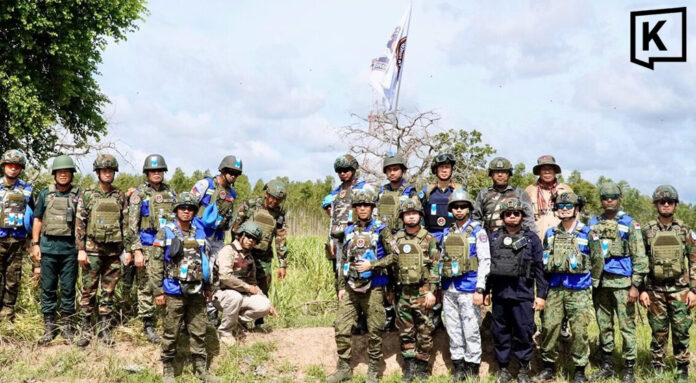
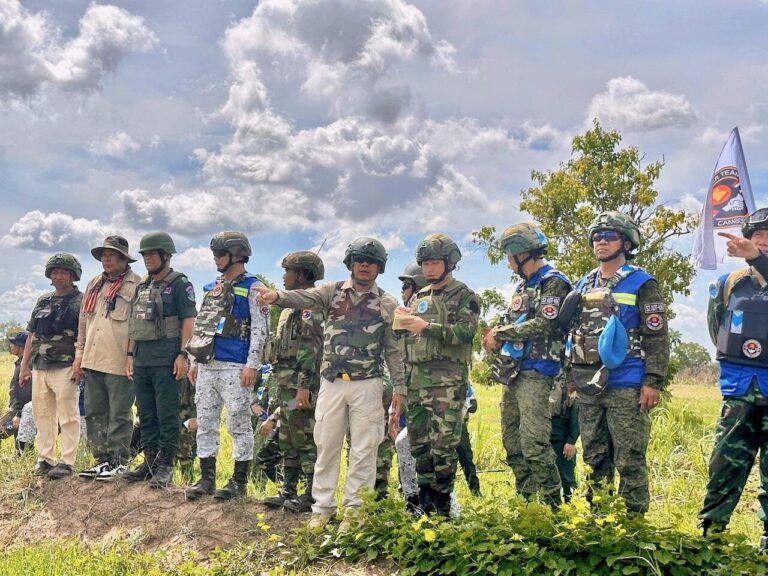
PHNOM PENH, Cambodia — 17 May 2026, A joint delegation of Cambodian officials and ASEAN observers carried out a monitoring mission along a contested section of the Thailand-Cambodia border on Sunday, according to a statement released by Cambodia’s Ministry of National Defense.

Lt. Gen. Maly Socheata, Spokeswoman of the Ministry of National Defense of the Kingdom of Cambodia, said the Cambodian Liaison Group (CLG) coordinated the site visit with the ASEAN Observer Team, led by the Philippines as the Head of Mission (HOM AOT), at 09:00 on Sunday. The delegation inspected the border area at Seila Khmer Village, located in the O Bei Chon Commune, O Chrov District, Banteay Meanchey Province.

702508830 1404800871692393 3293757626011896865 n 0

Phnom Penh maintains that the area has been continuously cultivated and administered by Cambodian citizens since an emergency ceasefire with Thailand took effect at 12:00 on 27 December 2025. The observers aimed to verify the border situation and evaluate compliance with stabilization measures outlined in the joint ceasefire agreement, which followed a period of heightened tensions between the neighboring nations last year.

In the press release, Cambodia strongly reiterated that formal survey and demarcation work remains the exclusive mandate of the bilateral Joint Boundary Commission (JBC) and its subsequent Joint Survey Teams (JSTs). All types of armed forces, including the military, and local authorities shall not have the authority to indicate the boundary line on the terrain.

The defense ministry explicitly rejected any unilateral alterations to the international boundary line, insisting that all border determinations must strictly adhere to historical framework agreements. These include the Franco–Siamese conventions, the Agreed Minutes of the JBC, the Memorandum of Understanding (MOU) 2000, and the Terms of Reference (TOR) 2003.

Cambodian authorities firmly rejected any border changes resulting from the historical or present use of force. Phnom Penh urged Bangkok to dispatch its survey teams back to the field to resume demarcation work and called for an immediate meeting of the JBC.

The ministry reaffirmed its commitment to the Joint Declaration on the Peace Agreement between Cambodia and Thailand on 26 October 2025, as well as the resolutions passed during the Third Special Meeting of the Cambodia–Thailand General Border Committee (GBC) on 27 December 2025, aimed at restoring long-lasting peace and stability along the frontier.

Advertisement

Three Thai children return home after Malaysia begging ordeal

SONGKHLA — Three Thai children who were allegedly taken to Malaysia by a monk to be ordained as novice monks and used for begging have returned safely to Thailand, authorities said.

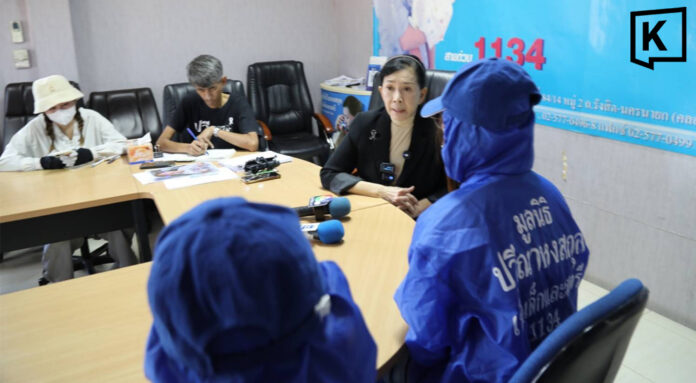
The children, aged 5, 11 and 12, arrived back in Thailand after a coordinated rescue effort involving several agencies, including Thailand’s Foreign Ministry, the Ministry of Social Development and Human Security, the Malaysian Embassy and the Pavena Hongsakul Foundation for Children and Women.

Parents wept and embraced the children upon their return.

Four other Thai children aged between 13 and 15 remain temporarily in Malaysia to testify in court proceedings and are expected to return to Thailand in early June, officials said.

Pavena Hongsakul, president of the foundation, said the organisation received complaints about the case on 9 May and immediately submitted an urgent request to the Malaysian ambassador in Thailand seeking assistance to return the children.

The foundation also coordinated with Thailand’s Department of Consular Affairs and officials responsible for protecting Thai nationals overseas to gather information and monitor efforts to assist all seven children.

Authorities from the Department of Children and Youth and social development officials in Songkhla province also joined the operation.

On 12 May, the Foreign Ministry informed the foundation that three children would return to Thailand that evening. Officials from Songkhla’s social development office, the Southern Border Coordination Centre and immigration police received the children at the border checkpoint in Songkhla province at 20:45.

Officials said the children were suffering from fever and exhaustion and were taken for medical examinations and rest at a child protection shelter in Songkhla for two nights before being reunited with their families.

On 18 May, the children’s parents travelled from Prachuap Khiri Khan and Ratchaburi provinces to thank the foundation, the Foreign Ministry, the Ministry of Social Development and Human Security and the Malaysian Embassy for helping bring the children home safely.

Pavena said the foundation would continue coordinating psychological rehabilitation for the children alongside relevant agencies.

Advertisement

Train driver admits meth use days before deadly Bangkok crash

BANGKOK — Police said the driver of a freight train involved in the deadly train-bus collision in Bangkok admitted to regularly using methamphetamine and cannabis, with his last reported drug use occurring 10 days before the crash.

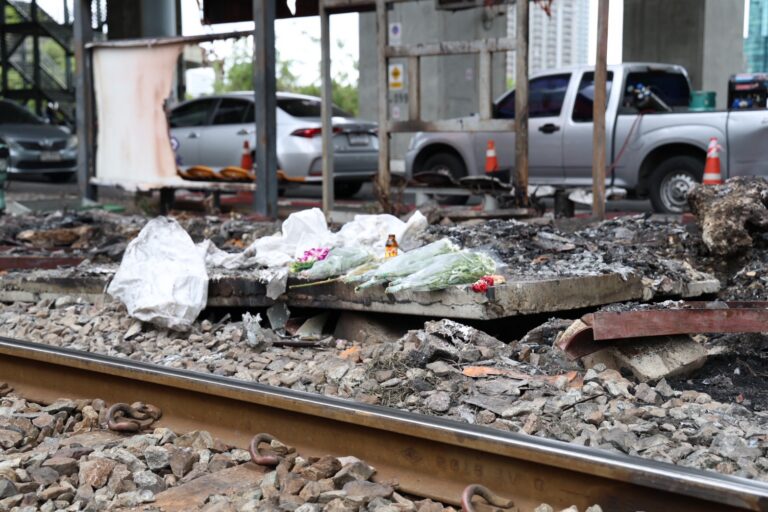
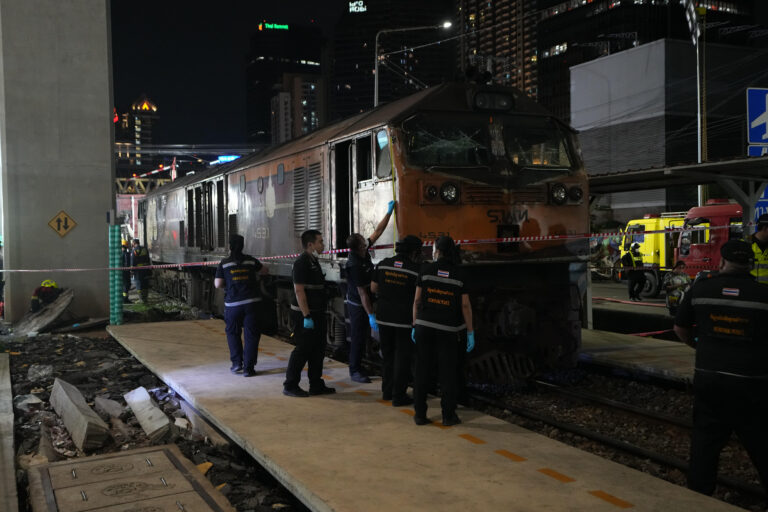
The revelation came as investigators continued probing the collision between freight train No. 2126, travelling from Laem Chabang to Bang Sue, and air-conditioned bus No. 206 at the Makkasan railway crossing beneath the Airport Rail Link on Asok-Din Daeng Road on 16 May. The crash triggered a major fire, killing eight people and injuring more than 30 others.

Pol. Maj. Gen. Worasak Pisitbanakorn, commander of Metropolitan Police Division 1, said on 18 May that police had set up a joint investigation team following a two-hour case meeting at Makkasan Police Station.

The bus driver has been charged with reckless driving causing death, injury, serious injury and property damage.

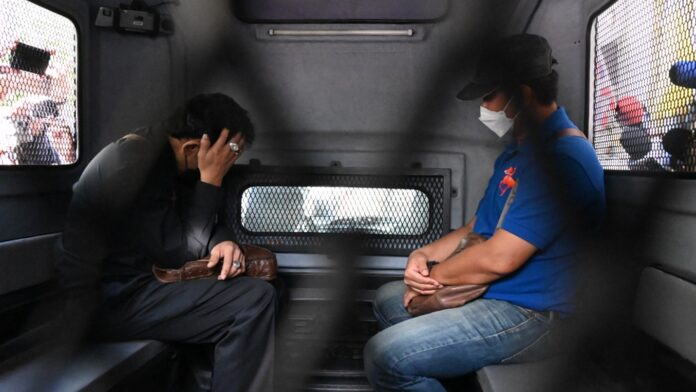
Meanwhile, the train driver and a railway flagman were charged with negligence causing death and injury. Investigators said the two men gave conflicting statements, with the flagman insisting he had signalled properly while the train driver claimed no warning signal had been given.

S 21635093 0

Police said investigators would inspect every railway crossing along the train’s route to examine train speeds and determine whether warning signals were clearly given at each crossing.

Authorities have also requested permission from the State Railway of Thailand to reconstruct the incident and review the driver’s field of vision. Investigators are seeking data from the train’s black box and questioning railway officials over operational regulations, including why train drivers are currently allowed to operate without formal driving licences.

AP26136452024638
Investigators examine the train at the crash site near an airport rail link station in Bangkok, Thailand, Saturday, May 16, 2026. (AP Photo/Sakchai Lalit)

Police said the train driver claimed he regularly used methamphetamine and cannabis, sometimes taking several pills at a time, though investigators have not yet confirmed the statement. A background check also found he had previously faced a drug-use case in 2019 in Thung Song district of Nakhon Si Thammarat province.

Authorities said police would work with related agencies to strictly enforce laws at railway crossings to prevent similar accidents in the future.

Advertisement

Actor Keng Harit Debuts at Cannes, Tops X Trends Globally

CANNES, France — 18 May 2026, Thai actor, “Keng” Harit, turned heads on the global stage, making his debut appearance on the red carpet at the 79th Cannes Film Festival, with the hashtag #KengHaritAtCannes topping trends on X.

Drawing significant attention from international media, Keng-Harit Buayoi, the actor from Thai production company and talent agency Domundi, proved his sensational star power. He took immense pride as a Thai artist stepping onto the global stage, attending the red carpet at the 79th Cannes Film Festival in 2026.

The appearance marked Keng’s debut at the festival, where he drew attention with a poised and confident presence on the red carpet. He wore a bespoke look from AMI Paris that combined classic tailoring with a modern edge, completing a polished and understated appearance for the occasion.

Keng wore a white poplin shirt with a distinctive knotted collar detail and a tailored black suit. He accessorized the ensemble with a caterpillar-shaped brooch from luxury jeweler Chopard for his red-carpet appearance at the premiere of the Spanish movie El Ser Querido.

keng4

From the moment he left his hotel until he stepped onto the red carpet, fans propelled the hashtag #KengHaritAtCannes to the number one trending spot in Thailand and number 3 globally on the X. The widespread online engagement underscores the rising international popularity of the Thai star, who attracted considerable interest from both foreign media outlets and a growing both Thai and overseas fans.

Source: https://getdaytrends.com/

Advertisement

Ancient underwater Narai carving opened to visitors in Ubon Ratchathani

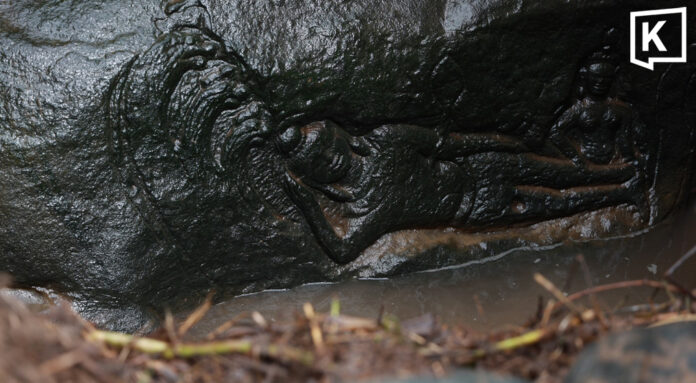
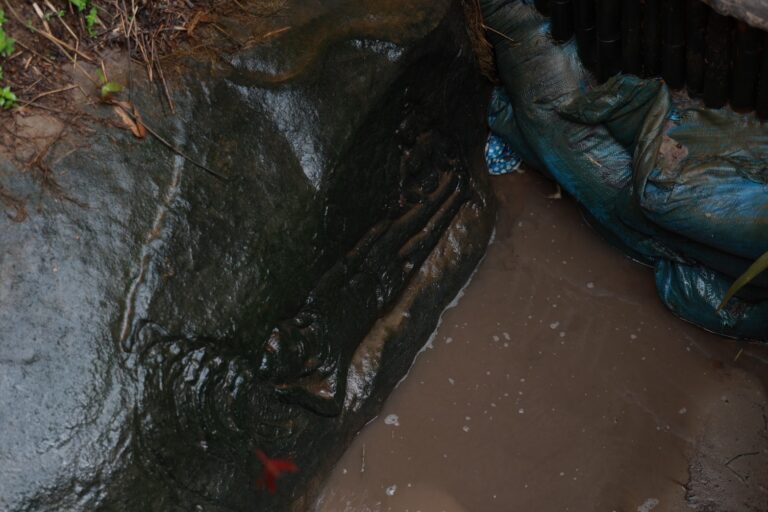
UBON RATCHATHANI — 18 May 2026, Thailand’s 2nd Army Region has launched an exploration and nature trail route to an ancient underwater carving of “Narai Banthomsin”, believed to be the only underwater rock carving of its kind in the country, as part of efforts to promote conservation tourism in Ubon Ratchathani province.

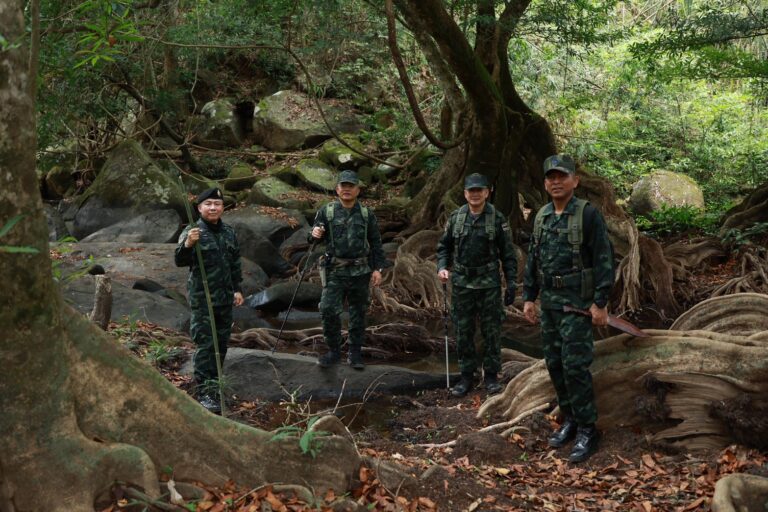
The initiative, led by Lt. Gen. Weerayut Raksasin, commander of the 2nd Army Region, followed a route traditionally used by villagers from Khae Don village in Nam Yuen district to reach and worship the site.

The route begins from the Phra Yai base of the 23rd Ranger Regiment near Phu Wang Nam Chan monastic retreat and is intended to support sustainable eco-tourism and historical education.

S 45375803 0

The bas-relief sandstone carving, depicting the Hindu deity Narai reclining on the serpent king Ananta Naga, was discovered by chance in 1979 by a local hunter searching for fish in a stream near Khae Don village.

Archaeological examinations found the carving portrays Narai reclining on his right side atop a three-headed naga. A lotus bud rises from the deity’s navel, while a female figure, believed to represent Lakshmi, appears near the feet.

The carving measures about 120 centimetres long and 50 centimetres high and is believed to be more than 1,000 years old.

S 45375809 0

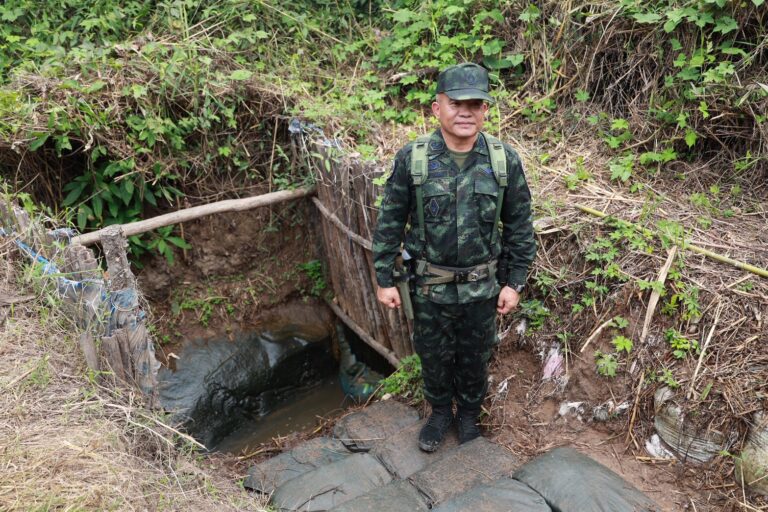
The site is currently overseen by the Fine Arts Office 9 and Phu Chong Na Yoi National Park in the Phanom Dong Rak mountain range, within Yod Dom Wildlife Sanctuary in Nam Yuen district, Ubon Ratchathani province.

The story of “Narai Banthomsin” appears in the Mahabharata epic, describing the end of a cosmic age when all things are destroyed and submerged beneath the ocean before Narai awakens to recreate the world — a belief reflecting longstanding religious faith and cosmological traditions.

S 45375802 0

Following past clashes in the area, the 2nd Development Division and the 23rd Ranger Regiment task force began improving strategic access routes connecting the site to main roads, with plans to develop the area into a conservation and cultural tourism destination.

Authorities are also considering community tourism activities linked to the protection of natural resources and antiquities to generate sustainable income for local residents.

Each year, a ceremonial offering ritual for Narai Banthomsin is held during the dry season, usually in early March when water levels recede, drawing worshippers from Ubon Ratchathani and across Thailand.

Advertisement

Thailand gains access to EU’s long-term Schengen visa pathway

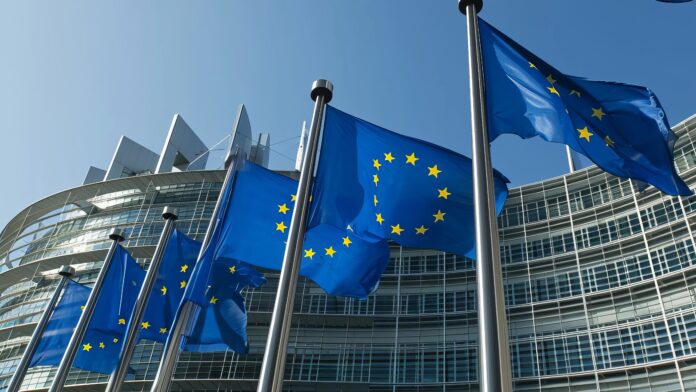
Flags of the european union

BANGKOK — Thailand’s Foreign Ministry announced that the European Union has approved the Visa Cascade scheme for Thai nationals, allowing eligible travellers to obtain longer-term multiple-entry Schengen visas more easily.

The European Commission approved the measure for Thai nationals residing in Thailand who apply for short-stay Schengen visas through embassies or consulates of Schengen member states in Thailand.

Thailand is now one of seven countries granted access to the scheme, following India, Saudi Arabia, Bahrain and Oman in 2024, and Turkey and Indonesia in 2025. Thailand is also the second ASEAN country to receive the privilege.

Under the Visa Cascade system, Thai passport holders with a good record of properly using previous Schengen visas may qualify for longer-duration multiple-entry visas in stages.

Applicants who have previously received and correctly used one Schengen visa within the past two years may be eligible for a one-year multiple-entry visa. Those who have properly used a one-year visa within the previous three years may qualify for a two-year visa, while travellers who have correctly used a two-year visa within the past four years may be eligible for a five-year visa.

The Foreign Ministry said the scheme would help reduce the need for frequent visa applications, while saving time and costs for Thai travellers.

However, the ministry stressed that the measure is not visa-free access. Thai nationals must still apply for Schengen visas under the normal process, with no relaxation of existing requirements.

Authorities also warned that visa holders must maintain a good travel record and comply with the laws of destination countries. Violations could affect future visa eligibility and undermine Thailand’s long-term goal of securing visa-free travel to the Schengen area.

Advertisement

Thailand, Peru Push to Finalise Free Trade Deal in 2026

BANGKOK — 18 May 2026, Thai Prime Minister Anutin Charnvirakul and Peru’s ambassador agreed Monday to accelerate free trade negotiations between the two countries, with both sides expressing hope a deal could be signed before the end of 2026.

The commitment came during a farewell visit to Government House by Ambassador Cecilia Zunilda Galarreta Bazán, who is completing her diplomatic posting in Bangkok. The two held informal talks covering trade, food security, and logistics.

The two held informal discussions, during which the ambassador expressed appreciation for Thailand and praised the long-standing co-operation between the two countries. Galarreta Bazán said Thailand and Peru had maintained close relations and strong co-operation for many years, adding that she felt honored to have contributed to elevating bilateral ties between the two nations across multiple dimensions during her tenure.

20260518101549 4039

On economic matters, both sides welcomed progress in negotiations for the Thailand-Peru Free Trade Agreement (FTA) and expressed hope that talks could be accelerated to allow the pact to be signed within this year.

Regarding food security, both sides recognized the high agricultural potential of their respective countries and agreed there remained significant opportunities to expand co-operation in the sector. Anutin affirmed that Thailand is ready to serve as a primary food source for Peru and the broader South American region.

The ambassador also raised the Chancay Port project — a deepwater Pacific hub currently under development in Peru — noting Thailand could play a meaningful role in the initiative. The port is expected to significantly improve supply chain links between South America and ASEAN, with Thailand serving as a key entry point into the region.

Anutin also thanked the ambassador for her dedication to fostering Thai-Peruvian relations and wished her success in her future endeavors, emphasizing she would always be welcomed back to Thailand as a close friend of the nation.

20260518101549 5785

Advertisement

Thai abbot wounded in shotgun attack at temple

Thai abbot wounded in shotgun attack at temple

KAMPHAENG PHET — 18 May 2026, An abbot was seriously injured after unidentified attackers opened fire on him inside his temple residence in Kamphaeng Phet province, leaving him with 16 gunshot wounds, police said.

The attack took place at about 21:00 on 17 May 2026 at Wat Krajom Thong in Ang Thong subdistrict, Muang district, Kamphaeng Phet province.

Phra Athikan Boonlert Akapunyo, abbot of the temple, was inside his quarters performing routine religious duties when an unknown assailant entered through a rear door and opened fire, according to his account from his hospital bed.

The abbot said he did not know the identity of the attacker or the motive behind the shooting. He believed the weapon may have been a homemade firearm.

After being shot, he managed to walk outside his quarters and call for help before fellow monks and villagers rushed him to hospital for emergency treatment.

Doctors found bullet wounds across his body, including near his right ear, shoulder blade, shoulder and right hip, with a total of 16 entry marks. He remains under close medical supervision.

The abbot said he could not think of anyone who might wish to harm him, saying he had no known disputes or serious conflicts. While some people had occasionally borrowed small amounts of money from him, he said the sums involved were minor and unlikely to have led to a violent attack.

The shooting has shocked monks and residents, who described the abbot as a respected community figure who lived simply and had no known quarrels.

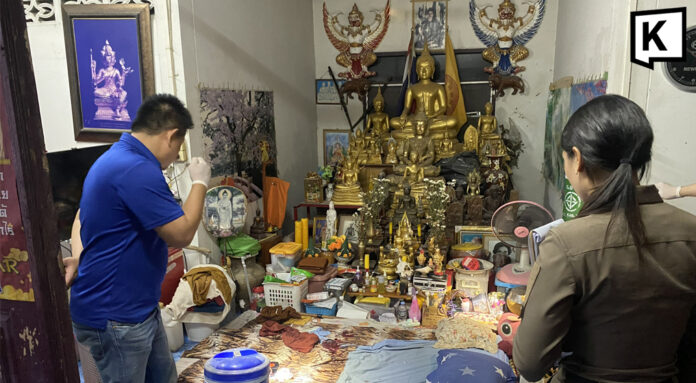
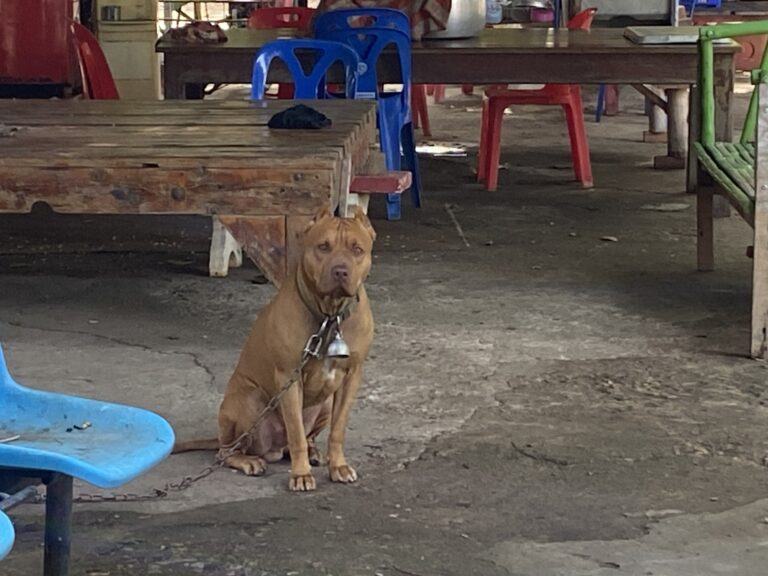
Investigators from Muang Kamphaeng Phet Police Station noted that a pit bull kept by the abbot near the entrance to his quarters did not bark during the attack. Police also found that CCTV cameras inside the quarters and around the temple grounds were out of order.

Police have gathered evidence, questioned witnesses and are reviewing nearby surveillance footage as they search for the suspects.

news133387 d9ScPK4Uxe1779073531

In the latest development, investigators summoned all monks from Wat Krajom Thong for detailed questioning to examine possible leads, including whether the attacker had entered or surveyed the temple beforehand, or whether internal disputes or other grievances may have played a role.

The temple remained quiet on 18 May 2026, with the abbot’s quarters sealed off behind police tape as monks and devotees visited the site.

A 60-year-old lay caretaker, identified only as Chalo, or “Odd”, said he was shocked to learn of the attack. He described the abbot as kind to both monks and villagers, adding that while people occasionally borrowed money from him, he did not involve himself in others’ personal affairs.

The caretaker said the temple’s CCTV system had previously functioned but could no longer record because its memory device had expired. He also said the pit bull remained calm when close to the abbot but would bark and behave aggressively when separated from him.

Advertisement

5.3 Magnitude Myanmar Earthquake Rattles Bangkok High-Rises

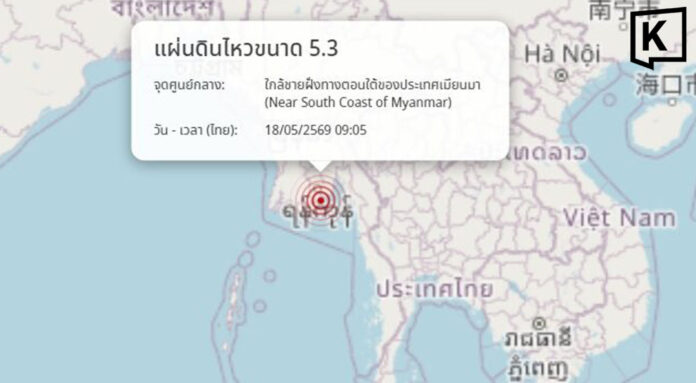
BANGKOK — 18 May 2026, A 5.3 magnitude earthquake struck off the southern coast of Myanmar on Monday morning, sending distinct tremors across Bangkok and prompting evacuations of high-rise buildings in the Thai capital.

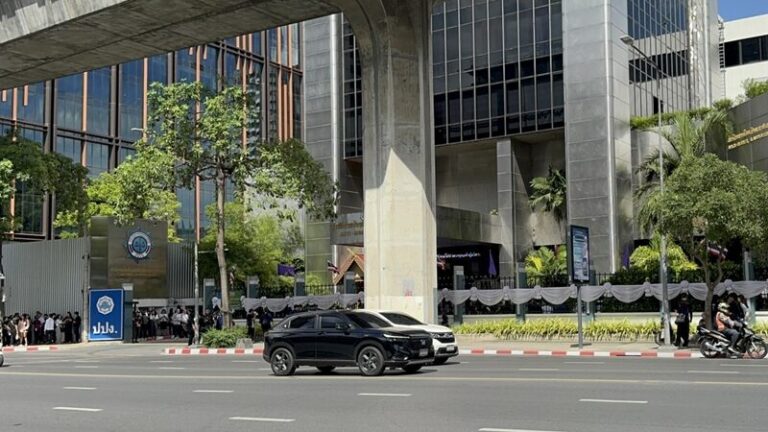
Thailand’s Earthquake Observation Division (TMD) said the quake struck at 09:05 local time near the southern coast of Myanmar. The epicenter was located at a depth of 10 kilometers, about 247 kilometers southwest of Mae Sot District in Tak Province.

The tremor posed no immediate threat to structures in Thailand, and no damage has been reported so far. Updates will follow if further details emerge.

18 ไหว2
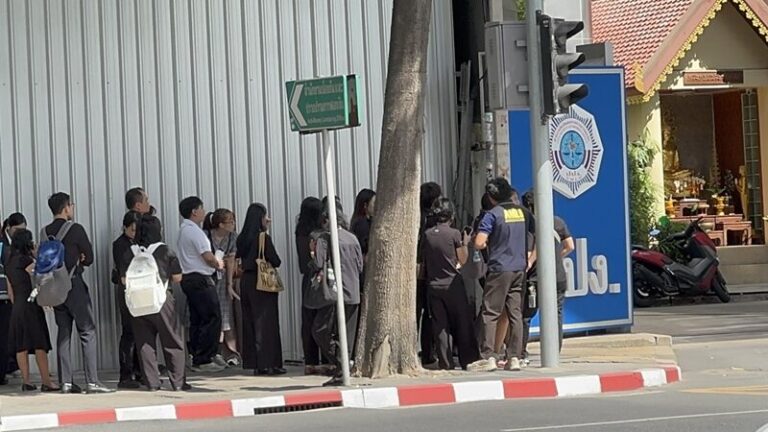
Workers gathered at designated safety points outside several high-rise buildings across the city following the tremors.

Comments posted on the Earthquake TMD Facebook page showed residents on upper floors of skyscrapers in major Bangkok districts including Don Mueang, Phaya Thai, Bang Rak, Huai Khwang, Pathum Wan, Khlong Toei, and Chatuchak reporting noticeable tremors.

Selected comments from residents reporting the tremors online:
• “19th floor, Gems Tower. Strongly felt!”
• “5th floor at Lam Sali Intersection, Ramkhamhaeng. Felt it slightly twice.”
• “Felt it here in Chiang Mai. 6th floor, felt the building swaying.”
• “10th floor in Asoke. Felt it.”
• “Strongly felt in Phra Pradaeng. We’re at King Mongkut’s University of Technology Thonburi and have already evacuated the building.”

Tremors were felt across Bangkok Metropolitan Region, especially on upper floors of tall buildings where people noticed structures swaying and light fixtures swinging. The Anti-Money Laundering Office (AMLO) building in Bangkok experienced significant swaying, with hanging lights visibly moving.

Officials quickly evacuated staff from the building as a precaution and inspected the structure and internal systems.

Although the quake’s epicenter was outside Thailand, experts said Bangkok’s soft clay soil can amplify seismic waves, allowing tremors from distant earthquakes to be felt across the capital.

18 ไหว3

Advertisement

Hot News

LATEST NEWS

Bangkok
overcast clouds
30.2 ° C
31.6 °
28.8 °
76 %
4.5kmh
100 %
Tue
34 °
Wed
34 °
Thu
35 °
Fri
31 °
Sat
31 °