






























29.7 C
Bangkok
Monday, June 8, 2026
Home Blog Page 2572

2 Policemen Killed, 1 Injured in US Gun Incident

Riverside Country Sheriffs Deputies stand near the scene of a shooting Sunday in Palm Springs, California. Photo: Rodrigo Peña / Associated Press

PALM SPRINGS, California — Two Palm Springs police officers trying to resolve a family dispute were killed Saturday when a man they had been speaking with suddenly pulled out a gun and opened fire on them, the city’s police chief said.

A third officer was wounded and remained hospitalized. The shooter was not immediately identified.

SWAT officers quickly surrounded the house where the shooting took place, and authorities said late Saturday night that the gunman might still be holed up inside.

“It was a simple family disturbance and he elected to open fire on a few of the guardians of the city,” said Chief Bryan Reyes at a news conference.

The chief, near tears, identified the slain officers as Jose “Gil” Gilbert Vega and Lesley Zerebny.

Zerebny, 27, had been with the department for about 18 months and only recently returned from maternity leave after giving birth to a now-4-month-old daughter. Vega, the father of eight, was a 35-year veteran who planned to retire in December. He had been working overtime on his day off Saturday. The wounded officer’s name was not released.

Reyes said the three were standing near the front door speaking with the man, “trying to negotiate with the suspect,” when he suddenly shot them.

Riverside County SWAT officers quickly sealed off the normally quiet residential neighborhood in this desert resort town aspolice evacuated some residents. They told others to stay inside their homes, keep their doors locked and not to open them for anyone until further notice.

Reyes also asked the media and others not to stream live video of officers’ movements on social media, adding it could put them in danger.

“Understand that we’re actively looking for a cop murderer,” he said.

A neighbor, Frances Serrano, told The Associated Press she called authorities after the father of the shooting suspect came to her house across the street and told her his son was “acting crazy.”

“He said his wife left because she was so scared of him,” Serrano said, adding the father warned her that his son had threatened to shoot police if they arrived.

She’d gone back inside her home before officers arrived, Serrano said, and a few minutes after they got there she heard gunfire. Moments later officers were knocking on her door, warning her to stay inside.

Serrano said the man police are looking for had been in jail at one time and had to wear a monitor on his ankle when he was first released. But she added that he had always been friendly and polite to her and her family.

“We never had any problems with him,” she said.

Although Reyes didn’t identify the shooting suspect, he indicated police had had previous dealings with him. He declined to elaborate, adding that Riverside County sheriff’s deputies were now in charge of the investigation.

As the shooting scene remained locked down late into the evening, scores of police officers, several fighting back tears, gathered at Palm Springs Desert Regional Medical Center to offer a somber salute as the bodies of Zerebny and Vega were loaded into white hearses for transport to a coroner’s office.

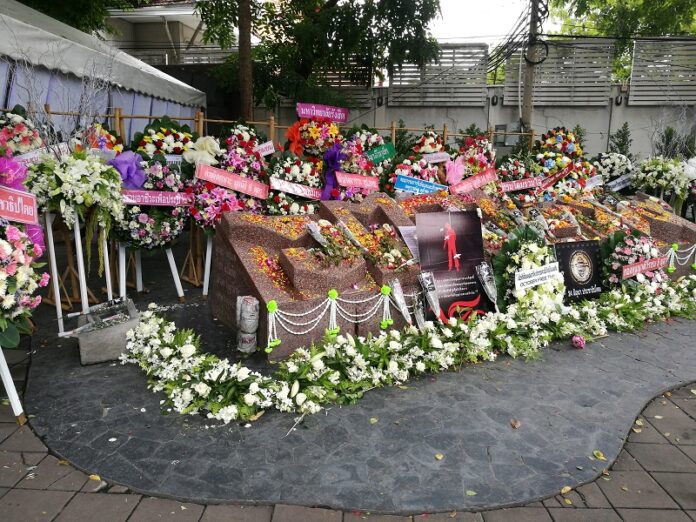
Meanwhile, in front of police headquarters, scores of local residents gathered to leave flowers, balloons and cards Saturday night.

“I don’t even remember anything so vicious and cruel,” said Palm Springs resident Heidi Thompson. “These officers are responding to a domestic call for somebody in need that they don’t even know. They put their life on the line for us, the community. And they get gunned down? I don’t understand it.”

The shooting occurred just three days after a popular Los Angeles County sheriff’s sergeant was shot and killed in the high desert town of Lancaster.

Sgt. Steve Owen was answering a burglary call when sheriff’s officials say he was shot by a man who then stood over him and shot him four more times.

A paroled robber has been charged with murder.

Hundreds of residents held a candlelight vigil Saturday night in his honor.

Story: Robert Jablon, John Rogers
Advertisement

Breaking the Hegemony of Oct 6, 1976 History

Retention

History is not to be memorized but to be debated, explained and interpreted through various lenses. When monopolized, history has deprived society of having different ways to look at things. The history of the Oct. 6, 1976 massacre is no exception.

It’s been 40 years since the day in which right-wing paramilitary lynched and killed at least 46 people at Thammasat University. Some may say this can be explained as the action of a heavily propagandized ultra-royalist mob, who chose to kill in order to protect the monarchy, amidst fears of Thailand becoming a communist state and the monarchy being ousted.

Forty years on, we need more views, nuance and debate about the incident, or risk turning the arguably darkest episode of modern Thai political history into an annual ritual of wreath-laying, followed by a succession of key and low note speeches.

Whilst it must be acknowledged, the task of uncovering what truly happened needs to be opened up to voices beyond those of the so-called Oct. 6 generation. How many people were exactly hung at Sanam Luang (Royal Lawn)? Who was the mastermind of the lynching? Or was it spontaneous?

There should be attempts to record more voices from the right-wing who were on the side of the perpetrators, in order to understand why they think people committed such atrocious crimes or whether they see them as crimes at all.

One influential ultra-royalist novelist, Wimon Siripaiboon, better known by her pen name Tommayantee, gave an interview to nationweekend.com magazine back in February 2013, touching on her role in agitating the right-wing movement back then by saying:

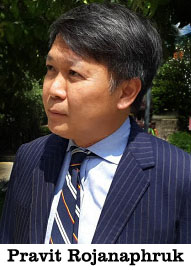
Pravit Rojanaphruk

“Regarding Oct. 6, [1976] I say if it didn’t end up like that we would have ended up like Laos, Vietnam or Cambodia. Is that not true? It was communists back then [that we were dealing with] … I don’t care what the communists do, but regarding the King and the Thai royal family – don’t touch… They have been criticizing me for years. They said it was my fault and I said yes, my fault was to love my motherland.”

More views from the other side of the political divide should be welcomed, regardless of whether one approves of the views or not.

Instead of more or less monotonous recounts from the Oct. 6 generation, those too young to have been involved as well as those who were not yet born at the time, should try to make their own interpretation or the incident and ask themselves what they have learned from it.

Chanoknan Ruamsap, 23, co-speaker in the “New Democracy Movement” told me that the most important lesson she learnt was that although “it’s been 40 years, some still do not want to accept the truth, and they try to forget and erase this history.”

Abinya Sawatvarakorn, 24, student activist, and a Masters student at Thammasat University’s College of Interdisciplinary Studies said: “It’s a good lesson reminding us that opponents are ready to resort to violence, be it in 1973, 1976, 1992 or 2010.”

As for Parit Chiwarak, 18, a “Mattayom 6” student activist from Triam Udomsuksa School, thinks part of the people who attacked the technical students, were once on democracy’s side back in Oct. 1973. “So we have to learn to preserve the solidarity of the movement, otherwise history will repeat itself.”

Then there is Netiwit Chotipatpaisalm 20, first-year political science student and student activist at Chulalongkorn University.

“We can try to learn why people commit massacres and how they organize themselves,” said Netiwit.

As for myself, I was eight and too young, but seeing the gory pictures of lynchings, hate and senseless killings taught me that one should never fall prey to propaganda to the point of losing one’s humanity.

America has different takes of its history. Late American historian Howard Zinn, seminal to me, wrote ‘A People’s History Of The United States’, which is a much more sobering chronicle and interpretation of that nation. Thailand needs to reassess and rethink its history too, and the Oct. 6 massacre is no exception.

It’s time to try and break any hegemonic monopoly on how to remember our past, for those who control the past often dictate the future.

History should not be static but refreshed through new findings and perspectives.

Advertisement

Six Tourists Charged As Police Raid Nana Friday Night

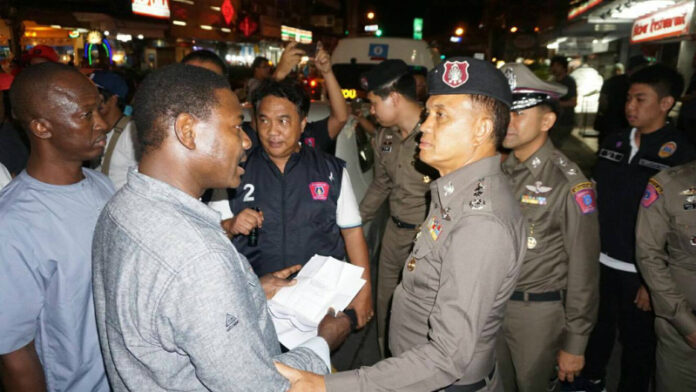
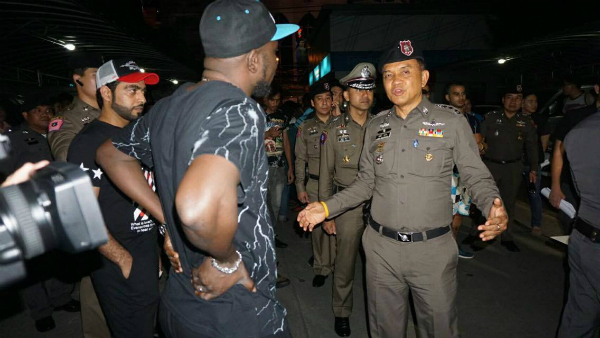
Bangkok police chief Sanit Mahatavorn speaks to foreign tourists during Friday raid in Bangkok’s Nana area.

BANGKOK — Six African tourists were charged with failure to carry IDs and testing positive for drugs late Friday night in the Nana area.

Six of 40 tourists who were arbitrarily taken to check on were charged for not carrying passports and testing positive for drugs in the sweep by 200 officers just before midnight.

“The raid was aimed at preventing possible crimes and attacks, as we are hosting an international conference,” said Police Maj. Gen. Surachet Hakpan, referring to the Asia Cooperation Dialogue where high level delegations from 33 Asian countries will join a discussion table in Bangkok from Saturday to Monday.

Friday’s operation covered both sides of the road, including Soi Sukhumvit 4, where the red-light venue Nana Plaza is located and sois 3 and 5, home to many tourists from Africa and the Middle East.

The officer who joined the raid, Police Col. Samran Nuanma said the reason they chose to inspect the area was because it was a hub of foreign tourists. He denied police specifically targeted any specific race or nationalities.

His supervisor Surachet however, admitted they only brought in “black tourists” to check up due to information he received from informants.

Nana Raid

Nana Raid

Advertisement

Trump’s Deplorables

Republican presidential nominee Donald Trump and Democratic presidential nominee Hillary Clinton shake hands after a presidential debate in September at Hofstra University in Hempstead, New York. Photo: David Goldman / Associated Press

NEW YORK — Hillary Clinton, the Democratic US presidential nominee, recently described supporters of her opponent, Donald Trump, as a “basket of deplorables.” It was neither a tactful nor an elegant phrase, and she later apologized for her remark. But she was more right than wrong. Trump has attracted many supporters whose views on race, for example, are indeed deplorable.

The problem is that many of these deplorable voters are also relatively uneducated, which makes Clinton’s remark look snobbish. Alas, the United States has too many relatively uneducated people.

Among developed countries, the US ranks low in terms of literacy, general knowledge, and science. Japanese, South Koreans, Dutch, Canadians, and Russians score consistently higher. This is at least partly the result of leaving education too much to the market: those with money are highly educated, and those with insufficient means are not educated enough.

So far, it seems clear that Clinton appeals to better-educated urban voters, while Trump attracts mainly less-educated white men, many of whom in earlier generations would have been Democrat-voting coal miners or industrial workers. Does this mean that there is a link between education – or the lack of it – and the appeal of a dangerous demagogue?

One of the most remarkable things about Trump is the extent of his own ignorance, despite his high educational attainment, and the fact that he seems to benefit from flaunting it. Perhaps it is easier for a loud-mouthed ignoramus to convince large numbers of people whose knowledge of the world is as slight as his own.

But this is to assume that factual truth matters in the rhetoric of a populist agitator. Many of his supporters don’t seem to care much about reasoned argument – that is for the liberal snobs. Emotions count more, and the prime emotions that demagogues manipulate, in the US and elsewhere, are fear, resentment, and distrust.

This was also true in Germany when Hitler came to power. But the Nazi Party in its early days did not find the bulk of its support among the least educated. Germany was more highly educated than other countries, on average, and the most enthusiastic Nazis included schoolteachers, engineers, and doctors, as well as provincial small businessmen, white-collar workers, and farmers.

Urban factory workers and conservative Catholics were, on the whole, less susceptible to Hitler’s blandishments than many more highly educated Protestants. Low educational standards do not explain Hitler’s rise.

Fear, resentment, and distrust ran very high in Weimar Germany, after the humiliation of wartime defeat and amid a devastating economic depression. But the racial prejudices whipped up by Nazi propagandists were not the same as the ones we see among many Trump supporters today. The Jews were seen as a sinister force that was dominating the elite professions: bankers, professors, lawyers, news media, or entertainment. They were the so-called back-stabbers who prevented Germany from being great again.

The Trump supporters are showing a similar animus against symbols of the elite, such as Wall Street bankers, “mainstream” media, and Washington insiders. But their xenophobia is directed against poor Mexican immigrants, blacks, or Middle Eastern refugees, who are perceived as freeloaders depriving honest (read white) Americans of their rightful place in the social pecking order. It is a question of relatively underprivileged people in a globalizing, increasingly multi-cultural world, resenting those who are even less privileged.

In the US today, as in the Weimar Republic, the resentful and the fearful have so little trust in prevailing political and economic institutions that they follow a leader who promises maximum disruption. By cleaning out the stables, it is hoped, greatness will return. In Hitler’s Germany, this hope existed among all classes, whether elite or plebeian. In Trump’s America, it thrives mostly among the latter.

In the US and Europe, today’s world looks less scary to more affluent and better educated voters, who benefit from open borders, cheap migrant labor, information technology, and a rich mixture of cultural influences. Likewise, immigrants and ethnic minorities who seek to improve their lot have no interest in joining a populist rebellion directed mainly against them, which is why they will vote for Clinton.

Trump must thus rely on disaffected white Americans who feel that they are being left behind. The fact that enough people feel that way to sustain such an unsuitable presidential candidate is an indictment of US society. This does have something to do with education – not because well-educated people are immune to demagogy, but because a broken education system leaves too many people at a disadvantage.

In the past, there were enough industrial jobs for less-educated voters to make a decent living. Now that those jobs are vanishing in post-industrial societies, too many people feel that they have nothing more to lose. This is true in many countries, but it matters more in the US, where putting a bigoted demagogue in charge would do great damage not only to that country, but also to all countries trying to hold onto their freedoms in an increasingly perilous world.

Ian Buruma is Professor of Democracy, Human Rights, and Journalism at Bard College, and the author of Year Zero: A History of 1945.

Copyright: Project Syndicate, 2016.
www.project-syndicate.org

Advertisement

Obama Orders to Lift US Sanctions on Myanmar

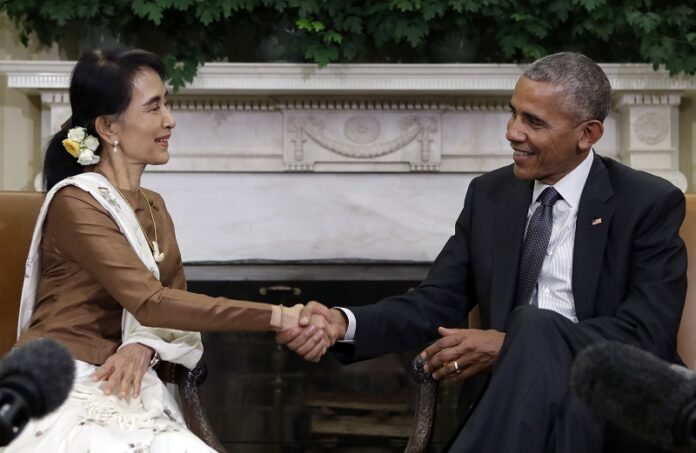
President Barack Obama and Myanmar's leader Aung San Suu Kyi shake hands as they speak to media at the conclusion of a meeting las September in the Oval Office of the White House in Washington. Photo: Carolyn Kaster / Associated Press

WASHINGTON — President Barack Obama on Friday lifted U.S. economic sanctions on the former pariah state of Myanmar, the culmination of years of rapprochement that Obama has worked to facilitate.

The Southeast Asian nation, also known as Burma, has pursued political reforms over the last five years following decades of oppressive military rule.

Obama had announced plans to lift the sanctions last month, when Myanmar’s new civilian leader, Nobel Peace Prize laureate Aung San Suu Kyi, visited the Oval Office. Suu Kyi concurred it was time to remove all the sanctions that had hurt the economy and urged Americans to come to the country and “to make profits.”

The U.S. has already eased broad prohibitions on investment and trade but had retained more targeted restrictions on military-owned companies and officials and associates of the former ruling junta. U.S. companies and banks have remained leery of involvement in one of Asia’s last untapped markets.

Friday’s executive order lifts those restrictions. It removes the national emergency with respect to Myanmar – the executive order authorizing sanctions that has been renewed annually by U.S. presidents for two decades. It also lifts a ban on the importation of jadeite and rubies from Myanmar, and removes banking restrictions.

“I have determined that the situation that gave rise to the national emergency with respect to Burma has been significantly altered by Burma’s substantial advances to promote democracy, including historic elections in November 2015,” Obama wrote in a letter to the leaders of Congress. He said the U.S. intends to use other means to support Myanmar in the “significant challenges” it still faces.

Some Myanmar nationals remain on the Treasury Department’s list of Specially Designated Nationals under other sanctions authorities, such as those intended to block the drug trade, a Treasury statement said. This bars them from any business dealings with the U.S. They include alleged drugs kingpin Wei Hsueh Kang and other figures from the United Wa State Army, one of Myanmar’s biggest ethnic armed groups.

Among those taken off are the ex-junta chief, Than Shwe, and the founder of one of the nation’s largest conglomerates, Stephen Law, whose late father was once described by Treasury as one of the world’s key heroin traffickers. Also taken off were military officials added to the blacklist since 2013 for alleged arms trading with North Korea, such as Lt. Gen. Thein Htay, chief of the Directorate of Defense Industries.

Treasury said that while all those designated under the Myanmar sanctions authority have been delisted, it retains the authority to designate any individuals or entities under other sanctions programs, including on North Korea and counter-narcotics, if it determines they meet the criteria.

Human rights groups have argued that lifting sanctions is premature as the U.S. will lose leverage over Myanmar’s powerful military. Despite the election victory by Suu Kyi party last year, the military still wields major political and economic influence.

Sen. Ben Cardin, top-ranking Democrat on the Senate Foreign Relations Committee, voiced support for the sanctions action but concern over the plight of Rohingya Muslims, ethnic reconciliation and reform of a junta-era constitution that guarantees the military a quarter of parliamentary seats.

“Even as we lift these sanctions we must maintain a focus on on-going concerns regarding the role of the military in Burma’s economy and politics,” Cardin said in a statement, noting that Suu Kyi had raised the issue when she met with senators during her Washington visit last month.

Obama’s outreach to Myanmar has reflected his willingness to engage with American adversaries – others being Cuba and Iran. The administration has also sought to promote U.S. strategic interests in Asia. During its years of international isolation, Myanmar was heavily reliant on its northern neighbor China, which remains a key source of trade and investment.

Story: Matthew Pennington

Advertisement

Hear Trump’s Crude Comments on Women That Have His Campaign Reeling

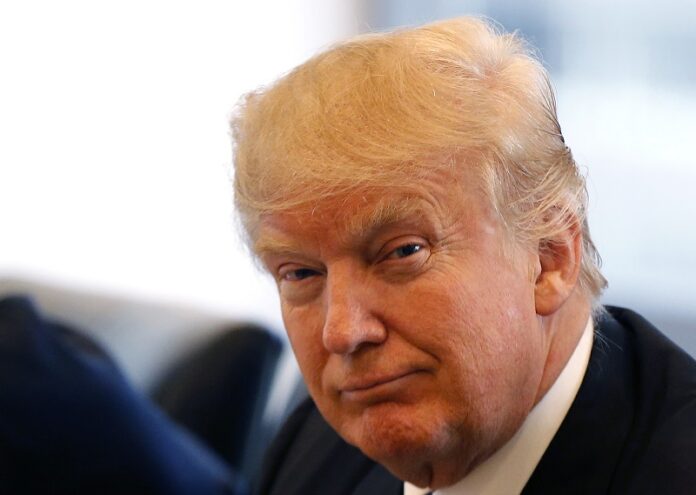
Republican presidential candidate Donald Trump smiles as he participates in an August roundtable discussion on national security in his offices in Trump Tower in New York. Photo: Gerald Herbert / Associated Press

NEW YORK — Caught on tape making shockingly crude comments about a married woman he tried to seduce, Donald Trump reeled under widespread condemnation from his own party on Friday, increasingly desperate to salvage a presidential bid at risk of imploding.

Trump tried to head off some of the damage by issuing a statement apologizing “if anyone was offended” by vulgar remarks captured on a 2005 tape and made public Friday. In the recording, obtained by The Washington Post and NBC News, Trumpdescribes trying to have sex with the married woman and brags about women letting him kiss and grab them because he is famous.

“When you’re a star they let you do it,” Trump says. “You can do anything.”

He adds seconds later, “Grab them by the pussy. You can do anything.”

The one-sentence response from the head of Trump’s Republican Party was devastating.

“No woman should ever be described in these terms or talked about in this manner. Ever,” said Reince Priebus, who had stood by Trump through his past provocative comments.

House Speaker Paul Ryan said he was sickened by Trump’s comments.

“I hope Mr. Trump treats this situation with the seriousness it deserves and works to demonstrate to the country that he has greater respect for women than this clip suggests.”

Ryan added tartly that Trump was “no longer attending” a joint campaign appearance set for Saturday in Wisconsin. Trumphimself later said in a statement that he would be preparing for Sunday night’s debate instead.

Other Republicans, painfully aware of Trump’s possible impact on their own political fates, were quick to chime in. New Hampshire Sen. Kelly Ayotte, who is locked in a close race, called his comments “totally inappropriate and offensive.”

Trump’s running mate, Indiana Gov. Mike Pence, was “beside himself” and his wife was furious, according to a person familiar with their thinking. That person spoke on the condition of anonymity, because they were not authorized to share the private discussion.

For all the condemnation, there was no widespread clamor for Trump to bow out. However, two Utah Republicans, Gov. Gary Herbert and Rep. Jason Chaffetz withdrew their endorsements, and former Gov. Jon Huntsman did call for the candidate to step aside and let Pence take his place. Ryan’s spokesman and several others who criticized Trump’s comments sidestepped the question of whether he should stay in the race.

On the tape, Trump is caught on a live microphone while talking with Billy Bush of “Access Hollywood.” The candidate is heard saying “I did try and fuck her. She was married.” He also uses graphic terms to describe the woman’s body and says he frequently tries to kiss beautiful women.

“Access Hollywood” said a recent Associated Press story about Trump’s lewd behind-the-scenes comments as star of “The Apprentice” led it to dig through its archives and turn up the previously unaired tape. It was recorded during a bus ride whileTrump was on his way to appear in an episode of the soap opera “Days of Our Lives.”

Trump’s Democratic rival, Hillary Clinton, seized on Trump’s quotes, calling them “horrific.” She said in a Twitter message: “We cannot allow this man to become president.”

But she had her own problems with revelations.

The WikiLeaks organization posted what it said were thousands of emails from Clinton campaign chairman John Podesta, including some with excerpts from speeches she gave to Wall Street executives and others — speeches she has declined to release despite demands from Trump.

The excerpts include Clinton seeming to put herself in the free trade camp, a position she has retreated from. In a talk to a Brazilian bank in 2013, she said her dream was “a hemispheric common market, with open trade and open borders.”

Trump strongly opposes current U.S. trade deals and insists Clinton is too cozy with Wall Street to reform it.

Friday’s revelations came two days before Trump and Clinton are to meet in the second presidential debate, with the Republican urgently in need of a strong performance. After his uneven showing in the first contest, public opinion polls have showed Clinton pulling ahead in nearly all battleground states, some of which are already in the midst of early voting.

There were plenty of other problems for Trump on what surely was one of the worst days of his two-year drive for the White House.

His advisers planned for him to spend a quiet Friday preparing for the debate and meeting with border security officials. But the day was quickly consumed by a series of controversies, including Trump’s unsubstantiated claim about immigrants in the U.S. illegally voting in the election and his questioning the innocence of five black teenagers exonerated in a 1989 rape case.

Then, there were new signs of unusual links between Trump and Russia. For the first time, the U.S. publicly blamed the Russian government for hacking the Democratic National Committee and accused Moscow of trying to interfere with the American election. Diplomats also told the AP that Russia had lodged a formal complaint with the United Nations over a U.N. official’s condemnations of Trump.

Also in the mix Friday: New questions about the Trump campaign’s finances. With roughly a month until Election Day, the campaign has yet to schedule the $100 million in television advertising that his campaign boasted about just two weeks ago. The campaign has just half that amount scheduled, and late this week shifted ad money around rather than increasing its overall investment, suggesting a bit of penny-pinching even as the clock winds down.

While Trump has survived numerous controversies that would have sunk other candidates, Friday’s developments came at a crucial moment. Less than five weeks from Election Day, he needs to expand his support and is struggling in particular with minorities and women.

The unearthed tape of his comments can hardly help with female voters.

In a statement after the tape was revealed, Trump called his comments “locker room banter” and a “private conversation that took place many years ago.”

“Bill Clinton has said far worse to me on the golf course — not even close,” he said. “I apologize if anyone was offended.”

Story: Julie Pace, Jonathon Lemire


Advertisement

Clown Crisis: Police to Charge US Man in Mask Who Followed School Bus

Photo: Auburn Police Dept.

AUBURN, Massachusetts — Police in Massachusetts say they plan to charge a father who wore a scary clown mask and followed his child’s school bus.

Auburn police say some middle-school-age children were so scared that they hid under a backyard deck.

Read: US Police Puzzled by Reports of Suspicious Clowns

Police say the man followed the bus Tuesday. They posted a picture on their Facebook page Thursday saying they intended to seek charges of disorderly conduct and disturbing the peace. Because the charges have not been formally filed, the man’s name was not made public.

Police wrote on Facebook: “We are hopeful that others will learn from this incident and not repeat these types of behaviors.”

Police nationwide have been dealing with reports of clown sightings and hoaxes involving threats of violence by clowns.

Advertisement

Bryan Adams Returns to Do it All For You Again in Bangkok (Postponed)

Update: This event has been postponed in light of the death of His Late Majesty King Bhumibol

BANGKOK — Before there was Bieber, Bryan Adams was the Canadian heartthrob girls dreamed about. In January, the ‘80s hit slinger will be back in Bangkok for the first time in 20 years, concert promoter BEC-Tero announced Friday.

Adams, best known for 1992 Grammy winner “(Everything I Do) I Do It for You” and other anthems such as “Run To You,” “Summer Of ’69” and “Heaven,” will tour Asia on his “Get Up Tour.”

Fans in Bangkok will get to welcome the 56-year-old singer again after previous concerts at his peak in 1993 and 1996. This time, he will showcase the new music from “Get Up,” his 13th studio album.

Tickets are 2,000 baht to 5,000 baht and go on sale at Thai Ticket Major with an advance purchase discount Oct. 17 before going up to full price Oct. 24.

The concert is set for Jan. 14 at Impact Muang Thong Thani. It can be reached by a van taxi or Impact Link shuttle from BTS Mo Chit exit No. 4 or MRT Chatuchak Park exit No. 3.

Advertisement

Thanks to Internet, Poor Elderly Man Becomes Millionaire

Paen Paewpongsong and his family talk to reporters on Wednesday at his home in Buriram

BURIRAM — On Tuesday, 72-year-old Paen Paewpongsong was penniless after losing his 15,000 baht life savings. By Friday, he was a millionaire thanks to donations from strangers throughout the realm who heard about his plight from the news.

The response was so overwhelming that Paen today urged netizens to stop sending him money, saying he already had enough to fix his dilapidated hovel in Buriram and provide comfort to his 69-year-old wife and a 6-year-old, developmentally disabled granddaughter.

Find someone else in need, he suggested.

“I want them to share their help with other people who lack opportunity,” Paen told reporters.

Paen said he lost his wallet containing all his savings of 15,000 baht on Tuesday at a hospital where he was renewing his disability health card for his granddaughter, Arisa, who has Down syndrome.

According to Paen, that money was all they had left after collecting their small welfare benefits and an allowance his children send from another province.

After word spread on social media, donations poured in from people who were moved by his story. By Friday morning the total reached just shy of 1.3 million baht, prompting Paen to say that was enough.

In interviews, Paen has said he also hopes to use some of the money to fix his wooden house for the upcoming winter, which can be harsh and even fatal in the northeast.

Bundit Onsakorn, chief of Buriram City police, said patrols have been dispatched to Paen’s home in order to ward off any potential scammers who might take advantage of his newfound wealth.

Paen Paewpongsong, 72, talks to reporters on Tuesday at Buriram Police Station hours after he lost his wallet.
Paen said he hopes to use the money to fix his dilapidated home for the upcoming winter.
Paen on Friday shows reporters his bank account after receiving nearly 1.3 million baht in donations from netizens.
Advertisement

Chemical Weapon for Sale: China’s Unregulated Drug

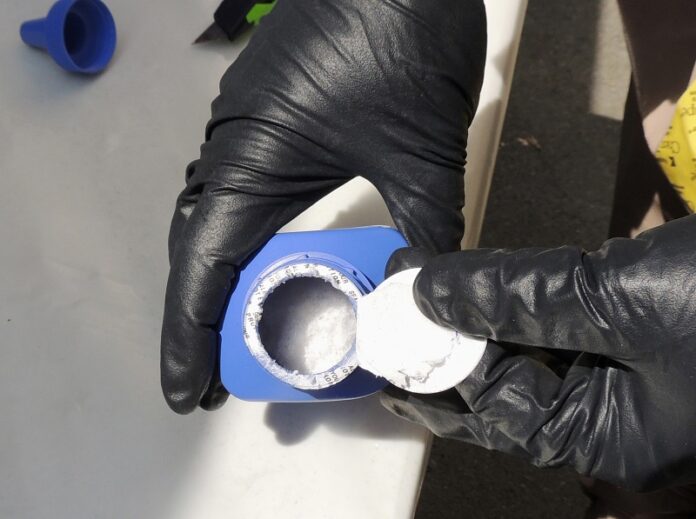
A member of the RCMP opens a printer ink bottle last June containing the opioid carfentanil imported from China, in Vancouver. Photo: Associated Press

SHANGHAI, China — It’s one of the strongest opioids in circulation, so deadly an amount smaller than a poppy seed can kill a person. Until July, when reports of carfentanil overdoses began to surface in the U.S., the substance was best known for knocking out moose and elephants  or as a chemical weapon.

Despite the dangers, Chinese vendors offer to sell carfentanil openly online, for worldwide export, no questions asked, an Associated Press investigation has found. The AP identified 12 Chinese businesses that said they would export carfentanil to the United States, Canada, the United Kingdom, France, Germany, Belgium and Australia for as little as $2,750 a kilogram.

Carfentanil burst into view this summer as the latest scourge in an epidemic of opioid abuse that has killed tens of thousands in the U.S. alone. In China, the top global source of synthetic drugs, carfentanil is not a controlled substance. The U.S. government is pressing China to blacklist it, but Beijing has yet to act.

“We can supply carfentanil … for sure,” a saleswoman from Jilin Tely Import and Export Co. wrote in broken English in a September email. “And it’s one of our hot sales product.”

The AP did not actually order any drugs, or test whether the products on offer were genuine.

China’s Ministry of Public Security declined multiple requests for comment.

For decades before being discovered by drug dealers, carfentanil and substances like it were researched as chemical weapons by the U.S., U.K., Russia, Israel, China, the Czech Republic and India, according to publicly available documents. They are banned from the battlefield under the Chemical Weapons Convention.

“It’s a weapon,” said Andrew Weber, assistant secretary of defense for nuclear, chemical and biological defense programs from 2009 to 2014. “Companies shouldn’t be just sending it to anybody.”

Carfentanil is 100 times more powerful than fentanyl, a related drug that is itself up to 50 times stronger than heroin.

Forms of fentanyl are suspected in an unsuccessful 1997 attempt by Mossad agents to kill a Hamas leader in Jordan, and were used to lethal effect by Russian forces against Chechen separatists who took hundreds of hostages at a Moscow theater in 2002.

The theater siege prompted the U.S. to develop strategies to counter carfentanil’s potential use as a tool of war or terrorism, according to Weber. “Countries that we are concerned about were interested in using it for offensive purposes,” he said. “We are also concerned that groups like ISIS could order it commercially.”

Later, dealers discovered that vast profits could be made by cutting fentanyls into illicit drugs. In fiscal year 2014, U.S. authorities seized just 3.7 kilograms (8.1 pounds) of fentanyl. This fiscal year, through just mid-July, they seized 134.1 kilograms (295 pounds), Customs and Border Protection data show. Overdose rates have been skyrocketing.

The DEA has “shared intelligence and scientific data” with China about controlling carfentanil, according to Russell Baer, a DEA special agent in Washington.

“I know China is looking at it very closely,” he said. Delegations of top Chinese and U.S. drug enforcement officials met in August and September to discuss opioids, but failed to produce a substantive announcement on carfentanil.

China is not blind to the key role its chemists play in the opioid supply chain. Most synthetic drugs that end up in the U.S. come from China, according to the DEA.

China already has controlled fentanyl and 18 related compounds, but despite periodic crackdowns, people willing to skirt the law are easy to find in China’s vast, freewheeling chemicals industry. Vendors said they lied on customs forms, guaranteed delivery to countries where carfentanil is banned and volunteered strategic advice on sneaking packages past law enforcement.

“The government should impose very serious limits, but in reality in China it’s so difficult to control because if I produce 1 or 2 kilograms, how will anyone know?” said Xu Liqun, president of Hangzhou Reward Technology, which offered to produce carfentanil to order. “They cannot control you, so many products, so many labs.”

Last October, China added 116 synthetic drugs to its controlled substances list. Acetylfentanyl, a weak fentanyl variant, was among them. Six months later, monthly seizures of acetylfentanyl in the U.S. were down 60 percent, DEA data obtained by the AP shows.

Several vendors contacted in September were willing to export carfentanil but refused to provide the far less potent acetylfentanyl.

Seven companies, however, offered to sell acetylfentanyl despite the ban. Five offered fentanyl and two offered alpha-PVP, commonly known as flakka, which are also controlled substances in China.

Several vendors recommended shipping by EMS, the express mail service of state-owned China Postal Express & Logistics Co.

“EMS is a little slow than Fedex or DHL but very safe, more than 99% pass rate,” a Yuntu Chemical Co. representative wrote in an email.

EMS declined comment. A Yuntu representative hung up the phone when contacted by the AP and did not reply to emails. Soon after, the company’s website vanished.

Story: Erika Kinetz, Desmond Butler

Advertisement

Hot News

LATEST NEWS

Bangkok
overcast clouds
29.7 ° C
31.6 °
28.8 °
81 %
3.7kmh
100 %
Mon
35 °
Tue
36 °
Wed
34 °
Thu
33 °
Fri
32 °