





















29.4 C
Bangkok
Monday, July 13, 2026
Home Blog Page 3258

NCPO To Contact Press When They Report 'False' Information

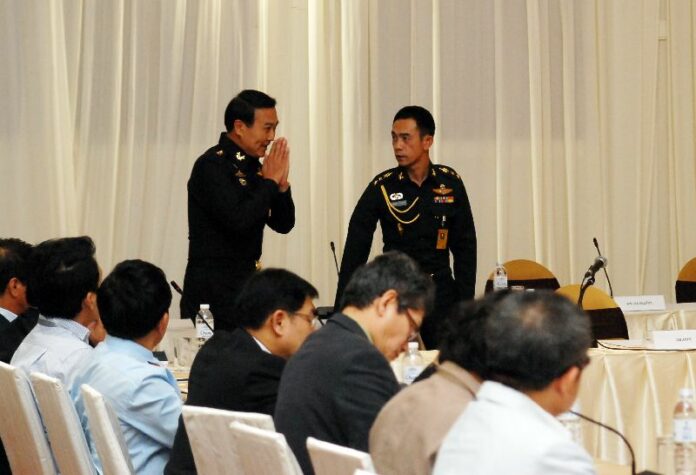
Gen. Udomdet Sittabutr, secretary general of the National Council for Peace and Order (NCPO), spoke at a meeting with over 40 editors and executives from Thai media agencies at the Army Club on Viphavadee Road in Bangkok, 27 June 2014.

BANGKOK — A team of military officers will monitor all news coverage in Thailand and promptly contact journalists if they encounter "false information" in their reporting, a leading member of Thailand’s military junta said today.

Gen. Udomdet Sittabutr, secretary general of the National Council for Peace and Order (NCPO), was speaking at a meeting with over 40 editors and executives from Thai media agencies at the Army Club on Viphavadee Road in Bangkok today.

According to an assistant editor of Khaosod newspaper who attended the meeting, Gen. Udomdet said the media will not have to send their news to the military for review, but that a military panel will closely monitor all published content to look for "false information" and rumours that inaccurately portray the NCPO and its missions.

If the military encounters such content, officers will directly contact editors to correct the  information, said Khaosod editor Wichayasak Suwannathat. 

'Media monitoring is not restriction'

Today’s meeting at the Army Club followed the NCPO’s announcement that it will form five special committees to monitor national and international news coverage across different types of media. 

According to the plan, TV and radio stations will be monitored by the National Broadcasting and Telecommunication Commission (NBTC), print media by the Special Branch Police, online media by the Ministry of Information and Communication Technology (ICT), and foreign media by the Ministry of Foreign Affairs.

The NCPO said the measure is needed to suppress "false information" and news reports that insult the monarchy.

At today's meeting, Gen. Udomdet insisted that the monitoring panels do not intend to restrict freedom of the press, but are simply a means to "help the media determine correct information," according to Mr. Wichayasak.

Some editors at the meeting asked Gen. Udomdet about reports of military officers being sent to a newsrooms to stop coverage about an anti-coup organisation recently set up in exile by two fugitive politicians. 

Gen Udomdet replied that the media is not forbidden to report about the organisation, called the Free Thais, but said editors should exercise their judgment concerning whether reporting about the group will cause further conflicts in society.

"If it does, then the media should not report it," Mr. Wichayasak recalled Gen. Udomdet as saying.

Gen. Udomdet said the monitoring will last for the duration of the NCPO’s “national reconciliation” phase.  According to the NCPO's roadmap, the junta will oversee several months devoted to national reconciliation, followed by a year of constitutional reforms, after which an election will be held if "conditions are stable." 

Mr. Wichayasak  said the military junta's heightened media monitoring will not affect the impartiality of Khaosod newspaper.

"We will continue to report the news based on facts," Mr. Wichayasak said, although he added that the newspaper will refrain from reporting details about certain issues, such as the movements of the anti-coup Free Thai organisation. 

Journalists demand more clarity

The Thai Journalist Association (TJA) submitted an open letter to the NCPO today, calling for more clarity about the junta's measures to root out "false information" from media reports.

The letter expresses TJA's deep concern over military officers' intrusion into the newsrooms of Kom Chad Luek newspaper and Nation TV on 25 June to stop coverage about the Free Thai organisation.

The letter also urges the NCPO's media committees to define their scope of power in clearer terms. 

Since staging the coup against the elected government on 22 May, the NCPO has banned public protests against the regime, detained scores of activists, and censored the media — mostly by warning them not to publish any criticism about the NCPO or its missions.


For comments, or corrections to this article please contact: [email protected]

You can also find Khaosod English on Twitter and Facebook
http://twitter.com/KhaosodEnglish
http://www.facebook.com/KhaosodEnglish
Advertisement

NCPO To Contact Press When They Report 'False' Information

Khaosod and Matichon editors attend a meeting at the Army Club in Bangkok to discuss the military's new media monitoring panels, 27 June 2014.

BANGKOK — A team of military officers will monitor all news coverage in Thailand and promptly contact journalists if they encounter "false information" in their reporting, a leading member of Thailand’s military junta said today.

Gen. Udomdet Sittabutr, secretary general of the National Council for Peace and Order (NCPO), was speaking at a meeting with over 40 editors and executives from Thai media agencies at the Army Club on Viphavadee Road in Bangkok today.

According to an assistant editor of Khaosod newspaper who attended the meeting, Gen. Udomdet said the media will not have to send their news to the military for review, but that a military panel will closely monitor all published content to look for "false information" and rumours that inaccurately portray the NCPO and its missions.

If the military encounters such content, officers will directly contact editors to correct the  information, said Khaosod editor Wichayasak Suwannathat. 

'Media monitoring is not restriction'

Today’s meeting at the Army Club followed the NCPO’s announcement that it will form five special committees to monitor national and international news coverage across different types of media. 

According to the plan, TV and radio stations will be monitored by the National Broadcasting and Telecommunication Commission (NBTC), print media by the Special Branch Police, online media by the Ministry of Information and Communication Technology (ICT), and foreign media by the Ministry of Foreign Affairs.

The NCPO said the measure is needed to suppress "false information" and news reports that insult the monarchy.

At today's meeting, Gen. Udomdet insisted that the monitoring panels do not intend to restrict freedom of the press, but are simply a means to "help the media determine correct information," according to Mr. Wichayasak.

Some editors at the meeting asked Gen. Udomdet about reports of military officers being sent to a newsrooms to stop coverage about an anti-coup organisation recently set up in exile by two fugitive politicians. 

Gen Udomdet replied that the media is not forbidden to report about the organisation, called the Free Thais, but said editors should exercise their judgment concerning whether reporting about the group will cause further conflicts in society.

"If it does, then the media should not report it," Mr. Wichayasak recalled Gen. Udomdet as saying.

Gen. Udomdet said the monitoring will last for the duration of the NCPO’s “national reconciliation” phase.  According to the NCPO's roadmap, the junta will oversee several months devoted to national reconciliation, followed by a year of constitutional reforms, after which an election will be held if "conditions are stable." 

Mr. Wichayasak  said the military junta's heightened media monitoring will not affect the impartiality of Khaosod newspaper.

"We will continue to report the news based on facts," Mr. Wichayasak said, although he added that the newspaper will refrain from reporting details about certain issues, such as the movements of the anti-coup Free Thai organisation. 

Journalists demand more clarity

The Thai Journalist Association (TJA) submitted an open letter to the NCPO today, calling for more clarity about the junta's measures to root out "false information" from media reports.

The letter expresses TJA's deep concern over military officers' intrusion into the newsrooms of Kom Chad Luek newspaper and Nation TV on 25 June to stop coverage about the Free Thai organisation.

The letter also urges the NCPO's media committees to define their scope of power in clearer terms. 

Since staging the coup against the elected government on 22 May, the NCPO has banned public protests against the regime, detained scores of activists, and censored the media — mostly by warning them not to publish any criticism about the NCPO or its missions.


For comments, or corrections to this article please contact: [email protected]

You can also find Khaosod English on Twitter and Facebook
http://twitter.com/KhaosodEnglish
http://www.facebook.com/KhaosodEnglish
Advertisement

Thai Junta Sets Up Council to Administer State Enterprises

BANGKOK (DPA) — ​Thailand's ruling military junta set up a supervising committee to run the country's state enterprises, media reports said Friday.

The move is a way for the military to keep close tabs on – and receive advice from – heads of the various state companies and institutions, a source close to the military said.

The leader of the military junta, General Prayuth Chan-ocha, will head the new organization, with the rest of the field drawn from bureaucrats in various ministries as well as the CEOs of public as well as private institutions.

It is hoped that the inclusion of private sector bosses, including the head of Thailand's fourth largest bank, will encourage the private sector to invest in the government entities.

Advertisement

Monk Busted For Drug Possession, Sexual Act

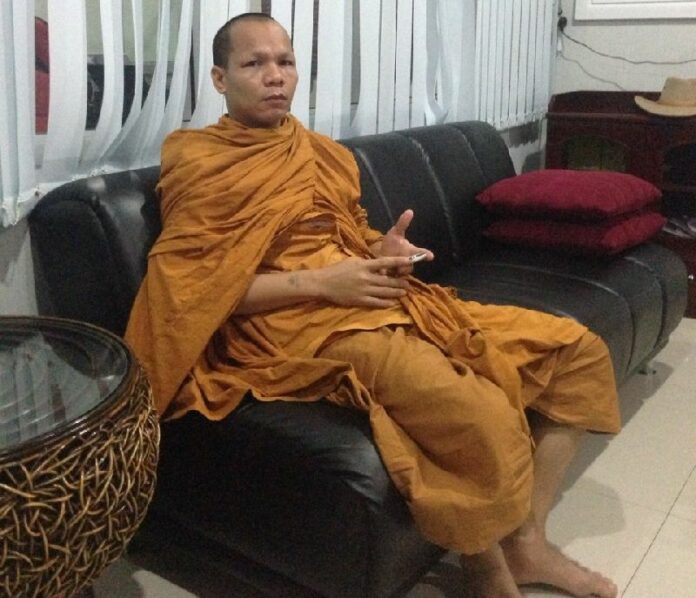
Police in Udon Thani province arrested a 31-year-old monk who took amphetamine pills with followers inside the temple residence, 27 June 2014.

BANGKOK — Bangkok police have arrested a Buddhist monk for allegedly giving narcotics to local teenagers in exchange for sexual acts.

Phra Supot Pinnakosol was arrested at a temple in Bangkok Yai district today following complaints from local residents, police say.

According to police, a search of the monk’s residence turned up a packet of methamphetamine, instruments to consume the drug, condoms, and pornographic DVDs.

Police say an 18-year-old man was giving fellatio to Phra Supot when they raided his room.

Phra Supot later confessed that he regularly sold drugs to teenagers in the area and sometimes gave them drugs for free in exchange for sexual acts. He also told police that he bought the drugs from another monk in Thonburi district.

Police records show that Phra Supot was previously jailed for 6 years for offences related to narcotics.

In a separate case, police in Udon Thani province arrested a 31-year-old monk who took amphetamine pills with followers inside the temple residence.

Police say Phra Samphan Ratcha-udon was arrested with 10 tablets of amphetamine and later confessed to taking the drugs with followers as they watched the late-night World Cup matches on TV together. 

Both Phra Supot and Phra Samphan have been defrocked and are facing legal prosecution. 


For comments, or corrections to this article please contact: [email protected]

You can also find Khaosod English on Twitter and Facebook
http://twitter.com/KhaosodEnglish
http://www.facebook.com/KhaosodEnglish


Advertisement

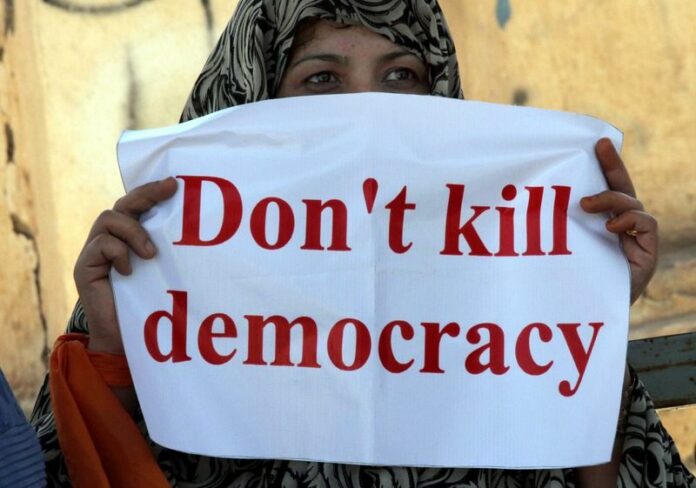
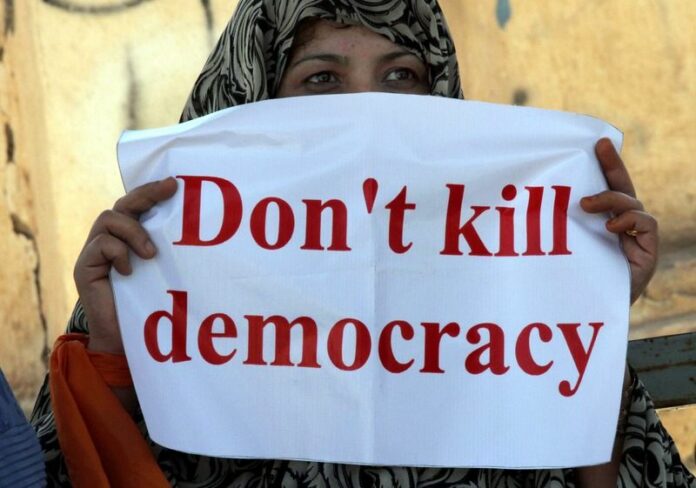
Angry Afghans Protest in Kabul Against Election "Fraud"

An activist of the Students Movement Against Electoral Fraud carries a placard during a rally outside the United Nations office against alleged fraud in the presidential run-off in Herat, Afghanistan, 26 June 2014. Afghan Presidential candidate Abdullah Abdullah recently made accusations of massive fraud, suspended his relations with the electoral commissions and requesting UN intervention in the vote count, causing thousands to march in the capital on Friday. [DPA]

KABUL (DPA) — Thousands of protesters marched in Kabul Friday against what they saw as fraud in the June 14 presidential election run-off.

The protesters, mostly Tajiks who supported presidential candidate Abdullah Abdullah, gathered in hot weather in the city centre, close to the presidential palace.

"We were told yesterday that there would be a demonstration against the election fraud, and we came to Kabul in the early morning to join our brothers," said Mirza Jan, an elderly man from Panjsher province.

Abdullah and some key allies appeared at the protests for the first time, but he not address the crowds.

"There are nearly 10,000 people today," said Mehrab Khan, waving a sign of the Jamiat-e-Islami, one of seven jihadi parties formed in the 1980s.

"Death to election commission officials," "Death to the enemies of Mujahideen," and "Death to Karzai," were among the chants shouted out by protesters.

Kabul police said they had increased their preparedness in case of any sign of violence during the demonstrations.

Abdullah, a former foreign minister in outgoing President Hamid Karzai's administration, is facing Ashraf Ghani Ahmadzai, Karzai's former finance minister, in the second round of the election.

Abdullah has accused the electoral commission of rigging votes in favour of his rival, and accused Karzai of not remaining impartial in the elections.

Initial results are scheduled to be released on July 2 and the final results are due to be announced on July 22.

Unconfirmed reports suggest that Ghani has won, with 59 per cent of the votes.

Abdullah has called on the United Nations to mediate after the disputed poll.

Advertisement

Angry Afghans Protest in Kabul Against Election "Fraud"

An activist of the Students Movement Against Electoral Fraud carries a placard during a rally outside the United Nations office against alleged fraud in the presidential run-off in Herat, Afghanistan, 26 June 2014. Afghan Presidential candidate Abdullah Abdullah recently made accusations of massive fraud, suspended his relations with the electoral commissions and requesting UN intervention in the vote count, causing thousands to march in the capital on Friday. [DPA]

KABUL (DPA) — Thousands of protesters marched in Kabul Friday against what they saw as fraud in the June 14 presidential election run-off.

The protesters, mostly Tajiks who supported presidential candidate Abdullah Abdullah, gathered in hot weather in the city centre, close to the presidential palace.

"We were told yesterday that there would be a demonstration against the election fraud, and we came to Kabul in the early morning to join our brothers," said Mirza Jan, an elderly man from Panjsher province.

Abdullah and some key allies appeared at the protests for the first time, but he not address the crowds.

"There are nearly 10,000 people today," said Mehrab Khan, waving a sign of the Jamiat-e-Islami, one of seven jihadi parties formed in the 1980s.

"Death to election commission officials," "Death to the enemies of Mujahideen," and "Death to Karzai," were among the chants shouted out by protesters.

Kabul police said they had increased their preparedness in case of any sign of violence during the demonstrations.

Abdullah, a former foreign minister in outgoing President Hamid Karzai's administration, is facing Ashraf Ghani Ahmadzai, Karzai's former finance minister, in the second round of the election.

Abdullah has accused the electoral commission of rigging votes in favour of his rival, and accused Karzai of not remaining impartial in the elections.

Initial results are scheduled to be released on July 2 and the final results are due to be announced on July 22.

Unconfirmed reports suggest that Ghani has won, with 59 per cent of the votes.

Abdullah has called on the United Nations to mediate after the disputed poll.


Advertisement

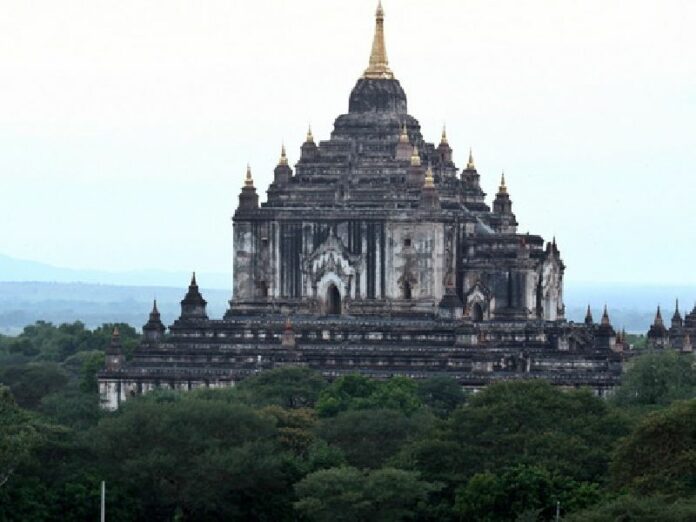
UNESCO To Help Myanmar List Monuments in Ancient Bagan City

An ancient temple in Bagan, July 2011. UNESCO is set to help Myanmar inventory the monuments in the ancient city. [DPA]

YANGON (DPA) — UNESCO would help Myanmar update its inventories of the ancient capital Bagan, an important initial step to safeguarding the site, the government said Friday.

"The experts from UNESCO will train our staff on how we should do the process of inventory," Myanmar's deputy culture minister Sandar Khin told dpa.

Doing a proper inventory "is the essential first step for Bagan to be listed as a UNESCO World Heritage Site," she said.

The announcement comes days after the ancient cities of Pyu were designated as a World Heritage Site.

Myanmar nominated Bagan to the World Heritage Committee in 1996, but the site has not achieved UNESCO world heritage status, thought largely to be because of poor restoration work undertaken by the military junta in the 1990s.

Bagan was the capital city of the first Myanmar Kingdom, which contains more than 2,500 Buddhist monuments built from the 10th to the 14th centuries AD.


Advertisement

"Independent Agencies" Continue to Probe Deposed PM

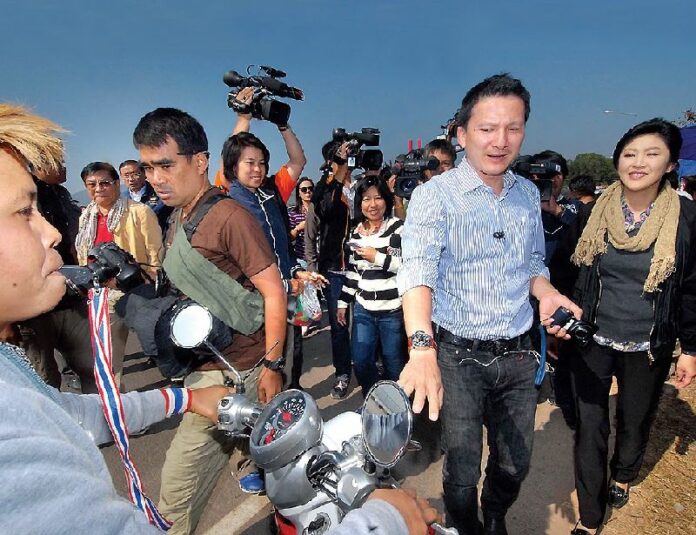
PM Yingluck Shinawatra is heckled by an anti-government protester as she tours Phitsanulok province on 24 December 2013.

BANGKOK — Thailand’s “independent agencies” continue to investigate former Prime Minister Yingluck Shinawatra a month after her government was deposed in a military coup.

Today, Election Commissioner Somchai Srisutthiyakorn said the Election Commission (EC) is investigating a claim that Ms. Yingluck misused the state's apparatus by appearing on national television to defend the government's rice-pledging scheme after she had already dissolved Parliament.

The EC is also probing Ms. Yingluck for visiting supporters in northern and northeastern Thailand prior to the national election on 2 February, Mr. Somchai said. According to the allegation, Ms. Yingluck inappropriately used her position as acting Prime Minister to campaign for her party.

Mr. Somchai said the EC was unable to collect relevant documents to supplement their investigations while anti-government protesters were laying siege to governmental buildings during their six-month campaign to oust Ms. Yingluck. 

Now that the anti-government protests are over, thanks to the 22 May military coup, the EC has successfully collected all the documents, Mr. Somchai said.

"Now we only need to interview some witnesses in the provinces outside Bangkok," he added. 

The EC is also working on a separate case concerning 19 politicians from Ms. Yinglucks’s Pheu Thai Party that appeared on state-owned Channel 11 in the pre-election period, which the EC says is a violation of election laws. 

"The EC will swiftly complete the three cases, because they are of great interest to the people," Mr. Somchai said. "I believe all of the cases could reach a verdict by August."

The 2 Feb election was ultimately nullified in a court ruling because voting did not take place everywhere in the country on the same day after anti-government protesters stormed candidate registration venues, seized ballot boxes, shut down polling stations, and intimidated voters in an attempt to scuttle the election. The protesters argued that unspecified national reforms must be completed before any election could be held.

The EC has not taken any action against the anti-election protesters.

Yingluck's assets revealed

Earlier today the National Anti-Corruption Commission (NACC), who is still investigating Ms. Yingluck over allegations of corruption in connection with her government's rice-pledging policy, released details of the assets held by Ms. Yingluck and nine Cabinet members who were ousted in a court ruling on 7 May.

The NACC routinely publishes the assets of ministers in power, but has said it will not conduct an investigation into the assets of the military junta's National Council for Peace and Order (NCPO). A deputy secretary of the NACC claimed there was no legal basis for the NACC to do so.

According to the NACC, Ms Yingluck and her partner Anusorn Amornchat own assets worth 574 million baht, with a debt of 28 million baht. 

The data shows that Ms. Yingluck was the second-richest person in her Cabinet; the richest Minister was former Deputy Prime Minister Plodprasop Suraswadi, who reportedly owns more than 970 million baht in assets. 

The NACC says it is now investigating Ms. Yingluck for allegedly failing to notify the Commission about the existence of her 2.5 million baht luxury watch.

The NACC reportedly intends summon Ms. Yingluck for further questioning concerning the watch.


Advertisement

NCPO Only Offers Short-Term Solutions, Economists Say

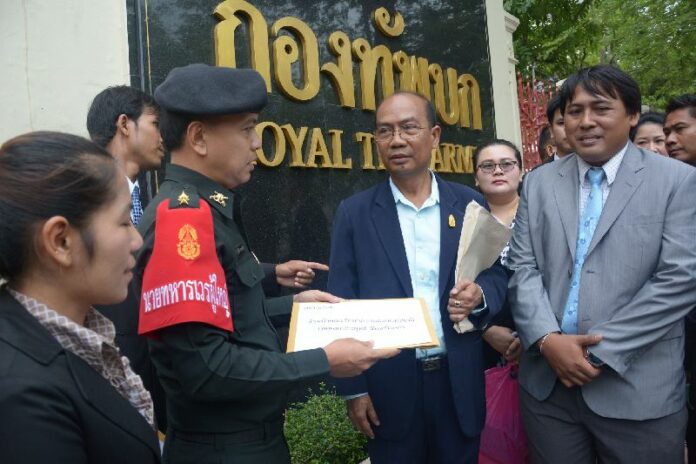
Petitioners submit proposal for the NCPO to reform bureaucratic system at army headquarters in Bangkok, 25 June 2014

BANGKOK — The military junta will only achieve short-term gains with its recent blitz of social and economic measures, economists said in a survey published yesterday.

Sixty economists were asked by Bangkok University pollsters to assess the accomplishments of the military junta’s National Council for Peace and Order (NCPO) since it seized power from the elected government on 22 May.

According to the poll results, 62.5% of economists said the NCPO's works will only achieve short-term gains, while 18.5% believe long-term gains are possible. Ten percent said the NCPO has not solved any problems at all.

Over the past month, the junta has cracked down on taxi mafias, underground casinos, and illegal migrant workers. 

According to respondents, the NCPO is most likely to achieve successful reforms of state enterprises and of migrant workers systems, and least likely to bring about lasting solutions to the widespread issues of illegal gambling and underground lotteries.  

Fifty percent of economists surveyed also believe the NCPO has only temporarily achieved political reconciliation and "decolourisation" of Thai politics, while another 20% say the NCPO has failed completely to tackle these issues.

A majority of those surveyed, 78.3%, believe the NCPO's campaign to return "happiness" to the people will only be successful in teh short term, despite its inundation of happiness-related events, including free concerts, fairs, and movie screenings.  

Half of the respondents said that Thailand is unlikely to achieve the goal of 3% GDP growth by the end of this year.

The economists concluded that the NCPO lacks concrete strategies, solutions, and advisers to tackle the country’s problems, according to the report.

However, chairman of the industry conglomerate Sahapat gave the NCPO "9.9 points out of 10" for its efforts to oversee the country's economy over the past month.

Sahapat chairman Boonyasit Chokewatthana said yesterday that the NCPO has "smoothly" solved many problems with its wide range police measures over the past month. He added that the NCPO should focus on agricultural exports and restoring the national economy, which has slumped after months of political unrest.

Mr. Boonyasit dismissed concerns that Thai exports will be hurt by economic retaliation from western countries that have condemned the coup.

"There are many other countries that are confident about the strength of Thai economy, and willing to trade with Thailand, such as Japan, China, Australia, and African nations," Mr. Boonyasit said. "The US and Europe cannot pressure us. If they don't buy our goods, we won't sell any to them."

"There are many other countries that want Thai goods," Mr. Boonyasit insisted.


For comments, or corrections to this article please contact: [email protected]

You can also find Khaosod English on Twitter and Facebook
http://twitter.com/KhaosodEnglish
http://www.facebook.com/KhaosodEnglish
Advertisement

NCPO Only Offers Short-Term Solutions, Economists Say

BANGKOK — The military junta will only achieve short-term gains with its recent blitz of social and economic measures, economists said in a survey published yesterday.

Sixty economists were asked by Bangkok University pollsters to assess the accomplishments of the military junta’s National Council for Peace and Order (NCPO) since it seized power from the elected government on 22 May.

According to the poll results, 62.5% of economists said the NCPO's works will only achieve short-term gains, while 18.5% believe long-term gains are possible. Ten percent said the NCPO has not solved any problems at all.

Over the past month, the junta has cracked down on taxi mafias, underground casinos, and illegal migrant workers. 

According to respondents, the NCPO is most likely to achieve successful reforms of state enterprises and of migrant workers systems, and least likely to bring about lasting solutions to the widespread issues of illegal gambling and underground lotteries.  

Fifty percent of economists surveyed also believe the NCPO has only temporarily achieved political reconciliation and "decolourisation" of Thai politics, while another 20% say the NCPO has failed completely to tackle these issues.

A majority of those surveyed, 78.3%, believe the NCPO's campaign to return "happiness" to the people will only be successful in teh short term, despite its inundation of happiness-related events, including free concerts, fairs, and movie screenings.  

Half of the respondents said that Thailand is unlikely to achieve the goal of 3% GDP growth by the end of this year.

The economists concluded that the NCPO lacks concrete strategies, solutions, and advisers to tackle the country’s problems, according to the report.

However, chairman of the industry conglomerate Sahapat gave the NCPO "9.9 points out of 10" for its efforts to oversee the country's economy over the past month.

Sahapat chairman Boonyasit Chokewatthana said yesterday that the NCPO has "smoothly" solved many problems with its wide range police measures over the past month. He added that the NCPO should focus on agricultural exports and restoring the national economy, which has slumped after months of political unrest.

Mr. Boonyasit dismissed concerns that Thai exports will be hurt by economic retaliation from western countries that have condemned the coup.

"There are many other countries that are confident about the strength of Thai economy, and willing to trade with Thailand, such as Japan, China, Australia, and African nations," Mr. Boonyasit said. "The US and Europe cannot pressure us. If they don't buy our goods, we won't sell any to them."

"There are many other countries that want Thai goods," Mr. Boonyasit insisted.


For comments, or corrections to this article please contact: [email protected]

You can also find Khaosod English on Twitter and Facebook
http://twitter.com/KhaosodEnglish
http://www.facebook.com/KhaosodEnglish
Advertisement

Hot News

LATEST NEWS

Bangkok
overcast clouds
29.4 ° C
29.4 °
29.4 °
80 %
4.2kmh
100 %
Mon
33 °
Tue
37 °
Wed
30 °
Thu
32 °
Fri
34 °