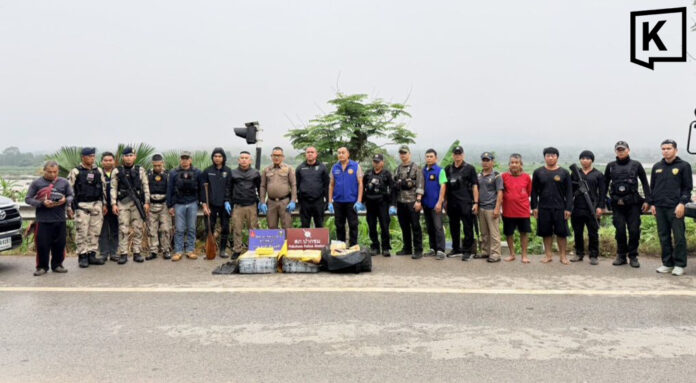
LOEI — 22 May 2026, Thai security forces seized more than 1.08 million methamphetamine pills along the Mekong River in northeastern Thailand after suspected traffickers fled across the border into Laos, authorities said.
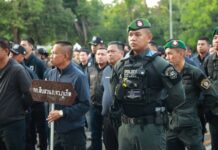
The operation took place at about 04:00 on Friday near Highway 211 in Ban Sangao village, Huai Phichai subdistrict, Pak Chom district, following intelligence that a large drug shipment would be smuggled into the area.
According to the Thai army, troops from the Surasak Montri Task Force, border narcotics suppression units and local security agencies were deployed to monitor the riverbank.
Officers reportedly spotted a suspicious pickup truck parked near the Mekong before seeing three men loading black sacks onto the vehicle.
When security forces moved in, the suspects fled into the darkness and allegedly took two motorised long-tail boats belonging to local villagers before escaping across the Mekong into Laos.
The pickup truck driver separately fled along Highway 211 towards Sangkhom district in neighbouring Nong Khai province, authorities said.
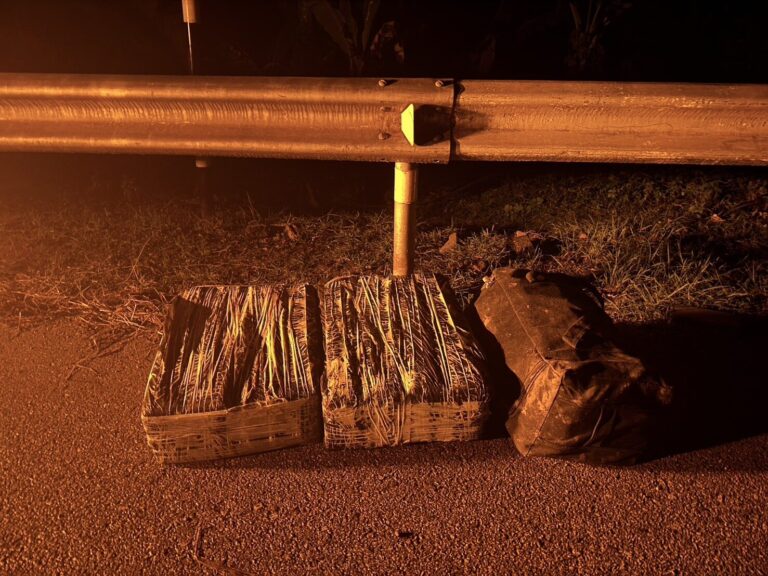
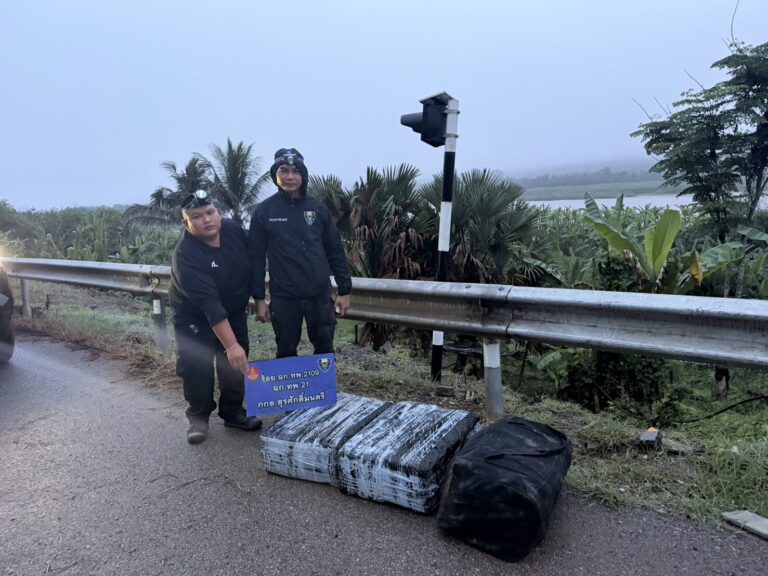
After securing the area, officers found three sacks containing about 1.08 million yaba pills.
One motorised long-tail boat was also seized at the scene.
The seized drugs were transported to a local ranger unit base for examination before being handed over to Pak Chom police as evidence in the investigation.
Authorities said efforts are ongoing to identify and arrest other members of the suspected trafficking network.
MAE HONG SON — 22 May 2026, Security forces have tightened restrictions at the Huai Phueng border crossing, allowing pedestrian travel while suspending cargo exports and cross-border vehicle traffic amid efforts to curb drug trafficking and the movement of precursor chemicals.
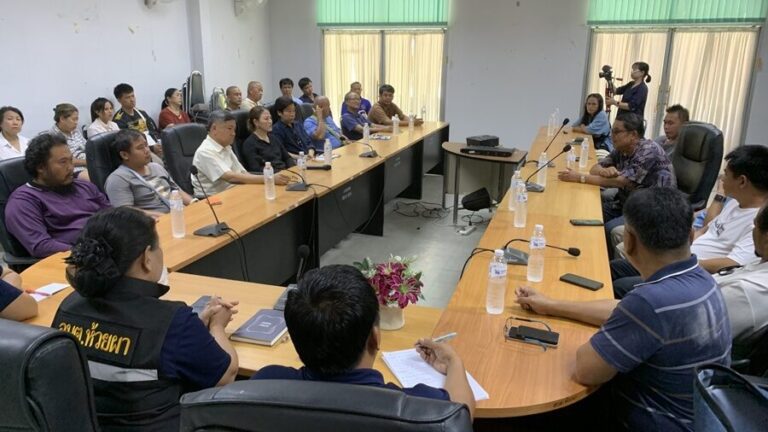
On Friday, more than 20 border traders from Ban Huai Phueng in Huay Pha Sub-district, Mueang Mae Hong Son District, gathered at the Huay Pha Sub-district Administrative Organization office to protest the restrictions. The traders submitted a formal petition requesting coordination with the Mae Hong Son Governor and security agencies, saying the suspension of cargo transport to Myanmar had severely disrupted local businesses and halted daily shipments.
The operators called on authorities to reopen the temporary checkpoint for normal goods transport, arguing that the restrictions were causing significant economic hardship for border communities reliant on cross-border trade.
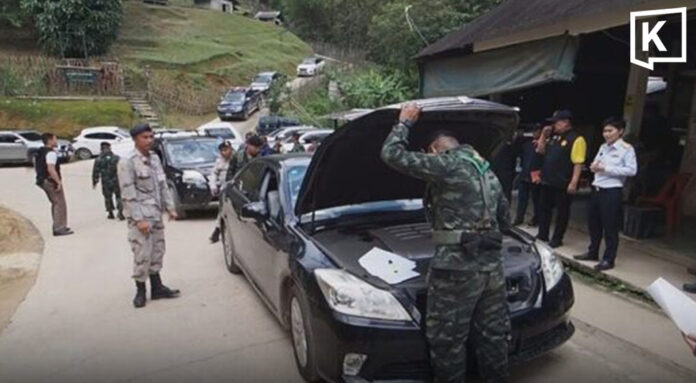
In response, security officials said the Huai Phueng crossing remains open for pedestrians, disputing claims that it had been completely shut down. However, all outbound goods transport and vehicle crossings into Myanmar have been temporarily suspended due to security concerns and revised inspection measures aimed at intercepting contraband and chemical precursors allegedly linked to illicit drug production.
Officials said the tightened inspections followed the recent seizure of suspicious chemical shipments allegedly destined for illegal drug manufacturing across the border. Authorities also alleged that some operators had submitted inaccurate customs declarations, prompting a temporary suspension of cargo movements while inspection and documentation procedures are reviewed.
Security officials said the measures are intended to strengthen oversight of cross-border trade and prevent illicit materials from being transported through the checkpoint.
Meanwhile, the Mae Hong Son Governor, alongside officials from the Singhanat Special Task Force, provincial commerce and customs offices, and other relevant agencies, is scheduled to visit the Ban Huai Phueng temporary border checkpoint in Huay Pha Sub-district on 25 May to inspect the situation and meet with local stakeholders.
The site visit is expected to focus on assessing transport disruptions and hearing concerns raised by local businesses as authorities seek to balance economic activity with border security measures.
Provincial authorities have also scheduled a joint committee meeting on 27 May to discuss long-term management of the crossing and possible adjustments to inspection procedures aimed at allowing legitimate trade to resume under tighter controls.
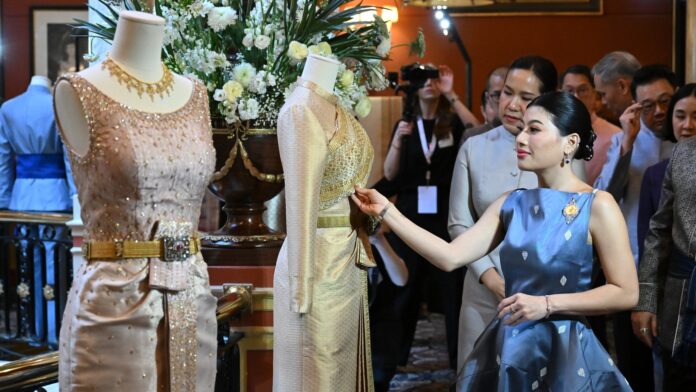
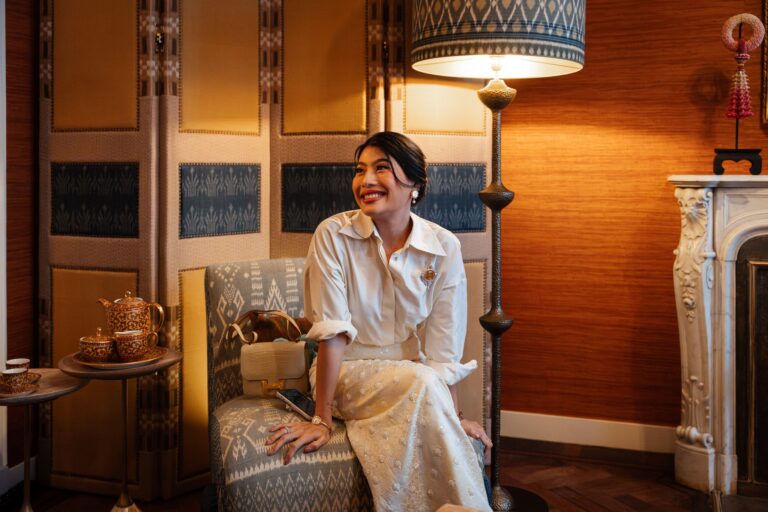
The French government will award Princess Sirivannavari Nariratana Rajakanya the Légion d’honneur, France’s highest national order, in recognition of her contributions to arts, culture and fashion, the French Embassy in Thailand announced on 21 May.
According to the embassy, the princess is being honoured for her achievements and royal initiatives in promoting arts and culture, particularly in the fields of fashion and design.
Princess Sirivannavari has played a major role in promoting Thai culture and continuing the royal vision of Queen Sirikit, especially in preserving and promoting Thai textiles.
She is also the patron of the exhibition “La Mode en Majesté – Royal Thai Dress: From Tradition to Modernity” at Musée des Arts Décoratifs in Paris.
The exhibition features more than 200 pieces of royal attire and Thai craftsmanship associated with Queen Sirikit and is open to the public until 1 November 2026.
Princess Sirivannavari graduated with first-class honours and a gold medal in fashion and textile design from Chulalongkorn University before continuing her studies at École de la chambre syndicale de la couture parisienne in Paris.
The princess has continuously carried out royal duties supporting Thai arts and cultural heritage.
The FIFA World Cup 2026 Los Angeles logo is displayed during a media event for the upcoming FIFA World Cup at SoFi Stadium in Inglewood, Calif., Tuesday, May 12, 2026. (AP Photo/Jae C. Hong)
Thailand’s government is continuing negotiations over broadcasting rights for the 2026 FIFA World Cup, but a senior minister said football fans may seek alternative online channels to watch matches if no agreement is reached.
Supamas Isarabhakdi, the minister attached to the Prime Minister’s Office overseeing the Public Relations Department, said on 20 May that the Cabinet had assigned the department to negotiate with FIFA, sponsors and the National Broadcasting and Telecommunications Commission (NBTC).
She said FIFA’s proposed licensing fee was considered unreasonable and difficult to justify to the public, prompting Thai authorities to negotiate for a lower price.
“There are still people who want live World Cup broadcasts, but we must consider economic conditions first,” Supamas said.
She added that the government would move forward only if it could explain to the public that the price represented fair value.
Supamas said the 2026 World Cup schedule poses additional commercial challenges, with matches expected to kick off at around 03:00, 05:00 and 09:00 Thailand time, limiting opportunities for restaurants, bars and businesses to benefit from screenings.
Unlike previous tournaments, sponsors have shown limited interest in supporting the rights purchase because advertising revenue is expected to be weaker, she said.
Asked whether Thailand could wait until after the tournament begins to purchase the rights at a lower cost, Supamas said it would likely be difficult by that stage.
“People would probably try to find other ways to watch,” she said. “Nowadays there are many online channels where viewers can access broadcasts.”
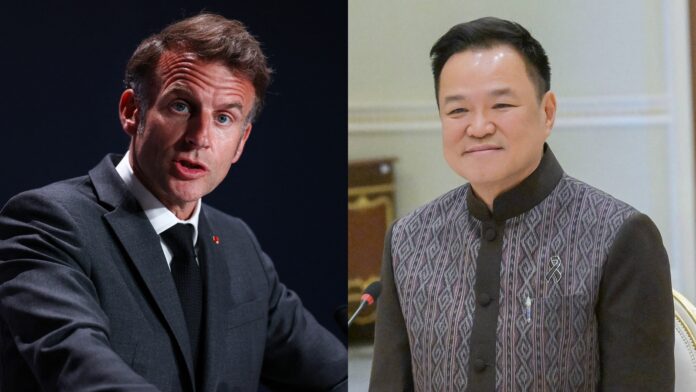
Prime Minister Anutin Charnvirakul said his upcoming visit to France will focus on artificial intelligence, energy, trade and investment opportunities, as Thailand seeks to strengthen ties with French businesses and political leaders.
Speaking at Government House on 21 May before departing for France from 21-27 May, Anutin said he had already assigned responsibilities to relevant agencies ahead of the trip.
The prime minister said French President Emmanuel Macron had invited him to a dinner meeting, which he described as a sign that France attaches importance to Thailand despite the visit not being an official state trip.
Anutin said informal discussions between leaders could sometimes produce better results than formal meetings.
He added that Deputy Prime Minister and Finance Minister Ekniti Nitithanprapas and Deputy Prime Minister and Higher Education, Science, Research and Innovation Minister Yodchanan Wongsawat would also join discussions while carrying out missions in France. The permanent secretary for foreign affairs will attend to help coordinate follow-up work after the talks.
According to Anutin, the discussions will cover AI, energy cooperation, trade value enhancement and Thailand’s readiness to serve as an investment hub for French businesses.
He said Thailand also hopes to expand cooperation with France in fashion, design and food industries by promoting Thai raw materials, local wisdom, technology and creativity.
“France is a global leader in fashion. Thailand may not yet compete in branding, but we can present our raw materials, local wisdom, design technology and knowledge to French entrepreneurs,” he said.
Anutin also stressed Thailand’s strength in food security, saying the country could use it as leverage in international negotiations.
Asked whether he would discuss Cambodia with Macron following the French leader’s talks with Cambodia’s prime minister, Anutin said he was prepared to clarify Thailand’s position if asked.
He said he oversees the issue directly and was ready to explain the situation to the international community, noting France’s influential role globally.
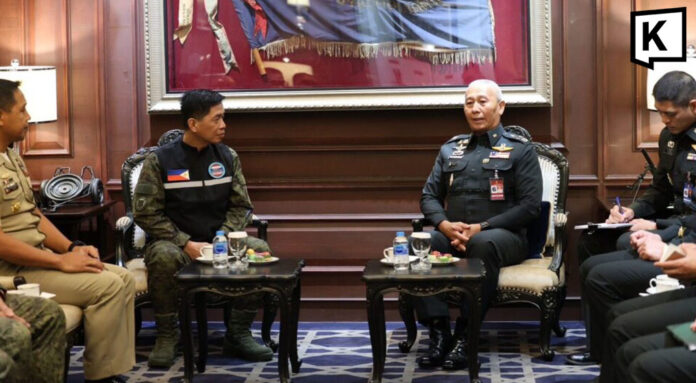
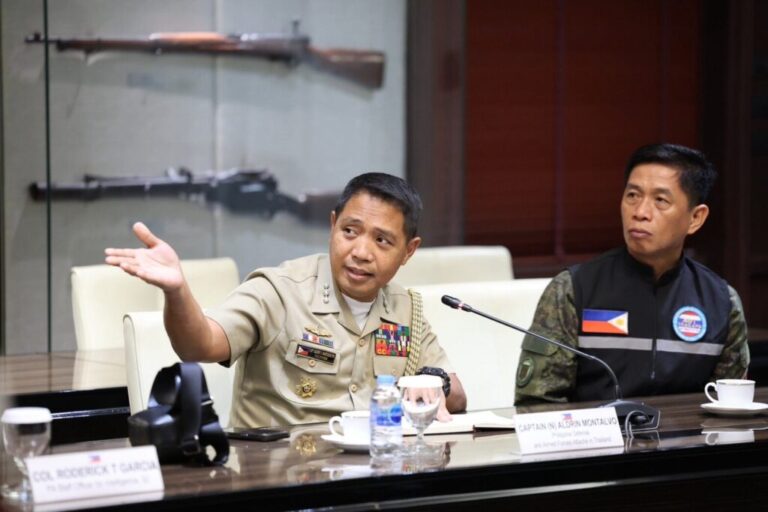
RAYONG — 21 May 2026, Thailand’s Army Chief met with the head of the ASEAN Observer Team (AOT) from the Philippines on Thursday to reaffirm a joint commitment to maintaining stability and security along the Thai-Cambodian border.
Gen. Pana Claewplodtook, Commander-in-Chief of the Royal Thai Army, alongside high-ranking military officials, welcomed Brig. Gen. Gregorio Sibayan Nieveras, Head of the ASEAN Observer Team-Thailand (AOT-TH), and his AOT delegation from the Philippines on Thursday. The official introductory meeting was held in the Sri Sitthi Songkhram Reception Room within the Royal Thai Army Headquarters.
Both sides emphasized the vital mechanisms outlined in their Joint Statement, which aims to drive bilateral cooperation across all levels, from high-level policy down to ground operations. This is designed to foster peace, security, and orderly conduct along the shared Thai-Cambodian border, paving the way for sustainable peace and shared prosperity in the region.
Brig. Gen. Nieveras underscored the AOT’s core operational principles, promising that the observation team will adhere to strict neutrality at all times. This principle guides their mission to observe and collect information with absolute accuracy, transparency, and fairness, in accordance with the mutual agreements.
Gen. Pana confirmed that the Royal Thai Army stands fully prepared to support and facilitate the AOT’s mission across all dimensions, so the AOT delegation can carry out its oversight duties successfully within the established frameworks of the Joint Statement and existing cooperation agreements. This collaboration directly reflects the army’s commitment to anchoring the security mechanisms of the ASEAN Community.
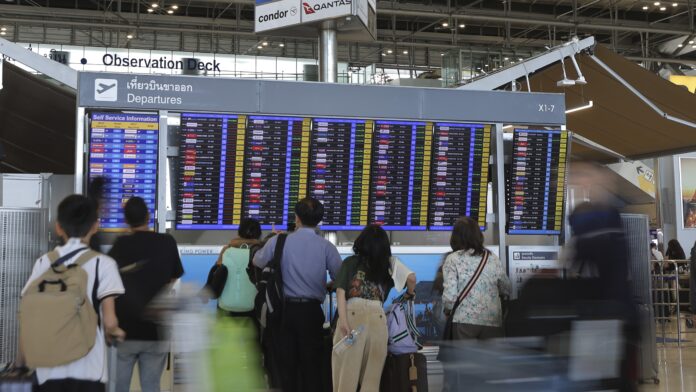
Tourists check an electronic board departure schedule at Suvarnabhumi International Airport in Samut Prakarn Province, Thailand, Sunday, Dec. 29, 2024. (AP Photo/Chatkla Samnaingjam)
Thailand is considering raising its proposed tourist “landing fee” to more than 300 baht as authorities work on a new collection system that would include premium insurance coverage for foreign visitors.
Tourism and Sports Minister Surasak Phancharoenworakul said the government is finalising both the collection model and appropriate pricing to avoid negatively affecting tourists’ travel experience.
Officials are currently studying two collection methods.
The first option would include the fee in airline tickets, which authorities view as the most convenient approach because tourists would not need to make additional payments upon arrival.
However, airlines currently cannot clearly separate Thai passengers from foreign tourists or business travellers. To address this, the government plans to create a refund application allowing Thai nationals and exempt travellers to reclaim the fee after entering the country.
The second option would collect the fee through the immigration system using electronic payment before entry into Thailand. While this method would allow authorities to clearly identify visa categories and traveller types, it may add extra procedures for visitors before arrival.
Surasak said the fee could exceed the previously discussed 300 baht because the government wants to provide premium insurance coverage for tourists immediately upon arrival in Thailand.
The proposed insurance would include treatment at leading private hospitals and help reduce the government’s financial burden when tourists’ own insurance coverage is insufficient.
Authorities are currently holding discussions with insurance associations to determine an appropriate fee structure. Part of the revenue would also be used to support tourism development projects nationwide.
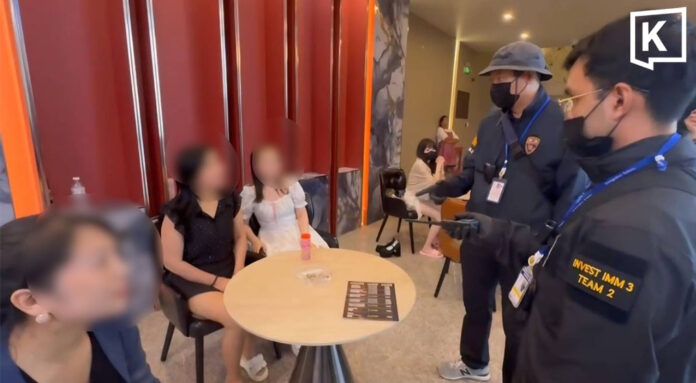
RAYONG — 21 May 2026, Immigration authorities have raided a Chinese-operated health spa in Rayong province after undercover officers exposed an illicit prostitution services targeting foreign nationals behind the facade of a traditional massage business.
On Thursday, Pol. Col. Parinya Klinkesorn, Spokesperson of Immigration Division 3, revealed that following directives from national police chief, Pol. Gen. Kitrat Phanphet, to prevent and suppress transnational crime, illegal immigration, and the use of Thailand as a hub or transit point for illicit activities. Furthermore, it also targets unauthorized foreign workers and nominee businesses operating unlawfully across the country that adversely affect the livelihoods of citizens and national peace.
Under the directives of Commander of Immigration Division 3, Pol. Maj. Gen. Songprod Sirisukha, and his deputy, Pol. Col. Chinawut Tangwonglert coordinated, a specialized task force led by Pol. Col. Suriya Phuangsombat, Superintendent of Investigation, Immigration Division 3, raided a health spa located in Moo 4, Mab Yang Phon Sub-district, Pluak Daeng District, Rayong Province.
Following tip-offs from confidential informants alleging that the health spa was operating a wellness spa as a front while covertly offering illicit prostitution services exclusively to Chinese patrons, a sting operation coordinated by Pol. Lt. Col. Pitipat Srithana-aphinan, deputy superintendent, and Pol. Lt. Col. Jaturachok Phetkong, inspector, along with investigators, gather incriminating evidence. Upon entry, spa employees approached and offered a body-to-body massage package that included sexual services. The illicit package was priced at 4,500 Baht for a 50-minute session.
Pol. Col. Parinya stated that on Wednesday, Pol. Lt. Col. Pitipat sent an undercover officer to an upper-level service room where two Vietnamese women prepared to fulfill the service indicative of prostitution, back-up teams received the signal to storm and secure the premises.
A thorough search of the two-booth commercial building revealed that the second and third floors had been modified into more than 10 individual service rooms equipped with beds and service equipment. Officers seized a quantity of condoms and lubricants as criminal evidence.
Authorities arrested a total of eight foreign suspects: two Chinese, four Myanmar, and two Vietnamese. The suspects face charges under both the Prostitution Prevention and Suppression Act and the Royal Decree on Managing the Work of Aliens. During the raid, all female staff members found inside the establishment were strictly processed through the National Referral Mechanism (NRM) to determine if any of the workers had been subjected to forced labor, coercion, or human trafficking networks. Final assessments confirmed that none of the individuals met the criteria to be classified as victims of human trafficking.
For a country which hosts over two million migrant workers from Myanmar and at least half a million from Cambodia, they remain mostly invisible in Thailand. This is partly due to physical similarities, but also due to the fact that they are rarely acknowledged publicly as an indispensable part of the Thai economy, performing hard but low-paying work in the seafood, construction, and service industries, among others.
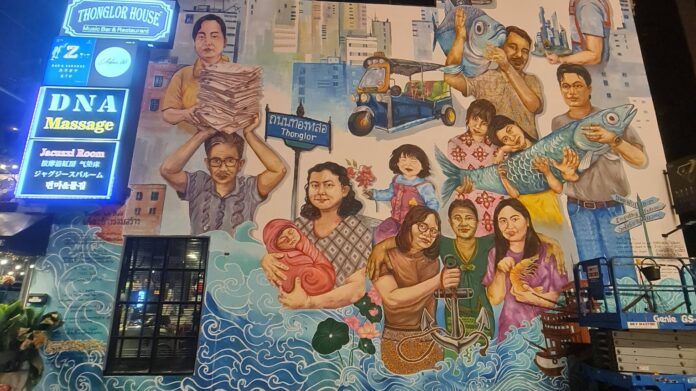
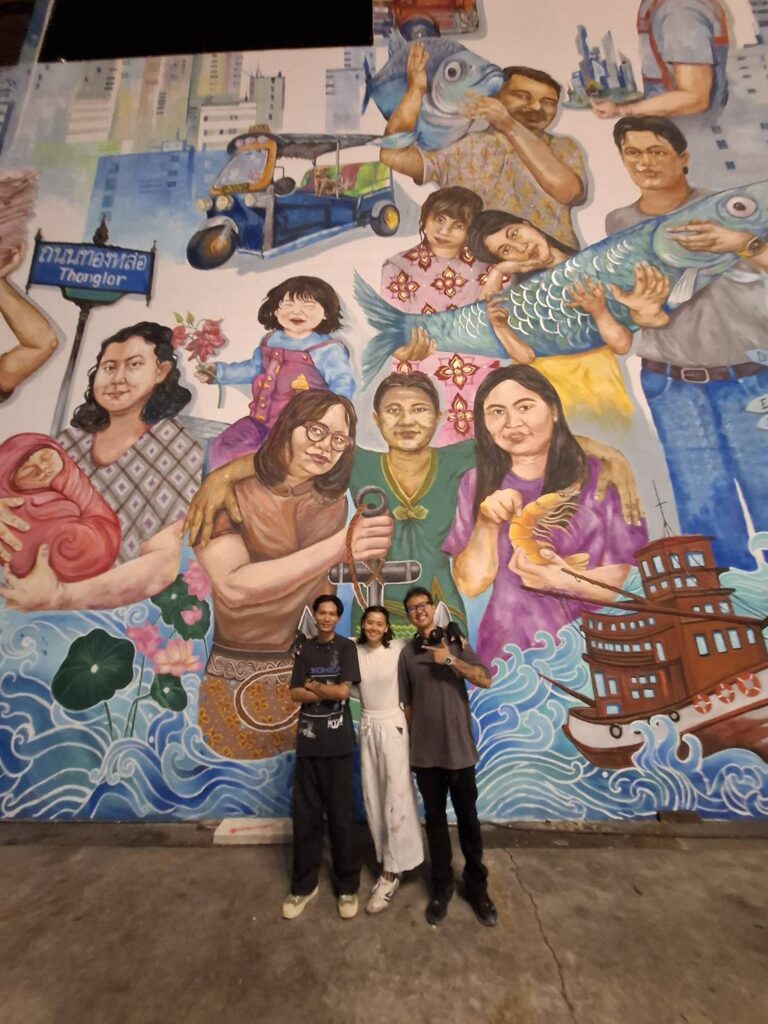
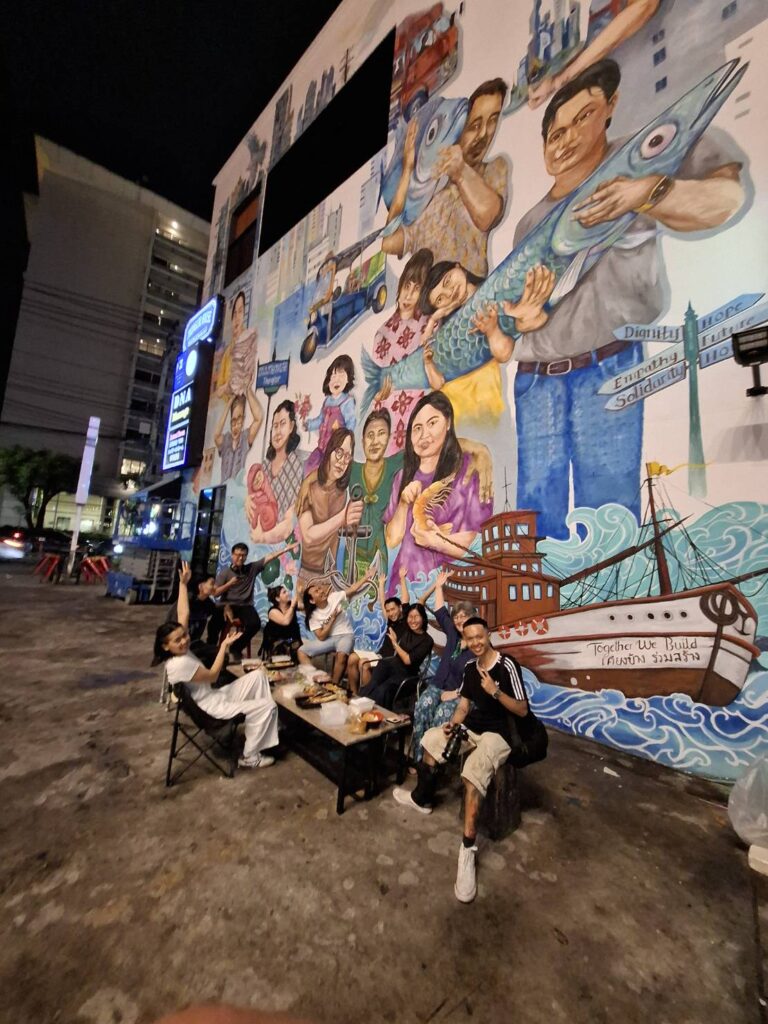
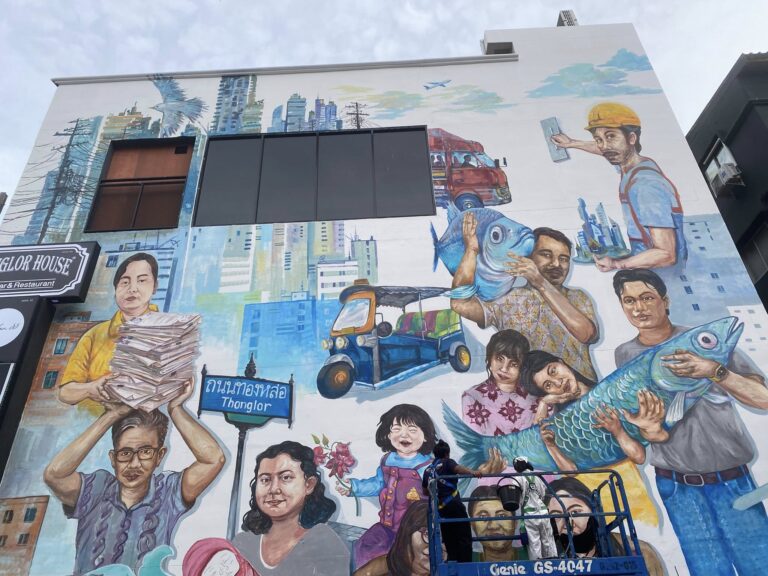
A small but significant step towards rectifying that will take place this Saturday, when a large mural painting belatedly acknowledging the contributions of migrant workers will be inaugurated in one of Bangkok’s most affluent neighbourhoods, in an alley between Thonglor Soi 9 and Soi 11.
The mural itself is far from small, measuring 10 metres high and 12 metres wide.
The artist team was led by Paris-based Burmese artist Chuu Wai, who has experience painting murals across Europe—including Zurich, Toulouse, and Marseille, and also India. Two Myanmar artists based in Bangkok also contributed: Sai Chit Min and Khant Win (YG).
While the project was initiated by SEA Junction—a Bangkok-based non-profit organisation that aims to promote a better understanding of Southeast Asia—in partnership with the International Labour Organization’s Ship to Shore Rights programme, which is funded by the European Union, and other partners including Norwegian People’s Aid (NPA), it was Chuu Wai who scouted for the location. Her search eventually led her to the wall of Thonglor House Music Bar and Restaurant, owned by the generous Khun Jiab who will look after the mural for the next two years.
Earlier, at several other locations, property owners asked how much she would pay to use the space.
“So I said, ‘No, no. It’s public art,’” she told Khaosod English on Tuesday evening, as the mural was 99 per cent completed. “I almost gave up.”
While migrants from Myanmar are scattered across many countries in the region, including Singapore, South Korea, and Japan, the artist said Bangkok is the preferred location. After all, Thailand hosts the largest number of migrant workers from the repressive country outside Myanmar, with with estimates, including both registered and undocumented workers, likely approaching three million.
“If I have to talk about migrant workers from Myanmar, I have to choose Thailand. Thailand is the most interesting,” she continued in English, with a hint of a French accent after the years she spent there. “There are a lot [of migrant workers] and a lot is going on. I want to bring Thai people and migrant workers closer together. Many people will be walking past and seeing this mural.”
The mural depicts 13 migrant workers — 12 from Myanmar and one from Cambodia, two babies, and a dog. All are based on real migrant workers whom the artists spoke to, discussing how they would like themselves to be represented in the mural.
“They face a lot of difficulties. They want people to put themselves in their shoes. They are not coming here [to Thailand] to do bad things. They don’t want [Thais] to look at them like shit,” Chuu Wai explained, adding that she nevertheless told them the mural painting should not be depressing or sad, but should instead radiate positive energy.
With that goal in mind, Chuu Wai, who returns to Paris in a week, added with pride that the mural is located in the middle of an affluent area in Bangkok. To paint a mural celebrating the pride and aspirations of migrant workers here was, in her words, “so cool!”
One of the project’s main artists, Sai Chit Min, who works under the name Syncfio, is based in Bangkok. Sai, 28, fled the political turmoil in Myanmar three years ago. He was formerly an art teacher at an international school in Yangon but now tries to make ends meet by selling watercolour paintings here in Bangkok and teaching people, mostly expats, how to paint.
The biggest challenge in this project was the height of the mural, he told Khaosod English, adding that he is not entirely comfortable painting 10 metres above the ground. “The higher you get, the shakier it becomes.”
Sai said many people from Myanmar try their best to make a new home in Thailand and, despite the harsh working conditions, “this is still better than Myanmar.”
He was modest when asked about his expectations for his mural painting work. “I don’t hope for that much, but I hope they will see the lives [of migrant workers] and the work that no one else wanted to do. I wish we could do more projects like this to raise awareness. I am very happy that this mural project happened. I got a chance to be part of it and meet a lot of amazing people,” Sai concluded as we sat inside Thonglor House for the interview.
Because it is a work of public art, many people passed by during the process, which took over 10 days to complete. Alongside the three core artists, around 40 volunteers took turns painting. Sai said some passers-by stopped and asked him about the meaning of the painting.
“I said ‘Together We Build’,” he replied, referring to the name of both the mural and the project. You can contact Sai on Instagram at @some.paints
By around 20:00 on Tuesday, the rain had stopped. SEA Junction’s founder and executive director, Rosalia Scortino, led this writer outside to elaborate on the painting. The Italian-born Scortino pointed to a female migrant worker in purple holding a shrimp, explaining that her work involves shelling shrimps in Samut Sakhon province, just south of Bangkok. Scortino added that the woman’s work has become doubly hard because the factory reduced its workforce, requiring one worker to do the volume of work that used to be handled by two.
Photo: Sai Chit Min
Then there is a male Cambodian construction worker on the upper right of the mural.
Scortino said the man is currently unemployed due to the Thai-Cambodian border conflict but has two children who are married to Thais. She then spoke about the red tape related to the work visa application process, and how it was depicted on the left side of the painting by a man carrying a tall bundle of papers over his head.
There was also a tuk-tuk with a dog in the back seat. The dog is real as well, a rescued mixed-breed adopted by Scortino five years ago. It accompanied her to inspect the daily progress of the project, and it was Sai who decided to feature the dog in the mural.
The ‘Together We Build’ mural painting by Chuu Wai & Co will be inaugurated on Saturday, 23 May 2026, from 17:00 to 20:00 at Thonglor House, with complimentary canapés provided by the restaurant. All are invited.
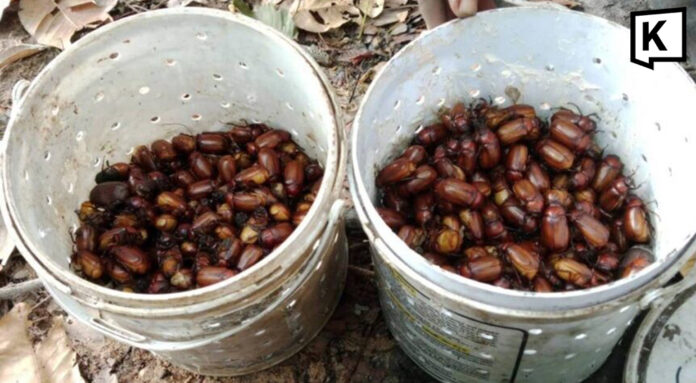
CHAIYAPHUM — 21 May 2026, villagers in northeastern Thailand have begun digging for “mang jeenoon”, a seasonal scarab beetle delicacy popular in Isaan cuisine, as the arrival of the rainy season creates opportunities for extra income.
Residents in several communities in Chaiyaphum province said the insects emerge only once a year during the early rainy season, allowing villagers to collect and sell them for up to 1,000-1,500 baht a day.
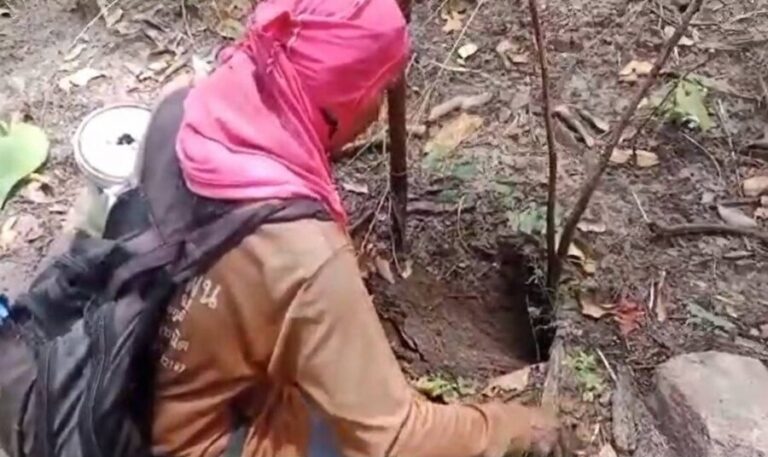
In Na Yang Klak subdistrict of Thep Sathit district, villagers gathered with hoes, digging sticks and plastic bottles before heading into nearby community forests to search for the beetles, which burrow underground beneath shrubs and small trees to lay eggs.
The insects are commonly found in burrows about 20 centimetres below the soil surface, particularly near loose soil or small openings around tree roots, locals said.
Villagers said each burrow can contain between six and 10 beetles, which are carefully dug out using traditional techniques passed down through generations.
The beetles are sold for about 1 baht each, while larger ones can fetch up to 2 baht.
Locals describe mang jeenoon as a high-protein seasonal delicacy that can only be found during the rainy season.
Before cooking, the insects are usually soaked in water overnight or cleaned to remove waste before being fried, roasted or added to spicy local dishes.
Popular recipes include chilli dips, bamboo shoot curry, herbal soups and fried beetles mixed with eggs, often served with steamed rice.
Villagers said the annual beetle hunt reflects a long-standing local tradition and provides valuable supplementary income during the rainy season.